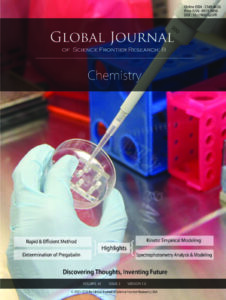
A Rapid and Efficient Method for Purification of Peroxidase from Opuntia-ficus indica Stem with Decolorization Effect

1
Fatih Uckaya
Fatih Uckaya
2
Meryem Uckaya
Meryem Uckaya
1 Alanya Alaaddin Keykubat University

Send Message

To: Author

GJSFR Volume 18 Issue B3

Article Fingerprint

ReserarchID

SPV68

A Rapid and Efficient Method for Purification of Peroxidase from Opuntia-ficus indica Stem with Decolorization Effect Banner
  • English
  • Afrikaans
  • Albanian
  • Amharic
  • Arabic
  • Armenian
  • Azerbaijani
  • Basque
  • Belarusian
  • Bengali
  • Bosnian
  • Bulgarian
  • Catalan
  • Cebuano
  • Chichewa
  • Chinese (Simplified)
  • Chinese (Traditional)
  • Corsican
  • Croatian
  • Czech
  • Danish
  • Dutch
  • Esperanto
  • Estonian
  • Filipino
  • Finnish
  • French
  • Frisian
  • Galician
  • Georgian
  • German
  • Greek
  • Gujarati
  • Haitian Creole
  • Hausa
  • Hawaiian
  • Hebrew
  • Hindi
  • Hmong
  • Hungarian
  • Icelandic
  • Igbo
  • Indonesian
  • Irish
  • Italian
  • Japanese
  • Javanese
  • Kannada
  • Kazakh
  • Khmer
  • Korean
  • Kurdish (Kurmanji)
  • Kyrgyz
  • Lao
  • Latin
  • Latvian
  • Lithuanian
  • Luxembourgish
  • Macedonian
  • Malagasy
  • Malay
  • Malayalam
  • Maltese
  • Maori
  • Marathi
  • Mongolian
  • Myanmar (Burmese)
  • Nepali
  • Norwegian
  • Pashto
  • Persian
  • Polish
  • Portuguese
  • Punjabi
  • Romanian
  • Russian
  • Samoan
  • Scots Gaelic
  • Serbian
  • Sesotho
  • Shona
  • Sindhi
  • Sinhala
  • Slovak
  • Slovenian
  • Somali
  • Spanish
  • Sundanese
  • Swahili
  • Swedish
  • Tajik
  • Tamil
  • Telugu
  • Thai
  • Turkish
  • Ukrainian
  • Urdu
  • Uzbek
  • Vietnamese
  • Welsh
  • Xhosa
  • Yiddish
  • Yoruba
  • Zulu

Peroxidase enzyme was purified from Opuntia ficusindica stem for decolorization some synthetic dyes including congo red, methyl red, indigo carmine, crystal violet and ponceau red by TPP. For the purification of the enzyme, the stem of a fresh plant was first homogenized by using phosphate buffer, and subsequently, supernatant was filtered. The homogenate was mixed with ammonium sulfate at room temperature, and t-butanol was added. The intermediate phase was separated and optimized according to different process parameters as homogenate/tbutanol ratio (1:0.5), ammonium sulfate concentration (40%), pH (8), temperature (30°C) and values of K M (4.8 mM) and V max (0,005 U/mL.min) with 2, 25-fold purification and 106, 64% recovery. The molecular weight of partitioned enzyme was found about 28 kDa compared with protein standard. TPP was found to be an easy and effective applicable technique with utilization for extraction and purification of peroxidase enzyme and the purified enzyme decolorized the tested synthetic dyes, successfully. The most important advantage of the method is a high recovery of peroxidase enzyme without requirement any column.

15 Cites in Articles

References

  1. Wamik Azmi,Rajesh Sani,Uttam Banerjee (1998). Biodegradation of triphenylmethane dyes.
  2. Marion Bradford (1976). A rapid and sensitive method for the quantitation of microgram quantities of protein utilizing the principle of protein-dye binding.
  3. Clive Dennison,Rex Lovrien (1997). Three Phase Partitioning: Concentration and Purification of Proteins.
  4. N Duran,E Esposito (2000). Potential applications of oxidative enzymes and phenoloxidase-like compounds in wastewater and soil treatment: A review.
  5. U Ebiloma,S Arobgba,O Aminu (2011). Some activities of peroxidase from mango (Mangifera indica L. Var. Mapulehu) kernel.
  6. Shirish Harde,Rekha Singhal (2012). Extraction of forskolin from Coleus forskohlii roots using three phase partitioning.
  7. A Humaira,H Qayyum (2010). Studies on bitter gourd peroxidase catalyzed of p-bromophenol from wastewater.
  8. Shahanaz Khatun,M Ashraduzzaman,Md. Karim,Farzana Pervin,Nurul Absar,Ahmad Rosma (2012). Purification and characterization of peroxidase from Moringa oleifera L. leaves.
  9. V Kumar,V Sathyaselvabala,M Premkumar,T Vidyadevi,S Sivanesan (2012). Biochemical characterization of three phase partitioned laccase and its application in decolorization and degradation of synthetic dyes.
  10. U Laemmli (1970). Cleavage of Structural Proteins during the Assembly of the Head of Bacteriophage T4.
  11. V Matthews (1972). Flora of Turkey and the East Aegean Islands.

  12. Kalyani Mondal,Sulakshana Jain,Sunita Teotia,Munishwar Gupta (2006). Emerging options in protein bioseparation.

  13. Ipsita Roy,Munishwar Gupta (2002). Three-Phase Affinity Partitioning of Proteins.
  14. Carmen Saenz (2000). Processing technologies: an alternative for cactus pear (Opuntia spp.) fruits and cladodes.
  15. T Shaffiqu,J Roy,R Nair,T Abraham (2002). Degradation of Textile Dyes Mediated by Plant Peroxidases.

Funding

No external funding was declared for this work.

Conflict of Interest

The authors declare no conflict of interest.

Ethical Approval

No ethics committee approval was required for this article type.

Data Availability

Not applicable for this article.

Fatih Uckaya. 2018. \u201cA Rapid and Efficient Method for Purification of Peroxidase from Opuntia-ficus indica Stem with Decolorization Effect\u201d. Global Journal of Science Frontier Research - B: Chemistry GJSFR-B Volume 18 (GJSFR Volume 18 Issue B3): .

Download Citation

Issue Cover
GJSFR Volume 18 Issue B3
Pg. 17- 24
Journal Specifications

Crossref Journal DOI 10.17406/GJSFR

Print ISSN 0975-5896

e-ISSN 2249-4626

Keywords
Classification
GJSFR-B Classification: FOR Code: 030599
Version of record

v1.2

Issue date

September 5, 2018

Language

English

Experiance in AR

The methods for personal identification and authentication are no exception.

Read in 3D

The methods for personal identification and authentication are no exception.

Article Matrices
Total Views: 3016
Total Downloads: 1534
2026 Trends
Research Identity (RIN)
Related Research

Published Article

Peroxidase enzyme was purified from Opuntia ficusindica stem for decolorization some synthetic dyes including congo red, methyl red, indigo carmine, crystal violet and ponceau red by TPP. For the purification of the enzyme, the stem of a fresh plant was first homogenized by using phosphate buffer, and subsequently, supernatant was filtered. The homogenate was mixed with ammonium sulfate at room temperature, and t-butanol was added. The intermediate phase was separated and optimized according to different process parameters as homogenate/tbutanol ratio (1:0.5), ammonium sulfate concentration (40%), pH (8), temperature (30°C) and values of K M (4.8 mM) and V max (0,005 U/mL.min) with 2, 25-fold purification and 106, 64% recovery. The molecular weight of partitioned enzyme was found about 28 kDa compared with protein standard. TPP was found to be an easy and effective applicable technique with utilization for extraction and purification of peroxidase enzyme and the purified enzyme decolorized the tested synthetic dyes, successfully. The most important advantage of the method is a high recovery of peroxidase enzyme without requirement any column.

Our website is actively being updated, and changes may occur frequently. Please clear your browser cache if needed. For feedback or error reporting, please email [email protected]
×

This Page is Under Development

We are currently updating this article page for a better experience.

Request Access

Please fill out the form below to request access to this research paper. Your request will be reviewed by the editorial or author team.
X

Quote and Order Details

Contact Person

Invoice Address

Notes or Comments

This is the heading

Lorem ipsum dolor sit amet, consectetur adipiscing elit. Ut elit tellus, luctus nec ullamcorper mattis, pulvinar dapibus leo.

High-quality academic research articles on global topics and journals.

A Rapid and Efficient Method for Purification of Peroxidase from Opuntia-ficus indica Stem with Decolorization Effect

Fatih Uckaya
Fatih Uckaya Alanya Alaaddin Keykubat University
Meryem Uckaya
Meryem Uckaya

Research Journals