
I. INTRODUCTION
The wrath of COVID-19 (Coronavirus disease) has gripped and crippled the entire nation and its effects worldwide on a global basis. The engorging pandemic has arisen to test the abilities of the medical fraternity and its arsenal. The current knowledge about COVID-19 is limited, but it is rapidly evolving with time. During this outbreak, the medical community has used evidence and experience from past upsurges of SARS-CoV and MERS-CoV to predict COVID-19's behavior, clinical presentation, and treatment. Also, coronaviruses (CoV) can cause signs and symptoms of multi-organ system damage, many of which can go unnoticed even by trained medical professionals.
CoVs (Coronavirus) are a large family of single-stranded RNA viruses that infect humans mainly through droplets and fomites . Coronaviruses constitute the subfamily Orthocoronavirinae, within the family Coronaviridae, order Nidovirales. These are enveloped viruses with a positive-sense single-stranded RNA genome and a nucleocapsid of helical symmetry .
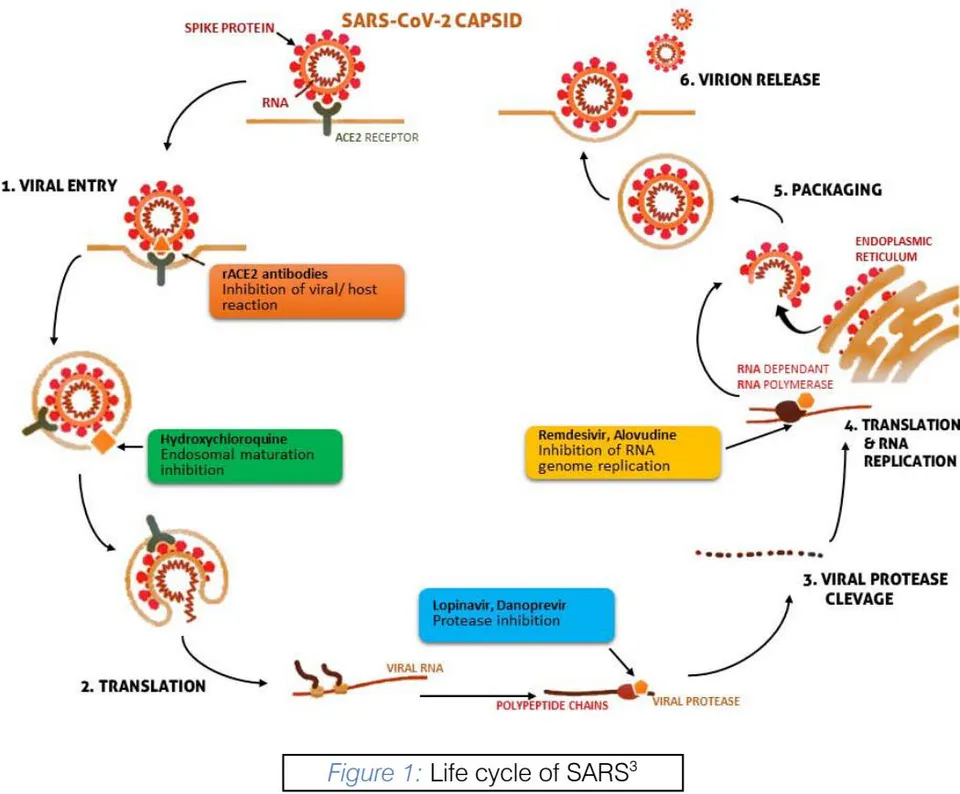
The recently identified COVID-19 is a beta-CoV that infects both humans and animals. All 3 of the novel viruses (SARS-CoV, MERS-CoV, and COVID-19) originate from zoonotic transmissions. Bats may be the source of SARS-CoV and COVID-19 based on sequence similarity with bat CoVs. It is believed that the virus has originated from the Hubei region of Wuhan in China . There is no standard care at present, for the prevention or treatment of the jeopardized respiratory system in COVID-19 as of now. Medications including glucocorticoids, IL-6 antagonists, Janus kinase inhibitors, antivirals, and chloroquine and hydroxychloroquine are currently been studied as possible therapeutic options for the ongoing pandemic . The following are an overview of the various pharmacotherapeutic aspects utilized in the management of Covid-19 globally.
a) Favipiravir
It has currently been incorporated in the management protocol of COVID-19. Its mechanism of action is to selectively inhibit RNA dependant RNA polymerase (RdRP), an enzyme that is essential for RNA viral replication within human cells. It operates as a purine analog and is incorporated instead of guanine and adenine. The incorporation of a single molecule of Favipiravir causes the termination of the elongation of viral RNA. The drug is converted intracellularly into its active phosphorylated form and is recognized as a substrate by viral RdRP. It has a broad spectrum of activity against RNA viruses (Influenza, Rhino, and Respiratory Syncytial Virus, etc.) but not much against DNA viruses .
It has an excellent bioavailability ( ), 54% protein binding, and a low volume of distribution (10–20 L) to the tissues. It reaches within two hours after a single dose. Both and half-life increase after multiple amounts of dosage. Favipiravir has a very short half-life (2.5–5 h), thus leading to rapid renal excretion in its hydroxylated form. Elimination is been mediated by aldehyde oxidase and marginally by xanthine oxidase. Favipiravir shows both-dose-dependent and time-dependent pharmacokinetics. It has not been metabolized by the cytochrome P450 system but inhibits one of its components (CYP2C8) .
The recommended dosage of Favipiravir for adults for treatment in COVID-19 positive patients is 1800 mg orally twice daily on 1st day, followed by 800 mg orally twice daily, up to a maximum of 14 days.
The safety profile of the drug also seems acceptable, with asymptomatic hyperuricemia and mild, reversible increase in transaminases being the most frequently reported adverse effects. In the Indian trials conducted, no special safety signal has been elicited. It is, however teratogenic and not to be used in pregnant women. The main disadvantage is a high pill burden, which works out to a loading dose of 18 tablets on the first day and then eight tablets a day for the rest of the course .
b) Remdesivir
Remdesivir is a prodrug of a nucleotide analog that is intracellularly metabolized to an analog of adenosine triphosphate, thus inhibiting viral RNA polymerases. It has broad-spectrum activity against several virus families, including filoviruses (e.g., Ebola) and coronaviruses (e.g., SARS-CoV and MERS-CoV). It has prophylactic and therapeutic efficacy in nonclinical models of these various coronavirus .
Based on its physicochemical properties, instability in tissues, and pharmacokinetic properties, Remdesivir has low tissue distribution and penetration, especially into the lung. In monkey studies, Remdesivir was not detectable in the lung .
The drug has to be administered via an intravenous route (IV) with a loading dose on day 1 (200 mg in adults, adjusted for body weight in pediatric patients) followed by a daily maintenance dose (100 mg in adults) for up to 10 days. In non-human primates, regular administration of 10 mg/kg of Remdesivir generated a short plasma half-life of the prodrug (t1/2=0.39 h) but maintained intracellular levels of the triphosphate form .
Adverse effects of hepatotoxicity, gastrointestinal symptoms, nephrotoxicity, cardiotoxicity have been observed in several studies, and it is complex to distinguish the underlying causes of adverse events during Remdesivir treatment.
The drug has been made available by the Food and Drug Administration to be used under emergency circumstances. It has also been authorized for the management of adults and children with severe Covid-19 disease.
Research studies being currently done at present support the use of Remdesivir in hospitalized patients with Covid-19 and require supplemental oxygen therapy.
c) Tocilizumab
Tocilizumab is an IL-6 receptor-blocking agent, and is currently been used for the treatment of severe COVID-19 patients. It is a humanized monoclonal antibody capable of interfering with the IL-6 soluble and membrane binding site of the receptor (IL-6R), thereby disrupting the integrity of the activated complex with the transmembrane protein (gp130-IL-6-sILr). It is also able to obstruct IL-6 trans-signalling, which is strongly related to the pro-inflammatory effects of IL-6 (e.g., release of acute-phase proteins). Tocilizumab has a non-linear pharmacokinetic profile, with a dose-response curve that plateaus at an approximate dosage of 800 mg . High levels of IL-6 are being observed among the main features of cytokine storm and cytokine release syndrome (CRS) in Covid-19 patients, both of which are characterized by an exaggerated release of proinflammatory cytokines and potentially life-threatening multiorgan damage .
Moreover, elevated levels of IL-6 are linked with a hypercoagulable state in both animals and humans, and coagulopathy is another characteristic feature of patients with COVID-19 at high risk of death .
Adverse reactions of secondary infections, skin and subcutaneous infections, elevated liver enzymes, and gastrointestinal disorders are most commonly observed in the case of Tocilizumab . The effects of tocilizumab against IL-6 related pro-inflammatory and pro-coagulant status partially explain its possible role in COVID-19. It has to be kept in mind that currently, there is yet no evidence that subduing the physiological inflammatory response to the virus is indeed advantageous .
d) Hydroxychloroquine
It is an anti-malarial drug, and has found its way in the management and prevention of Covid-19. It has similar effects to Chloroquine in interfering with the glycosylation of ACE2, blocking virus/cell fusion, and inhibiting lysosomal activity by increasing the pH. Hydroxychloroquine can also inhibit major histocompatibility complex (MCH) class II expression, which in turn inhibits T cell activation, expression of CD145, and cytokines release .
Furthermore, it has shown to impair Toll-like receptors (TLRs) signaling through increasing endosomal pH and interfering with TLR7 and TLR9 binding to their DNA/RNA ligands, thereby inhibiting the transcription of pro-inflammatory genes.
The long half-life of both Chloroquine and Hydroxychloroquine could range from 30 to 60 days, is likely attributed to their large volume of distribution (200–800 L/kg) and extensive tissue uptake.
Chloroquine and hydroxychloroquine both have unusual pharmacokinetic properties with enormous apparent volumes of distribution (chloroquine > hydroxychloroquine) and very slow elimination from the body (terminal elimination half-lives > 1 month).
Dosage is 800 mg on the first day, followed by 400 mg weekly for the next seven weeks on a prophylactic basis for those with a high risk of exposure to the virus.
The most common Chloroquine and Hydroxychloroquine adverse effects are gastrointestinal symptoms such as nausea, vomiting, and abdominal discomfort , and uncommonly worrisome fulminant hepatic failure , toxic epidermal necrolysis (TEN) , and cardiotoxicity that could manifest with QT abnormality.
Both Chloroquine and Hydroxychloroquine have demonstrated promising in vitro results; however, such data have not been translated yet, into meaningful in vivo studies.
FDA has determined that Chloroquine and Hydroxychloroquine are unlikely to be effective in treating COVID-19 at present for the emergency purpose. Additionally, in light of ongoing severe cardiac adverse events like PR interval prolongation, arrhythmia and other serious side effects, the known and potential benefits of Chloroquine and Hydroxychloroquine no longer outweigh the known and potential risks for the authorized use .
e) Ivermectin
Ivermectin is a known anti-helminthic drug that causes stimulation of gamma amino butyric acid (GABA)-gated-chloride channels, thus leading to hyperpolarization and resulting in paralysis of the causative organism. Another mechanism has been postulated for the same effect which speculates upon the immunomodulation of host response, attained by the activation of neutrophils, an increase in the levels of C-reactive protein, and interleukin-6 .
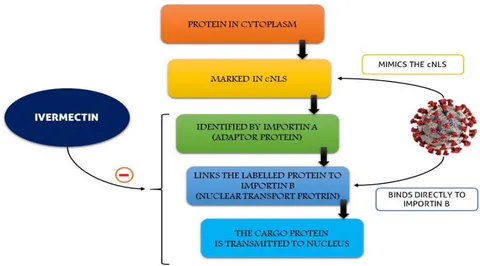
The drug is absorbed after oral administration, and due to its high lipid solubility, it is highly distributed in the body and it's extensively bound to the plasma proteins. It is extensively metabolized by cytochrome P450 enzymes. It is excreted mainly in feces with only 1% in urine .
Current clinical trials have used lvermectin in a dose ranging from 200 to 1200 mcg/kg body weight, for a duration of 3–7 days, showing promising results both in terms of symptomatology and viral load reduction .
Ivermectin causes tiredness, loss of energy, stomach pain, vomiting, diarrhea, dizziness, drowsiness, and itchiness. It may lead to joint pain and swelling, swollen and tender lymph nodes, itching, rashes, fever, and eye problems.
Some of the serious adverse effects include low blood pressure, inability to breathe, and can also lead to liver damage.
f) Arbidol
Arbidol, also known as Umifenovir, is a broad-spectrum antiviral drug. It has been licensed for the prophylaxis and treatment of influenza and other viral respiratory infections. Its mechanism of action includes interactions with amino acid residues to form a hydrophobic aromatic assembled structure and interactions with aromatic residues of the viral glycoproteins involved in fusion and cellular recognition .
Some studies have observed anti-COVID-19 potential of Arbidol in vitro and clinic .
A retrospective study showed that Arbidol might not be efficacious enough to improve the prognosis or accelerate SARS-CoV-2 clearance in non-ICU patients .
g) Role of Corticosteroids
Corticosteroids have primarily been introduced in COVID-19 patients as a prior means to stave off the cytokine storm and its consequences like ARDS, disseminated intravascular coagulation, hypotension, shock, and death.
World Health Organization (WHO) and The Centre for Disease Control and Prevention (CDC), USA advises against the use of corticosteroids in COVID-19 for the prior purpose of immune modulation .
In sharp contrast, the recent multinational Surviving Sepsis Guideline in COVID-19 recommends to giving steroids in patients with severe COVID-19 on mechanical ventilation with ARDS (Acute Respiratory Distress Syndrome) to reduce the destructive inflammatory immune response and to treat suspected adrenal insufficiency associated with sepsis, particularly in those with refractory shock. However, this guideline advises against the use of corticosteroids in COVID patients in non-ARDS respiratory failure on mechanical ventilation .
Nevertheless, the Randomized Evaluation of COVID-19 therapy (RECOVERY Trial) conducted in patients with COVID-19 has shown significant improvement in the outcome with dexamethasone, a corticosteroid, used in the treatment of severe COVID-19 requiring oxygen therapy or on mechanical ventilator .
Methylprednisolone has the least mineralocorticoid activity, while dexamethasone has the highest glucocorticoid activity. Theoretically, methylprednisolone (0.5–2 g/kg/day) has the advantage of parenteral administration, a quicker onset of action, and a shorter duration of action than dexamethasone .
Potential aftermath of corticosteroid therapy might be the worsening of dysglycemia/unmasking of latent diabetes. It causes increased lipolysis, increased hepatic glucose output, and can increase the insulin resistance by up to 60–80% by directly interfering with the signaling cascade of the GLUT-4 receptors .
h) Role of Low Molecular Weight Heparin
Recent studies have described the presence of a hypercoagulable state in COVID-19-affected patients , primarily due to secondary lymphohistiocytosis.
Lin et al., in a study, has asserted that the rise of inflammatory factors and D-dimer on days 7–14 of the disease could be supported by anticoagulation with low molecular weight heparin (LMWH) as a therapeutic strategy. The risk of sepsis-induced disseminated intravascular coagulation (DIC) induces recommendation for anticoagulation in COVID-19 patients with D-Dimer levels above four times the upper limit of normal (ULN), except for those with contraindications to anticoagulation. A subcutaneous dose of 100 IU/kg of LMWH twice a day is recommended, for at least 3–5 days .
i) Role of Zinc
Zinc is involved in various cellular pathways and has a variety of direct and indirect antiviral properties. Zinc deficiency is associated with decreased antibody production. It has affected the function of the innate immune system (e.g., low natural killer cell activity), reduced cytokine production by monocytes, and the chemotaxis and oxidative burst of neutrophil granulocytes .Antiviral properties of Zinc against several viral species are mainly been realized through the physical processes, such as virus attachment, infection, and uncoating, and through inhibition of viral protease and polymerase enzymatic processes .
Zinc supplementation alone or in combination with hydroxychloroquine for prevention and treatment of COVID-19 is currently under evaluation in clinical trials. The optimal dose of zinc for the treatment of COVID-19 has not been established as of now. The recommended dosage for elemental zinc is 11 mg daily for men and 8 mg for non-pregnant women. The quantities used in registered clinical trials for COVID-19 vary between studies, with a maximum amount of zinc sulfate 220 mg (50 mg of elemental zinc) being given twice daily .
Zinc supplementation possesses a variety of direct and indirect antiviral properties, which may be beneficial in the COVID-19 pandemic.
j) Role of Vitamin C & Vitamin D
Vitamin C is also considered as one of the possible therapeutic agents for COVID-19 because it has a promising role in maintaining proper bodily functions and also helps in removing damaged reactive oxygen species and thus protects the cell from oxidative damage. Vitamin C is needed in much larger quantities for proper immune functioning. The beneficial role in SARS-Cov-2 and other viral infections is evident from the fact the level of vitamin C decreases during infection, and the body needs more of it to fight against the illness . Vitamin C is a suggested therapy in COVID-19 because it minimizes the effect of oxidative stress and cytokine and. This promising role has also been observed in 146 COVID-19 patients in a study done by Hemila H . Dosage recommendations are 1000 mg daily.
On the other hand, Vitamin D supplementation helps to reduce many complications associated with pneumonia and also decreases the cytokine stormin many of SARS-Cov-2 infections .
It also helps to modulate the rennin- angiotensin system which in turn regulates the expression of the ACE2 receptor, a common binding site for SARS-Cov-2. The activity of the DPP-4/CD26 receptor is decreased significantly in vivo upon the correctness of vitamin D insufficiency .
It is worth suggesting take up to 250 g/day for a month, which is productive in increasing the serum levels of 25(OH)D into the optimal range between 75 and 125 nmol/L. The dosage amount can be reduced to 100 g/day after one month to maintain the concentrations of 25(OH)D in the circulation .
k) Role of Plasma Therapy
Plasma therapy is an upcoming and promising mode of treatment in the recent COVID infection. According to WHO, management of COVID-19 has mainly detailed prevention, early case detection and monitoring, and supportive care along with symptomatic and conservative treatment of the positive cases. However, there is no specific recommended anti-SARS-CoV-2 treatment, due to the lack of proper evidence. Most importantly, the current guidelines dictate that systematic corticosteroids should not be given on a routine basis to treat COVID-19. Evidence at present shows that convalescent plasma (from patients who have recovered from viral infections), can be used as a treatment without the occurrence of severe adverse events in them. Therefore, it might be worthwhile and fruitful to test the safety and efficacy of convalescent plasma transfusions in SARS-CoV-2-infected patients .
Trials and studies regarding plasma therapy are currently being conducted on a larger scale in India. Plasmapheresis programmes have also been developed to combat the infection.
i) Role of Supportive Therapy
Coronavirus disease-19 (COVID-19) pandemic has caused a global crisis, where old age, comorbid conditions, end-stage organ impairment, and advanced cancer aggravate the risk of mortality in critical COVID-19 patients. Early warning scores (EWS), oxygen saturation, and respiratory rate can aid in categorizing COVID-19 patients as stable, unstable, and end of life. Breathlessness, respiratory secretions, delirium are the main symptoms that need to be identified, analyzed, assessed, and palliated. Palliative sedation measures are instrumental in managing intractable symptoms. Goals of care are to be discussed, and an advance care plan to be made in patients who are not likely to benefit from aggressive ICU measures and ventilation. For patients who are already in an ICU, either ventilated or needing ventilation, a futility assessment is to be made for future purposes. The concerned family has to be communicated sensitively about the futility of ICU measures and ongoing life-sustaining treatment. Family meeting outcomes are to be documented, and consent for ongoing life-sustaining treatment has to be obtained. Appropriate symptomatic management enables comfort at the end of life to all critically ill COVID-19 patients who are not receiving or not eligible to receive ICU measures and ventilation .
II. Discussion
As we move gradually towards the end of the year, we are more knowledgeable in fighting the pandemic and preventing its occurrence. Medical & non-medical approaches, be it as it may, are being applied in supplementation to each other in combating the deadly virus. The medical arsenal composes the backbone of treating the patient to curb the mortality rate of the population. Several drugs have been used in the management protocol to save the patient. It has to be kept in mind that since there is no proven evidence for a drug that can cure the patient from the disease, depending solely on a single drug to work the miracle is not to be expected. The virus manifests itself in many pathophysiological mechanisms to elicit different conditions, which are counteracted by drugs like Favipiravir, Remdesivir, Tocilizumab. Ivermectin may be beneficial in treating the patients. In addition to a different mechanism of action, there are other aspects in which the drug usage may be considered to be advantageous. For instance, the adverse effects associated with hydroxychloroquine (irreversible retinal damage, prolonged QT interval, myopathy, neuropathy) or with lopinavir & ritonavir combination (hypertriglyceridemia, hypercholesterolemia) have not been reported in patients who are on ivermectin therapy. Future strategies have to be designed by incorporating antiviral agents with other therapeutic approaches or combinations of antiviral agents to continue to improve patient outcomes in Covid-19 and supplement in the treatment regimes.
Retrospectively speaking, the ongoing pandemic could have been prevented or delayed worldwide by early preparedness, and active participation in initiating the social distancing and rapid case diagnosis and treatment could have paved the way for a better future. The main challenge lies in the future that speaks of a suppressed fear that lingers on in the minds of the people regarding the persistence of the infection in the community and the environment. Every step in the ladder of science have to be used, as the entire world looks forward to researchers as they toil to find a cure, their hopes high, their heads tired, but firm in their resolve.
Ethical considerations – Not required
Conflict of interest - None