The purpose of this study is to examine the role of human resource management practices on organizational innovation. This study is examined through the lens of Dynamic capability Theory. The methodological approach of this study is a review of literature to identify determinants of organizational innovation. Furthermore, this study ventures into an in-depth analysis of each determinant from which propositions are formulated. Findings of this study show that human resources practices consisting of organizational restructuring, organizational culture, job redesign, managerial leadership and human resource planning are key practices associated with organizational innovation. Thus, this study argues that to confront the challenges associated with the ever-evolving nature of the external environment, top management must use HRM practices to support and drive organizational innovation. So, apart from developing employee competencies and commitment, human resource management contributes to driving organizational innovation. This study extends the literature by supporting the notion of dynamic capabilities theory that innovative driven human resource practices enable regeneration and the creation of new firm’s resources. This study is limited by only assessing the role of human resource practices in innovation driven organizational innovation.
## I. INTRODUCTION
Globalization, competition, and depletion of resources have inflicted increasing pressure on corporations to optimize resources and account for its utilization. Hence, different domains of management such as human resource, finance, marketing, and strategy have developed principles, models, and good practices to aid in explaining the link between these functions and organizational performance. Early studies in human resource have identified and measured the value of high-performance system (HPWS). These practices aim at developing employee competencies. Later studies were interested at developing employee commitment and they are known as commitment HRM practices (CHRMP). Much of the existing literature examined the link between either commitment HRM practices or high-performance work system and organizational performance. But few studies have linked these practices to organization innovation. However, with the complexity and dynamic nature of the business environment, to survive firms need to maintain certain degree of equilibrium with their environmental context. The internal phenomenon involving the initiation of changes in processes, products, structure, and value systems to respond to the shift in the environmental context is referred to innovation. The concept of innovation has become key for organizational competitive advantage. This study is important as it seeks to contribute to the literature by examining the link between human resource practices and organizational innovation. This study examines practices literature on organizational innovation. Studies on organizational innovation have identified organizational restructuring, job redesign, organizational culture, and managerial leadership askey determinants of organizational innovation (Hsiao and Chang, 2011; Lewis and Moultrie, 2006; Lam, 2004). These determinants are practices of human resource management.
Meanwhile, the role of human resource management in organizational innovation has not received the needed attention (Lam, 2004; Hage, 1999). Also, Crossan and Apaydin (2010) indicate that innovation studies must consider different aspects of organizational innovation. So, to contribute to research in the field of human resource and firm's innovation, this study first seeks at examining the role of each human resource practices on organizational innovation. Secondly, this study aims at proposing a rebundling of these practices in driven organizational innovation. Thus, the rational question posed by this study is do HRM practices contribute at driving organizational innovation? To answer to this principal research questions, this study reviews the literature to identify the key determinants of organizational innovation as outlined in the literature and further reviews them individually. They are organizational restructuring, job redesign, organizational culture, human resource planning and managerial leadership. This study is theoretical in nature; the methodological approach is a review of literature in organization innovation. Furthermore, identified determinants of organizational innovation are further reviewed with formulations of related propositions. This study will contribute to empirical research by proposing a bundle of human resource practices that can drive organizational innovation. Thus, this study argues that human resource management practices are not only limited at developing organizational competencies and employee commitment as reported in the existing literature but contribute to driving organizational innovation.
## II. LITERATURE REVIEW
The review of this literature revolves around the following practices namely organizational restructuring, job redesign, organizational culture, human resource planning and managerial leadership. The justification for the selection of these variables is that they have been identified in the literature as determinants driving organizational innovation. So, this study individually reviews each of this concept and formulate a proposition.
### a) Organizational Innovation
Today the concept of innovation remains an area of interest in research. However, this notion of innovation continues to be complex, multidisciplinary, and multilevel in nature. Agarwala (2003) adopted the definition of Demanpour (1991) who defines innovation as an introduction of new products, equipment, programs, processes, and systems. Also, De leede and Looise (2005) refer to innovation as an attempt to gain competitive advantage through planned and radical modification of existing products, processes, and the organization. Besides, Som (2008) defines innovative HRM practices as an outcome of deliberate attempts to adapt employee skills, behavior, and interactions because of changing business conditions. Organizational innovation is the source of competitive advantages.
Three key ideas unite research paradigm in organizational innovation. They are the agreements on key determinants linked to organizational innovation. The first stream of studies found leadership as key factor in organizational innovation (Heilmann et al, 2018; Hsiao and Chang; 2011; Crossan and Apaydin, 2010; de Leede and Looise, 2005). For instance, Crossan and Apaydin (2010) consider leadership as a higher-level determinant that supports organization innovation. Leadership creates vision, develops, motivates, and inspires followers. This creates commitment that supports organizational innovation. The second stream found organizational design as a key determinant (Hage, 1999; Lewis and Moultrie; 2006). This stream specifically reports that organic structure positively impacts organizational innovation (Razavi and Atternezhad, 2013). The third stream found organizational value systems, culture, and climate as determinants of organizational innovation (Crossan and Apaydin, 2010; Lam, 2004; Seeck and Diehl (2016). Innovation is driven by organizational innovative capabilities and process capacity (Crossan and Apaydin, 2010).
However, it can be noticed that the three key determinants represent four (4) main practices in the field of human resource management namely leadership; organizational culture, organizational structure, and job design. Leadership is a managerial lever in the field of human resource management. Some researchers have included leadership items in studies examining the link between HRM practices and organizational performance (de Leede and Looise, 2005; Heilmann et al, 2018). The concept of organizational design involves two (2) core HRM practices which are organizational and job design. The idea of organizational values systems represents corporate culture which is another core practice that falls under the scope of HRM practices. The human resource planning is linked to change management in the literature but based on its strategic and future-oriented focus it has been added to the identified determinants. HR planning has been found to be popular in the event where firms are compelled to initiate some changes in response to changes in the environmental context (Agarwala, 2003).
### b) Managerial Leadership
Managerial leadership is a behavior, and a determinant to organizational innovation. Leadership is defined as the ability to influence task objectives and strategies, commitment, and compliance in performing jobs, an ability to influence group maintenance, to identify and influence organizational culture (Yulk, 1989). For instance, Bowen and Ostroff (2004) note that a firm with an effective leadership can foster strong relationships, creates an enabling environment which can support firm's performance. Also, Pijoan and Plane (2020) have highlighted the importance of leadership in organizations and the increasing interests it arouses in both practice and theory. Wang et al (2011) note that a leader articulates vision, makes use of communication, shows benevolence and monitors operations. Yulk (1989) explains that leaders employ a variety of influence tactics such as rational persuasion, exchange of benefits, pressure tactics, inspirational appeal, ingratiation, consultation, and appeal to authority among others and select the one that is appropriate to a particular situation that they find themselves in.
Furthermore, Kotter (2001) explains that leadership is about how to cope with changes. He distinguishes leadership from management, he notes that management consists of planning, budgeting, staffing, organizing, control and problem-solving whereas leadership involves setting direction, aligning resources, and inspiring and motivating subordinates. He cautions that the argument is not to debate about which one is better than the other but to consider them as distinct but complementary systems of actions. Also, Topping (2002) discusses that the core of managerial leadership is to create an enabling environment where people can learn and challenge themselves and learn how to learn and work as a team. He concludes that to be an effective managerial leader one must be skillful in coaching, teaching, and mentoring, that managerial leadership is key to organizational effectiveness.
Also, Wang et al (2011) examine CEO's leadership behaviors and their impact on firm performance. They identified two main leadership behaviors which are task-focused, and relationship oriented. They tested their model with data collected from 739 respondents made up of middle level managers and their supervisors among 125 firms. The findings reveal that CEOs that are task oriented directly impact a firm's performance while relationship focused behavior indirectly impacts performance through the mediating effects of employee attitudes. In a related study, Thomas (1988) examines the impact of leadership on firm's performance. Data from large UK retail firms support that leadership makes a difference in performance. Allner (2008) also emphasizes that poor managerial leadership creates a poor organizational climate, low morale, distrust among subordinates, lack of teamwork, lack of consensus and shared goals, and low productivity. Based on the above literature, we propose that:
Proposition 1: Managerial leadership positively impacts organizational innovation.
### c) Organizational Structure Redesign
The importance of organizational structure in the implementation of corporate strategy is confirmed in many studies. For instance, classical theories assume that it is an unavoidable part in the design of an organization and circumventing it will lead to failure. Fayol summed up the concept of organizational structure in terms of unity of command and direction, limited span of control, supervision, division of work, chain of command and coordination. Taylor and Weber are among the pioneers who promoted the importance of organizational structure. Other studies such as Lawrence and Lorsch (1967) and Burns and Stalker (1994) have all contributed to showing how organizational structure affects innovation and to an extent firm's performance. Most of these studies examined organizational structure in a context of a dynamic environment. Hunter (2015) defines organizational structure as a network of reports and relationships which can be centralized, specialized, formalized or a combination of them. Its aim is to meet the information processing needs of interpersonal and intra-organizational relationships. Child (1972) defines organizational structure as the allocation of roles and the administrative mechanism for controlling and integrating work activities.
Many studies have reported that redesigning of organizational structure is vital for organizational survival. Burns and Stalker (1994) noted that mechanistic structure survives in a stable environment and organismic in the dynamic environment. They report that stable environmental conditions require less change whilst dynamic environments require high changes to organizational structure. As far as Lawrence and Lorsch (1967) are concerned, they study six organizations with different organizational structures operating in the same environmental conditions. They advocate for a leadership capable of providing direction for the design of organizational structure that can integrate teams, departments, communication flows, conflict resolution mechanisms to meet the demand of the dynamic environment. Damanpour and Gopalakrishnan (1998) conceived an organization as an open system which constantly needs to establish equilibrium with its external environment by adapting its organizational strategies, processes, and structure. They stated that different environmental conditions require different organizational structures that support innovation and affect the bottom line of a business. They conclude that different organizational conditions create a need for different innovations. Based on the above literature, we propose that:
Proposition 2: Organizational restructuring positively impacts organizational innovation.
### d) Human Resource Planning
Human resource planning is not a common practice just like other practices overseen by supervisors and middle level managers. HR planning is strategic in nature and requires the consideration of both internal and external factors. Studies have recognized the role of HR planning in creating a fit between a firm's external environment, firm strategic objectives, and human resource strategic objectives (Mansaray, 2019; Khera and Gulati, 2012; Pamela and Worlu, 2017). HR planning role is to enable firms gain insights into the current and future human resource needs of a firm. Human resource planning is the process of forecasting the human resource needs of a firm, it involves carrying out of demand and supply analysis. Aslam et al (2013) state that human resource planning aligns critical HRM success factors to the strategic business objectives of a firm. Pamela et al (2017) view human resource planning as a strategic oriented and forecasting activity. Most studies linking HR planning to organizational performance have recognized it as critical to a firm's survival. For example, Maina and Kwasira (2015) argue that HR planning is critical for the success of every organization. They investigated the poor performance of public service organizations and identified the inability of firms in attracting and retaining best talents within the sector.
Lam and Schaubroeck (1989) declare that if business initiatives of firms such as growth, merger, customer satisfaction, are not linked to HRM practices, there is a likelihood of disconnection between the required capabilities and those possessed by a firm. This situation can negatively affect organizational performance. They emphasize that despite the strategic importance of HR planning, many firms do not engage in the practice. They advocate top management to consider the strategic role of HR planning in facilitating change. Besides, Khera and Gulati (2012) discuss that the human resource requirements of every organization is changing due to the dynamic nature of its external environment. They pointed out that without aligning business strategy to HR planning strategy, firms can experience understaffing or overstaffing problems which will affect organizational performance. In a study involving 127 respondents from 7 IT companies, they reported that HR planning significantly impacts firm's performance. Based on the above literature, we propose that:
Proposition 3: Human resource planning positively impacts organizational innovation.
### e) Organizational Cultures
Organizational culture is an important enabler of organizational innovation (Hage, 1999). The same as a national culture, organizational culture aims at harmonizing the shared values, thinking and the practices of an organization. Again, like a national culture, organizational culture is evolutionary in response to changes in the external environment. As a result, firms must develop their culture to support new strategies brought about by changes in the dynamic environment. Schein (1985) as cited by (Martinez et al, 2015) defines organizational culture as a way of life established by a particular group of people as they learn to cope with problems of their internal and external environments. Also, Agolla (2018) refers to organizational culture as a glue that binds people together. He remarks that an innovative culture is the one that allows a certain degree of complexity, failure, opposing views and recognizes people for experimenting with new ideas. Byles et al (1991) distinguish between strong and weak culture. They explain that strong cultures identify underlying micro and macro factors and incorporate them into their strategies. Furthermore, Ahmad (2012) discusses that organizational culture is a vital part of the management system that shapes employee behavior, attitudes, motivation, and values.
Also, Marcoulides and Heck (1993) distinguish three (3) different interrelated dimensions of organizational culture. There are the value system, collective and individual beliefs of people working in the firm, sociocultural dimension which are the combination of its structure, strategies, policies, and practices. Also, Nadezda and Jozef (2010) discuss that a company culture can help promote creativity, it enhances a firm's presence in the markets. They caution that the absence of strong culture can serve as an obstacle to organizational innovation. Hao and Yazdani Fard (2015) explain that a positive culture creates an enabling environment where employees are happy to contribute to organizational performance. It gives a sense of belonging and enhances employee commitment to stay and work as part of a team. Swanson and Holton (2001) remarks that the role of organizational culture is to enable change management. They conceptualize it as a mental model of shared beliefs about how the organization should function. Byles et al (1991) opine that only strong culture impacts a firm's performance, but it can be an obstacle during a change management process. Whereas weak culture negatively affects performance as it does not provide the necessary direction and cohesiveness needed to formulate a strategy. Based on the above literature, we propose that:
Proposition 4: Organizational culture positively impacts organizational innovation.
### f) Work Design
Job design is one of the HRM practices that has received less attention in research. Job design is a determinant of organizational innovation. Morgeson and Humphrey (2006) define job design as a creation, modification of job composition, content, structure, and the context within which the job is to be performed. Redesigning job is necessary in the event of radical changes in a firm operating environment. Job design is characterized by increase in productivity, jobs standardization, simplification of tasks, assigning related tasks to an individual worker and increasing control and supervision. Later studies emphasize the importance of job characteristics such as challenging job, responsibility, recognition, achievement, advancement, and personal growth which need to be considered in the design of work (Herzberg's motivation theory). Besides, Cullinane et al (2013) linked mechanistic job design to industrial engineering and the motivational to organizational psychology which focus on improving employee motivation. They reported changes of jobs within jobs during the emergence of lean manufacturing. Davis (2010) investigated changes in the USA labor environment and reported a shift from manufacturing to service-oriented economy, outsourcing which led to reorganization of jobs. He remarks that the content of jobs is increasingly changing and constituting a threat to jobholders.
Besides, Osterman (2010) studies the interaction between trends and job design. He explains that development in the labor markets in terms of technological advancement, changes in power relationships between employees and their organizations, growing diversity, the growth of the low wage sector among others require a different conception of work. Also, Kilduff and Brass (2010) examine the role of social networks in the design of jobs. They point out that social dimensions have been ignored in the design of job models. They note that work related outcome is influenced by the relationships with jobs within the workplace, this affects job satisfaction, career outcome and facilitate group performance. They advise managers to enrich the social aspect by establishing a culture that encourages divergent views and creates a problem-solving team. They conclude that job design should include the social dimension to the design of jobs. Also, Morgeson and Humphrey (2006) examine job design characteristics as outlined by Hackman and Oldham. They collected data from 540 respondents holding 243 different jobs. The findings revealed that both task variety, significance and knowledge predict satisfaction. The results also show social support incrementally increase satisfaction beyond motivational work characteristics. Based on the above literature, we propose that:
Proposition 5: Work design positively impacts organizational innovation.
### g) Theoretical and Conceptual Framework
The phenomenon under observation is examined through the lens of dynamic capability theory. This theory assumes that to survive and achieve competitive advantage, firms must be able to renew, create and reconfigure their resources to meet the demand of the time. Wang, and Ahmad (2007) define dynamic capabilities as the behavioral orientation in integrating, reconfiguring, renewing, and recreating resources and capabilities, and more importantly upgrading organizational core capabilities in response to changes in the external environment. Also, Luo (2000) notes that capability upgrading is vital for enabling the renewal of resources to maintain competitive advantage. Teece and Pisano (1994) define dynamic capabilities as sources of competitive advantages. They explain that the dynamic infers the ever-changing nature of the external environment and that capabilities refer to the role of strategic management in renewing, creating, or rebundling of resources in the changing environment. Based on the above review of the literature, this study considers innovative driven HRM practices as the adaptive capability that drives organizational innovation. It consists of managerial leadership, organizational restructuring, corporate culture, job design and human resource planning.
So, based on the review of the literature and the underpinning theory, this study identified and use five (5) main practices to develop the conceptual model that explains the phenomenon under observation. The practices are managerial leadership, organizational restructuring, HR planning, organizational culture, and job design. Adom et al (2018) state that the conceptual framework outlines the key constructs of a study. Bordage (2009) refers to a conceptual framework as a reflection of a researcher's thinking about a problem, it can emanate from theories, models, or best practices. HRM practices are used as independent variables, and organizational innovation as a dependent variable. This study also assumes that the examined HRM practices drive organizational innovation. Below is the summary of formulated propositions:
1. Managerial leadership positively impacts organizational innovation.
2. Organizational restructuring positively impacts organizational innovation.
3. Organizational design positively impacts organizational innovation.
4. Organizational culture positively impacts organizational innovation.
5. HR planning positively impacts organizational innovation.
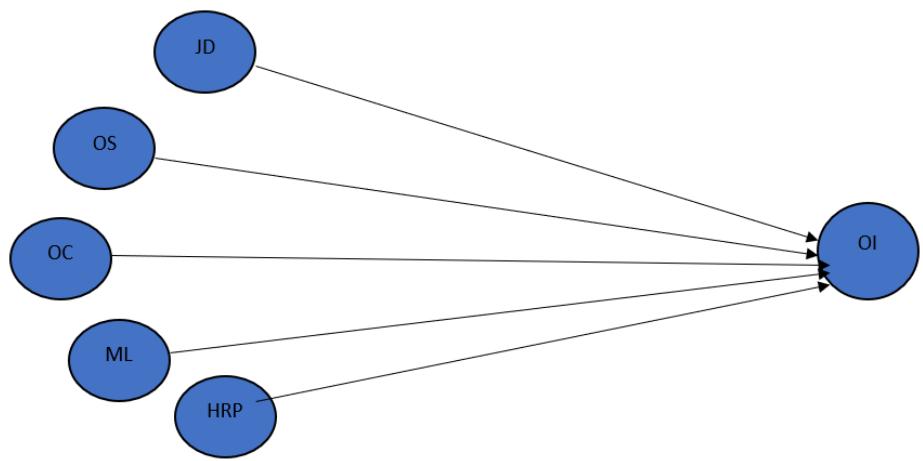 Figure 1: The Conceptual Model of the Phenomenon under Observation
Note: HRP: Human Resource Planning; JD: Job Design; OC: Organizational Culture; ML: Managerial Leadership; OS: Organizational Structure.
## III. DISCUSSIONS AND INTERPRETATIONS
First, this study aims at exploring the role of innovation driven HRM practices on organizational innovation. Specifically, this study seeks to examine the impact of each human resource practices on organizational innovation. First, it proposes that managerial leadership positively impacts organizational innovation. The literature indicates that managerial leadership is key for organizational innovation. Studies have shown that leadership set direction, motivate teams, formulates strategies, and initiates necessary changes for organizational innovation (Crossan and Apaydin, 2010; Kotter, 2002; Topping, 2002). Lack of effective leadership can cause the failure of an entire organization. The ERON and the recent Adani Group scandal are examples of cases to showcase how ineffective leadership can be costive. A firm's reputation and its financial standing can evaporate in a twinkle of an eye because of poor leadership. Secondly, this study proposes that organizational restructuring drives firm's innovation. Studies have emphasized the key role organizational structuring play in adapting a firm to its environmental context (Burns and Stalker, 1991; Razavi and Atternezhad, 2013). Firms need to maintain equilibrium with changes occurring externally otherwise, they are likely to become disconnected to the reality of the industry and lose their competitiveness.
Thirdly, this study proposes that human resource planning impacts organizational innovation. HR planning is a future oriented practice that takes account of present and future human resources needs of an organization. It accounts not only for quantity but also for quality and the right deployment of talents at the right time and place. Changes within and outside of a firm necessitate changes in the workforce strategy otherwise the organization will likely face an over or under staffing; this can be costly. Without aligning business strategy to human resource strategy, firms can be confronted with staffing problems (Khera and Gulati, 2012). Fourthly, this study proposes that organizational culture impacts organizational innovation. Studies have revealed that organizational value systems positively impact organizational innovation (Hague, 1999; Agolla, 2018). Finally, this study proposes that job redesign impacts firm's innovation. Many studies have indicated a reconfiguration of jobs after major changes in the environmental context. For instance, Davis (2010) reported changes in jobs after a shift of the USA economy from manufacturing to service industry. Recently, the emergence of COVID19 has changed the nature of jobs with the emergence of teleworking.
A major external event can affect organizations and necessitate changes in production processes, service delivery, a new business model, new way of communication with internal and external stakeholders. The solutions to this type of organizational challenges are to deploy an integrative HRM strategy. The high-performance practices will cater for the competencies needs of the new changes while the commitment human resource practices will develop the motivation and the employee's commitment required to confront the changes brought about by the external event. However, the proposed HRM driven practices will drive organizational innovation in the following ways. First, organizational restructuring practices will redress the required changes in reporting relations. Secondly, organizational redesign will take care of conception of new jobs or modifying the existing ones to suit the new demands. Thirdly, organizational culture will address changes required in employees' behaviors and attitudes. Fourthly, the human resource planning will handle the current and future human resource needs of the firm in terms of quantity and quality thereby supporting organizational changes. Finally, the managerial leadership is the corner stone of these practices. It is not just a personality but a behavior that turns the other wheels (practices) within a firm. Leadership formulates the vision, inspires, and gain the commitment of employees to rally around a vision. A leader identify and optimizes resources, capitalizes on business opportunities, and mitigates organizational threats. A leader assesses the capability of teams and of its individual members so that he knows how to utilize them in the pursuit of the organizational goal. Integrating and deploying these practices as a bundle will not only drive organizational innovation but positively impacts organizational performance.
## IV. THEORETICAL AND MANAGERIAL IMPLICATIONS
This study contributes to both theories and practices. Theoretically, this study contributes to research by revealing that the importance of human resource management is not limited to employee competencies and commitment development but includes the driving of organizational innovation. This study also contributes to research by proposing a bundle of HRM practices which are innovation driven. This study extends the literature by supporting the notion of dynamic capabilities theory in a sense that innovative driven human resource practices enable not the regeneration but the creation of new firm's resources. The managerial implication of this study is that to enhance organizational adaptive capacity, top management must mobilize firm's capabilities and most importantly firm's adaptive capacity. This includes the deployment of innovation driven human resource management practices consisting of restructuring a firm, redesigning jobs, redefining organizational culture, reformulating workforce strategy and manning firms with managers who possess leadership qualities.
## V. LIMITATIONS AND CONCLUSIONS
This study is not left without limitation. The limitation is the conceptual nature of this work. It only reviews the literature but didn't collect empirical data to validate the formulated propositions. The findings of this study assume that adopting an innovative human resource-based strategy which is internally and externally aligned, organization innovation can always be a success and a catalyst for superior organizational performance. The scope of this study is limited in assessing the role of human resource practices in organizational innovation. In conclusion, this study argues that using these practices as a bundle can yield higher effect on organizational innovation. Therefore, to drive organizational innovation, firms must mobilize and integrate these practices. This study maintains that the human resources management plays a critical role in the survival and success of every organization. Successful organizational innovation can reinforce overall organizational performance. The HRM aids in the development of employee's competencies and commitment but it also enables organizational innovation. Thus, top management must deploy commitment, competencies and innovation enabled HRM practices for superior economic outcomes. Future studies seeking to validate this study model must examine the impact of each practice on organizational innovation. Furthermore, they can examine them as a bundle and investigate their impact on firm's innovation. Finally, future studies should empirically test the impact of each set of practices namely high performance, commitment HRM practices and innovation-driven practices to see which one contributes more to organizational innovation.
### ACKNOWLEDGEMENT
Allow me to thank my directors; Prof. Jean Michel PLANE of Université Paul Valery in France and Professor KABONGO, University of South Florida, USA for their wonderful supervision. Also, my deepest gratitude and appreciation to my family for showing their unconditional love and unending emotional, spiritual, and financial supports.
Competing Interests
The authors have declared that no competing interests exist.
Funding Information
This research received no specific grant from any funding agency in the public, commercial or not-for-profit sectors.
Generating HTML Viewer...
References
48 Cites in Article
Adom (2018). Theoretical and Conceptual Framework: Mandatory Ingredients of a Quality Research.
Tanuja Agarwala (2003). Innovative human resource practices and organizational commitment: an empirical investigation.
J Agolla (2018). Modelling the relationship between innovation, strategy, strategic human resource management and organization compete-5.
I Allner (2008). MANAGERIAL LEADERSHIP AS AN AREA OF DOCTORAL STUDY.
Hassan Aslam,Mehmood Aslam,Naeem Ali,Badar Habib,Madiha Jabeen (2014). Human Resource Planning Practice in Managing Human Resource: A Literature Review.
Georges Bordage (2009). Conceptual frameworks to illuminate and magnify.
David Bowen,Cheri Ostroff (2004). Understanding HRM–Firm Performance Linkages: The Role of the “Strength” of the HRM System.
T Burns,G Stalker (1994). Retrieved from L'appropriation des pédagogies innovantes par les formateurs en bibliothèques universitaires.
C Byles (2022). Organizational Culture and Performance.
John Child (1972). Organizational Structure, Environment and Performance: The Role of Strategic Choice.
J Creswell (2009). Research designs: Qualitative, quantitative, and mixed methods approach.
M Crossan,M Apaydin (2010). A Multi-Dimensional Framework of Organizational Innovation: A Systematic Review of the Literature: A Framework of Organizational Innovation.
Sarah-Jane Cullinane,Janine Bosak,Patrick Flood,Evangelia Demerouti (2013). Job design under lean manufacturing and its impact on employee outcomes.
F Damanpour (1991). Organizational innovation: A meta-analysis of effects of determinants and moderators.
Fariborz Damanpour,Shanthi Gopalakrishnan (1998). Theories of organizational structure and innovation adoption: the role of environmental change.
G Davis (2010). Job design meets organizational sociology.
Jan De Leede,Jan Looise (2005). Innovation and HRM: Towards an Integrated Framework.
J Hackman,Greg Oldham (1976). Motivation through the design of work: test of a theory.
J Hage (1999). ORGANIZATIONAL INNOVATION AND ORGANIZATIONAL CHANGE.
M Hao,D Yazdanifard (2015). Leadership.
Pia Heilmann,Riitta Forsten-Astikainen,Susanna Kultalahti (2020). Agile HRM practices of SMEs.
Hsi-Chi Hsiao,Jen-Chia Chang (2011). The role of organizational learning in transformational leadership and organizational innovation.
S Hunter (2015). Combining Theoretical Perspectives on the Organizational Structure-Performance Relationship.
Dr. Khera (2012). Human Resource Information System and its impact on Human Resource Planning: A perceptual analysis of Information Technology companies.
Martin Kilduff,Daniel Brass (2010). Job design: A social network perspective.
J Kotter (2001). Leadership Theory In Postmodernist Organizations.
A Lam (2004). Organizational Innovation.
Simon Lam,John Schaubroeck (1998). Integrating HR planning and organisational strategy.
Paul Lawrence,Jay Lorsch (1967). Differentiation and Integration in Complex Organizations.
Michael Lewis,James Moultrie (2005). The Organizational Innovation Laboratory.
Yadong Luo (2000). Dynamic capabilities in international expansion.
E Mansaray (2019). The Consequence of Human Resource Planning on Organizational Performance: An Ephemeral Review.
George Marcoulides,Ronald Heck (1993). Organizational Culture and Performance: Proposing and Testing a Model.
Elizabeth Martinez,Nancy Beaulieu,Robert Gibbons,Peter Pronovost,Thomas Wang (2015). Organizational Culture and Performance.
F Morgeson,T Mitchell,D Liu (2015). Event System Theory: An Event-Oriented Approach to the Organizational Sciences.
F Nadežda,C Jozef (2010). Employee motivation and organizational impact of innovation on employee satisfaction.
Paul Osterman (2010). Job design in the context of the job market.
A Pamela,G Umoh,D Worlu (2017). Human Resource Planning and Organizational Performance in Oil and Gas Firms in Port Harcourt.
P Topping (2002). Levin, David Saul, (born 28 Jan. 1962), Chief Executive, McGraw-Hill Education, New York, since 2014.
H Seeck,M.-R Diehl (2017). A literature review on HRM and innovation -taking stock and future directions.
U Sekaran,R Bougie (2003). Research Methods for Business, a Skill Building Approach.
Ashok Som (2008). Innovative human resource management and corporate performance in the context of economic liberalization in India.
D Teece,G Pisano (1994). Dynamic Capabilities of Firms.
Catherine Wang,Pervaiz Ahmed (2007). Dynamic capabilities: A review and research agenda.
H Wang,A Tsui,K Xin (2011). CEO leadership behaviors, organizational performance, and employees' attitudes.
Gary Yukl (1989). Managerial Leadership: A Review of Theory and Research.
N Pijoan,J Plane (2020). Approches critiques des organisations: Mélanges en l'honneur du Professeur Alain Briole.
S Razavi,O Attarnezhad (2013). Management of organizational innovation.
No ethics committee approval was required for this article type.
Data Availability
Not applicable for this article.
How to Cite This Article
Ibrahim Tanko Gampine. 2026. \u201cA Review of Human Resource Management Practices and Organizational Innovation\u201d. Global Journal of Management and Business Research - A: Administration & Management GJMBR-A Volume 23 (GJMBR Volume 23 Issue A6): .
Explore published articles in an immersive Augmented Reality environment. Our platform converts research papers into interactive 3D books, allowing readers to view and interact with content using AR and VR compatible devices.
Your published article is automatically converted into a realistic 3D book. Flip through pages and read research papers in a more engaging and interactive format.
The purpose of this study is to examine the role of human resource management practices on organizational innovation. This study is examined through the lens of Dynamic capability Theory. The methodological approach of this study is a review of literature to identify determinants of organizational innovation. Furthermore, this study ventures into an in-depth analysis of each determinant from which propositions are formulated. Findings of this study show that human resources practices consisting of organizational restructuring, organizational culture, job redesign, managerial leadership and human resource planning are key practices associated with organizational innovation. Thus, this study argues that to confront the challenges associated with the ever-evolving nature of the external environment, top management must use HRM practices to support and drive organizational innovation. So, apart from developing employee competencies and commitment, human resource management contributes to driving organizational innovation. This study extends the literature by supporting the notion of dynamic capabilities theory that innovative driven human resource practices enable regeneration and the creation of new firm’s resources. This study is limited by only assessing the role of human resource practices in innovation driven organizational innovation.
Our website is actively being updated, and changes may occur frequently. Please clear your browser cache if needed. For feedback or error reporting, please email [email protected]
Thank you for connecting with us. We will respond to you shortly.