Article Fingerprint
ReserarchID
MV610
Choose where you want to hide AI Takeaway. Your site-wide choice will be remembered in this browser.
Large scale applications of fertilizer nitrogen (N) have also shown deleterious effects on groundwater quality, especially its nitrate content, which is harmful to health. Furthermore, gaseous losses of N as NH3 and NOx resulting from N fertilization have adverse effects on the environment. Therefore, the goal of all agriculture has to be to “increase food-grain production with the minimum and efficient use of chemical fertilizers”. This calls for a sincere effort on the part of agricultural scientists including extension workers to increase the efficiency of fertilizers applied in the farm fields. Glass fertilizers are new type of advanced and controlled released fertilizer and made of glass matrixes with macro elements (K, P, Mg, S, Ca) most useful for plants and also incorporated with microelements (B, Fe, Mo, Cu, Zn, Mn) which are important to the growth and development of corps or plants. The quantity of the microelements incorporated in the glass as oxide in the range 1-5%. The use of glass fertilizers offers lot of advantages: due to low or controlled solubility it avoid underground water pollution; the soil pH can be regulate by the pH of the glass matrix; do not release acid anions (Cl-, SO2-) which are harmful for plants so there is no risk of soil burning when they are incorrectly dosed; in a single type of fertilizer can be embedded almost all useful elements for plants; the controlled rate of solubility in water can be adjust easily by changing the composition of glass matrix.
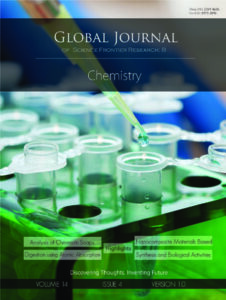
G. Hazra. 2014. "A Review on Controlled Release Advanced Glassy Fertilizer". Global Journal of Science Frontier Research, Global Journal of Science Frontier Research - B: Chemistry GJSFR-B Volume 14 (GJSFR Volume 14 Issue B4).
Crossref Journal DOI 10.17406/GJSFR
Print ISSN 0975-5896
e-ISSN 2249-4626
v1.2
Explore published articles in an immersive Augmented Reality environment. Our platform converts research papers into interactive 3D books, allowing readers to view and interact with content using AR and VR compatible devices.
Your published article is automatically converted into a realistic 3D book. Flip through pages and read research papers in a more engaging and interactive format.
Total Score: 146
Country: India
Subject: Global Journal of Science Frontier Research
Authors: G. Hazra, T Das (PhD/Dr. count: 0)
View Count (all-time): 290
Total Views (Real + Logic): 1654
Total Downloads (simulated): 73
Publish Date: 2014 08, Mon
Monthly Totals (Real + Logic):
We use cookies and similar technologies to improve site performance, understand traffic, and enhance your publishing experience. Cookie Policy
Choose which optional cookies Global Journals can use. Your preference applies across this platform and can be updated any time.
These cookies are required for core website functionality and security.

Lorem ipsum dolor sit amet, consectetur adipiscing elit. Ut elit tellus, luctus nec ullamcorper mattis, pulvinar dapibus leo.