
Loading menu…

A Step towards Strategy for Prevention of Diabetes

A Step towards Strategy for Prevention of Diabetes

Article Fingerprint

ReserarchID

VF1G0

A Step towards Strategy for Prevention of Diabetes Banner

Key Research Insights

Synthesized scholarly intelligence & interactive research assistant
  • English
  • Afrikaans
  • Albanian
  • Amharic
  • Arabic
  • Armenian
  • Azerbaijani
  • Basque
  • Belarusian
  • Bengali
  • Bosnian
  • Bulgarian
  • Catalan
  • Cebuano
  • Chichewa
  • Chinese (Simplified)
  • Chinese (Traditional)
  • Corsican
  • Croatian
  • Czech
  • Danish
  • Dutch
  • Esperanto
  • Estonian
  • Filipino
  • Finnish
  • French
  • Frisian
  • Galician
  • Georgian
  • German
  • Greek
  • Gujarati
  • Haitian Creole
  • Hausa
  • Hawaiian
  • Hebrew
  • Hindi
  • Hmong
  • Hungarian
  • Icelandic
  • Igbo
  • Indonesian
  • Irish
  • Italian
  • Japanese
  • Javanese
  • Kannada
  • Kazakh
  • Khmer
  • Korean
  • Kurdish (Kurmanji)
  • Kyrgyz
  • Lao
  • Latin
  • Latvian
  • Lithuanian
  • Luxembourgish
  • Macedonian
  • Malagasy
  • Malay
  • Malayalam
  • Maltese
  • Maori
  • Marathi
  • Mongolian
  • Myanmar (Burmese)
  • Nepali
  • Norwegian
  • Pashto
  • Persian
  • Polish
  • Portuguese
  • Punjabi
  • Romanian
  • Russian
  • Samoan
  • Scots Gaelic
  • Serbian
  • Sesotho
  • Shona
  • Sindhi
  • Sinhala
  • Slovak
  • Slovenian
  • Somali
  • Spanish
  • Sundanese
  • Swahili
  • Swedish
  • Tajik
  • Tamil
  • Telugu
  • Thai
  • Turkish
  • Ukrainian
  • Urdu
  • Uzbek
  • Vietnamese
  • Welsh
  • Xhosa
  • Yiddish
  • Yoruba
  • Zulu
Reading Preferences
Font Size
Line Spacing
Background
This converted HTML version may contain rendering inconsistencies. Please refer to the PDF for the authoritative version, or click here to provide feedback.

Abstract

Pre-Life exposure relates to development during the time preceding the first appearance of life, a time course from “conception to confinement”. From single cell zygote to finally formed fetus at confinement, a remarkable change occurs due to maternal fuels and hormonal influence on the fetal development. The crucial period in the fetal development is the first trimester. Early exposure to aberrant maternal metabolism in the embryonic developmental stage would result in congenital malformation and fetal wastage. Maintaining maternal glucose at the recommended level of fasting80 -90 mg (4.4 -5.0 mmol/dl) and 2hr postprandial plasma glucose 110 -120 mg/dl (6.1 -6.7 mm0l/dl) during preconceptional period and throughout pregnancy is the assurance for the healthy offspring with ideal birth weight of 2.5 to 3.5 kg and breastfeeding is “a step towards strategy forprevention of diabetes”.

I. INTRODUCTION

The prevalence of diabetes is increasing globally from 463 million in 2019 to 700 million in 2045a 51% increase 1. While several reasons are ascribed for this rising trend including aging population, urbanization, genetic predisposition, nutrition and lifestyle transition, etc., one factor that has not received adequate attention is Gestational Diabetes Mellitus (GDM) currently coined as Hyperglycemia in Pregnancy (HIP) which is defined as any degree of glucose intolerance with onset or first recognition during pregnancy 2. GDM may play a crucial role in the increasing prevalence of diabetes and obesity 3. In 2019 the global prevalence of Hyperglycemia in Pregnancy (HIP) in the age group 20-49 years was estimated to be 20.4 million or 15.8% of live births 1. They had some form of hyperglycemia in pregnancy, of which 83.6% were due to GDM 1. Hence, it has become necessary that all pregnant women should be screened for GDM, even if they have no symptoms 4.

II. INTRA UTERINE PROGRAMMING

David Barker hypothesized that all adult diseases are of fetal origin. The human body's susceptibility to "lifestyle" disease(s) was "programmed intrauterine". The Intrauterine programming, that is Gestational programming is a process whereby stimuli (hyperglycemia) or stresses that occur at critical or sensitive periods of fetal development, permanently change structure, physiology, and metabolism, which predispose individuals to disease in adult life, "Fetal Origin of Adult Diseases 5 ".

III. MATERNAL HYPERGLYCEMIA & PROGENY

Exposure to a diabetic environment in utero is associated with increased occurrence of impaired glucose tolerance and a defective insulin secretary response in adult offsprings, independent of genetic predisposition to type 2 diabetes 6. The ovum is well supplied with mitochondria but the sperm contains a few and even those few do not persist in the offspring. At fertilization it is only the nucleus of the spermatozoon that enters the ovum and thus all the cytoplasm, mitochondria and mitochondrial DNA are exclusively maternally inherited 7. Maternal inheritance is attributed to mutation in the gene(s) present on mitochondrial (mt) DNA and is transmitted invariably by an affected mother to her progeny. The unique feature of mitochondrial (mt) DNA is its maternal inheritance 7.

There is a great variability in fetal growth in the human, based on both genetics and environmental factors. Although one cannot control one's genes, fetal growth may be affected through alteration in the maternal environment by medical nutrition therapy (MNT). MNT plays a vital role in every stage of fetal development 8.

a) Diagnosis of GDM

Universal screening for GDM has to be made mandatory as intrauterine exposure of the fetus to hyperglycemia is at a higher risk of developing glucose intolerance in the future. Unfortunately, for this there is no uniformity in the guidelines for diagnosing GDM. All the diagnostic criteria require women to be in fasting, including that of International Association of Diabetes in Pregnancy Study Group guideline (IADPSG) 9. The concern of this guideline is that, it over diagnoses GDM without clear clinical benefit 10. Presently, this guideline's importance is declining because even at centers that accepted IADPSG recommendation, the approach varies and needs revision for standardization of the strategy for diagnosing GDM 11.

In this context, a study established that the two-hour Plasma Glucose≥ 140 mg/dl (7.8 mmol/dl) with 75g oral glucose administered to a pregnant woman in the fasting or non-fasting state, without regard to the time of the last meal was able to identify woman with GDM 12,13,14. This "Single Test procedure" which is feasible to perform in all resource settings has been adopted by Diabetes in Pregnancy Study Group India (DIPSI) for diagnosing GDM. National Institute of Clinical Excellence(NICE) guidelines also recommend 2hr PG ≥7.8 mmol/dlas one of the diagnostic criteria for GDM based on the study performed in multi ethnic population of UK 15. The DIPSI procedure is approved by the Ministry of Health & Family Welfare Government of India 16 and recognized by, World Health Organization (WHO) 17, International Federation of Obstetrics and Gynecologists (FIGO) 18 & International Diabetes Federation (IDF) 19.

b) Appropriate trimester for Screening

In planning for pregnancy, the metabolic state has to be maintained at normal level. During Preconception period, the recommend target glycemic level is fasting plasma glucose ≤ 5.0 mmol/dl, 2hr postprandial ≤ 6.7 mmol/dlmg/dl and A1c ≤ 6%. The current observation is that GDM manifests in all trimesters of pregnancy 20. In a study, out of N=11785 screened, 31.5% were in the first trimester, 42.2% in the second trimester and 25.3% in the third trimester 21 (Table – 1). The first trimester begins on the first day of the last period and lasts until the end of week 12. This means that by the time one knows for sure of her pregnancy, she might already be five or six weeks of pregnancy. By seventh week all the essential organs began to form and by ninth week almost completed (Fig-1). A lot happens during the first three months (Fig - 2). Hence, the present recommendation is that there is a "Need for testing glucose tolerance in the early weeks of pregnancy" 22.

In fetal pancreas each islet cell functions as an endocrine organ appears at 11 th week of gestation recognizes and responds to maternal glycemia at 15-16 weeks of gestation 23. Fetuses are exposed to increased amniotic fluid glucose before 16 th weeks of gestation, suggesting that metabolic perturbations are underway before normally recommended 24 th to 28 th weeks of gestation for diagnosis and that earlier screening and intervention may be warranted. It is wiser to test the maternal glucose level on the next day woman misses her period. Very early diagnosis of pregnancy can be made by estimating serum beta Hydroxy Chorionic Gonadotropin (HCG) at the end of 3 rd wk of menstrual cycle and by urine beta HCG by the end of 4th wk of menstrual cycle 24. As alluded earlier it is advisable to screen for GDM in all the trimesters and most importantly the first trimester.

IV. MATERNAL NUTRITION & TARGET FOR GLYCEMIC CONTROL

The goal of nutrition in pregnancy is to support maternal, placental, and fetal metabolic needs, and it may be the first introduction to a lifetime of healthy eating 25. Postprandial hyperglycemia plays a more important role in causing fetal overgrowth. Data suggests that postprandial glucose levels more closely relates to macrosomia risk compared to fasting glucose levels 26,27. Based on studies in preterm births renal threshold for glucose in the fetus is probably <6.7 mmol/dl. When maternal glucose level is >6.1 mmol/dl, the fetal blood glucose load causes fetal glycosuria and consequently a glucose-enriched amniotic fluid. After 20 weeks of gestation, the fetus begins to swallow the amniotic fluid. In addition to the placental transfer of glucose, ingested high glucose amniotic fluid also stimulates insulin secretion. Thus, even transient elevations of blood glucose on the maternal side not only result in elevation of blood glucose on the fetal side but also provide for glucose ingestion by the fetus for many hours. Thus, post prandial hyperglycemia for less than 1 h once a day in the mother may produce fetal insulin stimulus, through the oral route for hours. Elevations of maternal glucose levels more frequently (after every meal, for example) may produce a more prolonged oral glucose load for the fetus resulting in an overfed fat fetus 28. Monitoring maternal glycemia and maintaining 2 hr postprandial plasma glucose between 6.1 – 6.7 mmol/dl by using plasma calibrated glucometer level every week, may be a wise decision.

V. CONCLUSION

Fetal Development invariably involves exquisite interplay between maternal physiology, metabolism and hormones. Nature Nurtures the embryogenesis from conception to confinement. The environment that the oocyte is exposed to, during the peri-conception period can have a significant impact on oocyte developmental competence. The ability of the oocyte to support fertilisation and subsequent embryo development and the long-term health of the resulting offspring depends upon the optimum metabolic control early in pregnancy. This will necessitate pre-pregnancy planning for women with pre-existing diabetes, as well as for those at increased risk of GDM, and better means to safely normalize glycemia. The aim in the management is, the "Growing fetus should not know that its mother has Glucose Intolerance". For that glycemic target should be that of normal pregnancy, the FPG 4.4 – 5.0 mmol/dl, Post prandial glucose 6.1 -6.7 mmol/dl and Mean PG glucose 95 – 105 mg/dl(5.3 – 5.9 mmol/dl) 29. The goal is to obtain newborn babies birth weight appropriate for gestational age between 2.5 and 3.5 kg, a step to prevent offspring developing diabetes 30. Breastfeeding for the first 6 months protects offspring developing Type 2 DM 31. Preventive measures against diabetes should start during intra uterine period and continue throughout life from early childhood 32. GDM offers an important opportunity for the development, testing and implementation of clinical strategies for diabetes prevention 33. Though the fetal development is discussed in days and weeks, it is wiser to maintain recommended target glycemic level during pre-conception period and from conception to confinement. This continued care is a "A step towards strategy for prevention of diabetes".

Compliance with Ethical Standards

Conflicts of Interest: All the authors are governing council members of Diabetes in Pregnancy Study group of India (DIPSI)
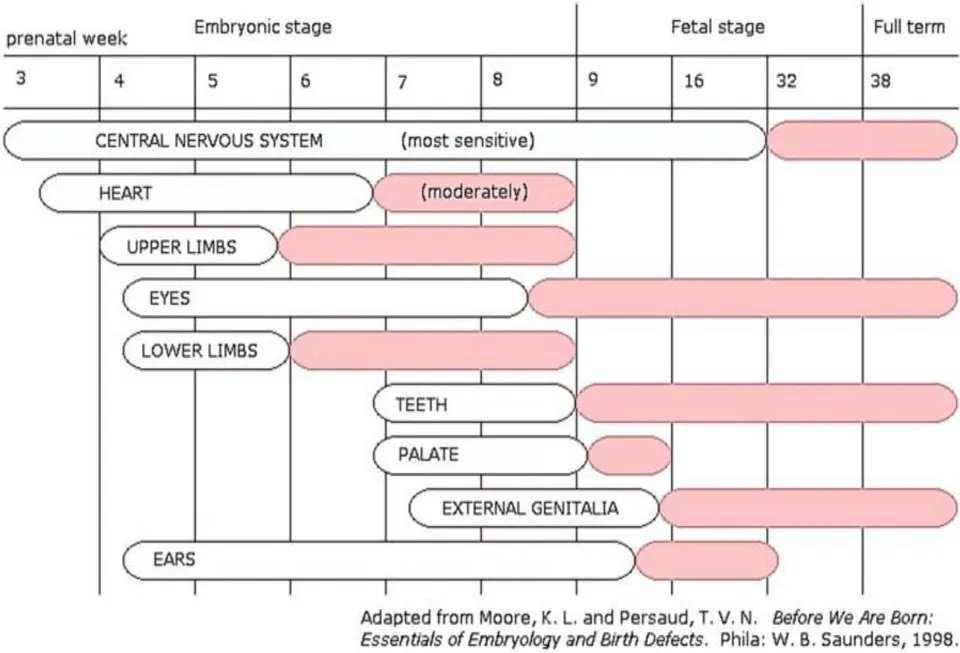
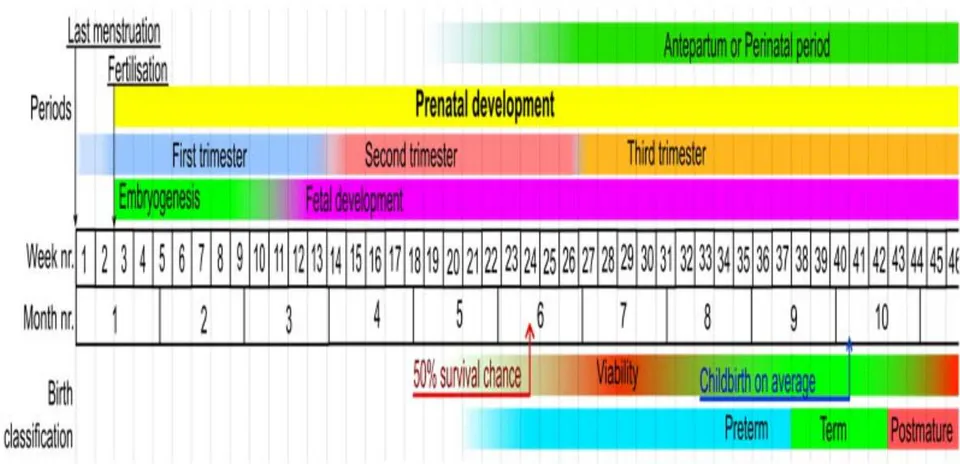
Fig. – 1: Timeline of development of major organs in utero: Adopted from Biology Dictionary Prenatal Development

Fig. – 2: Progress of embryogenesis and fetal development

Table -1: Manifestation of GDM detected in each trimester
TrimesterNumber of mothers screenedGDMN(%)
14300233 (31.5)
24632320 (42.2)
32853187 (25.3)
Total11785745 (100)

References

36 Cites in Article
  1. 1. Idf Diabetes Atlas Group (2019). Update of mortality attributable to diabetes for the IDF Diabetes Atlas: Estimates for the year 2013. Diabetes Research and Clinical Practice, 109(3), 461-465.
  2. 2. Boyd Metzger (1991). Summary and Recommendations of the Third International Workshop-Conference on Gestational Diabetes Mellitus. Diabetes, 40(Supplement_2), 197-201.
  3. 3. Asslamira Ferrara (2007). Increasing Prevalence of Gestational Diabetes Mellitus. Diabetes Care, 30(Supplement_2), S141-S146.
  4. 4. Kristina Fiore (2014). United states Preventive Service Task force (USPSTF) backs Universal diabetes Screening. United states Preventive Service Task force (USPSTF) backs Universal diabetes Screening
  5. 5. Alan Lucas,John Wiley,Chi Sons,Chester (1991). Programming by Early Nutrition in Man. Review Article, 38-55.
  6. 6. Eugène Sobngwi,Philippe Boudou,Franck Mauvais-Jarvis,Hervé Leblanc,Gilberto Velho,Patrick Vexiau,Raphaël Porcher,Samy Hadjadj,Richard Pratley,P Tataranni,Fabien Calvo,Jean-François Gautier (2003). Effect of a diabetic environment in utero on predisposition to type 2 diabetes. The Lancet, 361(9372), 1861-1865.
  7. 7. Mohd Nausheen Khan,Ishaq,E Gazala Khan,Sastry (2004). Early Age at Onset and High Frequency of Associated Complications In Maternally Transmitted Type 2 Diabetes Mellitus. Int. J. Diab. Dev. Countries, 24, 36-39.
  8. 8. Mirjana Barjaktarovic,I Tim,Korevaar,W Vincent,Yolanda Jaddoe,Theo De Rijke,Robin Visser,Eric Peeters,Steegers (2016). Human Chorionic gonadotropin (HCG) concentration during the late first trimester are associated with the fetal growth inafetal sex -specific manner. Eur J Epidemiol, 32(2), 135-144.
  9. 9. Boyd Metzger (2010). International Association of Diabetes and Pregnancy Study Groups Recommendations on the Diagnosis and Classification of Hyperglycemia in Pregnancy. Diabetes Care, 33(3), 676-682.
  10. 10. Shakila Thangaratinam,Cooray,; Shamil,Nithya Sukumar,Mohammed Huda,Roland Devlieger,Benhalima,Katrien; Mcauliffe,Fionnuala,Saravanan,Ponnusamy,Helena Teede (2020). International Association of Diabetes and Pregnancy Study Groups Recommendations on the Diagnosis and Classification of Hyperglycemia in Pregnancy. Diabetes Care, 33(3), 676-682.
  11. 11. Annunziata Lapolla,Boyd Metzger (2018). The post-HAPO situation with gestational diabetes: the bright and dark sides. Acta Diabetologica, 55(9), 885-892.
  12. 12. C Anajlakshi,V Balaji,Madhuri Balaji,S Ashalatha,Sheela Suganthu,T Arthi,V Thamizharasi,V Seshiah (2009). A Single Test Procedure to Diagnose Gestational Diabetes Mellitus. Acta Diabetologica, 46, 51-54.
  13. 13. Paul Franks,Helen Looker,Sayuko Kobes,Leslie Touger,P Tataranni,Robert Hanson,William Knowler (2006). Gestational Glucose Tolerance and Risk of Type 2 Diabetes in Young Pima Indian Offspring. Diabetes, 55(2), 460-465.
  14. 14. David Pettitt,Peter Bennett,Mohammed Saad,Marie Charles,Robert Nelson,William Knowler (1991). Abnormal Glucose Tolerance During Pregnancy in Pima Indian Women: Long-Term Effects on Offspring. Diabetes, 40(Supplement_2), 126-130.
  15. 15. Diabetes in pregnancy: management from preconception to the postnatal period NICE guideline Published: 25 February 2015 nice. Diabetes in pregnancy: management from preconception to the postnatal period NICE guideline Published: 25 February 2015 nice
  16. 16. Bhavna Kumari,Anil Teotia,Prasad Thota,Piyush Kumar,Manoj Pandey,Rajeev Raghuvanshi (2018). Assessment of the Potency of Ceftiofur Sodium Powder through Validated Microbiological Method. Journal of Forensic Chemistry and Toxicology, 8(2), 53-61.
  17. 17. Stephen Colagiuri,Maicon Falavigna,Mukesh Agarwal,Michel Boulvain,Edward Coetzee,Moshe Hod,Sara Meltzer,Boyd Metzger,Yasue Omori,Ingvars Rasa,Maria Schmidt,Veerasamy Seshiah,David Simmons,Eugene Sobngwi,Maria Torloni,Hui-Xia Yang (2014). Strategies for implementing the WHO diagnostic criteria and classification of hyperglycaemia first detected in pregnancy. Diabetes Research and Clinical Practice, 103(3), 364-372.
  18. 18. Hod Moshe,Anil Kapur,David Sacks,Eran Hadar,Mukesh Agarwal,Gian Carlo,Di Renzo,Luis Caberoruaro,Harold David Mclyntyre,Jessica Morris,Hema Divakar (2015). The International Federation of Gynecology and Obstetrics (FIGO) Initiative on Gestational Diabetes Mellitus; A Pragmatic Guide for Diagnosis, Management and Care. Int J GynaecolObstet, 131(3), 173-211.
  19. 19. Chittaranjan N Purandare (2017). Shaukat Sadikot. Nam Cho Han (IDF), Moshe Hod (FIGO). FIGO-IDF Joint Statement and Declaration on Hyperglycemia in Pregnancy
  20. 20. Seshiah,Balaji,S Madhuri,Balaji,T Paneerselvam,M Arthi,Manjula Thamizharasi,Datta (2007). Gestational Diabetes Mellitus manifests in all trimester of pregnancy. Diabetes Res Clin Pract, 77(3), 482-484.
  21. 21. Seshiah Veeraswamy,Hema Divakar,Sanjay Gupte,Manjula Datta,Anil Kapur,Balaji Vijayam (2008). Need for testing glucose tolerance in the early weeks of pregnancy. Indian Journal of Endocrinology and Metabolism, 20(1), 43.
  22. 22. Sanjay Gupte,; Manjula Datta,Anil Kapur Unknown Title. Balaji Vijayam, 9, 11.
  23. 23. Seshiah Veeraswamy,Hema Divakar,Sanjay Gupte,Manjula Datta,Anil Kapur,Balaji Vijayam (2016). Need for testing glucose tolerance in the early weeks of pregnancy. Indian Journal of Endocrinology and Metabolism, 20(1), 43.
  24. 24. A J Peter,M Adam,M Kari Teramo,Niels Raiha Human Fetal Insulin Metabolism Early in Gestation: Response to Acute Elevation of the Fetal Glucose Concentration and Placental Transfer of Human Insulin-I-131. Human Fetal Insulin Metabolism Early in Gestation: Response to Acute Elevation of the Fetal Glucose Concentration and Placental Transfer of Human Insulin-I-131
  25. 25. M (1969). Unknown Title. Diabetes, 18(6), 409-416.
  26. 26. Carolyn Feldkamp,William Pfeffer (1982). The Measurement of Human Chorionic Gonadotropin for Pregnancy Testing. Henry Ford Hospital Medical Journal, 30(4), 207-213.
  27. 27. David Barker,Kent Thornburg (2003). The Obstetric Origins of Health for a Lifetime. Clinical Obstetrics & Gynecology, 56(3), 511-519.
  28. 28. C Combs,Erica Gunderson,John Kitzmiller,Laurence Gavin,Elliot Main (1992). Relationship of Fetal Macrosomia to Maternal Postprandial Glucose Control During Pregnancy. Diabetes Care, 15(10), 1251-1257.
  29. 29. L Jovanovic,C Peterson,G Reed (1991). Maternal postprandial glucose levels and infant birth weight: The Diabetes in Early Pregnancy study. Am J of ObstetGynecol, 164, 103-111.
  30. 30. Lois Jovanovic,Point (2007). Point: Oral Hypoglycemic Agents Should Not Be Used to Treat Diabetic Pregnant Women. Diabetes Care, 30(11), 2976-2979.
  31. 31. V Seshiah,Vijayam Balaji,Rajeev Chawla,Sunil Gupta,Shalini Jaggi,C Anjalakshi,Hema Divakar,Samar Banerjee,N Bhavatharini,Uday Thanawala (2019). Diagnosis and management of gestational diabetes mellitus guidelines by DIPSI (Revised). International Journal of Diabetes in Developing Countries, 43(4), 485-501.
  32. 32. Lois Jovanovic (1998). Gestational Diabetes Mellitus. Diabetes Care, 21(Supplement_1), S60-S61.
  33. 33. Bernardo Horta,Natalia De Lima (2019). Breastfeeding and Type 2 Diabetes: Systematic Review and Meta-Analysis. Current Diabetes Reports, 19(1)
  34. 34. Bernardo Lessahortac,Natalia Peixoto De Lima (2019). Publisher Correction. Applied Biochemistry and Biotechnology, 196(9), 6574-6574.
  35. 35. Jaakko Tuomilehto (2005). A Paradigm Shift is Needed in the Primary Prevention of Type 2 Diabetes. John Willey & sons limited, 153-168.
  36. 36. Anny Thomas A Buchanan,Xiang,Richard Siri L Kjos,Watanabe (2007). What is gestational diabetes?. Diabetes Care, 30(2), 105-111.

Funding

No external funding was declared for this work.

Conflict of Interest

The authors declare no conflict of interest.

Ethical Approval

No ethics committee approval was required for this article type.

Data Availability

Not applicable for this article.

How to Cite This Article

Vijayam Balaji, Veeraswamy Seshiah, Madhuri S. Balaji, N. Bhavatharani, C. Anjalakshi, A. Paneerselvam. 2020. "A Step towards Strategy for Prevention of Diabetes". Global Journal of Medical Research - F: Diseases GJMR-F Volume 20 (GJMR Volume 20 Issue F12).

More Citation Formats

Download Citation

Journal Specifications

Crossref Journal DOI 10.17406/gjmra

Print ISSN 0975-5888

e-ISSN 2249-4618

Keywords
Classification
GJMR-F Classification NLMC Code: WD 200
Version of record
v1.2

Issue date
December 14, 2020

Language
English
Order Article Reprint
Experience in AR

Explore published articles in an immersive Augmented Reality environment. Our platform converts research papers into interactive 3D books, allowing readers to view and interact with content using AR and VR compatible devices.

Read in 3D

Your published article is automatically converted into a realistic 3D book. Flip through pages and read research papers in a more engaging and interactive format.

Article Matrices
Total Views: 1.2K
Total Downloads: 106
All Trends

Request Access

Please fill out the form below to request access to this research paper. Your request will be reviewed by the editorial or author team.
X

This is the heading

Lorem ipsum dolor sit amet, consectetur adipiscing elit. Ut elit tellus, luctus nec ullamcorper mattis, pulvinar dapibus leo.

High-quality academic research articles on global topics and journals.

A Step towards Strategy for Prevention of Diabetes

Vijayam Balaji
Vijayam Balaji
Veeraswamy Seshiah
Veeraswamy Seshiah
Madhuri Balaji
Madhuri Balaji
N. Bhavatharani
N. Bhavatharani
C. Anjalakshi
C. Anjalakshi
A. Paneerselvam
A. Paneerselvam