
Introduction
Purchasing is essential for an organization’s efficiency. It plays a key role in managing the supply chain, ensuring timely access to necessary materials and services for production. It helps maintain quality, lower costs, and build strong relationships with suppliers. An effective purchasing system includes clearly defined steps: identifying material needs, choosing suppliers, placing orders, receiving goods, verifying quality, and keeping thorough records. Documentation, such as purchase requisitions and invoices, supports these steps and helps prevent errors and miscommunication. Organizations are increasingly improving their purchasing processes to boost efficiency and reduce costs. Good documentation supports internal control and compliance with auditing requirements. In particular, the food processing industry needs efficient purchasing due to its production demands and quality requirements. Timely procurement from reliable vendors is essential to avoid disruptions.
Naga Foods Limited is an example of a food manufacturer that relies on a strong purchasing system to acquire raw materials and supplies. This study looks closely at Naga Foods’ purchasing procedures and documentation practices. It assesses how these activities are performed, recorded, and evaluated to identify areas for improvement. The research also examines vendor relationships, communication, and performance evaluation as important aspects of effective procurement. Additionally, the study highlights the importance of proper documentation in ensuring transparency and accuracy in transactions. This helps organizations track material flows and maintain accountability, while also facilitating internal audits. Overall, this study deepens the understanding of purchasing procedures and documentation in manufacturing, offering insights into the role of effective procurement management in achieving operational success.
Purchasing activities in an organisation vary based on the nature of materials, urgency of requirement, and operational needs. To ensure effective procurement and cost control, purchasing is classified into different types. Each type of purchasing follows specific methods and procedures depending on the purpose and frequency of the purchase. Proper identification of purchasing types helps in smooth operations and better decision-making. Understanding these types is essential for managing purchasing functions efficiently.
Need of Study
To study coordination between purchase, stores, accounts, and production departments.
To understand how documentation supports the purchasing function.
To identify gaps, delays, or inefficiencies in the purchasing process.
To evaluate whether proper internal control systems are maintained.
Objectives of Study
To study the purchasing procedures and documentation system followed by an organization
To examine the process of purchase requisition and approval system.
To study purchase order preparation and authorization procedures
To evaluate documentation control and record maintenance practices
Significance of Study
Helps the company improve efficiency in purchasing operations.
Supports better cost control and reduction of unnecessary expenses.
Enhances transparency and accountability in documentation.
Strengthens internal control and audit compliance.
LITERATURE REVIEW
Purchasing is a key part of how organizations operate. It ensures the availability of materials, goods, and services needed for production and business activities. According to Van Weele (2014), purchasing involves more than just buying materials; it also includes managing relationships with suppliers, controlling procurement costs, and making sure the right quality of materials is available at the right time. Good purchasing practices help production run smoothly and boost overall efficiency.
The idea of purchasing management has changed a lot over the years and has become a strategic part of supply chain management. Monczka et al. (2015) explained that organizations need to use organized purchasing methods to lower procurement risks and enhance supplier performance. Effective planning and structured purchasing systems help organizations coordinate better with suppliers, ensuring an uninterrupted supply of materials.
Documentation is crucial in the purchasing process as it provides formal proof of procurement activities. Lysons and Farrington (2016) noted that documents like purchase requisitions, purchase orders, invoices, and goods receipt notes help record transactions between buyers and suppliers. These documents also support financial oversight and promote transparency in procurement operations.
According to Baily et al. (2015), the purchasing cycle typically includes several steps: identifying material needs, choosing suppliers, placing orders, receiving materials, and completing payments. Each step requires proper documentation to ensure that procurement activities are recorded correctly and monitored effectively. Without the right documentation, organizations can face operational issues, financial mistakes, and communication problems with suppliers.
In today's organizations, purchasing is increasingly seen as a strategic activity that contributes to gaining a competitive edge. Christopher (2016) highlighted that effective procurement management boosts supply chain performance and helps organizations become more cost-efficient. Building strong relationships with suppliers and keeping accurate procurement records allow organizations to assess supplier reliability and make informed purchasing decisions.
Strategic purchasing also significantly impacts organizational performance. Cousins et al. (2008) stressed that purchasing should align with overall organizational strategies for long-term benefits. When organizations implement clear purchasing procedures backed by effective documentation systems, they can enhance control and improve procurement efficiency.
Additionally, Dobler and Burt (2012) stated that purchasing documentation is an important part of internal control systems within organizations. Documentation ensures that procurement transactions are authorized, recorded, and verified correctly. These records also aid organizations during financial audits and performance checks.
Supplier relationships are also vital for effective purchasing. Gadde and Håkansson (2001) suggested that organizations should form long-term partnerships with reliable suppliers to ensure a steady supply of materials and maintain product quality. Good documentation and communication systems help strengthen supplier relationships and improve coordination between organizations and vendors.
The review of existing literature shows that purchasing procedures and documentation are vital for effective procurement management. Well-structured purchasing systems help organizations maintain transparency, improve supplier coordination, and support smooth operations. Thus, studying purchasing procedures and documentation practices in organizations like Naga Foods Limited offers valuable insights into procurement efficiency and organizational performance.
RESEARCH METHODOLOGY
This study adopts a descriptive research design to analyze the purchasing procedures and documentation practices followed at Naga Foods Limited. The purpose of the study is to understand the procurement process, vendor involvement, and the effectiveness of documentation used in purchasing activities within the organization.
Data Collection
The study is based on both primary data and secondary data. Primary data was collected directly from vendors associated with Naga Foods Limited. A structured questionnaire was prepared to obtain information regarding vendor experience, purchasing procedures, communication with the company, and documentation practices followed during procurement activities.
The questionnaire was distributed through Google Forms, direct phone communication, and manual feedback from vendors. A total of 50 vendors who are involved in supplying materials and services to the company participated in the study. Their responses provided valuable insights into the purchasing procedures and documentation system followed by the organization.
Secondary data was collected from company records, procurement documents, academic books, research journals, and relevant websites related to purchasing management and supply chain practices.
Sampling Technique
The study used a convenience sampling method to collect responses from vendors who are actively associated with the purchasing activities of Naga Foods Limited. A sample size of 50 vendors was considered for the study to understand their perspectives on purchasing procedures and documentation practices.
Data Analysis
The collected data was organized, classified, and analyzed using percentage analysis and simple tabulation methods. The responses from vendors were interpreted to understand the efficiency of purchasing procedures and the role of documentation in procurement activities at Naga Foods Limited.
Research Focus
The study mainly focuses on examining the purchasing procedures, vendor interaction, and documentation practices followed in the procurement process. It also attempts to identify areas where improvements can be made in order to enhance procurement efficiency and strengthen vendor relationships.
ANALYSIS
Years of Association
| Years of association | Number of vendor | Percentage |
|---|---|---|
| 1-3 years | 5 | 10% |
| 3-5 years | 8 | 16% |
| More than 5 years | 37 | 74% |
| Total | 50 | 100% |
Years of association

Years of association
The distribution of vendors based on duration of association indicates that 10% of vendors have been associated for 1–3 years, 16% for 3–5 years, and a significant majority of 74% for more than 5 years. This distribution highlights the long-standing nature of vendor relationships maintained by Naga Foods.
A category-wise observation shows that packing material vendors predominantly fall within the 3–5 years association period, indicating a stable but relatively recent consolidation of suppliers in this category. In contrast, the majority of service vendors, as well as vendors supplying maintenance, repair, and operational materials, have been associated with the company for more than 5 years. This reflects sustained collaboration and continued reliance on established suppliers across key operational areas.
The overall pattern suggests that the company maintains long-term relationships with its vendors, which contributes to consistency in supply, improved coordination, and reliability in delivery performance. Such long-standing associations indicate mutual trust, operational stability, and an effective vendor relationship management approach.
Rating Focused on Material Quality
| Rating | Number of vendor | Percentage |
|---|---|---|
| Very High | 26 | 52% |
| High | 14 | 28% |
| Moderate | 10 | 20% |
| Total | 50 | 100% |
Rating of Material quality
Rating of Material quality
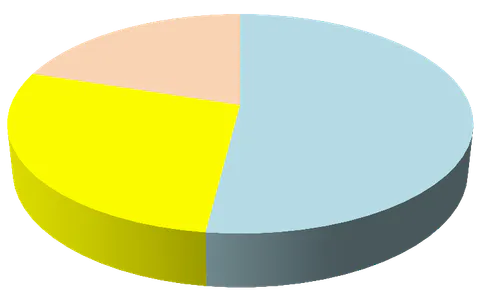
The analysis indicates that 52% of vendors reported that Naga Foods places a very high level of focus on material quality, 28% reported a high level of focus, and 20% indicated a moderate level of focus. These findings suggest that quality is a key consideration in the company’s procurement decisions.
However, the degree of quality emphasis varies depending on the nature and criticality of the materials procured. Materials that directly influence product safety, operational reliability, and production continuity such as packing materials, maintenance components, and essential production inputs require very high quality standards. In contrast, for non-critical or routine materials, procurement decisions may balance quality requirements with cost and availability considerations.
Overall, the results indicate that the organization adopts a need-based quality approach, ensuring strict quality standards for critical materials while maintaining practical procurement flexibility for other categories.
Mode of Receiving PO
| Mode of Receiving | Number of vendor | Percentage |
|---|---|---|
| 45 | 90% | |
| SAP | 0 | 0% |
| Hard copy | 5 | 10% |
| Total | 50 | 100% |
Mode of Receiving PO
Mode of Receiving PO
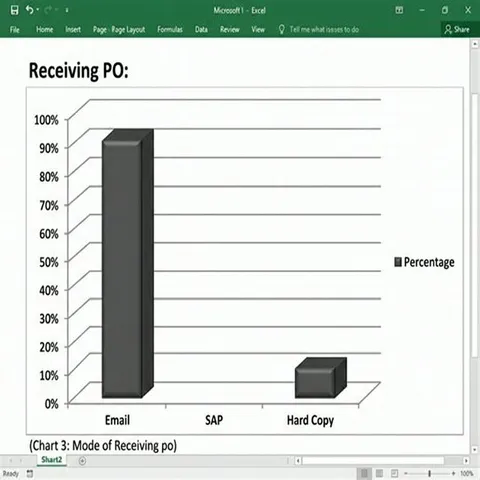
The analysis of the mode of receiving purchase orders indicates that 90% of vendors receive their purchase orders through email communication, while 10% receive purchase orders in hard copy form. The vendors receiving hard copy purchase orders primarily belong to the service category, where documentation requirements and operational convenience may necessitate physical records.
The predominance of email-based purchase order communication reflects the adoption of efficient and timely procurement practices by Naga Foods. Electronic communication enables faster transmission of order details, reduces processing time, and supports accurate documentation of transactions. It also facilitates prompt confirmation, better coordination, and improved responsiveness between the company and its vendors.
Overall, the findings indicate that digital communication, particularly email, plays a significant role in strengthening coordination, ensuring transparency in order processing, and maintaining a smooth and professional business relationship between the organization and its vendors.
Conclusion
The present study examined the purchasing procedures and documentation practices followed at Naga Foods Limited. Purchasing is a critical function in any manufacturing organization, as it ensures the availability of required materials for continuous production activities. An effective purchasing system supported by proper documentation helps organizations maintain operational efficiency, transparency, and accountability in procurement processes.
Based on the findings of the study, it is evident that the purchasing department plays a significant role in coordinating procurement activities and maintaining communication with vendors. The organization follows structured purchasing procedures that include identifying material requirements, selecting suppliers, placing purchase orders, receiving materials, and maintaining necessary documentation related to procurement transactions. These procedures help ensure that materials are procured in a systematic manner while maintaining quality standards and cost efficiency.
The study also highlights the importance of maintaining strong relationships with suppliers in order to ensure consistent supply of materials and smooth operational performance. Vendor cooperation and clear communication contribute significantly to improving procurement efficiency. In addition, proper documentation serves as an important tool for monitoring procurement transactions, supporting financial control, and facilitating internal auditing processes.
Overall, the findings of the study indicate that systematic purchasing procedures and effective documentation practices contribute to the efficient functioning of procurement activities at Naga Foods Limited. However, continuous improvement in purchasing management, vendor coordination, and digital documentation systems can further enhance procurement efficiency and organizational performance.
In conclusion, purchasing procedures and documentation are essential elements of effective procurement management in manufacturing organizations. The insights obtained from this study provide a better understanding of procurement practices and highlight the importance of maintaining structured purchasing systems to support operational success and long-term organizational growth.