Since they typically live hand-to-mouth, poor households are disproportionately affected by inflation. Even modest price increases have a significant impact on poorer families’ consumption compared to wealthier families. In addition, unchecked inflation creates poverty traps. It forces low-income families to eat lower-quality food to prevent famine, which can have an impact on the cognitive development of their kids. Nowadays, that is a serious issue in our country, so the researcher has chosen that topic. The study is based on primary as well as secondary data, which was collected by a convenient sampling method from 203 respondents through a structured questionnaire in Saurashtra; The researcher used different tests and tools, including pilot surveys, a reliability test (the results of which are given below), and the above tools based on different objectives. The researcher used the Mann Whitney U test (U) for Gender and Place and the Kruskal Wallis test (H) in other cases. It is also seen that 63% of respondents say that inflation is increasing due Inflation has increased due to the current Russia-Ukraine war, and at present, there is a problem of inflation in most of the countries of the world because 85% of respondents agree with this sentence.
## I. INTRODUCTION
Poor households are particularly impacted by inflation because they often live pay check to pay check. When compared to wealthy families, even minor price increases have a significant impact on how much a family spends. Unchecked inflation also creates poverty traps. In order to avoid starvation, it forces low-income families to consume food of lower quality, which may have an effect on the cognitive development of their children. The researcher chose that topic since it is a pressing issue in our nation right now. In fact, this is the
30th time in a row that CPI inflation has remained above the RBI's medium-term target of $4\%$.
The last time inflation was below $4\%$ was in September 2019. (https://timesofindia.indiatimes.com, 2019). Because to the convergence of China's new COVID-19 lockdowns and Russia's invasion of Ukraine, businesses and consumers are worried that America's already 40-year-high inflation rate will continue to be high long beyond 2022. The situation in Ukraine increases the likelihood of price shocks related to food and energy, while restrictions in China are expected to make it more difficult to address supply chain problems. Up until now, price increases have mainly been caused by certain supply chain problems that will probably be fixed within the next six to twelve months. There is cause to believe that firms can beat inflation in the interim. For central banks in South America and the Caribbean, inflation is a rising source of concern. In the first months of 2021, the economic rebound was greater than anticipated. Reflecting more mobility and fewer containment restrictions, as well as the stimulus that governments used to lessen the consequences of the pandemic. Yet, the region is also experiencing rising prices and inflation expectations. All of this is taking place as nations face threats from COVID-19 variations like Delta and new infection waves that could impede economic growth and recovery. The dangers might be very serious. The twin concerns of an economic downturn and rising inflation are already present in several nations in the region, with potentially enormous negative effects on the poor. (iadb.org, 2022).
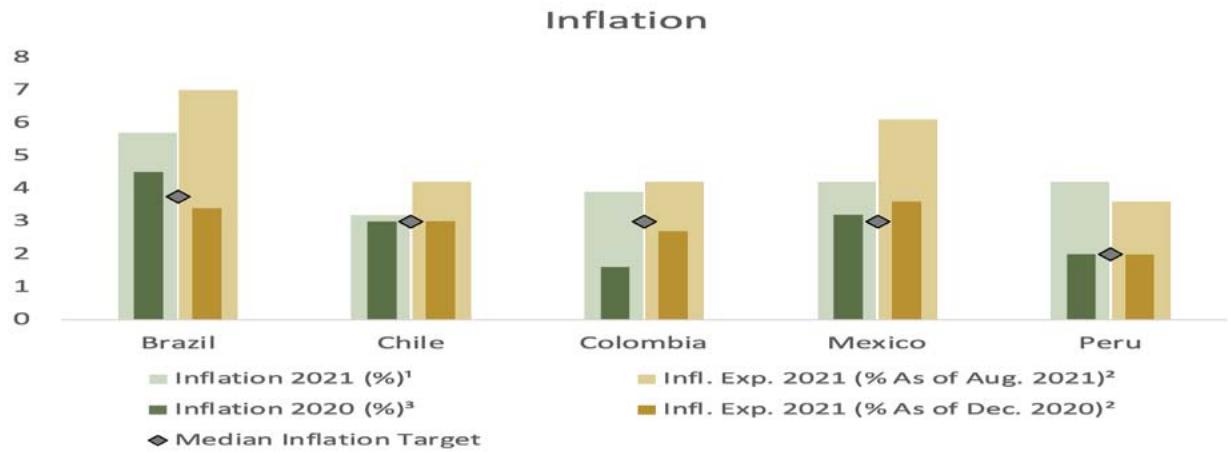
Figure 1.1: Inflationary Situations in other Countries.
Source: Own Estimations using Data from Haver and the IDB
1. The Customer Price Index from December 2020 to August 2021 will change.
2. Predicted change in the customer price index between December 2020 and December 2021.
3. From December 2019 to December 2020, the Consumer Price Index changed.
## II. REVIEW OF LITERATURE
David, Perera, & Thomas, (2014), this article looks at how Australian households' cost of living has changed over the past 10 years. The consumer price index (CPI), which measures inflation, overstates 'real' increases in the cost of living due to a number of inherent conceptual faults and measurement issues. There are a number of reasons why some households may have concluded that inflation was higher than it actually was, despite the fact that the majority of households have experienced mild price increases.(David, Perera, & Thomas, 2014). Mukhtar, Mohamoud, Rahman, & zakaria (2016), this article's goal is to examine how inflation affects living standards. The researcher confirmed that inflation lowers the standard of life and real purchasing power of society in his summary of the study's findings. The survey also found that inflation in Hargaisa is getting worse over time, particularly in one neighbourhood (Ga'an Libah). (Mukhtar, Mohamoud, Rahman, & zakaria, 2016). Yolanda (2017), This study's goal is to examine the relationship between Indonesia's Indonesian Bank (Bl) rate, foreign exchange rates, money supply, oil prices, and gold prices, as well as how these variables affect inflation and how they affect the HDI and poverty in Indonesia from 1997 to 2016. The findings of this study suggest that a number of important factors, including the Bl rate, foreign exchange rates, money supply, oil price, and gold price, are simultaneously influencing Indonesia's inflation rate. The results determinant coefficient of 0.94, which shows that independent variables can account for $94.97\%$ of the dependent variable while the remaining $5\%$ is influenced by other variables and is not included in this study, further reveals that independent variables can account for $94.97\%$ of the dependent variable. Moreover, HDI inflation. (Yolanda, 2017)
Richard Works (2021), This study's goal is to examine the relationship between Indonesia's Indonesian Bank (Bl) rate, foreign exchange rates, money supply, oil prices, and gold prices, as well as how these variables affect inflation and how they affect the HDI and poverty in Indonesia from 1997 to 2016. The findings of this study suggest that a number of important factors, including the Bl rate, foreign exchange rates, money supply, oil price, and gold price, are simultaneously influencing Indonesia's inflation rate. The results determinant coefficient of 0.94, which shows that independent variables can account for $94.97\%$ of the dependent variable while the remaining $5\%$ is influenced by other variables and is not included in this study, further reveals that independent variables can account for $94.97\%$ of the dependent variable. Moreover, HDI inflation. $(0.57\%)$. (Richard, 2021). Ismail, A., et.al. (2010), It was discovered that while exports and investment have a beneficial impact on the Pakistani economy, inflation has a negative impact. It was recommended that we support more extensive export promotion operations to boost economic growth. It will increase the number of jobs available, raising the level of living and per capita income. Zou, et. al. (2011), It was claimed that one of the main causes of social and economic instability and disorder is inflation. It is one of the economic factors that has been studied and tested the most, both theoretically and experimentally. Its origins, effects on other economic factors, and financial costs to the economy as a whole are all well recognised and understood. Rizvi and Naqvi, 2010, Pakistan, a developing nation, was unable to combat inflation's causes and effects, which have been steadily rising. The inflation rate in Pakistan began to increase in late 2003 after long periods of stability at a relatively low level.
Mohsin and Schimmelpennig (2006) claim that Pakistan's food price inflation is significantly influenced by the money supply. (Ashfaque and Qasim, 1996). This affected both consumer purchasing power and family budgets. Although they tried, people's living standards gradually declined. Inflation in Pakistan stayed below $5\%$ for the first four years of the new millennium until rising to $9.3\%$ in 2004-2005. While the PIDE Inflation Expectations Survey for March 2011 predicts $15.5\%$ inflation for April 2011 and $16.4\%$ for May 2011, the Economic Survey of Pakistan 2009-2011 found that the inflation rate stood at $14.1\%$ during July to April of the current fiscal year 2010-2011, compared to $11.5\%$ in the comparable period of last year. According to the findings, inflation is predicted to stay around $17\%$ for the following six months and $16.6\%$ for the entire year.
## III. OBSERVATION
Many studies have been conducted on this issue, but the researcher selected this unique topic because it draws a relationship between inflation and the standard of living. Rising inflation is lowering people's living standards. The most prominent issues in India today are the low HDI and the inflationary situation.
## IV. OBJECTIVES, HYPOTHESIS AND TOOLS AND TECHNIQUE
Table 1.1: Objectives, Hypothesis and Tools and Technique
<table><tr><td>Sr. No.</td><td>Objectives and Hypothesis</td><td>Tools and Techniques</td></tr><tr><td>Objective-1</td><td>To examine the effect of inflation on standard of living of the of the target population.</td><td rowspan="2">Percentage analysis, WAM,</td></tr><tr><td>Hypothesis-1</td><td>H0=There is no impact of inflation on standard of living.</td></tr><tr><td>Objective-2</td><td>To examine the main sources cause the increasing and uncontrollable inflation.</td><td>Percentage analysis, WAM</td></tr><tr><td>Objective-3</td><td>To know differences in the opinion and perceptions with respect to demographic factors.</td><td>U-Test, and H-Test</td></tr><tr><td>Hypothesis-2</td><td>H0=There is no significant difference in the opinion of inflation with respect to Demographic factors.</td><td></td></tr><tr><td>Objective-4</td><td>To recommend policy possibility of interventions to tackle the problem of inflation on living standard.</td><td>Based on All above test</td></tr></table>
## V. METHODOLOGY
This study is based on exploratory research based on analytical information, which means the researcher has to use facts or information already collected from the population. Based on convenient sampling, researchers have collected data from 203 respondents through a structured questionnaire in
Saurashtra, which means the data collected by the researcher is both primary and secondary. The researcher has used different tests and tools that are pilot surveys, a reliability test (results given below), and the above tools based on different objectives. The researcher has used the Gender and Place-Mann Whitney U test (U) and, in other cases, the Kruskal Wallis test (H).
Table 1.2: Reliability Statistics
<table><tr><td>Sr. No.</td><td>Sentences</td><td>Cronbach's Alpha</td></tr><tr><td>1</td><td>How has inflation (price rise) affected you on the following compared to last few years;</td><td>.811</td></tr><tr><td>2</td><td>Give your opinion/perspective in following sentences.</td><td>.631</td></tr></table>
## VI. DATA ANALYSIS
Table 1.3: Demographic Factors
<table><tr><td colspan="2">Demographic Factors</td><td>Frequency</td><td>%</td></tr><tr><td rowspan="3">Gender</td><td>Female</td><td>114</td><td>56.2</td></tr><tr><td>Male</td><td>89</td><td>43.8</td></tr><tr><td>Total</td><td>203</td><td>100.0</td></tr><tr><td rowspan="5">Age in a years</td><td>18 to 25</td><td>127</td><td>62.6</td></tr><tr><td>26 to 35</td><td>63</td><td>31.0</td></tr><tr><td>36 to 45</td><td>9</td><td>4.4</td></tr><tr><td>More than 46</td><td>4</td><td>2.0</td></tr><tr><td>Total</td><td>203</td><td>100.0</td></tr><tr><td rowspan="3">Place</td><td>Rural</td><td>58</td><td>28.6</td></tr><tr><td>Urban</td><td>145</td><td>71.4</td></tr><tr><td>Total</td><td>203</td><td>100.0</td></tr><tr><td rowspan="5">In which category your family belongs?</td><td>AAY
(Antyodaya
Anna Yojana)</td><td>2</td><td>1.0</td></tr><tr><td>APL (Above
Poverty Line)</td><td>158</td><td>77.8</td></tr><tr><td>BPL (Below
Poverty Line)</td><td>19</td><td>9.4</td></tr><tr><td>Other</td><td>24</td><td>11.8</td></tr><tr><td>Total</td><td>203</td><td>100.0</td></tr><tr><td rowspan="6">Education Qualification</td><td>Graduate</td><td>44</td><td>21.7</td></tr><tr><td>Other</td><td>13</td><td>6.4</td></tr><tr><td>Post Graduate</td><td>115</td><td>56.7</td></tr><tr><td>Professional</td><td>22</td><td>10.8</td></tr><tr><td>Up to HSC</td><td>9</td><td>4.4</td></tr><tr><td>Total</td><td>203</td><td>100.0</td></tr><tr><td rowspan="2">Types of Employment</td><td>Business</td><td>7</td><td>3.4</td></tr><tr><td>Government employee</td><td>13</td><td>6.4</td></tr><tr><td rowspan="6"></td><td>Housewife</td><td>2</td><td>1.0</td></tr><tr><td>Non-Government Servant</td><td>52</td><td>25.6</td></tr><tr><td>Other</td><td>7</td><td>3.4</td></tr><tr><td>Profession</td><td>19</td><td>9.4</td></tr><tr><td>Student</td><td>103</td><td>50.7</td></tr><tr><td>Total</td><td>203</td><td>100.0</td></tr><tr><td rowspan="6">Dependent Family Member/s</td><td>0 or 1</td><td>66</td><td>32.5</td></tr><tr><td>1</td><td>1</td><td>.5</td></tr><tr><td>2</td><td>33</td><td>16.3</td></tr><tr><td>3</td><td>34</td><td>16.7</td></tr><tr><td>4 or more</td><td>69</td><td>34.0</td></tr><tr><td>Total</td><td>203</td><td>100.0</td></tr><tr><td rowspan="5">Monthly Income</td><td>10,001 to 25,000</td><td>71</td><td>35.0</td></tr><tr><td>25,001 to 50,000</td><td>67</td><td>33.0</td></tr><tr><td>More than 50,000</td><td>27</td><td>13.3</td></tr><tr><td>Up to 10,000</td><td>38</td><td>18.7</td></tr><tr><td>Total</td><td>203</td><td>100.0</td></tr></table>
In the above table 1.3, it is indicated that $56\%$ of females and $44\%$ of males are respondents. If we look at age in a year, $63\%$ are between the ages of 18 and 25. Most of the respondents belong to an urban area $(74\%)$. $78\%$ of respondents have APL cards, and $57\%$ of respondents are graduates, so we can say they have more information about inflation. $51\%$ of respondents are students, and $26\%$ are non- government employees. If we consider dependent family members, they are covered under 0 to 1. If we talk about monthly income, $68\%$ of respondents have an income between Rs 10,000 to Rs 50,000.
Table 1.4: How has Inflation (Price Rise) Affected you on the Following Compared to Last Few Years
<table><tr><td colspan="2"></td><td>Frequency</td><td>%</td></tr><tr><td rowspan="4">In a Daily necessity items (Food Grains)</td><td>Has increased</td><td>154</td><td>75.9</td></tr><tr><td>Has Reduced</td><td>11</td><td>5.4</td></tr><tr><td>No Change</td><td>38</td><td>18.7</td></tr><tr><td>Total</td><td>203</td><td>100.0</td></tr><tr><td rowspan="4">Savings/Investments</td><td>Has increased</td><td>58</td><td>28.6</td></tr><tr><td>Has Reduced</td><td>102</td><td>50.2</td></tr><tr><td>No Change</td><td>43</td><td>21.2</td></tr><tr><td>Total</td><td>203</td><td>100.0</td></tr><tr><td rowspan="4">Clothes, shoes, and other items</td><td>Has increased</td><td>126</td><td>62.1</td></tr><tr><td>Has Reduced</td><td>35</td><td>17.2</td></tr><tr><td>No Change</td><td>42</td><td>20.7</td></tr><tr><td>Total</td><td>203</td><td>100.0</td></tr><tr><td rowspan="4">Hotel and outdoor dining</td><td>Has increased</td><td>97</td><td>47.8</td></tr><tr><td>Has Reduced</td><td>49</td><td>24.1</td></tr><tr><td>No Change</td><td>57</td><td>28.1</td></tr><tr><td>Total</td><td>203</td><td>100.0</td></tr><tr><td rowspan="4">Watching a movie in a theatre</td><td>Has increased</td><td>88</td><td>43.3</td></tr><tr><td>Has Reduced</td><td>67</td><td>33.0</td></tr><tr><td>No Change</td><td>48</td><td>23.6</td></tr><tr><td>Total</td><td>203</td><td>100.0</td></tr><tr><td rowspan="4">Use of vehicle</td><td>Has increased</td><td>118</td><td>58.1</td></tr><tr><td>Has Reduced</td><td>26</td><td>12.8</td></tr><tr><td>No Change</td><td>59</td><td>29.1</td></tr><tr><td>Total</td><td>203</td><td>100.0</td></tr><tr><td rowspan="4">Standard of Living of people</td><td>Has increased</td><td>108</td><td>53.2</td></tr><tr><td>Has Reduced</td><td>52</td><td>25.6</td></tr><tr><td>No Change</td><td>43</td><td>21.2</td></tr><tr><td>Total</td><td>203</td><td>100.0</td></tr></table>
From above Table 1.4, $76\%$ of respondents say that the price of a daily necessity item (food grains) has increased, and only $5\%$ of respondents say that prices are decreasing. If we see savings or investments, they have decreased because $50\%$ of respondents agree with those sentences.
Further, the price of clothes, shoes, and other items is also increasing because $62\%$ of respondents agreed with this sentence. Hotel and outdoor dining have also increased in the last few years. Vehicle use and people's standard of living have both increased in recent years. From all the above sentences, it is clear that the effect of inflation on the standard of living is because the entire item's price has increased. Based on the conclusion of all of the preceding sentences, we can conclude that inflation is present in the current scenario.
Table 1.5: Give Your Opinion/Perspective In Following Sentences.
<table><tr><td colspan="2"></td><td>Frequency</td><td>%</td></tr><tr><td rowspan="6">There is an Impact of inflation on the standard of living</td><td>Strongly Agree</td><td>116</td><td>57.1</td></tr><tr><td>Agree</td><td>71</td><td>35.0</td></tr><tr><td>Neutral</td><td>12</td><td>5.9</td></tr><tr><td>Disagree</td><td>3</td><td>1.5</td></tr><tr><td>Strongly Disagree</td><td>1</td><td>.5</td></tr><tr><td>Total</td><td>203</td><td>100.0</td></tr><tr><td rowspan="6">Inflation has increased due to the current Russia-Ukraine war</td><td>Strongly Agree</td><td>36</td><td>17.7</td></tr><tr><td>Agree</td><td>91</td><td>44.8</td></tr><tr><td>\(Neutral^1\)</td><td>55</td><td>27.1</td></tr><tr><td>Disagree</td><td>16</td><td>7.9</td></tr><tr><td>Strongly Disagree</td><td>5</td><td>2.5</td></tr><tr><td>Total</td><td>203</td><td>100.0</td></tr><tr><td rowspan="6">At present, there is a problem of inflation in most of the countries of the world</td><td>Strongly Agree</td><td>78</td><td>38.4</td></tr><tr><td>Agree</td><td>95</td><td>46.8</td></tr><tr><td>Neutral</td><td>22</td><td>10.8</td></tr><tr><td>Disagree</td><td>6</td><td>3.0</td></tr><tr><td>Strongly Disagree</td><td>2</td><td>1.0</td></tr><tr><td>Total</td><td>203</td><td>100.0</td></tr><tr><td rowspan="6">The price of anything does not go down once it has gone up</td><td>Strongly Agree</td><td>56</td><td>27.6</td></tr><tr><td>Agree</td><td>62</td><td>30.5</td></tr><tr><td>Neutral</td><td>42</td><td>20.7</td></tr><tr><td>Disagree</td><td>37</td><td>18.2</td></tr><tr><td>Strongly Disagree</td><td>6</td><td>3.0</td></tr><tr><td>Total</td><td>203</td><td>100.0</td></tr><tr><td rowspan="3">Traders get an opportunity to increase profits when there is inflation</td><td>Strongly Agree</td><td>60</td><td>29.6</td></tr><tr><td>Agree</td><td>85</td><td>41.9</td></tr><tr><td>Neutral</td><td>40</td><td>19.7</td></tr><tr><td rowspan="3"></td><td>Disagree</td><td>13</td><td>6.4</td></tr><tr><td>Strongly Disagree</td><td>5</td><td>2.5</td></tr><tr><td>Total</td><td>203</td><td>100.0</td></tr><tr><td rowspan="6">Inflation increases people's income in the long run</td><td>Strongly Agree</td><td>30</td><td>14.8</td></tr><tr><td>Agree</td><td>52</td><td>25.6</td></tr><tr><td>Neutral</td><td>70</td><td>34.5</td></tr><tr><td>Disagree</td><td>41</td><td>20.2</td></tr><tr><td>Strongly Disagree</td><td>10</td><td>4.9</td></tr><tr><td>Total</td><td>203</td><td>100.0</td></tr><tr><td rowspan="6">When there is inflation, saving/investment decreases</td><td>Strongly Agree</td><td>79</td><td>38.9</td></tr><tr><td>Agree</td><td>84</td><td>41.4</td></tr><tr><td>Neutral</td><td>26</td><td>12.8</td></tr><tr><td>Disagree</td><td>10</td><td>4.9</td></tr><tr><td>Strongly Disagree</td><td>4</td><td>2.0</td></tr><tr><td>Total</td><td>203</td><td>100.0</td></tr><tr><td rowspan="6">There are more than one reason for inflation</td><td>Strongly Agree</td><td>110</td><td>54.2</td></tr><tr><td>Agree</td><td>79</td><td>38.9</td></tr><tr><td>Neutral</td><td>10</td><td>4.9</td></tr><tr><td>Disagree</td><td>2</td><td>1.0</td></tr><tr><td>Strongly Disagree</td><td>2</td><td>1.0</td></tr><tr><td>Total</td><td>203</td><td>100.0</td></tr><tr><td rowspan="6">If the price of crude oil/petrol diesel increases, inflation will increase immediately</td><td>Strongly Agree</td><td>84</td><td>41.4</td></tr><tr><td>Agree</td><td>77</td><td>\(37 ^{9}\)</td></tr><tr><td>Neutral</td><td>24</td><td>11.8</td></tr><tr><td>Disagree</td><td>15</td><td>7.4</td></tr><tr><td>Strongly Disagree</td><td>3</td><td>1.5</td></tr><tr><td>Total</td><td>203</td><td>100.0</td></tr></table>
In the above Table 1.5, it is indicated what the respondent's opinion is about inflation. There is an impact of inflation on the standard of living because $92\%$ of respondents agree with this sentence. It is also seen that $63\%$ of respondents say that inflation is increasing due Inflation has increased due to the current Russia-Ukraine war, and at present, there is a problem of inflation in most of the countries of the world because
85% of respondents agree with this sentence. Once the price goes up, it doesn't go down, and it is also said that inflation increases people's income in the long run. When there is inflation, saving and investment decrease because 80% of respondents agree with the following sentence: There is more than one reason for inflation in the current scenario because $93\%$ of respondents agree in the following sentences. Further, it can be seen that if the price of crude oil or diesel increases, inflation will increase immediately by $80\%$.
Table 1.6: Give your Opinion/Perspective in Following Sentences.
<table><tr><td>Sr. No.</td><td>Sentences</td><td>SA (5)</td><td>A (4)</td><td>N (3)</td><td>D (2)</td><td>SD (1)</td><td>WAM</td></tr><tr><td>1</td><td>There is an Impact of inflation on the standard of living</td><td>116</td><td>71</td><td>12</td><td>3</td><td>1</td><td>60.47</td></tr><tr><td>2</td><td>Inflation has increased due to the current Russia-Ukraine war</td><td>36</td><td>91</td><td>55</td><td>16</td><td>5</td><td>49.73</td></tr><tr><td>3</td><td>At present, there is a problem of inflation in most of the countries of the world</td><td>78</td><td>95</td><td>22</td><td>6</td><td>2</td><td>56.67</td></tr><tr><td>4</td><td>The price of anything does not go down once it has gone up</td><td>56</td><td>62</td><td>42</td><td>37</td><td>6</td><td>48.93</td></tr><tr><td>5</td><td>Traders get an opportunity to increase profits when there is inflation</td><td>60</td><td>85</td><td>40</td><td>13</td><td>5</td><td>52.73</td></tr><tr><td>6</td><td>Inflation increases people's income in the long run</td><td>30</td><td>52</td><td>70</td><td>41</td><td>10</td><td>44</td></tr><tr><td>7</td><td>When there is inflation, saving/investment decreases</td><td>79</td><td>84</td><td>26</td><td>10</td><td>4</td><td>55.53</td></tr><tr><td>8</td><td>There are more than one reason for inflation</td><td>110</td><td>79</td><td>10</td><td>2</td><td>2</td><td>60.13</td></tr><tr><td>9</td><td>If the price of crude oil/petrol diesel increases, inflation will increase immediately</td><td>84</td><td>77</td><td>24</td><td>15</td><td>3</td><td>55.53</td></tr></table>
From the above table 1.6, there is an impact of inflation on the standard of living because the weighted average (WAM) is highest in that sentence. Further, it is also seen that "there is more than one reason for inflation." If we see the lowest WAM, that is, "Inflation increases people's income in the long run,"
## VII. DIFFERENCES AND EFFECT OF INFLATION
The following tables (1.7 and 1.8) show the differences and effects of inflation on the standard of living. In the case of gender and place, the researcher has used the Mann-Whitney U test, and in other factors, the researcher has used the Kruskal-Wallis test. Here two hypotheses are given, one for effect and the other for difference.
H0=There is no impact of inflation on the standard of living.
H0=There is no significant difference in the opinion of inflation with respect to Demographic factors.
Table 1.7: How has Inflation (Price Rise) Affected you on the Following Compared to Last Few Years
<table><tr><td>Demographic Factors
Inflation Effect</td><td>Gender</td><td>Age in a years</td><td>Place</td><td>category your family belongs</td><td>EQ</td><td>Types of Employment</td><td>Dependant Family Member/s</td><td>Monthly Income</td></tr><tr><td>In a Daily necessity items (Food Grains)</td><td>0.002</td><td>0.832</td><td>0.941</td><td>0.686</td><td>0.84</td><td>0.209</td><td>0.479</td><td>0.925</td></tr><tr><td>Savings/Investments</td><td>0.098</td><td>0.105</td><td>0.018</td><td>0.986</td><td>0.14</td><td>0.528</td><td>0.083</td><td>0.353</td></tr><tr><td>Clothes, shoes, and other items</td><td>0.02</td><td>0.767</td><td>0.167</td><td>0.718</td><td>0.9</td><td>0.234</td><td>0.891</td><td>0.361</td></tr><tr><td>Hotel and outdoor dining</td><td>0.13</td><td>0.943</td><td>0.714</td><td>0.402</td><td>0.97</td><td>0.041</td><td>0.952</td><td>0.972</td></tr><tr><td>Watching a movie in a theatre</td><td>0.054</td><td>0.566</td><td>0.897</td><td>0.101</td><td>0.49</td><td>0.048</td><td>0.464</td><td>0.566</td></tr><tr><td>Use of vehicle</td><td>0.042</td><td>0.159</td><td>0.187</td><td>0.848</td><td>0.55</td><td>0.088</td><td>0.469</td><td>0.345</td></tr><tr><td>Standard of Living of people</td><td>0.039</td><td>0.03</td><td>0.014</td><td>0.591</td><td>0.22</td><td>0.013</td><td>0.372</td><td>0.53</td></tr></table>
and investing with respect to place creates a difference in inflation, meaning the urban area has more inflation than the rural area. Finally, differences in inflation are caused by different types of employment.
## VIII. PERCEPTION OF RESPONDENTS
$\mathsf{H}_0 =$ There is no impact of inflation on standard of living. $\mathsf{H}_0 =$ There is no significant difference in the opinion of inflation with respect to Demographic factors.
Table 1.8: Give your Opinion/Perspective in Following Sentences.
<table><tr><td>Demographic Factors Inflation Effect</td><td>Gender</td><td>Age in a years</td><td>Place</td><td>category your family belongs</td><td>EQ</td><td>Types of Employment</td><td>Depend ant Family Member /s</td><td>Monthly Income</td></tr><tr><td>There is an Impact of inflation on the standard of living</td><td>0.3</td><td>0.421</td><td>0.46</td><td>0.695</td><td>0.206</td><td>0.142</td><td>0.204</td><td>0.487</td></tr><tr><td>Inflation has increased due to the current Russia-Ukraine war</td><td>0.483</td><td>0.107</td><td>0.98</td><td>0.771</td><td>0.12</td><td>0.128</td><td>0.954</td><td>0.373</td></tr><tr><td>At present, there is a problem of inflation in most of the countries of the world</td><td>0.262</td><td>0.046</td><td>0.98</td><td>0.607</td><td>0.141</td><td>0.226</td><td>0.369</td><td>0.252</td></tr><tr><td>The price of anything does not go down once it has gone up</td><td>0.008</td><td>0.398</td><td>0.2</td><td>0.734</td><td>0.32</td><td>0.134</td><td>0.221</td><td>0.791</td></tr><tr><td>Traders get an opportunity to increase profits when there is inflation</td><td>0.974</td><td>0.252</td><td>0.51</td><td>0.231</td><td>0.367</td><td>0.595</td><td>0.411</td><td>0.3</td></tr><tr><td>Inflation increases people's income in the long run</td><td>0.747</td><td>0.021</td><td>0.94</td><td>0.091</td><td>0.001</td><td>0.071</td><td>0.127</td><td>0.038</td></tr><tr><td>When there is inflation, saving/investment decreases</td><td>0.073</td><td>0.243</td><td>0.48</td><td>0.849</td><td>0.622</td><td>0.904</td><td>0.408</td><td>0.993</td></tr><tr><td>There are more than one reason for inflation</td><td>0.481</td><td>0.394</td><td>0.16</td><td>0.773</td><td>0.607</td><td>0.916</td><td>0.64</td><td>0.348</td></tr><tr><td>If the price of crude oil/petrol diesel increases, inflation will increases immediately</td><td>0.843</td><td>0.729</td><td>0.1</td><td>0.148</td><td>0.611</td><td>0.464</td><td>0.518</td><td>0.172</td></tr></table>
From the above table 1.7, we can see the results of the Mann-Whitney U test and the Kruskal-Wallis test. The yellow null hypotheses are rejected because the p-value is less than 0.05, which means there are significant differences in inflation with respect to demographic factors. Those demographic factors are age (in years), gender, education qualification, and monthly income.
## IX. CONCLUSION
- It was discovered that $76\%$ of respondents believe the price of daily necessities (food grains) has increased, while only $5\%$ believe prices are decreasing. Further, clothes, shoes, and other items' prices are also increasing because $62\%$ of respondents agreed with this sentence. Hotel and outdoor dining have also increased in the last few years. Vehicle use and people's standard of living have both increased in recent years.
- They were also revealed based on tests; it is indicated that the respondent's opinion about inflation. There is an impact of inflation on the standard of living because $92\%$ of respondents agree with this sentence. It is also seen that $63\%$ of respondents say that inflation is increasing due Inflation has increased due to the current Russia-Ukraine war, and at present, there is a problem of inflation in most of the countries of the world because $85\%$ of respondents agree with this sentence.
- When there is inflation, saving/investment decreases because $80\%$ of respondents agree with the following sentence; additionally, there is more than one reason for inflation in the current scenario because $93\%$ of respondents agree with the following sentences; and finally, it can be seen that if the price of crude oil/petrol diesel rises, inflation will rise immediately because $80\%$ of respondents agree.
- From all the above sentences, it is seen that the effect of inflation on the standard of living has increased because the entire item's price has increased. Based on the conclusion of all of the preceding sentences, we can conclude that inflation is present in the current scenario.
Generating HTML Viewer...
References
13 Cites in Article
H Ashfaque,Khan,M Ali,Qasim (1996). Inflation in Pakistan Revisited.
J David,D Perera,W Thomas (2014). Reserve Bank of Australia, The authors are from Economic Analysis Department.
C Ezirim,M Muoghalu,U Elike (2008). Inflation versus public expenditure growth in the US: An empirical investigation.
M Mukhtar,A Mohamoud,A Rahman,M (2016). THE IMPACT OF INFLATION ON STANDARD OF LIVING. THE CASE OF GA'AN LIBAH DISTRICT OF HARGEISA.
S Mohsin,Khan,A Schimmelpfennig (2006). Inflation in Pakistan: Money or Wheat?.
W Richard (2021). Unknown Title.
Rba (2011). Box B: Online Spending by Households.
P Sabourin (2012). Measurement Bias in the Canadian Consumer Price Index: An Update.
Syed Kumail,Abbas Rizvi,Bushra Naqvi (2010). Asymmetric Behavior of Inflation Uncertainty and Friedman-Ball Hypothesis: Evidence from Pakistan.
Syed Yasir,Mahmood Gillani,Hafeez Ur Rehman,Abid Rasheed Gill (2009). Unemployment, Poverty, Inflation and Crime Nexus: Cointegration and causality analysis of Pakistan.
Y Yolanda (2017). Analysis of Factors Affecting Inflation and its Impact on Human Development Index and Poverty in Indonesia.
No ethics committee approval was required for this article type.
Data Availability
Not applicable for this article.
How to Cite This Article
Prof. Suresh Vasani. 2026. \u201cA Study of the Impact of Inflation on People’s lives in the Current Scenario\u201d. Global Journal of Management and Business Research - B: Economic & Commerce GJMBR-B Volume 23 (GJMBR Volume 23 Issue B5).
Explore published articles in an immersive Augmented Reality environment. Our platform converts research papers into interactive 3D books, allowing readers to view and interact with content using AR and VR compatible devices.
Your published article is automatically converted into a realistic 3D book. Flip through pages and read research papers in a more engaging and interactive format.
Our website is actively being updated, and changes may occur frequently. Please clear your browser cache if needed. For feedback or error reporting, please email [email protected]
Thank you for connecting with us. We will respond to you shortly.