I. INTRODUCTION
The former Chief Minister of Tamil Nadu Puratchi Thalaivi Manbumigu Amma in her thought provoking speech on the eve of Anniversary of Indian Cinema went on to indicate that "it is not an over statement to emphasize that films are the foremost among all the innovative developments that took place in the civilization of mankind. Before cinema was invented it was music, literature, arts, dance, drama that were used to entertain and educate the masses.
The scientific advancement made in technology from time to time was also used in cinema and that is the reason why cinema is attracting the attention of majority of the masses unlike any other art or entertainment. In short it can be said that cinema has become an inevitable part of human life. The pride of propagating the stories of puranas, history of India's freedom fighters and the socialistic ideology among the people is the media or cinema. It is the cinema that makes one to see at one place the scenic beauty and wonders of far away of the world. The movie industry has created employment opportunities to many. To the students and educators, it creates opportunities to learn in multi various ways. Finally she said that films greatly help to propagate the political functions, the public works that took place and the welfare schemes offered to the masses" (1).
Right to live, equity and social justice are watch words that determine quality of life of the general public in a society. There is always a fight between the haves and have nots', in the end the powerful would not only prevail but also dominate the have nots' to the utter dismay of the social thinkers (2). Question arises whether films and film songs address the issue of social inequality and voice against the sufferings of the lowest rung of the people of Tamil Society? In his scholarly article Robert L Hardgrave states that "Film had become increasingly pervasive in almost all aspects of Tamil society and perhaps most prominently in political life". He also states that "although Bombay is usually considered the capital of the Indian film world, it is within the south India that film has made its greatest impact (3). Robert L Hardgrave also states "when the talkie was first introduced in 1931, in the South India around 1500 films were produced in Tamil. Virtually no village in Tamil Nadu was isolated to be beyond the reach of film, and even the poorest laborer can afford the few paisee to see the latest film. Robert L Hardgrave further exclaims that socially appealing films were launched in Tamil Nadu right from 1936 which was an infusion to politics. While the congress in Tamil Nadu made early in-rode in film, in terms of bringing light to the social atrocities that took place in the society, however, most of the congressmen looked on the media of cinema with contempt. C.Rajagopalachari's view of the cinema as the source of moral corruption was pre-dominant in their minds. However, Dravidar Munnetra Kalazhagam (DMK) took film seriously as a vehicle for political mobilization. The interview Hardgrave had with the great lyric writer Kaviyarasu Kannadasan came to light that congressmen never realized the power of film. Kannadasan opined that they decried the Cinema and we used it. DMK introduced symbols and references and the party rode to rising popularity of cinema and film artists like MGR brought great popularity to the DMK lead by Anna. As a young lieutenant of DMK Peraringer C.N.Annadurai (most reverentially called Anna) had written number of dramas as vehicles for social reform and non-brahmin self-respect ideology. From dramas Anna entered the film industry. Anna wrote six screen plays including the famous "Velaikkari (servant maid)" as he believed that through screen play he can educate the people of Tamil Nadu. But it was Kalaiger Karunanidhi's (Kalainger)
Parasakthi that stunned the Tamil audience and it had become the "Paradise Lost" for Tamil people in terms of lively and scintillating dialogues in chaste Tamil that people had begun to admire with awe and majesty (4). Hard Grave further states that Film artists brought glamour and electoral support to the DMK, and actors graced the platforms of party rallies. Some stars, like M.G.Ramachandran, converted their popularity on the screen in to successful bids for seats in the Legislative Assembly. The entry of the Dravidian Movement into the film industry brought a new era in the Tamil screen. In the years before 1949-1950, film dialogue had been awkward. Anna and Kalainger brought particular prominence to the spoken word, and in the early DMK films, dialogue was of a highly literary, almost like formal speeches. These speeches, whether from the platform or the cinema screen, come as "rain of words" (sorpozhivu) and have popularized a highly ornate form of spoken Tamil (5).
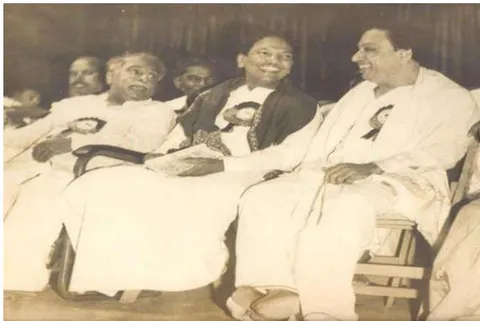
- To report and analyse how a nascent childhood stage artist emerged as a Super- hero who attained the status of matinée idol. Subsequently, turned as a charismatic political leader to rule the state of Tamil Nadu as the Chief Minister for three consecutive times and introduced popular welfare schemes to improve the living conditions of the poor's. The accolades made by his follower (late Hon'ble Chief Minister of Tamil Nadu Selvi Dr.Jayaraman Jayalitha respectfully called as "Manbumigu Amma" (Hon'ble mother).
- To Report and Analyse the ideas of economics, equity and social justice, advocated in the identified MGR film songs and compare the same with the relevant theories more specifically with that of what was propounded by Karl Marx using a novel methodology evolved.
II. HYPOTHESIS FOR THE PROPOSED RESEARCH WORK
Hypotheses are tentative statements that add directions to the purpose of the study. In this study the following hypotheses were formulated and as per practice the hypotheses are to be accepted or rejected.
Hypothesis I: There is no significant difference between the same Lyricist reiterating the specific ideas of Socialism and Communism, in the various songs of different MGR Films.
Hypothesis II: There is no significant difference between different Lyricists uses the unique ideas of equity and social justice more specifically socialism and communism in various songs of different MGR films.
Limitations of the Study
As it is a new area of research, the literature review was limited to the extent of theoretical genesis to make a comparative analysis with the contexts of the film song that contains the idea of Communistic and Socialistic Ideas.
Introduction of Bharat Ratna Marudhur Gopalamenon Ramachandran (Dr. MGR):
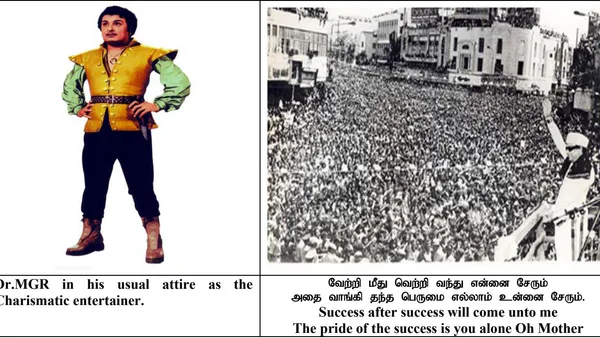
This study will not be complete if an introduction about the Hero is not narrated. Bharat Ratna Marudhur Gopalamenon Ramachandran (MGR) is well known by the three letters MGR and also popularly known as Puratchi Thalaivar (Revolutionary leader), Ponmana Chemmal (Golden hearted) and Makkal Thilagam (foremost among the people). Unable to continue with his education while he was studying standard at the Government school of Kumbakonam (Anaiyadi School) MGR approached his uncle Mr.Narayanan who was working with Madurai Original Boys Company to help him to join the troop from where he can learn the art of acting while earning. MGR's salary was four and half rupees per week; of course the company provided food and shelter within its premises. The company also had amenities to practice arts like silambum, stic-fighting, body building etc. Those who are interested to know more about MGRs life history can kindly refer the paper entitled "A Retrospective Reflection on the Life History and the Philanthropic Attitude of Bharat Ratna Dr.Marudhur Gopala Menon Ramachandran - A Bird's Eye View" by the same authors published in Global Journal of Human Social Science (E) USA., Volume XVIII Issue V Version I Year 2018".
MGR and his elder brother M.G.Chakrapani met stalwarts like PU Chinnappa, Nadippu Chemmal M.K.Radha and the great intellectual commadian revered Kalaivanar NS Krishnan. It is this man Kalaivaner helped MGR to earn for his livelihood when MGR was in dire-state i.e. without chances in Cinema. Others who helped MGR in terms of need was M.K.Radha and director Raja Chandra Sekhar. From a stage actor MGR got a chance to act in a movie called Sathie Leelavathi in 1936 thereafter MGR acted in movies like Erusakothirargal, Thatchayagnam, Mayamachindra, Prahaladhan, Veera Jagadeesh and Rajamukthi. It was the great NSK and Raja Chandrasekar advised MGR to learn Silambam (Silambam is a weapon-based Indian martial art originating in modern-day Tamil Nadu in the Indian subcontinent. This style is mentioned in Tamil Sangam literature 400 BCE (6). It was quoted in the Wikipedia that in quite a number of his movies in 1950s and 1960s, M.G.Ramachandran (MGR) had incorporated silambam fighting scenes, to popularize this ancient martial arts in the 20th century. MGR himself was an exponent on silambam fighting. He learnt this martial art from Madurai Maadakulam Ravi master. Some of the movies include Thaikkupin Tharam, Periya Idathu Penn, Mugaraasi and Thanipiravi (7). Though MGR learnt the art with great determination that had enhanced his acting skills but fate was not graceful enough to show mercy to crown him as a hero in the Tamil film. MGR never gave up his confidence to the chosen path of cinema and the time had come to announce the fans of
Tamil Nadu to identify MGR as the savior of poors and a hero to establish truth with a charisma to save the pride of women hood of the society through his movies like Malaikallan later Nadodimannan.
Peraringer Anna wanted MGR to go for election campaign. Though MGR agreed to go for election campaign cancelling the call-sheet given to movies like Arasa Kattalai, Adimaipen and Kaval Karan - he was shoot by MR Radha on 12.1.1967 and could not go for election campaign. But DMK headed by Anna used MGR's photo effectively at all the constituencies of Tamil Nadu which had served as a passport to gain votes and DMK had won in 137 seats out of 174 seats it had contested. Anna wanted MGR to be in the Ministry but MGR refused to accept (8). After Anna was anointed to the throne of Tamil Nadu, MGR acted in the three movies promised by him. The only set back MGR suffered was that a bullet that went inside his ear reduced his voice and he could not pronounce the words properly. The greatness of MGR is that he spoke in his own voice that made the general public to admire him with awe and majesty. So long as Anna was at the helm of affairs of Tamil Nadu, MGR's influence in the political arena was predominant. Who thought that Anna would die two years after he was anointed as Chief Minister? The dreams that Anna had towards making Tamil Nadu a state of equity and social justice moreover translating the ideology of Dravidar lyakkam especially with that of Thanthai Periyar paled in to insignificance. The DMK had to find a leader from among the front-line; it may be Nedunzhelian, Mu.Karanidhi and one or two. Since MGR was a great friend of Karunanidhi - Kalaiger and Mutamil Aringer outlived the others and become the Chief Minister of Tamil Nadu. The freaks of fate indeed are inscrutable that MGR was removed from the party post of Treasurer including the primary membership on 14.10.1972. There was chaeos in Tamil Nadu and party workers came to the streets to openly support MGR including several Seniors and four sitting MLAs' such as S.M.Durai Raj, Ku.Chelliah, Sounderapandian, GR Edmond, later stalwarts like K. Kalimuthu, G. Viswanathan, Kovai Chezian, CP Velappan joind MGR. All these overwhelming support made MGR to start his political party i.e. AIADMK in 1972. It is not an exaggeration to state that MGR nurtured Jayaraman Jayalalitha (Amma) in terms of developing Amma as an undisputed political leader more than a match to her contemporaries as fearless leader expressing her opinion for the betterment of the party founded by him perhaps take over the metle after him to rule the state. The above are a bird's eye view about Dr.MGR, it is essential to understand what had enabled MGR to become a hero par excellence, but also provided quality movies with meaningful songs.
MGR's success formula:
In the words of MGR: The lyrics of the songs must reflect the real theme of the story. For example, one day a producer of a movie asked me to give my opinion, on how to take a love scene in a particular movie, as I was the hero. The scene was that "myself and the heroine should share the moment of love and romance". I told him, that the story of the movie is yet to be finalized then how can we come to a conclusion about the love scene to be taken as it is premature. The love scene should match with that of the story, the song to be sung and the tune as well. The producer told me, that he will send the recorded version of the song so that I can come up with suggestion. Such peculiar situation never occurred in the film "Nadodi Mannan". The title song was written by Na.Muthukoothan. He is a member of the political party I belong, and thereby the political ideology coincided. He also wrote another song "Sammathama (is it ok)". This song is a reflection of equity between husband and wife. It also contained eternal truth i.e., if poverty occurs, the family should share the food among themselves as the birds do. Similarly, for the other songs written by Sri.Baskaran and Kavinger Suradha, I clearly shared my views that made them to compose the songs. The song like "Thadukkathe Ennai Thadukkathe (do not stop me)" was written by Sri.Athmanadhan is a reflection of people who blindly follow certain sophistry. For example, a man who never tries to secure a job, but blames the fate for his unemployment! The super hit song - Thoongathe Thambi Thoongathe (do not sleep oh brother), written by Pattukottaiar - is not written for the children alone. It was intended for those who do not care to realize the sufferings of the common man but pretend to do so. Another song written by Pattukottair - Kaduvelanthenna machan (what is the use of cultivation) is the reflection of the ideology of the political party DMK. I spent good amount of time with lyric writer Sri.Lakshmanadoss to write the song "Vulaipathila Vulaippai Peruvathilla" (it is indulging in work or extracting work happiness arise). As he was new to this field, he struggled hard to complete the lyrics in accordance with my thinking. Especially, I wanted him to introduce certain new thoughts such as - happiness will never arise to the giver nor to the receiver of alms; but it lies when everyone works on the basis of their skill and live in harmony with the wealth equally divided among themselves. So far, the Philosophers claim that the giver attains happiness when he gives and sees the receiver enjoys what is given. But I wish to propagate a message in the song, that no one should be there in the country neither to give nor to take, and everyone should have their basic necessity fulfilled without seeking it from someone else. The lyrics such as "pattathile pathavivuyarvathile" (i.e. attaining degrees and getting greater elevation in jobs) one may not attain happiness - such message is a warning message to the Ministers and the officials who are occupying higher positions in the society but do nothing to improve the conditions of the people. Mr.S.M.Subbiah Naidu wonderfully composed these songs. Thus in this movie - the story, the lyrics and the tunes of the songs together reflect the message that gave impetus for the success (9). The above narrations prove the point, that Dr.MGR had his own vision about a movie and followed such an uncompromised formula to every of the movie acted by him that had resulted in success.
MGR beyond Matinée idol
Matinee idol is a term that was generally used to describe about the male artists who are adored to the point of adulation by their fans. Matinee idols often become the subject of parody during the height of their popularity, an example being Stan Laurel Spoofing Rudolph Valentino in his film Mud and Sand. This phenomenon reached its height from the 1920s to around the 1960s in Hollywood (10). Cult films are defined by audience reaction in the form of elaborate and ritualized audience participation, film festivals, or cosplay. Cinephiles argue, that over time, the definition had become more vague and inclusive, as it drifted away from its earlier stricter views (11)· Unlike the above concept of Matinee idol or Cult films Dr.MGR followed a different kind of visionary, based on his own perception, that had enabled him to attain, the state of charismatic personality of professional probity, and stands tall in the annals of history of Tamil cinema with no parallel. The following press conference given by Dr.MGR would substantiate:
Question: Sir, it seems that you had refused to act in movies as you were supposed to utter the names of Gods? As an actor, are you not supposed to accept whatever role is given to you in a movie?
Answer: There is no truth to substantiate the contention made out by you. First of all, it is true that I had declined to act in two movies. However, the newspaper published only a borrowed part, which is not true. God exists in everyone. You pray a particular God, I am praying another God. Is there greater God than mother herself! I pray my mother's photo. I also pray God that was worshipped by my mother. Praying or worshipping is personal to an individual. When comes to professionalism, is it not your duty to reflect the correct perspective of the people? Is it not your duty to guide the general public on the right path? Similarly, I am an actor; I have a duty attached towards the general public. Only literates can read the newspapers. However, educated, illiterate, men and women, including children are watching the movies. The people who watch movies out number those who read newspapers. Therefore, I do not want to spread false message among the people. You should not misunderstand me. I am an actor, and you should allow me to do my duty as an actor. I did not refrain from the agreement by merely refusing to pronounce the name of God. For example, the story i.e Kathavarayan, I have no faith in the tantric scenes in the movies. My-own uncle was a tantric, and I know the nuances of tantric. You cannot produce mango through tantric tactics, and that was the reason why I did not wish to propagate such a sophistry to the masses in the movie. I rank as the big actor with huge fan followers, many of whom are children, and they follow me as their hero, I do not wish to instill wrong notions in their minds. Since they are the future wealth of the nation, I refrain from acting in such movies though I recorded my protest in a very polite manner.
Take another movie by name Lalithangi, it was designed in such a way that the hero hates the entire women-hood in the society as prostitutes. Finally, he falls in love with a dancer and changes his views. I never liked the idea of criticizing the women hood in such a degrading manner; moreover, I did not like the climax scene therefore I refused to act in that movie.
Question: If you change the story of the movie as you like, what will happen to the producer who are supposed to invest quantum of money?
Answer: Nothing will happen; the movies that were released after my suggestions were run well. For example, the various scenes that were changed in accordance with my suggestions in the movie Madurai Veeran, attained success (this movie ran in 40 theatres in Tamil Nadu for 100 days). In the movie, Malaikkallan also the producer accepted my suggestions. The movie, Alibaba also my suggestions were well taken. It is my request, that people should not come to a conclusion that I convey my political ideologies in the movies. I am an artist, and I am duty bound to express my views and the producers are availing my expertise. The irrelevant scenes that were taken with a view to make profit by cheating the public is curtailed (12).
Such a determined efforts put in by Dr.MGR made his films ever green for example, the Hindu Tamil daily dated July 2019, reported that "54 years after the release of the movie "Ayirathil Oruvan". It might have been 39 years since his last film released and 30 years since he died. But the legacy of the legend, M.G.Ramachandran, more so identified with the famous three letters 'MGR', lives on and doesn't seem to be coming to an end anytime soon. She further goes to emphatically say that "MGR's spectacular rise in movies should be attributed to his wisdom for carefully ascertaining the right script for himself. The lead protagonist was always portrayed as an epitome of virtue who raises his voice for the downtrodden and ensures that justice prevails in the end. The scripts were message oriented for the society, at the same time; they had a mother-son relationship, brother-sister bonding, philosophical songs apart from sensuous heroines, who would romance MGR in colourful costumes during scintillating duets". The researchers go one step further to add that MGR scans through the lyrics of the songs and sits with the lyric writers and brings the best out from them and that is the reason why his film songs contain full of socially acclaimed content. He also sits with the composer of music to finalize the tunes for his film songs. The realistic fight scenes wherein MGR shows his powers of wrist by means of sward, silambam and stic - rolling, fist by means of hitting the opponent with full force to make them roll on the floor etc. (13). To justify the above concepts the following facts was published in the magazines and other evidences are elicited below:
The weekly Tamil Magazine, "KUMUDAM" had published several articles under the title of "Ayirathil Oruvan (one in thousand)" in the memory of Bharat Ratna Dr. Maruthur Gopala Menon Ramachandran's (Dr. MGR) centenary celebrations, wherein, celebrities who had associated with Dr. MGR, shared their experiences. It becomes important to refer Kavinger (Poet) Na Muthulingam who recorded his perception about Dr. MGR. Na Muthulingam, a popular lyricist of Tamil Cinema, had written, more than 1500 film songs including number of songs for MGR films. Muthulingam states "like Purachithalaivar (i.e. Revolutionary Leader "Dr. MGR") his songs are also immortal". It is Dr. MGR, who gave importance to aesthetics to tunes, and construction of new and meaningful words in the songs, and that is the reason why Dr. MGR film songs stand tall; generation after generation. He further states, that it was very difficult to get MGR's concurrence and finalize songs in his movies.Some songs were accepted by him on a single day. At the same time, it took moths to get the songs accepted by Dr. MGR. Muthulingam, further states that he wrote three songs for MGR's movie "Madhuraiyai Meeta Sundara Pandian" and it took months for him to get consent from Dr. MGR. Again in his essay (chapter), in the book Edited by Sabitha Joseph (14).
Muthulingam reiterates that - as MGR wanted to introduce good ideas in his film songs that will serve useful purpose to his fans – he paid enormous attention, to the lyrics of his film songs. Muthulingam quotes "after MGR became the Chief Minister of Tamil Nadu, the daily Washington Post exclaimed that it was because of popularity gained through his philosophical songs MGR was able to snatch such a victory (15). Muthulingam further states, that MGR used to advise him in the following manner (in the words of MGR):
"Even when you write songs relating to sad news for the movies, you should not use incomplete sentences". When Pattukottaiar writes, sometimes, incomplete sentences would occur (that will make the concept of the song incomplete) however, it will not happen to Kannadasan. Therefore, mix Pattukottai and Kannadasan in your writings'. In the movie "Indrupol Endrum Valka (live like today for ever)" the original first song was different and what had taken place was different. The first song was "pathai mari ponavare payanam yenge sollunga" (i.e. deviated from your chosen path where is your journey). Director Sridhar told that the meaning of this song will coincide with the situation of the story. But MGR advised not to write incomplete concepts. After this advice only, I wrote the super-hit song Anbukku Nan Adimai, Tamil Panbukku Nan Adimai – (I am slave to eternal love and lam slave to the ethical values of Tamil Language).
One should also consider the following version contained in the book written by Sabbatha Joseph entitled Puratchithalaiver MGR's success formula.
Dr. MGR used to pay utmost attention to his film songs. His film songs become so popular, because he had translated the experiences he gained in life, as ideas to his songs. He used to sit with the lyric writers and music composers and made them to toil till such time he is convinced of a particular lyric and tune. It seems, the great composer M.S. Viswanathan enacted 25 tunes to a particular song. Director K. Shankar (who was a famous director for several of MGR films) reiterates the same in his essay entitled "Why MGR songs become hits"? One of the reasons why MGR songs become popular is that MGR wanted to translate what was practiced and experienced by him, as songs for his films(). Sankar.K. "entitled "Why MGR songs become hits"? MGR in the History, Edited by V. Kumaravel, Published by Mullai Publishers, Chennai.
For a film "Ninaithathai Mudippavan" the lyric writer Maruthakasi wrote the following stanza: On earning money and gold people will forget where they come from – let them go in their way. Dr. MGR did not like the last line and asked the writer; what do you mean to say by writing this last line, do you indeed point out the mistakes committed by them. Then the writer changed the line into if they wish to go shutting their eyes, let them go. Appreciating the suggestion, MGR approved the corrected version of the lyrics, and it was included in the song. It is therefore, not a mere exaggeration to state that Dr. MGR knows the lyrics of the song including its meaning and the purpose for which it was written for his movies though of course he never composed the songs nor did he gave voice over.
The above narration prove the point, that Dr. MGR had associated with eminent and peers like Kaviyarasu Kannadasan, Kavinger Valli, Marutha Kasi, Pottukottiar, Kavinger Surada and Na.Muthulingam and others and it is because of such interaction he was able to cull, the best out from these legendary and thereby many of his film songs were centered on the concepts, of rights and upliftment of poor, social inequalities and the need for decentralization of wealth; weeding out corruptive practice, and inculcating moral values in the society (16). Even the romantics songs never severed from the virtue attributed to chaste love by Tamil Literature i.e. acham, madam, nanam, payirpu which from essential ingredient for chastity of womenhood. It is a fact that MGR film songs always glorify women-hood.
It is held that women of Tamil culture should imbibe the four basic nature i.e. acham, madam, nanam and payirpu. Acham means fear while Nanam means shyness; madam means though a woman knows the truth but keeps silent as if she does not know; Payirpu means when she happens to be touched by person other than her husband she develops an attitude of aversion (17). The facts indicated above in the matter of elimination of certain unwanted scenes in movies, certainly, differ with the concept of either with the Matinee Idol or with the Cult films and establishes the fact that Dr. MGR followed his own conviction to pursue goodness and reality that had resulted in outstanding movies such as Nadooodi Mannan, Ayirathil Oruvan, Adimaipen and Ulagam Sutrum Valiban. These and many other movies not only bear testimony of excellent story and meaningful dialogue but also for the outstanding songs with meaningful lyrics.
The stamp of impeccable quality, that was maintained in the story, lyrics and tunes of songs, makes Puratchi Thalaivar Dr.MGR fans to watch his movies even after 29 years of his demise. For example, super hit movie like the Ayirathil Oruvan, which commanded respect in 1965 had been restored and released throughout Tamil Nadu in 120 theatres in the year 2014-15. Despite several new films seeing the light of the same day, the freshly minted 49-year-old blockbuster opened in over 120 screens all over the state. In a near packed standalone downscale cinema hall in Chennai, many who turned up for the noon show seemed to have already seen and savored the film when it was released first in 1965. In the 14seater box, where the ticket rate is as high as Rs.50, almost everyone should be over 50 years. It started during the title scene and then went on during the mellifluous song sequences and some moments of 'meaningful' dialogue delivery. As a film, that should have been ahead of its time, in terms of technical excellence and also in creating a do-gooder image for MGR, Aayirathil Oruvan portrays its swash buckling hero as a committed leader of the people, ready to make any sacrifice for his followers. The movie also saw its leading woman, J Jayalalithaa, giving a sterling performance with impeccable dialogue delivery. The crowd savored every moment, fully engrossed in the action and drama and enjoying the melodious music, tapping their foot, and swaying their heads. No catcalls, no hooting's, no loud comments and no jokes. The crowd was there to watch the movie (18).
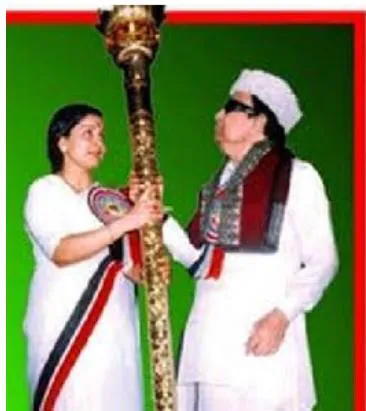
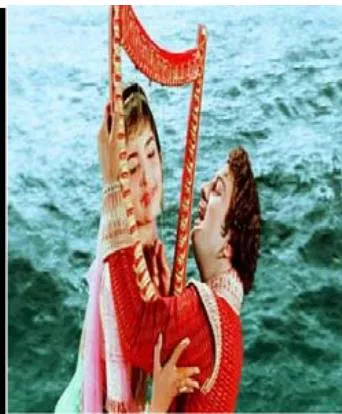
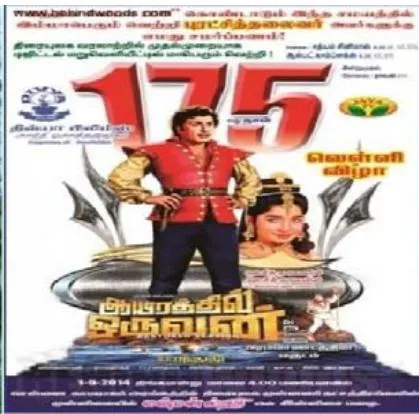
After 49 years this movie ran for 175 days – a record in Tamil Cinema
The then Hon'ble Chief Minister of Tamil Nadu Puratchi Thalaivi J.Jayalalitha, in her message sent to Divya Films G Chokkalingam, who took pains for the rerelease of this movie in digital form after a gap of half a century says: "It will not be an exaggeration to say that Aayirathil Oruvan has laid foundation for my entry into politics...it was my first film with MGR... the film gave me an opportunity to meet and interact with MGR...and this film has left with me an unerasable life-time experience," Madam further stated that "September 1 marked the 175th day celebrations of the screening of the digital version of the movie. This film enjoyed the successful screening of over 100 days in 1965, now it has crossed 175 days, it shows that the movie has withstood the test of time...even now, it attracts present generation too to the theatre....this has proved that Aayirathil Oruvan has achieved what the new films have failed to,"(19).
Songs and Music Ruled the Roost
History of world cinema proclaims that certain movies became popular because of its super-hit songs. For example, Broadway melody was a super hit movie in the 1930's which hit the box office at US(3.00 million wherein music and its lyrics attracted the attention of millions of fans (20). In collaboration with Arthur Freed, Mr. Brown compiled an impressive list of standards such as "You Were Meant for Me," "You're an Old
Smoothie," "Broadway Melody of 1929," "All I Do Is Dream of You" and "Alone". Again the film, "The Great Ziegfeld" which was released in 1935 amazed the world of cinema by its scintillating songs (21). In 1944 "Going My Way" composed by Robert had certainly dominated the Hollywood. This movie had won seven Oscar Awards in all the categories. Again in 1951 An American in Paris which was known for its success for its music. In 1960's Leyoned Bird – West Side Story won Oscar in all the categories including the best music and best song more to say that more innovation that had been made in sound mixing that stood as the foremost in innovation of sound mixing, paved the way for more exploration, not only in the Hollywood film industry but also in other film industries as well. Released on October 18, 1961 through United Artists, the film received high praise from critics and viewers, and became the second highest grossing film of the year in the United States. The film was nominated for 11 Academy Awards and won 10, including best picture (as well as a special award for Robbins), becoming the record holderfor the most wins for a movie musical (22).
The Scenerio of Music in Tamil Nadu- An Assessment by Amma:
It is appropriate to reproduce what was spoken by Amma on the eve of Anniversary of Jaya TV on 29th August 2012 (23).
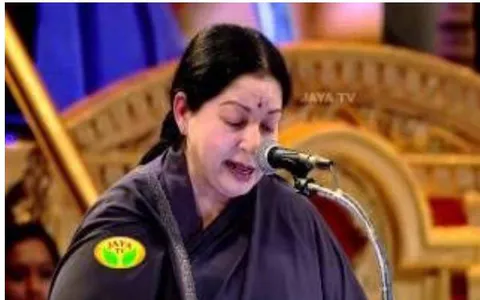
Music is a well-conceived and protracted sound of beauty. Music is a wonderful instrument that enslaves human beings and animals too. Music is a bridge that integrates the hearts of mankind. It unravels the feelings and emotions such as sadness, happiness and curiosity. That is why it is hailed by the nobles that none can escape from the enthral of music and even the earth can be made to dance to the tune of music. It is regarded that God is an embodiment of mellifluous music called sentamil. Such songs in Tamil are plenty that would sooth our minds and prevail in our memories for ever.From the olden days till this day musicians such as G.V.Ramanna, K.V.Mahadevan, Adhi- Narayanarao, Chelapathi Rao, Dakhshinamurthy, S.M.Subbianaidu, Ilayaraja and various others have composed numerous mellifluous songs. They have also introduced new and innovative nuances in their music. Viswanathan and Ramamoorthy combination is one among those who produced outstanding and everlasting songs that lives in our hearts. The songs composed by them contain humming, chorus, sounds of the birds with the use of modern instruments that make our minds to delve in their melodies and the songs exist in us forever. Though the songs composed by the kings of melodies became famous and remain everlasting in our minds due to the facts such as the story selection, the performance of actors and actress; the contributions made by the directors and the sound producers; more importantly the contributions made by eminent lyric writers like Kannadasan and Vali and the excellent manner they wrote these songs; the uncompromising way of singing by the play back singers such as P.Suseela, TMS, PBS, S.Janaki, L.R.Eswari, M.S.Rajeswari, P.Leela, Jickey, Sreekali Govindarajan, Jamuna Rani, A.M.Raja, Balasaraswathi, AL Raghavan, Sarojini, Vani Jayaram, it is because of the fact that these songs were composed by the combination of Viswanathan and Ramamoorthy attained fame. These songs pervaded every nook and corner of the society.
I use to admire various things from my childhood days such as the air, the moon, the earth, the trees, the plants, the creepers, the flowers and they become part of my life; like-wise the music of Viswanathan and Ramamorthy prevailed in my life. I grew along with their music. There is no end to the grandeur of the music of Viswanathan and Ramamoorthy. It has the power to attract people from all age group. The songs composed by them in 1950-60's lasts in the minds of people even today. They have become popular and famous when I was a child. Those days there were no communication gagets such as computers, CDs, DVDs, only gramophone and radio existed. Children of this age never know what is gramophone and it is bewildering - how this pair attained fame without these communication gadgets those days. Their songs were admirable as it were composed on the basis of Carnatic music - that is the reason why their songs became immortal. These songs will prevail in us the moment we watch it in the theatre. These songs thus prevailed in me when I was a child and they will last in me till my last breath. I came to know that Carnatic music giant DK Pattamma used to shed tears whenever she listen to the song sonnathu nee thana sol sol enuyire (indeed did you say this please repleat it oh beloved). Myself enjoyed a TV interview wherein Smt Venai Gayathri displayed the tune nineikatherintha maname in her veena when asked by the interviewer whether she listen to film songs. This shows the fact that Viswanathan Ramamorthy pair had the uncanny knack of attracting the attention of the Carnatic musicians who generally, do not pay attention to film songs, that is the greatness of this pair. They gave the feeling of taking us to an entirely new world through their music. To put it in a nutshell, it is this pair that had produced outstanding music in accordance with the change of time imbibing modern methods and innovations in their music and took the music to an entirely new direction. They gave importance to musical instruments and involved them to compose their songs. The fame of introducing world music to Tamil film songs belong to them. They have not only composed songs in Tamil language but in Telegu, Malayalam, Kanada and Hindi as well.
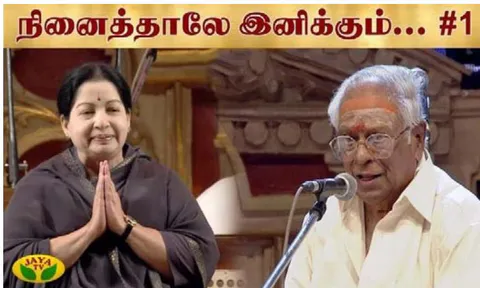
The above speech unearths the truth that music can attract the attention of audience, enthral and enslave them. Indeed the pair of Viswanathan and Ramamurthy ruled the roost of music in the Tamil Film Industry for five decades that made Manbumigu Amma to deliver her immortal and thought provoking and realistic speech which contain more wisdom to analyse and ponder over than mere applause about MSV and TKR.
Need and Justification of the Present Study:
Music is undoubtedly a natural combination ever since the sound effect was first introduced along with moving objects. It is a fact that the right song at the right moment will certainly boost the impact of the movie. It is also a fact that certain films attained success because of its excellent lyrics and mellifrous music. Be that as may, the various scholarly research conducted by the American Academy of Paediatrics denotes that adverse effects created by rap music. LYrics of some music genres, such as rock, heavy metal, rap, new and emerging genres such as reggaeton, were found to embrace topics such as sexual promiscuity, death, homicide, suicide, and substance abuse. The listener of such music gets panic and it is emphasized that creating an habit of listening such music continuously would alter their character, and they go wild to the extent of committing crimes in the society. The songs that are intended to gratify the sense of momentary pleasure had become anti-sensual and create damage to the morals of innocent children who should otherwise be tamed to practise virtue as envisaged in every culture to contribute to the growth of the society, indeed a very sorry state that witnesses the world. Given the above adverse results the American Academy of Paediatrics' also made the various recommendations to tide over the situation - for the benefit of the readers few of the recommendations are reproduced verbatim below as they are intended for the betterment of the society: (24)
- Pediatricians should become familiar with the role of music in the lives of children and adolescents and identify music preferences of their patients as clues to emotional conflict or problems.
- They should explore with patients and their parents what types of music they listen to and music videos they watch and under which circumstances they consume these media.
- Pediatricians should encourage parents to take an active role in monitoring the type of music to which their children and adolescents are exposed and to be aware of the music they subscribe.
- Pediatricians should encourage parents and caregivers to become media literate.
- Pediatricians should sponsor and participate in local and national coalitions to discuss the effects of music on children and adolescents to make the public and parents aware of sexually explicit, drug
oriented, or violent lyrics on CDs and cassettes, in music videos, on the Internet, and in emerging technologies.
- Performers should serve as positive role models for children and teenagers. The music-video industry should produce videos with more positive themes about relationships, racial harmony, drug avoidance, nonviolent conflict resolution, sexual abstinence, pregnancy prevention, and avoidance of promiscuity.
Unlike the above scenario the songs identified in this research work throw light on the ideas of equity and social justice that show the extraordinary commitment made by Bharat Ratna Dr. Maruthur Gopala Menon Ramachandran who had also appealed to Bakiyaraj (film director and producer), Bharathi Raja (film director and producer) Rajinikanth and Kamalahan (famous actors who has huge fan followers) that they should also propagate message through their story and songs to integrate the nation and the people (25).
Deterioration in the quality of Tamil film songs as held by Kaviarasu Kannadasan:
Peer and eminent personality like the great Kaviarasu Kannadasan who wrote thousands of meaningful songs with philosophical import expressed concern over deteriorating music including contents of the lyrics. "Knowingly or unknowingly the quality of music is deteriorating excepting, Carnatic Music all other forms of music are losing its grammar" exclaimed Kannadasan. It starts somewhere and ends at no man's land and we were bound to listen to such music. The contents of the lyrics are inferior below par even to the ordinary prose. The situation was not that bad fifteen years ago, wherein good poetics were converted to lyrics of cine songs. Acknowledging the laudable services rendered by legendary music director KV Mahadevan, who took in to consideration the lyrics written by him using classical (sangam) Tamil words Kannadasan exclaimed that it is because of the introduction of cabaret songs in Tamil Cinema, the situation had worsened. Unlike, the folk village songs composed by KV Mahadevan and MS Viswanathan which were admired by millions Kannadasan opined that these musicians knew the nuances of folk village songs, with their deep rooted devotion they gave life to lyrics. Indeed those days were golden days wherein thousands of hispoems were turned to lively lyrics to the songs of popular Tamil movies (26).
Mega Tv's Amudha Ganam
The Mega TV brings out a one hour program in the morning 8.00 A.M. to 9.00 A.M. very gracefully presented by Director Shri.V.Aadhavan. The manner in which he presents with subtle details always helped the researcher in fine tuning the objectives and hypothesis of the research work. In his presentation on the eve of death anniversary of Puratchi Thalaivar on 24.12.2018 he states the following:
MGR used to discuss with the lyric writers before they write songs for his films. He used to share his views with the lyric writers to write lyrics according to his ideas. MGR used to make corrections (nearly ten times) before a song is finalized. Sometimes the lyric writers felt tired and wanted to leave the assignment. But when the song was finally accepted MGR used to call the lyric writer and show the lyrics written by him one by one. The lyric writers would admire the improvements made by them. MGR would also say to the lyrics writers "because you possessed such a talent, I insisted upon you to improvise the lyrics". Saying this MGR would pay fees the number of times the lyric writer had re-written the lyrics. For example, if the lyrics writer had made 10 attempts to finalize a song, 10 times fees would be given to him. This not only made the lyric writer richer but unearthed the talent in them (Mega TV). Mega TV also brings out a program from 9 to 10 A.M. on Sundays Endrum MSV. It is a live consort wherein the legendary M.S. Viswanathan shares his views on composing a particular song. The intricacies discussed in many of the episode and the manner in which Director Aathavan articulates the conversation enhanced the knowledge of the researcher interms of how a particular song is recorded. The researcher places on records his sincere appreciation on the services rendered by MEGA TV in this regard (27)
The above narration substantiates the fact that Dr.MGR gave importance to the content (lyrics) of the songs written for his movies. No doubt, Dr.MGR engaged eminent writers, to write songs, according to the situation of the movies and without compromising his ideologies. It is because of such an interaction with the peers, Dr.MGR was able to cull the best out from them, which had resulted in producing ever green songs with philosophical import. Especially, it is the findings of the research work that one can witness ideas of ethics or virtue, equity in educational opportunities, equity in economic emancipation (socialism and communism), and eradication of corruptive practice in the society in his film songs. Even the songs of love and romance of his movies coincide with Tamil Tradition and Culture.
Periyar EVR Founder and doyen of Self-Respect Movement:
Before the contexts are arrived to cross verify the facts in accordance with the objectives and hypothesis indicated, it is necessary to understand how the Dravidian Self Respect Movement came in to existence which advocates equity and social justice. Hard Grave describes the noble history of Thanthai Periyar in a nutshell which are reiterated below and the researchers respectfully acknowledges for such an important academic contribution in the annals of history of Dravidar lyakkam by the learned author. Hard Grave notes that the roots of the Dravidian movement may be traced back to the anti-Brahmin conflicts of the early part of the century (19th Century):
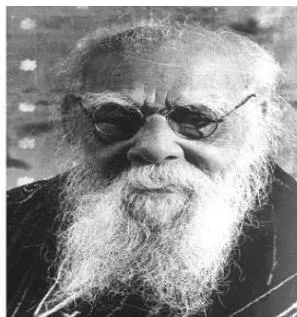
Hard Grave says that following the World War there emerged one of the most dynamic and colorful political leaders South India had ever produced, E.V.Ramaswamy Naicker, known as Periyar, the Great Sage. Although an ardent opponent of Brahmin power, Naicker was drawn politically toward the Congress, joining the non-cooperation movement in 1920 and campaigned vigorously for prohibition and for the use of homespun (khadi), and served two terms of imprisonment. Elected Secretary of the Tamilnad Congress Committee, he soon antagonized the Brahmin leadership of the Congress in Madras through his satyagraha at Vaikom for the opening of the temples to Harijans. Naicker's protest against caste discriminations in an orphanage operated under Congress auspices and his advocacy of reserved seats for non-Brahmins in the Council won little favor with the leadership of the provincial Congress Committee. Hard Grave further states that Naicker bolted the Congress and attacked it as a tool of Brahmin domination. In 1925, he organized the "Self-Respect Movement," designed as a Dravidian uplift movement, seeking to expose the Brahmin tyranny and the deceptive methods by which they controlled all spheres of Hindu life. He attacked Hinduism as the tool of Brahminical control and carried on active propaganda in an attempt to rid the people of Puranic Hinduism and wean them away from the religious ceremonies requiring the priestly services of the Brahmin. From the above statement of Hard Grave the researchers feel that "Periyar is against certain practice of upper class Brahmins who tried to alienate the down trodden people". Hard Grave also states that
Periyar denounced caste observances, child marriage, and enforced widowhood, and attacked the Laws of Manu, which he called the basis of the entire social fabric of caste and described as "totally inhuman". Naicker returned from a trip to the Soviet Union in 1931, more firmly convinced than ever that materialism was the answer to India's problems, and openly advocated mass revolution and overthrow of the Government. Tempered somewhat by imprisonment for sedition, Naicker joined the declining Justice Party. This, the South Indian Liberal Federation (popularity known as the Justice Party), had held office from 1920 until 1934, when Congress lifted its ban on Council entry and won every seat it contested.
Hard Grave also says that under the Congress Ministry of C.Rajagopalachari in 1937, the Hindi language was introduced to the South as a compulsory subject in schools. Taking this as an affront to Tamil culture and its rich literary tradition, Tamil patriots reacted with violent protest, and Naicker, ready to exploit the opportunity, waved the black flags of rebellion in his first anti-Hindi campaign. The agitation against the imposition of Hindi inflamed the non-Brahmins against the Ministry and brought Naicker to the forefront. The campaign, which brought the death of two agitators in police firings, forced the Government to change Hindi from a required to an optional subject in schools. The following year, 1938, while in jail for his anti-Hindi campaign, Naicker was elected President of the Justice Party.
Hard Grave further says, that under Naicker's leadership, the party resolved that Tamilnadu should be made a separate state, loyal to the British Raj and "directly under the Secretary of State for India." This demand for a Dravidian State soon became the fundamental issue of the Justice movement, giving a new lease of life to what had been a dying party. The Justice Party was reorganized under Naicker's guidance in 1944 as a highly militant mass organization and was renamed the Dravida Kazagham, or Dravidian Federation. Naicker, who in the 1930's had visited the Axis countries as well as the Soviet Union, declared that "members of the Kazagham should wear black shirts whenever possible, as a symbol of the present downtrodden condition of the Dravidians." The organization of the party was to be based upon units in each village, taluk, and district. The objective of the DK was proclaimed to be the achievement of a sovereign independent Dravidian Republic, which would be federal in nature, with four units corresponding to the linguistic divisions (Madras, Kerala, Mysore, and Andhra), each having residuary powers and autonomy of internal administration. The party proclaimed its opposition to the British, and Naicker called upon DK members to renounce all titles conferred by the British and to resign all offices connected with the National War Front. This action greatly enhanced the prestige of the movement, on both state and national levels.
Hard Grave also says that as in the Self-Respect Movement, one of Naicker's basic objectives was to remove all "superstitious belief" based upon religion and tradition. No member was allowed to wear the sectarian marks of faith across his forehead. Members were urged to boycott the use of Brahmin priests in ceremonies. He campaigned vigorously for widow remarriage and inter-caste marriage, and the "reform" marriage rites of the DK gained wide acceptance among the non-Brahmins of Tamilnad. The ceremonies and rites of passage at which Brahmins officiated came to be despised by the Dravida Kazagham, and the Hindu religion was denounced as an opiate by which the Brahmins had dulled the masses so that they might be exploited and controlled. Atheism became virtually a cult among the Kazagham members. They took pains to destroy and desecrate the images of sacred Hindu deities, such as Rama and Ganesa, and the Ramayana and other Sanskrit epics were distorted to the political ends of the party (28).
Self-Respect is traceable in ancient Tamil literature
The above are what was written by Hard Grave in his most scholarly publication. However, the concept of "Self-Respect" as enunciated by Periyar (i.e. tanmaanam or suya mariyadai in Tamil Language) is traceable in ancient Tamil literature. Indeed self-respect was acclaimed as the virtue of high valor in Tamil society. The ancient classical Tamil literatures speak volumes about the rule of the kings who upheld the concept of self-respect. These Kings had a leading principle (i.e. to protect every citizen of his country) and they regarded the people as their own-self. Indeed, they treated the sufferings or injustice caused to the people as their own, and maintained close relationship with the common people of their country. Though the nation was ruled by a dynasty, the rights of every citizen were given utmost importance and thereby equity and social justice prevailed in the society. For example, Manuneedhi Cholan was a righteous King of this lineage, who ruled his country with justice and honesty. One day his son Veedhividangan, on his way from the temple ran over a calf by his chariot. The mother of the calf, "the cow" pulled the bell that was kept to alert any injustice meted out by the citizens. Hearing it, the King immediately ordered that his son be punished the way the calf was killed. Despite the advice of his counsels, the King was firm and punished his son. This depicts the fact how dispassionate, virtuous and unprejudiced king Manuneedhi Cholan was (29).
Periyar's Early life influenced Self-Respect Movement:
The thoughts on the important concept the "self-respect" as evolved by Thanthai Periyar is not born merely after Periyar became popular. Perhaps it was inborn in Thanthai Periyar's consciousness and one has to understand the life Periyar lead from his childhood days and the various troubles and tribulations he had to face that had shaped his mental makeup to boldly question the fundamental problems that faced the society especially by the common man in the name of caste which had distinguished and alienated the disadvantaged people. Let us see the early life of Erode Venkata Ramaswamy (Periyar) who was born on Sep. 1879 to Venkatan and Muthammal. Periyar's father Venkatan was known for his hard work and honesty though he was very poor and started his career as a labourer but raised to the stature of a wealthy merchant and owner of several shopping complexes in the market place of Erode. The parent of Thanthai Periyar decided to send Periyar to Thayammal to live with her because Thayammal was a very close relative to Venkatan who had already lost her husband and living without children. Therefore Periyar was brought up by his grand- mother Chinna Thayammal who gave all the freedom and liberty to Periyar and never imposed any restriction on him; thereby Periyar grew as a ferocious boy without anyone to restrict him. Periyar opposed everything and anything and even confronted with the boys including the elders of his neighborhood. Though Chinna Thayammal received complaints from people but she never opposed Periyar nor did she try to tell him that what was done by him wrong. This had perhaps boosted the morale of Periyar and he had confronted even with his class teachers. Meanwhile Periyar's father flourished in his business and become a very rich man. By his philanthropy he constructed big hospitals for the poor and guest houses for the businessmen. He also constructed choultry for the poors to stay and food is also served free of cost. He used to pay Rs.500/- as income tax per annum when an ordinary worker used to earn not even Rs.120/- as his annual income. The general public used to adore Periyar's father as Nayakkar and his mother Nayakkambal for their charitable deeds. But they never belong to Nayak community they belong to Naidu of Kanadika (30).
During the period when Periyar was growing up, there existed a higher community and that community was bounded by a lower community even within the lower community there existed further division and this had perhaps destroyed the basic fabric of equity and social justice of the Tamil society. Periyar's grandmother was also attached to such a social conviction who instructed Periyar not to go to the lower caste people. She had also instructed, if he happened to get thirsty he had to drink water at his teacher's house but not in other places. She also instructed Periyar to go through a certain path way surrounded by people belong to their native community and not to venture to other places where the socially deprived lower cast people lived. Unfortunately, when he happened to go to his teacher's house to drink water he witnessed that the girl who gave water to him asked him to keep the tumbler at one corner and she begun to pour water to wash it. Periyar was astonished by this sort of experience and there arose a kind of revolutionary thinking in Periyar's mind to oppose such an irrational practice when he was not even 10 years old. He studied up to form in a school known as "Thennai Palli" which is nothing but a thatched hut. Even in the school, Periyar used to quarrel not only with his fellow students but also with his teachers. The teachers were not able to control him and complained to his grand mother who never used to take it seriously because of her fondness towards Periyar. It was quoted by Alagiya Pandian in his book entitled "Periyar" by Kumaran Pathipagam that Periyar has got the tendency to question and oppose whatever he felt bad even from his childhood days and the chance bestowed on to him to live with his grandmother certainly enhanced the same because of the freedom he enjoyed. A time has come when the rich parent of Periyar decided to recall him to their house forgetting the fact that Periyar was permanently given to his step-grandmother. It was Periyar's mother who went to Chinnathayammal's residence and forcefully took Periyar to their place. Chinnathayammal went for conciliation with the elders in the village but was in vain. Periyar witnessed great change that took place in his house. Apart from the wealth his parents had become very devoted and observed the customs of Hindu religion meticulously. They were involved in benediction and become great givers to religious ceremony to temples; they also constructed new temples and charitable trusts. What astonished Periyar was the path chosen by his parents as they invited Sadhus and Brahmin priests to their house frequently and his house had become a place for stern religious practice. Organizing bajans at their house had enabled Periyar to understand the nuances of puranas like the Ramayana and Mahabaratha. Periyar was forced to go to school. His father used to meet the teachers with a request to keep his son even after the regular classes since he created lot of troubles at home but the teachers had the same inconvenience and pleaded that it is difficult for them to control Periyar at school and it would be better if he discontinues his studies and thereby Periyar's education came to an end at the age of 11. But his friendship with his fellow classmates irrespective of community continued. His father gave him certain important assignments at his shop-floor. Periyar had to write addresses on the parcels to be sent to the merchants of far away places. Another assignment was that he should help his father in the auctioning of the goods. Periyar excelled in these areas and earned more money than the sale price fixed. He had interacted with merchants who had come from far away places like Hyderabad, Vijayawada etc. and they had become so intimate to Periyar.
Periyar was forced to listen to religious stories:
His mother insisted Periyar to sit in the religious discourses held at home. Periyar used to question them also that made him to understand the contents of various religious literatures leading to Saivism and Vaishnavam. Though Periyar's family was non-brahmin but they practiced strict vegetarianism this does not deter Periyar to consume non-vegetarian food at his friend's house. Noticing this attitude his mother used to serve him food separately. She used to take bath if she had noticed that Periyar had come home after eating meat quotes Alagiya Pandian. Some-one suggested if they get him married that may perhaps reduce the aggressive nature Periyar which is increasing every day. At this stage Periyar revealed his parents that if they are finding a match for him they should consider Nagambal who was a distant relative. Though his parents were reluctant as the girl belong to a very poor family but Periyar insisted that he will only marry Nagambal. The parents had to yield to this and got him married to Nagambal.
Though Nagambal was devoted to his mother-in-law and observed strict religious vigilance and undergone lot of austerity as was the custom I but Periyar wanted to break this custom as he believed that there is nothing in following a custom blindly. He made his wife to cook non-vegetarian food at home for him; he made his wife not to go to the temples; he even made his wife to dismantle the sacred thread (thali) from her. Thus Periyar under-took certain reforms at home before he advocated his friends to follow. This reform at home took a new turn in Periyar's life when he was only 24. Alagiya Panian quotes that there was a religious function happened in Erode wherein all the merchants supported it monetarily. The religious ceremony took place under the famous leadership of Nerunjipettai Swamiar. After the function there was a grand thati-arathana i.e. supply of orthodox food prepared exclusively for the participants (all brahmins) took place at a chouldry known as Ellaiyar Chathiram. The younger brother of the Swamiyar was a traitor who borrowed huge sums of money from the merchants and disappeared. They came to know that this man is also participating in the ceremony therefore they gave a complaint to the local police and police gave an arrest warrant on the defaulter. They approached Periyar with the warrant and told him about their sufferings. Periyar sent some one to the Choultry to bring him but when the defaulter found that it was the police which was waiting outside he rushed back and locked the entrance. Periyar jumped over the compound and entered the choultry at that time everyone was eating. Periyar was able to help his friends to book the culprit and went home. But the Brahmins stopped eating and dumped all the food meant to serve them at a corner of the road-side complaining the public because Periyar entered our privacy and thereby the food had become foul. The matter reached Periyar's father who beat him abnormally and the scuttle of misunderstanding had started from that day onwards but majority of the other community people supported the deeds of Periyar that had given enough impetus for him to indulge in such corrective practice. He used to organize a food festival every year on the eve of Chitra Poornami(full noon day) wherein he invited people from all communities to assemble and dine together. This had made Periyar the champion and people began to look at him with awe and majesty. As such incidents grow further the scuttle between Periyar and his father widened up and it so happened that Periyar left his house one day disgusted in fighting with his father. He went to Hyderabad where he met few Brahmins who were so orthodox and lived on alms as was their custom. Periyar used to go along with the Brahmins to obtain alms and during the leisure period the three would indulge in serious discussion on Ramayana and Mahabarata. Some times the arguments would become heated exchange and Periyar used to win them by his authoritative questions. As the Brahmins could not speak Telugu language Periyar use to translate Ramayana and Mahabarata discourses rendered by them in Telugu language to the audience. While doing so he used to add his own version and thus he had become well acquainted with these classical puranas. They planned to go to Kasi as the life at Hyderabad was so difficult to secure one squre meal a day. The Brahmins told Periyar that if they move to Kasi there will be no problem in terms of getting food as there are many ashrams which feedspeople. Periyar sold one of his jewels and went along with the Brahmins to Kasi. The Brahmins easily settled down in one ashram which had shown the door to Periyar as he was a non- brahmin. He had to live on alms and ate left-over food on the leaf that was thrown to the dustbins. The freaks of fate indeed are inscrutable the son of a wealthy merchant had to eat the left over food thrown in the dustbin whereas his father feed thousands of poors at home. Periyar had personally seen the atrocities in the various ashrams of Kasi and his belief on Brahminism paled in to insignificance. This shows the determination and steadfastness of Thanthai Periyar.
Alakiya Pandian quotes "when Periyar was united with his family the deadly disease plague sourrounded his neighbor hood, many had to leave Erode to far away places. There was no body to even bury the dead body. Periyar never hesitated to bury the dead bodies with the help of his friends. Admiring these deeds his father changed the name of his business to his son's E.Ve.Ra and handed over the entire wealth of the family under the custody of Periyar. His father who had occupied esteemed position such as trustee to many charitable institutions including temples had also gone to Periyar. Periyar took charge of them and made the sick institutions to earn wealth though he disbelieved in the existence of God. Such is the rationality of Periyar
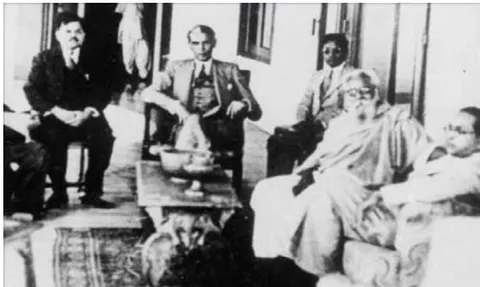
- it is very difficult to narrate the greatness of this great personality in a research paper like this but even such small narrations of exalting social reformer like Thanthai Periyar would certainly boost the content of the research work. Periyar occupied posts like Hon. Magistrate, Magagana School Secretary, Tennis Court Secretary, Devasthana Committee President and later he became the Chairman of Erode. When he was the Chairman of Erode Periyar ordered demolition of certain buildings which were owned by big merchants in order to avert the transport congestion and earned the enmity of them. It was he who brought Cauvery water to Erode through pipes 100 years ago and it was considered as a great achievement. In protest of the great messacre happened at Jalian Wallabak, Periyar resigned all the 25 posts occupied by him and this had attracted the attention of media and the Congress leaders like Rajaji approached him to join the party to take part in the national affairs. Therefore it is not an over statement to add here that all the above traits and personal experience and sufferings undergone shapped Thanthai Periyar to be a great social revolutionist par excellence who thought out of box always. Dravidar Kazhagam would, in turn, gave birth to other political parties including Dravida Munnetra Kazhagam (DMK) and All India Anna Dravida Munnetra Kazhagam (AIADMK). Thanthai Periar nurtured Anna (respectfully called as intellectual par excellence) who had later become the torch bearer of Thanthai Periyar's political ideology and converted many of Periyar's thoughts in to action by means of laws enacted in the Tamil Nadu Legislative Assembly when Anna was elected as the Chief Minister of Tamil Nadu much to the admiration of Thanthai Periyar himself. Anna rightly denoted democracy in the following manner (in his own words):
"Democracy is not a mere form of government alone – it is an invitation to a new life –an experiment in the art of sharing responsibilities and benefits – an attempt to generate and coordinate the inherent energy in each for the common task. Hence, we cannot afford to waste a single talent, impoverish a single man or woman or allow single individual to be stunted in growth or held under tyranny and the universities should through the graduates it sends forth year after year, annihilate the forces that attempt at ikipedia ion and tyranny, fight against cast and hypocrisy and enthrone human dignity. To reestablish such life and rights to the common man" Drivida Kazhagam firmly rooted for the implementation of Mandal Commission report, which was later adopted by the V.P.Singh led government in 1990. It has also involved in the Srilankan Tamils issue, especially it supported LTTE movement. One of the significant achievement that was made under this premise, was the reservation for the other back ward classes, adopted by the iron hearted Revolutionary Leader Selvi J.Jayalitha during her tenure as the Chief Minister of Tamil Nadu that earned the title of "Woman Saviour of Social Justice" and entered in the portals of the annals of history of the great Dravidar. "After Secretary Hillary Clinton's meeting with Chief Minister Jayalithaa back in 2013, Clinton mentioned she is incomparable and strongly determined leader, and she has been an embodiment of woman empowerment," Natarajan said. Observing that Jayalithaa's demise signals the end of an era of celluloid image politics in Tamil Nadu, a well-known Indian-American professor has said her success will be an inspiration for women who aspireto become a leader in India. "Jayalithaa's demise signals the end of an era of celluloid image politics in Tamil Nadu where mass media access paved the way for colourful political careers for several decades," said Ram Mahalingam, associate professor of psychology at the Unive.. "Her appeal to women emboldened her to expand many popular social welfare programs, a legacy of the Dravidian parties, while resisting the pressures of neoliberalism.Her charisma and connection to people enabled her to achieve this. "She was a firm and independent decision maker who was the supreme leader of her party. Her success will be an inspiration for women who aspire to become a leader in India," Mahalingam said (31).
III. THEORETICAL GENESIS
Karl Marx the greatest social reformer
Karl Marx (1818-1883) was a German philosopher, political economist, historian, political theorist, sociologist, communist, and revolutionary, whose ideas played a significant role in the development of modern communism. Marx in the Communist Manifesto that was published in 1848 exclaimed that "The history of all hitherto existing society
is the history of class struggles." Marx argued that capitalism, like previous socio-economic systems, would inevitably produce internal tensions which would lead to its destruction. Just as capitalism replaced feudalism, Marx believed socialism would, in its turn, replace capitalism, and lead to a stateless, classless society and he named it as Pure Communism (32). In this pure communism Marx expects men would live a life of equality. Marx denotes that the condition precedence for the foremost historical act is the production of material life itself and when the needs relating to food clothing and shelter are fulfilled by means of gratification man tries to create new needs and there is no end to such needs and gratification as he denotes men as a "perpetually dissatisfied animal" (33). In other words at the state of Pure Communism where Marx assumes there would prevail a situation of equality between rich and poor and even there will be no partiality between men and women. Imagine a situation wherein there are no poors existing in a society, and every wealth and property is kept transparent and available freely to everyone i.e. there are no seekers nor are they any givers or grantors. Perhaps the concept of philanthropy, compassion, humbleness and mutual trust and respect alone prevail in the society. The equilibrium i.e. the mutual trust and self-respect will lead to a situation where people enjoy equilibrium at the emotional satisfaction of self-contentment of materialism alone. As men and women has got the sixth sense of introspection they would certainly look for a greater satisfaction beyond the mundane existence of physical or bodily pleasure and believe that there is a greater level of happiness than what the materialistic life gives and endeavor to discover higher level of life beyond the reach of materialism. Fortunately for them the various philosophies, religious practices existing in the world will guide them in their exploration that may lead them to spiritual life and realize the purpose of birth, death and rebirth. It is not a mere exaggeration if the researcher construe that the concept of "Pure Communism" would have existed thousands of years ago as we found in the ancient history of Tamil Nadu wherein Manu Neethi Cholan maintained equity and social justice under his rule and ordered his own son Veedivalavan to be killed in the way he killed the calf. The great Indian scriptures call a period "Satya yuga" wherein one can find the population was very meagre and righteousness alone prevailed in the hearts of people and not even kings existed during this period as each one protected the other and pure consciousness of goodness alone prevailed in the society (34).
History of the world reveals that the members of the aristocracy and the church had owned the means of production, and the peasants worked for the aristocracy. With the onset of the Industrial Revolution, Marx thought that the working poor will rise financially and socially. However, this did not happen and to his dismay aristocracy was replaced by the capitalists and Marx calls them Bourgeoisie. The working class who were once peasants were replaced as wage earners under the capitalist and Marx calls them as Proletariat. Marx believed that capitalism which is inherently unfair, since workers under this system were becoming poorer and poorer and were alienated. And in this vicious circle of Alienation the workers are becoming distanced or isolated or both from their work, resulting not only a feeling of despondency but have certainly become powerless and thereby could not develop their skills and go beyond the pale of the shackles of bondage as industrial workers.
Marx's greatest finding "the Alienation"
Imagine a capitalist society that consist of majority of labourers who are powerless and suffer from despondency and they are artificially made to depend on the business men who assumed feudal power in the society. To alleviate this Marx propounded an unequivocal theory and wanted capitalism to be replaced by a socialist system that will make people equal and thereby their needs met.
The meaning of alienation
Lewis A. Coser hails that according to Marx Alienation may be described as a condition in which men are dominated by forces of their own creation, which confront them as alien powers. The notion is central to all of Marx's earlier philosophical writings and still informs his later work, although no longer as a philosophical issue but as a social phenomenon (35).
Max asked: In what circumstances do men project their own powers, their own values, upon objects that escape their control? What are the social causes of this phenomenon?
Marx is of the view that all major institutional spheres in capitalist society, such as religion, the state, and political economy, were marked by a condition of alienation and that the various aspects of alienation were interdependent and came to a conclusion that Objectification is the practice of alienation. Just as man, so long as he is engrossed in religion, can only objectify his essence by an alien and fantastic being; so under the sway of egoistic need, he can only affirm himself and produce objects in practice by subordinating his products and his own activity to the domination of an alien entity, and by attributing to them the significance of an alien entity, namely money. Therefore it is the state's responsibility to guarantee its citizens the fundamental freedom and regard each individual as equal whether he is rich or poor. Such a state that assures such a liberty is truly democratic.
Materialism
Delinking morality or moral and spiritual upliftment of a person (perhaps Marx leaves to the consciousness of the individual) Marx studied the relationship and importance of money in man's material life. Here Marx's opines that money is the alienated essence of man's work and existence; the essence dominates him and he worships it and it is not an exaggeration to say that money enslaves men due to his intrinsic and imperative physical needs. It is difficult to imagine the monotonous material life of human being without money and that is the reason why Marx called man's material life as the economic life. Marx says that in this economic life, majority of the manpower are made to work as industrial workforce to earn for their livelihood. Marx emphatically says that the workforce are oppressed by a handful of capitalist who are few in percentage when compared to industrial workers. They try to dominate them in all spears of life i.e. economic, political and social. Marx therefore concludes that the alienated industrial worker's freedom of choice has been freed by the Industrialists. He therefore feels it necessary that "the state which is the intermediary between men and human liberty" just as Christ is the intermediary to whom man attributes all his own divinity and all his religious bonds, so the state is the intermediary to which man confides all his non-divinity and all his human freedom and therefore the state is duty bond to create an atmosphere wherein everyone is equal and he says that "as the contradictions of capitalism become greater, more intense, and less amenable to disguise, neither the state nor ideology can restrain the mass of the workers, white and blue collar, from recognizing their interests (becoming "class conscious") and acting upon them. The overthrow of capitalism, when it comes, Marx believed, would proceed as quickly and democratically as the nature of capitalist opposition allowed. Out of the revolution would emerge a socialist society which would fully utilize and develop much further the productive potential inherited from capitalism. Through democratic planning, production would be directed to serving social needs instead of maximizing private profit. It should be understood that maximum social benefit would be attained only by serving the social needs of the majority and ikipedia private profit would create a huge gap between haves and have nots. The final goal, toward which socialist society would constantly build, is the human one of abolishing alienation. Marx called the attainment of this goal "communism" (36).
The above are core and essential ingredient of Karl Marx's philosophy of socialism establishes the fact of equity and social justice. A society that does not provide avenues for its entire people would naturally become a breeding house of inequality and social deprivation. If majority of its people are made to deprive by a handful of men's intelligent domination as was explained by Marx above indeed is a case for consideration of principle of social inequality and the solution enunciated by him to mitigate though known as socialism or communism there is no reason why it cannot be brought under the doctrine of equity and social justice.
Grounds for Comparison
Communism is also described as "Revolutionary Proletarian Socialism" or "Marxism," is both a political and economic philosophy (Lewis A. Coser. (1977). At the request of the Communist League, an activist group they were members of, Marx and Engels together authored The Communist Manifesto. The main goal of The Communist Manifesto was to focus on class struggle and motivate the common people to riot. Even more so, it was designed to envision a model government, whose economics would destroy the upper class - freeing the lower class from tyranny. According to The Communist Manifesto, Communism has ten essential planks and they are (37):
- Abolition of Private Property.
- Heavy Progressive Income Tax.
- Abolition of Rights of Inheritance.
- Confiscation of Property Rights.
- Central Bank.
- Government Ownership of Communication and Transportation.
- Government Ownership of Factories and Agriculture.
- Government Control of Labor.
- Corporate Farms and Regional Planning.
- Government Control of Education.
Given the above essential planks as was hailed by Marx it is necessary to add the concept of Alienation, the Industrial revolution enunciated by Karl Marx for the theoretical comparison with the ideas contained in the selected MGR film songs and it is also important to compare the ideas with the Universal Declaration the Burt Land Report what John Paul Pope and Dr. Martin Luther King Jr had said about inequality for the present comparative work. The theoretical genesis will also serve the purpose of literature survey. 14 songs that can be brought under this domain are discussed one by one as contexts respectively. The following novel methodology has been evolved to make a comparative analysis.
IV. THE NEW AND NOVEL METHODOLOGY
The new methodology by way of "Context" has been evolved to make theoretical comparison with the Film Songs of Dr. MGR (there are no other methodology available to validate such a conspectus nature of comparative study) therefore each context was made to contain – translation of the song in English; interpretation of the sum and substance of the song and the Critical Analysis. This methodology enables critical analysis as the meeting point for the proposed ikipedi of comparative analysis of the content of the song with the respective theories. To cross verify and make sure comparison occurred under each chapter a table of confluence of contexts has been devised in order to clearly indicate the intersection of comparison with the theoretical genesis arrived at. This table reassures the comparative analysis of ideas contained in the film song
with that of the theoretical genesis arrived at (the editors and reviewers comments on the article published in the journal alone serves testimony of the research). Diagrammatic Representation of Methodology of the Context (Equity and Social Justice).
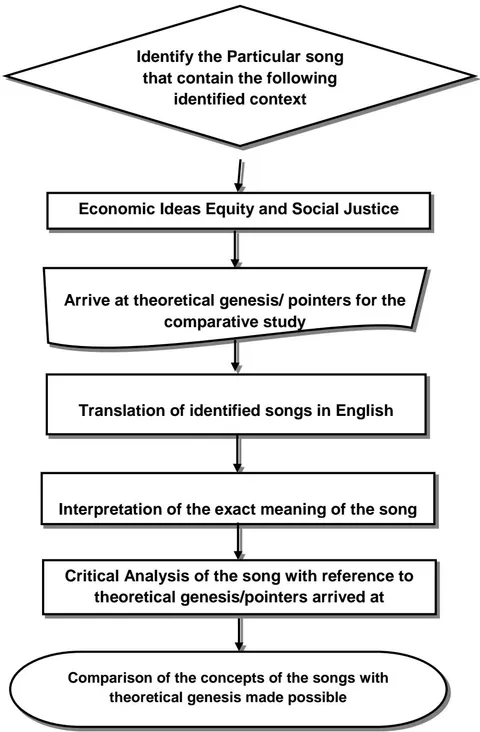
CONTEXT-I
Consider the following song from the film: En Thangai; Written by Pavender Baradhi Dasan; Music C.N.Pandurangan and sung by Sri.T.M.Soudararajan; film released on 1952 and directed by Sri.C.H.Narayanamoorthy:
English Translation of the song:
Living in welfare with bounty As people around the world are equitably comparable
However making the people to suffer under poverty With the premise that this act would result in happiness
While majority of the people suffer for want of food But a few who swindles the wealth of the country is it fair and justifiable!
How long this world will survive For the sake of few people's welfare majority works and toils
Why cannot this world be destroyed beyond recognition?
Whatever grandeur we see are the handiwork of the labourers But the labourer only could see poverty in their life!
Wonder whether it is the step motherly treatment That was given by the Government in the disguise of equality
Or is the people who suffer under poverty indeed are less
Song Originally Written in Tamil:
150
L55555Gt6o8o1b 0uLooLunir
GgUGLD86 10000000000000000000000000000
5uLgLi LiJiLiOoT 1nL
Gaaatooauiuuiuuiuui b
Lgssuunrnnnns
Aiooit 2000000000000000000000000000000 g5 5
2-101368
5510000000000000000000000000000000000000000000000
1605 555555555555555
L555G6t60tU 5LD1t5 60LD5
LIOIIOIOI 555555555555555
Luluueeueeuee e 05110000000000000000
Interpretation
This song is composed by the great poet Pavendar Bharathidasan. This great poet paints a wonderful picture on the plight of the Labour force who toils so that the rich man becomes richer. The poet raises the following important questions in the above song:
- While the majority of the labour force suffers when a handful of men swindles the wealth of the country- it is fair?
- Why not this world could be destroyed when few people gains at the cost of suffering of themajority?
- Whatever grandeur we see is the handiwork of the labour force but they witness only poverty?
- Wonder whether it is the step motherly treatment adopted by the Government in the disguise of equality of life?
Is the people who suffer under poverty indeed are less?
Critical Analysis
The sum and substance of the song is the oppression made by the rich people towards the labour force. This poet who is the disciple of Maha Kavi Bharathiar has assimilated the concept of Bharati, i.e. the world should be destroyed even if a single person suffers without food. As such this song contains the concept of Alienation and the resultant assumption of revolution as enunciated by Karl Marx.
CONTEXT-II
Now consider another song from the movie Endrupol Endrum Valga (1977) written by Sri.Na.Muthulingam, Music: M.S. Viswanathan in the year 1977 sung by T.M. Soundararajan: https://www.youtube.com/watch?v=Jbz1FBZdXxA (257,460 views, Dec 21, 2017)
This hand is supposed to save the nation and that of your house too
This hand is the faith of the nation; It is the future of our motherland
It is the hand of love, meant for creation, not for destruction
55 55L 5555
260760L551856
图图
1000000000000000000000000000000
Small hand, that lifts the plough, but never steals It upholds righteousness, and blesses the pure hearts
It weeds out corruptive practice, thereby it removes inequalities
It attains success, and makes the enemies to fall down, but never gets weak
It is a pure hand that yields fame but never resort to corruptive practice.
This hand shows mercy and do service for the welfare of the mankind.
Once the same hand turned forests into gardens and attained fame
This hand is purity personified that composes poems but never a corruptive hand
It safeguards the welfare of women and never hurt them
This hand upholds the tradition and offers alms It is meant to establish equity and justice and
Weed out oppression and ultimately offers good governance.
国
5060 51
166666666666666666666666
2019 2019 2019 2019 2019 2019 2019 2019 2019 2019 2019 2019 2019 2019 2019 2019 2019 2019 2019 2019 2019
广山 55
666666666666666666666666666666
55 56T()605 666
605 605 L55 11L605
山 605 60
F605551L605
5556T G 6060
()
山
2607601560555695LH 605
560m Li455 605 666
GLI00T56T 5L 5U L5U T5U L5U
G5555556066
LTOOTLO 5T55
20605
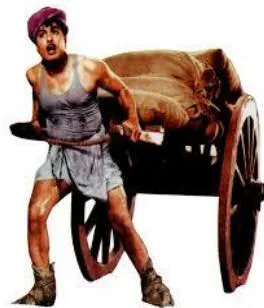
Interpretation
This song wonderfully narrates the noble qualities of labor-force. What are the chaste qualities of labor-force that this song propagate?
- The labor-force hands are meant to protect the nation, wherein every house of the nation is protected and thereby it becomes the faith and future prospects of the nation.
- The hands of labor-force know only to create and not to harm or destroy (public property).
- The hands of labor-force know how to till the land but never steal or hoard.
- Following the path of righteousness, the labor-force helps the pure hearts.
- The labor-force never encourages corruptive practice, and helps to remove inequalities in the society. Thus, following the above canons it achieves success and conquers their enemies through mercy and forgiveness. The labor-force also protects the rights and welfare of the women and thereby equity and social justice would prevail.
In this song, the qualities that is essential for chaste labor-force has been contemplated. It is the labor-force, which had turned forest into fertile land and fertile land into bewildering modern cities. This song strongly emphasizes that through righteousness, denouncing corruptive practice and with the sense of equity towards women alone a society can attain the status of welfare state. "Thereby this song postulates an ideology that can be called virtue or ethics for labor-force". Indeed the ideas contained in the songs coincide with Karl Marx's pure communism.
CONTEXT-III
Consider another song from the film: Adimaipen Written by Sri.Vali and sung by Sri.T.M.Soundararajan; Music: KV Mahadevan film released on 1969 and directed by Sri.K.Shankar: https://www.youtube.com/watch?v=pYw AC5b2pZw 355,659 views Jun 20, 2017
Translation of the Song in English:
The world laughs at you
Even your shadow dislikes you on seeing your (sinful) action.
The singing birds and the fearful animals do not have discriminating power But they do not design deceptive plans
Even the Cock's wakes up the world by their blistering voice
Dogs do their watching and warding work which are born of their nature
Crows develop their livelihood though they get food or not.
Creating haste among the communities exists only in human lives.
The peacocks dance on seeing the colourful clouds that travels in the sky
They spread their wings as if to exclaim "let there be thousands of full moons in the sky".
This country with full of beauty and culture be the abode of the Lord.
If you try to destroy it, history will censure you.
You have not seen God and indeed you know not, whether he is black or red.
God exist and he laughs through the hard work of the poor labor-force.
The socialist society will certainly emerge
Thereby the atrocities created to the labor-force will cease to exist.
A new lease of life will certainly emerge and all the deceitful plays will change.
Song Originally Written in Tamil:
2060601 LITI 2655
2-0tGgWwOuL LITIg 2-0tPnguOgWu
L 1
山
6016 6016 6016 6016 6016
(204 5616)5L 55555555555555555555555
6u6 Guuu u 16u6 u
15T155555555555555555555555
GOTG65
2m60606060606060606060
605605605L6055L6060601L
106056060560560560
6060666666666666666666666666
6000000000000000000000000000000000000
6110605 GLITTO G511065 62H
6017 L9000 00000000000000000000000000000
HgGgDgDgDgDgDgDgDg
60L60T 69LNTU555555555555555
606666666666666666666666666666666666666
51512601606015415555
2016051 LITI 2016051
B5L60GSTUUTT555555
GgOgOgOgOgOgOgOgOgOgOgOgOgOgOgOgOgOgOgOgOgOgOgOgOgOgOgOgOgOgOgOgOgOgOgOgOgOgOgOgOgOgOgOgOgOgOgOgOgOgOg
000000000000000000000000000000000000000
图山可
Gnntgnsnt Gnntgnsnt FLO 2 nnnn nn
山山山山山山山山山山山山山山山山山山山山山山山山山山山山山山山山山山山
LOGUTS55T6OT GLLITSGTGTGSTGTTG
L
Interpretation
This song describes about the tendency of birds and animals that cannot be changed, and they never try to destroy each other nor do they produce ecological degradation by their habitation. It is man, who device various methods to destroy human beings, animals and the natural phenomenon too, and ultimately, try to degrade the environment. Thus this song condemns the hedonistic and selfish attitude of human being. It praises the honest attitude and skill-full works of human beings. This song foresees the emergence of work-force revolution to bring in a state of pure communism wherein equity and social justice alone prevails.
Critical Analysis
The communalistic idea of labor revolution is contemplated in the song, besides it talks about the tendency of chaste labor-force, as well as equitable distribution of wealth and largely coincides with the ideas pure communism as propagated by Karl Marx.
CONTEXT-IV
Consider another song from the film: Padakotti (boatman); Written by Sri.Vali; music composed by Sri.M.S. Viswanathan & Ramamoorti and sung by Sri.T.M.Soudararajan (year 1964), and directed by Sri.T.Prakash Rao: 1,970,630 views https://www.you tube.com/watch?v=Sw8yn3JcNXc
Translation of the Song in English
Let the world wakes-up from its slumber and thereby the longing would cease to exist
Could there be upliftment in the lives of the labor-force
Let there be a day when these happen.
God created us on the banks of the sea, and made us to find a living on the water.
He has made us to stay on the banks and made our ladies to bath in tears.
The wife stays along with the child on the cradle on the banks But the husband who gave birth to the child is on the sea
For their livelihood whose life is at stake
The light shed by the moon on the sea alone is his house
His life may continue or cease to exist, and it is rather uncertain
Who will give him water (to drink) during his voyage on the sea!
Who is there to accompany him apart from his bravery!
He ventures one day into the sea and return some other day
However only distress prevails in the lives of fishermen
Others who live on the land may think chiefly about the life of fishermen is easy.
Song Originally Written in Tamil:
5007GLOU 606
6755606755600600606060606060606
5607G166 55556666666-
G16075606T5560076067606760676067606760
5607GLOU 560756075607
5L4.4.10606070 55PTL4.60196T6060
20060606060606060606
6666666666666666666
山
Ggntn 16nnr 60 nnnn nn n
5L605T60T 6T15556
(L14.55π6)(L14.5L205πL205πL205πL205
251516016T151561621515605
2555607 615556T 2555605(5607L6)
5L60 15B15C6U L160T L G1160T160
山
5001111 655555555
600000111 600000111
1gnnn 2uunm 6n nn
261TNT 6060L1U560L1D 261TNT
6060T LILI 5GUL
(560)
Interpretation
This song paints a wonderful picture on the plight of the fishermen. Infact it is one of the greatest songs that clearly explain the nature of sufferings undergone by the fisher-folk. As can be seen above that about 19.5 lakh (i.e. nearly two million) people had so far watched this song in the u-tube (https://www.youtube.com/watch?v=Sw8yn3JcNXc) these days though the movie was released more than five decades ago.
Let us see the wonderful meaning of the song:
God has created the us (fishermen) on the banks thereby our livelihood is on the sea. Leaving our children and family on the banks, we need to venture in to the sea for our survival. We may take up our voyage today and may or may not return to the shore as our life indeed is at stake and uncertain. Who will give us water to drink during our voyage in the sea; we depend only on the moon light during our venture and our bravery alone accompanies us. Others (i.e. other than the fisherfolk) may look at our lives as simple and nothing but it is sorrow stricken.
Critical Analysis
This song wonderfully describes the plight of the fisher-folk and largely coincides with the sufferings of the labour-force as contemplated by Karl Marx's in the theory of alienation as the fishermen spendmost of their time on the sea and thinks of his family's survival alone all the time and thereby he is not given any opportunity either to improve his livelihood nor given any room to develop his skills or provided any avenues to socialize themselves with other people in the society.
CONTEXT-V
Consider the following song from the movie Kanni Thai; written by Panchu Arunachalam-Sung by T.M.Soundararajan, Directed by SA Thirumugam (year 1965): Music: K.V.Mahadevan https://www.youtube.com/watch?v=GCqeyF2MIfY 28,165 views Mar 3, 2012
Translation of the Song in English
Listen oh little girl as I answer your question In real life the country has grown
But the progress of the poor has been blocked by the rich people Because of the hard work of the poor the rich stands tall in wealth and bounty
However the poor sleep in their huts like the nest of the birds
Those who have should give those who do not have should take it
Those who try to stop it or refuse to give, should be brought under the law (for punishment)
Law should be enacted to alleviate the poor's from sufferings
Law should be enacted so that wealth should be equally distributed among the masses
The agricultural products are to be divided
So that in the house of poor both honey and milk could run like river
The ups and downs on the road will affect the movement of traffic But the ups and downs among the masses will destroy the nation
If the minds of the poor gets anger in view of the injustice meted out to them, untold calamity would prevail in the society
If those who understand it peace will prevail in their heart
Song Originally Written in Tamil:
C55010LD10 10000000000000000000000000000000
C5010205 Lg0600 QfT00000000
2016 2017
L L 555555555 CwCw
LILH LIT6 560 560 560 560
LULUJUD LULUJUD 1JITLD
LULIJIIS 50516555555555555555555555
2005 5611116007 LgUULU6007 FLLLbGumL 11q.552116
5555555 66666666666666666666666666666666666666666666
LIT 5007T FNTI LIT L155 60075 FLLLD LITL201D
5011 50211 5031101101101101101101101101101
604 5968666666666666666666666666666666666666
FJ6000G 15D L16T11L D 00000000000000000000000000
L Lg 50000000000000000000000000000000000000000000000000000
604L604L65tLLL.LT 604G604G604LDLIT 5L6(L)D
2605 5 600100000000000 LITI 551 5L 5518LLTTLDLO 500L 50
Interpretation
This song wonderfully cautions that growth without equal distribution would become a stumbling block of development of any economy. The country appears to be developed because of the hard work of the poor's (tall buildings, well laid roads and with infrastructure). However, if this labour force is allowed to sleep, in their huts, with no hopes for prosperity, the law makers should enact laws to alleviate them. This song, also gives an example, as the ups and downs on the road will affect the movement of traffic; similarly the ups and downs among the masses will jeopardize the growth of the nation. Those who have should give and those who do not have should take. In case, if the haves desist to share their wealth to the have not's, the law makers should enact laws to drain the money and distribute it to the have not's or punish those who hoard their wealth.
Critical Analysis
This song traces the dangerous situation of economic development without equal distribution as such contains all the nuances of Karl Marx's such as heavy progressive tax. As exclaimed by Pope John Paul as Inequality is the root of social ills.
While the fact of attainment of maximum social benefit remains only in theory, more than five decades have passed after the proclamation of the wonderful statement of Dr. Martin Luther King Jr., the society all over the world is faced with problems of vast disparities in wealth, health and opportunities. Especially in India the disparity between the haves and have not's have been widening up. In the article appeared in The Hindu dated Sep. 2017 S. Rukmini gives a staggering picture raising the following important questions and traces the answer with the help of pictorial diagrams from the published work of Credit Suisse's Global Wealth Data-book 2014 (38).
The questions she raises are vital to the subject matter and they are
How does inequality in India really look?
How much share does the country's poorest 10 per cent have in its total wealth, how much doesthe richest, and are the rich getting richer?
She concludes that the difference in the wealth share held by India's poorest 10 per cent and therichest 10 per cent is enormous; India's richest 10 per cent holds 370 times the share of wealth that it's poorest hold. India's richest 10 per cent have been getting steadily richer since 2000, and now hold nearly three-quarters of total wealth. India's 1 per centers – its super-rich – have been getting richer even faster. In the early 2000s, India's top 1 per cent held a lower share of
India's total wealth than the world's top 1 per cent held of its total wealth. That changed just before and after the global recession – though the world's super-rich are recovering – and India's top holds close to half of the country's total wealth. She also gives a comparison wherein she states that "not surprisingly, India then dominates the world's poorest 10 per cent, while China dominates the global middle class and the United States the world's rich". Finally she concludes that "the world's super-rich – the top 1 per cent – is overwhelmingly American. Indians make up just 0.5 per cent of the world's super-rich". It should be noted here, that more than five decades ago, the above song, warned about such a calamity – where all the economy is going to end!
CONTEXT- VI
Consider another song: Nadodi Mannan, Lyrics written by Shri. Pattukotai Kalyanasundaram and sung by Sri.Sirghali Govindarjan Film released in the year 1958 Directed by MG Ramachandran Music: SM Subbiah: https://www.youtube.com/watch?v=pt5GymW_eE4_72,497 views Aug 7, 2013
English Translation of the song:
Tilling the land that was kept idle and ploughing the land after overcoming laziness. Raising the level of the banks of water bodies and ikipedia – the canals aptly to draw water to the paddy field and sowing the seed of samba rice it has now grown abundantly in such a way we could not see the boundary of the paddy field.
Just growing the paddy field like that what do we get Oh my dear husband our hands and legs alone remains.
Let the paddy fields grow now oh beloved girl a bright future is ahead of us.
Dig the earth to build quarries and get ore from the depth of the quarries to extract gold from it
Constructing bungalows along with compound walls Dwelling deep in to the sea to get pearls,
The sufferings undergone by these labour force who stand as a guiding force will change and I foresee that good times awaits them.
Why should hunger visit to the lives of those labour force who works like bullock?
It is due to the fact that the wealth earned by them goes to the hands of few (owners/capitalist).
What should be done to remove sufferings of these labour force?
They should think and progress beyond their mundane existence of working merely to fill their bellies. Is it not a danger to perpetuate the routine sufferings of peasants (and thereby capitalize them not to think beyond the pale of mundane existence)?
Song Originally Written in Tamil:
LLOIT L 5u60u G5n5u (204
山
G
L LLIU 11000000000000000000000000000000000000000000000000
G 566666666666666666666666666666666666666666666666666666666666
LUGUIN 5NTB 606TUL BUD UITGOTG
LDO555555555555555555555555555555555555555555
GILITI GNTTtL 6
GLIIT600T600T 61555560f556t GJL
L 6
5L696u 4
G
LLL 111111111111111111111
H L 5π 6g6Tg6Tg6Tg6T
LIO5605U1L 5I#I#I#I#I#G60T L#F#L#O5U1L 5I#I#I#I#I#G60T L#F#L
LUGUIN55N66TUULULOUNGUGUIN0TGGO
LDO 555T60L D 5555 L160T860T LDO 5555 T60L D 5555 L160T860T
LITLIT 26010856060555566-
山 615 L555 IT600L6060T L6FIT60
GgUgUgUgUgUgUgUgUgUgUgUgUgUgUgUgUgUgUgUgUgUgUgUgUgUgUgUgUgUgUgUgUgUgUgUgUgUgUgUgUgUgUgUgUgUgUgUgUgUgUg
Gjwogotn6u Ggug
L5 1 L10 L607 6211605 801 L60T60T 600 T40 L5 60T60T L60T
560T L5 55555555555555555555555555
F 5
Soon they will overcome the darkness in their mind (through knowledge) and even the slum dwellers will be happy.
I myself will enact laws with which these people will prosper in the nation.
6JITL56055U11U 6JL560TJU5606T
GOTUUDUQUUUGUUGUUGUUGUUGUUGUUGUUGUUGUUGUUGUUGUUGUUGUUGUUGUUGUUGUUGUUGUUGUUGUUGUUGUUGUUGUUGUUGUUGUUGUUGUUGUUGUUGUUGUUGUUGUUGUUGUUGUUGUUGUUGUUGUUGUUGUUGUUGUUGUUGUUG
2 3 6T LQ55L55 L08T LQ G125
555555555555555555555555
6060606060606060606060606
L 201600000000000000000000000000000000000
111111111111111111111111111
157
L 51T 607G 6070T L 5070 T 5070
5n
GUULUGUNGmOgFLLU
GLIIT606U 560606U L1H 56 ULLUH
GUGU
山
山
Interpretation
The above song picturizes the sufferings undergone by the labour force who work at the paddy field, at the quarries, at the construction arena and at deep sea. This song stresses the importance of the contributions of the labour force in different fields for the growth of the country at the same time hopes that wisdom will prevail in the minds of the labour force and thereby they will think beyond the pale of their mundane existence and rise against their oppression and prosper in the society.
Critical Analysis
Thus this song coincides with the socialistic ideas of Karl Marx in every respect right from the concept of Alienation and to the labour revolution.
CONTEXT-VII
Consider another song from the same movie Nadodi Mannan Written by Shri. Lakshmanadoss and sung by Sri.Sirghali Govindarjan Film released in the year 1958 Directed by RR Chandran: Music: SM Subbiah:
English Translation of the song:
It is due to indulging in work or extracting work from the labour force one gets happiness tell me oh comrade.
Exclaim oh comrade the work force that gets ownership (of the land tilled by them) alone attains joyoh Comrade
Oh Comrade –taking pride on being educated did any one attains happiness tell me. Know that true joy is attained only when the illiterates are educated.
Happiness never comes in giving alms (to the destitute) who seeks alms, however, happiness comes when everyone in the society endeavours to work and thus sharing the wealth earned equally and lives prosperously.
Happiness never comes in obtaining higher degree and getting higher posts.
It is only when your motherland attains welfare (through your hard work) you get happiness oh friend.
The above song categorically states that only when the labour force who tills the land is made the owners that will lead to happiness in the society. The educated in the society should work for the welfare of the society especially uplifting the poor's and narrowing the bridge between the haves and have not's so that the economy attains equanimity.
Critical Analysis In this song importance of labour force was given more specifically their upliftment by way of becoming the owner of the land they cultivate and thus coincide the communist manifesto of Karl Marx especially abolition of rights of inheritance and control of education.
CONTEXT-VIII
Consider another song from the movie Thozhilali; song written by Alangudi Somu and sung by T.M. Soundararajan, and music by K.V. Mahadevan directed by M.A. Thirumurugam (1960). https://www.youtube.com/watch?v=5jUTcHZuuvo; 53,450 views, May 11, 2015.
English Translation of the song
The Lord is the owner of the Universe and I am his servant.
On the lap of mother earth everyone are my comrades
Labour force is one who knows how to live greatly with what they have
He lives depending on his iron-like hands.
The attention of the Labour-forces who turns stones in to fruits
Will turn one day that will pave the way for a society consisting of wise people.
In the voyage of life many will come and go on the earth
There will be few who will be like a moon in the sky In that array the labourer will stood utmost.
Song Originally Written in Tamil:
260T L 260T 2605 560T 456U1079 456U1079 456U1079
260760T 6u560T LdUu160T CLOG6U 6060T6U(L) L 60T55L L IT
山山山山山山山山山山山山山山山山山山山山山山山山山山山山山山山山山山山山山山山山
605560L L45560T 51
2()GUT60T 560T 5()60 5LUL 1
56606 5661115 L101010101010101010101010101010101010101010101010101010101010101010101010101010101010101010
66 6666666666666666666666666666666666666666666666666666666666666
61T 5605 670T GNT L1U60T 5G6U L6U T 6U(5)JIT JIIT JIIT
61T 5605 670T GNT L1U60T 5G6U L6U T 6U(5)JIT JIOT U
61065 666666666666666
GJFJU6U 560606060606060606060606060606060606060606060606060606060606060606060606060606060606060606060606060606
Interpretation
This song paints a wonderful picture about the qualities of labour force and the contended way in which the labour force are expected to lead their life setting an example to others in the world.
Critical Analysis
This song reflects the dream of Karl Marx's who wanted a labour revolution that should take place wherein there will be one community that would exist which is the labour force and the entire wealth belong to the state and there will be perfect equality prevails in the state. As such this song reflects Karl Marx's industrial revolution and pure communism.
CONTEXT-IX
Consider another song from the film: Padakotti Written by Sri.Vali; music composed by Sri. M.S. Viswanathan & Ramamoorti and sung by Sri. T. M. Soudararajan film released on 1964 and directed by Sri. T. Prakash Rao: https://www.youtube.com/watch?v=7s3lzOMCq04; 3,589,372 views, Jun 13, 2016
English Translation of the song:
Whatever has to be given has been given but to whom it was given -
Is it for a single entity; nor it is given for the nation God has given the wealth and its bounty.
Will the breeze refuse to invade into the doors of the house made out of mud?
Will the evening moon refuse to shed its light to the house of poor?
God never gives one to you and another to me.
No sin can be ascribed on to the creator or to those who suffer out of hunger.
It is those who had taken away the wealth and those who ikiped for it stands on the streets.
Song Originally Written in Tamil:
G 5
1010101010101010101010101010101010101010101010101010101010101010101010101010
()()()
201555555 5555555
L
Goo
Wt#w w## W#y a
205555 1055555
GUGUUGUUUUGUUU
Gou
(15)LJU656T 666666666
God never gives so that few should live at the cost of many who had to suffer.
People exist with no means to fulfil their wants at the same time those who have bounty of wealth will exclaim that they have nothing to give
They have pocket full of money but their mind is dark to part with the money for the welfare of others.
Let us praise those people who keep all the wealth into a common treasury.
LQ 1600GJUIT8
LooT 500000000000000000000000000000
65
GILITGIOIOTOIOI aunuunununununununununun
LdL
LJFJGOTGUU LITULV
500L 5001T 500T L100
200000000000000000000000000000000000000
LwT aTL TL 1y
Guru Gsuu
Interpretation
This song discusses the plight of the poor's while the nature or God never distinguishes poor and rich. Only the upper class, the wealthy alone separates themselves from others in a society and create a gap between haves and have not's thus this song not only enunciates the attitude of the haves but stresses the importance of a society whereby only equality prevails.
Critical analysis
This song touches the very basic fabric of socialism and the concept of alienation and the necessity of equality in a society and thus coincides with the concept of alienation.
CONTEXT-X
Consider the song sung by none other than the former Chief Minister of Tamil Nadu late Puratchi Thalaivi Madam Dr. J. Jayalalitha belovedly called AMMA (mother) in the movie Adimaipen released in the year 1965: Lyrics: Kavinger Vali; Music Director K.V. Mahadevan, Director: K. Shankar Filmfare Award for Best Film - Tamil (Hon'ble madam is the successor of Dr.MGR who upheld the ideologies of Dr. MGR till her last breath (5.12.2016) i.e. for more than 29 years. https://www.youtube.com/watch?v=GPDZ8MIY2LQ&list=RDGPDZ8MIY2LQ&index=1; 79,103 views Apr 24, 2016
English Translation of the song:
Mother stands for love
Father stands for knowledge
Teacher stands for education
They are Gods in the world
Child calls Mother and Mother
Also calls the child Mother
Meaning of love an exclamation of virtue
All leads to a single word mother
She carries the baby for ten months
Forgets her suffering soon after she yields the baby
She protects the child by undergoing fasting
She converts her blood in to feeding milk
The wealth given by the nature should be kept in public That should be equally distributed to both the haves and have nots
Rain does not pour for one person
Moon does not shine for one person
If whatever comes are distributed to all equally
There can be no strife or struggle
Song Originally Written in Tamil:
HLOITIOIOTIOIOTIOIOTIOIOTIOIOTIOIOTIOIOTIOIOTIOIOTIOIOTIOIOTIOIOTIOIOTIOIOTIOIOTIOIOTIOIOTIOIOTIOIOTIOIOTIOIOTIOIOTIOIOTIOIOTIOIOTIOIOTIOIOTIOIOTIOIOTIOI
Frrrnrnnn nn nnnn nn nnnn yTgDgDgU(L)LgDgDgTgDgDgDgU
LDRSTGDLIOI 100 yLTOOaTbSbLIOoLIOOT
Gwot GtoTgTgTgTgTgTgTgTgTgTgTgTgTgTgTgTgTgTgTgTgTgTgTgTgTgTgTgTgTgTgTgTgTgTgTgTgTgTgTgTgTgTgTgTgTgTgTgTgTgTgT
L55515568T LLD4LDDLIIT!
Lgirn Gliu Dsu Lusu Suu Lduiu
L153U L0()55T
50 50555555555555555555555555555555
山
G
20vUITJ1TJ5L3U1LJIOTLD5L
LgHgGgGgGgL GgOgOgOgOg
()()
H
(y)
Wuyu Wuyu Wuyu Wuyu Wuyu Wuyu Wuyu Wuyu
2-00T(5)LDGLLITJ 2-00T(5)LDSTOT(5)LD160TSDLDTOTJD 2-00T
uunuunnuunruuunruiu uuuuul
5(5)0000000000000000000000000000000000000000000000000000000000000000000
This song advocates not only the position of different relationship in life but enunciates how knowledge flows and the duty to improve the life style of the public, finally it proposes a general welfare concept that would result in a conflictless global society an obligation rest upon the planners of the society not only to augment the skills of the masses but provide opportunity to sustain it thereby there will be no conflicts between the haves and have not's.
This song contemplates that wealth that has been given by nature is to be kept in public and be equally distributed to both haves and have not's and thereby largely coincide with abolition of rights of inheritance of communist manifesto.
CONTEXT-XI
Consider another song from the movie Thanipiravi; song written by Kannadasan and sung by T. M. Soundararajan, Music: K.V. Mahadevan film directed by M. A. Thirumurugam (1966). https://www.youtube.com/watch?v=Z94Fwjb8o34; 53,640 views; May 12, 2014
English Translation of the song
Oh that hands which works hard and creates a new order in the world.
That hands which construct dams to preserve river water That hands which weaves to produce cloth to save the dignity of men and women
That hands that sows seeds and removes the unwanted plants on the field.
Our hands for ever reflect the dark red sky.
That hands which created heavy machineries That hands that laid roads to integrate the world All the prides in the world are products and results of our hands.
Our hands are the symbols that turned cold blood into sweat
Let all the labour force in the world assemble at one place and exclaim that we belong to one community that is the labour force.
If time comes we will wage war lifting the weapons in our hands.
Let us dance exclaiming righteousness and people's rule.
Song Originally Written in Tamil:
260155605556G 2(5)155605556G
260605 L 1960mU6u 260T L T55L 6055G6T
260T L T55555555555555
605555 606060756T 60L
2608561G1L608561T L1760L 55
555555556
G 5606T 555555
GJF55 61T60L6 C1T60 670TML6
605556IT 6T1556IT 60555G6T
L6060T L5555555555555555555555555555555
606155 60555G6T
LIIT 2-6T6T GLI (560)L0 LIIT64L L60L55G556T 6055586T
山607 155 L G62160761L115 L1455 605566T 6T56T 6055G
26055L 6T155L G55166616755L L5556T 60T1555G621L
600 6006006006006006006006006006006006006006006006006006006006006006006006006006006006006006
LUDU L 516
山 15555670 L 6 6666666666666666666666666666666666666666666666666
This song clearly indicates the nature of duties obligated to the skilled labour force, right from tilling and sowing seeds to building machinery for the factories to function and constructing roads to make movement of people and things from one place to other possible. All this was possible only with the dedicated work of labour force and there is no reason why they cannot become owners of the factors. If it did not happen why can't the labour force wage a war against the oppressor – is the sum and substances of this song.
This song not only enunciate the nature of works performed by the labour force and establishes a fact that without labour force infrastructural development becomes impossible. If such a thing is a fact why the labour force cannot claim ownership of the factors of production and this clearly establishes not only the concept of alienation but the dream of Karl Marx's of labour revolution.
CONTEXT-XII
Consider another song from the film: Engavettu Pillai; Written by Sri. Vali; Music Viswanathan and Ramamurthy and sung by Sri. T. M. Soudararajan film released on 1965 and directed by Sri. Chanakkya: https://www.youtube.com/watch?v=Mu9oQL3d31A; 18,422,094 views; May 2, 2012
English Translation of the song:
If I am empowered to rule and govern the state and that happens
These poor's will not suffer
There will be no penury till they breathe their last.
They will not dwell in the sea of fears.
Any mistake committed (knowingly) even if he is God of Heavens
I will not let him go unpunished.
I will make them to work and earn for their living-
I will not touch their belongings.
Some (politicians) to come to power to satisfy their own egoistic needs will catch hold of the legs of the general public (voters)
They do not care for shame and dignity as they chide with power
The day will come and I will be given the responsibility. Then I will curb the deceitful act of these selfish and aggrandizers.
Ruling in accordance with equity and justice leading to a new path-
I will see the face of the nobles
I will not wait to witness the untold sufferings of the poor's.
There is a God and a path leads to him and I always try to uphold it.
Christ came in the past then came Mahatma Gandhi – They came to correct the humans but these politicians did not change.
Nor did they felt sorry for their wrong doings And forget what was told by the wise.
Song Originally Written in Tamil:
BTOOT 600000TULLTOO... 51515111111
3B
2-1112-610706079(5)
Jit 5000000000000000000000000000000000
F 5u10 FuuTu 5uTu
G
2.Lu 2.0y5sF GfTgGou
yuvuynuyus
JIT 2 NWDU LUTTIS
Houi 500055
U1U2U3U4U5U6U7U8U9U10U11U12U13
(LDTLDVGGG
Jit 1uLgUuUuUuUu
6T 575U5U 5U5U5U5U5U
2 与 重合
GliuBunGouLi Liun uH uGuvT (ySgG uL
3155200000000000000000000000000000000000000000000000000000000000000000000
(5)SL-0ir 2-0ir6
5555555555555555555555555555555555555555555555555555555555555 yur Gwur uusir Luyuur gur
WtTnLit 5(5)5L
3
GluGauTgTgTgTgTgTgTgTgTgTgTgTgTgTgTgTgTgTgTgTgTgTgTgTgTgTgTgTgTgTgTgTgTgTgTgTgTgTgTgTgTgTgTgTgTgTgTgTgTgTgT
GluGovir GfrTetwLp
(20 1
Interpretation
In this song an assumption has been made that if Dr. MGR happens to rule the state of Tamil Nadu the poor's will not suffer. The poors need not fear till their lost breath. There will be no place for oppressor and everyone will be made to work for their livelihood. Unlike others who want to capture power will fall at the feet of the voters just to accumulate money and power. Though Lord Budha, Christ Jesus and Mahatma Gandhi born in this world to teach the concept of righteousness but the oppressor of the people had not changed their attitude however, I will not allow truth to be buried and the oppressed suffer. I will steer the society in to an equitable one that was advocated by the wise.
Critical Analysis
This song indicates the suffering of the masses and the necessity to bring home a society of equity and social justice perhaps on the line of Karl Marx and also bring in social discipline. Thus it focuses its attention on equitable distribution and a welfare state on the line of what Karl Marx had said about alienation and industrial revolution and thus coincides with the concept of alienation and industrial revolution.
The sayings in the song came true and Dr. MGR became the Chief Minister of Tamil Nadu. The various plans and schemes implemented by Bharat Ratna Dr.Maruthur Gopalamenon Ramachandran and the welfare created among the people as acknowledged by his successor Puratchi Thalaivi Selvi Jayaraman Jayalalitha the former Chief Minister of Tamil Nadu as well as leading economists like Amrthya Sen are discussed in the conclusion of the thesis/research work. One of the famous welfare schemes that were introduced by him besides many other schemes oriented towards upliftment of poor's is the mid-day meals scheme called the Chief Minister's Noon Meals Scheme. It is worth ponder-over the famous speech delivered by Dr.MGR on 30.06.1982 through AIR (39).
I came here to speak about the Noon Meal Scheme which was introduced with a view to relieve the sufferings created by hunger faced by the poor children of Tamil Nadu by feeding them atleast once a day. Mahatma Gandhi used to say that "God shows his form to the poor's through the food plate" at the same time Peringer Anna used to say that I could see God in the smiling face of the poor's. The great Thiruvalluvar says in Thirukural Couplet No.734 "Devoid of starvation, disease and attack by other country should alone be considered as Nation." Great saint Awaiyar says "greatest distress is poverty and that too poverty occurs in childhood days". I introduced the Mid-Day Meals Schemes as I have undergone such a state of starvation when I was a child. Had not my ikipedi a generous lady gave a bowl full of rice that had appeased the hunger caused due to starvation for nearly three days - myself, my mother along with my brother would have died long ago! Such a motherhood had made me the Chief Minister of Tamil Nadu with full of confidence in me and to wipe the tears of millions of such mother-hood, I have undertaken the path known to me. I have realized that it is my duty to reduce the sufferings of the mother-hood at least to a certain extent and introduced this scheme so that poor children from the age of two to ten will benefit from this scheme. According to census of Tamil Nadu the total population is 4.82 crores in 1981. In which the children belonging to the age of two to five is estimated to be 42.10 lakhs. Children belonging to the age limit between 5 to 10 is 73.73 lakhs. Thereby the total children from 2 to 10 age are 105.83 lakhs in which about 60 lakh children (who belong to below poverty line) will be benefitted. For the children with the age limit from 2 to 5 will avail this benefit from the child care centres. The children beyond the age of five will avail this benefit from their own schools. The district level officers will take the responsibility of implementing the scheme. I have taken the responsibility of myself to head the higher level committee consisting of eminent persons who are ministers and philanthrophers.
The Social Welfare Department is running about 4343 child care centres throughout the state moreover this scheme facilitates establishment of one centre per village and thereby 15,501 child care centres were established. To impart education, a qualified lady teacher has been appointed in each of the centre. Preference has been given to young widows. They will be nominated by the officers in consultation with noted social personality of the local area. The selection process was over and they are undergoing training and they will take charge from July 1982 onwards. The children beyond the age of 5 to 10 will avail the benefit from thirty six thousand primary schools of Tamil Nadu.
It is true that a noon meal scheme is being run by the state of Tamil Nadu for the school children but there is a big difference in the new scheme introduced by me. The old scheme benefits only one third of the pupils. The new scheme will benefit all the poor children of the schools. In the old scheme mid-day meal was provided only for 200 days but the new scheme provides food for all the 365 days of the year. The government spends about 10 paisa in the old scheme and every block should give 5 paisa per student. However due to economic scarcity the blocks were not in a position to meet the expenditure and thereby I have ordered that the entire expenditure would be borne by the Government itself and thereby the old scheme got the recognition of the Government. This scheme should not be considered merely as a noon-meal providing program. I expect these centres will provide avenues for the poor children to come together forgetting their religion cast and grow in the atmosphere of total freedom from the social evils that would pave the way for social integration and general health will also be promoted.
I have plans for construction of public toilets to be used by women and this will be used by the children as well. I also have plans to generate electric power from the human waste. These children will be educated to use the toilet at their very young age. Moreover the children will maintain their own lunch plates and the drinking water tumblers and will also be trained to cultivate vegetables in the gardens of the centres and physical exercises will also be taught to the children thereby they will maintain good body condition. I expect that children from these centres will become useful citizens and think of the welfare of the society early in their age. The total expenditure per year will work out to be Rs.100 crores and this expenditure will increase year after year and I expect that the general public will extend their fullest co-operation to avail this important scheme and the Non Government Organisation's (NGO's) will come forward to give their helping hand. The plan sketch for the building for the Centre is ready and it is estimated that about Rs.38,000/- will be the construction cost of each centre. The Prime Minister of the country came forward to know and understand this scheme and various foreign organizations have also shown interest to know about the scheme. I feel the children are the wealth of the nation and it is my duty to nurture them so that the burden on their parents will be reduced. Reducing the burden of the common man is paramount importance of every government which is aiming for an integrated growth and development of an economy. Bharat Ratna Dr. MGR ikipedi it and implemented this most useful social welfare scheme that had attracted the attention of leading politicians not only in India but also all over the world.
CONTEXT-XIII
Consider the following song from the Movie Sabash Mapillai, Written by Marudakasai; sung by P. B. Srinivas; Music by KV Mahadevan and directed by Pa. Neelakandan, Year-1961. https://www.youtube.com/watch?v=67z_rnMjjGA&list=RD67z_rnMjjGA&index=1; 6,393 views; Jan 25, 2018
English Translation of the song:
The distance between silver coin (money) and good attitude indeed is far away
This is the lesson (i.e. the distance between the two) the world wants us to realize
It will go (the attitude of possession) beyond the bondage of fatherly affection And shut the mind like a chestnut that is locked firmly (as far as parting of the wealth is concerned)
It will make the possessor (of wealth) to frown and flaunt at the people (who do not have money) It will even dictate terms to the incomparable pure love of the mother
Wealth may come and go as the ups and downs caused by storms.
Those who do not realize even a bit of this fact, the selfish aggrandizer will sorrow alone result. Faultless pure love alone is permanent and eternal; in which sorrows, and sufferings would vanish, and happiness ever remains.
Song Originally Written in Tamil:
Ggirn Llssy 5u Hov Goofoofoofoofoofoofoofoofoofoofoofoofoofoofoofoofoofoofoofoofoofoofoofoofoofoofoofoofoofoofoofoofoofoofoofoofoofoofoofoofoofoofoofoofoofoofoofoofoofoofoofo0
20000000000000000000000000000000000000000000000000000000000
GioioiT LIOOHTFISI HOSU (SOMTSISU OUII) GioioiT FIOOT T U (HLOITG) GUTU OFOVU U (HUG)
3 5 5 5 5 5 5 5 5 5 5 5 5 5 5 5 5 5 5 5 5 5 5 5 5 5 5 5 5 5 5 5 5 5 5 5
50 50 50 50 50 50 50 50 50 50 50 50 50 50 50 50 50 50 50 50 50 50 50 50 50 50 50 50 50 50 50 50 50 50 1
21 208TULU 3552WuU 2007LWU LILU 6010111111111111111111111
Interpretation of the song
This song postulates the idea of "possession of money". It says that possession of money makes one to develop the attitude of pride that results in disequilibria of mind. The possessor also develops an attitude of alienating himself from his own kith and kin. Thereby fail to entertain his own natural instinct of affection that will certainly lead to sufferings in future and in turn his own kith and kin would not show their affection in future when circumstances makes him to depend on them. He would go to the extent of dictating terms even to his mother, who is the embodiment of eternal love.
The song also postulate that faultless pure love alone is eternal; by practicing this eternal and pure love the sufferings and sorrows will vanish. This version of Pure-Love reminds us, what was written by Shakespeare, in Sonnet-116 wherein he states that "Love is not love which alters when italteration finds, Or bends with the remover to remove" (40). It is also relevant to quote what Christ Jesus had said Father Forgive them indeed they know not what they are doing at the time he was hanged on the cross suffering untold pain (41). It is also not out of place to quote Mahatma Gandhi when he said to forgive the offender who shoot him to die. These are exalting personalities who practiced eternal love for them both sorrow and joy are the same. Thus the above song classifies the attitude of possessing or hoarding money (42).
Critical Analysis
Indeed the theories of micro-economics i.e. the classical economist like Sir Adam Smith who states that "Every human living in the society needs wealth to fulfil their basic requirements. All the human beings living in the society are concerned to earn more and more. Smith, dealt in detail, the aspect of wealth that is to say according to Adam Smith "economics is only concerned with wealth earning activities. It means economics deals with production, distribution, exchange and consumption of wealth" (43). The second definition of economics was given by the leader of Neo-classical economists, Alfred Marshall (1842 A.D -1924 A.D) in his famous work published "Principles of Economics" in 1890 A.D. According to Alfred Marshall, "Economics is a study of mankind in an ordinary business of life." It inquires how a man earns income and how he uses it. Thus, it is on the one side the study of wealth and on the other, the most important part is the study of mankind. Thus, Marshall shifted the focus of economics from wealth aspect of Adam Smith to welfare aspect. This
Marshallian definition primarily give importance to the study of wealth in relation to wealth towards the propensity to consume and attaining maximum satisfaction as he clearly undermines that mankind is not only for accumulation of wealth but how he uses the wealth accumulated to his satisfaction which was regarded as material welfare. In other words, it is the satisfaction derived by a consumer by consumption of basic goods that is known as material welfare (44). The connotation made by Alfred Marshall i.e. ordinary human beings are those who get involved not only in accumulating more and more wealth but also try to experience love, sympathy, goodwill, respect, honor, prestige and co- operation. By this Alfred Marshall clearly excludes isolated person not belonging to the society suchas beggars,sages,hermits,monks,saints, etc. As economics studies the economic behavior of people living in the society; it is called social science (45). According to Pigou, "Economics studies the part of social welfare that can be brought directly or indirectly into relation to the measuring rod of money". Professor Lionel Robbins has criticized the Marshalls definition of economics and introduced the modern definition economics in 1932 A.D. One of the major criticisms by Robbins is that the word "welfare" in Marshall Definition involves value judgments and relates "Economics" to the branch of ethics. But economics should be neutral regarding moral judgments and about what is good and what is bad (46). Even the utility theory of economics as enunciated by Marshall whether it is cardinal or ordinal utility they deal only with the satisfaction level of consumption. However, the concept contained in the above song goes beyond the level of satisfaction and propagate the attitudeof aggrandizement.
A careful reading of the analysis will make it clear that Context-XIII gives an entirely new idea of possession of money that may lead to the tendency of aggrandizement that may be the reason for the practice of Alienation remarked by Karl Marx. Indeed this song gives an analogy that are new in theory. As none of the economic theories throw light on the increasing tendency to possess wealth or money; though they exclude money/wealth including gold and liquor under the doctrine of law of diminishing marginal utility. It is a fact that increasing thirst for money or wealth or both would certainly lead to a mental state called aggrandizement. This tendency of aggrandizement is a dangerous proposition that would certainly lead to hoarding and result in corruptive practice in the society. It has become evident that corruptive practice would certainly undermine economic development. It is also quite possible that an aggrandizer may also practice social evils like hoarding and becomes a member of corruptive people.
CONTEXT-XIV
Consider another song from the movie Sabash Mapillai Written by Marudakasi and sung bySirgali S. Govindarjan Film released in the year 1961 Directed by Pa Neelakandan: https://www.youtube.com/watch?v=ZGD8stCVhKY 14,700 views; Jan 24, 2018
Translation of the Song in English:
Those who laugh are less and those who cry due to penury are lot.
The life of work-force (laborers) is on the roads and they sleep on the way-side.
No one is there to show mercy on them.
The tendency of those who possess wealth should come down
So that poverty and penury should fly away.
Will a day comes where one see those who cry (out of poverty) laugh
It is not necessary that the rich should become poor (to improve the state of the work-force) But it is enough, if the state of affairs of the workforce improves.
Song Originally Written in Tamil:
山山
()
260yL61607 2n5G6
2M15G5G5N L11605U960
T555L555L555560T 1556u66u
6015 11111111111111111111111
H5
山山山
山山山山山山山山山山山山山山山山山山山
2-6it6T605 1uP1uL Gfpiu6u6u6u
26016U6UJ 2UJ65I6GUN560LDUIN
This song wonderfully indicates the plight and penury of the labour-force. It says that the labour force which suffers and literally sleeps on the way side are numerous as against the few oppressors which not only reminds the concept of Burgeons and Proletariats as indicated by Karl Marx but also the concept of Pure Communism wherein Marx assumes there would prevail a situation of equality between rich and poor and even there will be no partiality between men and women.
To witness the majority suffer, indeed a very sorry state of spectacle. It only needs the mercy of the haves to come forward to weed out the sufferings of the have not's and there is no alternative. The song goes one step further, to enunciate a novel idea i.e. "it is not necessary that the rich should be deprived, in the process of uplifting the labor-force; it is enough that the living standard of the workforce improves with the merciful generous and charitable tendency of the rich".
Thus this song, contemplates a new idea, over and above the theory of socialism, wherein the Capitalist need not lose their wealth, nor their political power in the pursuit of improving the condition of the poors in the society. There needs a change in the tendency of possession to that of generosity, on the part of haves, to improve the condition of the have nots. The attitude of shift in the mind-set from possessiveness to charity will come only when the possessor thinks of the welfare of the state. As such this song not only coincides with the ideas of communalistic manifesto especially the concept of alienation but goes one step beyond to emphasize the necessity of generosity on the part of haves that would certainly avoid the so called labour-force revolution that would perhaps otherwise lead to unrest and chaos in the society.
The above are the contexts that contain the ideas of equity and social justice more particularly with the concept of Socialism and Communism as propounded by Karl Marx. This makes one to wonder the great efforts put in by Bharat Ratna Marudhur Gopalamenon Ramachandran who had left behind a legacy both in the area of cinema and politics the following shows that his deeds in the cinema are recognized.
Mgr's Contribution to the World Cinema
MGR received the honor of "Barath" for acting in the movie Rikshakaran. It was decided to arrange for a grand celebration to commemorate the award by the Nadigar Sangam. Shivaji Ganesan was the President at that time. The function was arranged on 30.07.1972. The speech delivered by Amma was the lime-light:
I am not at all surprised that MGR got this award – infact it will be a surprise if he did not get the award. From the little experience I wish to say "MGR never compromised his ideologies for any one". It is this perseverance that made MGR the great actor. Quoting what the Rusian writer Makkamon said "He will be the great actor only if he attains pride through his ideologies from the public". It is because he had become a famous politician and practicing purity in his ideology MGR attained such honor (47).
It is not out of place to quote here what was hailed by Oxford University Press by its work on "The Oxford History of World Cinema". The Editor GEOFFREY NOWELL-SMITH in his general Introduction i.e. "HOW THE BOOK IS ARRANGED" gives various reasons and how he had considered various implicating intersections of world cinema for the past hundred years. It is worth to reproduce here the following by the Editor (GEOFFREY NOWELL-SMITH). In his own words: (48).
THE OXFORD HISTORY OF WORLD CINEMA

Among the 134 individuals who received such recognition, only 47 were actors (both sexes included). Among the remaining 87, directors (70) constituted the majority. The rest (17) included 7 producers, 3 cameramen, 3 set designers, 1 sound specialist, 1 documentary producer, 1 film distributor and 1 movie industry lawyer.
| William S.Hart (1865-1946) – Hollywood Louis Feuillade (1873-1925) – France Tom Mix (1880-1940) – Hollywood Asta Nilsen (1881-1972) – Germany Max Linder (1882-1925) – France Lon Chaney (1883-1930) – Hollywood Douglas Fairbanks (1883-1939) – Hollywood Maurice Chevalier (1888-1972) – France/Hollywood Charlie Chaplin (1889-1977) – Hollywood Ivan Mosjoukine (1889-1939) – Russia Arletty (1891-1992) – France Lillian Gish (1893-1993) – Hollywood Mary Pickford (1893-1979) – Hollywood Conrad Veidt (1893-1943) – Germany/Hollywood Bustor Keaton (1895-1966) – Hollywood Rudolph Valentino (1895-1926) – Hollywood Gracie Fields (1898-1979) – Britain Dorothy Gish (1898-1968) – Hollywood Paul Robeson (1898-1977) – Hollywood Toto (1898-1967) – Italy Fred Astateire (1899-1987) – Hollywood Marlene Dietrich (1901-1992) – Hollywood Max Ophuls (1902-1957) – Germany Jean Gabin (1904 1976) France | Greta Garbo (1905-1990) – Hollywood Barbara Stanwyck (1907-1990) – Hollywood John Wayne (1907-1979) – Hollywood Bette Davis (1908-1989) – Hollywood Jacques Tati (1908-1982) – France Burt Lancaster (1913-1994) – Hollywood M.G.Ramachandran (1917-1987) – India Shirley (Yoshiko) Yamaguchi (1920-) – Japan Judy Garland (1922-1969) – Hollywood Marlon Brando (1924-) – Hollywood Ingrid Bergman (1925-1982) – Hollywood Youssef Chahine (1926-) – Egypt Marilyn Monroe (1926-1962) – Hollywood Sidney Poitier (1927-) – Hollywood Nargis (1929-1981) – India Clint Eastwood (1930-) – Hollywood Brigitte Bardot (1934-) – France Alain Delon (1935-) – France Jack Nicholson (1937-) – Hollywood Arnold Schwarzenegger (1947-) – Hollywood Gerard Depardieu (1948-) – France Chantal Akerman (1950-) – Belgium-France Jodie Foster (1962-) – Hollywood |
| Dr.MGR in his usual attire as the Charismatic entertainer. |
The above confirms the fact that Dr. MGR made great contribution to the field of his choice, the Cinema. Indeed he had not only entertained millions of Tamil People but also made ever lasting contribution towards immortal story selection, scripts in the story and more specifically socially relevant ideas through the lyrics of his film songs that would inspire generations.
MGR'S contribution to politics Amma extended it further:
When Dr. MGR formed his own party in 1972, he announced himself to be the staunch follower of Anna and introduced an ideology called Annaism. Annaism was the blend of the fine aspects of (49)
a casteless and classless society
sale of all essential commodities should be taken over by the government,
Right to recall
Confiscation of properties of corrupt people,
ceiling of income like land holdings
withdrawal of currencies below 100
inclusion of English in the eighth schedule of the Constitution to safeguard the interests of the Anglo-Indian community
decentralization of powers between center and states
Government takeover of heavy industries and mills
Coffee, tea and rubber plantations should be nationalized.
Let us now see the various welfare schemes introduced by Dr. M.G.R. in consonance with his above speech.
Indeed, after becoming the Chief Minister of Tamil Nadu Bharat Ratna Dr. Maruthur Gopalamenon Ramachandran continued the above ideologies to a great extent and implemented various welfare schemes for the integrated growth of Tamil Nadu, especially towards the upliftment of poors including the women. A snap-shot of the schemes implemented by him are given below:
He ordered of rice to be given through Public Distribution System through TUcs and reduced the rate of rice to Rs.1.75/- per KG. MGR is the reason for the development of PDS system in Tamilnadu.
- He introduced scheme for assistance to the destitute women for their marriage expenses.
- MGR developed Hosur as an industrial estate that had resulted in the development of Bangalore city.
- MGR ikiped on women welfare and he introduced women-centric buses.
- In 1980s MGR took strict action against Naxalites. He gave a free hand to the police to go against the
naxals and till today there is no naxalism in Tamil Nadu. Now Tamil Nadu is free from Terrorism!
- M.G.R implemented lot of freebies but to whom it was really needed. Freebies including Sewing machine for ladies etc.
- M.G.R opened Vandalur Zoo, the largest zoological garden in India.
- M.G.R created Tamil University in Thanjavur.
- M.G.R conducted Tamil World Conference in Madurai.
- M.G.R established six new Universities such as Mother Theresa Women's University, Bharathiar, Bharathidasan, Tamil University, Alagappa University and Anna University of Technology
- MGR even concentrated on the preservation of heritage buildings and monuments, such as temples, historical sites and so on. This in turn led to a boost in tourism.
Schemes for Children
- Mid-Day meals scheme – about 1,98,990 staffs are working throughout Tamil Nadu most of them are widows. About 62,43,662 children are availing this benefit from 60,000 Nutritious Noon Meal Scheme Shelters (Sathunavu Koodam).
- Free Uniform, Free Text books, free tooth powder, free chappals for school going children's.
Employment Schemes
- One employment per family
- Incentive to the educated unemployed
- Equipment to the self employed
- Self-employment.
Schemes for the Women
- Marriage assistance to the widows and the destitute
- Gold for the mangalyam
- Service Centres for the women
- Hostels for the working women
- Welfare houses for the children and mother
Schemes for the Poors
- Constructed 30.00 lakh houses for the down trodden
- Free electricity for the poors
Schemes for the Peasants
- Free electricity for the small farmers
- Concessional rate of interest for the rest of the farmers those farmers who are unable to repay the loan
- Crop Insurance
- Pesticides and seeds at concessional rates
Schemes for the Workers
- Accidental insurance
- Pension coupled with gratuity
- Interim relief after accident
- Housing schemes for the fishermen and weavers
- Life insurance to Building labourers, rickshaw pullers, koolies and pension scheme for them
Self-Sustaining Schemes
- Provided drinking water facilities
- Created water resources
- Provided Link Roads
- Constructed small bridges
- Medical shops in Rural areas
- Burial Grounds for the Adi-Dravidas.
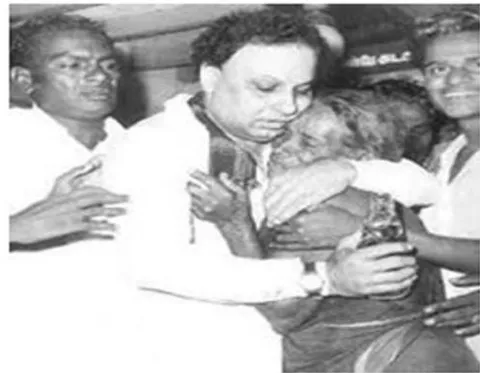
Schemes for the elderly
- Monthly financial assistance
- Every day Mid-day meals
- Free dresses twice a year
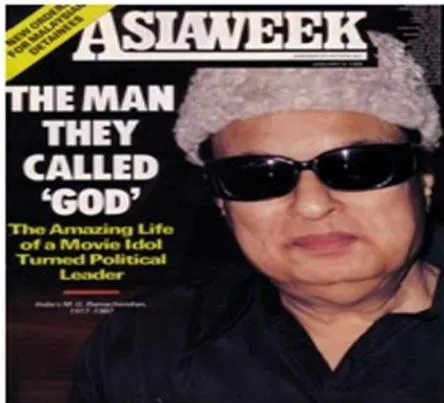
Accolades of Amartya Sen
It is an accepted fact that the explosion made by the Dravida lyakkam had resulted in social changes that had benefitted the common man that made noble laurate Amartya Sen to record his accolades in the 2013 book, An Uncertain Glory: India and its Contradictions. Amartya Sen and Jean Dreze devote a number of pages to Tamil Nadu's progress over the past 30 to 40 years in terms of social development. The authors place much emphasis on how Tamil Nadu, along with Kerala and Himachal Pradesh, had achieved some of the best public services among most of India's states as a result of constructive state policies (50). While Sen and Dreze do not specifically name or credit any politician or leader for this, Bharat Ratna Dr.Maruthur Gopala Menon Ramachandran and Puratchi Thalaivi Dr. Jayaraman Jayalalithaa - as , and , , , and Chief Ministers of the state respectively (51)
The following excerpts from the book on Tamil Nadu's development trajectory are reproduced (verbatim) here under as the subject matter is relevant:
Tamil Nadu is another interesting case of a state achieving rapid progress over a relatively short period, though it started from appalling levels of poverty, deprivation and inequality. Throughout the 1970s and 1980s official poverty estimates for Tamil Nadu were higher than the corresponding all-India figures, for both rural and urban areas (about half of the population was below the Planning Commission's measly poverty line). Much as in Kerala earlier, social relations were also extremely oppressive, with Dalits (scheduled castes) parked in separate hamlets (known as 'colonies'), generally deprived of social amenities, and often prevented from asserting themselves even in simple ways like wearing a shirt or riding a bicycle. It is during that period that Tamil Nadu, much to the consternation of many economists, initiated bold social programmes such as universal midday meals in primary schools and started putting in place an extensive social infrastructure – schools, health centres, roads, public transport, water supply, electricity connections, and much more.
These experiences of rapid social progress are not just a reflection of constructive state policies but also of people's active involvement in democratic politics. The social movements that fought traditional inequalities (particularly caste inequalities) are part of this larger pattern. These social advances, the spread of education, and the operation of democratic institutions (with all their imperfections) enabled people – men and women – to have a say in public policy and social arrangements, in a way that has yet to happen in many other states. Sen and et al wonders there is no evidence that the cultivation of human capability has been at the cost of conventional economic success, such as fast economic growth. On the contrary, these states have all achieved fast rates of expansion, as indeed one would expect, both on grounds of causal economic relations and on the basis of international experience (including the 'east Asian' success story). While many of their big social initiatives and achievements go back to earlier times, when these states were not particularly well-off, today Kerala, Himachal Pradesh and (to a lesser extent) Tamil Nadu have some of the highest per capita incomes and lowest poverty rates among all Indian states. Economic growth, in turn, has enabled these states to sustain and consolidate active social policies. Indeed Sen and etal had commended upon the PDS system and health care schemes implemented by the Government of Tamil Nadu headed by Puratchi Thalaivi Manbumigu Amma that can be verified in the above wonderful book by the two great authors. The above are what were opined by Jean and Amertya Sen. It is quite appropriate here to quote what was said by Puratchi Thalaivi Dr.Jayaraman Jayalalitha, the former Chief Minister of Tamil Nadu (52):
We hear stories about the war between Devas and Asuras, in the heaven in the Puranas. Thereby the winners and losers will also differ. The Asuras (demons) were complaining everywhere, that Lord Brahma was favouring the devas by offering elixir to them; thereby they attained the state of deathless. Hearing this complaint, Brahma called the demons and offered cup of elixir to each demon, with a stipulation that they should consume the elixir without bending their elbow. The demons tried their level best; but, could not succeed. Finally Brahma called the Devas, and gave the elixir to each of them and stipulated the same condition. The devas thought for a while, and each one sat in front of the other, and feed the elixir to the other deva who was sitting exactly opposite, thus all the devas could consume the elixir. This may be a story but there is an undisputed fact behind it (i.e. "if you wish to give it to others, you will certainly get it") this is real socialism. Bharat Ratna Dr. MGR followed the policy of giving it to others and stands tall in the annals of history of philanthropy in Tamil Nadu.
Puratchi Thalaivi Dr.J.Jayalalitha further states (in her maiden speech on 3.1.1992 at the Legislative Assembly of Tamil Nadu- in her own words about MGR) (53)
No one would have witnessed the poverty that had occurred in the life of MGR in his very young age. Puratchi Thalaivar was pushed to experience dire poverty situation and was foodless at his very youngage that too in a foreign country. Puratchi thalaivar suffered the state of poverty and forced to be without food for three days however, he determined to live against all these odds. Such experience alone laid foundation for the growth of earnestness and the tendency of charity in the mind of Puratchi Thalaivar. The noon meal scheme came in to existence based on such a tendency of Puratchi Thalaivar. When he was indulged in reforms in the area of education he was attached and he had lost his ability to speak however he capitalized the loss and did great deeds in the area of Cinema. Puratchi Thalaivar was made to suffer untold suffering in the year 1972 by the party which he had embraced. He was thrown out of the party by the leaders who were beneficiaries of Puratchi Thalaivar. The word called sun-set was not in existence in the history of Puratchi Thalaivar. The situation that had made him to be sent out of the party itself created room for his popularity. They thought he will become a lone tree but to their consternation millions of people supported Puratchi Thalaivar to form his own political party. Puratchi Thalaivar not only identified his enemies to the public but gave a good governance. At this juncture I remember Socrates's wisdom "Nothing can harm a good man either in life or after death". It has been established that no harm could be done for the fame and pride of a good man (like Puratchi Thalaivar) during the period of life and after his demise. Today AIADMK is in power and I as his hire was alighted to power, it is because of the pride and fame of Puratchi Thalaivar. Therefore no harm can be done to us as well.
In the field of cinema as well as in his public life Puratchi Thalaivar destroying the problems created by his enemies and defied the fate and he did so when he was admitted in the hospital. Today he has become our God protecting our welfare. He is not a person who travels from place to place to generate vote bank. Those people who thought that he had fallen down alone fallen. I had the opportunity to fulfill the void created by his demise. The opportunity that I had to place the victory flag under his feet when he returned from Brooklyne hospital USA and I feel elated with tears in my eyes to stand before you for the opportunity embedded on my shoulders to open his Photo at the legislative assembly.
Thus the great personality Puratchi thalaivar who had created history both in the field of cinema as well as in politics by overcoming all the troubles and tribulations who had ruled the state for eleven years and created history by becoming successive Chief Minister for three consecutive times. It is who was the MLA for more than 20 years among the Chief Minsters of Tamil Nadu. It is he who spoke in the Legislative Assembly continuously for seven hours on 26.2.1979. He who has created history in the Tamil Nadu Legislative Assembly but also created numerous noble deeds in the administration as well. Following the ideology of his political guru Peraringer Anna i.e. one should see God in the smile of the poors Puratchi Thalaivar ruled this state. He took upon the above ideology and ruled the state so that significant benefits goes to the poors and thus hailed as a protector of the welfare of the poors. He still lives in the houses and hearts of the people of Tamil Nadu.
Thus I had the opportunity of opening the Photo of such a great personality in the memorable hall of this legislature and I feel that it is appropriate for me to open the photo by me who had been nurtured and brought up by Puratchi Thalaivar.
Puratchi Thalaivi goes to say that People enjoy happiness by praising MGR as Ponmana Chemmal, Puratchi Thalaivar; Makkal Thilagam, Idayakkani. The three syllables MGR itself is a mantra. These three syllables give us mental strength when we think about it; and when we chant, it gives courage. In the film industry and in politics, it is our leader Puratchi Thalaivar who planted the victory flag. We can see great people in the history of every country, who work for the upliftment of the poor and oppressed day in and out. MGR is not only equivalent to such leaders of the world, but has qualities beyond these great leaders. When we think of such historical leader, who has been gifted to us by God himself, we are elated with tears of joy in our eyes. He stood as the heart's fruit (Idayakkani) of Peraringer Anna, who was responsible for the growth of DMK and stood as its root and nourishment. The pride goes to Puratchi Thalaivar MGR, who worked day in and out to alight DMK Party to the throne to rule Tamil Nadu.
Puratchi Thalaivi also states that to establish equity and justice in the society, to provide education to all; to provide mid-day meal to every school going children; to provide justice to the down trodden and deprived people; to weed out corruptive practice in the society; to drive out bad elements from the society; and to establish peoples rule thereby enabling the benefits of the development activities to reach the unreached and to attain these through peaceful means devoid of violence MGR entered politics. In politics and in administration the changes MGR made have entered in the annals of history and stands as a silent revolution. It is because of the popular schemes that were implemented by Dr. MGR during his rule in Tamil Nadu he lives in the hearts of people even this day.
Bharat Ratna Dr. Maruthur Gopalamenon Ramachandran (MGR) the then Chief Minister of Tamil Nadu wanted Jayaraman Jayalalitha as his successor to lead the party, and strongly believed, that Amma had the fire power to lead the party from the front. To a question from the senior Minister; MGR replied, every creation, will have a future dissolution, and when there is a development, there should be recession. After me, to take our objectives further, and sustain its development and fame, Ammu alone can do it. If I hand over the reign of this party to others, I will be doing a great discredit to Anna quotes Balu Manivannan (pp 75). This prediction, had become a reality, when MGR was admitted in Brooklyn Hospital, USA, Amma single handedly campaigned Tamil Nadu Elections and made AIADMK victorious. Dravida Kazhagam firmly rooted for the implementation of Mandal Commission report, which was later adopted by the V.P. Singh led government in 1990. One of the significant achievement that was made under the premise of equity and social justice was the reservation for the other back ward classes, adopted by the iron hearted Revolutionary Leader SelviJ. Jayalalitha during her tenure as the Chief Minister of Tamil Nadu that earned the title of "Woman Saviour of Social Justice" and entered in the portals of the annals of history of the great Dravidar Lyakkam which is envied even by her friends too.
The following are the top welcomed schemes of AMMA's current rule:
Amma Unavagam (Canteen)
Amma Kudineer (Water)
Chennai Small Bus
Amma Pannai Pasumai Shops (Nugarvor Kootturavu Kadai) In Chennai (Farm FreshConsumer Outlets)
Health Insurance For Srilankan Tamil Refugees
Free Mixie,Grinder & Fan
Monthly Pension For Transgenders
Amma Tnfdc Fish Stall Chennai
Free Rice (20kg) For The Poor
Free Laptop For Students
The 2014 victory of Mullaiperiyar dam case in Supreme Court in May 2014 that allowed Tamil Nadu to raise its water level to 142 feet that had greatly helped the agricultural community; canteens with subsidized food called Amma Unnavagam for the homeless. Apart from the mid-day meal scheme, Amma introduced breakfast meals across government schools and the agile care taken to mitigate power shedding through solar energy including providing 200-750 units of free electricity to handloom and power loom weavers rose the eyebrows of the opposite parties. Amma was lauded for ensuring huge investments, in the two day Global Investors Meet in Sep.2015 as she achieved a towering task of investment to the tune of Rs.2.42 lakh crores. According to the government website, 4 grams of gold with Rs 25,000 towards marriage assistance have been given to 86,676 educated poor women, and her return to power (successfully for the consecutive second time) she increased the quantity of giving gold from 4 to 8 gms. Rain water harvesting, the cradle baby scheme and total ban on all lotteries including online and killing of dreaded poacher and sandalwood smuggler Veerappan are hall mark of excellent administration displayed by this eminent Chief Minister who worked on the three syllables "Peace"-"Wealth" and "Welfare". Dec. Ammu stood by the side of the body of MGR for two days without taking food nor did she sleep crying all the times and said I lost whatever I possess today, I too wish to leave my body- but because MGR took a promise from me on his mother's photo that I should remain in the party to take the workers and the party together after his demise. It is due to the fact I am living. To full fill his ideology and desire, I determined to do. With the same determination Ammu lead the party as its General Secretary for nearly 28 years and alighted AIADMK to power four times i.e. in 1991; 2001; 2011 and 2016. 2014:-during the Lok Sabha Election Madam made her party to stand alone and won 37 seats and grabbed as many as Rajya Sabha seats totaling to 50 MP seats to the Parliament which is considered to be a greatest achievement ever made in Tamil Nadu. Voracious reader, acclaimed writer Jayalalitha has quoted the following from Maxim Gorky "it is untrue to state that life contains sober alone. To state that it contains only cries, distress is also untrue. Life contains whatever man wants to search in it and discover from it. Whatever is not there in life and what is less in life - one has the power to create and acquire it". If this is true I appeal to the heaven that we the south Indians wish to create you again Amma (54).
We pay our respectful regards to the galaxy of great lyric writers who had pen down such socially relevant contents and exclaimed to the world that they are more than mere lyric writers but great social thinkers thus made Tamil Cinema greater:
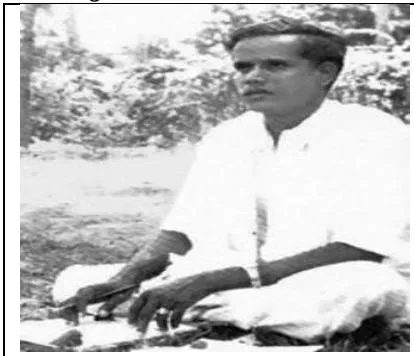
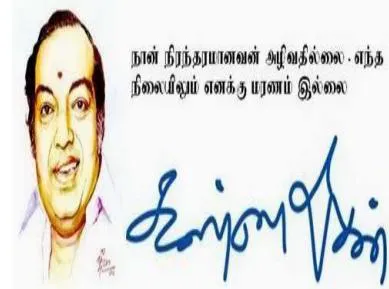
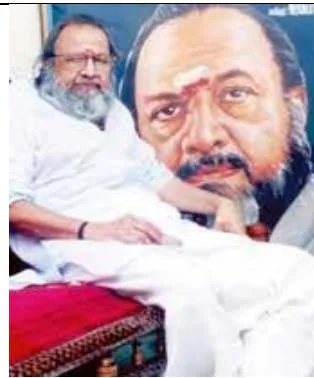
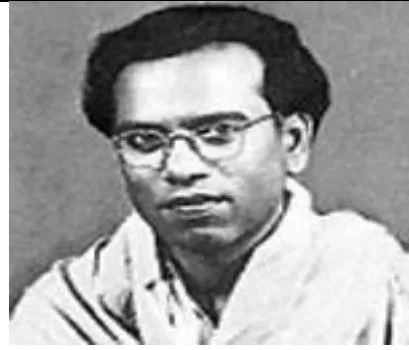
ACKNOWLEDGEMENTS
- My heart-felt and humble thanks for my friend Shri.Salai T Sivakkani, USA who has been my constant support who even paid my Admission fee for the Ph.D. degree
- I place on records my grateful regards to Shri.M.Elangovan, Project Consultant, Dept. of Mathematics, Indian Institute of Technology, Madras for his valuable help in going through this manuscript and made useful suggestions. Elangovan is otherwise known as IIT-MGR for his devotion to Puratchi Thalaivar.
| Table of confluence of contexts (Equity and Social Justice Chapter) with reference to Ideas of Karl Marx Contexts from I to XVIII | ||||||||||||||
| Theories for comparison | I | II | III | IV | V | VI | VII | VIII | IX | X | XI | XII | XIII | XIV |
| The Communist Manifesto (i.e. ten essential planks) | ||||||||||||||
| Abolition of Private Property | ||||||||||||||
| Heavy Progressive Income Tax. | ✓ | |||||||||||||
| Abolition of Rights of Inheritance. | ✓ | ✓ | ||||||||||||
| Confiscation of Property Rights. | ||||||||||||||
| Central Bank. | ||||||||||||||
| Government Ownership of Communi. & Transportation | ||||||||||||||
| Government Ownership of Factories and Agriculture. | ||||||||||||||
| Control of Labor. Corporate Farms and Regional Planning. | ||||||||||||||
| Government Control of Education. | ||||||||||||||
| Three other ideas of Karl Marx | ||||||||||||||
| Alienation of Karl Marks | ✓ | ✓ | ✓ | ✓ | ✓ | ✓ | ✓ | ✓ | ✓ | |||||
| Karl Marx's labour revolution | ✓ | ✓ | ✓ | ✓ | ✓ | |||||||||
| Karl Marx's labour revolution | ✓ | ✓ | ✓ | ✓ | ✓ |
Testing of Hypothesis
As already indicated that Hypotheses are tentative statements that add directions to the purpose of the study. In this study the following hypotheses were formulated and as per practice the hypotheses are to be accepted or rejected.
Hypothesis I: There is no significant difference between the same Lyricist reiterating the specific ideas of equity and social justice (Socialism and Communism), in the various songs of different MGR Films.
Poet Marudha Kasi revisits his ideas of possession of money in context I & III and makes an appeal to the rich to cultivate the attitude of generosity to alleviate the conditions of the poor's – to this extent this hypothesis proves to be established and the hypothesis has to be considered as "accepted".
Hypothesis II: There is no significant difference between different Lyricists uses the above unique ideas of equity and social justice more specifically socialism and communism in various songs of different MGR films. - This Hypothesis could not be cross verified in this research work.
Hypothesis III: There is no significant difference between the use of media by MGR and to propagate the unique ideas of socialism and communism, among his fans. - A combined reading of the contexts and the Critical Analysis of the various intersection of the songs identified by way of Context would establish the fact that Bharat Ratna Marudur Gopala Menon Ramachandran used the media effectively to propagate the idea of equity and justice. Moreover, the statistical data given under each song that indicate the number of people listening to MGR songs uploaded in the u- tube proves the point of impact the MGR songs created. In this respect the hypothesis should be treated as accepted.
V. CONCLUSION
Thus this Chapter traces the ordeal made by Bharat Ratna Dr. Marudur Gopala Menon Ramachandran to become a chaste hero, the uncompromising conviction he made in spreading chaste message through meaningful songs and dialogue. His charitable mind and entry in to politics and the welfare measures he had taken especially for the upliftment of poor's in the State. Moreover the fourteen songs that was contextualized above that coincides with the theory of equity and social justice more specifically communist manifesto of Karl Marx shows that lyrics of film songs can be dedicated to propagate ideas of economic, equity and social justice with mellifluous music, unlike lyrics of some music genres, such as rock, heavy metal, rap, and new emerging genres which have been found to revolve around topics such as sexual promiscuity, death, homicide, suicide, and substance abuse. The advice of American Academy of Paediatrics' is once again reiterated that Performers should serve as positive role models for children and teenagers. The music-video industry should produce videos with more positive themes about relationships, racial harmony, drug avoidance, nonviolent conflict resolution, sexual abstinence, pregnancy prevention, and avoidance of promiscuity. These songs are being watched by millions of MGR fans as confirmed in the u-tube counts produced under each song and the fact that Mega TV that telecasts these songs under the title Amudha Ganam by Director Aadhavan.
M. G
Author : Head of the Dept., Dept. of Philosophy, A.M. Jain College, Meenambakkam, Chennai, India.
Objective of this research work is
Hypothesis IV: There is no significant difference between the ideology and social welfare ideas contained in various MGR film songs and the welfare schemes implemented by MGR as the Chief Minister of Tamil Nadu.
Jpduuol 10556007 501@625
Translation of the Song in English:
Song Originally Written in Tamil:
LUD 55 @H55 C55 L D H55 60T 6055 (5) LTL60L...
@HITG LITOT @HITOT
655L55n@H55nC60T L#F#L55nC60T
LUN 26065 @oTMTU 60605
Hypothesis IV: There is no significant difference between the ideology and social welfare ideas contained in various MGR film songs and the welfare schemes implemented by MGR as the Chief Minister of Tamil Nadu. Considering the facts indicated above it proves without doubt that the ideology and social welfare ideas contained in various MGR film songs taken for evaluation and comparison in this research work and the welfare schemes implemented by MGR as the Chief Minister of Tamil Nadu largely coincides and therefore this hypothesis cannot be rejected and proves to be accepted.