
I. INTRODUCTION
Coal fly ash is obtained as a by-product of the combustion of coal for generation of electricity in thermal power plants. There are about 697 operating coal power plants in the U.S. according to the U.S. Energy Information Administration. According to a survey released by the American Coal Ash Association, it was estimated that about 53 million tons of coal fly ash is produced in the U.S. annually and is expected to increase by a little below 3% through 2033. About 53% of the ash is utilized leaving a substantial amount to be disposed of in landfills and lagoons [1].
The significant environmental and waste management challenge of coal fly ash (CFA) has received a great deal of attention over the past two decades. In response to this, coal fly ash is being examined for reuse and recovery applications to reach a more sustainable future. Currently, CFA is used in construction industry, zeolite synthesis, ceramic industry, catalysis, valuable metal recovery, and several agricultural and geotechnical applications . However, with increased production of coal fly ash due to increase in demand for electricity arising from various economic factors including population growth, an increased rate of utilization in industry is required. Coal fly ash properties are strongly dependent on the geological origin, type of fuel and the combustion process of the coal . Characterization of coal fly ash will enable industry stakeholders and researchers to fully embrace the potential of coal fly ash.
Multiple studies have been published that investigated the properties of coal fly ash and their potential application in the U.S. [5,15,16,17] and other parts of the world. The morphology, mineralogical and physico-chemical properties of coal fly ash obtained from various thermal power plants for utilization in zeolite synthesis in India, Pakistan, Japan and Indonesia have been investigated . Medina et al (2010) reported the properties of Mexican fly ash. They concluded that fly ash was a potential raw material for cement industries, zeolite synthesis and as a support for heterogeneous catalysts due to its structural and thermal stability. Nathan et al (1999) characterized coal fly ash from Israel to study the potential toxic effect of coal ash leachates on soil and groundwater. In a study by Liu et al. , the petrologic, chemical, and trace elements in coal ashes in China was examined. It was concluded that coal fly ash is majorly composed of crystalline, glassy, and organic matter (incompletely combusted carbon). Van der Merwe et al (2014) studied the surface and physical properties of South African coal fly ash and its application in PVC composites. Two studies by Erol et al. and Bayat reported the characterization of various Turkish fly ashes. The studies concluded that fly ash have potential use in wastewater treatment, in glass production, as good binding agent, and as substitute for slags, pozzolana and gypsum in the amelioration of clinker.
Coal Fly Ash is classified worldwide into two main types based mostly on their application in cement industries, namely, class-C and class-F [1]. According to the American Society of Testing and Materials (ASTM), class-C fly ash is characterized by high calcium or lime content while class-F fly ash is characterized by low calcium or lime content [18]. While reviewing the existing literature, to the best of our knowledge, we have not found any literature characterizing and comparing class-C and class-F coal fly ash collected in the United States of America. As a result, this study focuses on the characterization of class-C and class-F coal fly ash using X-ray diffraction (XRD), Scanning Electron Microscope (SEM) and X-ray Fluorescence (XRF) to identify the structure, microstructure morphology, and chemical composition respectively.
II. MATERIAL AND METHODS
The twelve CFA samples used in this study were collected, dried and screened by Boral Resources. Characterization of the fly ash samples was carried out using non-destructive characterization techniques. A Rigaku Supermini200 XRF was used to identify the chemical composition of each CFA sample. For morphologic analysis, a Phenom Desktop SEM was used, operating at 15kV. The determination of the mineralogical composition was performed using a Rigaku MiniFlex600 X-ray Diffractometer, at 2kV, using CuKα radiation and a scattering angle variation from 5° to 90°. The MDI Jade standard was used to analyze the peaks obtained in diffraction patterns of the coal fly ash samples.
III. RESULTS AND DISCUSSION
X-ray Fluorescence spectrometry has been used extensively in the determination of the chemical composition of fly ash . The results of this analysis are presented in Table 1. The major elemental composition of coal fly ash is similar to the composition of rocks in the Earth's upper crust. This can be attributed to the formation of ash from the inorganic components of coal such as quartz, feldspars, clays and metal
a) XRF Analysis
oxides [24]. Metal elements such as Ca, Fe, K and Mg are present primarily from the organic matter (e.g. swamp plants) that formed the combusted coal [22].
Franus et al. (2015) reported that over 90% of coal fly ash is composed of oxides of Si, Al, Fe and Ca; minor elements such as Mg, K, Na, Ti and S make up about 8% and the remainder is made up of trace elements. This is observed in the data presented in table 1. From the table below, oxides of silicon, aluminum and calcium have the highest weight percentages, with other oxides present in minute quantities.
The ASTM D388 defines coal by ranks; high ranked coal such as anthracite or bituminous, and low ranked coal such as lignite or subbituminous . Class-F fly ash, which is produced from the combustion of high ranked coal, is applicable in industries such as ceramic and metal recovery. Inversely, class-C fly ash is produced from low ranked coal and finds application in soil amelioration and construction industries .
| Chemical Composition, weight% | ||||||||||
| Sample No. | CaO | MgO | ||||||||
| 1 | 47.553 | 20.683 | 4.943 | 19.236 | 0.942 | 4.051 | 1.210 | 0.841 | 2.299 | 73.179 |
| 2 | 49.535 | 24.572 | 10.97 | 2.935 | 0.143 | 1.349 | 2.915 | 0.371 | 2.016 | 85.077 |
| 3 | 48.523 | 20.554 | 4.969 | 16.995 | 0.748 | 4.121 | 1.212 | 1.081 | 2.361 | 74.046 |
| 4 | 50.022 | 20.781 | 5.068 | 16.542 | 0.654 | 4.034 | 1.275 | 1.167 | 2.407 | 75.871 |
| 5 | 57.372 | 19.795 | 4.773 | 9.588 | 0.206 | 2.317 | 1.301 | 2.474 | 2.898 | 81.94 |
| 6 | 38.934 | 16.291 | 3.011 | 39.906 | 1.963 | 2.199 | 1.088 | 0.711 | 2.390 | 58.236 |
| 7 | 39.249 | 21.586 | 5.571 | 21.183 | 1.402 | 4.521 | 0.668 | 1.804 | 1.818 | 66.406 |
| 8 | 36.441 | 19.801 | 5.164 | 24.465 | 1.523 | 5.913 | 0.503 | 2.618 | 1.840 | 61.406 |
| 9 | 38.915 | 21.329 | 5.353 | 21.251 | 1.628 | 4.034 | 0.572 | 1.697 | 1.825 | 65.597 |
| 10 | 35.875 | 19.835 | 5.131 | 26.648 | 2.092 | 5.292 | 0.550 | 1.905 | 1.809 | 60.841 |
| 11 | 39.815 | 20.618 | 5.004 | 22.392 | 1.370 | 4.127 | 0.585 | 1.422 | 1.931 | 65.437 |
| 12 | 38.730 | 20.743 | 5.103 | 22.496 | 1.016 | 5.188 | 0.585 | 1.875 | 1.867 | 64.576 |
| ASTM C618 limits | Class F | 5 max. | 70 min. | |||||||
| Class C | 5 max. | 50 min. | ||||||||
From literature, identifying the class of coal fly ash will aid in determining suitable areas of application . According to the ASTM guidelines for classification of coal fly ash, samples 1 – 5 can be classified as class-F coal fly ash, while samples 6 – 12 are class-C coal fly ash. Having more than half of the sample size classified as class-C fly ash is not surprising. This is due to the type of coal, Lignite, which is found predominantly in Texas and Louisiana states of America .
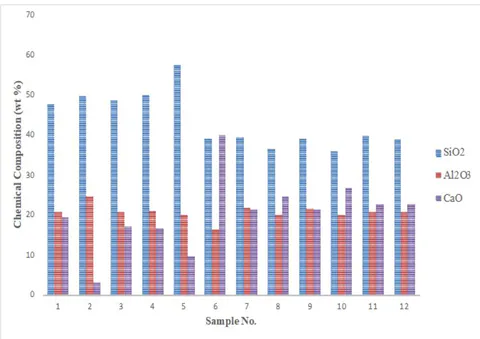
Although Class F fly ashes has been reported to contain <15% CaO, and class C having CaO in the range of (10-35)% [24, 25], samples 1, 3, and 4 do not align with this. A study by Fox (2017) stated that it is possible to have class-F fly ash with higher CaO content due to the average codabular variation (cv) value of the combusted coal. The cv value represents the deviation of the alkali (K_{2}O and Na_{2}O) weight percent from the codabular function and is dependent on the geochemistry of the coal. This phenomenon however does not hinder the classification of samples 1, 3, and 4 as class-F as they still comply with the requirements of SiO_{2} + Al_{2}O_{3} + Fe_{2}O_{3} > 70 and the CaO values are generally lower than those samples classified as class-C [27].
Inada et al. (2005) studied the importance of the composition in determining the yield and resulting zeolite type during the synthesis of zeolites. Generally, the optimal ratio for zeolite A is c.a. 2; between 2.2 - 5 for zeolite X; between 3.1 – 10 for zeolite Y have been reported [21, 26]. Thus, samples 1-6 can be synthesized to zeolite X, and samples 7 – 12 can be converted to zeolite A.
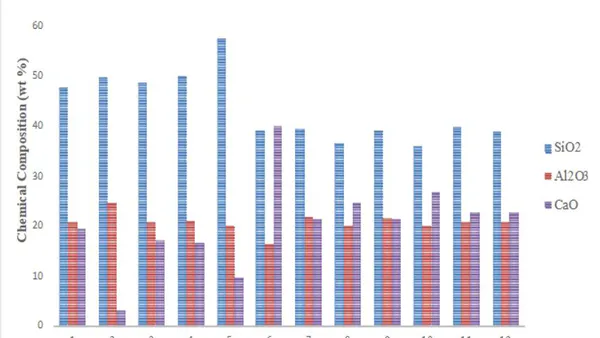
Figure 1 clearly shows the higher weight percent values of samples 1 – 5, which is consistent with Class-F fly ash due to its pozzolanic properties. Pozzolansare siliceous or aluminosilicate materials with little or no cementitious property on their own, but in the presence of moisture, will chemically react at room temperature with calcium hydroxide to form compounds with cementitious properties [28]. It can also be seen that samples 6 – 12 have higher CaO weight percentage consistent with the cementitious properties of class-C fly ash.
b) SEM Analysis
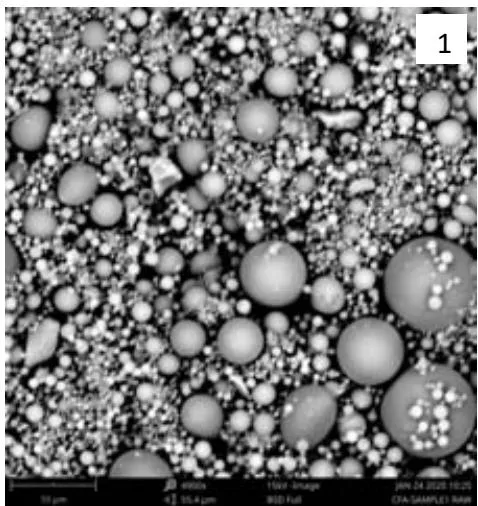
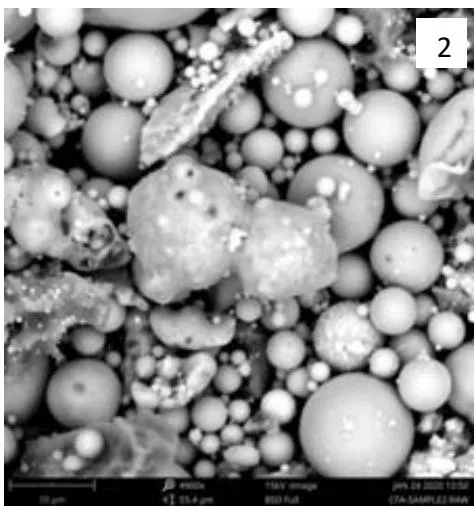
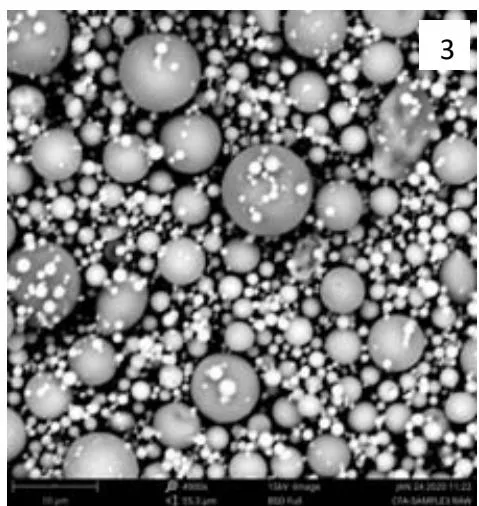
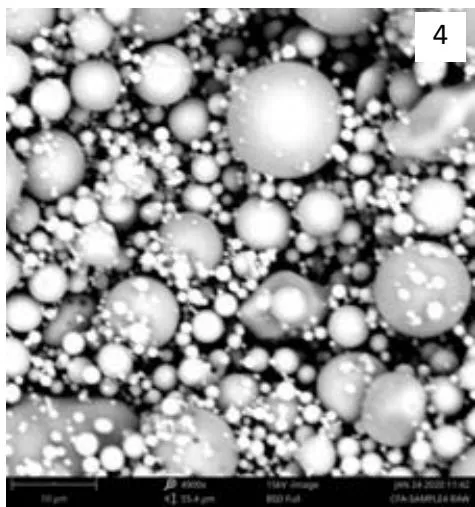
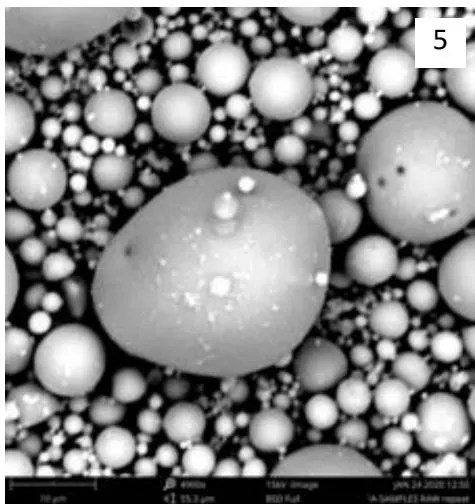
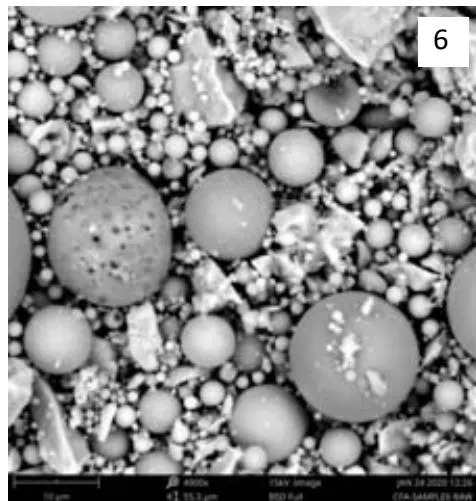
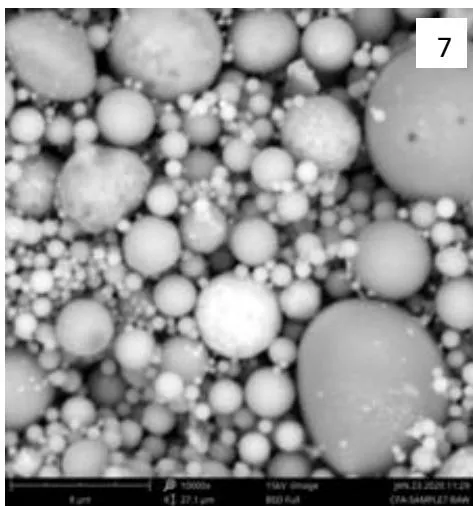
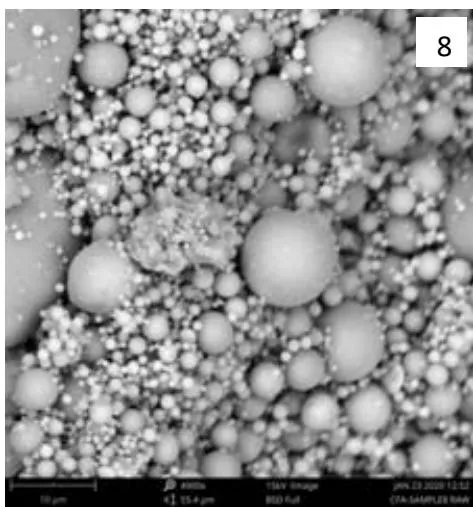
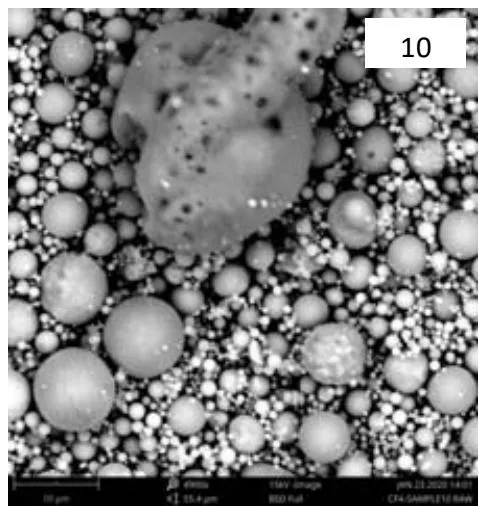
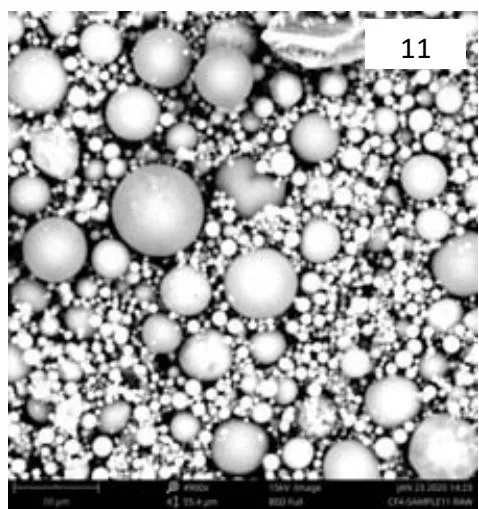
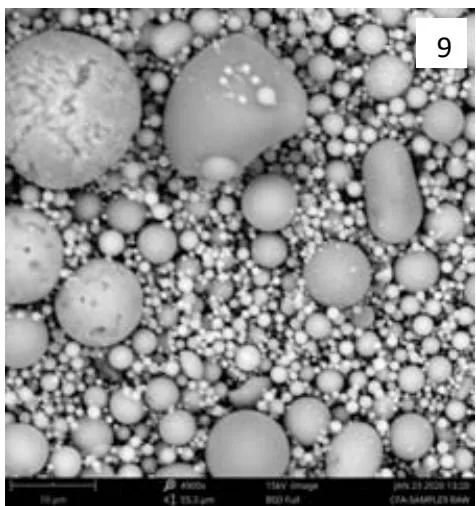
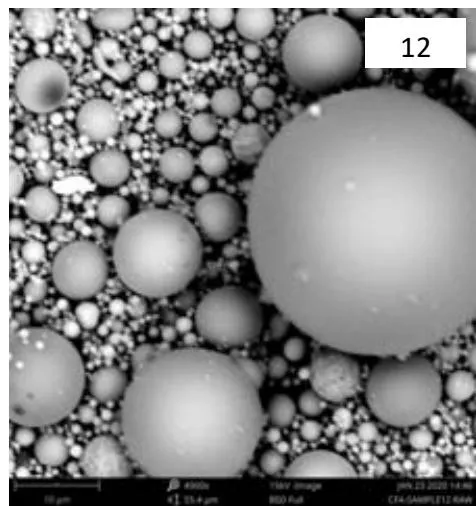
SEM images of different coal fly ash samples are presented in Figure 2. The cooling rate and the combustion temperature of the fuel determines the morphology of particles [21]. It can be seen from the morphology of all the samples, that the particles are mostly spherical in shape with varying sizes. From literature, this spherical morphology can be attributed to the high silicon content of the samples [19]. This agrees with the data presented in table 1 above. It can also be observed that there are some irregular shaped unburned carbon particles in samples 2,6,8,9,10, and 11. These irregular shaped particles are attributed to the improper combustion of the coal [20].
c) XRD Analysis
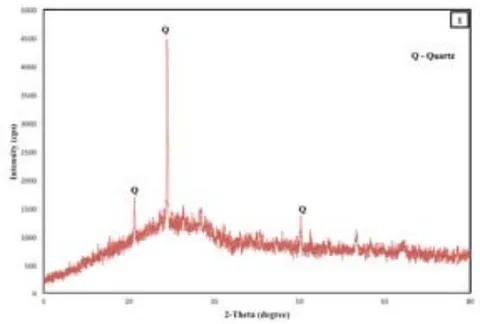
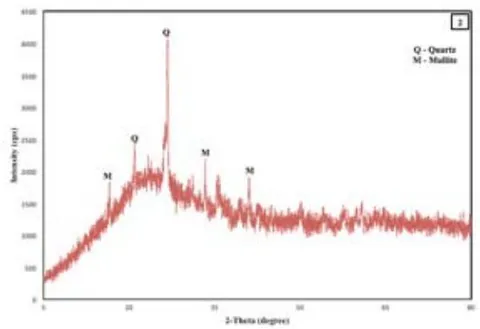
X-ray Diffraction is a powerful technique that detects the crystalline phases present in sufficient quantity in a sample . Figure 2 presents the results of this analysis. Crystalline phases are represented by peaks, while amorphous phase is represented by the hump. The images presented show a large amount of amorphous content which is to be expected with fly ash (above 80%) [21].
According to mineralogical analysis, the two main crystalline phases for the twelve samples are quartz and mullite .
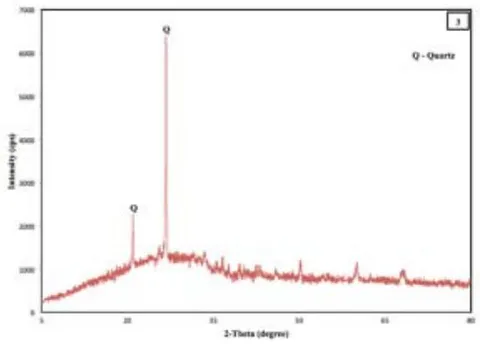
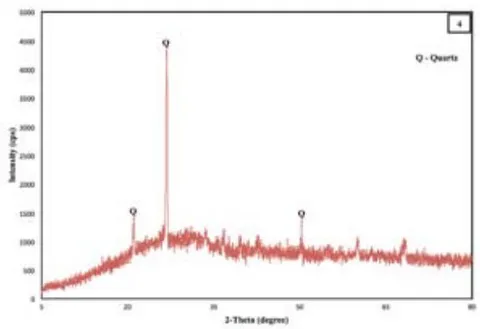
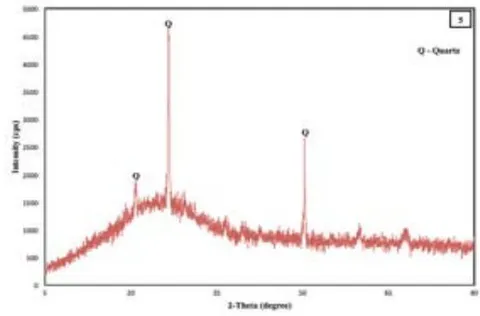
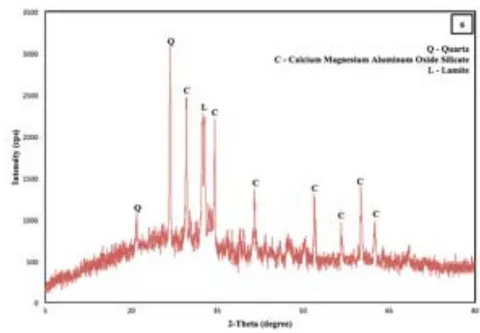
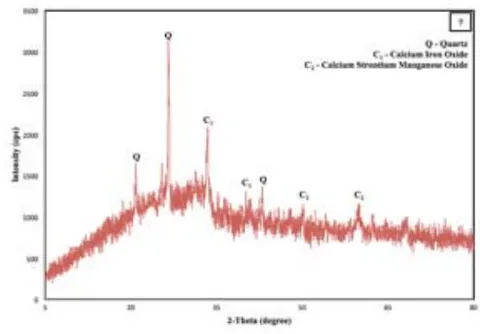
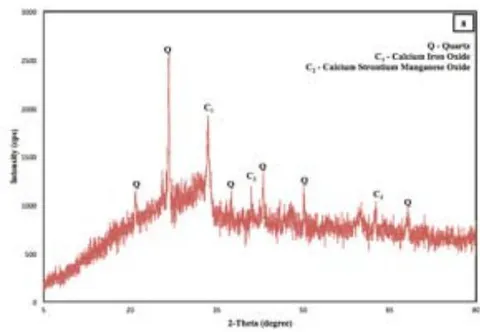
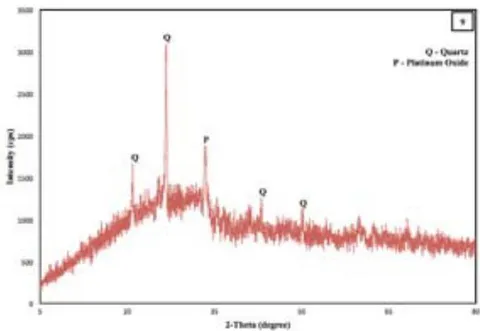
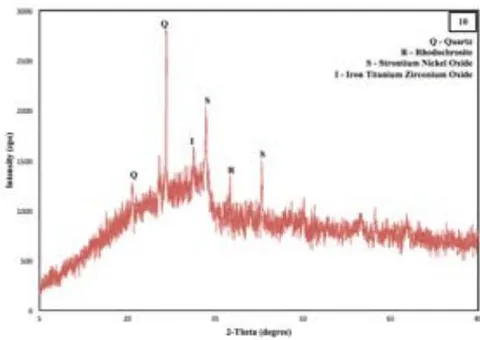
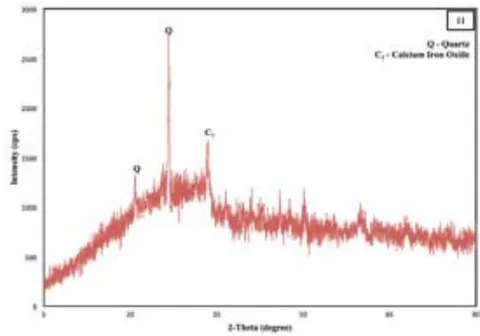
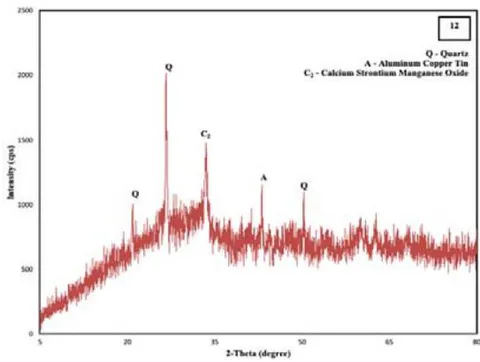
Other than these, Calcium Magnesium Aluminum Oxide Silicate ( ), Calcium
Strontium Manganese Oxide , Rhodochrosite , Strontium Nickel Oxide , Iron Titanium Zirconium Oxide , Calcium Iron Oxide , Aluminum Copper Tin , Platinum Oxide (PtO), and Lamite are also identified in the fly ash samples.
IV. CONCLUSION
The results obtained from this chemical characterization study confirm the fact that the coal fly ash found in the southern part of the United Sates (mainly Texas and Louisiana) have high percentage oxides of Si, Al, Fe and Ca and therefore makes them good candidates for industrial application. With the problem of ash management and leachate contamination of groundwater, coal fly ash disposal on land or lagoons should be discouraged. This study has instead provided information to enable sustainable use of coal fly ash in various industries such as construction industry, zeolite synthesis, ceramic industry catalysis, wastewater treatment and valuable metal recovery.
Our next investigation is on the potential use of the coal fly ash in water treatment and to compare it to the traditional water treatment processes.