
I. INTRODUCTION AND BACKGROUND
China's entrepreneurship scene is one of the largest and most profitable in the world. Entrepreneurs contribute over of China's GDP and have been a major driving force behind the economy's sustained growth (He, Lu, & Qian, 2019). They are responsible for of urban employment while they contribute of fiscal and tax revenues. They can foster sustained economic growth through innovation and currently tech entrepreneurs alone account for of the total GDP (Shan, Jia, Zheng, & Xu, 2018). The Chinese government is well aware of the efficacy of entrepreneurs such that several macrolevel strategies have been implemented to support and encourage entrepreneurship at every level.
Since the 12th 5-year plan (Worldwide, 2010), the government of China pledged to direct more funding and institutional changes towards the development of Strategic Emerging Industries (SEIs). These included healthcare, energy and environment, and technology. They have alleviated credit access (Wang, 2012) and provided several grants towards SEIs to ensure social development. It is clear that the Chinese government regards economic growth as a priority and has "whole heartedly" promoted and facilitated entrepreneurial thinking and practices, playing a more supportive rather than regulatory role in the entrepreneurial ecosystem.
Unfortunately, the market is just as difficult to enter as it is attractive. Extensive literature spanning over 25 years maps out the difficulties that entrepreneurs in China have faced, particularly, foreign entrepreneurs. These include complex and inconsistently applied laws, national isolation that has created a closed business and social ecosystem, unique cultural context, language deficiencies and rigorous competition from domestic players and copycat products, conflicts in managerial and cultural integration, lack of access to multi-layered distribution channels and corruption in public services (W. Zhang & Zhai, 2016). The foreign entrepreneur enters the market as a stranger and often, inadequate market research leads to poor performance or failure because they cannot choose the appropriate location in the very different regional market segments (Min & Chen, 2003) and cannot fully take advantage of guanxi (D. Zhou, 2012). They experience all these while they fight for market share and brand recognition with strong incumbent firms in a brand-conscious consumer market. These problems however, do not make China's 1.4 billion market any less appealing. In 2018 alone, there were new 60 553 new foreign enterprises registered with a cumulative 134.97 billion USD invested (MofCom, 2018).
Despite the large number of foreigners and foreign enterprises in China (MofCom, 2018), there is only little literature that focuses on foreign entrepreneurs specifically (Ahlstrom, Young, Nair, & Law, 2003; Gurău, Dana, & Katz-Volovelsky, 2020). Though many previous studies explain the policies and theories regarding the opportunities for foreign entrepreneurs in (Ahlstrom & Ding, 2015; Y. Zhang, Zhao, & Ge, 2016), there still exists a gap in the literature shows how foreigners can take advantage of these opportunities. To provide a clear description and hierarchy of the complex dynamic factors is the main objective of this study. This is important in bridging the gap between entrepreneurship theory and practice in migrant entrepreneurship and fill gaps in cross-cultural management of enterprises. This will be achieved through answering these questions: "Why does the market entry and penetration remain a problem for foreigners?" and "What are the most important aspects of China's entrepreneurial sector that foreigners need to understand and take advantage of?"
The second contribution of this paper will be to test graph theory and matrix approach (GTMA) as a suitable method for undertaking entrepreneurship research. It has successfully been used in other fields of social science including organizational management (Gurumurthy, Mazumdar, & Muthusubramanian, 2013), logistics and supply chain management (Agrawal, Singh, & Murtaza, 2016; Gupta & Singh, 2015) as well as management science. This method can account for the bi-directional inter-relationships amongst the and to what extent each of them affects the business outcomes of entrepreneurial activities in a way that other methods cannot. In this way, this contribution offers a more holistic view of the business environment that foreigner in China will encounter and is therefore more comprehensive than other studies that focus on singular the point of view. In order to achieve these, the study will go on to outline a literature review of previous studies in section 2, define the variables based on a combination priori research consultation of experts in section 3, build and calculate the graph theoretic model in section 4&5 and discuss the results and research implication in section 6.
II. LITERATURE REVIEW
a) Concepts of Entrepreneurship
There are many varying definitions of entrepreneurs given by a myriad of. Entrepreneurship is the creative process of monetizing problem-solving methods. The entrepreneur is therefore the one who changes a market or economic system through provision of an innovation product or business model often in response to a valuable economic opportunity (Devi, 2020). The country's "mass entrepreneurship and innovation" policies are attractive to entrepreneurs and they offer lucrative opportunities for them. With over 600 000 foreigners living in China (NBSC, 2010), of which are entrepreneurs or business owners, the study must stipulate the difference between small business owners and entrepreneurs. The entrepreneurs, that are the focus of this study, are innovative in creating new markets, new products, new organization structure and methods of production and service delivery. Furthermore, foreign entrepreneurs will mean migrant entrepreneurs (Ashourizadeh, Li, & Wickstrom, 2020) that are native to countries outside the territories of China as well as Chinese entrepreneurs who were born outside of China and have naturalized in the countries of their birth.
Going further, what really defines success to an entrepreneur? Wach, Stephan, Marjan, and Wegge (2018) connote that unlike manager, entrepreneurs measure their performance against their goals. So instead of pegging success with survival, return on assets, number of employees or even market share; entrepreneurs measure performance and success based on self-actualization, independence and autonomy over firms, social contribution, personal fulfillment and work-life balance (St-Jean & Duhamel, 2020). Their success can be grouped into business-oriented and personal-oriented. The former encompasses financial and also development of innovation capacity and enhanced status while the latter entails relationships formed and value of the impact of innovation on the community. This paper espouses these as the success which entrepreneurs in China will be aiming for.
b) Theories of Entrepreneurship
This study is based largely on Transnational Entrepreneurship Theory (TET) and Opportunity Recognition Theory.
Transnational Entrepreneurship Theory (TET), insists that entrepreneurs that have networks embedded in the host country and their home countries can benefit from this (Ashourizadeh et al., 2020). This is true for some businesses particularly export and Belt & Road Initiative-involved (BRI) activities. Nonetheless for foreigners wishing to capture the Chinese consumers vertical ties in industry and local government are not readily accessible (Drori, Honig, & Wright, 2009). Their ability to foster these ties depends heavily on socioeconomic relations between countries, visa and trade regulations as well as historical international relations (Sommer & Gamper, 2018). It also depends on their ability to foster social ties and earn social capital "Guanxi" (Gruenhagen, 2018; L. Zhou, Chan, & Song, 2017) that can give them access to supply chains and give rise to opportunities that can help overcome the disadvantage of being an outsider. TET also describes the advantages that migrant entrepreneurs have by bringing new skills they have learnt in their home countries. Therefore, entrepreneurs must learn and develop high quality skills and talents in order to create a competitive edge. As there is pressure to improve oneself for local entrepreneurs, foreigners have also been welcomed to get a slice of the pie if only they possess good quality skills (Wei, Jiao, & Growe, 2019). China is still one of the most challenging destinations for expatriate business owners yet it is still one of the most highly sought-after markets.
Urbano, Audretsch, Aparicio, and Noguera (2019) explain how existing regulatory statutes and cultural norms of China affect foreigners doing business there. Embedded within this institutional framework is Opportunity Recognition Theory. All other factors considered, foreign entrepreneurs must be able to recognize the opportunities that exist for them in line with provisions made by the institutions. Institutions will present the environment that foreigners must encounter. Formal institutions regulated by the State determine the prevailing state of entrepreneurship (North, 1991) in China. They determine the foreign entrepreneur's ability to operate, to obtain legal residence status and visas as well as which industries to enter. This therefore means the formal institutions in China enable as well as constrain entrepreneurs. Social interactions and observation of culture and language are so important and are a determinant of the success or failure of a business in terms of productivity and formality (Lee, 2003).
Firms that try to imitate their indigenous styles of management find it problematic to succeed in China. Opportunities that exist for foreign entrepreneurs are largely efforts by the government to create a fertile environment that is conducive to entrepreneurial activity. These currently range from opportunities in 1st and 2nd tier cities where there is access to talent, clusters, good infrastructure and preferential tax incentives (Xiao & North, 2017), allocation of space and money for Special Economic Zones SEZs and High-Technology Zones HTZs to incentivized foreign trade with minimal government interference as well as Free-Trade-Zones FTZs that through the BRI intend to modernize China's business landscape and stimulate domestic and foreign trade (Wu & Burge, 2018).
III. CONCEPTUAL DEVELOPMENT
a) Item generation
An initial review of studies on the market entry barriers (MEBs) of entrepreneurs in China was done to compile the prominent factors affect the business environment for foreign entrepreneurs (Jayaraman, 2010; Niu, Dong, & Chen, 2012; W. Zhang & Zhai, 2016). This study gathered findings from the literature survey on MEB's explained in literature regarding the Chinese market, dating back from 1989-2020(Fang, Tung, Berg, & Nematshahi, 2017; Niu et al., 2012; Steinz, Van Rijnsoever, & Nauta, 2016). The paper by Dickson, Yao, and Hill (2020)was used as a basis on the groupings of the items. A preliminary list of 30 items divided into 6 general categories (5 items for each).
b) Expert Review
Four experts who are senior academics in Entrepreneurship, Business Administration and
Management studies and have experience working with foreign entrepreneurs at Chinese Universities provided is with suggestions and feedback on the face validity of the 30 items. They were emailed the list of items along with the title of the manuscript and objectives of the study. Accounting for their feedback, we reworded some of the items, combined those that were ultimately the same and deleted 4 items. This resulted in a set of 20 items divided into 5 categories namely Chinese Government Policy (GP), national Demographics (DG), Domestic Market Competition (MC), Local Business Relations (BR) and access to Funding (Fu).
c) Nomological Validity
i. Government Policy (GP)
Arguably, government policy is the most powerful shaping force of the business environment in China (Woetzel et al., 2014). Firstly, the Open-Door Policy (GP1) from 1979 saw China open up its borders to investment from other countries. This has since led to the State decentralizing decision-making regarding trade, opening of special economic zones in strategic locations to facilitate it, loosened control on foreign exchange and replacement of administrative restrictions with tariffs and quotas (Park & Ungson, 2016; Park, Ungson, & Zhou, 2013). This has significantly transformed the nation to a market economy. Secondly, China is forex-controlled country (Deloitte, 2017) meaning companies must apply for foreign exchange certificate and review annually by supplying documents for all money coming in and out of China through business transactions (GP2). Although the circulation of foreign currency is prohibited, The Shanghai Pilot FTZ currently allows full convertibility of RMB, the beginning of the relaxation of this policy. Thirdly in many 1st and 2nd tier cities, the State Tax Admiration has introduced some attractive incentives for foreign entrepreneurs and startups (Hsu, Lee, Leon-Gonzalez 2018) that give preferential tax treatment and substantial tax holidays (GP3). In certain industries, such as high-new-tech-enterprises (HNTEs) and cities in Guangdong and west China, they are offering a 2-year tax holiday followed by 3 years of income tax versus the documented . Therefore, entrepreneurs can easily bear the tax load after 5 years giving them enough time to get their businesses up and running (Deloitte, 2017). Finally, the last aspect of this is the regulatory transparency of policies regarding investment (GP4). (Jayaraman, 2010) describes the legal system as "loosely defined" allowing for many loopholes alongside red tape and many misinformation's. Entrepreneurs with a good network of Chinese colleagues will have less difficulty navigating simple tasks such as permits and approvals, however without these connections one will face grave difficulties navigating the red tape and run-around as well as may have no protection against theft of expertise and intellectual property (IP).
ii. Demographics (DG)
China's large population is a great opportunity for entrepreneurs but some of the specific demographic properties make it a complicated love story. China has a fast-growing wealthy middle class (DG1) as more rural workers move to urban areas for better paid jobs and native Chinese business people expand and have greater disposable income (Park & Ungson, 2016). These consumers have higher demands for quality and efficiency than ever before and their needs are dynamic. Chinese consumers spent CNY 34.8 trillion in 2018 alone (NBSC, 2019), a figure expected to rise to CNY 60 trillion by 2025; therefore their complex needs dictate how businesses will operate. Chinese Mandarin is the standard language spoken in China (DG2). Although many young workers in big cities will be able to speak English, most of other business conversations with officials, sponsors and partners will be in Chinese (Cui & Kwon, 2014). Therefore, though not compulsory, foreign entrepreneurs who can communicate in Chinese to their counter parts are more likely to gain the trust of others. Innovation management (DG3) is very important for domestic and foreign entrepreneurs in China. It used to be primarily foreign firms introducing new products from their countries into China through partnerships (Collinson & Liu, 2019) with local companies but now has shifted to companies independently innovating to create products unique and original to Chinese tastes. It is crucial that entrepreneurs settling in China study the market and have significant competitive products and services tailored for the market specifically. This gives rise to another aspect, the digitized society (DG4). Verot (2018) stated that Chinese consumers chat, shop, order groceries, pay for services, watch television and even date online, meaning whatever business model entrepreneurs will choose, having an online infrastructure is invaluable.
iii. Business Relations (BR)
The CEO of Nexcelia Solutions (Munganyi, 2020); an entrepreneur with a tech startup in Shanghai; said "In China business is more of a relationship than a transaction". This is embedded in the 5000-year history of the country. People place great importance on networking and "social capital" because who you know can be gateway to better opportunities for your business. This social capital is often termed "Guanxi" (BR1). (Trimarchi, Liesch, & Tamaschke, 2010) make it clear that cultivating long term profitable relationships is a worthwhile social investment. Guanxi can also be looked at from a long-term angle as "trust" (BR2). By conducting a series of transactions successfully over some time, people will come to trust your expertise and you will be given opportunities based on recommendations and testimonials given on your behalf. Being outsiders, often from different races and cultures, foreign entrepreneurs will need to gain the trust of customers and suppliers alike and overcome the liability of foreignness (Ikegami, Maznevski, & Ota, 2017).Gaining trust, especially in Joint Venture and Partnership companies, may require foreign companies to share their technological know-how and IP with local firms which has given rise to the unfortunate copycat culture "Shanzhai" (BR3). Although the government is increasing measures in recent years with special committees to hear IP protection suits, there is still a significant threat in terms of counterfeit goods and theft of intellectual property for reproduction (Jiang & Shan, 2016). One of the most attractive aspects of China used to be the cheap labor cost. However, in recent years, it has lost its luster as a base for cheap manufacturing (Yang, Chen, & Monarch, 2010). In 2018, of the population was living in urban areas, earning a national average minimum wage of 74,318 yuan, almost double the 36,539 yuan earned in 2010 (NBSC, 2010, 2019). The increase in labor cost (BR4) is not conducive to competitiveness and the cost of operating is increasingly higher by the year as are the expert needs of firms (Zheng, Zhao, & Li, 2019).
iv. Market competition (MC)
In 2010 when China released its 12th FYP document, it stated it was no longer content with being "the worlds factory" and rather wanted to move to an innovation economy (Worldwide, 2010). This means many domestic companies (MC1) especially in the emerging industries of high-end technology compete fiercely. Foreign entrepreneurs in these industries will be disadvantaged in that they don't have the vast supply network and government funding that these firms will have (Buysse & Essers, 2019) but will have to perform equally well if not better in order to stay in business. Froese, Sutherland, Lee, Liu, and Pan (2019) make it clear that state financed firms often have many legal and regulatory advantages over foreign entrepreneur firms. Some American and Europeans have expressed feeling "stonewalled" in China, that is being given unfair access to the market (MC2) as the government gears towards its "Made in China 2025" initiative and shows some form of preference for Chinese firms over foreign ones (Chang & Pieke, 2018). Another obstacle for the foreign entrepreneur who wishes to open a firm in China, especially WFOE, is the limited access to the supply chain (MC3). The entrepreneur will need to begin networking and creating his own system of suppliers, customers, distributors and retailers (Buysse & Essers, 2019) which will require a lot of valuable time that competitors will be gaining. In this process one will need to invest in a well-connected human resource (MC4), either through "buying guanxi" by hiring already well-connected staff or spend a lot of time networking to meet and gain the friendship of officials and other business people (Yen & Abosag, 2016) in order to gain an edge in market and financial performance and can reduce the liability of foreignness (Ikegami et al., 2017).
v. Funding (Fu)
One of the biggest questions for entrepreneurs is where they will get money to start their businesses and this applies the same in China. Blachman (2018) describes how Chinese venture capitalists (VCs) are looking to invest in foreign bred startups that have highly advanced engineering and data science as well as hard technology skills (Fu1). Such companies that pass the bar will be given access to major players in China to collaborate with, making it an even more attractive to be funded by Chinese VCs. The private equity (PE) market in China is slightly less developed than that of American and European countries (Nazareno, Zhou, & You, 2019) (Fu2). Though also available to foreign entrepreneurs there is still ambiguity in the legal environment and as a result PE manager sometimes buy controlling stakes earlier on in the business leaving the actual entrepreneur with weaker decision-making authority. Another funding option is that of self-organized foreign entrepreneurs (Fu3) that is to say foreigners that will use their own funds sourced from personal savings, friends and family. However according to the interviews conducted with foreign entrepreneurs in China, self-financed entrepreneurs with less than 5 million RMB are limited and stand a risk of hemorrhaging cash and failing within 3-5 years (Ng & Fu, 2018), while most foreign startups need at least 5-7 years to settle down. Lastly due to a high interest in HNTEs (Fu4) in China, in cities such as Shanghai, Shenzhen and Chengdu there are possibilities of getting startup capital ((148,800) and 3 years rent free in designated technology zones (Bo, 2019). Business incubation programs are increasingly popular as well and offer many financial and other resources crucial for start-ups along with the support of the government and access to supply chains.
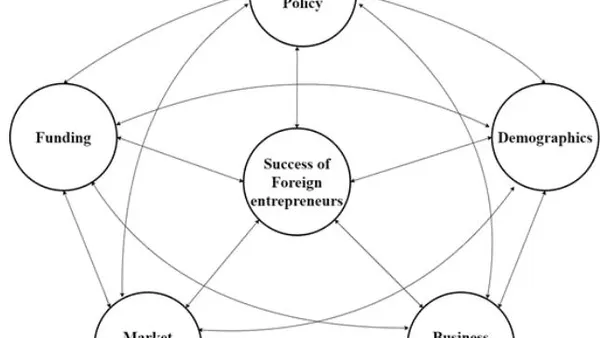
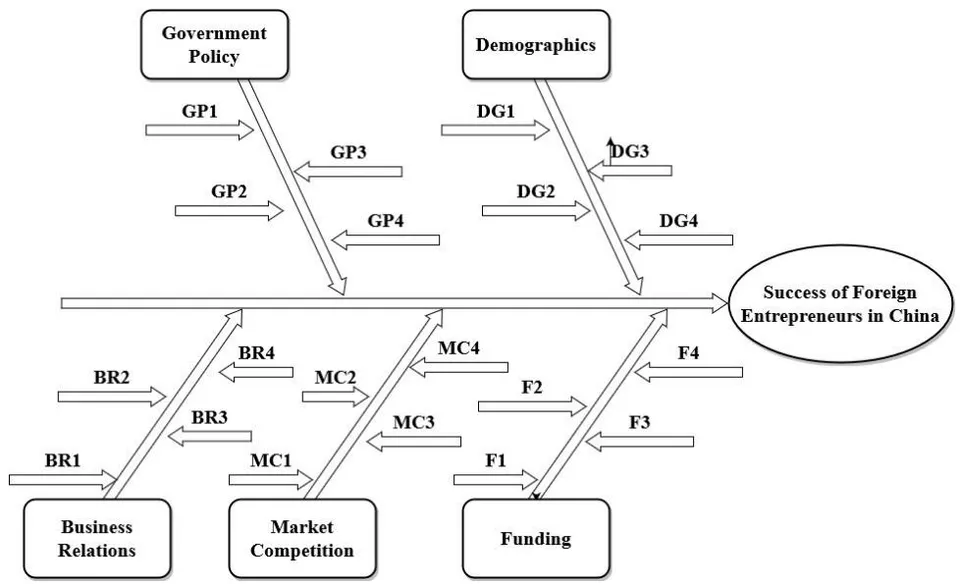
The factors presented here have intricate interrelationships amongst them and some depend on each other. This is shown in the following conceptual model can be drawn up in Figure 1.
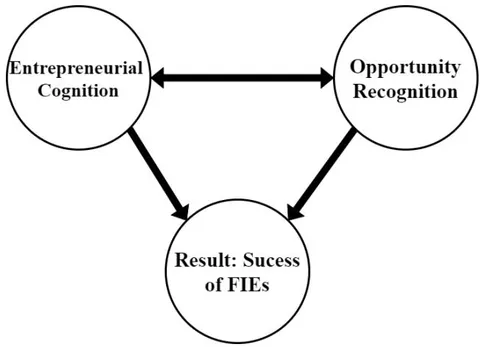
The resultant cause and effect diagram of all these factors is illustrated in Figure 2.
While the literature and theories describe and explain the factors that affect foreign entrepreneurs in China, it still remains unclear to what extent these factors influence business environment in which the foreign entrepreneur and how they interact with one another. The following section explores the interrelationships of the subfactors operating within the major factors as well as explore the nexus points of each of these factors with one another to determine the degree to which they impact the success of foreign entrepreneurs.
IV. RESEARCH METHODOLOGY
The investigation made use of graph-theoretic matrix approach (GTMA) to examine interdependencies amongst the factors and determine the most critical ones. Characteristics of this technique are its ability to capture the interdependencies and hierarchical structure amongst variables from a considerably small sample size. This study specifically elected GTMA as the most appropriate method because collecting large amounts of data is notoriously difficult in China so it was better to collect a small amount of real data (Trimarchi et al., 2010). Furthermore, it allows for qualitative inductive research whereby it is possible to formulate conclusions based on the results of the data rather than analyzing data based on existing theories (Fang et al., 2017). Graph theory is a simple and formidable technique which is free from these limitations and has in fact proved its fortitude in every field of study (Muduli, Govindan, Barve, & Geng, 2013).
The most common representation of the graph is by means of diagrams in which vertices are represented as points and each edge as a line segment joining its end vertices. GTMA has 3 constituents i) diagram representation for visual analysis ii) matrix representation valuable for computer processing iii) permanent representation suitable for expressing the effect of each variable by a single number (Grover, Agrawal, & Khan, 2004). To get the permanent value of each variable the indexes of multinomials must be computed and subjected to comparison and classification by certain criterion in this case, importance, leading to an election of the best value. The concept of a permanent matrix and performance attributes index gives correct and complete evaluation of the data. It allows the selection of the most suitable option and evaluate the overall quality of the industry.
Following this, the permanent matrices of critical factors were drawn-up and used to analyze the intensity of each critical factor and rank them according to importance in influence and opportunity for foreigners hoping to do business in China and what they may face in entering the market. The authors made use of GTMA to examine interdependencies amongst the factor and draw out the most critical ones.
a) Data Collection
The items concluded on by the literature review and experts' review were used to formulate questions for semi-structured interview questions that were asked foreign entrepreneurs in China. A qualitative approach was chosen because the study aimed to understand the views and experiences of the respondents. For this reason, structured questions were sent to the respondents before the interview time and they were encouraged to prepare and conduct the interview as a narration (Fang et al., 2017). The researchers also made use of follow-up probing questions to better understand the respondents. All the interviews were conducted through a mix of video calls, telephone calls and face to face meetings according to accessibility and each lasted between 45 minutes to one hour. They were recorded and transcribed afterwards. Main questions focused on the principal objective of the study: difficulties faced in doing business in China. Other questions also probed on the subthemes of the research: industry specific challenges and opportunities, the role of the Chinese government and business regulations as well as the state of local consumers and market competition.
b) Sampling
Responses were gathered from a total of 128 foreign entrepreneurs spread across 7 major regions of China and 13 industries. We employed a purposive snowball sampling technique according to the method used by Karadal, Shneikat, Abubakar, and Bhatti (2020). Established and experienced foreign entrepreneurs living and operating ventures in China were selected, starting with ones that the researchers had from personal contacts. These were asked to recommend future respondents from their social networks, personal contacts and industry acquaintances. From a total of 130 contacts we had, we received 128 valid responses. A response rate for a snowball sample is considered to be valid (Karadal et al., 2020). These were urged to express their views and opinions on the topic. The entrepreneurs were distributed as shown in Table 1.
| North China | North-East China | East China | South China | Central China | South-West China | North-west China |
| Tianjin Communication & IT (6) | Jilin Retail (3) | Shanghai Automobile (8), Foodstuff (12), EdTech (6), Personal care products (4) | Guangdong Home appliances (9), Apparel (5), Logistics (1) | Hubei Retail (2), Personal care products (2) | Chongqing Agriculture (1), Logistics (1) | Shaanxi-Agriculture (1) |
| Beijing EdTech (10) | Jiangsu Textiles (14), Communication & IT (6) | Shenzhen- Electronics (5) | Henan- Electronics (4), Food stuff (2) | Sichuan-Foodstuff (2) | ||
| Fujian Apparel (9) | ||||||
| Zhejiang Toys (4), Household appliances (4), Furniture (5) |
c) Definition of variables and Model Construction
From the conceptual model, 5 major factors with 4 sub factors each can be derived, namely Government Policy (GP), Demographics (DG), Market Competition (MC), Business Relations (BR) and Funding (Fu), giving a total of 20 items. All the variables are outlined in Table 2.
The proposed decision-making methodology used in this study followed the a format used in recent studies (Moktadir, Rahman, Rahman, Ali, & Paul, 2018; Muduli et al., 2013) and was initially proposed by Jurkat and Ryser (1966) to compare interdependencies between factors towards one conclusion. Matrices corresponding to the major factors are formulated on the basis of weightage. The shows the degree of the dependence of the factor on the factor our major factors will be denoted where , , , and . Following this, incorporating the opinion of the same experts, the study will determine the relative importance of the attribute
according to the ranking of importance as compared to another factor according to the parameters stated in Table 3. Using GTMA each subfactor is converted into a single numerical value. This helps in the comparability of the factors.
| Government Policy (GP) | Demographics (DG) | Business Relations (BR) | Market Competition (MC) | Funding (Fu) |
| GP1: Open Door Policy | DG1: Upcoming middle class | BR1: Guanxi | MC1:Domestic Competitors | Fu1:Venture Capital |
| GP2: Forex Policy | DG2: Language | BR2: Trust | MC2: Market Access Restriction | Fu2: Private Equity |
| GP3: Tax Obligations | DG3: Innovation Management | BR3: IPR | MC3: Access to supply networks | Fu3:Self Organized Entrepreneurs |
| GP4: Regulatory Transparency | DG4: Digitized Society | BR4: Rising labor costs | MC4:Human resource and Political connections | Fu4: Tech- Startups |
Table 3: Relative importance of factor
| Class description | Relative importance of Attributes | |
| FII | fII=10-FII | |
| Both factors are equally important | 5 | 5 |
| One factor is slightly important | 6 | 4 |
| One factor is very important over the other | 7 | 3 |
| One factor is most important over the other | 8 | 2 |
| One factor is extremely important over the other | 9 | 1 |
| One factor is exceptionally important over the other | 10 | 0 |
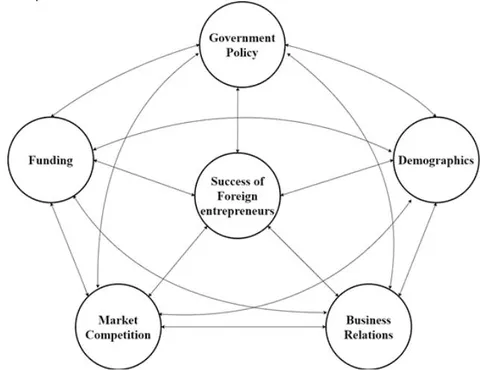
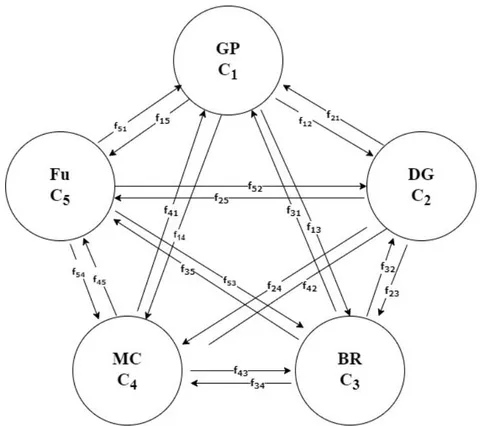
The behavioral diagram (also called the directed graph) is prepared to represent the behavioral factors critical to the success of foreign entrepreneurs in terms of nodes and edges. Nodes will stand for the major factors while the edges will show their interactions . Figure 3 illustrates the behavioral factors and interactions amongst the 5 major factors , , , and .
Similarly, Figure 4 shows the corresponding nodes and edges for the subfactors of the major factor GP. The nodes denoted , , and represent the subfactors GP1, GP2, GP3 and GP4 while the edges indicated the interdependencies among the subfactors that affect the success of foreign entrepreneurs in China.
V. DATA ANALYSIS
The above digraphs (Figure 3 and Figure 4) give a visual analysis of the relationships amongst the variables and are represented in equation 1 by a 5X5 matrix for the overall critical success factors (CSF) and 4X4 matrices represented in equations 2,3,4,5 and 6 for the sub-factors in each.
Where CSF is the Critical Success Factors index. stands for the major factors (GP=C1, DG=C2, BR=C3, MC=C4, Fu=C5) found on nodes of the digraphs and is the relative importance of the ith factor as compared to the jth which are shows as edges in the digraph.
In equation 2 where stand for the subfactors GP1, GP2, GP3 and GP4.
In equation 3 where stand for the subfactors DG1, DG2, DG3 and DG4.
In equation 4 where stand for the subfactors BR1, BR2, BR3 and BR4.
In equation 5 where stand for the subfactors MC1, MC2, MC3 and MC4.
In equation 6 where stand for the subfactors Fu1, Fu2, Fu3 and Fu4.
Permanent representation
The Jukart-Ryser formula used to mathematically explain the permanent function is illustrated in equation 7 as follows:
The permanent expression contains values of grouping. Each factor has 4 sub-factors, , meaning there will be 5 groupings whose meaning is outlined as follows:
The group contains 1 term and represents the symbiotic relationships amongst the 5 major factors contributing to the success of foreign entrepreneurs in China, .
The grouping is absent because a self-loop does not exist in this model and was not depicted in the diagram
The group has 2 terms and signifies two-factor interdependence (i.e., ) together with the remaining drivers (i.e., 2 in this case)
The group has 3 terms of each and represents three-drivers interdependence (i.e. ) together with the remaining drivers (i.e., 1 in this case)
The group has two subgroupings i) a set of 2 two factor interdependence (i.e., and ) together with the remaining drivers (i.e., 0 in this case) ii) a set of 4 factor interdependencies (i.e. and ) and the remaining drivers which is also 0.
In light of this, using the resultant matrix and permanent value for Government policy is:
Explained by:
=
Substituting the numerical values as per the matrix, the next step is to calculate the permanent value of government policy as a factor contributing to the success of foreign entrepreneurs
(7\times3\times5\times5+6\times4\times4\times6+6\times4\times4\times6+7\times3\times5\times4+6\times5\times6\times3+6\times5\times6\times3+7\times4\times5\times4+6\times6\times4\times4+6\times6\times4\times4)\end{array}Similarly, permanent values of other factors are calculated:
These values further allow the calculation of the permanent index of the CSF as follows
The computed index values of the critical success factors for foreign entrepreneurs are shown in Table 2. The index value of a specific factor shows the extent of its influence on the ability of foreigners to set up profitable businesses in China. Higher index values suggest that a factor has stronger impact on the outcome meanwhile a lower index value suggests relatively weaker impact of that factor.
In order to give meaning and allow for a sort of measurement the calculation of the theoretical best and worst value is necessary. It will also facilitate the estimation of the coefficient of similarity. The theoretical best value (TBV) of the permanent index value, equation 8, is obtained by making the inheritance of the subfactors have the best possible value (in this case 9).
Meaning the highest possible value of any major factor hypothetically is 33 336.
The theoretical worst value (TwV) of the permanent index value, equation 9, is obtained by
Meaning the lowest possible value of any major factor hypothetically is 6776.
The coefficient of similarity on the three most important factors was computed. The co-efficient of similarity with best value of a factor connotes the making the inheritance of the subfactors have the worst possible value, in this case 1.
intensity of that factor with the success of foreign entrepreneurs in China Mainland. It is calculated in equation 10, to find how critical these success factors are in comparison to each other as follows:
Where
Bij is the best theoretical value
Cij is the permanent index value
Wij is the theoretical worst value
's is the co-efficient of similarity compared with the worst value
Measured on a scale of 0-1, a smaller value shows a weaker intensity of the relationship while a higher value shows a stronger one. This implies that the intensity of the factor Fu, equation 10a, is more critical to the success of foreign entrepreneurs than that of demographics although the degree should be noted as small.
Most of the variables presented index values that are closer to the best value than the worst value indicating that the level of influence the factors chosen is above average and their influence on the business outcomes of foreign entrepreneurs is significant.
VI. FINDINGS AND DISCUSSION
The CSF index of out of a possible shows how important the factors chosen for this study are to the success of foreign-owned businesses setting up shop in China Mainland. The critical success index value is closer to the best value than the worst value also indicating the factors chosen have a significant though not absolute influence on the success of foreign entrepreneurs.
The most critical success factor for foreign entrepreneurs in China is determined to be Funding (Fu: PI= 18 878), confirming earlier studies (Blachman, 2018; Bo, 2019). Some of the most lucrative foreign owned businesses are actually technology companies which have a tremendous amount of government support in terms of capital and preferential treatment (Bo, 2019; Deloitte, 2017). This result is replicated in the coefficient of similarity ( ). Access to financial capital is therefore the most critical success factor that influences the activity of foreign entrepreneurs in China. While self-organized entrepreneurship is common amongst foreign entrepreneurs in China, (Deloitte, 2017) notes that should a venture be started without at least 1 million RMB, this startup runs the risk of hemorrhaging cash and failing with 3-5 years. This means financial resources are extremely crucial for foreign entrepreneurs because they cannot easily attain loans and credit instruments from Chinese banks and institutions.
The next most important factor is the Demographic profile of the country (DG: PI= 18 195) followed by the Government Policies (GP: PI= 15 887). These results stand to back the trends that have been observed by (Goodman, 2008) who described the lucrative large population and wealthy upper- and middle-class consumers that make China such an alluring market to capture. China's population is largely modernized now and has been described as being tech-savvy. Understanding the populations dynamic wants, needs and expectations for products, services and organizational conduct and policies will make firms more attractive to consumers and gain them an advantage over others. And this integration of the Chinese style of service and product delivery, must not be just on face value, it must run throughout the organization, because in China, culture matters (Stoermer, Hildisch, Froese, & Tung, 2016). The central government's recent policies to boost international trade through the BRI and domestic innovative companies also shows how national strategy is bringing about opportunities for foreign entrepreneurs. This supports (Woetzel et al., 2014)who states that the 'most powerful shaping forces' in the business sector in China are government policies and the attractiveness of a huge wealthy population.
One crucial interdependency brought out in this study was that Funding, which has the highest index value, is actually a result of government policies. According to (Deloitte, 2017), government efforts to develop certain geographic regions is the driving force behind funding for foreign entrepreneurs in certain cities and industries including agriculture, software and integrated circuit industries, transfer of technology and environmental enterprises. Even non-government income sources for entrepreneurs such as crowdfunding, venture capital and private equity are all heavily regulated by the central government and state controlled financial institutions. It is only through Government policy that Funding can be attained. This means Government Policy, which drives Funding, is the most crucial factor.
The factors with the lowest index values, Market Competition (13 306) and Business relations (11 256) have little yet still significant influence on the success of foreign entrepreneurs. As more Chinese companies build strong brands that can rival foreign companies, the market has slowly been leveled out, making an almost fair chance to any entrepreneur to capture their customers, if only they can maintain an exceptional level of. Furthermore, market competition has been leveled out over the years and foreign firms have lost that asset of foreignness (Ikegami et al., 2017). Now, product and service quality must appeal to consumers more than other brands to gain a competitive advantage, which requires foreign firms to better understand the market demographic and serve them better. Meanwhile as much of China's business is conducted via the internet and business trading platforms, the versatility of personal relations is slightly diminished and the absence therefore may not be detrimental to business dealings. Therefore, in this digital age, the role of guanxi and social capital still exists but is less and less apparent.
a) Practical Implications
The authors expect this research to inform on the critical success factors and to explore the exact nature of these factors and their interdependencies. It is clear that not all aspects of the economy or institutional framework have the same amount of influence on the business environment. Looking back, the main contribution of the paper was to find out market entry for foreigners in China remained difficult. With Funding and Government policies coming out on top, it is imperial that entrepreneurs align their businesses, innovations and creations according to ongoing national strategies and policies. This can help not only to receive special considerations, build much needed vertical ties but will also avoid unpredictable and sudden policy changes that may work against the entrepreneurs. Much of the government strategies for business and entrepreneurs is available publicly sometimes in English but mostly in Chinese. Aspiring and current entrepreneurs looking to enter or further penetrate the Chinese market are encouraged to use this research to better understand their options and gain competitive advantage, meanwhile not taking the CSFs into considerations may hinder growth of their ventures.
Decision-makers and entrepreneurs can get direction from the findings stated here and frame informed plans and business tactics to consider these factors. These critical success factors are not only helpful for identifying the best course of action but also to help choose the industries to enter as well as how best to ameliorate current business practices. As China becomes a battleground where innovative entrepreneurs fight for market share, entrepreneurs should build highly specialized skills and products and services that can rival not only domestic offerings but also other foreign counterparts. The Government Policies are geared towards recruiting top tier talent while Funding and Demographics will be drawn towards new products and brands that exhibit exquisite craftsmanship in quality, design, offering and delivery. Entrepreneurs who need Funding, that is technology entrepreneurs and self-organized entrepreneurs must enter the STEM fields to benefit from tax holidays and business incubation and acceleration programs. They must also choose cities that can offer them skilled talent and access to other government funded programs and VCs. In summary, there are countless opportunities that have been offered to foreign entrepreneurs and in this paper an outline of what factors can be exploited to take full advantage of these opportunities are explained.
VII. CONCLUSIONS
Notwithstanding its impressive economic development, China is still a transitional economy, as it is arguably still moving from a position were few market supporting institutions existed. Thus, it may still be problematic to apply management approaches from advanced Western countries in China. Most foreigners in China yearn to capitalize on the enabling business environment to actualize their business ideas by building new companies or enterprises, but obstacles constrain them daily. Despite the challenges, there are other major success factors promoting foreign entrepreneurship. Perhaps the challenges are not what to expect but the persistent efforts by entrepreneurs to rise out of all odds through the success factors. The findings of the study have revealed numerous factors influencing the foreign entrepreneurial front. These factors seem to be cutting across all forms of entrepreneurship. Finally, what are the critical success factors for foreign entrepreneurs doing business in China? Evidence from literature and established entrepreneurs (experts' opinion) points to the government policies of China, funding opportunities and demographic make-up of the population present the strongest influences.
Therefore, to create a genuine enterprise in China and enhancing the influencing factors of foreign entrepreneurs, new and growing businesses need to consider government policies on entrepreneurship, access to finance and the demographic structure of the populace. Particularly, Government policies actively promoted new and growing entrepreneurial firms with funding for new and growing companies that focus on prioritized portfolios. Entrepreneurs can carefully navigate these factors to get the niche market they can flourish in. Within these factors it was found that establishing startups in government supported and funded industries such a technology, targeting products for upper- and middle-class consumers, locating within 1st and 2nd tier cities and taking advantage of online business will give foreign entrepreneurs the greatest opportunities.
a) Limitations and areas for further study
This study outlined 20 factors that influence the entrepreneur's establishment in China. China has one of the biggest economies and has much potentials for foreign entrepreneurs as such it makes it significant for research study of this kind. It is entirely possible that there are other factors that were not accounted for, because the experience of each entrepreneur is different. Future research may consider more subfactors and major factors, subsystems that can consider more factors and develop a more comprehensive model. The use of GTMA in this study shows the efficacy of combinatorial mathematics in understanding complex social issues. Going further, research can make us of simulation models such and agent-based modelling or systems dynamic to better understand the behavioral patterns of foreign entrepreneurs in China, and add to the research on transnational entrepreneurs.
b) Acknowledgments
None
c) Funding Source
None
d) Competing Interests
Authors have no conflict of interests to declare