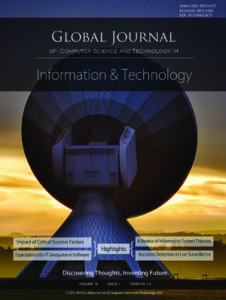
Academicians’ Acceptance of Online Learning Environments: A Review of Information System Theories and Models

§ Management & Science University, Malaysia Management & Science University, Malaysia

Send Message

To: Author

Academicians’ Acceptance of Online Learning Environments: A Review of Information System Theories and Models

Article Fingerprint

ReserarchID

CST0LR05

Academicians’ Acceptance of Online Learning Environments: A Review of Information System Theories and Models Banner

AI TAKEAWAY

Connecting with the Eternal Ground
  • English
  • Afrikaans
  • Albanian
  • Amharic
  • Arabic
  • Armenian
  • Azerbaijani
  • Basque
  • Belarusian
  • Bengali
  • Bosnian
  • Bulgarian
  • Catalan
  • Cebuano
  • Chichewa
  • Chinese (Simplified)
  • Chinese (Traditional)
  • Corsican
  • Croatian
  • Czech
  • Danish
  • Dutch
  • Esperanto
  • Estonian
  • Filipino
  • Finnish
  • French
  • Frisian
  • Galician
  • Georgian
  • German
  • Greek
  • Gujarati
  • Haitian Creole
  • Hausa
  • Hawaiian
  • Hebrew
  • Hindi
  • Hmong
  • Hungarian
  • Icelandic
  • Igbo
  • Indonesian
  • Irish
  • Italian
  • Japanese
  • Javanese
  • Kannada
  • Kazakh
  • Khmer
  • Korean
  • Kurdish (Kurmanji)
  • Kyrgyz
  • Lao
  • Latin
  • Latvian
  • Lithuanian
  • Luxembourgish
  • Macedonian
  • Malagasy
  • Malay
  • Malayalam
  • Maltese
  • Maori
  • Marathi
  • Mongolian
  • Myanmar (Burmese)
  • Nepali
  • Norwegian
  • Pashto
  • Persian
  • Polish
  • Portuguese
  • Punjabi
  • Romanian
  • Russian
  • Samoan
  • Scots Gaelic
  • Serbian
  • Sesotho
  • Shona
  • Sindhi
  • Sinhala
  • Slovak
  • Slovenian
  • Somali
  • Spanish
  • Sundanese
  • Swahili
  • Swedish
  • Tajik
  • Tamil
  • Telugu
  • Thai
  • Turkish
  • Ukrainian
  • Urdu
  • Uzbek
  • Vietnamese
  • Welsh
  • Xhosa
  • Yiddish
  • Yoruba
  • Zulu
Font Type
Font Size
Font Size
Bedground

Abstract

Aim of this paper is to review technology (IS) acceptance theories and models, recognizing empirical evidence available to support the suitability of each theoretical model in explaining academicians’ acceptance of online learning technology. Understanding the factors influencing system usage is crucial for decision-makers to recognize potential user needs and concerns, which could be addressed during the development phase of a system. Thus, for decades, researchers have been trying to understand why people accept new technologies. As a result, a wide variety of theories and models explaining the concept of technology acceptance. Some prominent theoretical models explaining technology acceptance are, “Theory of Reasoned Action”, “Diffusion of Innovation theory”, “Theory of Planned Behavior”, “Social Cognitive Theory”, “Technology Acceptance Model”, “Model of PC Utilization”, “Motivational Model”, “Unified Theory of Acceptance and Use of Technology”, “UTAUT 2”, “UTAUT 3”. The concept of academic’s acceptance of online learning technology can be explained through several determinants that are operationalized through above information systems models.

References

77 Cites in Article
  1. Wilfried Admiraal,Monika Louws,Ditte Lockhorst,Tineke Paas,Michael Buynsters,Amina Cviko,Caressa Janssen,Mario De Jonge,Suzan Nouwens,Lysanne Post,Frauke Van Der Ven,Liesbeth Kester (2017). Teachers in school-based technology innovations: A typology of their beliefs on teaching and technology.
  2. Icek Ajzen (1985). From Intentions to Actions: A Theory of Planned Behavior.
  3. I Ajzen (1991). The theory of planned behaviour.
  4. Mostafa Al-Emran,Vitaliy Mezhuyev,Adzhar Kamaludin (2018). Technology Acceptance Model in M-learning context: A systematic review.
  5. N Alias,A Zainuddin (2005). Innovation for better teaching and learning: Adopting the learning management system.
  6. Susan Anderson,Judith Groulx,Robert Maninger (2011). Relationships among Preservice Teachers' Technology-Related Abilities, Beliefs, and Intentions to Use Technology in Their Future Classrooms.
  7. Leonard Annetta,Elizabeth Folta,Marta Klesath (2010). Use of Virtual Learning Environments in Distance Education.
  8. A Balanskat,R Blamire,S Kefala (2006). ICT and Privacy in Europe. Experiences from technology assessment of ICT and Privacy in seven different European countries. Final report October 16, 2006, European Parliamentary Technology Assessment network (EPTA).
  9. Albert Bandura (1986). The Explanatory and Predictive Scope of Self-Efficacy Theory.
  10. Muneera Bano,Didar Zowghi (2015). A systematic review on the relationship between user involvement and system success.
  11. B Brahier (2006). Examining a model of teachers' technology adoption decision making: An application of diffusion of innovations theory: University of Minnesota.
  12. L Carter,F Belanger (2004). Citizen adoption of electronic government initiatives.
  13. Thomas Chiu,Daniel Churchill (2016). Adoption of mobile devices in teaching: changes in teacher beliefs, attitudes and anxiety.
  14. F Davis (1986). A technology acceptance model for empirically testing new end-user information systems: theory and results.
  15. Fred Davis (1989). Perceived Usefulness, Perceived Ease of Use, and User Acceptance of Information Technology.
  16. F Davis,R Bagozzi,P Warshaw (1989). User Acceptance of Computer Technology: A Comparison of Two Theoretical Models.
  17. Fred Davis,Richard Bagozzi,Paul Warshaw (1992). Extrinsic and Intrinsic Motivation to Use Computers in the Workplace<sup>1</sup>.
  18. A Dillon (2001). User acceptance of information technology.
  19. Mazen El-Masri,Ali Tarhini (2017). Factors affecting the adoption of e-learning systems in Qatar and USA: Extending the Unified Theory of Acceptance and Use of Technology 2 (UTAUT2).
  20. Muhammad Farooq,Maimoona Salam,Norizan Jaafar,Alain Fayolle,Kartinah Ayupp,Mirjana Radovic-Markovic,Ali Sajid (2017). Acceptance and use of lecture capture system (LCS) in executive business studies.
  21. N Fathema,D Shannon,M Ross (2015). Expanding the Technology Acceptance Model (TAM) to examine faculty use of Learning Management Systems (LMSs) in higher education institutions.
  22. M Fishbein,I Ajzen (1975). Belief, attitude, intention and behavior: an introduction to theory and research.
  23. Kenneth Frank,Yong Zhao,Kathryn Borman (2004). Social Capital and the Diffusion of Innovations Within Organizations: The Case of Computer Technology in Schools.
  24. Shanan Gibson,Michael Harris,Susan Colaric (2008). Technology Acceptance in an Academic Context: Faculty Acceptance of Online Education.
  25. A Gunasinghe,J Hamid,A Khatibi,S Azam (2018). Does the Lecturer's Innovativeness Drive VLE Adoption in Higher Education Institutes?(A Study Based on Extended UTAUT).
  26. Asanka Gunasinghe,Samudaya Nanayakkara (2019). Role of technology anxiety within UTAUT in understanding non-user adoption intentions to virtual learning environments: the state university lecturers' perspective.
  27. C Holsapple,A Lee-Post (2006). Defining, assessing, and promoting e-learning success: An information systems perspective.
  28. Dirk Ifenthaler,Volker Schweinbenz (2013). The acceptance of Tablet-PCs in classroom instruction: The teachers’ perspectives.
  29. Magid Igbaria,Saroj Parasuraman,Jack Baroudi (1996). A Motivational Model of Microcomputer Usage.
  30. Magid Igbaria,Stephen Schiffman,Thomas Wieckowski (1994). The respective roles of perceived usefulness and perceived fun in the acceptance of microcomputer technology.
  31. K Johnson,P Ma (1999). Understanding language teaching: Reasoning in action.
  32. Y Kim,E Woo (2016). Consumer acceptance of a quick response (QR) code for the food traceability system: Application of an extended technology acceptance model (TAM).
  33. P Lai (2017). The literature review of technology adoption models and theories for the novelty technology.
  34. J Lee,F Cerreto,J Lee (2010). Theory of planned behavior and teachers' decisions regarding use of educational technology.
  35. Y.-H Lee,Y.-C Hsieh,C.-N Hsu (2011). Adding innovation diffusion theory to the technology acceptance model: Supporting employees' intentions to use e-learning systems.
  36. Cheng-Guang Li,Xin-En Huang,Lin Xu,Ying Li,Yan-Yan Lu (2012). Clinical Application of Serum Tumor Associated Material (TAM) from Non-small Cell Lung Cancer Patients.
  37. Prof. Weerasinghe (2012). Determinants of Mobile Banking Adoption Among Undergraduates in Sri Lanka: An Application of the Technology Acceptance Model (TAM).
  38. J Ma,X Han,J Yang,J Cheng (2015). Examining the necessary condition for engagement in an online learning environment based on learning analytics approach: The role of the instructor.
  39. D Macgregor (1991). Worry over technological activities and life concerns.
  40. Hassan Mirzajani,Rosnaini Mahmud,Ahmad Fauzi Mohd Ayub,Su Wong (2016). Teachers’ acceptance of ICT and its integration in the classroom.
  41. Zainun Misbah,Judith Gulikers,Ridwan Maulana,Martin Mulder (2015). Teacher interpersonal behaviour and student motivation in competence-based vocational education: Evidence from Indonesia.
  42. Gary Moore,Izak Benbasat (1991). Development of an Instrument to Measure the Perceptions of Adopting an Information Technology Innovation.
  43. N Nahar,T Kakola,N Huda (2002). Diffusion of software technology innovations in the global context.
  44. S Nanayakkara,N Kusumsiri (2013). Barriers to Successful Implementation of E-Learning in Design Education.
  45. S Nanayakkara,N Kusumsiri,P Perera (2016). Adaptation of Diffusion of Innovations Theory for Successful ERP Implementation.
  46. B Pardamean,M Susanto (2012). Analysis of User Acceptance towards Online Transportation Technology Using Utaut 2 Model: A Case Study in Uber, Grab and Go-Jek in Indonesia.
  47. S Perlusz (2004). Emotions and technology acceptance: development and validation of a technology affect scale.
  48. Rojana Phungsuk,Chantana Viriyavejakul,Thanin Ratanaolarn (2017). Development of a problem-based learning model via a virtual learning environment.
  49. Joanna Poon (2013). An examination of a blended learning approach in the teaching of economics to property and construction students.
  50. M Radovan,N Kristl (2017). Acceptance of Technology and Its Impact on Teachers' Activities in Virtual Classroom: Integrating UTAUT and CoI into a Combined Model.
  51. Arumugam Raman,Yahya Don (2013). Preservice Teachers’ Acceptance of Learning Management Software: An Application of the UTAUT2 Model.
  52. Arumugam Raman,Yahya Don,Rozalina Khalid,Fauzi Hussin,Mohd Omar,Marina Ghani (2014). Technology Acceptance on Smart Board among Teachers in Terengganu Using UTAUT Model.
  53. T Rizzo,D Kirkendall (1995). Teaching students with mild disabilities: What affects attitudes of future physical educators?.
  54. E Rogers (1983). Diffusion of innovations: The Free Press.
  55. Glenn Russell,Graham Bradley (1997). Teachers' computer anxiety: implications for professional development.
  56. R Saadé,D Kira (2009). Computer anxiety in e-learning: The effect of computer self-efficacy.
  57. C Shen,S Shariff (2016). ISS 2016 Annual meeting Paris, France: scientific paper presentations.
  58. Boštjan Šumak,Gregor Polancic,Marjan Hericko (2010). An Empirical Study of Virtual Learning Environment Adoption Using UTAUT.
  59. B Šumak,A Šorgo (2016). The acceptance and use of interactive whiteboards among teachers: Differences in UTAUT determinants between preand post-adopters.
  60. Hamed Taherdoost (2018). A review of technology acceptance and adoption models and theories.
  61. Shirley Taylor,Peter Todd (1995). Assessing IT Usage: The Role of Prior Experience.
  62. Timothy Teo (2009). The Impact of Subjective Norm and Facilitating Conditions on Pre-Service Teachers' Attitude toward Computer Use: A Structural Equation Modeling of an Extended Technology Acceptance Model.
  63. T Teo (2013). A Comparison of Non-Nested Models in Explaining Teachers' Intention to Use Technology.
  64. Timothy Teo,Chwee Beng Lee (2010). Explaining the intention to use technology among student teachers.
  65. Timothy Teo,Chwee Lee,Ching Chai,Su Wong (2009). Assessing the intention to use technology among pre-service teachers in Singapore and Malaysia: A multigroup invariance analysis of the Technology Acceptance Model (TAM).
  66. Timothy Teo,Jan Noyes (2011). An assessment of the influence of perceived enjoyment and attitude on the intention to use technology among pre-service teachers: A structural equation modeling approach.
  67. R Thompson,C Higgins,J Howell (1991). Personal computing: toward a conceptual model of utilization.
  68. H Triandis (1977). Interpersonal behavior: Brooks.
  69. Viswanath Venkatesh,Fred Davis (2000). A Theoretical Extension of the Technology Acceptance Model: Four Longitudinal Field Studies.
  70. Viswanath Venkatesh,Michael Morris,Gordon Davis,Fred Davis (2003). User Acceptance of Information Technology: Toward A Unified View1.
  71. Viswanath Venkatesh,James Thong,Xin Xu (2012). Consumer Acceptance and Use of Information Technology: Extending the Unified Theory of Acceptance and Use of Technology1.
  72. M Waheed,F Jam (2010). Teacher's intention to accept online education: Extended TAM model.
  73. K.-T Wong (2013). Understanding Student Teachers' Behavioural Intention to Use Technology: Technology Acceptance Model (TAM) Validation and Testing.
  74. Kung-Teck Wong,Timothy Teo,Sharon Russo (2013). Interactive Whiteboard Acceptance: Applicability of the UTAUT Model to Student Teachers.
  75. Kung‐teck Wong,Sharon Russo,Janet Mcdowall (2013). Understanding early childhood student teachers’ acceptance and use of interactive whiteboard.
  76. Allan Yuen,Will Ma (2008). Exploring teacher acceptance of e‐learning technology.
  77. Kevin Zhu,Shutao Dong,Sean Xu,Kenneth Kraemer (2006). Innovation diffusion in global contexts: determinants of post-adoption digital transformation of European companies.

Funding

No external funding was declared for this work.

Conflict of Interest

The authors declare no conflict of interest.

Ethical Approval

No ethics committee approval was required for this article type.

Data Availability

Not applicable for this article.

How to Cite This Article

Asanka Gunasinghe, Junainah Hamid, Ali Khatibi, S Azam. 2019. "Academicians’ Acceptance of Online Learning Environments: A Review of Information System Theories and Models". Global Journal of Computer Science and Technology, Global Journal of Computer Science and Technology - H: Information & Technology GJCST-H Volume 19 (GJCST Volume 19 Issue H1).
Download Citation

Journal Specifications

Crossref Journal DOI 10.17406/gjcst

Print ISSN 0975-4350

e-ISSN 0975-4172

Keywords
Classification
GJCST-H Classification H.3.5
Version of record

v1.2

Issue date
August 31, 2019

Language
English
Experiance in AR

Explore published articles in an immersive Augmented Reality environment. Our platform converts research papers into interactive 3D books, allowing readers to view and interact with content using AR and VR compatible devices.

Read in 3D

Your published article is automatically converted into a realistic 3D book. Flip through pages and read research papers in a more engaging and interactive format.

Article Matrices
Total Views: 1.8K
Total Downloads: 157
All Trends

Request Access

Please fill out the form below to request access to this research paper. Your request will be reviewed by the editorial or author team.
X

This is the heading

Lorem ipsum dolor sit amet, consectetur adipiscing elit. Ut elit tellus, luctus nec ullamcorper mattis, pulvinar dapibus leo.


High-quality academic research articles on global topics and journals.

Academicians’ Acceptance of Online Learning Environments: A Review of Information System Theories and Models

Asanka Gunasinghe
Asanka Gunasinghe Management & Science University, Malaysia
Junainah Hamid
Junainah Hamid
Ali Khatibi
Ali Khatibi
S Azam
S Azam