

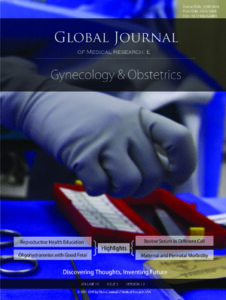
Alternatives to Fetal Bovine Serum in Different Cell Cultures

Alternatives to Fetal Bovine Serum in Different Cell Cultures

Article Fingerprint

ReserarchID

MRTEV09

Alternatives to Fetal Bovine Serum in Different Cell Cultures Banner

Key Research Insights

Synthesized scholarly intelligence & interactive research assistant
  • English
  • Afrikaans
  • Albanian
  • Amharic
  • Arabic
  • Armenian
  • Azerbaijani
  • Basque
  • Belarusian
  • Bengali
  • Bosnian
  • Bulgarian
  • Catalan
  • Cebuano
  • Chichewa
  • Chinese (Simplified)
  • Chinese (Traditional)
  • Corsican
  • Croatian
  • Czech
  • Danish
  • Dutch
  • Esperanto
  • Estonian
  • Filipino
  • Finnish
  • French
  • Frisian
  • Galician
  • Georgian
  • German
  • Greek
  • Gujarati
  • Haitian Creole
  • Hausa
  • Hawaiian
  • Hebrew
  • Hindi
  • Hmong
  • Hungarian
  • Icelandic
  • Igbo
  • Indonesian
  • Irish
  • Italian
  • Japanese
  • Javanese
  • Kannada
  • Kazakh
  • Khmer
  • Korean
  • Kurdish (Kurmanji)
  • Kyrgyz
  • Lao
  • Latin
  • Latvian
  • Lithuanian
  • Luxembourgish
  • Macedonian
  • Malagasy
  • Malay
  • Malayalam
  • Maltese
  • Maori
  • Marathi
  • Mongolian
  • Myanmar (Burmese)
  • Nepali
  • Norwegian
  • Pashto
  • Persian
  • Polish
  • Portuguese
  • Punjabi
  • Romanian
  • Russian
  • Samoan
  • Scots Gaelic
  • Serbian
  • Sesotho
  • Shona
  • Sindhi
  • Sinhala
  • Slovak
  • Slovenian
  • Somali
  • Spanish
  • Sundanese
  • Swahili
  • Swedish
  • Tajik
  • Tamil
  • Telugu
  • Thai
  • Turkish
  • Ukrainian
  • Urdu
  • Uzbek
  • Vietnamese
  • Welsh
  • Xhosa
  • Yiddish
  • Yoruba
  • Zulu
Reading Preferences
Font Size
Line Spacing
Background
This converted HTML version may contain rendering inconsistencies. Please refer to the PDF for the authoritative version, or click here to provide feedback.

Abstract

Culture of animal cells is a key operation in bioscience at which fetal bovine serum is the most widely used. Other new alternatives were examined for growth of cell culture as newly born calf serum (NBCS), goat serum (GS) and Equine platelet lysate (EPL). Cell growth and viability was investigated in target cells (Vero-MDBK) using different concentration of alternatives. In general the platelet lysate medium 7 -10 % (EPL) supported cell growth and maintained viabilities comparable or superior to (NBCS). Goat serum exihbit heterologous cells in the first passage then the growth were similar to newly born calf serum with adding low concentration % of (GS). -5% & 6% up to 10% (GS) in MDBK and Vero cells respectively. 0.1% EPL could be used with lower % Goat serum to enhance cellular morphology.

References

18 Cites in Article
  1. 1. Karen Bieback (2013). Platelet Lysate as Replacement for Fetal Bovine Serum in Mesenchymal Stromal Cell Cultures. Transfusion Medicine and Hemotherapy, 40(5), 326-335.
  2. 2. D Brindley,N Davie,E Culme-Seymour,C Mason,D Smith,J Rowley (2012). Peak serum: implications of serum supply for cell therapy manufacturing. Regen. Med, 7, 326-335.
  3. 3. Christelle Doucet,Isabelle Ernou,Yizhou Zhang,Jean-Roch Llense,Laurent Begot,Xavier Holy,Jean-Jacques Lataillade (2005). Platelet lysates promote mesenchymal stem cell expansion: A safety substitute for animal serum in cell-based therapy applications. Journal of Cellular Physiology, 205(2), 228-236.
  4. 4. Sarah Griffiths,Priya Baraniak,Ian Copland,Robert Nerem,Todd Mcdevitt (2013). Human platelet lysate stimulates high-passage and senescent human multipotent mesenchymal stromal cell growth and rejuvenation in vitro. Cytotherapy, 15(12), 1469-1483.
  5. 5. E Fernandez-Rebollo,Birgit Mentrup,Regina Ebert,Julia Franzen,Giulio Abagnale,Torsten Siebe,Alina Ostrowska,Per Hoffmann,Pierre-François Roux,Michele Björnrath,Jean-Marc Goodhardt,Oliver Lemaitre,Franz Bischof,Wolfgang Jakob,Wagner (2017). Human Platelet Lysate versus Fetal Calf Serum: These Supplements Do Not Select for Different Mesenchymal Stromal Cells. Scientific Reports|7, 5132
  6. 6. H Fukimizu,F Grinell (1990). Spatial organization of extracellular matrix and fibroblast activity: effects of serum, transforming growth factor, and fibronectin. Exp. Cell Res, 190, 276-282.
  7. 7. John Hodgson (1995). To Treat or Not to Treat: That Is the Question for Serum. Nature Biotechnology, 13(4), 334-337.
  8. 8. P Horn,G Bokermann,D Cholewa,S Bork,T Walenda,C Koch,W Drescher,G Hutschenreuther,M Zenke,A Ho,W --Wagner (2010). Impact of individual platelet lysates on isolation and growth of humanmesenchymal stromal cells. Cytotherapy, 12, 888-898.
  9. 9. Liselott Johansson,Jeanna Klinth,Olov Holmqvist,Sten Ohlson (2003). Platelet lysate: a replacement for fetal bovine serum in animal cell culture?. Cytotechnology, 42(2), 67-74.
  10. 10. P Parap (1995). Anti-insulin hybridoma retains functional characteristics in goat serum and soybean lipids. In Vitro Cellular & Developmental Biology - Animal, 31(1), 1-3.
  11. 11. S Paranjape (2004). Goat serum: An alternative to fetal serum in medical research. Rev. Article. Indian J. Exp. Biol, 42, 26-35.
  12. 12. S Paranjape,V Cadam (1985). Effect of arginin on mammalian cell metabolism & replication of Toga viruses. Biol. Memoris, 151
  13. 13. R Ross,E Raines (1990). Platelet-derived growth factor and cell proliferation. Growth Factors: From Genes to Applications, 193-200.
  14. 14. S Savant (1987). New vaccine strain from influenza virus has reproductive activity in chicken embryo and high hemagglutination activity. Vaccine, 6(1), 62.
  15. 15. K Russell,T Koch (2015). Equine platelet lysate as an alternative to fetal bovine serum in equine mesenchymal stromal cell culture – too much of a good thing?. Equine Veterinary Journal, 48(2), 261-264.
  16. 16. Katharina Schallmoser,Dirk Strunk (2013). Generation of a Pool of Human Platelet Lysate and Efficient Use in Cell Culture. Methods in Molecular Biology, 946, 349-362.
  17. 17. G Sharma,R Sharma,A Nichani (1998). Successful long-term in vitro cultivation of Theileria annulata schizonts in media supplemented with homologous and heterologous sera. Veterinary Parasitology, 79(2), 135-141.
  18. 18. Tongalp Tezel,Lucian Del Priore (1998). Serum-free Media for Culturing and Serial-Passaging of Adult Human Retinal Pigment Epithelium. Experimental Eye Research, 66(6), 807-815.

Funding

No external funding was declared for this work.

Conflict of Interest

The authors declare no conflict of interest.

Ethical Approval

No ethics committee approval was required for this article type.

Data Availability

Not applicable for this article.

How to Cite This Article

Safaa A. Warda, Hossam A. Fahmy, Fatma F. Warda. 2019. "Alternatives to Fetal Bovine Serum in Different Cell Cultures". Global Journal of Medical Research - E: Gynecology & Obstetrics GJMR-E Volume 19 (GJMR Volume 19 Issue E3).
Download Citation

Journal Specifications

Crossref Journal DOI 10.17406/gjmr

Print ISSN 0975-5888

e-ISSN 2249-4618

Keywords
Classification
GJMR-E Classification NLMC Code: WQ 211
Version of record

v1.2

Issue date
September 4, 2019

Language
English
Order Article Reprint
Experiance in AR

Explore published articles in an immersive Augmented Reality environment. Our platform converts research papers into interactive 3D books, allowing readers to view and interact with content using AR and VR compatible devices.

Read in 3D

Your published article is automatically converted into a realistic 3D book. Flip through pages and read research papers in a more engaging and interactive format.

Article Matrices
Total Views: 1.1K
Total Downloads: 43
All Trends

Request Access

Please fill out the form below to request access to this research paper. Your request will be reviewed by the editorial or author team.
X

This is the heading

Lorem ipsum dolor sit amet, consectetur adipiscing elit. Ut elit tellus, luctus nec ullamcorper mattis, pulvinar dapibus leo.


High-quality academic research articles on global topics and journals.

Alternatives to Fetal Bovine Serum in Different Cell Cultures

Safaa Warda
Safaa Warda
Hossam Fahmy
Hossam Fahmy
Fatma Warda
Fatma Warda
