Intellectually different ability or intellectual disability (ID)’ exhibits neurodevelopmental deficits, which manifests as limitations in ‘intellectual functioning’ and ‘adaptive behavior’. ‘Fragile X syndrome’ is the common genetic cause of ID. Therefore in this in-silico research, the protein ‘mGluR5’ was targeted for the therapy of ID, in Fragile X Syndrome. In Fragile X syndrome, due to mutation in FMR1 gene, there’s lack of FMRP (Fragile X Mental Retardation Protein), resulting in unimpeded activity of ‘mGluR5’, which leads to aberrant dendritic development with mis-signalling. This results in ID, autism and psychopathology. An attempt towards overcoming this problem of ID, in Fragile X syndrome, in this research, ‘mGluR5’ was targeted against 19 different phytochemicals, collected from IMPPAT 2.0 database. 3D-structure of ‘mGluR5’ was obtained from RCSB-PDB, then the phytochemicals were docked against ‘mGluR5’ using CB-Dock.
## I. INTRODUCTION
Intelligence' is the general mental ability for reasoning, problem-solving and learning. This mental ability integrates other cognitive abilities and works also, such as, perception, attention, memory, language or planning. Neuroimaging studies have generally supported that, a frontoparietal network is relevant for intelligence. This same network is also found to be associated with other cognitive functions, such as, perception, storage of shortterm memory and language. This network has a distributed nature and is involved in different cognitive abilities and functions. This fact clearly explains that, the nature of intelligence is 'integrative'. [1].
Jung and Haier looked into 37 structural and functional studies on neuroimaging, which were published between 1988 and 2007. They found some commonalities in their study. On the basis of these commonalities, they proposed 'Parieto-Frontal Integration Theory (PFIT)'.
Given below, is somewhat easy explanation of our Brain's functioning, associated with intelligence -
1. In the first stage of this process, occipital and temporal areas process sensory information.
2. Parietal angular gyrus, supramarginal gyrus, and, superior parietal lobule are utilized for integration and abstraction of the sensory information. This is involved in the second stage of process.
3. In the third stage of this process, the parietal areas interact with the frontal lobes. This interaction leads to - solving problems, evaluation and testing of hypothesis.
4. Then, in the fourth stage of this process, the anterior cingulate, is involved in selection of response and inhibiting the alternative responses, after above three stages of this process.
Thus, we can say that, frontal, parietal, temporal and occipital areas are involved in the above-mentioned process. However, Jung and Haier say that, it is not necessary that, all these areas are equally essential for every individual's intelligence. Regions of brain of the dorsolateral prefrontal cortex, such as BAs 9, 45, 46 and 47; and, the parietal cortex, such as BAs 7 and 40, can be considered as most important parts for the intelligence of a human being. [1, 2].
Thus, we can say that, frontoparietal network of our brain maybe necessary for intelligence. But, this network is also relevant for working memory. [1,3]. This was studied by Gray et. al.. [1, 4]. Commonality between intelligence and working memory was also discovered during the studies on animals, by Matzel and Kolata. [1, 5].
### a) Intellectually Different Ability (Intellectual Disability)
People with 'intellectually different ability or intellectual disability (ID)' have neurodevelopmental deficits. This neurodevelopmental deficit is shown by limitations in 'intellectual functioning' and 'adaptive behavior'. These disabilities begin in childhood, and symptoms appear before the age of 22. Before, studying ID in more detail, let us take a look at the concept of 'Intellectual functioning'. [6].
'Intellectual functioning (IF)' is also called 'Intelligence'. It includes multiple mental activities, such as - logical reasoning and practical intelligence (problem-solving), ability to learn things, verbal skills, etc. IF expresses itself through multiple capabilities, behaviors, thoughts and emotions. We can also say that, IF is the global ability which helps us to understand and interact with reality. It is measured in terms of 'Intelligence quotient (IQ)'. To measure this, IQ tests are taken. The median of this test is 100 and standard deviation is 15. If the score of this test is 70 or below, that is the indication of ID. [6].
Adaptive behavior disabilities are expressed as lack of competence in social, conceptual and practical skills. These skills are quite poor in the people having ID. [6].
### b) Few Genetics and Environmental Factors of ID
ID can develop due to various genetic mutations and diseases, or, environmental reasons. The genetic abnormalities responsible for ID could be mutation in a gene, copy number variation, or chromosomal abnormality that cause inborn errors of metabolism, defect in neurodevelopment and neurodegeneration. Environmental reasons can be, maternal exposure to toxin or infectious agents, uncontrolled maternal medical conditions, complications in parturition, and post-natal trauma and exposure to toxin/infectious agents. The most common environmental reason for ID, which can be prevented is 'fetal alcohol syndrome'. 'Down's syndrome' is the most common chromosomal cause for ID, and, the most common genetic cause for ID is 'Fragile X syndrome'. [6].
In 'Fragile X syndrome', there's a single gene mutation in the 'FMR1' gene. FMR1 gene is actually a transcription factor of several genes (hundreds of genes) expressed in the 'Central Nervous System (CNS)' and its disruption causes 'ID' and 'behavioral disturbance and seizure.' [6, 7].
In 'Rett Syndrome', neurodegeneration leads to ID. It is an X-linked dominant degenerative condition, which shows up only in females, secondary to mutation of the 'MeCP2 gene'. In the patients of Rett Syndrome, at the substantia nigra cerebral atrophy occurs, which causes defects in the dopaminergic nigrostriatal pathway. This cerebral atrophy begins at the age of 6 to 18 months. [6, 8].
When fetus is exposed to alcohol, that exposure inhibits the production of retinoic acid, which is a necessary signaling molecule for nervous system's development. Consumption of even a small amount of alcohol in any trimester of gestation period (pregnancy), leads to the development of fetal alcohol syndrome. [6, 9]. Exposure to opioids, cocaine and teratogenic medications, may also be the cause of 'Intellectual disability'. [6].
Rubella and HIV are few commonly known infectious agents, which can cause Intellectual Disability. When the pregnant mother is infected with rubella, during the initial trimester of gestation period, $10 - 15\%$ of the time, it leads to 'Intellectual Disability'. This probability can be above $15\%$, if this infection occurs, during the first month of pregnancy. If the pregnant mother is vaccinated, then this infection of rubella can be prevented. [6, 10]. HIV in infants may also lead to encephalopathy, seizures and Intellectual disability within the first year of life secondary to microcephaly, immunosuppression and Pneumocystis jiroveci pneumonia (PCP) infection. This HIV may get transferred vertically from mother to infant. [6, 11].
Few uncontrolled maternal medical conditions during the gestation period may also increase the risk of ID, such as, Pregnancy hypertension, Asthma, urinary tract infection, pre-pregnancy obesity, and pregestational Diabetes. [6, 12]. Some other medical conditions, such as, uncontrolled maternal Diabetes, malnutrition and obstetrical complications, which causes anoxia, may also cause ID. [6, 13]. ID can be acquired during early childhood, due to infections (maybe Encephalitis or Meningitis), head trauma, asphyxia, intracranial tumor, malnutrition and exposure to toxic substances. [6, 14].
### c) Fragile X Syndrome - Science Behind ID
This is a common genetic cause of ID, which affects 1 in 4,000 people. The Fragile X protein, FMRP (Fragile X Mental Retardation Protein), regulates the dendritic growth, with the GABAergic system being especially sensitive. Lack of FMRP (Fragile X Mental Retardation Protein), results in unimpeded (lack of inhibition by FMRP) activity of 'mGluR5', which leads to aberrant dendritic development with mis-signalling. This results in ID, Autism and Psychopathology. [15, 16]. Trial against 'mGluR5' has also been performed, with the motive to replace the inhibitory effect of the missing FMRP protein. Phase 1 trial of 'Fenobam' has suggested a promising efficiency based on a single dose. [15, 17]. Additionally, the antibiotic 'Minocycline' has also shown inhibition of mGluR5 receptor and some efficacy. [15, 18, 19].
In this in-silico research, 'Intellectually different ability (Intellectual disability)' due to 'Fragile X syndrome' has been targeted by the phytochemicals, to obtain a few partially validated compounds against ID.
Now, let us take a look at, some of the medicinal plants, which are positively effective on our Brain, from which the phytochemicals have been collected for this research.
### d) Medicinal Plants – on our Brain
1. Bacopa monnieri: This plant is also known as 'Brahmi' or 'Whaterhyssop'. It is used in Ayurveda for its ability to enhance memory and control the level of sugar in the blood. [20, 21]. It contains various active compounds such as alkaloids, saponins and curcurbitacins, which exhibit different biological activities. It has the potential to treat multiple brain-related diseases, such as Alzheimer's disease, Parkinson's disease, Attention Deficit Hyperactivity Disorder and Depression.[21].
2. Withania somnifera: This plant is also known as 'Ashwagandha' [20, 22]. This is also known as 'Indian ginseng' or 'Indian winter cherry'. The name 'Ashwagandha' is derived from two words - 'ashwa', which means 'horse', and, 'gandha', which means 'fragrance', refers to the smell or aroma of this plant's fresh roots. It is said that, when someone consumes its roots, that person gains similar power as the horse. [22, 23]. Since ancient time, it has been traditionally used in Ayurvedic medicine, which enhances the strength of 'Nervous system'. It can provide multiple benefits to our brain, such as - Ability to treat neurodegenerative disorders, Obsessive Compulsive Disorder, Alcohol withdrawal syndrome, and, anti-inflammatory effects. [22].
3. Centella Asiatica: This plant is also known as 'Mandukparni'. [20]. This plant has been used for centuries in Ayurvedic and Chinese medicine, for its cognitive benefits. [24]. Few modern scientific studies, which have been performed on rodents, and, in human subjects, have shown that, whole Centella asiatica extracts and some of its active compounds, exhibit the ability to enhance cognition or neurotropic properties. [24-30]. Therapy given by 'Centella asiatica' has also been found to reduce oxidative stress and mitochondrial dysfunction in rodents. It also exhibit neuroprotective potential in chemically induced Alzheimer's disease. [24, 31-35].
4. Ocimum Sanctum: This plant is also known as 'Ocimum tenuiflorum'. Traditionally, it is also known as 'Holy basil' or 'Tulsi'. [20, 36]. This medicinal plant has the potential to provide many different health
benefits. Various scientific researches have shown that this medicinal plant can exhibit anti-stress potential, but with higher doses. Extract of this plant was found to inhibit the release of cortisol. It was also found to exhibit the significant CRF1 receptor antagonist activity. Thus, the extract of this plant was found to effectively manage stress. This effectiveness could be due to, either inhibition of cortisol release, or, CRF1 receptor antagonist effect. [20, 37].
In this in-silico study, 19 different phytochemicals are collected from these plants and have been targeted in-silico against 'mGluR5'. Now, let us take a look at, a few tools and biological databases, utilized in this in-silico study.
### e) Tools and Databases
1. IMPPAT 2.0 Database: 'IMPPAT 2.0' is an enhanced and expanded database. It has information on 4,010 Indian medicinal plants, 17,967 phytochemicals, and, 1095 therapeutic uses. It contains the information about the associations at the level of plant parts. Overall, it is a manually curated database, which contains phytochemical atlas of Indian medicinal plants. [38]. In this research, this database has been used for the collection of phytochemicals, to be utilized as ligands.
2. Protein Data Bank (RCSB-PDB): It stands for 'Research Collaboratory for Structural Bioinformatics Protein Data Bank.' [39, 41]. It is an open access database of Biology which shares the 3-Dimensional structures of proteins. [40, 41]. It was established in 1971 with 7 structures. But, over the period of time it became possible to access more than 113,000 entries of natural and designed macromolecules. More than 84,000 of those macromolecules are complexed with small chemical components, such as solvent, ions, cofactors, inhibitors and drugs. This database was originally designed for the structural biology community, but, over the period of time, other professionals also began to use it. [41]. In this research, this database has been used to visualize and obtain the 3-Dimensional structure of 'mGluR5'.
3. https://projectgemmi.github.io/wasm/convert/cif2pdb.html: In this research, this link was used to convert.cif files to.pdb files.
4. BIOVIA Discovery studio: This tool is mainly used for protein cleaning. However, in this research the two structures of $\alpha$ -synuclein didn't require cleaning at all.
5. PubChem: It is a public repository, which provides information about various chemical substances. It is a database of NCBI. It was launched in 2004. It is a component of Molecular Libraries Roadmap Initiatives of US National Institute of Health. Since years, this database has been serving as a resource for chemical information for the scientific research community. [42]. In this research, PubChem has
been used to study the chemistry of ligands, and, download the 3-Dimensional structures of the ligands in '.sdf' format.
6. CACTUS Online SMILES Translator: It belongs to NCI/CADD group, NIH-National Cancer Institute. [43]. In this research, this tool has been used to convert the.sdf files of ligands into.pdb files, so that those 3D structures of ligands can be used for docking.
7. CB-Dock: It is a user-friendly web server for blind docking. It predict binding modes without information about binding sites. It predicts binding sites of a given protein and calculates the centres and sizes with a new curvature-based cavity detection approach. It performs docking with 'Autodock Vina'. It provides an interactive 3-Dimensional visualization of results, and is available free of cost at http://clab.labshare.cn/cb-dock/. [44]. In this research, this tool has been used for the blind docking of 19 phytochemicals against the 3-Dimensional structure of 'mGluR5'.
8. pkCSM Tool: It is a novel approach for the prediction of ADMET properties. It uses graph-based signatures to develop the predictive models of central ADMET properties. [45]. In this research, this tool has been used to analyse the Lipinski's rule of 5 of each shortlisted phytochemical and their computations for absorption, distribution, metabolism, excretion and toxicity.
## II. METHODOLOGY
1. Target Identification, Retrieval of 3-Dimensional Structure and Protein Cleaning: In the first step of this research, through literature survey, 'mGluR5' was identified as the suitable target protein, to target 'intellectually different ability (intellectual disability)', which is a symptom of 'Fragile-X syndrome'. After the identification of 'mGluR5' as target, 3-Dimensional structure of 'mGluR5' having PDB ID - '6FFH' was downloaded from 'RCSB-PDB' database. After download, this '.cif' file was converted into '.pdb' format using https://project-gemmi.github.io/wasm-/convert/cif2pdb.html. Then, this 3-Dimensional structure of 'mGluR5' with '.pdb' format was cleaned using 'Discovery studio'.
2. Collection of ligands: Medicinal plants, which are positively effective on our brain and have therapeutic potential to treat brain-related problems were identified through literature survey, as mentioned above. In this step, a list of 19 phytochemicals were collected from 'IMPPAT 2.0 database', to be utilized as ligands in this research. These phytochemicals were collected from 'Bacopa monniera', 'Withania sominifera', 'Centella asiatica', and, 'Ocimum sanctum (Ocimum tenuifloram)'.
3. CB-Dock analysis of 'Fenobam' and 'Minocycline' for reference: In this step, I analysed the docking affinity of 'Fenobam' and 'Minocycline' against 'mGluR5' for my reference, as these phytochemicals have been found to be quite effective against 'mGluR5', as mentioned above. It was decided that in this in-silico research, the docking affinity of my list of phytochemicals will be compared with the docking affinity of 'Fenobam' and 'Minocycline', considering both of them as standards.
4. CB-Dock analysis of 19 ligands: In this step, 19 phytochemicals of the list were docked against 'mGluR5' and their minimum vina scores and cavity size were recorded. As decided, their docking results were compared with that of 'Fenobam' and 'Minocycline'. On the basis of this comparison, a few phytochemicals from the list were shortlisted. The criteria for this comparison was, whether, they're equivalent or more negative in terms of vina score, as compared to 'Fenobam' and 'Monocycline' or not. Those phytochemicals or ligands, which showed, equivalent or more negative vina scores in the same cavity size, as 'Fenobam' were considered more suitable for further research and were shortlisted for ADMET analysis.
5. Analysis of Lipinski's rule of 5 of the shortlisted ligands: In this step, Lipinski's rule of 5, was analysed for each shortlisted phytochemical (ligand), to check whether they're violating or not violating from Lipinski's rule of 5. The shortlisted ligands were checked for. whether -
I. They have more or less than 5 hydrogen bond donors,
II. They have more or less than 10 $(5^{*}2)$ hydrogen bond acceptors,
III. Their molecular weight is greater than or less than 500,
IV. A calculated Log P greater than and less than 5. [46].
V. No. of rotatable bonds are more than or less than 10.
6. Detailed ADMET analysis: In this step, Absorption, Distribution, Metabolism, Excretion and Toxicity were computed and analysed for the shortlisted compounds to understand their pharmacokinetics in detail.
## III. RESULTS
### 1. Cleaned 3-Dimensional Structure of Target Protein
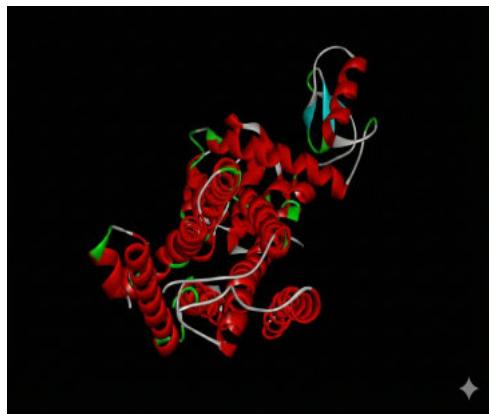
Figure1: 3-Dimensional cleaned structure of 'mGluR5'. [47].
#### 2. Collection of ligands from IMPPAT2.0 database
<table><tr><td>S. No.</td><td>Plant source (Plant part)</td><td>Phytochemicals</td></tr><tr><td>1.</td><td>Bacopa monnieri (Leaf)</td><td>Apigenin-7-O-glucuronide</td></tr><tr><td>2.</td><td>Bacopa monnieri (Whole plant)</td><td>Plantainoside B</td></tr><tr><td>3.</td><td>Withania sominifera (Leaf)</td><td>Hygrine</td></tr><tr><td>4.</td><td>Withania sominifera (Leaf)</td><td>Cuscohygrine</td></tr><tr><td>5.</td><td>Centella asiatica (Aerial part)</td><td>Beta-Bisabolene</td></tr><tr><td>6.</td><td>Centella asiatica (Aerial part)</td><td>2-Heptenal</td></tr><tr><td>7.</td><td>Centella asiatica (Aerial part)</td><td>E-(2)-Octenal</td></tr><tr><td>8.</td><td>Centella asiatica (Aerial part)</td><td>alpha-Pinene</td></tr><tr><td>9.</td><td>Centella asiatica (Aerial part)</td><td>beta-Pinene</td></tr><tr><td>10.</td><td>Centella asiatica (Aerial part)</td><td>Nerol</td></tr><tr><td>11.</td><td>Ocimum tenuiflorum (Leaf)</td><td>Samaderine-E</td></tr><tr><td>12.</td><td>Ocimum tenuiflorum (Leaf)</td><td>Eugenol</td></tr><tr><td>13.</td><td>Ocimum tenuiflorum (Leaf)</td><td>E-alpha-Bisabolene</td></tr><tr><td>14.</td><td>Ocimum tenuiflorum (Leaf)</td><td>Cirsilineol</td></tr><tr><td>15.</td><td>Ocimum tenuiflorum (Leaf)</td><td>Orientin</td></tr><tr><td>16.</td><td>Ocimum tenuiflorum (Leaf)</td><td>Eupalitin</td></tr><tr><td>17.</td><td>Ocimum tenuiflorum (Leaf)</td><td>Ascorbic acid</td></tr><tr><td>18.</td><td>Ocimum tenuiflorum (Leaf)</td><td>Decanal</td></tr><tr><td>19.</td><td>Ocimum tenuiflorum (Leaf)</td><td>Cadinate</td></tr></table>
#### 3. CB-Dock Analysis of Standards or References: 'Fenobam' and 'Minocycline':
When 'Fenobam' was docked against 'mGluR5', it showed the minimum vina score of $-8.2'$ in the cavity size of '2432'. On the other hand, when, 'Minocycline' was docked against 'mGluR5', it showed the minimum vina score of $-8.2'$ in the cavity size of '334'. [53].
#### 4. CB-Dock Analysis of Ligands Against 'mGluR5':
Table 2: CB-Dock analysis of ligands against 'mGluR5'. [53]
<table><tr><td>S. No.</td><td>Phytochemicals</td><td>Minimum vina score (Minimum binding energy) against mGluR5</td><td>Cavity size of mGluR5</td></tr><tr><td>1.</td><td>Apigenin-7-O-glucuronide</td><td>-8.6</td><td>398</td></tr><tr><td>2.</td><td>Plantainoside B</td><td>-8.2</td><td>2432</td></tr><tr><td>3.</td><td>Hygrine</td><td>-5.4</td><td>343</td></tr><tr><td>4.</td><td>Cuscohygrine</td><td>-7.5</td><td>2432</td></tr><tr><td>5.</td><td>Beta-Bisabolene</td><td>-9</td><td>2432</td></tr><tr><td>6.</td><td>2-Heptenal</td><td>-4.7</td><td>2432</td></tr><tr><td>7.</td><td>E-(2)-Octenal</td><td>-6.1</td><td>2432</td></tr><tr><td>8.</td><td>alpha-Pinene</td><td>-5.5</td><td>2432</td></tr><tr><td>9.</td><td>beta-Pinene</td><td>-5.5</td><td>2432</td></tr><tr><td>10.</td><td>Nerol</td><td>-7.1</td><td>2432</td></tr><tr><td>11.</td><td>Samaderine-E</td><td>-8.2</td><td>398</td></tr><tr><td>12.</td><td>Eugenol</td><td>-6.3</td><td>2432</td></tr><tr><td>13.</td><td>E-alpha-Bisabolene</td><td>-7.3</td><td>2432</td></tr><tr><td>14.</td><td>Cirsilineol</td><td>-8.7</td><td>2432</td></tr><tr><td>15.</td><td>Orientin</td><td>-8.2</td><td>2432</td></tr><tr><td>16.</td><td>Eupalitin</td><td>-7.8</td><td>334</td></tr><tr><td>17.</td><td>Ascorbic acid</td><td>-6.6</td><td>2432</td></tr><tr><td>18.</td><td>Decanal</td><td>-6.4</td><td>2432</td></tr><tr><td>19.</td><td>Cadinane</td><td>-7.7</td><td>2432</td></tr></table>
#### 5. pkCSM Analysis of Lipinski's Rule of 5 for Shortlisted Ligands
Table 3.1: Lipinski's Rule of 5 Analysis of 'Platalinoside B'. [54]
<table><tr><td>ADME Property</td><td>Value</td><td>No violation (As per Lipinski's rule of 5.)</td></tr><tr><td>Molecular weight</td><td>478.45</td><td>No violation.</td></tr><tr><td>No. of hydrogen bond donor</td><td>7</td><td>Violation</td></tr><tr><td>No. of hydrogen bond acceptor</td><td>11</td><td>Violation</td></tr><tr><td>LogP</td><td>0.1323</td><td>No violation</td></tr><tr><td>No. of rotatable bonds</td><td>8</td><td>No violation</td></tr></table>
Table 3.2: Lipinski's Rule of 5 Analysis of 'beta-Bisabolene'. [54]
<table><tr><td>ADME Property</td><td>Value</td><td>No violation (As per Lipinski's rule of 5.)</td></tr><tr><td>Molecular weight</td><td>204.357</td><td>No violation.</td></tr><tr><td>No. of hydrogen bond donor</td><td>0</td><td>No violation.</td></tr><tr><td>No. of hydrogen bond acceptor</td><td>0</td><td>No violation.</td></tr><tr><td>LogP</td><td>5.0354</td><td>Slight violation</td></tr><tr><td>No. of rotatable bonds</td><td>4</td><td>No violation.</td></tr></table>
Table 3.3: Lipinski's Rule of 5 Analysis of 'Cirisilineol'. [54]
<table><tr><td>ADME Property</td><td>Value</td><td>No violation
(As per Lipinski's rule of 5.)</td></tr><tr><td>Molecular weight</td><td>344.319</td><td>No violation.</td></tr><tr><td>No. of hydrogen bond donor</td><td>2</td><td>No violation.</td></tr><tr><td>No. of hydrogen bond acceptor</td><td>7</td><td>No violation.</td></tr><tr><td>LogP</td><td>2.897</td><td>No violation.</td></tr><tr><td>No. of rotatable bonds</td><td>4</td><td>No violation.</td></tr></table>
Table 3.4: Lipinski's Rule of 5 Analysis of 'Orientin'. [54]
<table><tr><td>ADME Property</td><td>Value</td><td>No violation
(As per Lipinski's rule of 5.)</td></tr><tr><td>Molecular weight</td><td>448.38</td><td>No violation.</td></tr><tr><td>No. of hydrogen bond donor</td><td>8</td><td>Violation</td></tr><tr><td>No. of hydrogen bond acceptor</td><td>11</td><td>Violation</td></tr><tr><td>LogP</td><td>-0.2027</td><td>No violation</td></tr><tr><td>No. of rotatable bonds</td><td>3</td><td>No violation</td></tr></table>
6. Detailed Computation of Absorption, Distribution, Metabolism, Excretion, and Toxicity Using pkCSM Tool:
Table 4: Detailed ADMET computation and analysis of shorted ligands from pkCSM tool. [54]
<table><tr><td>ADMET Property</td><td>Model Name</td><td>Platalinoside B</td><td>Beta-Bisabolene</td><td>Crisilineol</td><td>Orientin</td></tr><tr><td>Absorption</td><td>Water solubility</td><td>-2.992</td><td>-6.133</td><td>-3.749</td><td>-3.164</td></tr><tr><td>Absorption</td><td>CaCO2 permeability</td><td>-0.048</td><td>1.408</td><td>1.247</td><td>-0.794</td></tr><tr><td>Absorption</td><td>Intestinal absorption (Human)</td><td>26.868</td><td>94.094</td><td>89.153</td><td>44.19</td></tr><tr><td>Absorption</td><td>Skin permeability</td><td>-2.735</td><td>-1.222</td><td>-2.747</td><td>-2.735</td></tr><tr><td>Absorption</td><td>P-glycoprotein substrate</td><td>Yes</td><td>No</td><td>Yes</td><td>Yes</td></tr><tr><td>Absorption</td><td>P-glycoprotein I inhibitor</td><td>No</td><td>No</td><td>No</td><td>No</td></tr><tr><td>Absorption</td><td>P-glycoprotein II inhibitor</td><td>No</td><td>No</td><td>Yes</td><td>No</td></tr><tr><td>Distribution</td><td>VDss (Human)</td><td>0.872</td><td>0.633</td><td>-0.336</td><td>0.164</td></tr><tr><td>Distribution</td><td>Fraction unbound (Human)</td><td>0.362</td><td>0.233</td><td>0.158</td><td>0.102</td></tr><tr><td>Distribution</td><td>BBB permeability</td><td>-1.682</td><td>0.778</td><td>-0.789</td><td>-1.934</td></tr><tr><td>Distribution</td><td>CNS permeability</td><td>-4.195</td><td>-2.101</td><td>-3.187</td><td>-4.758</td></tr><tr><td>Metabolism</td><td>CYP2D6 substrate</td><td>No</td><td>No</td><td>No</td><td>No</td></tr><tr><td>Metabolism</td><td>CYP3A4 substrate</td><td>Yes</td><td>No</td><td>Yes</td><td>No</td></tr><tr><td>Metabolism</td><td>CYP1A2 inhibitor</td><td>No</td><td>No</td><td>Yes</td><td>No</td></tr><tr><td>Metabolism</td><td>CYP2C19 inhibitor</td><td>No</td><td>No</td><td>No</td><td>No</td></tr><tr><td>Metabolism</td><td>CYP2C9 inhibitor</td><td>No</td><td>No</td><td>No</td><td>No</td></tr><tr><td>Metabolism</td><td>CYP2D6 inhibitor</td><td>No</td><td>No</td><td>No</td><td>No</td></tr><tr><td>Metabolism</td><td>CYP3A4 inhibitor</td><td>No</td><td>No</td><td>No</td><td>No</td></tr><tr><td>Excretion</td><td>Total clearance</td><td>-0.123</td><td>1.458</td><td>0.639</td><td>0.521</td></tr><tr><td>Excretion</td><td>Renal OCT2 substrate</td><td>No</td><td>No</td><td>No</td><td>No</td></tr><tr><td>Toxicity</td><td>AMES toxicity</td><td>No</td><td>No</td><td>No</td><td>No</td></tr><tr><td>Toxicity</td><td>Max tolerated dose (human)</td><td>0.199</td><td>0.28</td><td>0.554</td><td>0.769</td></tr><tr><td>Toxicity</td><td>hERG I inhibitor</td><td>No</td><td>No</td><td>No</td><td>No</td></tr><tr><td>Toxicity</td><td>hERG II inhibitor</td><td>No</td><td>No</td><td>No</td><td>Yes</td></tr><tr><td>Toxicity</td><td>Oral Rat Acute Toxicity (LD50)</td><td>2.651</td><td>1.597</td><td>2.258</td><td>3.003</td></tr><tr><td>Toxicity</td><td>Oral Rat Chronic Toxicity (LOAEL)</td><td>3.367</td><td>1.339</td><td>0.953</td><td>3.342</td></tr><tr><td>Toxicity</td><td>Hepatotoxicity</td><td>No</td><td>No</td><td>No</td><td>No</td></tr><tr><td>Toxicity</td><td>Skin sensitisation</td><td>No</td><td>Yes</td><td>No</td><td>No</td></tr><tr><td>Toxicity</td><td>T.Pyrriformis toxicity</td><td>0.285</td><td>1.928</td><td>0.361</td><td>0.285</td></tr><tr><td>Toxicity</td><td>Minnow toxicity</td><td>3.858</td><td>0.082</td><td>0.757</td><td>5.809</td></tr></table>
## IV. DISCUSSION
This research began with the literature survey to identify the target protein, and, medicinal plants, which can cure brain-related problems, to identify partially validated therapeutic agents at in-silico level, to treat 'Intellectually different ability (Intellectual disability)', due to 'Fragile X syndrome'. 'mGluR5' was identified as the suitable protein to be targeted, as due to lack of 'FMRP'
activity, as a result of mutation in 'FMR1' gene, unimpeded (lack of inhibition by FMRP) activity of 'mGluR5', which leads to aberrant dendritic development with mis-signalling. This results in ID, Autism and Psychopathology. Then, 19 different phytochemicals were collected from 'Bacopa monniera', 'Withania sominifera', 'Centella asiatica', and, 'Ocimum sanctum (Ocimum tenuifloram)' after gathering knowledge about their therapeutic potential and effectiveness on our brain. 'mGluR5' protein having 'PDB ID - 6FFH' was downloaded from RCSB-PDB. Its '.cif' format was converted into '.pdb' format. Similarly, '.sdf' format files of ligands were converted into '.pdb' format using 'Cactus Online SMILES Translator'. 'mGluR5' having '.pdb' format was opened on 'Discovery studio' and was cleaned to get prepared for docking. Then, for our reference/standard, 'Fenobam' and 'Minocycline', which have been found to bind to and show efficacy against 'mGluR5' were analysed against 'mGluR5' using 'CB-Dock'. Their docking results were used as reference/standard in this result, with which, docking results of 19 collected phytochemicals were compared. 19 phytochemicals were also docked against 'mGluR5' and their docking results were compared to our references/standards. 'Platainoside B', 'beta-Bisabolene', 'Cirisilineol' and 'Orientin' gave the minimum vina score in the same cavity size, in which, 'Fenobam' gave the minimum vina score, and, were found to be equivalent to 'Fenobam' at the insolico docking level. Therefore, only these 4 ligands were shortlisted for further research, and, Lipinski's rule of 5 and Absorption, Distribution, Metabolism, Excretion and Toxicity of only these 4 phytochemicals were analyzed using pkCSM tool. 'Platainoside-B' and 'Orientin' showed violation from Lipinski's rule of 5, in terms of donor and acceptor hydrogen bonds. 'beta-Bisabolene' also showed slight violation in terms of 'logP'.
## V. CONCLUSION
The docking results of 'Platalinoside B', 'beta-Bisabolene', 'Cirisilineol' and 'Orientin', nearly resembled the docking result of 'Fenobam'. This indicated that, these four compounds may be the partially validated potential therapeutic molecules against 'mGluR5' like 'Fenobam'. However, analysis of Lipinski's rule of 5 showed that, 'Platalinoside-B' and 'Orientin' violated from Lipinski's rule of 5, in terms of donor and acceptor hydrogen bonds. These facts somewhat show that, 'beta-Bisabolene' and 'Cirisilineol' have relatively more probability to serve as therapeutic compounds against 'mGluR5', as compared to 'Platalinoside-B', 'Orientin' and other phytochemicals in the list. However, this conclusion is solely drawn from 'in-silico' research. Different results may or may not be observed in 'in-vitro' or 'in-vivo' researches.
### Future Prospect
This research maybe utilized for further attempt to discover novel therapeutics against 'mGluR5', to treat 'Intellectual disability', in 'Fragile X syndrome'.
Generating HTML Viewer...
References
46 Cites in Article
R Colom,S Karama,R Jung,R Haier (2010). Human intelligence and brain networks.
Rex Jung,Richard Haier (2007). The Parieto-Frontal Integration Theory (P-FIT) of intelligence: Converging neuroimaging evidence.
Jeremy Gray,Paul Thompson (2004). Neurobiology of intelligence: science and ethics.
Jeremy Gray,Christopher Chabris,Todd Braver (2003). Neural mechanisms of general fluid intelligence.
Louis Matzel,Stefan Kolata (2010). Selective attention, working memory, and animal intelligence.
K Lee,M Cascella,R Marwaha (2025). Intellectual Disability.
S Jacquemont,E Berry-Kravis,R Hagerman,F Von Raison,F Gasparini,G Apostol,M Ufer,Des Portes,V Gomez-Mancilla,B (2014). The challenges of clinical trials in fragile X syndrome.
Masaya Segawa (2005). Early motor disturbances in Rett syndrome and its pathophysiological importance.
Louise Deltour,Hwee Ang,Gregg Duester (1996). Ethanol inhibition of retinoic acid synthesis as a potential mechanism for fetal alcohol syndrome.
Robin Biellik,Walter Orenstein (2018). Strengthening routine immunization through measles-rubella elimination.
C Mitchell (2006). HIV-1 encephalopathy among perinatally infected children: Neuropathogenesis and response to highly active antiretroviral therapy.
M Li,M Fallin,A Riley,R Landa,S Walker,M Silverstein,D Caruso,C Pearson,S Kiang,J Dahm,X Hong,G Wang,M Wang,B Zuckerman,X Wang (2016). The Association of Maternal Obesity and Diabetes With Autism and Other Developmental Disabilities.
J Huang,T Zhu,Y Qu,D Mu (2016). Prenatal, Perinatal and Neonatal Risk Factors for Intellectual Disability: A Systemic Review and Meta-Analysis.
Peter Camfield,Nadia Bahi‐buisson,Eugen Trinka (2014). Transition issues for children with diffuse cortical malformations, multifocal postnatal lesions, (infectious and traumatic) and Lennox–Gastaut and similar syndromes.
Jonathan Picker,Christopher Walsh (2013). New innovations: Therapeutic opportunities for intellectual disabilities.
Daniel Ebert,Michael Greenberg (2013). Activity-dependent neuronal signalling and autism spectrum disorder.
E Berry-Kravis,D Hessl,S Coffey (2009). A pilot open label, single dose trial of fenobam in adults with fragile X syndrome.
Mjsn Leigh,V Danh,Mu Yi,Winari Tri,I Schneider,Andrea,Chechi Tasleem,Polussa Jonathan,Doucet Paul,Tassone Flora,Rivera Susan,M,Hessl David,Hagerman Randi,J (2013). A randomized double blind, placebo controlled trial of minocycline in children and adolescents with fragile X syndrome.
S Siller,K Broadie (2012). Matrix metalloproteinases and minocycline: therapeutic avenues for fragile X syndrome.
R Nileena,Shisode (2017). Herbs for brain disorder.
Anna Gościniak,Anna Stasiłowicz-Krzemień,Marta Szeląg,Jakub Pawlak,Izabela Skiera,Hanna Kwiatkowska,Natasza Nowak,Krzysztof Bernady,Piotr Trzaskoma,Oskar Zimak-Krótkopad,Judyta Cielecka-Piontek (1939). Bacopa monnieri: Preclinical and Clinical Evidence of Neuroactive Effects, Safety of Use and the Search for Improved Bioavailability.
P Mikulska,M Malinowska,M Ignacyk,P Szustowski,J Nowak,K Pesta,M Szeląg,D Szklanny,E Judasz,G Kaczmarek,O Ejiohuo,M Paczkowska-Walendowska,A Gościniak,J Cielecka-Piontek (2023). Ashwagandha (Withania somnifera)-Current Research on the Health-Promoting Activities: A Narrative Review.
N Singh,M Bhalla,P De Jager,M Gilca (2011). An Overview on Ashwagandha: A Rasayana (Rejuvenator) of Ayurveda.
Donald Matthews,Maya Caruso,Charles Murchison,Jennifer Zhu,Kirsten Wright,Christopher Harris,Nora Gray,Joseph Quinn,Amala Soumyanath (2019). Centella Asiatica Improves Memory and Promotes Antioxidative Signaling in 5XFAD Mice.
Nora Gray,Jonathan Zweig,Maya Caruso,Marjoen Martin,Jennifer Zhu,Joseph Quinn,Amala Soumyanath (2018). <i>Centella asiatica</i> increases hippocampal synaptic density and improves memory and executive function in aged mice.
Min-Fang Xu,Yu-Yun Xiong,Jian-Kang Liu,Jin-Jun Qian,Li Zhu,Jing Gao (2012). Asiatic acid, a pentacyclic triterpene in Centella asiatica, attenuates glutamate-induced cognitive deficits in mice and apoptosis in SH-SY5Y cells.
Anil Kumar,Atish Prakash,Samrita Dogra (2011). <i>Centella asiatica</i> Attenuates D‐Galactose‐Induced Cognitive Impairment, Oxidative and Mitochondrial Dysfunction in Mice.
Jintanaporn Wattanathorn,Lugkana Mator,Supaporn Muchimapura,Terdthai Tongun,Orapin Pasuriwong,Nawanant Piyawatkul,Kwanchanok Yimtae,Bungorn Sripanidkulchai,Jintana Singkhoraard (2008). Positive modulation of cognition and mood in the healthy elderly volunteer following the administration of Centella asiatica.
Jacques Bradwejn,Yueping Zhou,Diana Koszycki,Jakov Shlik (2000). A Double-Blind, Placebo-Controlled Study on the Effects of Gotu Kola (Centella asiatica) on Acoustic Startle Response in Healthy Subjects.
Amala Soumyanath,Yong-Ping Zhong,Xiaolin Yu,Dennis Bourdette,Dennis Koop,Sandra Gold,Bruce Gold (2005). <i>Centella asiatica</i> accelerates nerve regeneration upon oral administration and contains multiple active fractions increasing neurite elongation in-vitro.
M Rather,A Thenmozhi,T Manivasagam,M Bharathi,M Essa,G Guillemin (2018). Neuroprotective role of Asiatic acid in aluminium chloride induced rat model of Alzheimer's disease.
Veerendra Kumar,M Gupta,Y (2003). Effect of Centella asiatica on cognition and oxidative stress in an intracerebroventricular streptozotocin model of Alzheimer's disease in rats.
A Peterson (null). SCRIPTS: Recovering publication lists from Google Scholar profiles.
Veerendra Kumar,M Gupta,Y (2002). Effect of different extracts of Centella asiatica on cognition and markers of oxidative stress in rats.
Atish Prakash,Anil Kumar (2013). Mitoprotective effect of Centella asiatica against aluminum-induced neurotoxicity in rats: possible relevance to its anti-oxidant and anti-apoptosis mechanism.
P Pattanayak,P Behera,D Das,S Panda (2010). Ocimum sanctum Linn. A reservoir plant for therapeutic applications: An overview.
C M Mg,S Murugan,B Bethapudi,D Purusothaman,D Mundkinajeddu,D' Souza,P (2023). Ocimum tenuiflorum extract (HOLIXERTM): Possible effects on hypothalamic-pituitary-adrenal (HPA) axis in modulating stress.
R Vivek-Ananth,Mohanraj,Karthikeyan,Ajaya Sahoo,Kumar,Areejit Samal (2023). IMPPAT 2.0: An Enhanced and Expanded Phytochemical Atlas of Indian Medicinal Plants.
Rusham Stephen K Burley,Charmi Bhatt,Chunxiao Bhikadiya,Alison Bi,Pratyoy Biester,Sebastian Biswas,Santiago Bittrich,Ronald Blaumann,Henry Brown,Vivek Chao,Paul Reddy Chithari,Gregg Craig,Jose Crichlow,Shuchismita Duarte,Zukang Dutta,Justin Feng,Sutapa Flatt,David Ghosh,Rachel Goodsell,Vladimir Kramer Green,Jeremy Guranovic,Brian Henry,Michael Hudson,Jason Joy,Igor Kaelber,Jhih-Siang Khokhriakov,Catherine Lai,Yuhe Lawson,Douglas Liang,Ezra Myers-Turnbull,Irina Peisach,Dennis Persikova,Aditya Piehl,Yana Pingale,Jared Rose,Andrej Sagendorf,Joan Sali,Monica Segura,Chenghua Sekharan,James Shao,Michael Smith,Brinda Trumbull,Maria Vallat,Ben Voigt,Shamara Webb,Amy Whetstone,Tongji Wu-Wu,Jasmine Xing,Arthur Young,Christine Zalevsky,Zardecki (2025). Updated resources for exploring experimentally-determined PDB structures and Computed Structure Models at the RCSB Protein Data Bank.
Helen Berman,Gerard Kleywegt,Haruki Nakamura,John Markley (2013). How Community Has Shaped the Protein Data Bank.
Christine Zardecki,Shuchismita Dutta,David Goodsell,Maria Voigt,Stephen Burley (2016). RCSB Protein Data Bank: A Resource for Chemical, Biochemical, and Structural Explorations of Large and Small Biomolecules.
Yang Liu,Maximilian Grimm,Wen-Tao Dai,Mu-Chun Hou,Zhi-Xiong Xiao,Yang Cao (2020). CB-Dock: a web server for cavity detection-guided protein–ligand blind docking.
Robert Roskoski (2019). Properties of FDA-approved small molecule protein kinase inhibitors.
J Christopher,Z Orgovan,M Congreve,A Dore,J Errey,F Marshall,J Mason,K Okrasa,P Rucktooa,M Serrano-Vega,G Ferenczy,G Keseru (2018). Crystal Structure of mGluR5 in complex with Fenobam at 2.65 A.
No ethics committee approval was required for this article type.
Data Availability
Not applicable for this article.
How to Cite This Article
Ms. Ayushi. 2026. \u201cIn-silico Analysis – Phytochemicals against ‘mGluR5’ for Therapeutic Intenvention in the Intellect, in Fragile X Syndrome\u201d. Global Journal of Medical Research - K: Interdisciplinary GJMR-K Volume 26 (GJMR Volume 26 Issue K1).
Explore published articles in an immersive Augmented Reality environment. Our platform converts research papers into interactive 3D books, allowing readers to view and interact with content using AR and VR compatible devices.
Your published article is automatically converted into a realistic 3D book. Flip through pages and read research papers in a more engaging and interactive format.
Our website is actively being updated, and changes may occur frequently. Please clear your browser cache if needed. For feedback or error reporting, please email [email protected]
Thank you for connecting with us. We will respond to you shortly.