Staff motivation is one of the important components of small business management. Modern challenges determine the need to clarify the factors of personnel motivation for the formation of effective motivation systems at small businesses, which make up a significant amount in the economies of many countries. The study of various forms of motivation used in various countries allowed the authors to form an algorithm for the development and implementation of a staff motivation system at small business enterprises of the Republic of Moldova, which is currently a candidate for EU membership.
## I. INTRODUCTION
In modern market conditions, an important component of the competitiveness of the enterprise is the human factor, that is, the formation of a team of personnel. In order to compete in a complex and rapidly changing market environment, the company must decide on an effective system of employee motivation, since correctly selected motivational factors stimulate high-quality performance of work, as well as stimulate more complex work.
Employees without motivation, at best, will work for a standard result and, as a rule, without full interest and return. And in the worst case, an unmotivated employee can even be dangerous for the team. Almost always, the formation of a motivational system is the responsibility of the manager.
In the practical activities of enterprises, various types of motivation and stimulation of employees are now used. The variety of types of incentives should be used in the enterprise in a complex, in the spirit of fairness and transparency of remuneration. Without a motivation system that determines the relationship between employees and the company, it is impossible to effectively manage personnel.
## II. MODERN EXPERIENCE OF STAFF
### MOTIVATION IN SMALL BUSINESS
In the EU countries, labor legislation is at a very high level of development. The main provisions of labor law affecting many issues in the field of personnel management are being developed by the EU Commission. Deep economic ties and territorial proximity of European states contributed to the rapid interpenetration of progressive ideas in the field of motivation. One of the concepts of the European approach is a combination of extrinsic and intrinsic factors of staff motivation. Moreover, extrinsic motivation should mainly be based on determining the factors of intrinsic motivation.
However, it should be noted that the outbreak of the pandemic crisis in early 2020 introduced a new variable in the motivation's analysis, never before studied, which therefore acted as an incentive to deepen this theme. The dual perspective of motivation aims at a more holistic understanding of the factors that influence staff motivation, both in normal and crisis work situations.
One of the newest post-pandemic studies of staff motivation factors in the EU relates to employees of public administration, however, many conclusions can be used in the work of small businesses [1].
The study revealed the TOP 10 factors of external and internal motivation.
Intrinsic motivation primarily included the following factors, presented in the form of a diagram in Figure 1.
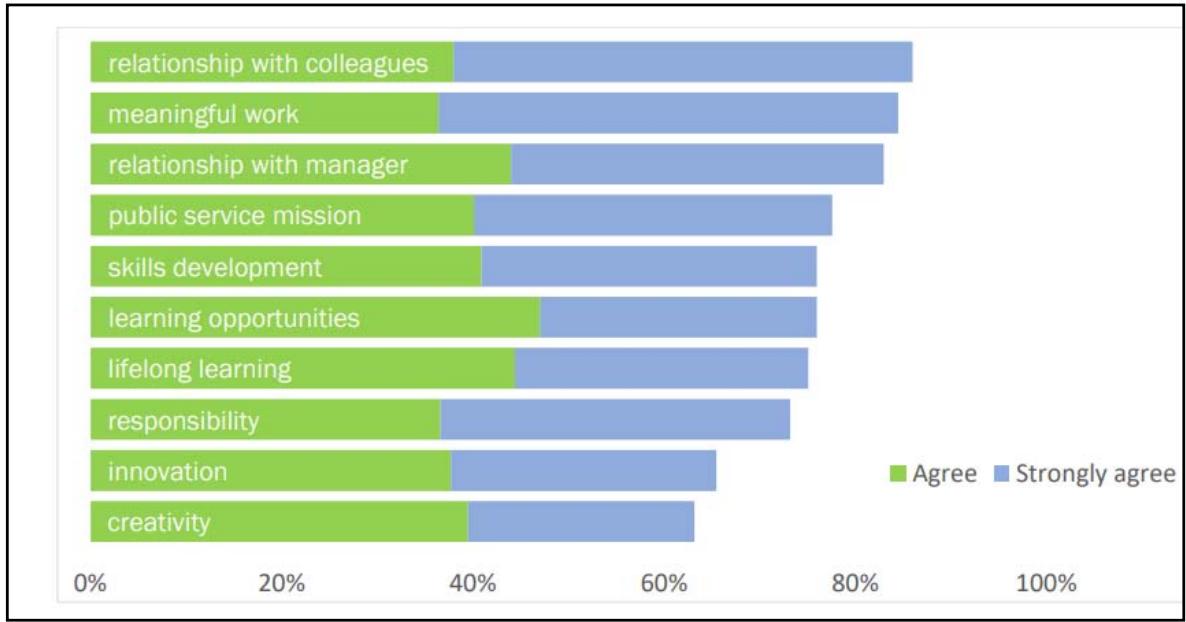 Fig. 1: Top 10 intrinsic staff motivation factors
Source: 2020 EUPAN survey on central/federal public administration employees' motivation
The researchers note that oddly enough, but the results of various surveys have been illustrating that satisfaction; motivational factors are not purely external, but rather internal motivations. As regards the main intrinsic motivational factors, the relationship with both colleagues and manages and the meaningful work occupy the first three rank positions. These factors, together with work autonomy and learning/training opportunities have a positive impact on the quality of the working environment [1].
As for external motivation, the researchers identified the following main factors, presented in the form of a diagram in Figure 2.
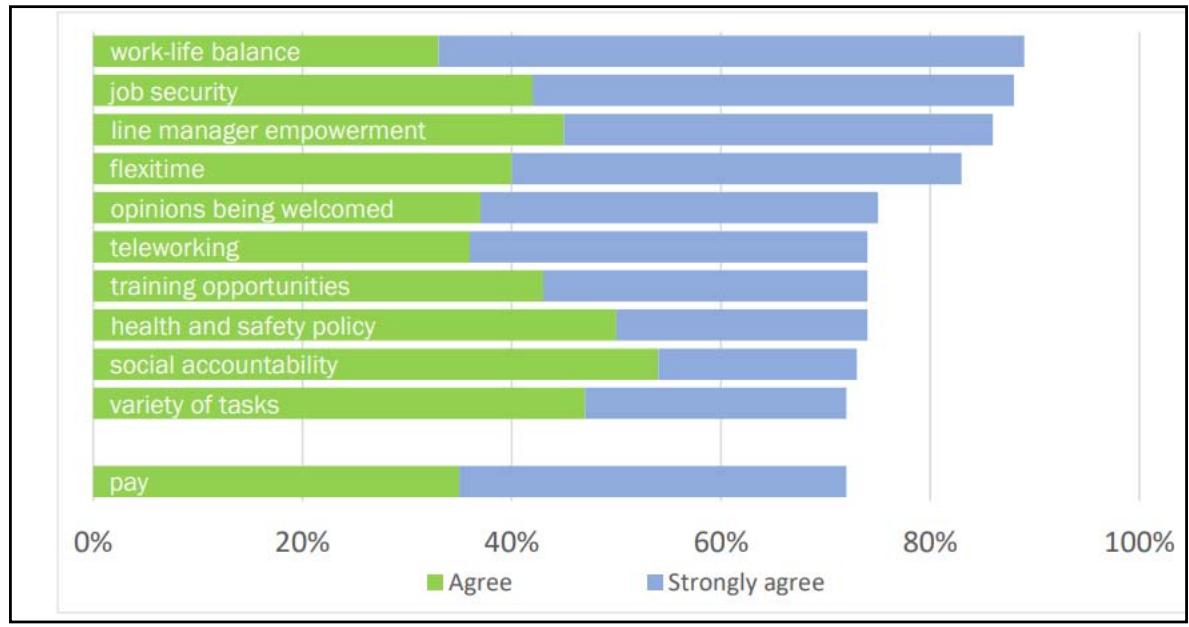 Fig. 2: Top 10 extrinsic staff motivation factors
Source: 2020 EUPAN survey on central/federal public administration employees' motivation
Extrinsic motivation means an individual's motivation is stimulated by external factors, like rewards and recognition. In this last case, it fulfils both the basic need of esteem as individuals and facilitates belonging.
As human beings, individuals place great value on how they themselves and their work are regarded by others. Some people may never be motivated internally, and only external motivation would work with them to get the tasks done. The same person may be motivated by both intrinsic and extrinsic factors depending on their life cycle. We must bear in mind that motivation is something extremely volatile. What motivates now may not work tomorrow [1].
In particular, a feature of the modern period, according to researchers, is the appearance of such a factor as Job security. Job security is indeed an incentive that provides great motivation to employees. It encourages loyalty to the organisation and avoids mental tension of instability regarding their work future.
These ghosts of the past feeds - the time of the 2007-2008 financial crisis and the COVID-19 pandemic the feeling of fear of further job cuts. This is why job security is more highly valued, especially in contexts of high uncertainty
It is also significant that the level of remuneration is not included in the TOP 10 external factors of motivation.
This study can significantly contribute to the formation of effective motivation systems in small businesses, which play a significant role in the economies of the EU countries. A properly formed motivation system will help to effectively organize the work of personnel, which as a result will favorably distinguish the company from the general market background. This is especially true in industries where the work of staff is directly related to customers, for example, in the service sector.
It is difficult to overestimate the importance of the contribution of the small business sector to the EU economy. In 2022, according to the annual report of the European Commission, about 24.3 million SMEs were active in the EU-27 and these SMEs accounted for $99.8\%$ of all enterprises in the non-financial business sector (NFBS). These SMEs employed 84.9 million people in the EU-27 in 2022. However, while almost all enterprises in the EU-27 NFBS were SMEs in 2022, the latter accounted for just under two-thirds of EU-27 NFBS employment and slightly more than half of EU-27 NFBS value added [2].
Accordingly, much attention is paid to the formation of motivation systems for personnel in this sector of the economy. Motivated employees show lower levels of absenteeism and turnover, are less stressed, have a greater enjoyment of work, they don't need to be told how to get work done, they take initiatives, are eager to take up additional responsibilities, are innovative and go-getters and, as a result, are physically and mentally healthier. Additionally, motivated employees are more committed and less conflictual. On the other hand, their greater creativity, innovation, and responsiveness to customers contribute to the long-term success of the organisation [1].
Specialists identify the following areas of staff motivation, which are widely used, including in European countries:
1. Leadership Style: Authoritarian, paternalistic, democratic, etc.
2. Reward System: A system of remuneration, material bonuses, payment of insurance, transport services, short- and long-term training, financial assistance, provision of lunches, subscriptions to sports clubs, etc.
3. Organizational Climate: Relationships between employees, absence of conflicts, birthday greetings, joint holding of holidays, etc.
4. Work Structure: The opportunity for career development, both horizontally and vertically, administrative incentives for success in work, vocational training, etc.
5. Working Conditions: The possibility of remote work and flexible schedule, comfortable conditions in the office, etc [1].
Depending on the orientation and material contribution of the employer, these forms can be structured into groups, presented in the form of a scheme in Figure 3. The total number of described forms of motivation, according to the authors, reaches 65.
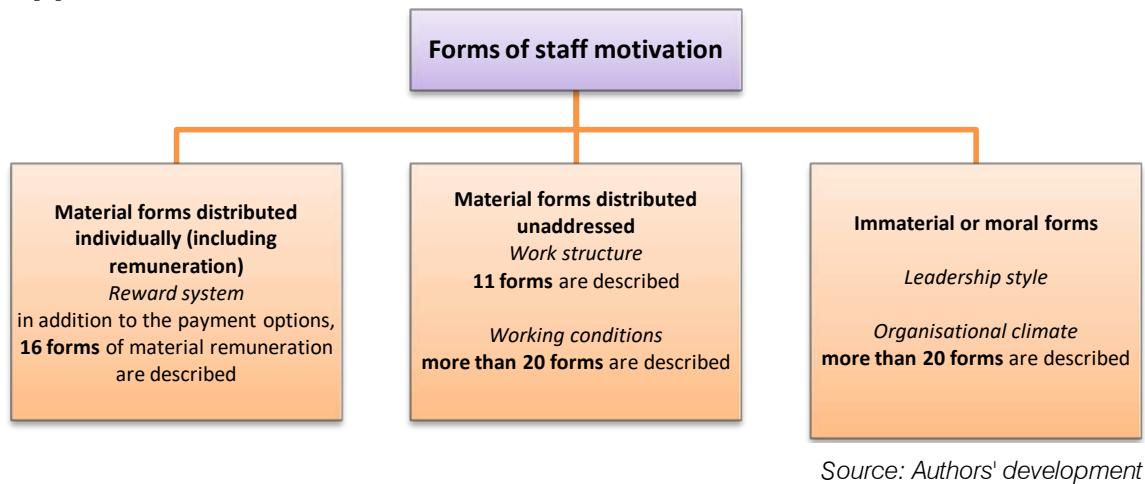 Fig. 3: Classification of forms of staff motivation organized by employers
The forms of motivation in companies in different countries are diverse and combine financial, material and non-material incentives. Experience shows that the attitude of the staff to the duties serves as a mirror image of the employer's attitude to the staff. Let us briefly describe the forms of staff motivation in different countries.
Germany: At the center of the German motivation model is an employee with his interests as a free person who is aware of his responsibility to society.
The concept of socially oriented remuneration, widespread in Germany, assumes guarantees of minimum payment for piece-work, including in case of insufficient output; determination of rates and rates depending on age, the corresponding length of service at this enterprise; linking wages with marital status (family allowance); payment of wages in case of illness; provision of paid educational vacations; additional allowances for overtime, night work, etc.; admission to profit distribution; provision of social services; payments on the occasion of Christmas.
Much attention is paid to stimulating key employees. For this purpose, both bonuses for holidays in the amount of $25 - 50\%$ of monthly wages and payments for regular vacations are used, as well as the provision of benefits and free services: the provision of vehicles for personal use with gasoline payment; full or partial compensation for the cost of housing; compensation for family vacations; the establishment of a flexible working schedule, etc.
Staff development is a mandatory factor of an effective employee motivation system. The company must have a personnel development plan. Professional training and training of personnel is carried out within the framework of a dual system - a cycle of theoretical training (within the walls of training centers) and a cycle of practical training (directly at the enterprise). The catalog of training seminars includes: specialty trainings, language courses, seminars for PC users. [3] In France, the wage system includes two areas, such as salary indexation and individualization of wages. Indexing salaries depending on price increases is the duty of French employers, which is enshrined in collective agreements and is strictly controlled by trade unions. Individualization of salaries means accrual of payments taking into account education, qualifications, quality of work, and the level of employee mobility.
The best non-material incentive for employees is a flexible schedule or remote work, which eliminates the need to be present in the office. The French pay attention to such bonuses as corporate health insurance, assistance in mortgage repayment, lunches at the expense of the company. However, there is no interest in paying for advanced training courses.
The advantage of the French motivation system in terms of stimulating an increase in productivity and quality of work is the "self-regulation" of the salary amount. All employees know what additional payment they can expect for good work. Foreign ezp.
The model of labor motivation in the UK provides for two systems of remuneration - monetary and joint-stock. In both schemes, the salary of employees depends on the total profit of the enterprise. There is also a salary scheme that fluctuates in proportion to the company's income. It is also not uncommon for employees to participate in the capital, when employees buy out part of the company's shares and receive either part of the profit or income in the form of interest on shares. The total income of an employee with labor equity participation consists of a salary (official salary), a bonus depending on the efficiency of work and a part of the company's profit depending on the invested capital.
The shared participation of staff in the company's profits perfectly motivates employees of any rank to increase the effectiveness of work, show genuine interest in business processes and create a friendly and favorable atmosphere in the team [4].
In Sweden, the problems of decent wages and guarantees are dealt with by trade unions. During the renegotiation of collective labor agreements, they insist on the introduction of a policy of solitary remuneration, which is based on two principles, such as equal salaries in similar positions and reducing the gap between the maximum and minimum wages.
In Sweden, the principle of equal wages for equal work works. This principle means that employees in similar positions in different firms with the same qualifications receive the same salary regardless of the profitability of the enterprise they work for. The amount of official salaries is prescribed in the industry collective agreement and does not depend on the size of the company's profit.
The principle of reducing the gap between high-paid and low-paid specialists is implemented in the form of a single-level wage increase system. This contributes to the averaging of salaries, when minimum wages are increased and maximum wages are restrained. When renegotiating collective labor agreements, trade unions try to include a clause on accelerating the growth of wages of low-paid workers. Such a policy is aimed at the development of highly qualified specialists in all spheres of the economy [5].
In Japan, the basic principle of motivation is based on the following postulate: the more experience, the higher the position and salary. This means that career growth directly depends on the duration of work in the company. Professional abilities, qualifications, and personal qualities of an employee are important, but vertical movement in the company is impossible without appropriate experience. Moreover, the transition to a new place of work nullifies past achievements, and only an employee of the company can get a managerial position.
Types of incentives in the Japanese motivation system, in addition to salary increases, include: bonuses and bonuses that are paid at least once every six months; payment of travel expenses to the office and home; medical insurance for the employee and his family; partial payment for housing; loans for the purchase of real estate; study at universities in Japan, as well as Europe and the USA; professional development on the job from the main place of work.
The Japanese motivation system as a whole is aimed at team building, strengthening a positive attitude and strengthening the employee's connection with the company. This experience is applicable only in a society with a strongly developed sense of civic responsibility and self-awareness, where common interests are above individual needs [4].
In the United States of America, the approach to motivation is based on encouraging the activity of staff. The success of the American motivation model is due to the Americans' focus on personal success and achieving a high level of well-being.
The system of staff motivation in the USA is based on the wage system. Most often, American employers charge wages according to a piecework-premium scheme: hourly pay plus various modifications of bonuses.
Another way to motivate staff in the American way is to calculate salaries in accordance with the number of professions mastered and the level of qualification. For each new specialty, an employee is awarded points. To get a salary increase, an employee must score a certain number of points.
In addition to a flexible wage system, it is typical for American companies to use other ways to motivate employees. The company's personnel, as a rule, have access to:
- medical insurance, which is paid by the employer;
- advanced training courses;
- free lunches;
- corporate holidays;
- joint trips.
American companies are looking for non-standard incentive systems for employees. For example, IBM and AT&T corporations have chosen the path of "family" motivation. The average age of most of the company's personnel is under forty years. These are family people who have children growing up. Therefore, the administration allows you to work on a flexible schedule, helps to select nannies and home helpers, organizes corporate nurseries and kindergartens, arranges family holidays [4]/ In the UAE, the system of staff motivation in medium and large companies includes a wide variety of
methods. So, a special study of motivation methods in a large family business in Dubai showed the following [6].
All 5 areas of motivation presented above are developing.
The management style in the company is paternalistic.
Out of 65 possible methods of motivation of different nature (see Fig.3) 28 positive forms of motivation are used, including the following.
Reward System: Material bonuses, additional payment for language proficiency, payment for insurance, transport services, short-term training, financial assistance, purchase of goods and services of the company on preferential terms, etc. - 10 forms (out of 16).
Organizational Climate: Friendly relations with colleagues, friendly relations with line managers, birthday greetings, joint holding of holidays, contests, exchange of experience between structural divisions, etc. - 9 forms (out of 25).
Work Structure: The possibility of career development, both horizontally and vertically, administrative incentives for success in work, vocational training, etc. - 5 forms (out of 11).
Working Conditions: Flexible schedule, comfortable working conditions, provision of transport to workplaces, etc. - 4 forms (out of 20).
Of the negative forms, only 2 forms are used (censure and official warning).
The possibilities of using foreign experience in staff motivation are currently relevant for enterprises in the MB sector of the Republic of Moldova, especially considering that in 2023 the country received the status of a candidate for EU membership.
## III. THE STATE OF MODERN MOLDOVAN SMALL BUSINESS
The National Bureau of Statistics reports that, in 2022, the share of small and medium-sized enterprises (SMEs) accounted for about $99.2\%$ of the total number of reporting enterprises (in 2021 - $99.1\%$ ); the average number of employees of SMEs was 347.3 thousand people, which is $65.6\%$ of the total average number of employees of enterprises (in 2021 - $64.2\%$ ); revenues from sales of small and medium-sized enterprises amounted to 274.8 billion.lei of the amount of sales revenue in the economy as a whole (in 2021 - $46.1\%$ ).
In 2022, the majority of SMEs carried out their activity in the field of trade, constituting 21.1 thousand enterprises, or $34.0\%$ of the total SMEs. In agriculture, forestry and Fisheries, 5.4 thousand SMEs or $8.8\%$ of the total SME were active, in the manufacturing industry 5.1 thousand SMEs or $8.0\%$ of the total SME [7]. The dynamics of the main SME's sector indicators is presented in Table 1
Table 1: Share of SMEs in total reporting enterprises in 2021-2022 by main indicators
<table><tr><td rowspan="2">Years</td><td colspan="3">No. of Enterprises, Thousands</td><td colspan="3">Average Annual Number of Employees, Thousands</td><td colspan="3">Sales Revenue, mild.lei 1</td></tr><tr><td>Total</td><td>SME</td><td>Share of SME in total,%</td><td>Total</td><td>SME</td><td>Share of SME in total,%</td><td>Total</td><td>SME</td><td>Share of SME in total,%</td></tr><tr><td>2022</td><td>62,6</td><td>62,1</td><td>99,2</td><td>529,3</td><td>347,3</td><td>65,7</td><td>612,0</td><td>274,8</td><td>44,9</td></tr><tr><td>2021</td><td>60,3</td><td>59,8</td><td>99,1</td><td>532,5</td><td>342,1</td><td>64,2</td><td>488,0</td><td>225,0</td><td>46,1</td></tr></table>
The analysis of the table shows that with a significant proportion of the number of enterprises and employed employees at SMEs, the share of income from their activities decreases in 2022 compared to 2021, which can be explained by various reasons, including the lack of effective methods of staff motivation compared to large enterprises.
Given the significant share of small businesses in the economy of the Republic of Moldova, it was relevant to propose modern approaches to staff motivation based on European experience and recommendations of competent European organizations, as well as on the positive experience of other advanced countries.
Currently, small businesses in Moldova are facing new challenges in the realities of the market economy and are forced to take steps to raise the quality level of their business to European and world.
Nevertheless, a special study of the staff motivation system in one of the successful Moldovan enterprises in the field of fitness services revealed the following situation.
The management style in the company is authoritarian.
Out of 65 possible methods of motivation of different nature (see Fig.3) 14 positive forms of motivation are used, including the following.
Reward System: commissions for attracting new customers, payment of insurance, use of the company's services on preferential terms, encouragement for holiday dates - 4 forms (out of 16).
Organizational Climate: Friendly relations with colleagues, friendly relations with line managers, birthday greetings, etc. - 5 forms (out of 25).
Work Structure: The possibility of career development, both horizontally and vertically - 1 form (out of 11).
Working Conditions: Flexible schedule, comfortable working conditions, provision of transport at a later time - 3 forms (out of 20).
Of the negative forms, 3 forms are used - a system of fines, censure and publication of comments in a corporate chat.
Thus, even in a fairly successful company of SME's sector, the system of staff motivation is very poorly formed, only $20\%$ of the potential of known forms of motivation is used. At the same time, the remuneration of labor at the enterprise does not exceed the average salary level of this sector in the Republic of Moldova, determined on 1.01.2023 in the amount of 8000 lei [8]. Management does not investigate the opinion of employees regarding relevant and attractive forms of motivation. This situation is typical for almost the majority of Moldovan small businesses. Accordingly, an algorithm for introducing forms of motivation was developed for Moldovan enterprises in the MB sector.
The algorithm for the introduction of forms of staff motivation in the Moldovan SME In accordance with the studied publications and based on our own research on staff motivation in the Republic of Moldova, the following algorithm for developing a staff motivation system for employees of small businesses was proposed.
1. Detailed study by the management of the experience and forms of staff motivation in similar, including foreign, enterprises for use in the motivation system at their own enterprise.
2. Conducting a study on the importance of extrinsic and intrinsic motivation factors for the personnel of a particular enterprise. The research should be conducted on the basis of an anonymous questionnaire to obtain the most honest answers.
3. Analysis of the results and their correlation with the capabilities of the enterprise to use the forms of motivation that are most acceptable to the personnel of this enterprise.
4. Development and approval of forms of motivation combined into a system that includes the various forms noted above. A significant number of non-material forms of motivation are possible for small businesses in the Republic of Moldova, but they should cover all the main directions offered in the EU countries. It is important that the forms of motivation offered by the owner of the enterprise coincide as much as possible with the preferences of employees. Otherwise, the motivation system at

- the enterprise will not achieve its main goal - the activation of personnel to achieve the goals of the owner of the enterprise.
5. Pilot launch of the motivation system for a period of six months to test its effectiveness. All forms of motivation should be used in a transparent and fair assessment of staff actions.
6. Identification of the results of the effectiveness of the adopted system. At the end of 6 months, depending on the management style at the enterprise, it is possible to openly discuss the results of the motivation system at a general meeting of the team or conduct an anonymous questionnaire.
7. Approval of the adopted motivation system for a long-term period, or its adjustment with a subsequent pilot period.
The foreign experience of staff motivation should be used in the Republic of Moldova only taking into account the peculiarities of the national culture and mentality. Mindless copying of other people's ideas will not bring the desired result. It is also important to take into account that non-material methods of motivation work only when employees have at least minimally satisfied material needs.
## IV. CONCLUSION
Motivation is the process of encouraging yourself and others to work to achieve the goals of the organization. Building a well-organized, transparent system of motivation and stimulation of labor by an entrepreneur will greatly contribute to attracting highly qualified personnel. This, in turn, will help to create a workable team capable of achieving the goals set for the organization.
The enterprises of the small business sector of the Republic of Moldova, focused on joining the EU in the long term, should actively adopt the foreign experience of staff motivation in order to achieve European benchmarks both in the economic sphere and in the field of relations between employers and employees. The implementation of the proposed algorithm will contribute to the effectiveness of motivation systems in Moldovan business.
J Hoyt Employee Expectations in Germany Explained.
Foreign experience in staff motivation.
Åsa Bringsén,Petra Lindström (2022). Swedish managers’ experience of yearly staff development dialogues, aiming for employee development, performance, and well-being.
S Muratov (2023). Management of the company's advertising activities.
Stefan Leoca (2022). Sfantul Ierarh Martir Antim Ivireanul si activitatea sa invatatoreasca.
Earnings, labor costs and number of employees in 2022.
No ethics committee approval was required for this article type.
Data Availability
Not applicable for this article.
How to Cite This Article
Vinokurova M.V.. 2026. \u201cAnalysis of Foreign Experience of Staff Motivation for use in the Development of Small Business in the Republic of Moldova\u201d. Global Journal of Human-Social Science - E: Economics GJHSS-E Volume 23 (GJHSS Volume 23 Issue E4): .
Explore published articles in an immersive Augmented Reality environment. Our platform converts research papers into interactive 3D books, allowing readers to view and interact with content using AR and VR compatible devices.
Your published article is automatically converted into a realistic 3D book. Flip through pages and read research papers in a more engaging and interactive format.
Staff motivation is one of the important components of small business management. Modern challenges determine the need to clarify the factors of personnel motivation for the formation of effective motivation systems at small businesses, which make up a significant amount in the economies of many countries. The study of various forms of motivation used in various countries allowed the authors to form an algorithm for the development and implementation of a staff motivation system at small business enterprises of the Republic of Moldova, which is currently a candidate for EU membership.
Our website is actively being updated, and changes may occur frequently. Please clear your browser cache if needed. For feedback or error reporting, please email [email protected]
Thank you for connecting with us. We will respond to you shortly.