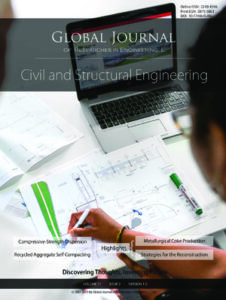
Analysis of the Influence of Biomass Addition in Coal Mixture for Metallurgical Coke Production

α
Alex M. A. Campos
Alex M. A. Campos
σ
Paulo S. Assis
Paulo S. Assis

Send Message

To: Author

Analysis of the Influence of Biomass Addition in Coal Mixture for Metallurgical Coke Production

Article Fingerprint

ReserarchID

N4BAY

Analysis of the Influence of Biomass Addition in Coal Mixture for Metallurgical Coke Production Banner

AI TAKEAWAY

Connecting with the Eternal Ground
  • English
  • Afrikaans
  • Albanian
  • Amharic
  • Arabic
  • Armenian
  • Azerbaijani
  • Basque
  • Belarusian
  • Bengali
  • Bosnian
  • Bulgarian
  • Catalan
  • Cebuano
  • Chichewa
  • Chinese (Simplified)
  • Chinese (Traditional)
  • Corsican
  • Croatian
  • Czech
  • Danish
  • Dutch
  • Esperanto
  • Estonian
  • Filipino
  • Finnish
  • French
  • Frisian
  • Galician
  • Georgian
  • German
  • Greek
  • Gujarati
  • Haitian Creole
  • Hausa
  • Hawaiian
  • Hebrew
  • Hindi
  • Hmong
  • Hungarian
  • Icelandic
  • Igbo
  • Indonesian
  • Irish
  • Italian
  • Japanese
  • Javanese
  • Kannada
  • Kazakh
  • Khmer
  • Korean
  • Kurdish (Kurmanji)
  • Kyrgyz
  • Lao
  • Latin
  • Latvian
  • Lithuanian
  • Luxembourgish
  • Macedonian
  • Malagasy
  • Malay
  • Malayalam
  • Maltese
  • Maori
  • Marathi
  • Mongolian
  • Myanmar (Burmese)
  • Nepali
  • Norwegian
  • Pashto
  • Persian
  • Polish
  • Portuguese
  • Punjabi
  • Romanian
  • Russian
  • Samoan
  • Scots Gaelic
  • Serbian
  • Sesotho
  • Shona
  • Sindhi
  • Sinhala
  • Slovak
  • Slovenian
  • Somali
  • Spanish
  • Sundanese
  • Swahili
  • Swedish
  • Tajik
  • Tamil
  • Telugu
  • Thai
  • Turkish
  • Ukrainian
  • Urdu
  • Uzbek
  • Vietnamese
  • Welsh
  • Xhosa
  • Yiddish
  • Yoruba
  • Zulu

Abstract

Metallurgical coke is a common material used for hot metal production in blast furnaces. In addition to the fuel function, it has a physical assignment, supporting the load inside the reactor, and chemical, supplying carbon to hot metal. However, due to growing discourse on environmental issues, the production of hot metal via coke blast furnace has been in evidence. This process is responsible for about 70% of CO 2 emissions in steelmaking. On the other hand, biomasses are materials that are available in different ways in nature and considered neutral in CO 2 emissions since they absorb this gas and release oxygen in the photosynthesis process. Thus, a viable alternative in the short term is the partial replacement of the coal used in coke production with biomass, which would generate environmental gains, and guarantee the sustainable production. Therefore, this work aims to show several published researches using biomass in coke production. The effects that biomass has on the properties of coke will be emphasized, and at the end, an environmental analysis will be shown with the possible use of biomass. It will be possible to see that it is possible to substitute between 2 and 10% of the coal for biomass, producing coke with the characteristics required in the blast furnace.

References

26 Cites in Article
  1. Foundation Steel (1999). The making, shaping and treating of steel.
  2. Alexander Babich,Dieter Senk,Jon Solar,Isabel De Marco (2019). Efficiency of Biomass Use for Blast Furnace Injection.
  3. Alex Campos,Paulo Assis,Katia Novack (2018). ASPECTOS ECONÔMICOS E AMBIENTAIS DO USO DE BIOMASSAS NA SIDERURGIA.
  4. F Carvalho (1992). Disponibilidade de Resíduos Agroindustriais e do Beneficiamento de Produtos Agrícolas.
  5. L Carvalho,A Campos,P Assis (2021). Quality evaluation of metallurgical coke produced with sawdust and different mixture of coal.
  6. Eveline Araújo,Nair Arriel,Roseane Santos,Liziane Lima (2007). Assessment of genetic variability in sesame accessions using SSR markers and morpho-agronomic traits.
  7. M Garside (2019). Coke production Worldwide.
  8. Lauri Holappa (2020). A General Vision for Reduction of Energy Consumption and CO2 Emissions from the Steel Industry.
  9. (2020). Tracking SDG 7: The Energy Progress Report 2025.
  10. Y Kubota (2008). Effects of coal inertinite size on coke strength.
  11. G Liziero,A Carlos,A Marlon,P Dornelas,N Dias,V Moreira (2017). Avaliação da adição de biorredutor na mistura de carvões minerais na qualidade do coque metalúrgico.
  12. J Mathieson,M Somerville,A Deev,S Jahanshahi (2015). Utilization of biomass as an alternative fuel in ironmaking.
  13. Marcelo Mourão (2011). Introdução a siderurgia.
  14. E Mousa,Wang Riesbeck,J Larsson,M (2016). Biomass applications in iron and steel industry: An overview of challenges and opportunities.
  15. J Noldin,M Construcci,J Abreu (2005). Tecnored process-High potential in use differente kinds of solid fuel.
  16. Andreas Orth,Nikola Anastasijevic,Heinz Eichberger (2007). Low CO2 emission technologies for iron and steelmaking as well as titania slag production.
  17. Cui Quan,Ningbo Gao (2016). Copyrolysis of Biomass and Coal: A Review of Effects of Copyrolysis Parameters, Product Properties, and Synergistic Mechanisms.
  18. John Ricketts (2000). History of Ironmaking.
  19. Ernandes Rizzo (2009). Processo de Fabricação de Ferro-Gusa em Alto-Forno.
  20. Filipe Sathler,Ramiro Nascimento Junior,Leonardo Perdigão,Estefan Ribeiro,Luiz Wasem (2017). PROJETO CR298: ALTAS TAXAS DE INJEÇÃO DE CARVÃO COM BAIXO FUEL RATE NOS ALTOS FORNOS DA ARCELORMITTAL TUBARÃO.
  21. Agenor Silva,Miguel Bentes,Swami Medrado,Flavio Machado,João Carvalho Júnior,Pedro Magalhães Sobrinho (2008). ESTUDO DA UTILIZAÇÃO DA BIOMASSA EM SUBSTITUIÇÃO PARCIAL AO CARVÃO MINERAL NO PROCESSO DE FABRICAÇÃO DO FERRO-GUSA.
  22. A Silva (2008). Estudo Da Utilização Da Biomassa Em Substituição Parcial Ao Carvão Mineral Na Fabricação Do Coque na Coqueira da Csn.
  23. G Silva (2016). Utilização de Moinha de Bioredutor e Pneu Inservível na Produção de Coque Metalúrgico.
  24. Guilherme Silva,Erick Braga,Paulo Assis,Alfredo Quintas,Paulo Dornelas,Lorena Moura,Renata Souza (2016). UTILIZAÇÃO DE FINOS DE CARVÃO VEGETAL PARA PRODUÇÃO DE BIOCOQUE METALÚRGICO.
  25. Hannu Suopajärvi,Antti Kemppainen,Juho Haapakangas,Timo Fabritius (2017). Extensive review of the opportunities to use biomass-based fuels in iron and steelmaking processes.
  26. Bryony Coombs (2020). Van Eyck: An Optical Revolution (Ghent, Museum voor Schone Kunsten), 1 February – 30 April 2020, closed 13 March 2020. Virtual tour: https://virtualtour.vaneyck2020.be/en. Curator tour, Till‐Holger Borchert: https://www.youtube.com/watch?v=1IZxr6eGJqk. Catalogue edited by MaximiliaanMartens, Till‐HolgerBorchert, JanDumolyn, JohanDe Smet, FredericaVan Dam, <i>Van Eyck</i>. Thames & Hudson, 2020. 490 pp. 370 ill. col. £60. ISBN 978 0 500 02345 7 (hb).☆.

Funding

No external funding was declared for this work.

Conflict of Interest

The authors declare no conflict of interest.

Ethical Approval

No ethics committee approval was required for this article type.

Data Availability

Not applicable for this article.

How to Cite This Article

Alex M. A. Campos. 2021. \u201cAnalysis of the Influence of Biomass Addition in Coal Mixture for Metallurgical Coke Production\u201d. Global Journal of Research in Engineering - E: Civil & Structural GJRE-E Volume 21 (GJRE Volume 21 Issue E2): .

Download Citation

Journal Specifications

Crossref Journal DOI 10.17406/gjre

Print ISSN 0975-5861

e-ISSN 2249-4596

Keywords
Classification
GJRE-E Classification: FOR Code: 290899
Version of record

v1.2

Issue date

May 24, 2021

Language
en
Experiance in AR

Explore published articles in an immersive Augmented Reality environment. Our platform converts research papers into interactive 3D books, allowing readers to view and interact with content using AR and VR compatible devices.

Read in 3D

Your published article is automatically converted into a realistic 3D book. Flip through pages and read research papers in a more engaging and interactive format.

Article Matrices
Total Views: 2087
Total Downloads: 1067
2026 Trends
Related Research

Published Article

Metallurgical coke is a common material used for hot metal production in blast furnaces. In addition to the fuel function, it has a physical assignment, supporting the load inside the reactor, and chemical, supplying carbon to hot metal. However, due to growing discourse on environmental issues, the production of hot metal via coke blast furnace has been in evidence. This process is responsible for about 70% of CO 2 emissions in steelmaking. On the other hand, biomasses are materials that are available in different ways in nature and considered neutral in CO 2 emissions since they absorb this gas and release oxygen in the photosynthesis process. Thus, a viable alternative in the short term is the partial replacement of the coal used in coke production with biomass, which would generate environmental gains, and guarantee the sustainable production. Therefore, this work aims to show several published researches using biomass in coke production. The effects that biomass has on the properties of coke will be emphasized, and at the end, an environmental analysis will be shown with the possible use of biomass. It will be possible to see that it is possible to substitute between 2 and 10% of the coal for biomass, producing coke with the characteristics required in the blast furnace.

Our website is actively being updated, and changes may occur frequently. Please clear your browser cache if needed. For feedback or error reporting, please email [email protected]

Request Access

Please fill out the form below to request access to this research paper. Your request will be reviewed by the editorial or author team.
X

Quote and Order Details

Contact Person

Invoice Address

Notes or Comments

This is the heading

Lorem ipsum dolor sit amet, consectetur adipiscing elit. Ut elit tellus, luctus nec ullamcorper mattis, pulvinar dapibus leo.

High-quality academic research articles on global topics and journals.

Analysis of the Influence of Biomass Addition in Coal Mixture for Metallurgical Coke Production

Alex M. A. Campos
Alex M. A. Campos
Paulo S. Assis
Paulo S. Assis

Research Journals