This paper seeks to establish a pioneering methodological framework for reconstructing the life story of Princess Anna Maria Morso Bonanno. As the spouse of Ignazio Paternò Castello, the fifth prince of Biscari, Anna’s life has not been adequately explored within historical scholarship. This study uses a digital history methodology to illuminate the Princess’s role within the Biscari family’s social network by analyzing a series of letters housed in the Biscari Archive. This investigation endeavours to reevaluate her status within the Sicilian nobility, emphasizing her strategic participation in the feudal system and her governance capabilities. Ultimately, this approach aspires to underscore the influence of women in the management of power, thereby enriching a historiography that has predominantly concentrated on male figures.
## I. INTRODUCTION
Matrimonial affaire is at the base of society and History. As a foundational institution of every community, the consecrated relationship eventually becomes lineage, establishing a linkage system with the political apparatus. Marriage serves to protect and guarantee the value of social status as an expression of the economies of places; it functions Marriage functions as a form of social status representation. Consequently, it defines social structures upon which wealth and privileges are constructed. From these lineages, dynastic politics emerge, representing a mature and enduring necessity for perpetuating social control over time.
Lineages and dynasties encompass many elements, including individuals, places, alliances, balances, cultures, and mores majorum. However, these factors have shaped the emergence of a historical dimension, the full extent of which remains to be described. In this context, it is only in recent decades that the contributions of female figures, who were previously overlooked, have been acknowledged, documented, and repositioned within the historical narrative. These women have played a crucial role in maintaining and constructing the networks to which they belonged.
Lina Scalisi (2023) emphasizes that traditional male-centric historiography leaves significant voids, and the challenges presented by sparse archival materials hinder the comprehensive reconstruction of women's narratives. Relying solely on queen-focused historiography does not sufficiently address these issues, leaving much to be investigated. Nevertheless, as Scalisi points out, these women were pivotal figures within both Italian and broader political networks, exerting considerable influence on their contemporaries (Scalisi, 2023, p. 9).
Despite existing historiography dealing with the noble house, a significant portion of their archives, stored in the State Archive of Catania, remains to be assessed. Indeed, there is a paucity of information regarding Princess Anna Maria Morso e Bonanno, wife of Ignazio, the fifth Prince of Biscari.
To address this gap, a methodological digital approach was employed in 2021 to mine the "Correspondence" section of the Biscari Archive and extract all relevant information about the Princess. While this collection is not exhaustive, it may serve to determine archival pathways capable of redefining the nodes of the Biscari network.
## II. THE BISCARI, THE RISE OF A NOBLE FAMILY
Antonino Mango di Casalgerardo (1900), Vittorio Spreti (1928), Filadelfo Mugnos (1647) and Gaetani (Marquis) Villabianca (1754) highlighted that the lineage surname of the Biscari's prestigious house is the result of two most ancient Sicilian families' surnames union: the Paternòs and the Castellos.
This surname (Paternòs) can be traced back to Catania and Palermo, where they owned several principalities and baronies.
As stated by Spreti in 1928, this noble family traces its lineage back to the ancient lords of Embrun, who were brought to Sicily by Roberto during the rule of Count Roger. However, other scholars posit that it descends from a Roman consular family that settled in Sicily in 233 (b.C.). It seems plausible to suggest that this family could be directly connected to the royal house of Aragon, with the progenitor being the Infante Pietro d'Aragona, lord of Ayerbe (son of James the Conqueror, and Donna Teresa di Vidaure). Probably, the Paterno family was brought to Sicily around the middle of the 14th century by Giovanni, baron of Burgio and Murgo—who was considered the son of Michele, lord of Paternoy, son of the Pietro d'Aragona.
Other historians maintain that the family was introduced to Sicily by a Ximenes (or Simone) in 1282 and has subsequently held many prominent titles, including the principalities of Biscari and Sperlinga, the duchies of Carcaci, Furnari, Palazzo, and Paterno, the marquisates of Capizzi, San Giuliano, Manchi, Sessa, Toscano, and other territories owned by the Ximenes family: Alessi, Aragona, Cuba and Sparacogna, Alzacuda, Baglia and the customs of Milazzo, Baldi, Belmonte, Bicocca, Bidani, Biscari, Burgio, Capizzi, Castania, Cuchara, Cugno, Donnafugata, Gallitano, Gatta, Graneri, Intorrella, Imbaccari and Mirabella, Manchi di Bilici, Manganelli di Catania, Marianopoli. Mirabella, Motta Camastrà, Murgo, office of master notary of the Capitaniale Court of Catania, Oxina, Placabaiana, Poiura, Porta di Randazzo, Pollicarini, Raddusa and Destri, Ramione, Salsetta, San Giuliano, Scala, Sciotavilla, Solazzi, Spedalotto, Third part of the customs of Catania, Toscano and Mandrile>.
Among the family members, Andrea held the position of Senator of Catania from 1417 to 1418 and Captain of Justice from 1425 to 1426. Antonio subsequently acquired this title in 1475-76.
Pietro d'Aragona was a Patrician of Catania and Strategos of Messina during 1449-50, 1467-68-69. He was also an ancestor of Agatino, the inaugural Prince of Biscari.
Spreti posits that the "Castelli (Castello)" family descends from the ancient Counts of Terni, who, in Sicily, gave rise to three branches: (1) that of Catania — which seems to have wholly extinguished within the Paterno family; (2) that of Messina; and (3) that of Palermo. Among them is Guglielmo Raimondo, the baron of Favarotta or Catalaro, under an investiture dated January 7, 1516. It is possible that he was the Guglielmo Raimondo, baron of Biscari, who, with the benefit of a privilege granted between April 8 and May 5, 1533, obtained the title of noble with the "don."
The marriage that strengthened the surname linkage (fig. 1) was that Angelo Francesco Paterno, 5th Baron of Aragon, and Francesca Castello Abbatelli, whose son Orazio, for the first time, linked the two surnames.
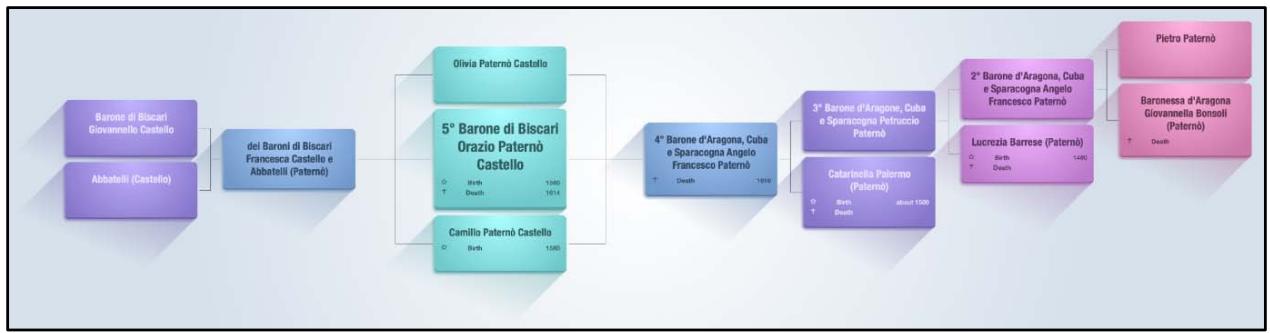 Figure 1: Ancestry of Orazio Paterno Castello
The history of the Paterno Castello family, styled "Princes of Biscari," commences in 1633 when Philip IV of Spain bestowed the title upon Agatino. He was already Baron of Biscari, Baron of Aragon, Cuba, and Sparacogna under an investiture on June 4, 1624. He was the son of Orazio Paterno Castello, Baron of Biscari, and Digna La Valle, Barons of Crucifia.
Agatino emerged as a prominent figure in the political landscape of Catania, already distinguished2 in managing administrative activities and, mainly, in the crises that marked the second half of the seventeenth century, the history of relations between Sicily and Spain (Palermo 2004).
From that moment onward, the Princes of Biscari became spokespeople for the island's interests, assuming a crucial role in reconfiguring the administrative system after Spain's withdrawal, which opened the path to the dominion of the Savoy monarchy and the Austrian one.
Agatino lives his life to make his family the most important of the Sicilian aristocracy. He died on January 19, 1675, and his son Vincenzo inherited his title. However, Vincenzo died within the same year. Consequently, the third Prince of Biscari's title was passed to his son, Ignazio (born September 16, 1678).
The latter passed away on February 28, 1700, seven years after the significant seismic event on January 11, 1693, which caused extensive devastation in the Val di Noto region (with the epicentre in Sortino, Syracuse). (Giarrizzo 1997; Scalisi 2009; 2013) — during which three of his nephews (the sons of his brother Francesco Saverio), Agatino, Giuseppe, and Mario, perished.
The catastrophic event prompted the political class to invest considerable resources in the city's reconstruction, economy, markets, and trade. The prince also experienced a personal tragedy, but his sudden demise left the reins of power in the hands of the minor Vincenzo (born on April 6, 1685).
Thanks to his grandfather Giacinto Paterno, Vincenzo navigated the complexities of reconciling the needs of his fiefdoms with restructuring the island's administrative systems as a direct consequence of Spain's departure from Sicily and the subsequent dominion of the Savoy and the Austrian monarchies. He experienced first-hand the resistance and misunderstanding that Sicily exhibited towards the new monarchies, characterized by rigid dominion and exorbitant tax burdens, which drew the entire island's baronage into contestation.
Following the death of Vincenzo on August 4, 1749, Ignazio assumed the role of prince and became the fifth in line to the grand title, becoming a pivotal figure in rebuilding Sicily's cultural heritage, particularly in Catania. His actions unfolded towards an identity that, on the one hand, seemed distant from the Enlightenment spirit, yet on the other, embraced within the category of Sicilian-ness (Giarrizzo and Aymard 2006), a paradigm of thoughts and positions that made it unique.
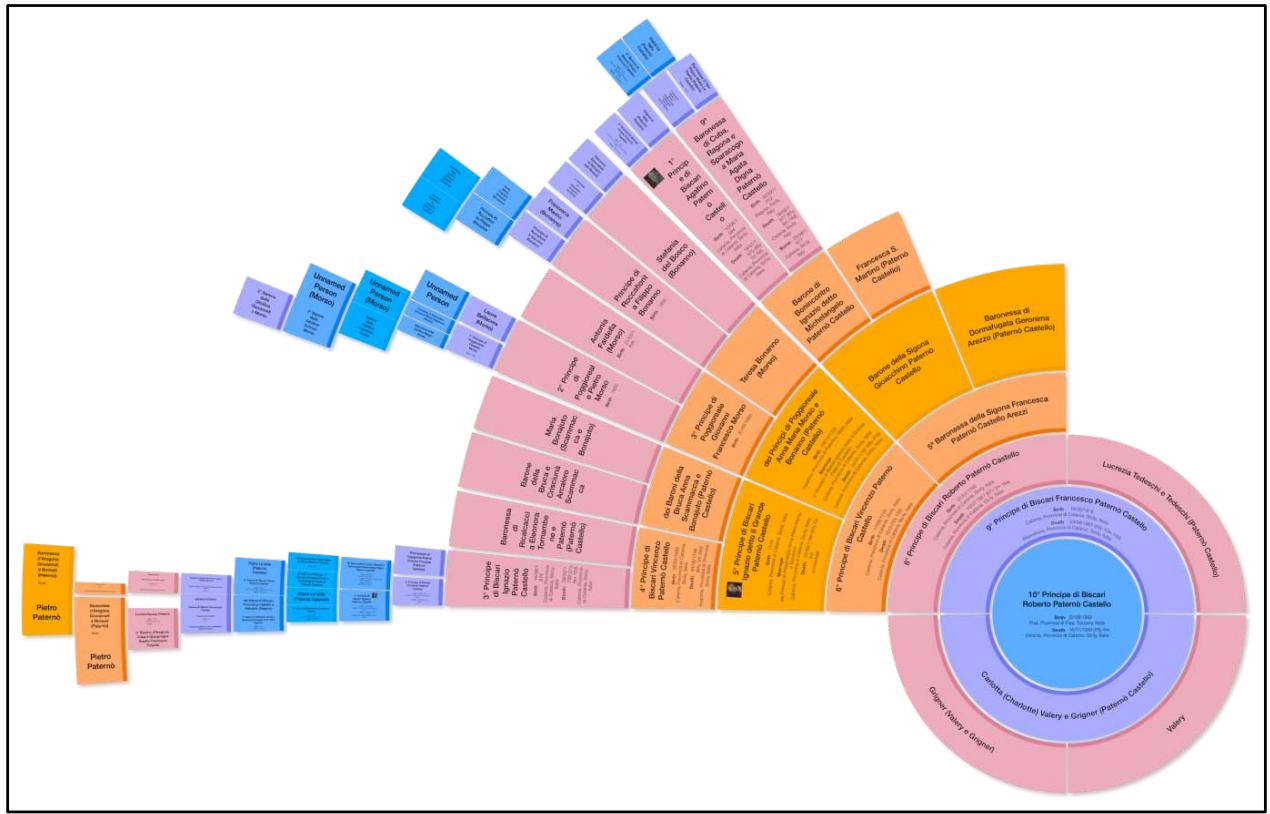
In reference to Ignazio, who has been dubbed "the Great" (Calabrese 2003; Di Vita 2007; Pagnano 2001; Paterno Castello 2003), the noble house entered a period of considerable cultural advancement (Fig. 2) as a result of its unwavering commitment to augmenting the network, which included the involvement of esteemed scientists and intellectuals.
 Figure 2: Princes of Biscari. Ancestry and descent
Despite Ignazio's prominent status and lasting influence in the European cultural sphere, Anna Maria, his wife, remains a largely mysterious figure in historical research.
Recent historiographical[^3] efforts have effectively highlighted the essential traits of the noble lineage and the contributions of its key figures; however, a significant portion of the family archive continues to be unavailable for research.
To address this gap, the "Archives and Big Data" post-doc project, launched by the Department of Humanities at the University of Catania in 2021, sought to initiate a digitization effort for the archive of the noble family. The project aimed to furnish the historical community with meta-sources (Fiormonte 2000) suitable for computational analysis, particularly emphasizing the "Correspondence" segment. This endeavour ultimately resulted in the creation of the "Biscari Epistolography" website project[^4], which began with the digitization of the letters from the "1642" collection (Spina 2022; 2023).
## III. ANNA MARIA MORSO BONANNO'S EPISTOLOGRAPHY AND THE DIGITAL APPROACH
It is widely acknowledged that epistography is key in family history research, as it reconstructs the networks underpinning aristocratic families' political influence. Nevertheless, the conventional historical methodology necessitates considerable time for scholars to obtain comprehensive data and construct detailed accounts of individuals, families, and groups. In our "iAge", the digital revolution has enabled scholars to rethink and restructure the methodologies that underpin the field of Humanities. Historians view digitization as a novel perspective that can facilitate the transcendence of the close-reading approach and the reevaluation of quantitative and distant-reading methodology. Digital instruments allow the mining and extraction of more significant insights from archival materials, enabling scholars to explore historical questions from many perspectives and facilitating a more nuanced understanding of the past.
After the acquisition process and the construction of a dataset (Spina 2024; 2023), it was possible to apply the Gephi tool (https://gephi.org) to identify a specific edge within the archival unit, indicating the presence of a collection of letters addressed to Anna Maria Morso Bonanno.
In the folder, there are two epistles written by Giovanni Battista Alagona, Bishop of Syracuse; two letters from Salvatore Ventimiglia, Bishop of Catania; one letter from Duchess of Terranova; one letter from Bali de Belmont; one letter from Esmeralda Dalli; one letter from Stefania Morso Bonanno (Anna's sister); five letters, from her husband Ignazio (the fifth Prince of Biscari); twenty-eight letters from Michele Maria Paterno, Prior of Messina.
So, it is reasonable to consider the following question: Can these letters assist historians in understanding Princess Anne's life since they are not letters written by her hand?
As stated in our introduction, historical social networks became relevant in historical research. They let us understand the political structure and the axis of its governance, allowing for the emergence of a novel historical research perspective that has been overlooked: female empowerment.
In contrast to the conventional historical methodology, which privileges certain historical actors chosen based on the intellectual spirit of the historians, research on networks necessitates that scholars consider all subjects present within the network. From this methodological perspective, a detailed political dimension emerged in which women played a central role. This perspective leads historians to place female empowerment at the forefront of historical and historiographical research, providing a counter-narrative to the people who have been marginalized. This new context necessitates a comprehensive examination of the roles and contributions of women within the context of a household occupying a position of considerable influence and authority.
Nevertheless, if there is a genuine necessity for research that can transcend ideological constraints to reconstruct narratives, landscapes, and memories —as effectively illustrated by Lina Scalisi (2023)—it is even more imperative that history identify a comprehensive documentary complex that can serve as a foundation and substantiation. Often, research proposals do not find correspondence in archives, as in the case of Princess Anna Maria Morso Bonanno, wife of Ignazio, 5th Prince of Biscari.
Due to the absence of letters from Princess Anna in the Biscari Archive, she is only categorized as a "recipient". Then, it is impossible to ascertain or reconstruct the true nature of her relationship with the individuals she was writing to. The network analysis has permitted, though not exhaustively, the delineation of her role within family dynamics and, most importantly, the inference of her influence in managing administrative and political affairs. This analysis has illuminated new aspects of this household and of a woman of power about whom research has thus far permitted only an incomplete definition. In order to facilitate the participation of the historical community in defining and describing Anna's life, the "Principessa Anna Morso" website has been created to collect all the letters addressed to the princess. A "public history" approach aims to engage as many scholars as possible in the research process.
Anna Maria is the daughter of Giovanni Francesco Morso (of the Princes of Poggioreale) and Teresa Bonanno (of the Princes of Roccafiorita). According to Spreti and Villabianca, the Morsos originated from Tuscany (Florence). They are believed to have arrived in Sicily with Fiorello during the Reign of Ferdinand the Catholic. In Sicily, Giovanni acquired the land of Gibellina, while Giovannello, his son, was invested on October 3, 1488. He married, in his first marriage, Giovanna Imperatore, and in his second marriage, Contissella Del Pozzo. He was the father of Antonino, who reclaimed the state of Gibellina on March 19, 1549. Vincenzo Morso, on the other hand, is mentioned in an epitaph in the Church of S. Maria della Catena in Palermo: «Ne nimium saevo gaude mors improba Morsu: Non quodcumque tuus dens ferit inde perit. Dum Morsum mordes, te Morsi jama remordet Quam vel te in vita, vita perennis alit.» Their descendant, Giovanni Francesco Morso e Fardella, received the investiture of the principality of Poggioreale and the marquisate of Gibellina on September 25, 1720. He was Captain of justice of Palermo in 1693-94, deputy of the Kingdom, praetor of Palermo in 1728, colonel in the armies of Spain, governor of the city of Marsala, general of the squadron of the galleys of the Kingdom, commander of the Order of St. Peter of Calatrava, battle general in the armies of Emperor Charles VI, chamber gentleman of Charles III, married in his first marriage Rosalia Filingeri and in his second marriage Teresa Bonanno e Del Bosco, of Filippo, prince of Roccafiorita.
He died in 1736, leaving as heir his daughter Stefania Morso Bonanno, who married Luigi Naselli e Morso, Count of Comiso, bringing into the Naselli household the titles of prince of Poggioreale and Marquis of Gibellina. At the same time, Anna was married to Ignazio Paterno Castello, the fifth prince of Biscari.
On the other side, it is supposed that Bonannos arrived in Sicily with Supponio, advisor and member of the household of King Manfred, or with Cesare Bonanno and Giovan Giacomo (from Pisa, at the time of King
James), who was the chancellor of the Kingdom of Sicily in 1285.
It can be seen that two families are firmly established within the baronial context of Sicily. For example, Giovan Francesco served as Captain of justice of Palermo from 1693 to 1694, deputy of the Kingdom in 1720, praetor of Palermo in 1728, colonel in the armies of Spain, governor of Marsala, battle general in 1733, commander of the Order of Calatrava, and general of the galleys of Sicily.
 Figure 3: Ancestry of Anna Maria Morso Bonanno
Anna was born on December 8, 1725, and died at 66 on January 4, 1792.
As a result, there is a paucity of information regarding this princely figure. However, the dataset indicates that Anna was, with a high degree of probability, a pivotal node within the political dimension, the household, the feudal system, and the Kingdom. While Ignazio's interests focused mainly on managing the fiefs and cultural and antiquarian pursuits, Anna's involvement in the political dynamics seems more significant. Her extensive network likely made the Messina Priory a pivotal nexus point (D'Avenia 2000). The Peloritan Order was the most important in Sicily. It holds jurisdiction over all other Italian priories, enabling it to manage all donated goods on the island. Simultaneously, it is a central node of the complex network of interests oriented towards the courts of Sicily and Naples. Despite the territory's significant exposure to the political, cultural, and economic ramifications of Spain's harsh repression following the 1674-78 revolt, the Priory's strategic positioning allowed it to overcome the political difficulties posed by the dramatic event.
Within this system fits Michele Maria Paterno, the Grand Prior. The son of Baron Vincenzo Paterno Trigona of Raddusa and Anna Bonaiuto, Michele was born on August 14, 1706, and baptized by Vincenzo Paterno Castello, the fourth prince of Biscari. Therefore, a profound affiliation with the Biscarian household was established from the outset of his life.
He became a member of the Order of the Knights of Malta and, in 1724, upon reaching the requisite age, after the "trial" held in Catania, was admitted to the Priory of Messina. He became Commander of Sant'Egidio in Piacenza and Admiral of the Italian Language Naval Fleet. These roles facilitated the development of indispensable administrative and managerial competencies, which proved pivotal in his professional trajectory. Then, in 1751, Michele was appointed Grand Prior of Messina.
This role allowed him to dedicate a substantial amount of time and effort to construction projects that significantly increased the wealth and properties of the Order. Among his achievements was the reconstruction of the ancient Priorate Palace and its adjoining Church, enhancing the area's aesthetic appeal while meeting the local community's needs.
A seminal moment in his career was the agreement with Giovan Battista Grimaldi, Doge of the Republic of Genoa, to acquire Carrara marble, intended to decorate presbyteries and altars in local churches. Notwithstanding his difficulties and disagreements regarding the quality of the materials provided, Michele completed the project, exhibiting remarkable negotiating skills and unwavering resolve.
Michele's relationship with his family was complex and often contentious, particularly with his nephew, Vincenzo Paterno Lombardo, Baron of Raddusa. The letters between Michele and his nephew, preserved in the State Archives of Catania, document the frequent disputes over managing family assets and the Order.
One noteworthy aspect of Michele's life was his relationship with Michelino, a slave he had taken in and raised as a son. Michelino became Michele's primary business associate, earning his trust and respect. Upon the demise of Michele, Michelino was released from servitude and bequeathed a substantial financial legacy, indicative of the esteem and affection the Grand Prior held for him. However, to create new disputes, Baron Vincenzo did not acquiesce to his uncle's testamental directives and tried to reinstate Michelino to a new state of enslavement. This conflict elucidates the intricate power dynamics and internal tensions within the Paterno family, exemplifying how economic concerns could readily intertwine with personal relationships.
Alongside his responsibilities in administration and family life, Michele played an active role in his time's social and cultural landscape. He enjoyed organizing and participating in social gatherings to strengthen political alliances, showcasing his skill in manoeuvring through the complexities of Sicilian feudal and aristocratic structures. Michele kept a close network with key political and economic figures, allowing him to stay informed and engaged in issues relevant to the Kingdom of Sicily and Naples. In one correspondence, he mentions Marquis Cardillo and their secretive discussions with the King, highlighting his significant engagement in the political dynamics of the era.
Michele Maria Paternò is regarded as an exemplar of 18th-century Sicilian nobility. His life was marked by administrative successes, complex family conflicts, and vibrant participation in his time's social and cultural life. His capacity to administer the assets and resources of the Order of Saint John of Jerusalem and his skill in living the period's complex political and familial relationships render him a figure of significant historical interest. The extant letters and documents provide valuable insight into his life and the dynamics of Sicilian aristocratic society, enabling a deeper comprehension of the challenges and opportunities that characterized the era. The story of Michele Maria Paternò di Raddusa provides a key example of how the nobility of the time adeptly integrated business, politics, and personal relationships to sustain and expand their power and influence.
 Figure 4: The network relation between Michele Maria Paterno and Anna Morso
Nevertheless, the fundamental premise of our argument is that the Prior is connected to the Biscaris — or, more specifically, to Anna Maria Morso, to whom the letters in question are addressed, indicating a strong emotional bond. The Gephi platform facilitated the rapid identification of 28 letters from Michele Maria Paterno to
the princess, which, in addition to their number, enabled the incorporation of valuable insights into the historical events that shaped Sicily during the latter half of the 18th century.
The letters from the Prior reveal insights into the governance style of the Princess, who transcends the role of a mere "beloved wife" responsible for familial duties and the well-being of her loved ones. Instead, she emerges as a capable administrator adept at cultivating and sustaining a network akin to the approaches of Anna Scammacca, Bonajuto, and her predecessor, Maria Agata Digna.
Conversely, some letters reveal the plight of Sicilians grappling with the aftermath of the catastrophic Val di Noto earthquake (in 1693) and the enduring impact on the city and the citizens of Catania[^9]. Here, still, a century later, the cathedral is not completed. However, in a letter, the Prior expressed optimism regarding the imminent completion of the undertaking, citing the evident dedication and fervour of the citizenry. ("si [dà] a sperare sentire ben presto che gia terminata dell'intutto la Fabbrica, mediante la divozione, e zelo de' pietosi città"[^10]).
Sicily, in the epistles, is devastated and suffering. Natural disasters and health crises ravage the island. Cities' borders are fortified, and trade is impeded by cordons that restrict the movement of people and goods. Furthermore, the Neapolitan court attempts to reform Sicily's administrative structure to limit the political power of the feudal class, which has historically exerted considerable influence over the island.
For this reason, Anna needs to know all events occurring within the Neapolitan court, including the various conspiracies, in order to realize the Sicilian dream —also in the political mind of Louis XIV, as he wrote on October 10, 1675— of a Sicilian monarch (Musi 2022) capable of «making [them] live under his laws, [...] a sovereign who originates from the same blood \[of the Sicilians\](Comparato 1970; Galatti 1899; Guardione 1906).»
The feudal system hoped to strengthen Sicily's political position, which, from the seventeenth-century events, could have been part of the ideological dynamism of the Enlightenment. Nevertheless, the Bourbon monarchy's decision to maintain two distinct governmental systems stopped the reformists' ideals, perpetuating the island's internal contradictions, internal distortions, and baronial primacy in the redefinition of pivotal positions.
Another aspect of the relationship between the Princess and the Prior is that the latter is Anna's primary source of emotional support. As a woman—who experiences the full spectrum of human emotions—, Michele provides spiritual comfort and guidance to the Princess and her loved ones, offering a perspective that can help them navigate the complexities of human nature. In this way, Michele assumes the role of the spiritual confessor and an ecclesiastical figure to whom all doubts about life and death are addressed.
## IV. THE CORRESPONDENCE BETWEEN ANNA AND THE PRIOR MICHELE MARIA OF MESSINA
In the realm of research across the Humanities and Physical-Natural Sciences, scholars cannot overlook the significance of Large Language Models (LLMs) and Generative Pre-trained Transformers (GPTs) technologies, which emerged in 2022. Notably, ChatGPT stands out as the premier model among these advanced technologies (Alshater 2022; Deng and Lin 2022; González-Gallardo et al. 2023; Kasneci et al. 2023).
Thanks to ChatGPT-4.0, it was possible to identify specific topics and define the network between the entities. The small epistolary complex shows an inter-relational level moving between 'public' and 'private'. Michele Maria Paterno is strongly linked to Princess Anna. He is a confessor, a man of trust, but, above all, a point of contact with the places of power (Palermo and Naples). Thus, a personal network (Anna's) within the Biscari network emerges, fed by the Princess, who needs to build strong relations with the political world.
ChatGPT-4.0 thus made it possible to identify specific topics: (1) Health and well-being; (2) logistics and requests; social and family news; (3) economic and administrative affairs; (4) religious and community events; (5) Political and geopolitical comments; (6) Travel and travel; (7) health crises and epidemics; (8) cultural and social activities.
At the end of the analysis, ChatGPT realized the following graph.

Ecco la tabella che riassume i topic menzionati nelle lettere con le loro relative occorrenze:
<table><tr><td>Topic</td><td>Occorremente</td></tr><tr><td>Salute e Benessere</td><td>12</td></tr><tr><td>Logistica e Richieste</td><td>8</td></tr><tr><td>Notizie Sociali e Familiari</td><td>15</td></tr><tr><td>Affari Economici e Amministrativi</td><td>10</td></tr><tr><td>Eventi Religiosi e Comunitari</td><td>9</td></tr><tr><td>Commenti Politici e Geopolitici</td><td>7</td></tr><tr><td>Vigliqi e Spostamenti</td><td>11</td></tr><tr><td>Crisi Sanitarie ed Epidemiie</td><td>5</td></tr><tr><td>Attività Culturali e Sociali</td><td>13</td></tr></table>
 Figure 5: Topics and occurrences
The bond between Anna and Michele is founded on mutual solid respect, aligning with the societal norms of the time that required deference to the elite, who wielded control over the fate of Sicily and its inhabitants. His position empowered him to seek financial assistance and personal favours confidently. Although relationships in feudal society primarily stemmed from familial and blood ties, they also mirrored the influences of political power and economic status.
On the other hand, the princess is astute and always ready to assist the Prior in his difficulties, whether related to his maintenance or matters concerning ecclesiastical life. In June 1782, for example, when financial difficulties threatened the celebration of the Feast of the Holy Precursor (June 21-24). Anna's intervention enabled the preparation of the Church in Messina with votive decorations and lights, rendering the festival a genuinely solemn occasion.
As we outline, the epistolary corpus does not allow us to reconstruct Anna's life, or at least a part of it. The perspective is always that of the senders (the Prior Michele, for instance), never that of the princess.
Although not directly related to Anna's figure, the events described in the letters intersect with events that have left a mark on the history of Europe, Sicily, and the Court of Naples. Despite Anna's perspective being absent, Michele's letters suggest the princess's complete devotion to the norms of Sicilian feudal society. Sicily emerges with all its defining aspects, shaping Anna as someone deeply connected to her world, where princes, marquises, and viceroyrs are part of the Old Regime network.
The letters are proof of the complexities of the political and administrative governments. Each administration acted to protect its security, as in the case of epidemic crises which characterized the modern age. It was May 8, 1781, when, as Michele writes, a health threat emerged from Calabria\[^10\]: a ship loaded with cotton and wax, coming from Smirne, a contaminated place, had shipwrecked on the coast of Reggio, known as Spartvento.
Due to the accident, the cotton and wax cargo was left exposed to water damage; however, the Deputation saved most of the cargo. Michele's problem was preserving health security since the cargo came from a location where an epidemic was present. So, he requested an operation to sanitize the shipwreck area to prevent the infection from spreading. While Michele assigned guards to protect the cargo, the Calabria and Sicily delegations worked together to address the risk of an epidemic between the two regions[^11].
This constant concern especially worried the control institutions, particularly during high unrest.
After the ongoing shipwrecks, the Sicilian Deputation, in collaboration with the Calabrian Deputation, decided that incoming traffic in both directions must undergo a thorough inspection and 24 hours of quarantine[^12].
This situation had agitated the sailors from Taormina, who were suddenly stuck in their interactions with the people from Calabria.
The issue, however, was not solely a commercial one. Michele pointed out a few days later (May 15)[^13] that the blockade would have also stopped the Calabrian worshippers from reaching Messina to honour Madonna della Sacra Lettera. This event was scheduled in the Peloritan capital just a few weeks later, on June $3^{14}$.
In addition to the health issues, which governments were already extensively considering, laying the groundwork for what would become, with Napoleon, the most critical reform—the Edict of Saint Cloud—the eighteenth century had definitively marked the process of secularisation and reforms, which confirmed the overcoming of many religious orders, as in the case of the Jesuits.
On April 9, $1782^{15}$, Anne received a letter that described events leading her to Europe, specifically Vienna, where Emperor Joseph II was expecting Pius VI. The latter aimed to counter the Emperor's reforms, limiting the Church's powers. The Emperor initiated reforms that resulted in the closure of numerous convents and the decrease in regular religious practices.
Conflicts among various faiths persisted beyond Europe, affecting monarchies and empires alike. Throughout the Old Continent, secular reforms emerged, resulting in a significant shift towards secularisation.
During this time, the Church lost many of its privileges, and States took on the authority to oversee areas of life that were previously under the control of the Church. An illustration of this shift was the management of public health related to burials, which set the groundwork for the state's control over cemetery rules, ultimately resulting in the Edict of Saint Cloud.
Sicily experienced modifications in the organizational structure of the Roman Catholic Church. On April 23, 1782, $^{17}$ Michele communicated to the Princess that residents of Palermo had petitioned the King to designate a Sicilian as the leader of the archbishopric in Palermo. This appeal followed the decision to dissolve the Archbishop of Monreale and integrate it into the Archbishop of Palermo.
While the Sicilians were busy securing their rights, Joseph II rejected Pius VI's interference and persisted in his reform efforts, which the Prior described as detrimental to the Church's authority. Upon the Pope's arrival in Vienna, «Caesar» —the term used by Michele[^18]— issued a new decree prohibiting any
Ecclesiastics of high rank from submitting petitions or appeals directly to the "Supreme Pontiff"19.
In the rest of Italy, the religious dimension was troubled by some reforms. As Michele wrote on September 28, $1784^{20}$, in Siena, following the expulsion of the Dominican Fathers, their Church of Saint Catherine was closed. Despite the community's persistent requests to honour their patron saint, authorities allowed the Church to open for only two hours each day, prohibiting the celebration of Mass.
From Tuscany, the Theatines were expelled, and from Pistoia, the Minor Friars. The Grand Duke of Tuscany demanded satisfaction from His Lordship for banning a book by the Bishop of Pistoia, which contained edicts against the devotion to the Sacred Heart of Jesus, labelling it superstitious. His Lordship responded, seeking satisfaction from the Grand Duke for the false reports circulated by gazettes and other pamphlets from Florence against him and the Church.
An additional dimension of Michele Paterno's existence involves the management of financial resources and the obstacles he encounters in addressing economic difficulties. On June 18, 1782,[^21] he expressed his distress in a letter to the princess, as the celebration of the Holy Precursor (scheduled for June 21/24) was imminent, yet he struggled to secure the necessary decorations and lighting. This predicament necessitated the Princess's involvement, who promptly intervened to assist, even covering the costs for the decorations and lighting, as indicated in the correspondence dated June 25, following the grand festivities.
On the other hand, a shaking Sicily emerges in some letters. Nearly a century after the "great earthquake" of the Val di Noto, Catania and Messina experienced ongoing seismic tremors. On May 9 (1783), the earthquakes «were barely felt,» but in Messina, «they continue; in [May 11] at about fourteen hours, there was one quite perceptible» $^{22}$. With these words, Michele brings back memories of the catastrophe in Catania and hopes for reconstruction. In the letter, the Prior emphasizes Catania's citizens' zeal for rebuilding their cathedral, symbolizing the relationship between Catania and Saint Agatha.
Therefore, there are still earthquakes in Messina. For this reason, it is necessary to understand such phenomena to overcome citizens' anxieties and find the correct solutions. Catania had already demonstrated the potential of human and scientific action in mitigating eruptive phenomena (Scalisi 2013). Mount Etna remains a subject of research for scholars such as Natale di Pace (Scalisi 2019) and Alfonso Borelli
(Borelli 1670; Morello 1998), yet studies are still too few to comprehend the mechanisms of earthquakes and eruptions fully. Consequently, following the events of that May, the Royal Academy dispatched to Messina — where the Prior awaited them— Messrs. Sarcone Seg. rio, Abbot Minogi, and Abbot Pacifico, designated by the Court to investigate the Cause of the Earthquakes $^{23}$.
The fear of seismic tragedies remains ever-present, especially given the conditions in Messina, which needs to recover from economic crises and the absence of privileges — withdrawn after the independence revolt of 1674-78 — that once enriched it. Indeed, to overcome all this, the people of Messina had requested the abolition of certain taxes, but «the Sovereign's benevolent intentions remained grounded»,[^25] such that efforts were made only to abolish the «Civic Gabelle and those on silk fabrics, worked silk and on the extraction of said materials.» Among the requests was the opportunity to abolish the Royal Customs. However, all remained silent from Naples.
While Anna, like Michele, embodies characteristics reminiscent of the feudal norms of her time, her existence is undeniably connected to the significant events and prominent figures associated with the Court of Ferdinand and Maria Carolina (Recca 2016).
Michele will recount (October 7, 1783) $^{25}$ to Anna the attempted murder of the Marquis of Sambuca, who escaped death thanks to the aid of a young man who warned him of seeing a warehouse owner putting poison in the chocolate. To verify the young man's claim, the Marquis gave the chocolate to a dog, which died shortly thereafter. On May 18, however, the Prior of Messina will describe to the princess the strange custom of placing a black stone — given to the King by a formerly enslaved person in gratitude — on the table next to the food, which, by changing colour, would indicate the presence of poison in the dishes.
Other letters reveal a Sicily that was both suffering and, at the same time, advancing proposals for reforms. On October 7, $1783^{26}$, Michele informed Anna that the King had decided to reduce subjugations from $5\%$ to $4\%$ and $1\%$; however, this decision was not well received in Palermo. However, the important news was that, on behalf of the Royal Treasury, 22 projects had been submitted, requesting the King for administrative reform in the island: (1) the abolition of the Parliament, the Delegation of the Kingdom, to repeal the mere and mixed empire of the Barons, and replace the figure of the Viceroy with that of three independent Presidencies to whom the administration of Justice would be entrusted; (2) the transfer of Feudal Causes to Naples; (3) the abolition of the Tribunal of the Consistory, and the repeal of all Senates and replace them with «the Elect of the People».
On August 21 of the following year, Michele will write from Naples about efforts to reform the Forum and the system of the Togati of the Real Tavolino, while news from Palermo arrives that the Order of the Benedictines will be abolished.
In the background, the assault on Algiers in 1783, news of the loss of three "gunboats" sunk "by our own," which, however, resulted in a failure for Spain (Conrotte 2006), which attempted a new venture in 1784 (Fernández Duro 1895).
## V. SOME CONSIDERATIONS AS AN INVITATION
The figure of Anna Maria Morso Bonanno, Princess of Biscari and wife of Ignazio, the fifth Prince of Biscari, emerges from this study as a key protagonist in the political and social landscape of 18th-century Sicily, demonstrating that political and cultural dimension cannot be explained by considering only the centrality of male noble figures. Historiography needs to pay attention to the contribution of women from aristocratic families, which is still largely unexplored. Our research, based on an epistolary analysis and supported by a computational methodological approach, begins to bridge this gap, offering a new perspective on the active participation of Sicilian noblewomen in managing the political affairs of their families.
One of the main findings of this investigation is the discovery of a substantial number of letters that provide a window into the social and political dynamics of the time and, most importantly, the role that Anna Maria certainly played in managing administrative and familial matters, not just as the wife of Prince Ignazio, but as a key figure in a broader power network. The letters do not contain information written directly by Anna Maria. However, the messages received offer significant clues about her active involvement in important affairs and the relationships she managed to weave within the aristocratic and feudal context of the island, demonstrating, on the one hand, a methodological silence by historians, which inevitably results in relegating the role of women in history to the background. On the other hand, this methodological approach is evident in Lina Scalisi, who has firmly repositioned women in the management of power and the administration of their families. Princesses and noblewomen are not only called upon in matters strictly related to family administration and what was defined as "domestic economy"; they are tasked with administering every aspect of life from the noble household, especially during periods of absence of their consorts, whether engaged in war or deceased. This study, in a way, seeks to expand this perspective by focusing on Anna
Maria Morso Bonanno despite the lack of direct archival evidence.
The correspondence from Prior Michele Maria Paterno reveals a strategic network that supported the Princess, suggesting a significant political activism that warrants acknowledgement in historical narratives. For this reason, in light of the lack of letters from the Princess within the Biscari Archive, the website (https://principessaannamorso.altervista.org) was established to compile her letters and engage historians in a public history initiative focused on the life of Princess Anna Maria Morso Bonanno.
[^3]: See Pagnano (2001), Ardizzone (1787); Biscari (1781b; 1781a); Castello (1781); Sestini (1787; 2001); Sestini and Giorgi (1787) _(p.3)_
[^4]: Link: . _(p.3)_
[^9]: The Val di Noto earthquake (epicenter in Sortino, Syracuse) (Giarrizzo 1997; Scalisi 2009) was a catastrophic event that prompted the ruling class to invest enormous resources in the reconstruction of the cities, economy, markets, and trade. The Prince of Biscari was forced to contend with the tragedy —three of his nephews (sons of his brother Francesco Saverio), Agatino, Giuseppe, and Mario, were killed—, but his sudden death (on February 28, 1700) left everything in the hands of the minor Vincenzo, who, assisted by his grandfather Giacinto Paterno, managed to mediate between the needs of his fiefs and those arising from the reconfiguration of the island's administrative structures, a result of Spain's ousting from the island, and its rapid handover from the Savoy monarchy to the Austrian. _(p.7)_
[^10]: ASCt, Biscari, Corrispondenza, 1642, f. 378. _(p.7)_
[^11]: Iv, 1642, f. 370. _(p.9)_
[^12]: |vi, 1642, f. 371. _(p.9)_
[^13]: Ibidem. _(p.9)_
[^18]: Ivi, 1642, f. 373. _(p.9)_
[^21]: Ivi, 1642, f. 398. _(p.10)_
[^25]: Ivi, 1642, f. 378. _(p.10)_
Generating HTML Viewer...
References
44 Cites in Article
F Bode (1642). IVI comes of age: An overview of IVI specifications with current status.
Ivi (1642). Unknown Title.
Anna Maria,Morso Bonanno (1642). Biographical Research in a Digital Workflow Global Journal of Human-Social Science ( D ).
Muneer Alshater (2022). Exploring the Role of Artificial Intelligence in Enhancing Academic Performance: A Case Study of ChatGPT.
Giovanni Ardizzone (1787). Elogio d'Ignazio Paterno' Castello principe di Biscari di Giovanni Ardizzone pastore etneo.
Ignazio Biscari,Paterno Principe,Di (1781). De vasi murrini ragionamento d'Ignazio Paternò Castello principe di Biscari &c. &c. accademico della Crusca.
(1781). Ragionamento a madama N. N. sopra gli antichi ornamenti e trastulli de' bambini di Ignazio Paternò Castello principe di Biscari.
Giovanni Borelli,Alfonso (1670). 30. GIOVANNI ALFONSO BORELLI Storia e meteorologia dell'eruzione dell'Etna del 1669 Edited by Nicoletta Morello 2001, 270 pp., Giunti, Firenze.
Gaetano Calabrese (2003). L'archivio della famiglia Paternò Castello principi di Biscari: inventario.
Antonino Mango Casalgerardo,Di (1900). Il Nobiliario di Sicilia.
Ignazio Castello,Biscari Di,Paternò (1781). Viaggio per tutte le antichità della Sicilia descritto da Ignazio Paternò principe di Biscari e dedicato a sua eccellenza Giuseppe Bologni Beccatelli e primo segretario di stato, e degli affari esteri del re Ferdinando 3.
Comparato,I Vittorio (1970). Unknown Title.
Manuel Conrotte (2006). España y los países musulmanes durante el ministerio de Floridablanca.
D'avenia,Fabrizio (2000). Le commende gerosolimitane nella Sicilia moderna: un modello di gestione decentrata.
Jianyang Deng,Yijia Lin (2022). The Benefits and Challenges of ChatGPT: An Overview.
Di Vita,; I Paternò Fabio,Di Castello,Biscari (2007). Una Famiglia, Un Patrimonio Nella Sicilia Moderna.
Francesco Emanuele,Gaetani Maria,Villabianca (1754). Della Sicilia nobile.
Fernández Duro,Cesáreo (1895). Armada Española.
Domenico Fiormonte (2000). Il Documento Immateriale. Ricerca Storica e Nuovi Linguaggi.
Giacomo Galatti (1899). La rivoluzione e l'assedio di Messina (1674-78). Episodio della dominazione spagnuola in Sicilia.
Giuseppe Giarrizzo (1997). La Sicilia dei terremoti. Lunga durata e dinamiche sociali.
Giuseppe Giarrizzo,Maurice Aymard (2006). Catania. La città la sua storia.
Carlos-Emiliano González-Gallardo,Emanuela Boros,Nancy Girdhar,Ahmed Hamdi,Jose Moreno,Antoine Doucet (2023). Yes but. Can ChatGPT Identify Entities in Historical Documents?.
Francesco Guardione (1906). La Rivoluzione Di Messina Contro La Spagna (1671-1680.
Enkelejda Kasneci,Kathrin Sessler,Stefan Küchemann,Maria Bannert,Daryna Dementieva,Frank Fischer,Urs Gasser (2023). ChatGPT for Good? On Opportunities and Challenges of Large Language Models for Education.
Nicoletta Morello (1998). Giovanni Alfonso Borelli and the Eruption of Etna in 1669.
Filadelfo Mugnos (1647). Teatro genologico delle famiglie nobili, titolate, sendatarie ed antiche nobili del fidelissimo regno di Sicilia viventi ed estinte.
Aurelio Musi (2022). Mezzogiorno moderno. Dai viceregni spagnoli alla fine delle Due Sicilie.
Giuseppe Pagnano (2001). Le Antichità Del Regno Di Sicilia. I Plani Di Biscari e Torremuzza per La Regia Custodia 1779.
Daniele Palermo (2004). Tra mediazione e repressione: l'aristocrazia catanese durante la rivolta del 1647.
Paternò Castello,Ignazio (2003). Le Antichità Di Catania.
Cinzia Recca (2016). The Diary of Queen Maria Carolina of Naples, 1781-1785: New Evidence of Queenship at Court.
Lina Scalisi (2009). Catania. L'identità urbana dall'antichità al Settecento.
(1669). Per riparar l'incendio: le politiche dell'emergenza dal Perù al Mediterraneo : Huaynaputina 1600.
(2019). DISCORSO SOPRA IL COMMERCIO DEGLI ITALIANI NEL SECOLO XIV.
(2023). Unknown Title.
Domenico Sestini,Antonio Zacco (1787). Descrizione del museo d'antiquaria e del gabinetto d'istoria naturale del signor principe di Biscari / fatta dal sig. abate Domenico Sestini .....
(2001). Museo del principe di Biscari.
Domenico Sestini,Carlo Giorgi (1787). Descrizione del museo d'antiquaria e del gabinetto d'istoria naturale di Sua Eccellenza il sig:re principe di Biscari, Ignazio Paternò Castello, patrizio catanese /.
Salvatore Spina (2022). Historical Network Analysis & Htr Tool. Per un approccio storico metodologico digitale all'archivio Biscari di Catania.
Salvatore Spina (2023). Biscari Epistolography. From Archive to the Website.
Salvatore Spina (2024). Prince of Biscari Network.
(1928). Enciclopedia storiconobiliare italiana: Famiglie nobili e titolate viventi riconosciute dal R.o governo d'Italia, compresi : città, comunità, mense vescovili, abazie, parrocchie ed enti nobili e titolati riconosciuti.
Stephan Vajda (1986). Storia dell'Austria: mille anni fra est e ovest.
No ethics committee approval was required for this article type.
Data Availability
Not applicable for this article.
How to Cite This Article
Salvatore Spina. 2026. \u201cAnna Maria Morso Bonanno: Biographical Research in a Digital Workflow\u201d. Global Journal of Human-Social Science - D: History, Archaeology & Anthropology GJHSS-D Volume 24 (GJHSS Volume 24 Issue D2): .
Explore published articles in an immersive Augmented Reality environment. Our platform converts research papers into interactive 3D books, allowing readers to view and interact with content using AR and VR compatible devices.
Your published article is automatically converted into a realistic 3D book. Flip through pages and read research papers in a more engaging and interactive format.
This paper seeks to establish a pioneering methodological framework for reconstructing the life story of Princess Anna Maria Morso Bonanno. As the spouse of Ignazio Paternò Castello, the fifth prince of Biscari, Anna’s life has not been adequately explored within historical scholarship. This study uses a digital history methodology to illuminate the Princess’s role within the Biscari family’s social network by analyzing a series of letters housed in the Biscari Archive. This investigation endeavours to reevaluate her status within the Sicilian nobility, emphasizing her strategic participation in the feudal system and her governance capabilities. Ultimately, this approach aspires to underscore the influence of women in the management of power, thereby enriching a historiography that has predominantly concentrated on male figures.
Our website is actively being updated, and changes may occur frequently. Please clear your browser cache if needed. For feedback or error reporting, please email [email protected]
Thank you for connecting with us. We will respond to you shortly.