A subjectivity is the confessed manifestation of a created social coexistence, or interrelation of individuals that is socially integrated to reproduce and produce its development possibilities; production that is represented by a subject, a phenomenon commonly known eventually as “subjectivity”, which is nothing more than the “social representation” of a “construction” through an individual who represents an active “social integration”, or “intersubjectivity”.”; therefore: “subjectivity” is not a simple opinion as an isolated definition of an individual, it is rather a manifest “intersubjectivity”, or represented by a subject of a social unit in interaction; being that this, as a created social manifestation, is an ideal reproduction of conditions of a developing coexistence that has built as a process “subjects” that manifest the experiences produced as part of a “social integration” or “intersubjectivity” that is created, o constantly produced as definitions of reproduction and social development; Hence, a subjective manifestation is a represented intersubjectivity, that is, a subject as a social individual, only “is”, insofar as, a “state” to “be” from its manifestation, or represented social interrelation that allows it to “be” and “transcend” as a representative of a collectivity; Hence, “subjectivity” is the demonstrative graphic representation of a community, from a “collective construction” to which it represents, or applies through an individual; manifestation that reproduces, variable and complex, -depending on the different types of coexistence-matrices of social development to prevent and act in their social interaction with others; which means defining subjectivity as a created social product, where a subject represents a plurality of interrelations produced and in production, a process that this article will deal with as part of a hermeneutic methodical relationship that pretends, or rather presumes, to understand such interrelationship.
## I. IntroduCCión
a "crítica a la razón epistémica de las ciencias sociales", que involucra cuestionar su proceso nomológico de pretensión explicativa desde una sola lógica, la mensuración experimentada como método único de comprobación que aplican también las disciplinas sociales, son las matrices que organizan el presente artículo, pero desde una opción critica, parte está de una investigación de mayor envergadura de la misma denominación, propuesta que cuestiona además otras matrices del positivismo clásico y lógico que actualmente todavía sustentan la mayoría de las acciones de las ciencias sociales en su pretensión de constituirse como disciplinas científicas, desde el nomologismo empírico de mensuración matematizada, ajenas además al reconocimiento del desarrollo plural de la ciencia, que el presente artículo cuestionan desde una opción critica de carácter hermenéutico y lógica dialéctica, basado en otras críticas que desarrollan también otras subjetividades, planteadas por Berger P., Luckmann T., Dilthey W., Heidegger M., Honrkheimer M., Husserl E., Maturana H., Morin E. y Zizek S., que el presente articulo pretende representar.
Considerando que una manifestación subjetiva, no es una simple opinión; como expresión individual, casualmente intuida como anamnesis no experimentada; es más bien una construcción social de logro experimentado que presume un cierto orden, replicada sin embargo por un solo individuo, pero como representación plena de un colectivo del cual es parte este individuo con quienes a interactuado incesantemente en procesos de transformación social donde nacen las intersubjetividades, organizadas como saberes, aprendizajes y logros sociales que presumen ser nociones preliminares de desarrollo social, como probables conocimientos que necesitan comprobarse, sin embargo, en otro tipo de acciones de carácter especializado, aplicado por la ciencia, pero no dejan de ser parte de esta última, en tanto se constituyen como nociones preliminares; o hipótesis para coadyuvar el desarrollo del cual todos somos parte como actores interactivos; de ahí que una subjetividad es la manifestación compleja de un ejerció social que busca una transgresión social, definidas estas como logros del propio desarrollo; desarrollo que los individuos como sujetos sociales los representan como posibilidad, o producto de un involucramiento social que destaca su presencia individual como representación; lo que implica que antes de subjetividad, es más bien una intersubjetividad que se representa y no deja de construirse incesantemente.
Por tanto, una subjetividad, no es en sí misma, una representación individual de inquietud única, por el contrario, es la representación de un colectivo que se construye en interrelaciones confesas, manifestando una intersubjetividad en desarrollo, o fluencia de convivencias sociales que crean, producen y manifiestan experiencias para que un individuo como sujeto social pueda "ser" desde un "estar" que lo manifiesta desde un "hacer" de convivencia lograda, destacando un "somos" que le permite "trascender", desde ese "ser" que es una construcción social.
De ahí que una subjetividad, no es una manifestación efímera, es más bien el ordenamiento individual de una experiencia socialmente adquirida que se ordena como parte de una presunción cognitiva socialmente lograda pero individualmente expresada.
Lo que supone que una subjetividad es una manifestación social de una experiencia colectiva, o de otro tipo integración posible con la propia realidad, -del cual el hombre es apenas un actor más-, expuesta por un individuo que ha desarrollado experiencias multi dimensionales y que las replica como actor individual, pero en representación del colectivo del cual es parte.
Y es en este proceso de construcción latente, donde se construye también el "ser" como actor social que se representa y expone sus logros en un "tiempo" necesario que manifiesta esta interrelación que no deja de hacerse constantemente.
Siendo que el tiempo y la historia, en su composición, es también una construcción social del hombre organizado que manifiesta su propia realidad, desde su proceso de reproducción social como colectivo que crea, o produce para manifestar presuntos ordenadores desde una intersubjetividad lograda que construye, no solo se reproduce.
Es la "crítica a la razón epistémica de las ciencias sociales", desde la presencia emergente de categorías tales como subjetividad,sujeto, intersubjetividad, experiencia, conciencia y ser, todos como parte de una construcción fenoménica, el objetivo expositivo del presente artículo, como parte de un proceso hermenéutico crítico, basados en otras subjetividades, ajenas al racionalismo positivista que se cuestiona, desde entramados teóricos logradas por el desarrollo de las mismas ciencias sociales y ciencias humanas en particular, con intelectuales destacados que construyeron desde otras intersubjetividades, otras críticas, o subjetividades, que nosotros pretendemos representar intersubjetivamente, como pretensión representativa de carácter crítico, no solo de reproducción; sino desde una opción productiva que integra otras intersubjetividades que también que representamos desde nuestra interacción histórica y contextual distinta, estableciendo otra pluralidad posible que produce otras reproducciones que no dejan de construirse y seguramente criticada.
## II. MatEriales y MÉTodos
El proceso de indagación corresponde a una orientación fenomenológica de carácter hermenéutico, como parte además de un diálogo de actores, desde sus contradicciones encontradas que construyen argumentos de distinta fluencia a la enfrentada, como proceso dialectico, definiendo por tanto un distinto relato, o intersubjetividad manifiesta de carácter plural, donde los actores dialógicos como Berger P., Luckmann T., Dilthey W., Heidegger M., Honrkheimer M., Husserl E., Maturana H., Morin E. y Zizek S. entre los más importantes, cuestionan los argumentos de Comte A. Durkheim E., como los otros enfrentados, o en contradicción argumentativa, últimos que representan confesamente los criterios cuestionados -en su sentido clásico- del desarrollo de las ciencias sociales fundados desde el racionalismo positivista, que presume orientar el desarrollo de la modernidad vigente que construyo lo que conocemos como ciencia válidamente aprobado.
La duda indagatoria que guio la investigación de la cual es parta esta unidad de reflexión crítica de sobre la "razón epistémica de las ciencias sociales" es ¿Cuáles son las críticas a la razón epistémica de las ciencias sociales, desde una praxis trasgresora (proposición, negación) debeladora del desarrollo teórico, metodológico de estas ciencias?, cuyos resultados en este caso se ordenados en redes semánticas como descripción grafica de nudos conceptuales; pretendiendo sustentar la comprensión critica de argumentos construidos, integradas a otras dimensiones que son parte de la investigación, pero no se encuentran necesariamente en el presente artículo, lo que no implica sin embargo que estén transversalizadas al interior de la proposición.
## III. RESulTadOS
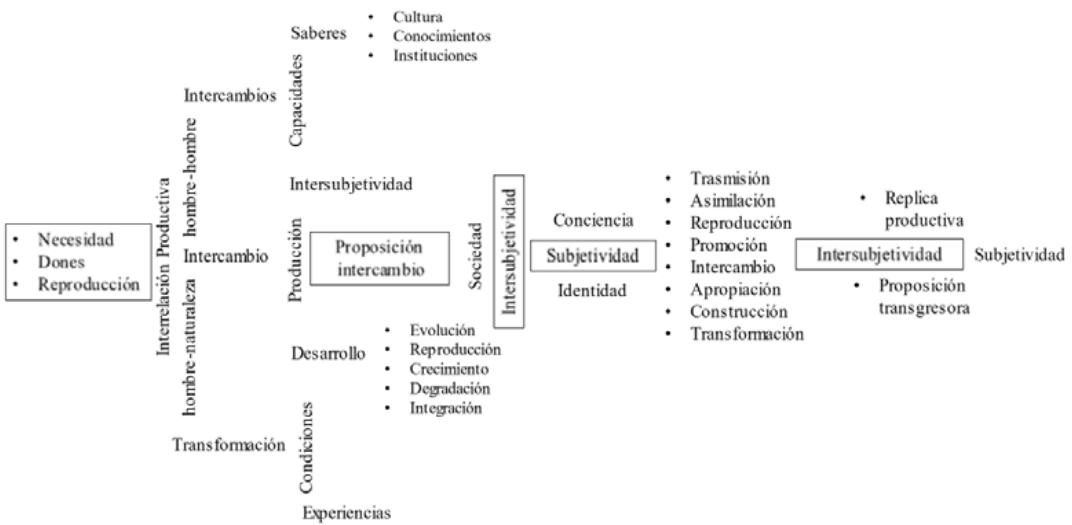
Vamos a iniciar por definir a la subjetividad, como la manifestación concreta de las intersubjetividades, o experiencias de convivencia lograda desde una interacción social especifica, que es representada por un sujeto, o individuo que ha aplicado un proceso de intervención de desarrollo y que ahora representa productivamente esas interrelaciones y prácticas de carácter colectivo, como conjunto de experiencias de transformación social y producción material; proceso donde también estos actores se han transformado socialmente; construyendo un "ser", como "conciencia" manifiesta, desde las "intersubjetividad" que no es otra cosa, que conjunto de experiencias que se manifiesta como representación productiva, o reproducción orientadora, articulados como principios de desarrollo y prácticas de convivencia, construidas desde una interrelación y expuesto por un sujeto que representa estas construcciones y se manifiestan desde un tiempo, contexto, y constructo social específico, pero desde una interrelación interrumpida y diversa; es decir distinta a la inicial aplicada, como parte de un proceso de transformación social y material recurrente que no se detiene, igual a la propia realidad y las relaciones sociales que no dejan de construirse, solo se transforman.
Siendo así, las interrelaciones sociales, son productoras de intersubjetividades, expresadas como conciencia, o ser, que es representada por subjetividad, manifestación que orienta, define y regula otros procesos de interrelación social, con otros desde otros actores; proceso donde se construyen otros, es decir intersubjetividades.
Por tanto, la subjetividad como representación de la colectividad es una construcción, o definición permanente de producción de posibilidades de desarrollo, donde los sujetos primero individuos se producen desde esa interrelación, asumida como intersubjetividad.
Subjetividad que no solo se reproduce fielmente, sino se manifiesta, o desarrolla como un proceso de integración recurrente de carácter productivo, proponiendo y reproduciéndose conscientemente desde otras, con otras y por otras manifestaciones integradas, a este, y desde este, desarrollo, presentes como intersubjetividades desde otros escenarios naturales que permiten las reproducciones que producen intersubjetividades.
 Fs de autor suscrito 2023.
Siendo el fenómeno social, por tanto, una construcción latente, que es manifestada críticamente desde las intersubjetividades producidas en ese proceso, donde se han transformado desde las transformaciones aplicadas; no cosa replicada en sí misma, sino creación, expresada como conciencia, producto del conjunto de experiencias de transformación producida por la colectividad con la que sé que interactúa para reproducirse normalmente.
Conciencia que es producto de experiencias aplicadas que han producido un ser social que manifiesta esas prácticas de transformación social, necesitando para este proceso, sin embargo, su propio cuerpo como unidad biológica, que se manifiesta desde la integración con otros objetos naturales que eventualmente se replican, pero integrados se transforman continuamente en interrelaciones propositivas.
Entonces es el cuerpo humano y sus diferencias, como construcción natural biológico replicada, -la base de la producción social desarrollada interactivamente, en nuestro caso como humanos-, la que permite primigeniamente emitirse desde sus propias diferencias para construir integraciones diferenciadas (como ser varón, o ser mujer, actores diferentes desde la diferencia de la categoría género como construcción social- y no solo reproducirse, sino ser, actor social producido, es decir conciencia que se manifiesta como ser.
Unidad social producida por sí misma que se caracteriza por tanto entre otros, por componerse como una producción latente, con voluntad de su propio ser, con capacidad de bifurcación posible de forma consciente, desde su decisión voluntaria e interrelaciones logradas; además de poseer y ser parte de relaciones complejas, con manifestaciones contextuales, e históricas diversas, complejas y diferenciadas.
Fenómeno que adema posee sus propias contradicciones como parte de su construcción fenoménica, lo que involucra sin embargo, asumir a esta como un fenómeno que se crea y destaca como conciencia; no de posesión universal de su relación construida, menos fenómeno terminado y ajena a cualquier tipo de contradicción, debiendo como posibilidad, no solo comprobarse, sino también interpretarse desde una integración, o involucramiento pleno de los actores investigadores, constituyéndose en actores intersubjetivos representantes de la integración lograda.
Al ser variadas las interrelaciones logradas, las subjetividades también son plurales, distinguiéndose una relación construida de otra, manifestándose en múltiples posibilidades de reproducción desde su propio desarrollo, que en algún momento histórico se unen, o bifurcan en otras de forma continua; además de sus saberes logrados, manifestándose en procesos culturales de disímil construcción, una de otra que no solo ayuda a una reproducción, sino también en desarrollo como parte de un conjunto de instituciones que se crearon para organizar, reproducir y desarrollar sus propias relaciones de desarrollo.
Proceso que también, permite establecer las mismas relaciones simbólicas de reproducción social como construcciones indicativas del tiempo como proceso, donde transita el ser, como condiciones o posibilidades de integración de estos en su proceso creado que va desde un ayer (pasado presente) que se visualiza como un hoy (presente continuo), como parte de un mañana que siempre está pero se va, y claro el presente desde un pasado, que antes era hoy), manifestando siempre una distinta subjetividad, que implica un actor social que representa a una colectividad que se construye permanentemente, producido al ser con las siguientes características:
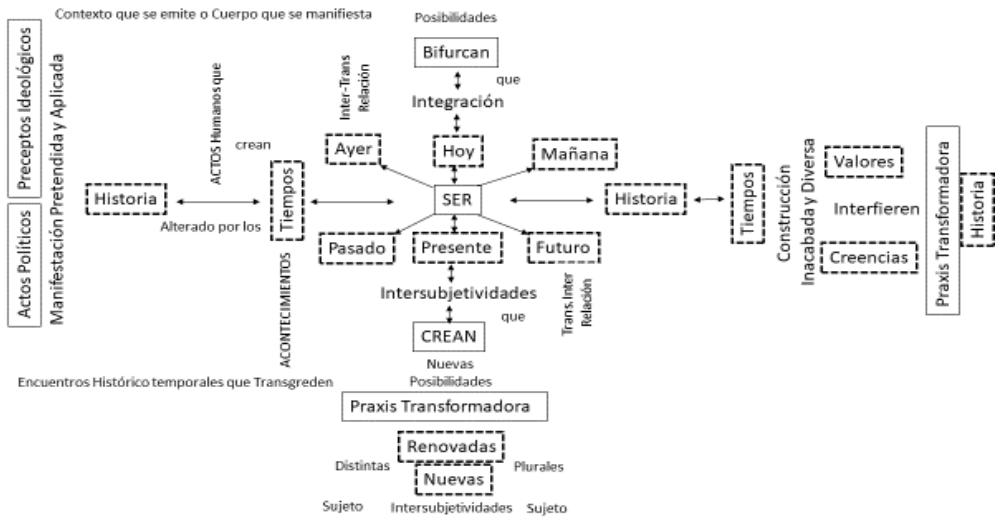 Fuente: Elaboración propia en base revisión hermenéutica. Heidegger M. (2003), Dilthey W. (1949). Red Semántica No 2: El ser entre el pasado y futuro como siempre presente
Intersubjetividades desarrolladas desde el "ser" construido en relaciones inacabadas, emitidas desde sus prácticas que connotan sus dimensiones de reproducción para su ubicación especifica de demostración de su presencia definida como tiempo y espacio en desarrollo.
Por otro lado, como parte de esta intersubjetividad, esta también la comunidad que se la debe asumir como una organización de mutua pertenecía, inclusiva, constructiva, creativa y en movimiento constante, no una simple integración de actores sin intensiones; por el contrario es la unidad representada por una subjetividad desde sus múltiples interrelaciones que se construye, deconstruye o propone activamente otras integraciones; pero siempre en transformación o cambio latente, producto de una intra-inter-trans relación, conocida como movimiento.
Lo social como fenómeno construido, o composición de interacciones humanas que se producen para "estar" como ser que se manifiesta y que, a decir de M. Heidegger, podemos definirla como:
- (...). Los φαivóμεvα, "fenómenos", son entonces la totalidad de lo que yace a la luz del día o que puede ser sacado a luz, lo que alguna vez los griegos identificaron, pura y simplemente, con τà ővτα (los entes). Ahora bien, el ente puede mostrarse desde sí mismo de diversas maneras, cada vez según la forma de acceso a él.
- (...), "fenómeno" en el sentido de "manifestación" o también "bloße Erscheinung", "mera manifestación". (Heidegger; Pag.38-39 www.)
Siendo por tanto representaciones, de eterna mutabilidad, producto de los intercambios, interferencias y desarrollo proyectivos de los sujetos, aunque este último "es", en tanto es "parte de", cómo presente en una interacción; es decir el sujeto solo es en tanto intersubjetividad.
## IV. DISCusión
Como se señaló hasta ahora, e insistentemente, la subjetividad, no es otra cosa que la manifestación confesa de una intersubjetividad lograda; subjetividad que es igual por tanto, a una producción social creada, producto del conjunto de experiencias enfrentadas por los seres humanos, intencionalmente aplicadas y que germinaron como conciencia, o ser social que se produce, manifestándose a través de las subjetividades producidas, parte de las interrelaciones del cual el ser humano como actor social es parte.
Siendo así, la subjetividad es una construcción social que manifiesta una intersubjetividad, o interrelación social que construye al mismo tiempo su propio ser, que le permite definir y desarrollar, un tiempo, una historia, además de una estructura de reproducción y desarrollo social, donde nacieron y desarrollaron como unidades sociales creadas, organizadas como valores, o principios de desarrollo, además de costumbres como practicas identitarias y tradiciones que ayudan a concretizar las relaciones de producción y reproducción social.
Proceso que crea, además, desde esa misma intersubjetividad, aunque con otros actores y en otros espacios, de carácter especializado, pero que suman interactivamente la subjetividad colectiva primigenia con la que interactuaron inicialmente, marcando su identidad; pero integrado a otra interrelación especializada, la ciencia, pero como proceso de construcción social.
Ciencia que también como todo proceso social construido, esta influenciado, por tanto, por una serie de inter y trans relaciones intersubjetivas, de ahí su definición como proceso de desarrollo compuesto que permite reproducir, prevenir y desarrollar las estructuras sociales con su entorno de convivencia.
Ciencia que no deja de ser, parte de las relaciones intersubjetivas de convivencia social cotidiana; pero aplicadas como una actividad de carácter especializado, e intencionalmente desarrollado.
Lo que implica que eventualmente, reproducen, comprueban, cuestionan, o mejoran las experiencias y saberes de los constructos sociales con los cuales han convivido inicialmente, pero ahora como actores integrados intencionalmente, pero cargados de una referencia social construida de tiempo y espacio históricamente definido.
Pero estas intersubjetividades manifiestas en distintas estructuras y formas sociales, no son parte de relaciones de carácter monolítico, son más bien parte de procesos dinámicos complejos y parte de construcciones diversas que no se replican, solo construyen.
Proceso que debe considerar su desarrollo como parte de la realidad, aun esta esta ajena al control de este proceso social construido, pero es influenciado por la misma, siendo este el entorno complejo en el que nos reproducimos, pero también influimos desde nuestra intervención. Realidad que debe ser asumida como:
(...) la infinitud de posibilidades de certezas e incertidumbres que generan relaciones de movimiento, es decir de posibles transmutaciones caóticas naturales, u ordenamientos caprichosos como interpretaciones y no como definiciones absolutas; por tanto, todo fenómeno o relación siempre está en movimiento que supone integrar, detenerse y transcurrir constantemente, y estas relaciones nos lleva a concreciones instantáneas dentro la incertidumbre permanente. (Quiroz, 2012: 73).
De ahí que ese entorno, es decir la realidad de la que somos parte (contexto natural o relaciones humanas construidas socialmente) se organizan como intersubjetividades.
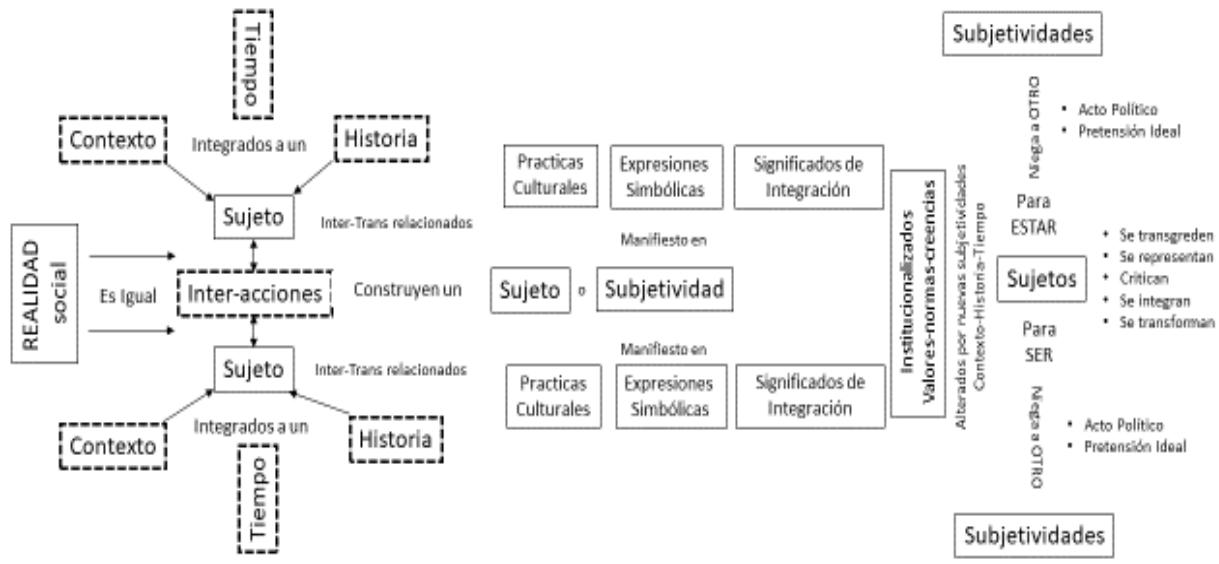 Fuente: Elaboración propia en base revisión hermenéutica. Heidegger M. (2003), Zizek S. (s/a).
Red Semántica No 3: Realidad social, inter-acciones y subjetividad
Realidad social que produce subjetividades, aunque esto no implique que los actores sociales, mantengan su independencia, o voluntad propia, ajena a sus interrelaciones, en tanto su libertad como concepto y proceso, permite a estos puedan asumir su identidad, como encargo social construido, para poder integrarse con otros y desde otros como actor consciente y voluntario desde su "ser", que implica la manifestarse para construir.
Entonces, las subjetividades no solo cambian y se integran, sino fundamentalmente construyen.
Sin embargo estas subjetividades diferenciadas -en la globalidad diversa de relaciones- para su construcción sufren proceso de discriminación o negación de unos frente a otros distintos, desde el reconocimiento de su sujeción a una unidad de reproducción o proposición constitutiva particular con la cual asumen pertenencia, o más bien refieren su identidad; considerando que el estar sujeto implica pertenencia de identidad a una comunidad de sujeción social especifica, que diferencia un colectivo de otros en su representación y son estas unidades sociales las cuales se emiten desde un sujeto como subjetividad representada, colectividad que no solo desea reproducirse, sino esencialmente desarrollarse en otros, por tanto exaltan su manifestación de pertenencia para construir desde su "ser" construido para imponerse en otros y poder trascender, proceso en el cual se produce otro tipo de relaciones sociales diversa a la inicial.
De tal manera que es la pertenencia social, como expresión de ese ser diversamente construido, en el flujo de sus interrelaciones, la que genera contradicciones, o complementariedades en una construcción, definiendo diversos movimientos que genera también cambio social.
De ahí que los fenómenos sociales, no son procesos lineales de desarrollo, sino más bien, procesos de constante contradicción o complementariedad permanente, es decir dinámicos que construyen también movimiento, basados en las interrelaciones que construyen.
La negación como afirmación discriminatoria de un otro, a otros distintos, debe entenderse esencialmente como la manifestación política de un colectivo que mediante una subjetividad pretende imponerse a otros, proceso en el cual un colectivo busca además de reproducirse con normalidad, trascender desde una unidad social que la representa, pero en términos exaltados frente a otros.
De ahí que la discriminación, o negación de unos frente a otros, es básicamente una acción política, o de pretensión de ejercicio de poder para preservar su permanencia o distinción como otro distinto frente a los otros que también sugieren este tipo de acción.
Siendo este tipo de expresiones regulares en los encuentros intersubjetivos que construyen, proceso en el cual los colectivos, desde esas intersubjetividades manifiestas pretenden dominar la construcción de la nueva relación generando movimiento donde un colectivo pretende imponerse a otros.
Y son estos posicionamientos de negación impositiva de unos frente a otros, como posicionamientos dogmáticos de carácter político, la relación que permite el cambio latente, siendo que la contradicción impone nuevos relacionamientos, o cambios como parte de las interacciones que construye.
Por otro lado, la negociación como parte del relacionamiento entre distintos, se inicia como definición discriminatoria de un otro distinto que se relaciona con otros, que desea imponerse o preservar su identidad como otro diferente, ya que no se negocia si es que no se pretende imponer o resguardar inicialmente sus propias referencias como otro distinto a los otros diferentes.
Así la negociación es parte también de la discriminación, o más bien, una manifestación del relacionamiento entre distintos que permite en su proceso la determinación de algunas imposiciones, o la emergencia de nuevas posibilidades producto de este encuentro que reconoce a los otros como distintos que se están construyendo como parte de estos encuentros permanentes que reconocen a los otros como distintos.
Esta negociación como articulación o regulación de la discriminación como proceso de construcción de consensos, permiten también incrementar, complementar creativamente nuevas opciones desde una definición histórico y contextual.
Por tanto, la discriminación, se la debe asumir también como parte inherente de las relaciones sociales y sus manifestaciones, aunque no necesariamente naturales, sino de carácter político en el caso de los humanos que desean preservarse como colectivo imponiéndose frente a los otros, que también tienen la misma pretensión.
Negar implica entonces entre otros cambiar, o transformar una situación o condición desde la propia interrelación, donde unos actores pretenden imponerse a otros, proceso en el cual mejoran, cambian o producen una nueva relación.
Siendo así la negación misma, no es más que una acción que implica en sí misma una intensión de transformación, nacida en esta misma relación que como proceso produce y está integrada al trabajo, que es igual a una acción transformadora de un bien o condición, donde todos los actores y cosas involucradas se transforman.
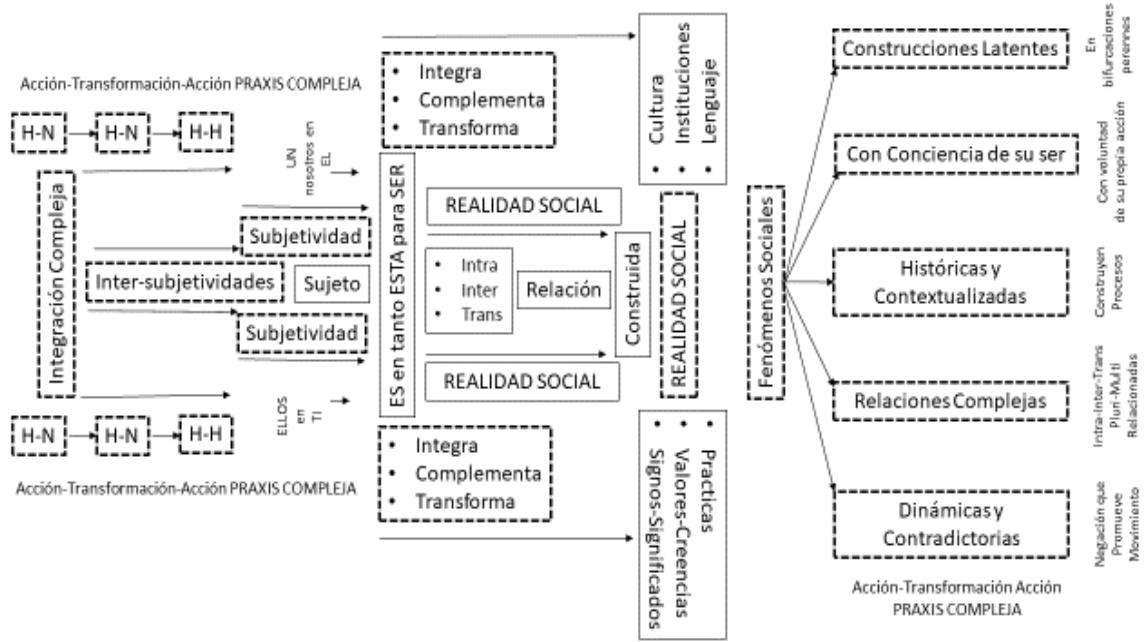 Fuente: Proposición hermenéutica, basada en Berger (2002), Heidegger (2003), Maturana (2002), Morin (1993).
## Red Semántica No 4: La subjetividad como manifestación política e ideológica
Entonces negar, es básicamente proponerse, o actuar frente a una situación o condición para cambiarla o por lo menos mejorarla lo hasta ahora cambiado.
Proceso en el cual se va construyendo también la realidad social de la que todos somos negadores de otra negación como fluencia permanente.
## V. CONcLusIoNES
Las conclusiones emitidas a lo largo del presente artículo pueden resumirse en las siguientes aproximaciones, con el propósito elementalmente de presentarlas como orientaciones para el logro o emisión de nuevas discusiones, buscando que estas se constituyan en proposiciones contradictorias para otros, o más bien sujetas a la crítica, condición que permitirá abrir un diálogo constructivo permanente, que es el propósito del mismo artículo, destacando estas como emisiones de provocación, no definición terminada:
- Las subjetividades, no son más que la manifestación concreta de carácter confeso de las interacciones sociales que construyen procesos de desarrollo social que se manifiestan como parte del desarrollo de la ciencia y el mismo desarrollo social.
- Los valores, las costumbres y tradiciones como parte de las construcciones sociales se manifiestan también en el desarrollo interpretativo de
- construcción de la misma ciencia, como proceso político, sin embargo, no como definición técnica que es la elaboración de otro tipo de intersubjetividad especializada, pero que no se aleja del común elaborado de las relaciones sociales y está presente.
- Las concreciones sociales como aproximaciones de supuestas de verdades, aunque son apenas hipótesis, como supuestos logrados, son ordenamientos de carácter histórico y contextualmente definidos.
- La negación como acción critica de oposición de un otro distinto frente a otros, es un proceso que genera dialogo; dialogo que produce cambios y transformación de los actores y cosas involucradas en este proceso.
- La discriminación como emisión conciencial de una intersubjetividad lograda, manifiesta el interés político de una colectividad que pretende no solo reproducirse, sino también trascender socialmente sus relaciones como colectivo histórico vigente
- Los contextos naturales, como los cuerpos humanos y sus diferencias, emiten también sus singularidades que se destacan en subjetividades particulares como distintos presentes.
- La inter y trans relación de las subjetividades, siempre muestra cambios significativos latentes, proceso que permite socialmente a los actores particulares posibiliten su permanencia (reproducción), trascendencia (cambio) o negación (transformación propositiva), pero siempre en relaciones y transmutación dialéctica constante.
Generating HTML Viewer...
References
18 Cites in Article
C Bautista,J Juan (2005). Critica de la Razón Boliviana. Elementos para una crítica de la subjetividad del boliviano-latino-americano.
Peter Berger,Luckmann Thomas (2001). La construcción social de la realidad.
Liliana Manzi,Judith Charlin,M Pallo,M Iamarino,Rodrigo Cabrera (2009). Guanacos grabados en el interfluvio de los ríos Gallegos-Chico (Santa Cruz, Argentina): su distribución más austral en Patagonia.
Wilhelm Dilthey (1949). Introducción a las Ciencias del Espíritu.
Emile Durkheim (2001). Las reglas del método sociológico.
Hans-Georg Gadamer (2012). El Giro Hermenéutico.
Martin Heidegger (2003). Filosofía, ciencia y técnica.
Martin Heidegger,Jorge Rivera,Traductor (2003). Ser y Tiempo.
Martin Heidegger,Jorge Rivera,Traductor Unknown Title.
Max Horkheimer (2009). Teoría tradicional y teoría crítica.
Max Horkheimer (1973). Critica de la Razón Instrumental.
Max Horkheimer (2002). Teoría Crítica.
Edmund Husserl,Jesús Adrián (2012). La idea de la fenomenología.
Humberto Maturana (2002). Nota a la segunda edición.
Edgar Morin (1993). El Método I. La naturaleza de la naturaleza.
Explore published articles in an immersive Augmented Reality environment. Our platform converts research papers into interactive 3D books, allowing readers to view and interact with content using AR and VR compatible devices.
Your published article is automatically converted into a realistic 3D book. Flip through pages and read research papers in a more engaging and interactive format.
A subjectivity is the confessed manifestation of a created social coexistence, or interrelation of individuals that is socially integrated to reproduce and produce its development possibilities; production that is represented by a subject, a phenomenon commonly known eventually as “subjectivity”, which is nothing more than the “social representation” of a “construction” through an individual who represents an active “social integration”, or “intersubjectivity”.”; therefore: “subjectivity” is not a simple opinion as an isolated definition of an individual, it is rather a manifest “intersubjectivity”, or represented by a subject of a social unit in interaction; being that this, as a created social manifestation, is an ideal reproduction of conditions of a developing coexistence that has built as a process “subjects” that manifest the experiences produced as part of a “social integration” or “intersubjectivity” that is created, o constantly produced as definitions of reproduction and social development; Hence, a subjective manifestation is a represented intersubjectivity, that is, a subject as a social individual, only “is”, insofar as, a “state” to “be” from its manifestation, or represented social interrelation that allows it to “be” and “transcend” as a representative of a collectivity; Hence, “subjectivity” is the demonstrative graphic representation of a community, from a “collective construction” to which it represents, or applies through an individual; manifestation that reproduces, variable and complex, -depending on the different types of coexistence-matrices of social development to prevent and act in their social interaction with others; which means defining subjectivity as a created social product, where a subject represents a plurality of interrelations produced and in production, a process that this article will deal with as part of a hermeneutic methodical relationship that pretends, or rather presumes, to understand such interrelationship.
Our website is actively being updated, and changes may occur frequently. Please clear your browser cache if needed. For feedback or error reporting, please email [email protected]
Thank you for connecting with us. We will respond to you shortly.