## I. INTRODUCTION
High rates of morbidity and mortality are associated with inadequate therapy for splenic trauma, requiring an in-depth comprehension of its mechanisms. The most common cause of splenic injuries is confined abdominal or thoracoabdominal trauma, such as contusions resulting from a variety of accidents.
Splenic trauma must be promptly evaluated in the context of urgency, and a surgical approach must be performed according to the degree of injury. The comprehension of splenic trauma demands the comprehension of crucial aspects, such as the function and cause of the spleen's increased involvement, as well as the management necessary to prevent complications and sequelae.
In addition, there is a correlation between high rates of morbidity and mortality and the frequency of abdominal trauma, with the spleen being the most commonly damaged organ. The most common cause is trauma caused by accidents or being run over. A patient with a splenic injury must be evaluated and, if necessary, a surgical procedure performed. The surgical operation is urgent to prevent and permit a decrease in morbidity and death since the majority of patients underwent surgery after a parenchymal laceration measuring more than $3\mathrm{cm}$ confirmed the lesion.
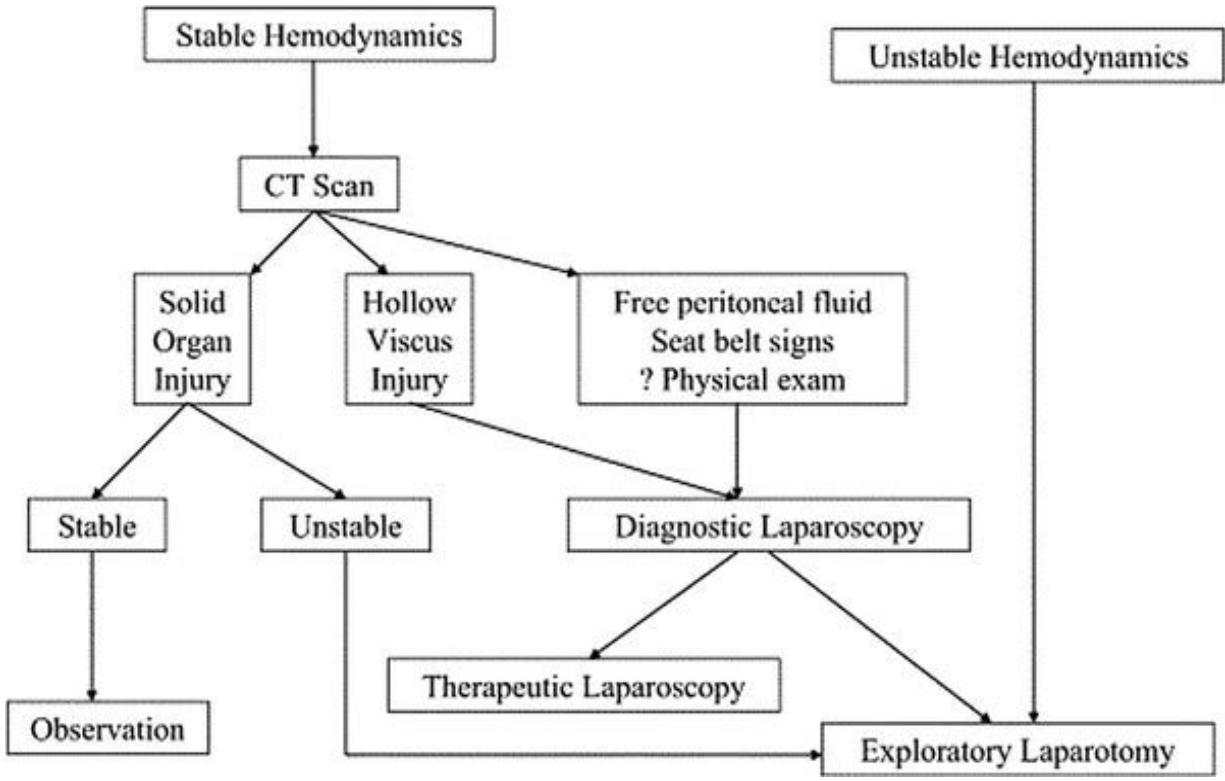 Figure 1: Management of blunt abdominal trauma
## II. METHODS
This is a retrospective, quantitative, and cross-sectional analysis of the medical records of the operating patients. The objective of this study is to examine the epidemiology and clinical condition of patients undergoing urgent splenectomy, as well as the most common complications associated with the procedure. The trial design and baseline patient information were not published since they were kept confidential. Before being approved for production, the study was conceived at the hospital and supervised by the regional Ethics and Research committee. There are no sponsors for the study. The authenticity of the trial as well as the quality and comprehensiveness of the data and analyses are all guaranteed by the authors.
## III. RESULTS
During the time period analyzed, a preponderance of males was observed among patients assisted with urgent splenectomy. The "Trakcare" system, which is used in patient care services at secondary hospitals in the Federal District, was the foundation for the collection of secondary data used in this study.
The medical records of 50 patients were analyzed, scored, and selected according to the following variables: mechanism of trauma, clinical signs of spleen injury, splenectomy as an emergency approach, degree of injury, postoperative period, complications, sequelae, and length of stay after surgery, as well as the need for an intensive care unit and death.
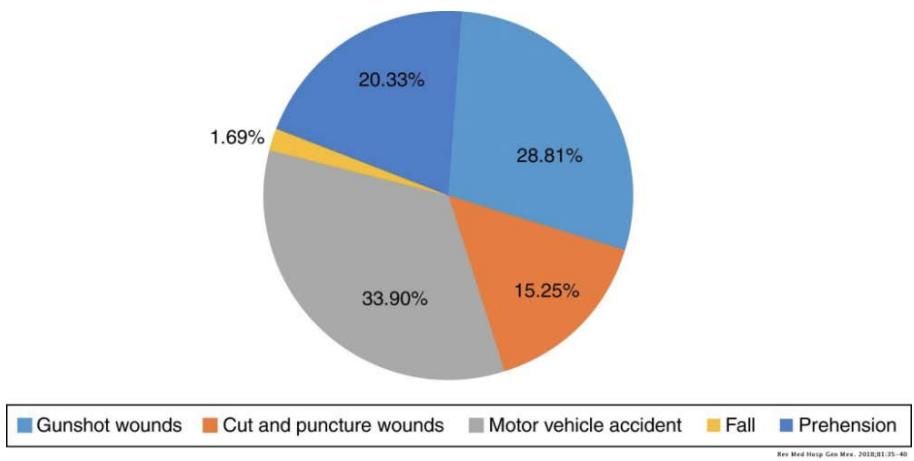 Figure 2: Graph showing division due to trauma
Data from 50 medical records of patients undergoing urgent splenectomy allowed researchers to draw the conclusion that $48\%$ of patients had experienced splenic trauma as a result of auto accidents, and $38\%$ of patients had Kehr's sign in the positive range.
Additionally, it has been found that grade III to V injuries were the most common in $70\%$ of the cases submitted requiring urgent splenectomy after an anatomopathological investigation.
Among the complications, $50\%$ of the patients had localized abscesses, the most frequent form.
The average duration of stay was eight days, and $38\%$ of patients required intensive care. Lastly, $10\%$ of the population passed away.
Concerning care, a profile was perceived in which a direct and effective approach is required, because the number of patients with complications is very low when compared to patients approached conservatively, presenting a degree of sequelae of $70\%$ depending on the degree of injury, when compared to patients approached conservatively, presenting a degree of sequelae of $70\%$ depending on the degree of injury.
## IV. CONCLUSION
In order to prevent sequelae and improve these patients' chances of survival, it is inferred that there is a strong demand for appropriate surgical therapy. This highlights the need for more effective measures that aim to reduce morbidity and mortality, which is crucial given the high frequency of occurrences.
Luana De Lima,Hantequestt (2020). TRATAMENTO CONSERVADOR DO TRAUMA ESPLÊNICO GRAU III.
Bárbara Ramires,Dulor (1990). Conduta expectante (não cirúrgica) em pacientes pediátricos vítimas de trauma abdominal contuso com lesão de baço e/ou fígado/Observational 4.
Guilherme Barroso Langoni De Freitas,Luiza Rocha (2020). Ginecologia e Obstetrícia - Edição III.
Gustavo Kleinsorge,Domingos Drumond,Flavia Paula,Bruna Mendes,Deborah Silva,Iara Souza,Paula Assunção,Sizenando Starling (2021). Impact of the introduction of angioembolization on nonoperative management of blunt splenic trauma grades III and IV at Hospital João XXIII – Belo Horizonte/Brazil..
Rafael Blanco,Ribeiro (2019). Frequência de esplenectomias em pacientes vítimas de traumas abdominais por acidentes automobilísticos no mundo.
Meira Júnior,José Donizeti (2021). Tratamento não operatório do trauma esplênico: evolução, resultados e controvérsias.
Interna Eileen Mac-Adoo Kalwitz Unknown Title.
D Fernandez,Depto Humberto Flisfisch; Sur,De Cirugia (2024). El impacto del manejo de la presión intraocular en la progresión del glaucoma: una revisión de las estrategias de tratamiento actuales.
Richard Brady,Mark Bandari,Jan Kerssens,Simon Paterson‐brown,Rowan Parks (2007). Splenic Trauma in Scotland: Demographics and Outcomes.
Bernardino Branco,Andrew Tang,Peter Rhee,Gustavo Fraga,Bartolomeu Nascimento,Sandro Rizoli,Terence O'keeffe (2013). Tratamento não operatório do trauma de baço grave.
Jml Williamson (2015). Splenic injury: diagnosis and management.
L Von Bahten,Nicoluzzije,M Olandoski,Car Pantanali,Rfkc Silva (2006). Trauma abdominal fechado: análise dos pacientes vítimas de trauma esplênico em um hospital universitário de Curitiba.
Pástor Romero,S Villacres Salazar,W Maldonado Brito,M Medina Flores,P Monar Naranjo,E Díaz Barahona,C (2021). Trauma esplénico: diagnostico, clasificación y tratamiento. Una revisión de la literatura actual.
Explore published articles in an immersive Augmented Reality environment. Our platform converts research papers into interactive 3D books, allowing readers to view and interact with content using AR and VR compatible devices.
Your published article is automatically converted into a realistic 3D book. Flip through pages and read research papers in a more engaging and interactive format.
Our website is actively being updated, and changes may occur frequently. Please clear your browser cache if needed. For feedback or error reporting, please email [email protected]
Thank you for connecting with us. We will respond to you shortly.