Artificial Intelligence and Neural Networks With Rules-Based Filter Are Useful to Find Correlations Between Diet and the Health Status of Multiple Sclerosis Patients
In this article we address three different problems of “Surface Analysis” thanks to Artificial Intelligence with Neural Networks related to the diet of the person newly affected by multiple sclerosis, a diet that can be myelinating or demyelinating; the second has the objective of recognizing whether oil, or water, can be present in a site and the presumed depth; the third objective is to classify radioactive atoms, such as Plutonium, on a neutral surface, as a sort of “Identity Card”. The data were collected, not on sites or authors that deal with the topic in question, but thanks to what emerges in summary form in the most common browsers, called in this work “data found on the volatile web”.
Artificial Intelligence and Neural Networks with Rules based Filter are useful to Find a Correlations, between Diet and the Health Status of Multiple Sclerosis Patients, by Treating the Problem as a Surface Detector, One Can also Draw Indications on the Search for Oil and Recognize Radioactive Atoms on Neutral Surfaces
## I. INTRODUCTION
Your time is precious, and we thank you for the one you will spend reading this. Since I was 7 years old I have always liked to study, and now I am the only author of the works present in the bibliography [1]-[14]. I suffer from nrsSPMS that blocks me and many patients, families, all over the world. I have opened a fundraiser on "www.gofundme.com" with the keyword "Artificial intelligence against multiple sclerosis" and thanking you, I promise that I will make every effort to ensure that the funds raised will be spent on the next works that will surely be expensive.
In this work three applications of a versatile "intelligent" system as a "surface analyzer" will be presented, in different chapters: the first on Multiple Sclerosis, the second as a detector of oil, water or other, the third for the identification of heavy and radioactive atoms.
## II. DIET AND MULTIPLE SCLEROSIS
In this chapter we will try to adapt the intelligent systems present in [12], [14] in order to improve the analysis capabilities and to further test the "seed of discernment" present in [12] and [14] in "surface analysis" problems. and in particular, in this chapter, in the link between the diet assumed by a newly diagnosed multiple sclerosis patient and his state of well-being by virtue of mylinizing or demylinizing foods.
In the following lines we will try to give some indications for the newly diagnosed or not that emerged from the experience of the undersigned that each reader will evaluate independently or followed by his neurologist.
1. Doing sports, fitness and any activity with your body
2. Stem cell implant, after medical opinion from different bell towers
3. Assumer TOLEMBRUTINIB® by SANOFI®, PIPE 3O7® Continuum Therapeutics, Inc. of hoping my neurologist agrees, I'm waiting anxiously.
4. Resorting to the intermittent diet.
5. Use, with the help of a nutritionist, mainly myelinizing foods.
In this chapter we address the problem of diet in "newly" diagnosed patients with multiple sclerosis, which can be myelinating or demyelinating depending on dietary intake, addressing it with artificial intelligence with an architecture based mainly on Back-Propagation neural networks. The inputs used are to be considered "pseudo cybernetic" but of natural origin that can be for or against the increase of myelin in circulation. Through the use of NNs connected with appropriate architectures, a system could be built that highlights the reaction, in the medium-long term, of the human body to natural inputs available such as food; without machines, weight indicators, strength, and only thanks to the musculoskeletal response felt and self-assessed by the subject who adheres to this diet here simply called "diet".
The research of information, and data, was conducted thanks to the "volatile" WEB, a type of information that is not necessarily collected in specific sites, so there will be no bibliographic references nor authors and their works, only thanks to the various navigators that bring the data to light. It is very important to take into consideration the fact that these pages do not want to give precise, exhaustive indications on the eating habits of newly diagnosed people. In fact, some people may like some foods that are indicated as demyelinating, for example by eliminating them, and in that case they would have others, difficult to correlate with positive and demyelinating effects. Each patient, and not only, can freely interpret under his experience the indications that the system will provide him; as he could, on the contrary, feed himself with myelinating elements that give him more strength than others, not indicated or unfortunately given as demyelinating by the system; therefore, if he does not find anything to replace them, or integrate them, he will be able to interact with the system by leaving a feedback. The data used in this work are those that emerge from browser searches and displayed in summary form: this type of data is called, in this work, "volatile"; that is, high-level information, if they were low-level (such as saying that one would have the duty to eat... as in the bibliography would find...), with these data it will be a duty for the user, after entering them into the system and following the nutritionist's instructions.
So, whoever goes on a diet is considered a "natural" cybernetic system with input and programmed because the diet is still a nutritional reprogramming of the body whose outputs are deduced by the user who perceives a possible benefit or not..
Foods are either remyelinating or demyelinating. In this work, few elements are evaluated; in fact, it is a system that can be modified or expanded.
The "seed of discernment [12]" has been used in all three chapters: the use of two NNs, appropriately interconnected, which give a nuanced response, where the response is the motor improvement or not that the user can report. This scheme is present in [12] where the same type of approach is used, but in this work no laboratory tests will be performed, but reference will be made to the state of well-being reported by the user. The Sulfurin is a rare, myelinating substance that can repair myelin; the naturally occurring molecule blocks the activity of an enzyme that is overactive in areas of myelin damage. This same enzyme also contributes to the growth and spread of cancer cells, meaning the discovery has implications beyond MS. Study co-author
Angela Hoffman, a professor at the University of Portland who had been examining nearly unobtainable plant-based hyaluronidase inhibitors, and Steve Bryson and colleagues at Oregon Health & Science University say it's exciting that the plant-based molecule can inhibit the growth of myelin-producing cells [14].
Our body contains about 21 mg of Potassium 40, and emits $\beta$ rays and neutrinos (cosmic objects) about 400 million/day; it could also repair itself, and implement remedies with the right stimulations. In this work we use foods in two groups as stimuli: remyelinating and demyelinating, the first ones help myelination the second ones damage it. Artificial Intelligence can be useful to verify if this reasoning is coherent. We do not want to question foods that are eaten daily by those who are not diagnosed with MS; such as cereals for many people, however, certain foods that the network indicates as such are considered myelinating. The research, in this work, is also sometimes superfluous since for the simulation it would be enough to insert generic foods, for example from the Mediterranean diet; dividing them into categories: this is important because the present system is made up of two Neural Networks that use the so-called "Seed of Discernment" [12]: the first work where MS is studied with AI.
Given the paradigm: move and you will move, stay still and you will stay still: let's assume the metabolization of the food taken in the diet. This paradigm can be used as an input, with any type of diet, drug, etc. etc. without exercise it is almost all useless; that is, if you take a "new drug" and do not follow adequate physiotherapy it is almost useless. Instead, considering physical activity as a myelinating factor and staying still as a demyelinating one, it can be used as an input, in a specific APP, metabolized by movement. It would not be wrong to imagine that since a myelinating food introduced, not metabolized does not go into circulation, but is only digested; but if metabolized it is more likely to have a myelinating effect.
# a) A Linear Algebra for Surface Analysis
From the following table tab.1 it is possible to extract a square matrix to obtain a function that highlights the trend of the new data, compared to the average of the previous data, from which we consider the average. The matrix can be constructed as a square by joining the rows with low quantity impact (for example dietary) and adding columns that take into account the response of the various outputs (for example parts of the patient's body subjected to the diet) and other nonlinearly dependent on the previous ones, useful for describing the state of the system (for example the patient's health).
Let's proceed by making the data in array form. Given the original array $\left[ \begin{array}{l} \varrho \end{array} \right]$, a random reallocation of its various cells is carried out, obtaining $\left[ \begin{array}{c} \Rightarrow \\ R \end{array} \right]$ of which we would calculate the average and normalization.
I then subtract that of the new day of the same patient $\left[\overline{G}\right]$:
$$
\left[\begin{array}{c}1 \rightarrow j\\\overline {{R}}\end{array}\right] - \left[\begin{array}{c}j + 1 \rightarrow i\\\overline {{G}}\end{array}\right]
$$
$\left(j + 1 \rightarrow i\right)$ for any days more than one; from which we can calculate:
$$
(a) \left[ \boldsymbol{P} \right] = \nabla \left( f \left( \operatorname{div} \left[ \begin{array}{l} 1 \rightarrow j \\ \overline{\boldsymbol{R}} \end{array} \right] - \left[ \begin{array}{l} j + 1 \rightarrow i \\ \overline{\boldsymbol{G}} \end{array} \right] \right) \right) \left\{ \begin{array}{l l} > & 0 \\ = & < \end{array} \right\} ^{\ast ?}
$$
After proper reallocation to the original cells of patient:
Gistificare la riallocazione, casi che non vengano considerate le posizioni sempre presenti specificare mmeglio l'analisi di superfice
$$
\begin{array}{c} \text {(b)} \end{array} \left[ \begin{array}{c} \Longleftarrow \\P \end{array} \right]
$$
$$
\begin{array}{l} \text{(c)} \quad \left\{ \begin{array}{l l} > & 0 \quad \text{perhaps it has a negative impact} \\ = & 0 \quad \text{it's almost indifferent} \\ < & 0 \quad \text{perhaps it has a positive influence} \end{array} \right. \end{array}
$$
From the examination of (c) we can use NNs to get more information, we call Nnhope a neural network with multi-layer perceptron architecture with three layers and back-propagation learning algorithm with inputs and outputs equal to the number of cells of the matrices used so far and trained "artfully" to recognize what are the hypotheses, for better or for worse, examined so far on the myelinating diet or not with advantages, or less, on the various musculoskeletal districts examined for each patient subject to the diet.
Using the following scheme we will have to obtain more and more detailed information on how to adjust the diet to follow:
$^{\star \star}$ The use of certain mathematical operators, matrix ones, and not others, has as its objective the obtaining of a scalar; it would probably be sufficient to use only the calculation of the determinant of the matrix which is the argument of the operator
$$
\left[ \stackrel{\Leftarrow} {P} \right] \longrightarrow \boxed{\begin{array}{l} \text{NeuralNetwork} \\\text{BackProgation} \\\text{NNhope} \end{array} } \longrightarrow \left[ \begin{array}{l} \text{hope} \end{array} \right] \tag{C}
$$
From the examination of the matrix [hope] the salient data can be reported to the nutritionist and neurologist for the corrections of the case and the various conclusions. The undersigned follows, not at $100\%$, the indications reported in table 1 and are not detecting worsening but very slight improvements that fall within the fluctuating clinical picture of multiple sclerosis, however the results are expected in the long term. It is believed that this approach will most likely give positive and more visible results in mild forms and in newly diagnosed than in those who have been affected for years by the nrSPMS form like the undersigned who after the end of this work in addition to continuing the diet will dedicate himself more to rehabilitative physiotherapy and physical exercise.
## III. METHODS AND TOOLS
This paragraph will describe the main scheme of the setup that will be used, also in the next works and the present one which mainly describes the idea, and the second one which involves the use of neural networks and the drafting of an algorithm especially by virtue of the fact that the patients will be virtually encapsulated while the third will be much more challenging because the use of "real" patients; at this point in the exposition it is not easy to use real patients.
In the following figures everything is particularly "simplified" because only the preliminary project that will be described is represented, represented in the figures fig. 1, 2. All this is obviously simple compared to the scale of the overall project. As said in the introduction, it is not very useful to describe in depth these blocks that are part of the drawings represented in fig. 1 and 2 because the difficulties that will be encountered will not be few and above all the methods used to describe and realize the various components will not be simple, and the type of representation and its representation is unpredictable.
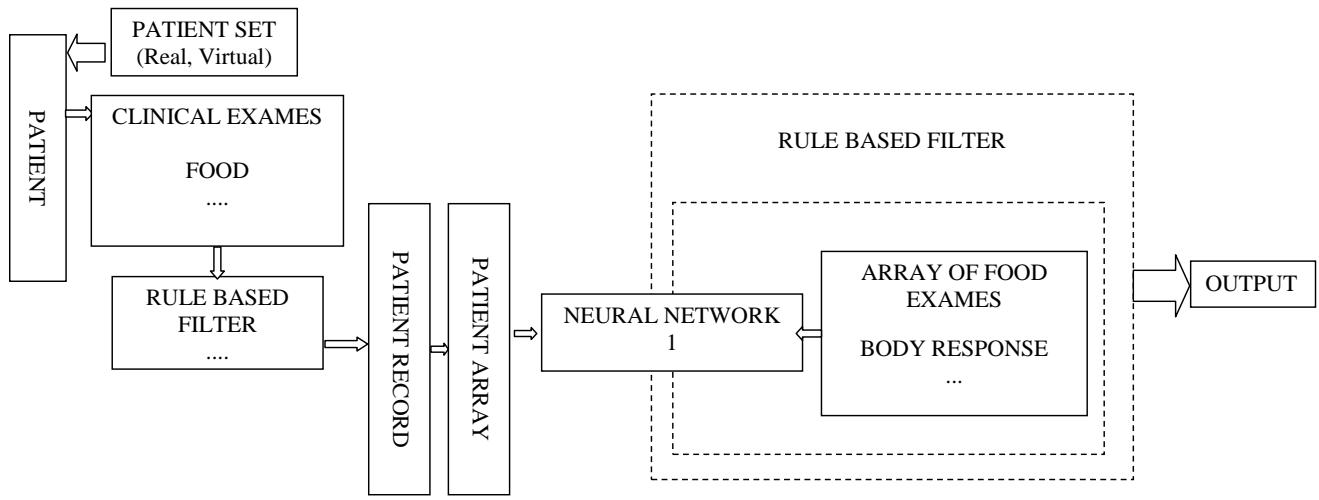
Fig. 1: This Figure Represents the Original Idea to Train A Neural Network to Distinguish an MS Patient from a Healthy One, as Well as "Memorizing" the Cases Seen in Training
Tab. 1: This Table Represents the "i-th" Patient
<table><tr><td>Patienti</td><td></td><td>Dieti</td><td>Response</td><td rowspan="2">Example of a rule indicated by the nutritionist</td><td></td></tr><tr><td>Foodi</td><td>MY/DEMY</td><td>RULES/GRAMS</td><td>Dieti</td><td></td></tr><tr><td>Dried fruit</td><td>My</td><td>rule1</td><td rowspan="22">Ri</td><td>...</td><td></td></tr><tr><td>animal proteins</td><td>My</td><td>rule2</td><td>0≤20[g]</td><td></td></tr><tr><td>Fruits and vegetables</td><td>My</td><td>rule3</td><td>...</td><td></td></tr><tr><td>Sulphuretin</td><td>My</td><td>rule4</td><td>...</td><td></td></tr><tr><td>Fish + Ω3</td><td>My</td><td>rule5</td><td>...</td><td></td></tr><tr><td>Ω3</td><td>My</td><td>rule6</td><td>...</td><td></td></tr><tr><td>Biotin</td><td>My</td><td>rule7</td><td>0≤400[mg]</td><td></td></tr><tr><td>Vitamins B1, B2, B3, B5, B6, B12, C, Niacin</td><td>My</td><td>rule8</td><td>...</td><td></td></tr><tr><td>Legumes</td><td>My</td><td>rule9</td><td>...</td><td></td></tr><tr><td></td><td></td><td></td><td></td><td>∑20i=1KCal i≤2100[KCal]</td></tr><tr><td>Grape seeds</td><td>MY/DEMY</td><td>rule10</td><td>...</td><td></td></tr><tr><td></td><td></td><td></td><td></td><td></td></tr><tr><td>Salt</td><td>DEMY</td><td>rule11</td><td>0</td><td></td></tr><tr><td>Sugar</td><td>DEMY</td><td>rule12</td><td>0</td><td></td></tr><tr><td>Butter</td><td>DEMY</td><td>rule13</td><td>...</td><td></td></tr><tr><td>O...
Many foods, such as legumes "for example", are very healthy if present in the diet but the effects on myelin are not known, this fact we here would call the "bean problem" For The patients' response is certainly subjective, but the intelligent system will most likely be able to give useful indications for MD clinicians will be used, hoping to limit the number of inputs, and since they are numerous, it will be necessary to ensure that the NN [6], [12] has a variable and selectable range for the inputs.
At this point in the simulation, it is recommended to use 10 patients for the system training phase, 10 for validation and 10 for testing.
At this point the first neural network should be able to associate food with the response of the sick patient at the onset of multiple sclerosis, but this is not what we would like only. In fact, thanks to the second NN, the most myelinating foods and their quantity to be taken daily should be noted with the supervision of the nutritionist and the neurologist. The following figure further highlights the potential of diet-patient matching highlighted in Figure fig.
1. The male/female ratio is an
important factor for patient selection and the impact of MS, which must be represented in the patient population and therefore will be implicit in the selected sample.
As for training, validation should be done on MS patients, while for the testing phase it would be interesting to insert some patients with variable expressed parameters in the simulations: new, old and healthy, to try to represent the whole population. Overfitting should be avoided by shifting the just evoked parameters and their respective inputs and by a somewhat broader representation of the output and inputs.
The following figure fig. 2 shows the system just exposed; that is, a system able to indicate significant parameters to be provided to the clinician with the totality of patients and simulated data thanks to Tab. 1.
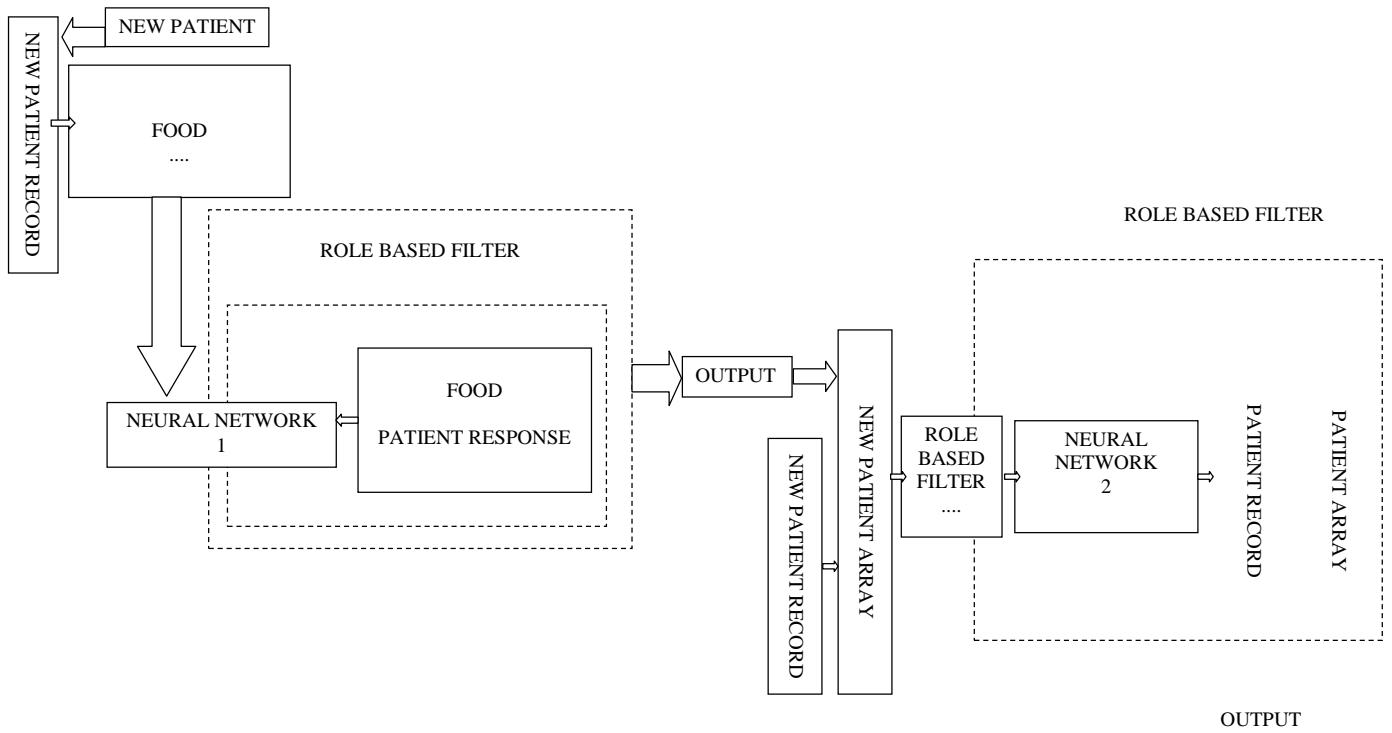
Fig. 2: This Figure Represents the Second Part of the System Which Could Give Important Indications to the DIET To clarify, training can be done on "newly diagnosed" patients and validation on those "diagnosed not long ago" the Test is a somewhat nuanced middle ground, a bit of the first group and a bit of the second, assuming that the system in fig.1 is able to distinguish a healthy patient from a sick one by his diet, then we ask ourselves where the information resides?
The information and the result of the correct training of the NN $n^{\circ}1$ of the successful learning of the diet-patient pairing; and up to this point after having carried out the training: then an average of the input vectors of the arrays of the patients and their diets is made and the significant food could be hidden, in truth the input of interest appears: then a new case is presented and at this point the network will say the most mylinizing diet and the difference is made between the representative vector of the new case minus the average of the patients, then we will see what are the variables in play that determine this difference between the representative vectors. The schemes proposed in fig. 1 and 2 should be considered a common place that can also be used for other pathologies, this aspect is very important to underline.
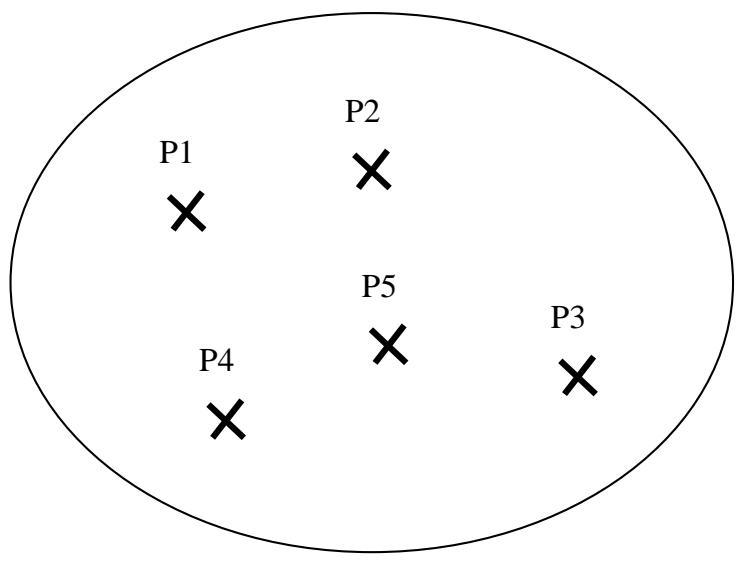
IV. INDICATIONS ON THE SEARCH FOR OIL

<table><tr><td>Well</td><td colspan="2">Coordinates</td><td>PROFONDITA</td><td></td></tr><tr><td>P1</td><td>x</td><td>y</td><td>P</td><td></td></tr><tr><td>P2</td><td></td><td></td><td></td><td></td></tr><tr><td>P3</td><td></td><td></td><td></td><td></td></tr><tr><td>P4</td><td></td><td></td><td></td><td></td></tr><tr><td>P5</td><td></td><td></td><td></td><td></td></tr><tr><td>...</td><td></td><td></td><td></td><td></td></tr></table>
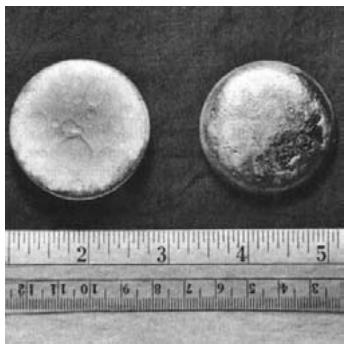
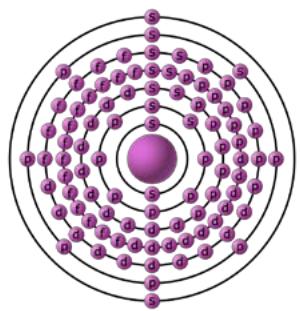
## V. RECOGNITION OF RADIOACTIVE ATOMS ON NEUTRAL SURFACES

## VI. CONCLUSION
Since we intend to proceed, at the end of this mainly descriptive work on the idea of using NNs, other steps are substantially planned that will concern the introduction of over-the-counter drugs into the entrances and then prescribed by the neurologist and with a lot of work to do. Once the correct functioning of the virtual encapsulator of the patient and the entire system has been verified, and the presence of sufficient funds has been verified, to then try to concretely implement the procedure that should answer, in part, the question of the title of this work, thus giving indications to clinical doctors who are experts in the sector covered in this article.
The undersigned, who has been following this diet for a month and more, has noticed great improvements, even if... due to autosuggestion. After all, due to waiting for drugs that never arrives: there's no harm in trying. Funds are needed for software simulations and the undersigned, in addition to making himself available, strongly recommends contacting competent doctors in the various fields of medicine. And like many things in the life of those affected by MS, even a diet must not deprive us of a few moments of happiness. For example, a pizza party with friends (pizza and beer): two non-myelinating foods and we do not participate, aware or not we are not happy but sad and depressed by the renunciation. Such suffering could make us lose the results obtained after months of myelinating diet: the diet should perhaps be faced with a serene, friendly spirit, like the life of a patient, and not only, of MS. We would say balance and serenity: therefore a yes with moderate behavior to pizza and beer with friends.
### ACKNOWLEDGMENT
An extraordinary thank you to all those who take care of people with physical and mental disabilities. In particular at my lovely family.
Generating HTML Viewer...
References
15 Cites in Article
Francesco Pia (2019). I will be back.
Francesco Pia (2019). The liar knee.
Francesco Pia (2019). Genetic geometry.
Francesco Pia (2021). JEWEL: a cosmological model due to the geometrical displacement of galactic object like black, white and worm holes.
Francesco Pia (2022). How to Try to Get Antigravity From Electrical Circuits by an Almost Magnetic Monopole or from Anti Matter.
Francesco Pia (2022). A Computer System Based On Neural Network And Rules System Based For Find An Optimum Mix of Vaccine And/Or Drugs For mRNA Like Covid-19 Virus And Other Pathologies.
Francesco Pia (2022). POLIFEMO: a Teleportation Model Based on Object Like Black, White and Worm Hole for Electric Signal and Object Also Thinking and With Conscience.
Francesco Pia (2023). A Symmetry of Cosmological Model Named Jewell That Allows Re Entry Into The Starting Parallel Universe With Adequate Teleportation Based on Creation of Useful Stellar Object Like Black, Withe Holes.
Francesco Pia (2023). Neutron Concentrator, a Hypothetical Small Neutron "Star" based on the Emission of Neutrons in Minerals such as Granite and Other Commonly Available Objects.
Francesco Pia (2023). A Natural Model for Dark Matter and Its Interaction with Stellar Objects such as The Galaxy Known as with Name “The Milky Way”.
Francesco Pia (2023). A Time-Machine, An Electro-Mechanical System That Have A Strange Behaviour Respect At Time.
Francesco Pia (2024). A Neural Networks And Rules Based System Used To Find A Correlations, And Therefore Try To Maintain The State Of Health, In Patient Affect By Multiple Sclerosis At The Origins Of Well-Being At A Certain Time Daily Time With Clinical And The Musculoskeletal Exams.
Francesco Pia (2024). HOW THE UNIVERSE WORKS.
Steve Bryson & Colleague,Alec Petersa,Fatima Baninea• Kanon,Angela Yasuharaa,Basappad Hoffmanc,K Prashant,Lily Metrid,Ava Gunningc,Jake Huffmanc,Van Campenc,C Clinton,Shocke Stephen,A Backf,Larry Sherman (2024). Distinct chemical structures inhibit CEMIP hyaluronidase and promote maturation of oligodendrocyte progenitor cells.
Francesco Pia How The Artificial Intelligence Whit a Neural Networks And Rules Based System Are Used To Find A Correlations, And Therefore Try To Maintain Ed Improve The State Of Health, In Patient Affect By Multiple Sclerosis At The Origin Of The Food Taken By The Patient.
No ethics committee approval was required for this article type.
Data Availability
Not applicable for this article.
How to Cite This Article
Dr. Francesco Pia. 2026. \u201cArtificial Intelligence and Neural Networks With Rules-Based Filter Are Useful to Find Correlations Between Diet and the Health Status of Multiple Sclerosis Patients\u201d. Global Journal of Medical Research - A: Neurology & Nervous System GJMR-A Volume 25 (GJMR Volume 25 Issue A1): .
Explore published articles in an immersive Augmented Reality environment. Our platform converts research papers into interactive 3D books, allowing readers to view and interact with content using AR and VR compatible devices.
Your published article is automatically converted into a realistic 3D book. Flip through pages and read research papers in a more engaging and interactive format.
In this article we address three different problems of “Surface Analysis” thanks to Artificial Intelligence with Neural Networks related to the diet of the person newly affected by multiple sclerosis, a diet that can be myelinating or demyelinating; the second has the objective of recognizing whether oil, or water, can be present in a site and the presumed depth; the third objective is to classify radioactive atoms, such as Plutonium, on a neutral surface, as a sort of “Identity Card”. The data were collected, not on sites or authors that deal with the topic in question, but thanks to what emerges in summary form in the most common browsers, called in this work “data found on the volatile web”.
Our website is actively being updated, and changes may occur frequently. Please clear your browser cache if needed. For feedback or error reporting, please email [email protected]
Thank you for connecting with us. We will respond to you shortly.
Lorem ipsum dolor sit amet, consectetur adipiscing elit. Ut elit tellus, luctus nec ullamcorper mattis, pulvinar dapibus leo.
Artificial Intelligence and Neural Networks With Rules-Based Filter Are Useful to Find Correlations Between Diet and the Health Status of Multiple Sclerosis Patients