I. INTRODUCTION
In Benin, vegetable farming is intensified in southern department's town such as Cotonou and Seme-Kpodji. Vegetables grown during this activity are most often vulnerable to attack by pests (weeds, bacteria, fungi and insect pests, etc.) [1]. A study carried out by Azandeme-Hounmalon et al. [2] in Southern Benin, on a population of mite fauna associated with local vegetables (Amaranthus cruentus L., Solanum macrocarpum L.) showed that several species of mites attack these vegetables. One of them is Tetranychus evansi. The consequences of these attacks are the recording of losses in the harvest yield and the decline in monetary income. To remediate these problems, vegetables farmers use pesticides [3,4,5,6]. There are several groups of pesticides including insecticides such as Pyrethroids (Pyr) and Organophosphorus (Op). They are the insecticides which replaced Organochlorine insecticides [7].
In southern of Benin, active ingredients of synthetic Pyr and Op frequently used in vegetable farming are cypermethrin, lambda cyhalothrin, deltamethrin, profenofos, chlorpyfos, malathion . These active substances have a protective role for vegetable crops against pests such as aphids, beetles and lepidoptera . Pesticides are widely used (in fruit and vegetables) because of their susceptibility to insect and diseases attack. Consequently, food safety is a major public concern worldwide. During the last decades, the increasing demand for food safety has stimulated research regarding the risk associated with consumption of fruits and vegetables as they constitute to many part of human diet, contributing nutrients and vitamins. Therefore, residues of pesticides could affect the consumers, especially when these commodities are freshly consumed. The total dietary intake of pesticides residues that remain on agricultural commodities are known as carcinogens/or toxins and therefore it is desirable to reduce these residues . Despite the fact that Pyr and Op pesticides are used by farmers in Benin to protect their vegetables, no data exist about Pyr and Op contamination levels in vegetables grown in Benin. The present study was designed to evaluate the level of contamination of Op and Pyr residues in exotic and local vegetable crops (Solanum macrocarpum L. and Lactuca sativa L.) cultivated in southern Benin.
II. MATERIAL AND METHODS
a) Study Areas
Vegetable samples were collected in 2017, during March to July in two farms sites located in Cotonou (intra-urban area) and Seme-kpodji (Suburban area). The map of this study was described in a previous publication [11].
b) Sampling
A total of 31 vegetable samples were collected from the study areas including 15 samples of Lactuca sativa L. and 16 Solanum macrocarpum L. These vegetables were chosen because they are very common in Beninese diet. The sampling plan consisted of delineating a 10 x 10 m plot in the middle of the field of each farmer. Five primary samples were chosen along the diagonals. These samples were roughly cut and mixed in situ to obtain a final sample of 750 g. Each sample was packed in aluminium foil, plastic bag and ice box. The samples were sent to the laboratory and it was stored at -20°C until the moment of the analysis.
c) Reagents and Glassware
All glassware used for extraction and cleaning was rigorously washed with tap water and detergent and rinsed twice with distilled water. They were again rinsed with acetone and finally dried in an oven. All solvents and reagents used were of the analytical grade supplied by VWR Chemical. Individual pesticide standards were available at Ghana Standard Authority (GSA) laboratories in Acra.
d) Extraction and Clean-up
Vegetable sample (15 ± 0.1 g) was weighed and milled in a mill (MOULINEX Soup & Co Lm 901b1 Blender) before being transferred to a 50 mL centrifuge tube containing 15 mL of acetonitrile (ACN) HPLC grade. The tube was closed and shaken vigorously on a shaker (STUART SA7, VITESSE FIXE) for 1 min. After shaking, a mixture of 4 g magnesium sulphate, 1 g sodium chloride, 1 g trisodium citrate dihydrate and 0.5 g disodium hydrogenocitrate sesquihydrate was added. The tube was closed and immediately shaken vigorously using a shaker for 1 min and centrifuged for 10 min at 3000 rpm. An aliquot (6 mL) of the extract was transferred into centrifugation tube containing the following sorbents: 150 mg of anhydrous magnesium sulphate, 50 mg of PSA, 50 mg of black graphite Carbon and 50 mg of adsorbent C18 for purification. We added formic acid at 10μL per mL to the tube of extract (1%) then the tube was shaken vigorously for 1 min and centrifuged for 10 min at 3000 rpm. Thereafter, 4 mL of the extract supernatant was concentrated with a dessicator containing silica gel activated by heating in oven at 105 °C connected with a pump LABCONCO 117 (A65312906) N038-500. The residue was collected with 1 mL of the mixture of formic acid in ACN (1%) and introduced in vial.
e) Analysis of Insecticide Residues Using Gas Chromatography (GC) Method and Quality Control
A Varian CP3800 gas chromatograph Electron Capture Detector (ECD) and Pulsed Flame Photometric Detector (PFPD) were used to detect and quantify respectively Pyr and Op residues, in the vegetable samples from different sites. For Pyr, samples were injected into the column of the GC with an autosampler at a temperature of 270°C. The compounds were partitioned through the stationery phase, a capillary column (30 m + 10 m EZ Guard, internal diameter (i.d.) 0.25 mm, fused with silica coating VF- 5 ms, 0.25 μm film) carried by solvents. The oven temperature was programmed at 70°C for 2 min, then 25°C/min till 180°C followed by 5°C/min up to 300°C. The carrier gas was nitrogen maintained at a constant flow rate of 1 ml/min. However, for the Op, the samples were injected into the column of the GC under the same conditions described in previously. The compounds were partitioned through the stationery phase, a capillary column (30 m x 0.25 mm internal diameter (i.d.) fused with silica capillary coating with VF- 1701 ms, 0.25 μm film) carried by solvents. The oven temperature was programmed at 70°C for 2 min, then 25°C/min till 200oC followed by 20°C/min up to 250°C. The carrier gases were nitrogen (1 ml/min), Air 1 (17 ml/min), Hydrogen (14 ml/min) and Air 2 (10 ml/min).
The molecules of the insecticide residues were differentiated at different rates through the gas. The ECD and PFPD was used to detect differently Pyr and Op compound present. The detection temperatures were C for the ECD and C for the PFPD. These detectors were linked to a computerized integrated system which counts and records the signals as peaks, which were used to quantify insecticide residues present.
The residue of pesticide was identified based on comparison of the measured relative retention times to those of known standards, indicated in Table 1. The residue levels of Pyr or Op pesticides were quantitatively determined by the external standard method using peak area. Measurement was carried out within the linear range of the detector. The peak areas whose retention times coincide with the standards were extrapolated on their corresponding calibration curves to obtain the concentration.
The quality was assured through the analysis of solvent blanks, procedure blanks. The method was optimized and validated using spiked (together) with the internal standard to evaluate the recovery of compounds. The recoveries of internal standards ranged between 71.4% and 110.9% for all the Op and Pyr pesticide. The limit of detection was 10 ppb for Pyr and Op pesticides.
| Pesticides residues | Retention times (min) |
| Organophosphorus Residues | |
| Methamidophos | 7.14 |
| Ethoprofos | 8.86 |
| Diazinon | 9.61 |
| Fonofos | 9.87 |
| Dimethoate | 10.46 |
| Pirimiphos-methyl | 10.65 |
| Chlorpyrifos | 10.87 |
| Malathion | 11.11 |
| Fenitrothion | 11.28 |
| Parathion-ethyl | 11.56 |
| Chlorfenvinp | 11.76 |
| Profenofos | 12.56 |
| Pyrethroid residues | |
| Allethrin | 16.52 |
| Bifenthrin | 22.70 |
| Fenpropathrin | 23.07 |
| Lambda Cyhalothrin | 24.62 |
| Permethrin | 26.38 |
| Cyfluthrin | 27.58 |
| Cypermethrin | 28.17 |
| Fenvalerate | 29.91 |
| Deltamethrin | 31.18 |
f) Statistical Analysis
Results obtained are expressed in mean standard deviation of the mean. Statistical analysis was performed by Student test unmatched to compare samples mean. The second test was Chi-square and it was used to determine the difference between the number of vegetable samples which the level in Pyr and Op residues are above the Maximum Residue Limits (MRLs). The statistical significance for each analysis was considered at P<0.05. MedCalc Statistical Software version 15.0. was used for the statistical analysis.
III. RESULTS
a) Level of Pyrthroids Pesticides Concentration in Solanum macrocarpum L. and Lactuca sativa L.
Vegetables such as Solanum macrocarpum L. and Lactuca sativa L. are an important source of nutrition for human system and human diet. The contamination of those vegetables by pesticides could cause a threat to human health. Many studies about monitoring of Pyr pesticides shown their presence in vegetables. In our study we researched nine Pyr molecules in vegetables (Solanum macrocarpum L. and Lactuca sativa L). The mean total concentration of Pyr residues (0.076±0.248 mg/kg) found in Solanum macrocarpum L. is higher than the mean total concentration (0.070±0.280 mg/kg) found in Lactuca sativa L., but the difference is not statistically significant (p >0.05).
b) Range, mean±SD of Pyrethroids Found in Solanum macrocarpum L. and Lactuca sativa L.
Table 2 shows minimum, maximum, mean ± standard deviation of Pyr found in Solanum macrocarpum L. and Lactuca sativa L.
High concentration (0.045 mg/kg) of allethrin was detected in Solanum macrocarpum L. samples with mean of mg/kg.
Bifenthrin and fenpropathrin weren't detected in Lactuca sativa L. samples but in Solanum macrocarpum L. their concentration reached 0.02 and . Their averages are and .
The highest concentration of lambda cyhalothrin found in Solanum macrocarpum L. was 2.13 mg/kg with an average of mg/kg. Residues of permethrin and fenvalerate were detected in Lactuca sativa L. at maximum concentration levels of 0.027 and 0.049 mg/kg respectively, with averages of and mg/kg. The highest concentration of cyfluthrin found in Solanum macrocarpum L. is 0.098 mg/kg with an average of mg/kg. That of cypermethrin found in Solanum macrocarpum L. is 1.025 mg/kg with an average of mg/kg. Similarly, the maximum level of deltamethrin residues found in Solanum macrocarpum L. is 0.028 mg/kg with an average of mg/kg.
c) Frequency of Occurrence of Pyrethroid Residues in Samples of Solanum macrocarpum L. and Lactuca sativa L.
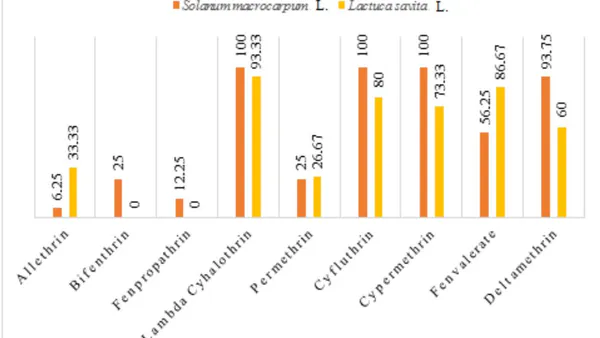
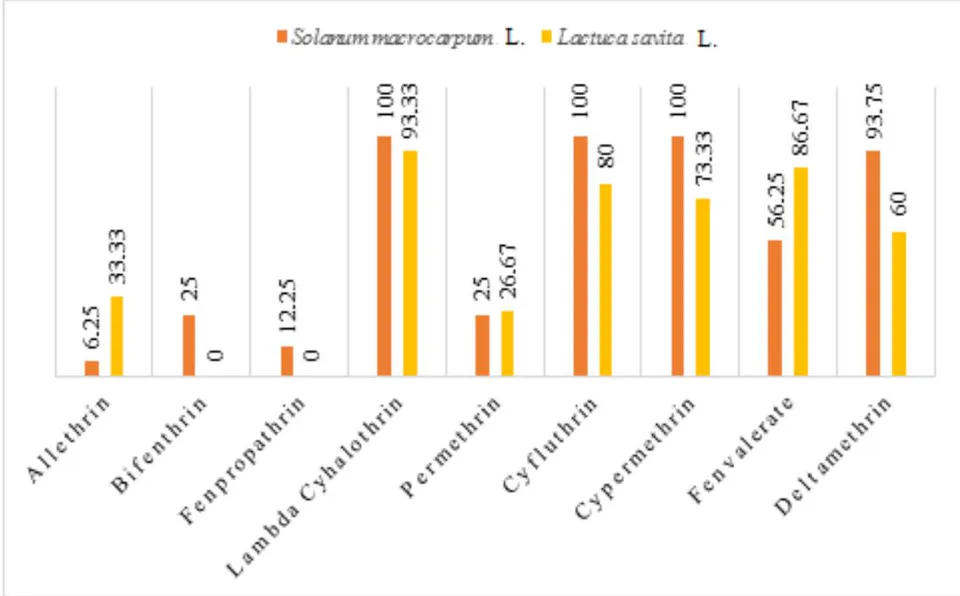
Figure 1 shows the frequencies of appearance of Pyr residues in the vegetable samples analyzed. From the analysis of the data in Figure 1 it is noted that the residues of bifenthrin and fenpropathrin were not detected in the samples of Lactuca sativa L. On the other hand, these residues are found at frequencies of 25% and 12.5% respectively in Solanum macrocarpum L. samples. The residues of permethrin and allethrin are the least predominant in the two varieties of vegetables. They were detected at proportions of 6.25% and 25%, respectively, in the samples of Solanum macrocarpum L. While in Lactuca sativa L. samples, these proportions were 26.67% and 33.33%.
Deltamethrin residues were found in proportions of 60% and 93.75%, respectively, in the Lactuca sativa L. and Solanum macrocarpum L. samples. Fenvalerate was found to be 86.67% in the Lactuca sativa L.
samples. L. and 56.25% in samples of Solanum macrocarpum L. Cypermethrin, cyfluthrin and lambda cyhalothrin were found in all samples of Solanum macrocarpum L. and Lactuca sativa L. at frequencies greater than 73.33%.
d) Maximum Residue Limit of Pyrethroids residues in Solanum macrocarpum L. and Lactuca sativa L.
Table 3 presents the Maximal Residue Level (MRL) and the percentage of the residues which the level are exceeded the limit.
Among Pyr residues analyzed, only three residues levels are above EU MRLs of European Union [12]. These residues are lambda cyhalothrin and cypermethrin in Solanum macrocarpum L.; lambda cyhalothrin and fenvalerate in Lactuca sativa L. Among Pyr residues which the concentration levels were above MRLs, only lambda cyhalothrin concentration was detected in 7/16 case (43.75%) in Solanum macrocarpum L. and 7/15 case (40%) in Lactuca sativa L. Fenvalerate concentration found in Lactuca sativa L. was above MRLs in 3/15 case (20%).
| Pyrethroids Residues | Solanum macrocarpum L. | Lactuca Sativa L. | ||
| Range | Mean±SD | Range | Mean±SD | |
| Allethrin | ND-0.046 | 0.003-0.011 | ||
| Bifenthrin | 0.001-0.020 | ND | ND | |
| Fenpropathrin | 0.002-0.007 | ND | ND | |
| Lambda Cyhalothrin | 0.067-2.127 | 0.017-1.713 | ||
| Permethrin | 0.003-0.014 | 0.001-0.027 | ||
| Cyfluthrin | 0.002-0.098 | 0.001-0.035 | ||
| Cypermethrin | 0.003-1.025 | 0.003-0.021 | ||
| Fenvalerate | 0.001-0.018 | 0.003-0.049 | ||
| Deltamethrin | 0.003-0.028 | 0.002-0.011 | ||
| Pyrethroids residues | Solanum macrocarpum L. | Lactuca sativa L. | p-value | |||
| EU MRL mg/kg | % of Solanum macrocarpum L. > EU MRL | EU MRL mg/kg | % of Lactuca sativa L. > EU MRL | |||
| Allethrin | -- | -- | -- | -- | -- | -- |
| Bifenthrin | -- | -- | 0.01 | 0 | -- | -- |
| Fenpropathrin | 0.01 | 0 | 0.5 | 0 | -- | -- |
| Lambda Cyhalothrin | 0.2 | 43.75 | 0.5 | 40 | 0.023 | 0.879 |
| Permethrin | 0.05 | 0 | 0.05 | 0 | -- | -- |
| Cyfluthrin | -- | -- | 1 | 0 | -- | -- |
| Cypermethrin | 0.7 | 6.25 | 2 | 0 | 0.00108 | 0.974 |
| Fenvalerate | 0.02 | 0 | 0.02 | 20 | 1.624 | 0.202 |
| Deltamethrin | 0.2 | 0 | 0.5 | 0 | -- | -- |
e) Level of Organophosphorus Pesticides in Solanum macrocarpum L. and Lactuca sativa L.
As previously reported, the mean total concentration of Op found in Solanum macrocarpum L. is higher than the mean total concentration found in Lactuca sativa L., as indicated in Figure 2. But the difference is not statistically significant .
f) Range, mean±SD of Organophosphorus Found in Solanum macrocarpum L. and Lactuca sativa L.
Table 4 show minimum, maximum, mean ± standart deviation of Op found in Solanum macrocarpum L. and Lactuca sativa L.
For the Op, contamination levels ranged from non-determined (ND) to 4.809 mg/kg in the samples of Solanum macrocarpum L. and ND at 1.095 mg.kg in the
Lactuca sativa L samples. These high concentrations were recorded for the residues of dimethoate and chlorpyrifos, respectively. The average residues of Op vary from mg/kg for fonofos at mg/kg for Malathion in Solanum macrocarpum L. On the other hand, in Lactuca sativa L. These mean concentrations per residue vary from mg/kg for the diazinon at mg/kg for chlorpyrifos.
In Solanum macrocarpum L. the two Op residues were not detected in all samples. These are diazinon and fonofos. In contrast, in Lactuca sativa L. residues of diazinon, ethoprofos, and parathion-ethyl were not detected in all samples. This finding shows that several Op molecules at varying doses are used on sites to control crop pests.
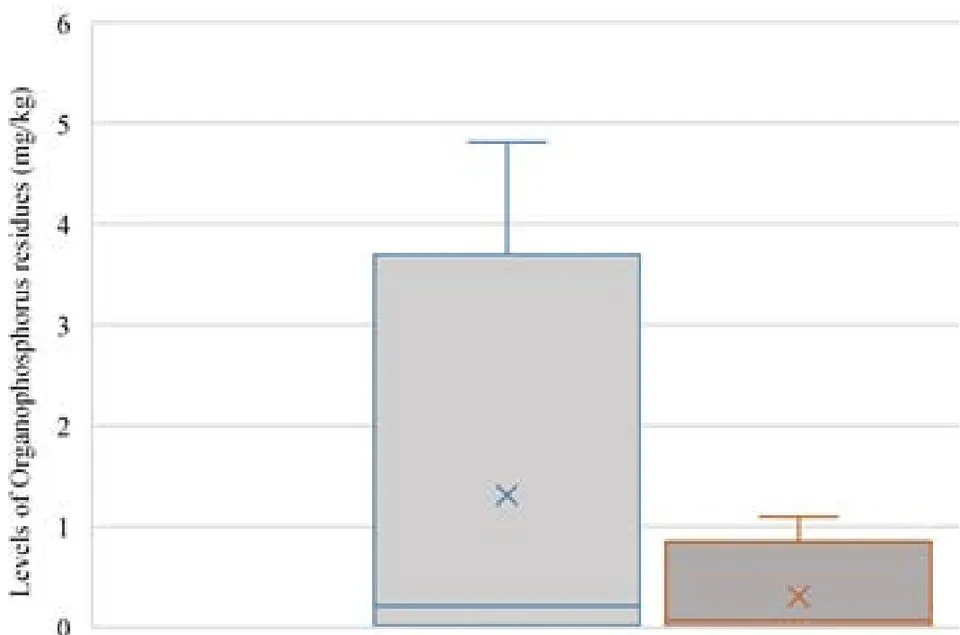
Figure 2: Mean of total concentration of Organophosphorus in Solanum macrocarpum L. and Lactuca sativa L. Table 4: Pesticides residues concentrations in the tested vegetables (mg/kg) Organophosphorus ResiduesSolanum macrocarpum L.Lactuca sativa L.Range (mg/kg)Mean±SD (mg/kg)Range (mg/kg)Mean±SD (mg/kg)Methamidophos0.011-0.014 0.008-0.016 Ethoprofos0.006-0.011 ND-0.007 DiazinonND-0.232 ND-0.011 FonofosND-0.01 0.009-0.012 Dimethoate0.026-4.809 0.025-0.034 Pirimiphos-methyl0.009-0.028 0.008-0.014 Chlorpyrifos0.015-0.704 0.025-1.095 Malathion0.011-0.557 0.017-0.266 Fenitrothion0.021-0.03 0.023-0.025 Parathion-ethyl0.01-0.015 ND -- Chlorfenvinp0.017-0.02 0.014-0.017 Profenofos0.006-0.353 0.007-0.329 Year 2018
| Organophosphorus Residues | Solanum macrocarpum L. | Lactuca sativa L. | ||
| Range (mg/kg) | Mean±SD (mg/kg) | Range (mg/kg) | Mean±SD (mg/kg) | |
| Methamidophos | 0.011-0.014 | 0.008-0.016 | ||
| Ethoprofos | 0.006-0.011 | ND-0.007 | ||
| Diazinon | ND-0.232 | ND-0.011 | ||
| Fonofos | ND-0.01 | 0.009-0.012 | ||
| Dimethoate | 0.026-4.809 | 0.025-0.034 | ||
| Pirimiphos-methyl | 0.009-0.028 | 0.008-0.014 | ||
| Chlorpyrifos | 0.015-0.704 | 0.025-1.095 | ||
| Malathion | 0.011-0.557 | 0.017-0.266 | ||
| Fenitrothion | 0.021-0.03 | 0.023-0.025 | ||
| Parathion-ethyl | 0.01-0.015 | ND | -- | |
| Chlorfenvinp | 0.017-0.02 | 0.014-0.017 | ||
| Profenofos | 0.006-0.353 | 0.007-0.329 | ||
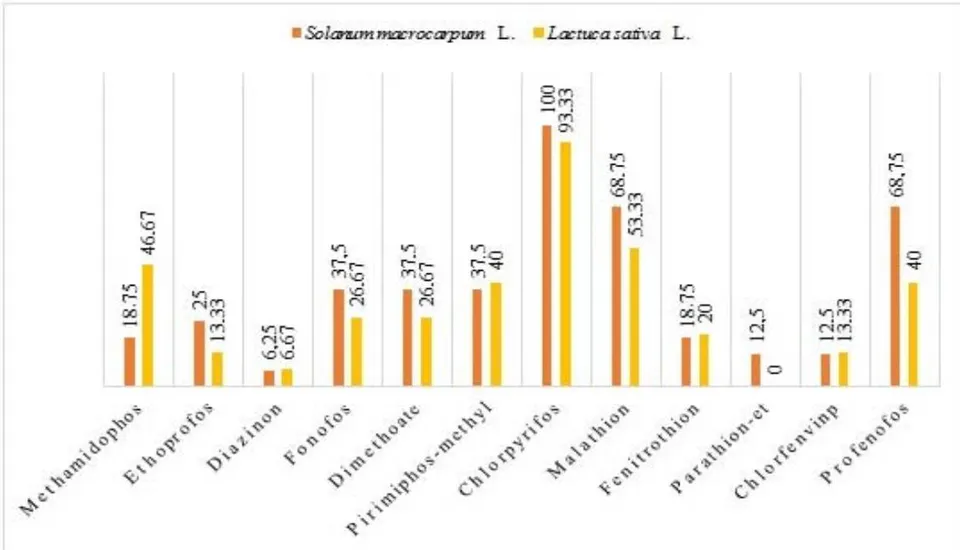
g) Frequency of Organophosphorus in Solanum macrocarpum L. and Lactuca sativa L.
A total of twelve Op molecules were searched in two varieties of vegetables as Solanum macrocarpum L. and Lactuca sativa L. Among the Op residues detected in the vegetable samples, parathion ethyl was not found in Lactuca sativa L. but it was found in low proportion in Solanum macrocarpum L. (12.5%). Similarly residues such as methamidophos ethoprofos, diazinon, dimethoate, fenitrothion, chlofenphos are also found in proportions of less than 30% in all the studied vegetables. On the other hand, residues of chlorpyrifos, malathion and profenofos are the most ubiquitous with proportions varying between 53 and 100%, as indicated in Figure 3.
h) Maximum Residue Limits of Organophosphorus Residues in Vegetables and Percentage of Its above MRLs
Table 5 presents the MRLs and the percentage of the Op residues which the level are exceeded the limite.
Among Op residues analyzed in Solanum macrocarpum L, only three residues level were below EU MRLs . These residues are methamidophos, ethoprofos and parathion ethyl. The concentration of the rest was found at the level above EU MRLs at different proportion; diazinon (6.25%), chlofenvinp (12.5%), fenithrotion (18.75%), dimethoate, (25%), pirimiphos methyl (25%), profenofos (50%) malathion (56.25%) and chlopyrifos (75%).
| Solanum macrocarpum L. | Lactuca sativa L. | p-value | ||||
| EU MRL | % of Solanum macrocarpum L. > EU MRL | EU MRL | % of Lactuca sativa L.> EU MRL | |||
| Methamidophos | 0.01 | 0 | 0.01 | 26.67 | 2.813 | 0.093 |
| Ethoprofos | 0.02 | 0 | 0.02 | 13.33 | 0.606 | 0.436 |
| Diazinon | 0.01 | 6.25 | 0.01 | 0 | 0.00108 | 0.974 |
| Fonofos | -- | -- | -- | -- | -- | -- |
| Dimethoate | 0.02 | 25 | 0.02 | 26.67 | 0.093 | 0.761 |
| Pirimiphos-methyl | 0.01 | 25 | 0.01 | 26.67 | 0.093 | 0.761 |
| Chlorpyrifos | 0.05 | 75 | 0.05 | 53.33 | 0.782 | 0.376 |
| Malathion | 0.02 | 56.25 | 0.02 | 46.67 | 0.030 | 0.862 |
| Fenitrothion | 0.01 | 18.75 | 0.01 | 20 | 0.135 | 0.714 |
| Parathion-ethyl | 0.05 | 0 | 0.05 | 0 | -- | -- |
| Chlorfenvinp | 0.01 | 12.5 | 0.01 | 13.33 | 0.218 | 0.641 |
| Profenofos | 0.01 | 50 | 0.01 | 20 | 1.874 | 0.171 |
For Op residues analyzed in Lactuca sativa L, only two residues level were below MRLs of EU [13]. These residues are diazinon and parathion ethyl. The concentration of the rest were found at the level above EU MRLs in different proportion; ethoprofos and chlofenvinp (13.33%); fenithrotion and profenofos (20%); dimethoate, pirimiphos methyl and methamidophos (26.67%); malathion (46.67%) and chlopyrifos (53.33%).
IV. Discussion
The investigation about Op and Pyr pesticides in two vegetables (Solanum macrocarpum L. and Latuca sativa L.) grown in southern Benin, revealed that all the Op pesticides studied were found in Solanum macrocarpum L. leaves.
On the other hand, parathion-ethyl wasn't detected in Lactuca sativa L. The levels of Op residues ranged from no determined (ND) to 4.81 mg/kg in Solanum macrocarpum L. with mean of 0.065 ± 0.360 mg/kg. In Lactuca sativa L. the highest level detected is 1.1 ppm with mean of 0.025 ± 0.106 mg/kg. The Op residues are methamidophos, ethoprofos, diazinon, fonofos, dimethoate, pirimiphos-methyl, fenitrothion, parathion-ethyl, chorfenvinphos, malathion, chloropyrifos and profenofos. Comparing our results with other studies, we note that diazinon was detected in vegetables in the range of 0.066 to 1.84 mg/kg [13].
These levels of contamination are superior to our finding which the ranges for this residue is ND to 0.232 mg/kg in solanum macrocarpum L. and ND to 0.011 mg/kg in Latuca sativa L. [13]. For these two studies, the levels of diazinon in vegetables exceed the EU MRLs of 0.01 mg/kg. Quintero et al. [14] also found similar results in vegetables. Contrary to our results, chlorpiryfos was found in Thailand at a concentration of 0.008 mg/kg in Latuca sativa L. [15]. This level of contamination is lower than the EU MRLs which is still 0.05 mg/kg. These findings show that Op pesticides are widely used in market gardening in the world. In the present study, chlorpiryfos, malathion and profenofos were detected at a high frequency with levels above the EU MRLs (Table 5). Our results corroborate with of Wanwimolruk et al. [16] who found in 34 samples of Chinese cabbage tested, chlorpyrifos (7.2-37.700 ppb), dimethoate (0.5-239 ppb) and profenofos (0.5-183.000 ppb). In this study, the proportion of samples with contamination levels above the MRLs is 29% [16]. In addition, the analysis of cauliflower samples revealed the presence of Op residues such as chlorpyrifos and profenofos. However, none of the samples contained residues above their respective MRLs [17]. The analysis of tomato from Ghana revealed the presence of malathion in 50% of the samples at an average concentration of mg/kg while dimethoate was found in samples at a rate of 15%. Its average concentration in the samples was mg/kg [18]. Malathion and dimethoate levels in the tomato samples were higher than the EU MRLs [18]. These levels of contamination, which are sometimes found below the MRLs, are due to the washing of the leaves of the vegetables concerned either during watering or during rain season and do not contradict the massive use of Op.
For Pyr, we studied allethrin, bifenthrin, fenpropathrin, lamda cyhalithrin, permethrin, cyfluthrin, cypermethrin, fenvalerate, and deltamethrin residues. The average concentrations found are respectively mg/kg in Solanum macrocapum L. and mg/kg in Lactuca sativa L. Allethrin has no MRLs for the vegetable samples studied. Among bifenthrin, fenpropathrin and permethrin which have EU MRLs for the samples studied, they were detected in low frequency, without exceeding above EU MRLs. Akomea-Frempong et al. [13] also detected bifenthrin in vegetable (lettuce and cabbage) samples at an average concentration of 0.034 mg/kg. Bempah et al. [19] found permethrin in lettuce at a concentration range of 0.011 to 0.035 mg/kg with an average of 0.030 ± 0.009 mg/kg. This range of concentrations is higher than the level of permethrin we found in our samples of Lactuca sativa L. (0.001-0.027 mg/kg). For both studies, contamination levels of Lactuca sativa L. samples with permethrin are below the EU MRLs. Our levels of bifenthrin are lower than those found by González-Rodríguez et al. [20] who reported bifenthrin concentrations in lettuce of 0.02 to 0.05 mg/kg in Spain. Fenpropathrin was also detected in cucumber and tomato samples from Egypt at concentrations of 0.04 and 0.079 mg/kg, respectively (0.021-0.03 mg/kg) in Solanum macrocarpum L and (0.023- 0.025 mg/kg) in Lactuca sativa L. for this study [21]. These concentrations of fenpropathrin detected in the cucumber and tomato samples are higher than those we detected in our vegetables [21]. Permethrin, allethrin was found in eggplant in Ghana. Their respective mean concentrations are 0.003 mg/kg for Permethrin and 0.126 ± 0.018 mg/kg for allethrin [18]. In contrast, for the present study, Permethrin was detected in Solanum macrocarpum L. samples between 0.003 and 0.014 mg/kg. While in Lactuca sativa L. its concentration varies between 0.001 and 0.027 mg/kg. As for allethrin, it was detected between ND and 0.046 mg/kg in Solanum macrocarpum L. and 0.003 and 0.011 mg/kg in Lactuca sativa L. Permethrin was detected in 35% of the eggplant samples whereas in our case it was detected in 25% of the samples of Solanum macrocarpum L. and 27% in Lactuca sativa L. allethrin was detected in 100% of the samples [18]. In the present study, however, it is found only at 6.25% in the samples of Solanum macrocarpum L. and 33.33% in the samples of Lactuca sativa L. In contrast to our results, the residues of permethrin found in eggplant samples in Ghana were lower than the EU MRLs [19]. In contrast, consistent with our results, allethrin residues in the same samples exceeded the MRLs [18].
Our results are confirmed by Diop et al, [22]. who found lambda cyhalothrin in lettuce from different farms sites of Senegal. The mean of it concentration is 0.222 mg/kg and it range is ND and 1.306 mg/kg. Less than 50% levels of lambda cyhalothrin found in lettuce samples are above EU MRLs.
All these observations show that Op and Pyr are massively used in market gardening in the world for pests control in farming. Their use is not without consequence on the sanitary quality of the vegetables whose contamination levels vary as well according to the residues and the cultures with contents sometimes exceeding the maximum limits in residues. From the nutritional point of view, the level of Pyr and Op residues found in Solanum macrocarpum L. and Lactuca savita L. samples at level above EU MRLs pose public health problem. Exposure to pesticides through a mouth is a major way for the people which aren't farm workers and don't live close to the vegetables fields. Many studies shown the health risk associated with the consumption of vegetables contaminated by pesticide residues [23,24,25,26].
This problem is especially encountered in poor countries by the proliferation of illegal trade in plant protection products, which are sometimes prohibited.
V. CONCLUSION
This study evaluates the contamination levels of Op and Pyr pesticides in vegetable crops in southern Benin revealed their presence at various concentrations showing their massive use in market gardening in southern Benin. The most detected residues are Pyr (lambda cyhalothrin) and Op (chlorpyrifos). By comparison of levels of residues with EU MRLs, lambda cyhalothrin, fenvalerate, diazinon, chlorfenvinp, fenitrothion, dimethoate, pirimiphos methyl, profenofos, malathion and chlorpyrifos were detected in samples of Solanum macrocarpum L. and/or Lactuca sativa L. at levels above the MRLs. These observations show that the use of pesticides in market gardening affects the sanitary quality of leafy vegetables such as Solanum macrocarpum L. and Lactuca sativa L. More studies should be done on quantifying these pesticide residues in other plants grown in Benin.