I. INTRODUCTION
For more than a century, the Big Bang theory has been considered a valid model by science. However, various historical gaps have not been overcome, and new doubts arise as the theory is disseminated in academic and educational settings worldwide. The fact that it is widely accepted does not imply that it is unquestionably true, nor that the universe originated exactly as proposed by it.
Moreover, a scientific theory must be supported by empirical evidence that favors it. The evidence that once reinforced the Big Bang now also supports new theories, such as the "Dead Universe" theory discussed in this article. The Big Bang theory is undeniably a well-accepted model, but the cosmological model of the Dead Universe theory may prove inevitable. The validity of this new theory can be more clearly demonstrated through technological advancements and mathematical calculations in the field of quantum computing rather than merely through the work of astrophysicists seeking precision to corroborate the theory.
Before Edwin Hubble made his mark on the study of the cosmos, Alexander Friedmann and Georges Lemaitre had already established the theoretical foundation that would challenge the prevailing conceptions of the universe. In 1922, Friedmann, a Russian mathematician, pioneered the application of relativity theory equations to predict an expanding universe, an idea initially met with skepticism. In parallel, in 1927, the Belgian priest and astronomer Georges Lemaitre independently proposed a similar model that included the notion of a "primordial atom" — the theoretical precursor of what would later be known as the Big Bang.
In the scenario prepared by these visionary minds, Edwin Hubble emerged as a transformative figure. Throughout his career, he dedicated himself to studying the redshift of galaxies, a phenomenon he highlighted through meticulous observations. In 1929, Hubble published his results, establishing a direct relationship between redshift and the apparent brightness of galaxies, corroborating and expanding the theories of Friedmann and Lemaître.
This discovery, known as Hubble's Law, transcended existing theoretical models and transformed the concept of the expanding universe from a mere mathematical abstraction into an empirically verifiable reality. With this contribution, Hubble not only reinforced the work of his predecessors but also inaugurated a new era in cosmology, where the idea of a dynamic and expanding universe became a central pillar in modern understanding of space and time.
Hawking (1988) postulated that Hubble's observations suggested that there was a moment, called the Big Bang, when the universe was infinitesimally small and infinitely dense. Under such conditions, all laws of science, and therefore all ability to predict the future, would fail. If there were events before this moment, they could not affect what happens in the present. Their existence could be ignored because they would have no observational consequences. One could say that time began at the Big Bang, in the sense that earlier times simply would not have a definition [1]. Hawking, S. (1988). A Brief History of Time.
II. THE DEAD UNIVERSE THEORY HYPOTHESES
The hypotheses of the "Dead Universe" suggest an alternative cosmological model. It explores the origin and evolution of our universe from the chaos of a pre-existing universe. This previous universe would be composed of exotic and hypothetical shadow elements. According to this theory, this "dead universe" would be billions of times larger than our observable universe. It would be mainly composed of dark matter, dark energy, and hypothetical particles such as axions and UNO (A New Order of invisible particles).
At the beginning of the Book of Genesis, we find a fundamental description of the universe's creation that offers an interesting perspective on the origin of light relative to darkness:
The connection to the Dead Universe Theory is evident: both in theology and science, light emerges as an anomaly in an originally dark and chaotic cosmos. From the perspective of the Dead Universe, the light and energetic activity we observe today (such as in stars and the Sun) can be seen as interruptions in a universe that, in its essence, is inert and somber. This cosmological paradigm proposes that, as in the Genesis account, light is not a constant but an exception — a temporary and anomalous phenomenon in a universe that is, by nature, dark.
Two hypotheses are advanced within the framework of the "Dead Universe" theory. Initially, the term "dead" is redefined, transcending the traditional notion of stellar extinction, to denote a universe whose fundamental characteristic since its inception is the intrinsic absence of light. In this model, light is considered a cosmic anomaly arising from fusion and collision events between supermassive bodies within the expanse of a primordial dark universe. Furthermore, this theory asserts that black holes and fusions are not the creators of the universe in which we reside.
The first hypothesis postulates that phenomena such as supermassive black holes, dark energy, and dark matter constitute the elementary components of this primordial universe. Interestingly, light appears under specific circumstances, possibly as a byproduct of complex gravitational interactions, acting as a catalyst for the transition to an illuminated cosmos similar to what we observe today.
The second hypothesis proposes that an ancestral universe, vastly larger than the currently known cosmos, serves as the final relic for the death that devastated all galaxies and extinguished the light of a once vibrant universe. This predecessor universe could provide crucial evidence of cosmological processes that culminated in the current observable state of the universe.
The Dead Universe, in its nature, may be composed of Axion particles and possibly the UNO particle proposed in the article (Almeida, J. (2024) The "Dead Universe" Theory: Natural Separation of Galaxies Driven by the Remnants of a Supermassive Dead Universe. Natural Science, 16, 65-101. doi: 10.4236/ns.2024.166006.). This perspective proposes an inevitable break from the conventional Big Bang theory, particularly concerning dark matter, the expansion of the universe, and the interpretation of phenomena such as gravitational waves.
After the collapse of this vast cosmos, without light and in chaos, matter and light emerged from the darkness as cosmic anomalies. These anomalies compose the primitive reality of this dead universe, characterized by black holes. In its remote origins, this universe exists in a vast darkness where inactivity prevails. However, it still influences phenomena such as the separation of galaxies under the laws of the dead universe.
Within this cosmic abyss, complex and highly improbable fusions occurred. These fusions involve interactions between axions, UNO particles, and other exotic components. They were born from extreme conditions and a rare convergence of energies. They resulted in small ruptures in the structure of the dead universe, giving rise to luminous phenomena and the matter we know.
These ruptures, though anomalous and limited in scope, were powerful enough to create bubbles of existence. Our observable universe is one of these bubbles, encapsulated within a black hole of this dead universe.
These fusions are not simple events but intricate processes that defy conventional laws of physics. They occur in a scenario where the collapse of space-time allows exotic particles to merge in ways that would normally be impossible. The resulting light and matter are seen as byproducts of these anomalous cosmic fusions. They represent exceptions in a predominantly dark and stagnant universe. In essence, these fusions act as resurgence mechanisms within a dead system, where life and light are only brief flashes in a vast sea of darkness.
Theories such as the Antiuniverse, Multiverse, Universe as an Information Processor, Big Rip, Big Freeze, Hubble's Theory of Universe Expansion, and even Albert Einstein's Theory of General Relativity depend on the Big Bang model for their support. The Big Bang has served as the foundation for these theories for many years, providing an essential theoretical base.
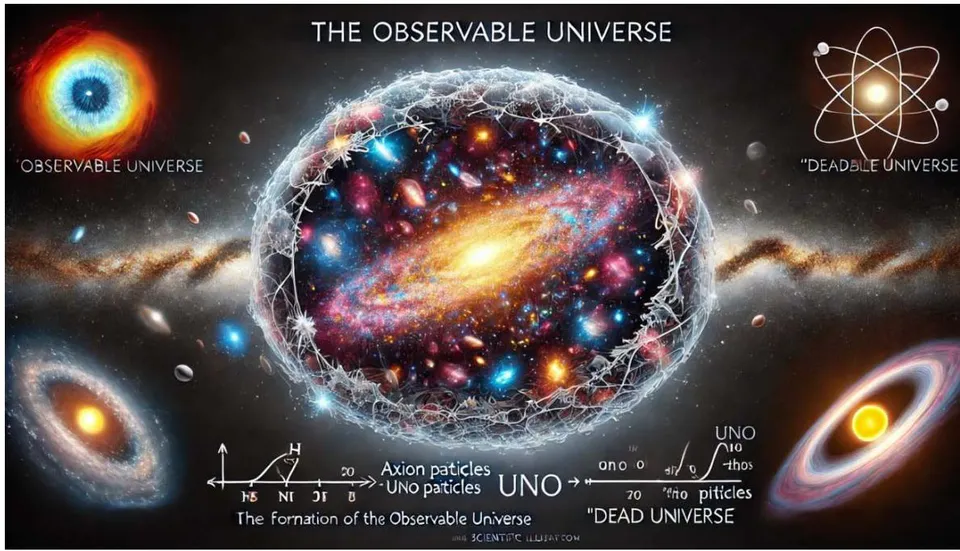
"The cold axion population is produced in the process of axion field relaxation, commonly called vacuum realignment. The key point is that when the axion mass becomes larger than the inverse age of the universe at that time, the axion field is not initially at the minimum of its effective potential. It then begins to oscillate, and since the axion is very weakly coupled, these oscillations do not dissipate into other forms of energy. The energy density in relic axion field oscillations is a form of cold dark matter (Ipser and Sikivie, 1983). In fact, among all widely considered dark matter candidates, axions are the coldest." — Sikivie, Pierre. [1]
III. FOUNDATIONS FOR AN ASTROPHYSICS OF SHADOWS AND THE ORIGINS OF THE DEAD UNIVERSE
On the other hand, the Dead Universe Theory directs us to experiments through simulations with greater rigor, especially regarding the new generation of astrophysicists who are working with the support of quantum computing. As a proposed model, the Dead Universe Theory proves adequate and capable of establishing itself solidly on the evidence and observations. These technological advances enable simulations and models that reveal new perspectives on the formation and evolution of the universe.
Unlike other theories that face difficulties in reconciling quantum and relativistic concepts, the Dead Universe Theory not only aligns with general relativity and quantum mechanics but also strengthens them. It offers a new view of the universe's expansion and the nature of galaxies, providing a more comprehensive and cohesive explanation for phenomena like the cold spot of the universe that traditional theories cannot fully explain.
Recent observations by the James Webb Space Telescope of galaxies that are "dead" provide empirical evidence of a stellar death escalation in the past cosmos, which may support the theory that soon we may discover a universe much larger than the observable one in the depths of darkness. A secondary hypothesis of this theory posits that our universe is inherently dead and that light is a cosmic anomaly
resulting from cataclysmic mergers that gave rise to the luminous and living universe as we know it today.
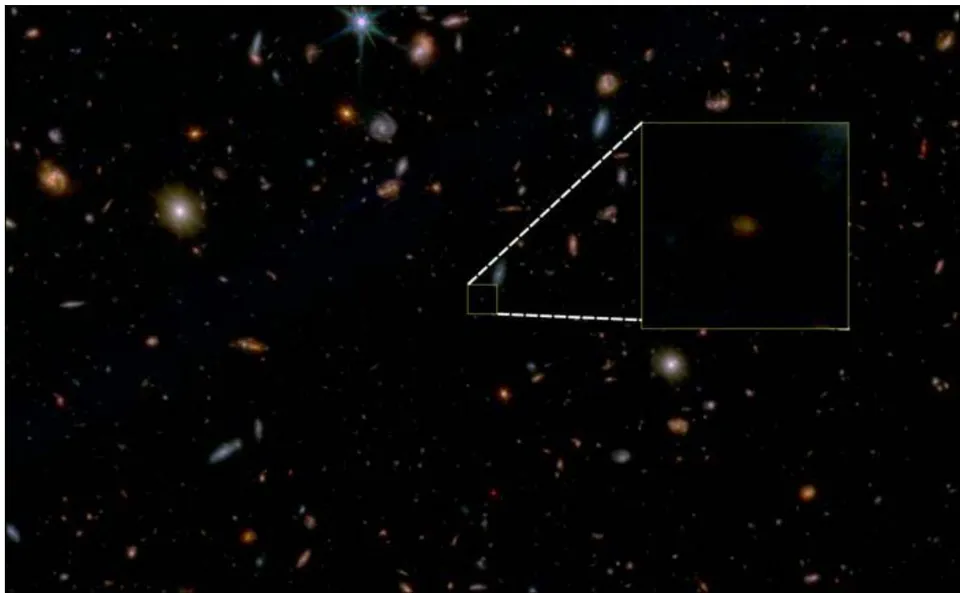
Image: JWST false-color image of a small fraction of the GOODS-South field, highlighting JADES-GS-z7-01-QU, an extremely rare type of galaxy. Credit: JADES Collaboration License: Public Domain In light of the "Dead Universe" theory, where darkness precedes light, the biblical references to God's association with darkness can be viewed through a scientific and cosmological lens. When Solomon states in 2 Chronicles 6:1, "The Lord said that He would dwell in thick darkness," and Psalm 18:11 mentions, "He made darkness His hiding place; His canopy around Him was dark waters and thick clouds of the skies," these verses can be interpreted as metaphors for the primordial state of the cosmos.
The "Dead Universe" theory suggests that before the emergence of light, the universe existed in a state of total darkness—a condition that, far from being merely the absence of light, represents the original and fundamental nature of the universe. This darkness, much like the biblical portrayal, embodies mystery, power, and the incomprehensible nature of the universe's origins. Just as God's presence in darkness signifies His transcendence and inaccessibility, the darkness of the early universe can be seen as a state of potential, where the laws and conditions that govern our cosmos were hidden and unfathomable until the anomaly of light emerged, bringing forth the observable universe.
In this context, the thick darkness that surrounds God may symbolize the primordial universe—a vast, enigmatic realm of potentiality, where the principles that would eventually give rise to light and matter were concealed within the depths of cosmic darkness. Thus, the scriptural portrayal of God dwelling in darkness aligns with the scientific notion that the universe's origins are rooted in a dark, hidden state, from which light and creation eventually emerged.
These biblical passages dialogue with contemporary theories about the universe, suggesting that the cosmos' primordial state—characterized by darkness and chaos—is both a scientific reality and a religious perception.
Beyond the conventional view that supports the natural paradigm of the universe in its current state, a second hypothesis can be considered. This second perspective, grounded in the theory of the Dead Universe, proposes an alternative interpretation of celestial phenomena, including the behavior of stars.
As we gaze upon the Sun and other stars, it's hard not to ponder the strangeness of their apparent frenzied activity. The intense emissions of light and radiation emanating from these celestial bodies may appear incompatible with the conception of a dead and inert universe. However, by embracing the theory of the Dead Universe, we can perceive this activity as an anomaly that precipitated the existence of the universe as we comprehend it.
Within the framework of the Dead Universe theory, two hypotheses hold sway. The first postulates a universe in its natural state of death, wherein light would be regarded as an alien presence amidst the otherwise dormant cosmos. The second hypothesis introduces a grander notion: a universe trillions of times larger than our current one, which gradually slipped into a continual state of death. In this expansive cosmos, comprised of light and normal stars, the very essence of existence was altered, manifesting a state where light and stellar phenomena were commonplace. By delving into these hypotheses, we are compelled to reevaluate our understanding of cosmic phenomena. Rather than mere aberrations, they become enigmatic clues, hinting at the profound intricacies of the universe's genesis and its potential demise.
According to the Dead Universe theory, the natural state of the cosmos would be one of total inactivity, without the presence of bright stars, solar flares, or any other form of radiant energy. In this paradigm, starlight and the energetic events associated with it would be seen as unusual disturbances in a universe that would otherwise remain in a state of eternal calm.
Solar flares, coronal mass ejections, and other stellar phenomena would be interpreted as temporary deviations from the inert equilibrium that characterizes the Dead Universe. These manifestations of extreme energy activity would be considered anomalies that arose from exceptional conditions or catastrophic events within this supposedly static universe.
Therefore, by embracing the Dead Universe theory, we are led to reassess our understanding of starlight and celestial phenomena. Instead of being viewed as natural aspects of the cosmos, they become signs of a fundamental disruption that gave rise to the universe as we know it. This alternative perspective challenges our conventional perception and invites us to explore new ways of understanding the nature and origin of the cosmos.
Anomaly of Light: Light, a fundamental manifestation of electromagnetic energy, occupies a pivotal role in the physics of the universe as we know it. To propose that light is an anomaly in this theory is not simply to invoke complexity; rather, it offers answers to some of the most profound questions in classical physics. This approach does not just reinterpret established physical concepts but also proposes a new way to understand the nature of the universe.
The creation of light in stars is a complex process that primarily occurs through thermonuclear reactions in their cores.
Nuclear Fusion: The primary mechanism for creating light in stars is nuclear fusion. In the stellar core, especially in stars like the Sun, hydrogen atoms are fused to form helium in a process called nuclear fusion. During this fusion, a small fraction of the atoms' mass is converted into energy according to the famous equation by Einstein, . This energy is released in the form of light and heat.
Pressure of Radiation and Gravitational Pressure: Within a star, nuclear fusion generates an immense amount of energy in the form of radiation and high-energy particles. This radiation exerts an outward pressure in all directions. Simultaneously, the star's massive mass creates a significant gravitational attraction, attempting to compress it toward the center. Hydrostatic equilibrium occurs when these two forces - radiation pressure outward and gravity inward - balance each other.
Fusion Cycle: In the sun and other stars of similar size, the primary fusion process is the proton-proton cycle, where four hydrogen nuclei combine to form a helium nucleus, releasing photons (light particles) in the process.
Gravitational Pressure: Nuclear fusion only occurs in stars due to the immense gravitational pressure in their cores, which forces the hydrogen nuclei to approach close enough to overcome the electrical repulsion between them and allow fusion.
Hydrostatic equilibrium: The light generated by nuclear fusion exerts an outward pressure, balancing the force of gravity that is trying to compress the star. This hydrostatic equilibrium keeps the star stable and in its current state.
Pressure of radiation and gravitational pressure: Within a star, nuclear fusion generates an immense amount of energy in the form of radiation and high-energy particles. This radiation exerts an outward pressure in all directions. At the same time, the massive mass of the star generates a significant gravitational attraction, attempting to compress it toward the center. Hydrostatic equilibrium occurs when these two forces - radiation pressure outward and gravity inward - balance each other.
Stellar stability: When hydrostatic equilibrium is achieved, the star becomes stable. Any disturbance that causes an imbalance between radiation pressure and gravity will result in changes in the stellar structure. For example, if radiation pressure decreases, gravity will begin to compress the star, increasing pressure and temperature at its core. This may lead to an acceleration in the rate of nuclear fusion to restore equilibrium. On the other hand, if radiation pressure becomes too intense, it can overcome gravity and expand the star, resulting in an eventual explosion or ejection of stellar material.
Stellar lifecycle: Hydrostatic equilibrium is crucial to understanding the lifecycle of stars. For most of their lives, stars maintain this equilibrium, remaining stable and generating energy through nuclear fusion. However, as nuclear fuel is consumed, radiation pressure decreases and gravity begins to dominate. Depending on the mass of the star, this can result in different fates, such as transformation into a red giant, supernova, or even a black hole.
Dynamic equilibrium: It is important to note that hydrostatic equilibrium is not a static state but rather a dynamic balance. Conditions within a star are constantly changing due to energy production, movement of stellar material, and other physical interactions. However, hydrostatic equilibrium is essential to ensure that these changes occur in a controlled and balanced manner, keeping the star relatively stable throughout its life.
The premise that, in the origins of the universe, light was not present; it was created subsequently. Whether according to the belief of creationists, who suggest that the universe was shrouded in darkness and that God said "let there be light," or from the scientific perspective of these primordial events, it is undeniable that darkness preceded light.
Primitive Elements: While black holes, dark matter, and dark energy are well-established concepts in modern cosmology, they are generally regarded as emergent phenomena and not necessarily as primordial components of the universe. Nevertheless, the dead universe theory provides a plausible explanation for their origins, presenting them as fundamental elements of a previously inert cosmos. Although dark matter and dark energy are areas of intense research and debate, with their origins still undefined by consensus, this theory presents one of the first rational approaches attempting to elucidate these enigmatic phenomena.
The "dead universe" theory implies that the cosmos we know is the residual aftermath of a bygone vastness, where the concept of stellar birth is reversed to universal death. In this scenario, black holes are not the catalysts of creation but rather the epitaph of a universe that has expended its vitality. Rather than being generative singularities, these primordial black holes are the remaining gravitational beacons of a cosmos that no longer exists.
The galaxies and stars we observe, in their seeming youthfulness, are actually the embers of a cosmic fire long extinguished.
Dark matter and dark energy, the enigmatic elements of our universe, may be interpreted as the faint echo of this ultimate cataclysmic event.
Among the theories describing the ultimate fate of the universe, hypotheses of the "Big Freeze," "Big Rip," "Big Crunch," and "Big Slurp" suggest dramatic scenarios based on the continuous expansion, contraction, or phase transitions of space-time. However, the theory of the "Dead Universe" presents a more serene and fundamentally different outcome for the cosmos.
IV. UNO AND AXION PARTICLES
Origin: Axions are hypothetical particles initially proposed to solve the CP symmetry violation problem in particle physics, specifically in the context of strong interactions.
Properties: Axions are neutral particles with low mass and weak coupling with ordinary matter and electromagnetic fields. They are considered candidates for cold dark matter due to their ability to interact very weakly with other particles and fields.
Cosmological Implications: As dark matter, axions do not absorb, emit, or reflect light, making them invisible and primarily detectable by their gravitational effects.
a) UNO Particle (New Order of Invisible Particles)
Concept: In this scenario, we assume that the UNO particle is a new form of "neutrino" with universal oscillatory properties, potentially capable of transmitting between different types of mass and energy.
Properties: We suggest that the UNO particle can oscillate between different energy states, possibly allowing the conversion of dark energy into ordinary matter or radiation under certain conditions.
Role in the Universe: The UNO could be a catalyst for converting energy forms in the early universe, influencing the formation of the first galaxies and stars, and possibly acting as a bridge between dark matter and visible matter.
V. INTERACTION BETWEEN AXION AND UNO
The central hypothesis is that at the beginning of the universe, Axion mass particles, forming a dark matter field, began interacting with UNO particles. This interaction could involve the transfer of energy from Axions to UNO particles, resulting in oscillations that convert this energy into electromagnetic radiation—light.
This light could form the basis for the observable universe we know.
The Dead Universe is described as a completely dark space, composed of Axion particles, UNO particles, and dark matter. Additionally, there are dark radiation stars, dark nebulas, and planets immersed in darkness and chaos. These characteristics align with the initial hypothesis of a Dead Universe composed of inert stellar elements. Simultaneously, the second hypothesis suggests that this darkness and chaos result from stellar death on a massive scale. In both scenarios, the Dead Universe remains a vastly unknown structure where life and light are rare exceptions in a predominantly extinguished cosmos.
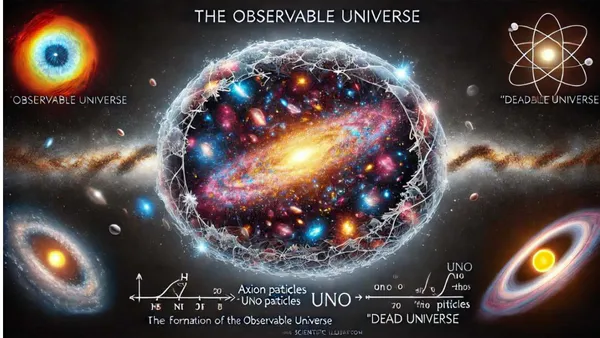
The representation in the image is based on the "Dead Universe" theory, a new interpretation of the cosmos' origin and evolution. This hypothesis suggests that our universe may have originated from the remnants of a previous universe and that we are merely remaining fragments of a cosmos that entered a state of stellar death or that, in its original nature, was essentially dead.
Thus, we inhabit an immense black hole, while countless supermassive bodies are situated on the margins of this Dead Universe. Possibly, supermassive black holes exist, some of which, in a single unit, may be larger than the observable universe.
Behind the primary conception of the Dead Universe, in the sense of stellar death, numerous galaxies are inert. The dating of the Big Bang, estimated at 13.8 billion years, may be reconsidered to understand that the universe's structure may have much more time. Studying these dead galaxies, just as we study dinosaur fossils, and with the help of technology and quantum computing, we may conclude that we have been wrong for more than 100 years. In the second hypothesis, as proposed in this article, the Dead Universe theory assumes a different perspective, while the Big Bang model completely loses its validity as a paradigm for studying this primitive structure. In this hypothesis, the Dead Universe still exists in hypothetical primitive particles, such as UNO, Axion, dark energy, and dark matter.
We can formulate a simplified equation to describe the rate of energy conversion from Axions to light through interaction with UNO particles:
The image above illustrates the theoretical interaction between Axion particles and UNO particles, which could have led to the formation of the observable universe. Axion particles form a dark matter field that, when interacting with UNO particles, results in the conversion of energy into electromagnetic radiation, or light, thus creating the universe we know.
Between the observable universe and the dead universe, there is a layer of plasma composed of Axion particles and another layer of UNO particles. The Axion plasma, which is the origin of the dark matter that forms black holes, acts as a barrier, while the UNO plasma, being invisible, allows for the separation and interaction of the two regions. Within a magnetic field, Axions could generate a small electric field, creating oscillations in the plasma, similar to tuning a radio to find the correct dark matter frequency.
VI. OBSERVABLE UNIVERSE
The observable universe, which is just the last particles of the dead cosmos, is located inside an immense black hole formed from the death of the dead universe that became an entity without light. It is possible that, upon entering a black hole, our universe's fate is a transition to the "dead universe" — an ancient cosmic structure that interacts with the remaining memories of the cosmos, activated by the death of stars and galaxies under its fundamental laws.
Our observable universe, characterized by lights and galaxies, can be seen as a cosmic anomaly, as proposed in the second hypothesis of the Dead Universe Theory. These anomalies result from the initial interaction between Axion particles and UNO particles during the birth of our universe, suggesting that the luminous state in which we exist is an exception in a vastly dark and stagnant cosmos.
In the theory of the "Dead Universe," the observed expansion is not the result of an initial impulse from an explosion, as in the Big Bang, but is seen as a simple distancing of galaxies due to the influence of gravity and other yet-to-be-understood laws emanating from the nature of the "Dead Universe" itself. This movement is interpreted as a manifestation of the intrinsic and residual properties of a cosmos that is no longer active in the traditional sense.
In other words, while Hubble's Law describes what we observe, the theory of the "Dead Universe" attempts to explain why we observe it. It suggests that the unknown laws of the "Dead Universe" may be residual forces or echoes of a previous cosmic reality, which now direct the dynamics of the observable universe. These forces could be different from the known classical gravity and could explain why galaxies continue to move apart even when the original energy of the Big Bang should have dissipated.
Therefore, the expansion would not be a sign of continuous growth or birth, but a gradual return to the quiescent and fundamental state of the "Dead Universe", a final state of rest after the end of anomalies like light and the complex structures that characterize our current universe. Thus, the theory of the "Dead Universe" adds a new layer of understanding to the ultimate fate of the cosmos and offers an intriguing counterpoint to prevailing cosmological theories.
VII. DEAD UNIVERSE
Surrounding the observable universe is the "dead universe," a vast dark region estimated to be a trillion times larger than the visible universe. This universe is predominantly composed of Axion particles, which form dark matter fields, and UNO particles, which are invisible and hypothetical. Stars and planets within this dead universe are formed by dark matter and Axion particles, without emitting luminous radiation, making it completely opaque and dark. The idea is that, upon entering a black hole, we could end up in the dead universe, which is the primordial space from which our observable universe emerged.
The "Dead Universe" theory proposes an alternative view to the traditional concept of an expanding or cyclically regenerating universe. Instead of continuously inflating or undergoing processes of rebirth, the universe is thought to be in a prolonged state of decay, possibly lasting for trillions of years. This perspective suggests that the cosmos is actually slowly retracting and gradually losing its vitality.
From a scientific standpoint, this theory posits that dead galaxies—those that no longer form new stars and whose stellar fusion processes have ceased—are evidence of a dying universe. These now inactive galaxies represent cosmic remnants that have exhausted their fuel for star creation. The stellar formation process that still occurs in some regions of the universe can be seen as the "last breath" of a declining cosmos, replicating its cosmic memories as its energy slowly dissipates.
Supernovae and young stars that still shine in the vast emptiness of the universe are not necessarily signs of vitality but may be understood as remnants of an ancient process, a residual manifestation of what was once a vibrant universe. As time passes, these cosmic events become less frequent, and the universe approaches a state of maximum entropy—where all usable energy is dispersed, and cosmic activity ceases entirely.
In this scenario, the universe is not expanding infinitely, but galaxies continue to move away from each other due to the residual influence of the "dead universe" laws. While we still observe the formation of new stars, the universe, in its essence, is in a state of decline compared to its more remote times. Galaxies are dying and gradually fading, and this process of cosmic death intensifies as time progresses.
The idea that the universe is "losing its breath" suggests that, instead of a future marked by continuous expansion, we are witnessing the final stages of a cosmos inexorably heading toward its extinction. In this process, all light and movement will eventually cease, resulting in a universe where darkness prevails, marking the silent and complete end of all cosmic activity. This vision contrasts with the idea of a vibrant and growing universe, presenting it instead as an organism in its final breaths, replicating traces of its former vitality before ultimately succumbing to total cosmic inactivity.
This view challenges current cosmological interpretations and suggests that, instead of a universe that renews itself, we are observing a universe that is slowly dying, replicating its memories in its last stellar expansions before finally succumbing to total cosmic inactivity.
VIII. INTERACTION BETWEEN AXION AND UNO
The theory suggests that, in the early stages of the universe, Axion particles began to interact with UNO particles. This process involved the transfer of energy from Axion particles to UNO particles, resulting in oscillations that transformed that energy into electromagnetic radiation — light. This phenomenon gave rise to the observable universe, creating the foundation for the existence of the luminous radiation we know today.
IX. COLD SPOT
The image also highlights the "cold spot" of the observable universe, a region where the cosmic microwave background radiation is affected by the presence of the dead universe. This low-temperature region manifests as a "thermal anomaly," caused by the gravitational influence of the dead universe on our visible universe.
The existence of Axions is predicted by physical theories to be produced in extreme environments, such as in stellar cores during events like supernovae. These particles, when emitted by stars into the universe, could briefly interact with surrounding magnetic fields, temporarily converting into photons and potentially becoming detectable.
"In the specific case of Betelgeuse, a red giant star on the verge of becoming a supernova, MIT conducted research to search for axions due to its condition as a 'natural factory' of these particles. Utilizing the NuSTAR space telescope, the researchers searched for axion signatures in the form of X-ray photons but found no detectable signals. These results significantly narrowed the possible characteristics of axions, setting more stringent constraints on their existence and properties."
A search led by MIT for axions from the nearby star Betelgeuse (pictured here) yielded no results, significantly narrowing the search for hypothetical dark matter particles. Credits: Image: MIT News Collage. Image of Betelgeuse courtesy of ALMA (ESO/NAOJ/NRAO)/E. O'Gorman/P. Kervella
The conclusions show that if axions exist, they interact very weakly with photons, making them difficult to detect. The research suggests that future investigations should explore other energy ranges, such as gamma rays, especially in events like supernovae.
However, in 2021, the results of these searches did not detect the expected axion signatures in the form of X-ray photons. These findings indicated that ultralight axions, which could interact with photons across a wide range of energies, were excluded by the research.
Axions, proposed as hypothetical dark matter particles, could explain the composition of of the universe. The theory suggests that stars like Betelgeuse, in their final stages, could function as "natural factories" of axions, which, when interacting with magnetic fields, could convert into detectable photons.
X. UNO HYPOTHETICAL PARTICLE
The UNO particle is conceptualized as the "zero equation" of all particles, representing a primordial state of masslessness. In the initial quantum fluctuations of the universe, the UNO could have manifested as a fundamental entity. This entity, by dividing or interacting with the quantum vacuum, gave rise to all other particles, generating the complexity of the universe we observe today. The axion, being a hypothetical particle with nearly zero mass, can be considered one of the first elements to emerge in the cosmos after the manifestation of the UNO. Although practically undetectable due to its extremely light mass, the axion could have acted as a multiplier, triggering the processes that led to the formation of more complex particles and eventually the structuring of the universe. Combining these concepts, the UNO, by its nature as the "zero equation" (a state prior to what we consider particles), provides the foundation upon which particles like the axion manifested. In this way, the axion could be seen as the first tangible step in the evolution of the cosmos, directly influencing the formation of matter and the expansion of the universe according to contemporary particle physics models. The UNO particle, described as the "zero equation" of all particles, can be understood as a primordial state of perfect symmetry. This state would not be exactly "nothing," but rather a form of infinite potential, containing within it all the possibilities for the manifestation of particles and forces. This concept can be related to the idea of perfect symmetry in particle physics, where the early universe was highly symmetrical, and only after the breaking of this symmetry did particles and forces as we know them emerge. To deepen the concept of how the UNO particle divides or interacts to create other particles, we can compare it to the Higgs Field. The Higgs Field is known for giving mass to particles through interaction with the Higgs boson. Similarly, the UNO could be seen as a fundamental field that, through a "symmetry break," gave rise to other particles, such as quarks, leptons, and bosons. This symmetry break could occur through a process of intense quantum fluctuations in the early moments of the universe. These fluctuations would allow the UNO to "fragment" into various particles, each with its own properties of mass, charge, and interaction. The UNO Particle theory can be integrated into the standard model of particle physics, particularly concerning the Higgs Field. While the Higgs Field is responsible for giving mass to particles through interaction with the Higgs boson, the UNO can be seen as the precursor to this field. In other words, the UNO would be the fundamental state that, upon "breaking," created both the Higgs Field and the particles that interact with it.
Moreover, the interaction between UNO and the axion could provide insights into the nature of dark matter. The axion, being a lightweight and weakly interacting particle, may have emerged as a byproduct of UNO's symmetry breaking. Thus, while the Higgs Field explains how conventional particles acquire mass, UNO could explain the origin of dark matter particles like the axion.
This approach connects UNO and the axion as fundamental elements in the creation of the universe, with the axion acting as a crucial intermediary in the transition from absolute nothingness to the universe filled with matter and energy that we know.
Today, we know of the existence of supermassive bodies, black holes composed of mass billions of times greater than the Sun. It seems to us that the dead universe calls our universe to its strange origins, beyond our telescopes. The existence of such massive and enigmatic phenomena challenges our understanding of physics and suggests that the laws governing these objects may be radically different from those operating in known particle physics.
The "dead universe" theory, let us consider the hypothesis that the fundamental laws of physics may have been different at the beginning of the universe. This could explain the predominance of dark matter and dark energy, which are almost completely imperceptible through our traditional observation methods, but clearly exert a massive influence on the structure and expansion of the universe.
These primitive conditions may have given rise to a "shadow astrophysics," a theoretical branch that studies celestial bodies and phenomena that operate primarily through non-luminous interactions. This would include not only dark matter planets and dark stars but also nebulas and entire galaxies composed of these invisible forms of matter and energy, which could form the vast majority of the universe."
"Dark stars and their undetectable radiation: As mentioned, "dark stars" may be dead celestial bodies that, unlike normal stars that emit light due to nuclear fusion, emit forms of radiation or interact with common matter in ways that we cannot currently detect directly. These stars could emit 'dark light or dark radiation,' a form of energy that is not visible to our current instruments, but could be detectable through gravitational effects or by new technologies that capture different types of electromagnetic or gravitational interactions.
Modified Gravity Laws: The laws of gravity in regions dominated by dark matter could be radically different. This could explain the anomalous movement patterns in galaxies and galaxy clusters that we observe, which do not align with predictions based on Newtonian gravity or Einstein's general relativity. Theories such as modified gravity (MOG), loop quantum gravity, or emerging gravity theories could offer better models for understanding these phenomena.
Connection with Cosmology and Metaphysics: The "dead universe" theory also paves the way for a new cosmology that is both a science and a metaphysics, questioning the very concept of "existence" and "reality." The idea that the original dead state of the universe was of total darkness, with light and matter as later and secondary developments, radically challenges our preconceived notions about the cosmos and our position within it.
Impact on Philosophy and Religion: Finally, this theory may have profound philosophical and theological implications. If the primordial universe was of total darkness, as proposed in Genesis, and light was an anomaly, this could suggest that the creation and emergence of light (as described in religious texts) represent an act of transformation by God and His revelation to allow the existence of life, where the divine not only creates order from chaos but also infuses the essence of being — light, heat, and energy — into a cosmos that would otherwise be a dark and formless void.
Cyclic Cosmology: This does not exist, nor does the concept of the multiverse; the "dead universe" may represent only an initial phase in the cosmos' life that will reduce to a complete death. According to this view, the universe may also alternate between periods of luminous explosion, like the Big Bang, and long periods of darkness dominated by dark matter and dark energy on its path to its final cosmic coffin.
Dark Matter as the Universe's Substrate: Expanding the notion of dark matter as the main constituent of the universe, we could explore the idea that it acts as a substrate in which visible matter and energy emerge and interact temporarily. In this sense, dark matter would not just be a passive entity but an active source of potential that defines the structure and dynamics of the universe on a large scale.
Dark Energy and the Recession of Galaxies: Dark energy and the gravity laws of the dead universe, which are responsible for the acceleration of the galaxies' recession since there is no expansion of the universe, could be seen as a mechanism by which the universe prepares for a transition back to the "dead universe" state. Instead of being merely a repulsive force, dark energy could be interpreted as an indicator that the universe is degenerating into its total mummification."
Recent research by Dmitry Levkov has reshaped our understanding of the cosmos, introducing the notion of "dark matter stars," or "axion stars," as they are also known, that behave like colossal atoms. This innovative concept offers an impressive parallel to the "dead universe" theory. It is hypothesized that these axion stars are scattered throughout the dead universe, potentially explaining the mysterious dark matter that does not emit light. Contrary to previous assumptions that considered much of space "empty," this new perception suggests that the universe is predominantly composed of dark energy and dark matter, with dark energy constituting about of the universe, dark matter about , and common baryonic matter only . Together, these elements form the basis of the so-called dead universe that permeates the observable universe. [5] In this scientific discourse, the "dead universe" theory is reinforced by empirical evidence from research on axion stars, presenting a strong argument for a cosmos primarily shaped by dark matter and dark energy, rather than being mere residual elements. This narrative highlights the evolution of our understanding of the most fundamental constituents of the cosmos, uniting advanced theoretical physics with metaphysical questions about existence and reality. [4]
The work of Dmitry Levkov highlighted that axion stars may form at a faster rate than previously thought, depending on the axion's mass. These discoveries suggest that such stars may be forming within the universe's lifetime and could significantly influence the structure of dark matter, being potentially detectable through their gravitational interactions or photon decay, which could lead to observable radio bursts. [5]
The discovery that axion stars can transform into Bose-Einstein condensates under extreme conditions — where all axions occupy the same quantum state, essentially behaving as a massive particle — profoundly deepens our understanding of the cosmos' fundamental structure. Such states have been observed in laboratory conditions on Earth, where atoms are cooled to near absolute zero, presenting a critical phase in which matter exhibits superfluid characteristics, flowing perfectly without friction.
Furthermore, updated gravitational laws proposed by Russian researchers align with the "dead universe" theory's view on the unique gravitational behaviors in areas overloaded with dark matter. These new gravitational theories, including modified gravity (MOG), loop quantum gravity, or emerging gravity theories, provide a framework for understanding the unconventional movements observed in galaxies and galaxy clusters, movements that transcend the explanations offered by Newtonian gravity or Einstein's general relativity.
Axion stars, as theorized, may serve as a crucial element of this dark universe. These stars differ from conventional stars as they do not emit light from nuclear fusion processes. Instead, they are believed to emit "dark radiation" or "dark light," types of energy that are invisible with current instrumentation but can be detected through indirect gravitational effects or innovative detection techniques that explore various electromagnetic or gravitational interactions.
Finally, the "dead universe" theory proposes a cosmos dominated by dark matter and dark energy — components like axions that minimally interact with visible matter or light. In this framework, the universe is imagined as a vast dark expanse where traditional forms of light and matter are seen as exceptions, not the rule.
Jamie Farnes, an astrophysicist at the University of Oxford, introduced an innovative theory suggesting a unification of dark matter and dark energy under a single concept known as "dark fluid," which exhibits properties of negative gravity. This revolutionary theory proposes that the forces known for holding galaxies together (dark matter) and for driving the accelerated expansion of the universe (dark energy) are, in fact, manifestations of the same physical phenomenon. [6] [4]
According to Farnes, this dark fluid constitutes about of the universe and operates through an unusual mechanism of negative gravity, where objects with negative mass behave counter intuitively: instead of repelling, they attract when pushed. This contrasts sharply with traditional gravity laws, which describe the attraction between positive masses.
Farnes' theoretical model explores the hypothesis that, under extreme conditions, these negative masses could group together to form axion stars, or dark matter stars, capable of forming Bose-Einstein condensates. In this state, axions would occupy the same quantum state, behaving as a single gigantic particle. This phenomenon is analogous to what is observed in Earth-based laboratories, where atoms cooled to near absolute zero form a super fluid that flows without friction. [6] [4] In Farnes' model, the interaction between negative and positive masses creates a dynamic "cosmic halo" around galaxies, allowing them to maintain their structural integrity even while spinning at high speeds. This repulsive force generated by the negative mass fluid, as it approaches a galaxy, increases the galaxy's attractive force, creating a delicate balance that keeps the cosmic fabric united and in constant expansion.
This innovative approach aligns with the "dead universe" theory, suggesting that the original cosmos is predominantly composed of a dark substance whose fundamental nature we are only beginning to understand. Both theories significantly expand our theoretical framework on dark matter and dark energy, proposing a universe where most of its constitution is not only invisible but functionally inverse to the expectations of traditional physics.
The premise that, at the origins of the universe, light was not present; it was created later. Whether according to the creationist belief, which suggests that the universe was enveloped in darkness and that God said "let there be light," or from the scientific perspective of these primordial events, it is undeniable that darkness preceded light.
Primitive elements: although black holes, dark matter, and dark energy are well-established concepts in modern cosmology, they are generally considered emerging phenomena and not necessarily primordial components of the universe. However, the dead universe theory provides a plausible explanation for their origins, presenting them as fundamental elements of a previously inert cosmos. While dark matter and dark energy are areas of intense research and debate, with their origins still undefined by consensus, this theory presents one of the first rational approaches attempting to elucidate these enigmatic phenomena. [4]
Expansion of cosmic understanding: these ideas challenge our imagination regarding the universe and provide fertile ground for theoretical discussions and speculative narratives. While they remain distant from the current scientific consensus, these theoretical considerations seek to expand our understanding of the possible states of the universe and the fundamental forces that govern its evolution and potential finality. Thus, while respecting the limitations of endorsed scientific knowledge, these propositions allow speculative exploration based on alternative theories and hypotheses. [4]
The "dead universe" theory implies that the cosmos we know is the residual aftermath of a past vastness, where the concept of stellar birth is reversed to universal death. In this scenario, black holes are not the catalysts of creation but rather the epitaph of a universe that has exhausted its vitality. Instead of being generative singularities, these primordial black holes are the remaining gravitational beacons of a cosmos that no longer exists.
The galaxies and stars we observe, in their apparent youth, are actually the embers of a long-extinguished cosmic fire.
Dark matter and dark energy, the enigmatic elements of our universe, can be interpreted as the faint echo of this final cataclysmic event. [1] [4]
Psalm 97:2 - "Clouds and darkness are around Him; righteousness and justice are the foundation of His throne." [8]
XI. EXPLORATION OF DEAD GALAXIES AND VALIDATION OF THE DEAD UNIVERSE THEORY
The "Dead Universe" theory proposes an innovative view of the origin and evolution of the cosmos, suggesting that our observable universe may be a byproduct of a previous, vastly larger, and primarily dark universe. To solidify this hypothesis, it is essential to develop empirical predictions that can be tested through astronomical observations and experiments. A special focus on observing dead galaxies may provide the necessary evidence to validate this theory.
XII. AXION STARS: A PROMISING TARGET
Axion stars are proposed as key components of the dead universe. These hypothetical low-mass particles can interact with magnetic fields, converting into photons, making their detection possible in regions rich in dark matter, such as dwarf spheroidal galaxies. By utilizing space telescopes like Chandra and James Webb, it is possible to search for X-ray signatures or other forms of radiation resulting from these interactions. These observations may not only validate the existence of axion stars but also provide direct evidence of the dead universe, corroborating the proposed theory.
XIII. AXION AND UNO OSCILLATIONS: A NEW AVENUE OF INVESTIGATION
The "Dead Universe" theory suggests that interactions between axions and UNO particles generate electromagnetic radiation and common matter. To test this hypothesis, observations should focus on regions dense in dark matter. The James Webb Space Telescope offers a unique opportunity to detect anomalies in the electromagnetic spectrum, especially in the infrared and X-ray bands, which could indicate these interactions. If these oscillations occurred during the early stages of the universe, their signatures may still be detectable, providing crucial evidence for the theory.
XIV. OBSERVATIONAL AND EXPERIMENTAL STRATEGIES
In addition to direct observations, it is essential to implement robust experimental strategies to test the theory's predictions. The detection of gravitational waves, for example, can offer significant empirical validation. Fusions between axions and UNO particles could generate gravitational waves with characteristics distinct from those generated by black holes. By using advanced detectors like LIGO and Virgo, these unique signatures can be sought. The detection of these waves would be a powerful confirmation of the existence of the dead universe.
Simultaneously, the exploration of dead galaxies can provide a deeper understanding of the composition of the dead universe. These galaxies, which show no stellar formation activity, are ideal candidates for studies seeking irregularities in the distribution of dark matter. The Chandra X-ray Observatory can be used to map these galaxies and identify anomalies that do not align with current theories, suggesting the presence of axions and UNO particles.
XV. SIMPLIFICATION AND SCIENTIFIC COMMUNICATION OF THE DEAD UNIVERSE THEORY
The "Dead Universe" theory was developed to reach a broader audience by simplifying the presentation of complex theoretical models, making them more convincing and accessible without compromising scientific depth. The goal is to make this theory more convincing than the Big Bang model. Intuitive analogies play an essential role in this process. For example, the interaction between axions and UNO particles can be compared to waves crossing in an ocean, generating "bubbles" of light — the stars and galaxies we observe. This approach facilitates the understanding of concepts, making the theory more accessible to both the general public and researchers from different disciplines without sacrificing its scientific integrity.
XVI. SCIENTIFIC RIGOR AND DIFFERENTIATION BETWEEN EVIDENCE AND SPECULATION
Maintaining scientific rigor in this theory is essential to clearly distinguish between hypotheses based on robust evidence and speculation. The "Dead Universe" theory relies on solid observational data, such as Hubble's laws, general relativity theory, and evidence of dark energy, dark matter, and black holes. Additionally, the theory utilizes particle physics experiments and observations, such as the "cold spot" in the universe, an anomaly that traditional astrophysics still does not fully explain. By addressing this issue, the theory suggests that the cold spot may be influenced by a dead and cold universe, offering a potential solution to a problem that the Big Bang model has not yet satisfactorily resolved.
The idea that the cold spot is the result of a collision with another universe within an infinite multiverse structure is questionable from a rational standpoint. If this explanation were valid, we should observe numerous cold spots in the universe resulting from multiple collisions. This leads us to seriously consider the possibility that we are part of a larger structure that has already entered decline and death.
Although the fusion of UNO particles has not yet been directly observed, the theoretical basis for this interaction is solid within the "Dead Universe" theory. Highlighting this distinction between evidence and speculation strengthens the theory's credibility, ensuring that it is evaluated based on its scientific merits.
XVII. PHILOSOPHICAL AND METAPHYSICAL CONSIDERATIONS
Although there are philosophical and metaphysical connections in the "Dead Universe" theory, these ideas only serve to enrich the discussion and should not be interpreted as scientific conclusions. It is crucial that the theory be evaluated based on its scientific merits, maintaining a clear separation between science and philosophy. Analogies with religious concepts, such as the primordial darkness mentioned in Genesis, can be useful for illustrating ideas, but they should be understood as philosophical interpretations and not empirical evidence.
XVIII. COMPARISON WITH THE BIG BANG AND RESPONSE TO CRITICISM
The "Dead Universe" theory offers an alternative to the Big Bang model, making it essential to compare the predictions of both theories in detail. For example, while the Big Bang predicts a uniform cosmic background radiation, the "Dead Universe" theory suggests variations associated with the interaction of axions and UNO particles. These differences show how the "Dead Universe" theory can provide more robust explanations for phenomena such as dark matter and dark energy.
The idea of a dead universe encapsulating the observable universe may generate skepticism at this early stage of the theory's development. However, as new scientific data emerge, especially related to dead galaxies and older, inactive structures, this hypothesis may become a more tangible reality. The theory offers an effective counter-argument by showing how these ideas align with observational anomalies that the Big Bang model fails to satisfactorily explain, such as the "cold spot" in the cosmic microwave background.
XIX. THE FOCUS ON INACTIVE GALACTIC STRUCTURES AND UNO PARTICLE DETECTORS
Studies focused on dead galaxies, where there is no stellar formation activity, can provide valuable clues about the dead universe. The absence of activity in these galaxies may indicate that they are remnants of a previous universe. The use of advanced telescopes to map these structures and search for signs that support this hypothesis is a promising direction for future research.
The development of detectors capable of identifying interactions between axions and UNO particles is another crucial step in validating the theory. These detectors, based on quantum physics principles such as light particle interferometry, can open new avenues for detecting these particles. A collaborative project with particle physics laboratories could provide direct empirical evidence for the theory, leveraging the future of quantum computing technology and advanced telescopes.
XX. CONCLUSION
"Shadow Astrophysics" reveals that, although the observable universe is illuminated by stars and galaxies, the true essence of the cosmos lies in darkness. Dark matter and dark energy, still mysterious fundamental components, make up the majority of the universe, profoundly influencing its dynamics. This study forces us to rethink our definitions of presence and absence, light and shadow. While technological advances, such as computational astrophysics and observations from next-generation telescopes like the James Webb, continue to uncover secrets hidden in cosmic shadows, we are only at the beginning of a journey that promises to redefine our understanding of the cosmos and our place in it. Future research should focus on unraveling the interactions between dark matter and dark energy with visible matter, hoping that this knowledge may further illuminate the deep mysteries that inhabit the shadows of the universe.