INTRODUCTION
This article seeks to illuminate a new wave of asymmetric warfare in contemporary Africa, with the case of the on-going Anglophone secessionist struggle in Cameroon. Although armed conflicts have been a part of the international landscape, the modes of occurrence or manifestations of the conflicts usually varied (Muscato, n.d.). There is growing evidence that asymmetrical warfare has become a strategy of choice among terrorist organizations, extremist political groups and other sub-national and national groupings that are most likely threats to national and international security in the 21st century. A succinct clarification of what is meant by asymmetric warfare is vital for a proper comprehension of this paper.
The use of the term "Asymmetric" dates back to a 1975 article in world Politics by Andrew J.R. Mark in which it refers to as "a significant disparity in power between opposition actors in conflict" (Ferreira, 2010).
The term became more widely used after the Cold War era. The 1999 Joint Strategy Review specifically defines "asymmetry as something done to military forces to undermine their conventional military strength." Asymmetric approaches are attempts to circumvent or undermine military strength while exploiting their weaknesses, using methods that differ significantly from the expected method of operations. Such approaches generally seek a major psychological impact, such as shock or confusion that affects an opponent's initiative, freedom of action, or will (Sudhir, 2008). As quoted by David L. Buffalooe (2006), John F. Kennedy describes asymmetric warfare as "another type of war, new in its origin - war by guerrillas, subversives, insurgents, assassins, war by ambush instead of by combat; by infiltration instead of aggression, seeking victory by eroding and exhausting the enemy instead of engaging him... it preys on economic unrest and ethnic conflicts". It could also be defined as warfare that is between opposing forces which differ in military power and that typically involve the use of unconventional weapons and tactics (Webster, n.d.). Asymmetric warfare is a war between belligerents whose relative military power differs significantly, or whose strategy/tactics differ significantly. It might be explained as a willingness and ability of an inferior (weaker) adversary to apply all its strength against softest points of a superior (stronger) adversary for the sake of accomplishment of the desired strategic ends by delivering any physical, political, economic and mass psychological damage or disruption possible to a latter side (Winter, 2011).
Asymmetric warfare which is mostly fought using Guerrilla tactics is not a recent phenomenon. In Africa, during the Algerian war of independence in the 1950's the Algerian FLN applied guerrilla tactics against the French. In Angola in the 1970's, UNITA applied guerrilla tactics against the MPLA's forces (Hanafi, n.d.). Similarly, in the Niger Delta Secessionist Struggle in the 1990's and early 2000's, guerrilla militia groups emerged such as Movement for the Survival of the Ijaw Ethnic Nationality in the Niger Delta (MOSIEND), Movement for Reparation to Ogbia (MORETO) (Courson, 2009), just to mention these. Guerilla warfare is generally considered as a war motivated by politics - a desperate struggle of a common people to right the wrongs done to them by an oppressive regime that rules by military force or intimidation (Longley, 2019). As a result of this feeling of oppression, asymmetric groups do not share a larger vision for the future of the state they inhabit; instead, they adopt guerrilla strategy as a natural form of fighting for their liberation (Allan and Stahel, 1983, p.593). Generally, the Anglophone crisis in Cameroon is the manifestation of accumulated feelings of marginalization of the Anglophones by the Francophone-dominated government in Cameroon. The poor handling of the crisis by the government led to the insurgence of armed separatist groups in the two Anglophone regions of the country since January 2018, which has been demanding for the independence of the Anglophone regions (named "Ambazonia").
Although there exist substantial publications on this subject especially by sociologists, anthropologists, historians, political scientists, linguists, lawyers and journalists (Konings and Nyamnjoh, 1997; Fonchingong, 2011; Chereji & Lohkoko, 2012; Lohkoko, 2013; Lunn & Brooke-Holland, 2019; Ngoh, 2019), these studies focus on the diverse causes, international interventions, resolution efforts and impact. This paper is a paradigm shift from the existing literatures on the topic, as it props into the degeneration of the crisis into an armed conflict, and its inherent asymmetric features including; guerrilla attacks, ambush, sabotage, assassinations and the use of unconventional tactics such as: kidnapping and ransom taking, the use of locally fabricated bombs/weapons, body mutilations, ignoring the international rules of war outlined in the Geneva Convention. Before delving into the asymmetric nature of the conflict, it suffices to have a glimpse of what the Anglophone crisis is all about.
I. BACKGROUND TO THE ANGLOPHONE SEcessionist STRUGGLE
a) Historical Dynamics/Synopsis of the Anglophone Problem
Several scholars have accorded almost similar definitions to what can be termed the "Anglophone Problem" in Cameroon. Konings & Nyamnjoh (1997) present it as the expression of Anglophone consciousness: the feeling of being 'marginalised', "exploited," and "assimilated" by the francophone-dominated state, and even by the francophone population as a whole; the feeling of oppression by the Anglophone minority, whose territory had been "annexed" by the francophone-dominated state. As presented by DeLancey, Mbuh & DeLancey (2011) in the "Historical Dictionary of the Republic of Cameroon", the Anglophone problem stems from the quest for the cultural identity of English-speaking (Anglophone) Cameroonians, who form a minority in the Republic of Cameroon, who argue that they deserve the right to be treated equally with their French-speaking counterparts (Francophonies), and many of them see themselves as being marginalised in national life since reunification. According to Victor Julious Ngoh (2019), the Anglophone Problem in Cameroon was/is a "clash" between the majority 'Gaullic' (French) cultures and values and the minority Anglo-Saxon (British/English) cultures and values. It is a problem of not allowing the Anglo-Saxon culture, values, norms and system to operate, blossom and flower in areas where they operated in 1961.
The two entities emanated from the 1916 partition of former German Kamerun by Britain and France. The British section became known as British Cameroons while the French Section was known as French Cameroon. On 1 January 1960, France granted independence to its section of Cameroon under the name the "Republic of Cameroon" (La République du Cameroun). In British Southern Cameroon, the UN-imposed plebiscite offered only the options of joining Nigeria (integration) or the Republic of Cameroon (reunification), without the right of gaining independence as a separate political entity. Following the 11 February 1961 plebiscite, British Southern Cameroonians overwhelmingly voted to gain independence by reunifying with the Republic of Cameroon under a federation. Thus, the outcome of the plebiscite established the basis of the Union between the two Cameroons (Chereji & Lohkoko, 2012, p.4; Fonchingong, 2011).
Following a national referendum organized in 1972, the Federal Republic was dissolved in favour of a United Republic. The territory then became known as the United Republic of Cameroon (Ngoh, 2019). Meanwhile, in 1984, the name of the country was again changed from the United Republic of Cameroon to the "Republic of Cameroon" ("La République du Cameroun"), the pre-reunification appellation of the French section of Cameroon (Fonchingong, 2011). The new name appeared to deny that the Cameroonian state was composed of two distinct entities. This was considered by the Anglophone Cameroonians as a complete assimilation [of "their territory"] by former La République du Cameroun, compounded by the perceived feelings of marginalisation (Nkwi, 2004) - despite the absence of a 'Union Treaty' binding the two Cameroons as argued by the separatists. This therefore fuelled Anglophone agitations in Cameroon, providing a strong case to the separatist agenda. This falls in line with Corbin's (2001, p.2) assertion that "guerrilla warfare waged by non-state actors (or sub-state actors, micro territorial groups) is motivated by ideology, revenge, ethnicity, or some unifying bond". Guevara (2010) complimented this view by asserting that guerilla warfare is a struggle by a people to redeem itself [...] the guerilla fighter is a social reformer, fighting against oppression, aiming to change the reigning institutions that keeps the people in ignominy and misery - akin to the claims of the Anglophone separatist in Republic of
Cameroon. The manifestation of the Anglophone grievances however evolved over time; passing through requests to the government for reforms and reintroduction of the federal system, to international diplomacy, then quest for the restoration of independence and pronouncement of the new country which the Anglophone separatists called "Ambazonia".
b) Contemporary Trends of Anglophone Crisis: From Failed Negotiations to Warfare
Between October and December 2016, English-speaking lawyers, teachers, and students took to the streets to protest the perceived "francization" of the educational and judicial systems of the Anglophone Regions by the central government (Human Rights Watch, 2018). After a military crackdown on the protesting lawyers and teachers (who had constituted what became known as the "Anglophone Civil Society Consortium"), negotiations were opened between the government and the consortium leadership between December 2016 and early 2017 in a bid to resolve their grievances. Government's decision to negotiate with the disgruntled Anglophone teachers and lawyers raised hopes that their grievances would be resolved peacefully. But within a brief period, such hopes gave way to frustration, anger and the drift towards violence. The negotiations turned sour when the consortium tabled a request for the return to the federal system of government as the framework to solve the Anglophone grievances (Tembon, 2018) which was blatantly rejected by the government.
The government subsequent measures to appease the embittered masses, including the creation of a National Commission for Bilingualism and Multiculturalism and the recruitment of bilingual magistrates and teachers did little to deescalate the crisis. The government's repression and arrest of prominent Anglophone negotiators (consortium leaders) on 17 January 2017 emboldened more extremist leaders who began to demand, increasingly violently, independence for Cameroon's Anglophone North-West and South-West Regions - a territory they call "Ambazonia" (Human Rights Watch 2018). Meanwhile, Anglophones in the diaspora began to mobilize and tried to get Western governments to take a stand (Lunn & Brooke-Holland, 2019:8). In the subsequent demand for independence, the separatists were fully aware that it could only be achieved through violence and unconstitutional means, supporting the views of the great Prussian Strategist - Carl Von Clausewitz, who intimated that war is a continuation of "politics through another means" (Long, n.d.).
In Asymmetric warfare, the contenders are sometimes called "terrorists" by those wishing to deny their political aims, exploiting the negative connotations of the word (Sudhir, 2008, p.59). Also, from the asymmetric warfare dictionary, the elusive non-state actor is also labeled "terrorist" (Grange 2000:3). After failing to appease the disgruntled Anglophones whose demands switched from teachers/lawyers reforms to the quest for federation, and later the desire for separation (by some diaspora-led Anglophones), President Paul Biya brandished the Anglophone separatists as "terrorists" and enemies to the Cameroonian nation, and hence declared war on them 30 November 2017 (The Sun Newspaper, 2017). Confident of the military sophistication of government forces, the president counted on a quick victory over the separatist fighters. The declaration of war on the separatists however turned out to be a monumental blunder, as it plunged the country into a state of perpetual violence which lasted for over half a decade. In response to the declaration of war by the president of Cameroon, the Ambazonia Governing Council (AGovC) formally deployed the Ambazonia Defence Forces (ADF) in the Anglophone regions. Benedict Kuah, the Chief of Staff of the AGovC under Ayaba Cho Lucas, also declared war on the Government of Cameroon and the launching of combat operations to achieve the independence of Ambazonia. The AGovC declared;
The state of war has been declared on the state of Ambazonia by the illegitimate and brutal colonial government of La Republique du Cameroun. We hereby engage in self-defense and for the liberation of the Federal Republic of Ambazonia from systemic human rights abuses and illegal annexation without a union treaty (Benedict Kuah, 2017).
Following this declaration, Ambazonian separatist fighters began to take up arms against the government (Walle, 2017). On the same day of the declaration, the ADF carried out their first military operation, attacking a military base in Besongabang, Manyu division in the South West Region. This operation led to the dead of three Cameroonian soldiers (News Daily Cameroon, 2017). The months and years that followed witnessed the escalation of gun battles between the separatist fighters and the government forces, leading to the collapse of the state of Cameroon's monopoly on the use of arms/violence.
By the end of 2018, the government still believed in military victory over the separatist fighters and discarded every avenue for international mediation and dialogue with separatist leadership. On 31 December 2018, both President Paul Biya and Samuel lkome Sako (the then Interim president of Amazonia) presented their End-of-Years speeches to Cameroonians and "Ambazonians" respectively. While President Biya promised to "neutralize" all separatist fighters who refused to disarm, lkome Sako of Ambazonia indicated that the separatists would switch from a defensive to an offensive strategy in the war (Cameroon News Agency, 2018.) This strong determination to engage in what the separatists called the "Right to self-defense" resulted in the formation of armed militia groups with the main objective of protecting and defending 'their' territory, with asymmetric tactics predominantly employed.
c) The Formation of Armed Militia Groups and the Guerrilla Command Chain
Generally, the launching of asymmetric/guerrilla warfare is usually under a laid down command chain which is divided into subordinate units, traditionally referred to in U.S. Special Forces doctrine as area/sector commands (Grdovic, 2009). These commands control all forces of the resistance within their areas of responsibility, and are subsequently responsible for all functions of the organization. In addition to the regional commands, the whole of the insurgency may receive guidance from a single body of leadership. If this body exists within the resistance area, it is referred to as the shadow government. If the leadership resides outside the country, it is referred to as the government-in-exile (Grdovic, 2009). In the Ambazonia war efforts, there exist both the shadow government and Government in exile. The correlation between both governments is that, the shadow government is "literally subordinated" to the exile government, though there exist several militia groups operating within the conflict zones either as spoilers or bandits. The special military units/armed militias operating within the restive zone are under different diaspora affiliations who supply them with finances and weapons (Ekah, 2019).
Guerrilla organizations run small armed and localized groups to regionally dispersed regiments of thousands of well-trained fighters. The groups' leaders typically express clear political goals (Longley, 2019). After 2017, almost all the divisions and sub-divisions in the Anglophone regions of Cameroon formed a defense group (otherwise referred to as "Restoration Forces") with no clear hideout or base, with their main aim being to fight for "the restoration of the independence of Ambazonia". As reported by the International Crisis Group (ICG) and Human Rights Watch - quoted in Ngoh, the secessionist fighters consist of two main groups or militias. The first group comprised the Tigers, Vipers, and Ambaland forces. The second group made up of several rebel militia groups with commanders, including; The Ambazoniaan Defence Force (ADF) led by Lucas Ayaba Cho and Benedict Nwana (operated in the South west Region), The Southern Cameroons Defence Forces (SOCADEF) led by Ebenezer Akwanga (operated in the South West Region), The Lebialem Red Dragons reportedly led by Ivo Tapang (operated in Lebialem Division in the South West Region), The Manyu Ghost Worriors (operated in Manyu Division in the South West region) (Ngoh, 2019), the Seven Karta militia group operating in the Bafut su-division etc, and by 2021, more of such militia groups had emerged. These militias and their leaders show a high attachment to the contested territory and strong determination to claim it at the expense of their lives. In order to achieve their objective, warfare became inevitable, and by 2019, the separatist militia groups had become well-armed (Voice of America, 2019), with local leadership.
The Ambazonia units of armed militias operating in the territory have been awarded with ranks, up to the title of "General" (as was in the case of the Charles Taylor's Liberian forces (Alex de Waal, 1996)) on the basis of their effectiveness in combat. Some "Generals" included; General Ivo, General Chacha, General Kora Man, General No Pity, General Die Man, General Nyambere, Field Marshal, etc. The formation of such militia groups led to the heightening of armed confrontations with the Cameroon military. These groups established secret hideouts (camps), recruited fighter from within the restive zones, and employed the use of asymmetric operations, strategies and tactics.
II. THE AMBAZONIAN ASYMMETRIC STRATEGIES AND TACTICS
According to Grange (2000, p.1), "Asymmetric warfare is best understood as a strategy, a tactic or a method of warfare and conflict". In a bid to weaken the government forces, the separatist militia groups made use of guerilla tactics. In military language, tactics are the practical methods of achieving the grand strategic objectives. 'It is the use of an engagement for the purpose of the war', a series of actions intended to achieve the purpose of the war (Clausewitz, 1984). Asymmetric warfare is most often fought using Guerilla tactics, which are aimed at harassing the enemy (Muscato, n.d). Guerilla warfare is used by smaller forces to weaken a larger army. The aim of a guerilla fighter is to erode the enemy's will to sustain the cost of continuing the war. Guerilla tactics include: ambush, avoiding open battle, cutting communication lines, and generally harassing the enemy (Asprey, 2019), damaging infrastructure, conducting small scale raids, assassination, deception, sabotage and espionage (Muscato, n.d.), 'civil disobedience, social, cultural and economic strategies, as well as disinformation to attack the opponent's political will directly in order to maximise influence' (Jackson, 2007, p.4). As subsequently expounded, the Anglophone secessionist struggle in Cameroon clearly showcases an undisputed footprint of asymmetry in the history of contemporary Africa, with the main features of such a warfare highly manifested.
a) Separatists' Surprised Attacks (Ambush) on the Cameroon Military and Government Personalities
According to Clausewitz et al (1984), surprise attacks lies at the root of all war operations without exception, though in widely varying degrees depending on the nature and circumstances of the operation. Surprise and uncertainty are therefore the key elements of an asymmetric Modus Operandi (Alex de Waal,
1996). The main strategy used by the Ambazonian militias is surprised guerrilla attacks and not direct confrontation, due to unbalanced strength in terms of weaponry. Just like Mao Zedong summarized basic guerrilla tactics at the beginning of the Chinese Second Revolutionary war as: "The enemy advances, we retreat; the enemy camps, we attack; the enemy retreats, we pursue" (Tse-tung, 1965), the separatist fighters make use of hit-and-run tactics and frequently organized ambush by attacking small units of the Cameroon military and convoys of government personalities.
A basic character of the separatist asymmetry has been their persistent swift and unpredictable attacks on government troops, leading to severe casualties. In carrying out ambush on government forces, the Ambazonian fighters lay in bushes besides main roads. When the government soldiers draw close, they quickly gallop out of the bushes shooting and yelling, and then disappear. On 7 February 2019, separatists ambushed a military truck in Ndawara in the North West region, injuring six Cameroonian soldiers (Xinhua News, 2019). On 11 November 2019, in Widikum, separatist fighters ambushed gendarmes who were guarding the Divisional Officer's house, killing one and wounding another. The fighters decapitated the dead gendarme before leaving (Cameroon News, 2019). As expressed by Kramer (2004, p.19), "insurgents applying a guerrilla strategy are often proficient in looting weapons, equipment and other supplies from the incumbent". During such guerilla attacks, separatist fighters loot military weapons when they are able to, thereby getting themselves more sophisticated for subsequent operations in terms of weaponry, creating more shock impact on government forces.
Shock action is as much a psychological function of tactics as a physical one, and can significantly be enhanced by the use of surprise (Longley, 2019). Also, as Clausewitz (1984; 198) indicated, "Surprise attack is a means to gain superiority, and is also a great psychological effect on the enemy. Whenever it is achieved on a grand scale, it confuses the enemy and lowers his morale; it is indeed a major weapon of the tactical defense". The psychological effect of separatists' surprise attacks on the government forces became glaring; as declared by Col. Didier Badjeck, Cameroon's defense spokesman in 2018, "Every day, there are more bad news" (The New York Times, 2018). In fact, in 2018, the government reported that 84 security forces were killed within a short period of time (Ngoh, 2019). Meanwhile, the separatist fighters and their leadership resort to jubilation and readiness to engage in more of such attacks on government forces until the attainment of their objectives. Ambazonian armed militias did not limit their attacks on government forces, as top government authorities representing the state of Cameroon in the
Anglophone regions equally remained targets to the separatist forces.
In Asymmetric warfare, the Guerilla fighters intercept government convoys, especially if the convoys are relatively small, the guerrillas move in and fire on the troops' vehicles relentlessly for 5-15 minutes, using all types of weapons, and swiftly disappear into the thickets of the surrounding mountains and forests' (Kramer, 2004, p.19). As part of their strategy, the separatist fighters resorted to the ambush and surprised attacks on the convoys of top government personalities in the restive regions. Government administrative personnel remained targets in a bid to destabilize and illegitimize government presence within the restive zones. In December 2018 and January 2019, separatist fighters attacked the convoy of the Governor of the Northwest Region. In both attacks, government soldiers were injured (Journal du Cameroun, 2019). In February 2019, the military escort of the governor of North West region on his way to the ceremonial ground in celebration of the National Youth Day on 11 February came under attack by separatists. As a result, the event was highly boycotted (Journal du Cameroun, 2019).
On 12 February 2019, on his way to Kumba to visit the Government General Hospital that was allegedly burnt by separatists, the convoy of the Governor of South West region came under attack by separatist fighters, leaving four soldiers wounded. On 18 February 2019, the convoy of the Secretary General at the Presidency – Paul Elung Che, came under attack in Bangem in the South West Region (Journal du Cameroun, 2019). Similarly, 21 October 2019, separatists attacked the convoy of the Governor of the North West Region, in Kumbo. Following this attack, two civilians were injured by a roadside bomb that was meant for the Governor's convoy (Journal du Cameroun, 2019). On 25 October 2019, separatist fighters attacked the convoy that was transporting the Senior Divisional Officer of Meme Division. The fighters caused serious damage to some of the vehicles, but were eventually repelled (Journal du Cameroun, 2019). Such attacks only went to support the separatists rejection of the government of Cameroon's administrative presence in what they term "their territory", akin to the case of the Niger Delta where the Movement for the Emancipation of the Niger Delta (MEND) militants viewed most of the government officials as external impositions on the region and were in a state of constant friction with them (Courson, 2009).
b) Strong Surprised Attacks on Transportation Routes and Roadblocks
Guerilla operations usually include a variety of strong surprised attacks on transportation routes (Alex de Waal, 1996). Also, Guerrilla fighters often attempt to limit the movement of enemy troops, weapons, and supplies by attacking enemy supply line facilities like bridges, railroads and airfields. In Rwanda and Somalia in 1994, roadblocks consisting of sticks and stones were put up by fighters, wielding AK- 47s or handmade guns (Rana, 1995). The Ambazonian separatist fighters employed roadblocks as a strategy in order to achieve the following objectives: to hamper military encroachment into their respective areas of control; to facilitate the interception of vehicles in order to collect money from passengers; as a strategy to enforce imposed ghost town and lockdown operations; to ease ambush on military and government convoys; to prevent government's access and control over "their territory and population"; to demarcate areas of control by the different militia groups, in line with Lockyer's (2008) assertion that in guerilla warfare, a single city may be divided between several belligerents, each asserting its control over different suburbs.
In early 2018, separatist militia groups took control of major roads within the restive regions. From time-to-time, they mounted road blocks and controlled certain stretches of the Muyuka-Kumba-Konye-Mamfe-Bamenda road, forcing passengers to contribute money to support their "war efforts" (Ngoh, 2019). Similarly, in June 2018, Ambazonian fighters blocked the Kumba-Buea highway at Ekona for several days, preventing passengers from using the stretch of the road (Ajumane, 2018). During this period, separatist fighters circulated videos of themselves chanting songs of patriotism to their Ambazonia homeland, claiming to be in control of the area, mocking at, and inviting government forces for combat if they could dare. In the Mile 16 neighborhood, separatist fighters carried out several raids on government forces with the use of roadblocks and around speed breaks on the highway. On 22 March 2019, the Seven Karta militia mounted a barricade across the Bafut-Bamenda Highway in the villages of Agyati and Chum in the North West Region, collecting money from passengers (Journal du Cameroun, 2019). In the course of such roadblocks, the separatist militia groups mostly made of Youths under the age of twenty five years, and in possession of local guns carry out effective control on transport buses. They destroy Cameroonian National Identity Cards confiscated from passengers, while assuring them of an Ambazonian ID Card after the restoration of their independence. Also, they compel passengers to make financial contributions as their support to the struggle. Meanwhile, passengers who fail to cooperate are severely beaten (Interview with an anonymous passenger/victim, 20 April 2019, Yaounde).
c) Existential Differentiation and Separatists' Recourse to Violence to Ensure Obedience
The concept of asymmetry, in other words, entails a claim about difference between "self" and "other", "us" and "them", and about the limits to which "we" can go without becoming like "them". The difference marked by asymmetry is radical and existential: it indicates the absence of a common basis of comparison (Meigs, 2003). The separatists see themselves as different from the rest [Francophone part] of Cameroon, and by extension popularise such feelings in order to generate a sense of "Ambazonian National Sentiment". As a result, the separatists refer to themselves (and by extension the Anglophone Cameroonians) as "Us" (Ambazonians), while referring to those from the French speaking parts as "Them" (La République). To support this view, following an interview with the post Newspaper (25 July 2019), when asked of his nationality, Sisiku Ayuk Tabe declared: "I was very clear about this in the military court: We are Ambazonians; We have nothing in common with the Republic of Cameroon, which has cunningly and forcefully annexed us since 1961". Also, leader of the Ambazonia Governing Council (AGovC) - Ayaba Cho Lucas, intimated: "...we [Ambazonians] are not a geographical region of the occupying state [Cameroon]..." (Ayaba Cho Lucas, 31 July 2019).
The view of the Ambazonia leadership on their non-membership to the Cameroonian nation has become a widely spread notion among the proseparatists across the board (both at home and abroad). It remains a duty of the militia groups to ensure that every Anglophone Cameroonian especially those residing in the restive zones share such a feeling of 'national sentiment' by adhering to every measure geared towards achieving statehood. As such, those who act in non-compliance are considered as enemies. A fundamental part of guerrilla tactics is the treatment accorded to the people of the zone. Since statehood is backed by the control over one's own people and territory (Akehurst, 1992), guerilla armed forces always involve implicit terror as a means of guaranteeing compliance from the population and to achieve positive results. As such, the guerillas place the population under constant threats of physical damage (Tayac, n.d.). In the parlance of the separatists, Anglophone Cameroonians who are perceived as being against the quest for the restoration of independence are tagged as "Black Legs" or "Enablers of the Yaounde Regime" or "Enemies of the Revolution", hence, considered to be worse than the "actual enemy" (the Cameroon government), and therefore brutally treated to ensure obedience.
Generally, the following categories of Anglophone civilians are considered 'Black Legs' and constantly targeted by the separatist fighters: those accused of acting as spies to the government, young girls in love relationships with military men, business persons who supply foodstuffs to the military, ex-militias who dropped their weapons and accepted government amnesty/reintegration scheme, students who violated calls for school boycott by attending school, teachers and school personnel who either encouraged students to attend school or suspected of dispensing lectures, those promoting government activities and events like elections and other national celebrations considered illegal by the separatists, those who violated separatists' calls for lockdown and ghost town operations, among others. It became more common to recognize that coercion and brutal treatment of such categories of civilians considered as enemies of the revolution was the order of the day. Those who failed to succumb to the instructions of the separatists became subjected to torture and violent treatments, 'as studies have shown that discriminate violence is more effective in gaining the compliance of the population' (Kalyvas, n.d.). Also, the dreadful measures were implemented to style the life of the population in accordance to the whims and caprices of the separatist agenda. On 10 March 2019, separatist militias beheaded a man they accused of being closed to the Cameroonian army officers in the town of Kumba. His body was left in the streets, together with a warning note to "black legs" (Journal du Cameroun, 2019). On 6 May 2019, a video emerged online wherein three women were tortured by separatist fighters in Bamenda, for partaking in the International Labour Day celebrations on 1 May, against separatists' calls for the total boycott of the event. In the video, the women were made to swear never to violate separatist instructions in the future (Journal du Cameroun, 2019). In October 2019 an Ambazonian fighter named General Ekeom Polycarp publicly dropped his weapons and submitted before the Governor of the North West Region. The next day, he was assassinated by his former colleagues (XinhuaNet, 2019).
In the same light, Traditional rulers pledging loyalty to the government equally became the victims of separatists' brutality. Without minding the sacrosanctity of traditional authorities/institutions, the separatist fighters initiated violence against traditional rulers who refused to support their course. Also, some chiefs were suspected of acting as 'sell-outs' to the military or the administration, while others were being intimidated by the armed separatists to support them financially (Amnesty International, 2018). After the kidnap of about eight chiefs of the Bakweri village in Fako Division in July 2018, one of whom died in captivity, in the month of August, the paramount chief of Balondo village in Ndin Division was brutally assassinated. On Sunday, 12 August 2018, His Royal Highness Chief Dr. Ofonde Esoh Itoh was dragged out of the Baptist Church where he was attending service (in the full glare of the entire congregation), and was brutally assassinated some minutes later, few kilometers away from the church premises (Ngoh, 2019). Chief Itoh was accused of collaborating with the government despite countless threats from the separatists.
III. AMBAZONIAN WAR OPERATIONS
a) The Emergence of Local Arms Industries and the use of Explosives
Asymmetric combatants are highly adaptable to a rapidly changing operational environment, countermeasures and pressure; they operate in the "learning by- fighting" mode. They use simple, cheap, but still effective solutions or weapons (Arasli, 2011), and as the warfare evolves, guerrillas acquire, store and distribute large quantities of supplies (Grdovic, 2009, p.16). The ineptitude of the government forces in effectively crushing the separatists gave them the opportunity to grow in strength, gain more recruits, re-strategize and improve on their rudimentary technology via local arms production. The separatist fighters operate secret arms manufacturing laboratories within the restive zone. They manufactured local bombs and mines, rocket launchers etc. As reported by International Crisis Group (21 December 2017), at least seven homemade bombs exploded by December 2017. Similarly, as reported by the Voice of America, on 15 June 2019, four policemen were killed and six wounded in a bomb explosion in Eyumodjock, Manyu in the South West Region. This came after indications by the separatists of the production of their own weapons (Voice of America, 2019).
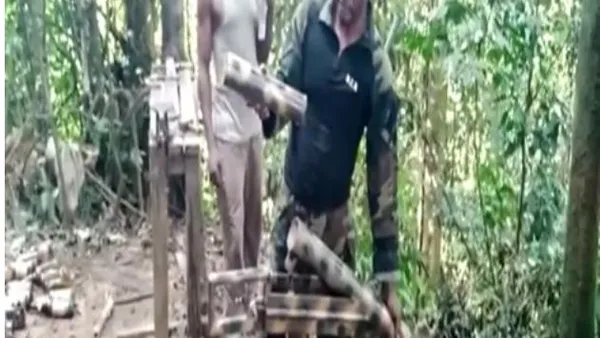
Ambazonia 'Warlord' (Field Marshall) displaying locally fabricated weapon (Rocket Launcher) from his hideout on December 15, 2019
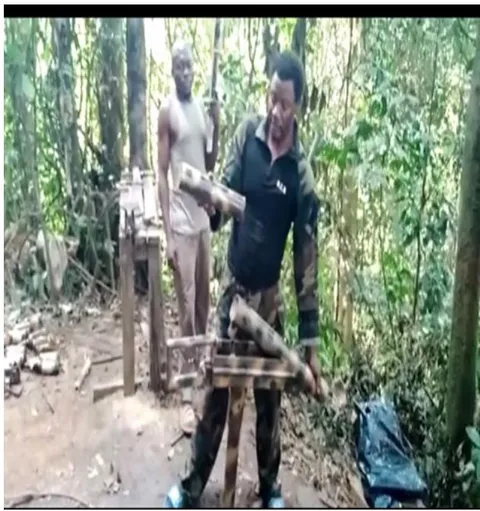
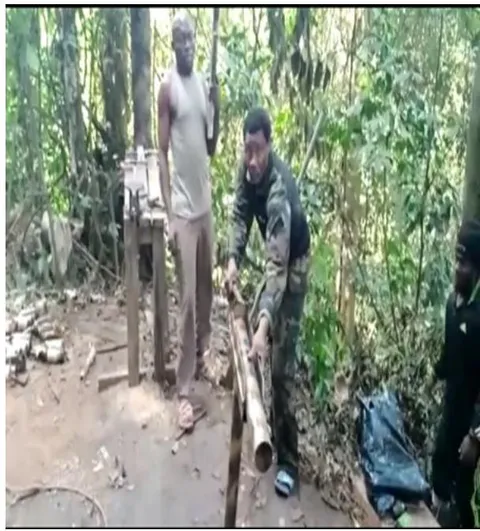
By 2021, there was increasing use of locally fabricated explosives by the separatist fighters. January 6, 2021, separatist fighters ambushed the convoy of the Senior Divisional Officer of Momo near Njikwa, using Improvised Explosive Devices (IEDs). Five soldiers and one civilian were killed. On February 18, seven Cameroonian soldiers were killed by an IED in Babessi (International Crisis Group, 2021). On April 10, three BIR soldiers were wounded when their vehicle struck an IED between Kumbo and Ndop (Cameroon News Agency, 2021). On April 24, a military convoy struck an IED at
Alou in the South West Region and they were subsequently fired at from the surrounding bushes. A similar attack was carried out in Bafut, where the Seven Karta militia blew up a military vehicle with an IED (Cameroon News Agency, 2021). On May 30, a Cameroonian Army armored vehicle hit an IED and fell into a valley in Oku, Bui division. The "Ambazonia Intelligence Forces", loyal to the Ambazonia Self-Defence Council, claimed responsibility (Cameroon News Agency, 2021). In the month of June, several military convoys were attacked in Lebialem by the "Red Dragon" militia, with the use of IEDs. Therefore, as the conflict prolongs, the use of explosives increasingly becomes a major component of the separatist war operations. The use of IEDs by the separatist fighters has been a great source of frustration to the Cameroon military in their anti-separatist war efforts for two reasons; firstly, they lack the technological knowhow to detect the IEDs from distance away. Secondly, the IEDs are mostly used in bushy/forest environments with meandering roads which are not mastered by the Cameroon soldiers. Versed with their local environments of war operations, the separatist militias easily hide in the bushes and ambush government forces.
b) The Separatist Resource Mobilization and Sabotage
In the history of African conflicts, an important component of asymmetric warfare is the ability of the militia groups to control local commerce. Rebel groups gain control of specific resources and then use it to prolong the conflict, e.g. 'in Angola, the rebels under Jonas Savimbi had control over oil and "blood" diamonds (initially also ivory), which prolonged the conflict for years' (Jackson, 2007, p.9). In Liberia, Charles Taylor financed his forces through commercial logging. In Somalia, control over the trade in the narcotic leaf qat was an essential component of General Aidid's ability to maintain his militia (Alex de Waal, 1996). Armed criminals in the Sahel Desert continue to expand their drug trade, exploiting the conflict in Mali. Likewise, in Congo, armed groups exploited villages to keep their operations sustainable (Feller, 2013). With the case of the Anglophone secessionist struggle, the armed militias have no direct control over any viable economic venture in the restive zones. Rather, since the beginning of the crisis, separatists in the diaspora and militia groups operating on the ground adopted several strategies to raise funds to buy weapons and to finance the war. As such, they resorted to kidnapping and ransom taking, with millions of Francis CFA demanded from the families of their captives. The groups mounted roadblocks on major highways and extracted money and other valuables from passengers; looting of shops and houses of those tagged as 'Black Legs'; threats of abduction- through phone calls and text messages to wealthy Anglophones, compelling them to financially 'support the struggle'; and financial support from abroad gotten through fund-raising by diaspora separatist leaders and sympathizers. -From the 18 to 19 August 2018 the sum US$50,000 was raised by the diaspora separatists in a fund-raising event at Washington DC' (Ngoh, 2019, p.428). Also, the "National AK47 Campaign (NAK47)" was launched in Washington DC in March 2019 to raise funds for the purchase of guns. While the separatists used ransom taking as a strategy to raise funds, many other groups emerged within the restive zone (some being local bandits) evidently with no political agenda, but equally engaged in kidnapping and collecting ransom from the families of their victims as a way out of poverty following the stagnation of the economy as a consequence of the war.
Guerrilla strategy aims to magnify the impact of a small, mobile force on a larger, more cumbersome one (Martin, 2000). This is usually achieved through economic sabotage as the aim of the guerilla fighter is erosion of the enemy's will to sustain the cost of continuing the war (Asprey, 2019). In Angola, while the MPLA attempted to hunt down the remaining UNITA guerrilla fighters by conducting large, multi-brigade, conventional sweeps through central and southern Angola, on the other hand, UNITA evaded contact with the MPLA's forces while striking at its economic base (Lockyer, 2008). In early 1977, Savimbi declared that his military objective was to bring "the Angolan economy to its knees." (George, 1976) Also, in 1995, in an attempt to stop food harvest, Sierra Leonean guerrillas introduced the practice of hacking the hands of village women who they found in the fields. When the news of rebel
amputations spread in central Sierra Leone (the rice granary of the affected region), the harvest ceased (Kalyvas, 2004). In the course of the Anglophone secessionist struggle, the Amazonian militias remained resolute in carrying out acts of sabotage on government sources of endogenous inputs within the restive zones. As such, in order to cripple the government economically, the separatists ensured the permanent closure of Cameroon's biggest Para-state Agroindustrial enterprise -The Cameroon Development Corporation (CDC) situated in the restive South West Region, through persistent attacks and disruptions of business operations. In fact, as Waal puts it; "a variety of strong surprised attacks on economic enterprises are a hallmark of guerrilla operations" (Alex de Waal, 1996). As reported by the International Crisis Group (2019), in July 2018, the Cameroon Employers Association (GICAM) estimated the value of losses incurred by the CDC at FCFA2, 69 billion (€410 million). This was achieved via brutal treatment of the plantation workers. Between November 2018 and February 2019, CDC workers saw their fingers chopped off in Tiko and as a result, plantation work had to be abandoned (The National Times, 2019). In July 2019, a General Manager of CDC- Edinau branch (Benjamin Ndifor) was abducted from his home in Edinau few weeks after the CDC mill under his management resumed production despite threats from the separatist militias (Journal du Cameroun, 2019). In reaction to the downward shoot of the CDC, Ayaba Cho Lucas intimated; "... we have stopped one of the greatest corporations [CDC] they [the government of Cameroon] have been generating money from to feed their army against Ambazonia..." (Ekah, 2019). Such a declaration by the separatist leadership is based on the belief that as the incumbent's relative resources decline, its ability to project influence over the contested areas also decreases (Klare, 2004, p.177).
Asymmetric warfare is usually characterized by the desire of militia groups to make the territory ungovernable (Grange, 2000) through several acts of political sabotage. As intimated by Winter (2011), asymmetric armies continuously distort public events organized by the enemy. The Ambazonian separatist militia groups ensured the disruption of government-organized events within the restive zones. Among other events, elections have been highly considered by the separatists as illegal in Ambazonia as they see it as a way of "legitimising" government presence in "their territory". A key event which was highly sabotaged was the 7 October 2018 presidential elections. The separatists launched aggressive calls for the boycott of the campaigns and elections, followed by sporadic gunshots in the restive zones on the day of the elections (The Guardian Post Newspaper, 2018).
The separatists equally sabotaged the February 9 2020 Municipal and Parliamentary elections scheduled
for 9 February 2020 by promising devastating consequences on Anglophones who tendered their candidature. As a result of such threats, many prospective Anglophone candidates (both of the ruling and opposition parties) had to denounce their candidature for fear of victimization (BBC News, 09 January 2020). As an instance, in November 2019, Honorable Dr. Awudu Mbaya Cyprain- SDF Member of Parliament for the Donga-Mantung Center constituency in the North West Region tendered his resignation in a televised speech over a private TV station. Meanwhile, those who refused to withdraw their candidature faced the wroth of the separatists as they either saw their houses and property burnt (the case of Hon. Mbah Ndam whose house was set ablaze in Batibo in December 2019), or subjected to kidnap and other forms of victimization and intimidation. Prior to the elections, separatist militias had abducted at least 120 candidates, half of whom were still in captivity on the Election Day (The New York Times, 2020). The February 9 2020, parliamentary election witnessed a very low turnout in the Anglophone regions due to the persistent threats from the separatists, which caused many civilians to flee days in advance, a development that was highly applauded by the separatists as a sign of victory over the government (Xinhua, 2020). Since 2017, the government of Cameroon has resorted to the launching of intensive military offensives against the Ambzonia militias, as a solution to the conflict, and with the hope of recording military victory.
IV. MILITARY OFFENSIVES/OPERATIONS BY GOVERNMENT FORCES
A key feature in the counter asymmetry is the launching of military offensives. Operationally, in conventional warfare, offensive actions/strategies generally involve massive coordinated "pushes" into enemy held territory. The key aim is to decisively engage the opposition's forces (Mearsheimer, 1983). The strategic objective of this counter-guerrilla strategy is to locate the enemy and destroy it through superior military manoeuvre and firepower (Strachan, 1983). In a bid to counter the separatist fighters, government forces resorted to the launching of offensive military operations, targeting separatist strengthens. Such operations are usually characterized by targeted execution of separatist leaders/commanders, massive arrests of both separatist fighters and unarmed civilians, the burning of houses in villages hosting separatist fighters, bullet spray in the air and on buildings leading to material and human casualties, ambush on separatist camps and the confiscation of weapons and other supplies, the freeing of captives among others. Between the years 2020 and 2022, several military offensives were launched by government forces within the restive zone. For example the 'Operation Free Bafut' launched in April 2020, the
'Operation Ngoke-Bui' in July 2020, the 'Operation Boyo I' in August 2020, 'Operation Bui 1' in March 2021, 'Operation Bui Clean' in May 2021, etc.
In order to weaken the operations of separatist fighters, government forces embarked on the targeted killings of their commanders, many of whom assume the title of 'General'. Between 2020 and 2022, government military operations led to the killing of separatist commanders like 'General Chacha' of the 'Southern Cameroons Restoration Forces' who was captured and summarily executed when Cameroonian soldiers raided his base in Kikaikom, Kumbo (Journal du Cameroun, 2020). In February 2020, Cameroonian soldiers attacked Small Babanki, a village in Mezam Division, storming the home of separatist commander Richard Nformumbang Ndango, known as "General Fire", killing him and his wife (Cameroon News Agency, 2020). In October 2020 Cameroon soldiers initiated a three-day offensive against separatists in Wabane, Lebialem and killed the dreaded "General Ayeke", commander of the militia operating area (Cameroon News Agency, 2020), while separatist commander "General Obi" was killed during a military raid in Mamfe in June 2020 and commander Luca Fonteh, known as 'General Mad Dog', was killed in Bamenda in September 2020 (Journal du Cameroun, 2020). More military offensives have been carried out in the year 2021. In February 2021, separatist commanders - Augustine Ambe ("General Above the Law") and Celestine Wanche ("T-Boy") were killed in a raid on their camp around Kumba. In April 2021, separatist commanders; "General Blink" (operating in Bambelle) and "General Idi Amin Dada" (operating in Guneko) were killed by government forces while "General Cobra" and four of his fighters were captured in Bamenda (International Crisis Group, 2021), and the nojoyous Lekeaka Oliver, popularly known as "Field Mashall" of the Red Dragon operating in Lebialem Division was killed in a military ambush on 12 July 2022 at Menji (Cameroon News Agency, 2022). Such military operations usually led to the freeing of hostages hostages from the separatist camps and the recuperation of weapons, locally fabricated explosives and other supplies.
Notably is the fact that the military operations usually recorded severe human and material casualties with civilians most affected. Unsuccessful military operations left the military with acts of vengeance on the civilian population for not identifying the separatist fighters or for failing to disclose their hideouts. This was the case in villages and towns in the South West Region like in Ndoh (in January 2020), Bangem and Babubock (in February 2020), in Muyuka, Limbe, Buea and Tiko (in January 2021), where government forces carried out indiscriminate shooting, burning of houses, mass arrest and imprisonment of civilians etc after misfired attempts to capture the separatist fighters (Amnesty International, 2020, International Crisis Group, 2021). Similarly, In May
2021, during the "Operation Bui Clean" (also "Operation Kumbo Clean") to neutralize separatists in Bui in the North West Region, separatists launched an offensive against the Cameroonian military and a military convoy hit an IED in Meluf. The Cameroonian troops retaliated by burning down civilian houses in the villages of Tadu, Vekovi and Buh. Also, about 50 civilian houses were set ablaze in Kumbo in the North West Region (International Crisis Group, 2021).
From the beginning of the crisis in 2016, the government has continuously engaged in the use of the military as a means of crushing the separatist fighters. New military camps have been erected in different parts of the Anglophone regions with the aim of ensuring rapid intervention in repelling separatist activities, military presence had been beefed up by increasing the number of soldiers in the regions. Also, sophisticated ammunitions have been dispatched to the regions to ensure superiority over the separatists in terms of weaponry. A good number of separatist commanders and fighters have either been killed or arrested and imprisoned. However, despite all these measures, the restoration of the much anticipated peace in the restive regions remains a mirage. Therefore, military solutions to the conflict have proven unsuccessful from 2017 to 2022.
V. THE UNFRUITFULNESS OF CONTINUOUS MILITARY SOLUTION
This paper upholds that a long-lasting solution to the Anglophone crisis in Cameroon cannot be possibly attained through military means especially with the separatist fighter employing asymmetric strategies and tactics. It has been a farfetched possibility for the state of Cameroon to record a military victory over the Ambazonian militias. The fact that the separatist militias have been able to resist government forces from 2017-2022 (and without any prospect of government military victory) is a glaring indication that the solution to the crisis does not lie in the use of a military approach. As Henri Kessinger observed; "the guerrilla wins if he does not lose. The conventional army losses if it does not win" (Asprey, n.d.). Furthermore, as opined by Guevara (1961), it is important to emphasize that guerrilla warfare is a war of the masses, a war of the people. It draws its great force from the mass of the people themselves. The guerrilla band is not to be considered inferior to the army against which it fights simply because it is inferior in firepower". At the beginning of the crisis, government forces hoped on achieving a quick military victory which has not been the case. The ability of the separatist fighters to withstand government forces (with military sophistication) over the years could be attributed the following factors;
Throughout the period of the crisis, the government has suffered several accusations from the
international community especially human rights groups for violating human rights. Thus, the government forces are reluctant to escalate violent actions in order to evade accountability for human rights violations. This further weakens the government security structure.
- As the crisis prolongs, the Separatist militias break away from the control of their foreign sponsors and engage in individual and unguided violence and income generating activities to sustain their struggle. It therefore remains difficult to clearly identify where the loyalty of the separatist groups actually lies. Individual motivations have become the order of the day.
- The separatist fighters have been able to acquire more sophisticated weapons over time. At the beginning of the conflict, the separatist fighters were relying on hunting rifles and other rudimentary weapons. By 2020, they had gained access to more sophisticated weapons, mostly captured from government forces after successful ambush on military personnel. The proliferation of arms within the different separatist camps in the restive zones remains a morale booster to separatist forces to pursue war operations. Additionally, the existence of localized arms production units assures the availability of arms, leading to the production of IED. Thus, by 2021, the separatist forces have become well-armed to the point of extending overt attacks to military check points and police stations. Also, since the beginning of 2021, the use of explosives became common, causing the Cameroonian army heavy casualties (Al Jazeera, 2021).
Increasing number of separatist recruits. At the beginning of the conflict, separatist fighters were fewer in number. By 2019, there existed between 2,000 to 4,000 separatist fighters spread across the two regions, consisting of youths aged 18 to 35, including female combatants (Crisis Group, 2029), with the number increasing over time. Continuous military approach facilitates the availability of new recruits into the separatist camps. That is, victims of military raids easily volunteer conscription into separatist camps in order to carry out revenge. Increase in the number of separatist recruits favour massive sporadic guerrilla attacks. For instance, in August 2021, over 80 separatist fighters invaded Oku in the North West region and destroyed the council building, the mayor's residence and set ablaze vehicles and over 58 market sheds in broad daylight and without intervention from the military (The Guardian Post, 2021).
- Separatist mastery of the conflict terrain compared to government forces, especially the rural areas. Members of the separatist militia groups are locals who are more familiar with the war terrain than the government forces.
Sample survey of road network in part of the restive North West Region of Cameroon
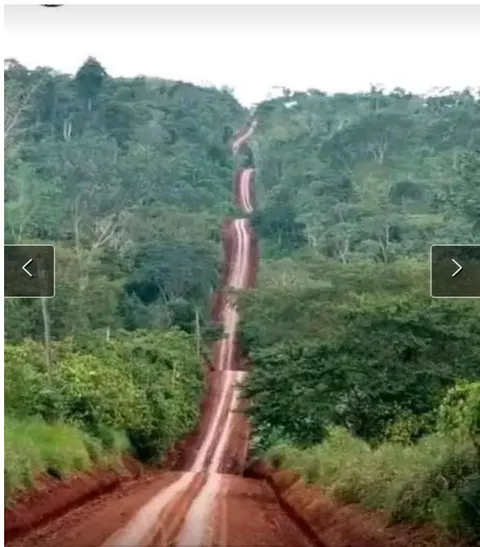
The most excruciating casualties recorded by the Cameroon forces are in the rural communities that had long been abandoned by the government in terms of good roads and other infrastructural developments. For instance, the Lebialem division where heavy military casualties have been recorded is characterized by poor transport network, thick forests and valleys which are not easily penetrable by the government forces, making it easy for separatist forces to carry out successful ambush. With the poor state of the roads, it remains difficult for government forces to have full control over the security situations outside the cities, to the advantage of separatists. Therefore with the prolongation of the conflict, there is the possibility of separatist forces gaining full control over certain rural areas, from where an organized take-over of the major towns could be planned. Learning from developments elsewhere in Africa, after a decade of the Somali conflict, the militia groups have been able to gain full control over the Southern and Central parts of the country (BBC, 2021).
Cooperation and cohabitation between Anglophone civilians and separatist fighters, making it difficult for the government forces to distinguish between civilians and combatants. This is further compounded by the absence of clearly identifiable separatist uniforms and separatist camps. This
Ekondo Titi D.O ambushed and killed by the separatists
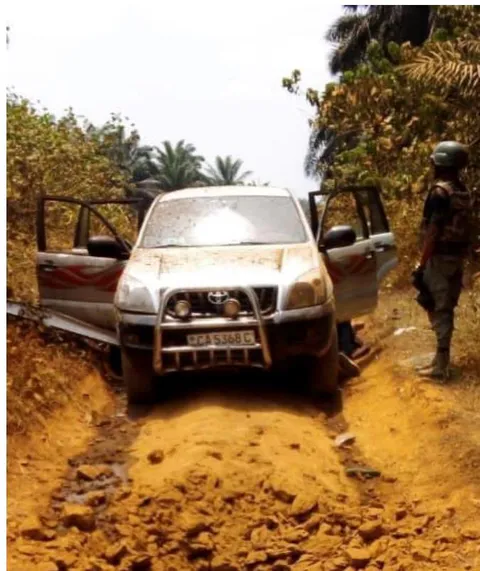
Most importantly, the resilience of the separatists: The separatist remain highly determined and willing to fight, suffer more or bear higher cost while hoping for future freedom. The AGovC had declared, "...No one can stop the war. Not even a combine air-force of the US army and British Navy. There will be no coexistence with Cameroon..." (Ayaba Cho Lucas, 2019, August 10). The resilience of the separatist fighters despite the targeted killing of some of their 'Generals' (who are almost immediately replaced) is indicative of the fact that with the passage of time, they remain determined in achieving their goals. As such, despite the arrest and imprisonment of separatist leaders, the targeted killing of separatist warlords, and other anti-separatist tactics employed by the government, the separatists remain resolute in achieving their goals.
Continuous military solution to the crisis provides a possible coalition between the 'Ambazonian' and the Biafran separatists. It is statistically proven that if a country is bordered by a belligerent neighbor, the probability of that country being drawn into a conflict is three times higher than for other countries. This is particularly common in the case of nations with complex mosaic structures of ethnicity (Sevastianov, Laine, & Kireev, 2019) as the case of Nigeria and Cameroon. Both the Biafrans in Nigeria and Anglophones in Cameroon have a common history of secessionist tendencies. Coincidentally, they are geographically situated at both sides of the borders between Cameroon and Nigeria. This poses a risk factor as one can influence the other, such as the use of the border territories as a corridor for the supply of weapons or as a refuge for the separatist fighters or as a proxy zones for sporadic guerrilla attacks. Despite the trans-border security measures put in place by the governments of Cameroon and Nigeria, an alliance between the separatists of both countries remains a possibility. After about half a decade in conflict, with excruciating human and material losses, there is need for a peaceful resolution through dialogue.
VI. THE NEED FOR PEACEFUL RESOLUTION THROUGH DIALOGUE
Judging from the aforementioned, this paper upholds that there is need for the government to exploit a more pacific method in resolving the crisis, without the exclusion of the separatist leadership. As the security situation in the two Anglophone regions deteriorates, government forces are unable to challenge the growing threats posed by the separatists. Research on some of the bloodiest African conflicts in the recent past has proven the pacific method of conflict resolution via third party mediation is relatively reliable. The conflict in Sierra Leone which lasted from 1991 to 1999 ended with the Lomé Peace Agreement which took place in a neutral ground- in Togo (Ero, 1999, p.64). Following the resurgence of armed conflict in the Democratic Republic of Congo in 1997, a French-led intervention took place in the Zambian city of Lusaka in June 1999, leading to the signing of the Lusaka Ceasefire Agreement (Institute for Security Studies Briefing, 2008). Additionally, the long-standing ethnic conflict in Burundi ended 2000 with the signing of the Arusha Accord for Burundi. The accord was signed in Tanzania, mediated by President Nelson Mandela (Ferreira, 2010). Despite the institutional changes put in place, and the military measure employed by the Cameroon government between 2016 and 2022, the restoration of peace in the restive zone remains a mirage. The atrocious acts of the separatists and government forces remain unabated, with innocent civilians trapped in the web of continuous violence and with heavy casualties recorded on the sides of both the government and separatist forces. There is therefore urgent need for the military approach to be abandoned, and pacific method of resolving the conflict be adopted. The 'war' against the separatists was declared by the President of the Republic in 2017. To avert further atrocities, it is incumbent on the government of Cameroon to officially call for a ceasefire, after which the path for dialogue could be initiated. Thus, genuine dialogue between the government and representatives of the separatists, through international meditation, and on a neutral ground is strongly recommended. Equally, for a meaningful outcome to be achieved, such a third party, will not only mediate, but should command some authority to coerce both parties to a peaceful resolution.
VII. CONCLUSION
In this paper the warfare components of the Anglophone secessionist struggle have been analyzed, with the conclusion that the separatist fighters make use of asymmetric tactics and operations such as guerilla attacks, abductions, assassinations, sabotage, roadblocks, lockdown and ghost town operations, and other unconventional means. The warfare has however brought untold suffering to millions of Anglophone Cameroonians, with no prospect of de-escalation in the nearest future. This already precarious situation is compounded by the fact that both parties to the conflict (the separatists and the Cameroon government) have parallel objectives. While the separatists want nothing short of the "restoration of their independence", the government of Cameroon is bent at maintaining the territorial integrity of the nation within the framework of a "one and indivisible Cameroon". It is therefore the conclusion of this paper that for peace to be restored there is need for the declaration of a cease-fire, followed by genuine dialogue between both parties to the conflict, in the presence of a neutral international mediator.