Water is the home of fishes which may be fresh, brackish and marine. The present study is entirely based on freshwater fishes. PurbaMedinipur district has the potentiality for large fresh water resources. In this district, Contai is an important vital area because it is also a coastal based zone. Therefore the present study is very significant. Total of 46 native fish species were identified in this Municipality from the period of July 2021 to June 2022. Here total 46 freshwater fish species were observed under the 07 orders and 20 families.
## I. INTRODUCTION
Freshwater is a good resource for fish and other freshwater aquatic faunas. West Bengal, as well as Purba Medinipur district, has the potential for sizeable freshwater resources. The diversity of fish species is influenced by the human, in both positive and negative ways. A total of 46 species belonging to 07orders and 20 families were recorded in this fish market in different seasons. The present study is an essential for the identification, occurrence, and status of freshwater fishes in this Municipality as well as how much essential to local people. The population in this Municipality is about sixty thousand. In this area various kinds of fishes are observed in different seasons. But this study also indicates that availability of freshwater fishes are not so much in respect of population. The people of Purba Medinipur District catches different kinds of freshwater fishes from different sources and finally reach in Fish Market at Contai Municipality. Due to the human interference, the freshwater ecosystem is continuously degraded. Therefore the availability of different kinds of fishes in the fish market gradually declined. So the present study is an attempt to survey and identify the locally available Freshwater fish species in Contai Municipality, PurbaMedinipur.
## II. METHODOLOGY
The Main Fish market at Contai surveys were carried out every day in the early morning from 6 am - 9 am and late afternoon from 05:00 - 06:00 pm in
Summer and rainy seasons and in winter and other seasons it was done during 7 am -9 am every day due to good availability of fish. Fish data were collected every day on the basis of fisherman and also from local people. Average market data were used for this study. Maximum fishes were came from surrounding areas such as Sabajput, Soula, Mukundapur, Aladarput and different ponds from local people, and also from Moyna. They were Surveying the local market as well as discussing with local fishermen to ensure the listing of low abundance or declining in productivity of those species.
### a) Study Area
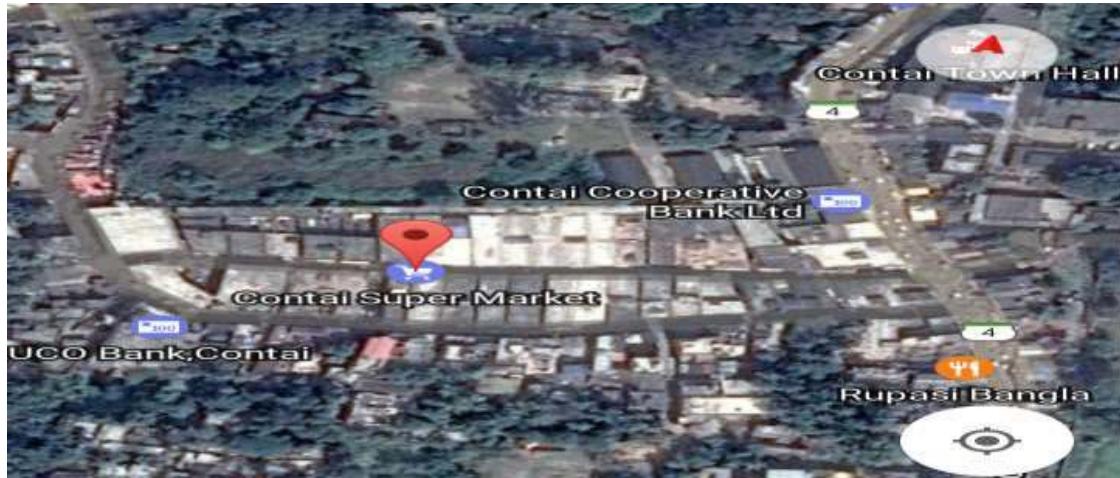
The study area is Contai Supermarket, located in Contai, Purba Medinipur District, WB (Lat. $21.7745^{\circ}$ N, Long. $87.7477^{\circ}$ E), where freshwater finfish information were collected from the fish seller and fishermen. Data was collected from April 2021 to May 2022. Thus conducting two samplings per day for the last year, total 46 fish samples were collected during this study period.
### b) Identification of Fish Samples
Fish samples are collected from the Contai Supermarket from the fish sellers. Generally the fishermen sort non-target fishes after catching in ponds or rivers. Generally the fishermen used bag net, gill net, cast net for fishing operation. The catches were collected by frozen ice box from the fish market for laboratory study. In the laboratory the fish samples were identified through different methods by Talwar and Jhingran 1991, Datta Munshi and Srivastava 1988.
## III. RESULT AND DISCUSSION
During the study period, different fin fishes were observed in the contai Supermarket area of the Purba Medinipur district. The result showed that the fish market is rich in fin fish diversity. The fin fish belong to 7 orders and 20 families were recorded. In the present study, 46 fin fishes from different genera and 19 families were recorded.
The member of the order Anguilliformes and Cyprinodontiformes are dominated by single species, but the order Synbranchiformes, Cypriniformes, Perciformes, Siliuriformes and Osteoglossiformes represents 3,16,13,10, and 2 species respectively.
Among all these, order Cypriniformes was the most dominant constituting $35\%$, followed by the order Siliuriformes which includes $22\%$, order Perciformes, Synbranchiformes, Osteoglossiformes, Anguilliformes and Cyrinodontiformes comprised $28\%$, $7\%$, $4\%$, $2\%$ and $2\%$ respectively.
<table><tr><td>Order</td><td>Family</td><td>Local name</td><td>Scientific Name</td><td>Characteristic features</td><td>IUCN Status</td></tr><tr><td>1. Anguilliformes</td><td>01.Anguillidae</td><td>Bamas</td><td>1. Anguilla bengalensis</td><td>1. Body elongate, snake-like.
2. Light brownish dorsally, bellow and sides are yellowish.
3. Head conical.
4. Dark spots on upper surface of body.</td><td>NT</td></tr><tr><td rowspan="2">2. Synbranchiformes</td><td>02. Synbranchiidae</td><td>Kuche</td><td>2. Monopterus cuchia</td><td>1. Body long, head slightly compressed.
2. Lower jaw longer.
3. Body colour silvery. A silvery lateral band running from head to tail.</td><td>LC</td></tr><tr><td>03. Mastacembelidae</td><td>Pankal</td><td>3. Macrognathus pancalus</td><td>1. Mouth small, snout pointed.
2. Greenish olive along back, beneath yellowish.</td><td>LC</td></tr><tr><td></td><td></td><td>Baan</td><td>4. Mastacembelus armatus</td><td>1. Mouth small, snout pointed.
2. Dorsal spines commence over middle of pectoral fin.
3. Dark brown on back and flanks, yellowish beneath.</td><td>LC</td></tr><tr><td rowspan="3">3. Cypriniformes</td><td rowspan="3">04. Cyprinidae</td><td>Mola</td><td>5. Amblypharyngodon mola</td><td>1. Elongated silvery color body with compressed head.
2. Presence of silvery lateral band running from head to tail.
3. Caudal fin deeply forked, caudal lobe pointed.</td><td>NT</td></tr><tr><td>Chela</td><td>6. Salmostoma phulo</td><td>1. Silvery color Body elongate mouth slightly upward.
2. Dorsal fin inserted just opposite to origin of anal fin</td><td>LC</td></tr><tr><td>Kalbaush</td><td>7. Labeo calbasu (Hamilton, 1822)</td><td>1. Body colour blackish-green, lighter below.
2. Presence of Two pairs of minutes barbells.
3. Dorsal profile more convex than that of abdomen</td><td>EN</td></tr><tr><td rowspan="5">3.Cypriniformes</td><td rowspan="5">04. Cyprinidae</td><td>Rui</td><td>8. Labeo rohita(Hamilton, 1822)</td><td>1. Body moderately elongated body with brownish color on back, whitish-silvery below.
2. Scales with blackish margins and reddish center.</td><td>NT</td></tr><tr><td>Bata</td><td>9. Labeo bata(Hamilton, 1822)</td><td>1. Body colour darkish or bluish above and silvery below.
2. Fins colour orange.</td><td>EN</td></tr><tr><td>Katal</td><td>10. Catla catla catla(Hamilton, 1822)</td><td>1. Colour dark grey on back, silvery on abdomen.
2. Head enormously large, mouth wide and upturned.
3. Fins blackish</td><td>NT</td></tr><tr><td>Silver Cap</td><td>11. Hypophthalmicthys molitrix(Valenciennes, 1844)</td><td>1. Dorsal fin short.
2. 2.Body colour silvery white.
3. Fins are dark coloured</td><td>NT</td></tr><tr><td>Brigade</td><td>12. Hypophthalmichthys nobilis(Richardson, 1845)</td><td>1. Body colour greyish above, silvery below.
2. Fins brownish.
3. Lower jaw slightly protruding.</td><td>DD</td></tr><tr><td rowspan="5">3.Cypriniformes</td><td rowspan="5">04. Cyprinidae</td><td>Tita punti</td><td>13. Puntius ticto</td><td>1. Two black spots on lateral line.
2. Silver body color with complete lateral line</td><td>VU</td></tr><tr><td>Gheso Rui</td><td>14. Ctenopharyngodon idella(Valenciennes, 1844)</td><td>1. Body colour Dark grey color body above, silvery on flanks and belly.
2. Head broad with a short rounded snout.</td><td>NE</td></tr><tr><td></td><td>15. Carassius auratus(Linnaeus, 1758)</td><td>1. Body colour orange on back, whitish orange below.
2. Broad body with large scales.</td><td>LC</td></tr><tr><td></td><td>16. Cyprinus carpio(Linnaeus, 1758)</td><td>1. Broad body with large scales and swollen abdomen.
2. Generally orange body color.</td><td>NL</td></tr><tr><td>Mirgyala</td><td>17. Cirrhinus mrigala</td><td>1. Grayish along the back silvery on</td><td>LC</td></tr><tr><td rowspan="4"></td><td rowspan="4"></td><td></td><td>(Hamilton, 1822)</td><td>the sides and below.2. Colour of pectoral, pelvic and anal fins are orange.</td><td></td></tr><tr><td>Daria</td><td>18. Rasbora daniconius</td><td>1. Elongated compressed body with wide band at middle.2. Abdominal portion more covex than dorsal.</td><td>LC</td></tr><tr><td>Jat Punti</td><td>19. Puntius sophore(Hamilton-Buchanan, 1822)</td><td>1. Presence of red lateral streak primed during breeding season in male.2. Body fairly deep and compressed.</td><td>LC</td></tr><tr><td>Bata</td><td>20. Cirrhinus reba(Hamilton, 1822)</td><td>1. Body is silvery in color; scales are darkest at their edges2. Body is slender; the dorsal profile is slightly more convex than the ventral profile</td><td>LC</td></tr><tr><td rowspan="6">4.Perciformes</td><td>05. Cobitidae</td><td>Ruti</td><td>21. Lepidocephalus guntea</td><td>1. Back dark brown, belly yellowish.2. Caudal fin cut square with round corner3. Body elongate, dorsal and central surface nearly parallel</td><td>EN</td></tr><tr><td>06. Gobidae</td><td>Bele</td><td>22. Glossogobius giuris</td><td>1. Body with two rows of 4-6 dark blotches.2. Head pointed, lower jaw slightly longer.3. Two dorsal fins situated closer. Caudal fin rounded</td><td>EN</td></tr><tr><td>07. Nandidae</td><td>Bheda</td><td>23. Nandus nandus</td><td>1. Body color greenish brown.2. Three vertical stripes on flanks.3. Rectangular Body slightly, compressed and deep</td><td>VU</td></tr><tr><td>08. Pistolepidae</td><td>Kala koi</td><td>24. Badis badis</td><td>1.</td><td>EN</td></tr><tr><td rowspan="3">09. Channidae</td><td>Shoaal</td><td>25. Channa striatus</td><td>1. Body elongate,fairly rounded in cross-section.2. Scales on head larger.3. Body colour grey-green on black-green on back in adult, several white or yellowish white vertical stripes on belly.</td><td>NT</td></tr><tr><td>Lata</td><td>26. Channa punctatus</td><td>1. Body elongate, fairly rounded in cross-section.2. Scales on head irregular.3. Body colour varies with water they reside.4. Usually grey on dorsal side, lighter beneath.</td><td>NT</td></tr><tr><td>4.Perciformes</td><td>Cheng</td><td>27. Channa orientalis</td><td>1. Body elongate,fairly rounded in cross-section.2. Mouth large, teeth villiform on jaws.3. Dorsal side and flanks green, ventral side faint bluish or reddish.</td><td>VU</td></tr><tr><td rowspan="6">4. Perciformes</td><td>10. Osphonemidae</td><td>Khalisha</td><td>28. Trichogaster fasciat a</td><td>1. Greenish color with oblique orange or bluish stripes descending downwards and backwards from the back to the anal fin.
2. Vertical fins with alternating dark and pale spots.
3. The anal fin often with a red margin.</td><td>LC</td></tr><tr><td>11. Anabantidae</td><td>koi</td><td>29. Anabas testudineus</td><td>1. Lower jaw slightly longer.
2. Scales ctenoid.
3. Back greenish brown, yellowish beneath.</td><td>NT</td></tr><tr><td rowspan="2">12. Cichlidae</td><td>Telapia</td><td>30. Oreochromis mossambicus</td><td>3.</td><td>VU</td></tr><tr><td>Nilotica</td><td>31. Oreochromis niloticus</td><td>4.</td><td>LC</td></tr><tr><td>13. Ambassidae</td><td>Chanda</td><td>32. Chanda mama</td><td>5.</td><td>LC</td></tr><tr><td></td><td>Gol Chanda</td><td>33. Parambassis ranga</td><td>6.</td><td>LC</td></tr><tr><td>5. Siluriformes</td><td>14. Clariidae</td><td>Magur</td><td>34. Clarias batrachus</td><td>1. Body colour brown to blackish.
2. Pectoral spine strong,finely serrated on both edges.</td><td>LC</td></tr><tr><td></td><td></td><td>Thai mangur</td><td>35. Clarias gariepinus</td><td>1. Body colour brown to blackish.
2. Anterior portion of Head is blunt.
3. Barbells are long.</td><td>LC</td></tr><tr><td rowspan="2">5. Siluriformes</td><td>15. Heteropneustidae</td><td>Shingi</td><td>36. Heteropneustes fossilis</td><td>1. Body elongate, compressed behind, head depressed.
2. Dorsal fin small, pectoral fin with a strong spine seratted internally.
3. Caudal fin rounded, separated by a distinct notch from caudal fin.</td><td>LC</td></tr><tr><td>16. Pangasiidae</td><td>Pungas</td><td>37. Pangasius pangasius</td><td>7.</td><td>LC</td></tr><tr><td rowspan="2"></td><td rowspan="2">17. Bagridae</td><td>Tengra</td><td>38. Mystus tengara</td><td rowspan="2">1. Dorsal spine long upto head keep out the head.
2. 4-5 longitudinal bands along sides
3. Body color yellow or brown with a dark spot on shoulder.
1. Head dorso-ventrally flattened with terminal mouth.
2. Adipose fin well developed and caudal fin forked.
3. Body color grayish brown on back and yellowish or dull white beneath.</td><td rowspan="2">LC
LC</td></tr><tr><td>Arr tengra</td><td>39. Hemibagrus menoda</td></tr><tr><td rowspan="3">5. Sluriformes</td><td></td><td>Rani Tengra</td><td>40. Mystus vittatus</td><td>1. pairs of barbels, maxillary barbels extending beyond the pelvic fins.
2. A narrow dusky spot often present on the shoulder.</td><td>LC</td></tr><tr><td rowspan="2">18. Siluridae</td><td>Boal</td><td>41. Wallago attu</td><td>1. Caudal fin is deeply forked.
2. Body colour greyish or yellowish grey in above and whitish in below but the fins grey.
3. Eyes are small. Mouth wide</td><td>VL</td></tr><tr><td>Pabda</td><td>42. Ompok bimaculatus (Bloch, 1794)</td><td>1. Two pairs of barbels; maxillary barbels reaching pelvic fins or anal fins; mandibular barbels minute.
2. Brown, usually marmorated body with conspicuous round black blotch above pectoral base.</td><td>NT</td></tr><tr><td></td><td></td><td></td><td>43. Ompok pabda (Hamilton, 1822)</td><td>8.</td><td>NT</td></tr><tr><td rowspan="2">6. Osteoglossiformes</td><td>19. Notopteridae</td><td>Chital</td><td>44. Notopterus chitala (Day, 1878)</td><td>1. Body is very strongly compressed with a short pre-caudal region.
2. Dorsal fin is short and ventral fin very much reduced or absent.</td><td>NT</td></tr><tr><td></td><td>Folui</td><td>45. Notopterus notopterus (Pallas, 1769)</td><td>1. Colour is silvery dark.
2. Very much elongated anal fin confluent with reduced caudal fin.</td><td>LC</td></tr><tr><td>7. Cyprinodontiformes</td><td>20. Belonidae</td><td>Gangtara</td><td>46. Xenentodon cancila (Hamilton-Buchanan,1822)</td><td>1. Elongated body with greatly elongated both jaws and studded with sharp teeth.
2. Body greenish above, white ventrally and laterally silver in color.</td><td>LC</td></tr></table>
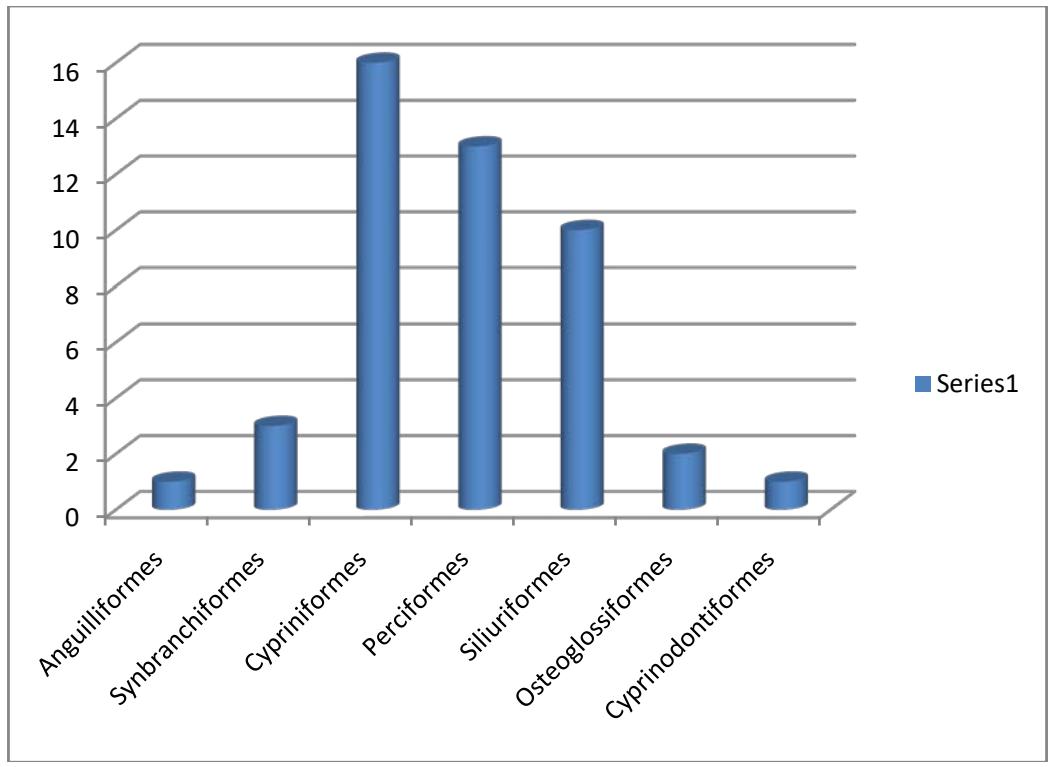
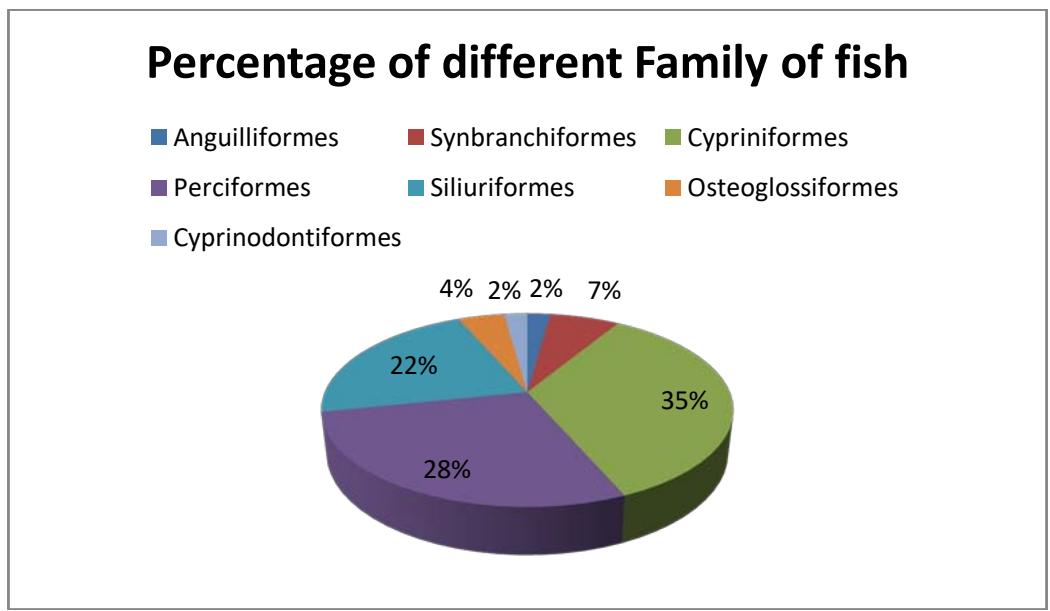
a) Availability of freshwater families
<table><tr><td>Families</td><td>Jul</td><td>Aug</td><td>Sep</td><td>Oct</td><td>Nov</td><td>Dec</td><td>Jan</td><td>Feb</td><td>Mar</td><td>Apr</td><td>May</td><td>Jun</td></tr><tr><td>Anguillidae</td><td>+</td><td>+</td><td>+</td><td>+</td><td>-</td><td>-</td><td>-</td><td>-</td><td>-</td><td>+</td><td>+</td><td>-</td></tr><tr><td>Synbranchidae</td><td>-</td><td>-</td><td>-</td><td>-</td><td>-</td><td>-</td><td>-</td><td>-</td><td>+</td><td>+</td><td>-</td><td>-</td></tr><tr><td>Cyprinidae</td><td>++ +</td><td>++</td><td>++</td><td>+++</td><td>++</td><td>+</td><td>++</td><td>+++</td><td>++ +</td><td>+++</td><td>++ +</td><td>++ +</td></tr><tr><td>Cobitidae</td><td>-</td><td>-</td><td>-</td><td>-</td><td>-</td><td>-</td><td>+</td><td>+</td><td>+</td><td>-</td><td>-</td><td>-</td></tr><tr><td>Gobidae</td><td>+</td><td>+</td><td>+</td><td>-</td><td>++</td><td>++</td><td>+</td><td>+</td><td>++</td><td>-</td><td>-</td><td>+</td></tr><tr><td>Nandidae</td><td>-</td><td>-</td><td>-</td><td>+</td><td>+</td><td>-</td><td>-</td><td>-</td><td>-</td><td>+</td><td>+</td><td>-</td></tr><tr><td>Pristolepidae</td><td>-</td><td>-</td><td>-</td><td>+</td><td>+</td><td>-</td><td>-</td><td>-</td><td>-</td><td>-</td><td>-</td><td>+</td></tr><tr><td>Channidae</td><td>++ +</td><td>++</td><td>++</td><td>++</td><td>++</td><td>+</td><td>+</td><td>+</td><td>++</td><td>++</td><td>++</td><td>++</td></tr><tr><td>Osphonemidae</td><td>+</td><td>+</td><td>+</td><td>+</td><td>-</td><td>-</td><td>-</td><td>++</td><td>++</td><td>+</td><td>+</td><td>++</td></tr><tr><td>Anabantidae</td><td>++</td><td>+++</td><td>+++</td><td>++</td><td>++</td><td>++</td><td>+</td><td>+</td><td>+</td><td>++</td><td>++</td><td>++</td></tr><tr><td></td><td>+</td><td></td><td></td><td></td><td></td><td></td><td></td><td></td><td></td><td></td><td></td><td></td></tr><tr><td>Cichlidae</td><td>++</td><td>++</td><td>++</td><td>+++</td><td>++</td><td>+</td><td>++</td><td>+++</td><td>++</td><td>+++</td><td>+++</td><td>++</td></tr><tr><td>Mastacembelidae</td><td>+</td><td>+</td><td>-</td><td>+</td><td>+</td><td>+</td><td>-</td><td>+</td><td>+</td><td>+</td><td>+</td><td>+</td></tr><tr><td>Ambassidae</td><td>-</td><td>-</td><td>-</td><td>-</td><td>+</td><td>+</td><td>+</td><td>+</td><td>++</td><td>+</td><td>+</td><td>-</td></tr><tr><td>Clariidae</td><td>++</td><td>++</td><td>++</td><td>++</td><td>++</td><td>+</td><td>+</td><td>+</td><td>++</td><td>++</td><td>++</td><td>++</td></tr><tr><td>Heteropneustidae</td><td>++</td><td>++</td><td>++</td><td>++</td><td>++</td><td>+</td><td>+</td><td>+</td><td>++</td><td>++</td><td>++</td><td>++</td></tr><tr><td>Pangasiidae</td><td>+</td><td>+</td><td>+</td><td>+</td><td>-</td><td>-</td><td>-</td><td>++</td><td>++</td><td>+</td><td>+</td><td>+</td></tr><tr><td>Bagridae</td><td>++</td><td>++</td><td>++</td><td>++</td><td>++</td><td>-</td><td>-</td><td>++</td><td>+</td><td>+</td><td>++</td><td>++</td></tr><tr><td>Siluridae</td><td>++</td><td>++</td><td>++</td><td>-</td><td>-</td><td>-</td><td>+</td><td>+</td><td>+</td><td>-</td><td>++</td><td>++</td></tr><tr><td>Notoptertidae</td><td>+</td><td>+</td><td>+</td><td>+</td><td>+</td><td>+</td><td>-</td><td>-</td><td>+</td><td>+</td><td>+</td><td>+</td></tr></table>
\+ = Rarely observed, ++ = moderately observed, ++ + = Highly observed, - = Not found
### b) Photograph
Some photography of fishes and ponds are listed bellow with common name-
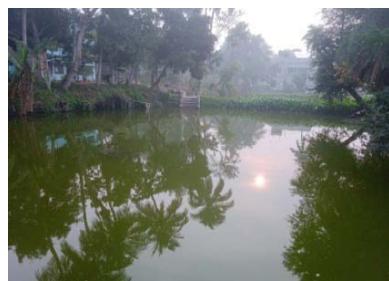
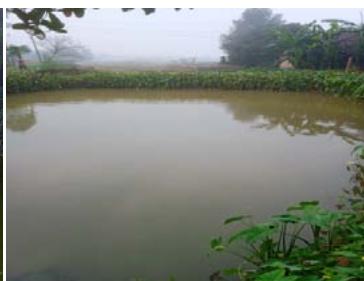
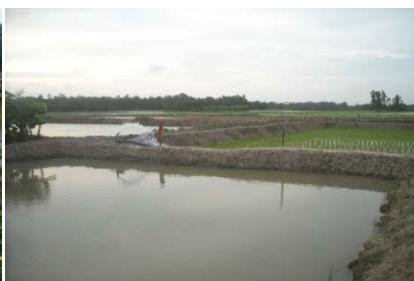 Study site at morning
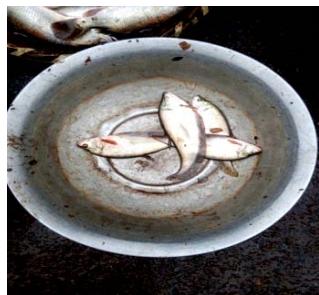 Folui
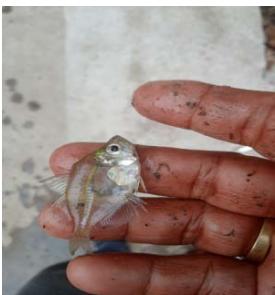 Goal Chanda
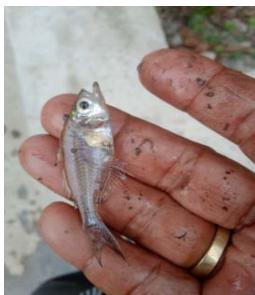 Lamba Chanda
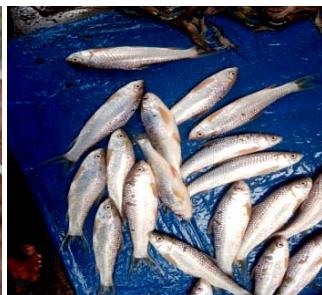 Bata
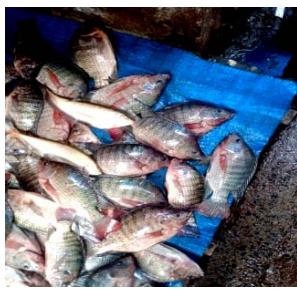 Nilontica
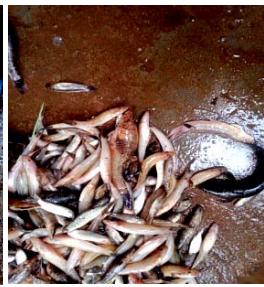 Bele
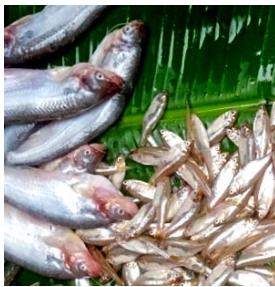 Pabda
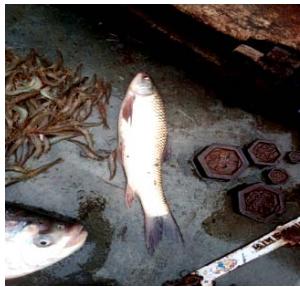 Rui
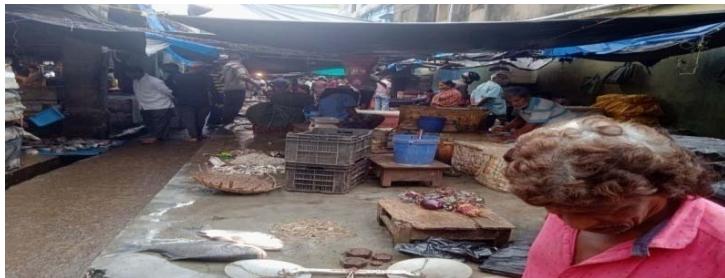 Fish Market
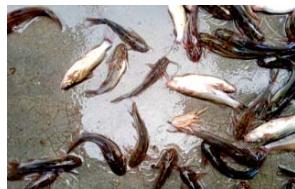 Tangra
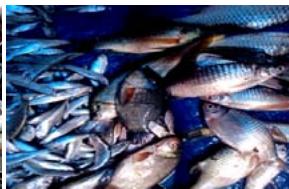 Telapia
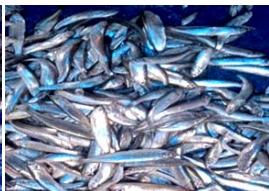 Chela
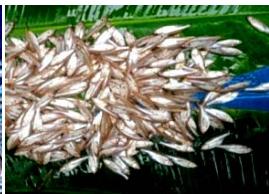 Mourola
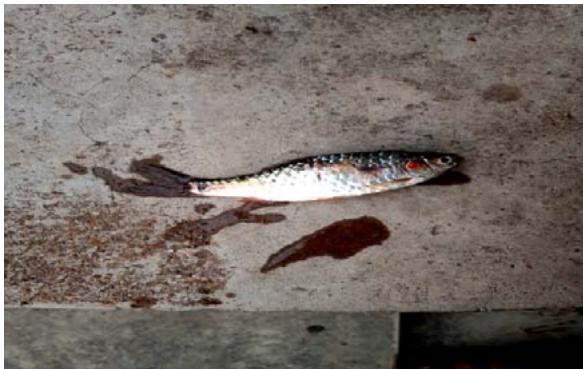 Jat punti
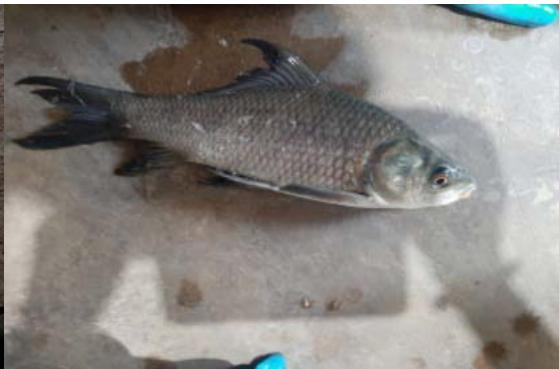 katla
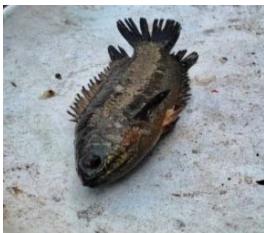 Koi
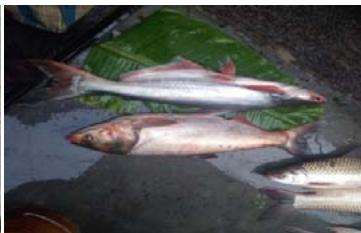 Pungs Tangra
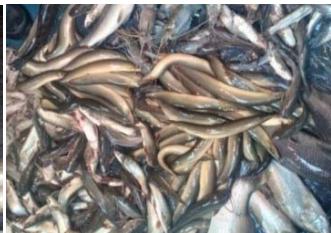 Pankal
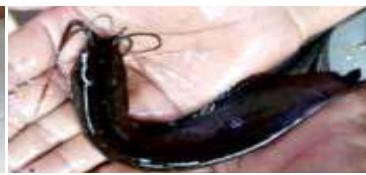 Singhi
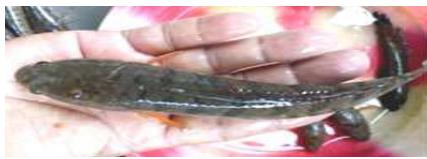 Lata
## IV. CONCLUSION
The final result confirmed that the appropriate conservation strategy and proper planning must be needed to protect those local fish species. The market-based survey of those species showed a considerable drop in productivity in the last few years for several reasons. Overfishing, unregulated uses of pesticides in agricultural field, uses of antibiotics, natural calamity, irrational fish harvesting along with different anthropogenic activities, environmental pollution as well as manmade pollution are the central cause for aquatic diversity loss which also affect on the fish faunal population. Proper supervision along with sustainable developmental thoughts like harvesting fish population size restriction, and breeding technique development may protect those fish species from the door of extinction.
Generating HTML Viewer...
References
9 Cites in Article
K (1981). Fresh water fishes of India handbook.
V G Jhingran (1982). Fish and fisheries of India.
S Das Sarkar,P Swain,S Manna,S Samanta,P Majhi,A Bera,B Das,B Mohanty (1989). Arsenic contamination in food chain - a menace to food safety, human nutrition and health.
R Barman (2007). Freshwater Fish Fauna of Andhra Pradesh with Comments on the Threatened and Endemic Species.
Nirmalya Sinha,Malay Patsa,Sumandev Chakrabortty,Jadab Chattopadhyay,Smarajit Maiti (2008). Nutritional Status of the Low Socioeconomic Psychologically Healthy Adolescent: A Study from Rural Areas of Paschim Medinipur District, India.
K Jayaram (2010). DINING ON CALIFORNIA’S FRESHWATER FISHES.
Sandipan Gupta,Samir Banerjee (2012). Food And Feeding Habit Of Amblypharyngodon mola (Hamilton-Buchanan, 1822) In West Bengal, India.
M Mandal,A Chanda (2017). A Study on Small Indigenous Freshwater Fish Availability in Two Daily Markets of Midnapur Town, West Bengal, India.
(2018). International Union for Conservation of Nature and Natural Resources.
No ethics committee approval was required for this article type.
Data Availability
Not applicable for this article.
How to Cite This Article
Dr. Kallol Kumar Hazra. 2026. \u201cAvailability of Fresh Water Fishes at Contai Municipality in Purba Medinipur District of West Bengal, India.\u201d. Global Journal of Science Frontier Research - C: Biological Science GJSFR-C Volume 23 (GJSFR Volume 23 Issue C2): .
Explore published articles in an immersive Augmented Reality environment. Our platform converts research papers into interactive 3D books, allowing readers to view and interact with content using AR and VR compatible devices.
Your published article is automatically converted into a realistic 3D book. Flip through pages and read research papers in a more engaging and interactive format.
Water is the home of fishes which may be fresh, brackish and marine. The present study is entirely based on freshwater fishes. PurbaMedinipur district has the potentiality for large fresh water resources. In this district, Contai is an important vital area because it is also a coastal based zone. Therefore the present study is very significant. Total of 46 native fish species were identified in this Municipality from the period of July 2021 to June 2022. Here total 46 freshwater fish species were observed under the 07 orders and 20 families.
Our website is actively being updated, and changes may occur frequently. Please clear your browser cache if needed. For feedback or error reporting, please email [email protected]
Thank you for connecting with us. We will respond to you shortly.