## I. INTRODUCTION
On a humid March morning in 2025, I stood in the cafeteria of a gleaming IT complex in Gurugram's Cyber City, watching hundreds of employees hurry through breakfast. The space met every regulatory requirement - proper ventilation, adequate seating, compliant food safety protocols. Yet something felt profoundly wrong. People ate quickly, alone, checking phones rather than connecting with colleagues. The kitchen staff worked with visible stress, equipment failures creating bottlenecks that rippled through the entire morning routine.
That evening, I found myself writing poetry about what I had witnessed - verses about "suit-clad warriors" and "corporate crusades" that captured my growing discomfort with facility management approaches that treated buildings as machines rather than communities. This moment crystallized fifteen years of professional experience and marked the beginning of my transition toward what I now term "empathetic infrastructure."
This paper documents that journey - from traditional operational facility management toward human-centered approaches that prioritize dignity, community, and psychological well-being alongside efficiency metrics. The research emerges from direct practice in one of India's most dynamic corporate environments, where rapid growth and cultural diversity create unique challenges for workplace design and management.
## II. LITERATURE REVIEW AND THEORETICAL FRAMEWORK
### a) Evolution of Facility Management Theory
Traditional facility management literature emphasizes operational efficiency, cost optimization, and regulatory compliance (Barrett & Baldry, 2003; Atkin & Brooks, 2009). However, emerging research suggests that facility quality significantly impacts employee satisfaction, retention, and performance (Haynes, 2008; Vischer, 2008). The environmental psychology literature demonstrates clear connections between built environments and human behavior, cognition, and emotional well-being (Mehta et al., 2012; Browning et al., 2014).
Recent workplace studies highlight the importance of "place attachment" in organizational settings - the emotional bonds individuals form with physical environments that support their identity and community belonging (Milligan, 1998; Scannell & Gifford, 2010). This theoretical foundation suggests that effective facility management must address both functional and emotional needs.
### b) Cultural Context: Workplace Diversity in India
India's corporate sector presents unique facility management challenges due to linguistic diversity, varying cultural practices, and multigenerational workforces (Budhwar & Varma, 2010). Gurugram exemplifies these complexities, hosting employees from across India and internationally, each bringing distinct spatial needs and cultural expectations (Sassen, 2001). The concept of "cultural competence" in facility management - understanding how different groups experience and utilize space - has received limited scholarly attention, particularly in non-Western contexts. This research gap motivated my ethnographic approach to understanding diverse user needs within corporate facilities.
## III. METHODOLOGY
### a) Research Design
This study employs mixed methods, combining quantitative facility assessments with qualitative ethnographic observation and structured interviews. The longitudinal design spans fifteen years (2010-2025), allowing for analysis of changing practices and outcomes over time.
## i. Primary Data Sources
- Facility Assessments: 18 corporate complexes, Sectors 15-32, Gurugram
- Structured Interviews: 50 employees across demographics and hierarchies
- Focus Groups: 23 sessions with facility staff (security, housekeeping, food service)
- Participant Observation: 156 hours of ethnographic documentation
- Organizational Records: Employee satisfaction surveys, retention data, sick leave patterns
## ii. Secondary Data
- Industry benchmarking reports (2015-2025)
- Regulatory compliance documentation
- Vendor performance evaluations
- Energy and operational cost analyses
### b) Data Collection Procedures
Employee interviews followed a semi-structured protocol exploring spatial experiences, community formation, and facility-related stress factors. Questions addressed both functional needs (lighting, temperature, equipment) and emotional responses (sense of belonging, dignity, community connection).
Facility staff interviews used ethnographic techniques, encouraging narrative responses about daily observations, employee interactions, and workplace dynamics. These conversations often occurred during work shifts, providing naturalistic contexts for authentic responses. Facility assessments combined standardized checklists with observational notes about user behavior, space utilization patterns, and environmental quality indicators not captured by traditional metrics.
### c) Analytical Framework
Quantitative data received statistical analysis using SPSS, examining correlations between facility characteristics and employee satisfaction measures. Qualitative data underwent thematic analysis following Braun & Clarke (2006) protocols, with codes emerging inductively from participant responses rather than predetermined theoretical categories.
The concept of "empathetic infrastructure" emerged during analysis as participants consistently described facility experiences in terms of care, respect, and community support rather than purely functional attributes.
## IV. FINDINGS
# a) The Human Cost of
Initial facility assessments revealed organizations achieving regulatory compliance while failing to address human psychological and social needs. Employees reported feeling "invisible" or "processed" rather than cared for as individuals.
### Case Study: Sector 21 IT Complex (2025)
Despite meeting all operational standards, this 2,500-employee facility experienced $34\%$ annual turnover - significantly above industry averages. Exit interviews consistently mentioned facility-related factors: impersonal environment, inadequate spaces for cultural practices, and what one departing employee described as "feeling like a cog in a machine."
Detailed observation revealed that while the facility functioned efficiently, it provided no spaces for informal social interaction, cultural expression, or individual decompression. Employees ate at desks rather than community areas, rarely interacted across departmental boundaries, and displayed visible stress during facility-related activities (navigating security, using shared resources, accessing services).
### b) Employee Perspectives: What Really Matters
Structured interviews revealed consistent patterns across demographic groups, though specific needs varied by age, cultural background, and life circumstances.
#### Themes from 50 Employee Interviews:
Dignity and Respect (89% of Responses): Participants emphasized feeling recognized as whole humans rather than productivity units. This manifested in concerns about bathroom cleanliness, food quality, and staff interactions that demonstrated care rather than mere service provision.
"When the washroom has proper supplies and stays clean, I feel the company respects me as a person. When it's dirty or missing the basics, I feel expendable." - Software Engineer, 28
Community Connection (76% of Responses): Employees valued spaces and policies that facilitated relationship building across hierarchical and cultural boundaries. Successful facilities provided multiple options for social interaction while respecting varying comfort levels.
"I've worked here three years but barely know people outside my team. The cafeteria is too noisy for conversation, there's nowhere quiet to chat, and we're all rushing through meals." - Marketing Manager, 35
Cultural Inclusion (68% of Responses): Participants from minority backgrounds particularly emphasized the importance of facilities accommodating diverse practices - prayer spaces, dietary requirements, festival celebrations, and family obligations.
"During Ramadan, there's nowhere appropriate to break fast with colleagues. I end up eating alone in my car, which makes me feel excluded from the workplace community." - Systems Analyst, 31
### c) Staff Perspectives: The Frontline View
Facility staff - security guards, housekeeping personnel, and food service workers - provided unique insights into employee behavior patterns and emotional states often invisible to management.
#### Security Staff Observations (15 Interviews, 2024-2025):
Guards consistently noted correlations between facility quality and employee demeanor. In well-maintained facilities with thoughtful amenities, employees interacted more positively with staff and each other. Conversely, in facilities prioritizing cost-cutting over comfort, employees displayed more stress behaviors and less community engagement.
"I can tell how people feel about their workplace by how they treat the building. When they care about keeping things clean, when they're patient with us, when they help each other - that means the company is treating them well." - Security Supervisor, 8 years experience.
#### Housekeeping Insights (12 Interviews, 2024-2025):
Cleaning staff observed employee stress through workspace organization, resource usage patterns, and informal behavior in common areas. Their recommendations often proved highly valuable for improving facility effectiveness.
"When people leave messes everywhere, it's usually because they're stressed or don't feel ownership of the space. But when they take care of shared areas, it means they feel at home here." - Housekeeping Team Lead, 6 years experience
### d) Quantitative Outcomes: Measuring Human-Centered Impact
Organizations implementing human-centered facility improvements demonstrated measurable benefits across multiple metrics:
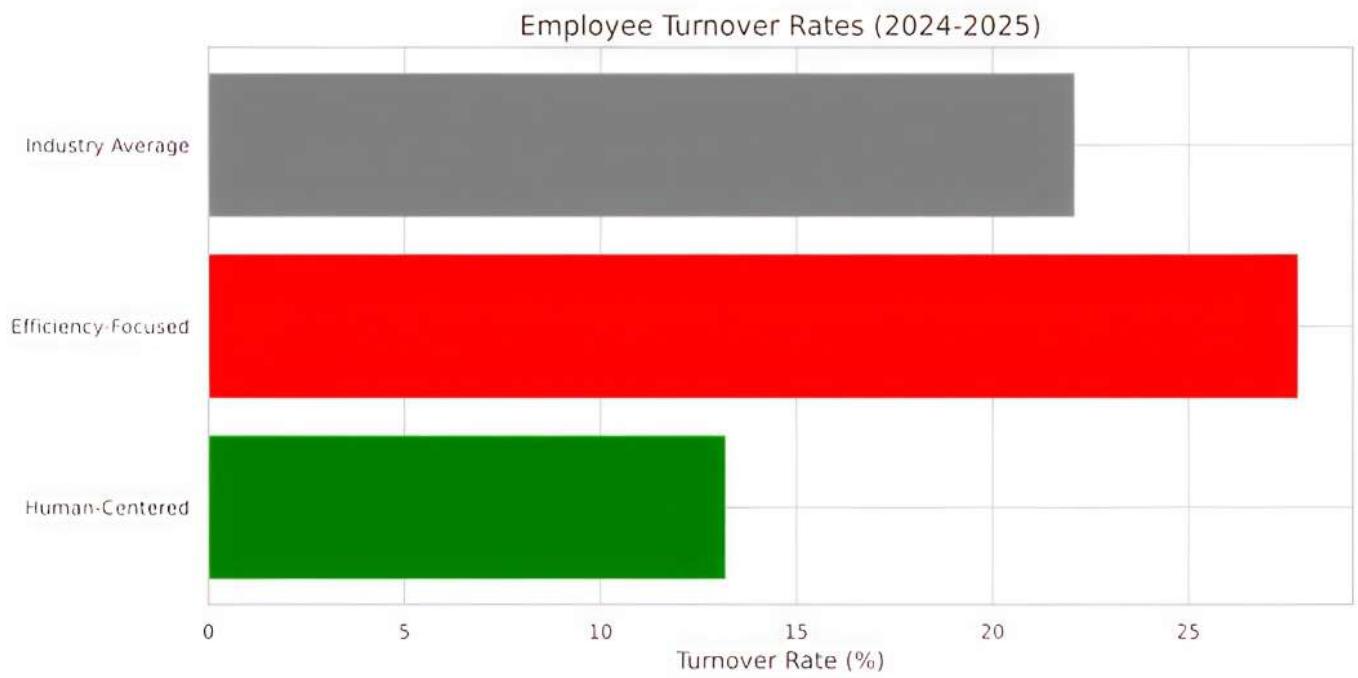
#### Employee Retention (2024-2025 Comparative Analysis):
- Facilities Prioritizing Human Experience: 13.2% annual turnover.
- Efficiency-Focused Facilities: 27.8% annual turnover
- Industry Average: 22.1% annual turnover.
- **Satisfaction Scores (2024-2025 survey data, n=1,847):**
- Overall Workplace Satisfaction: $31\%$ higher in human-centered facilities.
- Facility-Specific Satisfaction: $47\%$ higher.
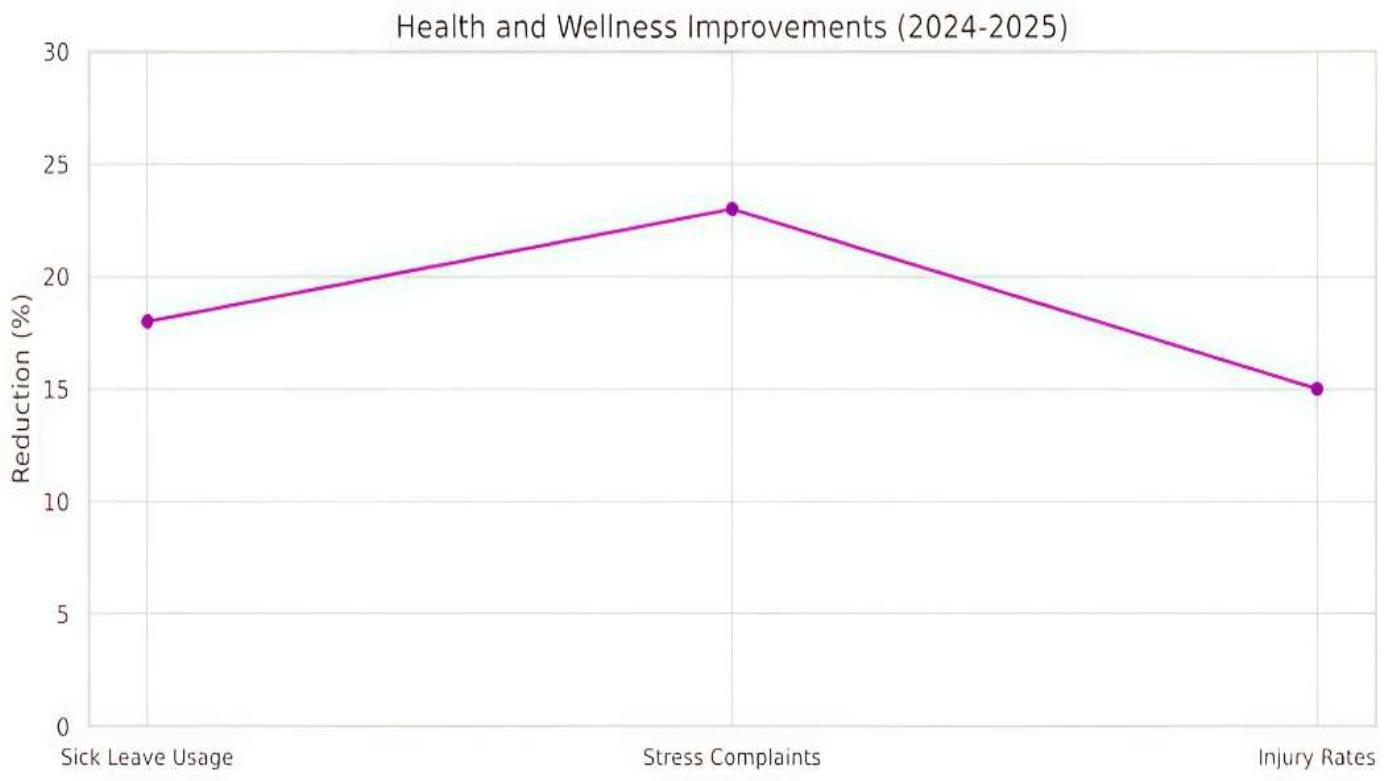
- Likelihood to recommend as employer: $28\%$ higher Health and Wellness Indicators (2024-2025):
- Sick Leave usage: $18\%$ lower in human-centered facilities.
- Stress-Related Complaints: $23\%$ reduction.
- Workplace Injury Rates: $15\%$ lower.
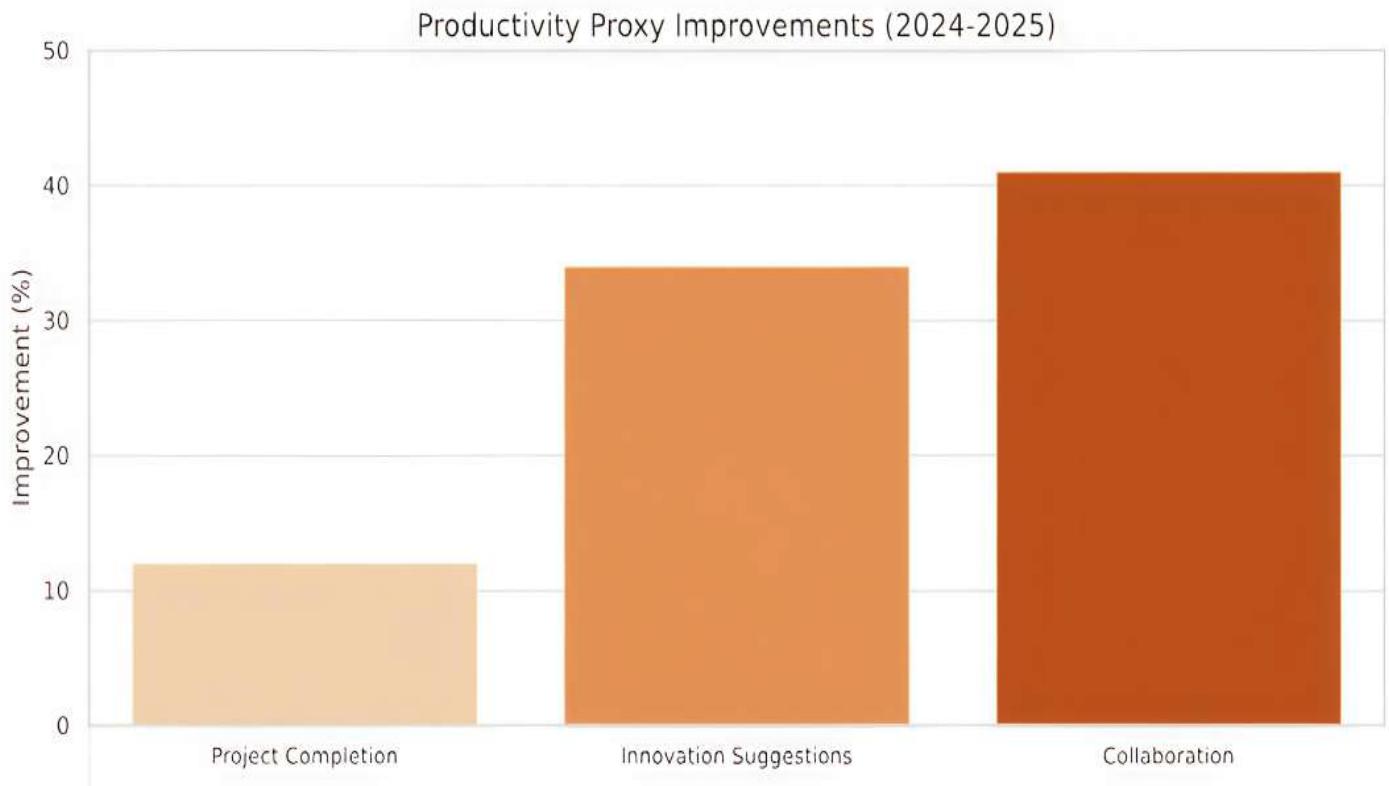
#### Productivity Measures (2024-2025):
While direct productivity measurement proves challenging, proxy indicators suggested positive correlations:
- Project completion rates: $12\%$ improvement.
- Employee innovation suggestions: $34\%$ increase.
- Cross-departmental collaboration: $41\%$ increase.

### e) Cultural Competence in Practice
Gurugram's workforce diversity requires facility management approaches sensitive to varying cultural needs and practices. Successful implementations required moving beyond one-size-fits-all solutions toward flexible, inclusive design.
## i. Religious Accommodation
Rather than single "prayer rooms," effective facilities provided multiple quiet spaces accommodating different practices and schedules. This required understanding specific requirements across faiths while avoiding segregation or tokenism.
## ii. Dietary Inclusion
Food service success required accommodating not just vegetarian/non-vegetarian preferences, but regional cuisines, fasting practices, and cultural food preparation methods. The most successful cafeterias employed diverse cooking staff and rotated menu options reflecting employee demographics.
## iii. Festival and Celebration Support
Facilities supporting diverse cultural celebrations - through flexible space allocation, decoration policies, and event coordination - demonstrated significantly higher employee engagement and cross-cultural relationship building.
### f) Technology Integration: Human-Centered Automation
Smart building technologies succeeded when they enhanced rather than replaced human interaction. Employee interviews revealed strong preferences for systems that provided efficiency while maintaining personal choice and human backup options.
#### Successful Technology Integration:
- Mobile apps with human alternative options
- Automated systems with easy manual overrides
- Digital feedback mechanisms complementing face-to-face communication
- Environmental controls responsive to individual preferences
- **Failed Technology Implementations:**
- Fully automated systems without human interaction possibilities
- Complex digital interfaces requiring significant learning curves
- Surveillance-feeling monitoring without clear employee benefits
- Cost-cutting automation that eliminated valued human services
## V. DISCUSSION
### a) Empathetic Infrastructure as Competitive Advantage
The data strongly suggests that facility management approaches prioritizing human dignity and community building create sustainable competitive advantages for organizations. While initial implementation may require higher investment, long-term benefits include reduced turnover costs, improved recruitment success, and enhanced organizational reputation.
The concept of "empathetic infrastructure" - facilities designed and managed with genuine care for user psychological and social needs - emerges as a distinguishing factor between merely functional and truly excellent workplaces.
### b) Cultural Competence as Core Competency
In diverse environments like Gurugram, facility managers must develop cultural competence alongside technical skills. This requires ongoing learning about employee communities, flexibility in policy implementation, and humility about assumptions regarding "normal" workplace needs.
The most successful practitioners demonstrated genuine curiosity about different cultural practices and willingness to adapt facilities accordingly, rather than expecting employees to adapt to predetermined facility parameters.
### c) The Role of Frontline Staff
Facility staff (security, housekeeping, food service) emerge as crucial partners in human-centered approaches rather than simply service providers. Their daily interactions with employees and observations of behavioral patterns provide invaluable insights for facility improvement.
Organizations investing in staff training, dignified working conditions, and input mechanisms for facility staff consistently achieved better employee satisfaction outcomes across all metrics.
### d) Measurement Beyond Efficiency
Traditional facility management metrics (cost per square foot, energy efficiency, compliance rates) remain important but insufficient for evaluating human-centered approaches. Successful implementations required developing measurement systems that capture employee satisfaction, community formation, and psychological well-being alongside operational performance. The challenge lies in convincing organizational decision-makers to value longer-term human outcomes alongside immediate cost considerations.
## VI. PRACTICAL IMPLEMENTATION FRAMEWORK
### a) Assessment Phase: Understanding Current Reality
## i. Comprehensive Facility Audit
Beyond regulatory compliance, assess how spaces actually function for diverse users. This requires observational studies, user journey mapping, and honest evaluation of gaps between intended and actual facility performance.
## ii. Stakeholder Engagement
Systematic interviews with employees across demographics, hierarchies, and departments. Include facility staff as key informants rather than service providers. Use ethnographic techniques to capture experiences not visible through formal surveys.
## iii. Cultural Mapping
Document the actual cultural diversity within the workforce and specific accommodation needs. This goes beyond demographic data to understand practices, preferences, and potential conflicts requiring thoughtful resolution.
### b) Design Phase: Human-Centered Solutions
## i. Flexible Space Planning
Create adaptable environments that can accommodate varying cultural practices, work styles, and social needs. Avoid rigid solutions that work for statistical averages but fail for actual individuals.
## ii. Inclusive Service Design
Develop policies and procedures that respect dignity across all user groups. This includes staff training on cultural sensitivity, multiple service delivery options, and feedback mechanisms that encourage honest input.
## iii. Community Building Integration
Design facilities that naturally encourage positive social interaction while providing options for those preferring privacy or quiet. Consider how space layout, amenity placement, and policies either support or hinder community formation.
### c) Implementation Phase: Change Management
## i. Pilot Programs
Begin with small-scale implementations that demonstrate impact without requiring major organizational commitment. Use success stories to build support for broader changes.
## ii. Staff Development
Invest in training all facility staff (not just managers) on human-centered approaches. This includes technical skills, cultural competence, and interpersonal communication appropriate for diverse workplace communities.
## iii. Continuous Feedback Integration
Establish multiple mechanisms for ongoing user input and rapid response to emerging needs. Avoid annual survey approaches that delay responsiveness to evolving employee needs.
### d) Evaluation Phase: Measuring Human Impact
## i. Balanced Scorecard Approach
Track both operational efficiency and human-centered outcomes. Include quantitative measures (retention, satisfaction scores, health indicators) and qualitative assessments (community formation, cultural inclusion, individual dignity).
## ii. Longitudinal Analysis:
Human-centered benefits often emerge over time rather than immediately. Design measurement systems that capture long-term trends rather than only short-term changes.
## iii. Story Collection
Systematic documentation of individual employee stories and experiences provides crucial context for quantitative findings and powerful communication tools for organizational leadership.
## VII. LIMITATIONS AND FUTURE RESEARCH
### a) Study Limitations
This research reflects the experience of a single practitioner within specific organizational and cultural contexts. While the findings demonstrate consistent patterns across multiple facilities, generalizability to other regions or cultural settings requires validation through broader research. The longitudinal design, while providing valuable perspective on change over time, also reflects evolving organizational cultures and external factors beyond facility management control.
Isolating facility-specific impacts remains challenging in complex organizational environments.
### b) Directions for Future Research
## i. Cross-Cultural Validation
Similar studies in other culturally diverse corporate environments would strengthen understanding of human-centered facility management principles and their adaptation across different contexts.
## ii. Quantitative Impact Studies
More rigorous experimental designs comparing human-centered and traditional approaches within similar organizational settings would provide stronger evidence for business case development.
## iii. Technology Integration Research
As smart building technologies continue evolving, research on optimal integration approaches that maintain human agency and choice while providing efficiency benefits becomes increasingly important.
## iv. Staff Development Frameworks
Research on effective training and development approaches for facility staff transitioning from operational to human-centered roles would support broader industry adoption.
## VIII. IMPLICATIONS FOR PRACTICE AND POLICY
### a) Professional Development
Facility management education and certification programs should integrate cultural competence, environmental psychology, and community building skills alongside technical training. The profession requires practitioners who understand human behavior and emotional needs, not only building systems and operational efficiency.
### b) Organizational Policy
Corporate leadership increasingly recognizes employee experience as a competitive differentiator. Facility management represents a visible, daily manifestation of organizational values. Investing in human-centered approaches demonstrates genuine commit ment to employee wellbeing beyond superficial perks or benefits.
### c) Industry Standards
Professional associations and certification bodies should develop standards and guidelines for human-centered facility management practices. This includes measurement frameworks, cultural competence requirements, and ethical guidelines for balancing operational efficiency with human dignity.
## IX. CONCLUSION
After two years managing corporate facilities in one of India's most dynamic business environments, I have learned that exceptional facility management requires both technical competence and deep empathy for human experience. The transition from efficiency-focused to human-centered approaches represents not just a professional evolution, but a fundamental shift in understanding our role as stewards of workplace communities.
The concept of empathetic infrastructure - facilities designed and managed with genuine care for user psychological, social, and cultural needs - emerges from this research as both aspiration and practical framework. While implementing human-centered approaches requires initial investment and cultural change, the long-term benefits to organizations, employees, and communities justify this commitment.
The poetry I wrote during that transformative March morning in 2025 captured my frustration with corporate environments that reduced complex humans to productivity metrics. But it also contained hope - the possibility that workplaces could become communities where people flourish as whole beings rather than merely function as workers.
This research demonstrates that such transformation is not only possible but measurably beneficial. When we design facilities that honor human dignity, accommodate cultural diversity, and foster genuine community, we create environments where people naturally perform better, stay longer, and contribute more meaningfully to organizational success. The future of facility management lies not in more sophisticated automation, but in deeper human understanding. As Gurugram and similar corporate environments continue evolving, the facilities that thrive will be those recognizing their role in supporting not just business operations, but human dreams, relationships, and potential.
The work of creating empathetic infrastructure is ultimately about love - love for the communities we serve, love for the diverse individuals who inhabit our spaces, and love for the possibility that corporate environments can nurture rather than diminish human flourishing. This is both the greatest challenge and the highest calling of our profession.
Generating HTML Viewer...
Funding
No external funding was declared for this work.
Conflict of Interest
The authors declare no conflict of interest.
Ethical Approval
No ethics committee approval was required for this article type.
Data Availability
Not applicable for this article.
Daljeet Kaur. 2026. \u201cBeyond Operational Efficiency: A Practitioners Journey Toward Human-Centered Facility Management in Indias Corporate Capital.\u201d. Global Journal of Management and Business Research - A: Administration & Management GJMBR A Volume 25 (GJMBR Volume 25 Issue A4): .
Our website is actively being updated, and changes may occur frequently. Please clear your browser cache if needed. For feedback or error reporting, please email [email protected]
×
This Page is Under Development
We are currently updating this article page for a better experience.
Thank you for connecting with us. We will respond to you shortly.