In an era of rapid advancements in digital technologies and the Internet of Things (IoT), cities face unprecedented challenges in managing complex operations securely and efficiently. Blockchain technology, with its core attributes of transparency, immutability, and decentralization, has emerged as a transformative force. By enabling decentralized and tamperproof data management, blockchain provides innovative solutions to streamline city services, reduce costs, and enhance public trust. Its integration into smart city frameworks positions it as a cornerstone for sustainable urban development, especially in leading-edge initiatives like Dubai’s Smart City Strategy. Decentralization, is a technology that can satisfy these needs and is thus revolutionizing the concept of smart cities. This paper presents a comprehensive overview of the use of blockchain in the transition to smart cities, detailing the specific challenges faced in the process. Furthermore, it introduces an innovative blockchain model called International Certification Layer, which significantly enhances governments’ control over transactions.
## I. INTRODUCTION
In an era of rapidly advancing digital technologies, blockchain has emerged as a transformative enabler of innovation. Its applications extend far beyond cryptocurrencies, encompassing domains such as smart contracts, supply chain management, digital identity verification, and sustainable resource management. The potential of blockchain to revolutionize the development of smart cities remains an underexplored but highly promising area of study (Yuan, 2024).
Smart cities, driven by advancements in IoT and data analytics, are no longer a futuristic concept but a global reality. These cities leverage sophisticated technologies to collect, analyze, and utilize data effectively across diverse domains, including traffic management, utilities, healthcare, and public safety, enhancing the quality of urban life (Maulana et al., 2024; Ebadinezhad, 2024).
By aligning with the United Nations' Sustainable Development Goals (SDGs), particularly Goal 11, smart cities aim to promote inclusivity, safety, and sustainability. Integrating advanced technologies such as blockchain into urban planning and governance frameworks can enhance transparency, security, and efficiency in managing urban ecosystems (Tapscott & Tapscott, 2023).
Blockchain and IoT synergistically create decentralized and secure systems, reimagining urban management. Serving as the technological backbone, blockchain provides robust solutions for secure data and transaction management, which are pivotal to seamless city operations (Smart Dubai Office, 2023a).
To provide a clearer understanding of how blockchain aligns with global objectives and integrates into urban strategies, Figure 1 illustrates the framework connecting the UAE's blockchain adoption initiatives with Sustainable Development Goals (SDGs). The diagram emphasizes the interplay between technology, the financial sector, and key components such as cryptocurrency, big data, and IoT in shaping sustainable smart cities.
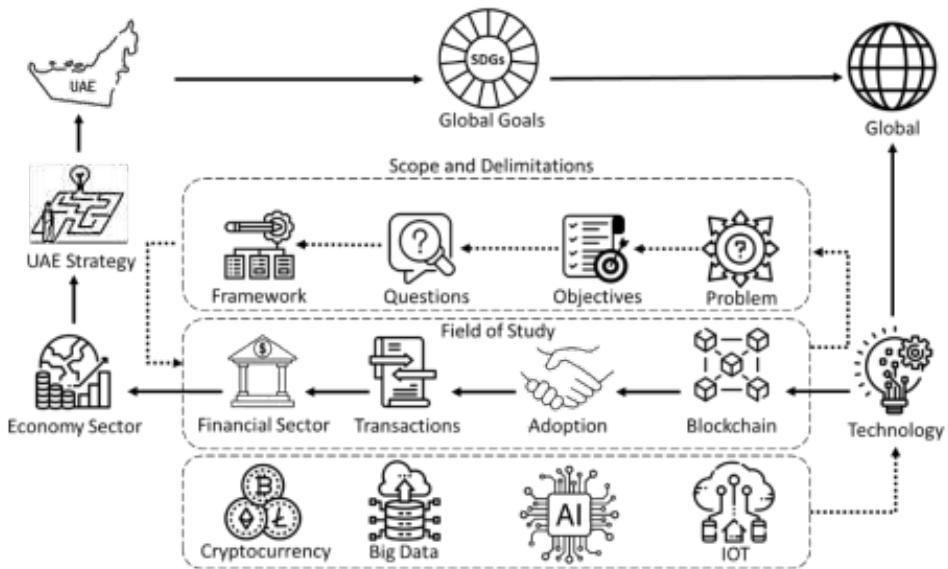 Figure 1: Blockchain's Role in Smart Cities and SDGs (Source: Author) this paper delves into the transformative role of blockchain in smart city development, focusing on its potential, associated challenges, and innovative solutions. Dubai's Smart Dubai Initiative serves as a case study to illustrate the successful implementation of blockchain strategies (Smart Dubai Office, 2023b).
## II. CHALLENGES
Despite its transformative potential, blockchain technology encounters numerous challenges that hinder its full adoption in smart cities. These challenges include scalability, interoperability, energy consumption, regulatory issues, privacy concerns, and trust.
### a) Scalability
Blockchain systems like Bitcoin are limited in their transaction processing capacity. For instance, Bitcoin handles approximately seven transactions per second, compared to thousands of transactions per second handled by traditional systems like Visa (Yuan, 2024). This limitation poses significant challenges for smart cities, where millions of real-time transactions are essential. Emerging solutions, such as second-layer protocols like the Lightning Network, are promising but remain in their early stages (Maulana et al., 2024).
### b) Interoperability
The lack of standardized frameworks complicates seamless communication and data exchange between diverse blockchain platforms. Solutions like Polkadot and Cosmos, which enable cross-chain communication, offer potential pathways to overcome interoperability challenges (Ebadinezhad, 2024). However, universal adoption of these protocols remains elusive (Hashem et al., 2024).
### c) Energy Consumption
Proof-of-Work (PoW) consensus mechanisms consume significant energy, with Bitcoin mining rivaling the energy usage of medium-sized countries (Tapscott & Tapscott, 2023). For smart cities striving for sustainability, such energy demands are unsustainable. Alternatives like Proof-of-Stake (PoS) and Proof-of-Authority (PoA) present more energy-efficient options (Casino et al., 2023).
### d) Regulatory and Legal Challenges
Blockchain's decentralized nature creates complexities in regulatory and legal frameworks. Jurisdictional ambiguities, compliance issues, and privacy concerns related to its potential misuse pose significant hurdles. Governments must establish clear legal guidelines to support blockchain adoption (Smart Dubai Office, 2023a).
### e) Privacy and Security
Blockchain's transparency, while a strength, raises privacy concerns as public blockchains expose transaction details to all participants. Additionally, vulnerabilities like the "51% attack" highlight potential security risks (Smart Dubai Office, 2023b).
### f) Adoption and Trust
Public skepticism, stemming from blockchain's association with volatile cryptocurrencies, hampers widespread adoption. Educational campaigns and trust-building measures are crucial to overcoming misconceptions and fostering blockchain integration in smart cities (Yuan, 2024).
## III. SOLUTIONS AND INNOVATIONS
To overcome the challenges associated with the integration of blockchain technology into the development of smart cities, several solutions and innovations have been proposed and developed.
a) Scalability Solutions
- To address the scalability issue, second-layer solutions such as the Lightning Network for Bitcoin and the Plasma framework for Ethereum have been proposed (Yuan, 2024). These solutions operate by creating an off-chain layer where multiple transactions are bundled into a single on-chain transaction, significantly increasing transaction processing capacity. Additionally, innovations like sharding in Ethereum 2.0 offer a more scalable approach by splitting the blockchain into smaller partitions, or "shards," that can process transactions in parallel (Maulana et al., 2024).
b) Interoperability Solutions
Cross-chain communication protocols are pivotal in solving the interoperability problem, enabling different blockchains to exchange data and assets seamlessly. Polkadot, for instance, facilitates the transfer of data and assets across blockchains, not limited to tokens. Similarly, Cosmos implements the Inter-Blockchain Communication (IBC) protocol to connect disparate blockchain systems (Ebadinezhad, 2024).
### c) Energy-Efficient Consensus Mechanisms
To mitigate the high energy consumption associated with Proof-of-Work (PoW), alternative consensus mechanisms such as Proof-of-Stake (PoS), Delegated Proof-of-Stake (DPoS), and Proof-of-Authority (PoA) have been developed. PoS, in particular, reduces energy requirements by assigning validation power based on the number of tokens held by participants, thereby promoting sustainability (Hashem et al., 2024). Emerging hybrid mechanisms, such as Algorand's Pure PoS, further optimize energy efficiency while maintaining security and decentralization (Tapscott & Tapscott, 2023).
### d) Regulatory and Legal Solutions
- Governments and regulators are actively formulating legal frameworks to govern blockchain technology. The European Union's Blockchain Observatory and Forum, launched in 2018, exemplifies efforts to engage stakeholders in blockchain-related activities and to establish regulatory clarity. Similarly, the UAE has implemented a comprehensive blockchain strategy, fostering innovation while ensuring compliance with legal and ethical standards (Smart Dubai Office, 2023a).
e) Privacy-Enhancing Solutions
Cryptographic advancements such as zk-SNARKs (Zero-Knowledge Succinct Non-Interactive Argument of Knowledge) and zk-STARKs (Zero-Knowledge Scalable Transparent Argument of Knowledge) offer enhanced privacy for blockchain users. These techniques allow users to prove the validity of information without revealing the information itself, addressing concerns around transparency versus privacy in blockchain systems (Smart Dubai Office, 2023b).
### f) Building Trust through Education and Public Awareness
Education and public awareness campaigns are essential for building trust in blockchain technology. Collaborative initiatives between governments, academic institutions, and private organizations can foster blockchain literacy. For example, Dubai's Blockchain Academy aims to equip individuals and businesses with the skills to leverage blockchain technology effectively (Casino et al., 2023).
By addressing these challenges with innovative solutions, blockchain technology can significantly contribute to the realization of sustainable and efficient smart cities.
### g) Visualizing Blockchain in Action
To further illustrate the practical application of blockchain technology in smart cities, Figure 1 presents a conceptual workflow of a blockchain-powered transaction ecosystem. This example demonstrates how blockchain integrates with existing systems to enhance transparency, security, and operational efficiency.
The process begins with a user (e.g., Saeed) initiating a cryptocurrency transfer via a wallet application. The transaction is then validated through a decentralized network of nodes to ensure compliance with blockchain protocols. Financial institutions, including central and private banks, participate in the approval process, maintaining transparency and trust. Once verified, the transaction is added to the blockchain as an immutable block, ensuring data integrity and accountability (Nechesov & Ruponen, 2024; Raza et al., 2024).
This diagram not only highlights the decentralized nature of blockchain but also emphasizes its potential for transforming traditional financial and governmental processes into seamless and secure systems. By providing visual clarity, it bridges the gap between complex technological concepts and practical implementation.
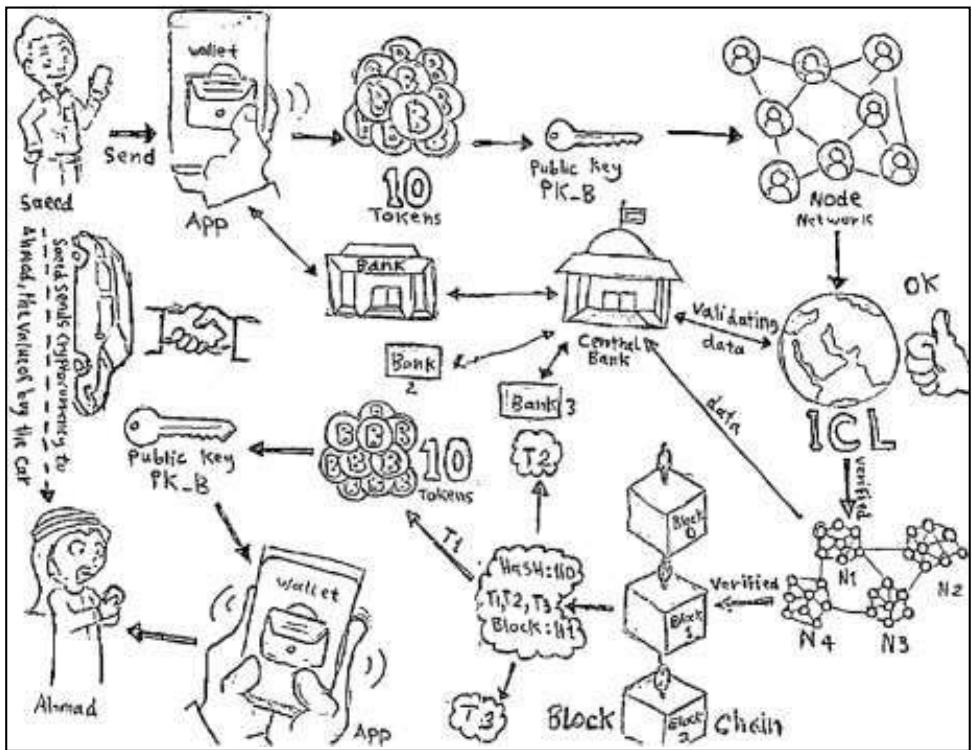 Figure 2: Blockchain Transaction Workflow for Smart Cities (Source: Author) the diagram illustrates the transaction flow within a blockchain-enabled environment, showcasing key processes such as cryptocurrency transfer, data validation, and integration with financial institutions. The figure was conceptualized and created by the author to provide a clear visualization of the system.
## IV. EXAMPLES AND CASE STUDIES
Numerous projects and initiatives worldwide are successfully implementing blockchain technology to foster the development of smart cities. This section highlights two significant examples: "International Certification Layer" and Dubai's Blockchain Strategy.
### a) International Certification Layer
The International Certification Layer, as detailed in a previously published study (Alketbi et al., 2024), represents a groundbreaking framework that utilizes blockchain technology to manage transactions requiring governmental approvals. This framework is particularly applicable to processes such as vehicle and building licensing, customs operations, tax management, and general government services.
This system empowers governments by integrating blockchain's decentralized nature with regulatory oversight. It ensures compliance while enhancing operational transparency. Unlike traditional centralized systems, the International Certification Layer decentralizes data control while maintaining high levels of accountability and security.
By utilizing blockchain's core attributes of immutability, transparency, and decentralization, the International Certification Layer improves the efficiency and reliability of government services. It addresses key challenges associated with blockchain adoption, particularly those related to scalability and regulatory compliance. This makes it a viable solution for advancing smart city initiatives.
The implementation of this framework has shown promising results in creating a secure and efficient ecosystem for public services. Its practical application demonstrates how blockchain can transform governance, ensuring trust and transparency in urban management systems (Alketbi et al., 2024).
### b) Dubai's Blockchain Strategy
Dubai's Blockchain Strategy, launched in 2016, underscores the city's vision to become the first blockchain-powered urban hub. The strategy aims to digitize all government transactions, exceeding 100 million documents annually, by 2020 (Smart Dubai Office, 2023a).
This ambitious plan is expected to save 25.1 million man-hours and approximately $1.5 billion annually by eliminating paper-based processes. The strategy streamlines operations across key sectors, including real estate, banking, healthcare, transportation, urban planning, energy, digital commerce, and tourism (Smart Dubai Office, 2023b).
Dubai's leadership in blockchain adoption has also fostered collaborations with global technology firms such as IBM and ConsenSys, while creating a thriving ecosystem for blockchain startups. This initiative positions Dubai as a global leader in the application of blockchain technology (Tapscott & Tapscott, 2023).
These examples demonstrate blockchain's transformative potential in shaping smart cities. By offering secure, decentralized, and transparent solutions, blockchain enables governments, businesses, and individuals to interact more effectively, promoting sustainable and inclusive urban environments.
## V. CONCLUSION
Blockchain technology represents a transformative force, empowering governments to build efficient, sustainable, and inclusive smart cities. Its decentralized, secure, and transparent features create opportunities for automating, integrating, and optimizing urban services and operations, resulting in significant economic, social, and environmental improvements.
As discussed in this paper, the integration of blockchain technology in smart cities offers numerous benefits, including enhanced data security and privacy, reduced operational costs, improved efficiency and transparency in public services, and fostering innovation and entrepreneurship. Notable initiatives such as the "International Certification Layer" and Dubai's Blockchain Strategy demonstrate the practical applications of blockchain in enhancing urban life.
However, the journey toward fully adopting blockchain technology in smart cities is not without challenges. Technical hurdles, including scalability and interoperability, coupled with regulatory and social issues such as legislative support, public acceptance, and education, necessitate comprehensive efforts from all stakeholders. Continuous research, development, and innovation are crucial to refining the technology and adapting it to the diverse needs of different cities.
The "International Certification Layer" has addressed some challenges, particularly those related to governmental control and regulatory compliance. Nonetheless, the broader landscape of blockchain adoption remains complex. Governments must invest in research and development, establish robust legal and regulatory frameworks, and promote public-private partnerships to facilitate the growth of the blockchain ecosystem.
Dubai's Blockchain Strategy highlights the importance of visionary leadership and strategic planning in advancing blockchain adoption. Dubai's example also underscores the value of fostering a supportive environment for blockchain startups and innovators, which drives the development of new solutions and applications essential for smart city progress.
In conclusion, while blockchain technology is not a universal solution to all urban challenges, it offers a powerful tool for transforming cities into more livable, resilient, and sustainable environments. With strategic implementation and collaborative efforts, blockchain-powered smart cities can become the standard rather than the exception, shaping a future where urban ecosystems are optimized for efficiency, inclusivity, and sustainability.
Generating HTML Viewer...
References
11 Cites in Article
S Alketbi,M Mahmuddin,M Ahmad (2024). International Certification Layer: Enhancing Government Control in Blockchain-Powered Smart 2.
F Casino,T Dasaklis,C Patsakis (2023). A systematic literature review of blockchain-based applications: Current status, classification, and open issues.
Sahar Ebadinezhad,Mutaz Abdalkarim,Zainab Deen,Fulbert Kiminou Nsimba (2024). The Role of IoT in Enhancing Public Safety in Smart Cities.
Ibrahim Hashem,Aisha Siddiqa,Fadele Alaba,Muhammad Bilal,Saadat Alhashmi (2024). Distributed intelligence for IoT-based smart cities: a survey.
Fairuz Maulana,Puput Prasetyo Adi,Andi Pramono,Anita Rahayu,Satria Persada,Reny Nadlifatin (2024). A Scientometric Review and Research Trends of Internet of Things in Application of Smart City.
Andrey Nechesov,Janne Ruponen (2024). Empowering Government Efficiency Through Civic Intelligence: Merging Artificial Intelligence and Blockchain for Smart Citizen Proposals.
Abir Raza,Elarbi Badidi,Mohammad Hayajneh,Ezedin Barka,Omar Harrouss (2024). Blockchain-Based Reputation and Trust Management for Smart Grids, Healthcare, and Transportation: A Review.
Mounir El Khatib,Khadeegha Alzouebi (2023). Collaborative Business Intelligence A Case Study of the Dubai Smart City Strategy.
Rishik Sain (2023). Premium Office Furniture Solutions in Dubai for Smart and Comfortable Workspaces.
D Tapscott,A Tapscott (2023). Blockchain revolution revisited.
C Yuan (2024). Research on empowering urban social governance with artificial intelligence-Taking the construction of smart cities in China as an example.
Explore published articles in an immersive Augmented Reality environment. Our platform converts research papers into interactive 3D books, allowing readers to view and interact with content using AR and VR compatible devices.
Your published article is automatically converted into a realistic 3D book. Flip through pages and read research papers in a more engaging and interactive format.
In an era of rapid advancements in digital technologies and the Internet of Things (IoT), cities face unprecedented challenges in managing complex operations securely and efficiently. Blockchain technology, with its core attributes of transparency, immutability, and decentralization, has emerged as a transformative force. By enabling decentralized and tamperproof data management, blockchain provides innovative solutions to streamline city services, reduce costs, and enhance public trust. Its integration into smart city frameworks positions it as a cornerstone for sustainable urban development, especially in leading-edge initiatives like Dubai’s Smart City Strategy. Decentralization, is a technology that can satisfy these needs and is thus revolutionizing the concept of smart cities. This paper presents a comprehensive overview of the use of blockchain in the transition to smart cities, detailing the specific challenges faced in the process. Furthermore, it introduces an innovative blockchain model called International Certification Layer, which significantly enhances governments’ control over transactions.
Our website is actively being updated, and changes may occur frequently. Please clear your browser cache if needed. For feedback or error reporting, please email [email protected]
Thank you for connecting with us. We will respond to you shortly.