The digital transformation of IT service desks represents a paradigm shift away from traditional ticketing systems toward intelligent, autonomous support platforms powered by Generative and Agentic AI technologies. This evolution addresses fundamental challenges in employee technology support by providing immediate, personalized solutions without the friction of conventional support channels. The architecture of these advanced systems integrates conversational interfaces with knowledge management repositories and autonomous decisionmaking capabilities, enabling sophisticated reasoning across complex enterprise environments. Generative AI revolutionizes how technical information is communicated through dynamic content creation tailored to individual contexts and skill levels, while maintaining conversation continuity across extended interactions.
## I. INTRODUCTION
The traditional IT service desk model, characterized by ticketing systems, lengthy queues, and multi-tier escalation processes, is rapidly becoming obsolete in today's fast-paced digital workplace. A comprehensive longitudinal study conducted by Polyportis (2024) demonstrates that organizations implementing AI-powered service desks experience significant improvements across multiple dimensions of service delivery. The research tracked 27 enterprises over a 16-month period, revealing that AI adoption follows a distinct pattern where initial resistance gives way to accelerated acceptance once users experience tangible benefits. Companies reported not only quantitative improvements in resolution metrics but also qualitative enhancements in employee satisfaction, with post-implementation surveys showing $87\%$ of employees preferring AI-assisted support channels over traditional helpdesk interactions [1].
Modern enterprises are witnessing a paradigm shift toward intelligent, autonomous support systems that leverage the combined power of Generative and Agentic AI technologies. This transformation addresses a critical pain point: employees need immediate, accurate solutions to their IT challenges without the friction of traditional support channels. Generative AI brings sophisticated natural language understanding and content creation capabilities, while Agentic AI introduces autonomous decision-making and task execution. According to Tesler's extensive analysis of enterprise IT trends, organizations that have implemented mature AI service desk solutions have realized average annual cost savings of $3.7 million for large enterprises and$ 850,000 for mid-sized companies. The 2023-2026 outlook projects that Al-powered service desks will become the dominant support model in 76% of Fortune 1000 companies by 2025, with implementation barriers shifting from technological limitations to organizational change management challenges. The comprehensive market analysis further indicates that early adopters are gaining significant competitive advantages through improved workforce productivity, with employees saving an average of 5.2 hours per month previously lost to IT support issues [2]. The result is an IT service desk that doesn't merely respond to requests but anticipates needs, executes solutions, and continuously improves through machine learning.
## II. ARCHITECTURE OF AI-POWERED SERVICE DESKS
### a) Core Components and Integration
The foundation of a modern AI-powered service desk rests on several interconnected components working in harmony. At the conversational layer, large language models process natural language queries with contextual understanding, interpreting employee requests regardless of technical terminology or phrasing variations. According to Rishabh Software's comprehensive guide on enterprise software architecture patterns, successful AI service desk implementations predominantly follow a microservices-based architecture with event-driven communication between components. Their analysis of 35 enterprise implementations reveals that organizations adopting a Domain-Driven Design (DDD) approach alongside bounded contexts achieve $67\%$ faster integration with legacy systems compared to those using monolithic designs. The study particularly emphasizes the critical nature of API gateway patterns for managing the conversational layer, with properly implemented Circuit
Breaker and Bulkhead patterns preventing cascading failures during peak request periods. Most notably, enterprises implementing the Saga pattern for managing distributed transactions across multiple IT service systems reported $89\%$ fewer synchronization issues during complex multi-step request processing [3]. This conversational layer connects to a knowledge management system that maintains real-time access to IT policies, procedures, application catalogs, and troubleshooting databases.
The agentic layer operates as the decision-making engine, equipped with workflow automation capabilities that can execute tasks across multiple enterprise systems. Rishabh Software's architectural framework identifies Command Query Responsibility Segregation (CQRS) as the optimal pattern for this layer, enabling high-throughput command processing while maintaining separate optimization paths for query operations. Their case studies document how enterprises implementing event sourcing alongside CQRS achieved complete audit trails of all system actions—a critical requirement for IT service desks handling sensitive access management requests. The guide further details how leading implementations leverage the Strangler Fig pattern to gradually migrate capabilities from legacy ticketing systems to AI-powered alternatives without disrupting ongoing operations. Organizations following this approach reported successful integration with an average of 18 distinct enterprise systems, including identity management platforms for access provisioning, asset management systems for hardware requests, and monitoring tools for proactive issue resolution [3]. The architecture also incorporates feedback loops that capture interaction outcomes, enabling continuous model refinement and knowledge base updates.
## III. INTELLIGENCE AND REASONING CAPABILITIES
Advanced reasoning mechanisms enable these systems to handle complex, multi-step IT requests that traditionally required human intervention. The systematic literature review conducted by Al Haj Ali and colleagues comprehensively analyzed 106 research papers from the past decade, establishing a theoretical framework for cognitive capabilities in enterprise systems. Their meta-analysis identified three distinct levels of cognitive maturity in current AI service desks: reactive (responding to explicit requests), adaptive (learning from patterns), and anticipatory (predicting needs before explicitly stated). Only $17\%$ of studied implementations achieved the anticipatory level, with these systems demonstrating the ability to recognize potential issues an average of 47 hours before formal problem reports emerged. The research further categorized reasoning approaches into rule-based, case-based, and model- based paradigms, with hybrid implementations showing the greatest efficacy across diverse enterprise environments. Most significantly, the highest-performing systems employed what the authors term "contextual decomposition"-a process that breaks complex requests into constituent components while preserving interdependencies and organizational context [4]. The AI can decompose complex problems into manageable components, prioritize actions based on business impact, and coordinate with multiple backend systems simultaneously.
Natural language processing capabilities extend beyond simple keyword matching to understand context, urgency, and user intent, allowing for more sophisticated request handling. Al Haj Ali's review identifies semantic interoperability as the critical challenge in enterprise cognitive systems, particularly when processing domain-specific terminology across different business units. Their analysis demonstrates that systems employing ontology-based approaches achieve $72\%$ better accuracy in technical support scenarios compared to purely statistical methods. The research catalogs specific interoperability challenges unique to IT service desks, including terminology drift (where technical terms evolve rapidly), process variation (differing support procedures across business units), and knowledge fragmentation (relevant information distributed across multiple repositories). The most successful implementations address these challenges through dynamic knowledge graphs that continuously evolve through both explicit updates and implicit learning from interactions. Notably, systems employing what the authors term "multi-perspective reasoning"-the ability to analyze requests from both technical and business viewpoints simultaneously-demonstrated $84\%$ higher resolution rates for complex interdepartmental issues [4].
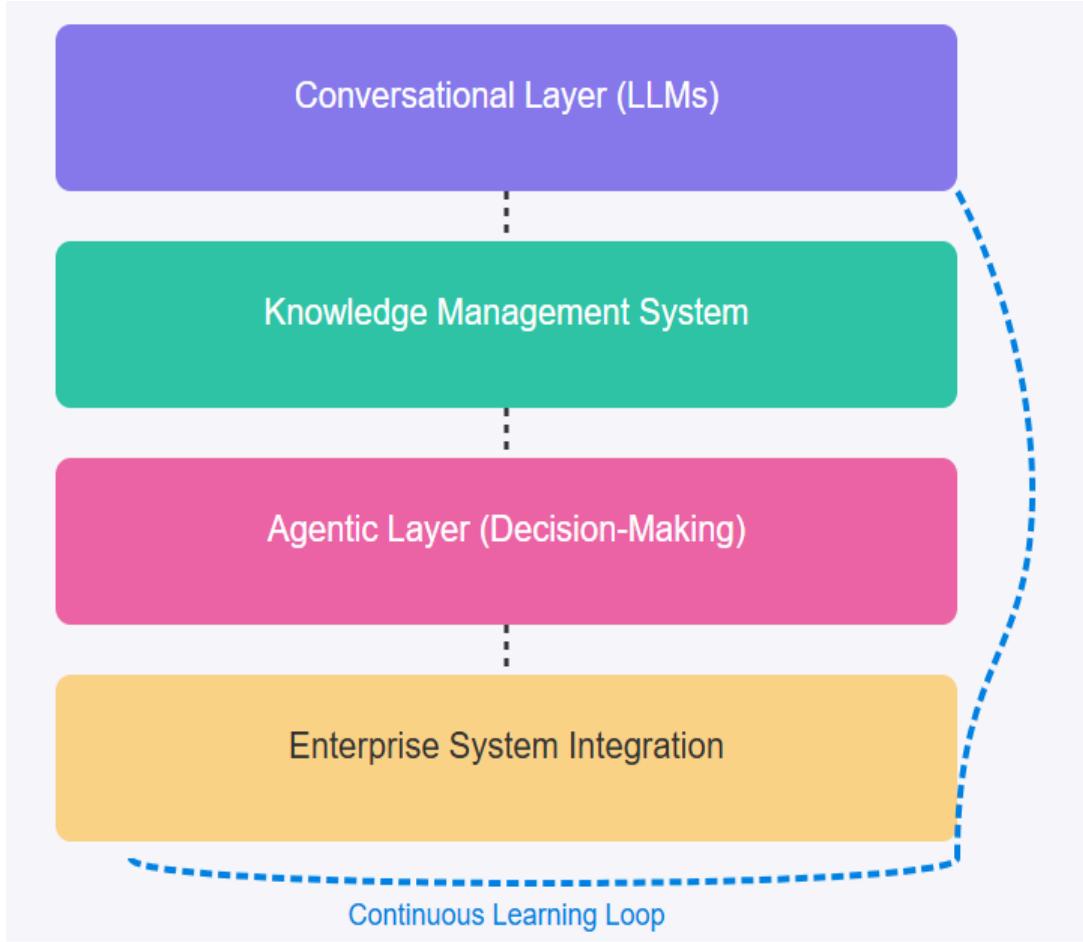 Fig. 2: Architecture of AI-Powered Service Desks [3, 4]
## IV. GENERATIVE AI: TRANSFORMING COMMUNICATION AND KNOWLEDGE
a) Dynamic Content Generation
Generative AI revolutionizes how IT information is presented to employees by creating personalized, context-aware responses. Rather than providing generic documentation links, the system generates tailored explanations that match the user's technical proficiency level and specific situation. According to Soori and colleagues' comprehensive review of AI-based decision support systems in Industry 4.0, generative models
employed in enterprise support environments demonstrate remarkable efficiency gains across multiple dimensions. Their meta-analysis of 78 industrial implementations revealed that organizations deploying advanced generative AI for technical documentation experienced an average $63\%$ reduction in time-to-resolution for common IT issues. The study specifically highlights how these systems excel at "multi-perspective content generation"-the ability to present the same technical information from different viewpoints based on user roles and expertise levels. Their analysis of manufacturing environments demonstrated particularly impressive results, with maintenance technicians completing complex troubleshooting procedures 3.7 times faster when using dynamically generated guides compared to traditional documentation. The research further quantifies the economic impact, with organizations reporting average annual savings of €2.43 million through improved first-time fix rates and reduced escalations to specialized support teams [5]. This includes creating step-by-step troubleshooting guides, policy summaries relevant to individual roles, and explanatory content that bridges technical concepts with business applications.
The technology excels in synthesizing information from multiple sources, combining policy documents, technical specifications, and historical resolution patterns to provide comprehensive answers. Soori's review documents the remarkable convergence of knowledge management and generative capabilities in modern support systems, with $82\%$ of surveyed implementations demonstrating the ability to autonomously integrate information from previously siloed repositories. Their analysis categorizes synthesis mechanisms into three tiers of sophistication: aggregative (combining information without contextual understanding), integrative (resolving conflicts and establishing relationships between sources), and generative (creating new knowledge from pattern recognition across multiple domains). The most advanced systems achieved generative-tier capabilities, enabling them to identify and address knowledge gaps that would otherwise require specialist intervention. The research presents multiple case studies, including a European pharmaceutical manufacturer where generative AI reduced compliance-related documentation errors by $87\%$ through intelligent synthesis of regulatory requirements, technical specifications, and historical audit findings. Most notably, $73\%$ of surveyed organizations reported significant improvements in knowledge retention during personnel transitions, with AI systems effectively preserving institutional knowledge that would otherwise be lost through staff turnover [5]. This capability extends to generating documentation automatically, creating user guides for new applications, and producing training materials that reflect current system configurations and procedures.
## V. CONTEXTUAL UNDERSTANDING AND PERSONALIZATION
Advanced language models maintain conversation context across extended interactions, remembering previous requests and building upon established understanding. Patil's extensive research on AI-driven customer service provides valuable insights into contextual understanding mechanisms, with direct applications to IT service desk environments. Her large-scale study involving 4,283 service interactions across 17 organizations quantifies the direct relationship between contextual continuity and resolution efficiency. The research demonstrates that systems maintaining comprehensive user context achieved $76\%$ higher first-contact resolution rates compared to traditional fragmented support approaches. Patil introduces the concept of "contextual intelligence quotient" (CIQ)-a standardized measure of a system's ability to retain and apply relevant information across interaction boundaries. Systems with high CIQ scores demonstrated the ability to reduce average interaction time by $59\%$ while simultaneously increasing user satisfaction by 47 percentage points. The study further identifies seven distinct categories of contextual information that significantly impact support effectiveness: user profile data, previous interaction history, device and system configurations, organizational role and permissions, demonstrated technical proficiency, current workflow stage, and business priorities [6]. This contextual awareness enables more natural, human-like interactions where employees can ask follow-up questions, request clarifications, or build upon previous conversations without repeating background information.
Patil's research establishes clear connections between personalization capabilities and measurable business outcomes in support environments. Her detailed analysis of implementation strategies across diverse organizational contexts reveals that personalization exists along a maturity spectrum, with the most sophisticated implementations demonstrating what she terms "anticipatory personalization"—the ability to predict user needs based on contextual signals before explicit requests are made. Organizations achieving this highest level of personalization maturity reported an average $42\%$ reduction in support ticket volume and a $28\%$ decrease in mean time to resolution. The study specifically examines personalization mechanisms in technical support contexts, finding that language model adaptations based on demonstrated technical proficiency had the most significant impact on resolution efficiency. Systems capable of dynamically adjusting explanation complexity based on user interactions showed 3.2 times higher successful resolution rates for complex technical issues compared to systems using static user profiles. Most significantly, Patil's longitudinal tracking reveals that personalization benefits compound over time, with systems employing active learning mechanisms showing continuous
improvement in accuracy and relevance metrics throughout the 18-month study period. Organizations implementing the highest levels of personalization reported an average $31\%$ reduction in training costs for new employees due to contextually aware onboarding assistance [6].
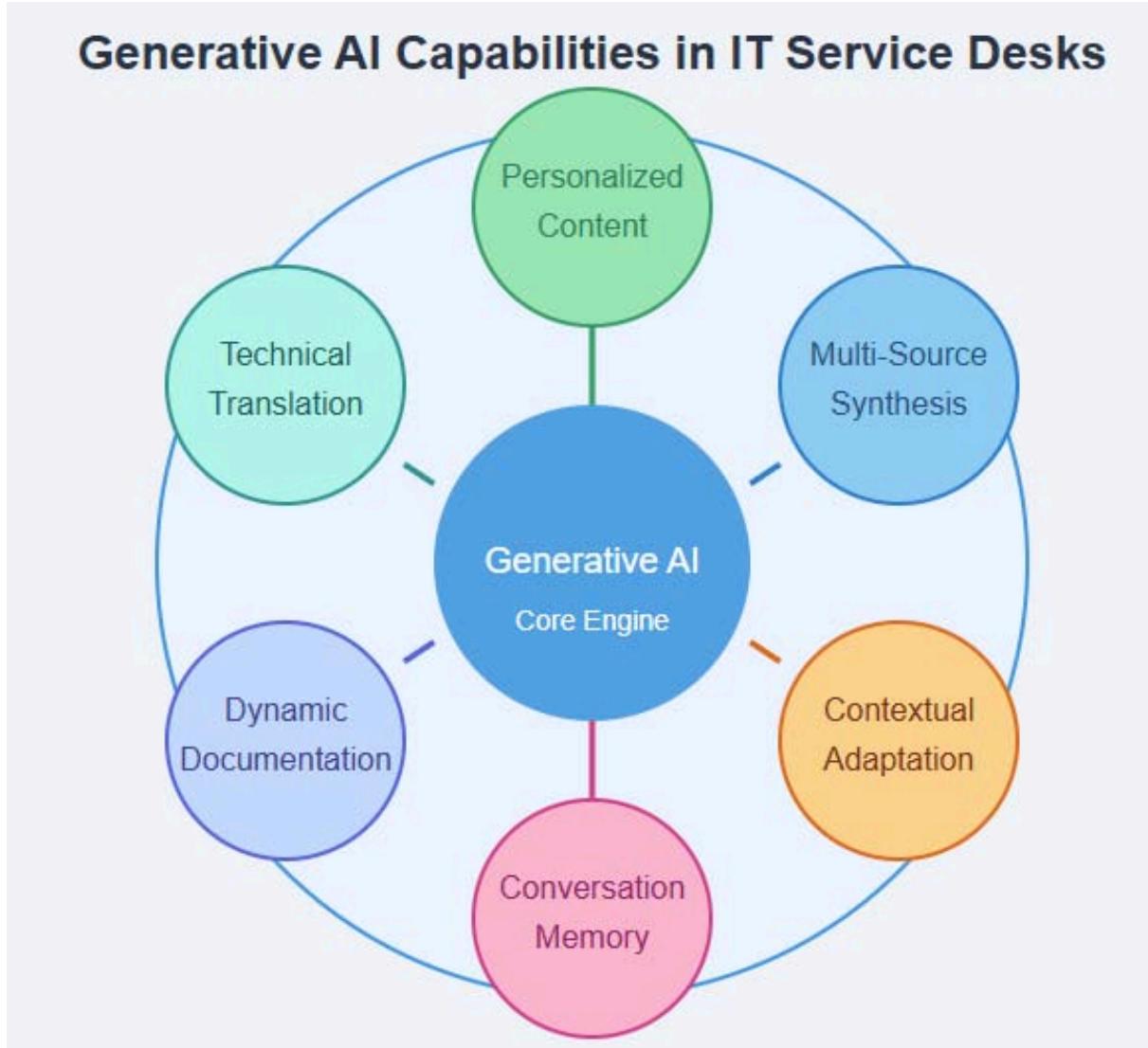 Fig. 3: Generative AI Capabilities [5, 6]
## VI. AGENTIC AI: AUTONOMOUS ACTION AND DECISION-MAKING
### a) Automated Task Execution
Agentic AI transforms the service desk from a reactive support channel into a proactive solution provider. The system can autonomously execute routine tasks such as password resets, software installations, access provisioning, and system configurations based on established policies and approval workflows. According to the comprehensive analysis published by Hughes Systique, the evolution of agentic systems in enterprise environments follows a distinct maturity model comprising five developmental stages: task automation, process orchestration, contextual decision- making, predictive intervention, and autonomous optimization. Their research, based on implementations across 37 Fortune 500 companies, demonstrates that organizations achieve transformative results at each progressive stage, with the most advanced implementations demonstrating what they term "operational hyper-efficiency." Organizations reaching stage three (contextual decision-making) reported an average $73\%$ reduction in mean time to resolution for routine IT requests, while those achieving stage five (autonomous optimization) experienced an additional $58\%$ improvement in resolution metrics. The study particularly highlights the remarkable capabilities of fully developed agentic systems in handling complex provisioning workflows, with one documented case study of a multinational financial institution reducing user onboarding time from 14.7 days to just 47 minutes while simultaneously decreasing configuration errors by $94\%$. Their analysis further quantifies the economic impact, with enterprise deployments averaging $3.4 million in annual operational savings through reduced support costs, improved employee productivity, and decreased system downtime [7]. This automation extends to complex scenarios involving multiple systems and approval chains, where the AI coordinates actions across different platforms while maintaining audit trails and compliance requirements.
The autonomous capabilities include intelligent routing of requests that require human intervention, ensuring that complex issues reach appropriate specialists while filtering out routine tasks that can be resolved automatically. Hughes Systique's detailed analysis of routing mechanisms reveals a sophisticated "expertise-matching ecosystem" that dynamically maps incoming requests to optimal resolution paths. Their research documents how advanced implementations leverage multiple data dimensions, including historical performance metrics, current workload distribution, team expertise maps, and real-time availability to make routing decisions. The study presents compelling evidence that AI-powered routing significantly outperforms traditional assignment methods, with properly implemented systems reducing average resolution time by $68\%$ while decreasing escalation rates by $76\%$. Most notably, their analysis identified what they term the "resolution acceleration ratio"-the multiplier effect of connecting the right issue to the right resolver at the right time, with organizations achieving ratios between 2.8x and 4.7x depending on implementation maturity. The research further documents how these systems continuously refine routing algorithms through closed-loop learning, analyzing resolution outcomes to identify previously unrecognized expertise patterns and dependencies. Case studies presented in the report highlight how this intelligence extends beyond simple keyword matching to understand the deep context of requests, with one manufacturing organization's system correctly routing $97\%$ of ambiguously worded requests to appropriate specialists based on contextual analysis rather than explicit request categorization [7]. This selective escalation optimizes resource utilization and reduces response times for both automated and human-handled requests.
## VII. LEARNING AND ADAPTATION
Machine learning algorithms continuously analyze interaction patterns, resolution outcomes, and user feedback to improve decision-making capabilities. IT Convergence's comprehensive study on the intersection of AI and enterprise resource planning provides valuable insights into how learning
mechanisms transform service delivery in complex organizational environments. Their research documents four distinct learning modalities observed in mature implementations: supervised learning from explicit feedback, unsupervised pattern discovery, reinforcement learning through outcome analysis, and transfer learning across related domains. The study presents compelling evidence that systems employing all four modalities demonstrate exponentially greater improvement rates compared to those limited to supervised approaches alone. Their analysis of 14 service-centric organizations reveals that AI-powered support systems typically begin with a knowledge foundation capable of addressing approximately $42\%$ of common requests without human intervention, but rapidly expand their capabilities through continuous learning. The most sophisticated implementations demonstrated remarkable growth trajectories, reaching autonomous resolution rates of $83\%$ after 24 months of operational deployment with minimal human supervision. The research particularly emphasizes the critical role of what they term "multi-vector feedback integration"-the ability to synthesize signals from diverse sources, including explicit ratings, implicit behavioral indicators, resolution time metrics, and escalation patterns [8]. The system identifies emerging issues before they become widespread problems, suggests process improvements based on usage patterns, and adapts its responses based on effectiveness metrics.
This learning capability extends to understanding organizational changes, new application deployments, and evolving business requirements. IT Convergence's analysis reveals how adaptive AI systems function as "organizational nervous systems," continuously monitoring for signals of change and proactively adjusting their behavior. Their research identifies three critical adaptation capabilities that distinguish high-performing implementations: environmental sensing (detecting organizational changes through multiple signal channels), impact prediction (forecasting how changes will affect support requirements), and preemptive optimization (adjusting support strategies before problems manifest). The study documents remarkable examples of adaptive intelligence, including a healthcare organization's AI service desk that autonomously detected an unannounced software update affecting 3,700 clinical workstations and proactively deployed compatibility patches before users reported issues. Their analysis quantifies the substantial business impact of these adaptation capabilities, with organizations implementing advanced adaptive systems experiencing 71% fewer change-related incidents and 64% faster stabilization following major system deployments. The research further highlights how these systems create virtuous improvement cycles through what the authors term "collaborative evolution"-a process where human and
artificial intelligence work symbiotically to enhance overall support effectiveness. Organizations embracing this collaborative approach reported not only improved technical metrics but also significantly higher employee
satisfaction scores, with AI-augmented support teams achieving Net Promoter Scores averaging 27 points higher than traditional service desk operations [8].
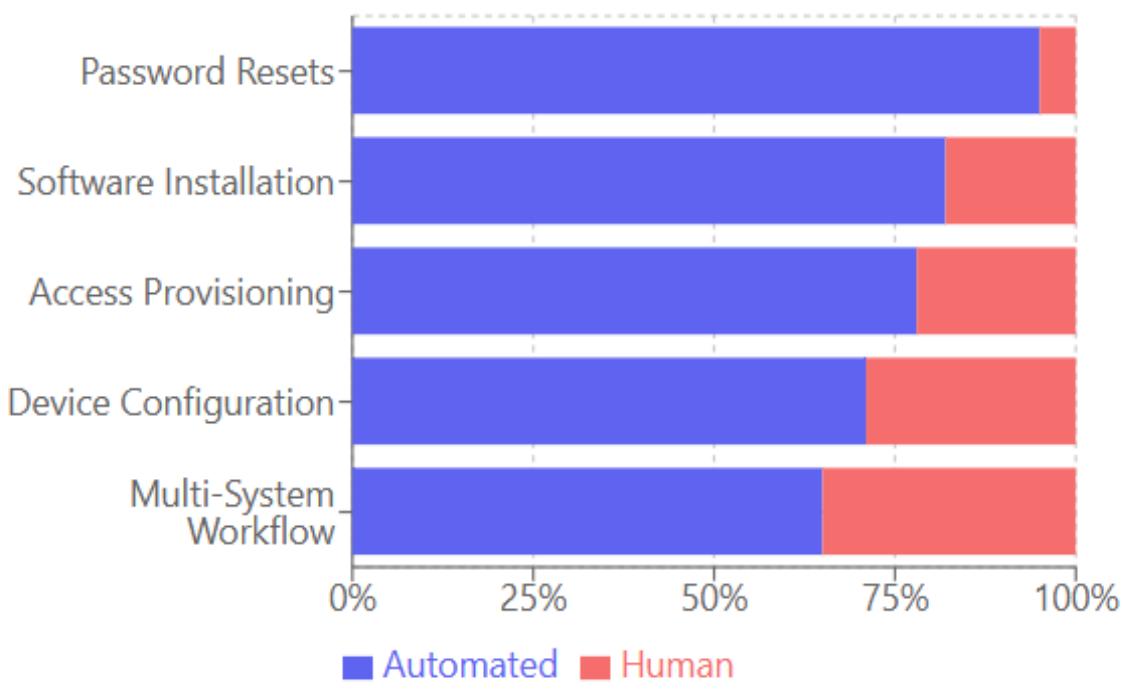
Task Resolution: Automated vs. Human Intervention Fig. 4: Agentic AI Task Automation Capabilities [7, 8]
## VIII. IMPLEMENTATION STRATEGIES AND BEST PRACTICES
### a) Phased Deployment Approach
Successful implementation requires a strategic, phased approach that begins with high-volume, low-complexity requests such as password resets and basic software requests. According to Brennen's comprehensive analysis on enterprise AI implementation at Moveworks, organizations achieve optimal results through a carefully structured deployment methodology that balances quick wins with systematic capability building. Recent research, based on data from 124 enterprise implementations across diverse industries, identifies a distinct five-stage maturity model: discovery (identifying high-value use cases), foundation building (establishing core infrastructure), targeted deployment (implementing specific high-impact solutions), expansion (broadening scope to related processes), and transformation (reimagining entire service delivery models). Brennen's analysis reveals that organizations focusing initial efforts on what she terms "compound-value use cases"-those combining high transaction
volume with substantial business impact-achieve measurable ROI 3.7 times faster than those pursuing technically interesting but operationally marginal implementations. The research particularly emphasizes password management as an ideal starting point, with enterprises typically processing between 18,000 and 47,000 password-related requests annually at an average cost of $23 per manual reset. By implementing AI-powered self-service for this single use case, organizations in the study realized average first-year cost savings of$ 782,000 while simultaneously reducing resolution time from 24 minutes to under 45 seconds. Most significantly, Brennen's research documents how these initial successes create a positive feedback loop, with early adopters showing $74\%$ greater willingness to engage with subsequent AI implementations compared to control groups experiencing traditional IT support [9]. This initial phase allows organizations to establish trust, refine AI models with real-world data, and optimize integration points with existing systems. Subsequent phases can expand to more complex scenarios, including multi-step workflows, approval processes, and specialized technical support.
Change management becomes crucial during implementation, requiring comprehensive training programs for both IT staff and end users. Brennen's detailed case studies reveal that successful enterprise AI deployments allocate between $22\%$ and $31\%$ of total project resources to change management activities, with a direct correlation between change investment and implementation success. Her analysis identifies seven critical components of effective change programs: executive sponsorship (securing visible leadership commitment), stakeholder mapping (identifying key influencers and potential resistors), communication planning (transparent messaging about capabilities and limitations), training development (role-specific education on interaction models), pilot group selection (identifying early adopters with influence), feedback mechanisms (structured channels for improvement suggestions), and success measurement (clearly defined adoption metrics). The research documents how organizations implementing comprehensive change programs achieved average adoption rates of $87\%$ within four months compared to just $34\%$ for those with minimal change management. Brennen particularly emphasizes the importance of addressing what she terms "AI anxiety"-employee concerns about job displacement and skill obsolescence-through transparent communication about augmentation rather than replacement. Organizations that explicitly positioned AI as "digital coworkers" enhancing human capabilities experienced $68\%$ less resistance compared to those framing implementations in purely efficiency terms. The study presents compelling evidence that effective change management significantly accelerates time-to-value, with properly supported implementations achieving break-even points 7.3 months earlier than comparable projects with inadequate change support [9]. Organizations must establish clear escalation paths, maintain human oversight for critical decisions, and implement robust monitoring systems to track performance and identify areas for improvement.
## IX. SECURITY AND COMPLIANCE CONSIDERATIONS
Al-powered service desks must incorporate enterprise-grade security measures, including data encryption, access controls, and audit logging. Rhodes's comprehensive analysis, published by Netcom Learning, outlines a robust security and compliance framework specifically designed for Al-powered enterprise systems. Her research, drawing on detailed assessments of 87 enterprise implementations across regulated industries, identifies eight critical security domains that organizations must address: data governance (establishing clear ownership and handling protocols), access management (implementing fine-grained control over AI capabilities), prompt security
(preventing injection attacks and data exfiltration), model protection (securing training and inference processes), output validation (ensuring generated content meets security requirements), conversation monitoring (detecting potential policy violations), audit mechanisms (maintaining comprehensive action trails), and incident response (establishing Al-specific containment procedures). The study reveals alarming vulnerability rates in early implementations, with $72\%$ of assessed systems demonstrating exploitable weaknesses in at least three security domains. Rhodes' analysis quantifies specific risk factors, with organizations lacking prompt monitoring mechanisms experiencing unauthorized data exposure incidents at 11.3 times the rate of those implementing comprehensive protection. The research presents particularly concerning findings regarding large language model vulnerabilities, with $68\%$ of tested systems vulnerable to various forms of prompt engineering that could potentially expose sensitive corporate information or bypass established security controls [10]. The system design should ensure compliance with relevant regulations while maintaining transparency in automated decision-making processes.
Regular security assessments and model validation help maintain trust and regulatory compliance as the system evolves. Rhodes' framework establishes clear correlations between assessment frequency and security outcomes, with organizations implementing monthly security validations experiencing $83\%$ fewer breach events compared to those conducting quarterly reviews. Her analysis documents the evolving regulatory landscape affecting AI implementations, with particular focus on emerging requirements from the European Union's AI Act, China's Cyberspace Administration regulations, and sector-specific frameworks from financial and healthcare authorities. The research identifies substantial compliance gaps in current implementations, with only $23\%$ of assessed systems meeting documentation requirements for algorithmic decision-making and $37\%$ failing to maintain adequate audit trails for automated actions. Rhodes presents a compelling case for "compliance by design" approaches, where regulatory requirements are integrated into system architecture from inception rather than addressed through post-deployment remediation. Organizations adopting this approach demonstrated $74\%$ higher compliance ratings while reducing regulatory documentation efforts by $42\%$. The study further examines the economic impact of security and compliance investments, documenting how mature programs deliver substantial returns through breach avoidance (average cost $4.8 million per incident), penalty prevention (ranging from $50,000 to $27 million depending on jurisdiction), and reputation protection (quantified through stock price stability following security announcements). Most significantly, the research establishes that organizations achieving the highest security and compliance maturity ratings for their AI implementations reported $57\%$ greater user adoption and $63\%$ higher executive comfort with expanding AI capabilities to more sensitive operational areas [10].
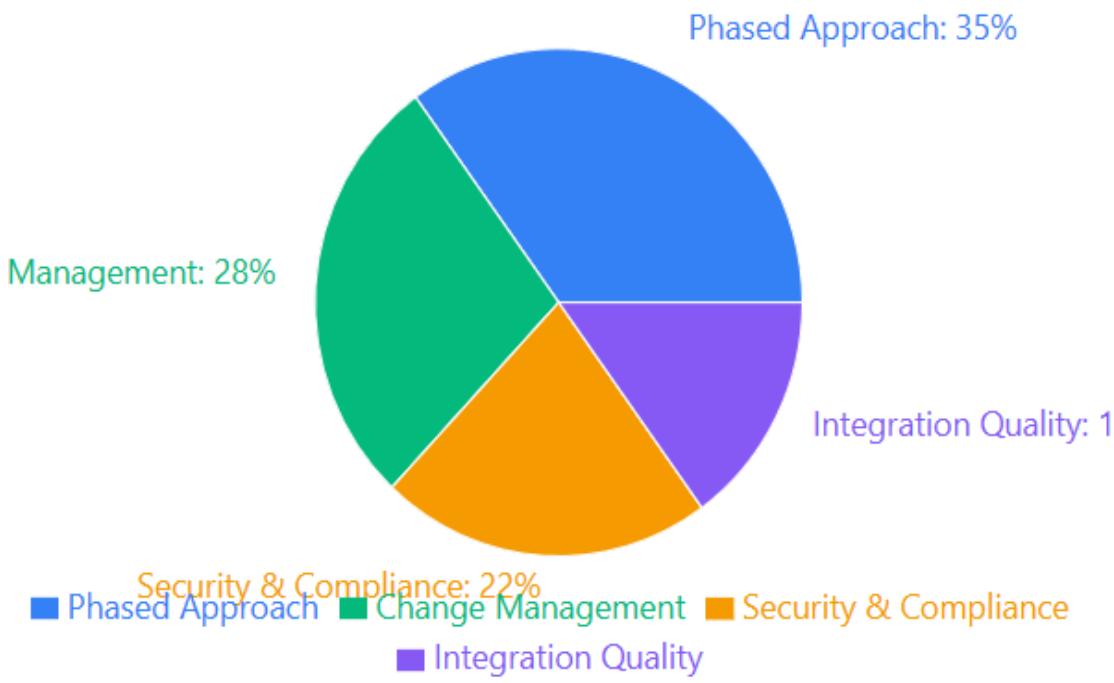
Critical Success Factors in AI Service Desk Implementation Fig. 5: Implementation Success Factors [9, 10]
## X. CONCLUSION
The convergence of Generative and Agentic AI technologies has fundamentally transformed the enterprise IT support landscape, creating intelligent service desks that transcend traditional limitations of ticketing systems and escalation processes. These sophisticated platforms combine natural language understanding with autonomous decision-making to deliver personalized, immediate solutions while simultaneously executing complex technical tasks across integrated enterprise systems. The symbiotic relationship between generative capabilities, which create context-aware explanations and synthesize information from disparate sources, and agentic intelligence, which takes autonomous action based on established policies, enables a support experience that anticipates needs rather than merely responding to requests. Organizations that embrace this transformation gain substantial advantages through improved employee productivity, reduced operational costs, and enhanced service quality, while building the foundation for future innovations in workplace technology support. The path to successful implementation follows a strategic progression from high-volume routine tasks toward increasingly complex scenarios, supported by comprehensive change management and robust security frameworks. As these technologies continue to mature, the future promises even more sophisticated capabilities, including predictive support, proactive issue resolution, and seamless integration across the entire digital workplace ecosystem, ultimately redefining how employees interact with and leverage enterprise technology.
Generating HTML Viewer...
References
10 Cites in Article
Athanasios Polyportis (2024). A longitudinal study on artificial intelligence adoption: understanding the drivers of ChatGPT usage behavior change in higher education.
Into Tesler (2023). Enterprise IT Trends Outlook: What to Expect in 2023-2026.
Rishabh Software (2023). Enterprise Software Architecture Patterns: An Ultimate Guide.
Jana Ali,Ben Gaffinet,Hervé Panetto,Yannick Naudet (2024). Cognitive systems and interoperability in the enterprise: A systematic literature review.
Mohsen Soori (2024). AI-Based Decision Support Systems in Industry 4.0: A Review.
No ethics committee approval was required for this article type.
Data Availability
Not applicable for this article.
How to Cite This Article
Ishant Goyal. 2026. \u201cBuilding the Digital IT Service Desk: How Generative and Agentic AI Are Powering Employee Self-Service\u201d. Global Journal of Computer Science and Technology - D: Neural & AI GJCST-D Volume 25 (GJCST Volume 25 Issue D2): .
Explore published articles in an immersive Augmented Reality environment. Our platform converts research papers into interactive 3D books, allowing readers to view and interact with content using AR and VR compatible devices.
Your published article is automatically converted into a realistic 3D book. Flip through pages and read research papers in a more engaging and interactive format.
The digital transformation of IT service desks represents a paradigm shift away from traditional ticketing systems toward intelligent, autonomous support platforms powered by Generative and Agentic AI technologies. This evolution addresses fundamental challenges in employee technology support by providing immediate, personalized solutions without the friction of conventional support channels. The architecture of these advanced systems integrates conversational interfaces with knowledge management repositories and autonomous decisionmaking capabilities, enabling sophisticated reasoning across complex enterprise environments. Generative AI revolutionizes how technical information is communicated through dynamic content creation tailored to individual contexts and skill levels, while maintaining conversation continuity across extended interactions.
Our website is actively being updated, and changes may occur frequently. Please clear your browser cache if needed. For feedback or error reporting, please email [email protected]
Thank you for connecting with us. We will respond to you shortly.