
I. THE HISTORICAL EVENTS
Ethical questions and misconducts on the part of government and business entities continue to be newsworthy and of interest to the general public. In the first five months of 2019, several US states discussed passing legislation or creating governing bodies to deal with oversight and governance on ethical practices. For instance, in May 2019, the state of New Mexico created a State Ethics Commission, and in April 2019, the state of Georgia called for creating a Journalism Ethics Board. As government and business ethics are inextricably tied, so are organizational ethics and moral behavior. Misconduct stories focused on International banks also frequented the news, describing 2019, scandals in Brazil, followed by further 2019, banking scandals in Malaysia and Germany. A recent study (Erenhard & Fiorito, 2018) examined the written values for 25 of the largest European banks after the 2008 financial crisis. According to the investigation, "integrity" and "customer focus" were widespread values mentioned by the 25 banks. However, since
2013, 15 of these same studied institutions were associated with one or more banking scandals.
Corporate malfeasance has become the core theme of the last decade and a half. It caused the present global recession and the Occupy Wall Street movement where 99% of the people with different colors, genders and political persuasions no longer tolerate the greed and corruption of the 1%. Employees and shareholders suffer an enormous loss. Shareholders of the Enron scandal lost 180 billion loss, the company doomed to file bankruptcy. Tyco's class-action lawsuit forced Tyco to pay 64.8 billion through the largest Ponzi scheme ever.
In all of the scandals, both laws and ethics were violated. Corporations such as Enron, World Com, Tyco, Global Crossing, Microsoft, and AOL were involved in financial fraud, inaccurate accounting statements, antitrust violations, and false marketing. All charges can be categorized as unethical behavior of these companies' executives. Gary's research (2008) further confirmed this drama. Gary looked at the most imperative scandals in 21 century and found similar unethical practices in these scandals. It appears that moral and unethical cases are still common business practices, as evidenced by the more recent cases from Volkswagen, Wells Fargo, and Facebook. These series of business misconduct cases have tarnished Corporate America's reputation nationally and globally, causing lower investment and trade. Especially in the Enron-like scandals, the unethical conduct caused thousands to lose their jobs, benefits, and pension savings. Stockholders were victims of the scandals due to the sharp drop in their stocks' value.
II. THE ACADEMIC BACKGROUND
Business researchers such as Argyris & Schon (1993) suggest that organizational leaders espouse their company's particular values, and believe these values affect their leadership and organizational behaviors. However, upon further examination, these same leaders' behaviors are found to be very different from their espoused beliefs. Organizational talk, that is, written statements espousing integrity and ethics, must be followed by the actual walk such as policies producing observable or measurable ethical behaviors. In an annual study on trust in leaders and their institutions, the Edelman Trust Barometer describes a decrease in the level of organizations globally considered as "trusted institutions". The authors cite that overall trust in the people running organizations and in the organizations themselves is at a low point. However, the research also references opinions from those labeled as the "informed population" whose trust in elite organizations has held steady. On the other hand, the opinions and trust of the "mass population" for these same organizations have fallen.
Machan (1999) described ethics as a controversial branch of philosophy, addressing the questions of how one should act or as standards of conduct that guide a decent human life. He added that the term ethical might also mean moral, appropriate, or acceptable. Business ethics can be identified and characterized as to the congruity of referenced standards and the unity of a controlling legal platform. However, there are two schools of thought on this subject. First is the legal approach; the second is the self-regulated approach. The difference between these two approaches depends primarily on business leadership's perception of ethics.
Vogel (1992).found that although increased globalization of the economies of the US, Western Europe, and Japan is making business practices more uniform—their ethical principles and practices continue to be widely different. During the last decade, highly publicized incidents of misconduct on the part of business managers have occurred in virtually every major industrial economy. These reports have raised intensive public concern about the morality of business conduct in the US, compared to other advanced capitalistic nations. American approaches to business ethics are unique; they not only lie in the typical American business system but are also more individualistic, legalistic, and universalistic than in other capitalist societies.
U.S. corporations prefer self-governance for the operational and economic freedom it provides in policing themselves. Competitively bound businesses today may find a lack of focus on business ethics or virtues, as firms wrestle to gain and maintain customers and profits (Caldwell, C., Hasan, Z., & Smith, S. (2015). Corporate self-governance is motivated and based on the organization's culture, management structure, traditions, industry nature, and reputation. However, many see the necessity of a legal frame to guard against unethical business misconduct. Culturally, businesses are influenced by their inherited corporate management style. This was originated on the efforts of top executives in compliance with codes of ethics and also to set the needed programs and regulations to enforce these codes.
Federal and State legislators issue regulations to ensure the businesses conduct their operations within a legal framework. However, industry differences require a different set of principles. Kultgen (1988) emphasizes the value of distinguishing an ethics code as group values or "...instruments for persuasion, both members of a profession and the public. They enhance the sense of community among members, of belonging to a group with common values and a common mission." (p.212-213). Applying these regulations as a whole guarantee at least a minimum level of ethical business practice. Yet, companies and their managers are not obligated to make moral judgments as long as they do not violate the law.
The lack of tough and smart laws has contributed to minimal criminal action or soft punishment. Eitzen (1986) summarized this fact with one example: "Jack L Clark's Nursing Home Construction Company was found guilty of a gigantic stock fraud that bilked shareholders of 10 million of this swindled money allegedly went for Clark's personal use, and prosecutors accused him of hiding another $4 million as well. Clark apologized to the court, pleaded guilty to one count (out of sixty-five), and was sentenced to one year in prison, eligible for parole after four months, with no fine" (p-427).
III. THE ROLE OF LEADERSHIP
Most of the biggest corporate scandals in recent history were led by top executives. The great losses by Enron's scandal" over $60 billion" uncovered ethics, or lack thereof, to be a central defect in this company's executives' business misbehavior [Boston Globe-3/8/02].
World com's CEO Bernie Ebbers underreported line costs and inflated revenues with fake accounting entries, inflated assets by 1.7 billion fake earnings. The CEO and CFO of Tyco stole 500 million. Even the federally backed mortgage-financing giant Freddie Mac whose executives intentionally misstated and understated $5 billion earnings. Therefore, many like Laurent (2000) suggested that top executives should be held accountable for fatalities, injuries, or illnesses caused by their business decisions and to penalize the company by paying compensatory damages to victims or their families.
Another example could be found in some of the worst corporate accounting scandals in history. CEO of HealthSouth Richard Scrushy inflated 50 billion in loans disguised as sales. The company was forced into the largest bankruptcy in U.S. history, but SEC did not prosecute because it was lack of evidence. The CEO of AIG Hank Greenberg allegedly booked loans as revenue, steered clients to insurers that AIG had payoff agreements, and told traders to inflate stock prices. Hank was fired but had no criminal charge.
Countries such as the U.S. and the EU have liberal traditions and use the self-regulation approach to serve their political and economic purposes. Adaptation of self-management approaches has become more common (Baggot, 1989; Leveque, 1996; Scarpa, 1999). Large numbers of ethics committees, coming from different political, social, and economic systems have created a certain momentum for establishing self-regulation codes and guidelines that organizations operate within.
IV. CORPORATE CHALLENGES
Many questions arose from the US business examples of moral and ethical collapse. Experts questioned whether these failures were a matter of exceptional business misconduct or a result of business norms. They asked if there were other corporate executives still following such unethical behavior, regardless of the consequences that affect communities and society at large. America and business leaders asked what action is needed to prevent such unethical behavior from happening again.
Executive-level management in an organization contributes heavily to ethical practices, as leadership authority plays a key role in changing an organization's behavior. Hence, Heifetz (1994) assessed leadership on its capability to realistically cope with situations, stating "changing the status quo requires more than changing the authoritative figure. Adaptive work requires adjustments, learning, and compromise of many of the dominant, complacent, and beleaguered." (p-238).
For this reasoning and in an attempt to preserve investor confidence in the integrity of the U.S. financial markets, Congress enacted the Public Company Accounting Reform and Investor Protection Act of 2002 after the World com scandal, the Act was also called the Sarbanes-Oxley act. The Act is the most significant piece of securities legislation in the United States since the 1930s. The Act includes severe financial and criminal penalties for corporate fraud, obstruction of justice, and the certification of false financial statements by Chief Executive Officers (CEOs) and Chief Financial Officers (CFOs). It also bans executive loans, imposes limitations on the type of non-audit services that accountants can supply clients, and proposes the creation of a private-sector board to administer the accounting industry. After the Great Recession from December 2007 to 2009, President Obama signed into federal law the Dodd-Frank Wall Street Reform and Consumer Protection Act in 2010, also called the Dodd-Frank Act, to put regulations on the financial industry after Lehman Brothers, the fourth-largest investment bank in the US, collapsed. This bill included the government's most substantial changes in response to the economy since the Great Depression and considered the most comprehensive financial reform since the Glass-Shegall Act, which was created after the 1929 stock market crash.
However, following Sarbanes-Oxley and Dodd-Frank Act, the four biggest accounting firms, Deloitte & Touche LLP, Price Water House Coopers LLP, Ernst & Young LLP, and KPMG LLP, continued to fail to apply accounting principles in their procedures. Exercising business ethics by enforcing the law needs time. It cannot guarantee that no further disasters, whether intentional, unintentional, or as a result of loopholes and gaps in existing laws. So, the management question is: did the current ethics' laws change executives' standpoint to make effective decisions to ensure compliance with their codes of ethics?
V. THE RESEARCH QUESTION
Ethics represent moral conduct, duty, and judgment. People perceive ethical leadership as a gatekeeper to distinguish right and wrong. In business, ethics is an essential principle of leadership. Consequently, George (2003) extended the scope of ethics, saying:
"We need authentic leaders, people of the highest integrity, committed to building enduring organizations. We need leaders who have a deep sense of purpose and are true to their core values. We need leaders who dare to build their companies to meet the needs of all their stakeholders, and who recognize the importance of their service to society" (p-198).
In an attempt to check whether these laws have caused an impact on business executives' behavior toward the ethical practices of their business, ValueBasedManagement.net surveyed in the period from March until April 2004 on business ethics. The survey tended to answer the question of “are there any practical changes taken to follow and comply with the business code of ethics?”.
- Does your organization have a helpline for ethics/compliance issues?
VI. THE RESEARCH HYPOTHESIS
The survey was to prove or reject a null hypothesis that U.S. corporations have done enough to ensure another Enron dilemma from happening again.
a) The Research Sample
The survey targeted mainly business executives and those related to ethics and moral studies academically and professionally. Those who answered the survey:
a) 42% were executive officers and directors.
b) 27% were other business executives.
c) 31% were students and consultants.
The Questions and the Answers
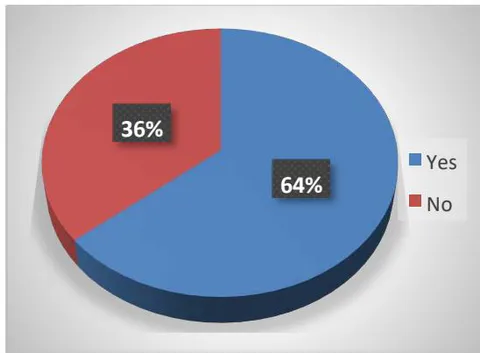
- Do you believe ethics/compliance education for senior managers will help prevent future Enronitis cases?
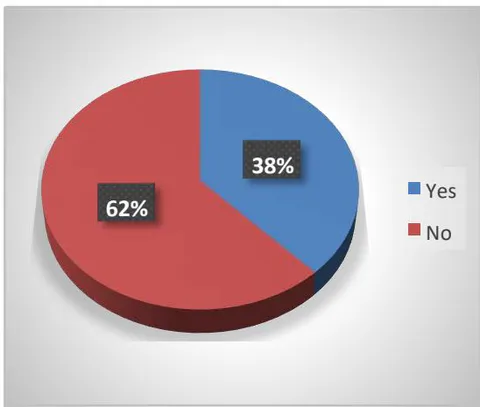
- Does your organization have an ethics/compliance program?
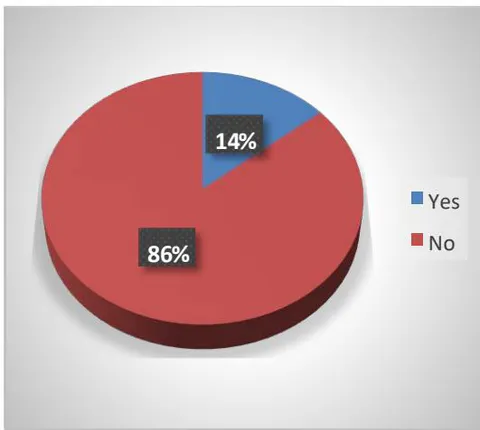
- Does your organization have ethics/compliance measurements in its performance appraisal system?
- What happens in your organization with strong performers who don't live up to your organization's ethics/compliance values?
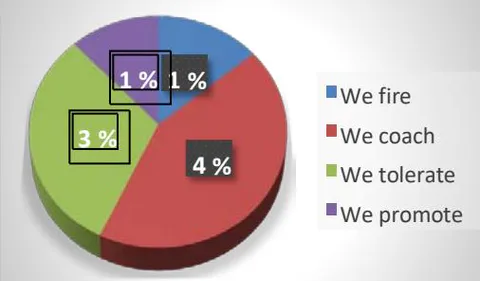
- We fire - We coach - We tolerate - We promote
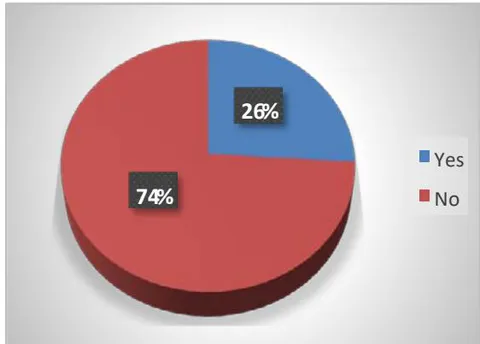
7. Do you think senior executives have really learned their lesson from Enronitis?
VII. ANALYSIS OF DATA
After reviewing the answers, the following analysis was comprehended:
Approximately two-thirds of the respondents expect that ethics/compliance education for senior management might help to prevent future Enron cases.
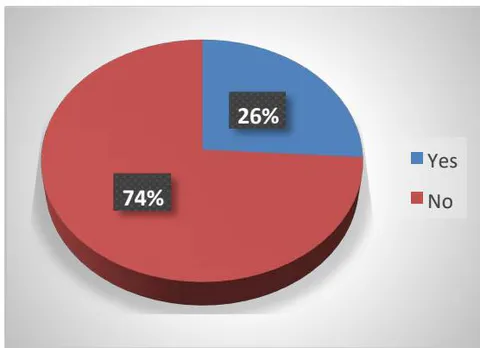
A fourth of the organizations have established a helpline for ethics/compliance issues.
A fourth of the organizations employ an ethics/compliance officer.
One-third of the organizations of the respondents have an ethics/compliance program going on.
86% of the respondents' organizations don't measure ethics/compliance in their performance appraisal systems.
of the organizations do not take appropriate action towards a strong performance that doesn't live up to their organization's ethics/compliance values.
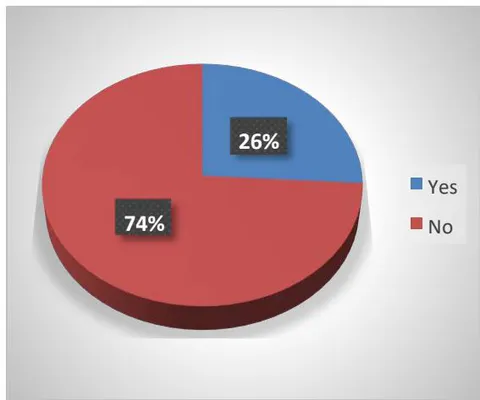
74% of all respondents believe senior executives have not learned a lesson from Enronitis.
VIII. THE RESEARCH FINDING
The survey indicates that the U.S. executives still maintain the denial mode that what happened in Enron was exceptional. Therefore, they are reluctant to take action toward thoughtful changes in their organization behaviors and operations. Although the survey did not mention the Sarbanes-Oxley Act in the questions, one can notice the absence of its impact on Corporate America management style.
IX. ADVANTAGES AND LIMITATIONS
The survey was used as secondary data that has its advantages and disadvantages. This particular survey took advantage of the Internet to complete its mission rapidly. A skillful analyst can collect substantial useful secondary data in a matter of days. Consequently, it is generally less expensive than primary research.
The random sample was a great asset added value to the research validity. Moore (2000) valued qualitative researchers for weighing the random sample as a value as well as a number. This gives qualitative research an edge that is missed in the quantitative research.
There are also several disadvantages to this secondary data. There must be secondary information on the research topic of business ethics. It was either not available, or was only available in insufficient quantities. This information includes the human factor in any ethical misconduct, the level of punishment, and the alternative approach of self-regulation.
Brooks (1998) brought to the researchers' attention that the balance needed to approach truthful conclusion falls between narrow truths proved convincingly by statistically sound experiments, and the broad truths, generally applicable, but supported only by possibly unrepresentative observations.
Also, some data may be of questionable accuracy and reliability due to the limited levels of measurements that lead to questioning the biasing in research design. Around this subject, Cooper & Schindler (2003) alarmed researchers about the impact of their own experience when analyzing the data and interpreting it in a biased way. One can notice that most questions must be answered by yes or no. The simple measurement used served the broad purpose of the survey.
Cooper & Schindler (2003) stated that “the ability of research measurement to what it is purported to measure” (p.231). However, the statistics used were acceptable based on the fact that the primary change in organizational behavior can take more than a decade to be noticed. Lastly, the display of the data was very approachable and easy to read by ordinary readers.
In conclusion, in the United States, ethics has always been taken as following by the rules or abiding by the law; therefore unethical means unlawful. However, moral can be different, it may be a matter of doing the right thing even if it is illegal. Many scenarios have faced first respondents or surgeons or teachers; all have to make a quick moral decision at some point to save lives and assure wellbeing. As such, organizations and legislators cannot afford to issue laws and regulations with continuous review and development. The need to invest in implanting ethical culture would significantly serve all stakeholders and society at large.
On the business scale, one finds that despite laws and regulations that epitomize ethical codes for general business' practice, the approach of self-regulation has shown a considerable measure of success. Usually, industry-wide standards of ethics are established by the various industries on an industry-by-industry basis. The difficulty of writing one standard code of ethics, to fit different industries and match their surrounding environments, has encouraged legislators to allow industries to self-regulate their ethical practice. This enlightened philosophy suggested that a company should have a social conscience. Companies and managers should apply high standards of ethics and morality when making corporate decisions, regardless of what the system allows. The business ethics application becomes more and more critical for company success and economic sustainability. There is hope that more and more corporate executives would put business ethics into practice. One of the good examples is Waste Management whose new CEO
A. Maurice Meyers and the management team went through the books and uncovered the company's $1.7 billion scandals in 1998. After the scandal, Maurice set up an anonymous company hotline where employees could report dishonest or improper behavior. It is reasonable to believe that the best approach to regulating business ethics is to involve a blend of light-handed intervention by the government combined with the industry self-regulation. Hopefully, this approach will provide sufficient flexibility to enable businesses and industries to use a suitable management style to achieve the organizations' goals without any violation of the codes of ethics.