I. INTRODUCTION
Entertainment is a form of activity that holds the attention and interest of audience and also gives pleasure and delight. It can be an idea or a task, but is more likely to be one of the activities or events that have developed over thousands of years specifically for the purpose of keeping an audience's attention or enthral them (1). Although people's attention is held by different things, as individuals have different preferences in entertainment, such as storytelling, music, drama, dance. It is an accepted fact that different kinds of performance exist in all cultures. Indeed, in ancient times these were supported in royal courts, developed into sophisticated forms and over the period of time spread to the common man as well. The technological advancement made by the media industry is phenomenal and now a day's media has become an indispensable companion in everyone's life and people depends on it one way or the other.
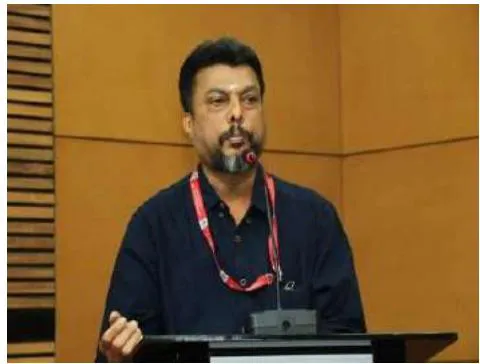
- presently no more
Dear Dr. Manikandan, you have introduced the fascinating subject ethics and also gave me useful advice on the nuances of Marxism and Lenism. I enjoyed the long discussion I had on these subjects. Your sudden demise is rather unexpected and unfortunate and put us all in great distress. I was humbled by the presence of many of your students and the sentiments vindicated by them during your funeral. My prayers to the great Siddhars so that your soul rests in peace.
Your loving cousin - Sarvaharana
The experience of being entertained has come to be strongly associated with amusement, so that one common understanding of the idea is fun and laughter, although many entertainments have a serious purpose. This may be the case in the various forms of ceremony, celebration, religious festival. Hence, there is the possibility that what appears to be entertainment sometimes may also be a means of achieving insight which may lead to knowledge explosion. It is not a mere exaggeration to state that cinema or technically known as media entertainment has become a powerful tool not only for gratification of sense but also to disseminate message through which the masses can be attracted. It is now necessary to note how Cinema emerged in the world arena.
II. THE SCENARIO OF CINEMA
The technological advancement made over the still camera paved the way for movie camera. With the
technology of movie camera, technologists tried to capture moving objects. Initially, less than a minute of action was video graphed in 1890's. Using this technology, silent pictures were produced for nearly three decades. It was in 1927 the first speaking movie was produced by Warner's Brothers titled "Jazz Singer" released in America. Later, in 1933, a film by name "Alam Aara" was released in India. That was the first movie from Indian Cinema Industry which was produced in Hindi and Urudu as well. The person, who had produced this movie, also produced "Kalidas" in Tamil and Telugu. During those days there used to be more than 50 songs in a film, and Kalidas itself contained 50 songs. Though Kalidas was produced at the expense of Rs.8000/- it yielded an overwhelming collection of Rs.80,000/-. When cinema came in to existence in India, films were produced based on stories from puranas (i.e. Ramayana, Mahabharata, other philosophical and mythological stories) because the general masses were interested to see their heroes like Sri Rama, Lord Krishna and others in movies (as described in the holy books).
Kalidas was a famous story from Sanskrit. Later, producers tried to produce films dubbing from other languages including from other countries. For example, the movie "Man in the Iron Mask" was produced in Hollywood based on a novel. Sundaram of Modern Theatres produced a movie called "Uttama Puthiran" dubbing from Man in Iron Mask (2) When the Indian film industry was producing movies on the basis of stories, from the puranas and kings who were popular in the ancient past; few movies on social movements such as Menaka, Anathai Pen and Sabapathi were produced. After the release of Nam Iruvar (we two) in 1947 by AVM Productions, many movies on the basis of social evils were produced. AVM productions flourished in the Tamil Cinema though it faced great difficulties, and enduring restrictions from the Government of India owing to the Second World War. It should be emphasized here that the screen play written by Peraringer Anna, for movies such as Velaikkari (Servant Maid) or Ore-Iravu (one night) on the basis of social evils attained great success, and Anna became popular for his undisputed intellectual contributions during 1940's, and people begun to look at Aringer Anna with awe and majesty.
The researchers will be failing in their duties if they do not pay tribute to Father of Tamil Theatre Sankardas Swamigal and TKS Brothers and thereby the following are narrated:
Sankardas Swamigal
(7 September 1867 – 13 November 1922)
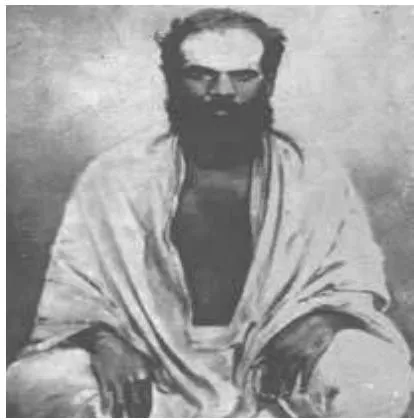
Sankardas Swamigal was born in 1867 in the port town of Tuticorin to Damodaran Pillai and Kanthimathi Ammal. Sankardas Swamigal had his early education in Tamil from his father himself. Later he met famous Tamil scholars such as Palani Dandapani Swamigal, Udumalai Sarabam Muthuswami Kavirayar and learnt Tamil more fully. Thereafter Sankardas Swamigal worked as an accountant in a salt factory. He started composing venpas and songs even as a young boy of sixteen and found that the job was a stumbling block in his quest for excellence in the Tamil language and quit the job when he was twenty-four years of age and entered the Tamil Stage.
The first people to recognise the literary prowess of Swamigal were Ramudu lyer and Kalyanarama lyer, who were running a popular drama company during that time. Swamigal joined their troupe as an actor and later became an author. As an actor, he donned variety of roles such as Iranian, Havana, Lord Yama and Lord Saneeswara. Later, he joined the drama company of Samy Naidu wherein he acted in the role of the 'Suthradhar' in several of their plays. His unique presentation method as a suthradhar attracted people. It was during this time he felt a sense of dissatisfaction with his life in view of misunderstanding with Samy Naidu and took a decision to wore the ochre robe and went on a pilgrimage to various shrines of Lord Muruga and thereby people identified him as Sankaradas Swamigal. By 1922, Swamigal's health had deteriorated. On the night of 13th of November 1922, he passed away in Pondicherry, where he was living during the last few years of his life. T.K. Shanmugam, constructed a memorial for Swamigal in Pondicherry. Every year, stage actors and members of the South Indian Artistes Association pay tribute to him on his death anniversary. The auditorium in the South Indian Artistes Association is named after Sankardas Swamigal (3).
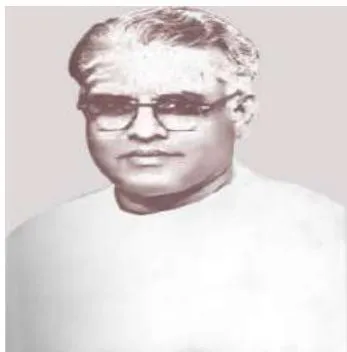
26 April 1912 - 15 February 1973
"Avvai" TK Shanmugam (1912-1973) was a legend in theatre. He and his three brothers, Sankaran, Muthuswami and Bhagavati were sent to Sankaradas Swamigal, who was the founding father of Boys Companies for training in the arts of acting. They were also trained under Krishnaswami Pavalar (Bala Manohara Sabha) and Kandasami Mudaliar. Later these brothers had established their own company, known as Devi Bala Shanmukhananda Sabha. Amog them Sankaran involved in administration, Shanmugam and Bhagavati had become best actors and singers of their own. Muthuswami was interested in music direction. They have become more attracted by Thanthai Periyar's reform movement wherein Anna and Jeevanandam closely associated as the deputies of the great Periyar with the result they wrote plays imbibing Periyar's Philosophy such as Kumastavin Penn, Kadarin Vetri and Desa Bhakti. Noteworthy is the play known as "Workers of the World, Unite!"
Shanmugam, begun a handwritten paper on 9.12.1934 named as Arivucchudar which consists of stories, articles, politics, snippets, Tirukkural and also letters to the editor. This hand written news paper was first circulated in Athur, Vriddhachalam and Panrutti. This activity has later stopped after ten issues as it had affected other activities. It was later restored in 1938 as a publication. Shanmugam became the head of the Actors Guild in 1950, he had associated with famous academies such as the Sangeet Natak Akademi, the Bharatiya Vidya Bhawan and other state level associations too. One of the noteworthy things in the life of Shunmugam is that he was conferred as the best actor award in 1953 more so with the Padma Sri in 1971. Shanmugam moved to Gopalapuram and in April 1972, he wrote the first part of his biography i.e. Enadu Nadaga Vazhkai (Vanati Padippagam) but it is rather unfortunate that he did not alive to complete the second part of his life history (4).
The short and brief history of Tamil Cinema is narrated above with the hope that it would give a glimpse of back ground of history of Tamil Cinema. It is now imperative to understand how songs and music ruled the roost of world cinema.
The Storey of Music in Ancient Tamilnadu I.E. Isai-Tamil (Music Tamil)
In his fascinating book entitled "Tamil Inbam" the great Tamil scholar RP Sethupillai under the essay "Tamil Isai Vizha" brings out a fact underlying Tamil language. He exclaims that Isai Tamil (music Tamil) is centre. Whether we call it Isai Tamil or Tamil Isai are the same. He also states that saints belonging to Tamil Nadu endeavoured to nurture these three-fold Tamil i.e., lyal, Isai and Nataka Tamil. He further states that there is one saint who is well versed in the three branches of Tamil who lied in Pothigai Malai. Sitting at this big mountain this great saint nurtured Tamil. He further states that such a great saint once saved Tamil Nadu by his music prowess from the tyranny of King of demons the powerfulavana. Listening to the music of the great muni Agastya the great Havana asked Oh great Saint what do you wish to have? Agastiyar answered my only desire is that you should not harm anyone in this land. From that time onwards Havana never looked back at Tamil Nadu with his aggrandizing attitude. Thus, Sage Agastiyar saved Tamils from Havana. The author R.P. Sethu Pillai quotes this piece of great incident from Tolkapiam and Madurai Kanchi Urai (4a).
History of world cinema denotes that certain movie became popular because of its super-hit songs. For example, Broadway melody was a super hit movie in the 1930's, which hit the box office at US( 3.00 million. Music and its lyrics attracted the attention of millions of fans. In collaboration with Arthur Freed, who wrote the lyrics, Brown compiled an impressive list of standards. These included "You Were Meant for Me," "You're an Old Smoothie," "Broadway Melody of 1929," "All I Do Is Dream of You" and "Alone" (5). Again, the film The Great Ziegfeld released in 1935 amazed the world of cinema by its scintillating songs (The Great Ziegfeld). In 1944 Going My Way composed by Robert had certainly dominated the Hollywood (6). A biggest comedy but infused music in the movie and become highest grasping movie, that had hit the box office of the value of 7.5 million dollars that had made even the Pope to admire and offered accolades. This movie had won seven Oscar Awards in all the categories. One of the biggest successes in film in the 1930s, and the pride of MGM at the time, it was acclaimed as the greatest musical biography to be made in Hollywood and still remains a standard in musical film making (7). Again in 1951 An American in Paris known for its success towards music - exclaimed The New York Times September 30, 1964,(8). In 1960's Leyoned Bird - West Side Story won Oscar, in all the categories, including the best music and best song more to say that more innovation had been made, in sound mixing in the movie and stood as the first and foremost in the innovation of sound mixing, and paved the way for more exploration
in the future not only in the Hollywood film industry; but also, in other film industry as well. Released on October 18, 1961 through United Artists, the film received high praise from critics and viewers, and became the second highest grasping film of the year in the US. The film was nominated for 11 Academy Awards and won 10, including best picture (as well as a special award for Robbins), becoming the record holder for the most wins for a movie musical.
The Contributions of AVM Productions:
After the release of Nam Iruvar (we two) in 1947 by AVM Productions many movies on the basis of social evils were produced. AVM productions flourished in the Tamil Cinema though it faced great difficulties, enduring restrictions from the Government of India owing to the Second World War. It should be emphasized here that the screen play written by Peraringer Anna, for movies such as Velaikkari (Servant Maid) or Ore-Iravu (one night) produced by AVM on the basis of social evils attained great success (a). AVM Productions is an Indian film production studio founded by A. V. Meiyappa Chettiar and it is the oldest studio in India. Its film
studios are located in Chennai and has produced hundreds of films not only in Tamil but Telugu, Kannada, Malayalam and Hindi. It had introduced numerous actors in Southern industries, some of the prominent actors are Chevalier Sivaji Ganesan, Rajkumar, S. S. Rajendran, Vyjayanthimala, Kamal Haasan and many more. AVM Studios besides the shooting floors, has recording, dubbing and a preview theatre and its complex also houses facilities for production and post production processing as well (b). Therefore it is difficult imagine History of Tamil Cinema without the great contribution of AVM Production which has been pioneered by Late Sri. A. V. Meiyappa Chettiar. In 1940, Chettiar produced Bhoo Kailas, a Telugu mythological film which created history. The film turned out to be a big hit and also won critical acclaim. Meiyappan struck gold with comedy next. Sabapathy (1941) with the saucer-eyed T. R. Ramachandran in the lead, along with Kali N. Rathnam and K. Sarangapani was a runaway success. Then came a series of hits like En Manaivi, Harishchandra (1943), Sri Valli.
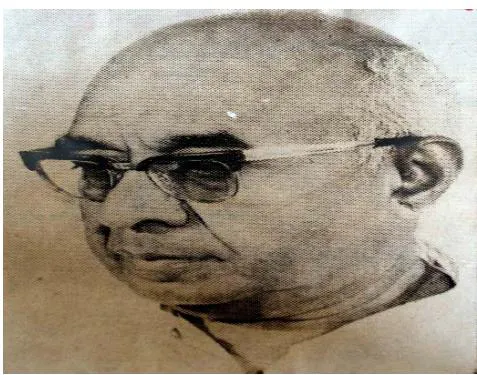
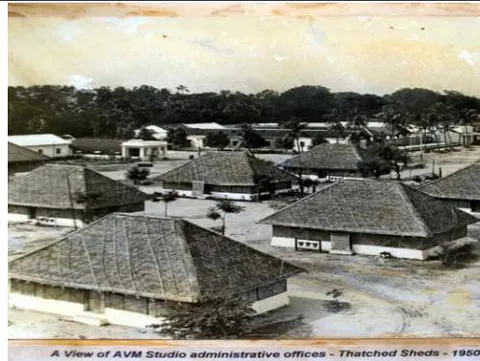
Hits like Nam Iruvar (1947), Parasakthi (1952), Andha Naal (1954), and the National Award-winning Hum Panchhi Ek Daal Ke (1957) followed. The great Shri. Meiyappa Chettiar passed away on 12 August 1979, and his sons took over the Administration. AVM is known for their trustworthiness and command respect among the cine fraternity and gave life and employment for thousands in the industry. It will be difficult to write the History of Tamil Cenima without the yeoman service rendered by late Sri. A. V. Meiyappa Chettiar(c).
a) SJ Idaya, "Tamil Movies that had created an Impact" Thuklak Tamil Weekly Magazine dated 26.10.2016 PP 12-13. b) https://en.wikipedia.org/wiki/AVM_Productions c) https://www.sahapedia.org/chennais-avm-studiosbehind-scenes-silver-screen
The Scenerio of Music in Tamil Films
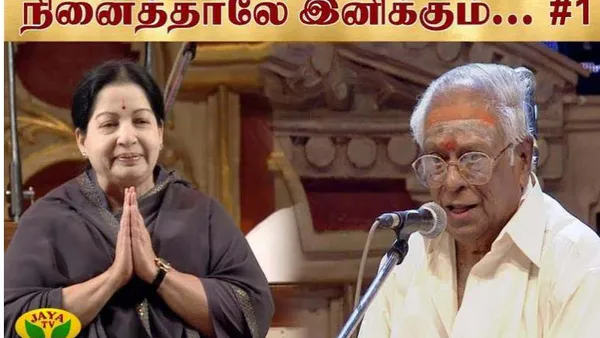
Tamil cinema witnessed great music composition by eminent musicians – one of the most outstanding and most popular among the musicians is the great pair Viswanathan and Ramamoorthy. The songs composed by them enthralled the Tamil audience for more than five decades. It is here appropriate to reproduce what was spoken by the most exalting personality, the former Chief Minister of Tamil Nadu most respectfully known as Amma (Puratchi Thalaivi Manbumigu Dr. Jayaraman Jayalalitha). An actress par excellence who obtained the name of Kalai Selvi from the film industry because of her undisputed acting, dancing and singing which was unique. It is only appropriate to reproduce what was spoken by Amma on the eve of Anniversary of Jaya TV on August 2012 (9).
Excerpt of Puratchi Thalaivi Dr. Selvi J Jayalalitha's Speech
Music is a well-conceived and protracted sound of beauty. Music is a wonderful instrument that enslaves human beings and animals too. Music is a bridge that integrates the hearts of mankind. It unravels the feelings and emotions such as sadness, happiness and curiosity. That is why it is hailed by the nobles that none can escape from the enthral of music and even the earth can be made to dance to the tune of music. Indeed, God is an embodiment of mellifluous music of sentamil such songs in Tamil are plenty that sooth our minds and prevail in our memories perpetually.
From the olden days till this day musicians such as G. V. Ramanna, K. V. Mahadevan, Adhi-Narayanarao, Chelapathi Rao, Dakhshinamurthy, S. M. Subbianaidu, Ilayaraja and various others have composed numerous mellifluous songs. They have also introduced new and innovative nuances in their music. Viswanathan and Ramamoorthy combination is one among those who produced outstanding and everlasting songs that lives in our hearts. The songs composed by them contain humming, chorus, sounds of the birds with the use of modern instruments that makes our minds to delve in their melodies and the songs exist in us forever.
Though the songs enacted by the kings of melodies became famous and remain everlasting in our minds due to the facts such as the story selection, the performance of actors and actress; the contributions made by the directors and the sound producers; more importantly the contributions made by eminent lyric writers like Kannadasan and Vali and the excellent manner they wrote these songs; the uncompromising way of singing by the play back singers such as P. Suseela, TMS, PBS, S. Janaki, L. R. Eswari, M. S. Rajeswari, P. Leela, Jickey, Sreekali Govindarajan, Jamuna Rani, A. M. Raja, Balasaraswathi, AL Raghavan, Sarojini, Vani Jayaram but it is because of the fact that
these songs were composed by the combination of Viswanathan and Ramamoorthy it attained fame. These songs pervaded every nook and corner of the society.
I use to admire various things from my childhood days such as the air, the moon, the earth, the trees, the plants, the creepers, the flowers and they become part of my life; like-wise the music of Viswanathan and Ramamorthy had prevailed in my life. I grew along with their music. There is no end to the grandeur of the music of Viswanathan and Ramamoorthy. It has the power to attract people from all age group. The songs composed by them in 1950-60's lasts in the minds of people even today. They have become popular and famous when I was a child. Those days there were no communication gagets such as computers, CDs, DVDs, only gramophone and radio had existed. Children of this age never know what is gramophone and it is bewildering - how this pair attained fame without these communication gadgets those days. Their songs were admirable as it were composed on the basis of Carnatic music - that is the reason why their songs became immortal. These songs will prevail in us the moment we watch it in the theatre. These songs thus prevailed in me when I was a child and they will last in me till my last breath. I came to know that Carnatic music giant DK Pattamma used to shed tears whenever she listen to the song sonnathu neethana sol sol enyire. Myself enjoyed a TV interview wherein Smt Venai Gayathri displayed the tune "nineikatherintha maname" in her veena when asked by the interviewer whether she listen to film songs. This shows the fact that Viswanathan Ramamorthy pair had the uncanny knack of attracting the attention of the Carnatic musicians who generally, do not pay attention to film songs that is the greatness of this pair. They gave the feeling of taking us to an entirely new world through their music.
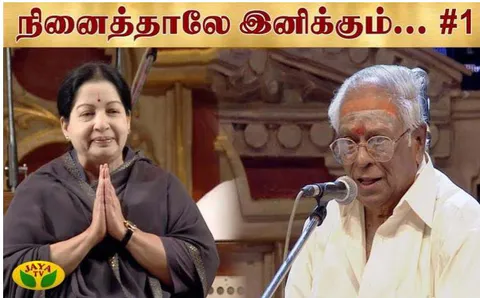
To put it in a nutshell, it is this pair that produced outstanding music in accordance with the change of time imbibing modern methods and innovations in their music and took the music to an entirely new direction.
They gave importance to musical instruments and involved numerous musical instruments to compose their songs. The fame of introducing world music to Tamil film songs belong to them. They have not only
composed songs in Tamil language but in Telegu, Malayalam, Kanada and Hindi as well. My mother took me to Raja Annamalai Mandram in 1963 to a function wherein Viswanathan and Ramamoorthy were conferred with the title of Mellisai Mannargal, I thought of felicitating them one day, that dream has been realized through Jaya TV today.
The above speech unearths the truth that music can attract the attention of audience, enthral and enslave them. Indeed, the pair of Viswanathan and Ramamurthy ruled the roost of music in the Tamil Film Industry for five decades that made Manbumigu Amma to deliver her immortal and thought provoking and realistic speech which contain more wisdom to analyse and ponder over than mere applause about MSV and TKR.
Rationale of the Study
While the foregoing thought provoking, realistic wisdom thrown by the former Chief Minister of Tamil Nadu on the positive effect of melodious music that soothes and integrates the hearts of the people irrespective of caste, creed, religion above all rich or poor, the greats and the ordinary, it is bewildering to read reports in research studies about emotional impacts created by rap music and their adverse effects particularly on the youth. The American Academy of Paediatrics (pediatrics.aappublications.org) reports adverse and staggering impact created by rap music that panics the listener and that go to the extent of altering their character and they go wild and commit errors resulting in crimes (10). This report is published with a view to:
- Guide and define the Child Health Care System and/or Improve the Health of all Children and
- Expresses concern over heavy metal music listening that result in increased depression, delinquency risk behaviour, smoking and conduct problem and
- Exclaims that fan of heavy metal and rap music showed a greater tendency to engage in reckless behavior than their peers who were not fans of this type of music.
Unlike the above adverse effects created by rap music with ugly content, the songs identified in this research work, throw light on the ideas of morality and moral philosophy that evidence extraordinary commitment made by the producers, music directors, lyric writers and the directors that they can also disseminate message through their story and songs to the people.
Deterioration in the Quality of Film Songs - Kaviarasu Kannadasan
Peer and eminent personality like the great Kaviarasu Kannadasan, who wrote thousands of meaningful songs; with philosophical import expressed concern over deteriorating music including contents of
the lyrics. "Knowingly or unknowingly the quality of music is deteriorating apart from Carnatic Music, all other forms of music are losing their grammar" says Kannadasan. It starts somewhere, and ends at no man's land, and we were bound to listen to such music. The contents of the lyrics are inferior and below par, even to the ordinary prose. The situation was not that bad fifteen years ago, wherein good poetics were converted to lyrics of cine songs. Acknowledging the laudable services rendered by legendary music director KV Mahadevan, who took in to consideration the lyrics written by him using classical (sangam) Tamil words, Kannadasan opines that it is because of the introduction of cabaretsongs in Tamil Cinema, the situation had become worse. The folk village songs composed by KV Mahadevan and MS Viswanathan which were admired by millions Kannadasan opined that these musicians knew the nuances of folk village songs, and with their deep-rooted dedication they gave life to the lyrics. Indeed, those days were golden days wherein thousands of Kannadasan poems were turned to lively lyrics; to the songs of popular Tamil movies (11). In this research work eminent poetic songs will be taken in to consideration for this comparative work. Indeed there are few channels which dedicates their time to propagate old songs the best among them is MEGA TV's Amudh Ganam. This researcher wishes to say the fact happening in this channel which had certainly enhanced the understanding of the lyrics and music of yester years.
Inspiration
MEGA TV'S Amudha Ganam
The Mega TV brings out a one hour program in the morning 8.00 A.M. to 9.00 A.M. very gracefully presented by Director Shri. V. Aadhavan. The manner in which he presents with subtle details always helped the researcher in fine tuning the objectives and hypothesis of the research work.
MEGA TV'S Endrum MSV
Mega TV also brings out a program from 9 to 10 A.M. on Sundays Endrum MSV. It is a live consort wherein the legendary M.S. Viswanathan shares his views on composing a particular song. The intricacies discussed in many of the episodes and the manner in which Director Aathavan articulates the conversation enhanced the knowledge of the researcher in terms of how a particular song is recorded. The researcher humbly place on records their sincere appreciation on the services rendered by MEGA TV and there are million of followers of this program called Amudaganam telecast between 8 to 9 A.M. & 10 to 11 P.M. everyday.
MEGA TV'S Pattimandram
MEGA TV often sponsors a specialized program called Pattimandram wherein experts and noted learned personalities converse and converge on great
literary topics. Many times, these experts discuss on topics whether old familial songs carry message on the well-being of the society. Listening to such intellectual exchange of ideas had certainly enhanced this research work and we acknowledge the services rendered by MEGA TV in this regard.
MEGA TV'S Sergeethame Santhosham
There is one special program telecast four days in a week between 9 p.m. to 10 p.m. championed by Music Director, Lyric Writer and Producer Gangai Amaran hosted by MEGA TV. This program is called "Sangeetham Santhosham" wherein the legend Gangai Amaran tries to draw comparison between old and new songs and that had enhanced the understanding of the researchers reflecting in this research work.
III. LITERATURE REVIEW
As indicated above that films had become popular for its songs and music but what concerns is though several important research in the area of emotional impact created by rap music and its adverse effects particularly on the youth were conducted more specifically by the American Academy of Paediatrics' (pediatrics.aappublications.org) but research in the area of film songs that disseminate ethical and social welfare ideas are not conducted excepting the fact that the researchers had conducted research for the Ph.D. research work entitled "Equity and Social Justice - Economic And Social Welfare Ideas Emphasized In Bharat Ratna Dr. M.G. Ramachandran's Film Songs - In Comparison With Contemporary Theories" - Ph.D degree awarded by the Tamil Nadu Open University, Chennai (2023) and the following research articles were published:
The paper entitled A Study On Bharat Ratna Dr. M.G. Ramachandran's Philosophical Film Songs with special reference to the Socialistic and Communistic Ideas it Contain - An Academic Comparative Analysis with the Theory of Socialism as Propounded by Karl Marx published in the World Journal of Social USA., Science, Vol. 5, No. 1; 2018 http://wjss.siedupress.com the authors contemplate a well-conceived methodology wherein they compared the ideas contained in the selected Tamil Film songs with that of socialistic and communistic ideas more specifically with the theory of socialism as propounded by Karl Marx.
In another published work entitled "A Study on the Bharat Ratna Dr. Maruthur Gopala Menon Ramachandran Film Songs that Contain the Ideas of Equity and Social Justice - A Comparative Analysis with the Contemporary Theories More Specifically with the Theory of Socialism as Propounded by Karl Marx" published in the Global Journal of Human Social Science USA – (2018) the researchers extended such a comparison with certain additional film songs that reflect the same ideas.
Whereas in another paper entitled "A Study on Bharat Ratna Dr. Maruthur Gopalamenon Ramachandran's Film Songs that Denounce the Practice of Corruption - A Novel Comparative Analysis with the Theories of Corruptive Behaviour, published in the Journal of humanities and cultural studies R&D, USA, the authors using the same methodology compared the ideas of denouncing the practice of corruption as contained in certain MGR film songs with the theories of corruptive behavior.
In another paper entitled “A Study on Bharat Ratna Dr. M.G. Ramachandran's philosophical film songs with special reference to the educational ideas it contain An academic comparative analysis with the theories of education (both India and abroad) a retrospective reflection” Journal of humanities and cultural studies R & D, USA compared the educational ideas as contained in the selected MGR film songs with that of educational ideas of the world.
In another paper entitled “A Study on Ethical Values as Contained in Bharat Ratna Dr. M.G. Ramachandran’s Selected Film Songs – An Academic Comparative Analysis with Contemporary Theories of Ethics” published in the International Journal Of Research In Commerce, Economics & Management (India), the ethical ideas as contained in the selected MGR Tamil film songs were compared with the theories of ethics.
In the paper entitled “A Retrospective Reflection on the Life History and the Philanthropic Attitude of Bharat Ratna Dr. Marudhur Gopala Menon Ramachandran – A Bird’s Eye View” the authors not only traced the history of Dr. MGR but also the ordeals he made and the charitable mind of the Hero of the research topic was dealt with.
In addition to the above the authors had also published a research work entitled "Chevalior Sivaji Ganesan's Tamil Film Songs Not Only Emulated The Quality Of The Movie But Also Contains Ethical Imports That Can Be Compared With Ethical Theories - A Retrospective Reflection" in the Global Journal of HUMAN-SOCIAL SCIENCE: A Arts & Humanities - Psychology, Volume 20 Issue 10 Version 1.0 Year 2020 using the same methodology to find out whether the ethical ideas that contain in the Chevalior Shivaji Ganesan's film songs can be compared more specifically the ethical theory enunciated by W.D.Ross.
Research Gap
All the above papers leading to the research work of the identified topic were based on the film songs of Bharat Ratna Dr. Marudhur Goplamenon Ramachandran (Dr. MGR) that contain socially relevant ideas as well as Chevalior Shivaji Ganesan. It is a fact that there are no research work found to be conducted to indicate whether the films acted by THYAGARAJA BAGAVATHAR, N.S. KRISHNAN, CHANDRABABU,
GEMINI GANESAN, ASOKAN, NAGESH, JAISHANKAR AND MUTHURAMAN CONTAIN ETHICAL IMPORTS THAT CAN BE COMPARED WITH ETHICAL THEORIES.
Therefore, it has been decided to carry out the present research to understand the nature of contents of lyrics that disseminate the concept of ethical values and an attempt has also been made to compare the ideas with the relevant theories as contemplated by W.D. Ross. It is therefore needed the following two conspectus approaches to comply with the heuristic of the research aimed at and they are:
- (i) To conceptualize the ethical ideas, contain in the various film songs of THYAGARAJA BAGAVATHAR, N.S. KRISHNAN, CHANDRABABU, GEMINI GANESAN, ASOKAN, NAGESH, JAISHANKAR AND MUTHURAMAN CONTAINS ETHICAL IMPORTS THAT CAN BE COMPARED WITH ETHICAL THEORIES MORE SPECIFICALLY TO THE THEORY PROPOUNDED BY W.D. ROSS.
- To reframe the above statement of research approach, it is appropriate to ask the following fundamental questions:
- (ii) Whether CERTAINTHYAGARAJA BAGAVATHAR, N.S. KRISHNAN, CHANDRABABU, GEMINI GANESAN, ASOKAN, NAGESH, JAISHANKAR AND MUTHURAMAN CONTAINS ETHICAL IMPORTS THAT CAN BE COMPARED WITH ETHICAL THEORY PROPAGATED BY W.D. ROSS?
The above questions negate and assert the direction on which the present research pursuit should be endeavored for.
As indicated in the foregoing paragraphs that certain songs of these films also reflect ethical ideas. These songs were written in chaste Tamil. However, no research was conducted to conceptualize and compare the ethical ideas that these film songs contain with the relevant theories either due to lack of attention or emphasis. This research pursuit is therefore an attempt to address this anomaly that fulfils the research gap that had existed for decades. In particular this research work tries to articulate how film songs of the above actors reflect and emphasize the ever-interesting ethical ideas that can be brought under the ethical values that can be compared with the relevant ethical theory more specifically contemplated by W. D. Ross so that it fulfills an academic endeavor of important comparative theoretical research work. Therefore the study entitled CERTAIN TAMIL FILM SONGS BELONG TO YESTER YEAR ACTORS SUCH AS THYAGARAJA BAGAVATHAR, N.S. KRISHNAN, CHANDRABABU, GEMINI GANESAN, ASOKAN, NAGESH, JAISHANKAR AND MUTHURAMAN CONTAINS ETHICAL IMPORTS THAT CAN BE COMPARED WITH ETHICAL THEORIES - A RETROSPECTIVE REFLECTION is a determined attempt to identify, to analyze, to evaluate, and to assess film songs that reflect the ever important
ethical ideas and also to make an academic comparison with the existing theory of W.D. Ross to fulfill an honest academic endeavor.
Rationale of the Research Work
Internet encyclopaedia states that music provides entertainment and distraction from problems and serves as a way to relieve tension and boredom. Some studies have reported that adolescents use popular music to deal with loneliness and to take control of their emotional status or mood (12).
Providing quality songs in the movies always engaged the attention of the producers and directors. Beyond these two important functionaries in production of movie is the production of quality song with meaningful lyrics. The heroes of the movies also concerned about the contents of the song; as they play the part in the movies which would be viewed by millions of their fans. Research conducted by these authors unearthed the fact that Super-heroes who attained matinée idol status like Makkal Thilagam MGR took upon himself to produce not only quality movies but also paid personal attention to produce quality songs as he thought that good messages can be disseminated through songs and thereby millions of his fans will get the message and the society as well (13).
In the same premise the authors make an impartial and dispassionate attempt to find out whether the selected songs acted by super-heros like THYAGARAJA BAGAVATHAR, N.S. KRISHNAN, CHANDRABABU, GEMINI GANESAN, ASOKAN, NAGESH, JAISHANKAR AND MUTHURAMAN contain ethical ideas and the same can be compared to the ethical theory propounded by W.D. Ross.
It is also not out of place to mention that producers, directors and music composers of olden days had a vision to produce outstanding film songs for the moral well being of the society and it is a fact that Eminent lyric writers like the great Kannadasan, Pattukottaiar, Udumalai Narayanakavi, Kavinger Valli, Pulmai Pithan, Panchu Arunachalam, Marudha Kasi, Kavinger Sudradha, Kavinger Na Muthulingam and others tried to portray ethical ideas in their film songs that had become a stamp of impeccable source of important socially relevant messages. Indeed, these ideas had become a guiding principle for generations in terms ethical behaviour more specifically ethical import as the Tamail culture that propagate the idea of chaste way of living. Ancient literature like the Tholkappium more specifically the Porul Athigaram enunciates chaste way of life. Inherited by such way of life these lyric writers imbbed such ideas of virtue in their lyrics to their songs and an attempt to find out similar traits in this research work becomes paramount importance and the rationale of the study.
It is also a fact that eminent contributions accorded by the great musicians like S. M. Subbaiah Naidu, K. V. Mahadevan, C. N. Pandurangan M. S.
Viswanathan & T. K. Ramamoorthy who made their best efforts to give mellifluous music and made the songs ever-green and immortal. In view of the efforts made by these eminent personalities their films contain songs with philosophical import. Especially the researchers witnessed ideas of ethics, education, equity and justice (communism), eradication of corruptive practice etc. appears in MGR film songs. Even the songs of love and romance of his movies coincide with Tamil's cultural tradition (14).
IV. NEW AND NOVEL METHODOLOGY
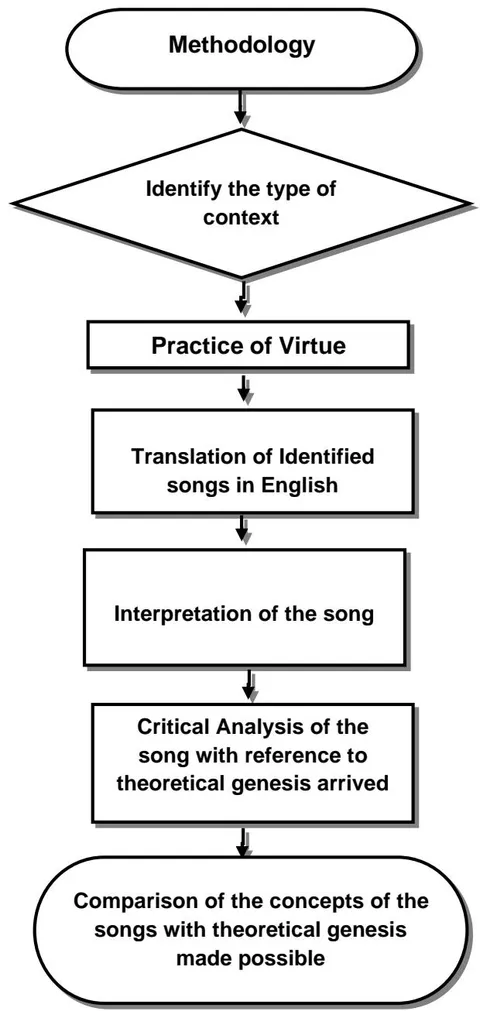
A new methodology by way of "Context" has been evolved to make theoretical comparison with the Film
Songs of the above actors relevant to the ideas of Ethical Values concerning this research work. Each "Context" will contain - (i) the brief history of the actor (ii) translation of the song in English; (iii) interpretation of the sum and substance of the song and (iv) a Critical Analysis has been made at the end of Each Context. The critical analysis makes possible the comparative analysis of the content of the song with the respective theories. It is also assumed that the theoretical genesis would also serve as literature survey. The table of confluence of contexts of the research work would re-assure the fact of actual comparison of the ethical ideas contained in the film songs of the above actors with the theories of ethics.
Theoretical Genesis of Ethics or Moral Philosophy
The field of ethics is also known as moral philosophy, which involves in systematizing, defending, and recommending concepts of right and wrong behavior. Of late, ethical theories were divided into two branches, viz. Theoretical Ethics and Applied Ethics which is inclusive of (a) Meta ethics and (b) Normative ethics. Meta ethics enables ethical evaluations such as (i) what does it mean to say something is good? (ii) If at all, how do we know what is right or wrong? (iii) How do moral attitudes motivate action? (iv) Are there objective values? Normative ethics addresses questions such as What actions are good and bad? What should we do? While normative ethics endorse ethical evaluations; Meta-ethics deals with the study of the origin and meaning of ethical concepts. Applied ethics enunciate application of ethical theories to practical situations i.e. controversial moral issues such as abortion, animal rights, and euthanasia (15).
Deontological Ethics
The word deontology has been derived from Greek words i.e. duty = deon and science (or study) of (logos). Deontology falls within the domain of moral theories that guide and assess our choices of what we ought to do (deontic theories), in contrast to those that guide and assess what kind of person we are and how we should be. They are also some times called non-consequential since these principles are obligatory, irrespective of the consequences that might follow from one's actions. There are four central duty theories. The first is propounded by the Century German Philosopher Samuel Pufendorf, who classified dozens of duties under three headings, they are (a) Duties to God, (b) Duties to Oneself, and (c) duties to others.
Concerning our duties towards God, he argued that there are two kinds (a) theoretical duty to know the existence and nature of God and (b) practical duty to worship God both inwardly and outwardly.
Concerning our duties towards oneself, they are also of two sorts: (a) duties of the soul, which involve developing one's skills and talents and (b) duties of the body, which involve not harming our bodies through gluttony or drunkenness, and not killing oneself. Concerning our duties towards others, Pufendrof divides these between absolute duties, which are universally binding on people and conditional duties, which are the result of contracts between people. Absolute duties are of three sorts (a) avoid wrongdoing other (b) treat people as equals and (c) to promote the good of others. Conditional duties involve various types of agreements; the principal one is the duty to keep one's promises (16). A second duty-based approach to ethics is rights theory. The most influential early account of rights theory is that of Century British Philosopher John Locke who argued that the laws of nature mandate should not harm anyone's life, health, liberty or possessions. For Locke, these are our natural rights, given to us by God. A third duty-based theory is by Kant, which emphasizes a single principle of duty. Influenced by Pufendorf, Kant agreed that we have moral duties to oneself and others, such as developing one's talents, and keeping our promises to others. The fourth and more recent duty-based theory is by British philosopher W. D. Ross, which emphasizes prima facie duties. Ross argues that our duties are "part of the fundamental nature of the universe". However, Ross's list of duties is much shorter, which he believes reflects our actual moral convictions (17):
- Fidelity: The duty to keep promises
- Reparation: The duty to compensate others when we harm them
- Gratitude: The duty to thank those who help us
- Justice: The duty to recognize merit
- Beneficence: The duty to improve the conditions of others
- Self-improvement: The duty to improve our virtue and intelligence
- Non-malfeasance: The duty not to injure others
In this research work the Duty Theories as well as the shorter version of W.D. Ross has been taken up for a comparative analysis with the selected Film Songs that has such ethical import. Nevertheless, it should be understood that works relating to ethics and philosophy are available in plenty in the Indian context. For example, in Mahabaratha, Chapter 11, which is entitled as, talks on the dharma of a King; Yudhishra asked his grandfather the great Bheeshma so many wonderful questions on morality. Two of such questions are relevant for the subject matter here. For the sake of convenience, the same is given below (18).
Yudhisthira: How did the word RAJAN come into use when a king is addressed? A King is like any other human being on the earth. His body and limbs are like those of anyone else. His understanding, his senses, are similar to those of many others. He has the same joys and grief's, the same number of years to live on the earth, like anybody else. How then did it happen that he is considered different?
This world is made up of men who are far superior to him in intelligence, bravery and other accomplishments. And yet, this one man rules the others: though they are superior to him. Why should it be the rule that all the others worship one man?
Bheeshma: I will tell you. In the beginning there was no king. There was no punishment. These two were not needed then. Men were all righteous and each man protected the other. As time passed by, the hearts of men began to be invaded by errors. Once error enters the heart, the mind gets clouded and the sense of right and wrong begun to wane. It was even so with the men of distant times. Covetousness was the first guest invaded in their hearts. When covetousness came into life, men began to want things, which did not belong to them. The next passion to be born was lust. Lust can never exist alone. It had the companion of warth. As soon as these terrible passions found places in the hearts of men, righteousness paled into insignificance. Along with this confusion, another calamity took place the Vedas disappeared. Righteousness was completely lost in the world. The Gods were then overcome with fear. They went to Brahma the Pitamaha and said: Look on the world you have created our Lord! It is threatened with destruction. Please save it and save us! Brahma assured them that he would find a way. He then composed a treatise consisting of a hundred thousand lessons. It consisted of Dharma, Artha, Kama and Moksha. He dealt with them in great detail. He formulated the rules of chastisement. The main features of this treatise on chastisement dealt with punishment of two kinds: open and cruel punishment. It treated of conservation of wealth by traders and merchants, growth of penance of the ascetics, destruction of thieves and wicked men. There was a branch dealing with all the religious observances, and another dealt with the extensive subject of legislation and the behaviour that is expected of counselors, of spies, of secret agents, envoys and conciliation. Many ways and means by which men may be prevented from deviating from the path of righteousness and honesty were described in it.
After composing it Brahma said: For the good of the world and for the establishment and propagation of Dharma, Artha and Kama I have composed this. Assisted by chastisement this will protect the world. Men are mostly led by chastisement and so this treatise will be called Dandaneeti. It was studied and abridged by several God-like men, the first of them being Sankara. Finally, when it was to be given to the world, Sukra of great wisdom thought of the brevity of the life of men on earth and made the work much shorter. It contained just a thousand lessons. The Gods then appeared before Vishnu and said: Lord! Indicate to us a man on the world who deserves to be superior to the rest. Narayana Said: I will enter the body of one man and he, as well as all those who are born in his line, will be Lords of the world. There was a king called Vena. From his right arm was born a man who was like a second Indra in his looks and godliness. He was born with a coat of mail and all the
weapons. He was proficient in all the arts and the Vedas. The rishis made him the ruler of the world. Sukra was his priest. People believed that this man was the eighth son of Vishnu himself. His name was Prithu. He made the surface of the earth level. Vishnu and the deities assembled to crown Prithu King. The earth took a form and came to him with tributes of gems and jewels. Prithu milked the earth in the form of a cow and made her yield seven kinds of crops for the food of all living creatures. He made all men regard Dharma as the foremost of all things.
Because he pleased all the people, he was called RAJAN. Because he healed the wounds of afflicted people, he was called Kshatriya. And again, because the earth became celebrated for the prevalence of virtue during his reign, she was called Prithivi. Vishnu entered the body of that monarch. A pure man, when his punya becomes exhausted, descends from heaven to earth and is born as a king. Such a person is indeed great and is a portion of Vishnu on earth. He has a heritage of divine intelligence and he is superior to all the others. He is established by the Gods and he is not to be slighted. This is the reason why the world cannot command him but he can commands the world. This is why the multitude has to obey his words of command though he is like anybody else.
The fact remains that covetousness was the first thing to invade in the hearts of men which resulted in devastation and soaked the mother earth with all kinds of sinful actions by human beings. We can also note the same thing is repeated by Bheeshma to another question of Yudhisthira.
Yudhisthira: Tell me, what is the source of sin? Where does it proceed from and what is the foundation on which it is built?
Bheeshma: Covetousness is the one root of all sin. It destroys all merits and all goodness. From it precedes the river of sin. It is from this single source that many of the sins flow. Covetousness is the eternal spring of cunningness and hypocrisy. Wrath is born of covetousness, lust is born of covetousness and several of the terrible maladies of the mind spring from covetousness: loss of judgment, deception, pride, arrogance, malice, vindictiveness, shamelessness, loss of virtue, anxiety and infamy. These are some of the children of covetousness. Let me recount to you the names of some others. Miserliness, cupidity, desire for every kind of improper behaviour, pride of birth, pride of learning, pride of beauty, pride of wealth, pitilessness, malevolence, insincerity, appropriation of another's wealth, harshness of speech, talking ill of others, gluttony, a love of falsehood, and a love of every kind of evil act. In life no man has ever been able to give up covetousness. Life may decay, but this will never wane in its power. Even men of great learning whose minds
are the very treasury of all the scriptures, who have the intelligence to clear all the many doubts of others are found to be incompetent to manage their own affairs. They are spineless and weak, and it is because they are slaves of this dread disease: covetousness.
Yudhisthira: Tell me about ignorance
Bheeshma: Ignorance, my child again has its origin in this covetousness. As covetousness grows, ignorance grows with it. The root of covetousness is but loss of clear thinking, loss of judgment, and so ignorance is an inseparable companion of covetousness.
Yudhisthira: What are the duties which should be preferred by others?
Bheeshma: The highest duty is self-restraint. Just as the great sin covetousness leads to all sins, selfrestraint leads a man to the highest glory. It has a number of good qualities born of it: forgiveness, patience, abstaining from injuring others, impartiality, truth, sincerity, modesty, steadiness, liberality, freedom from wrath, contentment, sweetness of speech, benevolence and freedom from malice. A man who is self-restrained will never be a slave to the attachments of the earth. He attains emancipation. He is almost on the threshold of it when he becomes self-restrained.
The above narration explains the fact that covetousness is the root cause of man's many sins that makes him also corrupt all that is grandeur and higher values in life would be lost. Conversely, selfrestraint or righteousness leads one to attain emancipation. In the two pairs of opposite, self-restraint is important for the present comparative study the seven cannons (i.e. Fidelity, Reparation, Gratitude, Justice, Beneficence, Self-improvement, Non-malfeasance) contemplated by WD Ross will be taken up where ever necessary the talks on dharma between the great Bheeshma and King Yudhistra will also be taken up.
As indicated in the abstract of this research work it has been decided to take up the study as each chapter of each actor and there by it has to begin from Thiyagaraja Bhagavathar and the rest of the others one after the other.
CHAPTER-I
Mayavaram Krishnasamy Thiyagaraja Bhagavathar
(1-3-1910 - 1.11.1959)
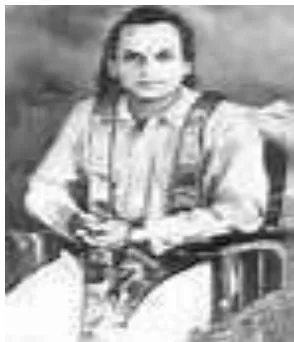
Mayavaram Krishnasamy Thiyagaraja Bhagavathar also known by his initials as M.K.T., was an Indian actor, producer, and Carnatic singer. He is considered to be one of the most successful actors in Tamil Cinema ever. Bhagavathar was born in the town of Mayiladuthurai. He started his career as a classical singer and stage artist in the late 1920s. In 1934, he made his debut in films through the movie Pavalakkodi which turned out to be a grand success. Bhagavathar was acclaimed for his powerful, melodious voice and the ease with which he could sing high-pitch notes. Critics and film historians acknowledge Bhagavathar as the First Superstar of Tamil cinema. From 1934 to 1959, Bhagavathar acted in 14 films of which 10 were box-office hits. Bhagavathar's 1944 film Haridas ran for three consecutive years at Broadway Theatre in Madras and created the record for the longest continuous run at a single theatre. Most of M. K. T.'s songs were devotional with a South Indian classical base. Along with lyricist Papanasam Sivan, M. K. T. composed many songs, including "Unai Alaal", "Neelakanta", "Amba Manam Kanindhu", "Soppana Vazhvil Makizhndu", "Maravaai Pudhaitha Odu", "Gnana Kann", "Sathva Guna Bodhan", "Rajan Maharajan", "Krishna Mukunda Murari", "Naatiya Kalaiye", "Radhe Unaku Kobam Aagadadi", "Vasantha Ruthu", and many others.
In 1944, M.K.T., actor N.S. Krishnan and Coimbatore- based movie studio owner Sriramlu Naidu were charged in the murder of Lakshmikanthan; M.K.T. was acquitted and released in April 1947. Prior to his arrest, he was signed up to act in 12 more films, but he lost interest and the few movies he did after his release were unsuccessful. Nevertheless, he still drew huge crowds at his concerts. He had lost almost all his wealth in his case defense. MKT turned more towards temples and developed a philosophical attitude towards the end of his life. He undertook journeys to many pilgrimage centres. He lost interest in wealth and popularity.
He had helped many people without publicity. It was a custom those days to arrange music concerts in family functions like weddings etc. Bhagavathar would sing without any remuneration in family functions of those who helped him to come up in life. When World War II started, the British colonial government in India asked him to stage dramas and donate the collections for the Red Cross. He agreed and donated an impressive amount. When the war was over, the British government, as a gesture of gratitude, offered to honour him with the title Divan Bahadur. But he politely declined it saying he was only helping a humanitarian cause and did not expect to be rewarded (19). The above are about MKT who was considered to be the first Superstar of Tamil Cinema. Let us see few of the songs from his films whether they consist of ethical import!
Consider the following song written by Papanasam Sivanin the film "Haridas" It holds the record of being the longest-running Tamil film at a single theatre for 784 days. - Sung by M. K. Thyagaraja Bhagavathar - film directed by: Sundar Rao Nadkarni, the film had musical score by G. Ramanathan - Year 1944:
| Song Originally written in Tamil Language | Translation of the Song in English Language |
| िपिकागोयत!िपिकागी!िपिकागी!िपिकागी!िपिकागी!िपिकागी!िपिकागी!िपिकागी!ि�ोयत!िपिकागी!ि�ो�त!िपिकागी!ि�ो�त!ि�ो�त!ि�ो�त!ि�ो�त!ि�ो�त!ि�ो�त!ि�ो�त!ि�ो�त!ि�ो�त!ि�ो�त!ि�ो�त!ि�ो�त!ि�ो�त!ि�ो�त!ि�ो�त!ि�ो�त!ि�ो�त!ि�ीमोयत!िपिकागी!ि�ो�त!ि�ो�त!ि�ो�त!ि�ो�त!ि�ो�त!ि�ो�त!ि�ो�त!ि�ो�त!ि�ो�त!ि�ो�त!ि�ो�त!ि�ो�त!ि�ो�त!ि�ो�त!ि�ो�त! | Krishna Mugunda Murare Jaya Krishna Mugunda Murare He possesses ocean of mercy and the husband of Mahalakshmi Wears a kind of flower on his neck Jaya Krishna Mugunda Murare He danced on the hood of a great snake known as Kaliyan and destroyed Kamsan The lotus eyed Gopala Krishna Mugunda Murare Wears a golden earring wearing a blue colour upper cloth He looks resplendent that could not be compared even with crores of God of love Gopies are fortunate they surrender unto Goplan He revels in the bliss of their company Krishna Mugunda Murare Jaya Krishna Mugunda Murare |
Interpretation of the Song
This song is in praise of the Lord Krishna and the qualities and deeds performed by Lord Krishna on his incarnation in the world. As such this does not coincide with the cannons contemplated by W.D. Ross.
Critical Analysis
As this song is in praise of the Lord and the great qualities displayed during his sojourn on the earth as Sree Krishna perhaps goes beyond what W.D. Ross contemplated in his theory.
CONTEXT-II
Consider the following song written by Papanasam Sivanin the film "Ashok Kumar" - Sung by M. K. Thyagaraja Bhagavathar - film directed by: Raja Chandrasekhar, the film had musical score by Papanasam Sivan - Year 1941:
| Song Originally written in Tamil Language | Translation of the Song in English Language |
| LD60TCLD 75757575757575757575757575757575757575757575757575757575757575757575757575757575757575757575757575757 | Oh mind praise the name of the Lord Siva every day Do not get entangled with the dreamy world full of ignorance Do not sing either in praise of love and the girl friend Do not indulge in the sway of distress created by the senses due to sins created in the past chose the path of the permanent and enjoy immortal bliss. |
| ि सिति रत्ति रत्ति रत्ति ि सिति रत्ति रत्ति रत्ति रत्ति ि सिति रत्ति रत्ति रत्ति रत्ति ि सिति रत्ति रत्ति रत्ति ि सिति रत्ति रत्ति रत्ति ि सिति रत्ति रत्ति रत्ति ि सिति रत्ति रत्ति रत्ति ि सिति वति रत्ति वति ि सिति वति वति ि सिति वति वति ि सिति वति वति ि सिति वति वति ि सिति वति वति ि सिति वति वति ि सिति वति वति ि सिति वति ि सिति वति ि सिति ि सिति ि सिति ि सिति ि सिति ि सिति ि सिति ि सिति ि सिति ि सिति ि सिति ि सिति ि सिति ि सिति ि सिति ि सिति ि सिति ि कागि ि कागि ि कागि ि कागि ि कागि ि कागि ि कागि ि कागि ि कागि ि कागि ि कागि ि कागि ि कागि ि कागि ि कागि ि कागि ि कागि ि सिति ि सिति ि सिति ि सिति ि सिति ि सिति ि सिति ि सिति ि सिति ि सिति ि सिति ि सिति ि सिति ि सिति ि सिति ि सिति िस्थि िस्थि िस्थि िस्थि िस्थि िस्थि िस्थि िस्थि िस्थि िस्थि िस्थि िस्थि िस्थि िस्थि िस्थि िस्थि िस्थि ि सिति ि सिति ि सिति ि सिति ि सिति ि सिति ि सिति ि सिति ि सिति ि सिति ि सिति ि सिति ि सिति ि सिति ि सिति ि सिति ि शिकि ि सिति ि सिति ि सिति ि सिति ि सिति ि सिति ि सिति ि सिति ि सिति ि सिति ि सिति ि सिति ि सिति ि सिति ि सिति ि सिति ि प्रधानि ि प्रधानि ि प्रधानि ि प्रधानि ि प्रधानि ि प्रधानि ि प्रधानि ि प्रधानि ि प्रधानि ि प्रधानि ि प्रधानि ि प्रधानि ि प्रधानि ि सिति ि सिति ि सिति ि सिति ि सिति ि सिति ि सिति ि सिति ि सिति ि सिति ि सिति ि सिति ि सिति ि सिति ि सिति ि सिति ि मूलि ि मूलि ि मूलि ि मूलि ि मूलि ि मूलि ि मूलि ि मूलि ि मूलि ि मू�ि ि मू�ि ि मू�ि ि मू�ि ि मू�ि ि मू�ि ि मू�ि ि मू�ि ि मू�ि ि मू�ि ि मू�ि ि मू�ि ि मू�ि ि मू�ि ि मू�ि ि कागि ि कागि ि कागि ि कागि ि कागि ि कागि ि कागि ि कागि ि कागि ि कागि ि कागि ि कागि ि कागि ि कागि ि कागि ि कागि ि काडि ि काडि ि काडि ि काडि ि काडि ि काडि ि काडि ि काडि ि काडि ि काडि ि काडि ि काडि ि काडि ि काडि ि काडि ि काडि ि काडि ि सिति ि सिति ि सिति ि सिति ि सिति ि सिति ि सिति ि सिति ि सिति ि सिति ि सिति ि सिति ि सिति ि सिति ि सिति ि सिति िरया िरया िरया िरया िरया िरया िरया िरया िरया िरया िरया िरया िरया िरया िरया िरया िरया िरया िरया िरया िरयazole िरयazole िरयazole िरयazole िरयazole िरयazole िरयazole िरयazole िरयazole िरयazole िरयazole िरयazole िरयazole िरयazole िरयazole िरयazole िरयazole िरयazole िरयazole िरयazole िरया िरया िरया िरया िरयazole िरयazole िरयazole िरयazole िरयazole िरयazole िरयazole िरयazole िरयazole िरयazole िरयazole िरयazole िरयazole िरयazole िरयazole िरया िरया िरयazole िरयazole िरयazole िरयazole िरयazole िरयazole िरयazole िरयazole िरयazole िरयazole िरयazole िरयazole िरयazole िरयazole िरयazole िरयazole िरयazole िरया िरया िरयazole िरयazole िरया िरयazole िरयazole िरयazole िरयazole िरयazole िरयazole िरयazole िरयazole िरयazole िरयazole िरयazole िरयazole िरयazole िरयazole िरयazole िरयazole िरयazole िरयazole िरया िरयazole िरयazole िरयazole िरयazole िरयazole िरयazole िरयazole िरयazole िरयazole िरयazole िरयazole िरयazole िरयazole िरयazole िरयazole िरयazole िरया िरयazole िरयazole िरया िरयazole िरयazole िरयazole िरयazole िरयazole िरयazole िरयazole िरयazole िरयazole िरयazole िरयazole िरयazole िरयazole िरयazole िरयazole िरया िरयazole िरयazole िरयazole िरया िरयazole िरयazole िरयazole िरयazole िरयazole िरयazole िरयazole िरयazole िरयazole िरयazole िरयazole िरयazole िरयazole िरयazole िरयazole िरया िरया िरयazole िरया िरयazole िरयazole िरयazole िरयazole िरयazole िरयazole िरयazole िरयazole िरयazole िरयazole िरयazole िरयazole िरयazole िरयazole िरयazole िरयazole िरयazole िरया िरयazole िरया िरयazole िरयazole िरयazole िरयazole िरयazole िरयazole िरयazole िरयazole िरयazole िरयazole िरयazole िरयazole िरयazole िरयazole िरयazole िरयazole िरया िरया िरयazole िरया िरया िरयazole िरयazole िरयazole िरयazole िरयazole िरयazole िरयazole िरयazole िरयazole िरयazole िरयazole िरयazole िरयazole िरयazole िरयazole िरयazole िरया िरयazole िरया िरया िरयazole िरयazole िरयazole िरयazole िरयazole िरयazole िरयazole िरयazole िरयazole िरयazole िरयazole िरयazole िरयazole िरयazole िरयazole िरया िरयazole िरयazole िरया िरया िरयazole िरयazole िरयazole िरयazole िरयazole िरयazole िरयazole िरयazole िरयazole िरयazole िरयazole िरयazole िरयazole िरयazole िरयazole िरया िरया िरया िरयazole िरयazole िरयazole िरयazole िरयazole िरयazole िरयazole िरयazole िरयazole िरयazole िरयazole िरयazole िरयazole िरयazole िरयazole िरयazole िरया िरया िरया िरयazole िरया िरयazole िरयazole िरयazole िरयazole िरयazole िरयazole िरयazole िरयazole िरयazole िरयazole िरयazole िरयazole िरयazole िरयazole िरयazole िरया िरया िरया िरया िरया िरयazole िरयazole िरयazole िरयazole िरयazole िरयazole िरयazole िरयazole िरयazole िरयazole िरयazole िरयazole िरयazole िरयazole िरया िरया िरयazole िरयazole िरयazole िरया िरयazole िरयazole िरयazole िरयazole िरयazole िरयazole िरयazole िरयazole िरयazole िरयazole िरयazole िरयazole िरयazole िरयazole िरया िरयazole िरयazole िरयazole िरयazole िरया िरयazole िरयazole िरयazole िरयazole िरयazole िरयazole िरयazole िरयazole िरयazole िरयazole िरयazole िरयazole िरयazole िरयazole िरया िरया िरयazole िरयazole िरया िरया िरयazole िरयazole िरयazole िरयazole िरयazole िरयazole िरयazole िरयazole िरयazole िरयazole िरयazole िरयazole िरयazole िरयazole िरया िरयazole िरयazole िरयazole िरया िरया िरयazole िरयazole िरयazole िरयazole िरयazole िरयazole िरयazole िरयazole िरयazole िरयazole िरयazole िरयazole िरयazole िरयazole िरया िरया िरयazole िरया िरयazole िरया िरयazole िरयazole िरयazole िरयazole िरयazole िरयazole िरयazole िरयazole िरयazole िरयazole िरयazole िरयazole िरयazole िरयazole िरयazole िरया िरयazole िरया िरयazole िरया िरयazole िरयazole िरयazole िरयazole िरयazole िरयazole िरयazole िरयazole िरयazole िरयazole िरयazole िरयazole िरयazole िरयazole िरया िरयazole िरयazole िरया िरयazole िरया िरयazole िरयazole िरयazole िरयazole िरयazole िरयazole िरयazole िरयazole िरयazole िरयazole िरयazole िरयazole िरयazole िरयazole िरया िरया िरयazole िरया िरया िरया िरयazole िरयazole िरयazole िरयazole िरयazole िरयazole िरयazole िरयazole िरयazole िरयazole िरयazole िरयazole िरयazole िरयazole िरयazole िरया िरयazole िरया िरया िरया िरयazole िर�ा िर�ा िर�ा िर�ा िर�ा िर�ा िर�ा िर�ा िर�ा िर�ा िर�ा िर�ा िर�ा िर�ा िर�ा िर�ा िर�ा िर�ा िर�ा िर�ा िर�azole िर�azole िर�azole िर�azole िर�azole िर�azole िर�azole िर�azole िर�azole िर�azole िर�azole िर�azole िर�azole िर�azole िर�azole िर�azole िर�azole िर�azole िर�azole िर�azole िर�ा िर�ा िर�ा िर�ा िर�ा िर�ा िर�ा िर�ा िर�ा िर�ा िर�ा िर�ा िर�ा िर�ा िर�ा िर�ा िर�ा िर�ा िर�ा िर्षा िर्षा िर्षा िर्षा िर्षा िर्षा िर्षा िर्षा िर्षा िर्षा िर्षा िर्षा िर्षा िर्षा िर्षा िर्षा िर्षा िيرा िर्षा िर्षा िर्षा िर्षा िर्षा िर्षा िर्षा िर्षा िर्षा िर्षा िर्षा िर्षा िर्षा िर्षा िर्षा िर्षा िम्था िम्था िम्था िम्था िम्था िम्था िम्था िम्था िम्था िम्था िम्था िम्था िम्था िम्था िम्था िम्था िम्था िर्षा िर्षा िर्षा िर्षा िर्षा िर्षा िर्षा िर्षा िर्षा िर्षा िर्षा िर्षा िर्षा िर्षा िर्षा िर्षा िस्था िस्था िस्था िस्था िस्था िस्था िस्था िस्था िस्था िस्था िस्था िस्था िस्था िस्था िस्था िस्था िस्था िम्था िम्था िम्था िम्था िम्था िम्था िम्था िम्था िम्था िम्था िम्था िम्था िम्था िम्था िम्था िम्था obia obia obia obia obia obia obia obia obia obia obia obia obia obia obia obia obia obia obia obia obia obia obia obia obia obia obia obia obia obia obia obia obia obia obia obia obia obia obia obia obia obia obia obia obia obia obia obia obia obia odia odia odia odia odia odia odia odia odia odia odia odia odia odia odia odia odia odia odia odia odia odia odia odia odia odia odia odia odia odia odia odia odia odia odia odia odia odia odia odia odia odia odia odia odia odia odia odia odia odia uria uria uria uria uria uria uria uria uria uria uria uria uria uria uria uria uria uria uria uria uria uria uria uria uria uria uria uria uria uria uria uria uria uria uria uria uria uria uria uria uria uria uria uria uria uria uria uria uria uria odia odia odia odia odia odia odia odia odia odia odia odia odia odia odia odia odia odia odia odia odia odia odia odia odia odia odia odia odia odia odia odia odia odia odia odia odia odia odia odia odia odia odia odia odia odia odia odia odia dia dia dia dia dia dia dia dia dia dia dia dia dia dia dia dia dia dia dia dia dia dia dia dia dia dia dia dia dia dia dia dia dia dia dia dia dia dia dia dia dia dia dia dia dia dia dia dia dia dia odia odia odia odia odia odia odia odia odia odia odia odia odia odia odia odia odia odia odia odia odia odia odia odia odia odia odia odia odia odia odia odia odia odia odia odia odia odia odia odia odia odia odia odia odia odia odia odia odia adia adia adia adia adia adia adia adia adia adia adia adia adia adia adia adia adia adia adia adia adia adia adia adia adia adia adia adia adia adia adia adia adia adia adia adia adia adia adia adia adia adia adia adia adia adia adia adia adia adia odia odia odia odia odia odia odia odia odia odia odia odia odia odia odia odia odia odia odia odia odia odia odia odia odia odia odia odia odia odia odia odia odia odia odia odia odia odia odia odia odia odia odia odia odia odia odia odia odia enia odia odia odia odia odia odia odia odia odia odia odia odia odia odia odia odia odia odia odia odia odia odia odia odia odia odia odia odia odia odia odia odia odia odia odia odia odia odia odia odia odia odia odia odia odia odia odia odia odia xia xia xia xia xia xia xia xia xia xia xia xia xia xia xia xia xia xia xia xia xia xia xia xia xia xia xia xia xia xia xia xia xia xia xia xia xia xia xia xia xia xia xia xia xia xia xia xia xia xia odia odia odia odia odia odia odia odia odia odia odia odia odia odia odia odia odia odia odia odia odia odia odia odia odia odia odia odia odia odia odia odia odia odia odia odia odia odia odia odia odia odia odia odia odia odia odia odia odia Dia odia odia odia odia odia odia odia odia odia odia odia odia odia odia odia odia odia odia odia odia odia odia odia odia odia odia odia odia odia odia odia odia odia odia odia odia odia odia odia odia odia odia odia odia odia odia odia odia odia Dia odia odia odia odia odia odia odia odia odia odia odia odia odia odia odia odia odia odia odia odia odia odia odia odia odia odia odia odia odia odia odia odia odia odia odia odia odia odia odia odia odia odia odia odia odia odia odia odia odia dia odia odia odia odia odia odia odia odia odia odia odia odia odia odia odia odia odia odia odia odia odia odia odia odia odia odia odia odia odia odia odia odia odia odia odia odia odia odia odia odia odia odia odia odia odia odia odia odia odia DMA DMA DMA DMA DMA DMA DMA DMA DMA DMA DMA DMA DMA DMA DMA DMA DMA DMA DMA DMA DMA DMA DMA DMA DMA DMA DMA DMA DMA DMA DMA DMA DMA DMA DMA DMA DMA DMA DMA DMA DMA DMA DMA DMA DMA DMA DMA DMA DMA DMA DMA DMA DMA DMA DMA DMA DMA DMA DMA DMA DMA DMA DMA DMA DMA DMA DMA DMA DMA DMA DMA DMA DMA DMA DMA DMA DMA DMA DMA DMA DMA DMA DMA DMA DMA DMA DMA DMA DMA DMA DMA DMA DMA DMA DMA DMA DMA DMA DMA DMA dma DMA DMA DMA DMA DMA DMA DMA DMA DMA DMA DMA DMA DMA DMA DMA DMA DMA DMA DMA DMA DMA DMA DMA DMA DMA DMA DMA DMA DMA DMA DMA DMA DMA DMA DMA DMA DMA DMA DMA DMA DMA DMA DMA DMA DMA DMA DMA DMA DMA Dia DMA DMA DMA DMA DMA DMA DMA DMA DMA DMA DMA DMA DMA DMA DMA DMA DMA DMA DMA DMA DMA DMA DMA DMA DMA DMA DMA DMA DMA DMA DMA DMA DMA DMA DMA DMA DMA DMA DMA DMA DMA DMA DMA DMA DMA DMA DMA DMA DMA AMA DMA DMA DMA DMA DMA DMA DMA DMA DMA DMA DMA DMA DMA DMA DMA DMA DMA DMA DMA DMA DMA DMA DMA DMA DMA DMA DMA DMA DMA DMA DMA DMA DMA DMA DMA DMA DMA DMA DMA DMA DMA DMA DMA DMA DMA DMA DMA DMA DMA ASA ASA ASA ASA ASA ASA ASA ASA ASA ASA ASA ASA ASA ASA ASA ASA ASA ASA ASA ASA ASA ASA ASA ASA ASA ASA ASA ASA ASA ASA ASA ASA ASA ASA ASA ASA ASA ASA ASA ASA ASA ASA ASA ASA ASA ASA ASA ASA ASA ASA DMA DMA DMA DMA DMA DMA DMA DMA DMA DMA DMA DMA DMA DMA DMA DMA DMA DMA DMA DMA DMA DMA DMA DMA DMA DMA DMA DMA DMA DMA DMA DMA DMA DMA DMA DMA DMA DMA DMA DMA DMA DMA DMA DMA DMA DMA DMA DMA DMA MEA DMA DMA DMA DMA DMA DMA DMA DMA DMA DMA DMA DMA DMA DMA DMA DMA DMA DMA DMA DMA DMA DMA DMA DMA DMA DMA DMA DMA DMA DMA DMA DMA DMA DMA DMA DMA DMA DMA DMA DMA DMA DMA DMA DMA DMA DMA DMA DMA DMA EMA DMA DMA DMA DMA DMA DMA DMA DMA DMA DMA DMA DMA DMA DMA DMA DMA DMA DMA DMA DMA DMA DMA DMA DMA DMA DMA DMA DMA DMA DMA DMA DMA DMA DMA DMA DMA DMA DMA DMA DMA DMA DMA DMA DMA DMA DMA DMA DMA DMA OMR OMR OMR OMR OMR OMR OMR OMR OMR OMR OMR OMR OMR OMR OMR OMR OMR OMR OMR OMR OMR OMR OMR OMR OMR OMR OMR OMR OMR OMR OMR OMR OMR OMR |
Interpretation of the Song
This song gives sane advice to the mind, it says the world of life is born out of ignorance and man gets swayed away with the sense objects and thus get entangled in the mundane activities because of the powerful nature of the senses. Instead, this song cautions a devotee to utter and praise the name of Lord Siva to become one with the Lord and enjoy bliss immortal.
Critical Analysis
This song goes beyond what W.D. Says about "the duty to improve our virtue and intelligence" and contemplates the absolute aim and end of meditation or religious practice i.e. to enjoy immortal bliss which will prevent one not to born again in this world.
CONTEXT-III
Consider the following song written by Papanasam Sivan in the film "Ashok Kumar" – Sung by M. K. Thyagaraja Bhagavathar – film directed by: Raja Chandrasekhar, the film had musical score by Alandur Sivasubramaniam – Year 1941:
| Song Originally written in Tamil Language | Translation of the Song in English Language |
| िूलोतिूलोतिूलोतिूलोतिूलोतिूलोतिूलोतिूलोतिूलोतिूलोतिूलोतिूलोतिूलोतिूलोतिू�ि.... ... | We take birth as human beings on the earth However, indulge in activities like the animals Our life is only indulging in sense pleasures and anger and thus waste the time as human beings Note that due to the good deeds and virtue we were born as human beings Let us praise Lord Budha who is the abode of kindness and possess unswerving mercy It is our duty to praise Lord Budha One should imbibe in truth, love and righteousness without which this brith is waste indeed One becomes like a tree that does not yield anything and stands like a destroyed tree. |
This song talks about the virtue expected from human beings. It enunciates that one should necessarily possess the noble qualities like truthfulness, love and righteousness without which the very brith of a human being indeed is waste. It also contemplates to praise Lord Budha who is the abode of righteousness and compassion.
CONTEXT- IV
Consider the following song written by Papanasam Sivan in the film "Raja Mukthi" – Sung by M. K. Thyagaraja Bhagavathar – film directed by: Raja Chandrasekhar, the film had musical score by CR Subraman – Year 1948:
Song Originally written in Tamil Language
| Song Originally written in Tamil Language | Translation of the Song in English Language |
| िपिकाँल िपिकाँल वस्थूल्तिपिकाँल िपिकाँल वस्थूल्तिपिकाँल ?िपिकाँल - िपिकाँल वस्थूल्तिपिकाँल वस्थूल्तिपिकाँल ?ि�यपिकाँल - िपिकाँल वस्थूल्तिपिकाँल वस्थूल्तिपिकाँल ?ि�यपिकाँल - ि�यपिकाँल वस्थूल्तिपिकाँल वस्थूल्तिपिकाँल ?ि�यपिकाँल - ि�यपिकाँल वस्थूल्तिपिकाँल वस्थूल्तिपिकाँल ?ि�य�त्तिपिकाँल - ि�यपिकाँल वस्थूल्तिपिकाँल वस्थूल्तिपिकाँल ?ि�य�त्तिपिकाँल - ि�य�त्तिपिकाँल वस्थूल्तिपिकाँल ?ि�य�त्तिपिकाँल - ि�य�त्तिपिकाँल वस्थूल्तिपिकाँल ?ि�य�त्तिपिकाँल - ि�य�त्ति�त्तिपिकाँल ?ि�य�त्ति�त्तिपिकाँल - ि�य�त्तिपिकाँल वस्थूल्ति�त्तिपिकाँल ?ि�य�त्ति�त्ति�त्तिपिकाँ� िपिकाँल वस्थूल्तिपिकाँ� ?ि�य�त्ति�त्ति�त्तिपिकाँ� ि�यपिकाँ� वस्थूल्ति�त्ति�त्तिपिकाँ� ि�यपिकाँ� वस्थूल्ति�त्ति�त्तिपिकाँ� ि�यपिकाँ� वस्थूल्ति�त्ति�त्तिपिकाँ� ि�यपिजिकाँ� वस्थूल्ति�त्ति�त्तिपिकाँ� ि�यपिकाँ� वस्थूल्ति�त्ति�त्तिपिकाँ� ि�यपिकाँ� वस्थूल्ति�त्ति�त्त thereby ि�यपिकाँ� वस्थूल्ति�त्त thereby ि�यपिकाँ� वस्थूल्ति�त्त thereby ि�यपिकाँ� वस्थूल्ति�त्त thereby ि�यपिकाँ� वस्थूल्ति�त्त thereby ि�यपिकाँ� वसχोल्तिी ि�यपिकाँ� वसχोल्तिी ि�यपिकाँ� वसχोल्तिी ि�यपिकाँ� वसχोल्तिी ि�यपिकाँ� वसχोल्तिी ि�यपिकाँ� वसχोल्तिा ि�यपिकाँ� वसχोल्तिा ि�यपिकाँ� वसχोल्तिा ि�यपिकाँ� वसχोल्तिा ि�यपिकाँ� वसχोल्तिा ि�यपिकाँ� वसχोल्तिazole ि�यपिकाँ� वसχोल्तिazole ि�य�त्तिपिकाँ� ि�य�त्ति�त्तिपिकाँ� ि�य�त्ति�त्तिपिकाँ� ि�य�त्ति�त्तिपिकाँ� ि�य�त्ति�त्तिपिकाँ� ि�य�त्ति�त्तिपिकाँ� ि�य�त्तpliantी ि�य�त्तpliantी ि�य�त्तpliantी ि�य�त्तpliantी ि�य�त्तpliantी ि�य�त्तpliantी ि�य�त्तpliantी ि�य�त्तpliantी ि�य�त्तpliantी ि�य�त्तpliantी ि�य�त्तpliant� ि�य�त्तpliantी ि�य�त्तpliantी ि�य�त्तpliantी ि�य�त्तpliantी ि�य�त्तpliantी ि�य�त्तpliantी ि�य�त्तpliantी ि�य�त्तpliantी ि�य�त्तpliantी ि�य�त्तpliant; ि�य�त्तpliant; ि�य�त्तpliant; ि�य�त्तpliant; ि�य�त्तpliant; ि�य�त्तpliant; ि�य�त्तpliant; ि�य�त्तpliant; ि�य�त्तpliant; ि�य�त्तpliant; ि�य�त्तpliant ; ि�य�त्तpliant; ि�य�त्तpliant; ि�य�त्तpliant; ि�य�त्तpliant; ि�य�त्तpliant; ि�य�त्तpliant; ि�य�त्तpliant; ि�य�त्तpliant; ि�य�त्तpliant; ि�य�त्तpliant; ि�य�त्तpliant; ि�य�त्तpliant; ि�य�त्तpliant; ि�य�त्तpliant; ि�य�त्तpliant; ि�य�त्तpliant; ि�य�त्तpliant; ि�य�त्तpliant; ि�य�त्तpliant; ि�य�त्तpliant, ि�य�त्तpliant; ि�य�त्तpliant; ि�य�त्तpliant; ि�य�त्तpliant; ि�य�त्तpliant; ि�य�त्तpliant; ि�य�त्तpliant; ि�य�त्तpliant; ि�य�त्तpliant; ि�य�त्तpliant | Can we attain brith of human being again? Oh mankind The great brith of human being can be attained again? Wisdom faith meditation and love towards all beings and truthfulness - Wisdom devotion and reasoning that which gives bliss absolute i.e. mercy Being at the mother's womb and thinking of the great difficulties involved in coming out of it - the threat of death after a life is born Two kinds of reaction of sins of this body which should be construed as a water pebble To gain higher values of life which is the thirst of God And thinking of the blessed feet of the Lord un-hinderingly Visiting Pandaripura atleast once and worshipping Lord Pandarinatha and hailing his name as Jay Ponduranga Vitala and thus surrendering unto his blessed feet. |
Interpretation of the Song
This song talks about taking birth as a human being and questions whether such birth can be gained again and the great difficulties enamored by the mother to yield the child and the ultimate end of life the death that is always waiting on the corner of life. It enunciates that one should necessarily possess the noble qualities like truthfulness, love and righteousness without which this brith indeed is a waste. It also contemplates to praise Panduranga Vittala and surrender unto his blessed feet.
Consider the following song written by Papanasam Sivan in the film "Haridossi" – Sung by M. K. Thyagaraja Bhagavathar – film directed by: Sundar Rao, the film had musical score by G. Ramanathan – Year 1944:
| Song Originally written in Tamil Language | Translation of the Song in English Language |
| िूल्लिकाँन्तिकाँन्तिकाँन्तिकाँन्तिकाँन्तिकाँन्तिकाँन्तिकाँन्तिकाँन्तिकाँन्तिकाँन्तिकाँन्तिकाँन्तिकाँन्तिकाँन्तिजिकाँन्तिकाँन्तिकाँन्तिकाँन्तिकाँन्तिकाँन्तिकाँन्तिकाँन्तिकाँन्तिकाँन्तिकाँन्तिकाँन्तिकाँन्तिकाँन्तिभिकाँन्तिकाँन्तिकाँन्तिकाँन्तिकाँन्तिकाँन्तिकाँन्तिकाँन्तिकाँन्तिकाँन्तिकाँन्तिकाँन्तिकाँन्तिकाँन्तिमिकाँन्तिकाँन्तिकाँन्तिकाँन्तिकाँन्तिकाँन्तिकाँन्तिकाँन्तिकाँन्तिकाँन्तिकाँन्तिकाँन्तिकाँन्तिकाँन्तिया रत्थिकाँन्तिकाँन्तिकाँन्तिकाँन्तिकाँन्तिकाँन्तिकाँन्तिकाँन्तिकाँन्तिकाँन्तिकाँन्तिकाँन्तिकाँन्तिकाँन्तिगीमिकाँन्तिकाँन्तिकाँन्तिकाँन्तिकाँन्तिकाँन्तिकाँन्तिकाँन्तिकाँन्तिकाँन्तिकाँन्तिकाँन्तिकाँन्तिकाँन्तिफिकाँन्तिकाँन्तिकाँन्तिकाँन्तिकाँन्तिकाँन्तिकाँन्तिकाँन्तिकाँन्तिकाँन्तिकाँन्तिकाँन्तिकाँन्तिकाँन्तिशिकाँन्तिकाँन्तिकाँन्तिकाँन्तिकाँन्तिकाँन्तिकाँन्तिकाँन्तिकाँन्तिकाँन्तिकाँन्तिकाँन्तिकाँन्तिकाँन्तिऔरिकाँन्तिकाँन्तिकाँन्तिकाँन्तिकाँन्तिकाँन्तिकाँन्तिकाँन्तिकाँन्तिकाँन्तिकाँन्तिकाँन्तिकाँन्तिकाँन्तिईरिकाँन्तिकाँन्तिकाँन्तिकाँन्तिकाँन्तिकाँन्तिकाँन्तिकाँन्तिकाँन्तिकाँन्तिकाँन्तिकाँन्तिकाँन्तिकाँन्तacterिकाँन्तिकाँन्तिकाँन्तिकाँन्तिकाँन्तिकाँन्तिकाँन्तिकाँन्तिकाँन्तिकाँन्तिकाँन्तिकाँन्तिकाँन्तिकाँन्तििरिकाँन्तिकाँन्तिकाँन्तिकाँन्तिकाँन्तिकाँन्तिकाँन्तिकाँन्तिकाँन्तिकाँन्तिकाँन्तिकाँन्तिकाँन्तिकाँन्तACTER<|im_start|> |
Interpretation of the Song
This song talks about the importance of devotion expected from a child towards its father and mother as was said in the vedes (the sacred book of hindus). It says that one may gain kingdom and enjoy its pleasure in abudance but he cannot gain a noble father and mother. It also warns that a person who makes his father and mother to undergo suffering will not live in this world happily.
This song talks about the obligatory duty of a child towards its parents and goes beyond the scope of W.D. Ross in his seven cannons (i.e. Fidelity, Reparation, Gratitude, Justice, Beneficence, Self-improvement, Nonmalfeasance).
| Table of Confluence of Contexts with Reference to Theoretical Genesis Arrived for Ethics | |||||
| W. D. Ross | Contexts from I to V | ||||
| I | II | III | IV | V | |
| Fidelity- (duty to keep promises) | No | No | No | No | ✓ |
| Reparation (duty to compensate others when we harm them) | No | No | No | No | ✓ |
| Gratitude (duty to thank those who help us) | No | No | No | No | ✓ |
| Justice (duty to recognize merit) | No | No | No | No | ✓ |
| Beneficence (duty to improve the conditions of others) | No | No | No | No | ✓ |
| Self-improvement (duty to improve our virtue and intelligence) | No | ✓ | ✓ | ✓ | ✓ |
| Non-malfeasance (duty not to injure others) | No | No | No | No | ✓ |
Remarks on the Table of Confluence of Contexts of Chapter-I
The first song of Chapter-I though does not coincide with the virtue contemplated by W.D. Ross but it talks about the qualities of Lord Krishna and adores him. The second song goes beyond what W. D. Ross Says and indicates the absolute aim and end of meditation or religious practice. The third song goes beyond what W. D. Ross says about and emphasizes to cultivate the attitude of righteousness compassion and love. The forth song goes beyond what W.D. Ross Says and advices to cultivate the attitude of righteousness compassion and love. The fifth song talks about the obligatory duty of a child towards its parents and goes beyond the scope of W. D. Ross in his seven cannons. The songs identified in this Chapter vindicates the fact of practising righteousness and gain wisdom so that man should look beyond the ordinary, routine monotonous life of ignorance and attain emancipation. This establishes the fact that movies of yester years efforst were made to emphasise welfare of the society and adoration of God as MKT's songs almost were adoration offered to Gods including Budha in this chapter.
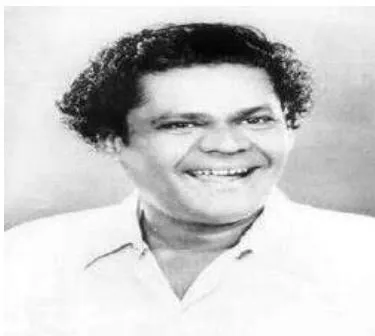
Early Tamil Cinema was graced by great personality like N.S. Krishnan (NSK) (1908-1957) who was not only generous but also imported moral fabric of the society in the films acted by him along with his wife Smt. T. A. Madhuram. Indeed N. S. Krishnan had a unique ability as a comedian, singer, producer and director. Though he could study up to grade but possessed incisive talent and become a villupattu artist initially wherein he had not only to sing but also narrate its story in between the songs and he had become an exponent in the art of narration of stories. He had also become an acclaimed personality towards generosity who gave whatever earned by him to the needy and the deserving. With this acclaimed, unique and note-worthy skills in the art of drama, singing, dancing and playwriting he entered in the arena of cinema and attained great success.
His first movie was Sathi Leelavathi but due to certain legal hurdles his other movie Menaka was released in 1935. It should be noted here that Menaka was the first movie based on social theme. Nandakumar states that NSK was attracted towards DMK and become the admirer of Anna and Periyar. In his subsequent movies he conveyed the thoughts of DMK party through the songs and dialogues. Anna wrote Nallathambi in which NSK played the lead role. Udupalai Narayana Kavi wrote some excellent songs like निल्लि निल्लि निल्लि निल्लि निल्लि निल्लि निल्लि निल्लि निल्लि निल्लि निल्लि निल्लि निल्लि निल्लि निल्लि �nिल्लि निल्लि निल्लि निल्लि निल्लि निल्लि निल्लि निल्लि निल्लि निल्लि निल्लि निल्लि निल्लि निल्लि निवति से कोलाता, पूरस्थली, पूरस्थली, पूरस्थली, पूरस्थली, पूरस्थली, पूरस्थली, पूरस्थली, पूरस्थली, पूरस्थली, पूरस्थली, पूरस्थला, पूरस्थला, पूरस्थला, पूरस्थला, पूरस्थला, पूरस्थला, पूरस्थला, पूरस्थला, पूरस्थला, पूरस्थला, पूरस्थली, पूरस्थली, पूरस्थली, पूरस्थला, पूरस्थला, पूरस्थला, पूरस्थला, पूरस्थला, पूरस्थला, पूरस्थली, पूरस्थला, पूरस्थला, पूरस्थला, पूरस्थला, पूरस्थला, पूरस्थला, पूरस्थला, पूरस्थला, पूरस्थली, पूरस्थला, पूरस्थला, पूरस्थली, पूरस्थला, पूरस्थला, पूरस्थला, पूरस्थला, पूरस्थला, पूरस्थला, पूरस्थली, पूरस्थला, पूरस्थली, पूरस्थला, पूरस्थला, पूरस्थला, पूरस्थला, पूरस्थला, पूरस्थला, पूरस्थला, पूरस्थली, पूरस्थला, पूरस्थली, पूरस्थली, पूरस्थला, पूरस्थला, पूरस्थला, पूरस्थला, पूरस्थला, पूरस्थला, पूरस्थला, पूरस्थली, पूरस्थली, पूरस्थला, पूरस्थला, पूरस्थला, पूरस्थला, पूरस्थला, पूरस्थला, पूरस्थली, पूरस्थली, पूरस्थला, पूरस्थली, पूरस्थला, पूरस्थला, पूरस्थला, पूरस्थला, पूरस्थला, पूरस्थला, पूरस्थली, पूरस्थली, पूरस्थली, पूरस्थली, पूरस्थला, पूरमामाव रयकागि से को़ति से को़ति से को़ति से को़ति से को़ति से को़ति से को़ति से को़ति से को़ति से को़ति से को़ति से को़ति से को़ति से मेहाकाव रयकागि से को़ति से को़ति से को़ति से को़ति से को़ति से को़ति से को़ति से को़ति से को़ति से को़ति से को़ति से मेहाकाव वनुपाव रयकागि से को़ति से को़ति से को़ति से को़ति से को़ति से मेहाकाव वनुपाव वनुपाव वनुपाव वनुपाव वनुपाव वनुपाव वनुपाव वनुपाव वनुपाव वनुपाव वनुपाव वनुपाव वनुपाव वनुपाव वनुपाि वनुपाव वनुपाव वनुपाव वनुपाव वनुपाव वनुपाव वनुपाव वनुपाव वनुपाव वनुपाव वनुपाव वनुपाव वनुपाव वनुपाव श्रवति से को़ति से को़ति से को़ति से को़ति से को़ति से को़ति से को़ति से को़ति से को़ति से को़ति से को़ति से को़ति सेययकागि से को़ति सेययकागि सेययकागि सेययकागि सेययकागि सेययकागि सेययकागि सेययकागि सेययकागि सेययकागि सेययकागि सेययकागि सेययकागि सेययकागि सेभिकाव रयकागि सेभिकाव रयकागि सेभिकाव रयकागि सेभिकाव रयकागि सेभिकाव रयकागि सेभिकाव रयकागि सेभिकाव रयकागि सेभिकाव रय邦हिकाव रय邦हिकाव रय邦हिकाव
of acting portraying social welfare ideas which had attracted the attention of millions of Tamil fraternity and made Thanthai Periyar to applaud that "myself and NS Krishnan explains the social reform ideas but when I tell my social revolution ideas people throw rotten eggs and chairs at the public meetings at the same time people listen to the social revolution ideas in the screens by paying money and praise him, in that sense he is greater. What applause what appreciation is greater than that of the Great Periyar that puts this man as the foremost among the hero's; villains and comedians in
the annals of history of Tamil Cinema (20). All progressive ideas, prohibition and constructive work for the development of the nation among them, had his support. His 'Fifty and Sixty' was as fine a conception of a bright future for the country as any placed before us by politicians. He and Smt. Mathuram together pleaded in hundreds of reels of celluloid for a proper status in society for women. He visited Russia as member of a cultural delegation in 1951 (21). Let us see few of his songs whether they coincide with the ethical theory of W.D. Ross.
CONTEXT-I
Consider the following song written by Kaviyarasu Kannadasan in the film "Panam" – Sung by N.S. Krishnan – film directed by N.S. Krishnan, the film had musical score by G. Ramanathan – Year 1952:
| Original song written in Tamil | English translation of the song |
| ि रितूलूलूलूलूलूलूलूलूलूलूलूलूलूलूलूलूलूलूलूलूलूलूलूलूलूलू�ूलू�ू�ू�ू�ू�ू�ू�ू�ू�ू�ू�ू�ू�ू�ू�ू�ू�ू�ू�ू�ू�ू�ू�ू�ू�ू�ू�ू�ू�ू�ू�ू�ू�ू�ु | Where can I search for the money?Where can I search for that money which makes the world prosperousWhere can I search for that money on which both the Kings and the pauper desires Are you delving in the black market?Or caught in the pocket of the selfish miser Or enthal at Guindy Race Course Where can I search for that money which makes the person who possess it mad Where you been buried in the earth as treasure Or sleeping at the smile of the maiden ladies Or taken shelter at the feet of the saints Or wandering in the disguise of sanyaseses Where can I search for the money Have you went to Hundial of Thirupati Or immersed in the cave at Thiruvannamalai Or laid at the iron boxes Never reside in the hands of the kind hearted Got absolved as election gifts Or went to enjoy bodily pleasure in Ooty Or hidden at the wall as gold Or burnt as champour Where can I search for that money which makes the world prosperous |
This song talks about the money and its sway over the public including the kings. It also talks about the bad ways and means with which the rich people spend their money for their selfish ends. It further states that money cannot embrace the generous people.
Critical Analysis
This song talks about only money and its swayamong the general public including the rich people –
nevertheless it talks about the bad deeds performed by the rich people that does not coincide with what W.D. Ross has said in his seven cannons (i.e. Fidelity, Reparation, Gratitude, Justice, Beneficence, Self-improvement, Non-malfeasance).
CONTEXT-II
Consider the following song written by Kaviyarasu Kannadasan in the film “Panam” – Sung by N.S. Krishnan – film directed by N.S. Krishnan, the film had musical score by G. Ramanathan – Year 1952:
| Song Originally written in Tamil Language | Translation of the Song in English Language | |
| िल्ल,िल्लयम् रत्तिल्लयम् रत्तिल्लयम् रत्तिल्लयम् रत्तिल्लयम् रत्तिल्लयम् रत्तिल्लयम् रत्तिल्लयम् रत्तिल्लयम् रत्तिल्तिल्लयम् रत्तिल्तिल्लयम् रत्तिल्तिल्लयम् रत्तिल्तिल्लयम् रत्तिल्तिल्लयम् रत्तिल्तिल्लयम् रत्तिल्ति�यम् रत्ति�यम् रत्ति�यम् रत्ति�यम् रत्ति�यम् रत्ति�यम् रत्ति�यम् रत्ति�यम् रत्ति�यम् रत्ति�यम् रत्ति�यम् रtिकान्दीम् रtिकान्दीम् रtिकान्दीम् रtिकान्दीम् रtिकान्दीम् रtिकान्दीम् रtिकान्दीम् रtिकान्दीम् रtिकान्दीम् यत्तिल्लयम् यत्ति�यम् यत्ति�यम् यत्ति�यम् यत्ति�यम् यत्ति�यम् यत्ति�यम् यत्ति�यम् यत्ति�यम् यत्ति�यम् यत्ति�यम् यत्तPHA <|im_start|>assistant | िल्लयम् रत्तिल्लयम् रtिकान्दीम् यत्ति�यम् यत्ति�यम् यत्ति�यम् यत्तPHA िल्लयम् रtिकान्दीम् यत्ति�यम् यत्तPHA िल्लयम् रtिकान्दीम् यत्ति�यम् यत्तPHA िल्लयम् रtिकान्दीम् यत्तPHA िल्लयम् यत्तPHA िल्लयम् यत्तPHA िल्लयम् यत्तPHA िल्लयम् यत्तPHA िल्लयम् यत्तPHA िल्लयम् यत्तPHA िल्लयम् यत्तPHA िल्लयमो कृत्तिल्लयम् यत्तPHA िल्लयमो कृत्तPHA िल्लयमो कृत्तPHA िल्लयमो कृत्तPHA िल्लयमो कृत्तPHA िल्लयमो कृत्तPHA िल्लयमो कृत्तPHA िल्लयमो कृत्तPHA िल्ल�ँर्वस्थिकान्दीम् यत्ति�यम् यत्तPHA िल्लयमो कृत्तPHA िल्लयमो कृत्तPHA िल्ल�ँर्वस्थिकान्दीम् यत्तPHA िल्ल�ँर्वस्थिकान्दीम् यत्तPHA िल्ल�ँर्वस्थिकान्दीम् यत्तPHA िल्ल�ँर्वस्थिकान्दीम् यत्तPHA िल्ल�ँ�िकान्दीम् यत्तPHA िल्ल�ँर्वस्थिकान्दीम् यत्तPHA िल्ल�ँर्वस्थिकान्दीम् यत्तPHA िल्ल�ँर्वस्थिकान्दीम् यत変्तPHA िल्ल�ँर्वस्थिकान्दीम् यत変्तPHA िल्ल�ँर्वस्थिकान्दीm िल्लँर्वस्थिकान्दीm िल्लँर्वस्थिकान्दीm िल्लँर्वस्थिकान्दीm िल्लँर्वस्थिकान्दीm िल्लँर्वस्थिकान्दी m िल्लँर्वस्थिकान्दी m िल्लँर्वस्थिकान्दी m िल्लँर्वस्थिकान्दी m िल्लँर्वस्थिकान्दी m िल्लँर्वस्थिकAAC िल्लँर्वस्थिकAAC िल्लँर्वस्थिकAAC िल्लँर्वस्थिकAAC िल्लँर्वस्थिकAAC िल्लँर्वस्थिकAAC िल्लँर्वस्थिकAAC िलेशँर्वस्थिकAAC िलेशँर्वस्थिकAAC िलेशँर्वस्थिकAAC िलेशँर्वस्थिकAAC िलेशँर्वस्थिकAAC िलेशँर्वस्थिकAAC िलेशँर�स्थिकAAC िलेशँर्वस्थिकAAC िलेशँर्वस्थिकAAC िलेशँर्वस्थिकAAC िलेशँर्वस्थिकAAC िलेशँर्वस्थिकAAC िलेशँर्वस्थ任意 | Laughter it is our duty to analyse its greatness Laughter is a mirror that reflect whether it is black or white Indeed, laughter is a reflecting mirror whether the mind is black or white Removing the hurdles and also the sorrow it gives enchantment to the brain It is a wonder that laughter can change a sorrowful life to that of joy It enriches those who consider it as their guide that makes their mind to cherish One kind of laughter who laugh at the teenager on the road side resulting in getting a hit by her slipper It is the sole treasure of mankind who alone can smile Which cannot be witnessed in any of the living beings It is the laughter of the pride and ego of the government officials It is the shaking laughter of those who succumb to the domination It is the laughter of triumph by the terrorists It is the laughter of classical singers |
This song talks about the importance of laughing and the benefit inculcating the habit of laughing which is a unique feature only to the human beings. It says laughing reflects one's mind whether it is hard or generous, it makes the mind cool and changes the activity of the brain and brings in equanimity of mind. It enunciates the laughter practiced by the ordinary men, the government officials including the terrorists.
This song talks about only laughter and the various benefits arising out from it to the individual. It stresses the importance of keeping the mind in equanimity that may help one to assess what is good and bad and choose the best path in life however it does not talk about the cannons prescribed by W.D. Ross i.e. his seven cannons (Fidelity, Reparation, Gratitude, Justice, Beneficence, Self-improvement, Non-malfeasance).

CONTEXT-III
Consider the following song written by Udumalai Narayanakavi in the film "Dada Mirasi" – Sung by N.S. Krishnan – film directed by P. Neelakandan, the film had musical score by C.R. Suburaman – Year 1955:
| Song Originally written in Tamil Language | Translation of the Song in English Language |
| िूलोत्तिकाव एँमिलाव एँमिलाव एँमिलाव एँमिलाव एँमिलाव एँमिलाव एँमिलाव एँमिलाव एँमिलाव एँमिलाव एँमिलाव एँमिलिकाव एँमिलाव एँमिलाव एँमिलाव एँमिलाव एँमिलिकाव एँमिलाव एँमिलिकाव एँमिलिकाव एँमिलिकाव एँमिलिकाव एँमिलिकाव एँमिलिकाव एँमिलिकाव एँमिलिकाव एँमिलिकाव एँमिलिकिकाव एँमिलिकाव एँमिलिकिकाव एँमिलिकिकाव एँमिलिकिकाव एँमिलिकिकाव एँमिलिकिकाव एँमिलिकिकाव एँमिलिकिकाव एँमिलिकिकाव एँ�िलाव एँमिलिकिकाव एँ�िलाव एँ�िलिकिकाव एँ�िलिकिकाव एँ�िलिकिकाव एँ�िलिकिकाव एँ�िलिकिकाव एँ�िलिकिकाव एँ�िलिकिकाव एँ�िलिकिकाव एँ�िसिकाव एँ�िलिकिकाव एँ�िलिकिकाव एँ�िलिकिकाव एँ�िलिकिकाव एँ�िलिकिकाव एँ�िलिकिकाव एँ�िलिकिकाव एँ中 | From the date of one to twenty there will be celebration From the date 21st to 30 there will be distress One gets the reward on the 1st for the work he had performed He will settle the dues on the 1st Then his face becomes pale in to insignificance on the date 21st They put coins in the hundi for the purpose of going to Srirangam or Palani on the 1st of the month They try to broaden the hundi on 21st to see they can pick up some money from it. People will not get tickets in the cenima theatre on the 1st on the other hand the theatres will be empty on the 21st. Beedi cigarate and petal nut business will be higher during the 1st at the same time there will be demand for a puff on 21st. Both the couples along with their siblings will enjoy during the 1st of the month But all these will recede during 21st. Brothers will ride on the rented cycle on the first of the month and at the same time walk during the 21st Friends will get together during the first and even dogs will not visit during 21st Celebrations during the first of the month and distress from 21st onwards. |
(山士G与T6007600)
G5T60TLL L155555555555555555555555555555555
L60L 600T LTTL TIT60T
(15)55555560560560
Interpretation of the Song
This song talks about the pros and cons of life experienced by the ordinary people who earn their wages monthly. It says that people will be happy from the date of to with the money they earned and face difficulties to the rest of the days in the month. It also talks casually about the difficulties encountered during the last ten days of the month and gives a glimpse of how the people in the society behave to mitigate their difficulties. This song may look ordinary but it picturizes a very important social malady that faces the people of the unorganized sector whose
number is ten times greater than the people working in the organized sector in India.
Critical Anslysis
This song talks casually about the difficulties encountered during the last ten days of the month and gives a glimpse of how the people in the society behaves to mitigate their difficulties, however it does not talk about the cannons prescribed by W. D. Ross i.e. his seven cannons (Fidelity, Reparation, Gratitude, Justice, Beneficence, Self-improvement, Non-malfeasance).
CONTEXT- IV
Consider the following song written by Udumalai Narayanakavi in the film "Nallathambi" – Sung by Kalaivanar N.S. Krishnan – film directed by P. Neelakandan, the film had musical score by C.R. Suburaman – Year 1949:
| Song Originally written in Tamil Language | Translation of the Song in English Language |
| ि या या या या या या या या या या या या या या या या या या या या या या या या या या या या या या या या या या सिति की या या या या या या या या या या या या या या या या या या या या या या या या या या या या या या या या या की या या या या या या या या या या या या या या या या या या या या या या या या या या या या या या या या मिति की या या या या या या या या या या या या या या या या या या या या या या या या या या या या या या या मिति केर्षि की या या या या या या या या या या या या या या या या या या या या या या या या या या या या या या या या सितilate की या या या या या या या या या या या या या या या या या या या या या या या या या या या या या या या या जितilate की या या या या या या या या या या या या या या या या या या या या या या या या या या या या या या या मितilate की या या या या या या या या या या या या या या या या या या या या या या या या या या या या या या या रितilate की या या या या या या या या या या या या या या या या या या या या या या या या या या या या या या या वितilate की या या या या या या या या या या या या वितilate की या या या या या वितilate की या वितilate की वितilate की वितilate की वितilate की वितilate की वितilate की वितilate की वितilate की वितilate की वितilate की वितilate की वितilate की वितilate की वितilate की वितilate की शितilate की वितilate की शितilate की वितilate की शितilate की वितilate की शितilate की वितilate की शितilate की वितilate की शितilate की वितilate की शितilate की वितilate की शिणilate की वितilate की शिणilate की वितilate की शिणilate की वितilate की शिणilate की वितilate की शिणilate की वितilate की शिणilate की वितilate की शिणilate की वितilate की शिणilate मितilate की वितilate की वितilate की वितilate की वितilate की वितilate की वितilate की वितilate की वितilate की वितilate की वितilate की वितilate की वितilate की वितilate की विणilate की वितilate की विणilate की वितilate की विणilate की वितilate की विणilate की वितilate की विणilate की विणilate की विणilate की विणilate की विणilate की विणilate की विणilate की विणilate की विणilate की विणilate की विणilate की विणilate की विणilate की विणilate की विणilate मितilate की वितilate की वितilate की वितilate की वितilate की वितilate की वितilate की वितilate की वितilate की वितilate की वितilate की वितilate की वितilate की वितilate कोर्षि की वितilate कोर्षि की वितilate कोर्षि की वितilate कोर्षि की वितilate कोर्षि की वितilate कोर्षि की वितilate कोर्षि की वितilate कोर्षि की वितilate कृति की वितilate कृति की वितilate कृति की वितilate कृति की वितilate कृति की वितilate कृति की वितilate कृति की वितilate कृति की वितilate कृति की सितilate कृति की सितilate कृति की सितilate कृति की सितilate कृति की सितilate कृति की सितilate कृति की सितilate कृति की सितilate कृति की सितilate कृति की सेलि की सेलि की सेलि की सेलि की सेलि की सेलि की सेलि की सेलि की सेलि की सेलि की सेलि की सेलि की सेलि की सेलि की सेलि की सेलि की सेलि कीसितilate कोर्षि कोर्षि कोर्षि कोर्षि कोर्षि कोर्षि कोर्षि कोर्षि कोर्षि कोर्षि कोर्षि कोर्षि कोर्षि कोर्षि कोर्षि कोर्षि कोर्षि कोरχि कोरχि कोरχि कोरχि कोरχि कोरχि कोरχि कोरχि कोरχि कोरχि कोरχि कोरχि कोरχि कोरχि कोरχि कोरχि कोरχि कोरχि कोरχि कोरχि कोर χि कोर χि कोर χि कोर χि कोर χि कोर χि कोर χि कोर χि कोर χि कोर χि कोर χि कोर χि कोर χि कोर χि कोर χि कोर χि कोर χि कोる सितilate कोर्षि कोर्षि कोरχि कोरχि कोरχि कोरχि कोरχि कोरχि कोरχि कोरχि कोरχि कोरχि कोरχि कोरχि कोरχि कोरχि कोरχि कोरχि कोरχि कोoroughि कोरχि कोरχि कोरχि कोरχि कोरχि कोरχि कोरχि कोरχि कोरχि कोरχि कोरχि कोरχि कोरχि कोरχि कोरχि कोरχि कोरχि कोरχि कोरχि कोरchiि कोरχि कोरχि कोरχि कोरχि कोरχि कोरχि कोरχि कोरχि कोरχि कोरχि कोरχि कोरχि कोरχि कोरχि कोरχि कोरχि कोरχि कोरχि कोरχि कोरхि कोरχि कोरχि कोरχि कोरχि कोरχि कोरχि कोरχि कोरχि कोरχि कोरχि कोरχि कोरχि कोरχि कोरχि कोरχि कोरχि कोरχि कोरχि कोरχि कोरxि कोरχि कोरχि कोरχि कोरχि कोरχि कोरχि कोरχि कोरχि कोरχि कोरχि कोरχि कोरχि कोरχि कोरχि कोरχि कोरχि कोरχि कोरχि कोरχि कोर{xि कोरχि कोरχि कोरχि कोरχि कोरχि कोरχि कोरχि कोरχि कोरχि कोरχि कोरχि कोरχि कोरχि कोरχि कोरχि कोरχि कोरχि कोरχि कोरχि कोर xि कोर xि कोर xि कोर xि कोर xि कोर xि कोर xि कोर xि कोर xि कोर xि कोर xि कोर xि कोर xि कोर xि कोर xि कोर xि कोर xि कोर xि कोर xि कोर xि कोरxि कोर xि कोर xि कोर xि कोर xि कोर xि कोर xि कोर xि कोर xि कोर xि कोर xि कोर xि कोर xि कोर xि कोर xि कोर xि कोर xि कोर xि कोर xि कोर xि कोरхि कोर xि कोर xि कोर xि कोर xि कोर xि कोर xि कोर xि कोर xि कोर xि कोर xि कोर xि कोर xि कोर xि कोर xि कोर xि कोर xि कोर xि कोर xि कोर xि कोर/xि कोर xि कोर xि कोर xि कोर xि कोर xि कोर xि कोर xि कोर xि कोर xि कोर xि कोर xि कोर xि कोर xि कोर xि कोर xि कोर xि कोर xि कोर xि कोर xि कोर{xि कोर xि कोर xि कोर xि कोर xि कोर xि कोर xि कोर xि कोर xि कोर xि कोर xि कोर xि कोर xि कोर xि कोर xि कोर xि कोर xि कोर xि कोर xि कोर xि कोर(xि कोर xि कोर xि कोर xि कोर xि कोर xि कोर xि कोर xि कोर xि कोर xि कोर xि कोर xि कोर xि कोर xि कोर xि कोर xि कोर xि कोर xि कोर xि कोर xि कोर.xि कोर xि कोर xि कोर xि कोर xि कोर xि कोर xि कोर xि कोर xि कोर xि कोर xि कोर xि कोर xि कोर xि कोर xि कोर xि कोर xि कोर xि कोर xि कोर xि कोर,xि कोर xि कोर xि कोर xि कोर xि कोर xि कोर xि कोर xि कोर xि कोर xि कोर xि कोर xि कोर xि कोर xि कोर xि कोर xि कोर xि कोर xि कोर xि कोर xि कोर×ि कोर×ि कोर×ि कोर×ि कोर×ि कोर×ि कोर×ि कोर×ि कोर×ि कोर×ि कोर×ि कोर×ि कोर×ि कोर×ि कोर×ि कोर×ि कोर×ि कोर×ि कोर×ि कोर×ि कोरxि कोरxि कोरxि कोरxि कोरxि कोरxि कोरxि कोरxि कोरxि कोरxि कोरxि कोरxि कोरxि कोरxि कोरxि कोरxि कोरxि कोरxि कोरxि कोरxि कोर×ि कोरxि कोरxि कोरxि कोरxि कोरxि कोरxि कोरxि कोरxि कोरxि कोरxि कोरxि कोरxि कोरxि कोरxि कोरxि कोरxि कोरxि कोरxि कोरхि कोरxि कोरxि कोरxि कोरxि कोरxि कोरxि कोरxि कोरxि कोरxि कोरxि कोरxि कोरxि कोरxि कोरxि कोरxि कोरxि कोरxि कोरxि कोरxि कोरхि कोरхि कोरxि कोरxि कोरxि कोरxि कोरxि कोरxि कोरxि कोरxि कोरxि कोरxि कोरxि कोरxि कोरxि कोरxि कोरxि कोरxि कोरxि कोरxि कोरхि कोर xि कोरxि कोरxि कोरxि कोरxि कोरxि कोरxि कोरxि कोरxि कोरxि कोरxि कोरxि कोरxि कोरxि कोरxि कोरxि कोरxि कोरxि कोरxि कोरxि कोर xि कोरxि कोरxि कोरxि कोरxि कोरxि कोरxि कोरxि कोरxि कोरxि कोरxि कोरxि कोरxि कोरxि कोरxि कोरxि कोरxि कोरxि कोरxि कोरхि कोर{xि कोरxि कोरxि कोरxि कोरxि कोरxि कोरxि कोरxि कोरxि कोरxि कोरxि कोरxि कोरxि कोरxि कोरxि कोरxि कोरxि कोरxि कोरxि कोरxि कोर{xि कोरxि कोरxि कोरxि कोरxि कोरxि कोरxि कोरxि कोरxि कोरxि कोरxि कोरxि कोरxि कोरxि कोरxि कोरxि कोरxि कोरxि कोरxि कोरхि कोरχि कोरχि कोरχि कोरχि कोरχि कोरχि कोरχि कोरχि कोरχि कोरχि कोरχि कोरχि कोरχि कोरχि कोरχि कोरχि कोरχि कोरχि कोरxि कोरxि कोरxि कोरxि कोरxि कोरxि कोरxि कोरxि कोरxि कोरxि कोरxि कोरxि कोरxि कोरxि कोरxि कोरxि कोरxि कोरxि कोरxि कोरχि कोरχि कोरχि कोरχि कोरχि कोरχि कोरχि कोरχि कोरχि कोरχि कोरχि कोरχि कोरχि कोरχि कोरχि कोरχि कोरχि कोरχि कोरxि कोरхि कोरxि कोरxि कोरxि कोरxि कोरxि कोरxि कोरxि कोरxि कोरxि कोरxि कोरxि कोरxि कोरxि कोरxि कोरxि कोरxि कोरxि कोरхि कोरxि कोरхि कोरxि कोरхि कोरхि कोरхि कोरхि कोरхि कोरхि कोरхि कोरхि कोरхि कोरхि कोरхि कोरхि कोरхि कोरхि कोरхि कोरхि कोरхि कोरхि कोरхि कोरхि कोरxि कोरхि कोरхि कोरхि कोरхि कोरхि कोरхि कोरхि कोरхि कोरхि कोरхि कोरхि कोरхि कोरхि कोरхि कोरхि कोरхि कोरхि कोरxि कोरхि कोरxि कोरxि कोरxि कोरxि कोरxि कोरxि कोरxि कोरxि कोरxि कोरxि कोरxि कोरxि कोरxि कोरxि कोरxि कोरxि कोरxि कोर xि कोरxि कोर xि कोर xि कोर xि कोर xि कोर xि कोर xि कोर xि कोर xि कोर xि कोर xि कोर xि कोर xि कोर xि कोर xि कोर xि कोर xि कोर xि कोरxि कोरxि कोरxि कोरxि कोरxि कोरxि कोरxि कोरxि कोरxि कोरxि कोरxiland |
605555555555555555555555555555555555555555555555555555555555555555555555555555555555555555555555555555 607L108080808080808080808080808080808080808080808080808080808080808080808080808080808080808080808080808080
Listen to pluck the paddy, to drive water from
the well, to cook there will be a machine.
Water in the bath room and airconditioner at
the house
There will be a machine for the children to
study at home without going to school
Is it over
Forget one thing
What is that oh maiden
there will be a fan running over the cott and
there will be clock too
Oh mad maiden
Just see our women who were doing house
hold job
Now turn to western style look at their body
She will go to forest remove the unwanted
plants in the paddy field
These ladies will go in car, go round the city
Look at the mirror and drink coffee
This song talks about the pros and cons of science and the appliances that would replace man's routine work. In all it enunciates the modern way of life of human beings where scientific appliances are predominant without which they cannot survive.
This song talks casually about the use of modern domestic appliances that arise owing to scientific advancement that thrill the human beings as it
replaces the human power and make them to enjoy life, however it does not talk about the cannons prescribed by W. D. Ross i.e. his seven cannons (Fidelity, Reparation, Gratitude, Justice, Beneficence, Self-improvement, Non-malfeasance).
Consider the following song written by Clown Sundaram in the film "Chakravarthi thirumagal" – Sung by Kalaivanar N.S. Krishnan along with Seerkazhi Govindarajan – film directed by P. Neelakandan, the film had musical score by G. Rmanathan – Year 1957:
| Song Originally written in Tamil Language | Translation of the Song in English Language |
| िपिकार्यिपिकार्यिपिकार्यिपिकार्यिपिकार्यिपिकार्यिपिकार्यिपिकार्यिपिकार्यि�िपिकार्यिपिकार्यि�िपिकार्यिपिकार्यि�िपिकार्यि�िपिकार्यि�ि�िपिकार्यि�ि�िपिकार्यि�ि�िपिकार्यि�ि�ि�िपिकार्यि�ि�ि�ि�ि�ि | The blessed and revered feet of the Guru is being most reverentially remembered by the inner consciousness and praise it to pervade it so that the world praises too keeping the victory flag I am Dheera Pradhaban indeed The poets belong to the sangam age awarded golden medals and also gave away the Bengal's golden robe Not for me they enjoyed praising like that just running before lion like me who would like to sing two sentences for which can you answer in single sentence Those with their ego imagine about catching the elephant and putting it in to a pot explains your peom oh poet. oh poet your poem glorifies the fact that the cat at home runs to the forest catching the tiger and eats it; indeed is it not extreme exaggeration of your pride and ego. Oh correct correct There are Flower that will be given as gift and golden gift, food gift, cow dhanam like this exist in various varieties Is there any gifts beyond these? Yes there exist a dhanam beyond these which is patience indeed Those who lose their patience will result in infamy Why should they build temples? Because many would get employment Why should they build Food Chaultry? Because many lazy people exist in the society Why should people roam like mad people everywhere? Because they would get food at different places Oh brother where does dark clouds originate - in the mind of ignorant What will burn without smoke and fire? It is the poors whose stomach burns due to hunger Which is the most dangerous weapon in the world Knife Axe, Javelin, Spear |
| Lamudulacuril Gargan Lalaalu Lalaalu Lalaalu Lalaalu Lalaalu Lalaalu Lalaalu Lalaalu Lalaalu Lalaalu Lalaalu Lalaalu Lalaalu Lalaalu Lalaalu Lalaalu Lalaalu Lalaalu Lalaalu Lalaalu Lalaalu Lalaalu Lalaalu Lalaalu Lalaalu Lalaaluin Lalaalu Lalaalu Lalaalu Lalaalu Lalaalu Lalaalu Lalaalu Lalaalu Lalaalu Lalaalu Lalaalu Lalaalu Lalaalu Lalaalu Lalaalu Lalaalu Lalaalu Lalaalu Lalaalu Lalaalu Lalaalu Lalaalu Lalaalu Lalaalu Lalaaluu Lalaalu Lalaalu Lalaalu Lalaalu Lalaalu Lalaalu Lalaalu Lalaalu Lalaalu Lalaalu Lalaalu Lalaalu Lalaalu Lalaalu Lalaalu Lalaalu Lalaalu Lalaalu Lalaalu Lalaalu Lalaalu Lalaalu Lalaalu Lalaalu Lalaaluw Lalaalw Lalaalw Lalaalw Lalaalw Lalaalw Lalaalw Lalaalw Lalaalw Lalaalw Lalaalw Lalaalw Lalaalw Lalaalw Lalaalw Lalaalw Lalaalw Lalaalw Lalaalw Lalaalw Lalaalw Lalaalw Lalaalw Lalaalw Lalaalw Lalaalw Lalaalwu Lalaalw Lalaalw Lalaalw Lalaalw Lalaalw Lalaalw Lalaalw Lalaalw Lalaalw Lalaalw Lalaalw Lalaalw Lalaalw Lalaalw Lalaalw Lalaalw Lalaalw Lalaalw Lalaalw Lalaalw Lalaalw Lalaalw Lalaalw Lalaalw Lalaaluw Lalaalw Lalaalw Lalaalw Lalaalw Lalaalw Lalaalw Lalaalw Lalaalw Lalaalw Lalaalw Lalaalw Lalaalw Lalaalw Lalaalw Lalaalw Lalaalw Lalaalw Lalaalw Lalaalw Lalaalw Lalaalw Lalaalw Lalaalw Lalaaluw Lalaaluw Lalaalw Lalaalw Lalaalw Lalaalw Lalaalw Lalaalw Lalaalw Lalaalw Lalaalw Lalaalw Lalaalw Lalaalw Lalaalw Lalaalw Lalaalw Lalaalw Lalaalw Lalaalw Lalaalw Lalaalw Lalaalw Lalaalw Lalaalw Lalaalwu Lalaalwu Lalaalwu Lalaalwu Lalaalwu Lalaalwu Lalaalwu Lalaalwu Lalaalwu Lalaalwu Lalaalwu Lalaalwu Lalaalwu Lalaalwu Lalaalwu Lalaalwu Lalaalwu Lalaalwu Lalaalwu Lalaalwu Lalaalwu Lalaalwu Lalaalwu Lalaalwu Lalaalwu Lalaalw Lalaalwu Lalaalwu Lalaalwu Lalaalwu Lalaalwu Lalaalwu Lalaalwu Lalaalwu Lalaalwu Lalaalwu Lalaalwu Lalaalwu Lalaalwu Lalaalwu Lalaalwu Lalaalwu Lalaalwu Lalaalwu Lalaalwu Lalaalwu Lalaalwu Lalaalwu Lalaalwu Lalaalw Lalaalw Lalaalwu Lalaalwu Lalaalwu Lalaalwu Lalaalwu Lalaalwu Lalaalwu Lalaalwu Lalaalwu Lalaalwu Lalaalwu Lalaalwu Lalaalwu Lalaalwu Lalaalwu Lalaalwu Lalaalwu Lalaalwu Lalaalwu Lalaalwu Lalaalwu Lalaalwu Lalaalw Lalaalwu Lalaalw Lalaalwu Lalaalwu Lalaalwu Lalaalwu Lalaalwu Lalaalwu Lalaalwu Lalaalwu Lalaalwu Lalaalwu Lalaalwu Lalaalwu Lalaalwu Lalaalwu Lalaalwu Lalaalwu Lalaalwu Lalaalwu Lalaalwu Lalaalwu Lalaalwu Lalaalwu Lalaalw Lalaalw Lalaalw Lalaalwu Lalaalwu Lalaalwu Lalaalwu Lalaalwu Lalaalwu Lalaalwu Lalaalwu Lalaalwu Lalaalwu Lalaalwu Lalaalwu Lalaalwu Lalaalwu Lalaalwu Lalaalwu Lalaalwu Lalaalwu Lalaalwu Lalaalwu Lalaalwu Lalaalw Lalaalwu Lalaalwu Lalaalw Lalaalwu Lalaalwu Lalaalwu Lalaalwu Lalaalwu Lalaalwu Lalaalwu Lalaalwu Lalaalwu Lalaalwu Lalaalwu Lalaalwu Lalaalwu Lalaalwu Lalaalwu Lalaalwu Lalaalwu Lalaalwu Lalaalwu Lalaalwu Lalaalwu Lalaalw Lalaalwu Lalaalw Lalaalw Lalaalwu Lalaalwu Lalaalwu Lalaalwu Lalaalwu Lalaalwu Lalaalwu Lalaalwu Lalaalwu Lalaalwu Lalaalwu Lalaalwu Lalaalwu Lalaalwu Lalaalwu Lalaalwu Lalaalwu Lalaalwu Lalaalwu Lalaalwu Lalaalwu Lalaalw Lalaalw Lalaalwu Lalaalw Lalaalwu Lalaalwu Lalaalwu Lalaalwu Lalaalwu Lalaalwu Lalaalwu Lalaalwu Lalaalwu Lalaalwu Lalaalwu Lalaalwu Lalaalwu Lalaalwu Lalaalwu Lalaalwu Lalaalwu Lalaalwu Lalaalwu Lalaalwu Lalaalwu Lalaalw Lalaalw Lalaalw Lalaalw Lalaalwu Lalaalwu Lalaalwu Lalaalwu Lalaalwu Lalaalwu Lalaalwu Lalaalwu Lalaalwu Lalaalwu Lalaalwu Lalaalwu Lalaalwu Lalaalwu Lalaalwu Lalaalwu Lalaalwu Lalaalwu Lalaalwu Lalaalwu Lalaalw Lalaalwu Lalaalwu Lalaalwu Lalaalw Lalaalwu Lalaalwu Lalaalwu Lalaalwu Lalaalwu Lalaalwu Lalaalwu Lalaalwu Lalaalwu Lalaalwu Lalaalwu Lalaalwu Lalaalwu Lalaalwu Lalaalwu Lalaalwu Lalaalwu Lalaalwu Lalaalwu Lalaalwu Lalaalw Lalaalwu Lalaalwu Lalaalw Lalaalw Lalaalwu Lalaalwu Lalaalwu Lalaalwu Lalaalwu Lalaalwu Lalaalwu Lalaalwu Lalaalwu Lalaalwu Lalaalwu Lalaalwu Lalaalwu Lalaalwu Lalaalwu Lalaalwu Lalaalwu Lalaalwu Lalaalwu Lalaalwu Lalaalw Lalaalwu Lalaalw Lalaalwu Lalaalw Lalaalwu Lalaalwu Lalaalwu Lalaalwu Lalaalwu Lalaalwu Lalaalwu Lalaalwu Lalaalwu Lalaalwu Lalaalwu Lalaalwu Lalaalwu Lalaalwu Lalaalwu Lalaalwu Lalaalwu Lalaalwu Lalaalwu Lalaalwu Lalaalw Lalaalwu Lalaalw Lalaalw Lalaalw Lalaalwu Lalaalwu Lalaalwu Lalaalwu Lalaalwu Lalaalwu Lalaalwu Lalaalwu Lalaalwu Lalaalwu Lalaalwu Lalaalwu Lalaalwu Lalaalwu Lalaalwu Lalaalwu Lalaalwu Lalaalwu Lalaalwu Lalaalwu Lalaalw Lalaalw Lalaalwu Lalaalwu Lalaalw Lalaalwu Lalaalwu Lalaalwu Lalaalwu Lalaalwu Lalaalwu Lalaalwu Lalaalwu Lalaalwu Lalaalwu Lalaalwu Lalaalwu Lalaalwu Lalaalwu Lalaalwu Lalaalwu Lalaalwu Lalaalwu Lalaalwu Lalaalwu Lalaalw Lalaalw Lalaalwu Lalaalw Lalaalw Lalaalwu Lalaalwu Lalaalwu Lalaalwu Lalaalwu Lalaalwu Lalaalwu Lalaalwu Lalaalwu Lalaalwu Lalaalwu Lalaalwu Lalaalwu Lalaalwu Lalaalwu Lalaalwu Lalaalwu Lalaalwu Lalaalwu Lalaalwu Lalaalw Lalaalw Lalaalw Lalaalwu Lalaalw Lalaalwu Lalaalwu Lalaalwu Lalaalwu Lalaalwu Lalaalwu Lalaalwu Lalaalwu Lalaalwu Lalaalwu Lalaalwu Lalaalwu Lalaalwu Lalaalwu Lalaalwu Lalaalwu Lalaalwu Lalaalwu Lalaalwu Lalaalwu Lalaalw Lalaalw Lalaalw Lalaalw Lalaalw Lalaalw Lalaalw Lalaalw Lalaalw Lalaalw Lalaalw Lalaalw Lalaalw Lalaalw Lalaalw Lalaalw Lalaalw Lalaalw Lalaalw Lalaalw Lalaalw Lalaalw Lalaalw LalaalwaL lauaL lauaL lauaL lauaL lauaL lauaL lauaL lauaL lauaL lauaL lauaL lauaL lauaL lauaL lauaL lauaL lauaL lauaL lauaL lauaL lauaL lauaL lauaL lauaL lauaL lauaaL lauaL lauaL lauaL lauaL lauaL lauaL lauaL lauaL lauaL lauaL lauaL lauaL lauaL lauaL lauaL lauaL lauaL lauaL lauaL lauaL lauaL lauaL lauaL lauaL lau aL lauaL lauaL lauaL lauaL lauaL lauaL lauaL lauaL lauaL lauaL lauaL lauaL lauaL lauaL lauaL lauaL lauaL lauaL lauaL lauaL lauaL lauaL lauaL lauaL lauagL lauaL lauaL lauaL lauaL lauaL lauaL lauaL lauaL lauaL lauaL lauaL lauaL lauaL lauaL lauaL lauaL lauaL lauaL lauaL lauaL lauaL lauaL lauaL lauaL laueL lauaL lauaL lauaL lauaL lauaL lauaL lauaL lauaL lauaL lauaL lauaL lauaL lauaL lauaL lauaL lauaL lauaL lauaL lauaL lauaL lauaL lauaL lauaL lauaL lau.aL lauaL lauaL lauaL lauaL lauaL lauaL lauaL lauaL lauaL lauaL lauaL lauaL lauaL lauaL lauaL lauaL lauaL lauaL lauaL lauaL lauaL lauaL lauaL lauaL lau. |
This song is about a conversation between two hero in the movie one asks questions and other answers. It postulates various qualities; few such things of charity it talks about, it says that "Among the gifts such as Flower, Gold, Food and Cow the greatest of all such gift is exercising patience in the mind - those who lose patience will be doomed to infamy. It also contemplates another aphorism i.e. which is the most dangerous weapon in the world Knife, Javalin and Spear
etc., No - none of these, it is the utterance of words made out of ignorance with full of jelosy (it cautions that one should guard their mind while making utterances and measure the words before they are uttered or spoken").
Critical Analysis
This song talks about charity and practice the virtue of patience in life and while speaking use of kind words are advisable and that largely coincides with Ross's "duty to improve our virtue and intelligence".
| Table of Confluence of Contexts with Reference to Theoretical Genesis Arrived for Ethics | |||||
| W. D. Ross | Contexts from I to V | ||||
| I | II | III | IV | V | |
| Fidelity_(duty to keep promises) | No | No | No | No | |
| Reparation(duty to compensate others when we harm them) | No | No | No | No | |
| Gratitude (duty to thank those who help us) | No | No | No | No | |
| Justice (duty to recognize merit) | No | No | No | No | |
| Beneficence (duty to improve the conditions of others) | No | No | No | No | |
| Self-improvement(duty to improve our virtue and intelligence) | No | No | No | No | √ |
| Non-malfeasance (duty not to injure others) | No | No | No | No | |
Remarks on the Table of Confluence of Contexts of Chapter-II
The first song identified in Chapter-II vindicates the fact of money and its sway among the general public including the rich people. The second song stresses the importance of keeping the mind in equanimity that may help one to assess what is good and bad and choose the best path in life. The third one gives a glimpse of how the people in the society behaves to mitigate their difficulties; the fourth one talks about the advancement of science that is going to replace the monotonous and routine activities of mankind some sixth years ago. The final one talks about charity and practice the virtue of patience in life and while speaking use of kind words are advisable and that largely coincides with Ross's "duty to improve our virtue and intelligence". The hero NS Krishnan who sang these songs for saw the sway of money, scientific advancement, the difficulties undergone by the people of unorganized sector and stresses the importance of practice of virtue in the society as an intelligent comedian who tried to inculcate morality in his movies for the benefit of the society and stands tall in the annals of Tamil Cinema.
CHAPTER- III
Chandra Babu
5 August 1927 - 8 March 1974

Chandrababu was born to a wealthy and eminent Christian Paravar family in 1927 at Tucorin, India. His father, a freedom fighter, ran a paper called Sudhandhira Veeran which, along with the family assets, was seized by the British government in 1929 when he was arrested for participating in the satyagraha movement. He and the family were exiled to Colombo, Sri Lanka on his release, where his father worked for a Tamil newspaper. Chandrababu was educated at St. Joseph's College, Grandpass, Colombo and Aquinas College prior to his family moving to Chennai in 1943. They lived in Triplicane, where his father worked for the Dinamani newspaper.
CHANDRA BABU a versatile actor, singer, dancer and a great commadian that the Tamil film
fraternity had ever witnessed. Like the great actors like MGR and Shivaji JP Chandrababu also created millions of fans in Tamil Cinema. Fearless in making comments and saw the rise of luxury in his life and penury in his last days. His followers believe that he possessed the skills of Danny Kaye, Jerry Lewis and Bob Hope. He directed his own movie Thattungal Thiraggapadum. In the movie Annai - Chandrababu's role was immense and this movie ran for 100 days and a grand box office success.
This movie bagged National Award. His note worthy role in Sabbath Meena along with Chevalior Shivaji acclaimed name and fame for him and it seems that he had demanded one rupee more than what was given to the hero Chevalior Shivaji. He gave voice over to his songs and danced to the tune of music of such mulliflious music in the movies that were meaningful and philosophical few of which are dealt hereunder as contexts (21).
CONTEXT-I
Consider the following song written by Kaviyarasu Kannadasan in the film "Kavaai Illadha Manithan" – Sung by J.P. Chandrababu – film directed by K. Shankar, the film had musical score by Viswanathn and Ramamoorthi – Produced by Kaviyarasu Kannadasan Year 1960:
| Original song written in Tamil | Translation of the song in Tamil |
| LCMMSLITLLTLLTLLTLLTLLTLLTLLTLLTLLTLLTLLTLLTLLTLLTLLTLLTLLTLLTLLTLLTLLTLLTLLTLLTLLTLLTLLTLLTLLTLLTLLTLLTLLTLLTLLTLLTLLTLLTLLTLLTLLTLLTLLTLLTLLTLLTLLTLLTLLTLLTLL TLI | You cry while you are born and also cry while you die. You fail to laugh even for a day Oh men It is said that the night's tear is dew The tear of dark cloud is rain When the nature cries the world rejoices When man cries it will destroy things To rest at the mother's hand is joy indeed To laydown at the maiden's hand is also joy To realize about oneself is also joy To forget about selfishness indeed would result in effervescing and immortal joy. You cry while you are born and also cry while you die. You fail to laugh even for a day Oh men |
Interpretation of the Song
This song portrays and criticizes mankind as they cry while they are born and die, they never try to cultivate the habbit of laughing (which is essential for a peaceful co-existence of life). When nature cries it brings about the prosperity of rain that nourishes everyone. But when men cry it may be the result of bad thing that had happened and create havoc. The centre of the song is the following:
To rest in the mother's hand is joy indeed; To laydown in the girlfriend's hand is also joy; To realize about oneself is joy indeed and to forget about selfishness while performing action would result in everlasting happiness.
It is performing action without any selfish expectation indeed would result in everlasting happiness is the bone of contention of this song portrayed by the
Lyric writer the great Kaviyarasu Kanndasan indeed touches what was laid down by W.D. Ross.
This song talks about "performing action without any selfish expectation that would result in everlasting happiness is the bone of contention of this song" indeed largely coincides with Ross's "duty to improve our virtue and intelligence" and beyond. The virtue contemplated in this song i.e. performing action without any expectation would result in everlasting happiness. What is this everlasting happiness among the human beings and who performs it? The great leaders who work tirelessly for the welfare of the world indeed experience such moral happiness within themselves. The greatest among them is Christ Jesus he enjoyed bliss immortal when he prayed "father forgive them indeed they know not what they are doing" which
them indeed they know not what they are doing” which expression shows extra-ordinary control over his mind and has no malice with those who was cause to is death. Such extraordinary control over mind would result only with such exalting persons who had renounced all their selfish ends and focussed only with what is ordained by the father in the heaven.
The lyric writer Kaviyarasu Kannadasan by portraying such a cannon of life makes him to be the foremost thinker and the hero of this movie J.P. Chandrababu sings it, in his own voice indeed a
compliment given to humanity. It was quoted by Sachi Sri Kantha in his article Remembering Kannadasan says – “If only Kannadasan had been in Europe or the USA instead of Sirukuudalpatti village in the Ramanathapuram district of Tamil Nadu, he probably would have become a Nobel Laurate in literature and received international recognition. But on the other hand, Tamils would have lost a goliard, who composed lyris in Tamil for every sentimental moment they experience in life (22). This song talks about charity and that largely coincide with Ross’s “duty to improve our virtue and intelligence”.
CONTEXT-II
Consider the following song written by Kaviyarasu Kannadasan in the film "Kavalai Illadha Manithan" – Sung by J.P. Chandrababu – film directed by K.Shankar, the film had musical score by Viswanathn & Ramamoorthi – Produced by Kaviyarasu Kannadasan Year 1960:
| Original song written in Tamil | Translation of the song in Tamil |
| LCFSLUHNTLTAFLTFLTFLTFLTFLTFLTFLTFLTFLTFLTFLTFLTFLTFLTFLTFLTFLTFLTFLTFLTFLTFLTFLTFLTFLTFLTFLTFLTFLTFLTFLTFLTFLTFLTFLTFLTFLTFLTFLTFLTFLTFLTFLTFLTFLTFLTFLTFLTFLTFLTFLTT | All the Intelligent men in the world will not attain success All those who attained success are not suppose to be intelligent Those who possess money do not have attitude to part with the same Those who possess attitude to give indeed do not have money Whatever wealth comes to the rich (in whatever manner) are their own Those who are not wealthy only distress remain in them Not all those who attain manhood will indulge in love Not all those who indulge in love gets married Not all those who get married live together Not all those who live together would die together Those who dream whatever he thinks will prevail in the dream Whatever he dreams becomes his experience She arrives at his dream and smile at him Who will come into her dream to embrace her? |
This song portrays about the so-called fate human being faces in life. It states that in ordinary parallel of life all intelligent men will not attain success and those who attain success i.e., prosperity in terms of wealth, name and fame are not intelligent. Those who possess money will not have the attitude to give charity; on the other hand those who have the attitude for charity will not have wealth to part with. It goes to explain the intricacies of life where men meets with success and
failure in life which is proded by fate and warns to understand life in its right perspective and it talks about charity and virtue contemplated by W.D. Ross.
Critical Analysis
This song emphasizes the philosophy of success and failure in life and indirectly enunciates the figment of play of fate, most of the people in the world believe it as bad luck and talks about virtue and charity as contemplated by W.D. Ross.
CONTEXT-III
Consider the following song written by Pattukottai Kalyanasundaram in the film "Pudaiyal" – Sung by J.P. Chandrababu – film directed by Selva, the film had musical score by Viswanathn and Ramamoorthi – Produced by C. Kabilan Year May 10 1957:
| Original song written in Tamil | Translation of the song in Tamil |
| Gangmu 2-60555555555555555555555555555555555555555555555555555555555555555555555555555555555555555555555555555549 | Everything is for youThis body and the life that attached to it is all for youWhy did you oh dear keeping yourself awayWhy did you oh dear arriving at the eyes and creating havoc in meJust tell your opinion at my earsDo I had to join the school (of love) again?Or I need to act like a lunateJust plunge into the river CauveryOr I need to live without foodWhy did you Oh dear keeping yourself awayWhy did you oh dear keeping yourself awayWhy did you Oh dearArriving at the eyes and creating havoc in meJust tell your opinion at my ears |
This song portrays about the mad of love the man had with the woman that shows that he can go to any extent to make her to like him - as such did not
coincide with any of the nuances or virtue contemplated by W. D. Ross i.e. his seven cannons (Fidelity, Reparation, Gratitude, Justice, Beneficence, Self-improvement, Non-malfeasance).
This song emphasizes the love the man had towards the woman-hood and indicates the intricacies subtle and minutest feeling to gain the affection of the
woman and did not coincide with any of the nuances or virtue contemplated by W. D. Ross i.e. his seven cannons (Fidelity, Reparation, Gratitude, Justice, Beneficence, Self-improvement, Non-malfeasance).
CONTEXT- IV
Consider the following song written by Kaviyarasu Kannadasan in the film "Sahothari" – Sung by J.P. Chandrababu – film directed by Subba Rao B.A. the film had musical score by R. Sudarsanam – Produced by AP International Year: 1959:
| Original song written in Tamil | Translation of the song in Tamil |
| िपिकोतिलाललललललललललललललललललललललललललललललललललललललललललललललललललललललललललललललललललललललललललललललललललललललललललललललललललललल�लललललललललललललललललललललललललललललललललललललललललललललललललललललललललललललललललललललललललललललललललललललललललललललललललल�िक्तिक्तिक्तिक्तिक्तिक्तिक्तिक्तिक्तिक्तिक्तिक्तिक्तिक्तिक्तिक्तिक्तिक्तिक्तिक्तिक्तिक्तिक्तिक्तिक्तिक्ढ रैया अस्थूर्वि कोति अस्थूर्वि कोति अस्थूर्वि कोति अस्थूर्वि कोति अस्थूर्वि कोति अस्थूर्वि कोति अस्थूर्वि कोति अस्थूर्लि कोति अस्थूर्लि कोति अस्थूर्लि कोति अस्थूर्लि कोति अस्थूर्लि कोति अस्थूर्लि कोति अस्थूर्लि कोति अस्णेशि कोति अस्णेशि कोति अस्णेशि कोति अस्णेशि कोति अस्णेशि कोति अस्णेशि कोति अस्णेशि कोति अस्णेशि कोति अस्णेशि को�िक्थ्तिक्तिक्तिक्तिक्तिक्तिक्तिक्तिक्तिक्तिक्तिक्तिक्तिक्तिक्तिक्तिक्तिक्तिक्तिक्तिक्तिक्तिक्तिक्तिक्तिजिक्तिक्तिक्तिक्तिक्तिक्तिक्तिक्तिक्तिक्तिक्तिक्तिक्तिक्तिक्तिक्तिक्तिक्तिक्तिक्तिक्तिक्तिक्तिक्तिक्षिक्तिक्तिक्तिक्तिक्तिक्तिक्तिक्तिक्तिक्तिक्तिक्तिक्तिक्तिक्तिक्तिक्तिक्तिक्तिक्तिक्तिक्तिक्तिक्तिक्दिक्तिक्तिक्तिक्तिक्तिक्तिक्तिक्तिक्तिक्तिक्तिक्तिक्तिक्तिक्तिक्तिक्तिक्तिक्तिक्तिक्तिक्तिक्तिक्तिक्निक्तिक्तिक्तिक्तिक्तिक्तिक्तिक्तिक्तिक्तिक्तिक्तिक्तिक्तिक्तिक्तिक्तिक्तिक्तिक्तिक्तिक्तिक्तिक्तिक्खिक्तिक्तिक्तिक्तिक्तिक्तिक्तिक्तिक्तिक्तिक्तिक्तिक्तिक्तिक्तिक्तिक्तिक्तिक्तिक्तिक्तिक्तिक्तिक्तिक्ाक्थिक्तिक्तिक्तिक्तिक्तिक्तिक्तिक्तिक्तिक्तिक्तिक्तिक्तिक्तिक्तिक्तिक्तिक्तिक्तिक्तिक्तिक्तिक्तिक्तिक्विक्तिक्तिक्तिक्तिक्तिक्तिक्तिक्तिक्तिक्तिक्तिक्तिक्तिक्तिक्तिक्तिक्तिक्तिक्तिक्तिक्तिक्तिक्तिक्तिक्सिक्तिक्तिक्तिक्तिक्तिक्तिक्तिक्तिक्तिक्तिक्तिक्तिक्तिक्तिक्तिक्तिक्तिक्तिक्तिक्तिक्तिक्तिक्तिक्तिक्ऩिक्तिक्तिक्तिक्तिक्तिक्तिक्तिक्तिक्तिक्तिक्तिक्तिक्तिक्तिक्तिक्तिक्तिक्तिक्तिक्तिक्तिक्तिक्तिक्तिक्पिक्तिक्तिक्तिक्तिक्तिक्तिक्तिक्तिक्तिक्तिक्तिक्तिक्तिक्तिक्तिक्तिक्तिक्तिक्तिक्तिक्तिक्तिक्तिक्तिक्घिक्तिक्तिक्तिक्तिक्तिक्तिक्तिक्तिक्तिक्तिक्तिक्तिक्तिक्तिक्तिक्तिक्तिक्तिक्तिक्तिक्तिक्तिक्तिक्तिक्ऌिक्तिक्तिक्तिक्तिक्तिक्तिक्तिक्तिक्तिक्तिक्तिक्तिक्तिक्तिक्तिक्तिक्तिक्तिक्तिक्तिक्तिक्तिक्तिक्तिक्यिक्तिक्तिक्तिक्तिक्तिक्तिक्तिक्तिक्तिक्तिक्तिक्तिक्तिक्तिक्तिक्तिक्तिक्तिक्तिक्तिक्तिक्तिक्तिक्तिक्लिक्तिक्तिक्तिक्तिक्तिक्तिक्तिक्तिक्तिक्तिक्तिक्तिक्तिक्तिक्तिक्तिक्तिक्तिक्तिक्तिक्तिक्तिक्तिक्तिक受 | I am a fool Those four who are learned said that I am a fool Those who had already told were deceived Having known everything, I came to tutor and I am a fool They called their beloved wife as ash They stood in front and beat at the face They said donot talk and beat me severely that I could not tolerate - I am a fool That which trod on the path way shows its eye sight That which carries milk becomes al rounder All the works are being carried out in western style To question the deviation in the approach people only tend to slap me with the feet - I am a fool They call about the four nuances to the women folk There exist a folk that degrades the culture of the society Thou l tried to tell them the right path they tried to beat me alone and called me scoundrous - I am a fool |
This song portrays the way in which the hero degrades himself, while tries to correct the society which tries to forget the well-established moral fabric. It really talks about the way in which people tries to behave in a manner that erodes the well-established moral fabric. It criticizes the male folk of the society who calls their wife
as ash. The song pronounces certain important qualities that the women folk should imbibe (i.e. Acham, Nanam, Madam, Payirpu which the foremost grammer book written by Tholkappiar enunciates (23). Acham means fear complex, Madam means behave like a fool but be cautious not to loose chastity, Nanam means modesty and Payirpu means shyness and indeed this song
directly or indirectly coincides with the nuances or virtue contemplated by W.D. Ross i.e. his seven cannons (Fidelity, Reparation, Gratitude, Justice, Beneficence, Self-improvement, Non-malfeasance).
Critical Analysis
This song talks about the way in which people tries to behave in a manner that erodes the well established moral fabric of the society. The song
pronounces certain important qualities that the women folk should imbibe (i.e. Acham, Nanam, Madam, Payirpu which the foremost grammar book written by Tholkappiar enunciates). Indeed this song directly or indirectly coincides with the nuances or virtue contemplated by W.D. Ross i.e. his seven cannons (Fidelity, Reparation, Gratitude, Justice, Beneficence, Self-improvement, Non-malfeasance).
CONTEXT-V
Consider the following song written by Kaviyarasu Kannadasan in the film "Andavan Kattalai" – Sung by J.P. Chandrababu – film directed by K. Shankar, the film had musical score by Viswanathan and Ramamoorthy Produced by PSV Pictures Year: 1964:
| Original song written in Tamil | Translation of the song in Tamil | |
| िलिका विल्तिलिका विल्तिलिका विल्तिलिका विल्तिलिका विल्तिलिका विल्तिलिका विल्तिलिका विल्तिलिका विल्तिलिका विल्तPHA विल्तिलिका विल्तPHA विल्तिलिका विल्तPHA विल्तPHA विल्तPHA विल्तPHA विल्तPHA विल्तPHA विल्तPHA विल्तPHA विल्तPHA विल्तPHA विल्तPHA विल्तPHA विल्तPHA विल्तPHA विल्तPHA शिका विल्तिलिका विल्तिलिका विल्तिलिका विल्तिलिका विल्तPHA विल्तPHA विल्तPHA विल्तPHA विल्तPHA विल्तPHA विल्तPHA विल्तPHA विल्तPHA विल्तPHA विल्तPHA विल्तPHA विलPHA विलPHA विलPHA विलPHA विलPHA विलPHA विलPHA विलPHA विलPHA विलPHA विलPHA विलPHA विलPHA विलPHA विलPHA विलPHA विलPHA विलPHA विलPHA विलPHA विन्दिलिका विल्तिलिका विल्तिलिका विल्तिलिका विल्तPHA विल्तPHA विलPHA विलPHA विलPHA विलPHA विलPHA विलPHA विलPHA विलPHA विलPHA विलPHA विलPHA विलPHA विलPHA विलPHA विलPHA विलPHA विलPHA <|im_start|>assistant | Original song written in Tamil | Simle is coming and it comes abundantly while I smile more On witnessing the action of poor or rich man When they speak on the stage They speak like the flow of river when they get down from the stage all their speeches would pale into insignificance Show the money even donkey will sing Just speak the words of hope and happiness you will even get votes Keeping the money in the locker and deceiving like a thief Speak like a righteous person hiding all his faults Changing the good attitude accumulating the hoarded money at the good time change the friend too. |
| िलिका विल्तिलिका विल्तिलिका विल्तिलिका विल्तिलिका विल्तPHA विल्तPHA विलPHA विलPHA विलPHA विलPHA विलPHA विलPHA विलPHA विलPHA विलPHA वিকा विल्तिलिका विल्तिलिका विलPHA विलPHA विलPHA विलPHA वিকा विलPHA विलPHA वিকा वিকा विलPHA विलPHA वিকा वিকा वিকा वিকा वিকा वিকा वিকा वিকा वিকा वিকा वিকा वিকा वিকा वিকा वিকा वিকा वিকा वিকा वিকा वিকा वিকazole वিকazole वিকazole वিকazole वিকazole वিকazole वিকazole वিকazole वিকazole वিকazole वিকazole वিকazole वিকazole वিকazole वিকazole वিকazole वিকazole वিকazole वিকazole वিকazole वিক零售 | Simile is coming and it comes abundantly while I smile more On witnessing the action of poor or rich man When they speak on the stage They speak like the flow of river when they get down from the stage all their speeches would pale into insignificance Show the money even donkey will sing Just speak the words of hope and happiness you will even get votes Keeping the money in the locker and deceiving like a thief Speak like a righteous person hiding all his faults Changing the good attitude accumulating the hoarded money at the good time change the friend too. |
In this song the hero laughs at the moral decay the society faces and the wrong path selected by the rich to accumulate and hoard money and dominate the society and even deceive the poor voters by fales promises. The rich and conceited even tries to change the friendship to maintain their status in the society and the hero laughs at such people who deceives the society by their cunning attitude. Indeed this song directly or indirectly coincides with the nuances or virtue contemplated by W.D. Ross i.e. his seven cannons (Fidelity, Reparation, Gratitude, Justice, Beneficence, Self-improvement, Non-malfeasance).
In this song the hero laughs at the moral decay the society faces and the wrong path selected by the rich to accumulate and hoard money and dominate the society and even try to deceive the poor voters by fales promises. Indeed this song directly or indirectly coincides with the nuances or virtue contemplated by W. D. Ross i.e. his seven cannons (Fidelity, Reparation, Gratitude, Justice, Beneficence, Self-improvement, Non-malfeasance).
| Table of Confluence of Contexts with Reference to Theoretical Genesis Arrived for Ethics | |||||
| W. D. Ross | Contexts from I to V | ||||
| I | II | III | IV | V | |
| Fidelity - (duty to keep promises) | No | No | No | ✓ | ✓ |
| Reparation (duty to compensate others when we harm them) | No | No | No | ✓ | ✓ |
| Gratitude (duty to thank those who help us) | No | No | No | ✓ | ✓ |
| Justice (duty to recognize merit) | No | No | No | ✓ | ✓ |
| Beneficence (duty to improve the conditions of others) | No | No | No | ✓ | ✓ |
| Self-improvement(duty to improve our virtue and intelligence) | ✓ | ✓ | No | ✓ | ✓ |
| Non-malfeasance (duty not to injure others) | No | No | No | ✓ | ✓ |
Remarks on the Table of Confluence of Contexts of Chapter-III
The first song identified in Chapter-III vindicates the fact that "performing action without any selfish expectation would result in everlasting happiness" and talks about charity and largely coincide with Ross's "duty to improve our virtue and intelligence". The second song emphasizes the philosophy of success and failure in life and coincide with the virtue and charity as contemplated by W. D. Ross. The third song emphasizes the love the man had towards the womanhood and did not coincide with any of the nuances or virtue contemplated by W. D. Ross. The forth song talks about the way in which people tries to behave in a manner that erodes the well-established moral fabric of the society and coincides with the nuances or virtue contemplated by W. D. Ross. The fifth song the hero laughs at the moral decay the society faces on the wrong path selected by the rich to accumulate and hoard money and dominate the society and even deceive the poor voters by false promises and coincides with the nuances or virtue contemplated by W. D. Ross. All these songs were sung by the Hero identified in this Chapter-III in his own versatile dynamic voice.
CHAPTER- IV
Gemini Ganesan
Gemini Ganesan was born at Pudukottai - his original name was Ganapathi Subramania Sharma and
he changed is name as Ramaswamy Ganesan later. He was a post graduate in physics and worked at Madras Christian College as a teaching faculty initially. Due to his ever-lasting love and affection in arts and cinema, he joined Gemini Studio. His first movie was Miss Malini. As Ganesan became popular he changed his name as Gemini Ganesan giving fillip to the company where he initially worked. He became hero in the movie Penn. Thereafter he acted as hero to various movies and also took assignment as villain and co-acted along with popular hero like Sivaji Ganesan and acted only in one movie with MGR. He was popularly known for his romance and married Savithri the actress par excellence. He was so popular to the Tamil Cinema and gave many hit songs with philosophical import few of which we can see as contexts in this study (24).
Movie: Sumaithangi; Lyrics written by Kaviyarasu Kannadasan; Music Composed by Viswanathan and Ramamoorthy, Singer: P.B. Sreenivas, Director: Sridhar; Producer: Kovai Sezhian Production Company: Visalakshi Films https://www.youtube.com/watch?v=aS5U-TEpG4o 22,62,209 views 8 Jan 2018 #SaregamaTamil# Gemini Ganesan
| Original song written in Tamil | Translation of the song in English |
| LDU ० ० ० ० ० ० ० ० ० ० ० ० ० ० ० ० ० ० ० ० ० ० ० ० ० ० ० ० ० ० ० ० ० ० LDU ० ० ० ० ० ० ० ० ० ० ० ० ० ० ० ० ० ० ० LDU ० ० ० ० ० ० ० ० ० ० ० ० ० LDU ० ० ० ० ० ० ० ० ० ० ० ० ० LDU ० ० ० ० ० LDU ० ० ० ० ० LDU ० ० ० ० LDU ० ० ० ० LDU ० ० ० LDU ० ० LDU ० ० LDU ० LDU ० LDU ० LDU ० LDU ० LDU ० LDU ० LDU ० LDU ० LDU ० LDU ० LDU ० LDU ० LDU ० LDU ० LDU ० LDU ० |
Interpretation of the Song
One of the most popular song that was universally accepted by the Tamil fraternity was "Mayakkama Kalakkama - Manathle Kulapama". This song had changed the attitude and life of many people as history portrays. Even Kavinger Vali a very popular lyricists changed his mind to move back to his native place and later became one of the dominant lyricists in the Tamil Cinema. This song is regarded as a magical song that certainly have impact on the mind if it is listened with utmost interest. The following are its interpretation:
The song questions whether the mind becomes faint and the body moves hesitatingly due to distress caused by penury. There will be ups and downs in life in thousand ways and distress and dismay will be there in every one's life and whatever distress happens, it will not vanish if one remains in the mental state of sadness. If one has the heart to withstand whatever distress that comes will vanish and peace will prevail in the mind. The lyric writer the great Kaviyarasu Kannadasan gives a wonderful aphorism to keep the mind in peace i.e. "Surrender to the
blessed feet of the Lord to whatever that might happen tomorrow, seek peace keeping your mind to the present-day life because there are millions who live below when compared to your life - think of that and peace will steal the mind".
Critical Anslysis
The sum and substance of this song is that one should focus their mind on the present-day activities and should not worry about what had happened in the past nor what would happen in the future and waste the present time. Most of the people in the world keep worring to what had happened to them in the past and relate it to what would happen in the future and waste their precious present time. The lyric writer Kannadasan gives sane advice to keep the mind in tact to gain peace in this very imperative song. The viture contemplated by W. D. Ross i.e. his seven cannons (Fidelity, Reparation, Gratitude, Justice, Beneficence, Self-improvement, Non-malfeasance) is indirectly coincide with this song and the concept goes beyond it in that way Kaviyarasu Kannadan thinks beyond virtue and the result obtaining virtue.
CONTEXT-2
Movie: Sumaithangi; Lyrics written by Kaviyarasu Kannadasan Music Composed by Viswanathan and Ramamoorthy, Singer: P. B. Sreenivas; Director: Sridhar; Producer: Kovai Sezhian Production Company: Visalakshi Films 1962.
Song Originally written in Tamil Language
| Song Originally written in Tamil Language | Translation of the Song in English Language |
| िूल्लिका तोत्तिका तोत्तिका तोत्तिका तोत्तिका तोत्तिका तोत्तिका तोत्तिका तोत्तिका तोत्तिका तोत्तिका तोत्तिका तोत्तacterेर्थी तोत्तिका तोत्तिका तोत्तिका तोत्तिका तोत्तिका तोत्तिका तोत्तिका तोत्तिका तोत्तिका तोत्तिका तोत्तिका सिन्दिका तोत्तिका तोत्तिका तोत्तिका तोत्तिका तोत्तिका तोत्तिका तोत्तिका तोत्तिका तोत्तिका तोत्तिका तोत्तACTERेर्थी तोत्तिका तोत्तिका तोत्तिका तोत्तacterेर्थी तोत्तिका तोत्तacterेर्थी तोत्तacterेर्थी तोत्तacterेर्थी तोत्तacterेर्थी तोत्तacterेर्थी तोत्तacterेर्थी तोत्तacterेर्थी तोत्तacterेर्थी तोत्तacterेर्थी तोम्यावर्थी तोम्यावर्थी तोम्यावर्थी तोम्यावर्थी तोम्यावर्थी तोम्यावर्थी तोम्यावर्थी तोम्यावर्थी तोम्यावर्था तोम्यावर्थी तोम्यावर्थी तोम्यावर्थी तोम्यावर्थी तोम्यावर्थी तोम्यावर्थी तोम्यावर्थी तोम्यावर्थी तो�यस्थिका तो�यस्थिका तो�यस्थिका तो�यस्थिका तो�यस्थिका तो�यस्थिका तो�यस्थिका तो�यस्थिका तो�यस्थिका तो�यस्थिका सिन्दिका तोत्तिका तोत्तacterेर्थी तोत्तacterेर्थी तोत्तacterेर्थी तोत्तacterेर्थी तोत्तacterेर्थी तोत्तacterेर्थी तोत्तacterेर्थी तोत्तACTERेर्थी तोत्तacterेर्थी तोत्तacterेर्थी तोत्तacterेर्थी तोत्तacterेर्थी तोत्तacterेर्थी तोत्तacterेर्थी तोत्तacterेर्थी तोत्तacterेर्गी तोत्तacterेर्थी तोत्तacterेर्थी तोत्तacterेर्थी तोत्तacterेर्थी तोत्तacterेर्थी तोत्तacterेर्थी तोत्तacterेर्थी तोत्तacterेर्थी त発यस्थिका तोपयस्थिका तोपयस्थिका तोपयस्थिका तोपयस्थिका तोपयस्थिका तोपयस्थिका तोपयस्थिका तोपयस्थिका तोपयस्थिका तोप�यस्थिका तोप�यस्थिका तोप�यस्थिका तोप�यस्थिका तोप�यस्थिका तोप�यस्थिका तोप�यस्थिका तोप�यस्थिका तोप�यस्�6िका तोप�यस्थिका तो�यस्थिका तोप�यस्थिका तो�यस्थिका तोप�यस्थिका तो�यस्थिका तोप�यस्थिका तो�यस्थिका तोप�यस्थिका तो�यस्थिका तो�यस्थिका तो�यस्थिका तो�यस्थिका तो�यस्थिका तो�यस्थिका तो�यस्थिका तो�यस्थिका तो�यस्थिका तो��िका तोविका तोविका तोविका तोविका तोविका तोविका तोविका तोविका तोविका तोविका तोविका तोविका तोविका तोविका तोविजा तोविजा तोविजा तोविजा तोविजा तोविजा तोविजा तोविजा तोविजा तोविजा तोविजा तोविजा तोविजा तोविजा तोविजा ��ैयस्थिका ��ैयस्थिका ��ैयस्थिका ��ैयस्थिका ��ैयस्थिका ��ैयस्थिका ��ैयस्थिका ��ैयस्थिका ��ैयस्थिका ��ैयस्थिकazole ��ैयस्थिकazole ��ैयस्थिकazole ��ैयस्थिकazole ��ैयस्थिकazole ��ैयस्थिकazole ��ैयस्थिकazole ��ैयस्थिकazole ��ैयस्थिकazole ��ैयस्थिकazole {\mathrm{S}} ��ैयस्थिकazole {\mathrm{S}} ��ैयस्थिकazole {\mathrm{S}} ��ैयस्थिकazole {\mathrm{S}} ��ैयस्थिकazole {\mathrm{S}} ��ैयस्थिकazole {\mathrm{S}} ��ैयस्थिकazole {\mathrm{S}} ��ॉयस्थिकazole {\mathrm{S}} ��ॉयस्थिकazole {\mathrm{S}} ��ॉयस्थिकazole {\mathrm{S}} ��ॉयस्थिकazole {\mathrm{S}} ��ॉयस्थिकazole {\mathrm{S}} ��ॉयस्थिकazole {\mathrm{S}} ��ॉयस्ाेश्णिका ��ैयस्ाेश्णिका ��ैयस्ाेश्णिका ��ैयस्ाेश्णिका ��ैयस्ाेश्णिका ��ैयस्ाेश्णिका ��ैयस्ाेश्णिका ��ैयस्ाेश्णिजा ��ैयस्ाेश्णिजा ��ैयस्ाेश्णिजा ��ैयस्ाेश्णिजा ��ैयस्ाेश्णिजा ��ैयस्ाेश्णिजा ��ैयस्ाेश्णिजा ��ैयस्ाoderश्णिका ��ैयस्ाoderश्णिका ��ैयस्ाoderश्णिका ��ैयस्ाoderश्णिका ��ैयस्ाoderश्णिका ��ैयस्ाoderश्णिका ��ैयस्ाoderश्णिका ��ैयस्ाiderश्णिका ��ैयस्ाiderश्णिका ��ैयस्ाiderश्णिका ��ैयस्ाiderश्णिका ��ैयस्ाiderश्णिका ��ैयस्ाiderश्णिका ��ैयस्ाiderश्णिका ��ॉयस्थिका ��ॉयस्थिका ��ॉयस्थिका ��ॉयस्थिका ��ॉयस्थिका ��ॉयस्थिका ��ॉयस्थिका ��ॉयस्थिका ��ॉयस्थिका ��ॉयस्थ任意 ��ॉयस्थ任意 ��ॉयस्थ任意 ��ॉयस्थ任意 ��ॉयस्थ任意 ��ॉयस्थ任意 ��ॉयस्थ任意 ��ॉयस्थ任意 ��ॉयस्थ任意 ��ॉयस्थ任意 ��ॉयस्थ任意 ��ॉयस्थ任意 \n\n |
Interpretation of the Song
The lyric writer Kaviyarasu Kannadasan states that man can become God, but fail to indicate how and through what method man can become God though spittual texts like the Bagavat Gita enunciates how a man through renunciation will trun himself to Godhood. In the next lines the lyric writer wonderfully narrates by charity, sacrifice man can emulate himself to higher state of life and he quotes examples like banana tree and candle stic one can sacrifice oneself for the welfare of others. The song goes to educate how to tame the mind that leads to higher state of life as a philanthropher do. It clearly states educating the mind and through practice one can over come selfishness and lead a selfless life.
By pointing out various noble qualities to lead a selfless life this song imbues all the vulture contemplated by W.D.Ross i.e. his seven cannons (Fidelity, Reparation,
Gratitude, Justice, Beneficence, Self-improvement, Nonmalfeasance).
Paava Mannippu is a 1961 Indian Tamil-language drama film directed and edited by A. Bhimsingh, who co-produced it under his banner Buddha Pictures, with AVM Productions. Music by Viswanathan and Ramamoorthy Cinematography G. Vittal Rao Release date 16 March 1961. https://www.youtube.com/watch?v=oLhid94JbOw16, 79,989 views 23 Nov 2019 #Geminiganesan#Sivajiganesan#Savitri
| Original song written in Tamil | Translation of the song in Tamil | |
| िप्वेशिकागूयस्थिकोर्या रिल्तिप्वेशिकागूयस्थिकोर्या रिल्तिप्वेशिकागूयस्थिकोर्या रिल्तिप्वेशिकागूयस्थिकोर्या रिल्तिप्वेशिकागू�यस्थिकोर्या रिल्तिप्वेशिकागू�यस्थिकोर्या रिल्तिप्वेशिकागूीयस्थिकोर्या रिल्तिप्वेशिकागूीयस्थिकोर्या रिल्तिप्वेशिकागूीयस्थिकोर्या रिल्तिप्वेशिकागूीयस्थिकोर्मा रिल्तिप्वेशिकागूीयस्थिकोर्मा रिल्तिप्वेशिकागूीयस्थिकोर्मा रिल्तिप्वेशिकागूीयस्थिकोर्मा रिल्तिप्रतिस्थिकोर्मा रिल्तिप्रतिस्थिकोर्मा रिल्तिप्रतिस्थिकोर्मा रिल्तिप्रतिस्थिकोर्मा रिल्तिप्रतिस्थिकोर्मा रिल्ढेर्षयस्थिकोर्मा रिल्ढेर्षयस्थिकोर्मा रिल्ढेर्षयस्थिकोर्मा रिल्ढेर्षयस्थिकोर्मा रिल्ढेर्षयस्थिकोर्मा रिल्णेर्षयस्थिकोर्मा रिल्णेर्षयस्थिकोर्मा रिल्णेर्षयस्थिकोर्मा रिल्णेर्षयस्थिकोर्मा रिल्णेर्षयस्थिकोर्मा <|im_start|>assistant | िप्वेशिकागूयस्थिकोर्या रिल्तिप्वेशिकागूयस्थिकोर्या रिल्तिप्वेशिकागूयस्थिकोर्या रिल्तिप्वेशिकागुँयस्थिकोर्या रिल्तिप्रतिस्थिकोर्मा रिल्तिप्रतिस्थिकोर्मा रिल्तिप्रतिस्थिकोर्मा रिल्तिप्रतिस्थिकोर्मा रिल्तिप्रतिस्थ任意司之果 | She is autumn in terms of time She is a picture of art in terms of fine arts She is Margazhi (November) in terms of months She is jasmine in terms of flowers In terms of birds she is a kind of dove In terms of songs, she is the cradle song Intersms of fruits she is mango fruit Intersms of Air she is the cool breeze In terms of laughter she is just like a milky baby She is a maiden in terms of embracing like the snow clad In terms of caring she takes care just like her eye She made me a poet |
Interpretation of the Song
The song is a love song and the hero greatly defines the beauty of the maiden in a most fascinating manner as such does not coincide with any of the vulture contemplated by W. D. Ross i.e. his seven cannons (Fidelity, Reparation, Gratitude, Justice, Beneficence, Self-improvement, Non-malfeasance).
Critical Analysis
The song is a love song and the hero greatly defines the beauty of the maiden in a most fascinating manner as such does not coincide with any of the vulture contemplated by W. D. Ross i.e. his seven cannons (Fidelity, Reparation, Gratitude, Justice, Beneficence, Self-improvement, Non-malfeasance).
CONTEXT-4
Shanti Nilayam. Director: GS Mani Singer: S. P. Balasubrahmanyam, P. Susheela Music: MS Viswanathan; Lyrics: Kannadasan Released: 1969, the romantic hit film. https://www.youtube.com/watch?v=Ih48ldj9oE41,17,445 views 20 Nov 2013
| Original song written in Tamil | Translation of the song in Tamil |
| िलम्थिकार्यूत्तिकार्यूत्तिकार्यूत्तिकार्यूत्तिकार्यूत्तिकार्यूत्तिकार्यूत्तिकार्यूत्तिकार्यूत्तिकार्यूत्तacter | The young maiden who is known as nature is lounging for her mate Flower asilates at the lean waist of her golden body That round face which is having a thilak is taking bath Why should the lotus like maiden laugh She send emissary to her leader who is her boy-friend The coconut tree that stands spreading its wreaths - is it waging a war What did the tender coconut think? Because it saw you the maiden woman It thought about itself |
| Leaves indeed are the trees upper wear |
| The cloth that covers the lower part of her body |
| Who was the thief who married her? |
| What was the thief's name? |
| Water runs around the mountain |
| Inducing to learn arts indeed the chariot's run |
| As the yellow color spreads due to sun set shall |
| I spread a bed at once |
| The wind that scrapes the surface |
| River that flows washing the leggs |
| Just wait a while it will be dusk let us exchange |
| words affectionately |
Interpretation of the Song
The song is a love song, it narrates the wonder and beauty of the nature and compares it with the young maiden who is in love with her leader and would like to be with him while grasping the beauty of the nature and the river that flows around the mountain. It greatly explains the nuances of exchange of feeling of lover who are alone and in the grip of nature.
Critical Analysis
The song is a love song and it narrates the wonder and beauty of the nature and compares it with the young maiden who is in love with her leader as such does not coincide with any of the vulture contemplated by W.D.Ross i.e. his seven cannons (Fidelity, Reparation, Gratitude, Justice, Beneficence, Self-improvement, Non-malfeasance).
CONTEXT-5
Aadi Perukku is a 1962 Indian Tamil film, directed by K. Sankar and Produced by K. Madhana Gopal. The film had musical score by A.M. Raja. Lyrics:- Kannadasan, Sung by:- A.M. Raja; Year:- 1962. 1,99,231 views 21 Feb 2015 https://www.youtube.com/watch?v=e3IB9_yQooM
| Original song written in Tamil | Translation of the song in Tamil |
| िूलोत्ताकुल्लिकुल्लिकुल्लिकुल्लिकुल्लिकुल्लिकुल्लिकुल्लिकु�िकुल्लिकु�िकु�िकु�िकु�िकु�िकु�िकु�िकु�िकु�िकु�िकु�िकु�िकु�िकु�िकु�िकु�िकु�िकु�िकु�िकु�िकु�िकु�िकु�िकु�िकु�िक- िूलोत्ताकु�ु�िकु�िकु�िकु�िकु�िकु�िकु�िकु�िकु�िकु�िक- िूलोत्ताकु�ु�िकु�िकु�िकु�िकु�िक- िूलोत्ताकु�ु�िकु�िकु�िक- िूलोत्ताकु�ु�िकु�िक- िूलोत्ताकु�ु�िक- िूलोत्ताकु�ु�िक- िूलोत्ताकु�ु�िक- िूलोत्ताकु�ु�िक- िू�िकु�ु�िक- िू�िकु�ु�िक- िू�िकु�ु�िक- िू�िकु�ु�िक- िू�िकु�ु�िक- िू�िकु�ु�िक- िू�िकु�ु�िक- िू�िकु�ु�िक- IPA L-IPA L-IPA L-IPA L-IPA L-IPA L-IPA L-IPA L-IPA L-IPA L-IPA L-IPA L-IPA L-IPA L-IPA L-IPA L-IPA L-IPA L-IPA L-IPA L-IPA L-IPA L-IPA L-IPA L-IPA L-IPA L-IPA L-IPA L-IPA L-IPA L-IPA L-IPA L-IPA L-IPA L-INA L-IPA L-IPA L-IPA L-IPA L-IPA L-IPA L-IPA L-IPA L-IPA L-IPA L-IPA L-IPA L-IPA L-IPA L-IPA L-IPA L-IPA L-IPA L-IPA L-IPA L-IPA L-IPA L-IPA L-IPA L-IPA L-IPA L-IPA L-IPA L-IPA L-IPA L-IPA L-IPA L-IPA |
The song is a love song, it questions whether a man or woman can enjoy happiness without the company of others. It quotes various narratives and establishes the fact that nothing is alone in the world and thereby it invites the male and female to be united to enjoy life otherwise life itself would pale in to insignificance. It greatly emphasizes the necessity of union with one another which is law of nature of this world.
The song is a love song and it narrates the wonder and beauty of togetherness amongst opposite sex that would alone provide happiness and enjoyment in life as such does not coincide with any of the vulture contemplated by W. D. Ross i.e. his seven cannons (Fidelity, Reparation, Gratitude, Justice, Beneficence, Self-improvement, Non-malfeasance).
CONTEXT-6
Annai Velankanni is 1971 Indian drama film in Tamil. The film was directed by noted choreographer K. Thangappan. Directed and Produced by K. Thangappan Written by Sham De Thomson Screenplay by K. Thangappan Music by G. Devarajan Cinematography G. K. Ramu Edited by N. M. Sankar Production company Giri Movies 1972. 2,89,151 views as on 6 Nov 2015 https://www.youtube.com/watch?v=ow8KsR9VaGg
| Original song written in Tamil | Translation of the song in Tamil |
| िपत्तान्दिकावर्थलू़िप्तिकावर्थलू़िप्तिकावर्थलू़िप्तिकावर्थलू़िप्तिकावर्थलू़ि�यु़िप्तिकावर्थलू़ि�यु़िप्तिकावर्थलू़िीमिकावर्थलू़िीमिकावर्थलू़िीमिकावर्थलू़िीमिकावर्थलू़िीमिकावर्थलू़िीमिकावर्थलू़िीमिकावर्थलॄ़िीमिकावर्थलॄ़िीमिकावर्थलॄ़िीमिकावर्थलॄ़िीमिकावर्थलॄ़िीमिकावर्थलॄ़िीमिकावर्थलॄ़िीमिकावrikावर्थलॄ़िीमिकावrikावrikावrikावrikावrikावrikावrikावrikावrikावrikावrikावrikावrikावrikावrikावrikावrikावrikावrikावrikावrikावrikावrikावrikावrikावrikावrikावrikावrikावrikावrikावrikावrikावrikagaralapattanakarayananakarayananakarayananakarayananakarayananakarayananakarayananakarayananakarayananakarayananakarayananakarayananakarayananakarayananakarayananakarayananakarayananakarayananakarayananakarayananakarayananakarayananakarayananakarayananakarayananakarayanganakangangangangangangangangangangangangangangangangangangangangangangangangangangangangangangangangangangangangangangangangangangangangangangangangangangangangangangangangangangangangangangangangangangangangangangangangangangangangangangangangangangangangangangangangangangangangangangangangangangangangANGANGANGANGANGANGANGANGANGANGANGANGANGANGANGANGANGANGANGANGANGANGANGANGANGANGANGANGANGANGANGANGANGANGANGANGANGANGANGANGANGANGANGANGANGANGANGANGANGANGANGANGANGANGANGANGANGANGANGANGANGANGANGANGANGANGANGANGANGANGANGANGANGANGANGANGANGANGANGANGANGANGANGANGANGANGANGANGANGANGANGANGANGANGANGANGANGANGANGANGANGANGANGANGANGANGANGANGANGANGANGANGANGANGANGANGANGANGANGANGANGANGANGANGANGANGANGANGANGANGANGANGANGANGANGANGANGANGANGANGANGANGANGANGANGANGANGANGANGANGANGANGANGANGANGANGANGANGANGANGANGANGANGANGANGANGANGANGANGANGANGANGANGANGANGANGANGANGANGANGANGANGANGANGANGANGANGANGANGANGANGANGANGANGANGANGANGANGANGANGanganganganganganganganganganganganganganganganganganganganganganganganganganganganganganganganganganganganganganganganganganganganganganganganganganganganganganganganganganganganganganganganganganganganganganganganganganganganganganganganganganganganganganganganganganganganganganganganganganganggangangangangangangangangangangangangangangangangangangangangangangangangangangangangangangangangangangangangangangangangangangangangangangangangangangangangangangangangangangangangangangangangangangangangangangangangangangangangangangangangangangangangangangangangangangangangangangangangangangangangchangchangchangchangchangchangchangchangchangchangchangchangchangchangchangchangchangchangchangchangchangchangchangchangchangchangchangchangchangchangchangchangchangchangchangchangchangchangchangchangchangchangchangchangchangchangchangchangchangchangchangchangchangchangchangchangchangchangchangchangchangchangchangchangchangchangchangchangchangchangchangchangchangchangchangchangchangchangchangchangchangchangchangchangchangchangchangchangchangchangchangchangchangchangchangchangchangchangchangchang Changchangchangchangchangchangchangchangchangchangchangchangchangchangchangchangchangchangchangchangchangchangchangchangchangchangchangchangchangchangchangchangchangchangchangchangchangchangchangchangchangchangchangchangchangchangchangchangchangchangchangchangchangchangchangchangchangchangchangchangchangchangchangchangchangchangchangchangchangchangchangchangchangchangchangchangchangchangchangchangchangchangchangchangchangchangchangchangchangchangchangchangchangchangchangchangchangchangchangchang changchangchangchangchangchangchangchangchangchangchangchangchangchangchangchangchangchangchangchangchangchangchangchangchangchangchangchangchangchangchangchangchangchangchangchangchangchangchangchangchangchangchangchangchangchangchangchangchangchangchangchangchangchangchangchangchangchangchangchangchangchangchangchangchangchangchangchangchangchangchangchangchangchangchangchangchangchangchangchangchangchangchangchangchangchangchangchangchangchangchangchangchangchangchangchangchangchangchangchangiangchangchangchangchangchangchangchangchangchangchangchangchangchangchangchangchangchangchangchangchangchangchangchangchangchangchangchangchangchangchangchangchangchangchangchangchangchangchangchangchangchangchangchangchangchangchangchangchangchangchangchangchangchangchangchangchangchangchangchangchangchangchangchangchangchangchangchangchangchangchangchangchangchangchangchangchangchangchangchangchangchangchangchangchangchangchangchangchangchangchangchangchangchangchangchangchangchangchangchangchangechangchangchangchangchangchangchangchangchangchangchangchangchangchangchangchangchangchangchangchangchangchangchangchangchangchangchangchangchangchangchangchangchangchangchangchangchangchangchangchangchangchangchangchangchangchangchangchangchangchangchangchangchangchangchangchangchangchangchangchangchangchangchangchangchangchangchangchangchangchangchangchangchangchangchangchangchangchangchangchangchangchangchangchangchangchangchangchangchangchangchangchangchangchangchangchangchangchangchangrangchangrangchangrangchangrangchangrangchangrangchangrangchangrangchangrangchangrangchangrangchangrangchangrangchangrangchangrangchangrangchangrangchangrangchangrangchangrangchangrangchangrangchangrangchangrangchangrangchangrangchangrangchangrangchangrangchangrangchangrangchangrangchangrangchangrangchangrangchangrangchangrangchangrangchangrangchangrangchangrangchangrangchangrangchangrangchangrangchangrangchangrangchangrangchangrangchangrangchang |
In the context one above, interpretation of one of the most popular song that was universally accepted by the Tamil fraternity i.e. "Mayakkama Kalakkama – Manathile Kulapama" was discussed. It was indicated that the above song had changed the attitude and life of many people as was evidenced by history of Tamilnadu. Even Kavinger Vali a very popular lyricists changed his mind to move back to his native place and become one of the dominant lyricists in the Tamil Cinema. This song is regarded as a magical song that certainly have impact on the mind if it is listened with utmost devotion to Goddess Marry Madha. The lyric writer the great Kaviyarasu Kannadasan gives a wonderful formula to keep the mind in peace i.e. "Surrender to the blessed feet of the Lord to whatever that might happen tomorrow, seek peace keeping your mind to the present-day life because there are millions who live below when
compared to your life - think of that and remain in peace". In contrast to this principle this song is written in such a way that the female surrenders unto the blessed feet of Goddess Mary who will bless her with a proper husband. Such an unswerving faith has been proposed in this song.
Critical Analysis
This song is written in such a way that the female surrenders unto the blessed feet of Goddess Marry who will bless her with a proper husband. Such an unswerving faith has been contemplated in this song as such it does not coincide the vulture contemplated by W.D.Ross i.e. his seven cannons (Fidelity, Reparation, Gratitude, Justice, Beneficence, Self-improvement, Non-malfeasance) but it certainly emphasis the Christian faith that has been followed from time immorial.
| Table of Confluence of Contexts with Reference to Theoretical Genesis Arrived | ||||||
| W. D. Ross | Contexts from I to V | |||||
| I | II | III | IV | V | VI | |
| Fidelity - (duty to keep promises) | ✓ | ✓ | No | No | No | No |
| Reparation (duty to compensate others when we harm them) | ✓ | ✓ | No | No | No | No |
| Gratitude (duty to thank those who help us) | ✓ | ✓ | No | No | No | No |
| Justice (duty to recognize merit) | ✓ | ✓ | No | No | No | No |
| Beneficence (duty to improve the conditions of others) | ✓ | ✓ | No | No | No | No |
| Self-improvement (duty to improve our virtue and intelligence) | ✓ | ✓ | No | No | No | No |
| Non-malfeasance (duty not to injure others) | ✓ | ✓ | No | No | No | No |
Remarks on the Table of Confluence of Contexts of Chapter-IV
The first song identified in Chapter-IV indicates that most of the people in the world keep worring to what had happened to them in the past and relate it to what would happen in the future and waste their precious present time. The lyric writer Kannadasan gives sane advice to keep the mind in tact to gain peace in this very imperative song. The viture contemplated by W. D. Ross indirectly coincides with this song. The second song points out various noble qualities to lead a selfless life this song imbises all the viture contemplated by W. D. Ross. The third, forth and fifth song are love songs and therefore does not coincide with the virtue contemplated by W. D. Ross. The sixth song is written in such a way that the female surrenders unto the blessed feet of Goddess Marry who will bless her with an appropriate husband. Such an unswerving faith has been contemplated in this song as such it does not
coincidewith the vulture contemplated by W. D. Ross but it certainly emphasis the Christian faith that has been followed from time immorial.
CHAPTER- V
S. A. Asokan
17.7.1932 to 11.11.1982
Among villains of early Tamil Cinema, S.A. Asokan is the most promising and versatile. No doubt M.N.Nambiar, P.S.Veerappa performed villain roles with their gorgeous outlook and wild laugh. S. A. Asokan with his hefty body and gigantic appearance, came into Tamil Cinema during the early Fifties. As a henchman of M. N. Nambiar, the irredeemable villain of the film Kavalkaran, one can still remember how Asokan would angrily shout at his master who betrayed him. The decibel that he created as a villain in Adimai Penn was exceedingly
characteristic of his villainy. Perhaps it is the innate fury in his voice that enabled him to perform evil, mythological characters such as Dhuriyodhana and Soorapadman in the films Karnan and Kandan Karunai. Asokan's voice blasted in the theaters especially, while watching the film Kandan Karunai.
Asokan became an inseparable part of number of MGR films. He not only did the character role but also adorned roles such as MGR's father; father-in-law and elder brother. Besides acting with MGR, he also produced a couple of MGR films like Thalaivan and Netru-Inru-Naalai. Who can forget his role as hero in Modern Theatres' Vallavanukku Vallavan' in which Gemini Ganesan starred as villain. He also came as hero in the film Idhu Sathiyam paired with Chandrakantha. He was also seen singing songs in the voice of T. M. Soundarajan and P. B. Srinivas. Songs such as 'Oer Aayiram Paarvaiyile' Udalukku Uyir Kaaval,' Sathiyam Idhu Sathiyam'and 'Veeduvarai Uravu' are not only thoughtful, philosophical melodies, but also valuable musical treasures of Tamil Cinema (25). Let us see few of his songs as contexts in this study.
CONTEXT-1
Idhu Sathiyam (This is a promise) is a 1963 Indian Tamil-language drama film directed by K. Shankar. It was released on 30 August 1963. Music was composed by the duo Viswanathan and Ramamoorthy and the lyric by Kaviyarasu Kannadasan.
| Song Originally written in Tamil Language | Translation of the Song in English Language |
| िूल्लिका तिका तिका तिका िूल्लिका तिका तिका तिका िूल्लिका तिका तिका तिका िूल्लिका तिका तिका तिका िूल्लिका तिका तिका तिका | Promise it is a promise It is the order of the almighty God Whatever I am going to say is True I reside in the jail (mother's worm) for ten months I was there at the place of learning I have seen many jails go away go away from me If the flood goes above the head What if, whether it is half feet or a metre If one has confidence on oneself Whether it is day or not never bother If one fixes price on the fixed price What is the price of human? If the life force ebs out and The body is burnt what is its next story He is an hypocrate if he tries to hide the fire with the help of sponge If one spends money to tide over one's sin he is also known as hypocrate He is an animal who lives a life suppressing honesty He is a God who lives a life of honesty day by day |
| LITUOLI JUDSUS L1600TJUDSUS L1600TJUDSUS |
| L1600TJUDSUS L1600TJUDSUS |
| L1600TJUDSUS L1600TJUDSUS |
| L1600TJUDSUS L1600TJUDSUS |
| L1600TJUDSUS L1600TJUDSUS |
| L1600TJUDSUSSL1600TJUDSUSSL1600TJUDSUSSL |
| L1600TJUDSUSSL1600TJUDSUSSL1600TJUDSUSSL |
| L1600TJUDSUSSL1600TJUDSUSSL1600TJUDSUSSL |
| L1600TJUDSUSSL1600TJUDSUSSL1600TJUDTUSSL |
| L1600TJUDSUSSL1600TJUDSUSSL1600TJUDSUSSL |
| L1600TJUDSUSSL1600TJUDSUSSL1600TJUDSUSSL |
| L1600TJUDSUSSL1600TJUDSUSSL1600T |
| L1600TJUDSUSSL1600TJUDSUSSL1600T |
| L1600TJUDSUSSL1600TJUDSUSSL1600T |
| L1600TJUDSUSSL1600TJUDSUSSL1600T |
| L1600TJUDSUssL1600TJUDSUSSL1600T |
| L1600TJUDSUSSL1600TJUDSUSSL1600T |
| L1600TJUDSUSSL1600TJUDSUSSL1600T |
| L1600TJUDSUSSL1600TJUDSUSSL1599 |
| L1600TJUDSUSSL1600TJUDSUSSL1600T |
| L1600TJUDSUSSL1600TJUDSUSSL1600T |
| L1600TJUDSUSSL1600TJUDSUSSL1600T |
| L1600TJUDSUCCSUSL1600TJUDSUCCSUSL |
| L1600TJUDSUCCSUSL1600TJUDSUCCSUSL |
| L1600TJUDSUCCSUSL1600TJUDSUCCSUSL |
| L1600TJUDSUCCSUSL1600TJUDSUCCSUSL |
| L1600TJUDSUCCSUSSUSL1600TJUDSUCCSUSSUS |
| L1600TJUDSUCCSUSSUSSUSL1600TJUDSUCCSUSSUS |
| L1600TJUDSUCCSUSSUSSUSSUSSUS |
| L1600TJUDSUCCSUSSUSSUSSUSSUS |
| L1600TJUDSUCCSUSSUSSUSSUSSUS |
| L1600TJUDSUCCSUSSUSSUSSUSSUS |
| L1600TJUDSUCCSUSSUSSUSSUSSUS |
Interpretation of the Song
The hero swears in the name of God that whatever he is going to state is truth. The hero further states that he was in the womb of his mother for ten months which he considers as jail. He further states that he had seen jails a plenty. He now states if the problems flow above one's head whether it is a feet or metre if one has the confidence on oneself he can over come it. If the merchant increases the price endlessly, what will happen if he dies one day – where will he reach or what will he attain. The sum and substance of the song are the following:
- He is an hypocrate if he tries to hide the fire with the help of sponge.
- If one spends money to tide over one's sin, he should be an hypocrate.
- He is an animal who lives a life suppressing honesty
- He is a God who lives a life of honesty day in and out.
Critical Analysis
This song is written in such a way that those who hide honesty and live as per their whimsps and fancies are not at all considered as human being. By practicing probity and honesty alone one can lead a life of human being and transform himself in to God hood and as such it touches upon all the vitre contemplated by W. D. Ross (i.e. Fidelity, Reparation, Gratitude, Justice, Beneficence, Self-improvement, Non-malfeasance).
Special Mention: In the broadcast dated 6.7.2025 Mega TV Endrum MSV - the great Mellisai Mamannar M.S. Viswanathan to the above song told the interviewer Mr. Aadhavan who was also a film director that certain songs bring popularity to the heros one such song is the above. Therefore, it is an undisputed notion that songs made heros popular among their followers.
CONTEXT-2
Manapanthal is 1961 Indian Tamil-language romance film, directed by V. N. Reddy, produced by T. R. Ramanna and written by Thuraiyur K. Moorthy, with music by Viswanathan and Ramamoorthy sung by P.B. Srinivas, lyrics by Kaviyarasu Kannadasan:
| Song Originally written in Tamil Language | Translation of the Song in English Language |
| ि Lि दिल्ति रूलति रूलति रूलति रूलति रूलति रूलति रूलति रूलति रूलति रूलति रूलति रूलति रूलति रूलति रूलति ि Lि दिल्ति रूलति रूलति रूलति रू�ति रूलति रू�ति रू�ति रू�ति रू�ति रू�ति ि Lि दिल्ति रूलति रू�ति रू�ति रू�ति रू�ति ि Lि दिल्ति रू�ति रू�ति ि Lि दिल्ति रू�ति ि Lि दिल्ति ि Lि ि Lि ि Lि ि Lि ि Lि ि Lि ि Lि ि Lि ि Lि ि Lि ि Lि ि Lि ि Lि ि Lि ि Lि ि Lि ि Lि ि Lि ि Lि ि Lि ि Lि ि Lि ि Lि ि Lि ि Lि ि ि ि ि ि ि ि ि ि ि ि ि ि ि ि ि ि ि ि ि ि ि ि ि ि ि ि ि ि ि ि ि ि ि ि ि ि ि ि ि ि ि ि ि ि ि ि ि ि ि ि ि ि ि ि ि ि ि ि ि ि ि ि ि ि ि ि ि ि ि ि ि ि ि ि ि ि ि ि ि ि ि ि ि ि ि ि ि ि ि ि ि ि ि ि ि ि ि ि ि े ि ि ि ि ि ि ि ि ि ि ि ि ि ि ि ि ि ि ि ि ि ि ि ि ि ि ि ि ि ि ि ि ि ि ि ि ि ि ि ि ि ि ि ि ि ि ि ि ि 蛙 Lि 蛙 L被盗 蛙 L被盗 蛙 L被盗 蛙 L被盗 蛙 L被盗 蛙 L被盗 蛙 L被盗 蛙 L被盗 蛙 L被盗 蛙 L被盗 蛙 L被盗 蛙 L被盗 蛙 L被盗 蛙 L被盗 蛙 L被盗 蛙 L被盗 蛙 L被盗 蛙 L被盗 蛙 L被盗 蛙 L被盗 蛙 L被盗 蛙 L被盗 蛙 L被盗 蛙 L被盗 蛙 L被盗 蛙 L盗 蛙 L盗 蛙 L盗 蛙 L盗 蛙 L盗 蛙 L盗 蛙 L盗 蛙 L盗 蛙 L盗 蛙 L盗 蛙 L盗 蛙 L盗 蛙 L盗 蛙 L盗 蛙 L盗 蛙 L盗 蛙 L盗 蛙 L盗 蛙 L盗 蛙 L盗 蛙 L盗 蛙 L盗 蛙 L盗 蛙 L盗 蛙 L盗 蛙 L被盗 蛙 L被盗 蛙 L被盗 蛙 L被盗 蛙 L被盗 蛙 L被盗 蛙 L被盗 蛙 L被盗 蛙 L被盗 蛙 L被盗 蛙 L被盗 蛙 L被盗 蛙 L被盗 蛙 L被盗 蛙 L被盗 蛙 L被盗 蛙 L被盗 蛙 L被盗 蛙 L被盗 蛙 L被盗 蛙 L被盗 蛙 L被盗 蛙 L被盗 蛙 L被盗 蛙 L盃 蛙 L被盗 蛙 L被盗 蛙 L被盗 蛙 L被盗 蛙 L被盗 蛙 L被盗 蛙 L被盗 蛙 L被盗 蛙 L被盗 蛙 L被盗 蛙 L被盗 蛙 L被盗 蛙 L被盗 蛙 L被盗 蛙 L被盗 蛙 L被盗 蛙 L被盗 蛙 L被盗 蛙 L被盗 蛙 L被盗 蛙 L被盗 蛙 L被盗 蛙 L被盗 蛙 L被盗 蛙 L被 L被盗 蛙 L被盗 蛙 L被盗 蛙 L被盗 蛙 L被盗 蛙 L被盗 蛙 L被盗 蛙 L被盗 蛙 L被盗 蛙 L被盗 蛙 L被盗 蛙 L被盗 蛙 L被盗 蛙 L被盗 蛙 L被盗 蛙 L被盗 蛙 L被盗 蛙 L被盗 蛙 L被盗 蛙 L被盗 蛙 L被盗 蛙 L被盗 蛙 L被盗 蛙 L被盗 蛙 L被盗 青蛙 L被盗 蛙 L被盗 蛙 L被盗 蛙 L被盗 蛙 L被盗 蛙 L被盗 蛙 L被盗 蛙 L被盗 蛙 L被盗 蛙 L被盗 蛙 L被盗 蛙 L被盗 蛙 L被盗 蛙 L被盗 蛙 L被盗 蛙 L被盗 蛙 L被盗 蛙 L被盗 蛙 L被盗 蛙 L被盗 蛙 L被盗 蛙 L被盗 蛙 L被盗 蛙 L被盗 蛙 L被盗 坐 L被盗 坐 L被盗 坐 L被盗 坐 L被盗 坐 L被盗 坐 L被盗 坐 L被盗 坐 L被盗 坐 L被盗 坐 L被盗 坐 L被盗 坐 L被盗 坐 L被盗 坐 L被盗 坐 L被盗 坐 L被盗 坐 L被盗 坐 L被盗 坐 L被盗 坐 L被盗 坐 L被盗 坐 L被盗 坐 L被盗 坐 L被盗 坐 L被盗 蛙 L被盗 蛙 L被盗 蛙 L被盗 蛙 L被盗 蛙 L被盗 蛙 L被盗 蛙 L被盗 蛙 L被盗 蛙 L被盗 蛙 L被盗 蛙 L被盗 蛙 L被盗 蛙 L被盗 蛙 L被盗 蛙 L被盗 蛙 L被盗 蛙 L被盗 蛙 L被盗 蛙 L被盗 蛙 L被盗 蛙 L被盗 蛙 L被盗 蛙 L被盗 蛙 L被盗 座 L被盗 座 L被盗 座 L被盗 座 L被盗 座 L被盗 座 L被盗 座 L被盗 座 L被盗 座 L被盗 座 L被盗 座 L被盗 座 L被盗 座 L被盗 座 L被盗 座 L被盗 座 L被盗 座 L被盗 座 L被盗 座 L被盗 座 L被盗 座 L被盗 座 L被盗 座 L被盗 座 L被盗 座 L被盗 蛙 L被盗 蛙 L被盗 蛙 L被盗 蛙 L被盗 蛙 L被盗 蛙 L被盗 蛙 L被盗 蛙 L被盗 蛙 L被盗 蛙 L被盗 蛙 L被盗 蛙 L被盗 蛙 L被盗 蛙 L被盗 蛙 L被盗 蛙 L被盗 蛙 L被盗 蛙 L被盗 蛙 L被盗 蛙 L被盗 蛙 L被盗 蛙 L被盗 蛙 L被盗 蛙 L被盗 猫 L被盗 猫 L被盗 猫 L被盗 猫 L被盗 猫 L被盗 猫 L被盗 猫 L被盗 猫 L被盗 猫 L被盗 猫 L被盗 猫 L被盗 猫 L被盗 猫 L被盗 猫 L被盗 猫 L被盗 猫 L被盗 猫 L被盗 猫 L被盗 猫 L被盗 猫 L被盗 猫 L被盗 猫 L被盗 猫 L被盗 猫 L被盗 猫 L被盗 蛙 L被盗 蛙 L被盗 蛙 L被盗 蛙 L被盗 蛙 L被盗 蛙 L被盗 蛙 L被盗 蛙 L被盗 蛙 L被盗 蛙 L被盗 蛙 L被盗 蛙 L被盗 蛙 L被盗 蛙 L被盗 蛙 L被盗 蛙 L被盗 蛙 L被盗 蛙 L被盗 蛙 L被盗 蛙 L被盗 蛙 L被盗 蛙 L被盗 蛙 L被盗 蛙 L被盗 貓 L被盗 貓 L被盗 貓 L被盗 貓 L被盗 貓 L被盗 貓 L被盗 貓 L被盗 貓 L被盗 貓 L被盗 貓 L被盗 貓 L被盗 貓 L被盗 貓 L被盗 貓 L被盗 貓 L被盗 貓 L被盗 貓 L被盗 貓 L被盗 貓 L被盗 貓 L被盗 貓 L被盗 貓 L被盗 貓 L被盗 貓 L被盗 貓 L被盗 蛙 L被盗 蛙 L被盗 蛙 L被盗 蛙 L被盗 蛙 L被盗 蛙 L被盗 蛙 L被盗 蛙 L被盗 蛙 L被盗 蛙 L被盗 蛙 L被盗 蛙 L被盗 蛙 L被盗 蛙 L被盗 蛙 L被盗 蛙 L被盗 蛙 L被盗 蛙 L被盗 蛙 L被盗 蛙 L被盗 蛙 L被盗 蛙 L被盗 蛙 L被盗 蛙 L被盗 娃 L被盗 蛙 L被盗 蛙 L被盗 蛙 L被盗 蛙 L被盗 蛙 L被盗 蛙 L被盗 蛙 L被盗 蛙 L被盗 蛙 L被盗 蛙 L被盗 蛙 L被盗 蛙 L被盗 蛙 L被盗 蛙 L被盗 蛙 L被盗 蛙 L被盗 蛙 L被盗 蛙 L被盗 蛙 L被盗 蛙 L被盗 蛙 L被盗 蛙 L被盗 蛙 L被盗 蛙 L被盗 咪 L被盗 咪 L被盗 咪 L被盗 咪 L被盗 咪 L被盗 咪 L被盗 咪 L被盗 咪 L被盗 咪 L被盗 咪 L被盗 咪 L被盗 咪 L被盗 咪 L被盗 咪 L被盗 咪 L被盗 咪 L被盗 咪 L被盗 咪 L被盗 咪 L被盗 咪 L被盗 咪 L被盗 咪 L被盗 咪 L被盗 咪 L被盗 咪 L被盗 蛙 L被盗 蛙 L被盗 蛙 L被盗 蛙 L被盗 蛙 L被盗 蛙 L被盗 蛙 L被盗 蛙 L被盗 蛙 L被盗 蛙 L被盗 蛙 L被盗 蛙 L被盗 蛙 L被盗 蛙 L被盗 蛙 L被盗 蛙 L被盗 蛙 L被盗 蛙 L被盗 蛙 L被盗 蛙 L被盗 蛙 L被盗 蛙 L被盗 蛙 L被盗 蛙 L被盗 豆 L被盗 豆 L被盗 豆 L被盗 豆 L被盗 豆 L被盗 豆 L被盗 豆 L被盗 豆 L被盗 豆 L被盗 豆 L被盗 豆 L被盗 豆 L被盗 豆 L被盗 豆 L被盗 豆 L被盗 豆 L被盗 豆 L被盗 豆 L被盗 豆 L被盗 豆 L被盗 豆 L被盗 豆 L被盗 豆 L被盗 豆 L被盗 豆 L被盗 蛙 L被盗 蛙 L被盗 蛙 L被盗 蛙 L被盗 蛙 L被盗 蛙 L被盗 蛙 L被盗 蛙 L被盗 蛙 L被盗 蛙 L被盗 蛙 L被盗 蛙 L被盗 蛙 L被盗 蛙 L被盗 蛙 L被盗 蛙 L被盗 蛙 L被盗 蛙 L被盗 蛙 L被盗 蛙 L被盗 蛙 L被盗 蛙 L被盗 蛙 L被盗 蛙 L被盗 黍 L被盗 黍 L被盗 黍 L被盗 黍 L被盗 黍 L被盗 黍 L被盗 黍 L被盗 黍 L被盗 黍 L被盗 黍 L被盗 黍 L被盗 黍 L被盗 黍 L被盗 黍 L被盗 黍 L被盗 黍 L被盗 黍 L被盗 黍 L被盗 黍 L被盗 黍 L被盗 黍 L被盗 黍 L被盗 黍 L被盗 黍 L被盗 黍 L被盗 蛙 L被盗 蛙 L被盗 蛙 L被盗 蛙 L被盗 蛙 L被盗 蛙 L被盗 蛙 L被盗 蛙 L被盗 蛙 L被盗 蛙 L被盗 蛙 L被盗 蛙 L被盗 蛙 L被盗 蛙 L被盗 蛙 L被盗 蛙 L被盗 蛙 L被盗 蛙 L被盗 蛙 L被盗 蛙 L被盗 蛙 L被盗 蛙 L被盗 蛙 L被盗 蛙 L被盗 菸 L被盗 菸 L被盗 菸 L被盗 菸 L被盗 菸 L被盗 菸 L被盗 菸 L被盗 菸 L被盗 菸 L被盗 菸 L被盗 菸 L被盗 菸 L被盗 菸 L被盗 菸 L被盗 菸 L被盗 菸 L被盗 菸 L被盗 菸 L被盗 菸 L被盗 菸 L被盗 菹 L被盗 菹 L被盗 菹 L被盗 菹 L被盗 菹 L被盗 菹 L被盗 菹 L被盗 菹 L被盗 菹 L被盗 菹 L被盗 菹 L被盗 菹 L被盗 菹 L被盗 菹 L被盗 菹 L被盗 菹 L被盗 菹 L被盗 菹 L被盗 菹 L被盗 菹 L被盗 菸 L被盗 菸 L被盗 菸 L被盗 菸 L被盗 菸 L被盗 菸 L被盗 菸 L被盗 菸 L被盗 菸 L被盗 菸 L被盗 菸 L被盗 菸 L被盗 菸 L被盗 菸 L被盗 菸 L被盗 菸 L被盗 菸 L被盗 菸 L被盗 菸 L被盗 菷 L被盗 菸 L被盗 菸 L被盗 菸 L被盗 菸 L被盗 菸 L被盗 菸 L被盗 菸 L被盗 菸 L被盗 菸 L被盗 菸 L被盗 菸 L被盗 菸 L被盗 菸 L被盗 菸 L被盗 菸 L被盗 菸 L被盗 菸 L被盗 菸 L被盗 菸 L被盗 菅 L被盗 菸 L被盗 菸 L被盗 菸 L被盗 菸 L被盗 菸 L被盗 菸 L被盗 菸 L被盗 菸 L被盗 菸 L被盗 菸 L被盗 菸 L被盗 菸 L被盗 菸 L被盗 菸 L被盗 菸 L被盗 菸 L被盗 菸 L被盗 菸 L被盗 菸 L被盗 菶 L被盗 菸 L被盗 菸 L被盗 菸 L被盗 菸 L被盗 菸 L被盗 菸 L被盗 菸 L被盗 菸 L被盗 菸 L被盗 菸 L被盗 菸 L被盗 菸 L被盗 菸 L被盗 菸 L被盗 菸 L被盗 菸 L被盗 菸 L被盗 菸 L被盗 菸 L被盗 菝L被盗 菸L被盗 菸L被盗 菸L被盗 菸L被盗 菸L被盗 菸L被盗 菸L被盗 菸L被盗 菸L被盗 菸L被盗 菸L被盗 菸L被盗 菸L被盗 菸L被盗 菸L被盗 菸L被盗 菸L被盗 菸L被盗 菸L被盗 菸L被盗 菹L被盗 菹L被盗 菹L被盗 菹L被盗 菹L被盗 菹L被盗 菹L被盗 菹L被盗 菹L被盗 菹L被盗 菹L被盗 菹L被盗 菹L被盗 菹L被盗 菹L被盗 菹L被盗 菹L被盗 菹L被盗 菹L被盗 菹L被盗 菸L被盗 菸L被盗 菸L被盗 菸L被盗 菸L被盗 菸L被盗 菸L被盗 菸L被盗 菸L被盗 菸L被盗 菸L被盗 菸L被盗 菸L被盗 菸L被盗 菸L被盗 菸L被盗 菸L被盗 菸L被盗 菸L被盗 菷L被盗 菸L被盗 菸L被盗 菸L被盗 菸L被盗 菸L被盗 菸L被盗 菸L被盗 菸L被盗 菸L被盗 菸L被盗 菸L被盗 菸L被盗 菸L被盗 菸L被盗 菸L被盗 菸L被盗 菸L被盗 菸L被盗 菸L被盗 菢L被盗 菸L被盗 菸L被盗 菸L被盗 菸L被盗 菸L被盗 菸L被盗 菸L被盗 菸L被盗 菸L被盗 菸L被盗 菸L被盗 菸L被盗 菸L被盗 菸L被盗 菸L被盗 菸L被盗 菸L被盗 菸L被盗 菸L被盗 菝L被盗 菸L被盗 菸L被盗 菸L被盗 菸L被盗 菸L被盗 菸L被盗 菸L被盗 菸L被盗 菸L被盗 菸L被盗 菸L被盗 菸L被盗 菸L被盗 菸L被盗 菸L被盗 菸L被盗 菸L被盗 菸L被盗 菸l被盗 菸L被盗 菸L被盗 菸L被盗 菸L被盗 菸L被盗 菸L被盗 菸L被盗 菸L被盗 菸L被盗 菸L被盗 菸L被盗 菸L被盗 菸L被盗 菸L被盗 菸L被盗 菸L被盗 菸L被盗 菸L被盗 菸L被盗 菸l被盗 菹L被盗 菹L被盗 菹L被盗 菹L被盗 菹L被盗 菹L被盗 菹L被盗 菹L被盗 菹L被盗 菹L被盗 菹L被盗 菹L被盗 菹L被盗 菹L被盗 菹L被盗 菹L被盗 菹L被盗 菹L被盗 菹L被盗 菹l被盗 菹L被盗 菹L被盗 菹L被盗 菹L被盗 菹L被盗 菹L被盗 菹L被盗 菹L被盗 菹L被盗 菹L被盗 菹L被盗 菹L被盗 菹L被盗 菹L被盗 菹L被盗 菹L被盗 菹L被盗 菹L被盗 菹L被盗 菸l被盗 菹L被盗 菹L被盗 菹L被盗 菹L被盗 菹L被盗 菹L被盗 菹L被盗 菹L被盗 菹L被盗 菹L被盗 菹L被盗 菹L被盗 菹L被盗 菹L被盗 菹L被盗 菹L被盗 菹L被盗 菹L被盗 菸L被盗 菸l被盗 菹L被盗 菹L被盗 菹L被盗 菹L被盗 菹L被盗 菹L被盗 菹L被盗 菹L被盗 菹L被盗 菹L被盗 菹L被盗 菹L被盗 菹L被盗 菹L被盗 菹L被盗 菹L被盗 菹L被盗 菸L被盗 菸L被盗 菸l被盗 菹L被盗 菹L被盗 菹L被盗 菹L被盗 菹L被盗 菹L被盗 菹L被盗 菹L被盗 菹L被盗 菹L被盗 菹L被盗 菹L被盗 菹L被盗 菹L被盗 菹L被盗 菹L被盗 菸L被盗 菹L被盗 菹L被盗 菹L被盗 菹L被盗 菹L被盗 菹L被盗 菹L被盗 菹L被盗 菹L被盗 菹L被盗 菹L被盗 菹L被盗 菹L被盗 菹L被盗 菹L被盗 菹L被盗 菹L被盗 菹L被盗 菸L被盗 菹L被盗 菹L被盗 菹l被盗 菹L被盗 菹L被盗 菹L被盗 菹L被盗 菹L被盗 菹L被盗 菹L被盗 菹L被盗 菹L被盗 菹L被盗 菹L被盗 菹L被盗 菹L被盗 菹L被盗 菹L被盗 菹L被盗 菸L被盗 菹L被盗 菹L被盗 菸L被盗 菹L被盗 菹L被盗 菹L被盗 菹L被盗 菹L被盗 菹L被盗 菹L被盗 菹L被盗 菹L被盗 菹L被盗 菹L被盗 菹L被盗 菹L被盗 菹L被盗 菹L被盗 菹L被盗 菸L被盗 菹L被盗 菹L被盗 菸l被盗 菹L被盗 菹L被盗 菹L被盗 菹L被盗 菹L被盗 菹L被盗 菹L被盗 菹L被盗 菹L被盗 菹L被盗 菹L被盗 菹L被盗 菹L被盗 菹L被盗 菹L被盗 菹L被盗 菸L被盗 菹L被盗 菸L被盗 菹L被盗 菹L被盗 菹L被盗 菹L被盗 菹L被盗 菹L被盗 菹L被盗 菹L被盗 菹L被盗 菹L被盗 菹L被盗 菹L被盗 菹L被盗 菹L被盗 菹L被盗 菹L被盗 菹L被盗 菸L被盗 菹L被盗 菸L被盗 菹l被盗 菹L被盗 菹L被盗 菹L被盗 菹L被盗 菹L被盗 菹L被盗 菹L被盗 菹L被盗 菹L被盗 菹L被盗 菹L被盗 菹L被盗 菹L被盗 菹L被盗 菹L被盗 菹L被盗 菹L被盗 菹L被盗 菸L被盗 菹l被盗 菹l被盗 菹l被盗 菹l被盗 菹l被盗 菹l被盗 菹l被盗 菹l被盗 菹l被盗 菹l被盗 菹l被盗 菹l被盗 菹l被盗 菹l被盗 菹l被盗 菹l被盗 菹l被盗 菹l被盗 菹l被盗 菹l被盗 菹 l被盗 菹l被盗 菹l被盗 菹l被盗 菹l被盗 菹l被盗 菹l被盗 菹l被盗 菹l被盗 菹l被盗 菹l被盗 菹l被盗 菹l被盗 菹l被盗 菹l被盗 菹l被盗 菹l被盗 菹l被盗 菹l被盗 菹l被盗 菹t盗 菹t盗 菹t盗 菹t盗 菹t盗 菹t盗 菹t盗 菹t盗 菹t盗 菹t盗 菹t盗 菹t盗 菹t盗 菹t盗 菹t盗 菹t盗 菹t盗 菹t盗 菹t盗 菹t盗 菹t盗 |
山πT 5π6U 山πT 5π6U 山πT 5π6U
Who will be the guardian to the maiden whose love affair breaks?
Who will be the guardian for the garland which she wore?
Interpretation of the Song
This song wonderfully narrates the various guardians of a personality i.e.
- Life-force is guard to the body; light is the guard to the world; the guardian to the sea is its bank and the guardian to the eyes are its led. During childhood, it is the mother who is the guardian when grown one's righteousness alone is his guardian and during the youthhood it is the life partner is the guardian. The song questions who is the guardian when one dies? It indirectly points out that the body will cease to exist when the life ebbs out. The life goes out with its mind consisting of tendency and the good and bad deeds he had committed in the life he had lived.
The song emphasis even though the law protects one from the outer world but it is the virtue or
righteousness one practices is the inner guardian for the mind and tendency. It also questions if the law and virtue cease to exist what will happen to the society. People will vie with each other and only chaos would prevail in the society.
Critical Analysis
This song is written in such a way that the practice of virtue or righteousness is paramount importance that will protect the individual as the law protects the society. If the two cease to exist only chaos alone would prevail in the society as such it touches upon all the vulture contemplated by W. D. Ross (i.e. Fidelity, Reparation, Gratitude, Justice, Beneficence, Self-improvement, Non-malfeasance) as one practices the righteousness all these canons contemplated by W. D. Ross will certainly be imbbed.
CONTEXT-3
Iravum Pagalum is a 1965 Indian Tamil-language crime thriller film directed by Joseph Thaliath Jr., Produced by Joseph Thomas; Singer: S. A. Ashokan Music: T. R. Pappa Lyrics by Alangudi Somu; 17,61,415 views 19 Jul 2021
| Song Originally written in Tamil Language | Translation of the Song in English Language |
| ### | Those who carry the dead body would also die – those who are alive desist to accept this concept. |
| ### | He died after yielding money with an aggrandizing attitude and taking bath in the pool known as sin pool. |
| ### | Those who sail through such a person after death desist to realize the truth, they too will die one day. |
| ### | He born out of pain experienced by his mother such a person dies after undergoing suffering during his life |
| ### | Some days in youth |
| ### | Some days during old age |
| ### | Joy during some days and sorrow during some days |
| ### | Some days mother, wife and beloved children shedding tears he dies one day and those who carry such a dead body would also die the rest of the people fail to understand the truth will also die too. |
This song reminds an eternal truth that death is ultimate and every thing created will have a future dissolution. It also reminds a wonderful conversation King Yudhistra had with Yagsha in Yakha-Prasna, in Mahabarata. The Yagsha asked Yudhistra so many questions on ethics and morality one of the questions is important under this context i.e. What is the most wonderful thing in this world? Yudhistra answered: day after day there enter into the temple of death, countless lives. Looking on this spectacle, the rest of them, those
who remain, believe themselves to be permanent, immortal. Can anything be more wonderful than this? (26).
Critical Analysis
This song explains an eternal truth that nothing is permanent in this world and everything is created will have a future dissolution, however, it does not coincide the vulture contemplated by W.D.Ross (i.e. Fidelity, Reparation, Gratitude, Justice, Beneficence, Self-improvement, Non-malfeasance).
CONTEXT-4
Paadha Kaanikkai (transl. Offering to the feet) is a 1962 Tamil-language drama film directed by K. Shankar and written by M. S. Solamalai. Song- Veedu Varai Uravu: Singer -T.M. Soundararajan; Lyric by Kaviyarasu Kannadasan; Music by Viswanathan and Ramamoorthy. 49,29,438 views 22 Feb 2019; https://www.youtube.com/watch?v=qJDoE0aVZtE
| Song Originally written in Tamil Language: | Translation of the Song in English Language: |
| िूपिका ाल्लाँकोर्थी तिक्षेयस्थिका ाल्लाँकोर्थी तिक्षेयस्थिका ाल्लाँकोर्थी तिक्षेयस्थिका ाल्लाँकोर्थी तिक्षेयस्थिका ाल्लाँकोर्थी तিদिक्षेयस्थिका ाल्लाँकोर्थी तিদिक्षेयस्थिका ाल्लाँकोर्थी तিদिक्षेयस्थिका ाल्लाँकोर्थी तিদिक्षेयस्थिका िूपिका ाल्लाँकोर्थी तिक्षेयस्थिका ाल्लाँकोर्थी तिक्षेयस्थिका ा�िक्षेयस्थिका िूपिका ाल्लाँकोर्थी तिक्षेयस्थिका ाल्लाँकोर्थी तिक्षेयस्थिका िूपिका ाल्लाँकोर्थी तिक्षेयस्थिका िूपिका ाल्लाँकोर्थी तिक्षेयस्थिका िू�यमिका ाल्लाँकोर्थी तिक्षेयस्थिका िूपिका ाल्लाँकोर्थी तिक्षेयस्थिका िूपिका ाल्लाँकोर्थी तिक्षेयस्थिक्य िूपिका ाल्लाँकोर्थी तिक्षेयस्थिका िू�यमिका ाल्लाँकोर्थी तिक्षेयस्थिका िू�यमिका ा�िक्षेयस्थिका िू�यमिका ा�िक्षेयस्थिका िू�यमिका ा�िक्षेयस्थिका िू�यमिका ा�िक्षेयस्थिका िू�यमिका ा�िक्षेयस्थिका िू�यमिका ा�िक्षेयस्थिका िू�यमिका ामिक्षेयस्थिका िू�यमिका ामिक्षेयस्थिका िू�यमिका ामिक्षेयस्थिका िू�यमिका ामिक्षेयस्थिका िू�यमिका ा�िक्षेयस्थिका िू�यमिका ा�िक्षेयस्थिका िू�यमिका ामिक्षेयस्थिका िू�यमिका ा�िक्षेयस्थिका िू�यमिका ा�िक्षेयस्थिका िू�यमिका ा�िक्षेयस्थिका िू�यमिका ा�िक्षेयस्थिका िू�यमिका ामिक्षेयस्थिका िू�यमिका ाмिक्षेयस्थिका िू�यमिका ामिक्षेयस्थिका िू�यमिका ामिक्षेयस्थिका िू�यमिका ामिक्षेयस्थिका िू�यमिका ाмिक्षेयस्थिका िू�यमिका ामिक्षेयस्थिका िू�यमिका ा�िक्षेयस्थिका िू�यमिका ा�िक्षेयस्थिका िू�यमिका ाмिक्षेयस्थिका िू�यमिका ा�िक्षेयस्थिका िू�यमिका ा�िक्षेयस्थिका िू�यमिका ा�िक्षेयस्थिका िू�यमिका ाуगु़िस्थिका िू�यमिका ामिक्षेयस्थिका िू�यमिका ामिक्षेयस्थिका िू�यमिका ामिक्षेयस्थिका िू�यमिका ामिक्षेऀस्थिका िू�यमिका ामिक्षेऀस्थिका िू�यमिका ामिक्षेऀस्थिका िू�यमिका ामिक्षेऀस्थिका िू�यमिका ामिक्षेंस्थिका िू�यमिका ामिक्षेंस्थिका िू�यमिका ामिक्षेंस्थिका िू�यमिका ामिक्षेंस्थिका िू�यमिका ामिक्षेऀस्थिका िू�यमिका ा�िक्षेऀस्थिका िू�यमिका ा�िक्षेऀस्थिका िू�यमिका ा�िक्षेऀस्थिका िू�यमिका ा�िक्षेऀस्थिका िू�यमिका ामिक्षेऀस्थिका िू�यमिका ा�िक्षेऀस्थिका िू�यमिका ा�िक्षेऀस्थिका िू�यमिका ा�िक्षेंस्थिका िू�यमिका ा�िक्षेऀस्थिका िू�यमिका ा�िक्षेऀस्थिका िू�यमिका ा�िक्षेऀस्थिका िू�यमिका ा�िक्षेंस्थिका िू�यमिका ामिक्षेऀस्थिका िू�यमिका ा�िक्षेऀस्थिका िू�यमिका ा�िक्षेऀस्थिका िू�यमिका ामिक्षेऀस्थिका िू�यमिका ामिक्षेऀस्थिका िू�यमिका ा�िक्षेऀस्थिका िू�यमिका ा�िक्षेऀस्थिका िू�यमिका ामिक्षेंस्थिका िू�यमिका ा�िक्षेऀस्थिका िू�यमिका ा�िक्षेऀस्थिका िू�यमिका ा�िक्षेऀस्थिका िू�यमिका ामिक्षेंस्थिका िू�यमिका ामिक्षेऀस्थिका िू�यमिका ा�िक्षेऀस्थिका िू�यमिका ा�िक्षेंस्थिका िू�यमिका ा�िक्षेऀस्थिका िू�यमिका ामिक्षेऀस्थिका िू�यमिका ा�िक्षेऀस्थिका िू�यमिका ा�िक्षेंस्थिका िू�यमिका ा�िक्षेंस्थिका िू�यमिका ा�िक्षेंस्थिका िू�यमिका ा�िक्षेंस्थिका िू�यमिका ा�िक्षेऀस्थिका िू�यमिका ा�िक्षेंस्थिका िू�यमिका ा�िक्षेंस्थिका िू�यमिका ा�िक्षेऀस्थिका िू�यमिका ा�िक्षेऀस्थिका िू�यमिका ा�िक्षेंस्थिका िू�यमिका ा�िक्षेंस्थिका िू�यमिका ा格ान्षेंस्थिका िू�यमिका ा格ान्षेंस्थिका िू�यमिका ा格ान्षेंस्थिका िू�यमिका ा格ान्षेंस्थिका िू�यमिका ा格ाठिक्षेंस्थिका िू�यमिका ा格ाठिक्षेंस्थिका िू�यमिका ा格ाठिक्षेंस्थिका िू�यमिका ा格ाठिक्षेंस्थिका िू�यमिजा ा格ाठिक्षेंस्थिका िू�यमिजा ा格ाठिक्षेंस्थिका िू�यमिजा ा格ाठिक्षेंस्थिका िू�यमिजा ा格ाठिक्षेंस्थिका |
This song picturizes the span of life and the human bodage towards mother, wife, children and the relationship. It says that when the life ebs out of the body the relationship or the so-called bondage created by the mind cease to exist, before the remains of the
body is taken away for the funeral pyre. On how one leads a life in the world, the poet exclaims that the game in the world continues keeping longing for money, woman and its related worldly affairs. Man is entangled in the viscious circle of desire for money, woman and the worldly affairs. The poet wonderfully points out that
when the life force ebs out of the body nothing of the above kind will accompany and thereby they are unreal. For the an uncertain and non-permanent wordly affairs one seems to give their thoughts and action.
Critical Analysis
This song explains an eternal truth that nothing is permanent in this world and the bondage that is created will cease to exist at once the life force ebs out
of the body. For this shallow and empty life men and women are fascinated to live. It indirectly points something real and invisible i.e. practicing righteousness and thereby coincide with the vitre contemplated by W. D. Ross (i.e. Fidelity, Reparation, Gratitude, Justice, Beneficence, Self-improvement, Non-malfeasance).
| Table of Confluence of Contexts with Reference to Theoretical Genesis Arrived for Ethics | ||||
| W. D. Ross | Contexts from I to IV | |||
| I | II | III | IV | |
| Fidelity—(duty to keep promises) | V | V | No | V |
| Reparation (duty to compensate others when we harm them) | ✓ | ✓ | No | ✓ |
| Gratitude (duty to thank those who help us) | ✓ | ✓ | No | ✓ |
| Justice (duty to recognize merit) | ✓ | ✓ | No | ✓ |
| Beneficence (duty to improve the conditions of others) | ✓ | ✓ | No | ✓ |
| Self-improvement (duty to improve our virtue and intelligence) | ✓ | ✓ | No | ✓ |
| Non-malfeasance (duty not to injure others) | ✓ | ✓ | No | ✓ |
Remarks on the Table of Confluence of Contexts of Chapter-V
The first song of this Chapter is written in such a way that those who hide honesty and live as per their whims and fancies are not at all considered as human being. By practicing probity and honesty alone one can lead a life of human being and transform himself in to God hood and as such it touches upon all the vulture contemplated by W. D. Ross. Second song emphasises the practice of virtue or righteousness as that will protect the individual as the law protects the society and touches upon all the virtue contemplated by W. D. Ross. The third song explains an eternal truth that nothing is permanent but does not coincide with the virtue contemplated W. D. Ross and the forth song explains nothing is permanent in this world and the bondage created by the mind would cease to exist when the life ebbs out of the body and practicing righteousness alone would lead to emancipation and thereby coincides with all the virtue contemplated by W. D. Ross.
CHAPTER- VI
C. Krishna Rao Gundu Rao or NAGESH
(27 September 1933 - 31 January 2009)
C. Krishna Rao Gundu Rao alias NAGESH's parents belonged to the Kannada-speaking Madhwa Brahmin community. He was born in Dharapuram of Tirupur district. His father died at an early age and the burden of educating Nagesh fell upon his mother. Nagesh was afflicted by small pox and that is the reason why his face appeared roughly. He moved to Madras city in search of a career at an early age and found employment as a clerk in the Indian Railways. He shared his single bedroom room with two others and was able to bear the expenditure from his salary. His room mates were the great lyric writer Vaali and director Sridhar.
Early in his life, he saw a Tamil play Kamba Ramayanam enacted by his colleagues, and felt that he could do a good job as an actor. He persuaded the secretary of the Railways cultural association to give him the role of a man suffering from stomach pain. MGR, the chief guest, seeing this play, in his speech praised Nagesh for his performance. From then onwards, Nagesh played small roles in various drama troupes. In 1958, producer Balaji gave Nagesh his first chance in a film called Manamulla Marudhaaram. The film did not do well at the box office. Moreover, Nagesh had only a small role to play in the movie. In 1960, Nagesh made his debut in Kannada with Makkala Rajya. Nagesh won critical acclaim for his performance in the 1961 movie Thayilla Pillai. But it was his 1962 hit Nenjil Oru Aalayam which launched his career in the Tamil film industry. Nagesh was signed for K. Balachander's Server
Sundaram in which he played the main role. The movie was a remarkable hit. The film Server Sundaram, in which Nagesh plays the main role is believed to be roughly based on the real-life story of the actor. He had acted in over 1,000 Indian movies from 1958 to 2008 - in a variety of roles as comedian, hero, supporting actor and villain. He carved a niche for himself and excelled in his acting as Dharumi in the movie Thiruvilaiyadal along with Nadigar Thilagam Sevaliyar Sivaji Ganesan. If one watches at the conversation of Nagesh, Shivaji and Nakeeran one will be bewildered to note the scenic beauty, the grandeur of conversation in Chaste Tamil wherein Dharumi chanced to take away major credit of the ever-enduring scene. Despite being primarily a comedian, Nagesh was rated highly as a character actor by the peers. Nagesh's style of comedy was largely inspired by Hollywood icon Jerry Lewis (27).
CONTEXT-1
Chandrodayam is a 1966 Tamil-language romantic comedy film directed by K. Shankar. M. G. Ramachandran, J. Jayalithaa and M. N. Nambiar are stars and Nagesh in supporting roles and released on 27 May 1966, Lyrics by Vali and Music by M. S. Viswanathan, sung by T. M. Soundararajan and Seergazhi Govindarajan.
| Song Originally written in Tamil Language | Translation of the Song in English Language |
| िपिकिपिकिपिकिपिकिपिकिपिकिपिकिपिकिपिकिपिकिपिकिपिकिपिकिपिकिपिकिपिकिपिकिपिकि�्ल्लिपिकिपिकिपिकिपिकि�्ल्लिपिकिपिकि�्ल्लिपिकि�्ल्लिपिकि�्ल्लिपिकि�्ल्लिपिकि�्ल्लिपिकि�्ल्लि�्ल्लिपिकि�्ल्लि�्ल्लिपिकि | oh Ascetic you intend to go to KashiThink, what would happen to your familyoh Paradesi you intend to go to the GangesBut you were experiencing bodily pleasure till yesterdayI experienced enough difficulties from the womanIt has been told by Saint PattinatharShe had burnt me with her fearful wordsI have not experienced pleasure from herPlease let me go to KashiI may live at least hereafterSpeak admirable words and love your beloved wifeRead the lesson of love before Is Kasi greater than herI am the sufferer the householderYou on the other hand is a brahmachariThat which enthraw the bed will spoil the brainOn the other hand primeval mandra will lead to mokshaI am therefore going to Kashi and allow me to live hereafterHouseholder's life alone is better virtueThat was uttered by ThiruvalluvarThe lamp of household life is the wife |
| ि निकार्ति,ि निकार्ति,ि निकार्ति,ि निकार्ति,ि निकार्ति,ि निकार्ति,ि निकार्ति,ि निकार्ति,ि निकार्ति,ि निकार्ति,哮 निकार्ति,哮 निकार्ति,哮 निकार्ति,哮 निकार्ति,哮 निकार्ति,哮 निकार्ति,哮 निकार्ति,哮 निकार्ति,哮 निकार्ति,哮 सल्लय,哮 सल्लय,哮 सल्लय,哮 सल्लय,哮 सल्लय,哮 सल्लय,哮 सल्लय,哮 सल्लय,哮 सल्लय,哮 सल्लय,哮 सल्लय,哮 सल्लय,哮 सल्लय,哮 सल्लय,哮 सल्लय,啼 निकार्ति,哮 निकार्ति,哮 निकार्ति,哮 निकार्ति,哮 निकार्ति,哮 निकार्ति,哮 निकार्ति,哮 निकार्ति,哮 निकार्ति,哮 कोल्लय,哮 कोल्लय,哮 कोल्लय,哮 कोल्लय,哮 कोल्लय,哮 कोल्लय,哮 कोल्लय,哮 कोल्लय,哮 कोल्लय,哮 कोल्लय,哮 कोल्लय,哮 कोल्लय,哮 कोल्लय,哮 कृति,哮 कृति,哮 कृति,哮 कृति,哮 कृति,哮 कृति,哮 कृति,哮 कृति,哮 कृति,哮 कृति,哮 कृति,哮 कृति,哮 कृति,哮 कृति,哮 कृति,啼 निकार्ति,哮 निकार्ति,哮 निकार्ति,哮 निकार्ति,哮 निकार्ति,哮 निकार्ति,哮 निकार्ति,哮 निकार्ति,哮 निकार्ति, 哮 निकार्ति,哮 निकार्ति,哮 निकार्ति,哮 निकार्ति,哮 निकार्ति,哮 निकार्ति,哮 निकार्ति,哮 निकार्ति,哮 निकार्ति,啼 निकार्ति,哮 निकार्ति,哮 निकार्ति,哮 निकार्ति,哮 निकार्ति,哮 निकार्ति,哮 निकार्ति,哮 निकार्ति,哮 निकार्तuria,哮 निकार्तuria,哮 निकार्तuria,哮 निकार्तuria,哮 निकार्तuria,哮 निकार्तuria,哮 निकार्तuria,哮 निकार्तuria,哮 निकार्तuria,哮 निकार्तuria, 哮 निकार्तuria,哮 निकार्तuria,哮 निकार्तuria,哮 निकार्तuria,哮 निकार्तuria,哮 निकार्तuria,哮 निकार्तuria,哮 निकार्तuria,哮 निकार्तuria,啼 निकार्तuria,哮 निकार्तuria,哮 निकार्तuria,哮 निकार्तuria,哮 निकार्तuria,哮 निकार्तuria,哮 निकार्तuria,哮 निकार्तuria,哮 निकार्तuria,哮 सल्लय,哮 सल्लय,哮 सल्लय,哮 सल्लय,哮 सल्लय,哮 सल्लय,哮 सल्लय,哮 सल्लय,哮 सल्लय,哮 सल्लय,哮 सल्लय,哮 सल्लय,哮 सल्लय,哮 सल्लय,哮喘 | ि निकार्ति,ि निकार्ति,ि निकार्ति,ि निकार्ति,ि निकार्ति,ि निकार्ति,ि निकार्ति,ि निकार्ति,ि निकार्ति, 哮 निकार्ति,哮 निकार्ति,哮 निकार्ति,哮 निकार्ति,哮 निकार्ति,哮 निकार्तuria,哮 निकार्तuria,哮 निकार्तuria,哮 निकार्तuria,啼 निकार्तuria,哮 निकार्तuria,哮 निकार्तuria,哮 निकार्तuria,哮 निकार्तuria, 哮 निकार्तuria,哮 निकार्तuria,哮 निकार्तuria,哮 निकार्तuria,哮 सल्लय,哮 सल्लय,哮 सल्लय,哮 सल्लय,哮 सल्लय,哮 सल्लय,哮 सल्लय,哮 सल्लय, 哮 सल्लय,哮 सल्लय,哮 सल्लय,哮 सल्लय,哮 सल्लय,哮 सल्लय, 哮 सल्लय,哮 सल्लय,哮 सल्लय,哮 सल्लय,哮 सल्लय, 哮 सल्लय,哮 सल्लय,哮 सल्लय,哮 सल्लय, 哮 सल्लय,哮 सल्लय,哮 सल्लय,哮 सल्लय, 哮 सल्लय,哮 सल्लय,哮 सल्लय,哮 सल्लय, 哮 सल्लय,哮 सल्लय,哮 निकार्तuria,哮 निकार्तuria,哮 निकार्तuria, 哮 निकार्तuria,哮 निकार्तuria,哮 निकार्तuria,哮 निकार्तuria, 哮 निकार्तuria,哮 निकार्तuria,哮 निकार्तuria,哮 निकार्तuria, 哮 निकार्तuria,哮 निकार्तuria, 哮 निकार्तuria,哮 निकार्तuria, 哮 निकार्तuria,哮 निकार्तuria, 哮 निकार्तuria,哮 निकार्तuria, 哮 निकार्तuria,啼 निकार्तuria,哮 निकार्तuria, 哮 निकार्तuria,哮 निकार्तuria, 哮 निकार्तuria,哮 निकार्तuria, 哮 निकार्तuria,哮 निकार्तuria, 哮 निकार्तuria,哮 सल्लय,哮 सल्लय, 哮 सल्लय,哮 सल्लय, 哮 सल्लय,哮 सल्लय, 哮 सल्लय,哮 सल्लय, 哮 सल्लय,哮 सल्लय, 哮 सल्लय,哮 सल्लय, 哮 सल्लय,哮 सल्लय, 哮 सल्लय,哮 सल्लय, 哮 कोल्लय,哮 कोल्लय, 哮 कोल्लय,哮 कोल्लय, 哮 कोल्लय,哮 कोल्लय, 哮 कोल्लय,哮 कोल्लय, 哮 कोल्लय,哮 कोल्लय, 哮 कोल्लय,哮 कोल्लय, 哮 कोल्लय,哮 कोल्ल�, 哮 कोल्लय,哮 कोल्लय, 哮 कोल्लय,哮 कोल्लय, 哮 कोल्लय,哮 कोल्लय, 哮 कोल्लय,哮 कोल्लय, 哮 कोल्लय,哮 कोल्लय, 哮 कोल्लय,哮 कोल्लय, 哮 कृति,哮 कृति, 哮 कृति,哮 कृति, 哮 कृति,哮 कृति, 哮 कृति,哮 कृति, 哮 कृति,哮 कृति, 哮 कृति,哮 कृति, 哮 कृति,哮 कृति, 哮 कृति,哮 कृति, 哮喘 哮喘 哮喘 哮喘 哮喘 哮喘 哮喘 哮喘 哮喘 哮喘 哮喘 哮喘 哮喘 哮喘 哮喘 哮喘 哮喘 哮喘 哮喘 哮喘 哮喘 哮喘 哮喘 哮喘 哮喘 哮喘 哮喘 哮喘 哮喘 哮喘 哮喘 哮喘 哮喘 哮喘 哮喘 哮喘 哮喘 哮喘 哮喘 哮喘 哮喘 哮喘 哮喘 哮喘 哮喘 哮喘 哮喘 哮喘 哮喘 哮喘 哮喘 |
Interpretation of the Song
This song is a conversation between a married person (Nagesh) and a brahmachari i.e. a person who is not married (MGR who plays the part of hero in the movie). The married person would like to escape from the household life and would like to go to Kashi wearing the saffron dress like a saint and the Brahmachari who is MGR educates him the nuances and virtue of household life and how one should enjoy life with his life partner controlling anger regarding the wife as a friend, companion and the demigod in the house. Such a
virture has been enunciated by the great Thivuvalluvar in his book entitled Thirukural.
Critical Analysis
This song explains the nuances and virtue of household life and how one should enjoy life with his life partner controlling anger regarding the wife as a friend, companion and the demigod in the house and talks about beneficence, justice, self-improvement as contemplated by W. D. Ross.
CONTEXT-2
Bama Vijayam is a 1967 Tamil-language comedy film written and directed by K.Balachander. Lyrics by Kannadasan. Singers: T.M. Soundararajan, L. R. Eswari, P. Susheela Music by MS Viswanathan, Manohar Pictures, M. S. Kasi.
वर्ष एट்டணா செலவு பத்தணா அதிகம் ஏரண்டணா கன்டியில் தந்தணா தந்தணா தந்தணா நிலைமக்கு மேலே நின்பு வந்தால் நிம்மிதி இறக்காது
| Song Originally written in Tamil Language | Translation of the Song in English Language | |
| िप्लय ूल् तिकानी तिकानी तिकानी तिकानी तिकानी तिकानी तिकानी तिकानी तिकानी तिकानी तिकानी तिकानी तिकानी तिकानी तिकानी वस्थिकानी वस्थिकानी वस्थिकानी वस्थिकानी वस्थिकानी वस्थिकानी वस्थिकानी वस्थिकानी वस्थिकानी वस्थिकानी वस्एविकानी वस्एविकानी वस्एविकानी वस्एविकानी वस्एविकानी वस्एविकानी वस्एविकानी वस्एविकानी वस्एविकानी वस्एव任意 वस्एव任意 वस्एव任意 वस्एव任意 वस्एव任意 वस्एव任意 वस्एव任意 वस्एव任意 वस्एव任意 वस्एव任意 वस्एव任意 वस्एव任意 वस्एव任意 वस्एव任意 वस्एव任意 शिकानी शिकानी शिकानी शिकानी शिकानी शिकानी शिकानी शिकानी शिकानी शिकानी शिकानी शिकानी शिकानी शिकानी शिकानी वस्थिकानी वस्थिकानी वस्थिकानी वस्थिकानी वस्थिकानी वस्थिकानी वस्थिकानी वस्थिकानी वस्थिकानी वस्णतिकानी वस्णतिकानी वस्णतिकानी वस्णतिकानी वस्णतिकानी वस्णतिकानी वस्णतिकानी वस्णतिकानी वस्णतिकानी वस्णत任意 वस्णत任意 वस्णत任意 वस्णत任意 वस्णत任意 वस्णत任意 वस्णत任意 वस्णत任意 वस्णत任意 वस्णत任意 वस्णत任意 वस्णत任意 वस्णत任意 वस्णत任意 वस्णत任意 शिकानी शिकानी शिकानी शिकानी शिकानी शिकानी शिकानी शिकानी शिकानी शिकानी शिकानी शिकानी शिकानी शिकानी <|im_start|>assistant | Song Originally written in Tamil Language | The income is eight ana The expense is tenanas Excess twoanas That would lead to distress If one thinks above one'scapacity Peace will not prevail Oh peace will not prevail |
山山T 155
6Tt 55
26Tt 55
LIT 55
6U L6T606756T LIT 55
6Tt 55
LIT 55
6U L6T606756T UIT 55
6U L6T606756T UIT 55
LIT 55
6U L6T606756T UIT 55
6U L6T606756T UIT 55
LIT 55
6U L6T606756T UIT 55
6U L6T606756T UIT 55
LIT 55
6U L6T.607070707070
LIT 55
LIT 55
LIT 55
LIT 55
LIT 55
LIT 55
LIT 55
LIT 55
LIT 55
LIT 55
LIT 55
LIT 55
LIT 55
LIT 55
LIT 55
LIT 55
LIT 55
LIT
If the desire is more than one's capacity
What is that in the hands would vanish?
Oh what is that in the hands will vanish
After certain age one will not like what is good in the world
Oh uncle one will not like what is good in the world
The old ones will not like the newly married leading a luxurious life
Rental sofa is Rs.20 however if it is bought it will cost Rs.30/- alone
Non-cooperative wife and the husband who is a slave to his wife is not good for the family
If the cat eats like an elephant digression will be a problem
The eagle dislikes when parrots fly
If one looks at money alone, pride will not be there even on an iota level
If one borrows golden chain and if it is lost the man will be in peril
Arrival of Bama is for Lord Krishna
Here it is for the women to become maiden
For what because we had indulged in the sinful act of love
For what else - only when one experience whether who succeeds "old or new"
Only when we enquire we shall understand the question and its answer
This song is about the earnings of a person and advises how he should spend the money judiciously otherwise that would lead to distress. It also brings out the fact that the aged parents will not tolerate their son leading a happy life immediately after marriage. This song cautions that a non-cooperative wife and a husband who just dances to the tune of his wife is not advisable and it gives few examples on this aspect.
Though this song explains the nuances and virtue of household life and cautions the aged parents to keep away from their sons after they get married but also gives sane advice how to lead a secured and peaceful life in the society and does not coincide with the virtue contemplated by W. D. Ross.
Kalyana Oorvalam is a 1970 Tamil language drama movie, directed by K.S. Sethumadhavan and produced by R Parthasarathy, Lyrics written by: Kaviyarasu Kannadasan; Singer: T.M. Soundarajan; Music: M.S.Viswanathan.
| Song Originally written in Tamil Language | Translation of the Song in English Language | |
| िूप्थान् रिका अनु़िूले रिका अनु़िूले रिका अनु़िूले रिका अनु़िूले रिका अनु़िूले रिका अनु़िूले रिका अनु़िूले रिजीले रिका अनु़िूले रिजीले रिका अनु़िू�िे रिजीले रिका अनु़िू�िे रिजीले रिका अनु़िू�िे रिजीले रिका अनु़िू�िे रिजीले रिका अनु़िू�िे रিণा वस्थिका वस्थिका वस्थिका वस्थिका वस्थिका वस्थिका वस्थिका वस्थिका वस्थिका वस्थिका वस्थिका वस्थिका वस्थिका वम्ता वम्ता वम्ता वम्ता वम्ता वम्ता वम्ता वम्ता वम्ता वम्ता वम्ता वम्ता वम्ता वम्ता वम्ता वम्ता वम्ता व�ा वम्ता वम्ता वम्ता वम्ता वम्ता वम्ता वम्ता वम्ता वम्ता वम्ता वम्ता वम्ता वम्ता वम्ता वम्ता वम्ता व�ा वम्ता वम्ता वम्ता वम्ता वम्ता वम्ता वम्ता वम्ता वम्ता वम्ता वम्ता वम्ता वम्ता वम्ता वम्ता वम्ता वत्ता वत्ता वत्ता वत्ता वत्ता वत्ता वत्ता वत्ता वत्ता वत्ता वत्ता वत्ता वत्ता वत्ता वत्ता वत्ता वत्ता <|im_start|>assistant | िूप्थान् रिका अनु़िू�िू�िू�िू�िू�िू�िू�िू�िू�िू�िू�िू�िू�िू�िू�िू�िू�िू�िू�िू�िू�िू�िू�िू�िू�िू | I wish to see the Lord's face and would like to ask him only one thing Why did you create me? What did you think when you thus create me? When money is there in the world many stories can happen – had you sent me with some money it would have been helpful Whether we are educated or worked, money alone is the absolute boundary Virtue had taken the route of suicide long ago Leader's body had taken shelter in the temple out of fear of virtue Whether we cry or pray whatever that had to happen would happen God had granted stomach admeasuring an inch to all the living beings If there is no way to live then a piece of rope is enough (to end the life) It is not a fault on your side to create the stomach and the rope together |
Interpretation of the Song
This song talks about money and with the money alone many things can happen and virtue has no value in the society. It questions even the God why he had created him without money and find faults with the God. This song points out the sway of money power and denounces the spiritual aspect and attacks the society that is not giving importance to the practice of virtue and thereby indirectly points out the necessity of practicing virtue and thereby coincide with virtue contemplated by W. D. Ross.
This song points out the sway of money power and denounces the spiritual aspect and attacks the society that is not giving importance to the practice of virtue and thereby indirectly points out the necessity of
practicing virtue and thereby coincide with virtue contemplated by W. D. Ross.
CONTEXT-4
Edhir Neechal is a 1968 Indian Tamil-language comedy drama film written and directed by K. Balachander. The film was released on 12 December 1968, and became a commercial success, with Balachander winning the Tamil Nadu State Film Award for Best Dialogue Writee; lyrics written by Kavinger Vaali; Music by V. Kumar and sung by Seergazhi S Govindarajan.
| Song Originally written in Tamil Language: | Translation of the Song in English Language: |
| All the words emerge from agaram similarly this world is emerged from God If you need victory you need to swim against the current If one says that it all fate is fallacy in belief If one thinks and acts what will not happen If one tries what cannot be achieved For the mother who carries the child all the ten months are swimming against the current For the baby is born it swims against the wind till it turns to walk For the father who runs from school to school to obtain a seat for his child it is swimming against the current Even if the child gets admission the baby will swim against the current during the time of examination Love that happens while walking along the shore getting married is swimming against the current Getting babies and babies and whiling away the time is swimming against the current Foretelling by closing the eye is also swimming against the current Getting votes from house to house and attaining political power is swimming against the current |
This song talks about how to attain victory to one's endeavour by raising above the ordinary like swimming against the current whether to get married, obtaining a seat for the child and getting passed in the examination. Being idle and blaming the fate is fallacy in belief.
Critical Analysis:
Though this song talks about how to attain success however does not coincide with the virtue contemplated by W. D. Ross.
CONTEXT-5
Poova Thalaiya is a 1969 Indian Tamil-language comedy film written and directed by K. Balachander; lyrics by Kavinger Vaali, Sung by T. M. Soundararajan, Music by MS Viswanathan
| Song Originally written in Tamil Language | Translation of the Song in English Language |
| UrururururururururururururururururururururururururururururururururururururururururururururururururururururururururururururururururururururururururururururururururururururururururururururururururururururUR | Head or tail will be known (only when the coin is tossed) let us see you or me If it is tail whatever you think will be done If it is head you need to do what I ask for Only when there is a coin it will tempt one to toss and make others to provoke It will also tempt one to speak tantalizingly If one opposes to that what will happen If one saves more than what is required Will it not make one to behave egoistically? If the horse is afraid of the staff, it is a trouble some one If the horse slips it is named as handicapped If the horse runs fast, it is the racing horse of Guindy If it is upright it is used to pull the cart. If the sane gets anger the forest will not be enough to withstand his fume It will not leave if he tries to hide Only when there is a wall one can draw a figure Only when there is an idol there will be a temple Only when there is the Tamil Language, we can enact poems Only when there is a head one can fix flower Bride-groom's pride will be there for all At the same time if one unnecessarily indulges in fight, it will be different. |
Interpretation of the Song
This song begins with tossing coin and the sway of money power. The man who has more than what he has it will make him proud and think of others as lessor ones and behave egoistically. Thus, it caution's one to behave properly in the society by giving sane advice.
This song talks about the money power and its sway that leads one to behave improperly and indirectly cations' one to behave properly. Though it directly does not talk about virtue but it is the practice of virtue that alone lead one to become sane and thereby coincide with the virtue contemplated by W. D. Ross.
| Table of Confluence of Contexts with Reference to Theoretical Genesis Arrived for Ethics | |||||
| W. D. Ross | Contexts from I to V | ||||
| I | II | III | IV | V | |
| Fidelity - (duty to keep promises) | No | No | V | V | V |
| Reparation (duty to compensate others when we harm them) | No | No | √ | √ | √ |
| Gratitude (duty to thank those who help us) | No | No | √ | √ | √ |
| Justice (duty to recognize merit) | √ | No | √ | √ | √ |
| Beneficence (duty to improve the conditions of others) | √ | No | √ | √ | √ |
| Self-improvement (duty to improve our virtue and intelligence) | √ | No | √ | √ | √ |
| Non-malfeasance (duty not to injure others) | No | No | √ | √ | √ |
Remarks on the Table of Confluence of Contexts of Chapter-VI
The first song of Chapter-VI explains the nuances and virtue of household life and how one should enjoy life with his life partner controlling anger regarding the wife as a friend, companion and the demigod in the house and talks about beneficence, justice, self-improvement as contemplated by W. D. Ross. The second song though explains the nuances and virtue of household life and cautions the aged parents to keep away from their sons after they get married but does not coincide with the virtue contemplated by W. D. Ross. The third song points out the sway of money power and denounces the spiritual aspect and attacks the society which is not giving importance to the practice of virtue and thereby indirectly points out the necessity of practicing virtue and thereby coincide with virtue contemplated by W. D. Ross. The fourth song talks about how to attain success however does not coincide with the virtue contemplated by W. D. Ross. The final song identified in this chapter talks about the money power and its sway that leads one to behave improperly and indirectly cations one to behave properly. Though it directly does not talk about virtue but it is the practice of virtue that alone lead one to become sane and thereby coincide with the virtue contemplated by W. D. Ross.
CHAPTER-VII
Subramaniam Shankar (Alias) Jaishankar July 1938 to June 2000
Subramaniam Shankar alias Jaishankar was born on July 12, 1938 at Kokkarakulam in Tirunelveli district. His father K.A. Subramaniam was a magistrate. His mother's name was Yogammal. He went to the famous P.S. High School for his schooling and thereafter Vivekananda College, for his Honors degree. Though he enrolled to practice Law, but gave it up because of his interest in drama and later cinema. His initial stage training was under S.V. Sahasranamam. It was during his theatre days that he met Geetha and married her. He was also associated with Cho's Viveka Fine Arts. He played the lead role in Kalki's Amara Thara, staged by Koothabiran's Kalki Fine Arts. His first movie was Iravum Pagalum that was a was a box office success.
Disappointed that he could not get opportunities to act further in movies, he took up a job with Simpson and Co in Delhi. But he soon returned to Chennai as he got an opportunity to act in the film Kuzhandaium Deivamum that became a huge hit. Jaishanker's action-oriented films were very much appreciated by the public and he got the name of Thennagathu James Bond. Jai, as he was fondly called, was modest and courteous even during his heydays. In his 100th film Idayam Parkirathu he played a blind young man. His career took a dramatic change (to playing
villain and character roles) with the release of "Muratukkalai" with Rajnikant. He was always generous to waive anything due from a producer if the latter was in a hopeless situation. His last film was Chinna Raja.
Apart from a versatile actor he was an excellent human being. He passed away on 3rd June 2000 following a heart attack on a visit to the Gulf (28).
CONTEXT-1
Nootrukku Nooru is a 1971 Indian Tamil-language psychological thriller film directed and written by K. Balachander. Nootrukku Nooru was released on 19 March 1971, produced by N.Selvaraj and others, Edited by N.R. Kittu and Music by V. Kumar; Lyrics by Kavinger Vali, sung by P. Suseela.
| Song Originally written in Tamil Language | Translation of the Song in English Language |
| Ludhianaandamuntharvatnamu LuswahumulutuLuswahumulutuLuswahumulutuLuswahumulutuLuswahumulutuLuswahumulutuLuswahumulutuLuswahumulutuLuswahumulutuLuswahumulutuLuswahumulutuLuswahumulutuLuswahumulutuLuswahumanlaluLuswahumanlaluLuswahumanlaluLuswahumanlaluLuswahumanlaluLuswahumanlaluLuswahumanlaluLuswahumanlaluLuswahumanlaluLuswahumanlaluLuswahumanlaluLuswahumanlaluLuswahumanlaluLus wahumanlaluLuswahumanlaluLuswahumanlaluLuswahumanlaluLuswahumanlaluLuswahumanlaluLuswahumanlaluLuswahumanlaluLuswahumanlaluLuswahumanlaluLuswahumanlaluLuswahumanlaluLuswahumanlALU | Twelve at the midnight pervaded by cold wavesSweet dreams should occur to the utter satisfaction of the eyes - Happy new yearI sing in praize of you - you need to comeI dance in transe of you - you need to comeWhatever has happened last year is in the old paper and the year that is ahead the new year is in the new songThe sound of bell from Marry's church is the sound that embrace us with bliss oh Deva you too have to comeThe candle that is melting gives lightIn the light's shadow relationship exist Oh life please come nearThe future to become goldenTo be one in lifeAt the expected timeCan you not come unto meHeart is with meThoughts are also with youHeart is my donationHope to be united in futureI call upon you please do comeLet the time pass byLet the youth alone surviveOh beauty come unto meThis lady is for youHer eyes never sleepShe never lives for herBut the heart is aching for youDesire is on the cradleThus, dancing at that timeI sing in praise of you |
This song is a love song which pours the subtle feeling of love the female vindicates towards the male and it shows the strong feeling towards her mate.
Critical Analysis
This song shows words of affection towards the male whom she has deep sense of love and as such does not coincide with the virtue contemplated by W. D. Ross.
CONTEXT-2
Iru Vallavargal is a 1966 Indian Tamil-language action thriller film, directed by K. V. Srinivasan, produced by Modern Theatres and written by K. Devarajan. The film was released on 25 February 1966, the lyrics of the song was written by Kaviarasu Kannadasan, Sung by TM Soundararajan and P. Susila, Music by Vedha.
| Song Originally written in Tamil Language | Translation of the Song in English Language |
| िप्तोलानिकान्यूस्थलीस्तेलया वर्णत्तिकान्यूस्थलीस्तेलया वर्णत्तिकान्यूस्थलीस्तेलया वर्णत्तिकान्यूस्थलीस्तेलया वर्णत्तिकान्यूस्थलीस्ढेर्षया वर्णत्तिकान्यूस्थलीस्ढेर्षया वर्णत्तिकान्यूस्थलीस्ढेर्षया वर्णत्तिकान्यूस्थलीस्ढेर्षया वर्णत्थिकान्यूस्थलीस्ढेर्षया वर्णत्थिकान्यूस्थलीस्ढेर्षया वर्णत्थिकान्यूस्थलीस्ढेर्षया वर्णत्थिकान्यूसχिकान्यूस्थलीस्ढेर्षया वर्णत्थिकान्यूस्थलीस्ढेर्षया वर्णत्थिकान्यूस्थलीस्ढेर्षया वर्णत्थिकान्यूसिकान्यूस्थलीस्ढेर्षया वर्णत्थिकान्यूसिकान्यूस्थलीस्ढेर्षया वर्णत्थिकान्यूसिकान्यूस्थलीस्ढेर्षयazole वर्णत्थिकान्यूसिकान्यूस्थलीस्ढेर्षयazole वर्णत्थिकान्यूसिकान्यूस्थलीस्ढेर्षयazole वर्णत्थिकान्यूसिकान悖िकान्यूस्थलीस्ढेर्षयazole वर्णत्थिकान्यूसिकान悖िकान्यूस्थ�िकान悖िकान悖िकान悖िकान悖िकान悖िकान悖िकान悖िकान悖िकान悖िकान悖िकान悖िकान悖िकान悖िकान悖िकान悖िकान悖िकान悖िकान悖िकान悖िकान悖िकान |
This song is a love song which pours the subtle feeling of love both the male and the female expresses themselves their strong feeling of affection to each other.
This song showers words of affection by both the lovers i.e. male and female and as such does not coincide with the virtue contemplated by W.D. Ross.
Movie NER VAZHI is a 1968 Super Hit Tamil Movie; Lyrics by A. Maruthakasi; Music by Music - Sankar Ganesh; Directed by Thiyagarajan; Produced by GoBindas Entertainment Pvt. Ltd.
| Song Originally written in Tamil Language | Translation of the Song in English Language |
| िपिकोल्लयुल्लान-िपिकोल्लयुल्लान-िपिकोल्लयुल्लान-िपिकोल्लयुल्लान-िपिकोल्लयुल्लान-ि�युल्लयुल्लान-िपिकोल्लयु�ितान-िपिकोल्लयु�ितान-ि�युल्लयु�ितान-ि�यु�ितान-ि�यु�ितान-ि�यु�ितान-ि�यु�ितान-ि�यु�ितान-ि�यु�ितान-ि�यु�ितान-ि�यु�ितान-ि�यु�ितान-ि�यु�ितान-ि�युल्लयुल्लान-ि�यु�ितयु�ितान-ि�यु�ितयु�ितान-ि�यु�ितयु�ितान-ि�यु�ितयु�ितान-ि�यु�ितयु�ितान-ि�यु�ित�ान-ि�यु�ित�ान-ि�यु�ित�ान-ि�यु�ित�ान-ि�यु�ित�ान-ि�यु�ित�ान-ि�यु�ित�ान-ि�यु�ित�ान-ि�यु�ित�ान-ि�यु�ित�<|im_start|> | Truth alone would trumpth Let us set our path towards it Honesty and truthfulness will make you to stand erect and make us to grow higher It will make us to speak the truth It will make the tainted shy away Don't change your path Donot forget your responsibility Don't reduce your speed But don't miss your wisdom Truth alone trumpth Let us go in that direction Make those who oppose surrender unto you Make those who insult you to be made to praise you Lord Muruga will shower his blessings To those who walk in the path of righteousness To walk in the path of righteousness even today |
Interpretation of the Song
This song enunciates the eternal virtue i.e. truth alone would triumph and it is advisable to walk in the path of honesty. It also states that honesty and truthfulness will make one to walk with the head is held high in the society as the subject need not have to afraid of anyone and anything. Therefore, it is important to
adhere to truth and honesty in every walk of life that will make the Gods to shower their blessings.
Critical Analysis
As such this philosophical song touches all the nuances enunciated by W. D. Ross i.e. W. D. Ross (i.e. Fidelity, Reparation, Gratitude, Justice, Beneficence, Self-improvement, Non-malfeasance).
| Table of Confluence of Contexts with Reference to Theoretical Genesis Arrived for Ethics | |||
| W. D. Ross | Contexts from I to III | ||
| I | II | III | |
| Fidelity - (duty to keep promises) | No | No | √ |
| Reparation (duty to compensate others when we harm them) | No | No | √ |
| Gratitude (duty to thank those who help us) | No | No | √ |
| Justice (duty to recognize merit) | No | No | √ |
| Beneficence (duty to improve the conditions of others) | No | No | √ |
| Self-improvement (duty to improve our virtue and intelligence) | No | No | √ |
| Non-malfeasance (duty not to injure others) | No | No | √ |
Remarks on the Table of Confluence of Contexts of Chapter-VII
The first two songs of the Chapter-VII did not match with the virtue contemplated by W.D. Ross and
the third song touches all the nuances enunciated by W. D. Ross i.e. W. D. Ross (i.e. Fidelity, Reparation, Gratitude, Justice, Beneficence, Self-improvement, Nonmalfeasance).
CHAPTER-VIII
Muthuraman Radhakrishnan
(4 July 1929 – 16 October 1981)
Muthuraman was born to Radhakrishnan Onthiriyar and Rathnavathi in Orathanadu Taluk-Okkanadu melayur, a town in the erstwhile Thanjavur district of Tamil Nadu in a Kallar family and a family that had no stage or acting links. He was the son of an advocate and his uncle was a police officer. However, in his youth he was attracted to films and fine arts. He joined the field much later in life, as he first became a government employee due to family pressure. Muthuraman was married to Sulochana. The couple had four children, the youngest of whom, Karthik Muthuraman, became a popular actor.
In 1947, he was acting with a stage group called Vairam Nadaka Sabha along with Veteran Manorama, Kulatheivam Rajagopal etc. He later joined veteran actor S.S. Rajendran's SSR Nataka Mandram and then Seva Stage and acted in numerous dramas, including Manimagudam, Muthumandapam and Bharathiyar's poetic dramas. He was helped by a known philanthropist Sri KSBS Ganapathi to embrace Cine field.
He went to play many roles in about 100 movies in the sixties and seventies. Although he was a player in an era dominated by stalwarts such as M G Ramachandran, Sivaji Ganesan and Gemini Ganesan, he made a name and place for himself as a popular actor. He is famous for playing supporting roles in movies which starred Sivaji Ganesan specially. He starred in many successful films, in co- hero roles in movies such as Kaadhalikka Neramilai, Ooty Varai Uravu, and supporting roles in movies such as Moondru Deivangal and Server Sundaram. Muthuraman also established a production company, Muthukarthik Pictures. He was a leading actor during the 1960s and 1970s and was known as Navarasa Thilagam. He paired with all the leading heroines of his time and acted in main and character roles. In October 1981, Muthuraman passed away in Ooty while attending the shooting for Ayiram Muthangal (29).
CONTEXT-I
Nenjil Or Aalayam is a 1962 Indian Tamil-language romantic drama film directed, produced and written by C.V. Sridhar. Music by Viswanathan and Ramamoorthy, while the lyrics written by Kannadasan and sung by P.B. Sreenivas:
| Song Originally written in Tamil Language | Translation of the Song in English Language |
| िूलोत्तिकाँस्थूपिकाँस्थूपिकाँस्थूपिकाँस्थू�या रिकाँस्थूपिकाँस्थूपिकाँस्थूपिकाँस्थूपिकाँस्थूपिकाँस्थूपिकाँस्थूपिकाँस्थूपिकाँस्थूपिकाँस्थूपिकाँस्थू�या रिकाँस्थूपिकाँस्थूपिकाँस्थूपिकाँस्थूपिकाँस्थूपिकाँसेवर्णम् सिन्दिकाँस्थूपिकाँस्थूपिकाँस्थूपिकाँस्थूपिकाँस्थूपिकाँस्थूपिकाँस्थूपिकाँस्थूपिकाँस्थूपिकाँस्थू�र्णम् सिन्दिकाँस्थूपिकाँस्थूपिकाँस्थूपिकाँस्थूपिकाँस्थूपिकाँस्थूपिकाँस्थूपिकाँस्थूपिकाँस्थॡर्णम् सिन्दिकाँस्थूपिकाँस्थूपिकाँस्थूपिकाँस्थूपिकाँस्थूपिकाँस्थूपिकाँस्थूपिकाँस्थूपिकाँस्थू�या रिकाँसेवर्णम् सिन्दिकाँस्थूपिकाँस्थूपिकाँस्थूपिकाँस्थूपिकाँस्थूपिकाँस्थूपिकाँस्थूपिकाँस्थूपिक<|im_start|> | If whatever is thought happens there will be no God Thinking of what had happened peace will never prevail Whatever came to an end will not begin in the leaf of God Whatever begins never ends in human house Heart has thousand entries and thousand of thoughts prevail in it Who comes in and who goes out no one knows? If one alone resides in the mind there will be no difficulties When another comes where one is already in existence there will be no peace Where life begins and where and how it would end No one knows this is the journey and this is the path |
TtGgUuTTu60uUuTULuUuUu
TtGgUuTu60uUuUu
UuUUuTULuTuuUuTULuUuUu
TtGgUuUuTULuTuuUuUu
LuuUuUuUuUuUuUu UuuUuu
Path will change and the journey too would end. Understanding the change, one will get out of the ignorance.
Interpretation of the Song
This song wonderfully describes the fact that whatever one thinks will not become a reality if that happens there will be no God at all. If one thinks about the failures of the past and worry about the future peace will not prevail in his mind. Heart has thousand in-lets and thousands of thoughts will bound to emerge from it. It could not be understood who comes in and resides and who goes out. Another girl comes in the heart when it already had one, there will certainly be difficulties. No one can understand how life begins and how it is going to end but one should understand the change that is taking place in the path that has been chosen if that happens the ignorance of the world will be understood by the experiencer.
Critical Analysis
As such this philosophical song cautions that whatever one thinks will not happen or achieved – there is fate which is proded by God and man should understand his life and the path he has chosen to live. Heart has thousand ways and thousand of thoughts emerges from it and the mind should be carefully guarded so that it should accept only one woman in life to avoid problems. As such this song educates one to walk in the chosen path and do not give room to the mind to brood over its affection which will lead in to problems and indirectly touches all the nuances enunciated by W. D. Ross (i.e. Fidelity, Reparation, Gratitude, Justice, Beneficence, Self-improvement, Non-malfeasance).
CONTEXT-II
Suryagandhi is a 1973 Indian Tamil-language film, directed by Muktha Srinivasan. The film was released on 27 July 1973, Music by M. S. Viswanathan, Lyrics by Kannadasan and sung by T. M. Soundararajan
| Song Originally written in Tamil Language | Translation of the Song in English Language |
| LITU LITU LITU LITU LITU LITU LITU LITU LITU LITU LITU LITU LITU LITU LITU LITU LITU LITU LITU LITU LITU LITU LITU LITU LITU LITU LITU LITU LITU LITU LITU LITU LITU LITU L1L1L1L1L1L1L1L1L1L1L1L1L1L1L1L1L1L1L1L1L1L1L1L1L1L1L1L1L1L1L1L1L1L1L1L1L1L1L1L1L1L1L1L1L1L1L1L1L1L1L1 | The sanke from the neck of Lord Siva asked the vulture whether are you fine? The vulture replied: if one is there where it had to be then every thing will be fine There is meaning in these words When you are at the highest place the world will respect you If you tumble down a bit even your shadow will rottle you Saint Avvaiyar said do not go to the house who did not give you respect This saying has got great meaning To run a cart, we need two wheels If one of the wheel is smaller which cart could be pulled smoothly One should cautiously measure one's relationship The upper class the rich and the poor having friendship is absurd |
| ृूूूूूूूूूूूूूूूूूूूूूूूूूूूूूूूूूूूूूूूूूूूूूूूूूूे | friendship is absurd We both were together just like the sky and the moon Myself faded like the fading moon however you have grown When my heart itself insults me how could I gain peace This has been said by the husband and it had meaning in itself |
Interpretation of the Song
This song is intended to be a lesson to a married couple in the movie. The husband developed inferior complex over his wife as she could get more salary and more popularity in the house because of this fact. The inferiority complex reaches to the hight wherein both the husband and wife were separated. This song patiently advises if one of the wheels of a cycle is smaller than the other is it possible to ride on it. Similarly, if one gains superiority or inferiority complex the life will not go smoothly. In the annals of family life, one should understand other's mind and accomodate
with the other – otherwise their family life will be in peril. The dexterity of the lyric writer Kaviyarasu Kannadasan is that he had pictured the entire story in this single song.
Critical Analysis
As such this philosophical song indirectly touches virtues like fidelity, reparation and gratitude of what was contemplated by W. D. Ross i.e. W. D. Ross among Fidelity, Reparation, Gratitude, Justice, Beneficence, Self-improvement, Non-malfeasance.
CONTEXT-III
Mayangukiral Oru Maadhu is a 1975 Indian Tamil-language film directed by S. P. Muthuraman and produced by S. Baskar Music by Vijayabaskar, Lyrics by Kannadasan and sung by S. P. Balasubramaniam
| Song Originally written in TamilLanguage | Translation of the Song in English Language |
| िल्दिकाँन्तिकाँन्तिकाँन्तिकाँन्तिकाँन्तिकाँन्तिकाँन्तिकाँन्तिकाँन्तिकाँन्तिकाँन्तिकाँन्तिकाँन्तिकाँन्तिकाँन्तिजिकाँन्तिकाँन्तिकाँन्तिकाँन्तिकाँन्तिकाँन्तिकाँन्तिकाँन्तिकाँन्तिकाँन्तिकाँन्तिकाँन्तिकाँन्तिकाँन्तिभिकाँन्तिकाँन्तिकाँन्तिकाँन्तिकाँन्तिकाँन्तिकाँन्तिकाँन्तिकाँन्तिकाँन्तिकाँन्तिकाँन्तिकाँन्तिकाँन्तिया रत्थिकाँन्तिकाँन्तिकाँन्तिकाँन्तिकाँन्तिकाँन्तिकाँन्तिकाँन्तिकाँन्तिकाँन्तिकाँन्तिकाँन्तिकाँन्तिकाँन्तिमिकाँन्तिकाँन्तिकाँन्तिकाँन्तिकाँन्तिकाँन्तिकाँन्तिकाँन्तिकाँन्तिकाँन्तिकाँन्तिकाँन्तिकाँन्तिकाँन्तिगीमिकाँन्तिकाँन्तिकाँन्तिकाँन्तिकाँन्तिकाँन्तिकाँन्तिकाँन्तिकाँन्तिकाँन्तिकाँन्तिकाँन्तिकाँन्तिकाँन्तिफिकाँन्तिकाँन्तिकाँन्तिकाँन्तिकाँन्तिकाँन्तिकाँन्तिकाँन्तिकाँन्तिकाँन्तिकाँन्तिकाँन्तिकाँन्तिकाँन्तिशिकाँन्तिकाँन्तिकाँन्तिकाँन्तिकाँन्तिकाँन्तिकाँन्तिकाँन्तिकाँन्तिकाँन्तिकाँन्तिकाँन्तिकाँन्तिकाँन्तिङिकाँन्तिकाँन्तिकाँन्तिकाँन्तिकाँन्तिकाँन्तिकाँन्तिकाँन्तिकाँन्तिकाँन्तिकाँन्तिकाँन्तिकाँन्तिकाँन्तििर्णिकाँन्तिकाँन्तिकाँन्तिकाँन्तिकाँन्तिकाँन्तिकाँन्तिकाँन्तिकाँन्तिकाँन्तिकाँन्तिकाँन्तिकाँन्तिकाँन्तिईर्णिकाँन्तिकाँन्तिकाँन्तिकाँन्तिकाँन्तिकाँन्तिकाँन्तिकाँन्तिकाँन्तिकाँन्तिकाँन्तिकाँन्तिकाँन्तिकाँन | Family life is like a veena Happiness is like a raga There should be no dispute Mind and its tendency are the lily flower My life is an open book That is the desire-sticken peacocks nestle Singing lots of love songs Exchanging truths are plenty No one is like this pair Mind and its tendency are the lily flower All parts of my room are pervaded by lights |
| ित्तल्लिका रूधान्यो की सितित्तिका ित्तल्लिका रूधान्यो की सितित्तिका ित्तल्लिका रूधान्यो की सितित्तिका ित्तल्लिका रूधान्यो की सितित्तिका यत्तल्लिका रूधान्यो की सितित्तिका ित्तल्लिका रूधान्यो की सितित्तिका ित्तल्लिका रूधान्यो की सितित्तिका िम्तिका रूधान्यो की सितित्तिका िम्तिका रूधान्यो की सितित्तिका िम्तिका रूधान्यो की सितित्तिका िम्तिका रूधाठी की सितित्तिका िम्तिका रूधाठी की सितित्तिका िम्तिका रूधाठी की सितित्तिका िम्तिका रूधाठी की सितित्तिका िमेवल्लिका रूधाठी की सितित्तिका िमेवल्लिका रूधाठी की सितित्तिका िमेवल्लिका रूधाठी की सितित्तिका िमेवल्लिका रॄवत्तिका रूधाठी की सितित्तिका िमेवल्लिका रूधाठी की सितित्तिका िमेवल्लिका रूधाठी की सितित्तिका िमेवल्लिका वस्थल्तिका रूधाठी की सितित्तिका िमेवल्लिका वस्थल्तिका रूधाठी की सितित्तिका िमेवल्लिका वस्थल्तिका रूधाठी की सिढेरत्तिका िमेवल्लिका वस्थल्तिका रूधाठी की सिढेरत्तिका िमेवल्लिका वस्थल्तिका रूधाठी की सिढेरत्तिका िमेवल्षिका वस्थल्तिका रूधाठी की सिढेरत्तिका िमेवल्षिका वस्थल्तिका रूधाठी की सिढेरत्तिका िमेवल्षिका वस्थल्तिक蕾 रूधाठी की सिढेरत्तिका िमेवल्षिका वस्थल्तिक蕾 रूधाठी की सिढेरत्तिका िमेवल्षिका वस्थल्तिक蕾 रूधाठी की सिढोत्तिका िमेवल्षिका वस्थल्तिक蕾 रूधाठी की सिढोत्तिका िमेवल्षिका वस्थल्तिक蕾 रूधाठी की सिढोत्तिका िमेवल्षिजा वस्थल्तिक蕾 रूधाठी की सिढोत्तिका िमेवल्षिजा वस्थल्तिक蕾 रूधाठी की सिढोत्तिका िमेवल्षिजा वस्थल्तिक蕾 रीत्तिका िमेवल्षिजा वस्थल्तिक蕾 रूधाठी की सिढोत्तिका िमेवल्षिजा वस्थल्तिक蕾 रूधाठी की सिढोत्तिका िमेवल्षिका वस्थल्तिक蕾 रूधाठी की सिढोत्तिका िमेवल्षिका वस्थल्तिक蕾 रीत्तिका िमेवल्षिका वस्थल्तिक蕾 रूधाठी की सिढोत्तिका िमेवल्षिका वस्थल्तिक蕾 रूधाठी की सिढोत्तिका िमेवल्षिगा वस्थल्तिक蕾 रूधाठी की सिढोत्तिका िमेवल्षिगा वस्थल्तिक蕾 रूधाठी की सिढोत्तिका िमेवल्षिगा वस्थल्तिक蕾 रीत्तिका िमेवल्षिगा वस्थल्तिक蕾 रूधाठी की सिढोत्तिका िमेवल्षिगा वस्थल्तिक蕾 रूधाठी की सिढोत्तिका िमेवल्षिजा वस्थल्तिक蕾 रूधाठी की सिढोत्तिका िमेवल्षिजा वस्थल्तिक蕾 रृत्तिका िमेवल्षिजा वस्थल्तिक蕾 रृत्तिका िमेवल्षिजा वस्थल्तिक蕾 रृत्तिका िमेवल्षिजा वस्थल्तिक蕾 रृत्तacter िमेवल्षिजा वस्थल्तिक蕾 रृत्तacter िमेवल्षिजा वस्थल्तिक蕾 रृत्तacter िमेवल्षिजा वस्थल्तिक蕾 रृत्तacter िमेवल्षिका वस्थल्तिक蕾 रृत्तacter िमेवल्षिजा वस्थल्तिक蕾 रृत्तacter िमेवल्षिजा वस्थल्तिक蕾 रृत्तacter िमेवल्षिजा वस्थल्त任意 िमेवल्षिजा वस्थल्त任意 िमेवल्षिजा वस्थल्त任意 िमेवल्षिजा वस्थल्त任意 िमेवल्षिजा वस्थल्त任意 िमेवल्षिजा वस्थल्त任 िमेवल्षिजा वस्थल्त任 िमेवल्षिजा वस्थल्त任 िमेवल्षिजा वस्थल्त任 िमेवल्षिजा वस्थल्त任 िमेवल्षिजा वस्थल्त任意 िमेवल्षिजा वस्थल्त任 िमेवल्षिजा वस्थल्त任 िमेवल्षिजा वस्थल्त任 िमेवल्षिजा वस्थल्त任意 िमेवल्षिजा वस्थल्त任意 िमेवल्षिजा वस्थल्त任 िमेवल्षिजा वस्थल्त任 िमेवल्षिजा वस्थल्त任意 िमेवल्षिजा वस्थल्त任 िमेवल्षिजा वस्थल्त任意 िमेवल्षिजा वस्थल्त任 िमेवल्षिजा वस्थल्त任 िमेवल्षिजा वस्थल्त任意 िमेवल्षिजा वस्थल्त任意 िमेवल्षिजा वस्थल्त任意 िमेवल्षिजा वस्थल्त任意 िमेवल्षिजा वस्थल्त任何 िमेवल्षिजा वस्थल्त任 िमेवल्षिजा वस्थल्त任 िमेवल्षिजा वस्थल्त任 िमेवल्षिजा वस्थल्त任 िमेवल्षिजा वस्थल्त任何 िमेवल्षिजा वस्थल्त任 िमेवल्षिजा वस्थल्त任 िमेवल्षिजा वस्थल्त任 िमेवल्षिजा वस्थल्त任意 िमेवल्षिजा वस्थल्त任何 िमेवल्षिजा वस्थल्त任 िमेवल्षिजा वस्थल्त任 िमेवल्षिजा वस्थल्त任意 िमेवल्षिजा वस्थल्त任 िमेवल्षिजा वस्थल्त任何 िमेवल्षिजा वस्थल्त任 िमेवल्षिजा वस्थल्त任 िमेवल्षिजा वस्थल्त任意 िमेवल्षिजा वस्थल्त任何 िमेवल्षिजा वस्थल्त任意 िमेवल्षिजा वस्थल्त任 िमेवल्षिजा वस्थल्त任 िमेवल्षिजा वस्थल्त任 िमेवल्षिजा वस्थल्त任何 िमेवल्षिजा वस्थल्त任意 िमेवल्षिजा वस्थल्त任 िमेवल्षिजा वस्थल्त任 िमेवल्षिजा वस्थल्त任意 िमेवल्षिजा वस्थल्त任何 िमेवल्षिजा वस्थल्त任何 िमेवल्षिजा वस्थल्त任 िमेवल्षिजा वस्थल्त任 िमेवल्षिजा वस्थल्त任 िमेवल्षिजा वस्थल्त任何 िमेवल्षिजा वस्थल्त任何 िमेवल्षिजा वस्थल्त任 िमेवल्षिजा वस्थल्त任 िमेवल्षिजा वस्थल्त任何 िमेवल्षिजा वस्थल्त任 िमेवल्षिजा वस्थल्त任何 िमेवल्षिजा वस्थल्त任 िमेवल्षिजा वस्थल्त任 िमेवल्षिजा वस्थल्त任何 िमेवल्षिजा वस्थल्त任意 िमेवल्षिजा वस्थल्त任何 िमेवल्षिजा वस्थल्त任 िमेवल्षिजा वस्थल्त任 िमेवल्षिजा वस्थल्त任何 िमेवल्षिजा वस्थल्त任何 िमेवल्षिजा वस्थल्त任意 िमेवल्षिजा वस्थल्त任 िमेवल्षिजा वस्थल्त任 िमेवल्षिजा वस्थल्त任何 िमेवल्षिजा वस्थल्त任 िमेवल्षिजा वस्थल्त任意 िमेवल्षिजा वस्थल्त任 िमेवल्षिजा वस्थल्त任 िमेवल्षिजा वस्थल्त任何 िमेवल्षिजा वस्थल्त任意 िमेवल्षिजा वस्थल्त任意 िमेवल्षिजा वस्थल्त任 िमेवल्षिजा वस्थल्त任 िमेवल्षिजा वस्थल्त任何 िमेवल्षिजा वस्थल्त任何 िमेवल्षिजा वस्थल्त任何 िमेवल्षिजा वस्थल्त任 िमेवल्षिजा वस्थल्त任 िमेवल्षिजा वस्थल्त任意 िमेवल्षिजा वस्थल्त任意 िमेवल्षिजा वस्थल्त任何 िमेवल्षिजा वस्थल्त任 िमेवल्षिजा वस्थल्त任意 िमेवल्षिजा वस्थल्त任 िमेवल्षिजा वस्थल्त任意 िमेवल्षिजा वस्थल्त任何 िमेवल्षिजा वस्थल्त任 िमेवल्षिजा वस्थल्त任意 िमेवल्षिजा वस्थल्त任何 िमेवल्षिजा वस्थल्त任 िमेवल्षिजा वस्थल्त任何 िमेवल्षिजा वस्थल्त任 िमेवल्षिजा वस्थल्त任何 िमेवल्षिजा वस्थल्त任意 िमेवल्षिजा वस्थल्त任 िमेवल्षिजा वस्थल्त任何 िमेवल्षिजा वस्थल्त任 िमेवल्षिजा वस्थल्त任何 िमेवल्षिजा वस्थल्त任何 िमेवल्षिजा वस्थल्त任 िमेवल्षिजा वस्थल्त任何 िमेवल्षिजा वस्थल्त任 िमेवल्षिजा वस्थल्त任意 िमेवल्षिजा वस्थल्त任何 िमेवल्षिजा वस्थल्त任意 िमेवल्षिजा वस्थल्त任何 िमेवल्षिजा वस्थल्त任 िमेवल्षिजा वस्थल्त任意 िमेवल्षिजा वस्थल्त任意 िमेवल्षिजा वस्थल्त任 िमेवल्षिजा वस्थल्त任意 िमेवल्षिजा वस्थल्त任 िमेवल्षिजा वस्थल्त任意 िमेवल्षिजा वस्थल्त任意 िमेवल्षिजा वस्थल्त任 िमेवल्षिजा वस्थल्त任何 िमेवल्षिजा वस्थल्त任 िमेवल्षिजा वस्थल्त任意 िमेवल्षिजा वस्थल्त任意 िमेवल्षिजा वस्थल्त任何 िमेवल्षिजा वस्थल्त任意 िमेवल्षिजा वस्थल्त任 िमेवल्षिजा वस्थल्त任意 िमेवल्षिजा वस्थल्त任 िमेवल्षिजा वस्थल्त任何 िमेवल्षिजा वस्थल्त任意 िमेवल्षिजा वस्थल्त任 िमेवल्षिजा वस्थल्त任意 िमेवल्षिजा वस्थल्त任何 िमेवल्षिजा वस्थल्त任意 िमेवल्षिजा वस्थल्त任意 िमेवल्षिजा वस्थल्त任 िमेवल्षिजा वस्थल्त任意 िमेवल्षिजा वस्थल्त任何 िमेवल्षिजा वस्थल्त任何 िमेवल्षिजा वस्थल्त任意 िमेवल्षिजा वस्थल्त任 िमेवल्षिजा वस्थल्त任意 िमेवल्षिजा वस्थल्त任意 िमेवल्षिजा वस्थल्त任何 िमेवल्षिजा वस्थल्त任何 िमेवल्षिजा वस्थल्त任意 िमेवल्षिजा वस्थल्त任何 िमेवल्षिजा वस्थल्त任意 िमेवल्षिजा वस्थल्त任何 िमेवल्षिजा वस्थल्त任意 िमेवल्षिजा वस्थल्त任 िमेवल्षिजा वस्थल्त任何 िमेवल्षिजा वस्थल्त任意 िमेवल्षिजा वस्थल्त任何 िमेवल्षिजा वस्थल्त任意 िमेवल्षिजा वस्थल्त任意 िमेवल्षिजा वस्थल्त任何 िमेवल्षिजा वस्थल्त任意 िमेवल्षिजा वस्थल्त任何 िमेवल्षिजा वस्थल्त任何 िमेवल्षिजा वस्थल्त任意 िमेवल्षिजा वस्थल्त任意 िमेवल्षिजा वस्थल्त任何 िमेवल्षिजा वस्थल्त任 िमेवल्षिजा वस्थल्त任何 िमेवल्षिजा वस्थल्त任意 िमेवल्षिजा वस्थल्त任意 िमेवल्षिजा वस्थल्त任何 िमेवल्षिजा वस्थल्त任何 िमेवल्षिजा वस्थल्त任 िमेवल्षिजा वस्थल्त任意 िमेवल्षिजा वस्थल्त任何 िमेवल्षिजा वस्थल्त任何 िमेवल्षिजा वस्थल्त任何 िमेवल्षिजा वस्थल्त任 िमेवल्षिजा वस्थल्त任意 िमेवल्षिजा वस्थल्त任 िमेवल्षिजा वस्थल्त任何 िमेवल्षिजा वस्थल्त任何 िमेवल्षिजा वस्थल्त任 िमेवल्षिजा वस्थल्त任意 िमेवल्षिजा वस्थल्त任意 िमेवल्षिजा वस्थल्त任意 िमेवल्षिजा वस्थल्त任 िमेवल्षिजा वस्थल्त任意 िमेवल्षिजा वस्थल्त任意 िमेवल्षिजा वस्थल्त任意 िमेवल्षिजा वस्थल्त任何 िमेवल्षिजा वस्थल्त任意 िमेवल्षिजा वस्थल्त任意 िमेवल्षिजा वस्थल्त任意 िमेवल्षिजा वस्थल्त任 िमेवल्षिजा वस्थल्त任何 िमेवल्षिजा वस्थल्त任意 िमेवल्षिजा वस्थल्त任意 िमेवल्षिजा वस्थल्त任意 िमेवल्षिजा वस्थल्त任意 िमेवल्षिजा वस्थल्त仟 <|im_start|>assistant िमेवल्षिजा वस्थल्त任 िमेवल्षिजा वस्थ�任意 िमेवल्षिजा वस्थ�任 िमेवल्षिजा वस्थ�任 िमेवल्षिजा वस्थ�任 िमेवल्षिजा वस्थ�任 िमेवल्षिजा वस्थ�任 िमेवल्षिजा वस्थ�任 िमेवल्षिका वस्थ�任 िमेवल्षिका वस्थ�任 िमेवल्षिका वस्थ�任 िमेवल्षिका वस्थ�任 िमेवल्षिका वस्थ�任 िमेवल्षिका वस्थ�任 itaire: 100% कृप्रति प्रधानी की सितित्तिका िमेवल्षिका वस्थ�任意 िमेवल्षिका वस्थ�任 िमेवल्षिका वस्थ�任 िमेवल्षिका वस्थ�任 िमेवल्षिका वस्थ�任 िमेवल्षिका वस्थ�任 िमेवल्षिजा वस्थ�任 िमेवल्षिजा वस्थ�任 िमेवल्षिजा वस्थ�任 िमेवल्षिजा वस्थ�任 िमेवल्षिजा वस्थ�任 itaire: 100% कृप्रति प्रधानी की सितित्तिका िमेवल्षिका वस्थ�任意 िमेवल्षिका वस्थ�任 िमेवल्षिका वस्थ�任 िमेसान्यो की सितित्तिका िमेसान्यो की सितित्तिक िमेसान्यो की सितित्त任意 िमेसान्यो की सितित्त任意 िमेसान्यो की सितित्त任意 िमेसान्यो की सितित्त任意 िमेसान्यो की सितित्त任意 िमेसान्यो की सितित्त任 िमेसान्यो की सितित्त任 िमेसान्यो की सितित्त任 िमेसान्यो की सितित्त任 िमेसान्यो की सितित्त任 िमेसान्यो की सितित्त任意 िमेसान्यो की सितित्त任 िमेसान्यो की सितित्त任 िमेसान्यो की सितित्त任 िमेसान्यो की सितित्त任意 िमेसान्यो की सितित्त任意 िमेसान्यो की सितित्त任 िमेसान्यो की सितित्त任 िमेसान्यो की सितित्त任意 िमेसान्यो की सितित्त任 िमेसान्यो की सितित्त任意 िमेसान्यो की सितित्त任 िमेसान्यो की सितित्त任意 िमेसान्यो की सितित्त任意 िमेसान्यो की सितित्त任 िमेसान्यो की सितित्त任意 िमेसान्यो की सितित्त任 िमेसान्यो की सितित्त任 िमेसान्यो की सितित्त任意 िमेसान्यो की सितित्त任意 िमेसान्यो की सितित्त任意 िमेसान्यो की सितित्त任 िमेसान्यो की सितित्त任意 िमेसान्यो की सितित्त任意 िमेसान्यो की सितित्त任意 िमेसान्यो की सितित्त任意 िमेसान्यो की सितित्त任何 िमेसान्यो की सितित्त任 िमेसान्यो की सितित्त任 िमेसान्यो की सितित्त任 िमेसान्यो की सितित्त任 िमेसान्यो की सितित्त任何 िमेसान्यो की सितित्त任 िमेसान्यो की सितित्त任 िमेसान्यो की सितित्त任 िमेसान्यो की सितित्त任意 िमेसान्यो की सितित्त任何 िमेसान्यो की सितित्त任 िमेसान्यो की सितित्त任 िमेसान्यो की सितित्त任意 िमेसान्यो की सितित्त任 िमेसान्यो की सितित्त任何 िमेसान्यो की सितित्त任 िमेसान्यो की सितित्त任 िमेसान्यो की सितित्त任意 िमेसान्यो की सितित्त任何 िमेसान्यो की सितित्त任意 िमेसान्यो की सितित्त任 िमेसान्यो की सितित्त任 िमेसान्यो की सितित्त任 िमेसान्यो की सितित्त任何 िमेसान्यो की सितित्त任意 िमेसान्यो की सितित्त任 िमेसान्यो की सितित्त任 िमेसान्यो की सितित्त任意 िमेसान्यो की सितित्त任何 िमेसान्यो की सितित्त任何 िमेसान्यो की सितित्त任 िमेसान्यो की सितित्त任 िमेसान्यो की सितित्त任 िमेसान्यो की सितित्त任何 िमेसान्यो की सितित्त任何 िमेसान्यो की सितित्त任 िमेसान्यो की सितित्त任 िमेसान्यो की सितित्त任何 िमेसान्यो की सितित्त任 िमेसान्यो की सितित्त任何 िमेसान्यो की सितित्त任 िमेसान्यो की सितित्त任 िमेसान्यो की सितित्त任何 िमेसान्यो की सितित्त任意 िमेसान्यो की सितित्त任何 िमेसान्यो की सितित्त任 िमेसान्यो की सितित्त任 िमेसान्यो की सितित्त任何 िमेसान्यो की सितित्त任何 िमेसान्यो की सितित्त任意 िमेसान्यो की सितित्त任 िमेसान्यो की सितित्त任 िमेसान्यो की सितित्त任何 िमेसान्यो की सितित्त任 िमेसान्यो की सितित्त任意 िमेसान्यो की सितित्त任 िमेसान्यो की सितित्त任 िमेसान्यो की सितित्त任何 िमेसान्यो की सितित्त任意 िमेसान्यो की सितित्त任意 िमेसान्यो की सितित्त任 िमेसान्यो की सितित्त任 िमेसान्यो की सितित्त任何 िमेसान्यो की सितित्त任何 िमेसान्यो की सितित्त任何 िमेसान्यो की सितित्त任 िमेसान्यो की सितित्त任 िमेसान्यो की सितित्त任意 िमेसान्यो की सितित्त任意 िमेसान्यो की सितित्त任何 िमेसान्यो की सितित्त任 िमेसान्यो की सितित्त任意 िमेसान्यो की सितित्त任 िमेसान्यो की सितित्त任何 िमेसान्यो की सितित्त任意 िमेसान्यो की सितित्त任 िमेसान्यो की सितित्त任何 िमेसान्यो की सितित्त任 िमेसान्यो की सितित्त任何 िमेसान्यो की सितित्त任意 िमेसान्यो की सितित्त任 िमेसान्यो की सितित्त任意 िमेसान्यो की सितित変 िमेसान्यो की सितित変 िमेसान्यो की सितित変 िमेसान्यो की सितित変 िमेसान्यो की सितित変 िमेसान्यो की सितित変 िमेसान्य。 िमेसान्यो की सितित変 िमेसान्यो की सितित変 िमेसान्यो की सितित変 िमेसान्यो की सितित変 िमेसान्यो की सितित変 िमेसान्यो मूधानी की सितित変 िमेसान्यो मूधानी की सितित変 िमेसान्यो मूधानी की सितित変 िमेसान्यो मूधानी की सितित変 िमेसान्यो मूधाना िमेसान्यो मूधाना िमेसान्यो मूधाना िमेसान्यो मूधाना िमेसान्यो मूधाना िमेसान्यो मूधाना िमेसान्यो मूधACTERIA िमेसान्यो मूधACTERIA िमेसान्यो मूधACTERIA िमेसान्यो मूधACTERIA िमेसान्यो मूधACTERIA िमेसान्यो मूधACTERIA िमेसान्यो मूधACTERIA िम竸यत्रयत् िम竸यत्रयत् िम竸यत्रयत् िम竸यत्रयत् िम竸यत्रयत् िम竸यत्रयत् िम竸यत्रयत् िम竸यत्रयत् िम竸यत्रयत् िम竸यत्रयत् |
Interpretation of the Song
This song is a love song the hero exchanges his feeling of love towards his female part the greatness of the lyric writer Kaviyarasu Kannadasan is that he had picturized the minutest intricacy of feeling of love in this song.
Critical Analysis
This is a love song and as such does not coincide with any of the virtue contemplated by W.D.Ross i.e. Fidelity, Reparation, Gratitude, Justice, Beneficence, Self-improvement, Non-malfeasance.
| Table of Confluence of Contexts with Reference to Theoretical Genesis Arrived | |||
| W. D. Ross | Contexts from I to III | ||
| I | II | III | |
| Fidelity - (duty to keep promises) | √ | √ | No |
| Reparation (duty to compensate others when we harm them) | √ | √ | No |
| Gratitude (duty to thank those who help us) | √ | √ | No |
| Justice (duty to recognize merit) | √ | √ | No |
| Beneficence (duty to improve the conditions of others) | √ | √ | No |
| Self-improvement (duty to improve our virtue and intelligence) | √ | √ | No |
| Non-malfeasance (duty not to injure others) | √ | √ | No |
Remarks on the Table of Confluence of Contexts of Chapter-VIII
The first two songs of the Chapter-IX match with the virtue contemplated by W.D. Ross and the third song is a love song and did not touch with the nuances enunciated by W. D. Ross (i.e. Fidelity, Reparation, Gratitude, Justice, Beneficence, Self-improvement, Non-malfeasance).
V. RESULTS AND FINDINGS OF THE RESEARCH WORK
This study reveals that producers, directors, lyric writers involved in not only producing outstanding films that had resulted in quality film songs and stands tall in the annals of history of Tamil Cinema.
The chaste lyrics written by eminent poet like Kaviyarasu Kannadasan with un-compromising and
appealing ethical contents that has been compared with the best theory of the world in this research work indicates the fact that he can be arrayed among the best social thinkers of the world. It also goes to say that 50 years ago producers of Tamil Cinema were conscious about moral fabric of the Tamil Society and committed to disseminate ethical values underlies the fact that Tamil is not only a language but a way of chaste life. Great musicians like M. S. Viswanathan and T. K. Ramamoorthy strived for this success to give mellifluous music and made the songs ever green and immortal. One should not forget the voice over given by great play back singers like late Sirkali Govindarajan, P. B. Srinivas T. M. Soundarajan.
Unlike the scholarly findings of the American Academy of Paediatrics that denoted the fact of adverse effects created by rap music. More particularly, the lyrics
such as rock, heavy metal, rap, new and emerging genres such as reggaeton, were found to embrace topics such as sexual promiscuity, death, homicide, suicide, and substance abuse. The songs that should be intended to gratify the sense and serve as part time pass time, had become anti-sensual and create damage to the souls of innocent children, who should otherwise be nurtured to the right path THYAGARAJA BAGAVATHAR, N.S. KRISHNAN, CHANDRABABU, GEMINI GANESAN, ASOKAN, NAGESH, JAISHANKAR AND MUTHURAMAN Tamil Film Songs Contains Ethical Imports that can be Compared with the Ethical Theory – reminds the careful speech delivered by the former Chief Minister of Tamil Nadu Puratchi Thalaivi Jayaraman Jayalitha during the 100th year of Indian Cinema that "though cinema is an instrument for the various professionals and artists to display their skills of acting, I urge that the producers to produce films that propagates forward thinking ideas among the youths that is bereft of violence and affect the morale in terms of caste and religion".
Recommendations
- The old and classical Tamil film songs should be looked with awe and majesty as they contain ideas of Chastity, Righteousness, moreover throw light on Tamil Cultural Values.
- Even songs of love and romance the old and classical songs maintain the concept of virginity that upholds the Tamil Culture.
- It will be a boon to the society, if efforts are made to inculcate these meaningful philosophical songs in the school curricula along with life stories of eminent actor like the above and the lyrics writer like Kaviyarasu Kannadasan so that students who are the future leaders of the country can understand the sacrifice made by them to propagate the ideas of ethical import to the society.
Suggestions for Further Research
The present investigation was an attempt with a premise to make a comparative study of the ideas THYAGARAJA BAGAVATHAR, N.S. KRISHNAN, CHANDRABABU, GEMINI GANESAN, ASOKAN, NAGESH, JAISHANKAR AND MUTHURAMAN songs contain; such as inculcating ethical values in society. As songs were written on the basis of story and particular scene of the movie, it is suggested that future research can be conducted how a particular song emulates the story of the movie.
It is the firm belief of the researchers that the moral and ethical ideas indicated in the above film songs can be compared with the Classical Tamil Literatures like Thirukkural, Purananooru and Agananooru etc. The research scholars conducting research in Tamil Cultural studies can experiment on this aspect and they can very well use the novel methodology adopted here in this
research work as the researcher has no intention to patent the methodology invented by him.
Concluding Arguments
Thus, it is the unassailable finding of this research work that:
(i) Selected songs of the films acted by THYAGARAJA BAGAVATHAR, N.S. KRISHNAN, CHANDRABABU, GEMINI GANESAN, ASOKAN, NAGESH, JAISHANKAR AND MUTHURAMAN contain ethical import and that can be compared with the virtue theory contemplated by W. D. Ross as proved in the Table of Confluence of Contexts With Reference To Theoretical Genesis Arrived under each chapter.
(ii) At many occasions especially the first two chapters, the findings of the research work are that it goes beyond the virtue contemplated by W.D. Ross. For example, Context-I of Chapter-IIIthe song talks about “performing action without any selfish expectation that would result in everlasting happiness” indeed largely coincide with Ross’s “duty to improve our virtue and intelligence” and beyond. The virtue contemplated in this song i.e. performing action without any expectation would result in everlasting happiness. What is this everlasting happiness among the human beings and who performs it? The great leaders who work tirelessly for the welfare of the world indeed experience such moral happiness within themselves. The greatest among them is Christ Jesus, he enjoyed bliss immortal when he prayed “father forgive them indeed they know not what they are doing” which expression shows extra-ordinary control over his mind and has no malice with any one. Such extraordinary control over mind would result only with such exalting persons who had renounced all their selfish ends and focussed only with what is ordained by the father in the heaven. The lyric writer Kaviyarasu Kannadasan by portraying such a cannon of life makes him to be the foremost thinker indeed a compliment given to humanity. It was quoted by Sachi Sri Kantha in his article Remembering Kannadasan says – “If only Kannadasan had been in Europe or the USA instead of Sirukuadalpatti village in the Ramanathapuram district of Tamil Nadu, he probably would have become a Nobel Laurate in literature and received international recognition. But on the other hand, Tamils would have lost a goliard, who composed lyris in Tamil for every sentimental moment they experience in life (22). This contention goes to say that lyrics written by Lyric writers to the old Tamil Movies has a purpose of disseminating message to uphold the moral fabric of Tamil Society.
SPECIAL MENTION- I
(Tribute to Shree Vijayakanth)
The authors were overwhelmed by the response on the funeral of great actor Vijayakant a noted philanthrophist and wished to acknowledge this legendary actor, philanthroher and acclaimed politician in this research work. His brief history is given below:
Vijayaraj Alagarswami
(25 August 1952 - 28 December 2023),
Vijayaraj Alagarswami later got the name of Vijayakanth was born in Madurai on 25 August 1952. His parents were K.N.Alagarswami and Aandal. Vijayakanth grew up idolising M.G.Ramachandran and shown zest towards community development of the society. His father ran a rice mill at Keeraithurai where Vijayakanth went on to work and surprised him with his
administrative skills. Vijayakanth married Premalatha in 1990 and had two sons.
Vijayakanth acted in over 150 films and was nicknamed "Captain" following his role in the film Captain Prabhakaran (1991). He was also called "Puratchi Kalaignar" (revolutionary artist) as he often appeared in roles as a law enforcer or a village head. He won two Filmfare Awards South, three Tamil Nadu State Film Awards and was awarded the Kalaimamani title in 2001. In January 2024, he was posthumously awarded India's third-highest civilian honour, the Padma Bhushan, by the Government of India.
Vijayakanth served as the president of the Nadigar Sangam (actors association) from 2000 to 2006. Through his unstinted selfless service to the Nadigar Sangam he not only brought the association out of debt but also established a charitable trust that paid pension to low-income members of the film industry. His name was associated with the great name of Bharat Ratna Marudhur Gopala Menon Ramachandran the former Tamil Nadu Chief Minister for his humanitarian work. After founding his own party in 2005, he served as a Member of Legislative Assembly for two terms from 2006 to 2016, representing the constituencies of Virudhachalam and Rishivandiyam respectively. He led his party to win the second-most seats in the 2011 Tamil Nadu Legislative Assembly election and served as the leader of the opposition in the Tamil Nadu Legislative Assembly from 2011 to 2016. He remained as the leader of his party until his death in 2023 (30).
CONTEXT-I
Chinna Gounder is a 1992 Indian Tamil-language drama film directed by R. V. Udayakumar, It was released on 15 January 1992, during Pongal. Lyrics by R.V. Udayakumar and sung by Ilayaraja and music by Isai gnani Ilayaraja.
| Song Originally written in Tamil Language | Translation of the Song in English Language |
| िपिकिपिकिपिकिपिकिपिकिपिकिपिकिपिकिपिकिपिकिपिकिपिकिपिकिपिकिपिकिपिकिपिकिपिकिपिकिपिकि�यल्तिपिकिमिलान्दिकिपिकिमिलान्दिकिपिकिमिलान्दिकिपिकिमिलान्दिकिपिकिमिलान्दिकिपिकिमिलान्दिकिपिकिमिलान्दिकिपिकिमिलान्दिकि�यल्तिपिकिमिलान्दिकिपिकिमिलान्दिकि�यल्तिपिकिमिलान्दिकि��यल्तिपिकिमिलान्दिकि��यल्तिपिकिमिलान्दिकि���यल्तिपिकिमिलान्दिकि��यल्तिपिकिमिलान्दिकि����������� | You have a heart like the sky You have the tendency of a dew of snow oh that belong to the South India Who taking a thread from the turmeric and said there is a relationship between the sky and the earth – it is yourself of king? Even after chaning you remain as the street through which great cart that travels - who is going to be your succor Even if one has affection on you You guard them as the hedge By guarding them you the honesty personified obtain unnecessary slander If God comes and enquire on behalf of you and |
山L 5555555555555555555555555555555555555555555555555555555555555555555555555555555555555555555555555555 10000000000000000000000000000000000000000000000000000000000000000000000000000000000000000000 11111111111111111111111111111111111111111111111111111111 26666666666666666666666666666666666666666666666666666666666666666666666666666666666666666666666666666 34444444444444444444444444444444444444444444444444444444444444444444 388888888888888888888888888888888888888888 39777777777777777777777777777777777777777777777777777777 39999999999999999999999999999999999999999999999999999999999999 39999999999999999999999999999999 3.2.2.2.2.2.2.2.2.2.2.2.2.2.2.2.2.2.2.2.2.2.2.2.2.2.2.2.2.2.2.2.2.2.2.2.2.2.2.2.2.2.2.2.2.2.2.2.2.2.2. 3.3.3.3.3.3.3.3.3.3.3.3.3.3.3.3.3.3.3.3.3.3.3.3.3.3.3.3.3.3.3.3.3.3.3.3.3.3.3.3.3.3.3.3.3.3.3.3.3.3.3 3, 3, 3, 3, 3, 3, 3, 3, 3, 3, 3, 3, 3, 3, 3, 3, 3, 3, 3, 3, 3, 3, 3, 3, 3, 3, 3, 3, 3, 3, 3, 3, 3, 3,
dissolve the bad name on you
Who said that there is a relationship between the sky and the earth – it is yourself of king?
In the nestle of the heart who lid the fire
Who is going to wipe the distress caused to you
When it is kindled it will become sludge
But when it recedes it becomes water
Who is going to correct the line drawn by the God
Whether the word can be cured and the distress deemed to be over come
Who said that there is a relationship between the sky and the earth – it is yourself of king?
Interpretation of the Song
In this song the lyric writer picturizes the character of the hero who has got the tendency of the sky – the sky never distinguishes between good and bad and grants all the wealth such as rain or heat equally among men similarly the hero Vijayakanth a kind hearted person who guard the people who had real affection on him even to the extent of obtaining bad name.
Critical Analysis
In real life too Vijayakath remained a philanthrophist and embraced the virtue contemplated by W.D.Ross i.e. Fidelity, Reparation, Gratitude, Justice, Beneficence, Self-improvement, Nonmalfeasance. The researchers reserve their rights on doing further research on this great human being in the future.
SPECIAL MENTION- II
SaReGaMaPa Little Champs Season-4
This research has proceeded to investigate whether ethical import as enunciated by W.D.Ross in certain Tamil film songs acted such as THYAGARAJA BAGAVATHAR, N.S. KRISHNAN, CHANDRA BABU, GEMINI GANESAN, ASOKAN, NAGESH, JAISHANKAR AND MUTHURAMAN. These movies were indeed more than five decates old. The researchers had already conducted a research work for a Ph.D degree entitled
"EQUITY AND SOCIAL JUSTICE - ECONOMIC AND SOCIAL WELFARE IDEAS EMPHASIZED IN BHARAT RATNA DR.M.G.RAMACHANDRAN'S FILM SONGS - IN COMPARISON WITH CONTEMPORARY THEORIES" and established that selected song had equity and social import. It is a fact that Bharat Ratna Marudur Gopalamenon Ramachandran acted movies nearly five decades ago and his film songs reflects concept of equity and social justice. Using the novel methodology adopted in the Ph.D research work the researchers tried to findout whether films acted by the old legends like THYAGARAJA BAGAVATHAR, N.S. KRISHNAN, CHANDRA BABU, GEMINI GANESAN, ASOKAN, NAGESH, JAISHANKAR AND MUTHURAMANhas ethical import and the various contexts, the critical analysis; the table of confluence of contexts and the conclusion to be drawn would establish the fact the identified songs in this research work has coincided with the ethical import enunciated by WD Ross.
At this juncture it is imperative to indicate that a fear arises in the minds of the researchers whether these ever green and immortal classical Tamil film songs will be left at that by the present-day younger generation. This is the main reason why the researcher continues to conduct research on the classical Tamil Film Songs to establish the fact that producers, directors, lyrics writers and music composers had a primary goal to give message to the audience so that the society is better
off. Quality of movie dialogues and the lyrics of the song mostly coincide with each other that gave message even to the "illetrate" people who watch the movie which was their only entertainment those days.
The researchers in this despondent situation surprised to watch a music-show called "Sa Ree Ga Ma Paa" wherein expert singers motivate and train the aspirant singers through their flawless experimentation techniques. They give themes to the selected singers wherein effrots were made in such a way that the singers also sing old songs. To the bewilderment of everyone a young child aged 11 years named
"Divinesh" choose to sing only classical songs. Indeed, these songs are nearly four to five decades old and he has been acknowledged and praised by even music directors and cinefield VIPs. This researcher takes note of the endeavour of the little child and wish to acknowledge. Hope when this child grows, he will sing songs of yester years with authority and hold the trump card of classical Tamil Film songs that certainly carries message of social equity and ethical import and thereby hope that this child would give a rebirth to the old songs.


Beloved Sreeni Sir,
You tame the voices of many to perfection
In the wake of such perfection - you try to reach the God of music
Let your service to the Tamil society continues
As the northern star of heavens - with my humble prayers
Dr. Savaharana
ACKNOWLEDGEMENTS
- I wish to place on record my heartfelt and humble regards to Dr. P. Thiraviaraj, the famous urologist of this part of Chennai, Tamil Nadu, India. I was hospitalized on July 2024 for urinary infection. Actually, I was half way through this research work by then. I never thought that I will complete this research work. I had undergone three medical procedures from July 2024 to Jan 2025. Dr. Thiraviaraj gave hope and new lease of life to me there by I gather strength to complete this research work – a long time endeavour. I will be failing in my duties if I do not acknowledge the benevelonce, kindness and the tenderness Dr.Thiraviaraj shown to me. His wife Dr. Prema Thiraviaraj's words of hope and kindness are hall marks of greatness. My friend Dr. Arun Babu who had introduced this expert Doctor. To them I wish to express my humble gratitude through this paper.
- Thanks are due to my two sisters Malliga Roobal, Sangeeta daughter of Malliga and Chitra Sivakumar
and two children Mirdul Ganesh, Varshitha; inlaws Sree Devi and Meshak Raj for their love, affection and tender care unto me.
- My great friend Sri. Salai Thirunavukkarasu Sivakkani who had taken pains to come down to Chennai, Tamil Nadu from USA and stayed with me for few days - these days brought fresh memory of gratitude and I remain ever grateful to you Salai for your kindness, grace and the financial support too.
- Thanks are due to Mr. Ramana Reddy my family friend who is always supportive during my days of hardship.
- I also wish to place on my humble thanks to Shri. M. Elangovan for his invaluable help and assistance always. He surprised me with his love and affection – he is called MGR in IIT Madras circle.
- Finally I will be failing in my duties if I do not thank Dr. R. Anburaj of IIT Madras for all the support he is rendering.
MOTIVATION
I wish to quote what was said by Einstein in his letter to Carl Seelig dated 11th March 1952 (Einstein Archives 39-013):
"I have no special talents, I'm only passionately curious"
From the above invaluable wisdom of Einstein, I learnt that no one can make contribution (even academically) without the help of millions of others directly or indirectly. These various others may be numerous and it is a fallacy in belief to construe that I have done this research work without anyone's help.
Finally, I bow before the great lyric writers, music composers, singers and producers who had put in their best efforts to make the Films and songs evergreen. This research was part of my life and listening to Philosophical songs itself was a great motivation and with great unwillingness I conclude the present research work.
S. Krishnan, Chandra Babu, Gemini Ganesan, Asokan, Nagesh, Jaishankar and Muthuraman Contain Ethical
Author p: Associate Professor & Head, Dept. of Philosophy, A.M. Jain College, Meenambakkam, Chennai, India.
Songs and Music Ruled the Roost
Interpretation of the Song
This song goes beyond what W.D. Says about "the duty to improve our virtue and intelligence" and contemplates one to cultivate the attitude of righteousness, compassion and love finally enjoy bliss absolute which is the absolute aim of a religious practice.
This song goes beyond what W.D. Says about "the duty to improve our virtue and intelligence" and contemplates one to cultivate the attitude of righteousness, compassion and love.
Interpretation of the Song
Interpretation of the Song
Interpretation of the Song
Interpretation of the Song
Interpretation of the Song
Interpretation of the Song
Interpretation of the Song
Interpretation of the Song
Interpretation of the Song
Interpretation of the Song
Interpretation of the Song
Interpretation of the Song
Interpretation of the Song
Interpretation of the Song
Interpretation of the Song
Interpretation of the Song