This study investigates the challenges and problems connected with teaching English to secondary-level Garo students in Bangladesh. The study investigates the perspectives of English teachers and Garo students, identifying the challenges encountered both in the context and the techniques used to address these issues. The study used a mixed-method approach, combining quantitative and qualitative data collection tools such as surveys, teacher interviews, class observations, and focus group discussions (FGDs) to arrive at a full understanding of the topic. The findings highlight the importance of using culturally responsive teaching methods, reducing class sizes, incorporating Garo cultural elements into the curriculum, and improving teacher education. Furthermore, the study reveals socioeconomic challenges and the need for more real-world language practice opportunities outside of the classroom. This study emphasises the importance of implementing inclusive, culturally sensitive, and effective English as a Second Language (ESL) teaching approaches, particularly for ethnic minority groups like the Garo, in order to improve their educational experiences and outcomes.
### CHAPTER ONE
## I. INTRODUCTION
### a) Overview of English Language education in Bangladesh
Bangladesh's educational landscape, with its rich cultural and linguistic variety, presents unique difficulties and opportunities for English Language Teaching (ELT). Among Bangladesh's diverse ethnic communities, the Garo community stands out for its distinct cultural and linguistic identity. However, socioeconomic factors and geographical disparities frequently impact the quality and effectiveness of English education. Given the global importance of English as a lingua franca, competency in the language is increasingly regarded as a prerequisite for gaining educational and professional possibilities. English is the compulsory subject from primary level to higher secondary level in Bangladesh, and it is also compulsory for the Garo tribe as there is no different education system for them.
This study examines the many facets of ELT among Garo students and the challenges faced by students and educators. It examines how ethnicity, language, culture, and pedagogy affect English language education. The study examines the multifaceted issues of teaching and learning English from the viewpoints of English teachers and Garo learners. It also investigates how educators overcome these problems through teaching methods.
This research is essential because it illuminates an understudied aspect of ELT in Bangladesh. It helps academics understand the challenges of teaching English to ethnic minority children and provides policymakers, educators, and other stakeholders with practical advice. The study promotes more inclusive, culturally relevant, and effective ELT approaches that can improve Garo students' educational experiences and outcomes by addressing their unique needs and obstacles. Thus, this research is crucial to educational equity and excellence in Bangladesh's varied and multilingual population.
### b) Overview of Garo community
Bangladesh is prosperous in cultural and ethnic variety, home to over 50 indigenous communities and most Bengalis. The 2022 census shows the country's indigenous population is roughly 16, 50,159, accounting for $1.8\%$. The Garo (Mandi) Adivasi are a prominent matriarchal community in Bangladesh. There are around 76,846 Garos in Bangladesh, with many more living in Meghalaya, India.
Garo communities mostly inhabit in the country's northeastern regions, particularly in Gazipur, Mymensingh, Netrokona, Tangail, Sherpur, Jamalpur, and areas of Sylhet near the Indian border. The Garo's ancestral homeland is in the northwestern Chinese province of Xinjiang. They went to Tibet several thousand years ago from that location. Around 4500 years ago, they relocated to the northeastern Indian hill regions and northern Bangladesh.
Almost all Garos are bilingual because they must speak Bengali and their own tongue. The Garo community has their own language, Achik Katha or Mandi. Only a few Garo people in various locations still practice the traditional Garo religion, Sangsharek, which is almost extinct.
In their inheritance system, men do not inherit property from their parents. Because the husband moves to the wife's house after marriage, their residence pattern is matrilocal. Some Christian Garos are increasingly dividing land ownership and family wealth among both girls and boys, thus subverting the matriarchal family structure.
Several serious barriers have been identified within the Garo community, including a lousy communication system, health issues, girl insecurity, early marriage, native dominance, a lack of educational institutions, a lack of pure drinking water, and so on. The fundamental issue in this area, however, is the issue of land ownership. There is an allegation that the native Bengali people took possession of the Garos' land and property.
However, indigenous people are frequently deprived of the fundamental rights and services guaranteed by the government under the constitution. As a result, they are viewed as the country's poor, illiterate, and backward population. Today, the Garos have enormous obstacles in adapting to this modern and national educational system while maintaining their ancient ways. They are exploited and denied access to high-quality education, especially English education. To summarize, this research aimed to identify the obstacles that students had in their English language education and offer ways to overcome those challenges.
### c) Problem Statement
It is disappointing to see that, despite numerous government and educational initiatives over the past few years in Bangladesh to improve the English language teaching and learning environment in institutions serving Garo-occupied areas, a sorry state of affairs still exists with regard to teaching English to Garo secondary school students. English Language Teaching (ELT) to Garo students at the secondary level in Bangladesh faces challenges due to their sociocultural and linguistic differences that hinder effective English learning. Investigating the perspectives of English teachers and Garo learners, identifying specific challenges, and exploring teaching strategies is crucial for improving ELT quality and developing tailored education programs for Garo students.
### d) Objectives of the Study
The primary goal of this paper is to investigate secondary-level Garo students' attitudes about learning English as well as the thoughts of English teachers on teaching English to Garo students. This study also will try to identify and understand the challenges that Garo secondary school students encounter when learning English as a second language and to look at the particular problems that English teachers run into when teaching Garo students English at the secondary level, as well as the particular problems that Garo students have when learning English at the secondary level. Finally, to find ways to deal with the challenges of teaching English to Garo students at the secondary level, this paper will look into methods applied by English teachers.
### e) Research Questions
- What are the perspectives of English teachers and secondary level Garo learners towards English Language teaching and learning?
- What challenges arise for the English teachers and secondary level Garo students in teaching and learning English?
- What teaching strategies and techniques do the teachers employ to address the challenges?
### f) Justification of the Study
The study is motivated by the lack of research specifically addressing the obstacles faced in teaching English to Garo students despite their struggles in achieving competency in the language. Although several studies have examined the overall difficulties in English teaching, there is a significant lack of study specifically focused on the Garo community at the secondary level. This study seeks to bridge the existing knowledge gap by examining the challenges encountered by Garo English teachers and students, as well as analysing the approaches used to overcome these difficulties. Enhancing the English proficiency of Garo students holds great relevance due to the global prominence of the language and its impact on educational and employment prospects. This objective is in line with the broader objectives of promoting educational equity and inclusivity in Bangladesh. Moreover, the results of the study can provide valuable insights for advocacy initiatives, educational restructuring, and allocation of resources, ultimately enhancing the language proficiency, educational attainment, and socioeconomic advancement of the Garo community.
#### CHAPTER: TWO
## II. REVIEW OF RELATED LITERATURE
### a) English Language Education for Garo Community in Bangladesh
Research indicates that educational resources and opportunities are often unequally distributed, with urban areas having better access than rural regions (BANBEIS, 2018). This urban-rural division particularly impacts Garo minority groups since they commonly live in remote and undeveloped areas (Little et al., 2012). Their lack of access to qualified English teachers and sufficient resources for learning limits their language development (Logan & Burdick-Will, 2017). Therefore, access to quality English language education is a significant concern for Garo minority communities in Bangladesh (Reza & Ullah, 2023). Additionally, the scarcity of resources and well-qualified teachers in the distant and rural regions of Bangladesh, where numerous ethnic minorities reside, exacerbates the situation. Moreover, the curriculum and teaching materials are not culturally responsive or linguistically inclusive for minority students (Singh, 2011).
The experience of ethnic minorities in Bangladesh mirrors the challenges minority groups face in other multilingual countries (Paulston, 1994). Garo students frequently experience socioeconomic disadvantages such as deprivation and restricted access to sophisticated educational resources. These things may make it difficult for them to enroll in reputable English language programs or have access to additional learning resources (Heugh & Mohamed, 2020). Ethnic students in English language classes experience mismatch due to cultural disparities between ethnic minority populations and the Bengali culture, which makes up the majority of the population. This may affect their motivation and interest in studying English (Li, 2011).
Moreover, the government has put forward several policies and a measure to alleviate the difficulties experienced by students from ethnic minorities and has acknowledged the value of English language education (Alam, 2009). In order to ensure that all students, including those from ethnic minorities, have equitable access to high-quality education, Bangladesh implemented an inclusive education policy (Ahsan & Mullick, 2013).
### b) English Language Teaching in Multilingual and Multicultural Contexts
The role of English in multilingual settings varies significantly; it might be a second and third language for some or a foreign language with no official status for others (Crystal, 2003). The complexity of teaching English in multilingual settings is compounded by cultural diversity (Coelho, 2004). Each culture brings its own set of values, learning styles, and educational expectations. ELT teachers in such environments must navigate these cultural nuances to create an inclusive classroom atmosphere that respects and integrates diverse cultural perspectives (Economides, 2008). ELT approaches need to be more effective in multilingual and multicultural classrooms. Instead, methods that encourage active participation, collaboration, and respect for diverse linguistic and cultural backgrounds are necessary (Larsen-Freeman, 2000). Besides, teacher training is crucial in preparing educators for the complexities of teaching in multilingual and multicultural contexts (Assaf et al., 2010). Teachers need language proficiency, cultural competence, and an understanding of how to manage linguistic diversity in the classroom (Freeman & Johnson, 1998).
### c) Perspectives of English Teachers toward English Language Teaching to Ethnic Students
English instructors frequently demonstrate a deep commitment to their Garo students despite the difficulties. August and Hakuta (1997) see English teaching as a way to provide ethnic minority students with greater autonomy and boost social mobility. Some English instructors consciously try to include ethnic
Culture in their teachings. They favor preserving cultural identity while boosting English language competency(Raitapuro & Bal, 2016). English instructors who engage with ethnic students frequently express a positive mindset towards English and need specific training and materials to meet this student population's particular demands. Opportunities for professional development can aid instructors in changing their pedagogical approaches(Ahmed, 2012, p. 374).
Moreover, EFL teachers in Oman show a high degree of sensitivity towards linguistic diversity and favor diversity in teaching materials and as learning models. However, they also tend to have a stronger orientation toward inner-circle accents, particularly in British English (Al-Abri, 2021, p. 15). Additionally, Teachers with personal multicultural experiences are more likely to have a positive attitude toward teaching ELLs (Medina et al., 2015, p. 85). Studies by (Roshni et al., 2020) reveal that some teachers perceive tribal students as having limited language proficiency, leading to lower expectations and reduced support.
### d) Perspectives of Ethnic Learners in English Language Education
Language acquisition is a complex, dynamic system where learners' perspectives and ideologies are crucial (Larsen-Freeman, 2006). Ethnic learners' perspectives and ideologies are linked to normativity and are connected to social factors, instruction, and input factors influencing their success in English oral production (Paakki, 2020). The choice and use of learning strategies, which affect language acquisition, are influenced by learners' perspectives and ideologies (Liu Wei-jing, 2006).
Bangladeshi ethnic students exhibited the lowest motivation for English learning in high school, with higher motivation in college and elementary years (Kyung, 2011). Based on research, ethnic students frequently do not consider highly learning English as an opportunity to increase their chances of finding a job and moving up the economic ladder (Awal, 2019, pp. 318-325). Also, ethnic minority students, including those in China's Guizhou Province, have been found to exhibit low English proficiency, weak motivation to learn English, and low frequency of English use. According to Cummins (2001), learners' ethnic and cultural beliefs negatively affect their educational experiences and outcomes. Students from ethnic minorities rarely prefer more engaging and effective learning environments. In order to connect with the larger community and maintain their Garo language and culture, very few Garo learners wish to gain English skills (Islam, 2008). Many ethnic learners are not motivated to study English because they want to interact with the global community (Islam & Hashim, 2019, pp. 247-255).
On the contrary, to access a more excellent range of academic and professional prospects, ethnic students desire to pursue further education in English-medium institutions (Nalla & Pani, 2018). Ethnic learners bring diverse cultural perspectives that profoundly improve their language learning styles, attitudes, and motivations regarding English language education (Oxford, 1996).
### e) Challenges Faced by Teachers in Teaching English to Ethnic Students
Achik Katha, the Garo language, is the first language of Garo students. They frequently speak English as a third language in addition to Bengali, the national language of Bangladesh. In the ELT classroom, this multilingual setting creates significant language difficulties (Bahous et al., 2011). This community's linguistic diversity makes teaching English as a foreign language (ELT) more challenging (Matsuda & Matsuda, 2010, pp. 369-374). The linguistic divide is a significant barrier for English teachers (Rahman, 2010, pp. 341-359). English is taught in Bengali, so it might be challenging to understand and learn (Riad & Khashnabish, 2018).
According to Borah (2020), many schools in Garo-populated areas lack sufficient resources, including certified English instructors and suitable teaching aids. Because they frequently originate from low-income families, Garo students may have difficulty accessing high-quality instruction and other forms of support (Begum et al., 2019, pp. 7-22). Effective ELT in Garo schools is hampered by a lack of proper English language learning resources, including textbooks and additional materials. Moreover, the research of Akyeampong et al. (2020) highlights the negative impact of insufficient educational materials on teacher motivation. Similarly, studies conducted by Al-Sharhan (2016) illustrate the difficulties faced when limited access to projectors, screens, and audio equipment hampers the efficient implementation of multimedia teaching methods.
Class size affects classroom management, instruction, and student performance. Hossain (2016) found the negative impact of large class sizes (above 70 students) on teacher-student interaction, student engagement, and academic achievement in Bangladeshi secondary schools. Blatchford et al. (2007) and Çakmak (2009) found that larger classes can make it difficult for teachers to manage ethnic student conduct. Thus, classrooms promote student behavior over academic accomplishment. Large class sizes compel teachers to spend more time controlling the class than teaching, affecting classroom education. Class size affects teacher-student interactions, which affects classroom instruction. Studies by Finn et al., (2003) Smith et al., (2003) show that smaller classes increase student involvement and teacher-student communication.
Skilled English teachers are required at schools in regions of the Garo community. Teachers with inadequate English skills teach English, creating a poor learning environment for Garo students (Upadhyaya & Upadhyaya, 2016).
Additionally, Garo students usually come from economically underprivileged families which limit their access to high-quality instruction and other forms of assistance for their academic endeavors (Shields & Mohan, 2008).
### f) Challenges Faced by Minority Students in Learning English
Achik Katha is Garo students' first language, and Bengali is their second. Language learning complications occur with the addition of English as a third language (Khubchandani, 1997, pp. 67-76). Garo students have trouble understanding lessons given in Bengali in the classrooms (Rahman, 2010). Weak language fluency in instructional language hinders learning English. (Wong, 2010). As they switch between Garo, Bengali, and English, Garo learners face linguistic interference. Errors and difficulty in learning the English language may occur from this interference (Burling, 1959).
García (2005) and Brisk (2006) illustrated the limitation of English exposure outside the classroom, resulting in rote memorization and difficulty with grammar and pronunciation.
Moreover, Meganathan (2019) and Hornberger & Link (2012) pointed out the significance of appreciating students' native languages and cultures, proposing strategies such as translanguaging and leveraging students' prior knowledge to enhance the meaningfulness and relevance of English learning with real-life experiences. Additionally, the study of Debnath (2010) in the context of the Santal community of Bangladesh advocates engaging indigenous voices. Nevertheless, Norton's (1997) research mainly promotes a national centralized curriculum, disregarding local values and traditions.
Moreover, ethnic learners in English Language Teaching (ELT) have distinct challenges, including structural obstacles, inequitable supply distribution, linguistic bias, and curricula that fail to incorporate their cultural backgrounds (Kazemi et al., 2017, pp. 223-246). These challenges affect learners' attitudes and achievements in English (Kazemi et al., 2017).
Additionally, language issues offer a significant problem. For individuals from different ethnic backgrounds, English is a supplementary language, requiring them to manage the intricacies of acquiring a new language while maintaining their original linguistic identities (Kumaravadivelu, 2012, pp. 9-27). This challenge is compounded if there is a significant linguistic distance between their first language and English. Baker (2011) emphasizes the importance of recognizing and supporting learners' first languages in ELT, as it can aid in English acquisition and promote a positive sense of identity.
Further, motivation is a crucial factor influencing ethnic learners in ELT. Dornyei (2007) identifies various types of motivation, including integrative motivation, where learners are driven by a desire to integrate into the culture of the English-speaking community, and instrumental motivation, which is linked to practical benefits like employment opportunities. Garo learners may have diverse motivational drivers influenced by their cultural backgrounds and personal experiences.
Moreover, many schools in Garo-populated areas need more educational tools like additional books and other materials for studying the English language (Barman & Neo, 2014). The lack of such resources hampers the inability of students to practice and enhance their English abilities (Van der Berg, 2008). Students from socioeconomically challenged homes frequently experience poverty and other financial difficulties. Ethnic students' capacity to concentrate on their studies and actively participate in the learning process may be impacted by these elements (Hornby & Lafaele, 2011, pp. 37-52).
Further, some students experience discomfort due to cultural differences between the Garo group and the Bengali majority (Karim et al., 2023). It is difficult for students to interact with the subject matter since the content does not reflect their cultural background. Cultural differences impact the interactions between instructors and ethnic students (Cao & Philp, 2006).
### g) Effective ELT Strategies and Pedagogical Approach for Minority Group Students
Practical English Language Teaching (ELT) strategies and pedagogical approaches for minority students are essential in addressing the unique educational needs and challenges these learners face. Tailoring ELT strategies to suit minority students involves understanding their linguistic, cultural, and educational backgrounds and incorporating this understanding into teaching practices (Canagarajah, 2002).
Sleeter and Zavala (2020) evaluate effective techniques for incorporating ethnic studies into school curricula, focusing on pedagogical approaches that encourage students to critically examine societal structures and histories.
Ethnic students' native languages and cultures are assets rather than obstacles to teaching English as it helps students connect learning with their cultural and linguistic backgrounds (Wright et al., 2015, pp. 1-16).
Expressively, culturally responsive teaching reflects the cultural backgrounds of students and integrates awareness into teaching methods (Aronson & Laughter, 2016). Additionally, Gay (2002) argues that culturally responsive teaching not only acknowledges the legitimacy of the cultural heritage of different ethnic groups but also bridges the gap between students' home cultures and their academic experiences. It is essential to realize that incorporating students' life experiences and backgrounds into the ELT curriculum is another effective strategy. Banks (2004) suggests that integrating students' cultural references in teaching materials and classroom discussions makes learning more relevant and engaging for minority students. According to Salend (2010), this approach also helps build a more inclusive classroom environment where diverse cultural perspectives are valued. Kostikova et al. (2018) revealed that culturally sensitive teaching practices not only boost ethnic students' motivation but also create a learning environment that fosters curiosity.
Van Tartwijk et al. (2009) found that another component of creating a positive environment in a multicultural classroom should be built on establishing a cordial relationship between a teacher and students because pupils in authoritarian classrooms are more likely to give negative criticism or feel threatened for being different. To avoid this, a teacher should act in the classroom as a facilitator rather than an educator (Lynch, 2015).
Bilingual education models foster greater engagement and academic success among minority students by validating their linguistic and cultural identities (Thomas & Collier, 1997). Furthermore, English teachers promote using the local language as a transitional language for learning English. The mother tongue based multilingual education (MTBMLE) initiatives seek to increase the effectiveness and accessibility of education for ethnic students (Jacob, 2016).
Significantly, differentiated instruction helps cater to the diverse learning needs of minority students. Tomlinson (2001) describes differentiated instruction as a teaching approach that involves providing different students with different avenues to learning, often in the same classroom. This method can be particularly effective in ELT by adapting instruction to students' varying levels of English proficiency, learning styles, and cultural backgrounds (Reid, 1987).
#### CHAPTER THREE
## III. RESEARCH DESIGN AND METHODOLOGY
This chapter outlines research methodology including the research sites, participants, data collection tools and procedures, schools selections and gaining access and data analysis strategies.
### a) Participants
Only secondary level Garo students and English teachers, both Garo and non-Garo, who teach English subject to Garo students in high schools were participants in this research. It was tried to incorporate more Garo teachers as much possible.
### b) Study Area
Data was collected from four high schools of the Garo community living in the Madapur National Sal forest, located in the Arankhola, Dukhola, Jalchhatra areas of Madhupur Upazila, Tangail, Bangladesh.
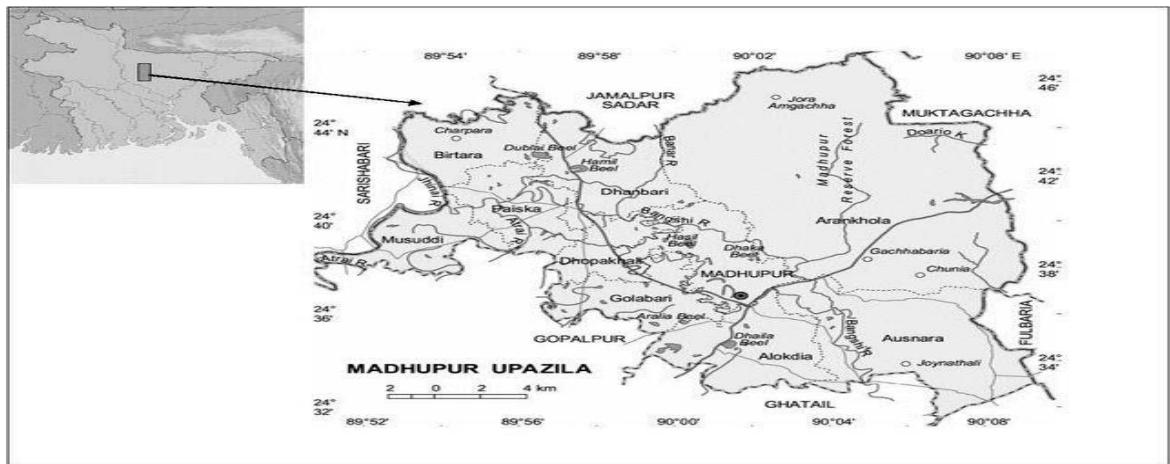
Study Area Map
### c) School Selection
The selection procedure considered several school features, including size, results, and location. In order to ensure a wide range of geographical representation, schools were selected from urban and rural regions. The researcher strived to balance several educational tiers, encompassing MPO, non-MPO, and private schools, to encompass a wide range of student experiences. Moreover, acquaintances from those areas were taken into account. Additionally, the ease of obtaining formal permission to conduct research influenced the choice of institutions. Additional pragmatic factors, such as ensuring safety, evaluating transportation alternatives, and assessing commute duration, were also crucial in determining the chosen school locations.
Table 1: Schools Profile
<table><tr><td>Schools</td><td>Status</td><td>Size of English Classes</td><td>Results</td><td>Gender of Students</td></tr><tr><td>Site 1</td><td>MPO</td><td>60+</td><td>Good-average</td><td>Girls</td></tr><tr><td>Site 2</td><td>MPO</td><td>70+</td><td>Very good</td><td>Mixed</td></tr><tr><td>Site 3</td><td>Non-MPO</td><td>50-60</td><td>Good-average</td><td>Mixed</td></tr><tr><td>Site 4</td><td>Private</td><td>20-30</td><td>poor</td><td>Boys</td></tr></table>
### d) Access to Schools
The researcher chose three methods while engaging with the schools:
a. Identifying mentors to assist in gaining entrance
b. Use of previous connections
c. Physically submitting a letter of permission for data collection
Furthermore, using prior connections was helpful. The researcher went without assistance, and despite clearly explaining my visit's objective, he discovered his position was more awkward. Indeed, the researcher had a lengthy wait with the head teacher before getting a chance for data collection from students.
### e) Sampling Methods
The survey employed stratified sampling. Stratified sampling is advantageous in educational research as proposed by Dornyei (2007). The classroom observations followed an ethnographic tradition, as emphasized by Marshall and Rossman (2016).
Purposive sampling was used to conduct interviews with ten high school English teachers, including both Garo and non-Garo individuals.
### f) A Piloting
A pilot study included ten students and two teachers who filled out surveys and interviews. Student interviews began with survey talks, followed by dual interviews with teachers. All sessions were recorded with the participants' permission. The experience highlighted interview challenges, such as ambiguous questions and extended interviews. Several survey questions were redundant. As a result, questions were clarified and modified, and unnecessary ones were eliminated.
### g) Data Collection Tools and Procedures
The research is mixed-method in nature. Both qualitative and quantitative were used to carry out the study. The process of triangulation is employed by utilizing a variety of tools, which serves to improve the accuracy and dependability of the results.
Table 2: Data Collection Tools and Participant
<table><tr><td colspan="2">Data Collection Tools and Participants</td></tr><tr><td>Survey</td><td>80 Garo students</td></tr><tr><td>Classroom Observation</td><td>6 Classes</td></tr><tr><td>Interview</td><td>10 English teachers (Garo and Non-Garo)</td></tr><tr><td>FGD</td><td>10 Students</td></tr></table>
## i. Survey Questionnaire
The survey included 80 students, 40 boys and 40 girls, from grades 6 to 10, from four separate schools, each contributing 20 students. The questionnaire's questions were written in the form of statements. The author chose a scaled framework. The researchers avoided asking leading, high-brow, complex, culturally biased, annoying, and double-negative questions. Moreover, the researcher led them through the questionnaire, explaining where necessary persuading them not to consult during the questionnaire. As before, the researcher described his position as non-judgmental and non-evaluative, assuring participants anonymity and confidentiality.
## ii. Classroom Observation
Six English classes, three in grades 8 and 9, were observed across four schools. Observing many classes from different grades and schools enables a comparative investigation.
## iii. Teachers' Interview
Interviews were done with ten high school English teachers, both Garo and non-Garo, from different schools. The interview was developed in a semi-structured form. Each interview began with a brief introduction and procedural description. Interview was recorded on a digital voice recorder, transcribed, and typed into Word documents. Occasionally, clarification or additional explanation was sought. Each interview lasted between 15 and 20 minutes and was conducted as a single interview. Interviews were conducted in various settings, most notably around lunchtime in a school classroom, though a few participants preferred the teachers' room and garden. The neo-positivist method permitted interviewees to wander off-topic or develop their opinions wherever they did so. As a result, the time allotted for each interview was variable.
## iv. Students' Focus Group Discussions (FGDs)
Two FGDs were done, each with ten students. The students were divided into two groups, each consisting of 4-5 students. The FGDs involved students in grades 8 and 9 and were conducted across four schools. These data collection technologies are selected based on their complementarity, which guarantees a comprehensive perspective on the educational experience in Garo High Schools, as Creswell (2013) advised.
### h) Analysis and Interpretation of Data
The researcher adhered to following three fundamental principles: a) condensing the data, b) presenting the facts, and c) making and confirming findings. Additionally, *Richards* (2003) approach was followed, encompassing three key aspects: description, analysis, and interpretation. The quantitative data is analyzed by Statistical Package for Social Science (SPSS) and MS Excel due to a large sample size ( $n = 80$ ). Questionnaires were checked to ascertain completeness, accuracy and uniformity. To improve comprehension, the data was transformed into a range of graphs and charts.
The qualitative data was analyzed using 'content analysis' and 'emerging themes.' The data is scrutinized for reoccurring problems, features, and events. The data is analyzed to uncover themes. At the same time, the questionnaire replies were reviewed, carefully looking for any inconsistencies. Finally, the analyses and interpretations are correlated to comprehend the challenges of teaching secondary Garo pupils English.
### i) Ethical Consideration
The study prioritized ethical factors, such as informed consent and participant anonymity. Data was anonymized to comply with privacy rules. The research sought objectivity and diversity representation. The questions for students were non-invasive, promoting a courteous environment.
### j) Validity and Reliability
To improve research quality, a variety of tactics were used. These included using numerous data sources and remaining objective while avoiding personal bias. The survey questionnaire was constructed with content validity in mind, spanning a wide range of student experiences. Established ideas and prior research ensured construct validity. Classroom observations ensured ecological validity. Teacher interviews increased practical expertise, improving face validity. FGDs gave deeper insights and cross-verification, which improved internal validity. Overall, triangulation and data cross-validation increased research validity.
#### CHAPTER FOUR
## IV. DATA FINDINGS AND ANALYSIS
### Introduction
This chapter presents results from student surveys, teacher interviews, classroom observations, and FDG with students.
### a) Findings from Questionnaire and Analysis
The findings of the questionnaire survey are presented in this section.
## i. Garo Students' motivation for learning English
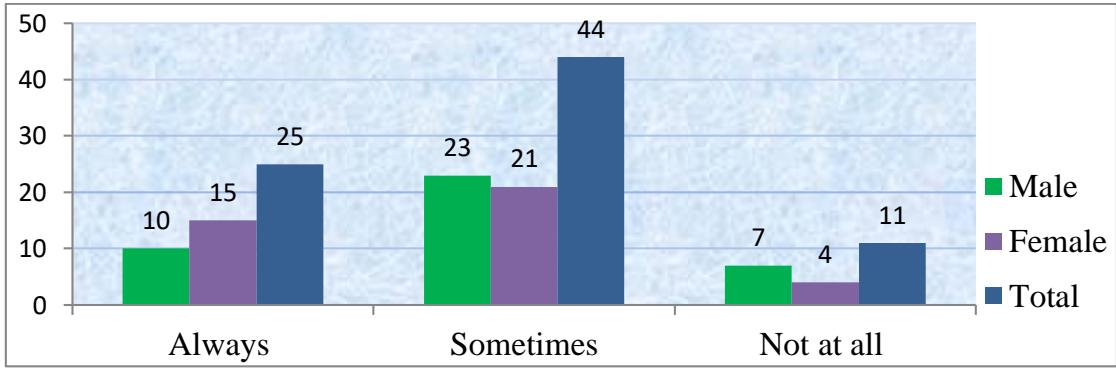 Figure 1: Motivation for Learning English Language
According to the statistics, $31.25\%$ of students (25) (10 males, 15 females) always study English. Of the $55.00\%$ (44) students, 23 men and 21 women occasionally study English. Last, $13.75\%$ (11) students (7 males, 4 females) dislike learning English.
Analytically, females have a higher and more constant preference for English, whereas occasional
English selections have a more balanced gender distribution. There is a noticeable lack of motivation among males in studying English, which may result in an imbalance in which Garo women achieve regularly while men exhibit less constancy in English competence.
## ii. Interest of Garo Students in Learning English Language
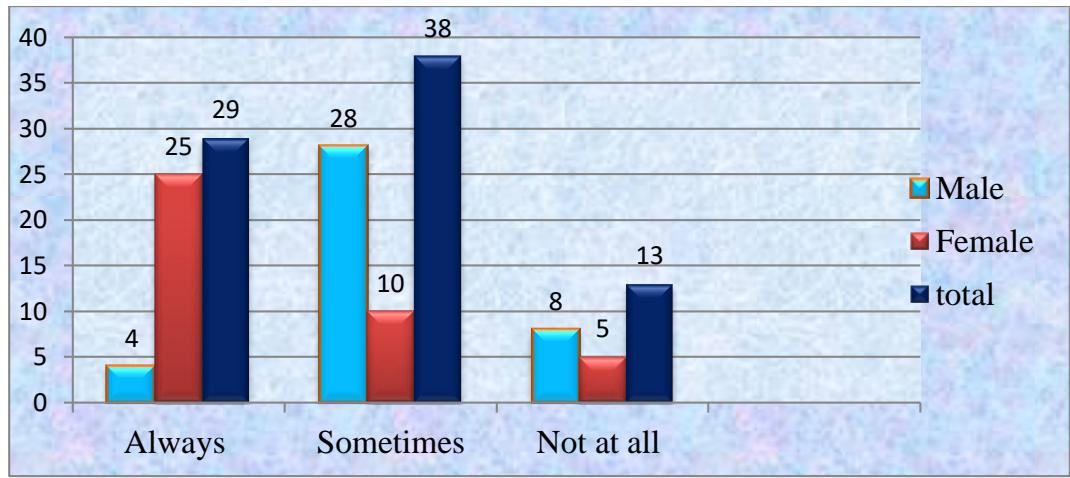 Figure 2: Interest in Learning English
The graph reveals $36.25\%$ (29) students are interested in learning English, 4 of whom are male and 25 female. Additionally, $47.50\%$ (38) students—28 male and 10 female—occasionally exhibit interest in learning English. However, $16.25\%$ (13) students do not want to learn English. This group has 8 men and 5 women.
There is a significant gender discrepancy in English learning, with females consistently more interested than males who show inconsistent interest. This pattern implies that female students are more engaged and educated than male students, who stay indifferent. Gender expectations, culture, society, family, and learning styles are all important considerations.
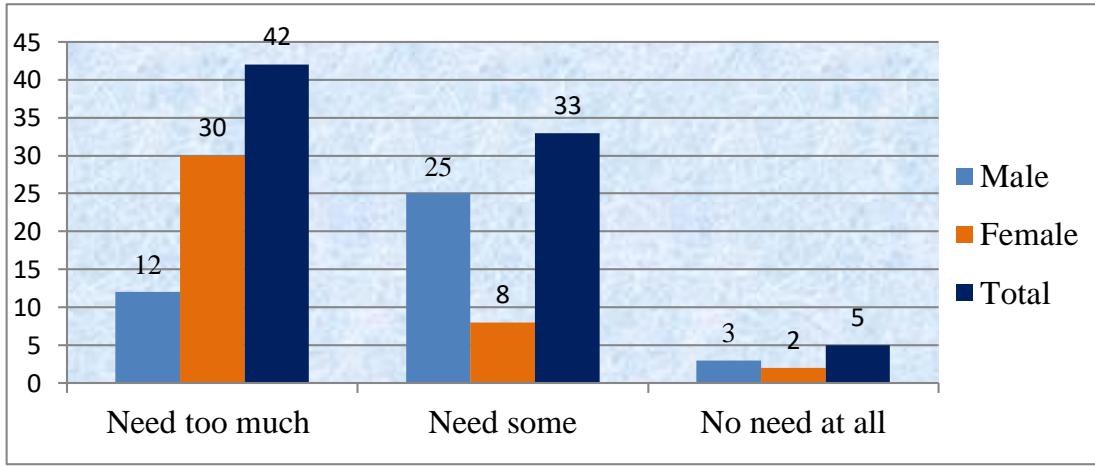
iii. Garo Students' Perspectives on the Significance of English Proficiency for Higher Education Figure 3: English Language Proficiency Needs for Higher Studies
52.50% (42) students, 12 male and 30 male, think they need English language proficiency too much. 41.25% (33) consider themselves in need, 15 male, and 8 female. Two female and three male Garo students believe they do not need English.
Garo students place a high value on English proficiency, owing to its global importance in education and career. This movement is projected to help Garo children by integrating their English education with mainstream Bengali learning and preparing them for national and international platforms where English is critical for social and economic success.
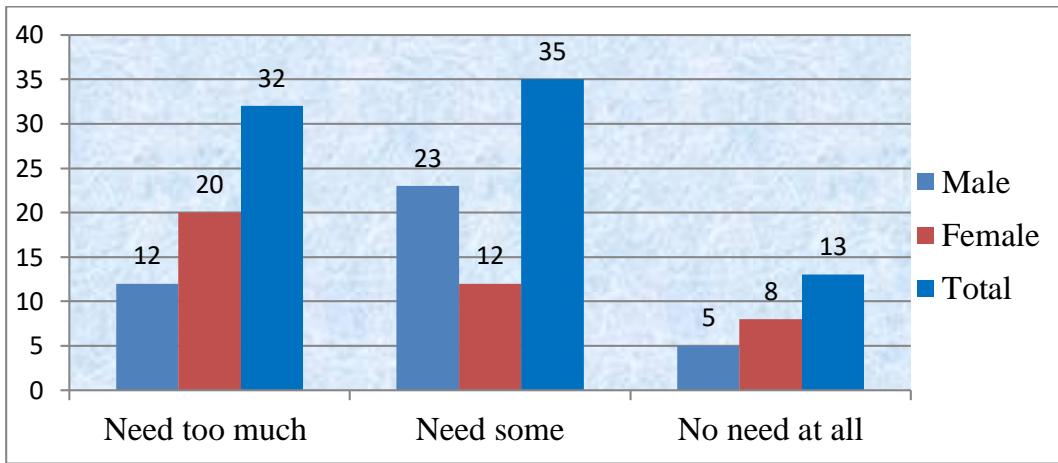
iv. Garo Students' Perceptions of English Proficiency for Job Opportunities Figure 4: Importance of English Proficiency for Employment
Garo students, $40.00\%$ (32), 20 females and 12 males, consider high English proficiency essential for their professions. For their occupations, $43.75\%$ (35), 23 men and 12 women, need moderate English competence. Conversely, $16.25\%$ (13), 5 males and 8 females, think English is unnecessary for their futures.
## v. Emphasis on English Language Learning in Garo Schools
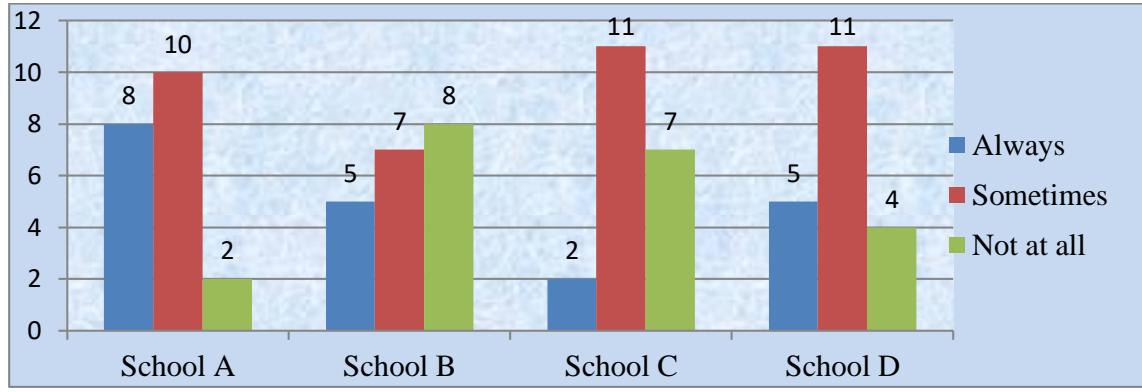 Figure 5: Emphasis on English in School
Eight students at school A receive continuous English teaching, 10 sometimes, and 2 none. 5 B-schoolers find regular emphasis, 7 irregular, and 8 none. 2 C-school students focus regularly, 11 on occasion, and 7 none. In school D, 5 pupils see constant emphasis, 11 intermittent, and 4 none.
Furthermore, a chi-square value of 14.9967 and a p-value of 0.2416 in the cross-tabulation table indicate no significant relationship between school and English concentration. Other factors, such as teaching methods or student preferences, are likely to influence the variation more than institutional differences.
## vi. Teacher Encouragement for English Language Learning among Garo Students
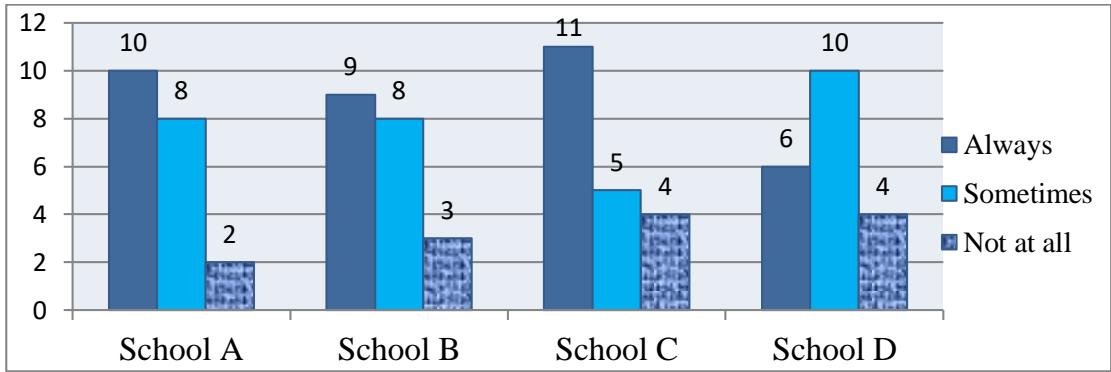 Figure 6: Teacher Encouragement
In school A, 10 students receive continuous English teacher encouragement, 8 occasionally, and 2 not. In School B, 9 students are frequently encouraged, 8 periodically, and 3 do not. 11 students in School C are consistently encouraged, 5 are irregular, and 4 desire more. In school D, 6 pupils receive continuous support, 10 receive sporadic, and 4 do not.
Critically, the data demonstrate a consistent and favourable pattern in the encouragement given to children for learning the English language across all schools. Specifically, there is a notable disparity in student perceptions of consistent and inconsistent encouragement, with an average score of 2.40 suggesting consistent support and an average score of 4.40 for sporadic encouragement, while an average score of 0.87 indicates infrequent absence of encouragement.
## vii. Teacher Encouragement for Speaking English
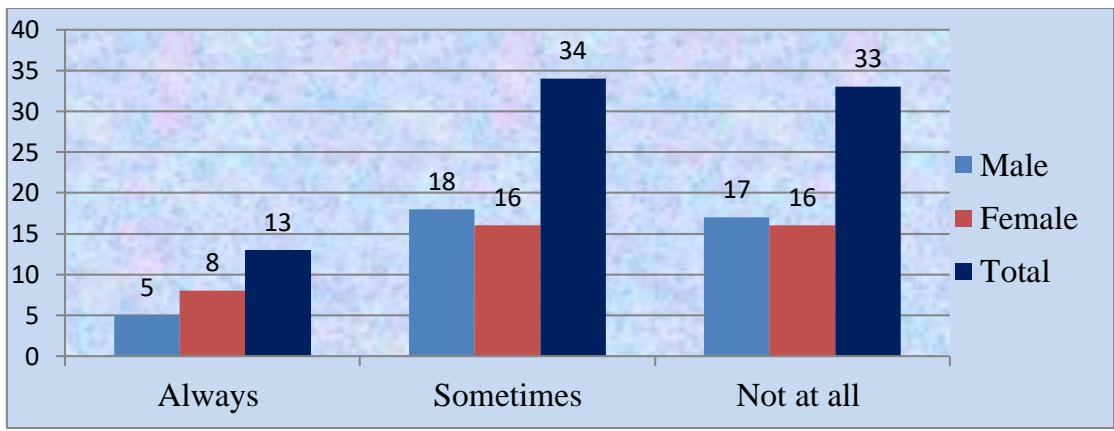 Figure 7: Teacher Encouragement for Speaking
16.25% of students (eight females and five males) responded their instructors constantly support English communication, 42.50% (18 males and 16 females) occasionally, and 41.25% (17 males and 16 females) never.
A portion of students do not receive any encouragement from their teachers. Moreover, teachers frequently lack support to encourage English usage due to insufficient training, limited resources, and cultural diversity. Their attitudes towards the importance of English and the quality of their training can impact their motivation levels.
## viii. Perceived Level of Difficulty of the English Subject among Garo Students
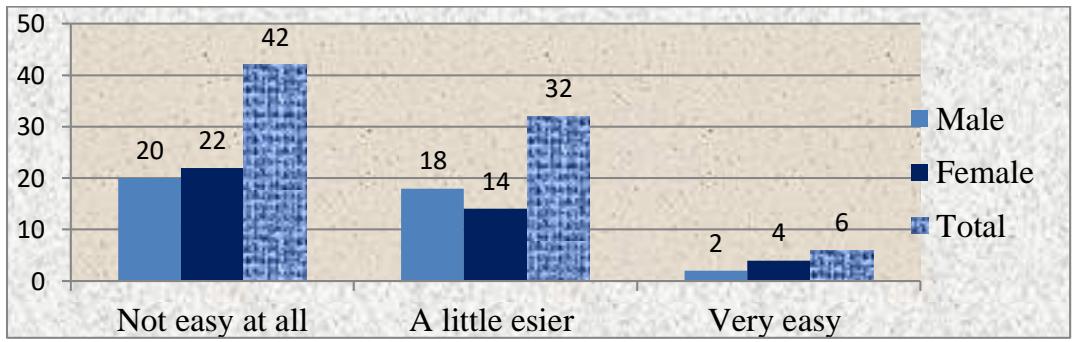 Figure 8: Perceived Ease of the English Subject
English is deemed the most difficult subject by $52.50\%$ of students (42), including 20 males and 22 females. Meanwhile, $40.00\%$ (32) find it easier, with 18 males and 14 females, and $12.50\%$ (6) think it's as straightforward as other arts subjects, with two males and eight females.
The study found that more female students struggle with English, presumably due to learning styles or educational backgrounds. Teaching methods, instructor skills, and Garo students' cultural and linguistic backgrounds may affect perceived difficulty.
## ix. Garo Students' Bengali Language Proficiency
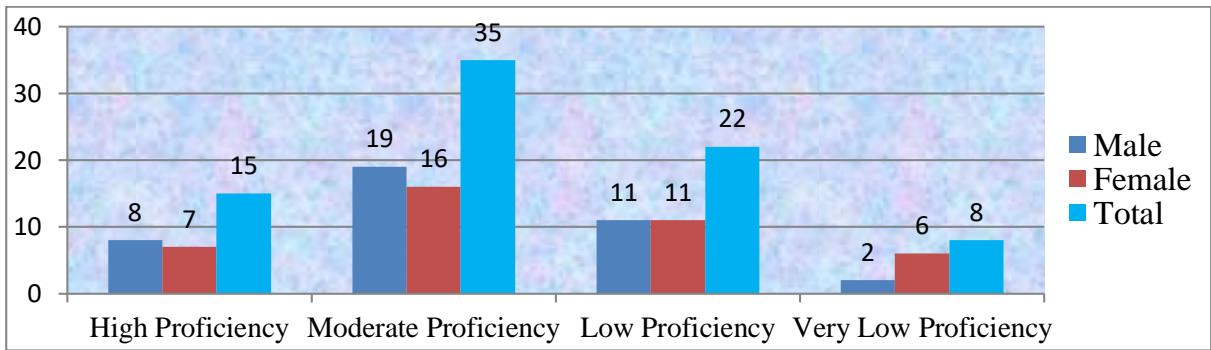 Figure 9: Bangla Proficiency of Garo Students
Out of Garo students, $18.75\%$ are fluent in Bangla (15 students), $43.75\%$ have moderate-level skills (35 students), $27.50\%$ have limited proficiency (22 students), and $10.00\%$ have very low proficiency (8 students).
Since Bangla is the language of teaching, $50\%$ of students have low Bangla proficiency, which may hinder their English learning. Female students are more likely than boys to have low Bangla proficiency. They may also struggle in English lessons or other academic settings and need extra help.
## x. Inclination of Garo Students towards using Bengali in English Classroom
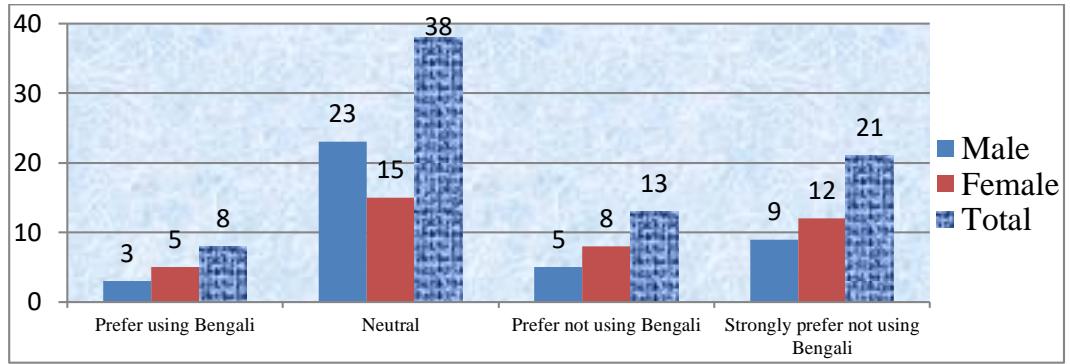 Figure 10: Bangla Proficiency
$10\%$ (8) of students, three men, and five women chose Bengali in English classes. Some $47.5\%$ (38) have no choice, including 23 men and 15 women. In English lessons, $26.25\%$ (21)—12 females and 9 males—dislike Bengali.
Analytically, over $40\%$ of students, including neutrals, do not specifically choose Bengali. This may be due to worries about bringing Bengali into English classrooms, a lack of concrete information about its benefits, or societal and cultural limits in expressing personal preferences. People who prefer their mother tongue may need help learning Bangla while retaining their culture. They may benefit from specialized learning to combat hesitation.
xi. Incorporation of Garo Language into English Teaching
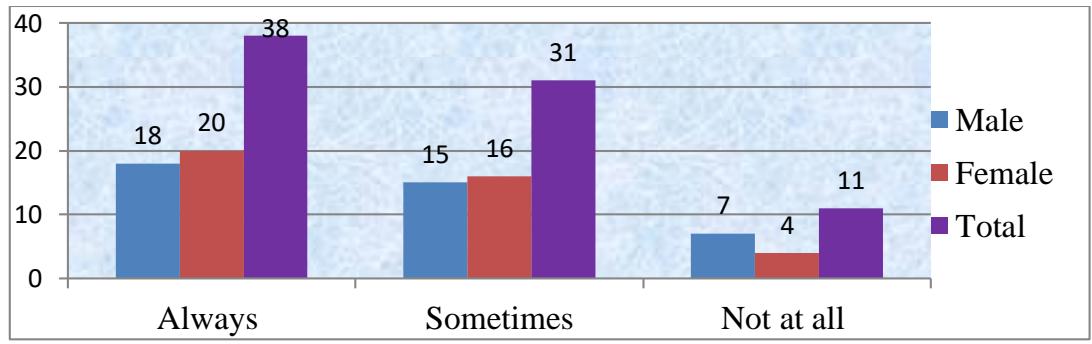 Figure 11: Student Perceptions of English Teachers' Use of Achik Katha in the Classroom
47.50% (38) always choose their native tongue for English instruction (18 men, 20 women). 38.75% (31) Garo pupils (15 males, 16 females) speak sometimes their native language in class. 13.75% of students oppose utilizing their native language in English classes.
A strong preference for native language indicates good and comfortable English acquisition. Possible causes include improved comprehension, less anxiety, and cultural familiarity. Certain students are adaptable. Opposition may originate from competency worries, prior experiences, or societal standards that favour English competence.
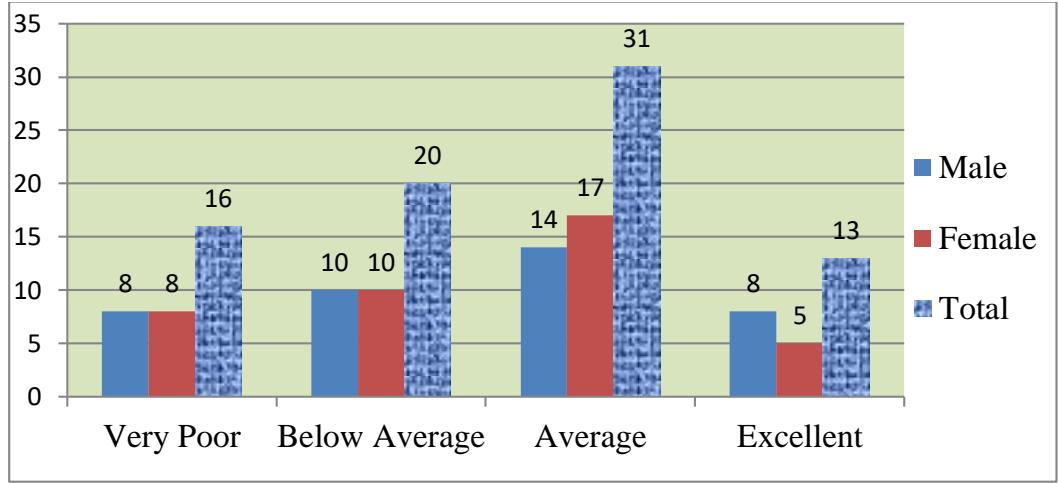
XII. English Reading Comprehension Level Figure 12: Reading Comprehension Level
The graph demonstrates that $20\%$ of 16 students—everly split between men and women—have low English reading comprehension. Additionally, $25\%$ (20 students) show below-average comprehension, xiii. English Speaking Proficiency
equally split by gender. Additionally, $38.75\%$ (31 students) have average comprehension, 14 male and 17 female. Only $16.25\%$ (13 students), 8 males and 5 girls, have exceptional comprehension.
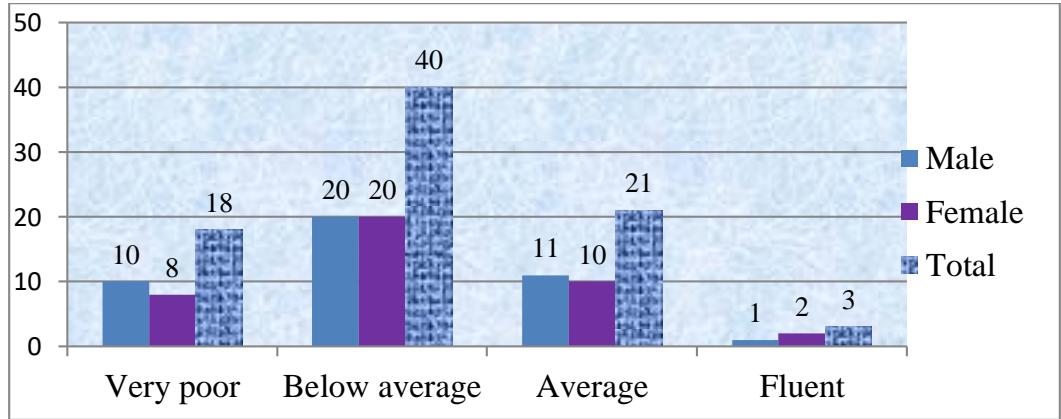 Figure 13: Proficiency in Speaking English
The graph shows that 10 male and 8 female students with low spoken English skills make up $22.50\%$ (18). Additionally, $50.00\%$ (40) of students talk poorly. Twenty male and twenty female students are equal. Average English proficiency is $26.25\%$ (21) among 11 male and 10 female students. The $3.75\%$ students include one man and two women who speak English well.
The statistics show that limited exposure and communication constraints pose challenges to spoken English competency. These concerns are independent of gender. To address these, targeted speaking exercises can benefit low-proficiency students, interactive activities such as role-playing for below-average students, discussions and presentations for average students, and mentorship by high-ability students can all contribute to a pleasant learning environment.
Xiv. English Writing Skills of Garo Students
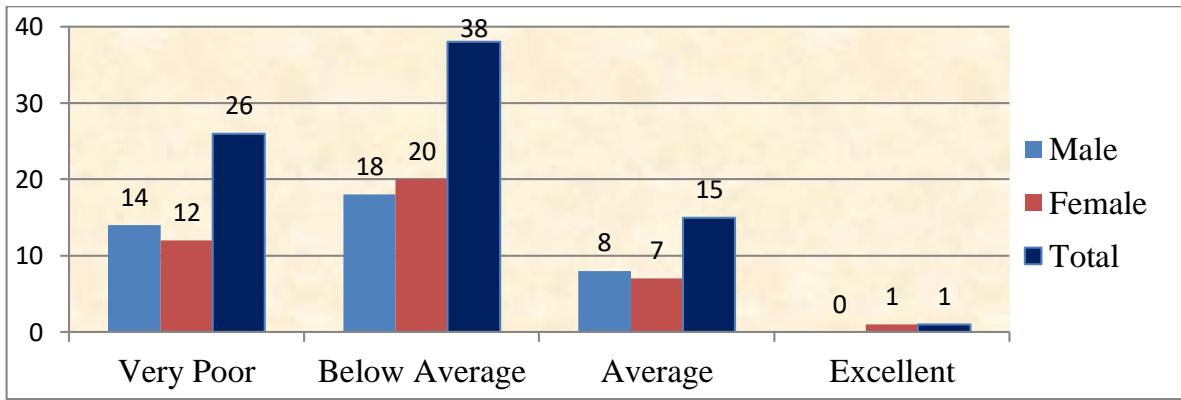 Figure 14: Ability to Express Thoughts in Writing in English
English writing skills are lacking in $32.5\%$ (26) of Garo students, 14 males and 12 females. Also, $47.5\%$ (38), 18 men and 20 women, have poor writing skills.
Average writing talents are held by $8.75\%$ (15), eight men and seven women. Finally, one female student believes in writing well in English.
Xv. English Listening Comprehension Level of Garo Students
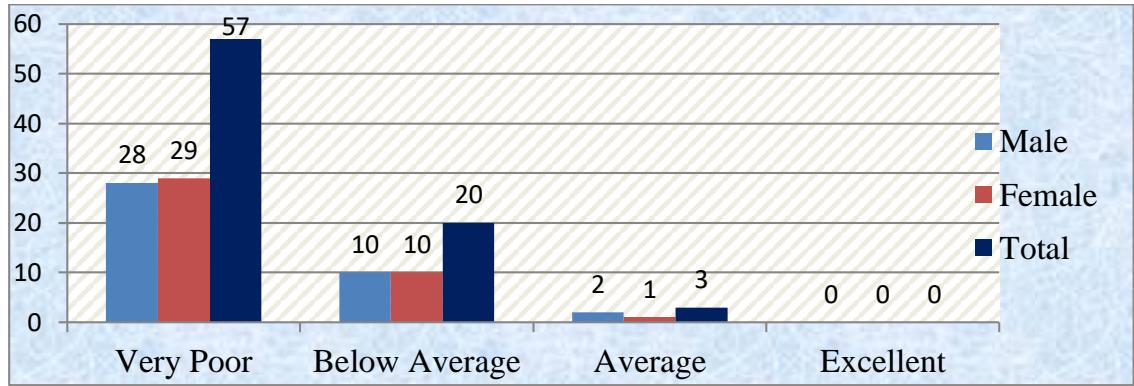 Figure 15: Listening Comprehension Level of Garo Students
71.25% (57) of Garo students have low English listening skills, 35.00% (28) are men, and 36.25% (29) are female. Additionally, 25.00% (20)—10 men and ten xvi. Garo Students' Studying English Outside of Classes women—have poor listening abilities. Only $3.75\%$ (3), two men and one female, have ordinary listening skills. None of them are exceptional or proficient.
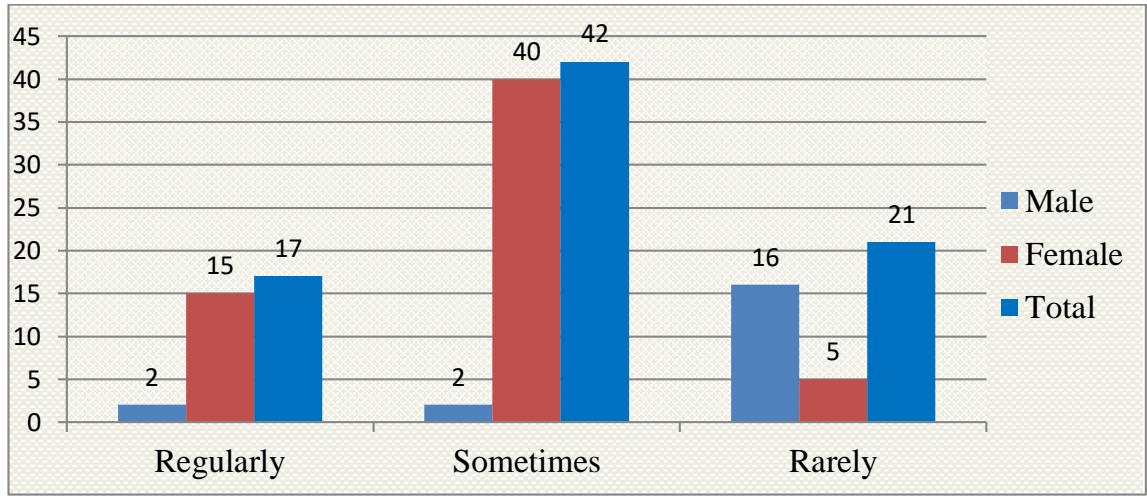 Figure 16: English Learning Habits Among Secondary-Level Garo Students
21.25% (17) Garo students, 2 males and 15 females, study English outside of class. 2 male and 40 female students study English outside of class among
52.50% (42). 16 male and 5 female students rarely learn English outside of class.
The majority of students acquire English through classroom instruction, with a few females participating in regular individual study. Consistent outside-of-class study is essential. A few students who study less demonstrate significant support and
Motivation. Promoting regular study patterns and equal access to English resources might help Garo students engage. Involving parents in household English studies can improve academic performance.
xvii. Role of Coaching/ Private/ Tuition in English Learning among Garo Students
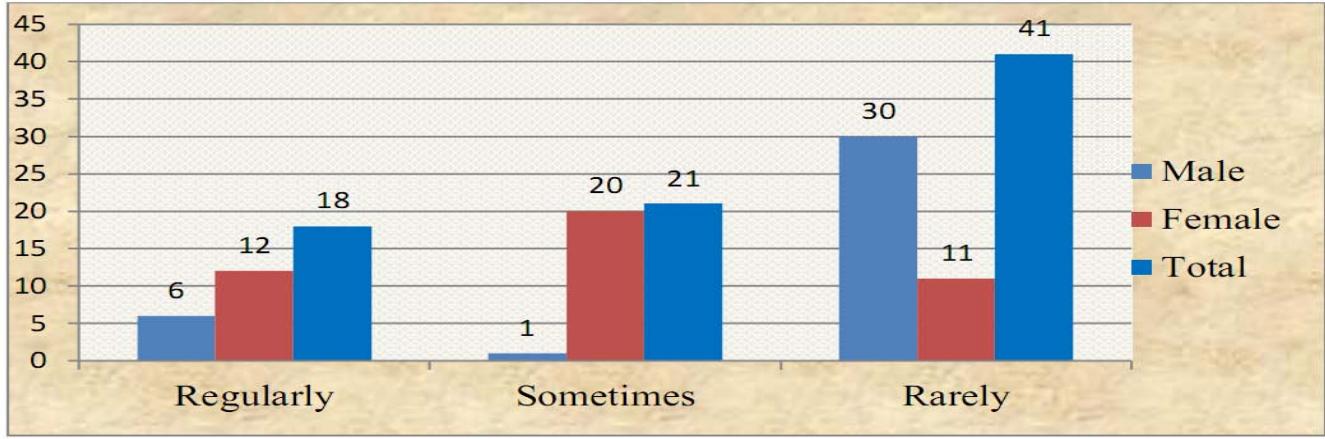 Figure 17: English Language Coaching, Private, Tuition Attendance
Daily or almost daily coaching is provided to $22.5\%$ (18 males, 6 females) of students. $26.25\%$ (21)—one man and 20 women—are occasionally coached. Additionally, $52.5\%$ (41)—30 men and 11 women—seek tutoring periodically.
Garo students rely extensively on external English language coaching, demonstrating a need xviii. Availability of opportunities for English Learning for Garo Students
beyond the classroom. Concerns about poor school teaching and exam pressure make private tutoring popular. Students without tutors typically fall behind. Financial support for tutoring is limited.
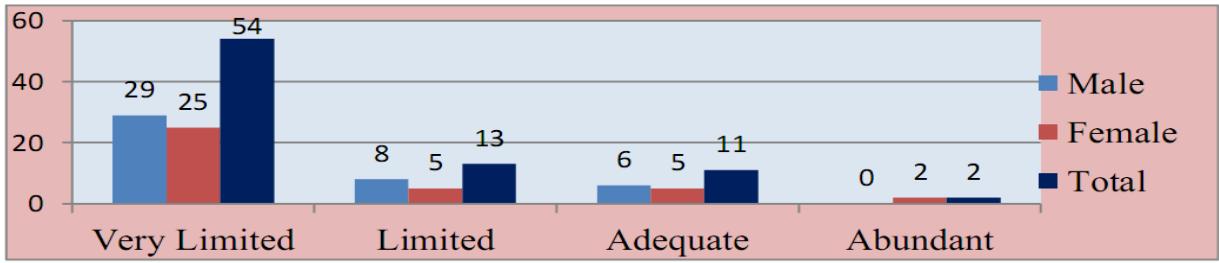 Figure 18: Perceived Opportunities for Learning English
The graph illustrates that $67.50\%$ (54) students have a severely restricted chance to acquire and use English language skills. Out of the total, there are 25 female and 29 male students. Furthermore, $16.25\%$ (13) students, 8 are male and 5 are female, have restricted access to English language instruction. $13.75\%$ (11) students, 6 male and 5 female, have proper opportunities. Finally, there are two female students with enough opportunities.
Many Garo kids have limited chances to learn English owing to socioeconomic and cultural constraints. Socioeconomic restrictions limit access to high-quality English education and supplementary learning materials. Cultural traditions among the Garo culture may result in a decreased value placed on studying English.
### b) Findings from Classroom Observations
This section presents the data collected from classroom observations conducted in four separate schools, encompassing a total of six classes in grade 8 and grade 9.
## i. Classroom Overview
Lessons in Garo classrooms were mostly conducted in Bengali, resulting in little communication among Garo students. The high student-to-teacher ratio frequently approached 1:60, and educational aids and audiovisual equipment were never used. The teaching method was teacher-centered, with a focus on the Grammar-Translation Method (GTM) and minimal use of the Communicative Language Teaching (CLT) approach. Activities like pairwork and group work were rare. Teachers' proficiency in English was inadequate, and class time was short.
## ii. Addressing English Proficiency Levels of Garo Students
Garo students struggle with English competency, particularly oral communication, sentence formulation, vocabulary, pronunciation, comprehension, reading, and writing. Common problems include sentence construction, grammar, and spelling, as well as faults with subject-verb agreement, particularly in personal narratives. In addition, Garo students exhibited a general hesitancy to engage in classroom discussions or group activities, which suggests the presence of language anxiety, especially among those with limited English skills.
## iii. Dealing with Pronunciation Issues of Garo Students within the Class
Garo pupils struggle with English pronunciation because of underlying phonetic discrepancies between English and Garo, causing significant problems. Traditional educational methods have shown minimal effectiveness in addressing this issue. Some instructors have tried traditional methods such as smartphone audio exercises and peer evaluations, but more systematic ways are required to enhance pronunciation, boost confidence, and close the phonetic gap between English and Garo.
## iv. Vocabulary Learning and Teaching for Garo Students in the Class
The findings revealed that Garo students exhibited a limited vocabulary. Most Garo students required assistance comprehending specialized terminology like 'philosopher.' in the 10th grade, the conversation about historical luminaries such as Mahatma Gandhi was unsuccessful due to the restricted vocabulary proficiency. In addition, one of the biggest challenges observed is rote memorization. Vocabularies are often presented quickly and without use. Passive learning has few benefits. Furthermore, etymology and word components are also crucially ignored. Students do not understand the roots of phrases or their meanings and associations. They are not given mnemonics, context clues, or word roots which prevents them from learning words extensively.
## v. Garo Students' Reliance on Translation Over their Native Language
Based on my observations, using Garo translations in English class proves to be initially effective in captivating Garo students and enhancing their understanding, particularly when it comes to culturally relevant topics. However, this approach hinders their progress in acquiring precise English terminology and comprehending idiomatic expressions. Overly depending on translations impede complete absorption and mastery of the English language.
vi. Cultural Appropriateness and Relevance in Classes The observations discovered a dearth of culturally relevant English instruction for Garo students, which led to disengagement owing to teachers' insufficient understanding of Garo culture. However, some teachers' efforts to incorporate Garo culture were successful in raising student engagement and reinforcing cultural identification. This emphasises the value of culturally aware education. To improve learning outcomes, English teachers should have a thorough awareness of Garo students' cultural backgrounds and tailor their teaching methods and resources accordingly.
## vii. Consideration for the Varied Learning Styles of Garo Students
Observations identified notable variations in teachers' capacities for responding to the varied learning styles of Garo students. Visual learners encountered difficulties in the absence of visual assistance, while kinesthetic learners expressed dissatisfaction with prolonged lectures. Several classrooms made efforts to accommodate these differences. One teacher occasionally utilised visual aids such as posters, another employed diverse techniques like group projects and role-playing, and another integrated a combination of visual, auditory, and kinesthetic activities, such as combining documentary footage, group discussions, and creative writing. Classrooms using a flexible teaching approach saw better student engagement than those with a fixed style. This highlights the significance of acknowledging and addressing the diverse learning requirements of students in order to establish a more efficient and inclusive educational setting.
## viii. Teaching Methods And Strategies In Garo Classroom
Observations show that the teaching style primarily revolves around the teacher, focusing on lectures and restricting interactive activities such as group work and debates. Student engagement in the learning process is limited, as there is a preference for teacher-led lectures rather than engaging in textbook activities. This tendency hampers student interaction and inhibits the development of critical thinking skills. There is an emphasis on translation and memorization rather than developing language abilities. An administrative approach to maintaining discipline characterizes classroom relationships. However, this method cannot engage students, resulting in their waning interest owing to the excessive focus on rote memorization rather than fostering creative comprehension. Teachers strongly emphasise exams, prioritising exam preparation over comprehensive language learning and critical thinking. Grammar and vocabulary are taught separately, indicating a need for a more engaging, student-centered teaching style.
## ix. Approaches of Teachers with EFT Textbooks in Garo Classrooms
Observations reveal that teachers deviate from the prescribed guidelines of the textbook "English for
Today" (EFT). Their primary activity involves reading and translating the textbook into Bangla, occasionally using the Garo language. The activities are restricted to reading, translating, practicing grammar and vocabulary skills, responding to questions, and rectifying grammatical problems in written work. The use of interactive discourse, as recommended by EFT, is not observed, with teachers primarily emphasising reading and writing proficiencies while disregarding listening and speaking aptitudes. The absence of skilled professors, interactive sessions, administrative assistance, and facilities exacerbates the hindrance to proper English learning for Garo students. The purpose of EFT is to facilitate the acquisition of functional language skills. This system emphasizes the need to engage students in various collaborative activities such as group work, pair work, role-playing, and other exercises that target all four language domains, enabling them to achieve a high level of proficiency in English.
## x. Problems of Teaching English in Garo Classrooms
The schools are experiencing a lack of resources, such as materials, supplies, and audio-visual materials, which negatively affects the quality of language training. The substantial teacher-to-student ratio, frequently exceeding 1:60, impedes the teacher's capacity to deliver efficient instruction within the limited duration of 45-minute lessons. The inadequate outcomes in public examinations and insufficient pedagogical approaches generate anxiety among educators and learners, impeding the acquisition of English language proficiency. In addition, Garo learners are reluctant to engage in Extensive Reading (ER) and reading for enjoyment, resulting in restricted vocabulary and writing abilities. A significant number of English teachers in these institutions have difficulties stemming from their limited knowledge, inadequate training in English language teaching (ELT), insufficient supervision, or lack of dedication, resulting in their failure to put in the additional effort required for effective foreign language instruction.
## xi. Motivation and Confidence of Garo Students in English Classes
Observations found that Garo students have various levels of enthusiasm and confidence. Some lacked confidence, while others demonstrated passion, particularly during participatory activities such as roleplaying and debates. Motivation levels varied according to task complexity, with a decrease in enthusiasm for difficult tasks such as creative writing. Teachers used tactics such as positive reinforcement and collaborative work to increase students' excitement, confidence, and English language skills.
### c) Data Findings from Teachers' Interview and Subsequent Analysis
This section encapsulates the findings derived from interviews with ten English teachers who are actively involved in educating Garo students at the secondary level.
## i. Teachers' Attitudes Towards English Language Teaching to Garo Students
Teachers think that Garo students' English ability is critical for boosting their academics and job chances while also enabling global communication and cultural understanding. A young teacher emphasised that "English is essential for worldwide communication, academic growth, and professional opportunities." Teachers consider English as a gateway to immense information and a means of linking students to a global society and opportunities. As one teacher stated, "English is a tool for empowerment; its impact goes beyond academics; it's about cultural understanding."
Teachers in Garo missionary schools are genuinely concerned for their students' well-being since a scarce food supply has an impact on motivation, attendance, and learning. Many students from low-income families do not receive adequate nutrition or parental support for their education. Teacher A pointed out that parents frequently work long hours and are unable to supervise their children's academics. These teachers take on the task of looking after the students' well-being and encouraging them to study English. Teachers are under pressure from poor student performance and parental disengagement, with Rahim emphasizing the significance of student success, adding, "Teachers are only successful if their students get the desired outcome."
## ii. Classroom Responsibilities
Teachers recognize the need to provide varied activities to keep Garo students engaged and motivated. They begin new topics by preparing students, reviewing prior knowledge, and discussing previous lectures. Rabiya, an experienced teacher, employs various strategies to improve learning: "I tell rhymes and stories, show pictures, and enable games that stimulate learning through amusement. I frequently assign assignments using a 'one day, one-word' approach; most pupils finish the tasks". Garo learners favour group work over solo activities, pushing teachers to use interactive teaching methods. Another teacher emphasized the need for peer support: "Peer assistance helps weak Garo learners learn better." Those who cannot finish problem-solving tasks should be permitted to read anything so that they are not left unattended," emphasizing the need to involve all pupils in learning activities.
## iii. Challenges Faced by English Teachers of Garo Students
Teachers in Garo areas encounter a number of problems, including limited training opportunities and funding. One teacher stated, "We don't have enough textbooks, computers, projectors, or even basic classroom supplies." Wahid, a young English educator, highlighted the disadvantages of translation approaches in the classroom, stating, "To bring the lessons to life, we need more books, audiovisual aids, and technology tools." The little exposure to English outside of school is a big barrier, with one teacher stating, "Students rarely get to practice English in their daily lives." Furthermore, the classroom environment, which is frequently overcrowded and underequipped, impedes learning, while big class sizes and short teaching hours exacerbate the difficulties. A senior teacher stated, "Unfortunately, our time is insufficient to meet the specific needs of Garo students." Instructors also face a rigid curriculum, with one stating, "As teachers, we are also struggling with an excessively inflexible curriculum that lacks contextualization for Garo students," emphasizing the need for more relevant and engaging educational content.
## iv. Influence of Culture and Socio-Economics on English Teaching among Garo Students
Teachers acknowledged that studying and knowing Garo culture is beneficial while teaching English to Garo students. According to an experienced teacher, when selecting language resources, it is essential to consider the learners' cultural background. Additionally, teachers should be able to adapt to their cultural views, values, and practices. Learning English depends not only on pupils but also on teachers' knowledge of Garo culture and how they teach it. Before teaching, teachers should thoroughly understand politics, economics, geography, history, art, religion, literature, and other areas of social life. Furthermore, instructors help to alleviate the adverse effects of socioeconomic poverty by providing additional support to Garo students in their quest for educational equity and collaborating with community organizations to provide additional resources. A new teacher stated: "Teachers in Garo schools must possess the requisite knowledge and abilities to negotiate the cultural and socioeconomic obstacles they encounter effectively." This involves teaching culturally relevant pedagogy, personalized instruction, and community involvement.
## v. Effective Teaching Strategies for Enhancing English Learning among Garo Students
Teachers exchanged excellent English instruction strategies, emphasising the use of multimedia resources to make learning more engaging and context-rich. As one instructor said, "Engaging students with diverse multimedia tools not only makes learning more enjoyable but also enhances their understanding of the language in different contexts." Interactive learning approaches were emphasised, with exercises and linguistic applications playing an important part. "Games and apps make learning English less intimidating and more relatable for students," said one teacher, emphasising the advantages of current tools. Experiential learning through role-playing and inviting outside speakers were advised for practical language use. Classroom dynamics, such as smaller class sizes and culturally relevant curriculum, were considered crucial. Constructive criticism and extracurricular activities, such as English clubs, were suggested for improving language skills. The teachers also mentioned the difficulty of accessing resources, particularly in remote locations, as well as the significance of family support in developing an English-friendly home.
## vi. Innovative Approaches in English Language Teaching
Teachers in Garo classrooms found project-based learning involving the community and family extremely effective, with kids enthusiastically incorporating their culture into class. One teacher used culturally sensitive methods: "I have incorporated storytelling techniques in my classes, focusing on stories from Garo folklore." A multilingual method is also used, with instructions in both English and Garo, and another teacher employs English music with Garo themes to overcome cultural divides. Visual arts are used to teach vocabulary, with one instructor stating, "I have found success by integrating visual arts in language lessons." Peer learning and role-playing with Garo customs improve confidence and make English learning more relevant. Grammar and writing exercises use culturally appropriate examples, with one teacher remarking, "In my teaching, I relate to the Garo students' daily lives." Furthermore, the curriculum includes Garo historical figures and group activities commemorating Garo festivals, strengthening kids' connection to their culture while studying English.
## vii. Recommendations for Elevating English Education among Garo Students
Nadia, a teacher, emphasizes the importance of smaller class numbers in providing personalized attention to Garo pupils who face linguistic barriers in English learning. Another teacher emphasized that "it is vital to integrate Garo cultural elements into the English curriculum," calling for lessons that resonate with Garo students. As a young educator, Wahid puts it this way: "I would urge institutions to provide continuous professional development focusing on cultural sensitivity and innovative methods for diverse classrooms." An experienced instructor suggests building community-based learning programs for practicing English in culturally relevant situations. Furthermore, the significance of technology in English education is emphasized, with a teacher stating, "Incorporating technology with interactive apps and resources that celebrate Garo culture is crucial." Teachers argue for incorporating Garo stories into reading materials and increasing English immersion while respecting the native tongue, as well as bilingual classroom use and involvement in English-speaking groups or exchange programs. Parental involvement is also highlighted, with suggestions for workshops to promote English study at home. A high school teacher says, "Assessment methods need to be more culturally inclusive, moving
away from standardized tests to more practical, project-based evaluations that consider students' cultural backgrounds."
### d) Findings from FGDs with Students
## i. Exploring Personal Experiences of Garo Students
<table><tr><td>Student 1</td><td>For me, learning English has been a bit tough. I find grammar particularly challenging, especially tenses.</td></tr><tr><td>Student 2</td><td>It's fun to be able to express different ideas, but speaking in front of the class is intimidating.</td></tr><tr><td>Student 3</td><td>I like reading stories in English, but sometimes the vocabulary is too hard, and I don't understand the context because it's very different from our culture.</td></tr><tr><td>Student 4</td><td>English songs and movies make learning enjoyable for me. But, writing essays in English is difficult; I struggle to organize my thoughts.</td></tr><tr><td>Student 5</td><td>No response</td></tr><tr><td>Student 6</td><td>I feel motivated to learn English because it's important for our future. But, sometimes I feel shy to speak because I'm afraid of making mistakes.</td></tr><tr><td>Student 7</td><td>My experience is mixed. I like when we learn through games and interactive sessions. But, traditional lectures are boring and hard to follow.</td></tr><tr><td>Student 8</td><td>I think English is a useful skill, but I wish our textbooks included stories from our own culture. It would make learning more relatable.</td></tr><tr><td>Student 9</td><td>I enjoy learning English with friends, like in study groups. The hardest part for me is pronunciation and accent.</td></tr><tr><td>Student 10</td><td>No response</td></tr></table>
## ii. Cultural Relevance In English Language Education
<table><tr><td>Student 1</td><td>Honestly, I don't see much of our culture in our English lessons. It's mostly foreign stories and examples.</td></tr><tr><td>Student 2</td><td>I agree. It would be nice to have stories from our own culture. It's hard to relate to foreign contexts all the time.</td></tr><tr><td>Student 3</td><td>There was one time our teacher used a Garo folk tale to teach English. It was really interesting and easier to understand.</td></tr><tr><td>Student 4</td><td>I think our textbooks don't reflect our culture. It's always about people and places far away, nothing familiar.</td></tr><tr><td>Student 5</td><td>Our teacher once asked us to write an essay about a Garo festival in English. That was a good way to connect our culture with learning the language.</td></tr><tr><td>Student 6</td><td>I feel our culture isn't represented much. Most examples in class are Western and unfamiliar, so sometimes I feel disconnected.</td></tr><tr><td>Student 7</td><td>No response</td></tr><tr><td>Student 8</td><td>I'd love to learn English through our local stories. It's more fun and meaningful that way.</td></tr><tr><td>Student 9</td><td>Our English classes are more about grammar and vocabulary. There's little focus on cultural aspects, Garo or otherwise.</td></tr><tr><td>Student 10</td><td>No response</td></tr></table>
## iii. Major Challenges in English Learning
<table><tr><td>Student 1</td><td>My biggest challenge is vocabulary. There are so many new words, and it's hard to remember them all.</td></tr><tr><td>Student 2</td><td>For me, it's pronunciation. Some English sounds are not present in our language, so it's tough to pronounce them correctly.</td></tr><tr><td>Student 3</td><td>I struggle with grammar, especially the different tenses and how to use them in sentences.</td></tr><tr><td>Student 4</td><td>No response</td></tr><tr><td>Student 5</td><td>I find writing in English challenging. Organizing my thoughts and putting them into correct English sentences is not easy.</td></tr><tr><td>Student 6</td><td>I think the biggest challenge is the lack of practice opportunities. We don't speak English outside the classroom much.</td></tr><tr><td>Student 7</td><td>For me, it's the cultural difference. The content we learn in English doesn't always relate to our daily lives or our cultural context.</td></tr><tr><td>Student 8</td><td>Reading comprehension is tough. Sometimes, the texts are too complex, or the topics are not interesting.</td></tr><tr><td>Student 9</td><td>Confidence is a big issue. I hesitate to speak in English because I'm afraid of making mistakes.</td></tr><tr><td>Student 10</td><td>I think the teaching methods are sometimes not engaging enough. It becomes monotonous and hard to stay focused.</td></tr></table>
iv. The Role of Garo and Other Language Skills in English Acquisition
<table><tr><td>Student 1</td><td>I think speaking Garo helps in some ways because I can translate English words to Garo, but sometimes it creates confusion, especially with grammar.</td></tr><tr><td>Student 2</td><td>I'm bilingual in Garo and Bengali, and I find it a bit easier to grasp English concepts. Maybe knowing multiple languages helps my brain adapt.</td></tr><tr><td>Student 3</td><td>For me, being proficient in Garo makes it difficult to pronounce English words. Our accents are very different.</td></tr><tr><td>Student 4</td><td>No response</td></tr><tr><td>Student 5</td><td>I feel that knowing Garo well doesn't directly help with English, but it gives me confidence to try learning another language.</td></tr><tr><td>Student 6</td><td>Sometimes I mix up the sentence structures of Garo and English. It affects my English writing and speaking</td></tr><tr><td>Student 7</td><td>I think my background in Garo limits my English vocabulary. There are English words that don't have direct Garo equivalents, which is confusing.</td></tr><tr><td>Student 8</td><td>I'm good at Garo, but I struggle with English. Maybe if English was introduced to us earlier, it would be easier.</td></tr><tr><td>Student 9</td><td>No response</td></tr><tr><td>Student 10</td><td>I believe being multilingual is an advantage. It makes learning another language like English less intimidating for me.</td></tr></table>
v. Exploring Effective English Learning Methods and Activities
<table><tr><td>Student 1</td><td>To start, I think watching English movies with subtitles really helps. It improves our listening and vocabulary.</td></tr><tr><td>Student 2</td><td>I agree. Even listening to English songs and trying to understand the lyrics has been useful for me.</td></tr><tr><td>Student 3</td><td>Reading storybooks in English has been my favorite. It helps with both vocabulary and comprehension.</td></tr><tr><td>Student 4</td><td>I find interactive activities like group discussions and debates helpful. They boost our speaking skills.</td></tr><tr><td>Student 5</td><td>Our English teacher often uses games and quizzes in the classroom. They make learning fun and engaging.</td></tr><tr><td>Student 6</td><td>No response</td></tr><tr><td>Student 7</td><td>Sometimes, our teacher brings in guest speakers who are native English speakers. That real-life exposure is great!</td></tr><tr><td>Student 8</td><td>No response</td></tr><tr><td>Student 9</td><td>I think having a language buddy, someone who speaks English fluently, to chat with regularly has been a big help.</td></tr><tr><td>Student 10</td><td>Writing essays and journals regularly has improved my writing skills.</td></tr></table>
Our textbooks could be more relatable. It would help if they included stories or examples from our own culture
<table><tr><td>Student 1</td><td>I think more interactive lessons would help. Sometimes, our classes are too passive, and we need more opportunities to speak and practice.</td></tr><tr><td>Student 2</td><td>Yes, I agree. Engaging activities like debates, group discussions, and role-plays would make learning more interesting.</td></tr><tr><td>Student 3</td><td>Our textbooks could be more relatable. It would help if they included stories or examples from our own culture</td></tr><tr><td>Student 4</td><td>Having more multimedia resources in the classroom, like educational videos, could be beneficial.</td></tr><tr><td>Student 5</td><td>Perhaps having smaller class sizes would allow teachers to give more individual attention.</td></tr><tr><td>Student 6</td><td>I think our teachers could provide more constructive feedback on our writing and speaking.</td></tr><tr><td>Student 7</td><td>It would be great to have English clubs or extracurricular activities to practice in a relaxed setting.</td></tr><tr><td>Student 8</td><td>No response</td></tr><tr><td>Student 9</td><td>Encouraging us to read English books and novels outside of the curriculum would expand our vocabulary and comprehension.</td></tr><tr><td>Student 10</td><td>No response</td></tr></table>
Student 1: For me, the most challenging aspect is speaking. I often struggle with pronunciation and fluency. Student 2: I agree with Student 1. Speaking is also my biggest challenge, especially when it comes to speaking confidently in front of others. Student 3: I find grammar quite challenging. English grammar rules can be complex, and I often make mistakes in sentence structure. Student 4: No response Student 5: Vocabulary is my challenge. English has so many words, and it's tough to remember and use them effectively. Student 6: Writing is my Achilles' heel. I often struggle with organizing my thoughts and expressing them coherently in written form. Student 7: Grammar is definitely my biggest challenge too. The rules can be quite confusing, and I make grammatical errors frequently. Student 8: No response Student 9: No response Student 10: Writing is my main challenge. Constructing essays or reports in English feels like a daunting task.
<table><tr><td>Student 1</td><td>For me, the most challenging aspect is speaking. I often struggle with pronunciation and fluency.</td></tr><tr><td>Student 2</td><td>I agree with Student 1. Speaking is also my biggest challenge, especially when it comes to speaking confidently in front of others.</td></tr><tr><td>Student 3</td><td>I find grammar quite challenging. English grammar rules can be complex, and I often make mistakes in sentence structure.</td></tr><tr><td>Student 4</td><td>No response</td></tr><tr><td>Student 5</td><td>Vocabulary is my challenge. English has so many words, and it's tough to remember and use them effectively.</td></tr><tr><td>Student 6</td><td>Writing is my Achilles' heel. I often struggle with organizing my thoughts and expressing them coherently in written form.</td></tr><tr><td>Student 7:</td><td>Grammar is definitely my biggest challenge too. The rules can be quite confusing, and I make grammatical errors frequently.</td></tr><tr><td>Student 8</td><td>No response</td></tr><tr><td>Student 9</td><td>No response</td></tr><tr><td>Student 10</td><td>Writing is my main challenge. Constructing essays or reports in English feels like a daunting task.</td></tr></table>
My parents do not think about my study
<table><tr><td>Student 1</td><td>My family has been really supportive. They encourage me to practice English at home and even help me with my homework.</td></tr><tr><td>Student 2</td><td>My parents always demotivate me to watch English movies and TV shows.</td></tr><tr><td>Student 3</td><td>My family emphasizes the importance of English in today's world.</td></tr><tr><td>Student 4</td><td>My family constantly reminds me of the opportunities that knowing English can bring, which keeps me motivated.</td></tr><tr><td>Student 5</td><td>Neutral</td></tr><tr><td>Student 6</td><td>No response</td></tr><tr><td>Student 7</td><td>Neutral</td></tr><tr><td>Student 8</td><td>Neutral</td></tr><tr><td>Student 9</td><td>No response</td></tr><tr><td>Student 10</td><td>My parents do not think about my study</td></tr></table>
### CHAPTER FIVE
## V. DISCUSSION
This chapter discusses the findings of the research presented in Chapter Five. The chapter is organized based on the three research questions that formed the foundation of the study.
### a) Perspectives of English Teachers and Garo Learners
This study primarily explored the positive perspective and passionate approach of English teachers in teaching English to Garo students, emphasizing their attempts to improve their academic and professional prospects. The teachers wished for instructional approaches that were simultaneously captivating and culturally sensitive. These observations are consistent with the findings of Medina et al. (2015), who also noted teachers' positive perspectives.
An essential discovery of this study is the higher level of motivation, commitment, and enthusiasm for acquiring English language skills among Garo students, particularly females. These students demonstrate a predilection for instructional approaches that are both engaging and culturally pertinent for them. This study offers a different viewpoint from earlier research by Larsen-Freeman (2006) which discovered that ethnic minority groups typically lack motivation and have negative perceptions toward learning English.
### b) Challenges in Teaching and Learning
The difficulties English teachers and secondary-level Garo students face when teaching and learning English will be discussed.
## i. Challenges Faced by English Teachers when Teaching English to Garo Students
This section will address the issues encountered by English teachers when instructing Garo students in the English language.
### a. Inadequate Resources
The research has revealed the inadequate availability of crucial instructional resources, including books, audio-visual materials, and technology. The shortage of educational materials significantly hampers teachers' ability to deliver effective and engaging education, thereby impeding the educational progress of Garo students. The observations of Borah (2020) also noted these difficulties. Additionally, while a single institution has resources, they are insufficient to give adequate education to Garo students. The level of educational gain is strongly dependent on the teaching methods used by teachers, demonstrating that the sheer presence of resources in schools does not ensure success.
### b. Large Class Sizes
This study revealed that effectively managing a classroom with a student population above 60 is challenging in terms of delivering individualised attention and performing interactive instructional tasks for Garo students. The study discovered that Garo student involvement tended to decrease in larger classrooms and it was surprising that those students who disengaged in classes frequently had more significant academic challenges. In addition, teachers in large classrooms faced a greater incidence of negative behaviours displayed by Garo students experiencing difficulties in their academic performance. The findings of Hossain (2016) and Cakmak (2009) support these outcomes. Moreover, these findings jointly emphasize classroom management difficulties, promoting engagement with Garo students and effectively engaging them in large class situations.
The research findings also demonstrated that large class sizes contributed to a decrease in Garo students' academic performance and an escalation in disciplinary issues. Conversely, smaller classes allowed instructors to develop a deeper understanding of Garo students and establish stronger connections with them, allowing for more focused attention on individual skills, potentially leading to improved academic achievements and language fluency. These findings are in line with the research by Lassen et al. (2006) and Best et al. (2021). Moreover, a Princeton study found that students in smaller classes consistently achieved higher exam scores, even after leaving a school with smaller class sizes (Ehrenberg et al., 2001, p. 15). In Garo areas, class sizes had increased due to a shortage of classrooms and teachers to manage rising student enrollment. This resulted in learning issues, frequent student absences, and insufficient teacher support.
## c. Limited Training and Professional Development
The study revealed that the teachers in Garo schools frequently need more professional training, both in-service and pre-service, to engage with Garo students proficiently. They frequently lack competence, a well-organized classroom arrangement, and the capacity to guide students proficiently. Additionally, they need to adequately promote the development of Garo students to empower them as independent and self-reliant learners. This deficiency is evident in their capacity to execute multilingual teaching methodologies and demonstrate cross-cultural awareness. The studies undertaken by Sangma and Marak (2014), Momin and Bhutia (2019), and Diengdoh (2018) support the notion that teacher training in Garo schools in Meghalaya, India, is urgently required. Regrettably, teacher training institutes in Bangladesh frequently overlook addressing this disparity due to restricted funds, apprehensions, and insufficient facilities.
Ko and Sammons (2013) discovered that effective teachers in ethnic schools are enthusiastic about the subject matter, have competence and concern for ethnic students, use a variety of teaching approaches, and support tribal students in understanding the meaning of the material in their context. Furthermore, Spencer and Schmelkin (2002) discovered that good teachers, according to ethnic students, use a variety of teaching approaches and link classroom learning to real-world applications. Contrary, Pietrzak et al. (2008) identified competent teachers for ethnic minority students as highly skilled, organized, and diligent in using effective instructional methods and culturally appropriate homework assignments.
## d. Teaching Methodology
This study found severe shortcomings in the teaching approach used for Garo students, primarily relying on traditional teacher-centered, lecture-oriented methodologies. Such an approach, in which teachers deliver lectures and students passively listen, discourages active student engagement and participation. This scenario leaves Garo students primarily as spectators with little involvement in extracurricular activities. Research of Nadeem (2013) supports the findings. Furthermore, the traditional practice of assigning and reviewing homework persists without adopting more effective, modern teaching approaches.
It was observed that teachers frequently utilized text-related photographs without facilitating deeper discussions or student-led explanations. There was a noticeable absence of word cards, which are essential for teaching new vocabulary. Although worksheets are widely recognized as helpful in developing writing skills, they are rarely used. Furthermore, supplemental reading materials were frequently neglected in schools, and practical examples of language use, such as directives, directions, and discussions, were rarely displayed. Furthermore, pronunciation practice was limited, and images in speaking lessons were not fully utilized. In listening skills lessons, an overemphasis on reading and writing activities was seen, with exercises such as greetings and introductions sometimes overlooking real-life situations.
The research also discovered that grammar was taught using traditional techniques, with students focusing primarily on acquiring and applying logical grammar rules to their written work. Grammar principles were taught deductively, and students were expected to memorize them and word lists from books. Despite the potential benefits of interactive activities such as group discussions, pair work, dialogues, and presentations, they were used infrequently in English classes. Blair et al. (1998) criticized the traditional approach, highlighting its limitations for ethnic, multilingual students. Incorporating these exercises proved difficult due to huge class sizes and short class durations following lengthy explanatory lectures.
Multimedia projectors were only used once a week at one urban Garo school, and even then, they were not effectively contributing to language instruction due to instructors' lack of expertise in using such technology for educational reasons. Teachers were also constrained in their ability to create teaching materials due to insufficient time after class and inadequate training.
It recognizes that each method has advantages and disadvantages and those specific settings greatly determine a method's usefulness. Successful learning outcomes rely on teachers' ability to establish approaches that address their students' needs. Teachers' knowledge, abilities, attitudes, and beliefs are crucial in classroom instruction, emphasizing that the teacher is the essential component in any educational system.
In Bangladesh, secondary schools teach English as a topic rather than a language. While useful for exam preparation, it does not effectively aid in actual language acquisition. As a result, while Garo students may demonstrate mastery in grammar and exam performance, they need help with the core purpose of language learning: successful communication.
### e. Lack of Parental Involvement
The research discovered that teachers in Garo schools encounter difficulties in effectively connecting with parents despite their crucial role in fostering a supportive educational environment beyond the classroom for Garo students. The study also uncovered that indigenous parents and schools lacked awareness of the significance of parental engagement in their children's education. Parents commonly believed that their sole responsibility towards their children was to send them to school. Consequently, they often did not participate in the school's arranged programs.
Promoting parental involvement and home-based learning can foster regular study habits and support the social and educational development of Garo pupils. Rozalia (2019) examines the relationship between effective communication, trust, and collaboration between parents and teachers in enhancing students' academic success from different ethnic backgrounds. Parental engagement in the educational setting enhances students' academic achievement. For at least 40 years, it has been regarded as a deficiency in students' education (Hornby & Lafaele, 2011).
## ii. Challenges For Garo Students
This section will address the issues encountered by Garo students in the English language learning.
# a. Poor English Language Proficiency
The study demonstrates significant obstacles that Garo students have when learning English, particularly grammar, vocabulary, and pronunciation. One considerable aspect contributing to these issues is their inadequate exposure to English in everyday life. Students not immersed in English outside academic contexts fail to understand and apply grammar rules, broaden their vocabulary, and pronounce words correctly. The majority of Garo students perform poorly in English on the S.S.C. examination. Despite passing, their grades are typically low, as Kalam (2003) also found in his study. Furthermore, those achieving high grades fail to exhibit practical language skills. This study discovered that Garo students suffer from fluency and spontaneity in English, making it challenging to grasp spoken language and written materials. They also struggle to articulate their thoughts and feelings properly, both vocally and in writing. A case study of ethnic students in Rangpur district by Islam (2023) resulted in a similar conclusion.
# b. Cultural Relevance
The study disclosed that many Garo students have a sense of detachment from the lessons in English, primarily due to the frequent absence of content that reflects their cultural background. Norton's (1997) research has strongly contested this view. However, Meganathan (2019) also found these issues with ethnic students in India. Additionally, Debnath (2010) recommends using indigenous voices to make learning more inclusive and inspiring in the context of the Santal community in Bangladesh.
## c. Confidence and Anxiety
The study indicated that Garo students often experience pervasive anxiety about using English and making errors in the classroom, which hampers their willingness to engage in classroom activities. Research has consistently shown that anxiety can impede the ability to effectively use a targeted language and succeed in foreign language acquisition (Mellah & Mezerreg, 2016; Toyama & Yamazaki, 2021).
The Garo tribe's language, lifestyle, and rituals differ significantly from mainstream culture. Garo students frequently experience prejudice in schools, where mainstream students consider their knowledge, habits, attire, and culture to be inferior and label them as backward. This perspective presents difficulties for Garo students in assimilating to the school environment. Furthermore, mainstream students often ignore or humiliate the Garo children, mainly when they speak their language. This humiliation makes Garo students hesitant to participate in class, driving them to leave school and underperform. Banu (2021) also found this. This attitude from mainstream Bengali students causes mental hardship for Garo pupils. As a result, students frequently feel alone in their classrooms and schools, retreating to their communities. Furthermore, the refusal to celebrate their culture in schools, as well as the biased recounting of their history, adds to the imbalances generated by structural racism in the educational system. This has resulted in poor academic performance and higher dropout rates among secondary-level Garo students.
## d. Lack of Practice Opportunities
This study pointed out that students need more opportunities to study and practice English outside the classes. This leads to difficulties in developing comprehension, expanding vocabulary, and mastering pronunciation.
# e. Learning Styles and Needs
This study figured out that the diverse learning styles and requirements of Garo students are not addressed in English classrooms. Furthermore, a similar situation was observed among Garo students in Meghalaya, India (Nautiyal et al., 2020).
# f. Socio-economic Factors
The study highlighted that Garo students from disadvantaged homes usually lack educational assistance and resources. This situation profoundly impacts their academic progression and acquisition of the English language. Similarly, Sahariah (2012) found that the socio-economic background of Garo students significantly impacts their education. Thus, students from low-status families fail to perform effectively despite schools being adequately equipped with resources.
### g. Lack of Interaction
Garo students have limited interaction and engagement with their Bengali classmates. They make an effort to sit together in the classrooms. Whatever their ethnic background, teachers assumed an authoritative role with all students. The study of Ghavifekr (2020) aligns with this.
# h. No Addressing the Four Essential Skills of the English Language
The study found that teaching speaking and listening skills is nonexistent in Garo schools. Though the teachers' lectures aid in acquiring the listening part, they also fall short because the medium of instruction is Bangla and occasionally Garo. Furthermore, Garo students fail to understand fundamental English conversation, instructions and listening because the teachers focus little on them, which is also found in Tahereen's (2024) study. In addition, they cannot communicate in English after completing secondary school. Even they fail to introduce themselves to each other in English, which is also supported by the study conducted by Pokhrel (2023).
The study found that due to traditional teaching methods, instructional approaches, and an inadequate curriculum designed by the education board for Garo students, acquiring all four essential English language skills remains low, with students mastering fewer skills. However, the study indicates room for growth if teachers are trained in effective teaching methods and lesson design. This is in line with Ahmed et al.'s (2023) assertion that such instruction might result in more successful English language learning for both Garo and Bengali students. Surprisingly, the research demonstrates that Garo students had little passion for devoting significant time to school activities that might improve their language skills. Although these exercises considerably impact the development of all four language abilities, their use in the classroom is uncommon. Garo students frequently express their desire for instructors to prioritize completing the syllabus before exams. Furthermore, performances in English are commonly held in Bangla and, on occasion, in Garo, adding to the difficulty of mastering all four English language abilities. However, this data presents contrasting findings with those of Sadi (2021).
## iii. Lack of Proficiency in Academic and Instructional Language
The survey discovered that many Garo students struggle to convey their thoughts and emotions in Bengali due to their inadequate ability. They frequently fail to understand Bengali texts that are culturally unfamiliar to them, and while they can decode Bengali writings, comprehension remains challenging. These findings are consistent with those made by Debnath (2020). Importantly, this poor Bengali foundation has a negative impact on their capacity to read English texts, hindering their progress in learning English. This emphasizes the profound connection between academic language, medium of instruction, and language education among Garo students.
Furthermore, the study emphasizes the empowerment of Garo students when their native language is used, which is similar to the findings of Nguyen and Hamid (2021, p. 325). When pupils are not given the opportunity to utilize their mother tongue, they frequently feel embarrassed, inferior, and culturally marginalized. This can cause anxiety, disbelief, and trauma. Furthermore, the evidence shows that Garo students lose interest in English and eventually stop learning the language. Moreover, the research findings show that Bengali teachers cannot frequently appreciate diverse cultures or demonstrate respect for the Garo traditional way of life. They also lack knowledge of tribal languages, according to studies by Farooq et al. (2020) and Huq (2020, p. 123). The lack of teachers in the Garo community exacerbates the situation, creating an extra obstacle to successful education for Garo students.
## iv. Strategies and Techniques for Addressing Challenges
This section will discuss the instructional techniques and strategies adopted by the teachers to teach English Garo students.
a. Multilingual Approach
The study discovered that English teachers allow Garo language in classroom to facilitate active engagement and participation of Garo students. This approach reduced the cognitive load of Garo students. Allowing Garo students to use their preferred language removes language barriers, enabling them to focus on learning, boosting motivation, and enhancing their self-esteem. It is also noted that teachers try to reflect the multilingualism and translanguaging in teaching in the classroom. Moreover, Cummins' Interdependence Hypothesis also suggests this strategy in such context (Granados et al., 2022).
b. Incorporation of Cultural Elements
The study found that teachers seldom include Garo folk tales, local anecdotes, and cultural references in English classes to make language learning more relevant and engaging. They also rarely incorporate visual arts that reflect ethnic culture and use culturally pertinent examples of grammar practices and writing assignments to encourage students to participate. This promotes favorable self-regard, cultural appreciation, and a feeling of inclusion within the educational setting, ultimately inspiring Garo students to engage more actively.
The findings are further supported by Sleeter and Zavala's (2020) research, which advocates for culturally integrated teaching methods for ethnic pupils. Similarly, Ladson-Billings (2021) proposes that the culturally responsive teaching (CRT) approach emphasizes incorporating students' cultural references throughout the learning process. Furthermore, as noted in the stated research, the CSP method goes beyond CRT by focusing importance on recognizing, affirming, and valuing students' cultural backgrounds.
c. Implementation of Interactive Learning Approaches In this research, it was observed that some teachers make efforts to encourage the participation of Garo students in activities such as group discussions, debates, role-playing, and storytelling. These activities are intentionally designed to be interactive and engaging and suitable to their level with the aim of helping Garo students improve their communication skills and English learning. However, it was noted that many teachers face challenges in successfully conducting these activities due to a lack of appropriate approaches and skills. Interestingly, similar issues were highlighted by Oyen & Schweinle (2020) in rural America and Diem & Abdullah (2020) in Indonesia.
Furthermore, these exercises provided Garo students with valuable opportunities to engage in authentic English contexts, enhance their self-assurance, and develop a deeper understanding of the English language. Role-playing exercises were often conducted in pairs or small groups, while storytelling activities not only enriched their emotional intelligence but also expanded their vocabulary and exposed them to new language structures. Additionally, storytelling promoted a sense of satisfaction and harmony among students, encouraging them to express their thoughts and emotions more freely. Furthermore, group tasks played a significant role in improving Garo students' English language skills by facilitating authentic discussions, which are crucial for language acquisition. These group discussions also contributed to the development of critical thinking skills among Garo students, encouraging them to inquire and actively listen to others' responses regularly d. Home-school Collaboration
It was discovered that English teachers and school administrators attempted to establish a supportive environment to aid Garo students' language development, albeit on a limited scale. Unfortunately, their attempts to develop cooperation with parents and the community frequently encountered considerable roadblocks, and meaningful collaboration for progress was rarely evident. Interestingly, this outcome varies from the findings of August and Hakuta (1997).
### CHAPTER SIX
## VI. CONCLUSION AND RECCOMENDATIONS
### a) Limitation of the Study
In conducting this research, several challenges were encountered. Firstly, gaining access to Garo schools proved difficult. Despite extensive efforts to explain the study's intent, permission to observe classes was often denied. The hesitance was particularly evident among students, who appeared slightly intimidated and were initially shy and reserved. Additionally, coordinating interviews with busy and unwilling English teachers during school hours was difficult. Students and teachers were busy preparing for final exams when data was collected. Additionally, the sample size was small compared to the population being studied. Moreover, participants may have been subjected to social desirability bias, which caused them to respond in ways that they believed were consistent with societal standards or socially acceptable. Furthermore, the researcher's presence may have had an additional impact on the responses, jeopardizing the validity and dependability of the obtained data. Despite these challenges, efforts were made to ensure the research's validity and reliability.
### b) Recommendation
The study provides the following suggestions to enhance the educational experience for Garo students.
To Policymakers and Relevant Authorities
1. Culturally appropriate educational materials and adept teachers for Garo students, including adapted English textbooks, must be available.
2. English teachers must be of Garo ethnicity or have a thorough understanding of Garo language and culture.
3. Clear teaching duties and a curriculum tailored to the requirements of ethnic minority students must be established.
4. Promoting English language acquisition through groups, discussions, and the use of Information and Communication Technology (ICT) is critical.
5. Collaboration efforts to reduce class numbers and maintain an ideal teacher-student ratio should be pursued.
6. Annual gatherings and cultural events involving parents should be planned to acquire insight into children' progress.
7. It is recommended that a specialised institute for teacher training in hill regions be established, with a focus on ethnic students' needs.
#### To Teachers and Educators
1. Comprehensive training in culturally sensitive instructional practices that create good attitudes towards ethnic students must be provided.
2. Garo language, culture, and customs must be incorporated into English Language Teaching (ELT).
3. Facilitating social relationships between Garo and non-tribal kids, as well as creating a welcoming school climate, is critical.
4. Instructional approaches should be tailored to Garo students' learning types and needs.
5. There is a need to emphasize the relevance of English language skills and provide more learning opportunities.
6. Active engagement with parents or guardians, including them in the educational process, is critical for student success.
### c) Directions for Further Research
This study presents various avenues to consider for future exploration in ELT customized for the Garo populations of Bangladesh. Exploring these issues can significantly improve comprehension and efficiency on this subject.
Future research could gain valuable insights by comparing ELT experiences of the Garo community with those of other ethnic minorities in Bangladesh and in similar international settings. This comparison may uncover overarching trends and distinct obstacles in ELT for ethnic minorities. Researching the inclusivity and cultural sensitivity of the ELT curriculum for Garo students might be a substantial academic endeavour. An investigation into the psychological and sociocultural aspects that impact the acquisition of the English language by Garo students, including linguistic identity and cultural values, has the potential to enhance our comprehension of language learning dynamics. Researchers are encouraged to carry out longitudinal studies to track the development of Garo students over time. It could offer essential insights into the enduring impacts of different teaching methodologies and educational reforms on their English language competence and academic achievement.
### d) Conclusion
The research examines Garo students' English language learning challenges and interactionsin depth. The study explores English teachers and Garo students' perspectives to identify the challenges in this environment. The statistics show that Garo pupils like learning English and teachers are committed. Culture, language, pedagogy, and resources present significant barriers to teaching and learning.
The study emphasises teacher education, small class sizes, and Garo cultural components in the curriculum as crucial for culturally sensitive and flexible teaching approaches. It also stresses resource shortages, overcrowded classrooms, and parental disengagement as major barriers to Garo students' English performance.
The report also highlighted socio-economic issues and insufficient socialisation and practical experiences outside the classroom that hinder Garo students' language development. These challenges can be addressed by using bilingual methods, cultural elements, interactive learning, and more home-school collaboration.
This study can improve Garo students' education by influencing legislation, curriculum, and instruction. By focusing on a neglected sector and offering meaningful solutions for educators, legislators, and other stakeholders, this study fills a substantial gap in the literature. This research provides a platform for future research and efforts to improve ELT for ethnic minorities in Bangladesh and elsewhere.
This study emphasises the need for inclusive, culturally sensitive, and effective ELT methods. These approaches should address ethnic minority student issues like Garo ones. All parties must collaborate to ensure these students receive their due education, increasing their academic performance and opportunities.
[^32]: students prioritize English for their future jobs, with females showing somewhat higher interest. About $43.75\%$ require moderate skills, yet $16.25\%$ believe English is unnecessary, which is a worry to resolve. Cultural standards may lead some students to regard English as superfluous owing to physical labor requirements. _(p.9)_
Generating HTML Viewer...
References
86 Cites in Article
N Ahmed,S Sultana,M Huda,M Nahid,F Bhuiyan (2023). 13 Linguistic landscapes (LLs) of government primary schools in Khagrachari, Chattogram, Bangladesh.
R Ahmed (2012). The self-concept among tribal and non-tribal secondary level students in south Garo Hills.
M Ahsan,J Mullick (2013). The journey towards inclusive education in Bangladesh: Lessons learned.
Kwame Akyeampong,Kattie Lussier,John Pryor,Jo Westbrook (2020). Improving teaching and learning of basic maths and reading in Africa: Does teacher preparation count?.
G Alam (2009). Can governance and regulatory control ensure private higher education as business or public goods in Bangladesh?.
S Al-Sharhan (2016). Smart classrooms in the context of technology.
B Aronson,J Laughter (2016). The theory and practice of culturally relevant education.
L Assaf,R Garza,J Battle (2010). Multicultural teacher education.
D August,K Hakuta (1997). Improving schooling for language-minority children.
A Awal (2019). Indigenous languages in Bangladesh: A sociolinguistic study.
Rima Bahous,Nahla Bacha,Mona Nabhani (2011). Motivating Students in the EFL Classroom: A Case Study of Perspectives.
Will Baker (2011). A Critical Examination of ELT in Thailand.
A Banu (2021). Challenges of Primary Education in Garo Community in Bangladesh.
D Barman,M Neo (2014). Human rights report 2013 on indigenous peoples in Bangladesh.
Hasne Begum,Rokhsana Perveen,Evelina Chakma,Limia Dewan,Rawshan Afroze,Donna Tangen (2019). The challenges of geographical inclusive education in rural Bangladesh.
Alex Best,Prerna Singh,Charlotte Ward,Caterina Vitale,Megan Oliver,Laminu Idris,Alison Poulston (2021). The impact of varying class sizes on epidemic spread in a university population.
Bin Salim Al-Abri,A (2021). Pragmatic Competence and Intercultural Communicative Competence.
M Blair,J Bourne,C Coffin,A Creese,C Kenner (1998). Teaching and learning strategies in successful multi-ethnic schools.
Peter Blatchford,Anthony Russell,Paul Bassett,Penelope Brown,Clare Martin (2007). The effect of class size on the teaching of pupils aged 7 – 11 years.
A Borah (2020). A Study on Garo Language.
Robbins Burling (1959). Language Development of a Garo and English Speaking Child.
Melek Çakmak (2009). The Perceptions of Student Teachers about the Effects of Class Size With Regard to Effective Teaching Process.
A Canagarajah (2002). Globalization, methods, and practice in periphery classrooms.
Yiqian Cao,Jenefer Philp (2006). Interactional context and willingness to communicate: A comparison of behavior in whole class, group and dyadic interaction.
E Coelho (2004). Adding English: A guide to teaching in multilingual classrooms.
J Creswell (2013). Steps in conducting a scholarly mixed methods study.
D Crystal (2003). English as a global language.
Jim Cummins (2001). Language, Power and Pedagogy.
M Debnath (2020). A community under siege: exclusionary education policies and indigenous Santals* in the Bangladeshi context.
Mrinal Debnath (2010). Land Grabbing: A Colonial Tool to Marginalize an Indigenous Rural Santal Community in Bangladesh.
Chuzaimah Diem,Umar Abdullah (2020). Promoting multiculturalism: Teachers’ English proficiency and multicultural education in Indonesia.
B Diengdoh (2018). SIGTE Supports Innovation in Teacher Education, Once Again.
Zoltán Dörnyei (2007). 7. The motivational basis of language learning tasks.
Ronald Ehrenberg,Dominic Brewer,Adam Gamoran,J Willms (2001). Class Size and Student Achievement.
M Farooq,M Uzair-Ul-Hassan,S Wahid (2020). Opinion of second language learners about writing difficulties in English language.
Jeremy Finn,Gina Pannozzo,Charles Achilles (2003). The “Why’s” of Class Size: Student Behavior in Small Classes.
Donald Freeman,Karen Johnson (1998). Reconceptualizing the Knowledge-Base of Language Teacher Education.
S Ghavifekr (2020). A Key to Enhance Students' Social Interaction Skills.
Adrián Granados,Antonio Lorenzo-Espejo,Francisco Lorenzo (2022). Evidence for the interdependence hypothesis: a longitudinal study of biliteracy development in a CLIL/bilingual setting.
K Heugh,N Mohamed (2020). Approaches to language in education for migrants and refugees in the Asia-Pacific Region.
Nancy Hornberger,Holly Link (2012). Translanguaging in Today's Classrooms: A Biliteracy Lens.
Garry Hornby,Rayleen Lafaele (2011). Barriers to parental involvement in education: an explanatory model.
M Hossain,M Nessa,S Rafi (2015). A Study of the Validity of English Language Testing at the Higher Secondary Level in Bangladesh.
Fahad Alshahrani,Fiona Stapleton,Blanka Golebiowski,Emma Gibson,Archana Boga (2016). Validation of a New Meibomian Gland Dysfunction (MGD) Grading Scale for Rapid Assessment of MGD in Clinical Practice.
D Larsen-Freeman (2000). Techniques and principles in language teaching.
Stephen Lassen,Michael Steele,Wayne Sailor (2006). The relationship of school-wide Positive Behavior Support to academic achievement in an urban middle school.
G Li (2011). The role of culture in literacy, learning, and teaching.
D Little,B Barman,B Belton,M Beveridge,S Bush,L Dabaddle,F Sukadi (2012). Alleviating poverty through aquaculture: progress, opportunities and improvements.
John Logan,Julia Burdick-Will (2017). School Segregation and Disparities in Urban, Suburban, and Rural Areas.
A Matsuda,P Matsuda (2010). World Englishes and the teaching of writing.
Adriana Medina,Jennifer Hathaway,Paola Pilonieta (2015). How Preservice Teachers’ Study Abroad Experiences Lead to Changes in Their Perceptions of English Language Learners.
R Meganathan (2019). Research in English Language Education in India.
S Mellah,S Mezerreg (2016). The Impact of language anxiety on academic achievement among learners pf EFL.
M Momin,Y Bhutia (2019). Single Teacher Lower Primary Schools of Garo Hills, Meghalaya.
M Nadeem (2013). Effect of the role of teacher in EFL teaching through interactive approach at public sector schools.
Kalapoorna Nalla,Prajna Pani (2018). Reflections on English Language Teaching and Learning in English Medium Schools.
Nisha Nautiyal,S Singh,Soni Bisht (2020). Analysis of reliability and its characteristics of a <i>k</i>-out-of-<i>n</i> network incorporating copula.
Trang Nguyen,M Hamid (2021). Language choice of Vietnamese ethnic minority students in family and community interactions: implications for minority language maintenance.
Bonny Norton (1997). Language, Identity, and the Ownership of English.
R Oxford (1996). Language learning strategies around the world: Cross-cultural perspectives.
Kari Oyen,Amy Schweinle (2020). Addressing Teacher Shortages in Rural America: What Factors Help New Teachers Apply to Teach in Rural Settings?.
C Paulston (1994). Linguistic minorities in multilingual settings: Implications for language policies.
Dale Pietrzak,Kelly Duncan,James Korcuska (2008). Counseling Students' Decision Making Regarding Teaching Effectiveness: A Conjoint Analysis.
K Pokhrel (2023). Strategies Adopted and the Difficulties Faced by Secondary Level Teachers of Institutional School in Teaching English Writing Skills.
Tania Rahman (2010). A multilingual language-in-education policy for indigenous minorities in Bangladesh: challenges and possibilities.
Minna Raitapuro,Ellen Bal (2016). ‘Talking about mobility’: Garos aspiring migration and mobility in an ‘insecure’ Bangladesh.
Joy Reid (1987). The Learning Style Preferences of ESL Students.
Farhadur Reza,Muhammad Ullah (2023). Preserving and Promoting Indigenous Languages of Ethnic Minorities in Bangladesh: A Strategic Planning Framework.
S Riad,T Khashnabish (2018). 6 Barriers ethnic minority students at secondary level face in learning English: A study in hill districts.
R Roshni,M Khan,T Hasan (2020). Mental health of the tribal students in Bangladesh.
R Rozalia (2019). An Analysis of English Teacher-Parents' cooperation and Students' achievement.
No ethics committee approval was required for this article type.
Data Availability
Not applicable for this article.
How to Cite This Article
Naiem Al Amin. 2026. \u201cChallenges of English Language Teaching to Ethnic Students at the Secondary Level in Bangladesh\u201d. Global Journal of Human-Social Science - G: Linguistics & Education GJHSS-G Volume 24 (GJHSS Volume 24 Issue G9): .
Explore published articles in an immersive Augmented Reality environment. Our platform converts research papers into interactive 3D books, allowing readers to view and interact with content using AR and VR compatible devices.
Your published article is automatically converted into a realistic 3D book. Flip through pages and read research papers in a more engaging and interactive format.
This study investigates the challenges and problems connected with teaching English to secondary-level Garo students in Bangladesh. The study investigates the perspectives of English teachers and Garo students, identifying the challenges encountered both in the context and the techniques used to address these issues. The study used a mixed-method approach, combining quantitative and qualitative data collection tools such as surveys, teacher interviews, class observations, and focus group discussions (FGDs) to arrive at a full understanding of the topic. The findings highlight the importance of using culturally responsive teaching methods, reducing class sizes, incorporating Garo cultural elements into the curriculum, and improving teacher education. Furthermore, the study reveals socioeconomic challenges and the need for more real-world language practice opportunities outside of the classroom. This study emphasises the importance of implementing inclusive, culturally sensitive, and effective English as a Second Language (ESL) teaching approaches, particularly for ethnic minority groups like the Garo, in order to improve their educational experiences and outcomes.
Our website is actively being updated, and changes may occur frequently. Please clear your browser cache if needed. For feedback or error reporting, please email [email protected]
Thank you for connecting with us. We will respond to you shortly.