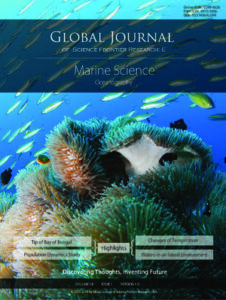
Changes of Temperature, pH and Salinity of Nearshore Waters in an Island Environment

α
Radha Karuna Kumari
Radha Karuna Kumari
σ
PM. Mohan
PM. Mohan
α Pondicherry University Pondicherry University

Send Message

To: Author

Changes of Temperature, pH and Salinity of Nearshore Waters in an Island Environment

Article Fingerprint

ReserarchID

OY5EW

Changes of Temperature, pH and Salinity of Nearshore Waters in an Island Environment Banner

AI TAKEAWAY

Connecting with the Eternal Ground
  • English
  • Afrikaans
  • Albanian
  • Amharic
  • Arabic
  • Armenian
  • Azerbaijani
  • Basque
  • Belarusian
  • Bengali
  • Bosnian
  • Bulgarian
  • Catalan
  • Cebuano
  • Chichewa
  • Chinese (Simplified)
  • Chinese (Traditional)
  • Corsican
  • Croatian
  • Czech
  • Danish
  • Dutch
  • Esperanto
  • Estonian
  • Filipino
  • Finnish
  • French
  • Frisian
  • Galician
  • Georgian
  • German
  • Greek
  • Gujarati
  • Haitian Creole
  • Hausa
  • Hawaiian
  • Hebrew
  • Hindi
  • Hmong
  • Hungarian
  • Icelandic
  • Igbo
  • Indonesian
  • Irish
  • Italian
  • Japanese
  • Javanese
  • Kannada
  • Kazakh
  • Khmer
  • Korean
  • Kurdish (Kurmanji)
  • Kyrgyz
  • Lao
  • Latin
  • Latvian
  • Lithuanian
  • Luxembourgish
  • Macedonian
  • Malagasy
  • Malay
  • Malayalam
  • Maltese
  • Maori
  • Marathi
  • Mongolian
  • Myanmar (Burmese)
  • Nepali
  • Norwegian
  • Pashto
  • Persian
  • Polish
  • Portuguese
  • Punjabi
  • Romanian
  • Russian
  • Samoan
  • Scots Gaelic
  • Serbian
  • Sesotho
  • Shona
  • Sindhi
  • Sinhala
  • Slovak
  • Slovenian
  • Somali
  • Spanish
  • Sundanese
  • Swahili
  • Swedish
  • Tajik
  • Tamil
  • Telugu
  • Thai
  • Turkish
  • Ukrainian
  • Urdu
  • Uzbek
  • Vietnamese
  • Welsh
  • Xhosa
  • Yiddish
  • Yoruba
  • Zulu

Abstract

The present study on temperature and pH of two Islands of Andaman during the period 2009 to 2011 suggested that the temperature increased during the year 2010 compared to the years 2009 and 2011. Moreover, a unique kind of change were noted during the years 2009, 2010, where in the bottom water (10m) exhibited comparatively higher temperature than the surface waters in both the Islands. The bottom water moved upward vertically to the surface after a 30 day period, probably due to upwelling. Earlier reports on upwelling in the Bay of Bengal and the Andaman Sea suggested that atmospheric circulation and temperature were the foremost cause for coastal upwelling. However, the above two factors did not have much significance due to the smaller surface area of these Islands. The submarine groundwater discharge could be playing a pivotal role in coastal upwelling. The groundwater discharge can lead to displacement of water mass due to the difference in physico-chemical properties, resulting in the upward movement of it towards surface over a 30 day period. This phenomena was more prominent during the nonrainy season. These inferences should be further strengthened by continuous monitoring of the nearshore waters for a larger time scale.

References

17 Cites in Article
  1. R Sewell (1929). Temperature and salinity of the surface waters of the Bay of Bengal and Andaman Sea with reference to Laccadive Sea.
  2. P Ganapathi,T Rao (1959). Some of the remarks on the hydrography and biology of the Bay of Bengal.
  3. La Fond,E La Fond,K (1968). Studies on ocean circulation in the Bay of Bengal.
  4. V Janekarn,G Hylleberg (1989). Coastal and Offshore primary production along the west coast of Thailand (Andaman Sea) with notes of physicalchemical variables.
  5. B Sundstrom,V Janekarn,J Hylleberg,P Boonruang (1987). Annual pelagic primary production with note on physical and chemical variables at Phuket, the Andaman Sea, Thailand.
  6. Márcia Ferreira,Cristiano Faria,Eduardo Paes (1999). Oceanographic characterization of northern São Paulo Coast: a chemometric study.
  7. Dong-Woon Hwang,Yong-Woo Lee,Guebuem Kim (2005). Large submarine groundwater discharge and benthic eutrophication in Bangdu Bay on volcanic Jeju Island, Korea.
  8. Kevin Kroeger,Peter Swarzenski,Wm. Greenwood,Christopher Reich (2007). Submarine groundwater discharge to Tampa Bay: Nutrient fluxes and biogeochemistry of the coastal aquifer.
  9. Adrian Gallardo,Atsunao Marui (2006). Submarine groundwater discharge: an outlook of recent advances and current knowledge.
  10. W Porubsky,N Weston,W Moore,C Ruppel,S Joye (2014). Dynamics of submarine groundwater discharge and associated fluxes of dissolved nutrients, carbon, and trace gases to the coastal zone (Okatee River estuary, South Carolina).
  11. Audrey Sawyer,Cédric David,James Famiglietti (2016). Continental patterns of submarine groundwater discharge reveal coastal vulnerabilities.
  12. Haile Shishaye (2016). Groundwater Flow Modeling in Coastal Aquifers: The Influence of Submarine Groundwater Discharge on the Position of the Saltwater-Freshwater Interface.
  13. Makoto Taniguchi (2002). Tidal effects on submarine groundwater discharge into the ocean.
  14. M Taniguchi,W Burnett,J Cable,J Turner (2002). Investigation of submarine groundwater discharge.
  15. Makoto Taniguchi,Tomotoshi Ishitobi,Jun Shimada (2006). Dynamics of submarine groundwater discharge and freshwater‐seawater interface.
  16. Tatsuya Utsunomiya,Masaki Hata,Ryo Sugimoto,Hisami Honda,Shiho Kobayashi,Yoji Miyata,Makoto Yamada,Osamu Tominaga,Jun Shoji,Makoto Taniguchi (2017). Higher species richness and abundance of fish and benthic invertebrates around submarine groundwater discharge in Obama Bay, Japan.
  17. P Mohan,P Dhivya,V Sachithanandam,R Baskarn (2009). 10. rakenduslingvistika kevadkonverents, 28.–29. aprill 2011, Tallinn. Teesid. EAAL 10th Annual Conference April 28-29, 2011, Tallinn. Abstracts.

Funding

No external funding was declared for this work.

Conflict of Interest

The authors declare no conflict of interest.

Ethical Approval

No ethics committee approval was required for this article type.

Data Availability

Not applicable for this article.

How to Cite This Article

Radha Karuna Kumari. 2018. \u201cChanges of Temperature, pH and Salinity of Nearshore Waters in an Island Environment\u201d. Global Journal of Science Frontier Research - E: Marine Science GJSFR-E Volume 18 (GJSFR Volume 18 Issue E1): .

Download Citation

Journal Specifications

Crossref Journal DOI 10.17406/GJSFR

Print ISSN 0975-5896

e-ISSN 2249-4626

Keywords
Classification
GJSFR-E Classification: FOR Code: 040305
Version of record

v1.2

Issue date

August 6, 2018

Language
en
Experiance in AR

Explore published articles in an immersive Augmented Reality environment. Our platform converts research papers into interactive 3D books, allowing readers to view and interact with content using AR and VR compatible devices.

Read in 3D

Your published article is automatically converted into a realistic 3D book. Flip through pages and read research papers in a more engaging and interactive format.

Article Matrices
Total Views: 3264
Total Downloads: 1521
2026 Trends
Related Research

Published Article

The present study on temperature and pH of two Islands of Andaman during the period 2009 to 2011 suggested that the temperature increased during the year 2010 compared to the years 2009 and 2011. Moreover, a unique kind of change were noted during the years 2009, 2010, where in the bottom water (10m) exhibited comparatively higher temperature than the surface waters in both the Islands. The bottom water moved upward vertically to the surface after a 30 day period, probably due to upwelling. Earlier reports on upwelling in the Bay of Bengal and the Andaman Sea suggested that atmospheric circulation and temperature were the foremost cause for coastal upwelling. However, the above two factors did not have much significance due to the smaller surface area of these Islands. The submarine groundwater discharge could be playing a pivotal role in coastal upwelling. The groundwater discharge can lead to displacement of water mass due to the difference in physico-chemical properties, resulting in the upward movement of it towards surface over a 30 day period. This phenomena was more prominent during the nonrainy season. These inferences should be further strengthened by continuous monitoring of the nearshore waters for a larger time scale.

Our website is actively being updated, and changes may occur frequently. Please clear your browser cache if needed. For feedback or error reporting, please email [email protected]

Request Access

Please fill out the form below to request access to this research paper. Your request will be reviewed by the editorial or author team.
X

Quote and Order Details

Contact Person

Invoice Address

Notes or Comments

This is the heading

Lorem ipsum dolor sit amet, consectetur adipiscing elit. Ut elit tellus, luctus nec ullamcorper mattis, pulvinar dapibus leo.

High-quality academic research articles on global topics and journals.

Changes of Temperature, pH and Salinity of Nearshore Waters in an Island Environment

Radha Karuna Kumari
Radha Karuna Kumari Pondicherry University
PM. Mohan
PM. Mohan

Research Journals