The issue of the Islamic dimension in the relation between China and the main Islamic countries, especially, the role of the growth of Islam in China has played considerable role in their relationship after the 1980s. Amid an intensified potential war threatening and strategic competition between China and the USA such two powers in the world’s politics, economics and military which causes current antagonism since the 2010s, how does China design her foreign policy toward the Islamic world? What is the motivation in her diplomatic approaches to the Islamic countries? And what is the substantial position of the religious and Muslim minority affairs in China mapping out her external strategy and internal tactics to counter the various pressures from the West presumed by CCP? This paper uses historiography and the political analysis to unfold the complicated relationship between China and the Islamic world in the context of Sino-American competition.
## I. INTRODUCTION
For last years the world is plunged into an era of a kind of new type Cold War in which the authoritarian states represented by China, Russia, North Korea and Iran stand on one side and the democratic countries led by the USA & Europe Union gather on other side over the series important issues such as Russia-Ukraine War, the confrontation in the Middle East and the fundamental debates in the UN assemblies. However, the Islamic world, another politi-cultural block in the global arena, is to choose to stand on which side in this mounted tension and the coming clashes? This paper mainly tackles the issue of the Islamic dimension in the relation between China and the main Islamic countries, especially, the role of the growth of Islam in China has played in their relationship after the 1980s. Amid an intensified potential war threatening and strategic competition between the "East" and the "West" such two politic, economic and military power blocks in the world's new antagonism, how does China handle the Islam in her launching One Road and One Belt Initiative? What is the motivation in her diplomatic approaches to the Islamic world? And what is the substantial position of the religious and Muslim minority affairs in mapping out her external strategy and internal tactics to counter the various hostile western forces China senses? China's attitude toward Islam is entirely oriented from her national security for opposing the West, which the CCP regards as the fundamental enemy in upholding her socialist construction and the Party-State's survival in her Marxism and Leninism ideological social structure based on the authoritarian polity. From this point of view China needs friends even the kind of the alliance from the Islamic world against the Western hegemony. On the other hand, China also takes efforts to strike the Islamic extremism and the radical Muslim groups domestically to solidity her state power and maintain social stability, especially in her western region. Therefore, China's policy toward Islam is very complicated but tries so hard to handle it in balance.
## II. A HISTORICAL SURVEY
China has contacted with the Islamic world for nearly 1400 years. Before Christopher Columbus discovered the American continent China Empires had already had relations with the Islam for almost 800 years. The first event made the Tang Empire crashed with the newly founded Abbasid Dynasty is the Battle of Talas2 in which Chinese army was defeated by the Muslim troop in 751. Afterwards Chinese imperial power lost the controlling over the kingdoms in Central Asia which usually made tribute to the imperial court of China. However, after just 4 years later the Tang Empire had to ask the Abbasid Dynasty to send its military force to help China empire to crack down the rebellion launched by some Turkic military commanders in its border regions.3 The Abbasid Caliph sent the Muslim troop to assist the Chinese army to retake the imperial capital Chang'an and the eastern capital Luoyang from the rebel forces.[^4][^3]4 This rapprochement between the two great empires conduces to the Islam formally penetrating in China, some Chinese scholars argued.[^5][^2] Before that event the Arab and Persian businessmen had followed the Silk Road and Spice Road coming to China and many of them chose to stay in China forever. Since then Muslim soldiers and merchants were awarded by Chinese government the right to settle down with the granted land and have the privileges that could intermarry with Chinese women. As a result Muslims in China gradually developed into many enclaves that were distributed in the seaports along the eastern and southern coasts, in the cities and towns along the Grand Canal, along the main transportation centers and the areas surrounding Chang'an, the imperial capital and other cities.
With the Mongols invaded China, they brought many Central Asian and Western Asian Muslim soldiers who were recruited into the Mongol nomadic forces into China in its military campaigns to conquer China. The large number of the Turkic, Persian Muslim soldiers and handcraft men enforced influxes to China and therefore helped the Mongols established the Yuan Dynasty led by Kublai Khan increased the Muslim population and the fast development of Islam in the Middle Kingdom.[^8] The Muslims in China went through the dynastic changes such as the Ming Empire and the Qing Empire, late on the Republic and the People's Republic, all the rulers in China recognize that to handle the issue of Islam and Muslim minorities is not only the domestic problem, but also a problem of the diplomatic relation with the foreign land.[^9] Particularly, in the Manchu's Qing Empire, the Muslims in China had launched two great insurances in Western China and caused millions and www.baike.baidu.com/item/大食助唐平定安史之乱/54608914?fr=ge_ala.
millions' lives perished in the brutal massacres occurred in the suppress.[^10] The Qing Empire also crushed the revolts that the Turkic Muslims got the supports from Khanate Kokand in Khojagan rebellions[^11] and late, in the event of Yaqub Bek's occupation in Xinjiang[^12]. So Islam and the Muslims both at abroad and domestically intended to pose the challenges to the Han Chinese power in the border regions regarded by Chinese imperial rulers as the "barbaric land".[^13]
## III. ISLAM UNDER THE CHINESE COMMUNIST REGIME
In 1949 the People's Republic was founded and Mao Zedong (1893-1976) announced Chinese people stood up that means not be humiliated by the western powers any longer. Since Communism following the atheism and treated all religion negatively[^14], therefore, almost all Muslim countries did not recognize Red China in the beginning of the PRC, therefore, kept the diplomatic ties with Taiwan, the Republic.
The Korean War (1950-1953) greatly deteriorated the relation between Communist China and the United States of America. Faced with political and economic sanction imposed mainly by America, the People Republic China had to search her own living space in the international arena.
The turn point is year of 1955 when Bandung Conference was held in Indonesia while Premier Zhou Enlai (1898-1976) used the Islam card to stretch out the courteous of Red China to the Islamic countries. The Hui Muslim scholars graduated from Al-Azahar University in Egypt in the 1930s helped Communist China to establish the diplomatic relation with the Islamic world.[^15] Following that conference the friendly relationship with the Muslim Countries, such as Egypt, Syria, Yemen, Iraq, Sudan was established[^16] respectively and the ties to the Islamic countries turned to normalization and friendly warm.
The Impact of the foreign relation with the Islamic countries surely would effect upon the domestic policy: namely the PRC government's policy toward her own Muslim minorities and Islam. In order to improve the relation with the Islamic countries the CCP formulated the special policy toward the Muslim Ethnic Minorities based on the Soviet Union's model, and designed preferential programs: training and cultivating the Muslim minority cadres, absorbing them into the administrative structure, provide the young Muslims with good education program.[^17] For implementing these special programs the CCP founded and organized the important official organs such as the United Front Working Department, the State Committee of the National Affairs, the State Bureau of the Religious Affairs, China People's Political Consultation Committee, the Islamic Association of China, all of them aimed to integrate the Muslim elites into the ruling class to solidarity the state power in order to control the Muslim minorities and use the autonomous regions to incorporate the Muslim territories into China tightly. Favorite treatment toward the Muslim minorities, such as the over-presentation of the Muslim representatives in People's Congress, Ethnic Autonomous Regions such as Xinjiang Uighur and Ningxia Hui; Special subsides allocated to the Muslim cadres and easily admitted Muslim youths into school, particularly, the university and college education, and established more than ten ethnic minority universities and colleges sponsored by the Ministry of Education Affairs or the State Committee of the National Affairs to train the ethnic minority cadres; Special Halal food or Halal dining halls or canteens were set in schools, administrative units, factories and state enterprises while there are any Muslim employees or students work and study in order to accommodate their special dietary customs; Allow the Muslim minority couple has more than one child while the country eventually has carried out the very restrictive population controlling program for several decades until recently encouraging people to give birth more babies.[^18] In this regards, CCP's policy is to improve its images in the Islamic world. Meanwhile, the Communist regime keeps alert toward the radical Islam and was ready to crack down any challenges to the Party-State power from the separate movement.
On the other hand in dealing with the international relation, the PRC has developed a foreign policy: seek the support from the backyard while facing the great pressures from the western powers led by USA that threatens the Communist rule in China, so China has tried hard to gain the geopolitical strategic living space and opportunity in the Cold War and the Post-Cold War era. In the late 1960s and the first half of the 1970s, China was the one of the countries from the Communist block to support and train the guerrilla fighters in the Islamic world especially the Palestine's Fatah organization. China also had an alliance tie with Albanian the only country in Europe with the Muslim population as the majority. In supporting Albanian encountering with the threat from the Soviet Union, China provided the large quantity weapons to Albania. Before the disintegration of the Soviet Union and therefore, the end of the Cold War after the Second World War, China from the orthodoxy Marxism and Leninism point of view, particularly during the Great Cultural Revolution (1966-1976), was a country always strongly supporting the radical revolutionary ideology including the theory of violent revolution. Impacted by this theoretical orientation, CCP once regards the terrorism being one of the efficient means to weaken or topple the structure of the two superpowers namely the USA and Soviet Union. Although the death of Mao Zedong leads to the down of the Gang of Four, China under the leadership of Deng Xiaoping and his late successors in CCP have continually adopted a pragmatic approach, the political theory regarding the Western democratic power as the hostile force threatening the Socialist China, remains basic foundation in CCP's political and ideological strategy. The clashes between the America and the Islamic extremist forces, the 911 tragedy event, and the USA encounters with the global Jihad forces led by Al-Qaida, Osama Ben Laden, exactly have given China an excellent opportunity for her strategic surviving and expanding her influence in the world in the period of the first decade of the new century.[^19]
Late Prof. Samuel Huntington of Harvard University raised his theory: the future clashes of civilization: Islamic fundamentalism in the Middle East allied with Confucianism in the Eastern Asia collaborated together to confront with Judaism and Christianity represented by Western countries in future.[20] Although this theory is very problematic (internal clashes, for instance, Iran-Iraqi war, tension between monarchy rulers in the Islamic world and its Muslim subjects, sectary fighting between Shia and Sunni within Islam), however, this view was shared by the elites in China's educational, academic, ruling group of the Communist party circles, even the state's thinking tanks in the wake of the 9/11 terrorist attack against the World Trade Towers in NYC.[^21] The Chinese official newspaper "The Global Times" used the striking headline on the first page with the big sized title "the United States is Collapsed" to express its kind of the pleasure for the 9/11 tragedy.[^22] The leading Chinese officials were so pleased and applauded this big event with the gloat posture in public after the colliding accident that a Chinese jet damaged an American reconnaissance aircraft over the South China Sea and the latter landed urgently on the Hainan Island.[^23] Following that air colliding incident China had detained all American crews for 11 days before they were released. This event drove China Communist Party's propaganda machine inciting the anti-American rhetoric and the hatred against the USA's hegemony policy in the national media.
The 9/11 tragedy and therefore, the Iraqi war and the Afghan war have caused more than trillion US Dollars expenses and more than 6000 American soldiers' lives. The fall into mire of the USA like the Vietnam War in the 1970s now in Iraq, Afghanistan made many Chinese politicians believed that the deeper the USA involved into the fighting against the Islamic extremists who lead a global Jihad war, the safer China would feel in the national security. A weakened America who faces the confrontation with the Al-Qaida led by Osama Ben Laden and ISIS would greatly benefit to China's national interests, and China gains the unprecedented strategic opportunity in her advancement in economy, military and politic force in the global affairs.[^24] Many Chinese strategists assume that the confrontation between the Islamic fundamentalism and the USA has given China a great chip which made her having developed into the big economic power in the world during last decade. So China is ready and has always ready to play the card of the Islamic world to encounter with the hegemony policy and encounter with the geopolitical stand posed by the USA. Consequently, the great developing of China's economy couples with the expansion of powers by China in the Middle East, South Asian, Southeast Asian and African countries while the USA had to tackle the al-Qaida and the
Taliban, ISIS such Islamic extremist organizations. After joined in the WTO China has quickly developed into the second largest economic power in the world just next to the USA. Coincidentally, in the period of China's fast development the USA's resources "had been exhausted in the Iraqi and Afghan wars".[^25] With the USA policy of containing and encircling China in geopolitics such as in the Asian and Pacific Region for last decade, the PRC reacted with her own strategic deployment to secure her backyard: it ushers "One Belt and One Road Initiative", the sphere of the Belt and Road locates many Islamic or Muslim countries that the PRC wants to use or play the force of the Islamic world as a card to encounter or at least to deplete the USA's power, and to reduce its pressure taken against China in the game play on the international chessboard.[^26] For last three years China apparently has aided the Hamas movement, Lebanon Hezbollah, Syrian Assad regime, Yemeni Houthi armed forces, Iraqi Shi'a military forces and Iran's Khamenei Shi'a regime in the confrontation in the Middle East exactly showing that China takes advantage of such international events to erode the western powers and shift American focus away from the Asia and the Pacific, and therefore, make China feel more security and safe in her international relation and the world political order.[^27]
However, China has never expected that Islamic extremism and terrorism could cause a backlash in China homeland also. The tilt China relies on the power of the Islamic world, and the loose attitude of its own domestic politics toward its own Muslim minorities has led to the dramatic revival of Islam in China.[^28]
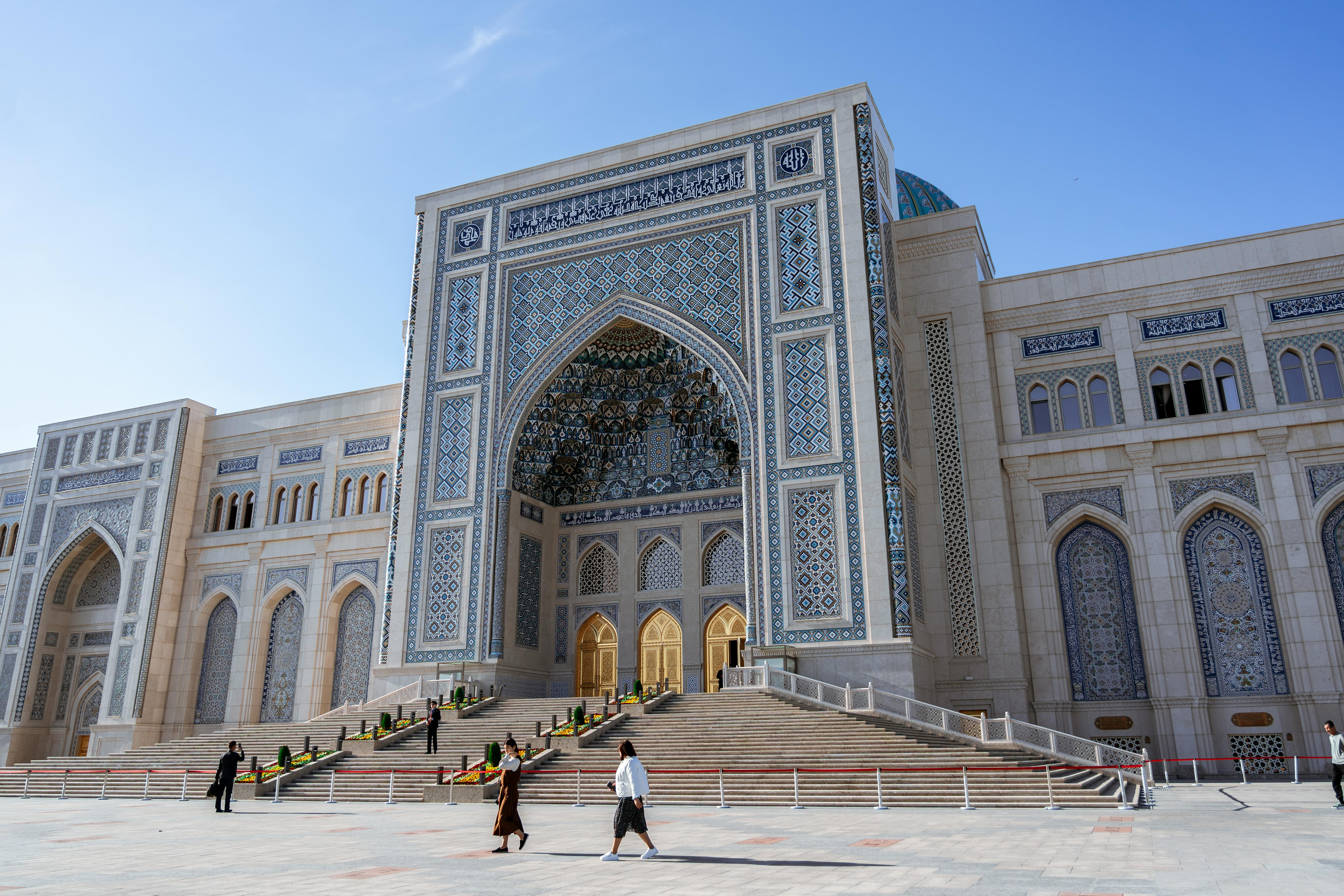
The Muslim population growth in China is very fast because of the loose in controlling the Muslim minority population, there were 26 million Muslims in 2015; besides, the number of mosques reached to 40000 more, and many of them have been enlarged and rebuilt into the Arabic architectural style; every year for last two decades there were more 10000 hajjis have fulfilled their pilgrimage to Mecca before the broke of the Covid-19; $^{29}$ More and more young Muslim students went to Madrasas (Islamic colleges) for their Islamic education not only in China but also in the Islamic countries; Many mosques established their own Madrasas to meet the demand coming from various Muslim communities all over China for the Islamic education; Many Islamic publications have emerged, lot of them are unofficial publication; $^{30}$ Many Muslim charity organizations have been founded as NGO to work and formulated into a network of the Islamic economy and finance; $^{31}$ Many Muslim scholars have been promoted into the professorship in a number of universities and they established not a few of Islamic research institutes and academic centers to promote Islamic studies and recruit the Muslim students studying for their academic degrees; $^{32}$ The Islamic conferences, workshops, forums and lectures are booming in various levels in the academic and cultural, educational fields. $^{33}$ With this Islamic revival movement, lot of Muslim elites are absorbed into the governmental organs and agencies, they make speeches, involved policy making, actively engage in administration, media, publication, diplomatic and economic, trade and cultural activities. $^{34}$ For trade and economic links the new city Yiwu in Zhejiang Province has witnessed the growth of the foreign Muslim immigrants: more than 100000 business men from all over the Islamic countries take their residence. $^{35}$ As a result the Chinese state even allocated a piece of land, allocated fund to build a large modern mosque with the Arabic style in architecture to accommodate them for religious services in Yiwu. $^{36}$
- 30 Jianping Wang: "The Search for Identity - Ethnic and Religious - by Muslims, in China, an Atheist Nation", see the website of the Harvard-Yenching Institute and of the Harvard-Yenching Library. It also includes an uncompleted list of the unofficial Islamic periodicals in the contemporary China.
- 31 Jianping Wang: "Islamic Charity in China: its Organizations and Activities in a New Era", Religion, Culture and Public Sphere in China and Japan, edited by Albert Welter, Springer, 2017.
- 32 It should have an investigation for this phenomenon. The statistics could be no less than 100.
- 33 This author as a specialist on Islamic studies in China has a number of opportunity to participate in the conferences and workshops on the subjects of Islam, Muslims, One Belt and One Road etc. Of course, as a non-Muslim scholar he certainly has missed many conferences and workshops which organized by Hui Muslim scholars who prefer to invite the Hui Muslim scholars for such kind of academic events and activities.
- 34 This also needs a thorough investigation by the independent scholars.
- 35 漂泊义乌的中东人:在这里活着、哭泣和变富!(The Middle Easterners Wander in Yiwu: They Live, Cry and Being Rich here!), see www.baijiahao.com/s?id=1719297595309440231&wfr=spider&for=pc. The number of the foreign Muslims living in Yiwu is various, from 500000 to 300000. According to the statistics in 2019, before the Covid-19th broke out, there were at least 15000 foreign Muslims living in Yiwu. Even there were 170 restaurants which were owned by the Middle Eastern Muslims.
- 36 I personally visited the mosque two times in 2011 and 2022. There were more than 10000 Muslims praying in this mosque in the Friday congregation in late October in 2011.
The strengthen of the Islamic ties with many Muslim countries has conducted to the influxes of the different Islamic factions and politic Islam trends into the Muslim society in China, and caused the factional tension and radical Islam in some way which partly was reflected in the competition between the Shi'a Iran and the Sunni Saudi Arabia for the influence over the Muslims in China.[37] For the last ten years Ikhwani Islam in China has witnessed an internal power struggle between the Hard Faction and the Soft Faction, and the local governments support the latter and suppress the former in the intermediate of this creed dispute.[38]
So the rapid revival Islam also leads to some thorny problem as the totalitarian politics is not parallel with the great changes in a market economy and a diverse cultural society: Terrorism attacks in Xinjiang and a strong Islamic nationalism, their challenge to the PRC government. The growth of Islam in China also causes the phenomena of the Islam Suadization in China, Halalization in China, Arabization of Islam in China and even Islamization of China itself, particularly in case of Ningxia, Gansu, Qinghai, Yunnan and Xinjiang regions thought by CCP leaders.[39] To encounter the problems above mentioned, the authorities decide to introduce the campaign of Sinocization of Islam in China, and reshape mosque's Arabic architectural style into the Chinese traditional cultural style; and reduce the configuration in Arabic language, Halal sign and woman's veil etc. in public.[40]
The Islamic extremists coupled with the nationalist splitting elements, and furthermore, no less the mishandling in the statecraft over the ethnic minority affairs, and administrative corruption and bureaucratic problem, have brought a series terrorist attacks and violence which shocked China for the period of 2007 to 2017.[41] The Uighur separatists have launched the assaults against civil targets and infrastructure: car bombing and explosion in the Tiananmen Square, Knife attack in Kunming Railway Station, explosion in the railway station in Urumqi, the car bombing explosion in the free market in Urumqi, again the knife attack in Guangzhou and many violent attacks happened in
- 37 浅析泛伊斯兰主义对我国穆斯林的影响 (A Slight Analysis on the Impact of the Pan-Islamism upon the Muslims in China), www.varjob. com/lizhigushi/2021/0120/288402.html.
- 38 See recent paper published by Dr. Mohamed Al-Sudairi on the Islamic Factions within the Ikhwani Group in China: "Traditions of Anti-Wahhabism in China: An Account of the Yihewani Hardliners and the Theological Origins of the Yihewani-Salafiyya Schism".
- 39 解读民族宗教工作政策(第二期) (Interpret the Work and Policy on Ethnic Minorities and Religion, No. 2, see http://fxwmw.fanxianw.com/Print.aspx?id=63898.
- 40 Li Weijian (李维建): Guanyu YisilanjiaoZhongguo Hua de Jidian Sikao (关于伊斯兰教中国化的几点思考A Few Ideas on Sinosization of Islam), see: https://www.aisixiang.com/data/130650.html.
- 41 for this, there is lot of coverage in the western media.
different parts of Xinjiang and other parts of China. $^{42}$ All these events make Chinese Communist Party leaders realize that the Islamic extremism being the big dangerous enemy which they used to think the problem only for the western countries, particularly, the America. Now they feel the suffering from this Islamic extremism also takes deep-root in China. And Chinese leaders usually deem China a good friend in the Islamic countries since Chinese government carefully make balance over the Palestine issue, for instance, the Israeli-Palestine confrontation, over the Indian-Pakistan wars, China has always tried hard to be a cardinal friend and firm support to the Islamic world. $^{43}$
The complicated situation make China decide to use hard-striving gesture to crack down the religious extremism particularly, the Islamic extremism, the national separatism and the international terrorism, the so called three evil forces in Xinjiang.[^44] Since then, it imposes the very tough policy controlling and surveillance or monitor the religious activities in Xinjiang, such as restrict Uighur Muslims in pray, fast in Ramadan, the Quranic studies, the Islamic education, the Islamic cloths and the Islamic living way. Such a restriction makes the Uighur Muslims more resentful to Chinese Han Chauvinism, regard such a policy is the Han occupation and Han colonist policy, and a plan to deliberate move to eliminate Uighur culture and Islamic culture, as the western medias usually accuse. So now it could potentially develop into a vicious circle in Xinjiang's political environment. During the last decade the harsh policy in Xinjiang toward Islam and Muslim minorities has eventually impacted inland China too. Many Muslims in inland feel the pressure in some content based on the fact that the authorities also impose the restriction on pray, fast, private Islamic education including the Quranic studies and the Arabic studies. The unofficial Islamic periodicals and printings have been decreased dramatically under the more tightly censorship imposed by the authorities. After the middle of the 2010s, the size of the Chinese hajjis to Mecca also suffers the reducing. Most of the Arabic architectural style of mosque building have been enforced to replace into traditional Chinese temple style. The Islamic studies and its academic activities face down-sized shrinking. The religious revival tidal current turns to the depression in whole country.
## IV. REACTION OF THE ISLAMIC COUNTRIES AND THE MUSLIM WORLD'S TO CHINA
While the large ethnic massacres took place in Urumqi, the capital of Xinjiang on July 5, 2009 many Islamic countries actually kept silence except Turkish government lodged an official protest.[^45] The dilemma of many Islamic countries silently tolerant to Chinese government keeping the strong hand against the Uighur Muslims in her Xinjiang policy reflects the their ambiguous stand: they need the investment, technology and economy helps from China, they need China's construction workers' labor service in the infrastructure projects such as building highway, bridge, power station, buildings, and other aid projects. They also need the cheap production imported from China, particularly, the light industry, and daily needs, electrical applicants, vehicles. A number of the Islamic countries such as Iran, Syria, Pakistan, Yemen, Sudan, Algeria and Egypt face the embargo from the western countries in military industry, they have to purchase weapons from China, even Turkey, Saudi Arabia and Iraq have turned to China to order martial equipment and weaponry. So many Islamic countries rely on China in economic aids and financial helps, meanwhile they use China as a lever to encounter with the western hegemony policy in the international affairs. The Islamic countries also want the support from China for the course of Palestine in the struggle against Israeli's occupation of the Arab land. Historically, many Islamic countries resemble China suffered very much from the Western imperialism and colonialism, therefore, they naturally feel sympathy to the anti-western approach taken by China. On other hand, since they rely on the aids and supports from China in some degree, they cannot offend China, and they wish using China as a card to play against the West countries in the global politics. They maximally take the advantage from Sino-USA competition in the world politics. Another reason for the Islamic countries' stand toward China policy in Xinjiang is Islamic extremism and Muslim radicalism which cause the headache for many ruling regimes in the Islamic world. Last not the least, many Islamic countries resembling the most undeveloped countries in the world regard China as the good model in developing its economy so fast in such a short period that China has changed from a very poor country into a developed country, the second largest economy power in the world. Nevertheless, the official medias in the Islamic countries likely echo the voice of Chinese government labeling the violence in Xinjiang as the terrorist attacks, or the internal affairs, therefore, show some kind of understanding and restraining in their official stand over the issues as the human right for Muslim minorities in China.
Chinese Muslims in general take stand at the side of their Muslim brothers in supporting the Palestine armed struggle against Israeli's occupation of Palestine land.[^46] Chinese Muslims strongly condemned America invaded Iraq and Afghanistan, and some mosques in China held the activities such as burning scarecrow of George Bush Jr. the formal president of USA to show angry against the USA's invasion of Iraq, and their supporting Saddam Hussein.[^47] As the news of the terrorist attack in the 9/11 reported on Chinese media many Chinese Muslims applauded this attack and expressed their support to Osama Ben Laden secretly.[^48] As Ben Laden was killed by the American special forces, a few Muslim periodicals expressed their great sympathy to this martyr for the Islamic course.[^49] When the Western powers condemned Bashar Assad used chemical weapon killing the Syrian resistant forces, Chinese Muslims organized their charity network to donate money and materials and sent them to Syrian government.[^50] Chinese Muslim elites sponsored the conferences, workshops and forums to support Chinese state's "One Belt and One Road Initiative" projects in order to strengthen the links between China and the Islamic world.[^51] While America imposes economic sanction against Iran, many Chinese Muslims including Muslim clerics and scholars showing their support of the Iranian government against the American hegemony in the Middle East. Such sentiment of anti-West and anti-America from Chinese Muslims but encouraged by Chinese state in manipulating the public opinion also in turn be skillfully taken advantage by the Muslim intellectuals in China for the chance of improving Sino-Islamic ties and meanwhile secure their good social status and interests for Islam growing in China.[^52] Sponsored by Chinese government, Ningxia Hui Autonomous Region has held Sino-Arab Forum several times to promote the economic, politic and cultural links between China and Arabic countries.
## V. ISLAM IN A NEW COLD WAR TODAY
China becomes the second largest economy in the world, just next to USA, and potentially will surpass the power of America in near future, assumed by the Communist Party of China.[^53] However, the unbalance of a partly liberal economy and the advancement of science and technology but with a more tightly controlled authoritarian politic system in China makes such a used to be friendly and close relation with America now turns to more and more difficult in maintenance and could be impossible continual. The abuse of China from the open and democratic and liberal society such as the USA and Europe, especially use the western technology and investments, educational facilities to strengthen the communist totalitarian structure and export its corrupted authoritarian power into the world make the USA and Europe feel so threatened that the politicians in Washington DC believing the superpower status of the USA today will be soon replaced by China in the coming few decades. So do the Trump and Biden administrations take the hardline toward China, and the trade war between the two largest economic powers deteriorated Sino-American relation further, particularly in the second term of Trump Administration. The tension over the source of the pandemic Covid-19, over the China South Sea, over the Taiwan Strait, over the Syrian civil war, over the Iranian nuclear program, over the provoke incidents in the Korean Peninsula, over the issue such as poor human right record, specifically over the Uighur human rights in Xinjiang and recently over the Russian-Ukraine War, and Israel-Hamas and late on Israel –Iran confrontation, all make such a Sino-America relation direct toward a semi new cold war in the Asia and Pacific Region even in the worldwide level.
The strategy for keeping Marxism regime but using Western technology and investments to strengthen the power of China's Party-State was and is continually employed by the CCP. Beijing's final goal is to make Communist China the number one in the world, to defeat the Western powers led by the USA, the only superpower in the world, the triumphal of Communism over Capitalism. Such an ideological strategy actually is inherited from the imperial China: maintaining the hierarchical Confucianism value in keeping the power of the empire and taking advantage of the western weaponry to strengthen the imperial ruling over the subjects. Even the CCP uses the name of the People's Republic, according to Prof. Mark Elliott, a specialist of the Manchu Empire in Harvard University, the Communist China remains as an empire,[^54] and ruled by an "emperor" without the title of emperor.
The American politicians wanted to shift the force of the Islamic fundamentalism and radical Islam into China, weaken the relation between China and the Islamic world, for instance, lobbying Afghan Taliban force to support the separatist movement in Xinjiang, so in order to blurring the ties between China and the Islamic world.[^55] Among the high rank CCP officials the USA is regarded as an evil-minded force aiming to topple the Communist government of China. The American government uses the issue of the human rights of the Muslim ethnic minorities in China to tarnish the image of China in the international community and balance the competition between China and the USA. Also the USA strongly opposes China's policy in Xinjiang over the issues such as the Uighur rights, the educational camps, the religious policy and the discrimination against the Muslims in China. The USA also strongly oppose China using forces in the unification with Taiwan and China's position in the South China Sea. And the USA also very suspects the motivation of China's "One Belt and One Road Initiative" strategy, China's mediated role in the improving relation between Saudi Arabia and Iran and the expansion of Brics organization and Shanghai Cooperation Organization recently. The USA is very alert over China's attitude concerning the Russian-Ukraine war, which China apparently support Russia in the war and has joined military drills with Russia several times for the last years. Far the more, Beijing has invited Assad Basir, the former president of Syria and Russian president Putin visiting China after Russia invaded Ukraine. The USA also very doubts China's motivation as she invited the high-level representatives from 14 Palestinian factions to hold a reconciliation dialogue in Beijing from July 21 to 23, 2024 and all Palestinian factions jointly signed the "Beijing Declaration on Ending Secession and Strengthening Palestinian National Unity" (hereinafter referred to as the "Beijing Declaration").[^56] Hence, the strategic differentiation between China and America makes two countries' relation impossibly turn to be friendly, instead the direction could lead toward the hostile enemies even potentially war in future, which looks very possible. Although recently the leaders of China and USA held a summit meeting in Los Angeles on November 15, 2023 with the sweet words from Chinese side and showed some charming feature in the meeting in an attempt for improving the bilateral relation, who know whether it is a tactical or makeshift? Right now China invites Russian president Putin and North Korean leader Kim Jong Un to participate in the military parade for the celebration of the victory in the war resisting the Japanese invasion on September 3, 2025. It seems that China has consolidated her position as the leader of the authoritarian block against the Western democratic countries headed by the USA in the world politics. With the intensification of China's relation with the Western world, many Islamic countries in the Sunni Islamic world actually find them in dilemma to choose a standing on which side in the future clashes between the two big political powers in the new cold war atmosphere. will such a hostility in Sino-America relation conduce to the large scale world war or the nuclear war in near future? We hope that will not take place anyway.
## VI. SUMMARY
China likes to continue the cooperation with America on the fields of trade, economics, financial and science & technology, however, China keeps its alert to prevent American political and cultural influence which potentially weaken the ruling power of the Communist Party of China. From the fundamental Communism ideology point of view, the PRC regards America the arch-enemy in its strategical maneuver, that would hardly be changeable because of the differences in political and economical structure, more difference is in the ideological approach and spiritual values.
Sino-American relation is a crucial key in choosing and tilting the position of the PRC toward to the Islamic world and the Middle Eastern policy. Far the more, the Sino-American relation is an important barometer in China own domestic policy toward the issue of her Muslim minorities.
Chinese Muslims motivated by their Islamic notion and ideas prefer to a closer relation with the Islamic world for their better treatment as the Muslim minorities and relying on the preferential program (favorite treatment) granted by the Party-State for the growth of Islam in China, at the same time the Muslim elites involving the governmental function support the PRC's policy holding by the hardliner to take a strong position against the USA's hegemony policy and in the gesture of Sino-American encountering or competition.
The Islamic world looks up China to weight against the USA's policy in the Middle East and meanwhile try to balance the Western domination in the world with China's politic and economic power. So many Islamic countries take a very realistic position toward China: welcome its economic aid and infrastructural project investment, but privately is not so happy with China's policy concerning the human right of its Uighur people and the domestic Islamic religious policy. The discontents with China's policy mostly come from the grass-root level of the Muslim society not from the officialdom in the Islamic world.
The stand of American administration is very ambiguous: it wants China's vast market and the great benefits from the economic exchanges between the two countries, however, the USA definitely is afraid of the Communist China to challenge its superpower status and its global domination, particularly its geopolitics strategy in Asian and Pacific Region and her domination of the world politic structure and financial order, especially, USA dollars role in such economic system. Thus, the USA regards Communist China as potentially the biggest enemy after the Soviet Union was disintegrated. The USA closely watches the role the PRC plays in the Russia-Ukraine War, the confrontation in the Middle East and the situation in the South China Sea, over the Taiwan Strait.
Late Professor Samuel Huntingdon's prediction could never occur that the coming clashes would be the civilization clashes: between the alliance of Confucianism China and the Islamic world on one side and the alliance of the Judeo-Christian Western on the other side. In my opinion, since China and the Islamic world has no fundamental commonality in their strategy interests and cultural values, although their social structure and politic apparatus are similar in some way. The Islamic world most likely be a watcher in the fierce competition between China and America, probably try to gain the maximal benefits from such a heated tension in the international arena. Since the Islamic world is very diverse concerning their economic ties and politic stand in the competition of China with the West, the Shi'a world led by Iran probably more close to China, and the Sunni world headed by Saudi Arabia is more caution toward the Sino-American relation, probably a little closer to the West. From China's stand since her priority goal is to keep the Party-State and the authoritarian hierarchy in power therefore, China could not whole-heart support Hamas and the Shi'an Axis led by Iran in the confrontations in the Middle East since China definitely could not risk her military strength being weakened just for the course of the Islamic countries. China only support the Arab and Palestine in morality and political justice, except to supply some military weapons, she could not do more. On the side of the West, democratic system based on the ruling of law is not so perfect, there are some flaws which make the West is tolerant with the authoritarian regimes, so the appeasement policy allow the existence and the development of the dictatorship in the world. Another main reason for the Islamic countries feel humility and angary is the USA policy strongly supporting Israel over the conflicts between Israel and Palestine. Nevertheless, the triangle relation of China, the Islamic world and the Western power led by America is a picture of three-legged one: complicated, pragmatic and based on self-interest in their mutual ties, and such a triangular relation in the international politics will keep going on for some time in future.
[^8]: “元时回回遍天下”之说 (the Theory of the Huihui Living in All over China in the Yuan Dynasty), see article online: www.shdwh.cn/Read News.asp?NewsID=1622. For the detailed information on the Muslim's migration into Yunnan in the Yuan Dynasty, please see author's doctoral dissertation Chapter Two, Concord and Conflict: the Hui Communities of Yunnan Society in a Historical Perspective, Stockholm, Almqvist & Wiksell International, 1996. _(p.2)_
[^9]: See the Cambridge History of Islam, part of China, wrote by Josef Fletcher. _(p.2)_
[^10]: See回民起义 (the Uprisings of the Hui People), edited by Bai Shouyi 白寿彝, 4 vols, Shanghai: Shenzhen GuoguangPress 神州国光社, 1952. _(p.2)_
[^11]: 西域和卓家族研究 (Study on the Clan of the Khojas in Xinjiang) by Liu Zhengyin and Wei Liangtao, Beijing: Chinese Social Sciences Press, 1998, see www.baidu.baike.com/item/西域和卓家族研究. _(p.2)_
[^12]: See Hodong Kim: Holy War in China, the Muslim Rebellion and State in Chinese Central Asia, 1864-1877. Stanford: Stanford University Press, 2004. _(p.2)_
[^13]: The term of "barbaric" can be referred in the book of Dru Gladney Muslim Chinese: Ethnic Nationalism in the People's Republic, Cambridge (Mass.): Harvard University Press, 1991. _(p.2)_
[^14]: After the founding of the PRC soon the new regime expelled all Western Christian missionaries from China and in the middle of the 1950s, the Communist regime launched "Religious Reform" to restrict religious activities. _(p.2)_
[^15]: $^{15}$ Liu Linrui (刘麟瑞 1917-1995) see www.baidu.baike.com/item/刘麟瑞/4209001?fr=aladdin. _(p.2)_
[^16]: For the diplomatic turnout of the PRC in the Bandung Conference, see 中国的中东外交政策日益成熟 (China's Foreign Policy toward the Middle East Has Showed Increasingly Mature), www.baidu.baike.com/s?id=1765075235897424780&wfr=spider&for=pc. _(p.2)_
[^17]: $^{17}$ Jianping Wang: "Islam and the State Policy in Contemporary China", Studies in Religion, Sept. 2016, pp. 1-15. _(p.3)_
[^18]: 少数民族优惠政策有哪些? (What is the Content of the State's Preference Program toward the Ethnic Minorities?), see www.zhidao.baidu.com/question/463429725677451925.html. _(p.3)_
[^19]: 911是中美国运分水岭?中国抓住机会崛起,美国却在走下坡路(Is the September 11 Event the Watershed for the State Fates between China and America? China Seized Opportunity for her Rising Up but America is in Decline), see www.baijiahao.baidu.com/s?id=1757767376788739935&wfr=spider&for=pc. _(p.3)_
[^21]: My personal impression at wake of 911 tragedy as I was the staff of the Chinese Academy of Social Sciences when I talked with the scholars from the high institutions in Beijing and Shanghai; Even the cadres and scholars who worked for the thinktanks such as Ministry of the Foreign Affairs, Ministry of the Public Security, the Department of the United Front Working shared with this view. _(p.4)_
[^22]: Read the issues of HuanqiuShibao (The Global Times) after event of the September 11, 2001. _(p.4)_
[^23]: Watching the Evening News Program of CCTV afterward of the event of the 911 Tragedy. _(p.4)_
[^24]: It is termed as "the Second Greatest Strategic Opportunity" by some scholars. See 石齐平称中国迎来第三个战略机遇期 (Shi Qiping Declared that China Welcome the Arrival of the Third Strategic Opportunity Period), www.baijiahao.baidu.com/s?id=1781985733663466268&wfr=spider&for=pc. _(p.4)_
[^25]: Qwert: Junshi Wenti de Sikao (军事问题的思考 Reflection of the Military Issues), see zhihu network, www.zhuanlan.zhihu.com/p/646714187. _(p.4)_
[^26]: 不断发展我国与“一带一路”沿线伊斯兰国家的合作 (Continually Develop the cooperation between China and the Islamic Countries along the Areas of the One Belt and One Road) by Ma Baodong, see www.happyhomeinlove.com/lunwendaquan/2023/0919/233207.html. _(p.4)_
[^27]: For this point of view, the papers from the date banks such as Baidu and Zihu, and Thesis of the High Education Institutes could show it clearly. _(p.4)_
[^28]: Jianping Wang: "Struggle for the Rights: Islamic Revival in China", my presentation at the seminar of the Near East Studies, Cornell University, April. 13, 2009. This manuscript has not been published. _(p.4)_
[^44]: The CCP has held several working meetings about Xinjiang, and has designed the special policies about Xinjiang. For the Hard Strike Campaign and the Struggle against Religious Extremism, National Separatism and International Terrorism, could see lot of the news and reports in the Western medias for last decades. _(p.6)_
[^45]: For this silence from the Islamic world the readers could be referred to the newspapers such as the New York Times, Washingtonpost, and South China Morning Post in that period. _(p.6)_
[^46]: After the Bandung Conference in 1955 the Chinese government has always supported Palestine people's struggle against Israel's invasion. Manipulated by the state, Chinese Muslims certainly stand at the side of the Muslims in the world. The recent conflict between Israel and Hamas since October 7, 2023 has stimulated Chinese nationalism and increased the anti-Zionism in the network's debate. _(p.7)_
[^47]: I was informed by some Muslim scholars in the conference after the American troops invaded Iraq in 2003. _(p.7)_
[^48]: Sha Zongping (沙宗平): ShengzhanyuJihadeBianxi ("圣战"与“吉哈德”辨析, Distinguishing and Analyzing the Holy War and Jihad), see: http://www.norislam.com/home/spacem.php?uid=73456&do=blog&id=10792, accessed on the date of Dec. 27, 2009. _(p.7)_
[^49]: I spent quite a time to surf the internet sources as the death of Ben Laden was announced on May $2^{nd}$ 2011. I found many articles written by Chinese Muslims showing their angry feeling against American hegemonic policy and the great sympathy toward Ben Laden and his Jihad course, see www.2Muslim.com and www.norislam.com. _(p.7)_
[^50]: Basically the donation was through the mosque channel and collected from the Muslim believers as they prayed and listen to the sermon delivered by the Imams in the mosques. _(p.7)_
[^51]: The universities in Lanzhou, Xining, Yinchuan, Kunming and Beijing organized such kind of conferences and workshops. _(p.7)_
[^52]: This argument could be confirmed by the foreign policy taken by the Chinese government during her official position during last seven decades and the facts of the revival of Islam in China after the 1980s. _(p.7)_
[^53]: Refer to the working reports of the CCP Congress for last decade and the PRC governmental reports of the National People's Congress annually. _(p.7)_
[^54]: See Mark C. Elliott: Emperor Qianlong, Son of Heaven, Man of the World. Longman/Pearson, 2009. _(p.8)_
[^55]: Such kind of political stand could be reflected in the speeches given by the Chinese leaders in their inner circle meetings for last two decades. _(p.8)_
[^56]: See the website news: https://baike.baidu.com/item/%E5%85%B3%E4%BA%8E%E7%BB%93%E6%9D%9F%E5%88%86%E8%A3%82%E5%8A%A0%E5%BC%BA%E5%B7%B4%E5%8B%92%E6%96%AF%E5%9D%A6%E6%B0%91%E6%97%8F%E5%9B%A2%E7%BB%93%E7%9A%84%E5%8C%97%E4%BA%AC%E5%AE%A3%E8%A8%80/6468 8172 _(p.8)_
[^1]: I sincerely thank for the invitation from "Global China in a Religious World", Brinfaith International Workshop for the opportunity to have a presentation in the online conference. Thanks also give to Prof. Albert Welter, the director of Department of Asian Studies, Arizona University, Tucson for his proofread this draft partly. Acknowledgment of the grant no. CRF HKU C7052-18G of the Hong Kong Research Grants Council is included here for its support while I prepared this paper. _(p.1)_
[^2]: Samuel Huntington: "the Clash of Civilizations", Foreign Affairs, the Summer Issue, 1993. _(p.3)_
[^3]: See 安史之乱 (Rebellion of An Lushan and Shi Siming), www.baike. baidu.com/item/安史之乱/131840?fr=ge_ala. _(p.1)_
[^4]: 大食助唐平定安史之乱(the Arabs Helped the Tang Empire to Crack Down the Rebellion Launched by An Lushan and Shi Siming), see _(p.1)_
[^5]: In General the Chinese Academic circle regards the date of Islam entering China is 651 AD when the Ummayye Dynasty sent its first envoy to China's Tang Dynasty. However, some scholars think that only the Arab soldiers settled down after helping the Tang Empire to suppress the rebellion and built mosque that event could sign Islam entering China. See book ZhongguoYisilan Jiao Shi (中国伊斯兰教史History of Islam in China), edited by Li Xinghua, Qin Huibin, Feng Jinyuan and Sha Qiuzhen, Chinese Social Science Publisher, Beijing, 1998. - For the information on the spread of Islam along the Silk Road, please see the article of论丝绸之路上的宗教传播 (On the Religious Spread along the Silk Road), www.zhuanlan.zhihu.com/p/194207171. _(p.2)_
[^7]: For the distribution of the Muslim enclaves in the period of the Tang and the Song Dynasty, please see the article of唐宋时期的伊斯兰教 (Islam in the Tang Dynasty and the Song Dynasty), www.baiven.com/b/207/391226.html. _(p.2)_
[^42]: For the terrorist attacks in China, please read the Xinjiang White Paper issued by the State Information Office yearly. _(p.6)_
[^43]: There is a sharp difference and shift in the public opinion in China between the dates of the outbreak of the 911 tragedy and the series terrorist attacks which occurred in the various parts of China after July 5, 2009. _(p.6)_
Generating HTML Viewer...
Funding
No external funding was declared for this work.
Conflict of Interest
The authors declare no conflict of interest.
Ethical Approval
No ethics committee approval was required for this article type.
Data Availability
Not applicable for this article.
How to Cite This Article
Dr. Jianping Wang. 2026. \u201cChina and the Islamic world: Religious Dimension in the New Cold War\u201d. Global Journal of Human-Social Science - F: Political Science GJHSS-F Volume 25 (GJHSS Volume 25 Issue F3): .
Explore published articles in an immersive Augmented Reality environment. Our platform converts research papers into interactive 3D books, allowing readers to view and interact with content using AR and VR compatible devices.
Your published article is automatically converted into a realistic 3D book. Flip through pages and read research papers in a more engaging and interactive format.
The issue of the Islamic dimension in the relation between China and the main Islamic countries, especially, the role of the growth of Islam in China has played considerable role in their relationship after the 1980s. Amid an intensified potential war threatening and strategic competition between China and the USA such two powers in the world’s politics, economics and military which causes current antagonism since the 2010s, how does China design her foreign policy toward the Islamic world? What is the motivation in her diplomatic approaches to the Islamic countries? And what is the substantial position of the religious and Muslim minority affairs in China mapping out her external strategy and internal tactics to counter the various pressures from the West presumed by CCP? This paper uses historiography and the political analysis to unfold the complicated relationship between China and the Islamic world in the context of Sino-American competition.
Our website is actively being updated, and changes may occur frequently. Please clear your browser cache if needed. For feedback or error reporting, please email [email protected]
Thank you for connecting with us. We will respond to you shortly.