I. INTRODUCTION
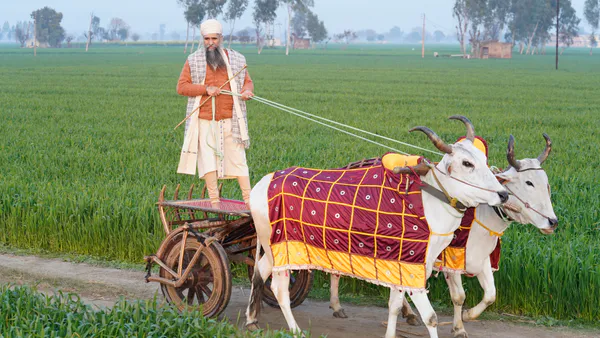
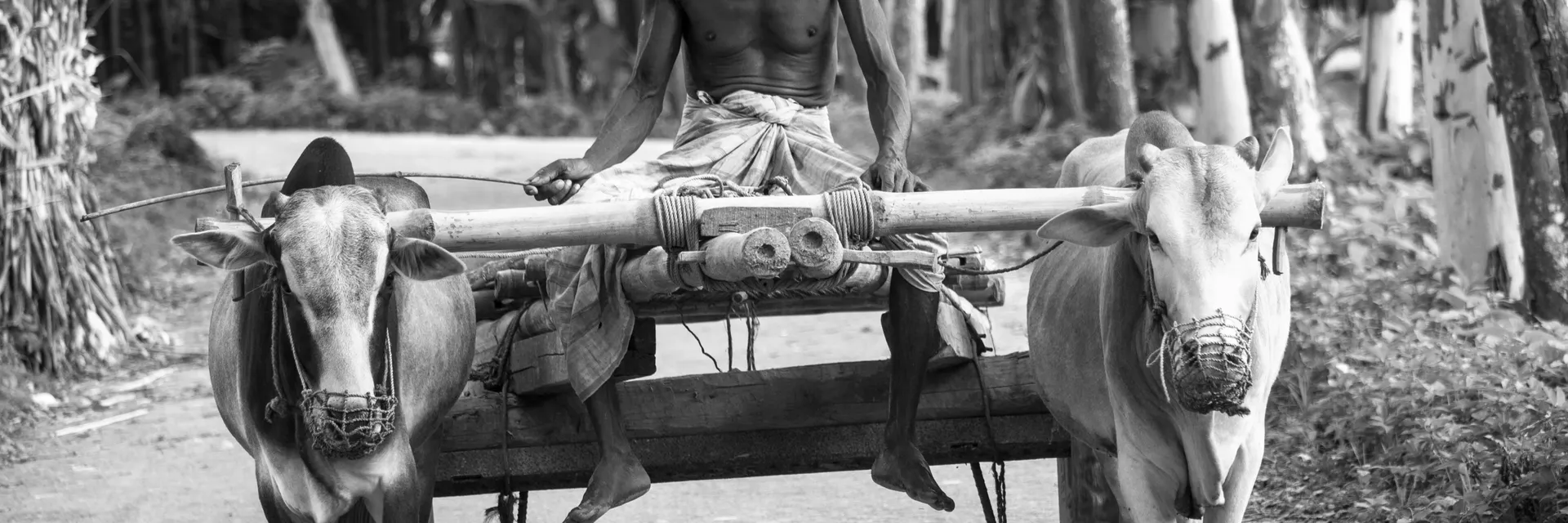
Working animals means draught purpose animals, used their muscles power for livelihood of human beings. They play very important role in lives of their owners[13]. They are used as working in agriculture; transport of agriculture product & by product, goods, hauling of passenger's in rural area, hauling of people in tourist industries, transportation of bricks in brick kiln industries, sand mining etc. Working animals are mainly cattle & buffalo (bullock or oxen), horses, mules, donkeys, camels[8]. Cattle and buffalo are the species predominantly used in agriculture operations to pull agricultural implements[8]. Draught animals play a dominant role in Indian rural economy. At present draught animals are being used to plough around 100 million hectares of farm land in India. Although an increasing mechanization is replacing the animal power in the villages, reducing the total draught animal power, yet India has to depend on animal energy for many years to come for agricultural operations and transport of farm produce [5].
Draught animals suffer in a variety of ways throughout their working life. Animals are often goaded by beating, to make them carry loads beyond their capacity or work for longer hours. Sick and injured animals are put to work. The state of health of draught animals is poor, as they are not fed adequately to replenish the energy required for work. Implements, carts and other devices may be attached to animals by ill-fitting harnesses, thus causing unnecessary pain; neck injuries often lead to callosity and/or cancer .
In western part of Maharashtra (Solapur, Sangli, Satara, Kolhapur, Pune districts) working bullocks (especially Khillari breed) are of 455-500 kg body weight. Powerful, excellent, medium-paced draught animals[5] are used for agriculture work like ploughing, sowing, transportation of agriculture products & by products at villages and used for transportation of sugarcanes from agriculture field to sugar mills during sugarcane crushing season. Large number of bullocks are used for transportation of sugarcane in the district of Solapur, Satara, Sangli and Kolhapur. This season is generally from November to April/May (6-7 months' period) every year. In village's bullocks mostly depend on sorghum straws (Kadbi) and at sugar mills, completely depend on sugarcane tops. Generally, no other feed materials are offered to bullocks other than kadbi and sugarcane tops which is inadequate in terms of balanced ration. However, Draught and Pack Animal Rules, 1965 [14] is in place and guidelines which protect them from hard work, over work etc. but animal owners, users violate such rules & regulation and put animals to hard work. Over loading, over working, work under scorching sun, carrying load on rough roads & undulated terrain, use of inappropriate equipment's, inadequate feed, dirty water etc. put these working bullocks to suffer with many ailments viz. lameness (musculoskeletal problems), yoke gall, digestive disorders, ophthalmological disorders, respiratory tract infection etc. Lameness and yoke gall are directly related with carrying heavy load on uneven roads, undulated terrain& use of inappropriate equipment's; digestive disturbances directly related to feeding of inappropriate food and dirty water along with hard work. Bullock owners ignore at initial stages of problem, eventually leading to the worse condition such as chronic yoke gall, shoulder dislocation, weakness etc. Most of the ophthalmological problems are related to ignorance and unawareness of animal owners as they never clean the eyes of their animals while animals work in dusty environment, accidentally hitting of the eye with whip (this is quite common practice for a bullock owner to have the whip in their hands to control the bullocks). The aim of present study is to determine commonly encountered diseases by Animal Rahat teams in working bullock in Western Maharashtra and also emphasise that diseases of higher prevalence are encountered more in hard working season viz. sugarcane crushing season.
II. METHODOLOGY
Animal Rahat, an animal welfare organisation provides free treatment services to working bullocks and other needy animals in area of Solapur, Satara and Sangli & Kolhapur districts of Maharashtra. These services are available to 180 villages and 26 sugar factories of all four Animal Rahat intervention districts. On an average the population of bullocks is, 50 bullocks per village and at Sugar factories it varies from 500 to 1600 bullocks per factory in a season.
Animal Rahat records all cases in their specified treatment register and these data's are being converted to soft and analysed on monthly and yearly basis. For present study, treatment data of last five years i.e. from April 2015 to March 2020 are collated and analysed. Distribution of diseases are analysed against total number of affected animals encountered every year and over the period of five years. These data are also analysed on monthly basis to find out, which month has the higher prevalence of the affected animals are encountered.
III. RESULTS AND DISCUSSION
Among working animals, bovid experiences considerable suffering as they work for approx. 200 days in a year as are being predominantly used in agriculture operations[8]and during non -working days they do not get adequate feed in terms of quantity and quality, eventually die due to under or malnourishment and diseases.[13]. Over work can also be significant with seasonal activities and that is why more number of lameness cases were reported during sugarcane crushing seasons in western Maharashtra. India is a country where certain animal species are worshipped, the situation of draught animals is unsatisfactory. However, bullocks may still not be treated well.[8]. The castrated male cattle over three year of age are used as draught animals –classified as 'animals for work'. Uncastrated bulls and buffaloes are also used for draught purpose. In most part of the country only male bovine is used for draught purposes [5].
Lameness is one of the most common welfare issues in cattle with significant impact on working strength and longevity . Every year 32-36 percent of affected animals are reported with lameness against total cases reported which is highest among all ailments. Lameness includes all the animals who exhibit limping and most of them are encountered with involvement of joints (shoulder dislocation, capped knee, capped elbow, arthritis etc.), involvement of muscle, ligament & tendons (blunt traumatic injuries, cutting of ligaments, tendon, stiffness of muscles etc.) and bones(simple, compound fracture).
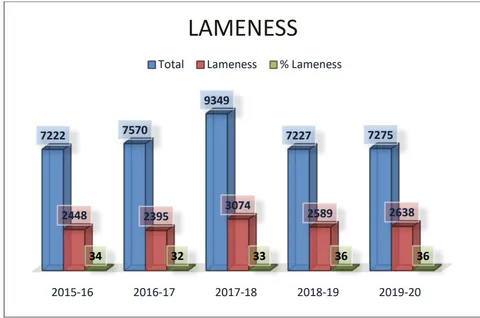
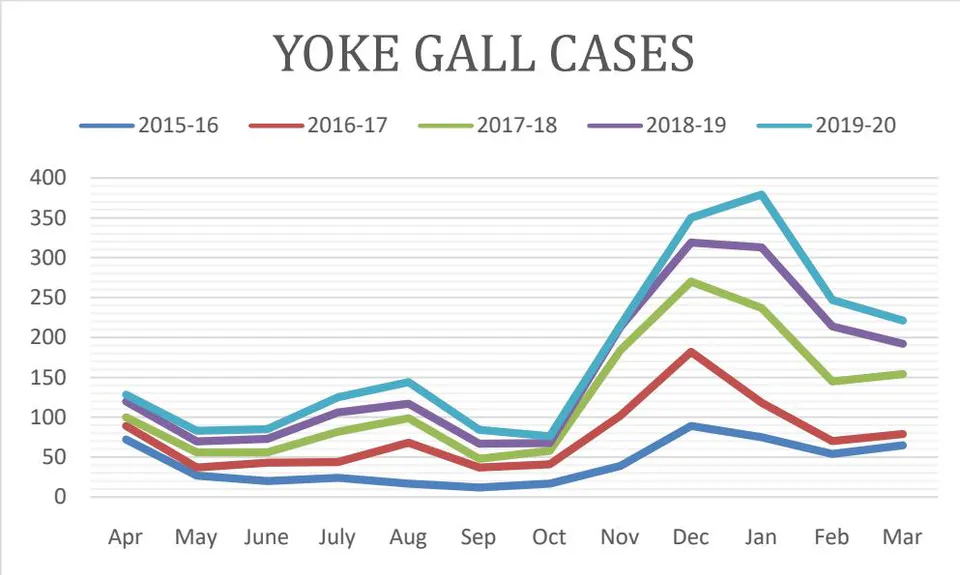
Over stretching of animal's physical activity above their physiological capacity result into muscle fatigue.[6] Sugarcane crushing season generally from November to April/ May every year and peak of sugarcane crushing season is December to January which shows highest number of lameness cases every year regardless of number of bullocks.
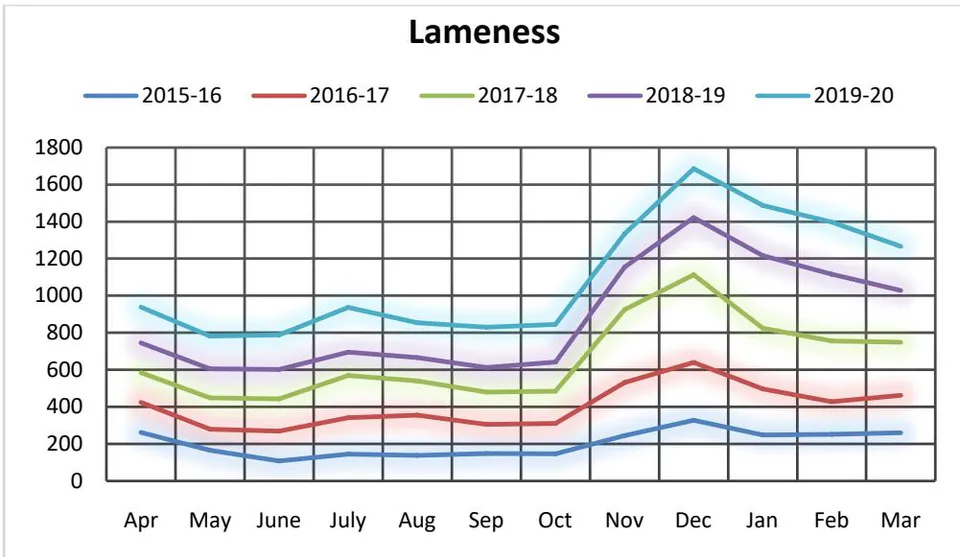
Lameness is the clinical manifestation of a range of painful locomotor conditions which have serious consequences for animal welfare, productivity, longevity and simultaneously prevention & treatment of lameness receive insufficient attention by animal owners [3].
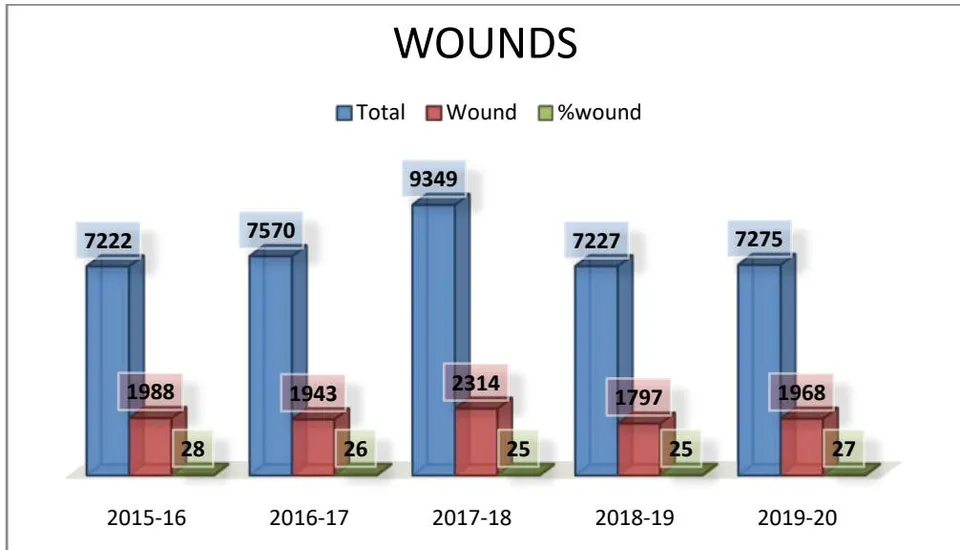
Wounds cases are the second most prevalent issue in working bullocks. Every year 25-28 percent of ailing animals are reported with wounds, which is second highest among all the reported ailments.
Wounds include, any breach in skin and injuries to horns of bullocks. These wound cases ranges from minor (abrasions, scratches, cracks etc.) wounds due to continuous touching of bullocks with carts or blunts objects, or any type of trauma etc. to major(deep wound, cutting of muscles, ligaments, tendon etc.) wound due to cutting by sharp objects, falling down of animal on ground while carrying load etc. Horn injuries involves crack on horn, horn fracture, horn avulsion etc.[12].
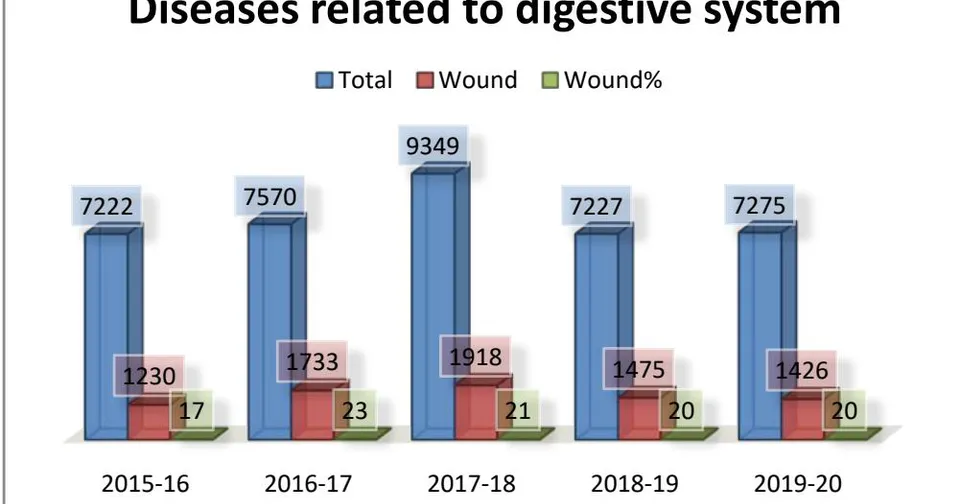
Digestive system related disorders are the third most prevalent health issues of the working bullocks in study area. Every year 17-23 percent of ailing animals are reported with digestive system related disorders, which is third highest among all the reported ailments. These involves simple indigestion, enteritis, tympany or bloat, acidic indigestion, colic and traumatic reticuloperitonitis (TRP) etc. Simple indigestion, enteritis, tympany, acidic indigestion, colic is caused by sudden change in feed generally and offering water in dirty water troughs [11]etc. All of this caused due to ignorance of animal owners towards their bullocks and unawareness amongst bullock owners. In study area, working bullocks mostly depend on dry fodder, sorghum straw (kadbi) which do not fulfil their nutritional requirements. During sugarcane crushing season, bullock mainly depend on sugarcane tops and along with a little quantity of oil cakes. Continuous feeding of sugarcane tops which contain high oxalate [9] make animals prone to diseases like oxalate poisoning and calcium deficiency [7].
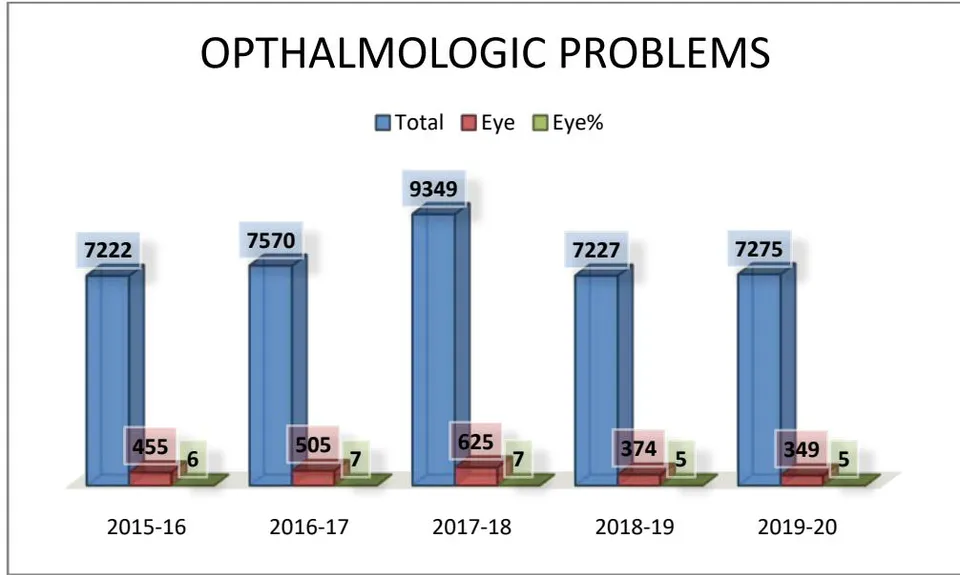
Ophthalmological disorders are the fourth most prevalent health issues of working bullocks in study area. Every year 5-7 percent of ailing animals are reported with ophthalmological disorders, which is fourth highest amongst all the reported ailments. Ophthalmological disorders include corneal ulcers, conjunctivitis, perforations, corneal opacity, squamous cell carcinoma etc. Corneal ulcers, conjunctivitis cases are mostly due to ignorance of animal owners, they never clean the eye of their animals even though the bullocks work in dusty environment on daily basis and other important cause is accidentally hitting the eye with the whip, as animal owner use the whip to control the animals. Squamous cell carcinoma of eye is the another disorder of Khillari bullocks in the study area as squamous cell carcinoma is common cancer in cattle [1] due to direct exposure of actinic rays with high temperature during working time in study area. Study on prevalence of eye diseases reported more number of ophthalmological disorders in male animals as their involvement in field work is more common and hence they are vulnerable to trauma, accident, eye injury etc.
OPTHALMOLOGIC PROBLEMS
Yoke gall is the fifth most prevalent health issues in the working bullocks of study area. Every year 4-7 percent of ailing animals are reported with yoke gall, which is fifth highest amongst all the reported ailments. A yoke gall is a localized acute inflammation of the skin and subcutis on the neck of cattle due to constant friction caused by the yoke and most common abscesses observed in draught purpose bullocks and buffalo bulls. Rough, ill-fitting yokes [8] rough roads, extra heavy loads [10] and jerk to neck muscles while carrying load are the main incriminating factor for yoke gall.
This is quite painful condition and at initial stages, animal owners do not provide rest to the animal, hence simple swelling converts into big size of painful abscesses and further gets converted into fibrous mass if not treated and not given rest to animals. Generally, bullock owners do not provide rest to animals at initial stage of this condition due to ignorance or greediness.
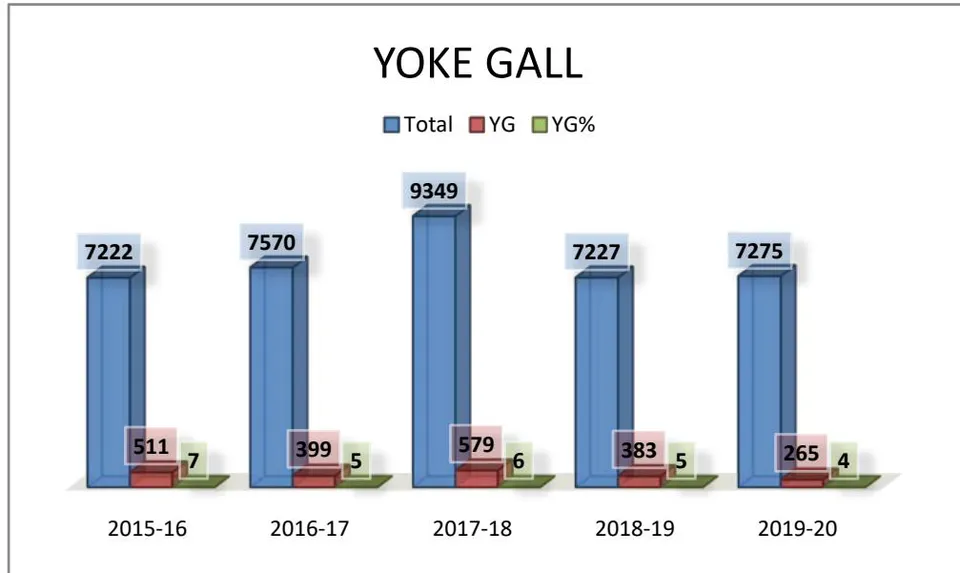
Overloading, jerk while carrying heavy load on rough road & undulated terrain, over working (no rest), use of ill fitted equipment (rough surface of wooden yoke) etc. are the main cause of yoke gall and these situations are encountered mostly during sugar cane crushing season which is generally from November to March- April every year. More number of cases yoke gall during these months from November to April are indicates that bullocks suffer most during sugar cane crushing season.
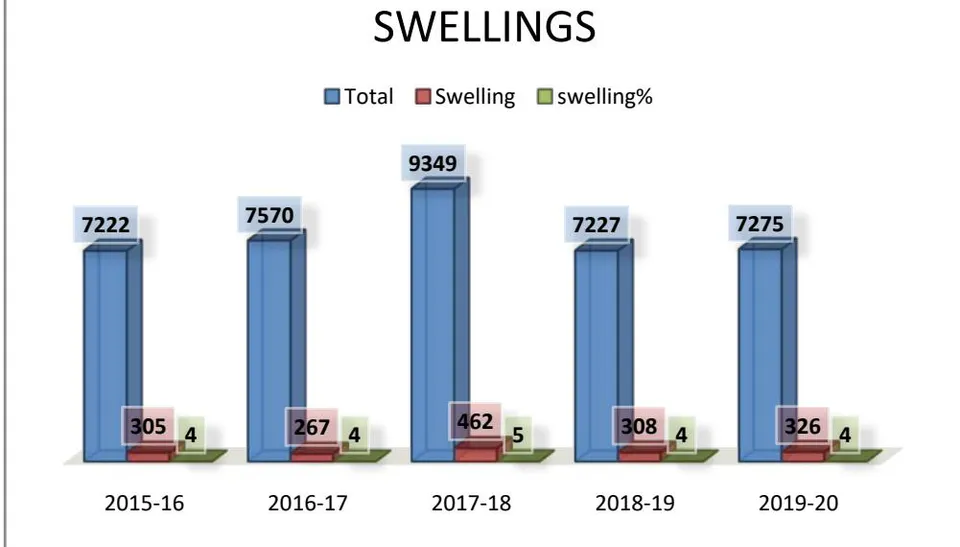
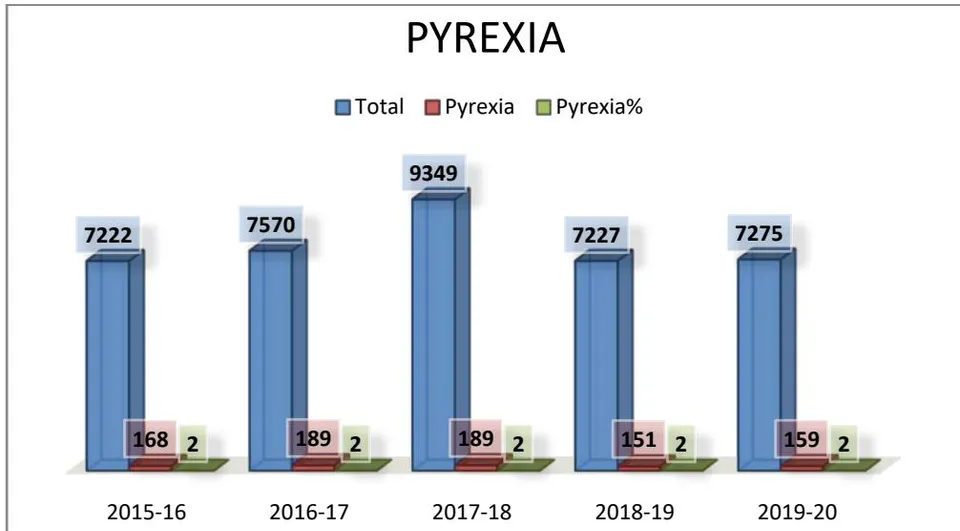
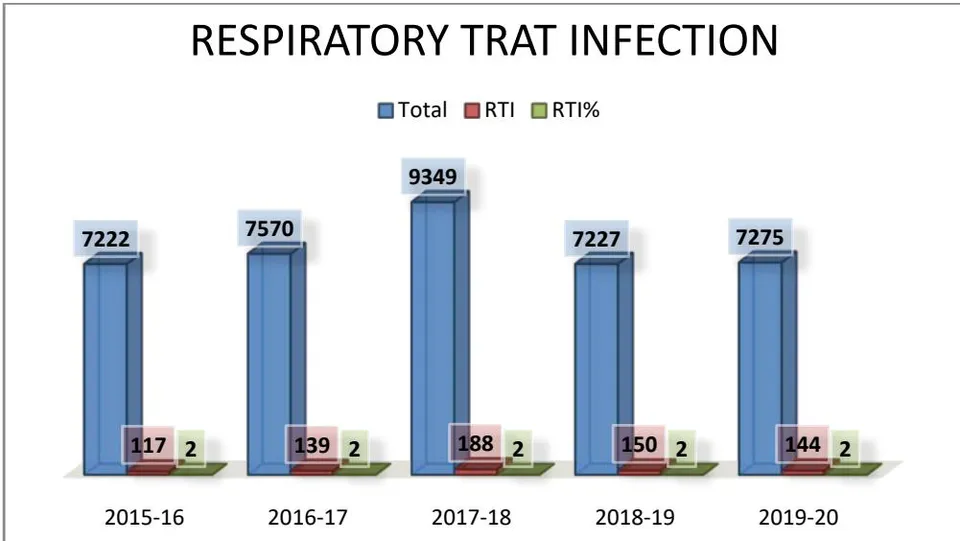
Other disorders include swellings, pyrexia of unknown origin (PUO) and respiratory disorders which are 2-5 percent of the reported ailing animals against total number of reported ailments each year. Swelling includes abscesses, hematomas, hernia etc. PUO might be due to viral and protozoal infections. Respiratory disorder mostly incudes upper respiratory tract of animals with seldom involvement of lower respiratory tract in working bullocks.
IV. CONCLUSION
Working bullocks suffer with many diseases, mostly with musculoskeletal problems which also increases during hard working season. Over work, over load, inadequate & inappropriate feed, ignorance, unawareness, use of sharp nails to prevent bullocks from balancing their loads and greediness are the main causes of ailments in working bullocks.
Conflict of Interest
No conflicts of interest have been declared.
ACKNOWLEDGEMENT
Authors are thankful to Animal Rahat organization who has provided an opportunity to make available all required resources including the treatment data of last five years.