
I. INTRODUCTION
The World Bank (2020) estimated that 60 million individuals living on less than US$2 per day would be forced into extreme poverty as a result of the
COVID-19 pandemic lockdown under the worst-case scenario. While the best-case synopsis, an estimated 49 million people will be forced into extreme poverty due to COVID-19, this is due to shut down in economic activities all over the globe. The first COVID-19 case in Africa was recorded in Egypt on February 14, 2020. Over 52 African countries are recorded on COVID-19 cases (WHO, 2020b). The origin of COVID-19 infection in Nigeria can be traced back to 27th February 2020 when the first index case involving an Italian national was recorded in Lagos. COVID-19 has a direct relationship with food security, in that the origin of the virus is directly from the food system traced to the wet market of Wuhan city in China; that deals in a wild animal. The pandemic is presently threatening the food security of billions of people and the already existing challenges of food security highlighted earlier, even though it was assumed initially that the pandemic would not affect the global food security (Vos, Martin & Laborde, 2020).
Livestock production, in general and chickens in particular, play vital socioeconomic roles in developing countries (Alders, 2004; Salam, 2005). Poultry production has a crucial role in the economy of developing countries, including a substancial role in poverty alleviation using income generation and household food security (Abdelqader et al., 2007). Available evidence suggests that, poultry production is the fastest means of bridging the animal protein deficit in Africa (Awoke, 2015). Provision of animal protein, generation of extra cash incomes and religious or cultural considerations are amongst the keys reasons for keeping village chickens by rural communities (Alders et al., 2009). Available evidence suggests that, poultry production is the fastest means of bridging the animal protein deficit in Africa (Gondwe, 2004), this is because, poultry has a short generation interval, a high rate of reproduction, and is characterized by relatively high efficiency of nutrient transformation into quality animal protein (Delgago, 2005). At the age of 5 to 6 weeks, the broiler can reach a slaughter weight of 1.5 to 2.0 kg (Asghar et al., 2000).
Okolo (2004) described the agricultural sector as the most crucial sector of Nigeria's economy which holds a lot of potentials for the future economic development of the nation as it had done in the past. Notwithstanding, the enviable position of the oil sector in the Nigerian economy over the past three decades, the agricultural sector is arguably the most crucial sector of the economy (Abdulraheem & Iderawumi, 2019).
II. BROILER PRODUCTION
Livestock systems have both positive and negative effects on the natural resource base, public health, social equity, and economic growth (World Bank, 2019). Currently, livestock is one of the fastest-growing agricultural subsectors in developing countries. Its share of agricultural GDP is already 33 percent and is quickly increasing. This growth is driving by the rapidly increasing demand for livestock products; this demand is driven by population growth, urbanization, and rising incomes in developing countries (Delgado, 2005).
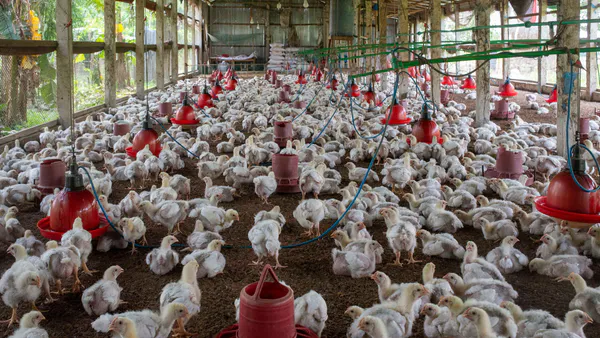
Production of chicken meat is growing into the larger component of the poultry industry in Nigeria and nearby countries. Hardly two decades ago, had most of the chicken marketed for meat in this region came only from the layer-type spent hen and the native chicken, still, in recent years the proportion of broiler meat in poultry meat production has gone up considerably (Awoke, 2015).
The broiler production activity starts from the importing of grandparent stock of commercial meat-type hybrid strains by franchise hatcheries. These follow the suggested line of breeding activities and produce high-performing hybrid broiler chicks in two generations which are sold as day-old chicks to the farmers. The broiler farmer buys the day-old hybrid broiler chicks and grows them to market age (6-7 weeks) on his premises, arranging for the necessary infrastructure facilities and other inputs (Asghar et al., 2000). In Nigeria, animal protein, especially meat, is expensive, in short supply, and is out of reach to the majority of the population. The effect of inadequate animal intake is felt more by a large proportion of the population, especially in rural areas, whose inhabitants constitute over 70% of the Nigeria population and who constitute over 85% of the extremely poor in the country (Chukwuji et al., 2006)
Broiler production is carried out in all parts of the country, with no known religious, social, or cultural inhibitions associated with their consumption. Specifically, investment in broiler enterprises is attractive because the production cost per unit is low relative to other livestock types, poultry meat is very tender, and broiler enterprises have short production cycles. Owing to these pronounced advantages of broiler enterprises, large numbers of farmers, men and women, go into their production, many do so for income generation purposes (Nwajiuba and Nwoke, 2000).
III. COVID 19 PANDEMIC
Infectious diseases are a leading cause of death worldwide, accounting for a quarter to a third of all mortality. In most industrialized countries, contagious disease ranks after cancer and heart disease as a leading cause of mortality (Abdulraheem, 2019). Despite developments in pharmaceuticals, infectious disease rates rise due to changes in human behavior, major and densercities, increased trade and travel, inappropriate use of antibiotic drugs, and the emergence of new and resurgent pathogens. Infectious disease outbreaks can easily cross borders to threaten economic and regional stability, as demonstrated historically by the HIV, 2009 H1N1 influenza, H5N1, and SARS epidemics and pandemics.
As of today, 25th October 2020 at exactly 5:30 pm, there are 43,150,030 Coronavirus cases, with 1,157,005 deaths while 31,787,545 have been recovered with 10,211,042 active cases (i.e. 10,133,562 (99%) in mild condition and 77,480 (1%) in serious/critical stage). In the total Coronavirus, patients died, interestingly, the highest number belongs to the United States of America, i.e., 230,176 deaths. The death toll is followed by the Brazil (156,926) India (118,804), Mexico (88,743), Italy (37,338), Spain (34,752), France (34,645), and China the originating point of infection (4,634). Nigeria, presently with 61,930 total index cases with 57,285 recovered, 1,129 deaths and 3,516 active cases. [https://www.worldometers.info/coronavirus/].
Coronavirus disease 2019 is an infectious disease popularly known as Covid-19 (Akanbi et al., 2020). The disease is caused by severe acute respiratory syndrome coronavirus 2, otherwise known as SARS-CoV-2 (Harapan et al., 2020). Its symptoms include fever, cough, shortness of breath, sore throat, runny nose, sneezing, among others (Harapan et al., 2020). It is a highly communicable disease (Adhikar et al., 2020), and its mode of transmission is from person-to-person. Transmission occurs among close contacts mostly through respiratory droplets released when the infected person sneezes or coughs (Harapan et al., 2020). Preventive measures such as lockdown, social distancing, self-isolation or self-quarantine and observation of simple hygiene habits such as regular washing of hands, wearing of facemasks and covering the mouth with a handkerchief when coughing or sneezing have been recommended to contain the spread of the disease among people (Akanbi, et. al., 2020) it is paramount to note that there is no any known cure or vaccine for the Covid-19 pandemic presently (Zhuet al., 2020). Nevertheless, different countries and international organizations like WHO are making efforts to develop vaccines or drugs for the Covid-19 disease (Innocent, 2020)
a) Effects of Covid-19 Pandemic on Broiler Production and Marketing
As the world battles the Covid-19 pandemic with focused health measures such as hand washing, social distancing, and personal protection equipment, the developing world has to make an extra consideration; food security.
The coronavirus has had a great impact on daily life, from the man on the street to businesses. And the poultry sector, even more, essential than ever, has not gone unscathed. Zero Hunger by 2030 is the second of the sustainable development goals. In 2016/2017, FAO classified approximately 27.4% of the population in Africa as severely food insecure. This is almost four times as high as any other region and was before the Covid-19 crisis disrupted food supply chains in both rural and urban localities in Nigeria. Even though food has been identified as an essential service to be provided, local media reports that due to the Covid-19 crisis small and medium scale husbandry, poultry production farmers have cut their production by more than 50%.
Zurayk (2020) observed that the pandemic has a negative impact on all the four fundamental dimensions of food security, as defined by FANTA (2003), which include availability, accessibility, utility, and stability, which will further affect the sustainability of food security in the world.
The Covid-19 pandemic has social, religious, political, and economic consequences on the economy. Some people might argue that it is too early to discuss the effects of the pandemic. However, the pertinent question is, when likely will the pandemic be over? According to experts, the Covid-19 pandemic may not go away anytime soon (Barro et al., 2020). Besides, there is no cure for it now. Therefore, it is essential to discuss the consequences now so that measures or actions will be taken to cushion the effects of the pandemic (Innocent 2020). With that said, the following are the effects of the Covid-19 pandemic in Nigeria. Animals suffer a great deal due to restrictions on the movement of personnel, availability of feed ingredients/materials, drugs, and vaccines, which are very vital in animal production. Farmers are making a lesser profit due to reduced consumption of different animal products; the paying of farm workers is paramount and important in farm growth. (Akanbi et al., 2020)
COVID-19, in general, affected the economic activities and subsequently increased the costs of food items. Annual inflation in the country has risen for straight eight-month peaking up in April as a result of the spread of COVID-19, which resulted in higher food prices throughout the country due to a lockdown in economic activities. The inflation rate was 12.34 percent, which represents the highest level in more than two (2) years in the country (NBS, 2020); this is in addition to the current rate of unemployment and low level of livelihood in the country even before the COVID-19 pandemic. This raises red flags on the ripple effect this will have on the supply of meat and eggs during this period. Part of the focus of securing food supply as an essential service is to provide access to nutrient diversity that is paramount in the immunity of a population. Poultry meat and eggs are copious and readily available sources of protein. With lowered production, limited availability is inevitable, which will likely result in prices going up. Most farmers have lost between 35 and 40 percent of their resources because sometimes they cannot sell, but they keep producing. Like hatcheries, day-old-chicks when you hatch, you cannot deliver them to farms. Eggs are supposed to be the number one thing as a palliative. in fact, the demand for eggs is supposed to have risen drastically due to its nutritional content, but the reverse is the case. The impact on the poultry sector has a domino effect on the rest of the agricultural chain.
The high cost of key inputs such as seeds, vaccines, and feeds across the country is frustrating farmers who are struggling to survive the difficult moment. The prices of farm inputs are surging owing to foreign exchange (FX) volatility, as most of the vaccines and drugs used in the country's livestock industry are imported. Naira exchanged at N360 to a dollar at the parallel market before the COVID-19 outbreak, but this has skyrocketed to N480 to a dollar due to dollar scarcity attributed to low oil prices and oil glut. Nigeria depends on crude oil for over 70 percent of its FX needs and revenue, according to the National Bureau of Statistics (NBS). Business Day survey at some Lagos markets shows that a 25kg bag of layers marsh now sells for N3, 600 as against N3,200 sold before the COVID-19 outbreak, while broiler finisher marsh now sells for N4,200 as against N3,750 pre-COVID-19. Even prices of day-old chicks have also surged by 10 percent amid the virus. The fact is that anything that affects poultry affects other sectors of agriculture. If you cannot sell day-old chicks, how can you afford to buy poultry feeds? If you cannot sell poultry feed, how will you be able to buy soybeans and corn? So these are the challenges.
b) Effect of Covid 19 Pandemic on Nigeria Economy
Nigeria's economy is bleak, sliding towards a recession or an economic contraction due to the Covid-19 pandemic. Indices of economic recession abound. Prices of goods and services have skyrocketed during this pandemic. Unemployment has increased, and the exchange rate has become volatile. Moreover, economic activities have been significantly disrupted, and the Covid-19 pandemic has no cure for now. This situation makes the economy unpredictable. Additionally, production and job losses and changes in buying habits have strained the economy. Moreover, the steep decline in oil revenues occasioned by the sharp fall in crude oil price is likely to deplete Nigeria's external reserves, thereby making the future unpredictable. The effect of disrupting the agricultural market supply chains was observed in 2014, with the Ebola outbreak where restrictions and market closures disrupted flows of food and necessities. Shortages of goods led to an increase in prices of basic commodities. The nutritional impact was predominantly attributable to reduced food access driven by a reduction in economic activity that reduced families' purchasing power.
Empirical evidence of the impact of COVID-19 on food security status in the world is presently very few. The virus has a devastating effect and can easily affect the food security status of households either directly or indirectly. The pandemic has worsened the unemployment situation in Nigeria. For instance, the unemployment rate in Nigeria before the pandemic stood at 23.1 percent (CSEA, 2019; Onifade and Abdulraheem, 2019; National Bureau of Statistics, 2018; NSEG, 2019). However, due to the pandemic, the unemployment rate is estimated to rise to about 33 percent by the end of 2020 (Obiezu, 2020). An upsurge in unemployment has negative effects on the economy. For example, when unemployment increases, there is the likelihood that social vices or criminal activities would increase, and this portends grave danger for the country. Also, an upsurge in unemployment could lead to more hunger and poverty (Innocent, 2020).
Many businesses, specifically small and medium enterprises (SMEs), have been closed down due to the Covid-19 pandemic. SMEs are badly hit by the outbreak of the pandemic due to their vulnerability and limited resources. Measures such as self-isolation or quarantine, social distancing, a ban on social gatherings, and closure of markets taken to contain the spread of the disease have impacted negatively on their operations, sales, and profits. Many SMEs have experienced demand and supply chains shocks during this pandemic. Demands for goods have reduced drastically due to lockdown and restrictions of movement. Additionally, the supply chain has been badly affected. For example, business organizations in Nigeria import their goods from China (Ozili, 2020). With the ban on foreign travels during this pandemic, the supply of such goods and the continuity of such businesses would be negatively affected. Border closures have negative impacts on import and export businesses.
Loayza and Pennings (2020) opined that the pandemic reflected both worldwide public health emergency and an international economic crisis whose consequences surpassed the global financial crisis of 2008-2009. The study found that first, the human and economic costs of the Covid-19 are likely to be higher in developing countries because of the structure of their economies, which aggravates the impact of shutdowns and reduction in economic activities. Second, factors such as lower health care capacity, larger informal sectors, shallower financial markets, less fiscal space, and poorer governance are likely to stymie the gains of sundry containment measures taken. To reduce the vulnerability of citizens due to the pandemic, a viable macroeconomic policy that would strengthen monetary transmission, and fiscal space as well as increase fiscal multipliers, is worthwhile.
This would ensure macroeconomic stability and enhance the quality of governance. The World Bank (2020), provided an explanation for the late arrival of Covid-19 and the rapid spread across Sub-Saharan Africa. The study asserted that the low number of cases recorded in the region can be best explained by the insufficient testing capacity in many countries, which might have understated the accurate number of infections. This pessimistic view undermines the containment measures taken by these African countries and the possibility of an indigenous cure for the virus, which, due to regional unique characteristics, may be viable. The study projected a grave macroeconomic effect of the pandemic on the region, which includes a decline in the economic growth of Sub-Saharan Africa from 2.4 percent in 2019 to -2.1 and -5.1 in 2020, which might lead to a possible recession in the region. Output loss in the region was estimated to be between US79 billion. In contrast, the region's three largest economies: Nigeria, South Africa, and Angola would experience continued poor growth and investment consequent upon the fluctuations in commodity prices (World Bank 2020).
IV. CONCLUSION AND RECOMMENDATION
The Covid-19 pandemic has affected the production and marketing of agricultural products. No doubt, the pandemic has worsened the food insecurity situation in the country. The demand and supply chains of agricultural products and foods internally and externally have been affected due to the measures adopted to contain the spread of the disease. Farmers find it difficult to obtain seedlings, fertilizers, pesticides, and farm implements. Moreover, labour-intensive agricultural production processes have been affected due to labour shortages and logistical constraints. Additionally, the timing of the outbreak of the Covid-19 pandemic in Nigeria disrupts farming activities. Empirical evidence of the impact of COVID-19 on food security status in the world is presently very few. The virus has a devastating effect and can easily affect the food security status of households either directly or indirectly. As the global population decreases due to the Covid-19 pandemic and possible hunger in most developing countries of the world, it is noteworthy to say animal products suffer consumption as an average individual just wants to survive without considering the nutritional requirement of the body system for functionality and production.
Demand for livestock products in the future can be heavily moderated by socioeconomic factors such as human health concerns and changing socio-cultural values. There is considerable uncertainty about how these factors will play out in different regions of the world in the coming decades. Furthermore, the Covid-19 pandemic has caused an upsurge in the availability of these products, making it hard for farmers to get them out to markets due to the lockdown orders and sudden high cost of feed and feed materials. This, in turn means there is little/no profit for animal producers at this crucial time.
It is assumed that if Nigeria had fully utilized the opportunities in value addition, the impact of the pandemic on the sector would have been limited. Fresh eggs can be processed into powder, and fresh fruits can also be processed and preserved for future uses, but this is not happening on a wide scale even though the country is the largest producer of eggs in Africa, with 10.3 billion eggs produced annually. The country has been losing a lot of money due to our inability to process eggs into powder. It has really been a tough situation for poultry farmers
Finally, timing is key. Broiler and layer farming needs proper logistical planning to ensure optimal timing on maturity for the sale of meat and eggs. When maturity occurs, but producers cannot get their products to market, farmers incur additional upkeep expenses that affect the profit margin of the business.
Small and medium producers are the bulk farmers in Nigeria. For continued livelihoods and food supply of poultry products and other food value chains, the time for innovative thinking is now. This will need to be both from the producers and support partners in the value chains like day-old chicken providers and feed providers. Viable interventions include acceptance and usage of e-platforms and vendors by producers and provision of storage for the poultry products as the producers secure a sustainable market. A more in-depth study looking primarily at the farmer level is recommended. It is estimated that there will be a 10 or 12 percent reduction in farm produce this year. If the coronavirus continues to spread to rural communities, the reduction might get to 25 percent. Many farmers did not receive any form of palliative from the government despite that their businesses have been heavily impacted by the COVID-19 pandemic. The government needs to come to the assistance of farmers to survive through this pandemic, most especially the poultry farmers. We need to start processing eggs into powder and also fruits into concentrate to help address the issue of wastage in the country and also increase the shelf life of our highly perishable produce. Raw eggs are said to last about four weeks, while powdered eggs can last up to a year.