
I. INTRODUCTION
The extract was evaluated on eleven (11) pathogenic bacteria Medicinal plants are of great importance to the health of humans. The medicinal value of green plants lies in the ability of some secondary metabolites to produce a definite physiological action in the human body (Dwivedi et al., 2017; Adusei et al., 2019; Haque et al., 2019). Our environment is richly blessed with enormous biodiversity of plants that can be used for both consumption and therapeutic purposes. Plants play remarkable roles in and contributes to human diets and food security (Bharucha and Pretty, 2010; Chandrasekara and Kumar, 2016; Chen et al., 2016). Unfortunately, oftentimes the utilisation and knowledge of medicinal plants as a nutritional source is confined to rural settlements (Aryal et al., 2019). Medicinal plants have been used globally to meet health care needs of human and animals. Recently, medicinal plants have witnessed a glut of research geared towards validating the quality, quantity, protective roles as well as therapeutic effectiveness of these natural antioxidants in medicinal plants against oxidative stress induced diseases and disorders (Lawal et al., 2016; Bourhia et al., 2019; Shaito et al., 2020). Presence of scientific literature on antioxidants and antimicrobial activity of phytochemicals to a great extent validates the traditional claims about the usefulness of these medicinal plants to treat reactive oxygen species (ROS) induced health related disorder (Liu et al., 2018; Forni et al., 2019; Khameneh et al., 2019). Free radicals such as reactive oxygen species (ROS) are usually produced as a result of an organism's normal use of oxygen. An imbalance between formation and removal of these free radicals can lead to a pathological condition called oxidative stress resulting in many physiological processes like aging and chronic diseases (Aprioku, 2013; Phaniendra et al., 2015). However, the human body employs antioxidants to counteract these free radicals thus repairing free radical damage by initiating cell regeneration or cell repair (Lobo et al., 2010; He et al., 2017; Pizzino et al., 2017). Daily consumption of natural products that are rich in antioxidants, such as vegetables and fruits play an important role in the prevention and treatment of oxidative stress-related diseases such as cancer, arthritis, liver injury, diabetes, Alzheimer's disease, cardiovascular problems, neurodegenerative disorders, and various inflammatory illnesses (Tan et al., 2018; Forni et al., 2019; Mattia et al., 2019). Incorporation of antioxidant compounds by consuming natural products in the daily diet can be a suitable solution to solving human health issues. These natural antioxidant sources can be used as a preventive medicine. Recent researches showed that there is an inverse link between the dietary consumption of antioxidant-rich foods and prevalence of human illness (Arulselvan et al., 2016; Wilson et al., 2017; Liu et al., 2018; Lourenco et al., 2019; Villaverde et al., 2019). Moreover, the use of natural products as antibiotic agents is been given more attention due to the various side effects and increasing antibiotic resistance to synthetic antibiotics observed in some pathogens responsible for food borne and other illnesses (Fair and Tor, 2014; Barbieri et al., 2017; Cheesman et al., 2017; Albaridi, 2019; Dilbato et al., 2019). Natural antimicrobials seems to be the most promising solution to many of the increasing concerns regarding antibiotic resistance and could yield better
results than antimicrobials from combinatorial chemistry and other synthetic procedures (Rossiter et al., 2017; Armas et al., 2019; Tyers and Wright, 2019). Therefore, novel types of effective and healthy antimicrobial compounds that could protect food against contamination and consumer against infection is in high demand. Compounds derived from natural sources have the potential to be used for food safety due to their antimicrobial properties against a broad range of foodborne pathogens (Lucera et al., 2012; Hintz et al., 2015; Quinto et al., 2019).
Annona cinerea Dunal (Annonaceae) is a green perennial plant that annually produces edible fruit which have many medicinal advantages. It is a nutritional rich fruit and is largely valued for its taste. It is high in energy and is a good source of minerals such as iron, phosphorus and potassium. The fruit of the plant is high in energy and low in fat content, sodium content, free from cholesterol. It is also a good source of fibre, iron, potassium, phosphorus, manganese, copper, zinc, magnesium, vitamins B1, B2, B6 and C (Zahid et al., 2017; Sharma et al., 2019). It is known to have some active phytochemicals against the common chronic and degenerative diseases such as cancer, respiratory, neurodegenerative, and digestive diseases (Jammala et al., 2019; Singh et al., 2019).
To the best of our knowledge, there is no enough scientific information on the chemical composition and medicinal properties of seed of A. cinerea grown in Nigeria so far. Therefore, the present research was undertaken to screen extract of the seed of A. cinerea grown in Nigeria for its chemical composition, antioxidant and antimicrobial potentials.
II. MATERIALS AND METHODS
a) Collection of Plant Sample
The plant material was collected in Ota, Ogun State, Nigeria and it was identified as Annona cinerea Dunal.
b) Preparation and Extraction of the Plant Sample
Air-dried and pulverised seed were soaked in a mixture of methanol/ethyl acetate (2:1). The mixture was left for at least three days. The filtrate was concentrated using a water bath. The concentrated extract was put into a vial and stored in a refrigerator to prevent contamination pending subsequent analysis (Emmanuel et al., 2014).
c) Gas Chromatography-Mass Spectroscopy Analysis of the Extract for Various Secondary Metabolites
The qualitative and quantitative analysis of the secondary metabolites in the extract was carried out using GC-MS QP2010 Plus (Shimadzu, Kyoto, Japan) system at the Shimadzu Training Centre for Analytical Instruments (STC) Lagos, Nigeria. The analytical specifications of the GC-MS were done as described in an earlier study (Ololade et al., 2014).
d) In vitro Antioxidant Activities
The antioxidant capacity of the seed extract of A. cinerea was tested using two different methods.
i. In vitro 2,2'-Diphenyl-1-picryl-hydrazyl Assay
The antioxidant and free radical scavenging of the extract of A. cinerea were measured by using 2, 2'-diphenyl-1-picryl-hydrazyl according to the method described by Lin et al., (2018) with minor modification. Briefly, the reaction mixture (2.0 ml) consists of 2.0 ml of 0.1 mM DPPH prepared by dissolving 4 mg of DPPH in 100ml of methanol and then 1.0 ml of various concentrations of the extract. It was incubated for 30 min. in the dark, and the absorbance was measured at 517 nm using SM 7504 UV Spectrophotometer. The blank contained a preparation of DPPH and methanol in place of extract. In this assay, the positive control was ascorbic acid. The percentage of the radical inhibition activity was evaluated based on the following expression:
Where: and are the absorbance value for the blank and extract solution, respectively. The dose-response curve was plotted and value for the extract and the standard were calculated.
ii. In vitro 2,6-ditert-butyl-4-[(3,5-ditert-butyl-4- 1-oxidanylphenyl)methylidene]cyclohexa-2,5-dien-1-one (Galvinoxyl), respectively.
The antioxidant and free radical scavenging of the seed extract of A. cinerea were also evaluated using galvinoxyl according to the method previously described by Amira et al., (2012) with slight modification. Briefly, the reaction mixture with a total volume of 2.0 ml consists of 1.0 ml of 0.1mM Galvinoxyl which was prepared by dissolving 4.2 mg of Galvinoxyl in 100 ml of methanol and then 1.0 ml of various concentrations of the extract, was incubated for at least 30 min. in the dark, and then the absorbance was measured at 429 nm using SM 7504 UV Spectrophotometer. The blank was prepared by galvinoxyl and methanol in place of sample. In this assay, the positive control was ascorbic acid. The percentage of the radical inhibition activity was calculated based on the following expression:
and are the absorbance value for the blank and extract solutions, respectively. The dose-response curve was plotted and value for the extract and the standard were calculated.
Antioxidant Activity Index (AAI): The AAI was calculated as:
AAI was classified as weak; when AAI < 0.5; moderate, when AAI ranged between 0.5-1.0; strong; when AAI ranged between 1.0-2.0; and very strong; when AAI > 2.0.
e) In
Antibacterial assay of the extract at different concentrations was performed using agar well diffusion assay on sterilized Mueller Hinton Agar (MHA) using streak plate method according to the method previously used by Debalke et al., (2018). Gram-positive bacteria used for the antibacterial test were Bacillus sp, Enterococcus faecalis, Micrococcus varians and Streptococcus agalactiae while the Gram-negative bacteria were Klebsiella pneumoniae, Proteus mirabilis, Pseudomonas aeruginosa, Providencia stuartii, Salmonella typhimurium, Serratia marcescens and Shigella dysenteriae. Cefuroxime (CRX) 30 g/disc was used as positive control. After incubation for 18-24 hr at 37 C, plates were observed for the formation of a clear zone around the well which corresponds to the antimicrobial activity of tested compounds. The zone of inhibition (ZI) was observed and measured in millimetre (mm) using transparent ruler.
f) Determination of the Antibacterial Activity Index (AI)
The AI of the test seed extract with respect to the positive control was done according to the method previously used by Ololade et al., 2020.
III. RESULTS AND DISCUSSION
a) Chemical Constituent of the Seed Extract of Annona cinerea
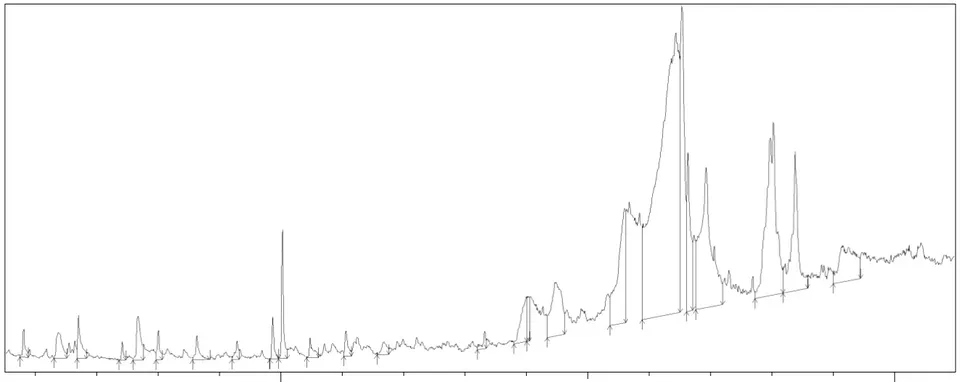
The total ion chromatogram (TIC) of the methanol/ethyl acetate seed extract, showing the GC-MS profile of the compounds identified is as shown in Figure 1. The peaks in the chromatogram were integrated and compared with the database of spectrum of known components stored in the GC-MS NIST library. Phytochemical screening by GC-MS analysis of the seed extract of A. cinerea revealed the presence of different classes of organic compounds. A total of twenty-seven (27) phytochemicals were identified in the seed extract accounting for 99.45% of the extract (Table 1), and the main constituents identified were 3-O-methyl-d-glucose (52.14%), β-sitosterol (11.79%), desulphosinigrin (6.16%) and α-tocopherol (5.84%). Previous studies on the chemical composition of leaf extract of A. muricata from Uganda showed the presence of Z-7-tetradecenal (9.39%), n-hexadecanoic acid (7.12%), oleryl alcohol (6.15%), phytol (5.61%) as its main constituents (Gavamukulya et al., 2015). 3-O-methyl-d-glucose is used as a marker to assess glucose transport by evaluating its uptake within various cells and organ systems.
| Compound | Retention Index | Percentage Composition |
| 6-oxa-bicyclo[3.1.0]hexan-3-one | 782 | 0.97 |
| 4,4-dimethyl-2-pentanol | 795 | 0.1 |
| isopropylmethylnitrosamine | 813 | 0.62 |
| (S)-(+)-2-amino-3-methyl-1-butanol | 876 | 1.06 |
| α-furylcarbinol | 885 | 0.43 |
| 2-hydroxy-γ-butyrolactone | 1013 | 1.21 |
| 2,5-dimethyl-4-hydroxy-3(2H)-furanone | 1022 | 0.59 |
| 3-methyl-3-cyclohexen-1-carboxaldehyde | 1041 | 0.49 |
| N,N-dimethyl(1H-pyrrol-3-yl)methanamine | 1047 | 0.25 |
| 3-heptenoicacid | 1081 | 0.53 |
| 3,5,5-trimethylhexanoicacid | 1124 | 0.1 |
| levomenthol | 1144 | 0.48 |
| 1-trimethylsilyloxy-2-cyclohexylethane | 1164 | 3.84 |
| 2,4-dihydroxy-2,5-dimethyl-3(2H)-furan-3-one | 1173 | 0.26 |
| 5-amino-3-methylisoxazole-4-carbonitrile | 1248 | 0.26 |
| 3,5-dihydroxy-6-methyl-2,3-dihydro-4H-pyran-4-one | 1269 | 1.78 |
| 2-(2-butoxyethoxy)aceticacid | 1325 | 0.1 |
| 1,3:2,5-dimethylene-l-rhamnitol | 1426 | 1.0 |
| 9,9-dimethoxybicyclo[3.3.1]nona-2,4-dione | 1610 | 0.39 |
| 3-O-methyl-d-glucose | 1648 | 52.14 |
| desulphosinigrin | 2509 | 6.16 |
| β-sitosterol | 2731 | 11.79 |
| α-tocopherol | 3149 | 5.84 |
| 25-[(trimethylsilyl)oxy]-(3β,5Z,7E)-9,10-secocholesta-5,7,10(19)-triene-1,3-diol | 3258 | 4.09 |
| adenosine,N6-phenylaceticacid | 3731 | 1.0 |
| stevioside | 6530 | 3.97 |
| Percentage Total | 99.45 |
b) Evaluation of Free Radical Scavenging and Antioxidant Capacity
For the evaluation of the antioxidant capacity, different assays were used to obtain valid results, this is due to the fact that antioxidant compounds present different mechanisms of reactions with the possibility of having synergistic interactions depending on the type of assay used. In this study, the antioxidant potential of the seed extract of A. cinerea was evaluated using the DPPH and the galvinoxyl assays (Table 2).
i. In vitro DPPH Free Radical Scavenging and Antioxidant Potentials
The results of DPPH radical scavenging assay of seed of A. cinerea grown in Nigeria is as shown in Table 2. The seed extract showed concentration-dependent increases in radical scavenging potential. The extract was evaluated at the concentrations of 1000, 500, 250, 125 and 100 gml and with percentage free radical scavenging of 90, 89, 88, 88 and 87%, respectively. The seed exhibited low inhibition concentration (IC ) of 5.0 gml and antioxidant activity index (AAI) of 8.0. The IC values represent the concentration at which 50% of DPPH is reduced. A low IC value indicates a potent antioxidant activity. Ascorbic acid showed the inhibition concentration of IC to be 9 gml . The extract showed a similar antioxidant properties compared to the synthetic antioxidant (ascorbic acid). The seed extract of A. cinerea investigated in this study gave more promising free radical scavenging and antioxidant activity than the pulp essential oil of A. muricata from Ghana with DPPH IC of 512 gml (Gyesi et al., 2019). The DPPH free radical scavenging and antioxidant of the extract were based on the hydrogen atom transfer (HAT) and single electron transfer (SET) mechanisms. The HAT mechanism measures the ability of an antioxidant to quench free radicals by donating hydrogen. HAT-based mechanisms are more relevant to radical chain-breaking antioxidant capacity (Huang et al., 2005; Al-Amiery et al., 2013; Ololade et al., 2014). The SET method measures the ability of antioxidant to transfer one electron to reduce free radical. SET involves two components in the reaction, i.e. the antioxidant and oxidant.
SET mechanism measures the abilities of phenolic antioxidants in the extract, to transfer one electron to reduce radicals which changes colour when reduced. The degree of colour change is correlated with the antioxidant potential (Wright et al., 2001; Prior et al., 2005; Ololade et al., 2014).
In vitro galvinoxyl Free Radical and Antioxidant Potential Galvinoxyl is a stable phenoxy radical that exhibits characteristic UV absorption at 429 nm in methanol solution. The radical have strong absorption in the visible region, while its absorption decreases proportionally upon receiving an electron or hydrogen from the antioxidants. The free radical scavenging potential of the phytochemicals in seed extract was obtained based on the absorption change (Lu et al., 2010). The result of galvinoxyl radical scavenging assay of the seed extract of A. cinerea grown in Nigeria is shown in Table 2. The extract was evaluated at the concentrations of 1000, 500, 250, 125 and 100 gml and with percentage free radical scavenging of 47, 42, 46, 20 and 19%, respectively. The seed exhibited the low inhibition concentration (IC ) of 100.0 gml and antioxidant activity index (AAI) of 0.4. The seed extract of A. cinerea investigated in this study had a lower galvinoxyl free radical scavenging and antioxidant compared to ascorbic acid (the reference compound), which had IC and AAI values of 15.0 gml and 2.8. The seed extract of A. cinerea investigated in this study gave a promising free radical scavenging and antioxidant activity comparable with the rhizome methanolic extract of Curcuma longa from Nigeria with galvinoxyl IC and AAI values of 25 gml and 1.68, respectively (Ololade et al., 2020). Generally, the extract investigated showed good antioxidant potential even at very low concentrations. Percentage radical scavenging activity was very low in galvinoxyl assay compared to DPPH assay. The results showed that the steric hindrance among adjacent bulky groups within a galvinoxyl molecule limited the extract to scavenge galvinoxyl radicals effectively unlike DPPH, while extracts showed a powerful capacity for scavenging free radicals in DPPH (Barzegar and Moosavi-Movahedi, 2011; Apak et al., 2016; Kubo, 2019; Ololade et al., 2020). Natural antioxidants from plants help to maintain an adequate antioxidant status in human body. Antioxidants decrease the oxidative damage directly via reacting with free radicals or indirectly by inhibiting the activity or expression of free radical generating enzymes or enhancing the activity or expression of intracellular antioxidant enzymes (Lu et al., 2010; Kurutas, 2016; Ighodaro and Akinloye, 2018).
| Extract | AAI | |
| DPPH | 5.0 | 8.0 |
| GALV | 100.0 | 0.4 |
c) Antibacterial Potential
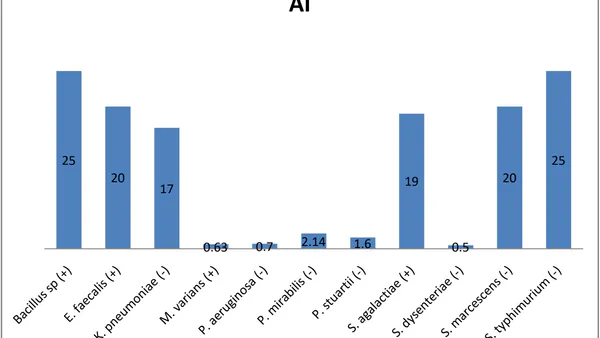
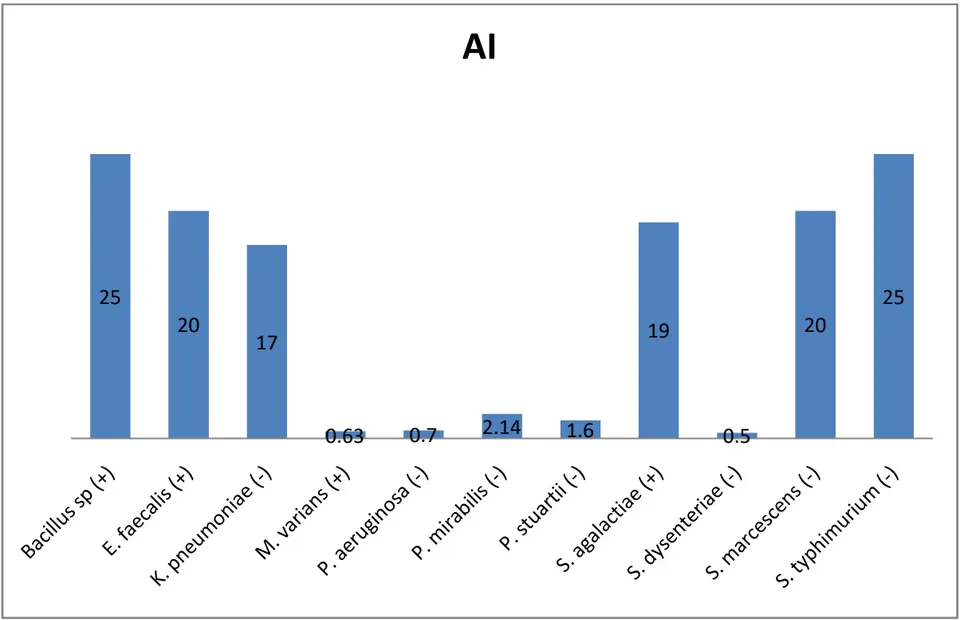
The antimicrobial potential of the seed extract of A. cinerea investigated in this study were tested against eleven clinically isolated multi-drug resistant Gram-negative (seven isolates) and Gram-positive (four isolates) strains of bacteria were investigated using the agar well diffusion method. The extracts investigated in this study demonstrated a broad-spectrum of activities against both Gram-positive and Gram-negative bacteria tested in this study. Table 3 and figure 1 summarize the zones of microbial growth inhibition and antibacterial index by the seed extract of A. cinerea, which showed good antibacterial activities against all the clinically isolated organisms. The result of the antimicrobial activity showed that the seed extract have high bactericidal activities from sensitive to ultra-sensitive as compared to cefuroxime (CRX) the synthetic antibiotic used in this study. Based on the value of zone of inhibition, the antibacterial activity potential was dependent on the concentrations of the extract used. Among the tested bacteria, the extract had a zone of inhibition of 30 mm on P. mirabilis which indicated that P. mirabilis was highly susceptible compared to the other tested bacteria within the concentration of 1000 gml of seed extract of methanol/ethyl acetate of A. cinerea in this study. As depicted in Table 3, other high susceptible bacteria at 1000 gml were Bacillus sp (25 mm), P. stuartii (25 mm), S. typhimurium (25 mm), E. faecalis (20 mm), S. marcescens (20 mm). At the concentration of 500 gml of the seed extract, the bacteria inhibition activities were very high in S. typhimurium (25 mm), Bacillus sp (22 mm), E. faecalis (20 mm), P. mirabilis (20 mm), P. stuartii (20 mm). The zone of inhibition of the extract at the concentration of was significantly different when compared to 1000 and 500 of the extract for the tested bacteria. At a lower concentration of of the extract, E. faecalis (20 mm) and P. mirabilis (20 mm) were more susceptible to the synergic activities of the secondary metabolites in the seed extract, most especially the phenolic compound and the terpenoids. The antibacterial index (AI) ranged between 0.5-25. Comparatively, the antibacterial properties of the extracts investigated in this study have similar antibacterial activities comparable to the leaf essential oil of A. cherimola from Egypt which was investigated for its in vitro antimicrobial properties against P. aeruginosa, S. aureus, B. subtilis, B. cereus with the zones of inhibition of 30, 26, 28 and 35 mm, respectively at 50 (Mohammed et al., 2016). The differences in the zones of inhibition of the extract could be due to the difference in the levels of their major and minor phytochemical in the seed extract evaluated in this study and the synergetic effect between all the components. The differences in the susceptibility of the tested microorganisms to the extract may also be attributed to a variation in the rate of penetration of the active components of the extract through the cell wall and structures of the cell membrane. With regard to bactericidal effects of natural products, it has been frequently postulated that secondary metabolites can penetrate or damage the bacterial cell wall and cell membrane. Once inside the bacterium, the extracts are assumed to trigger the coagulation of cytosolic proteins and the efflux of essential intracellular compounds, and with it the destruction of bacteria. The main advantage of natural antibiotics from plants is that they kill sensitive bacteria by specific mechanisms. One of the ways by which they can kill bacteria consists in the inhibition of
peptidoglycan synthesis of the bacteria cell wall. Moreover, they can inhibit bacteria growth via the inhibition of bacteria protein biosynthesis. Other important modes of action are inhibition of DNA topoisomerase or RNA polymerase inhibition of folic acid synthesis will reduce bacteria enumeration as folic acid is very important for bacteria growth (Apotheken Umschau 2013; Blair et al. 2015).
| ZI of the Seed Extract | Crx | |||
| Conc. ( )Organisms | 1000 | 500 | 250 | 30 |
| Bacillus sp (+) | 25 | 22 | 19 | - |
| E.faecalis(+) | 20 | 20 | 20 | - |
| K.pneumoniae(-) | 17 | 17 | 17 | - |
| M.varians (+) | 19 | 14 | 14 | 30 |
| P. aeruginosa(-) | 17 | 13 | 13 | 25 |
| P. mirabilis (-) | 30 | 20 | 20 | 14 |
| P. stuartii(-) | 25 | 20 | 15 | 16 |
| S. agalactiae(+) | 19 | 19 | 19 | - |
| S. dysenteriae(-) | 10 | 10 | 10 | 20 |
| S.marcescens (-) | 20 | 14 | - | - |
| S. typhimurium(-) | 25 | 25 | 18 | - |
IV. CONCLUSIONS
This study provides insight into the phytochemical, antioxidant and antimicrobial potential of the seed extract of A. cinerea. The study showed that the phytochemicals present in the extract have potential to be used to treat reactive oxygen species (ROS) induced and bacteria health related diseases by inhibiting the free radicals initiating associated with health problems. Further studies into the isolation and identification of phytochemicals that are responsible for the therapeutic potential and their in vivo mechanisms of action are necessary for the better understanding of their ability to control diseases that have a significant impact on quality of life. The present finding would be useful for future research directions on the application of the seed from A. cinerea in the development of safe drug and preservative for human and animals.
Conflict of Interest Statement: The authors declare that there is no conflict of interest that could be perceived as prejudicing the impartiality of research reported.