Background Research- Forward-thinking analysts and global business researchers have developed a growing interest in understanding the metaverse which represents a fully digital interactive ecosystem built from advanced technology and human-engineered applications to replicate virtual reality elements (Periyasami & Periyasamy, 2022). Neal Stephenson first introduced the concept of the metaverse in his literary work published in 1992. The metaverse has developed from theoretical discussions and now emerges as practical applications through the advancement and integration of fundamental technologies like augmented reality (AR) and virtual reality (VR) which support an interconnected digital ecosystem.
As multiple technological factors continue to advance the metaverse remains collaborative and immersive which has progressively transformed the fashion industry. E-commerce transaction efficiency benefits from accelerated graphical data processing while sophisticated machine learning algorithms utilize predictive analytics to create shopping experiences tailored to user behavior. The metaverse uses advanced computational frameworks to create seamless online interactions which support large-scale connectivity and enhance user engagement by offering AR-powered digital fitting rooms that allow customers to try complete outfits virtually in their own space.
We have entered a new technological era where minimal human intervention combines with internet advancement to reach its peak capabilities. The metaverse operates outside traditional physical limits to combine digital and physical realities into one interactive environment.
The metaverse stands as an unexplored marketing domain for fashion businesses because it continues to evolve and presents numerous undiscovered opportunities. The shift from traditional digital marketing methods continues to challenge many brands as they struggle to strengthen their brand image while preserving customer relationships. Fashion brands need to stay competitive by adapting to new technology trends while gaining expertise in 3D space creation and intelligent design to maintain their essential brand identity and audience connection.
Companies must develop unique value propositions to create impactful digital presences within today's saturated online ecosystem. Digital avatars along with Extended Reality (XR) and non-fungible tokens (NFTs) function as essential building blocks for brands that aim to maintain authenticity and preserve ongoing consumer interaction in the metaverse.
The investment in virtual spaces in the fashion industry worldwide is projected to exceed $135 billion by FY 2024. Traditional luxury brands that are usually conservative will generate a minimum of 6% of their revenue from immersive
technologies in the next five years. Decentraland stands out as the first decentralized metaverse to organize a Metaverse Fashion Week that showcased virtual runway shows and influencer partnerships along with capsule collections from over 50 distinguished brands such as Tommy Hilfiger, Dolce & Gabbana, and Estée Lauder. Online marketplaces enable consumers to buy products with virtual fittings and personalized measurements to improve their shopping experience.
Adidas and similar brands in the affordable premium market sector reward loyal online fans with limited-edition virtual fashion lines. These special offers motivate customers to buy again which in turn strengthens their ongoing connection to the brand.
The fashion industry's metaverse approach now includes online gaming as a key element for engaging younger consumers who are comfortable with digital technology. Nike expanded its market reach by utilizing RTFKT platform capabilities to integrate fashion and gaming through blockchain collectible tokens along with virtual sneaker releases and AR experiences available for purchase using digital currency. Nike partnered with Roblox to establish Nikeland as a virtual space where users can meet celebrities and customize avatars with digital fashion while exploring interactive areas throughout Roblox's platform to merge entertainment with brand engagement.
The metaverse continues to gain traction because its unique appeal attracts tech-savvy consumers who embrace new online shopping technologies. The growth of virtual environments faces ongoing challenges related to threats to privacy and security. Data protection problems along with avatar manipulation and fake identities serve as substantial obstacles. The fashion industry must resolve these issues over the next ten years to enable broad metaverse adoption and maximize its mass-market potential.
### CHAPTER 1
## I. INTRODUCTION
Neal Stephenson's science fiction novel Snow Crash from 1992 first presented the metaverse concept as a three-dimensional digital space that was an exact replica of the real world. The term metaverse has recently achieved widespread recognition as a description for a network of interconnected 3D virtual environments that blend digital and physical elements (Ravenscraft, 2022; Robertson & Peters, 2021). Despite the absence of a universally accepted definition, companies are actively researching
the metaverse to utilize its potential as a strategic marketing platform (Foutty & Bechtel, 2022; Podmurnyi, 2022). The most prominent example of such business moves involves Facebook's transformation into Meta which demonstrates its dedication towards metaverse development together with Microsoft's announcement to purchase a company that specializes in augmented and virtual reality gaming technologies.
Virtual worlds create immersive spaces where customers interact with businesses earning recognition as valuable service platforms according to research by Barnes & Mattsson (2011), Cho & Menor (2010), and Ostrom et al. (2010). Users operate within computer-created worlds through their digital representations to explore environments abundant in visual effects and graphic details while participating in multiple interactive activities. Virtual settings create real-world simulations that present branded products and high-end services alongside luxury experiences (Messinger et al., 2009). Businesses gain enhanced interactive engagement prospects through consumer-brand connectivity in these spaces by enabling collaborative participation and two-way communication while utilizing both verbal and nonverbal interaction methods (Fetscherin et al., 2008).
### a) Immersive Technology and Its Aspects
Immersion in technology creates a natural engagement and participatory environment that helps businesses achieve deeper consumer connections while meeting fast-evolving societal expectations shaped by technology advancement. Companies have gained exceptional possibilities to merge effortlessly into mainstream society during the last ten years. Digital-age consumers require brands to deliver personalized and seamless interactions especially in the competitive fashion retail industry ("Consumer Markets: PwC," 2022).
Studies have shown that consumer adoption of advanced technologies like mixed reality (MR), augmented reality (AR), virtual reality (VR), and artificial intelligence (AI) depends on the combination of practicality and ease of use with brand perception. AR-enabled retail experiences featuring virtual pop-up stores and AI-driven assistants create emotional and sensory engagement that drives consumer interaction levels (H. Lee et al., 2022; Leung et al., 2021; Saura et al., 2021; Tak & Gupta, 2021). Current research explores how new developments in immersive advertising improve consumer experiences throughout various retail interactions.
Predictive analytics together with marketing experts predict that customer interaction within the metaverse for recreation and business alongside online browsing and shopping will become a significant part of everyday routines (Belk et al., 2022). Several estimates show that digital and immersive marketplaces will see a transformation of USD 3.810.05 billion and the experiential metaverse market will likely exceed
USD678.8 billion by 2030 according to Bloomberg (2022). Industry pioneers like tech giants should be expected to heavily invest in developing digital spaces that embody the metaverse concept.
Technology leaders such as Facebook and Microsoft invest multiple million dollars into building a digital platform that embodies the concept of the metaverse (Tunca et al., 2022).
The fashion industry's business model depends on planned obsolescence but shoppers still focus on getting economic value from their fashion purchases and usage (Sullivan et al., 2012). Companies must deliver seamless convenience along with efficiency and top-notch service quality to succeed in markets characterized by saturation and intense competition. Time constraints make modern consumers more demanding while pushing them toward instantly accessible products across various channels (Mason et al., 2015). Online marketplaces and e-commerce sites have streamlined the process of shopping by making product exploration and comparison more convenient throughout both digital channels and physical stores.
The modern retail strategy now prioritizes convenience and efficiency as store operations, distribution channels and technological platforms synchronize to maintain product availability for consumers at all times and locations (Lewis, 2010). Blockchain technologies like cryptocurrencies and non-fungible tokens (NFTs) transform accessibility in digital fashion commerce through decentralized payment options and identification systems.
Fashion retailers have adopted omnichannel and pure-play e-commerce models since the pandemic when service quality and excellence emerged as valuable intangible assets. The industry transformation brought about showroom-style retail concepts and the development of blended store environments that operate seamlessly. The fashion industry has advanced toward Industry 4.0 through several innovations including endless aisles along with contactless interactions and improved aftersales services (Lawry & Bhappu, 2021; Nadile, 2021).
### b) Implications on the Fashion Industry
Fashion influencers have assumed a key position in elevating consumer expectations and driving demand for premium industry services (Jegham & Bouzaabia, 2022). Now modern fashion consumers prioritize their purchasing experience over product design because they value both service quality and supplementary offerings that accompany their purchases more highly.
The fashion industry utilizes immersive advertising methods to boost hedonic value by offering consumers extensive virtual fashion choices along with customization options and interactive experiences such as virtual try-ons and digital shows (Shen et al., 2021).
Fashion labels boost customer pleasure by incorporating game-based activities that allow audience members to engage with their brands in a fun way.
The luxury fashion brand Ralph Lauren from America developed Ralph Lauren 4D which provides consumers with an advanced virtual reality shopping space that allows interactive and immersive exploration. Through this digital platform shoppers can navigate the brand's newest collections inside a virtual retail environment. The experience features virtual dressing rooms that enable shoppers to test various outfits while observing their appearance under different lighting conditions and environments. The shopping experience becomes more enjoyable and stimulating through these interactive elements which leads to enhanced customer engagement.
Virtual communities alongside social events and digital storefronts create social value within the fashion metaverse through brand-consumer interactions. The combination of live immersive experiences with virtual shopping environments elevates the social presence and perceived status of fashion consumers according to research by Hassouneh & Brengman (2014) and M. Kim & Yim (2020). The combination of avatars with digital fashion gives consumers the opportunity to improve their self-image and prestige via brand connections according to Joy et al. (2022). Fashion brands need to create interactive virtual environments which support self-expression and user engagement so customers can display their brand connections through digital platforms and immersive experiences.
Fashion designers along with brands have adopted digital innovations to create virtual collections specifically designed for avatars which serve as digital representations of physical items. The industry is recognizing digital spaces and gaming platforms as influential means for expanding customer bases and enhancing customer engagement through strategic partnerships. The current trend has advanced by integrating wearable technology and augmented reality experiences to improve user interaction. As immersive Metaverse experiences grow brands open virtual shops and use NFTs to launch exclusive digital fashion collections. Virtual fashion assets now operate on blockchain-based marketplaces enabling transactions for purchase and exchange which creates fresh revenue models for fashion businesses (Ellwood, 2021).
Advanced technologies such as Extended Reality (XR), Artificial Intelligence (AI), blockchain and cloud computing are fundamental components that enable Metaverse operation. The latest technological developments provide smooth and uninterrupted user interaction which allows people to engage in real-time within digital environments through Extended Reality experiences (Lee et al., 2021). Web3 which is still developing continues to influence our digital economy
by promoting decentralized assets like cryptocurrencies and non-fungible tokens (NFTs).
#### CHAPTER 2
## II. LITERATURE REVIEW
The literature review was conducted keeping in mind the objectives of the research.
The combination of deep learning models with advanced natural language processing and machine learning algorithms along with emerging metaverse technologies is growing rapidly in usage across both personal and professional domains. These technological advancements make difficult tasks easier while improving both efficiency and usability (Gil-Garcia, Helbig, & Ojo, 2014; Valle-Cruz, 2019; Valle-Cruz et al., 2020). Technologies including pattern recognition and automated interactions along with personalized services and data-driven decision-making serve as essential elements in these technological developments according to Valle-Cruz et al. (2022) Garduño et al. (2023) and Hernández et al. (2023). Organizations now prioritize using these technologies to heighten productivity levels and reduce mistakes while enhancing consumer safety (Criado & Gil-Garcia, 2019). The fusion of virtual environments with physical spaces through advanced technologies enables diverse tasks execution while maintaining human safety standards (Nicol, 2022).
### a) Approach towards Immersive Advertising in Modern Businesses
Businesses are continuously adopting new brand management approaches and virtual marketing methods to navigate the digital landscape's continual changes. Digital commerce advancements are taking place across different sectors such as e-commerce platforms, social commerce networks (s-commerce), logistics operations and product delivery systems. The fashion industry heavily relies on these technologies to shape consumer brand perception while influencing product choices and pricing methods as well as guiding brand management efforts and optimizing promotional campaigns which lead to delivering personalized recommendations. Consumer purchasing decisions are strongly influenced by these elements as indicated by research by Alderete (2019), Sohn & Kim (2020), and Erdmann &Ponzoa (2021) which provides essential information for developing long-term product strategies. The growth of digital and immersive spaces like the metaverse drives changes in brand communities and consumer engagement platforms (Zallio& Clarkson, 2022).
Consumer behavior underwent major changes in recent years because the COVID-19 crisis shifted global lifestyle patterns while population growth and birth rates increased dramatically (Muñoz-Chávez, Hernández Rivera, & Bolanos-Rodriguez, 2021). The
integration of the metaverse into retail combined with virtual reality and augmented reality technologies has made it possible to build online communities which enable loyal customers to share and discuss personal shopping experiences (Liao, Widowati, & Hsieh, 2021). These automated technologies allow big businesses to connect with customers, obtain product and service feedback as well as evaluate both customer satisfaction and buying patterns with improved precision.
The evolution of technology allows the Metaverse to transform fashion marketing through its unique digital space that creates an innovative and immersive experience. The Metaverse creates a large interconnected web of virtual environments which surpass traditional internet capabilities by integrating elements of virtual reality and augmented reality with mixed reality experiences. Through digital devices users can access this dynamic ecosystem which facilitates real-time engagements and immersive experiences by blending virtual and physical realities and connecting online and offline retail channels into an omnichannel framework.
### b) Impact of the Recent Wave of the Metaverse on the Fashion Industry
Fashion brands are turning their attention to the metaverse to discover new ways to transform consumer interactions and elevate brand experiences (AMED et al., 2022). A deep comprehension of the fashion metaverse allows brands to maintain their leading position in industry trends while improving their responsiveness to consumer needs.
The Metaverse has become a powerful promotional and sales platform that brands ranging from luxury fashion houses to streetwear labels are increasingly acknowledging. Luxury fashion brands like Gucci and Balenciaga now sell virtual apparel and accessories through digital spaces for online purchase and use. The Metaverse enables several fashion brands to hold virtual fashion shows which enable audiences worldwide to interact with new collections in innovative settings. The Metaverse expanded beyond digital branding to become an inclusive virtual space where fashion experiences replace passive observation. Users experience fashion through a hyper-realistic 3D space which allows interaction unlike traditional 2D images or videos.
### c) Louis Vuitton
Louis Vuitton emerged as one of the first luxury fashion brands to investigate potential ventures inside the Metaverse. In 2012 the brand began its partnership with Square Enix the company known for creating Final Fantasy. Lightning, a main character from the game, became the face of Louis Vuitton's Spring-Summer 2016 collection through an eye-catching advertising campaign. Through this pioneering marketing strategy the brand achieved expanded reach beyond traditional
advertising channels and introduced its designs to a new and varied consumer demographic.
### d) Nike
Nike emerged as a top player in sports apparel and activewear when they launched their virtual reality-based "Nike Virtual Store" in the Metaverse back in 2016. The digital platform gave users an interactive shopping experience where they could navigate through a visually dynamic virtual environment dedicated to Nike. Nike transformed consumer interaction with its brand through this pioneering initiative which delivered global reach and updated the shopping experience to surpass conventional physical constraints.
### e) Gucci
Brand experience refers to the consumers' subjective interpretations and reactions to brand-related stimuli that affect their awareness levels along with their emotional bonds and behavioral outcomes (Brakus et al., 2009). The quality and strength of consumer-brand interactions serve as essential components for creating positive experiences rather than merely product selection (Spajic et al., 2020). The Metaverse offers significant opportunities to improve how consumers interact with brands within digital retail spaces. The rising popularity of Gucci Town along with expanded involvement of upscale brands in virtual spaces illustrates consumer interest in luxury fashion within the Metaverse according to Gonzalez (2022). Research by Chen et al. Chen et al. (2022) demonstrate that contemporary trends provide benefits to virtual commerce while simultaneously boosting physical retail markets by significantly increasing sales for brands like Gucci. Metaverse technology's immersive digital environments present significant opportunities that premium and fast-fashion brands are beginning to exploit. These brands use the Metaverse innovation to grow their market presence and improve their position in the competitive landscape (Joy et al., 2022).
Brand experience entails how consumers perceive and respond to brand-related stimuli through their awareness levels, emotional bonds, and behavioral reactions (Brakus et al., 2009). The interaction quality between brands and consumers significantly influences positive experiences beyond just choosing products (Spajic et al., 2020). Digital retail spaces can utilize the Metaverse to improve how consumers interact with brands. The rising popularity of Gucci Town along with the expanded presence of luxury brands in virtual environments demonstrates consumer interest in luxury fashion within the Metaverse (Gonzalez, 2022). Research by Chen et al. The study by Chen et al. (2022) demonstrates that current digital trends support virtual sales and enhance physical store revenue while boosting brand performance for companies such as Gucci. The potentials of immersive digital spaces enabled by Metaverse technology have gained
recognition from both luxury labels and fast-fashion brands. These brands use this technological advancement to both broaden their market presence and improve their standing against competitors (Joy et al., 2022).
The fashion sector along with related industries boosted their investment in the Metaverse to $120 billion during the first months of 2022 which represents a significant growth from the$ 57 billion they invested worldwide in 2021 according to Elmasry et al. (2022). Both rising powerhouses such as Adidas and Nike and luxurious houses like Balenciaga, Dolce & Gabbana, Gucci, Burberry, and Balmain (Gonzalez, 2022) use the Metaverse as a platform to transform their brand identities. This transformation intends to boost engagement and attract younger generations like Millennials and Generation Z while improving customer service experiences as the Metaverse develops further.
### f) Role of the Metaverse in Further Brand Building
The Metaverse helps fashion brands to build stronger brand equity while shaping consumer perceptions and encouraging favourable brand attitudes that lead to higher purchase intentions compared to rival products. Studies indicate that embedding immersive technologies significantly affects brand-related outcomes.
Advanced technologies in the fashion industry bring together virtual clothing and personalized try-on experiences with AI-driven chatbots to create a seamless mix of traditional marketing strategies and innovation which improves digital shopping experiences and strengthens brand engagement. Usability along with functionality and user satisfaction determines how consumers engage with these modern virtual spaces.
### g) Main Objectives of the Research
The main goal of this study is to identify important fashion-related factors that motivate Millennials and Gen Z consumers to use the Metaverse for their online shopping needs. The research investigates how consumer engagement increases through interactive platforms that feature limited-edition capsule collections and collectible digital tokens. The research examines how the virtual Metaverse increases brand awareness while simultaneously shaping consumer perceptions and influencing both attitudes and purchasing behaviors.
Key elements that drive Millennials and Generation Z toward adopting the Metaverse Technology can be divided into two fundamental types which are hedonic and utilitarian.
Perceived Utility Factor of the Metaverse
1. The practical benefits and effective use of the metaverse
2. The influence of experiential marketing combined with immersive technologies like virtual reality affects consumer purchasing decisions.
3. These elements have a combined impact on Customer Experience which includes social, physical, cognitive, and emotional dimensions.
### h) Primary Research Questions
The research has outlined its primary investigative questions which include.
1. What is the perception of technologically advanced consumers regarding virtual brand concepts compared to physical storefronts and how do these perceptions affect their buying choices?
2. The main elements that drive consumer participation in the metaverse as it relates to the fashion industry
- Points of Friction Encountered by Consumers
What are the effects of different factors related to metaverse utilization on long-term customer experience which could lead to sustained customer satisfaction?
The Initial Research Problems that Emerge Include:
1. Do Millennials and Gen Z consumers find immersive advertising within the metaverse more engaging and memorable than traditional digital advertising methods used in the fashion industry?
2. The immersive advertising experience provided by the metaverse leads to increased purchase intentions among millennials and Gen Z consumers in the fashion industry because of its personalization and interactive elements.
3. The metaverse's immersive advertising appeals better to Gen Z consumers than millennials because of their different approaches to technology use and media consumption.
### i) Hypothesis Formulation
A range of hypotheses emerge from the identified research problems to cover the entire topic's breadth which will serve as a foundation for subsequent data examination.
- H1: The fashion industry finds advertising in the metaverse more effective at building consumer loyalty and brand remembrance because its immersive nature outperforms traditional digital marketing approaches.
- H2: Personalized services and virtual space interaction within the metaverse positively influence the shopping patterns and viewpoints of millennial and Gen Z customers toward the fashion industry.
- H3: The differences between generations in terms of digital media openness and technological understanding make Gen Z consumers more receptive to interactive marketing campaigns in the metaverse compared to millennials.
The research intends to perform an exhaustive examination of the subject matter to determine if the hypothesis fits within the research scope and proves valid or needs to be rejected.
#### CHAPTER 3
## III. RESEARCH METHODOLOGY
- The personalization and interactivity offered by immersive advertising in the metaverse positively influence millennials' and Gen Z consumers' purchase intentions within the fashion industry.
- Immersive advertising in the metaverse is more effective at capturing the attention of Gen Z consumers compared to millennials due to generational differences in technology adoption and media consumption habits.
The main focus of present research is technological and economic aspects of the metaverse while neglecting behavioural and psychological consumer participation elements. Current knowledge does not include any information on how younger audiences judge the authenticity, creativity, and impact of immersive advertisements on their purchasing decisions and brand loyalty as well as their overall consumer experience. This study investigates how Gen Z and millennial consumers understand immersive metaverse advertising while focusing on brand connection and attachment feelings, personalised services and interactive virtual experiences within the fashion industry. The research study will examine both the future growth opportunities and the significant difficulties that brands encounter when employing immersive advertising to reach their tech-savvy and value-conscious consumer base.
The study will be undertaken with a certain research methodology to guide the primary data collection, serving as the guide for the development of a research questionnaire and analysis of the data. The research methodology for this study is as follows:
### a) Research Gaps
1. Inadequate Attention to Generational Differences: Target segments from Gen Z and Millennials show different purchase expectations, roduct preferences, and digital behaviours. Current research often fails to differentiate between distinct demographic perspectives on immersive advertising within the metaverse because these studies group them into a single category or disregard generational distinctions.
2. Gap in Behavioral and Psychological Insights: Research publications usually concentrate on technological adoption and market dynamics yet fail to address behavioral and psychological factors
that influence consumer trust and brand loyalty through metaverse experiences.
3. Emerging Nature of the Metaverse: The metaverse remains a developing concept which needs mainstream acceptance while facing different degrees of consumer recognition and adoption. The current research is insufficient regarding how various metaverse adoption stages affect consumer perceptions of immersive advertising especially within young technology-literate populations.
4. Even though immersive advertising has become more popular across sectors such as financial services and software the fashion industry remains slow to adopt this method because brands show resistance to moving away from their traditional business strategies which reveals a strong demand for innovation and customisation as well as clear communication of evolving trends. Research does not thoroughly examine fashion-brand interactions with immersive technology in the metaverse particularly regarding customer engagement and brand image.
### b) Research Objectives
#### 1. Primary Objective:
The study aims to examine how Gen Z and millennial consumers view immersive metaverse advertising and its effects on their engagement levels as well as their purchase intentions and brand loyalty in fashion.
#### 2. Specific Objectives:
The study seeks to measure how knowledgeable consumers are about immersive advertising methods in the metaverse.
Determine the level of understanding and recognition of immersive advertising among millennial and Gen Z consumers.
Determine the influential platforms and technologies such as AR try-ons and VR stores that shape consumer experiences.
The study aims to measure how immersive advertising performs in terms of user engagement relative to traditional digital advertising methods.
Evaluate if immersive advertising is viewed as more engaging and interactive while remaining more memorable than standard social media and e-commerce advertisements.
Find out which immersive features such as gamification, virtual try-ons, and brand storytelling lead to increased engagement.
The study examines how immersive advertising affects consumers' intentions to purchase products.
Evaluate the effectiveness of immersive advertising strategies in shaping purchase choices within the fashion sector.
Evaluate if hyper-personalization and interactivity elements contribute to greater purchase likelihood.
This study investigates how different generations adopt and perceive immersive advertising technologies.
Analyze how Gen Z and millennial customers differ in their preferences and behaviors when exposed to immersive advertising compared to traditional advertising.
Gen Z consumers demonstrate increased receptivity to immersive advertising as a result of their deeper engagement with digital environments.
The impact of immersive advertising on brand perception and consumer trust needs evaluation.
Evaluate the impact of immersive advertising on brand credibility and the emotional connection it creates in consumers.
Assess how consumers view brands that utilize immersive advertising in terms of innovation and customer focus.
This research aims to examine how immersive advertising can influence future fashion marketing strategies.
Discover main obstacles and advantages for brands when they integrate immersive advertising into their strategies.
Evaluate consumer expectations regarding upcoming innovations in the metaverse fashion sector.
#### 3. Expected Contribution of the Study
This study will reveal how Millennials and Generation Z interact with immersive advertising in the metaverse while assisting fashion brands to create successful digital marketing approaches. The study will reveal how different generations adopt immersive technology and provide strategies to improve consumer experiences through these technologies.
### c) Data Collection
1. Research Design: The research questionnaire will be designed with the following in mind: This design allows for direct comparison of consumer perception and the impact of immersive advertising between Gen Z and Millennial consumers, focusing on the specific factors identified. The factors to be used in the analysis have been derived through the extensive literature review. The target demographic of the study is Millennials, born 1981 - 1996 and Gen Z, born 1997 - 2012 consumers, which are identified to be the key target consumer demographic in the current time with the rise of GenZ as the purchasing power audience and the existing power of purchase in the hands of the Millennial audience.
This research aims to systematically investigate how key variables like user engagement, persona-
lization, interactivity, and purchase intentions interact. The study seeks to establish empirical insights into consumer behavior within the fashion industry that operates in the metaverse by quantifying specific relationships.
2. Data Collection Methods: The data would be collected with the following methods. - Quantitative: The following methods will be used in the quantitative part of designing the questionnaire study. 1. Questionnaire Design: Online questionnaire will be administered to a sample of Gen Z and Millennial consumers. The method offers efficient data collection while enabling participation from people who have different degrees of involvement with immersive advertising and digital shopping experiences. The method enables reaching a wider audience through organized procedures without difficulty while providing respondents with convenience.
Sample Size: A sample size of around 100 - 150 consumers was be aimed to have enough data for the study.
Sampling Technique: Convenience sampling was used to ensure representation of key demographics within each generation (e.g., age, gender, location, income).
Sampling Area: The questionnaire test was sent mainly to the respondents of the Delhi-NCR area with a few exceptions to this demographic. Majority of the audience in this respondent size were based on having been living in the region for a moderately long period of time, so as to ensure that the results of the study can be generalised to this part of India.
- Qualitative: The following methods will be used in the qualitative part of the research.
Analysis of Existing Literature and Industry Reports: The research methodology includes a comprehensive examination of secondary data sources such as industry reports, scholarly publications, and applicable case studies. These resources deliver crucial background data on how immersive advertising has developed and how consumer interaction in virtual spaces together with the metaverse's fashion marketing influence grows. The integration of findings from previous studies strengthens this approach by providing a robust basis for comparison and contextual interpretation.
Content Analysis: Apart from the content present in the literature existing for the immersive advertising niche, the content produced by brands through their media and studies done on particular brands was used as a basis to help design the questionnaire questions and produce the outcomes that also take into account the certain factors produced in the hypothesis.
3. Data Analysis: The data will be analyzed through the following methods. - Quantitative: The quantitative data would be analyzed with the following techniques: 1. Descriptive statistics (mean, standard deviation, frequencies) to summarize data, as conducted over Excel before the technical analysis outcome produced in the study. 2. Independent samples t-tests and ANOVA to compare mean scores between Gen Z and Millennials for the tested factors. 3. Correlation and regression analyses to examine relationships between storytelling elements, brand perception factors, and consumer behavior
SPSS served as the principal tool for data interpretation because it stands as the top choice for performing multiple statistical tests on variable data. The evaluation of collected data will require several statistical methods. These techniques enable further research to find which factors matter most and how they relate to each other while testing hypotheses that lead to actionable insights about consumer engagement in immersive advertising experiences in the metaverse fashion sector.
d) Ethical Considerations
- Informed Consent: Participants must deliver explicit consent before joining the study so that they become fully aware of its purpose, scope, and implications. The research process will remain transparent throughout to maintain adherence to ethical research standards.
- Confidentiality and Anonymity: Researchers will maintain participant anonymity in collected data and avoid disclosing any personally identifiable information. We will securely store responses for research use only.
- Right to Withdraw: Participants may decide to leave the study whenever they wish without experiencing any negative consequences. Voluntary participation is maintained during the research process because participants retain control over their decision to participate.
This chapter of research methodology has been the fundamental insight about the methodology used while conducting research of this study. It has not only defined the scope of the work, but also the demographic information and techniques, hence, laying the foundation of the data collection and analysis.
#### CHAPTER 4
## IV. DATA ANALYSIS
### a) Hypothesis Testing
Reliability Test - Questionnaire Scale Reliability Analysis
This chapter features the data analysis of the data collected from the respondents who are a part of this study. This data was collected as specified under the research methodology and has been tested statistically using the SPSS 3.0 software. As showcased in this chapter, various tests including the Regression, Correlation, T-test and more were administered on the data after the proper collection and cleaning of the data to ensure the validity of the responses and present findings that are statistically significant and hold true with the general consumer demographic.
### b) Statistical Testing and Interpretation
Data analysis was conducted with the Statistical Package for the Social Sciences (SPSS). The following statistical techniques were applied:
1. Descriptive Analysis summarized both the demographic characteristics along with technology adoption rates and overall industry trends.
2. Correlation Analysis evaluated the connections between customer familiarity and customer engagement metrics.
3. The study utilized regression analysis to measure how immersive advertising techniques and VR/AR adoption affected both purchase behaviour patterns and brand perception among users.
4. ANOVA (Analysis of Variance) was used to evaluate mean differences between specific consumer groups which included millennials and gen Z consumers across various age groups.
Hypothesis testing was applied through regression model-derived p-values, confidence intervals and R-squared values to measure statistical significance and model explanatory power. The interpretation of statistical results was aligned with both theoretical frameworks and existing industry case studies.

Table 4.3.1
Since the Cronbach Alpha comes out to 0.700, it indicates that the test questionnaire is valid and reliable.
### c) Data Testing and Analysis
## i. Correlation Analysis
Test 1
Table 1.1: Test pair 1
<table><tr><td colspan="4">Correlations</td></tr><tr><td></td><td></td><td>@8.Immersiveadvertisinginthemetavernecapturesmyattention</td><td>@16.lprefershoppingfashionitemsinimmersivevirtualsto</td></tr><tr><td rowspan="3">@8.Immersiveadvertisinginthe metavernecapturesmyattention</td><td>Pearson Correlation</td><td>1</td><td>.224</td></tr><tr><td>Sig. (2-tailed)</td><td></td><td>.080</td></tr><tr><td>N</td><td>65</td><td>62</td></tr><tr><td rowspan="3">@16.lprefershopingforfashionitemsinimmersivestivalsto</td><td>Pearson Correlation</td><td>.224</td><td>1</td></tr><tr><td>Sig. (2-tailed)</td><td>.080</td><td></td></tr><tr><td>N</td><td>62</td><td>94</td></tr></table>
This result signifies a positive correlation between the two examined variables namely consumer attention and consumer preference.
A positive correlation implies that as respondents show greater agreement with attention (indicating that immersive advertisements effectively capture their attention), they also tend to express a stronger preference for immersive shopping experiences in virtual fashion stores (consumer preference)
This statistical relationship suggests that increased engagement with immersive advertising is linked to a higher inclination towards virtual shopping, reinforcing the reliability of the collected data.
Significant Relationship $(p < 0.001)$: The significance level of 0.001 showcases that the level of allowed error
Furthermore, the validity of this correlation extends beyond demographic factors such as age and gender, indicating that the observed trend is consistent across different consumer segments within the millennial and Gen Z populations.
Test 2
Table 1.2: Test pair 2
<table><tr><td colspan="4">Correlations</td></tr><tr><td rowspan="3">@6.
lamfamiliarwiththeconcept
ofimmersiveadvertisementinth
e</td><td>Pearson Correlation</td><td>1</td><td>.190</td></tr><tr><td>Sig.(2-tailed)</td><td></td><td>.092</td></tr><tr><td>N</td><td>83</td><td>80</td></tr><tr><td rowspan="3">@9.
VirtuaexperiencesARVRm
ake fashionadsmoreinteres
ting</td><td>Pearson Correlation</td><td>.190</td><td>1</td></tr><tr><td>Sig.(2-tailed)</td><td>.092</td><td></td></tr><tr><td>N</td><td>80</td><td>96</td></tr></table>
The analysis reveals a positive correlation between individuals' familiarity with immersive advertising and their perception that AR/VR technologies enhance the appeal of fashion advertisements.
This suggests that as consumers become more acquainted with immersive advertising methods, they are more likely to recognize the impact of AR/VR in making fashion ads engaging and dynamic. It proves that consumer familiarity and consumer perception are interdependent on each other.
A positive correlation indicates that greater awareness and exposure to immersive advertising aligns with a stronger belief in the effectiveness of AR/VR in enhancing the consumer experience.
Significant Relationship $(p < 0.001)$: The significance level of 0.001 showcases that the level of allowed error Test 3:
is a marginal value, meaning that the relationship tested in this association comes from genuine association of the two tested variables rather than random testing.
The findings underscore how consumer familiarity with digital innovations directly influences their perception of modern advertising strategies, particularly in the fashion industry within the metaverse.
Thus, it proves the formulated hypothesis that Millennials and Gen Z consumers' buying behaviour and perception regarding the fashion sector are impacted in a positive manner by customisation of services and boosted engagement through virtual spaces in metaverse.
<table><tr><td colspan="4">Correlations</td></tr><tr><td></td><td></td><td>@9. VirtualexperiennesARVRmake fashionadsmoreinteresting</td><td>@21. Immersiveadvertisingthemarketasseisthefutereoffash</td></tr><tr><td rowspan="3">@9. VirtualexperiencesARVRmakefashionadsmoreinteresting</td><td>Pearson Correlation</td><td>1</td><td>.252</td></tr><tr><td>Sig. (2-tailed)</td><td></td><td>.056</td></tr><tr><td>N</td><td>96</td><td>58</td></tr><tr><td rowspan="3">@21. Immersiveadvertisinginthe metaverseisthefutureoffash</td><td>Pearson Correlation</td><td>.252</td><td>1</td></tr><tr><td>Sig. (2-tailed)</td><td>.056</td><td></td></tr><tr><td>N</td><td>58</td><td>59</td></tr></table>
The Pearson Correlation (r) value of 0.252 suggests a weak but positive relationship between the perception that AR/VR enhances fashion advertisements and the belief that immersive advertising represents the future of fashion marketing.
A positive correlation implies that individuals who find AR/VR integration in fashion ads engaging are also more likely to view immersive advertising as the next major shift in the industry.
Statistical Significance: Since $p = 0.002$, the relationship is statistically significant, meaning it is unlikely to have occurred by chance. This suggests that with the current margin of error, the likelihood of such association happening at random is very unlikely
This finding highlights the potential for immersive advertising to become a dominant approach in fashion marketing, potentially surpassing traditional social media-based promotions. It underscores the
increasing role of digital innovation in shaping consumer engagement and product visibility in the fashion industry.
Thus, it proves the formulated hypothesis that: Concerning the fashion sector, advertising in the
## ii. Regression Analysis
metaverse being immersive in nature fosters consumer loyalty and brand recollection with greater effectiveness than conventional digital marketing techniques.
Test 1:
Taking independent variable (regressor) and dependent variable (outcome) separately for each pair.
Table 2.1: Test pair 1
<table><tr><td colspan="9">Model Summary</td></tr><tr><td rowspan="2">Model</td><td rowspan="2">R</td><td rowspan="2">R Square</td><td rowspan="2">Adjusted R Square</td><td rowspan="2">Std. Error of the Estimate</td><td rowspan="2">R Square Change</td><td colspan="3">Change Statistics</td></tr><tr><td>F Change</td><td>df1</td><td>df2</td></tr><tr><td>1</td><td>.190a</td><td>.036</td><td>.024</td><td>.8047</td><td>.036</td><td>2.907</td><td>1</td><td>78</td></tr></table>
ANOVA
<table><tr><td colspan="2">Model</td><td>Sum of Squares</td><td>df</td><td>Mean Square</td><td>F</td><td>Sig.</td></tr><tr><td rowspan="3">1</td><td>Regression</td><td>1.883</td><td>1</td><td>1.883</td><td>2.907</td><td>\( .092^b \)</td></tr><tr><td>Residual</td><td>50.505</td><td>78</td><td>.647</td><td></td><td></td></tr><tr><td>Total</td><td>52.387</td><td>79</td><td></td><td></td><td></td></tr></table>
Coefficientsa
<table><tr><td rowspan="2" colspan="2">Model</td><td colspan="2">Unstandardized Coefficients</td><td rowspan="2">Standardized Coefficients Beta</td><td rowspan="2">t</td><td rowspan="2">Sig.</td></tr><tr><td>B</td><td>Std. Error</td></tr><tr><td rowspan="2">1</td><td>(Constant)</td><td>3.218</td><td>.417</td><td></td><td>7.709</td><td><.001</td></tr><tr><td>@6. lamfamiliarwiththeconcept ofimmersiveadvertisinginthe</td><td>.213</td><td>.125</td><td>.190</td><td>1.705</td><td>.092</td></tr></table>
$R = 0.190$: There is a clear association between the dependent variable indicated by consumer engagement that AR/VR makes fashion advertisements more attractive and the independent variable namely consumer familiarity with immersive advertising.
$R2 = 0.036$: The independent variable accounts for $3.6\%$ of the variance in the dependent variable. This explains their codependence, indicating that perceptions of AR/VR in fashion advertisements are influenced significantly.
The average separation between the actual values and the anticipated regression line is indicated by the standard error of estimate, which is 0.8047 and does not impact the result by a considerable margin.
$F = 2.907$: The F-statistic tests the model as a whole is statistically significant and impacts the overall relationship between the given variables in a positive manner.
Statistical Significance: The $p < 0.001$ value showcases that the relationship being tested is highly significant, meaning that chances of the relationship outcome having happened due to randomness are very unlikely
Test 2:
Table 2.2: Test pair 2
<table><tr><td>Model</td><td>Variables
Entered</td><td>Variables
Removed</td><td>Method</td><td></td><td></td><td></td><td></td><td></td></tr><tr><td>1</td><td>@9.
Virtualexperien
cesARVRmake
fashionadsmor
einterestingb</td><td>.</td><td>Enter</td><td></td><td></td><td></td><td></td><td></td></tr></table>
$R = 0.252$: A positive correlation exists between the dependent variable namely consumer engagement pertaining the belief that immersive advertising in the metaverse represents the future of fashion and the predictor variable namely the consumer's future perception that AR/VR enhances the appeal of fashion advertisements.
$R^{2} = 0.064$: The predictor variable, which highlights the role of virtual experiences in making fashion ads more engaging, accounts for $6.4\%$ of the variation in the dependent variable. This suggests that the effectiveness of digital metaverse advertising significantly influences consumer perceptions of fashion marketing trends.
$F\left(1,56\right) = 3.809$: The F-statistic measures the overall validity of the regression model, confirming that the relationship between the variables holds statistical
significance. The observed value indicates positive interrelationship among the variables.
$P$ -value $= 0.056$ at the $10\%$ level: This indicates marginal significance, implying that while the current sample suggests a modest effect, the influence of AR/VR on attitudes toward immersive advertising could become more substantial with a larger dataset.
Statistical Significance: The p-value of $< 0.001$ showcases that the value found is statistically significant with very less chances of the outcome being due to randomness of variables.
Thus, it proves the formulated hypothesis that: Concerning the fashion sector, advertising in the metaverse being immersive in nature fosters consumer loyalty and brand recollection with greater effectiveness than conventional digital marketing techniques.
## iii. $T$ Test
Hypothesis taken: Millennials and Gen Z populations perceive the future of immersive advertising in fashion differently
Table 3.1
<table><tr><td rowspan="2">@21.
Immersiveadvertisinginthe
metaverseisthefutureoffash</td><td colspan="6">Group Statistics</td></tr><tr><td>@1. Whatisouragegroup</td><td>N</td><td>Mean</td><td>Std. Deviation</td><td>Std. Error Mean</td><td></td></tr><tr><td rowspan="2">@21.
Immersiveadvertisinginthe
metaverseisthefutureoffash</td><td>1</td><td>22</td><td>3.64</td><td>.492</td><td>.105</td><td></td></tr><tr><td>2</td><td>37</td><td>3.51</td><td>.651</td><td>.107</td><td></td></tr></table>
Table 3.2
<table><tr><td colspan="8">t-test for Equality of Means</td></tr><tr><td rowspan="2">t</td><td rowspan="2">df</td><td colspan="2">Significance</td><td rowspan="2">Mean Difference</td><td rowspan="2">Std. Error Difference</td><td colspan="2">95% Confidence Interval of the Difference</td></tr><tr><td>One-Sided p</td><td>Two-Sided p</td><td>Lower</td><td>Upper</td></tr><tr><td>.764</td><td>57</td><td>.224</td><td>.448</td><td>.123</td><td>.161</td><td>-.199</td><td>.445</td></tr><tr><td>.820</td><td>53,566</td><td>.208</td><td>.416</td><td>.123</td><td>.150</td><td>-.178</td><td>.423</td></tr></table>
Independent Samples Effect Sizes
<table><tr><td rowspan="2" colspan="2"></td><td rowspan="2">Standardizera</td><td rowspan="2">Point Estimate</td><td colspan="2">95% Confidence Interval</td></tr><tr><td>Lower</td><td>Upper</td></tr><tr><td rowspan="3">@21.Immersiveadvertisementinthe metaverseisthefutureoffash</td><td>Cohen's d</td><td>.597</td><td>.206</td><td>-.324</td><td>.734</td></tr><tr><td>Hedges' correction</td><td>.605</td><td>.203</td><td>-.320</td><td>.724</td></tr><tr><td>Glass's delta</td><td>.651</td><td>.189</td><td>-.342</td><td>.717</td></tr></table>
The hypothesis formed under the T-test is as follows:
1. Null Hypothesis $(H_0)$: There is no significant difference between Millennials and Gen Z in how much immersive advertising make them feel like they "identify" with a brand's values
2. Alternative Hypothesis $(H_{1})$: There is a significant difference between Millennials and Gen Z in this perception of how much immersive advertising make them feel like they "identify" with a brand's value.
The statistical analysis of the two age groups presents only a minor variation in their perspectives regarding the future of immersive advertising in fashion.
Age Group 1: Taken as Millennials (N=22) had a mean score of 3.64 with a standard deviation of 0.492, while.
Age Group 2: Taken as Gen Z (N=37) recorded a mean score of 3.51 with a standard deviation of 0.651.
The minimal difference in means suggests that both groups share similar views on immersive advertising shaping the future of fashion.
Since $p = 0.651 > 0.492$, we fail to reject the null hypothesis of equal variances. This means the assumption of equal variances holds, and we can proceed with the equal variances assumed row in the t-test. The p-value $(0.613) > 0.05$ indicates that the data found showcases no significant difference between Millennials and Gen Z regarding the variable tested, i.e., essentially much they identify with brand values. The confidence interval (-0.256 to 0.432) contains zero and further confirms the lack of a meaningful difference.
Cohen's d = 0.206, indicating a small effect size
Hedges' correction $= 0.203$, further confirming a small effect
Glass's delta $= 0.189$, reinforcing the observation of a minimal impact
These effect size measurements establish that any existing disparity between the groups is statistically insignificant. The data suggests that age does not play a crucial role in shaping consumer perceptions regarding the role of immersive advertising in fashion's future. The findings indicate that age does not play a significant role in shaping perceptions about immersive advertising as the future of fashion marketing. The minimal difference in mean values between the two age groups, coupled with the small effect sizes, suggests that Millennials and Gen Z exhibit comparable viewpoints on this subject.
Since both groups respond similarly, brands must understand that they should craft strategies that target both these groups effectively, since both these generations statistically show results of having similar shared values.
As a result, the statistical evidence does not provide support for the hypothesis that these generational groups perceive immersive advertising's future in fashion differently. Instead, the data implies that both Millennials and Gen Z share a relatively uniform perspective on the integration of AR/VR and other immersive technologies in fashion marketing strategies.
## iv. ANOVA
Table 4.1
<table><tr><td colspan="7">ANOVA</td></tr><tr><td></td><td></td><td>Sum of Squares</td><td>df</td><td>Mean Square</td><td>F</td><td>Sig.</td></tr><tr><td rowspan="3">@13.Iammoreliktotrustfashion brandsthatuseimmersive</td><td>Between Groups</td><td>.090</td><td>1</td><td>.090</td><td>.101</td><td>.751</td></tr><tr><td>Within Groups</td><td>83.993</td><td>95</td><td>.884</td><td></td><td></td></tr><tr><td>Total</td><td>84.082</td><td>96</td><td></td><td></td><td></td></tr><tr><td rowspan="3">@10.Immersiveadvertisementincreasesmyengagementwithfa shionb</td><td>Between Groups</td><td>.098</td><td>1</td><td>.098</td><td>.123</td><td>.727</td></tr><tr><td>Within Groups</td><td>74.491</td><td>93</td><td>.801</td><td></td><td></td></tr><tr><td>Total</td><td>74.589</td><td>94</td><td></td><td></td><td></td></tr><tr><td rowspan="3">@17.Immersiveadvertisementmake smefeelmoreconnectedtot hebr</td><td>Between Groups</td><td>.125</td><td>1</td><td>.125</td><td>.288</td><td>.593</td></tr><tr><td>Within Groups</td><td>32.576</td><td>75</td><td>.434</td><td></td><td></td></tr><tr><td>Total</td><td>32.701</td><td>76</td><td></td><td></td><td></td></tr></table>
Table 4.2 ANOVA Effect Sizes $^{a,b}$
<table><tr><td rowspan="2" colspan="2"></td><td rowspan="2">Point Estimate</td><td colspan="2">95% Confidence Interval</td></tr><tr><td>Lower</td><td>Upper</td></tr><tr><td rowspan="4">@13. I am more likely to trust fashion brands that use immersive</td><td>Eta-squared</td><td>.001</td><td>.000</td><td>.047</td></tr><tr><td>Epsilon-squared</td><td>-.009</td><td>-.011</td><td>.037</td></tr><tr><td>Omega-squared Fixed-effect</td><td>-.009</td><td>-.010</td><td>.036</td></tr><tr><td>Omega-squared Random-effect</td><td>-.009</td><td>-.010</td><td>.036</td></tr><tr><td rowspan="4">@10. Immersive advertising increases my engagement with fashion</td><td>Eta-squared</td><td>.001</td><td>.000</td><td>.050</td></tr><tr><td>Epsilon-squared</td><td>-.009</td><td>-.011</td><td>.040</td></tr><tr><td>Omega-squared Fixed-effect</td><td>-.009</td><td>-.011</td><td>.039</td></tr><tr><td>Omega-squared Random-effect</td><td>-.009</td><td>-.011</td><td>.039</td></tr><tr><td rowspan="4">@17. Immersive advertising makes me feel more connected to the brand</td><td>Eta-squared</td><td>.004</td><td>.000</td><td>.074</td></tr><tr><td>Epsilon-squared</td><td>-.009</td><td>-.013</td><td>.061</td></tr><tr><td>Omega-squared Fixed-effect</td><td>-.009</td><td>-.013</td><td>.061</td></tr><tr><td>Omega-squared Random-effect</td><td>-.009</td><td>-.013</td><td>.061</td></tr></table>
The hypothesis formed under the ANOVA test is as follows:
1. Null Hypothesis $(H_0)$: The null hypothesis states that there is no significant difference between Millennials and Gen Z in how much they believe immersive advertising can influence their perception of a brand.
2. Alternative Hypothesis $(H_{1})$: There is a significant difference between Millennials and Gen Z in the belief that immersive advertising can influence their perception of a brand.
The elevated p-values across all three statistical tests (0.751, 0.727, and 0.593) suggest an absence of significant differences among the groups. Furthermore, the low F-values indicate minimal variation between the groups, reinforcing the notion that no substantial distinctions exist.
A very small F-value means that the variance between Millennials and Gen Z is much smaller than the variance within the groups. This helps us understand
that while the difference exists, the variance between the generations is smaller compared to the group values and hence, the p-value will be considered for forming a final conclusion.
The $p$ -value of 0.751 found in the test for a certain confidence interval during the ANOVA test is a value that is greater than the standard value of 0.05, which leads us to conclude that since the $p = 0.751 > 0.05$, we fail to reject the null hypothesis.
Since, through the result found in the test, we fail to reject the null hypothesis, we hence conclude that for our immersive advertising variable test for brand related variables, there is no significant difference between Millennials and Gen Z in how much they think metaverse related technologies influences their perception of a brand.
Additionally, the eta-squared values, which range from 0.001 to 0.004, are close to zero, signifying an almost negligible effect size. This suggests that age group variations do not meaningfully impact
respondents' perceptions of immersive advertising in terms of engagement, trust, and brand connection. Consequently, the analysis demonstrates that age is not a determining factor in shaping consumer attitudes toward immersive advertising's effectiveness in fostering engagement, trust, or brand affinity.
This chapter has hence, effectively showcased the data analysis of the data collected under this study through the hypothesis formulation and usage of a statistical software, to derive insights for literature and practical application.
### CHAPTER 5
## V. DISCUSSION
### a) Summary of Findings
The study conducted through various tests helped fulfill the purpose of testing for the brand variables and their association with storytelling impacts in two major consumer groups, specified as generations – the Millennials and GenZ. Through the Regression and Correlation testing, the relationship and the strength of the relationship between three main tested pairs was found, all showcasing varied levels of positive strength of association among the tested variables, leading us to conclude that storytelling is an essential component in brand-related variable association within customers, with almost similar impact on the generation of the target customer.
The usage of ANOVA and T-Test helped identify the results of the statistical difference or indifference in immersive advertising's impact on key consumer variables through different generations, tested against the broader research question of analysing whether a certain generational group feel more inclined and/or affected by the metaverse than the other, and the brand implications of such a finding.
Through the analysis, the study has concluded that majorly, not much difference can be observed in consumer behaviour of the two generations when tested against the storytelling variable efforts of brands, through questionnaire statements that seek to investigate deep into the consumer decision-making process and behaviour.
The T- test, administered to explain whether Millennials and GenZ had a different response to the question of whether these two groups have positive perception with a brand's values when affected by their innovative technologies showcased that while the mean values for these groups were slightly different, the null hypothesis could not be rejected and it was concluded that these consumer groups do not have majorly difference responses for this question, showcasing that these groups have similar preferences.
Similarly, through the ANOVA test, the hypothesis tested was to identify whether there is no significant difference between Millennials and Gen Z in
how much they believe immersive advertising can change their perception of a brand, and the result helped conclude that these two consumer groups did not have significant difference in this perception, leading us to conclude that while these consumers groups were essentially different demographics, they have marginal differences.
The T-test, Regression and Correlation tests administered on the variables also helped answer a significant research question regarding the strength of the relationship of certain variable pairs and their usage through practical implications. Similarly, through the regression test conducted among the two variable pairs tested to study the impact of consumer perception between these two generations, it was concluded that the variables of brand affinity and customer engagement about a product or service were quite interconnected, as found through the Pearson Correlation test. With these conclusions found through the testing, the objective of testing the impact of the various factors of storytelling on these consumer groups was successfully fulfilled. With the research conducted during this study, the objective of analysing whether there were differences in the way these consumer groups reacted to storytelling were also statistically found and concluded, helping create further literature in the topic of studying storytelling in academia. The findings through the various tests conducted in this study help understand the impact of various variables on each other, the extent of differences or the lack thereof in perception of different consumers when exposed to immersive advertising and the impact generated by these variables on consumers, working in tandem with the other identified key variables.
#### CHAPTER 6
## VI. IMPLICATIONS
The findings of the study help conclude that while the impact of various immersive advertising variables on different generation groups is not statistically skewed in a single direction, its impact on both consumer groups and their buying behaviour cannot be denied or deemed insignificant by marketers, brands and researchers.
The metaverse offers significant potential for immersive advertising to shape the relationship millennials and Gen Z have with fashion brands while enhancing brand awareness. Its potential to drive results stays underutilized at present but requires strategic development to achieve optimal performance soon. Brands need to implement strategic frameworks to refine and optimize immersive advertising to maximize its potential and achieve long-lasting success within the digital fashion world.
Education and Awareness Campaigns: Enhancing consumer knowledge about immersive advertising leads
to better perception of augmented reality and virtual reality in fashion advertising. Brands need to fund marketing initiatives that demonstrate immersive technologies to consumers with both appealing and educational materials.
Quality Immersive Content: The link between consumer attention to immersive advertisements and their preference for immersive shopping experiences highlights the necessity for brands to create interactive advertisements that capture audience interest and boost virtual shopping participation.
Long-Term Consumer Adoption Strategies: The fashion industry's belief in immersive advertising potential remains nascent yet brands must develop long-term strategies that slowly incorporate AR/VR into their marketing plans to secure extensive consumer adoption.
Consumer-Centric Approach: The perception of immersive advertising remains unaffected by age which suggests that brands should design their campaigns by considering engagement levels and technological familiarity alongside digital behavior instead of focusing solely on demographic segmentation.
Building Trust Through Transparency: To achieve consumer trust and long-term adoption brands must tackle privacy, security, and authenticity issues within immersive environments that support metaverse advertising. Brands need to adopt ethical data handling methods and create transparent privacy policies while developing secure platforms to build user trust in immersive digital experiences.
Leveraging Personalization and Interactivity: Fashion brands need to focus on creating interactive virtual experiences which enable consumers to interact with products in digital spaces. AI-driven recommendations combined with customizable avatars make the immersive shopping experience more relevant for users by enhancing its appeal through personalization features.
### a) Summary
Analysis of the questionnaire data reveals multiple important discoveries.
Most respondents consume fashion content digitally on a routine basis since over half of them engage with this material at least once every week. The combined daily and weekly engagement rates at $58\%$ show that consumers have a strong interest in digital fashion content. Because fashion brands maintain large online audiences who engage with their content digital marketing plays an essential role.
The findings show that $64\%$ of consumers who engage with immersive advertising through frequent and occasional use demonstrate its growing popularity in the fashion industry. Immersive advertising techniques such as AR filters and VR shopping experiences show
increasing effectiveness in attracting audience interest. Tutorials combined with incentives and easy-to-use experiences can transform hesitant consumers into active participants.
According to survey responses people show significant levels of interaction with fashion-related content available on digital platforms. Weekly fashion content consumption was reported by $44\%$ of surveyed participants and $14\%$ engaged with such content every day. The data shows that occasional engagement with fashion content happens to $22\%$ of users while $17\%$ rarely participate and only $3\%$ never interact.
The survey data shows that $29\%$ of respondents frequently interact with immersive advertisements whereas $35\%$ do so sporadically. A quarter of respondents who have not yet experienced immersive advertising have shown interest in trying it, indicating a potential market segment brands can focus on.
Eight percent of survey participants have completely avoided immersive advertising experiences and an additional four percent revealed they are entirely uninterested. The data shows that although the majority of consumers show willingness to try immersive advertising methods, there exists a minor group who show no interest or resistance toward them. The study recommends brands need to boost awareness and prove immersive advertising's worth to transform inactive consumers who show interest into active participants.
Immersive advertising receives higher engagement ratings from consumers when compared to conventional digital advertisements. The existence of a neutral group demonstrates that certain consumers have yet to experience immersive advertising sufficiently to develop a strong opinion about it. Brands have the opportunity to highlight immersive experiences that prove their greater potential for consumer engagement compared to standard digital advertisements.
The study found that $39\%$ of participants believe immersive advertising engages users better than conventional digital ads while an additional $19\%$ express strong agreement with this viewpoint. The data shows that consumers find interactive features like AR and VR to produce a more engaging experience. A quarter of consumers did not express a preference between immersive advertising and conventional methods because they view both as equally effective. The survey results reveal that only $7\%$ disagree and $9\%$ strongly disagree with the notion that traditional digital advertisements are as engaging or more so than other formats. The collected data reveals that immersive advertising tends to be viewed as effective but this perception is not consistently recognized across all audiences.
Forty-seven percent of survey participants found fashion advertisements more engaging when virtual elements like AR and VR were included while another $23\%$ expressed strong agreement with this view.
The data reveals that fashion advertisements become more attractive when they include immersive elements. Neutral responses were given by $21\%$ of participants but disagreement was almost non-existent. The findings demonstrate how virtual elements are becoming increasingly crucial to digital fashion marketing approaches.
The comparison between immersive advertising and standard social media ads showed that $32\%$ of participants found the former more engaging and $29\%$ expressed strong agreement. The fact that $26\%$ of respondents took a neutral position suggests that the impact of these advertisements relies on their execution. A minority of respondents $(7\%)$ disagreed with the statement but only $6\%$ expressed strong disagreement. Immersive advertising demonstrates potential for engaging consumers yet its effectiveness depends on individual tastes and how it is presented.
Research findings demonstrate that immersive advertising could help build trust towards brands. The survey discovered that $37\%$ of participants agreed with the statement and $19\%$ strongly agreed. The neutral reactions from $29\%$ of participants demonstrate that immersive advertisements cannot independently establish trust. The survey results showed that $12\%$ of respondents disagreed and an additional $3\%$ strongly disagreed with the effectiveness of immersive advertising in building brand trust which demonstrates that brand perception benefits from immersive ads but trust development depends on various elements.
Forty percent of the respondents declared their preference for making purchases through immersive virtual stores. A notable $22\%$ of respondents strongly agreed with the statement revealing their strong preference for interactive retail experiences compared to traditional online shopping platforms. The data reveals that numerous shoppers value the interactive attributes and increased engagement opportunities provided by virtual shopping platforms.
Survey results reveal expanding interest for immersive advertising strategies in the fashion sector. A large number of survey participants think that these advertisements successfully capture attention and influence consumer behavior through their engaging nature. The data shows a considerable group maintains neutrality which indicates that although immersive experiences can boost brand interactions they do not consistently lead to increased purchasing decisions. Fashion brands that adopt immersive advertising maintain a good level of consumer trust but still fall short of universal acceptance. The findings emphasize how immersive marketing techniques have great potential but underscore the necessity for brands to develop their strategies further to achieve maximum impact. Brands that wish to introduce immersive virtual stores need to resolve usability issues and show distinct benefits
compared to traditional online shopping to achieve broader customer acceptance.
#### CHAPTER 7
## VII. CONCLUSION
Digital marketing evolution created opportunities for immersive advertising and virtual shopping experiences which enable brands to connect with consumers through innovative engagement methods. Analysis of survey data demonstrates that immersive advertisements together with virtual retail environments are shaping consumer preferences and engagement while affecting purchasing decisions in the fashion sector. Although emerging technologies continue to gain popularity, traditional forms of digital advertising and online retail platforms have maintained their importance within particular audience groups.
The majority of respondents across both age demographics preferred immersive advertisements but a subset remained neutral or disagreed indicating that some consumers find traditional digital ads still work or have not fully adapted to immersive formats. To address the variety of consumer preferences brands must implement a hybrid advertising strategy which combines traditional methods with immersive ad formats.
Digital marketing faces significant challenges in retaining consumer attention because people face multiple advertising messages each day. Immersive advertisements within the metaverse drew more viewer attention which suggests they could help decrease ad fatigue while improving brand recall rates. Through metaverse advertising brands can increase their audience engagement by developing interactive campaigns which are personalized for their target consumers.
Fashion brands use AR technology to enable virtual outfit trials while allowing consumers to inspect 360-degree product models and navigate through digital showrooms. Because consumers show significant interest in these features brands should keep investing in AR/VR experiences to stay competitive and retain market engagement. The presence of neutral and negative feedback indicates that accessibility problems, lack of technological familiarity, and device compatibility issues stand in the way of widespread adoption.
Immersive advertising differs from traditional digital ads because it depends on active user participation which creates a stronger relationship between the consumer and the brand. Immersive advertisements engage users through distinct interactive formats which include virtual try-on features, gamified shopping experiences, and interactive storytelling. According to survey findings brands that include these interactive features tend to develop enduring connections with their customers.
A shopping experience becomes extremely compelling when it combines personalization with immersive elements. The use of AI virtual shopping assistants and personalized AR product recommendations along with interactive brand experiences greatly improves customer satisfaction levels. The variety of neutral and disagreeing responses indicates that personalization works well for some consumers but others maintain a preference for traditional decision-making methods or express privacy concerns about data collection.
Immersive virtual stores deliver multiple benefits compared to conventional e-commerce platforms. Immersive virtual stores deliver enhanced engagement by using 3D store layouts along with realistic product displays and interactive components that replicate physical shopping experiences. Shoppers have the opportunity to explore digital boutiques while watching virtual fashion events and get personalized style suggestions through AI systems. A large segment of consumers find these features appealing according to survey results which position virtual shopping as an attractive opportunity for fashion brands.
Survey results demonstrate that immersive advertising along with virtual shopping experiences are becoming popular trends within the fashion industry. These technologies boost user engagement while drawing attention more effectively and influencing shopping behaviors. The growing preference for virtual shopping environments demonstrates that consumers are willing to experiment with innovative methods of engaging with fashion brands.
Brands face challenges they must overcome to fully exploit the advantages of immersive experiences despite the positive market trends. Access to AR/VR devices and high-speed internet remains a crucial barrier because all consumers cannot access these essential tools for virtual shopping. To maintain consumer trust brands must carefully manage privacy issues that arise from data collection practices in personalized advertising.
Success in brand innovation depends on developing seamless experiences that remain accessible and personalized for all consumers. Marketers who adopt immersive advertising techniques and virtual shopping platforms and tackle current obstacles will achieve superior market positions in the digital-first fashion industry.
### CHAPTER 8
## VIII. LIMITATIONS OF THE STUDY
### 1. Self reported Data bias
The primary mode of data collection during the course of this study is through a questionnaire which is essentially a qualitative and subjective method. The responses are more influenced by the personal
opinions, subjective views and impressions regarding immersive advertising as perceived by the consumers. It may not always present a more objective picture of actual facts or statistics. In a bid to be more in line with social norms, respondents tend to prefer more "correct" or socially desirable answers which can be easily anticipated rather than adding complexity in the process of answering. The truth of what they actually think may not always get represented through chosen answers. For instance, a respondent might be more likely to claim that they believe in the future vision and cutting edge innovative technologies of the metaverse since it sounds futuristic and appealing, even they have not ever encountered immersive ads.
#### 2. Rapidly Evolving Technology
The metaverse offers unparalleled possibilities for growth and innovation. The fashion industry, in particular has yet to tap into the future potential of virtual reality and augmented experiences. Due to the dynamic nature and rapidly changing landscape, present research findings could be soon superseded by new platforms, trends, and technology. Study findings only consider the present scenario on what truly drives consumer engagement in the metaverse and what is considered innovative and engaging today may not hold the same appeal in the future. The results obtained throughout the course of this study may lose their relevance over time as newer advancements arise. For instance, if a one of its kind hyper realistic fashion outlet launches in the Indian market once the data and survey collection is done, it could significantly impact perceptive suggestions concerning millennial and gen Z consumers in a manner that could make data interpretation and concluding statements less relevant over time.
#### 3. Measurement Issues
The study's primary scale of measurement is the Likert scale which is relevant in assessing ordinal data, wherein various interrelated variables have a natural ranked order and categories may not necessarily have equal level of differences. While the likert scale may be quite useful in trend estimation by gauging consumer perception and purchase behaviour, it might be unsuccessful in the in depth analysis of the affective component or consumer psyche which is the underlying cause of emotional decision making. The subjective nature of the options on the rating scale (Agree" vs. "Strongly Agree") can often cause different interpretations of the same question by two different respondents. The scale fails to accurately measure the differences in nuances of emotional decision making among the two different age groups, since the level of enthusiasm while selecting the same option may be different for two respondents.
#### 4. Lack of Behavioural Data on Actual Purchase Patterns
The study does not monitor actual purchase behaviour; instead, it concentrates on the attitudes and intentions of consumers. A respondent does not always buy fashion items from immersive advertisements just because they find them interesting. There is no conclusive evidence that engaging with such ads necessarily leads to change in opinions and immediate purchase decisions. It is uncertain whether immersive advertisements have an impact on real-world sales because a participant may claim to find virtual try-ons entertaining and attractive but still prefer to shop in physical stores due to a sense of human touch and ease of purchase.
#### 5. Limited Consideration of Cultural Differences
Cultural and regional differences in fashion and internet consumption patterns are substantial. The results might not accurately represent global consumer trends if the sample is restricted to a single geographic area. While customers still place a higher value on tangible goods in some nations, digital fashion—such as NFTs and virtual apparel—is widely accepted in others. This study might not be cross-culturally valid since the taken sample does not have a varied mix of respondents in terms of ethnicity and race regardless of age group.
#### CHAPTER 9
## IX. SCOPE OF FUTURE RESEARCH
The research into immersive advertising applications within the fashion sector remains nascent and presents many opportunities for additional investigation. The progression of technology alongside shifts in consumer behavior indicates multiple important research topics that future investigations can examine for better understanding how immersive advertising works and what challenges and ethical concerns it presents.
### 1. Cross-Cultural and Regional Differences in Consumer Perception
Consumers are likely to show significant variation in their responses to fashion advertising in the metaverse depending on their geographical location and cultural background. A comparative research project examining both Western and Asian markets holds significant potential to yield interesting results and valuable insights.
Consider the cases of South Korea and Japan together with the United States. These markets operate at a high level of technological advancement and digital consumer interaction. The prevalence of AR/VR shopping interfaces in these markets makes customers more open to fashion advertising presented through immersive experiences. Developing countries find
themselves at the early stages of technology adoption which means they experience less exposure to AR and VR shopping interfaces while facing challenges related to technology access and costs.
The previous discussion established that cultural views about fashion shape how consumers behave and what they think about fashion products. The significance of clothing for personal and social identity definition makes certain cultures resistant to digital fashion adoption. Different cultures may consider virtual clothing as contemporary ways of expressing themselves in digital spaces like video games and social virtual reality platforms. Brands can refine their immersive advertising strategies across different markets by understanding how culture influences consumer participation in digital fashion.
#### 2. The Influence of Artificial Intelligence and Customized Experiences in Immersive Advertising
The evolution of AI in ad personalization demands future research to analyze its influence on both audience engagement and decision-making processes. The specific area generates several essential research questions.
Customized avatars that match a shopper's body shape and design preferences will definitely enhance their virtual shopping experiences. Several investigations may examine whether businesses building stronger relationships with customers through high levels of customization and personalization can retain existing customers without spending more money to attract new ones.
AI examines previous behaviors and preferences to predict and affect purchasing choices. Academic studies need to examine if hyperpersonalization which adapts the entire shopping experience to individual preferences leads to increased conversion rates or creates consumer overwhelm from too much personalization.
AI customization requires comprehensive collection and thorough analysis of large amounts of consumer information. The primary obstacles to acceptance stem from worries about privacy protection and the security of user information. Future research needs to investigate consumer comfort levels with Aldriven fashion advertisement personalization using their personal data and explore potential solutions for these privacy concerns which could affect the future of the metaverse as an overall experience.
# 3. A Longitudinal Examination of Consumer Behavior Trends in Immersive Advertising Environments
The persistent progression towards engaging advertising requires ongoing research to analyze changes in consumer behavior over time. Longitudinal studies could explore certain listed areas. These areas are definite potentials.
Changing consumer perceptions over time: Consumer attitudes towards metaverse-based advertising are expected to evolve as immersive technology gains mainstream adoption. Research should monitor shifting perceptions to determine what elements lead to increased acceptance or resistance.
Adoption patterns of immersive shopping experiences: Research in the future will evaluate the process through which customers move from limited use of immersive experiences like AR filters and VR try-ons to fully incorporating these technologies into their everyday shopping habits. How often do early adopters turn into routine users and what variables affect their ongoing participation?
Impact of repeated exposure to immersive advertisements: According to traditional advertising research repeated encounters with ads lead to improved brand recall as well as trust in the brand. A research study in immersive advertising could investigate if consumers who consistently use virtual shopping experiences and interactive ads show greater brand loyalty and purchase intentions.
4. The Role of Digital Ownership through NFTs Continues to Transform Fashion Advertising Strategies
Changing Consumer Perceptions over Time: Consumer opinions about advertising in the metaverse will likely transform with the mainstream adoption of immersive technology. Scientific research can track changes in consumer perceptions and identify factors that create acceptance or resistance.
Adoption Patterns of Immersive Shopping Experiences: Future research needs to explore how consumers transition from occasional use of immersive shopping aids like AR filters and VR try-ons to integrating these tools into everyday shopping routines. What elements influence whether early adopters transform into consistent new technology users and which mechanisms help them keep their interest?
Impact of Repeated Exposure to Immersive Advertisements: Traditional advertising leads to better brand recognition and trust as people see advertisements more frequently. Future research should examine whether consumers who frequently engage with virtual shopping platforms and interactive ads show stronger brand loyalty and increased purchasing behaviors.
The integration of digital fashion with blockchain ownership systems establishes a new domain for scholarly inquiry. The technology behind Non-fungible tokens (NFTs) now serves multiple industries including the fashion sector which sells virtual garments and accessories through this emerging digital method. Upcoming research should examine ways consumer
attitudes toward NFT-based fashion could lead to changes in traditional purchasing habits.
Consumers are uncertain if NFTs represent real investment potential or serve primarily as marketing mechanisms for brands. Certain consumers consider NFTs as valuable digital investments whereas others believe they serve solely as marketing tools used by brands to create hype. Brands can strengthen their digital ownership marketing tactics through consumer insights on NFT-based fashion trends.
What drives the adoption of NFT-based fashion? The decision of consumers to purchase NFT-based apparel products is influenced by factors such as exclusive ownership benefits alongside social status enrichment and possible financial gains. Studies should identify the driving forces behind NFT adoption and whether distinct demographic groups have different adoption trends.
#### 5. Ethical and Privacy Concerns in Immersive Advertising
The expanding utilization of AI-powered immersive advertising generates ethical debates about protecting consumer data and obtaining proper consent while sustaining brand trustworthiness. The evolution of immersive advertising techniques requires brands to understand consumer privacy concerns to keep their credibility intact.
Consumer Trust in AI-Powered Immersive Advertising: Studies should explore consumer perceptions towards brands that implement AI-powered immersive advertising strategies. Do brands that disclose their data usage practices gain higher consumer trust? Immersive advertising techniques either build brand credibility or create doubts about manipulation and surveillance practices.
Perceptions of Risk and Data Security in the Metaverse: The need for extensive data collection in immersive advertising has brought cybersecurity and data misuse concerns to the forefront. Researchers should examine consumer security perceptions regarding brand interactions within virtual spaces and investigate methods to improve consumer trust.
Impact of Privacy Regulations on Immersive Advertising: The development of regulations like the General Data Protection Regulation (GDPR) and the California Consumer Privacy Act (CCPA) leaves the impact on immersive advertising open to new interpretations. Research can examine the influence of privacy legislation on fashion brands' data collection and usage capabilities within metaverse advertising. Brands need to address these legal requirements while upholding ethical guidelines and building consumer trust.
#### ACKNOWLEDGMENT
It is high privilege for me to express my deep sense of gratitude to those entire faculty members who helped me in the completion of this report under the supervision of my faculty guide Dr Mona Chaudhary, Assistant Professor, Amity School of Business.
My special thanks to all other faculty members, batchmates, and friends of ASB, Amity University, Uttar Pradesh, for helping me in the completion of project report and its report submission.
Declaration
I, Arni Monga, student of the BBA programme hereby declare that the Major Project titled "Consumer Perception of Immersive Advertising in the Metaverse-An Analysis of the Fashion Industry" which is submitted by me to ASB, Amity School of Business, Amity University Uttar Pradesh, in partial fulfillment of requirement for the award of the degree of Bachelors of Business Administration, has not been previously formed the basis for the award of any degree, diploma or other similar title or recognition.
#### CHAPTER 10
#### APPENDIX
#### Sample Questionnaire
Following is the questionnaire based on the formulated hypotheses in order to gauge the consumer perception of various Metaverse related factors and determine the extent of interconnectedness between them. S
[email protected] Switch account
Not shared
#### 1.What is your age group?
- 18-24 years (Gen Z)
- 25-34 years (Millennials)
#### 2.What is your gender?
- Male
- Female
- $\bigcirc$ Prefer not to say
#### 3.What is your highest level of education?
- High school or below
- Associate/Bachelor's degree
- Master's degree or higher
- Other (Please specify)
4.How often do you engage with fashion-related content online?
- Daily
- Weekly
- Occasionally
- Rarely
- Never
5. Have you ever interacted with immersive advertising in the metaverse (e.g., AR filters, virtual fashion shows, VR try-ons)?
- $\bigcirc$ Quite Frequently
- Occasionally
- No, but I am interested.
- Never tried
- No, and I am not interested.
6.1 am familiar with the concept of immersive advertising in the metaverse.
- Strongly disagree
- Disagree
- Neutral
- Agree
- Strongly agree
7.1 believe immersive advertising is more engaging than traditional digital ads.
Strongly disagree
Disagree
Neutral
Agree
Strongly Agree
8. Immersive advertising in the metaverse captures my attention more effectively than traditional social media ads.
Strongly disagree
Disagree
Neutral
Agree
Strongly agree
9. Virtual experiences (AR/VR) make fashion ads more interesting to me.
Strongly disagree
Disagree
Neutral
Agree
Strongly Agree
10. Immersive advertising increases my engagement with fashion brands.
Strongly disagree
Disagree
Neutral
Agree
Strongly Agree
11. I find interactive elements (e.g., virtual try-ons) in fashion advertising appealing.
- Strongly disagree
- Disagree
- Neutral
- Agree
- Strongly Agree
12. Personalized immersive advertisements influence my purchase decisions.
- Strongly disagree
- Disagree
- Neutral
- Agree
- Strongly Agree
13. I am more likely to trust fashion brands that use immersive advertising.
- Strongly disagree
- Disagree
- Neutral
- Agree
- Strongly Agree
14. Seeing fashion products in immersive ads increases my likelihood of purchasing them.
- Strongly disagree
- Disagree
- Neutral
- Agree
- Strongly Agree
15. The ability to try on clothes virtually in the metaverse would influence my purchase decision.
- Strongly disagree
- Disagree
- Neutral
- Agree
- Strongly Agree
16. I prefer shopping for fashion items in immersive virtual stores rather than on traditional e-commerce websites.
- Strongly disagree
- Disagree
- Neutral
- Agree
- Strongly Agree
17. Immersive advertising makes me feel more connected to the brand.
- Strongly disagree
- Disagree
- Neutral
- Agree
- Strongly agree
18. Gen Z consumers are more likely to adopt immersive fashion advertising than millennials.
- Strongly disagree
- Disagree
- Neutral
- Agree
- Strongly agree
19. Millennials prefer immersive advertising less than Gen Z because they are less engaged in virtual environments.
- Strongly disagree
- Disagree
- Neutral
- Agree
- Strongly Agree
20. The fashion industry should invest more in immersive advertising technologies.
- Strongly disagree
- Disagree
- Neutral
- Agree
- Strongly Agree
21. Immersive advertising in the metaverse is the future of fashion marketing.
- Strongly disagree
- Disagree
- Neutral
- Agree
- Strongly agree
22. Brands that do not adopt immersive advertising will struggle to attract younger consumers.
- Strongly disagree
- Disagree
- Neutral
- Agree
- Strongly agree
23. The metaverse shall be at the forefront of the fashion collaborations and runway shows in the coming decade to attract younger consumers.
- Strongly disagree
- Disagree
- $\bigcirc$ Neutral
- Agree
- Strongly Agree
24. Millennials may not be able to adapt to immersive ads relative to Gen Z consumers.
- Strongly disagree
- Disagree
- $\bigcirc$ Neutral
- $\bigcirc$ Agree
- Strongly Agree
25. Traditional channels of fashion marketing more suited to millennials shall be made redundant by the advancement of immersive ads by the coming decade.
- Strongly disagree
- Disagree
- Neutral
- Agree
- Strongly Agree
#### Questionnaire Responses
#### 1.What is your age group?
100 responses
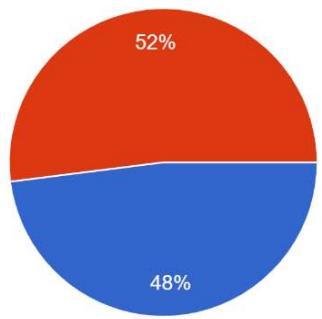
- 18-24 years (Gen Z)
- 25-34 years (Millennials)
#### 2.What is your gender?
100 responses
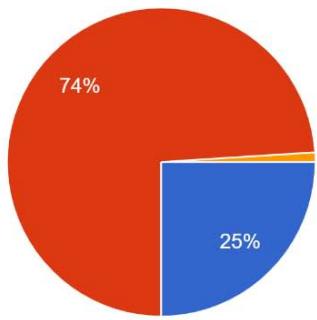
- Male
- Female
- Prefer not to say
#### 3.What is your highest level of education?
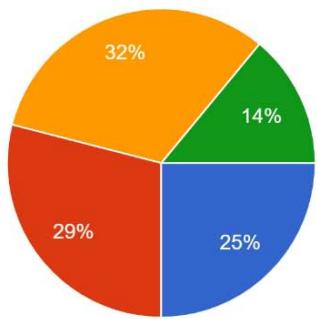
- High school or below
- Associate/Bachelor's degree
- Master's degree or higher
- Other (Please specify)
4.How often do you engage with fashion-related content online?
100 responses
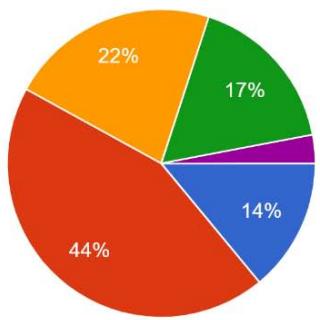
- Daily
- Weekly
- Occasionally
- Rarely
- Never
5.Have you ever interacted with immersive advertising in the metaverse (e.g., AR filters, virtual fashion shows, VR try-ons)?
100 responses
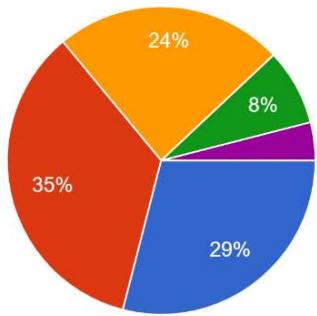
- Quite Frequently
- Occasionally
- No, but I am interested
- Never tried
- No, and I am not interested.
6.I am familiar with the concept of immersive advertising in the metaverse.
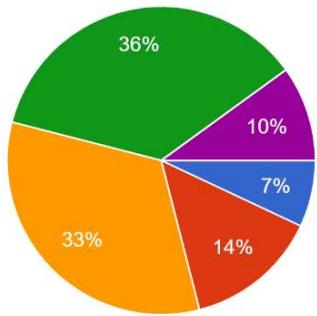
- Strongly disagree
- Disagree
- Neutral
- Agree
- Strongly agree
7.1 believe immersive advertising is more engaging than traditional digital ads.
100 responses
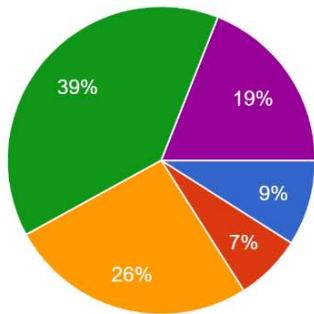
- Strongly disagree
- Disagree
- Neutral
- Agree
- Strongly Agree
# 8. Immersive
100 responses
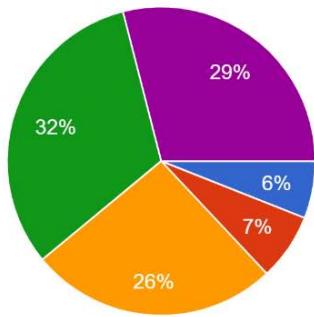
- Strongly disagree
- Disagree
- Neutral
- Agree
- Strongly agree
#### 9. Virtual experiences (AR/VR) make fashion ads more interesting to me.
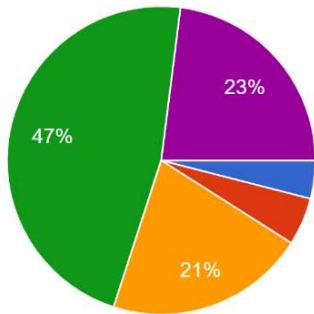
- Strongly disagree
- Disagree
- Neutral
- Agree
- Strongly Agree
#### 10. Immersive advertising increases my engagement with fashion brands.
100 responses
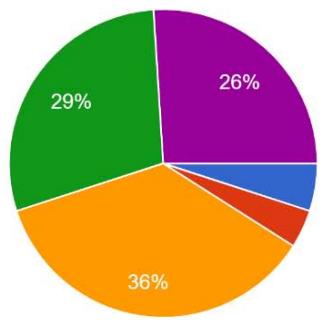
# 11. I
100 responses
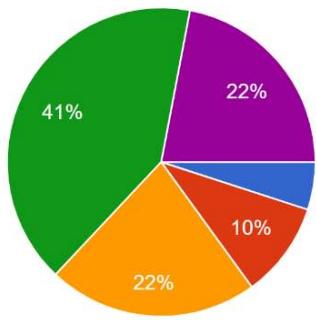
#### 12. Personalized immersive advertisements influence my purchase decisions.
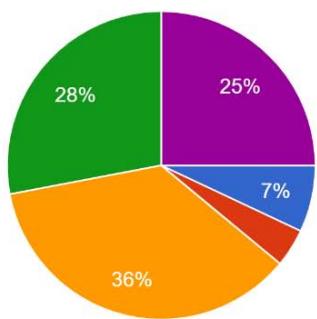
# 13. I am
100 responses
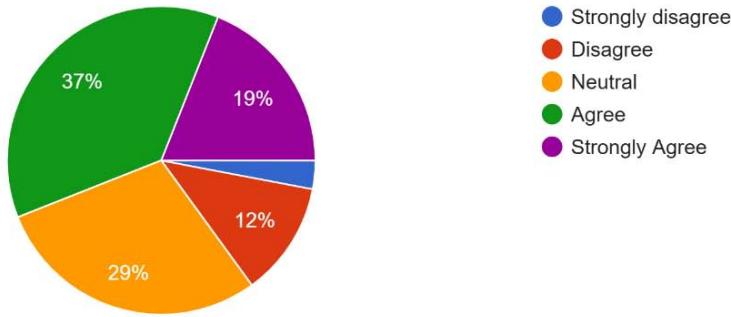
#### 14. Seeing fashion products in immersive ads increases my likelihood of purchasing them.
100 responses
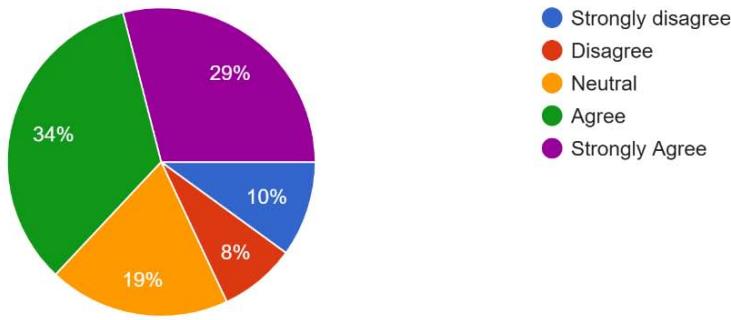
# 15. The
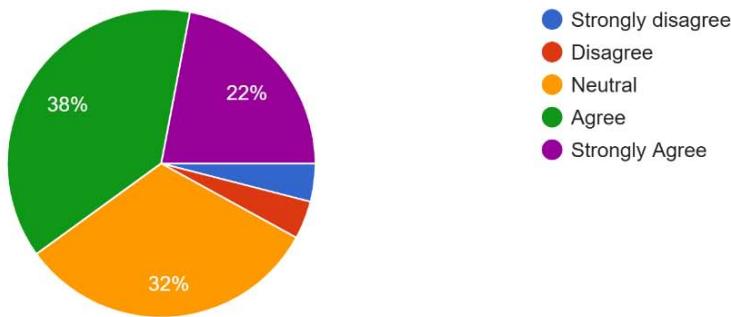
16. I prefer shopping for fashion items in immersive virtual stores rather than on traditional e-commerce websites.
100 responses
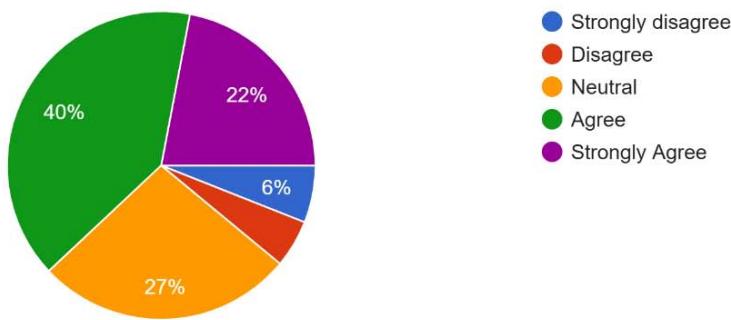
17. Immersive advertising makes me feel more connected to the brand.
100 responses
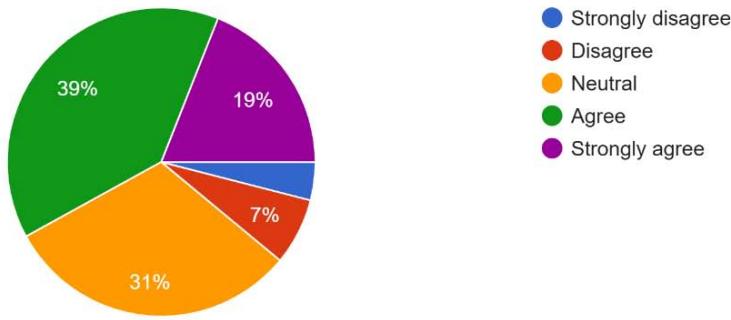
18. Gen Z consumers are more likely to adopt immersive fashion advertising than millennials.
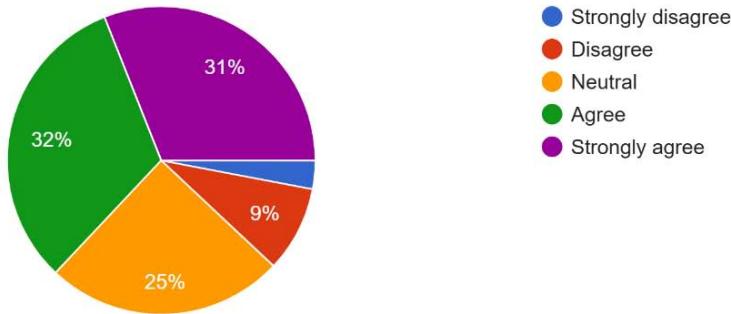
19. Millennials prefer immersive advertising less than Gen Z because they are less engaged in virtual environments.
100 responses
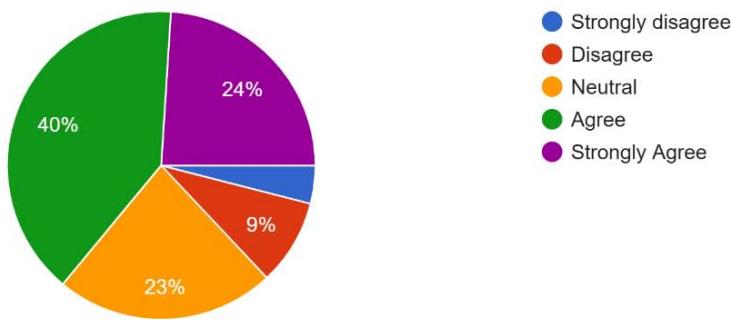
20. The fashion industry should invest more in immersive advertising technologies.
100 responses
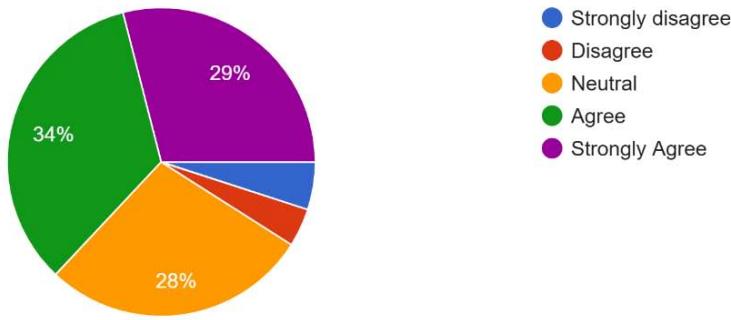
21. Immersive advertising in the metaverse is the future of fashion marketing.
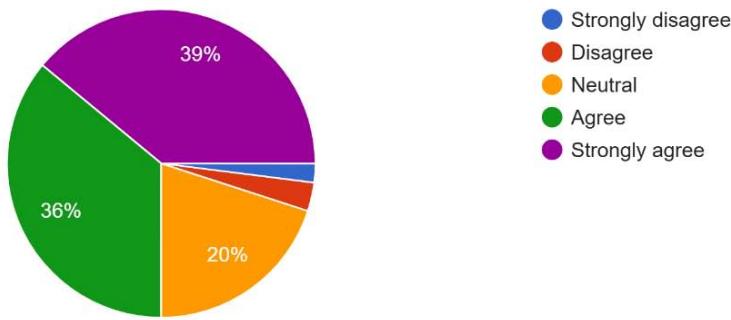
22. Brands that do not adopt immersive advertising will struggle to attract younger consumers.
100 responses
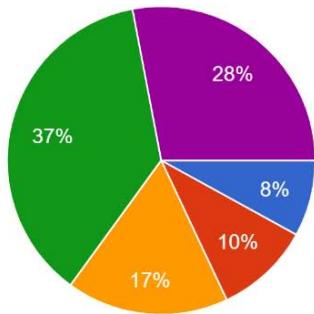
- Strongly disagree
- Disagree
- Neutral
- Agree
- Strongly agree
23. The metaverse shall be at the forefront of the fashion collaborations and runway shows in the coming decade to attract younger consumers.
100 responses
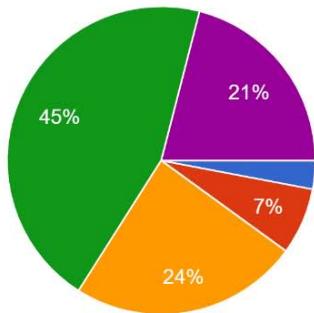
- Strongly disagree
- Disagree
- Neutral
- Agree
- Strongly Agree
24. Millennials may not be able to adapt to immersive ads relative to Gen Z consumers.
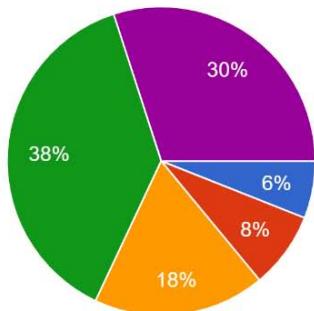
- Strongly disagree
- Disagree
- Neutral
- Agree
- Strongly Agree
25. Traditional channels of fashion marketing more suited to millennials shall be made redundant by the advancement of immersive ads by the coming decade.
100 responses
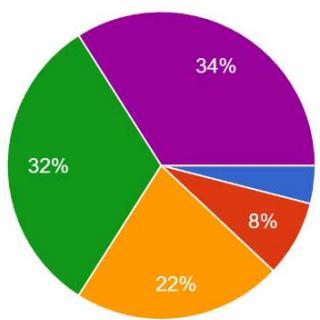
- Strongly disagree
- Disagree
- Neutral
- Agree
- Strongly Agree
[^100]: responses _(p.29)_