
Loading menu…

Copper Deficiency: An Overlooked Cause of Anemia and Leucopenia

Copper Deficiency: An Overlooked Cause of Anemia and Leucopenia

Article Fingerprint

ReserarchID

5MFM6

Copper Deficiency: An Overlooked Cause of Anemia and Leucopenia Banner

Key Research Insights

Synthesized scholarly intelligence & interactive research assistant
  • English
  • Afrikaans
  • Albanian
  • Amharic
  • Arabic
  • Armenian
  • Azerbaijani
  • Basque
  • Belarusian
  • Bengali
  • Bosnian
  • Bulgarian
  • Catalan
  • Cebuano
  • Chichewa
  • Chinese (Simplified)
  • Chinese (Traditional)
  • Corsican
  • Croatian
  • Czech
  • Danish
  • Dutch
  • Esperanto
  • Estonian
  • Filipino
  • Finnish
  • French
  • Frisian
  • Galician
  • Georgian
  • German
  • Greek
  • Gujarati
  • Haitian Creole
  • Hausa
  • Hawaiian
  • Hebrew
  • Hindi
  • Hmong
  • Hungarian
  • Icelandic
  • Igbo
  • Indonesian
  • Irish
  • Italian
  • Japanese
  • Javanese
  • Kannada
  • Kazakh
  • Khmer
  • Korean
  • Kurdish (Kurmanji)
  • Kyrgyz
  • Lao
  • Latin
  • Latvian
  • Lithuanian
  • Luxembourgish
  • Macedonian
  • Malagasy
  • Malay
  • Malayalam
  • Maltese
  • Maori
  • Marathi
  • Mongolian
  • Myanmar (Burmese)
  • Nepali
  • Norwegian
  • Pashto
  • Persian
  • Polish
  • Portuguese
  • Punjabi
  • Romanian
  • Russian
  • Samoan
  • Scots Gaelic
  • Serbian
  • Sesotho
  • Shona
  • Sindhi
  • Sinhala
  • Slovak
  • Slovenian
  • Somali
  • Spanish
  • Sundanese
  • Swahili
  • Swedish
  • Tajik
  • Tamil
  • Telugu
  • Thai
  • Turkish
  • Ukrainian
  • Urdu
  • Uzbek
  • Vietnamese
  • Welsh
  • Xhosa
  • Yiddish
  • Yoruba
  • Zulu
Reading Preferences
Font Size
Line Spacing
Background
This converted HTML version may contain rendering inconsistencies. Please refer to the PDF for the authoritative version, or click here to provide feedback.

Abstract

Introduction-Copper deficiency (hypocupremia) is an acknowledged but often overlooked cause of anemia and leukopenia (1-4). It is recognized as a frequent cause of hypochromic microcytic anemia, leukopenia, and neuropathy. Copper deficiency anemia has been reported after gastric resection (e.g., Roux-en-Y) (1, 5, 6), excessive zinc consumption (1, 6-9), and in patients with short bowel syndrome receiving total parenteral or enteral nutrition lacking adequate copper supplementation (1, 2). We report a case of vitamin B12, and iron refractory severe anemia and leucopenia with history of Roux-en-Y surgery. Myelodysplastic syndrome was suspected. Bone marrow biopsy was consistent with copper deficiency and serum copper levels were undetectable. The patient experienced complete hematological recovery after copper replacement therapy.

I. INTRODUCTION

Copper deficiency (hypocupremia) is an acknowledged but often overlooked cause of anemia and leukopenia (1-4). It is recognized as a frequent cause of hypochromic microcytic anemia, leukopenia, and neuropathy. Copper deficiency anemia has been reported after gastric resection (e.g., Roux-en-Y) (1, 5, 6), excessive zinc consumption (1, 6-9), and in patients with short bowel syndrome receiving total parenteral or enteral nutrition lacking adequate copper supplementation (1, 2). We report a case of vitamin B12, and iron refractory severe anemia and leucopenia with history of Roux-en-Y surgery. Myelodysplastic syndrome was suspected. Bone marrow biopsy was consistent with copper deficiency and serum copper levels were undetectable. The patient experienced complete hematological recovery after copper replacement therapy.

II. CASE PRESENTATION

A 63-year old female was evaluated due to an 18-month history of anemia, alopecia, dyspnea, difficulty with ambulation, and intermittent dizziness leading to recurrent near syncope. Complete blood count showed a hemoglobin of 7.4 g/dl, mean corpuscular volume of 80 fL. White blood cell count was 2,800/mcl, platelets were 249,000/mcl. B12 was low at 138 pg/ml. She had borderline iron deficiency with a ferritin of 66 ng/ml, total iron binding capacity of 475 ug/dl, and iron saturation of 6%.

She had a history of Roux-en-Y bariatric surgery 11 years prior and had been taking zinc supplementation prescribed by her bariatric surgeon.

She received 2 units of packed red blood cell transfusion; she was started on parenteral B12 as well as intravenous iron. Despite these supplementations, her cytopenias persisted, raising the possibility of myelodysplastic syndrome. A bone marrow biopsy was performed. Bone marrow core biopsy was normocellular for age (20%) with a normal myeloid to erythroid ratio.

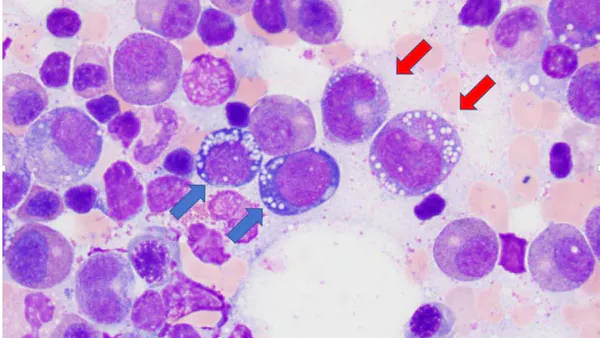
There were mild dyserythropoietic changes with rare ring sideroblasts (3 ring sideroblasts/100 erythroid precursor cells), rare nuclear contour irregularities, and cytoplasmic vacuolization of scattered erythroid precursors. The myeloid lineage showed scattered precursors, including myelocytes with cytoplasmic vacuolization (Figure 1). Rare atypical megakaryocytes with widely spaced nuclear lobes or multinucleation were identified. The morphologic findings in the erythroid and myeloid lineages were highly suggestive of copper deficiency/zinc toxicity, although they overlap with primary myelodysplasia, other sideroblastic anemias such as chronic alcohol toxicity, chronic inflammation, and lead poisoning. Her copper level was undetectable at<5 mcg/dl (Reference range: 70-175 mcg/dl) and her zinc level was elevated at 161 mcg/dl (Reference range: 60-130 mcg/dl). The patient was instructed to discontinue zinc supplements and was started on oral copper replacement therapy. Within four weeks, her hematologic parameters recovered completely (Figure 2).
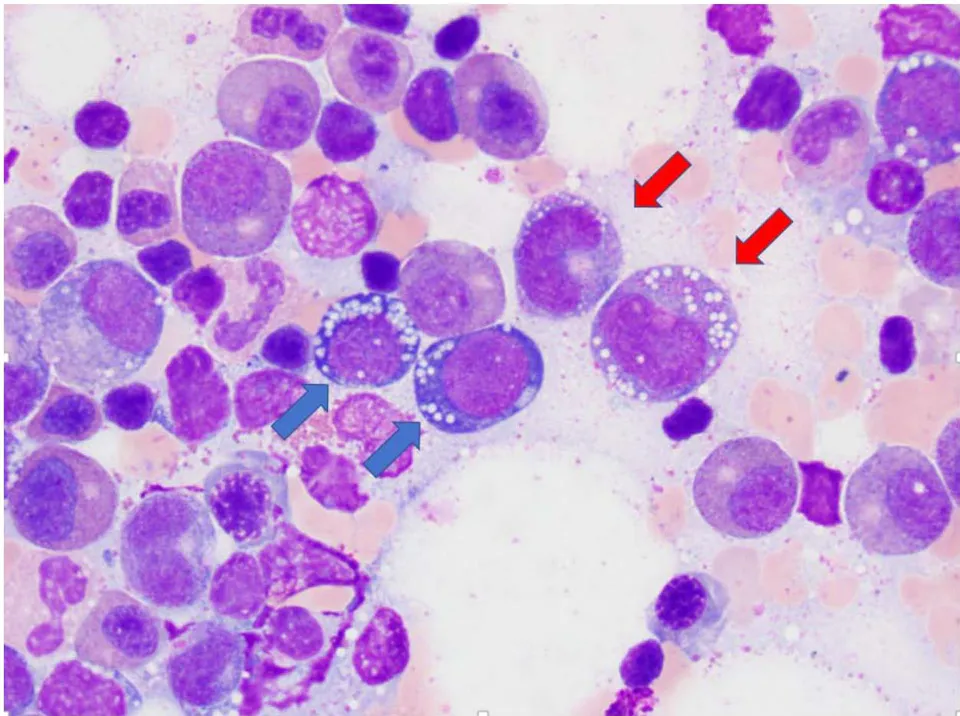
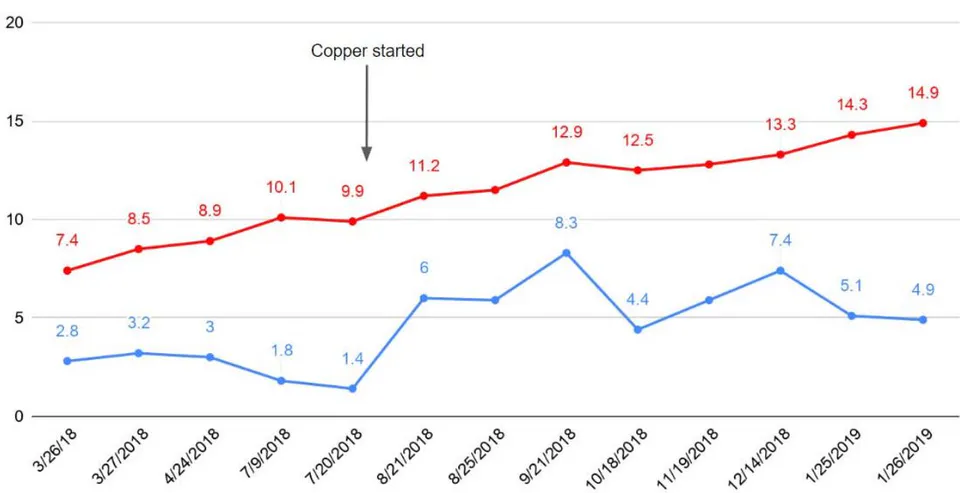
Hemoglobin (g/dL) White Blood Cell Count (1,000 cells/mcL) Fig. 1: Bone marrow aspirate showing cytoplasmic vacuolization of the erythroid (blue arrows) and myeloid lineages (red arrows), Original magnification 1000x

Hemoglobin and White Count Trends Following Copper Supplementation Fig. 2

III. Discussion

Due to the high prevalence of obesity in developed countries, bariatric surgery has become increasingly popular. It is not well-known that gastric bypass procedures can cause acquired copper deficiency.

Hypocupremia is a commonly missed diagnosis in patients presenting with bi lineage cytopenias. Anemia and leukopenia can be seen. Anemia is usually microcytic, but cases of normocytic and even macrocytic anemia can be seen. Thrombocytopenia, however, is rare in copper deficiency (10). Physiologically, copper is absorbed in the gastric mucosa and proximal duodenum. The most common causes of hypocupremia are upper GI tract surgeries, especially bariatric procedures. Other causes include zinc toxicity, malabsorptive states, total parenteral nutrition, enteropathies associated with inflammatory bowel disease, and celiac disease. Hypocupremia due to a dietary deficiency is rare (11, 12).

A retrospective report of 40 patients with hypocupremia associated with hematologic abnormalities was reported by the Mayo Clinic (13). Ten patients were status post weight-reduction surgery, and 14 were status post other GI surgeries. Anemia and leukopenia were the most common hematologic abnormalities. Bone marrow studies revealed erythroid hyperplasia, vacuolization of pro-normoblasts, and myelocytes. Other reports also observed hepatic steatosis and myelopathy, resembling subacute combined degeneration secondary to vitamin B12 deficiency. Myelopathy is most likely caused by cytochrome-c oxidase dysfunction which is copper-dependent (11). Copper deficiency should be suspected in bariatric surgery patients who present with hematological disorders associated with neurological deficits (12).

Excessive zinc supplementation has to be significant, usually 50 mg/day or more, and prolonged to cause anemia. Previous studies have concluded that zinc and copper metabolism antagonize each other at the level of intestinal absorption through a family of proteins called metallothioneins (MTs). MTs are cystine-rich heavy metal-binding proteins that attach to certain metals and prevent their absorption by trapping them in intestinal cells. Zinc increases the synthesis of MTs in the enterocytes. Copper has a stronger affinity to bind with MTs. Because of this higher affinity and the MTs upregulation, copper absorption is decreased, and excretion is increased in the GI tract leading to hypocupremia (12, 14, 15).

Copper deficiency causes anemia due to defective iron mobilization. Metabolically, copper is involved in an intricate pathway, notably for erythropoietic activity. In enterocytes, hephaestin, a copper-dependent transmembrane protein, helps export iron from the gut into the circulation via transferrin. In hepatocytes, ceruloplasmin, which also binds with copper, facilitates iron transport from the liver to blood also via transferrin. In copper deficiency, hephaestin decreases, causing decreased enterocyte iron efflux. Iron transport from the liver to the blood would also fail. Ultimately, defects in these pathways would blunt iron's ability to reach the bone marrow for heme synthesis.

Copper deficiency may also lead to a low white cell count and increased susceptibility to infection. The mechanism of copper deficiency-induced leukopenia is not well understood. Proposed postulates include decreased survival of neutrophils or inhibited differentiation of CD34+ progenitor cells (16).

Our case report brings awareness about copper deficiency as one of the potential causes of hypochromic microcytic anemia and leukopenia. Knowledge about this nutritional deficiency is important in the setting of the growing population undergoing bariatric surgery. Copper deficiency can also cause peripheral neuropathy and myelopathy, leading to significant disability, which, if recognized late, can be irreversible. Therefore, prompt recognition and early treatment are key for successful treatment of neurological complications.

The current recommendation for oral copper supplementation is a loading dose of 8 mg of elemental copper each day for a week, 6 mg for the second week, 4 mg for the third week, and 2 mg daily afterward. And if an intravenous form is required, it is recommended to use 2 mg daily (administered over 2 hours) for five days and then intermittently as needed. If there is evidence of elevated zinc levels and excessive zinc ingestion, recommendations are to discontinue zinc supplements without changing copper dosing (17).

References

17 Cites in Article
  1. 1. Jason Huff,Yi‐kong Keung,Mohan Thakuri,Micheal Beaty,David Hurd,John Owen,István Molnár (2007). Copper deficiency causes reversible myelodysplasia. American Journal of Hematology, 82(7), 625-630.
  2. 2. Ebru Koca,Yahya Buyukasik,Deniz Cetiner,Rahmi Yilmaz,Nilgun Sayinalp,Unal Yasavul,Aysegul Uner (2008). Copper deficiency with increased hematogones mimicking refractory anemia with excess blasts. Leukemia Research, 32(3), 495-499.
  3. 3. John Lazarchick (2012). Update on anemia and neutropenia in copper deficiency. Current Opinion in Hematology, 19(1), 58-60.
  4. 4. William Dunlap,G James,David Hume (1974). Anemia and Neutropenia Caused by Copper Deficiency. Annals of Internal Medicine, 80(4), 470-476.
  5. 5. Bruce Hayton,H Broome,Rogerio Lilenbaum (1995). Copper deficiency‐induced anemia and neutropenia secondary to intestinal malabsorption. American Journal of Hematology, 48(1), 45-47.
  6. 6. N Gletsu-Miller,M Broderius,J Frediani,V Zhao,D Griffith,S Davis,J Sweeney,E Lin,J Prohaska,T Ziegler (2011). Incidence and prevalence of copper deficiency following roux-en-y gastric bypass surgery. International Journal of Obesity, 36(3), 328-335.
  7. 7. Darrell Fiske,Harry Mccoy,Craig Kitchens (1994). Zinc‐induced sideroblastic anemia: Report of a case, review of the literature, and description of the hematologic syndrome. American Journal of Hematology, 46(2), 147-150.
  8. 8. K Porter,D Mcmaster,M Elmes,A Love (1977). ANÆMIA AND LOW SERUM-COPPER DURING ZINC THERAPY. The Lancet, 310(8041), 774.
  9. 9. Sheryl Simon,Richard Branda,Barbara Tindle,Stanley Burns (1988). Copper deficiency and sideroblastic anemia associated with zinc ingestion. American Journal of Hematology, 28(3), 181-183.
  10. 10. A Haddad,V Subbiah,A Lichtin,K Theil,J Maciejewski (2008). Hypocupremia and bone marrow failure. Haematologica, 93(1), e1-e5.
  11. 11. John Lazarchick (2012). Update on anemia and neutropenia in copper deficiency. Current Opinion in Hematology, 19(1), 58-60.
  12. 12. Shoaib Wazir,Ibrahim Ghobrial (2017). Copper deficiency, a new triad: anemia, leucopenia, and myeloneuropathy. Journal of Community Hospital Internal Medicine Perspectives, 7(4), 265-268.
  13. 13. Thorvardur Halfdanarson,Neeraj Kumar,Chin‐yang Li,Robert Phyliky,William Hogan (2008). Hematological manifestations of copper deficiency: a retrospective review. European Journal of Haematology, 80(6), 523-531.
  14. 14. Monte Willis,Sara Monaghan,Michael Miller,Robert Mckenna,Wiley Perkins,Barry Levinson,Vikas Bhushan,Steven Kroft (2005). Zinc-Induced Copper Deficiency. American Journal of Clinical Pathology, 123(1), 125-131.
  15. 15. E Gyorrfy,H Chan (1992). Copper deficiency and microcytic anemia resulting from prolonged ingestion of over the counter zinc. American Journal of Gastroenterology, 87(8), 1054-1055.
  16. 16. G Dangelo (2016). Copper deficiency mimicking myelodysplastic syndrome. Blood Research, 51(4), 217.
  17. 17. N Kumar (2018). Copper deficiency myeloneuropathy. Copper deficiency myeloneuropathy

Funding

No external funding was declared for this work.

Conflict of Interest

The authors declare no conflict of interest.

Ethical Approval

No ethics committee approval was required for this article type.

Data Availability

Not applicable for this article.

How to Cite This Article

Avneek Singh Sandhu, James Kim, Sivjot Binepal, Alejandro Calvo. 2020. "Copper Deficiency: An Overlooked Cause of Anemia and Leucopenia". Global Journal of Medical Research - F: Diseases GJMR-F Volume 20 (GJMR Volume 20 Issue F5).

More Citation Formats

Download Citation

Journal Specifications

Crossref Journal DOI 10.17406/gjmra

Print ISSN 0975-5888

e-ISSN 2249-4618

Keywords
Classification
GJMR-F Classification NLMC Code: WH 155
Version of record
v1.2

Issue date
May 9, 2020

Language
English
Order Article Reprint
Experience in AR

Explore published articles in an immersive Augmented Reality environment. Our platform converts research papers into interactive 3D books, allowing readers to view and interact with content using AR and VR compatible devices.

Read in 3D

Your published article is automatically converted into a realistic 3D book. Flip through pages and read research papers in a more engaging and interactive format.

Article Matrices
Total Views: 805
Total Downloads: 66
All Trends

Request Access

Please fill out the form below to request access to this research paper. Your request will be reviewed by the editorial or author team.
X

This is the heading

Lorem ipsum dolor sit amet, consectetur adipiscing elit. Ut elit tellus, luctus nec ullamcorper mattis, pulvinar dapibus leo.

High-quality academic research articles on global topics and journals.

Copper Deficiency: An Overlooked Cause of Anemia and Leucopenia

Avneek Sandhu
Avneek Sandhu
James Kim
James Kim
Sivjot Binepal
Sivjot Binepal
Alejandro Calvo
Alejandro Calvo
