I. INTRODUCTION
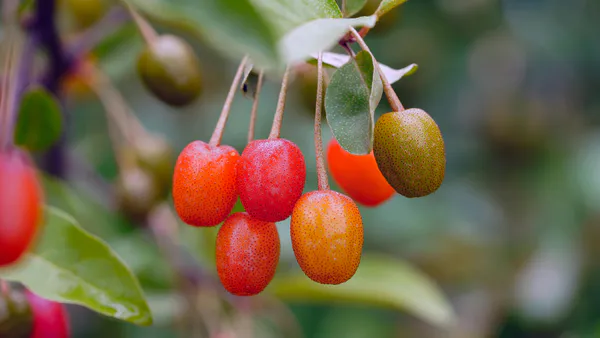
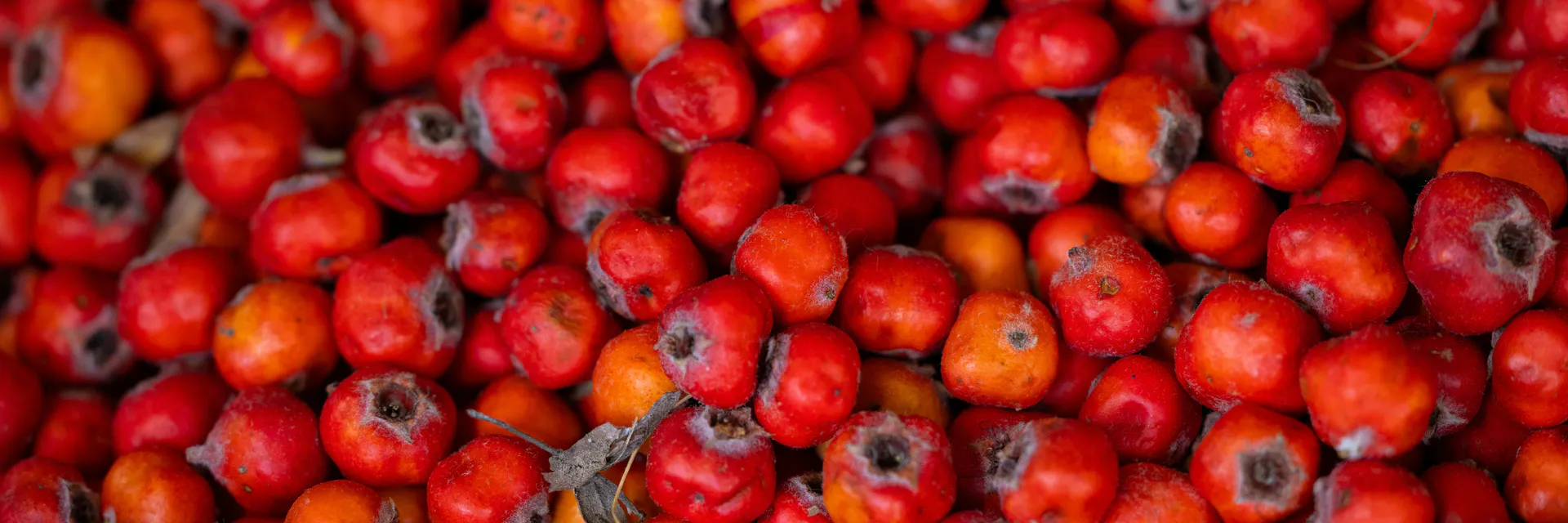
Cornelian cherry (Cornus mas L.) belongs to the family Cornaceae. In Turkic languages, the word «kizil» (Russian name of berry) means «red». It can be found naturally in the central and south-eastern regions of Europe (Kazimierski et al., 2019). Archaeological finds indicate that cornelian cherry was actively eaten, and literary monuments, in particular Homer's Odyssey, say that pigs were even fattened with this berries (Bosančić, 2009). The berries are characterized by oval or oval-oblong shape, with colors ranging from light yellow to dark cherry (Szczepaniak et al., 2019). The taste of the fruit is usually considered to be sweet and sour and in some cases pineapple sweet (Celik et al., 2006). All cornelian cherry varieties have a high biological value, which is mainly related to their antioxidant activity, as well as their phenolic compound and ascorbic acid content (Hassanpour et al., 2011). The main pro-health properties of cornelian cherry are related to the high amount of anthocyanins (Kucharska et al., 2015).
Cornelian cherry berries ripen in early autumn, and due to their properties, they are often used for therapeutic purposes. Cornelian cherries are consumed for their anti-inflammatory, antibacterial, cicatrizing, diuretic, astringent and antiviral properties. Thus, the berries are recommended in the diabetes nutrition - because they have a very low glycemic index and actually help lower blood sugar levels (Dzydzan et al., 2019). According to Kaya et al. (2021) cornelian cherry berries have a hemostatic effect that helps not only to stop bleeding of any kind, but also to make it disappear (Kaya and Koca, 2021). Thus, in order to benefit from the bioactive effects of cornelian cherry berries throughout the year, people freeze or dry them. In this context, the aim of this research was to evaluate the effect of drying and freezing on the bioactive potential of cornelian cherry in terms of ascorbic acid ant total phenols content and antioxidant activity.
II. MATERIALS AND METHODS
a) Materials
Cornelian cherry berries used in the research were purchased (harvest 2021) from the local market. All the reactive were purchased from Sigma Aldrich (Germany).
b) Methods
i. Cornelian cherry drying and freezing
Cornelian berries were dried by convection at and because in the Republic of Moldova, cornelian cherries grow mostly spontaneously, as a second method was selected natural sun drying. At the same time, the berries were subjected to freezing at . In order to perform the other determinations the dried or frozen samples were milled to a powder status.
ii. Moisture content determination
The moisture content of dried and frozen cornelian cherries was determined according to the standardized AOAC Official Method 934.06 - Moisture in Dried Fruits.
iii. Vitamin C content determination
The amount of vitamin C was determined by iodometric titration according to Spinola et al. (Spinola et al., 2013).
iv. Total Phenol Content Determination
The total phenol content in cornelian cherry samples (dried and frozen) was determined by Folin Ciocalteu method according to Makkar et al. (2003) and expressed in mg GAE (Gallic acid)/g product (Makkar, 2003).
v. Antioxidant activity determination
For the evaluation of antioxidant activity, solutions of free radical 1,1-Diphenyl-2-picryl-hydrazyl (DPPH) were prepared in methanol. The ethanolic extracts of cornelian cherry sample solutions at varying concentrations were added to the methanolic solution of
DPPH and after 30 min spectrophotometric measurements at were done in order to read the absorbance. The antioxidant activity was calculated according to the formula:
where - the absorbance of the DPPH solution at the initial time; - the absorbance of the DPPH solution after 30 min of incubation.
vi. Statistical Analysis
The experiments were performed in triplicate. The results are given as mean standard deviation
(SD). Student's t-test was used for comparison between two means.
III. RESULTS AND DISCUSSIONS
The results regarding the influence of the drying or freezing process on the content of moisture and biologically active substances in Cornelian cherry are presented in table 1.
| Moisture,% | Vitamin C, mg/100g | Total phenols content, mg GAE/g | AA DPPH,% | |
| Fresh berries | 74.63±1.43 | 69.00±0.65 | 10.49±0.75 | 62.93±0.56 |
| Frozen berries | 76.18±1.58 | 54.30±0.54 | 10.67±0.45 | 87.00±0.47 |
| Sun dried berries | 25.39±0.59 | 147.50±1.56 | 11.37±0.64 | 66.81±0.84 |
| Dried berries at 60 °C | 17.98±0.46 | 169.20±1.78 | 11.51±0.37 | 74.63±0.39 |
The moisture content plays a decisive role in maintaining the quality of the product over time, the higher it is, the more susceptible the product is to microbiological alteration (Rezaei and VanderGheynst, 2010). The data presented in the table indicate that sun drying as a traditional and finance free drying method reduces the moisture content of cornelian cherry by about , while convective drying at ensures a reduction of of moisture. As for the content of vitamin C, it increases considerably in the dried cornelian cherry samples, which is correlated with the higher content of dry substance in these samples. Numerous authors have researched the content of vitamin C in cornelian cherry, the data being very different from 29 to about (Szczepaniak et al., 2019). In his study, Brindza et al. (2006) mentions that the amount of vitamin C in different Slovakian cornelian cherry genotypes ranges within the limits of fresh product (Brindza et al., 2007). In our study, fresh cornelian cherry had a content of vitamin C of . Taking in to account the high amount of vitamin C, many authors tried to use the cornelian cherry as a functional ingredient in foods formulations. Topdas et al. (2017) enhanced the ice cream vitamin C content using cornelian cherry paste (Topdas et al., 2017), while Celik et al. (2007) used it in yogurt formulations (Celik et al., 2006).
The polyphenols are considered responsible for some of the health effects provided by a diet rich in fruit and vegetables. In our study the total phenols content was affected by drying process, the maximum content was obtained for the cornelian cherry dried by convection (11.51 mg GAE/g). However, considering the high amount of dry matter in this sample and the total phenols content in fresh berries (10.49 mg GAE/g) it can be concluded that during drying some of the phenolic compounds were subjected to oxidation processes. Several researches mention that the total phenos content in cornelian cherries ranges from 219.08 to 976.51mg/100 g of fresh weight (Szczepaniak et al., 2019).
Many authors mention that both the vitamin C content and the polyphenol content are largely influenced on one hand by the geographical area of the culture and on the other, by the chosen research method, extraction yield, etc.
Every day, the human body is subjected to an attack by free radicals, which are actually unstable, reactive molecules (Kryston et al., 2011). They interact with the molecules they come into contact with, generating other unstable molecules and thus triggering a cascading process that can profoundly affect the body. Free radicals can appear as a result of all existing forms of pollution (contaminating air, water, food) and unhealthy lifestyles (Aseervatham et al., 2013). To combat the effect of free radicals we need antioxidants, which can be taken from plant food sources (McCord, 1993). Based on these, the ability to inhibit the free radical DPPH (2,2-diphenyl-1-picrylhydrazyl) by cornelian cherry berries was observed. From the data presented in table 1, it is obvious that the frozen berries exhibit the highest antioxidant activity of and the lowest, of was obtained for fresh berries.
IV. CONCLUSION
Cornelian cherry has a high bioactive potential. The high content of these phenolic compounds and vitamin C provide significant antioxidant potential and numerous beneficial health effects. The drying process can be successfully used to preserve the properties of the berries throughout the year.
ACKNOWLEDGMENT
The study was done within the State Project 20.80009.0807.17. "Education for the revitalization of the national cultural heritage through traditional processing technologies used in the Republic of Moldova in the context of multiculturalism, diversity and European integration", running at Technical University of Moldova.