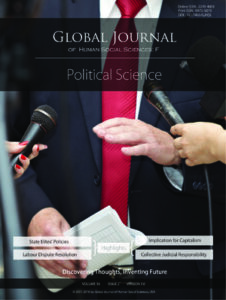
Corruption and Post 2015 Development Agenda in Nigeria

1
Philips O. Okolo
Philips O. Okolo
1 Niger Delta University, Nigeria

Send Message

To: Author

GJHSS Volume 16 Issue F2

Article Fingerprint

ReserarchID

00OO1

Corruption and Post 2015 Development Agenda in Nigeria Banner
  • English
  • Afrikaans
  • Albanian
  • Amharic
  • Arabic
  • Armenian
  • Azerbaijani
  • Basque
  • Belarusian
  • Bengali
  • Bosnian
  • Bulgarian
  • Catalan
  • Cebuano
  • Chichewa
  • Chinese (Simplified)
  • Chinese (Traditional)
  • Corsican
  • Croatian
  • Czech
  • Danish
  • Dutch
  • Esperanto
  • Estonian
  • Filipino
  • Finnish
  • French
  • Frisian
  • Galician
  • Georgian
  • German
  • Greek
  • Gujarati
  • Haitian Creole
  • Hausa
  • Hawaiian
  • Hebrew
  • Hindi
  • Hmong
  • Hungarian
  • Icelandic
  • Igbo
  • Indonesian
  • Irish
  • Italian
  • Japanese
  • Javanese
  • Kannada
  • Kazakh
  • Khmer
  • Korean
  • Kurdish (Kurmanji)
  • Kyrgyz
  • Lao
  • Latin
  • Latvian
  • Lithuanian
  • Luxembourgish
  • Macedonian
  • Malagasy
  • Malay
  • Malayalam
  • Maltese
  • Maori
  • Marathi
  • Mongolian
  • Myanmar (Burmese)
  • Nepali
  • Norwegian
  • Pashto
  • Persian
  • Polish
  • Portuguese
  • Punjabi
  • Romanian
  • Russian
  • Samoan
  • Scots Gaelic
  • Serbian
  • Sesotho
  • Shona
  • Sindhi
  • Sinhala
  • Slovak
  • Slovenian
  • Somali
  • Spanish
  • Sundanese
  • Swahili
  • Swedish
  • Tajik
  • Tamil
  • Telugu
  • Thai
  • Turkish
  • Ukrainian
  • Urdu
  • Uzbek
  • Vietnamese
  • Welsh
  • Xhosa
  • Yiddish
  • Yoruba
  • Zulu

This work examined the impediments corruption pose on Nigerias’ economy. It states that “Corruption in Nigeria is endemic in all facets and it has continued to challenge the goals of sustainability of development efforts in all ramifications. Thus, this chapter provides explanations on the corruption variable in the country, its negative impacts, consequences and impediments towards the country march to economic recovery in post 2015 and the sustenance of development effort. The work applied the historical method of data collection (secondary sources) using descriptive mechanism of analysis.

67 Cites in Articles

References

  1. D Agbese (1992). Corruption, the Palm Oil that stains the fingers of the Giver and the Receiver.
  2. S Akindele (200S). A Critical Analysis of Corruption and its Problems in Nigeria.
  3. A Akinkuotu (2005). Why Did She Have To Tell The World?.
  4. O Aluko (1976). Oil at Concessionary Prices for Africa: A Case Study in Nigerian Decision.
  5. Inge Amundsen (2009). Extractive and power-preserving political corruption.
  6. Ayttey (2002). Corruption and Human Trafficking: The Nigeria case.
  7. I Ayua (2001). Proceeding of the National Conference on the problem of corruption in Nigeria.
  8. J Bayart (1993). The State in Africa: The Politics of the Belly.
  9. J Bayart,S Ellis,B Hibou (1999). The criminalisation of the State in Africa (African issues).
  10. (2009). Ribadu tells of Nigeria Corruption battle.
  11. T Biersteker,P Lawis (1997). The Rise and Fall of Structural Adjustment Programme in Nigeria.
  12. William Brownsberger (1983). Development and Governmental Corruption – Materialism and Political Fragmentation in Nigeria.
  13. W Brownsherger (1983). Development and Governmental Corruption – Materialism and Political Fragmentation in Nigeria.
  14. Chobal (1999). Africa Works: Disorder as Political Instrument.
  15. K Dadajo (2008). The Constitutional fight against corruption in Nigeria: Is it enough?.
  16. Larry Diamond (1991). Political Corruption: Nigeria's Perennial Struggle.
  17. B Dixon-Ogbechi (2002). Research Methods & Elementary Statistics in Practice.
  18. C Edward,Bandfield (1996). Political Influence.
  19. Egonmwan (2002). Public Policy Analysis: Concepts and Applications.
  20. V Egwerni (2012). Corruption and Corrupt Practices in Nigeria: An Agenda for Taming the Monster.
  21. A Etekpe,P Okolo (2011). Politics and Democracy in Contemporary Nigeria.
  22. Ambily Etekpe,P Okolo (2011). Challenges and Prospects of Enhancing Productivity for Sustainable Development in the Public Sector: The Case of Bayelsa State, Nigeria.
  23. Ambily Etekpe,P Okolo (2012). Icj Judgment On Bakassi Peninsula And Lake Chad: Litmus Test For Peace And Integration In Africa.
  24. O Ezekiel (2011). Nigerian Politics: the crippling legacy of godfatherism.
  25. O Faloore (2010). The Family and Corruption Management in Nigeria.
  26. W Fawole (2005). Voting without choosing: Interrogating the crisis of Electoral democracy in Nigeria.
  27. J Henley (2003). French Sleaze Inquiry Targets US Oil Subsidiary.
  28. Miriam Nwodo,Oluwayemisi A Olorode,Tatfeng Mirabeau,Nanighe Stephen,Nsikak Etim,Sylvester C Izah (2013). Molecular Detection of Hepatits B Virus Genotypes in Tertiary Hospitals in Bayelsa State, Nigeria.
  29. S Ibaba,P Okolo (2009). Resolving Militia conflicts in the Niger Delta: The Role and strategies of Mediation.
  30. O Igbuzor (2008). Strategies for Winning the Anti-Corruption War in Nigeria, Abuja: Action Aid.
  31. L Wamalwa,J Tovar,S Indieka,B Torto,M Ghislain (1999). Exogenous and endogenous plant growth regulators’ effect on regeneration of selected African sweetpotato (Ipomoea batatas L. Lam) cultivars.
  32. Philip Isakpa (2013). Global Corruption Barometer 2013.
  33. (2005). Corruption: The Trouble with Nigeria -Discharging a Burden.
  34. H Jimo (2001). West and West Central Africa in Global Corruption Report.
  35. G Konie (2003). National Reconciliation." The Post.
  36. C Kumolu (2009). Millennium Development Goals: The Crack and Mortal Blows Ahead of Nigeria.
  37. P Langseth (1997). The Role of a National Integrity System in Fighting Corruption.
  38. N Maduegbuna (2005). Anti-Corruption in Nigeria: Public Communications Perspective.
  39. K Maier (2000). This house has fallen: Nigeria in crises.
  40. A Ndubusi (2009). Nigeria What Hope? Enugu.
  41. O Nnoli (1981). Short History of Nigeria under development in Okwodiba Nnoli.
  42. E Nsikan,M Aliyu,L Udensi (2015). Proceedings of the 49 <sup>th</sup> AGM and Scientific Conference, International College of Surgeons, Nigeria National Section. Held in Port Harcourt, Rivers State Nigeria from 17 <sup>th</sup> to 20 <sup>th</sup> June 2015 (ICS PHCITY 2015).
  43. G Nwaobi (2004). Corruption and Bribery in the Nigerian Economy: An empirical investigation public Economics 0404006.
  44. D Ochefu,O Chima (2008). Money Laundering: A toll on the image on Nigerian banks.
  45. A Odofin,K Omojuwa (2007). The Challenges of Democratisation Process in Nigeria.
  46. K Ogundele,A Unachukwu (2012). US$400 billion Oil Money Mismanaged by Government.
  47. P Okolo (1997). Definition of Corruption, its manifestations and challenges to the Administrator.
  48. P Okolo,O Akpokighe (2014). Federalism and Resource Control: The Nigerian Experience.
  49. P Okolo,O Akpokighe (2014). Corruption in Nigeria: The Possible Way Out.
  50. P Okolo,A Etekpe (2011). A study of Public Maintenance Culture and its Impacts on the Socio-Economic Development of Nigeria, 2005 -2009.
  51. P Okolo,A Etekpe (2014). Value Re-Orientation: Policy Option for Sustainable Development in the Niger Delta.
  52. P Okolo,P Inokoba (2014). Democracy and Resource Conflict Resolution: Making a Case for the Democratic Solution to the Niger Delta Crisis.
  53. P Okolo (1997). The Nigeria Police (NPF) and Corruption (1990 -1995) A case study of Rivers State Police Command being a.
  54. P Okolo (2014). Managing Minority Problems in Nigeria: The case of the Ethnic Minorities of the Niger Delta Region.
  55. P Okolo (2014). NDDC, Conflict, Peace -Building and Community Development in the Niger Delta Region.
  56. P Okolo,C Opukri,C Osimerah,K Max-Egba (2014). The Independent Development of Ideology.
  57. P Okolo,R O; Akpokighe,H Igbokwe (2014). The need for Ethnic Integration in the Niger Delta Region of Nigeria: A Focus of Western Niger Delta.
  58. B Olugbenga (2007). Endangering Good Governance for Sustainable Democracy: The Continuity Struggle against Corruption in Nigeria.
  59. L Owugah (1999). Local Resistance and the State, paper presented at Oil Watch Africa General Assembly.
  60. N Ribadu (2006). Nigerian's Struggle with Corruption.
  61. M Salisu (2000). Corruption in Nigeria.
  62. O Stople (2008). Corruption and Anticorruption in Nigeria and beyond.
  63. V Tanzi (1998). Corruption around the World: Causes, Consequences, Scope and Cures.
  64. Florian Steinberg (1997). Helping Countries Combat Corruption — Progress at the World Bank since 1997.
  65. O Philips,Fhrd Okolo (2011). Thielen, Jean Philips van or Jan Philips van.
  66. B Holds,Sc Political and Administrative Studies (Pub.Admin) from the.
  67. Okolo is the pioneer National Publicity Secretary Society for Peace Studies and Practice (SPSP) Nigeria.

Funding

No external funding was declared for this work.

Conflict of Interest

The authors declare no conflict of interest.

Ethical Approval

No ethics committee approval was required for this article type.

Data Availability

Not applicable for this article.

Philips O. Okolo. 2016. \u201cCorruption and Post 2015 Development Agenda in Nigeria\u201d. Global Journal of Human-Social Science - F: Political Science GJHSS-F Volume 16 (GJHSS Volume 16 Issue F2): .

Download Citation

Journal Specifications

Crossref Journal DOI 10.17406/GJHSS

Print ISSN 0975-587X

e-ISSN 2249-460X

Keywords
Classification
GJHSS-F Classification: FOR Code: 369999
Version of record

v1.2

Issue date

August 13, 2016

Language

English

Experiance in AR

The methods for personal identification and authentication are no exception.

Read in 3D

The methods for personal identification and authentication are no exception.

Article Matrices
Total Views: 3737
Total Downloads: 1787
2026 Trends
Research Identity (RIN)
Related Research

Published Article

This work examined the impediments corruption pose on Nigerias’ economy. It states that “Corruption in Nigeria is endemic in all facets and it has continued to challenge the goals of sustainability of development efforts in all ramifications. Thus, this chapter provides explanations on the corruption variable in the country, its negative impacts, consequences and impediments towards the country march to economic recovery in post 2015 and the sustenance of development effort. The work applied the historical method of data collection (secondary sources) using descriptive mechanism of analysis.

Our website is actively being updated, and changes may occur frequently. Please clear your browser cache if needed. For feedback or error reporting, please email [email protected]
×

This Page is Under Development

We are currently updating this article page for a better experience.

Request Access

Please fill out the form below to request access to this research paper. Your request will be reviewed by the editorial or author team.
X

Quote and Order Details

Contact Person

Invoice Address

Notes or Comments

This is the heading

Lorem ipsum dolor sit amet, consectetur adipiscing elit. Ut elit tellus, luctus nec ullamcorper mattis, pulvinar dapibus leo.


High-quality academic research articles on global topics and journals.

Corruption and Post 2015 Development Agenda in Nigeria

Philips O. Okolo
Philips O. Okolo Niger Delta University, Nigeria

Research Journals