
I. INTRODUCTION
The onset of COVID-19 in Wuham, China, home to 11 million people and the capital of the Hubei Province was like a rivulet that turnout to be a mighty devastating disastrous river flood. According to Huang et al. (2020) and Shen, et al (2020), the whole phenomena initially were seen as unexplained cases of pneumonia with cough, dyspnea, fatigue, and fever as the main symptoms have occurred in Wuhan, China in a short period of time since December 2019. And that China's health authorities and CDC quickly identified the pathogen of such cases as a new type of coronavirus, which the World Health Organization (WHO) later named COVID-19 in January, 2020. As of 29 February 2020, COVID-19 has spread to 60 countries and territories, of which the World Health Organization (WHO) published the number of cumulative cases in 54 Member States on
29 February 2020, as well as Hong Kong, Macao and Taiwan.
The new condition of life emanating from the globally pandemic actually popup some agitating questions like: 'are we really at the end of the capitalist system and its hedonistic forms, are the teachings of the holy books on global plagues replicating again, or are we simply at a stage of societal transformation? This is not the first that humanity is forced to face or probably the last. The people infected by the COVID-19 in the world today (WHO data, May 2020) are over 5 million confirmed cases including 326,459 deaths and still counting. Yet Wuhan, China, the epicentre of the pandemic was said to have removed all the barriers erected since January 23 2020. Their isolation has ended, roads, sea, rail, and air links reopened, while America and Europe that are worst affected and other continents are still stuck in the pandemic quagmire.
Globally, there is presently an economic catastrophe, countries that are hitherto described as economic giants are being threaten economically, while those who are in economic recession are plunging into more and more recession. For instance, according to Alessandro (2020) quoting the former Italian Minister of Economy, Pier Carlo Padoan, that "Eurobond and Mes have become "toxic words", now unmanageable. It would be better to get rid of them and then start discussing again using a new vocabulary" (Padoan, interview on the Foglio).
At the beginning of March, the OECD warned that the world economy would grow by half compared to forecasts if the coronavirus crisis gets longer and worse. As a worst-case scenario, the global economy is expected to grow by in 2020, compared to last year (OECD data, March 2020). It is becoming obvious that the COVID-19 crisis will persist longer than many investors suspected and that the economic damage will be deeper and potentially more lasting. Some management analysts (Lazard Frères, March 2020) predict that the economic impact will be extremely violent as it combines a shock of both demand and supply. For instance, the Small and Medium Enterprises (SME) services index in Europe is falling to the lowest standard (from 52.6 in February to 28.4, compared to the previous low of 39.2 in February 2009, (OECD 2020).
Meanwhile, in the United States, weekly unemployment claims have risen to 3.2 million, and going by the speed of this crisis, US GDP could drop by in the second quarter of the year 2020. Unemployment has already risen to due to the coronavirus pandemic and the economy is amid a shocking decline that is still not reflected in the data, (Yellen, 2020). As for the coronavirus, a vaccine will probably emerge soon, but who will produce the vaccine for the new globalized economic crisis? For instance, according to the International Air Transport Association (IATA), Air France-KLM and Qantas groups in Australia are facing financial blow. Qantas claimed that the coronavirus could reduce profits for the fiscal year ending June 30 to 30 million, while Air France-KLM estimated a profit loss of $216 million between February and April this year (Alessandro, 2020).
Structurally for instance, the major oil- and gas-producing states (the Gulf Cooperation Council member states, Iran, Iraq, Libya, Algeria), the pandemic's impact is revealing, once again, the dangers of being over reliance on hydrocarbons for economic growth, (Chloe and Asmaa, 2020). Global oil prices are currently oscillating between 30 a barrel that mean sustained low oil prices and a deep global recession is looming if not already here. Moreover, the tourism industry, a major part of several countries' economies (the United Arab Emirates, Saudi Arabia, Israel, Egypt, Turkey, Jordan, and more), has also nosedive substantially with severe impacts on employment and government revenues, (Andrew and Heba, 2020)
Going by the above global pandemic and its origin, pertinent questions as to the level of Chinese government negligence of International Environmental Law and effectiveness of their existing emergency response, negligence in the operation of their wild animal market, the level of human induced factor in the SARS-CoV-2 virus mutation, and the invocation of the existing inter-territorial environmental laws in mitigating future re-occurrence of pandemic that could lead to global standstill from any part of the world, are calling for investigation. It is for this reasons that this study aimed at examining the gaps in the coronavirus onset management
II. RELEVANT LITERATURE
A review of the history of scientific taxonomy and nomenclature of emerging virus and infectious disease according to Jones (2020) observed that as far back as 1966, an International Committee on Nomenclature of Viruses (ICNV) was established with the mission of introducing some degree of order and consistency into the naming of viruses. And that in 1973, the ICNV became the International Committee on Virus Taxonomy (ICTV), a global authority on the designation
and naming of viruses like WHO that is responsible for the naming of new human infectious diseases.
Studies revealed in retrospect that, virologist Anthony Peter Waterson (1923 - 1983) and his colleagues can be said to have coin the neologism "coronavirus" (Waterson and Wilkinson, 1978), and also in 1968, eight distinguished virologists proposed the term "coronaviruses" in a brief annotation of Nature (Almeida et al, 1968). In humans, there are 7 spectrums of human coronaviruses (HCoVs) known to cause the common cold as well as more severe respiratory disease. Out of these, human coronaviruses HCoV-229E, HCoV-NL63, HCoV-OC43 and HCoV-HKU1 are routinely responsible for mild respiratory illnesses like the common cold but can cause severe infections in immune compromised individuals. But three of them are known to have caused deadly outbreaks, which are: SARS-CoV, MERS-CoV, and the newly identified coronaviruses now known as SARS-CoV-2 (Gorbalenya et al 2020).
These cases were soon determined to be caused by a novel coronavirus that was later named SARS-CoV-2 (Niederberger, 2020). Coronaviruses are a group of viruses that are common in humans and are responsible for up to of common colds (Mesel-Lemoine et al, 2012). Corona is Latin for "crown" – this group of viruses is given its name due to the fact that its surface looks like a crown under an electron microscope. Two outbreaks of new diseases in recent history were also caused by coronaviruses – SARS in 2003 that resulted in around 1,000 deaths and MERS in 2012 that resulted in 862 deaths (Smith, 2006; Erasmus, 2020).
The first cases of COVID-19 outside of China were identified on January 13 in Thailand and on January 16 in Japan. On January 23rd the city of Wuhan and other cities in the region were placed on lockdown by the Chinese Government. Since then COVID-19 has spread to many more countries - cases have been reported in all regions of the world. One can see the latest available data in the dashboards of cases and deaths which are kept up-to-date by Johns Hopkins University. By projection, if COVID-19 affects half the world's current population over the course of a year with a 1 percent fatality rate, the death toll would be 35 million. By comparison, the Spanish flu infected an estimated 500 million people and killed 50 million worldwide in 1918-19.
In an effort to defend the stigmatization of the Chimes in relation to the 2019 virus name tag, Zhiwen (2020) opine that: as the earlier nomenclature practices, the neologism “coronavirus” came due to the misjudgements of its debut in textbooks and that the portfolio of full-fledged official names would duly discourage the spread of regional stigmatization and racial discrimination. Perceptual bias in the perception of natural origin of COVID-19 is part of the reason for
negative behavioural propensities in specific regions, rather than the degree of infection in their territories.
III. COVID-19; VIRUS MUTATION OR GENETICALLY ENGINEERED
Generally when it comes to virus mutation, coronaviruses are usually host specific: they attach to hosts with the spike protein and its particular shape normally fits only one host. The shape of the spike protein is determined by the S gene. Therefore, the S gene must have changed if a coronavirus jumps to a new host. This change cannot be a small set of point mutations as different animal species require quite different spike proteins. Consequently we find a larger change in the S gene in each three cases of coronaviruses (SARS-CoV, MERS-CoV and SARS-CoV-2) that have recently jumped from an animal host to humans. There are two possible reasons for this larger change which are Recombination (a natural process) and Genetic Engineering.
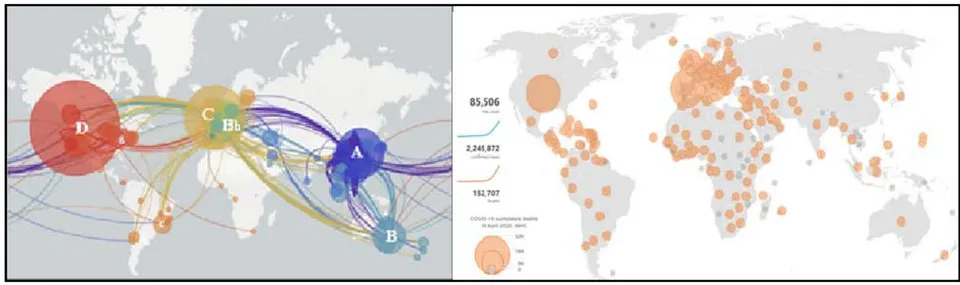
One general problematic characteristic of coronaviruses is its common repeat infections, and this may be because the immune response against these viruses is not complete or it is short living. It is also possible that the spike protein changes over time so that antibodies do not give complete protection, (Almeida et al 1978). The spike protein is also the part of the virus that antibodies try to disable. This phenomenon can be noticed not only with SARS-CoV-2 but with all three. For instance, Hamzah et al, (2016) revealed that camels that were given a vaccine expressing the spike protein of MERS showed antibodies and a significant reduction of excreted infectious virus. That is, they were still infectious even after being vaccinated, which means that coronaviruses activities should not be underestimated. The phylogeny flow network shows an initial emergence in Wuhan, China, in Nov-Dec 2019, followed by sustained human-to-human transmission at a global level which also shows clear genetic relationships through the transmission patterns of "A - D" as in Figure 2.
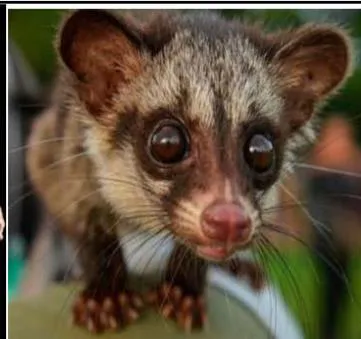
Since 2002, three new serious human coronaviruses (SARS-CoV, MERS-CoV and SARS-CoV-2) have appeared. It is thought provoking to observe that SARS-CoV found in 2002 (called SARS) also originated in Guadong, China. SARS-CoV originates in bats and the intermediate host is likely to be a civet. Himalayan palm civet CoVs in a live-animal market in Guadong had nearly identical (99.8%) genomes to the human SARS-CoV (Guan et al, 2003). SARS-CoV did not just arise from a civet CoV, It is either as a result of recombination events, as claims, or it was engineered.
MERS-CoV that was found in 2012 was endemic in dromedary camels in East Africa and Middle East. Hamzah et al, (2016) suggests that the original reservoir of MERS-CoV was bats, as bats are the main reservoir for many types of coronaviruses. Between 2009 and 2011, there were series of studies on bats that revealed that out of ten tested bats in Ghana only one, Nycteris bat, had 2c-beta coronavirus (i.e., of the type of MERS-CoV). One third of Nycteris bats had the virus. of Pipistrellus bats from four European countries had 2c-beta coronavirus. Both 2c-beta coronaviruses are close to MERS-CoV. Archived serum samples from camels also revealed that the virus was already common in camels in the early 1980s in Sudan and Somalia.
Coronaviruses are RNA viruses, as is the Ebola virus, found in 1976. The phylogenetic tree drawn by Holmes et al, (2016) so that recombination is not a major behaviour of this virus, but there has been a case of recombination in Zaire Ebola virus, described by Wittman et al, (2007). A recombinant event between two lineages between 1996 and 2001 was found to have caused a series of Ebola outbreaks between 2001 and 2003. Phylogenetic trees of traditional DNA viruses, like variola (smallpox) and the measles virus seem to be trees, (Furuse et al, 2011).
The natural recombination explanation does not hold in the pangolin CoV: in the recombination explanation, a pangolin would have been infected with two CoV viruses, one from a bat with an S gene that does not infect humans, and the other from some other animal that has an S virus that can infect humans before the RNA of these viruses would recombine. But there seem no such other virus and assuming such will only complicate the problem further. The contending issue then is that mere random viruses mutations might not just produce enough changes to create a significantly different S gene because a virus population is very large, and this cannot be explain off genetically.
It is therefore suspicious that three new deadly coronaviruses appeared in such a short time. There had to be a significantly large change in the genome of the virus over a reasonable period of time for it to migrate into humans. Thus, there must be a more convincing proof that Covid-19 was not genetically engineered or the age long wild life Wet Market incubated the transmission to man and that WHO and UN-Habitat need to decode the genetic black box of the COVID to the world.
It is no longer news globally that there is leadership tussle among the G7 and G20 measured by the level of national resilience to any global challenge. Unlike after the 2008 financial crisis, the G7 and G20 meetings have been perfunctory, with every country looking after itself and taking measures to stop the spread of COVID-19 domestically, (Mathew and Peter, 2020). The bottom line is that the coronavirus pandemic may end up reinforcing Chinese President Xi Jinping and the Communist Party of China's authoritarian tendencies. Obviously, it will require the United States and the EU taking more decisive responsibility for the developing world's predicaments in countering the loyalty pendulum swinging to China's Belt and Road Initiative.
IV. THE LAW OF POLLUTERS PAY PRINCIPLE (PPP) AND COVID-19
The polluter pays principle (PPP) was first mentioned in the recommendation of the EU Organization for Economic Cooperation and Development (OECD) of 26th May 1972 and reaffirmed in the recommendation of 14th November 1974. In Rio 1992, PPP was laid down as Principle 16 of the UN Declaration on Environment and Development. The
European Community took up the OECD recommendation in its first Environmental Action Program (1973-1976) and then in a Recommendation of 3 March 1975 regarding cost allocation and action by public authorities on environmental matters.
Since 1987, the principle has also been enshrined in the Treaty of the European Communities and in numerous national legislations world-wide. PPP is highly recognised by the International court of Justice under Article 38 and applied under the "General principles of law recognized by civilize nations" Art. 38.1 (c) One of the main functions of PPP is that the polluter should bear the expense of carrying out the measures "decided by public authorities to ensure that the environment is in an acceptable state (OECD, 1972). Since its first appearance in 1972, the PPP is today understood in a much broader sense, not only covering pollution prevention and control measures but also covering liability, e.g. costs for the clean-up of damage to the environment, (OECD 1989 and 1992). Also, the field of application of PPP has been extended in recent years from pollution control at the source towards control of product impacts during their whole life cycle (LCA = Life Cycle Assessment). The PPP has a curative function, which means that the polluter has to bear the clean-up costs for damage already occurred.
The polluter pays principle does not only apply if there is a "real" pollution in terms of harm or damage to private property and/or the environment. Most legal orders go beyond this interpretation: In the light of the precautionary principle, environmental legislation may also provide for measures which are taken to minimise risks - even in cases where there is a lack of scientific knowledge and scientific cause-effect relationships cannot fully be established, (Petra, 2014).
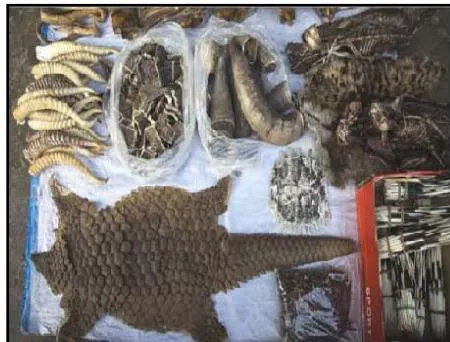
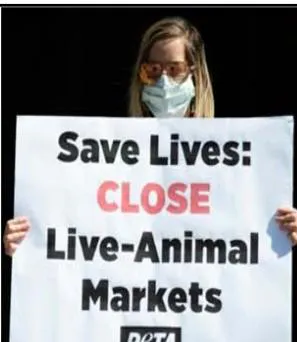
The term "polluter" refers to a polluting, harmful activity and but also those who are (only) causing risks for the environment and where pollution has not (yet) occurred. The fact that SARS-CoV found in 2002 and COVID-19 both originated from China with human inducement factor (i.e Wet Market figure 3) that becomes global pandemic and keeping the whole world standstill, then the principle of PPP should be apply.
V. TRANS-BOUNDARY ENVIRONMENTAL IMPACT ASSESSMENT AND COVID-19
In contemporary public international law, the concept of absolute territorial sovereignty is no longer recognized. Consequently, the scope for discretionary action arising from the principle of territorial sovereignty is determined by such principles and adages as 'good neighbourliness' and sic utere tuo ut alienum non laedas (you should use your property in such a way as not to cause injury to your neighbour's) as well as by the principle of State responsibility for actions causing trans-boundary damage, and more importantly, the prohibition of the abuse by a State of the rights enjoyed by it by virtue of international law. The fact that this concept is deeply embedded in contemporary international law is evident in the jurisprudence of international law.
State sovereignty cannot be exercised in isolation because activities of one nation often bear upon those of others and, consequently, upon their sovereign rights. Oppenheim (1912) noted that nation in spite of its territorial supremacy, is not allowed to alter the natural conditions of its own territory to the disadvantage of the natural conditions of the territory of a neighbouring country. It has also been argued that the application of national Environmental Impact Assessment (EIA) legislation to trans-boundary impacts complies with the 'non-discrimination principle' whereby foreign stakeholders should have a right to participate in the EIA procedure of the origin nation on an equal footing with domestic stakeholders
Thus, the principle of territorial sovereignty finds its limitations where its exercise touches upon the territorial sovereignty and integrity of other country. Consequently, the scope for discretionary action arising from the principle of sovereignty is determined by such principles and adages as 'good neighbourliness' and sic utere tuo ut alienum non laedas (you should use your property in such a way as not to cause injury to your neighbour's) as well as by the principle of State responsibility for actions causing trans-boundary damage. The strongest support for these principles and their implications can be found in the jurisprudence of international case law.
Under the principles of international law, no State has the right to use or permit the use of its territory in such a manner as to cause injury by fumes in or to the territory of another or the properties or persons therein, when the case is of serious consequence and the injury is established by clear and convincing evidence. The Rio Declaration (1992), adopted in a non-binding form by the United Nations Conference on Environment and Development (UNCED), provides in Principle 2 that States shall prevent trans-boundary damage: States have, in accordance with the Charter of the United Nations and the principles of international law, the sovereign right to exploit their own resources pursuant to their own environmental and developmental policies, and the responsibility to ensure that activities within their jurisdiction or control do not cause damage to the environment of other States or of areas beyond the limits of national The UN Declarations on environment commencing with the Stockholm Declaration of 1972 and over a 150 international instruments which followed, provided ample evidence of State obligations in regard to Environment Law. Justice Weeramantry in his dissenting Opinion on the Use of Nuclear Weapons, (ICJ-Advisory Opinion of 8 July 1996) at the request of World Health Organization (WHO), outlined how these obligations had accrued. He observed:
From rather hesitant and tentative beginnings, environment law has progressed rapidly under the combined stimulus of over more powerful means of inflicting irrevocable environmental damage and an ever-increasing awareness of the fragility of global environment. Together these have brought about a Universal concern with activities that may damage global environment which is the common inheritance of all nations, great and small. (ICJReports1996 p. 258.)
It is therefore of necessity that the G7, G20, WHO, and UN-Habitat should come out of their global politics shell by calling a-spade-a-spade and seek for justice in the present pandemic.
VI. CASE REVIEWS IN INTERNATIONAL LAW OF NEGLIGENCE AND COVID-19
Negligence (Lat. negligentia) is a failure to exercise appropriate and or ethical ruled care expected to be exercised amongst specified circumstances. The area of tort law known as negligence involves harm caused by failing to act as a form of carelessness possibly with extenuating circumstances. The core concept of negligence is that people should exercise reasonable care in their actions, by taking account of the potential harm that they might foreseeably cause to other people or property, (Feinman, 2010; Deakin et al, 2003)).
This subsection examines how the common law tort of negligence as developed in the United Kingdom can offer a meaningful guidance for deconstructing the practice of positive human rights obligations. It shows how the common law tort of negligence, as developed by the national courts, can provide a helpful guidance for elucidating some of the disparate analytical elements that are subsumed under the umbrella of positive human rights obligations.
In tort law, the question of whether there is a duty of care is often asked prior to the question whether this duty has been breached. This logical sequence is related to the fact that an omission is at the heart of the analysis, which raises the question as to the standard against which any omission is to be measured for finding liability. Not only is the question of the duty of care central to tort law, but the existence of a duty is not presumed, there is thus no prima facie duty of care as in the case of Michael and Others v the Chief Constable of South Wales police (2015). In English tort law, the approach of instrumentalism has been applied, which implies drawing analogies with established categories of liability when asking the question whether duty exists. If such analogies cannot be established, the case will be regarded as novel and it needs to be determined whether a duty should be imposed, (Booth and Squires, 2019). This question implies an inquiry as to whether 'as a matter of law liability in negligence is countenanced in this category of case, (Donal, 2013).
In determining the existence of duty in the common law tort of negligence according to Vladislava (2019), a three-part test is applied that consists of asking the following questions:
Was the harm that the claimant suffered a foreseeable consequence of the defendant's negligence;
Were the claimant and the defendant in a relation of proximity, i.e. were they connected in terms of time, space and relationship (Carl, 2012); and
Is the imposition of a duty 'fair, just and reasonable', i.e. should a duty be imposed, as a matter of public policy as in the case of Caparo Industries plc v. Dickman (1990).
These elements can be respectively framed as foresee ability, proximity and reasonableness. The elements have to be cumulatively fulfilled, which means, for example, that a duty cannot be established on the basis of 'fairness, justice and reasonableness' alone. Questions concerning foresee ability, proximity and reasonableness are also asked to determining whether the obligation has been breached.
In term of the proof of causation, the tort law of negligence requires the claimant to demonstrate that the breach of the duty caused the harm. There needs to be accordingly a causal relationship between the breach of duty and the loss suffered by the claimant. For this purpose, a 'but for' test has been utilised: the claimant must establish that 'but for' the negligence of the defendant, he or she would not have suffered the harm for which compensation is sought which have to be established on the balance of probabilities, Sandy (2015).
The principles of 'Due Diligence' or 'Due Care' with respect to the environment and natural wealth and resources are among the first basic principles of environmental protection and preservation law. They take root in ancient and natural law as well as in religion. Apart from continuous auditing and monitoring, there is an increasing emphasis on the duty of States to take preventive measures to protect the environment. The notion of precaution is an attractive one that can be taken to mean a parental attitude towards the environment, protecting it from potential harm by acting on foresight and avoiding unacceptable risks. It appears that the Precautionary Principle (PP) has had a meteoric rise in the international law arena and now being incorporated into treaties with more clearly defined objective principles, (Roderick, 2011). The PP is included in the Rio Declaration, Principle 15 which states:
Where there are threats of serious of irreversible damage, lack of full scientific certainty shall not be used as a reason for postponing cost-effective measures to prevent environmental degradation.
In a more realistic approach, when it is matter of foreseeable harm prevention, threshold of proof of responsibility for actual harm lowered. While still entailing some element of foresees ability, this would require measures of prevention at an earlier stage, when there is still some room for uncertainty. Expressions such as 'reasonably foreseeable' or 'significant risk' allow both the magnitude of harm and the probability of its occurrence to be taken into account. Three levels of State responsibility have been identified by scholars in relation to the environment: The most traditional one is that related to responsibility on the basis of fault or lack of due diligence. At the intermediate level, one finds the objective or strict responsibility, which is related to an obligation of result; the obligation not to damage the environment and the violation of which will engage responsibility regardless of fault. The most stringent level, referred to as absolute responsibility, concerns liability for acts not prohibited by international law irrespective of fault or of the lawfulness of the activity in question, (Stapleton, 2011).
The issue of environmental impact litigation and redress is not new with series of national and international decided court cases. The major advantages of court reviewed cases even at ICJ levels is for States to be weary of the Precautionary Principle in the exercise of their sovereignty in the use of environmental resources. For instance, in the Island of Palmas Case (United States v. The Netherlands, award in 1928) the Tribunal concluded, more generally, in what no doubt constitutes its best-known paragraph:
- The state have obligation of mutual respect and protection of the environment (1974, Nuclear Tests) and not to allow their territory to be used for activities violating rights of other states (1949, Corfu Channel).
- There is also a general obligation to ensure that any activity under the state's jurisdiction and control respects environment of other states or area beyond control. (1996, Advisory Opinion on use of Nuclear Weapons).
Also in the Erika oil spill case, the European Court of Justice held in 2008, based on Art. 15 of the EU Waste Framework Directive (2006), that the producer of hydrocarbons which became waste due to an accident at sea, could be held liable for the clean-up costs. In accordance with the polluter pays principle, however, such a producer is not liable unless he or she has contributed through his or her conduct to the risk of pollution stemming from the shipwreck.
VII. HUMAN RIGHT AND COVID-19
Human right principles are key in shaping the present pandemic response for both the public health and the broader impact on people's lives and livelihoods. Responses that are shaped by and respect of human rights result in better outcomes in beating the pandemic, ensuring healthcare for everyone and preserving human dignity and that human rights are obligations which States must abide by. (UN, 2020).
Observing the crisis and its impact through a human rights lens puts a focus on how it is affecting people; particularly the most vulnerable and what can be done about it now, and in the long term. Historic underinvestment in health systems has weakened the ability to respond to this pandemic as well as provide other essential health services. COVID-19 is showing that Universal Health Coverage (UHC) must become an imperative.
The coronavirus can infect and kill the young, as well as the old, the rich, the poor, or those with underlying health conditions. It does not respect race, colour, sex, language, religion, sexual orientation or gender identity, political or other opinion, national, ethnic or social origin, property, disability, birth or any other status. COVID-19 is creating a vicious cycle whereby high levels of inequalities fuel its spread, which in turn deepens inequalities. Many of the people most severely impacted by the crisis are those who already face enormous challenges in a daily struggle to survive. According to UN (2020), for more than 2.2 billion people in the world, washing their hands regularly is not an option because they have inadequate access to water, and for 1.8 billion who are homeless or have inadequate, overcrowded housing, physical distancing is a pipe dream. Poverty itself is an enormous risk factor.
VIII. DISCUSSION
The coronavirus has take its toll all over the world, but when an individual or a nation falls, there is usually a need to take a cursory look at the root cause of the fall. Global politics seem to becloud or deaden the sense of examining the circumstances that surround the movement of the SARS-CoV2 to human that is not unconnected to the wet Market in China. When SARS that originated in Guadong, China came out in 2002 and claimed over 1,000 lives, nothing was done to unravel the root cause and neither was there any invocation of legal ordinances to curtail the reoccurrence.
Globally, there is discuss on space debris management and the need for space debris tax for correction and clean up. In the year 2007, China deliberately causes space collision that lead to about one thousand debris in the outer space to the detriment of others with impunity seemingly. The space tax is to operate on the principle of the common good as in the environmental law of polluters-pay-principle.
Again, a critical look at what is currently happening at the Indian sea where China has dominated with war ammunition vessels with the sole aim of territorial expansion, it's becoming obvious that anther world war or global lord is in making. Is it out of place at this juncture to conclude that coronavirus is genetically engineered as a miniature of biological weapon that is begging for investigation outside the present global politics within the G5 and G20 where African nations are part of the grasses in the arena.
Although World Health Organization (WHO) Director General has called for solidarity, not stigma, it is notable that to date WHO and other related bodies have not issued any substantive statement on how countries can take public health measures that achieve health protection and mitigation future reoccurrence while respecting human rights (Alicia-Ely and Roojin, 2020; Ghebreyesus, 2020).
Although communicating uncertainty and risk while addressing public concerns can be a challenge, failure to do so can lead to a range of outcomes, including a loss of trust and reputation, economic impacts and, in the worst case, a loss of lives. It is not therefore a surprise that the US president (Donald Trump) is pulling out of a body like WHO.
IX. CONCLUSION AND RECOMMENDATIONS
The world is again been faced with more grievous virus outbreak at a pandemic scale of which over 414,140 people have died so far from the COVID-19 outbreak as of June 10, 2020 with currently over 7,344,220 confirmed cases in 213 countries and territories while still assessing the fatality rate. Socioeconomically, the world is at stand still for months thereby eroding the hitherto economic gains over the years. In fact, another laboratory has been created for the sociologist and psychologist in terms of the anomalies in social system and spatial human interaction.
COVID-19 has manifested itself in an increasingly worrying way in some of the most polluted areas in the world, a reason that could justify the high number of infected in the Italian Region of Lombardy, one of the most industrialized areas in Europe where the concentration levels of particulates (Pm10) are among the highest not only in Europe but in the world as well; this situation has persisted for too many years.
There is an urgent need for global bodies like WHO, UN-Habitat, Global Watch, and Human right activist to invoke the environmental laws like the PPP, EIA, and the Tort law through the ICJ against Chinese government. The Environmental Conservationist are clamouring for more stringent laws against the poachers of wild animals that are near extinct worldwide and in China in particular. Mere closure of those Wet Markets in China is not enough; they should be treated as suspect at the ICJ for possible compensation and remediation globally. Where there is no sentence against evil did, the heart of men will be set to continue in more evil. The safety of the global health should not be mortgaged for the politics of supremacy among the G5 and G20.