I. INTRODUCTION
In 2013, under the auspices of Rosatom in Russia, the Higher School of Physics was created to train and educate scientists of the new generation in the field of theoretical and experimental physics. The lecture "The Physics of Extreme States of Matter," President of RAS V.E. Fortov opened a series of lectures by outstanding scientists for this school [1]. The choice of their topic, of course, was not accidental. The physics of extreme states of matter underlies the modern understanding of the evolution and structure of the Universe. In connection with the importance of the topic, as well as responding to the words of Fortov: "The author will be grateful to readers for the critical comments, suggestions, and additions that are inevitable when presenting such a rapidly developing field as the physics of extreme states" I wrote this article. Perhaps the questions raised in it will interest readers, and their responses will provide scientists with food for thought about new approaches to the physics of extreme states of matter in Universe.
II. Cosmo Physics of the Universe
The science of the laws of the behavior of matter under extreme conditions and Cosmo physics are closely related and intertwined. The universe is as a source of unique information. In astrophysical objects, the time of existence of extreme states may vary from milliseconds to billions of years, which allows for their detailed observation and measurement using space probes, orbital and ground-based telescopes at different wavelength ranges. Comparison of space observations with laboratory results demonstrates deep analogies that testify, at a minimum, about the unity of the physical principles of substance behavior in a wide range of densities (approximately 42 orders of magnitude) and temperatures ( K). The information is about hydrodynamic mixing of highly radiating relativistic and magnetized streams and jets, solitons, etc. With an increase in the energy density ( and T), the substance acquires an increasingly universal structure, its properties are simplified.
An increase in pressure and temperature destroys molecular complexes; they form atomic states, which then lose the external electrons responsible for the chemical individuality of the substance, due to the ionization temperature and/or pressure ionization . Unfortunately V.E. Fortov in his lecture could not (or did not want) to approach as dialectically as he approached the development of astrophysical objects, to the development of the Universe as a whole, including galactic and intergalactic space environment (dark matter and dark energy). Dark matter in astronomy and cosmology, as well as in theoretical physics, is a hypothetical form that does not emit electromagnetic radiation and does not directly interact with it. This property of dark matter even makes impossible its direct observation. The conclusion about the existence of dark matter is based on numerous, consistent with each other, but indirect signs of the behavior of astrophysical objects and the gravitational effects created by them. Clarifying the nature of dark matter will help solve the problem of hidden mass, which, in particular, lies in the anomalously high speed of rotation of the outer regions of galaxies. Of particular interest among astronomers was the Andromeda nebula, in which the speed of rotation of stars around its center does not decrease, as the celestial mechanics predicts, inversely proportional to the distance to the center of R, but remains almost constant. It may mean that the galaxy throughout its length contains a significant mass of dark matter ("galactic halo"). If dark matter attracts, possesses gravity, then anti-gravity is inherent in dark energy in a certain sense. It causes the universe to expand rapidly. Dark energy in the standard cosmological model ( CDM) is a hypothetical type of energy introduced into the mathematical model of the Universe for the sake of explaining its observed expansion with acceleration. In the standard cosmological model, dark energy is a cosmological constant - a constant energy density that uniformly fills the space of the Universe (in other words, non-zero energy and vacuum pressure are postulated).
According to the observational data from the Planck space observatory published in March 2013, the total mass-energy of the observed Universe consists of:
Dark energy (68.3%);
Dark matter (26.8%);
"Ordinary" (baryonic) matter (4.9%) [2].
Of the remaining 5% of baryonic matter, 4/5 of the mass falls on the interstellar medium, and only 0.5% of the average density of the Universe is concentrated in stars. It is with this 0.5% of the substance that the lectures of V. Fortov are dedicated, and the remaining 99.5% of the substance of the Universe remained practically not considered. The reason for this should be sought not in the absence of astronomical observations, but the absence of a coherent concept of the physical nature of the space environment (the ether). It is believed that astrophysics of the 20th century completely and irrevocably buried the notion of ether. The annihilating statement of the pillars of modern physics by A.Einstein and D.Neiman 1940 within the walls of the Priston Institute of Higher Studies that Tesla is trying to galvanize the long-decaying corpse of the ether substance still kills of a new cosmology. The title of the report delivered 2013 by President of the Russian Academy of Sciences V.E. Fortov within the framework of the 40th Astrophysical Assembly of COSPAR - "Back to the Future" is symbolic. The reference points for cosmology of the 21st century are of Einstein's General Theory of Relativity (GTR), a wonderful phenomenon of our Universe as a result of the Big Bang and unrestrained expansion the Universe under the influence of anti-gravity forces up to its destruction. Therefore, V.E. Fortov concluded his report words: "we can say that by doing this science and moving forward, we are going backward and getting younger in time" - but not in science [2].
III. DARK MATTER AND DARK ENERGY ARE EXTREME STATES OF THE SPACE ENVIRONMENT
I suggest in the theory of local expansion and contraction of the Universe on the basis of dark energy, dark matter and of baryonic matter, which rejecting the theory a cyclic universe with a time-variable Hubble parameter and the "Big Bang" theory. The dark matter is born in contact with the vortexes of dark energy in the strong magnetic and gravitational fields[3]. Several possible mechanisms for generating dark matter and baryon asymmetry have been proposed in the literature, which allow us to compare the energy density (mass) of baryons and dark matter particles ( b, dm, ), however, no natural explanation of this fact. An international group of astronomers under the general direction of Sylvia Garbari of the University of Zurich (Switzerland) in 2019 conducted a simulation of various possibilities for the distribution of dark matter in the vicinity of the Sun. It turned out that even in the most moderate variant; its amount is comparable with the amount of baryon (ordinary) matter. New data on the dynamics of the 2,000 orange dwarfs of the spectral class K closest to our star were used to determine the density of dark matter in the vicinity of the Solar System. As a result, it turned out that the density of such matter in the vicinity of the Sun is 0.022 solar masses per cubic parsec, or . In this case, the density of baryonic matter in the same area is estimated by the authors at 0.098 solar masses per cubic parsec, or . Dark energy is distributed more evenly throughout the Universe, and its density is measured with an accuracy of a few percent [4]. In the article, I propose a "natural" mechanism for the generation of dark matter and baryonic matter based on deep analogies with the behavior of a superfluid medium . The formation of significant masses in the vortices of dark energy, much larger than the mass of the medium, explains the mechanism of the phase transition of dark energy into dark matter. Dark matter gathers into bunches, is attracted to galaxies and forms halos around them, which extend to several galactic radii. These halos predict the observed dark matter distribution in galaxies and are derived from observations using modern radio telescopes. So, the statement of V.E. Fortov that with an increase in the energy density ( and T) the substance acquires an increasingly universal structure, the properties of the substance are simplified due to the destruction of molecular complexes and atomic states, it is necessary to add the conclusion that manifested during astronomical observations. This conclusion becomes logical as soon as we recognize that the transformation of baryonic matter in extreme conditions of Cosmos continues until the formation of the galactic and intergalactic medium and the reverse transformation. V.E. Fortov, in his studies of extreme states of matter, stopped a step away from creating a theory of the space environment. Further development of the theory of superfluid media made it possible to consider phase transitions in models of the physical vacuum, similarly to phase transitions in superfluid [5]. L.B. Boldyreva, in her model of superfluid physical vacuum (SPV), significantly expanded the analogy between the properties of superfluid and the space environment (dark energy and dark matter) mainly by taking into account the properties of the vortices: spin and electric polarization of the medium in the vortices, inertial properties of vortices, and superfluid spin currents between them [6]. That Maxwell himself endowed the light-carrying environment in which vortex electric fields and currents of displacement, necessary for him to derive the famous equations of electrodynamics, with properties surprisingly close to the properties of a superfluid quantum vacuum, have arisen [7]. Here are these properties:
The rotation of the particles of the medium, which, according to the quantum vacuum model, is comparable with the presence of spin in quantum forming the dark energy;
The translational motion of particles of the medium without friction between themselves and without loss of energy, which can be interpreted as the absence of shear viscosity and superfluidity in the dark energy;
The rotation of the particles of the quantum vacuum without slipping, which, essentially, is the rotational viscosity;
The formation of vortices during the propagation of electromagnetic waves, which fully coincides with the conclusions of the quantum vacuum model;
Dielectric properties of the light-carrying environment the quantum vacuum. Maxwell called the component (dE/dt) in his equations "bias current", bearing in mind that an electric field is created in a luminiferous ether when excited due to the relative motion of its differently charged particles that form a dipole. In quantum electrodynamics (QED), this phenomenon the polarization is characterized by the production of electron and positron pairs in a physical vacuum (dark energy and dark matter) [8];
The formation of a significant mass in the dipoles, a much larger mass of particles of the medium, which is identical to the property of the vortices in the dark matter.
The last property of the quantum vacuum explains the mechanism of the phase transition of dark energy into dark matter, during the formation of massive domains in the gravitational and magnetic fields of galaxies.
Tesla, refers to the work of Maxwell, wrote: "Almost thirty-three years ago, Maxwell, continuing the promising experience of Faraday 1845, developed an ideally simple theory that combined light, heat rays and the phenomenon of electricity, explaining their origin with vibrations of a hypothetical fluid of an incomprehensible thin structure called ether..." [9].
Most galaxies rotate so fast that they should break apart, but the invisible "halo" of dark matter should hold them together. The author of the local theory of the expansion of the Universe, a professor at Moscow State University A. Chernin, argues that in intergalactic space, where there is no gravity mass and magnetic field of large cosmic formations (galaxies) acting on dark energy, neither dark matter nor baryonic matter exists, but one dark energy . In intergalactic space around galaxies RZG is the radius of zero gravity where the force of gravity and repulsion are equal. When R <RZG predominant attraction, with R> RZG - repulsion. The paper A.Chernin calculated "the value of the radius around the local group (RZG) =1.4Mpk. The local group this gravitationally bound quasi-stationary system with a total mass M=(2-3)x10 Me" [10]. This mass constitute the "normal" (baryonic) matter of stars and interstellar medium, and dark matter, which is about five times more. Assuming that dark matter can be considered as an analogue of the spontaneously ferromagnetic β-phase of the superfluid , then in the space defined by the radius RZG, the physical cause of formation of domains of dark matter may be due to spin polarization of dark energy vortices in the powerful magnetic field of the galaxy, that is, by the effect Einstein - de Haas. Effect of Einstein - de Haas: this rotation liquid volume during magnetization. Since the magnetization of the atoms does signify their spin polarization, then the Einstein-de Haas effect is the rotation of the volume of the liquid at dS/dt ≠0 where S is the total spin of the extracted volume of the liquid. It can be assumed that many polarization physical phenomena in baryonic matter and dark energy must have the same nature and proceed identically. The formation of significant domains in the form of quantum spinors in the vortices of dark energy, much larger than the mass of the medium, explains of the phase transition of dark energy into dark matter. The presence of additional gravitating masses of dark matter in near-Earth space was discovered during experiments with artificial earth satellites (AES) equipped with magnetometers. With the help of magnetometers, it was possible to detect moving vortex formations of dark matter in the near-earth medium having the form of tangential cylinders, with axes parallel to the axis of rotation of the Earth [11]. The velocity of the satellite relative to dark matter was determined from the change the intensity of the magnetic field. The experiments were conducted in the A.F. Mozhaysky Military-Space Academy in the 90s of the 20th century, under the leadership of the Deputy Head of the Academy for Scientific Work, Professor V.Fateev. Head of the Department is Colonel V.L. Groshev published the results of dark matter detection in his book [11]. Academy staff found that in areas of tectonic faults, where there is intense electromagnetic and gravitational energy interaction between the liquid magma of the Earth and the cosmic dark matter, are formed toroidal luminous vortices with sizes ranging from micro particles to tens of meters (rotators, spinors, hadrons) [11]. It is interesting that the quantum spinors of dark matter in the form of tangential cylinders with axes parallel to the axis of rotation of the Earth are found not only in near-earth space, but also in the molten magma of the earth's core [12] The mechanism of the formation of halo from dark matter with a radius (RZG) in space around galaxies may be similar to the mechanism that causes the formation of stars from interstellar matter - the Jeans gravitational instability. J. Jeans (1902) for the first time showed that the initially homogeneous gravitating medium with density is unstable with respect to small density perturbations [13]. If there is a condensation in the medium, then the gravitational forces will tend to increase it, and the elastic forces will tend to expand the medium and return it to its original state. Under the action of these oppositely directed forces, the medium will either come into an oscillatory motion, or will experience a monotonous motion. The nature of the movement depends on the relationship between the wavelength of the perturbation and some critical magnitude, called the Jeans scale:
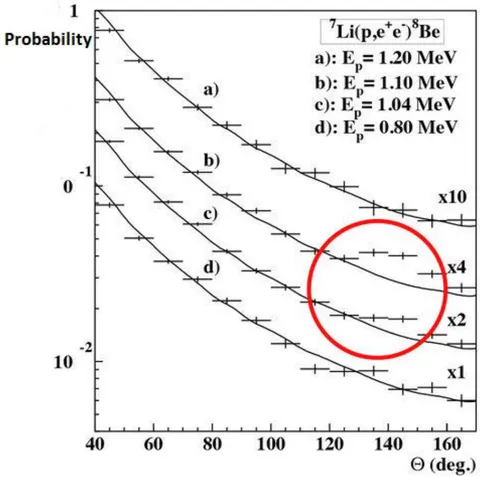
The value the Jeans scale (L) depends on environmental parameters: velocity of acoustic vibrations in a medium (the speed of the longitudinal wave) cs, density , and gravitational constant G. It defines the minimum scale perturbations, from which the elastic force of the not able to withstand the forces of gravity. It leads to the gravitational instability of the medium [13]. In this small-size random packing, medium grows in time if they cover an area of linear size . Perturbations with scales smaller than the Jeans length are acoustic vibrations. For today, one is reliably known the existence of four fundamental interactions (excluding the Higgs field): the gravitational interaction; the electromagnetic interaction; the strong interaction; the weak interaction. Analysis of experimental data associated with the investigation of the anisotropy of physical space allows us to assume the existence of a fifth interaction (of fifth force) [14]. 2019, the Space Telescope of the European Space Agency Gaia monitors the active stellar flow S1, moving at a speed of 310 m/s, relative to the solar system. The author of the study, Pierre Sakivi, suggests identifying wimps, candidates for the role of the main component of cold dark matter and a new interaction force (fifth force), which sets in motion the stellar flows. Hungarian physicists discover new evidence that hints at the fifth fundamental force of nature. Attila Krasznahorkay and his group at the Hungarian Academy of Sciences' Institute for Nuclear Research in Debrecen, Hungary, initially published their new discovery in January 2016 in the journal Physical Review Letters. Protons were aimed at lithium-7, a collision that created unstable beryllium-8 nuclei, which then decayed into pairs of electrons and positrons. At about 140 degrees, the number of these pairs increased, creating a little bump before dropping off again at higher angles. According to Krasznahorkay and his team, this 'bump' was evidence of a new particle. They calculated that the mass of this new particle would be around 17 MeV, which isn't what was expected for the 'dark photon', but could be evidence of something else entirely. The end result was a new boson particle that was only 34 times heavier than an electron [15]. The graph shows (Fig. 1) that deviations are observed only for two values of the energy of incident protons Ep=1.10 MeV and Ep=1.04 MeV, while other energy indices do not. For protons with the energy lower than the Ep=1.04-1.10 MeV the bump, evidence of the decay of a new particle, not been observed Ep=0.80 MeV. However, the bump has neither been observed and for protons with Ep=1.20 MeV. This says of a fact of the resonant interaction between protons and the new particle the dark matter. Skeptical of the discovery the professors Attila Krasznahorkay, doctor of physical Andrei Rostovtsev. He said: "Deviations are observed only at two values of the energy of the incident protons, with other energy indicators this is not. The proton energy was slightly changed - and the "burst" disappeared. This usually happens when certain experimental difficulties arise." [16]. It seems to me that Rostovtsev's statement is not convincing enough since he ignores the role of resonance in of production the beryllium, and of electron-positron pairs at of the decay of a new particle the dark matter. The role of resonances in the occurrence of fluctuations and the birth of particles in the space environment is undeniable [17]. For proton energy Ep=1.00 MeV I identified the frequency and wavelength for the new particle the dark matter as follows:
where Ep - the proton energy
In quantum electrodynamics (QED), the vacuum polarization (dark matter) consists in the formation of virtual electron-positron pairs under the influence primary high-energy electrons and protons, of a quantum of the electromagnetic field of a photon or under the influence of a peak electric field. The experimentally established the initial boundary of the polarization of vacuum (dark matter) corresponds to a photon with energy Wphot Mev = 1.6493·10 J [8].
(5)
where h is the Planck constant;
v is the proton frequency;
is the electron-positron pair charge (dipole);
E is the electric field strength;
d is strain value the dark matter
Please note that red "photo effect" boundary for a photon energy value coincides with the proton energy value in the experiments the Hungarian physicists at of production the beryllium and of electron-positron pairs at of the decay of a new particle the dark matter. With the polarization of the vacuum and its transformation into the matter, the change in the energy of the vacuum w can be represented as a sum:
where is the vacuum polarization,
is the change in the energy of the substance at the production of particles
The creation of particles is the main reason for the change in the energy of the vacuum. The small value of the reverse reaction implies the limitation on the electric field strength for a given time T ( is the critical Schwinger's field) [18].
From expressions (4) and (5) we find the strain value (sizes) the new particle the dark matter in the experiments the Hungarian physicists:
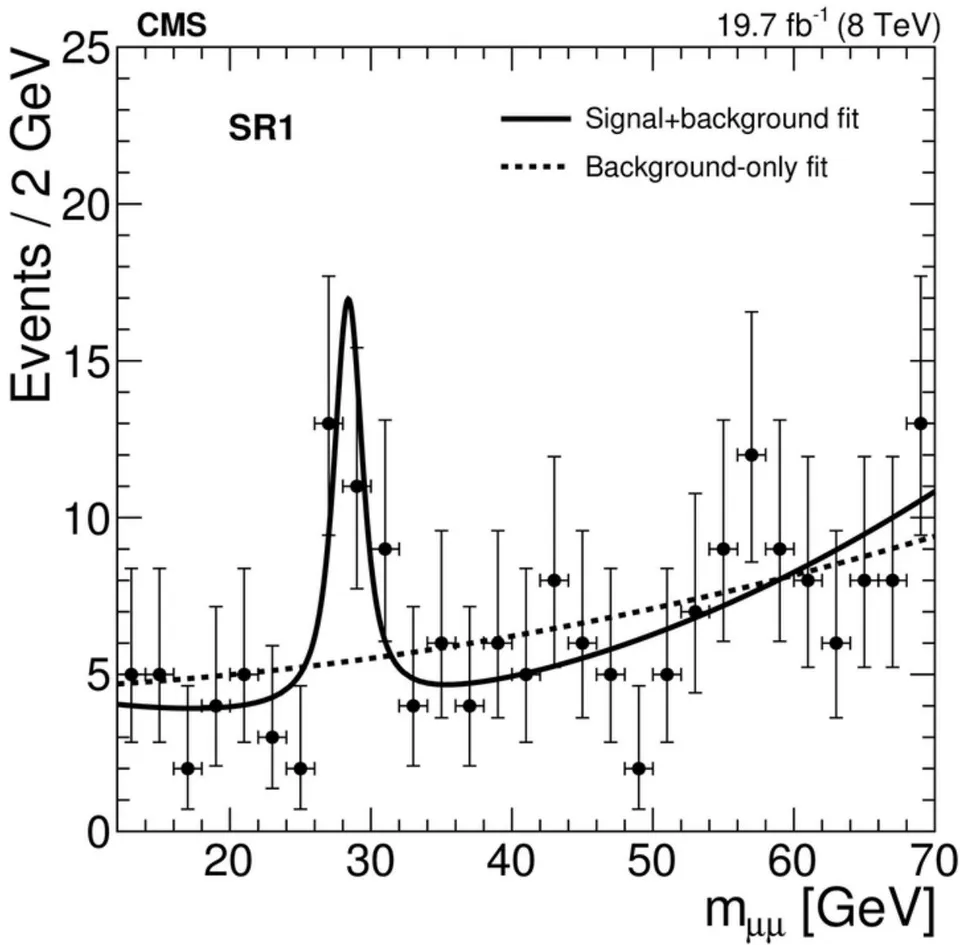
Today scientists at the Large Hadron Collider at CERN think that they may have discovered a new particle, the decay of which gives rise to muon pairs in a narrow peak of the energy of colliding protons strictly defined at 28 GeV, but it is too early to draw final conclusions. Among physicists, this particle causes not only excitement but also an alarm. Unlike the Higgs boson, predicted by the theory of elementary particles in the framework of the simplest version of the Standard Model (SM), the new particle can threaten the CM. The new result - consisting of a mysterious bump in the data at 28 GeV - has been published as a preprint on ArXiv and Roger Barlow's article was published as an on November 13, 2018 [19]. The LHC collaborations have very strict internal review procedures, and we can be sure that the authors have done the amounts correctly when they report "4.2 standard deviation value". This means that the probability of obtaining the peak of this large randomly generated noise in the data, rather than a real particle, is only 0.0013%. In a way, it seems that this should be a real event, not a random noise. If this particle really exists, then it should be outside the standard model, where no one expected it. In most cases, pairs of muons come from different sources from two different events, and not from the decay of a single particle. If you try to calculate the parent mass in such cases, it will spread over a wide range of energies, rather than creating a narrow peak. In the new experiment, the CMS detector detected a large number of pairs of muons and, after analyzing their energies and directions, found that these pairs originate from the decay of one parent particle. You can look at Figure 2 and judge for yourself. Is this a real peak or is it just a statistical wobble due to random scatter of points in the background (dashed curve)? If it is real, it means that some of these pairs of muons are really descended from a large maternal particle the dark matter which decayed, emitting muons - and none of these particles have ever been seen before.
I should note that the direct experimental determination of the resonance dependence of the production of elementary particles and antiparticles under the action of the frequency v of external radiation and relativistic protons in a quantum vacuum (dark matter) is almost completely rejected by modern physics. Following the deceptive logic the modern theory, this dependence is drawn in the form of a monotonously increasing curve, which contradicts the experimental discoveries made recently in the LHC and in near-Earth space using the PAMELA and AMS-2 space spectrometers . The US team, led by the lead author of the arXiv report, Dr. Jonathan Feng from the University of California, Irvine, showed that the data Dr. Krasznahorkay didn't conflict with previous experiments, and established that it could be evidence for a fifth fundamental force. Jonathan Feng in a press release in 2017 said: "For decades, we've known of four fundamental forces: gravitation, electromagnetism, and the strong and weak nuclear forces. Discovery of a possible fifth force would completely change our understanding of the universe, with consequences for the unification of fifth force and dark matter. Dispensing with the dark photon, the physicists posit a "protophobic X boson." The X-boson of dark matter makes it possible to explain a number of experiments in which the anomalous magnetic moment of the muon is observed and is associated with the fifth interaction". According to the head of the group Jonathan Feng, if in the future experiments the fifth force is confirmed, this will completely change our view of the universe. Estimated the X-boson lifetime may be . [21].
There are amazing data catalytic decomposition with exothermic catalytic reaction and also generate heat. Both of these reactions do not require energy. But this is a direct violation of the Law of Conservation of Energy in terms of thermodynamics! A catalyst for the modern definition, does not introduce additional energy into the process which it catalyzes. However, practice shows - the catalyst brings extra energy! The only reasonable explanation for this the participation of dark matter in the exothermic reactions of catalysis and revision of the Law of Conservation of Energy in terms of thermodynamics! That's exactly what did in 1999 the scientist, Randell Mills, of the United States, when opened a new, virtually inexhaustible source of cheap energy associated with the transfer of hydrogen to a new, previously unknown, low-energy state called "hydrino" [22].

According to Mills, the energy is released when hydrogen atoms go to a newly discovered state—are transformed into hydrino and their electrons transfer to lower energy levels. The hydrino concept explains how solar perturbations involving dark matter collect more energy than it is able to transmit as light. According to the results of experiments at company BrLP, confirmed by external observers, when a megawatt of radiant energy was issued, the energy consumption of the unit, called SunCell, was only 8 kW. The main fuel for the reaction is ordinary water. Hydrino-hydrogen released, being lighter than air, rises into the high layers of the atmosphere and from there into outer space. According to BrLP, the powerful radiation arising during the reaction is concentrated in areas of meter waves, which are widely present in space.
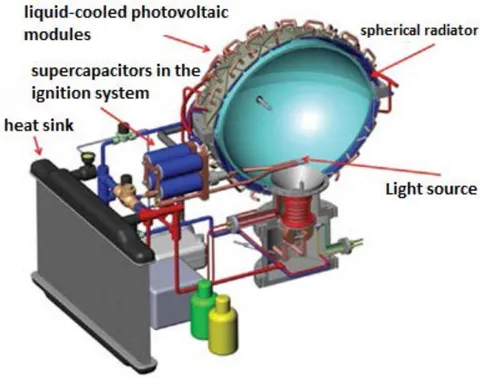
BLP is currently testing a device called the SunCell in which hydrogen (from splitting water) and an oxide catalyst are introduced into a spherical carbon reactor along with dual streams of molten silver. An electric current applied to the silver ignites a hydrino-forming plasma reaction. Energy from the reaction is then trapped by the carbon, which acts as a "blackbody radiator." When the carbon heats up to thousands of degrees, it reemits the energy as visible light that is captured by photovoltaic cells, which convert the light to electricity.
Based on the results of the above experiments, it can be argued that under extreme conditions baryonic matter can turn into the dark matter with energy release and dark matter into baryonic matter (electron-positron pairs in a quantum vacuum) with energy absorption. From this point of view the quantum vacuum (dark matter), by definition, is in the lowest energy state.
Phase state characterizing dark energy, are considered in the model as analogous the superconducting -phase He-B. Consider the antigravity mechanism inherent in dark energy. Similarly to the interaction of vortices in superfluid He-B, vortices in the environment of dark energy should also interact.
In He-B, the magnetization of vortex cores takes place along the axis of the vortex, that is, there is a spin polarization of the superfluid liquid. Thus, the space environment in the turbulent region can be characterized by the state of "all-round stretching"[3]. In the framework of the hydrodynamic model, the effect of a superfluid fluid on the vortex core can be mathematically described by the introduction of pressure P at the boundary of the vortex core. The sign of pressure depends on the nature of the internal stresses in the medium. If these the internal stresses in the dark energy have the character of "all-round stretching", then the pressure will be negative. That is all the dynamic characteristics will have a sign opposite to that which they would have had for the usual ideal incompressible fluid with the same kinematic properties [23]. This behavior of the system is similar to the presence of a negative mass. Strength Fp - a repulsive force acting on the space environment (dark energy):
where n - external normal to the surface S' ds - an infinitesimal element of the surface
Fp has the effect of anti-gravitation and may cause the accelerated expansion of the universe[3]. Einstein's antigravitation obeys the linear dependence of the force on the distance:
where is the Einstein's cosmological constant.
The cosmological constant in equation (8) describes the elastic properties of the medium, and the formula itself (8) in accordance with Hooke's law describes the repulsive forces between the structural elements forming dark energy. For a homogeneous isotropic the dark energy the generalized vector Lame wave equation is valid. This equation is equivalent to two simpler wave equations, which describe elastic waves of two types: longitudinal waves that propagate with phase velocity Vp and transverse waves with phase velocity Vs. It can be gravitational, electromagnetic and torsion waves. The speed of propagation of longitudinal waves is higher than the transverse. Gravitational waves can be attributed to the longitudinal waves since according to the calculations of Laplace, their speed should exceed the transverse electromagnetic waves at least 7000000 times [24]. In 1994, when July 16, 1994, the great nucleus of the comet Shoemaker-Levy collided with Jupiter gas sphere, radial oscillations gave rise to the surface gravity waves, instantly resulted in fluctuations in several geodetic satellite command-measuring complex of Russia. Speed, formed by the collision of a comet with Jupiter, gravitational waves significantly exceeded the velocity of electromagnetic waves (light spreads from Jupiter to Earth is about 1 hour). The model of the quantum vacuum as an analog of superfluid He-B clearly shows how microscopic processes studied only by quantum mechanics manifest themselves in macroscopic processes. This situation fundamentally changes the traditional understanding of the relationship between the microscopic level, described in terms of particles and the macroscopic level, described in terms of concentrations, densities, and volumes.
IV. CONCLUSION
In the article, I touched upon only some issues of the physical nature of extreme states of matter in the cosmic environment (dark energy and dark matter), which were not adequately reflected in the lecture by the Academician V.E. Fortov "The physics of Extreme States of Matter" [1]. I would like, based on analogies between the quantum vacuum of Universe and superfluid He-B, to offer a new look at extreme states of matter, including the dark matter and to wish the higher school of physics to overcome the dominant today the unsolved problems of Einstein's General Relativity when considering cosmology of the Universe.
ACKNOWLEDGEMENTS
The author thanks for the discussion of the Academician V.E. Fortov