Introduction
Discussions on environment at this point in history are very relevant to the extent it may be considered as an imperative. This is because, issues of environmental crises which currently affect human beings negatively are on the increase and are threatening the very existence of creatures on earth. Environment refers to the natural world and different external factors that independently or collectively influence the life and activities of people, plants and animals. In different parts of the world, human activities have gone a long way to distort or even destroy the natural workings of the environment, such that weather changes and its attendant effects like flood, gully erosion, deforestation, desertification, poisoning of land space for agricultural purposes, earth tremors and quakes, global warming, excessive hot seasons and so forth are being experienced.
Abogunrin (2009) described man as the most arrogant and dangerous amongst the created beings by God. Man seems to be the only specie squarely responsible either directly or indirectly for damaging and endangering the environment for human existence. Man’s advancement in the ability to control and manipulate earth’s natural resources by means of science and technology has become an advantage that is sometimes abused and misused (Manus, 2008). For instance, while making reference to the work of Popoola (2008), Faniran (2009), pointed out that Nigeria loses over 200,000 hectares of land to deforestation annually as a result of legal and illegal logging, poverty and urbanization. The created earth is sacred to God and He has interest to preserve and sustain it, even though, it benefits humans most (Gottieb, 1996).
Deforestation is defined as the removal of forests by humans, either for timber or to clear land for other uses, such as agriculture or urbanization (Okafor et al, 2025). In Nigeria, deforestation has become a severe issue due to the country’s rapid growing population, coupled with the increasing demand for timber, fuelwood, and agricultural land (Okafor et al, 2025).
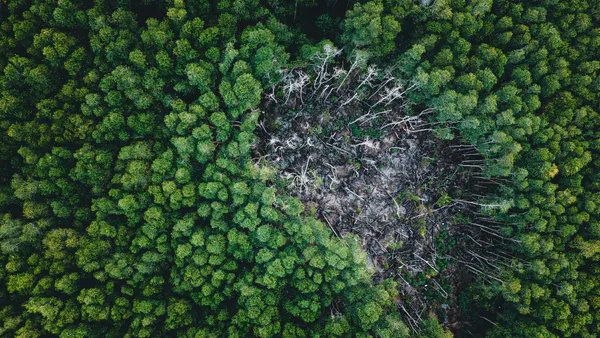
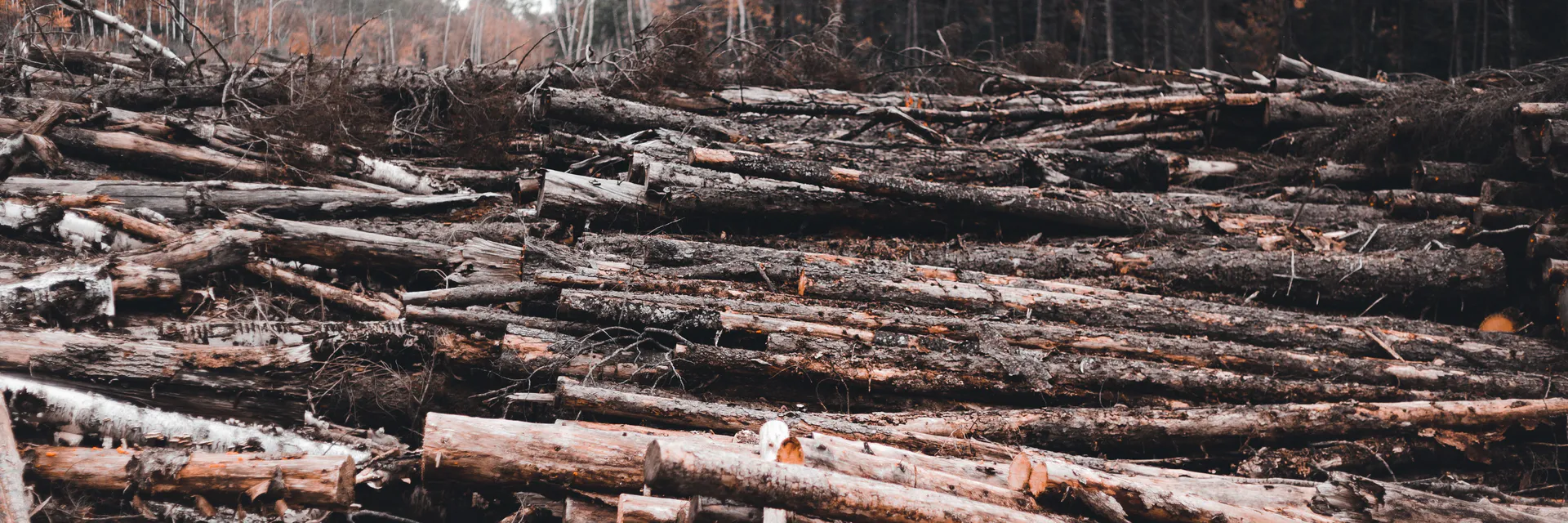
Deforestation is the clearing away of forest. It is the process by which an area is deprived of existing natural forest vegetation and resources. This can be brought about by systematic felling, indiscriminate logging or total clearing of existing vegetation for arable farm or industrial purposes. It usually results in destabilization of forest ecosystems and the surrounding environment (Ogundipe, 2014).
According to the United Nations, Nigeria has the highest deforestation rate in the world with an estimated 3.7% of its forest lost every year (Okafor et al, 2025). It is imperative to note that the conversion of forest lands to other economic and social uses involves the felling of trees and displacement of rich biodiversity. These continuous displacements have deleterious effects on the environment and ultimately human well-being.
Deforestation is one of the globally recognized indicators of environmental degradation. Its effects span the macro and micro levels, moving from adverse impact on the economy to posing danger to human health (Oyeranti and Taiwo, 2022). The alteration of the carbon dioxide (CO2) balance in the atmosphere as a result of diminishing forests has shown to be hazardous to human health and deforestation can result in higher incidence of malaria (Oladejo, 2017). Also ensuing natural disasters from absence of windbreakers can increase contingent liabilities and reduce development spending (Damnyag, 2015).
The scope of study of deforestation extends beyond national boundaries because globalization impacts deforestation, especially through trade in natural resources (Osewe, 2012). Though agricultural exports is an important driver of deforestation, however, the impact varies across countries depending on the size of the forest cover. Hence, an understanding of development trends globally is important to assessing deforestation trends. From the foregoing, therefore, strong agricultural and forest policies will be required to curb deforestation (Culas, 2012).
Given the inherent benefit of forest resources, which include income and economic growth, they are liable to continuous exploitation. This without adequate policy restriction can lead to environmental problems that were once prevented by the existence of forests. Consequently, the comprehension of the relationship between economic growth and deforestation is pivotal to curbing environmental challenges and achieving sustainable growth.
Causes of Deforestation in Nigeria
Causes of deforestation, according to Oyeranti et al (2022) can be classified into natural causes and socio-economic factors. Natural causes include factors that relate to the advancement of an economy such as urbanization, increased agricultural land use. Meanwhile, socio-economic factors are factors such as population growth, and rural socio-economic condition.
Agricultural factors play a key role in the deforestation rate due to the trade off between forest lands and agricultural lands at the early stages of development (Armenteras and Ancil, 2011). Also, increase in agriculture export share, agricultural value added and rural population result in greater land conversion to agricultural lands hence increased deforestation (Barbier, 2004).
The socio-economic characteristics of rural dwellers can influence the sustainability of the environment as a result of their immediate access to biodiversity. Another significant cause of deforestation in Nigeria is logging, both legal and illegal, which is linked to corruption and weak law enforcement (Okafor et al, 2025). According to Rudel (2015) as cited by Oyeranti (2022) pointed out that the rate of deforestation in Africa depends on forest types, tax receipts from mineral resources and the key role farmers play relative to other regions.
Basically, there are two ways to viewing the issue of exploitation of the environment in spite of the consequences it has on the livelihood of human beings. These are looking at it from the environmental economists’ point of view who believes that the environment must be exploited to eradicate poverty, enhance employment opportunity and provide people with good living. On the other hand, is the views of environmental philosophers who believe that degradation, pollution, global warming and so forth resulting from unguided exploitation of environment is detrimental to human existence and have eroded any economic benefit because of health problems and others it causes (Olaniyan, 2014). These views are reasons for continued tension within human community which sometimes lead to violent confrontations.
Summarily, deforestation is driven by an enormous range of factors including environmental, economic and socio-economic. To curb deforestation, an understanding of the interactions between these factors and deforestation is crucial.
The Impact of Deforestation on the Nation
The impact of deforestation on the environment are widespread and far reaching. Deforestation disrupts the natural balance of ecosystems, leading to soil erosion, loss of biodiversity and changes in the local climate. It also contributes to releasing large amount of carbon dioxide into the atmosphere. Deforestation also negatively affects the local population by reducing access to clean water and increases the risk of flooding and landslides (Okafor et al, 2025).
Deforestation is a pressing issue in Nigeria, with significant impacts on both the environment and the people who rely on it. According to Aliyu (2014), deforestation leads to increased human encroachment upon wild areas, increased resource extraction, threat to biodiversity, soil degradation and extinction of species. Continuous deforestation will ultimately have an adverse effect on growth through associated cost of health hazards, natural disasters and depletion of agricultural land nutrients (Oyeranti et al, 2022).
According to Ogbuabor (2017), forest depletion in Nigeria has negatively affected our GDP in the short run. More so, poverty and lack of enforcement also affect greening the environment (Ogbuabor, 2017). As a result of incessant and intensive deforestation in Nigeria many tree species are already going into extinction according to Oboh (2026). They include: the iroko tree, masonia, okan, mahogany, ekimi, ekie (Christmas tree), the bush mango (fig tree) and the bitter cola tree. Globally, deforestation is a major environmental concern because it contributes to biodiversity loss soil degradation and climate change. While forest loss occurs worldwide, it is especially severe in tropical regions due to agricultural expansion and other human activities. (Ajadi et al, 2016).
In Nigeria, forests have declined dramatically over the past decades. Estimates suggest that forest cover has dropped from a much larger area in the past to a much smaller fraction today, with primary forests rapidly diminishing. The impact of deforestation in Nigeria, can be structured as follows:
Environmental Impacts: Deforestation destroys natural habitats, leading to the extinction of plant and animal species. Nigeria’s tropical forests are biodiversity hotspots and their depletion disrupts ecosystems. Trees help bind soil together. When forests are cleared, soil becomes exposed to erosion by wind and water, leading to reduced soil fertility and agricultural productivity. Forests act as carbon sinks. Their removal releases carbon dioxide into the atmosphere, contributing to global warming and climate change. More so, deforestation affects local weather conditions leading to irregular rainfall, drought or excessive rainfall in some regions (Ajadi et al, 2016).
Economic Impacts: Soil degradation reduces crop yield, which affects farmers’ income and national food security. Forest provide timber, fuel wood, and non-timber products. Their depletion affects industries and rural livelihoods dependent on their resources. Deforestation can lead to increased poverty and reduced access to resources like clean water and medicinal plants (Iroye, 2017).
Social Impacts: Deforestation, could lead to poverty and livelihood challenges. Many rural communities depend on forests for survival. Deforestation limits access to food, fuel and income sources, increasing poverty levels. Snail and mushrooms are now difficult to find due to deforestation. In addition, environmental degradation can force communities to migrate, leading to conflicts over land and resources.
Hydrological Impacts: Without trees to absorb rainfall, surface runoff increases leading to floods and erosion. Deforestation can result into watersheds that are no longer able to sustain and regulate water flows from rivers and streams. Once they are gone, too much water can result into downstream flooding, many of which have caused and still causing disasters in many parts of Nigeria (Iroye, 2017). Downstream flow causes soil erosion, thus also silting of water courses, lakes and dams.
Contribution to Desertification: In Northern Nigeria, deforestation accelerates desertification, turning once productive land into arid region and worsening climate conditions.
Possible Solutions to Deforestation in Nigeria
There is no single approach towards deforestation management in Nigeria. However, if precautionary measures are taken and well implemented, the impact of deforestation on our nation will be minimal. To address the issue of deforestation in Nigeria, several solutions can be implemented. One approach, is to promote sustainable agricultural practices that can help to reduce the pressure on forests. This can be achieved through the use of better farming techniques such as conservation agriculture, agroforestry, and the use of improved seeds and fertilizers (Okafor et al, 2025).
Another solution, is to promote sustainable forestry practices, such as selective logging, reforestation and afforestation. Efforts can be made to improve law enforcement and address corruption, which can help reduce illegal logging and other activities contributing to deforestation in Nigeria.
According to Oyediji and Adenika (2022), the following are the perceived way forward to the problem of deforestation in Nigeria.
Poverty Reduction Programmes: The government should put in place poverty reduction programmes. These are crucial in reducing deforestation and degradation of the forest in the developing countries. This can be achieved through empowerment of local communities which will help to limit cutting down of trees as fuel for home consumption. These programmes increase per capita income and consequently increase incomes.
Increased Community management of Forests: Government should become aware that public ownership alone discriminates against indigenous and local communities. There should be recognition of local communities in managing forest rather than public authorities only. It gives a sense of belonging. Forests owned and officially administered by indigenous and traditional communities have doubled over the last 15 years, and communities now own and administer approximately one-quarter of forests in developing countries, although with great range of different tenure arrangement.
Capacity Building and Human Resource Development: Communities nearer to the forest should be actively involved in all forest management activities and decisions. This will make them feel that they own and have control over the forest hence addressing forest conservation through communal ownership and stewardship.
Addressing of Land Tenure Issue: The government should address livelihood and land tenure issues in areas/communities around the forest. This will help in reducing communal clashes as it relates to land as well as reduction in pressure on the forest resources as a source of livelihood.
Educating Nearby Forest Dwellers: Education of nearby forest dwellers is important in combatting forest degradation. The local communities should be educated on the importance of conserving the forest. This is because literacy rates will reduce pressure on the remaining forests for new human settlement and land use change.
Forest Monitoring Mechanisms: There is also the need to put in place effective forest monitoring mechanism so as to avoid any repetition of encroachment and illegal settlements in the forest. From the foregoing, strong agricultural and forest policies will be required to curb deforestation.
Given the inherent benefits of forest resources, which include income and economic growth, they are liable to continuous exploitation. This without adequate policy restriction can lead to environmental problems that were once prevented by the existence of forests (Oyeranti et al, 2022). Consequently, the comprehension of the relationship between economic growth and deforestation is pivotal to curbing environmental challenges and achieving sustainable growth. It is therefore imperative to note that while economic growth increases the pressure on nature, increased income decreases pressure on forest resources (Oyeranti et al, 2022).
Conclusion
Forest degradation is a serious environmental, social and economic problem. It is a pressing issue in Nigeria, with significant impacts on both the environment and the people who rely on it. Deforestation in Nigeria is undeniable, and urgent action is needed to address this topic. By promoting sustainable agriculture and forestry practices, improving law enforcement, and addressing corruption, Nigeria can help reduce deforestation and its impact on the environment and society.
In as much as global large scale agricultural activities contributes to deforestation in the world, deforestation and forest degradation in Africa remains dominated by small scale processes, not by large scale globalized agriculture. In Africa, it has been established that fuel wood collection and charcoal production, often in combination with livestock grazing in forests, contribute to forest degradation especially in order to have an additional source of income.
Poverty can be an underlying cause for many of the direct and indirect drivers of forest degradation and deforestation. With this, much attention to baselines, monitoring, and targeted intervention will be required. It is therefore recommended that the government should put in place, poverty reduction programmes which are pivotal in reducing deforestation and degradation of the forest. Government should take education of nearby forest dwellers with so much importance as well as address land tenure issue amongst them. Local communities should be recognized in managing the forest and effective forest monitoring mechanisms should be in place, so as to avoid any future repeat of encroachments and illegal settlements.
Finally, in light of the environmental degradation currently witnessed in human experience and how institutions of higher education may participate in its preservation, there should be curriculum development in the areas of environmental studies, peace intervention and resolution, social integration, including practical innovations on providing alternative source of energy.