Introduction
The deliberate closure of constructed spaces represents a recurring phenomenon in archaeological contexts, yet it has received relatively limited systematic attention as a distinct form of human behavior. Across different periods and cultural settings, archaeological evidence indicates that built environments - whether monumental, domestic, or subterranean - are not always abandoned passively. Instead, they are often intentionally filled, sealed, or otherwise transformed through structured human intervention. Such processes, including backfilling, material deposition, and architectural blocking, form part of what has been described as the life cycle of built environments (Schiffer, 1987; Cameron & Tomka, 1993).
In archaeological interpretation, these practices are commonly discussed in relation to site formation processes, abandonment behavior, and the transformation of built space. Stratigraphic analysis plays a key role in identifying such processes, particularly where clear distinctions can be made between natural deposits and anthropogenic infill (Harris, 1989). Geoarchaeological approaches further emphasize the importance of sediment composition, depositional context, and micromorphological characteristics in distinguishing between natural and cultural formation processes (Courty et al., 1989; Goldberg & Macphail, 2006; Karkanas & Goldberg, 2019). Within this framework, deliberate closure may be understood as an active and meaningful transformation of space rather than a passive end to occupation.
From an anthropological perspective, the intentional modification or termination of constructed environments may reflect broader social, symbolic, or functional processes associated with the reorganization of space and the redefinition of its use (Hodder, 1999; Ingold, 2000). In this sense, closure can be viewed as a structured component of human interaction with built environments, rather than an incidental or purely practical activity.
Comparable practices of intentional infilling and structural transformation have been documented at several archaeological sites worldwide. At Göbekli Tepe, circular megalithic enclosures dating to the Pre-Pottery Neolithic period were systematically filled with heterogeneous material following their use. At Çatalhöyük, domestic structures were repeatedly buried and rebuilt, creating a stratified accumulation of occupation layers. Similar patterns of modification and partial infilling have been observed at sites such as Skara Brae and Stonehenge, where construction, reuse, and transformation occurred over extended periods. These examples suggest that the deliberate alteration and closure of built spaces are not isolated but form part of a broader pattern of human interaction with constructed environments.
In this context, it is essential to distinguish between natural subterranean formations and spaces modified or organized by human intervention. The present study treats the Ravne tunnel system as a constructed or intentionally modified environment based on observable archaeological criteria, including the geometry of passages, stratigraphic relationships, and the presence of architectural features such as dry-stone walls. This classification is based on material evidence rather than on assumptions regarding function or chronology.
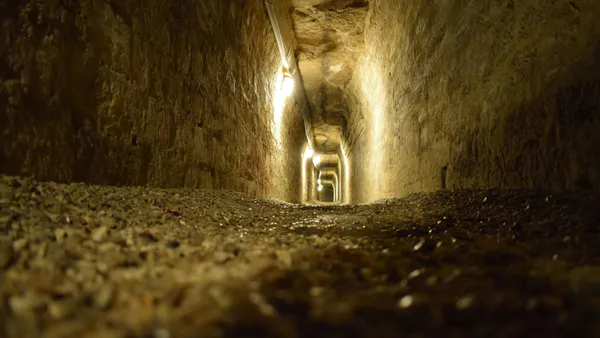
The Ravne tunnel system represents an extensive network of subterranean passages developed within Quaternary conglomerate formations. Systematic archaeological investigations conducted between 2006 and 2025 have documented more than two kilometers of cleared passages, along with a complex sequence of stratified deposits, dry-stone walls, and architectural modifications. Within this system, large volumes of backfill material—primarily pebbles, sand, and rubble— have been identified as anthropogenic based on stratigraphic relationships and material characteristics. Stratigraphic profiles reveal sharp boundaries between natural geological layers and introduced material, indicating controlled deposition rather than gradual natural accumulation (Osmanagich, 2026a; Osmanagich, 2025b) (Figs. [fig:fig1] and [fig:fig2]).
The interpretation of the Ravne passages as constructed or deliberately modified spaces is based on several lines of evidence. These include the consistent morphology of tunnel corridors, the presence of intersections and chambers with defined spatial organization, and the occurrence of structural elements not attributable to natural processes. In particular, the repeated documentation of dry-stone walls within the system, often positioned across passageways, is consistent with intentional architectural intervention.
These observations indicate that the Ravne tunnel system underwent multiple phases of use, modification, and closure. The scale and organization of backfilling, spanning considerable distances within the underground network, suggest a sustained and structured process rather than isolated activity. Previous analyses have emphasized the stratigraphic complexity of these deposits and their association with architectural features, supporting the interpretation of repeated anthropogenic intervention (Osmanagich, 2026a; Osmanagich, 2026c).
Alternative explanations for the observed deposits, such as natural collapse, water transport, or gradual sediment accumulation, were considered during analysis. However, several characteristics of the Ravne infill are not consistent with known natural depositional processes. These include complete filling from floor to ceiling within enclosed passages, sharp boundaries between the natural substrate and introduced material, and variability in composition and compaction within the infill. While natural processes may contribute to localized sedimentation, the overall pattern observed across the system is more consistent with controlled deposition.
This study examines the phenomenon of deliberate closure through a comparative analysis of distinct archaeological contexts: the Ravne tunnel system in Bosnia and Herzegovina and selected examples of subterranean or enclosed structures exhibiting comparable patterns of infilling and transformation. The analysis includes reference to sites such as Göbekli Tepe (Turkey), Hal Saflieni Hypogeum (Malta), and underground systems in Austria, representing different geological and cultural settings.
The approach adopted in this study is analytical and comparative. It does not seek to establish direct cultural or chronological connections between the sites, but instead focuses on identifying shared material patterns of closure, including stratigraphy, deposit composition, spatial organization, and associated architectural features. By examining these elements, the study aims to situate closure within a broader anthropological and geoarchaeological framework.
This paper evaluates the deliberate closure of constructed spaces as a form of human activity, using the Ravne tunnel system as a primary case study within a broader comparative perspective. In doing so, it contributes to a more systematic understanding of how built environments are intentionally transformed at the end of their use-life and how such processes can be recognized, documented, and interpreted in the archaeological record.
Materials and methods
Study area and data Sources
The primary dataset for this study derives from systematic archaeological investigations conducted within the Ravne tunnel complex in the Visoko Valley, Bosnia and Herzegovina, between 2006 and 2025 (Figs. [fig:fig1] and [fig:fig2]). Fieldwork included excavation, clearing of backfilled passages, stratigraphic recording, and documentation of architectural features, including dry-stone walls and tunnel morphology.
All observations were recorded through standard archaeological field procedures, including stratigraphic profiling, photographic documentation, and spatial mapping of tunnel segments and features. Particular attention was given to the identification of contact between natural geological substrates and introduced materials, as well as to the spatial distribution of architectural elements within the tunnel system.
Comparative data were obtained from published archaeological reports and secondary literature on subterranean and enclosed structures at selected sites, including Göbekli Tepe (Turkey), the Hal Saflieni Hypogeum (Malta), and underground systems in Austria. These sites were selected based on the availability of documented evidence for structural infilling, closure, or transformation processes.
Excavation and Recovery Procedures
Excavation within the Ravne tunnel system was conducted manually due to the confined nature of the passages and the composition of the backfill material. Sediments were removed in controlled layers, with attention to changes in color, texture, compaction, and clast composition.
Where appropriate, excavated sediment was manually screened to recover smaller artifacts and ecofacts. Mesh sizes varied depending on sediment composition and excavation conditions, typically ranging between 5 mm and 10 mm. While recovery procedures were consistently applied within individual excavation campaigns, variations in sediment compaction, moisture content, and accessibility across sectors influenced the degree of material recovery. These factors are considered when interpreting assemblage composition.
Stratigraphic relationships were recorded by identifying distinct depositional units, including natural geological layers and anthropogenic infill. Profiles were documented to capture transitions between these units, particularly where sharp boundaries or intrusive relationships were observed.
Criteria for Identifying Anthropogenic features
The identification of anthropogenic features within the Ravne tunnel system was based on a set of observable criteria derived from archaeological and geoarchaeological practice. These criteria include:
Clear stratigraphic discontinuities between natural geological formations and introduced materials.
Presence of structured stone arrangements, including dry-stone walls composed of size-selected clasts.
Spatial organization of tunnel passages, including consistent geometry, intersections, and chamber-like expansions.
Evidence of repeated architectural interventions, such as multiple wall constructions within a single passage.
Material contrasts between infill deposits and the surrounding conglomerate, including differences in composition, sorting, and compaction.
These criteria are applied in combination rather than individually, allowing for distinguishing natural depositional processes from patterns consistent with human modification. Interpretations are therefore based on the convergence of multiple lines of evidence rather than on single observations.
Stratigraphic and Sediment analysis
Stratigraphic analysis focused on identifying depositional sequences within the tunnel system, with particular attention to the relationships between the walls and the surrounding fill material. Observations included the vertical and lateral extent of infill, the presence of layering or heterogeneity within deposits, and the nature of contacts between units.
Sediment characteristics were assessed macroscopically, including grain size distribution, clast shape, sorting, and compaction. Differences between infill material and in situ conglomerate were used as indicators of depositional processes. While detailed micromorphological and granulometric analyses were not conducted within the scope of this study, macroscopic observations provide a basis for distinguishing between natural and anthropogenic deposits.
Chronological data
Chronological data associated with the Ravne tunnel system were obtained through radiocarbon (14C) and Uranium-Thorium (U-Th) dating of materials recovered from stratigraphic contexts within the tunnels. Radiocarbon analyses were conducted on organic samples, including charcoal and speleothem-related material, while U-Th dating was applied to stalagmites formed on exposed tunnel surfaces. (Osmanagich, 2026d)
These analyses were performed by independent laboratories, including the Kyiv Radiocarbon Laboratory and the TÜBiTAK Marmara Research Center. The resulting dates provide chronological constraints for phases of human activity and environmental processes within the tunnel system.
It is important to note that these dates do not directly establish the timing of the initial tunnel excavation or construction. Instead, they provide minimum and contextual age constraints for the use, modification, and closure of subterranean spaces.
Comparative Analytical framework
The comparative component of this study is based on published descriptions of selected archaeological sites exhibiting evidence of infilling, closure, or transformation of constructed spaces. Rather than attempting to establish direct connections between sites, the analysis focuses on identifying shared material patterns.
Comparative criteria include the presence of intentional infill deposits, architectural blocking elements, stratigraphic sequencing of closure events, and spatial organization of subterranean or enclosed structures. Differences in geological context, construction techniques, and cultural setting are taken into account when evaluating similarities and contrasts between sites.
Results
Lithic Assemblage Overview
The lithic assemblage documented within the Ravne tunnel system consists of approximately 1,100 stone objects recovered from both surface contexts and subsurface tunnel excavations. The assemblage is dominated by sandstone, with occasional conglomerate and other lithologies.
Approximately 80 objects (around 7% of the total assemblage) derive from subsurface contexts within the Ravne tunnels, while the remaining material was collected from surface localities in the broader Visoko region. These differences in recovery context are taken into account in subsequent interpretation.
The objects vary in size, morphology, and degree of surface modification. A subset of the assemblage exhibits features such as smoothing, edge rounding, and linear markings.
Contextual distribution
Lithic objects recovered from subsurface contexts are associated with stratified deposits within the tunnel system, including layers of backfill material and areas adjacent to dry-stone walls. In contrast, the surface lacks a clear stratigraphic association.
Subsurface materials are therefore considered more reliable for contextual interpretation, although many derive from mixed or redeposited tunnel-fill deposits. This distinction is considered when evaluating potential chronological and functional interpretations.
Macroscopic Observations
Macroscopic analysis of selected lithic objects identified several recurring features, including smoothed surfaces, possible percussion marks, and linear grooves. These features are present on both complete and fragmentary specimens.
Such characteristics are consistent with patterns observed in anthropogenically modified stone assemblages, although similar features may also arise through natural processes such as abrasion or transport. Consequently, identification of human modification is based on a combination of multiple traits rather than a single attribute.
Stratigraphic Relationships
Stratigraphic observations within the Ravne tunnel system reveal a consistent pattern of layered deposits, including natural conglomerate formations and overlying or intrusive infill material (Figs. [fig:fig3] and [fig:fig4]).
In several cases, dry-stone walls are positioned across passageways and are directly associated with backfill deposits (Figs. [fig:fig5]–[fig:fig7]).
Profiles documented during excavation show sharply defined boundaries between consolidated conglomerate and introduced material, as well as evidence of successive depositional phases. In multiple locations, walls are situated behind or within backfilled sections, indicating that construction and infilling are stratigraphically related processes.
The distribution of fill material within enclosed passages, often extending from floor to ceiling, and the presence of heterogeneous layers with varying composition and compaction, are not consistent with gradual natural sedimentation processes alone.
Architectural features
A total of 85 dry-stone walls have been documented within the Ravne tunnel system, including 64 in the Ravne tunnels, 5 in Ravne 3, 4 in Ravne 4, and 12 in Ravne 6. These walls are typically constructed from locally available stone, often sorted by size and stacked without mortar (Figs. [fig:fig5]–[fig:fig7]).
The repeated occurrence of these structures at regular intervals, combined with consistent construction techniques, is consistent with deliberate architectural intervention within the tunnel system. In several cases, walls appear to function as barriers separating open passages from backfilled sections.
Chronological data
Radiometric data obtained from the Ravne 3 sector provide additional chronological context for the observed stratigraphic relationships (Figs. [fig:fig8] and [fig:fig9]). Radiocarbon dating of organic samples analyzed at the Kyiv laboratory yielded ages ranging from approximately 3880 BP to 2540 BP, indicating environmental and depositional phases consistent with the Late Neolithic to Bronze Age periods.
Independent radiocarbon analysis of charred organic material recovered from a dry-stone wall conducted at the TÜBiTAK Marmara Research Center, yielded a calibrated date of 4th-century CE, indicating a later phase of human activity within the tunnel system.
These results demonstrate that the Ravne tunnel system underwent multiple phases of human activity and environmental stabilization over an extended temporal range. While these dates do not directly establish the timing of tunnel excavation, they provide important chronological constraints for the use, modification, and closure of subterranean spaces.
Summary of Observations
The combined stratigraphic, architectural, and lithic evidence from the Ravne tunnel system indicates a complex sequence of depositional and structural processes. The presence of repeated dry-stone walls, stratified backfill deposits, and lithic materials that may have been modified suggests multiple phases of activity within the system.
While individual lines of evidence may be subject to alternative explanations, the convergence of stratigraphic, architectural, and material observations is consistent with structured modification of subterranean passages. These observations form the basis for the comparative and interpretative analysis presented in the following section.
Comparative analysis
The phenomenon of deliberate closure or structured infilling of constructed spaces has been documented in a variety of archaeological contexts. To situate the observations from the Ravne tunnel system within a broader framework, this section examines selected examples of subterranean or enclosed structures where comparable processes of infilling, blocking, or spatial transformation have been identified.
The comparative analysis is based on a set of defined criteria, including: (1) the presence of intentional infill deposits, (2) the use of architectural blocking elements, (3) stratigraphic evidence for phased closure, and (4) spatial organization of enclosed or subterranean structures. These criteria enable a systematic comparison of sites with differing geological and cultural contexts.
Göbekli Tepe (Turkey)
At Göbekli Tepe, a Pre-Pottery Neolithic site in southeastern Turkey, circular megalithic enclosures were systematically filled with heterogeneous material following their use. Excavations have revealed that these structures were intentionally backfilled with a mixture of stone debris, sediment, and cultural material.
Stratigraphic evidence at the site indicates that infilling occurred in discrete phases rather than through gradual natural accumulation. The composition of the fill, including deliberately placed elements and mixed deposits, has been interpreted as the result of intentional human action.
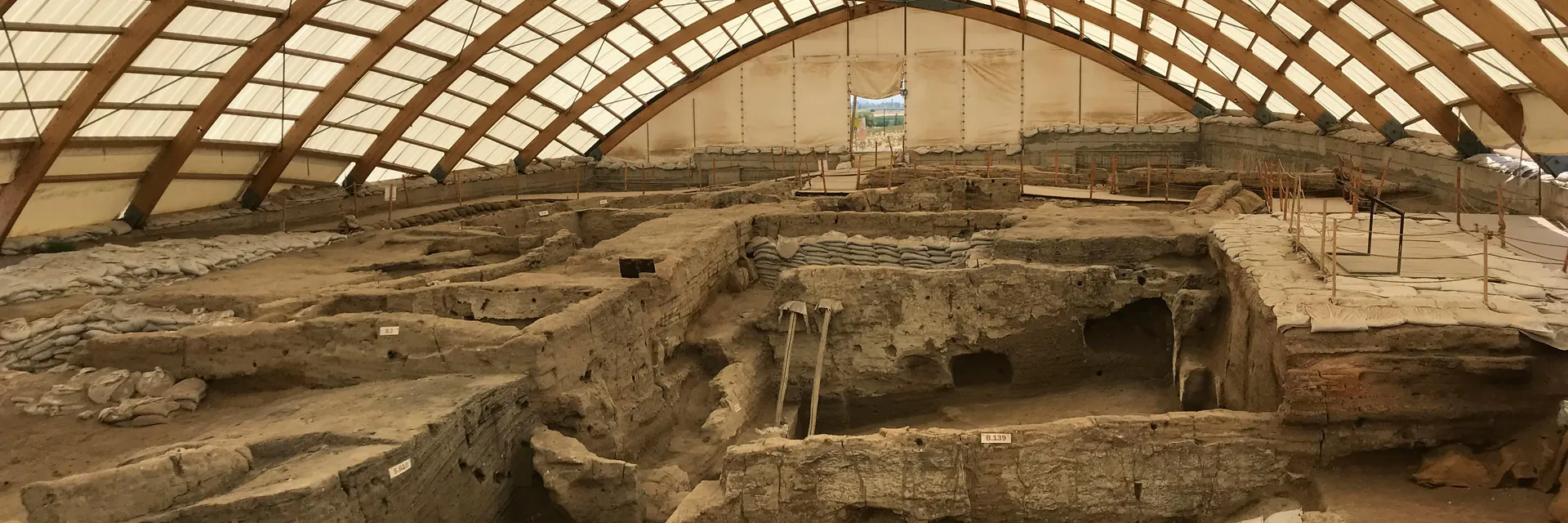
While Göbekli Tepe differs significantly from Ravne in terms of construction technique, chronology, and cultural context, both sites exhibit evidence of structured infilling and transformation of built spaces. In both cases, the presence of heterogeneous fill material, combined with clear stratigraphic boundaries, is consistent with deliberate modification rather than passive abandonment (Figs. [fig:fig10] and [fig:fig11]).
Hal Saflieni Hypogeum (Malta)
The Hal Saflieni Hypogeum represents a subterranean complex carved into limestone bedrock and dating to the Neolithic period. The site includes multiple chambers and passageways, some of which exhibit partial infilling or restricted access.
Although the Hypogeum differs from Ravne in that it is entirely excavated in bedrock rather than developed within conglomerate, both sites exhibit controlled spatial organization and localized modification of access points. In the Hypogeum, architectural features such as doorways, niches,
and blocked passages suggest deliberate management of movement and space within the underground complex.
These features are not directly equivalent to the dry-stone walls observed at Ravne, but they represent functionally comparable forms of spatial control and modification.
Subterranean systems in Austria
Subterranean passages documented in parts of Austria and Central Europe consist of narrow tunnels and chambers excavated in various geological contexts, including compacted sediments and softer rock formations. Some of these systems exhibit evidence of blocking or partial infilling, often interpreted as measures related to access control or abandonment.
In contrast to Ravne, where dry-stone walls are constructed within a conglomerate matrix, Austrian systems are typically carved directly into more homogeneous geological substrates. This distinction is important when evaluating depositional processes, as the behavior of unconsolidated or semi-consolidated materials differs from that of carved bedrock.
Despite these geological differences, both contexts demonstrate the use of structural elements to modify or restrict access within subterranean spaces, suggesting that closure or segmentation is a recurring feature of underground architecture.
Ravne Tunnel system in Comparative Context
The Ravne tunnel system differs from the comparative sites in several key respects, including its geological setting, construction characteristics, and the scale of observed backfilling. The tunnels are developed within Quaternary conglomerate formations, consisting of naturally deposited gravel, sand, and cemented matrix.
This geological context is significant because it allows identification of introduced material through contrasts in composition, sorting, and compaction between natural conglomerate and backfill deposits. In multiple sections of the Ravne system, these contrasts are clearly observable in stratigraphic profiles.
The presence of 85 documented dry-stone walls within the system represents a distinctive architectural feature. These structures are typically positioned across passages and are associated with backfilled sections.
The repeated occurrence, consistent construction technique, and spatial distribution of these walls are consistent with deliberate placement. Their association with stratified infill deposits further suggests that they form part of a structured sequence of modification within the tunnel system.
Synthesis of Comparative Observations
Across the sites examined, several common patterns emerge. These include the presence of infill deposits that differ from the surrounding material, the use of architectural elements to modify or restrict space, and stratigraphic evidence of the phased transformation of constructed environments.
At the same time, important differences must be acknowledged, particularly regarding geological context, construction methods, and cultural setting. The Ravne tunnel system, developed within a conglomerate, presents a distinct case in which anthropogenic modification must be distinguished from natural depositional processes within a semi-consolidated matrix.
Rather than suggesting direct equivalence between sites, the comparison highlights recurring patterns of spatial transformation and closure in human-modified environments. The evidence from Ravne is therefore interpreted within this broader framework, as a case exhibiting characteristics consistent with structured modification and possible deliberate closure.
Discussion
The results presented in this study indicate that the Ravne tunnel system exhibits a combination of stratigraphic, architectural, and material characteristics that are consistent with structured modification of subterranean spaces. The presence of repeated dry-stone walls, stratified backfill deposits, and lithic materials that may have been modified suggests that the system underwent multiple phases of use and transformation.
The stratigraphic relationships observed within the tunnel system, particularly the association between constructed walls and overlying or adjacent infill deposits, indicate that architectural intervention and deposition were part of a coordinated sequence of activities. These patterns are not readily explained by isolated natural processes alone, although localized natural contributions cannot be entirely excluded.
Radiometric data further support the interpretation of a multi-phase system. Radiocarbon and Uranium-Thorium dating of associated materials indicate that the tunnel environment has experienced episodes of human activity and environmental stability spanning several millennia.
Importantly, this chronological data provides constraints on phases of use and modification rather than direct evidence for the initial excavation of the tunnels. The presence of speleothem formations over structural elements establishes minimum ages for certain features, while radiocarbon dates from organic materials indicate later periods of human interaction within the system.
The repeated occurrence of dry-stone walls across multiple sectors of the tunnel network represents a key line of evidence. These structures exhibit consistent construction techniques, including the selection and arrangement of stones without mortar.
Such regularity in construction, combined with their spatial positioning across passages and their association with backfilled sections, is consistent with deliberate placement. While natural processes may produce accumulations of stone, the organized and repeated nature of these features is not consistent with known patterns of natural deposition.
The comparison with other archaeological sites demonstrates that deliberate closure or structured infilling is a recurring phenomenon in human-modified environments. At Göbekli Tepe, for example, enclosures were systematically backfilled following their use, while at other sites, such as Hal Saflieni and subterranean systems in Central Europe, architectural features were used to control access or modify space.
These comparisons do not imply direct cultural or chronological connections but highlight that the intentional transformation of built environments, including closure, is a documented aspect of human behavior. The Ravne tunnel system can therefore be considered within this broader framework of spatial modification.
At the same time, the Ravne system presents specific interpretational challenges due to its geological context. The tunnels are developed within conglomerate formations, where natural processes such as sediment movement, water transport, and partial collapse may contribute to the formation of deposits.
However, the combination of features observed - complete filling of passages, sharp stratigraphic boundaries, variability in material composition, and the presence of repeated architectural barriers—is not readily explained by these processes alone. The evidence is therefore interpreted as consistent with controlled deposition and modification within the tunnel system.
It is important to acknowledge the limitations of the present study. Detailed micromorphological, granulometric, and mineralogical analyses of infill material were not conducted, and direct dating of the backfill deposits remains limited by the availability of suitable organic material. Future research incorporating these methods would provide further insight into depositional processes and chronology.
Taken together, the available evidence suggests that the Ravne tunnel system underwent a sequence of modifications that may have included deliberate closure events. These processes likely occur over an extended period and may reflect changing patterns of use, access, and environmental conditions.
Rather than representing a single phase of activity, the Ravne tunnels appear to document a complex history of interaction between human intervention and natural processes. The interpretation of deliberate closure is therefore presented as a working hypothesis supported by multiple lines of evidence, which can be further tested through additional analytical approaches.
The interpretation presented here is based strictly on observable material and stratigraphic relationships and does not depend on assumptions regarding broader cultural narratives or sitewide interpretations.
| Parameter | Ravne Tunnel System (Bosnia and Herzegovina) | Göbekli Tepe (Turkey) |
|---|---|---|
| Context | Subterranean tunnel network | Surface monumental enclosures |
| Chronology | Multi-period (investigated 2006–2025) | Pre-Pottery Neolithic (10th–9th millennium BCE) |
| Type of closure | Backfilling + structural sealing | Backfilling |
| Fill composition | Pebbles, sand, rubble | Stone fragments, soil, cultural debris |
| Fill extent | Complete (floor to ceiling) | Complete enclosure infill |
| Structural elements | Dry-stone walls blocking passages | Limited structural sealing |
| Stratigraphy | Multi-layered, discontinuous, multi-phase | Repeated enclosure infilling phases |
| Closure pattern | Sequential (section-by-section) | Cyclical (construction–use–burial) |
| Scale | Kilometers of tunnels | Multiple large enclosures |
| Interpretation | Controlled closure of underground space | Monumental closure/transformation of space |
Comparative characteristics of closure processes at the Ravne Tunnel System and Göbekli Tepe
Taken together, these observations support the identification of closure as a recurring pattern of human behavior, expressed through different material strategies but recognizable through consistent archaeological indicators.
Conclusion
This study has examined the phenomenon of closure and infilling in subterranean environments through a detailed analysis of the Ravne tunnel system and a comparative review of selected archaeological sites. The results demonstrate that the Ravne tunnels exhibit a combination of stratigraphic, architectural, and material characteristics consistent with structured modification of subterranean spaces.
The presence of repeated dry-stone walls, stratified backfill deposits, and lithic materials with possible signs of modification indicates that the system underwent multiple phases of use and transformation. Stratigraphic relationships between walls and infill deposits suggest that architectural intervention and deposition were part of a coordinated sequence of activities, rather than isolated or purely natural processes.
Radiometric data derived from associated materials provides a chronological framework indicating that the tunnel environment experienced episodes of human activity and environmental stabilization over an extended temporal range. These data establish minimum and contextual age constraints for phases of use and modification, although they do not directly date the initial excavation of the tunnels.
The comparative analysis demonstrates that processes of deliberate infilling, closure, and spatial transformation are documented in diverse archaeological contexts, including Göbekli Tepe, the Hal Saflieni Hypogeum, and subterranean systems in Central Europe. While these sites differ in geological setting, construction techniques, and cultural context, they share patterns of structured modification that provide a broader framework for interpreting the Ravne evidence.
At the same time, important differences must be acknowledged, particularly regarding geological context and preservation conditions. The Ravne tunnel system, developed within conglomerate formations, presents a distinct case in which anthropogenic modification must be evaluated alongside natural depositional processes.
Taken together, the available evidence supports the interpretation that the Ravne tunnel system underwent phases of structured modification, including deliberate closure events. This interpretation is based on the convergence of stratigraphic, architectural, and material observations.
However, further research is required to refine the chronological framework and to better understand the processes involved. Future work incorporating micromorphological analysis sediment characterization, and additional radiometric dating would provide important insights into the formation and transformation of the tunnel system.
This study contributes to a broader understanding of how subterranean environments are modified and transformed over time. By emphasizing the role of closure and infilling as active processes throughout the life cycle of built environments, it underscores the importance of integrating stratigraphic, architectural, and geoarchaeological data into archaeological interpretation.
The author expresses sincere appreciation to all archaeologists, researchers, and field teams who participated in the long-term investigations of the Ravne tunnel system between 2006 and 2025. Their work in excavation, documentation, and analysis made the dataset presented in this study possible.
Special thanks are extended to the international and local collaborators, as well as to the volunteers and technical staff who contributed to excavation campaigns and field operations. Their sustained effort over multiple field seasons enabled the systematic recovery and recording of stratigraphic and architectural data.
The author also acknowledges the institutional support of the Archaeological Park: Bosnian Pyramid of the Sun Foundation, which coordinated and funded the archaeological research program in the Visoko region.
All necessary permissions for archaeological research and excavation were obtained from the relevant authorities.
The author used artificial intelligence (AI) tools to assist with language refinement, structural editing, and manuscript formatting. The AI support was limited to improving clarity, grammar, and organization of the text. All scientific content, interpretations, data analysis, and conclusions presented in this study were developed solely by the author based on original research and fieldwork. The author takes full responsibility for the accuracy, integrity, and originality of the work.
Location of the Ravne underground complex in the Visoko region, central Bosnia and Herzegovina, and its position within the broader Balkan region.
Plan of the Ravne tunnel system indicating the spatial distribution of explored passages (Ravne 1–6) and the extent of the subterranean network documented during archaeological investigations.
Schematic stratigraphic profile of a tunnel section illustrating the relationship between natural conglomerate layers and introduced backfill deposits, including internal organization and layering of infill material.
Tunnel passage completely filled with sediment from floor to ceiling, representing full spatial closure through deliberate backfilling.
Radiocarbon dating results of organic samples from Ravne 3 tunnel system (Kiev laboratory).
Excavated enclosure at Göbekli Tepe showing architectural elements embedded within infill deposits, illustrating the process of deliberate burial.