

I. INTRODUCTION
A sales organisation is a crucial part of any business, it is responsible for designing and implementing sales strategies, managing sales teams, and measuring sales performance. An effective sales organisation helps businesses increase revenue, expand their customer base, and stay ahead of the competition. In today's competitive market, having a well-designed sales organisation is essential for businesses to succeed.
A sales organisation can vary in size and structure depending on the type of business and industry. However, regardless of size or structure, the primary goal of a sales organisation is to create a cohesive team of sales professionals who work together to achieve the organisation's sales goals. This includes identifying target markets, developing sales plans, and executing sales strategies that align with the organisation's goals and objectives.
II. LITERATURE REVIEW
Numerous important elements that support the effectiveness of sales organisations have been found through research. Effectiveness of the sales force, which includes hiring, educating, and managing the sales team, is one important element. (Anderson & Oliver, 1987).
Effective sales force management, according to studies, can boost sales and increase customer satisfaction. (Kamakura & Wedel, 1995).
Organisational structure and culture are significant drivers of sales organisation success in addition to the efficiency of the salesforce. In one study, companies with decentralised sales organisations outperformed those with centralised sales organisations in terms of sales and profitability.(Ahearne, 2005). According to a different study, creating a customer-focused culture can boost revenue and increase customer happiness.(Boles, Croson, & Murnighan, 2000)
The significance of customer relationship management (CRM) in sales firms has also been underlined by study. In order to monitor and analyse client contacts and boost sales effectiveness and customer happiness, CRM uses technology and data. (Ryals & Payne, 2001). According to studies, using CRM can enhance sales income and improve client retention. (Chen & Popovich, 2003). Significance (sales and distribution management, n.d.)[^1]
- Purchase Planning- The sales of the company depend on the sales anticipation. The sales will increase only when the consumer purchases the goods or services. Therefore, the company has to plan the sales according to the consumer need and want, meaning where they want the product, what they want etc. The planning and development is done accordingly to satisfy the need of consumer.
- Create and understand demand patterns of products- The demand of the product is created to lead to sell in the market. When a product is manufactured in the factory, it is not sold automatically. Salespersons push the product to consumers. But even they cannot force the consumer to buy the product. The sale depends on the consumer's need and perception. This need is created by the selling skills, promotions through advertisements, etc., which in turn help in creating demand in market.
- Handling received orders- This is a crucial phase where the salesperson must respond to customer inquiries and questions, take orders, and prepare the goods in accordance with consumer demand. Finally, the products are packaged and shipped in accordance with customer expectations; all of these jobs are crucial and successful.
- Dues collection- Cash sales are not usually possible. Credit is used for large purchases. An firm would find it very challenging to operate just on cash sales; in this cutthroat economy, credit sales are essential. The organisation must begin
collecting dues after the credit sales are completed. It is an extremely difficult duty since the salesperson must get the job done while also keeping the client's business.
Personnel's task management- Every company wants the greatest salespeople to increase sales. Training is a factor in this. The company is responsible for choosing, educating, inspiring, supervising, and managing its sales staff. Here, the business must invest in sales personnel.
Types of sales organisation(Williams O, Babatunde H, & Jeleel B, 2012)2
Geographic sales organisation- This structure creates geographic divisions between sales territories. The success of the sales force and achieving sales targets within each region are under the management of a regional sales manager.
Product sales organisation - By dividing sales teams into product lines, this structure enables each team to focus on a particular product. Product managers oversee product sales teams and are in charge of creating and carrying out product-specific sales strategies.
Customer sales organisation - Based on the customer segments they serve, such as small businesses, enterprise customers, or government clients, this structure splits sales teams. A customer sales manager oversees the customer sales teams and is in charge of creating and implementing customer-specific sales strategy.
Functional sales organisation - Companies with numerous sales channels, such e-commerce, retail, and direct sales, adopt this structure. Each sales team is in charge of carrying out sales strategy in its specific channel. Sales teams are segmented according to function.
III. RESEARCH METHODOLOGY
This study used a qualitative research design to explore the importance of sales organisation in a business and its impact on sales growth. Data was collected through a survey (Pembi, Fudamu, & Adamu, 2017) the data was analyzed using content analysis to identify common themes and patterns.
IV. DATA ANALYSIS
Sales organisation affects company sales volume?
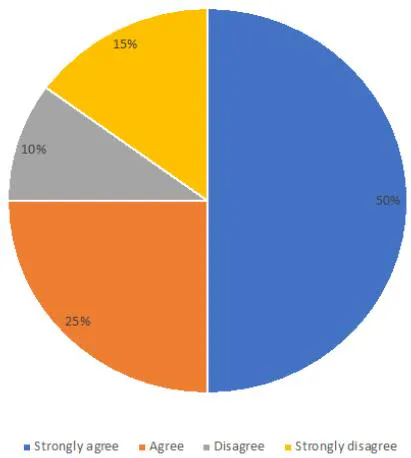
The above chart implies that competence of the sales organisation is an important determinant of sales value of an organisation
Sales organisation helps to increase profit of the organisation?
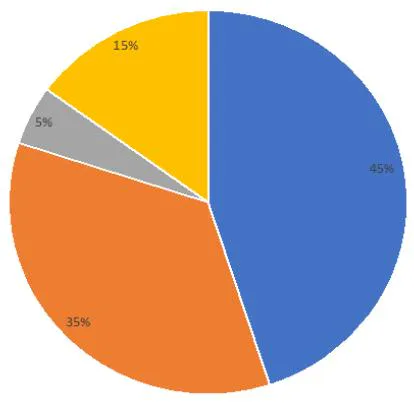
Source: Survey (Pembi, Fudamu, & Adamu, 2017) With agree rate, organisation's major profitability is dependent on sales organisation
V. RESULT
According to the study's findings, organisations need a well-designed sales organisation in order to meet their sales targets. It can be implied that companies with strong sales organisations typically have better sales planning, more successful sales tactics, and higher sales performance. In addition, the study found a number of variables that affect the efficiency of sales organisations, including leadership, culture, structure, and communication.
VI. RECOMMENDATIONS
Following recommendation seem reasonable based on the findings from study:
- Any business, big or small, should be aware that the sales organisation should be used most effectively.
- A company should always have a planned, coordinated, directed, and controlled sales organisation program in place as this will assist them to implement successful and efficient promotional techniques, higher sales, better customer relation, repeat sales, better customer feedback, higher degree of customer satisfaction.
- The organisation should retrain and coach its salespeople on how to start off on sales activities, and divert their prime focus and efforts in maintaining the sales organisation.