The worldwide use of information and communications technology (ICT) equipment and other electronic equipment is growing. There is growing amount of equipment that becomes waste after its time in use. This growth is expected to accelerate since equipment lifetime decreases with time and growing consumption. As a result, e-waste is one of the fastest-growing waste streams globally. The United Nations University (UNU) calculates in its second Global Ewaste Monitor 44.7 million metric tonnes (Mt) of e-waste were generated globally in 2016. The objective of the study was to develop a framework for improving e-waste management at the College of Engineering, Design, Art, and Technology (CEDAT). This was achieved by breaking it down into specific objectives, and these included the establishment of the policy and procedures being used in e-waste management at CEDAT, the determination of the effectiveness of the ewaste management practices at CEDAT, the establishment of the critical challenges constraining e-waste management at the College, development of a framework for e-waste management.
## I. INTRODUCTION
The worldwide use of information and communications technology (ICT) equipment and other electronic equipment is growing and consequently, there is a growing amount of equipment that becomes waste after its time in use [1]; [2]. This growth is expected to accelerate, since equipment lifetime decreases with time and growing consumption [3]. As a result, e-waste is one of the fastest-growing waste streams globally [4]. The United Nations University (UNU) calculates in their second Global E-waste Monitor, 44.7 million metric tonnes (Mt) of e-waste were generated globally in 2016 [5]. The annual global consumption of new electrical and electronic equipment (EEE) was around 60 Mt in 2016 [6]. Globally, approximately 53.6 million tonnes of e-waste were generated in 2019 [7], of this amount generated, less than $13\%$ was recycled and the rest ended up in landfills or incinerators creating enormous environmental and health concerns due to the presence of hazardous materials [8]. The consumption and use of EEE is probably most prevalent in the developed world, but developing countries show a rapid growth of consumption and use of EEE. Typically, developed countries have growth rates of $1\%$ to $5\%$ annually on weight basis, developing countries typically range from $10\%$ to $25\%$ [5]. Some less-developed countries lack waste treatment infrastructure, waste management laws and enforcement [9]. As a result, the e-waste in those countries will often be treated in sub-optimal ways by the informal sector [10]. This leads to severe consequences for the environment and human health [11]. To treat e-waste in an environmentally sound manner, it needs to be regulated [12]. This means that an appropriate system needs to be created and financed, a recycling infrastructure needs to be developed or improved, and workers' health and safety standards need to be implemented, to name a few prerequisites [2].
A quantitative and qualitative assessment of e-waste was carried out by United Nations Industrial Development Organization (UNIDO) in Uganda in 2008
[13]. Analysis of the data indicated that about 2,000 tons of e-waste is generated each year and not disposed in a well-planned and managed manner [9]. Equipment is damped on outdoor garbage heaps and landfills, thus becoming a danger to human beings and the environment [14]. For developing countries such as Uganda, effective electronic waste management is a topical issue, particularly because a large percentage of e-waste is generated through imports and there is careless and uncontrollable dumping in landfills [15]. Most of the consumers, sellers, producers, importers, and other stakeholders are oblivious of the specific and key roles to play for effective and efficient management of e-waste to make the environment safe and healthy [16]. An effective strategy should focus on e-waste diversion and minimization [17]; [18]. The key challenges to electronic waste management include, absence of proper processing facilities, lack of recycling guidelines for electronic waste management, limited capacity building and knowledge sharing on e-waste, non-implementation of the e-waste policy framework [19]. This study established the current e-waste management status at the College of Engineering, Design, Art and Technology (CEDAT) Makerere University, identified strengths, weaknesses and proposed solutions to the issues identified.
## II. METHODOLOGY
The study was carried out at Makerere University (CEDAT), which is the center of Technology and innovation. Therefore, the study population constituted of CEDAT staff.
Table 1: Total population, sample size and sampling techniques
<table><tr><td>Category</td><td>Population(N)</td><td>Sample size(S)</td><td>Sampling Techniques</td></tr><tr><td>Officers</td><td>4</td><td>4</td><td>Purposive sampling</td></tr><tr><td>System Administrators</td><td>1</td><td>1</td><td>Purposive sampling</td></tr><tr><td>Lab Technicians</td><td>5</td><td>5</td><td>Purposive sampling</td></tr><tr><td>Institutional users</td><td>70</td><td>59</td><td>Simple random sampling</td></tr><tr><td>Total Population</td><td>80</td><td>69</td><td></td></tr></table>
### a) Nature and Sources of Data
The study used both secondary and primary data sources. Secondary data was collected to generate study population and literature review while primary data was collected directly from respondents on the issues regarding E-waste.
Data collected was aimed at addressing the study objectives. Regarding the first objective both primary and secondary data were collected with the aim of determining the strength and weaknesses, gaps and contextual applicability of the policy and other regulatory framework governing e-waste at CEDAT. Data was mainly qualitative.
In relation to objective two and three on determining the effectiveness of the e-waste management practices at CEDAT and establishing the critical challenges primary and secondary data was collected from respondents through interviews and questionnaire and data was both qualitative and quantitative.
In relation to the last objective, both primary and secondary data collected was used to develop the e-waste framework management.
### b) Data Collection Methods
## i. Interviews
Semi-structured interviews were selected to carry out this research study. Interviews were conducted with either sections leaders or managers to gather their views on e-waste management practices. This allowed the participants to elaborate and provided more flexibility, range and therefore the capacity to elicit more information from them. Semi-structured interviews permit scope for individuals to answer questions more on their own terms than the standardized interview permits, yet still provides a good structure for comparability over that of the focused interview [20].
## ii. Questionnaire Administration
Questionnaire administration is the act of using a questionnaire to elicit information in a face-to-face setting, where the researcher administers the questionnaire directly, in a tele-interview by phone or some other digital means. Questionnaire administration was selected as a method because it allows for the collection of considerable amounts of data in a relatively short time and at relatively little expense while at the same time enhancing respondent anonymity [21]. A set of questions was prepared, printed, and distributed to the respondents who answered the questions before the researcher collected the filled questionnaires.
## iii. Document Review Analysis
Document's review was used to collect secondary data during the study to support and validate facts. Documents such as the e-waste management policy, strategy and guidelines for e-waste, articles, journals, and reports on e-waste management were reviewed. These helped the researcher get an internal view of the e-waste management.
## iv. Data Collection Instruments
Data collection was carried out using the following tools;
## v. Interview Guide
In-depth interviews were conducted using the interview guide. The interview guide was semistructured. The method enabled the researcher to collect accurate information from the officials who were selected to participate as key informants; because, they had a wealth of experience and knowledge on e-waste management. The instrument well ensured that reliable information is gathered, because it facilitates a deeper investigation into the topic under study. It helped the researcher to explain or clarify questions thereby increasing likelihood of useful responses.
## vi. Documentary Analysis Checklist
The researcher developed a checklist to guide the reading and contained possible reading and sources of information. This included documents pertaining to the policy frameworks, strategies, guidelines, and e-waste management practices.
## vii. Questionnaires
Self-administered, structured questionnaires were used to collect quantitative data. The questionnaire was close-ended and based on the five-point Likert scale. Although a structured questionnaire has the intrinsic disadvantage of preventing respondents from expressing themselves more authentically in their own words, this type of questionnaire was preferred because it can limit inconsistency and it saves time. The researcher distributed the questionnaires to the respondents for completion, after which they were collected at a later time on the same day. The use of the questionnaire was motivated by the fact that the targeted respondents were literate and, therefore, capable of completing the questionnaires on their own, thereby saving the researcher time and money. Moreover, self-administered questionnaires were known to have the potential to generate reliable and unbiased information on account of the fact that the respondent completes the questionnaire in the absence of the researcher [21].
## III. RESULTS
### a) Response Rate
The study applied questionnaires and interview guide to collect data from the respondents. The instrument yielded and overall response rate as presented in Table 2.
Table 2: Response rate of the various respondents
<table><tr><td>Respondents/ categories</td><td>Method</td><td>Targetet</td><td>Actual</td><td>Response rate</td></tr><tr><td>Officers</td><td>Interview</td><td>4</td><td>4</td><td>100%</td></tr><tr><td>System administ rators</td><td>Interview</td><td>1</td><td>1</td><td>100</td></tr><tr><td>Lab technicians</td><td>Interview</td><td>5</td><td>3</td><td>60%</td></tr><tr><td>Institutional Users</td><td>Questi onnaire</td><td>59</td><td>60</td><td>88%</td></tr><tr><td></td><td>Total</td><td>69</td><td>60</td><td>87%</td></tr></table>
It was of paramount importance to compute the response rate to establish whether it was adequate for the generation of the required data. Out of a sample of 69, 60 (87%) responded while 13% were not in position. The response rate of 87% was adequate to facilitate this study which implies that the data can be relied on and that the study findings were representative of the population.
Table 3: Thematic framework
<table><tr><td>Interview Themes</td><td>Coding framework/</td><td>Comments on main themes</td></tr><tr><td rowspan="8">Policy and Regulatory framework</td><td>Policy</td><td rowspan="8">Policy and regulatory framework too weak to handle the e waste problem.</td></tr><tr><td>Regulatory framework.</td></tr><tr><td>National E-waste management policy</td></tr><tr><td>Institutional policy</td></tr><tr><td>Contextual Applicability</td></tr><tr><td>Implementation</td></tr><tr><td>Enforcement</td></tr><tr><td>Awareness</td></tr><tr><td rowspan="4">Practices and effectiveness of the E waste management practices</td><td>Practices</td><td rowspan="4">Only a single practice is employed at the disposal stage and not effective</td></tr><tr><td>Effectiveness of practices</td></tr><tr><td>Sustainability</td></tr><tr><td>Goal oriented</td></tr><tr><td rowspan="4">Critical challenges</td><td>Critical challenges</td><td rowspan="4">Properly addressing the mentioned Challenges is critical to e waste management.</td></tr><tr><td>Generation challenges</td></tr><tr><td>Treatment challenges</td></tr><tr><td>Disposal challenges</td></tr></table>
### b) Length of Service
The responses were sought from the respondents on the length of service in the organisations and the findings are provided in Figure 1.
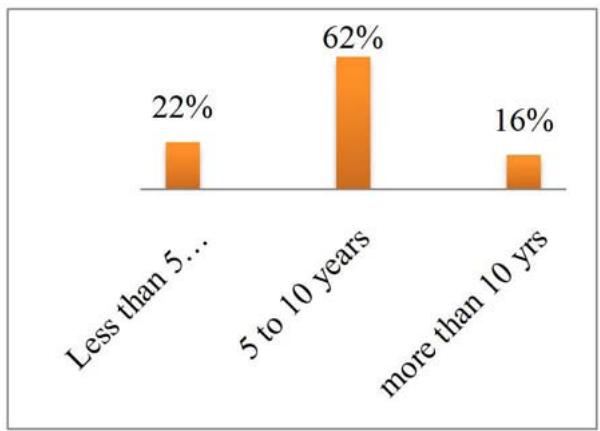 Figure 1: Length of service of the respondents
$62\%$ had worked for 5-10 years, $22\%$ for less than 5 years and $16\%$ for more than 10 years. Since most of the respondents had worked for more than 5 years they have gained relevant experience and knowledge on issues of e-waste. It also depicts work experience representativeness of the respondents.
### c) Qualitative Findings
A thematic framework as shown in Table 3 was developed to analyze the data qualitatively and identify the common theme.
### d) Findings on Policy and Regulatory Framework
Qualitatively, the interviews revealed that the college has no policy that comprehensively covers e-waste problem as a whole that is to say from generation to disposal but they rather follow the University disposal policy for ICT equipment.
They are required by law to implement a sustainable environmentally friendly electronic waste disposal which they have designed. However, findings from the research shows that little have been done to implement this policy and one can comfortably state that there has been no implementation.
Interviews revealed that the disposal policy advocates for salvaging and reassembling of e-waste, donations or sale of obsolete hardware through auction. This however is not followed; the institute e-waste hardly ever disposes of e-waste in the above ways but rather as revealed by one of the interviewees as highlighted below.
"We keep the e-waste in the stores and the university estate department picks it up for auctioning however this takes long due to limited funding"
Another one revealed that.
"Currently all government bodies keep the e-waste in their offices and await the review of the PPDA act to include e-waste as a category".
Responses are shown in the figure 2.
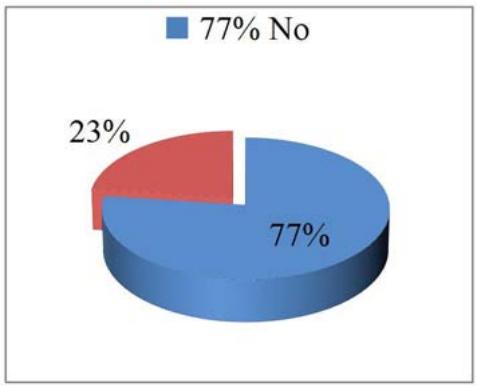 Figure 2: Efficiency of National Policies in Addressing E-waste Management in Uganda
From Figure 2, $77\%$ of the respondent thought that the national policies do not efficiently address the problem of e-waste, while $23\%$ thought the policies fully address the problem of e-waste. Many of the $77\%$ level claimed that the national policies do not directly address the problem of e-waste but address waste a whole, they also claimed that enforcement of the regulation has proved to be a problem by NEMA and there is no control in the sector. They also thought that the government does not provide enough financial support to bodies that are involved in environmental management such as NEMA hence such bodies cannot efficiently carry out their mandate. Yet actually the government offers support through the guidelines for e-waste management in Uganda.
### e) Quantitative Findings on Policy and Regulatory Framework
Quantitative findings are as per Table 3. Details of questions asked on policy and regulatory framework (frequencies and percentages) for interpretation purposes both agree and strongly agree show agreed scores; not sure are not combined while strongly disagreed and disagreed represent disagreed scores. Key quantified findings reveal that $50\%$ $(n = 49)$ respondents are not aware of the e-waste management policy while $46.6\%$ of the respondents were aware of the policy, $3.3\%$ were undecided. Similarly, $45\%$ of the respondents were aware of the existing legal and regulatory framework on e-waste management while $50\%$ were not aware and $5\%$ were not sure. On whether the existing e-waste management policy is sufficient to manage e-waste, $78.3\%$ of the respondents disagreed while $16.7\%$ agreed and $5\%$ were not sure. $80\%$ of the respondents don't believe the available laws for e-waste management are enforced while $16.7\%$ agreed that they are enforced and $3.3\%$ are not sure. $13.3\%$ of the respondents agreed that CEDAT follows the e-waste management regulatory framework while majority of the respondents $(83.6\%)$ disagreed and $3.3\%$ were not sure.
Regarding the framework's applicability $21.7\%$ agreed that it was easy to apply while $75\%$ disagreed. On whether it is appropriate $73.4\%$ don't think it is while $23.4\%$ think it is appropriate and $3.3\%$ were undecided. Regarding the effectiveness of the framework, $20\%$ of the respondents believe it is while $76.7\%$ do not believe the framework is effective.
These results suggest that there is limited awareness of the policy and regulatory framework at CEDAT and even amongst the respondents who may be aware of the policy and regulatory framework, many don't believe it is applicable, appropriate, and effective. The findings can be supported by a key respondent who said that.
"The management of e-waste at CEDAT is mainly impacted by limited awareness of policies and regulatory framework on e-waste and there is need for sensitization, even with the presence of the institutional policy, the institute is limited by the PPDA act which is mostly silent on major issues of e-waste".
### f) Findings on Practices and Effectiveness of E-waste Management
With the objective of determining the effectiveness of existing e-waste practices in Uganda, the researcher looked at the current practices used in the management of e-waste that is looking at how it is created, how it can be reduced to methods of disposal. The study examined the effectiveness of these practices in terms of their ability to achieve the ultimate objectives of reducing e-waste, proper disposal, safeguarding both human life and the environment from the harmful effects of improper e-waste management. Below is a presentation of study findings:
E-waste is mainly generated through purchase and use of ICT equipment since the university is one of highest consumer organizations of ICT equipment.
Regarding disposal, CEDAT policy advocates for salvaging and reassembling, sale of hardware, hardware donations and hardware destruction, however there are not clearly defined, or proper hardware destruction procedures followed, and the most common way is storing it in a designated store as they await the opening of the e-waste disposal center. The college does not keep track of these e-waste.
The PPDA act is silent on e-waste disposal in government institutions therefore e-waste cannot be disposed of until changes are enacted. Findings reveal that the practices employed by the institute are not effective as stated by one the interviewees. The probable solution to diminish e-waste is through recycling and reusing.
"There is need for better guidelines and practices to address e-waste as the ones we are presently following are not helping". On whether the practices reduced the impact on the environment and human life. Most of the interview respondents did not believe so; one opined that.
"By keeping away the waste in a store may not directly bring harm to the environment and humans now but we know that we can't have waste lying in a store somewhere, that doesn't really solve the problem but just delays solution, so I don't think we are reducing the impact of e-waste on the environment or human life, we are simply not doing anything about it".
While another said that.
"As long as we are still purchasing EEE and not properly disposing it off well, we are not managing it effectively. What we are doing is not sustainable".
The findings suggest that the practices employed at CEDAT to manage e-waste are not effective since they are not sustainable solutions to the problem as per the respondents and the figure 3 is a representation of their overall responses.
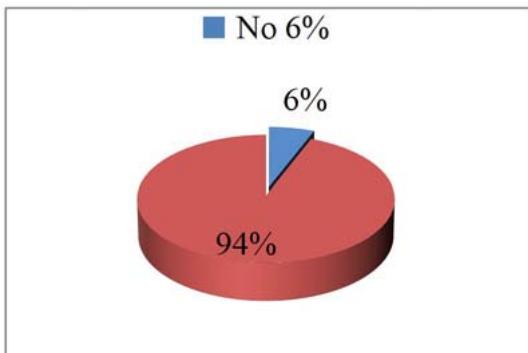 Figure 3: Effectiveness of Practices in Addressing e-waste
$6\%$ of the respondents accredited especially the practice of putting away the e-waste in a designated store until an e-waste collection center is allocated as one of the ways the institute has contributed to the overall management of e-waste as unplanned dumping would cause more harm than good to the population. $94\%$ of the respondents thought this practice does not fully address the issue of e-waste. They also attributed ineffectiveness of the practices to poor enforcement and thought that the institute should introduce of practices that effectively manage e-waste that is right from generation to disposal. The ineffectiveness of the practices employed to address key issues regarding e-waste has raised many challenges regarding e-waste handling which has escalated the problem.
The results reveal that though some respondents agreed that there are e-waste management practices at CEDAT many of the respondents did not think that the practices are effectiveness to manage the problem. These results suggest that there is little adherence to e-waste management practices at CEDAT and that the practices may not be effective in combating the ultimate impact of e-waste on the environment and human life. The findings can be supported by a key respondent who said that the only practice we employ to manage e-waste is storing the waste which ideally is just putting off the problem but not solving it". Key quantified findings reveal that $41.7\%$ $(n = 25)$ respondents believe that the institute has practices used to manage e-waste while $51.7\%$ don't believe there are practices and 6.7 are not sure.
On whether the practices are adhered to only $10\%$ agreed while $86.6\%$ don't believe the practices are adhered to. Regarding the effectiveness of the applied practices in e-waste management $71.6\%$ of the respondents do not believe they are effective while $21.6\%$ believe that the practices are effective in managing e-waste at CEDAT. $80\%$ of the respondents believe that the practices used to manage e-waste do not reduce the impact of e-waste on the environment while $16.7\%$ agreed that they reduce the impact of e-waste on the environment. $3.3\%$ were not sure, similarly
$78.4\%$ of the respondents disagreed to the statement that the practices used help reduce the impact of e-waste on human life while $18.4\%$ agreed to the statement and $3.3\%$ were not sure. This indicates that the applied practices in e-waste management are not effective.
### g) Findings on Critical Challenges of E-waste
The interviews demonstrated that there exist challenges in management of e-waste at CEDAT. Among the many challenges put forward by the interviews were lack of awareness of e-waste and magnitude of the e-waste problem, lack of sensitization, limited funding, lack of stakeholder/employee engagement, Political interference, weak policies and regulatory framework, informal disposal methods, lack of disposal facilities no enforcement among others. The major challenges put forward were mainly lack of awareness of e-waste and poor disposal of the waste.
The study established that e-waste is never completely disposed but put away in a store. This means that the waste stays at the premises for an unprecedented amount of time as one of the interviewees revealed that.
"The waste stays here for a very long time and most times ends up in wrong hands or stolen".
"Waste is relative, the obligation of disposal is not put in consideration since it is not sensitive and due to cost."
On the issue of awareness, it was established that most of the respondents had limited knowledge about e-waste and the e-waste problem. Though they admitted having heard about e-waste through media, they did not view it as a major issue. Equipment is used past obsolesce and not properly disposed due to lack of awareness. The impact of e-waste on human life and the environment is not thought about due to the limited knowledge of what e-waste is and potential impact.
The general knowledge on e-waste is very important as it is the very first critical stage in fighting e-waste at any level therefore training and capacity building should be undertaken to enlighten people on the matter.
One of the interviewees stated that.
"Many people here don't know so much about e-waste all they know is whether the machines they use is working or not and if it is functional then all is well, but if it is not then all they care for is how to get a new one, proper disposal of the old one is the least of their concerns".
On whether there any measures put in place to minimize the challenges interviews revealed that there is none as the PPDA act limits what they can and can't do about e-waste. One of the interviewees opined that.
"We are guided by the government under the PPDA Act and that limits us as the Act is silent on important issues like disposal of e-waste".
Figure 4 is a graphical representation of the respondents' views on the critical challenges of e-waste management.
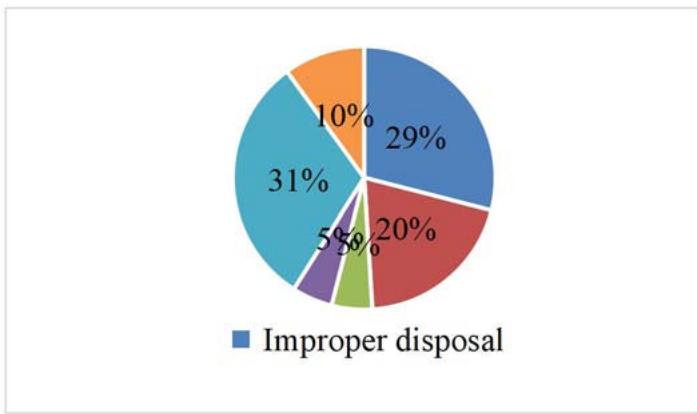 Figure 4: Findings on Critical Challenges of E-waste
Overall, the respondents revealed that weak policies and regulatory framework is the biggest challenge to e-waste management followed by improper disposal, lack of awareness about e-waste and its implications as well as poor infrastructure, stakeholder/employee engagement and lack of enforcement. Failure to address these challenges will only worsen the problem.
The results reveal e-waste was not prioritized at CEDAT, and even with the presence of ICT policies, enforcement is lacking. These results suggest that e waste is not properly managed at the institute and the e-waste problem has not been given the necessary attention it deserves; the findings can be supported by a key respondent who said that.
"It's not something people pay attention to here. The policies are not enforced due to constraints in funding".
Key quantified findings reveal that $81.6\%$ $(n = 49)$ respondents don't believe the institute has guidelines for e-waste treatment, however $15\%$ $(n = 9)$
agreed that there are guidelines on e-waste treatment and $3.3\%$ n=2 were undecided.
On whether e-waste management is prioritized at the institution $88.4\%$ of the respondents disagreed while $10\%$ think it is prioritized and $1.7\%$ are not sure.
Regarding policies on waste disposal $76.6\%$ agreed that the institution has e-waste disposal policy however $18.3\%$ disagreed and $5\%$ were not sure. This suggests that regarding e-waste disposal, the institute has a policy in place however one of the key informants stated that.
"The ICT disposal policy that we have doesn't effectively manage the problem, we put e-waste in stores which doesn't solve the problem. We need a better disposal policy".
On whether the policies are followed and enforced $80\%$ of the respondents disagreed while $16.7\%$ believe they are followed and $3.3\%$ were not sure.
## IV. DISCUSSION AND FINDING
a) Discussion of the Findings b) Existing E-waste Management Policy and its Implementation
The study findings revealed a gap in the policy and regulatory framework at CEDAT. e-waste management requires that it is managed from generation (ecofriendly devices) till it is disposed of and this should be in a way that does not harm human life and the environment. The institute has a disposal policy but lacks a comprehensive e-waste management policy. Even within the disposal policy the study revealed a number of gaps. The absence of a comprehensive e-waste management framework coupled with ineffective/lax implementation of the existing disposal policy is one of the major reasons of the low-end management of e-waste.
The laxity in implementation and enforcement is partially attributed to lack of a specific department to address e-waste at the institute, therefore there is need to formulate an independent department to ensure wholesome accountability in matters of e-waste.
The importance of a strong policy and regulatory framework is key in e-waste management. The legislation should be enforceable and implementable. This is line with the study findings by [23] who stated that legal regulation is very essential in designing WEEE management system.
### c) Practices and Effectiveness of the Existing E-waste Management Practices
Study findings revealed that the practices employed to manage e-waste at CEDAT were ineffective, inefficient, and not sustainable. The college has ignored practices that can help combat the problem regarding generation and treatment. It has concentrated on disposal which basically looks at salvaging, reassembling, sale and donations of hardware. EEE was found to be used past obsolesce and if functional, it is still useful.
Study findings by [24] suggested that prevention of creating waste material is an important method of waste reduction and though this can be cheaper in the long run however, this has not been considered by the institute. Practices such as adapting a circular economy and purchase of durable, original, and quality EEE products will also reduce on the degree and rate of e-waste generation while other practices recommended in the next chapter are sought to help effectively manage the problem.
Further findings of this study reveal that CEDAT has very weak measures for addressing the problem of e-waste and general environmental health and safety guidelines; this includes policies on e-waste, e-waste handling procedures and environmental health and safety measures. Therefore, e-waste is characterized by ineffective generation, treatment, and disposal methods.
E-waste is thus proving to be a serious emerging environmental challenge, which requires urgent attention at all levels. According to [25], there is a need for more developing countries to enact policies that guide the management of e-waste in order to prevent environmental degradation and adverse effects on human health. There is no quantifiable data to determine the exact amount of e-waste there is at CEDAT, therefore estimation of future trends of e-waste is hard. The study further revealed that a lot of e-waste has been stored in the offices awaiting legislation on disposal, this is in line with [26] findings that assert that in Africa e-waste is disposed of inappropriately; the majority of obsolete EEE being stored in offices awaiting future solutions. According to [27], most outdated electronic equipment is typically stored for some time due to a perceived worth (physical or emotional) before being disposed of. The author went on to say that these artifacts are typically kept in storage in both public and private facilities until orders are given for their disposal. In terms of e-waste disposal techniques, CEDAT stores e-waste as opposed to using other techniques. This implies that other e-waste disposal strategies, like reuse, renovation, and recycling initiatives, were weak. The above findings suggest that practices employed at the institute are not good practices and are ineffective in managing the problem. This means that the problem is not sufficiently managed and better and demonstrates an urgent need to put in place good practices to ensure smarter and more sustainable e-waste management.
### d) Findings on Critical Challenges of E-waste
The study revealed that weak policies and regulatory framework is the biggest challenge to e-waste management at CEDAT, this coupled with near absence or ineffective implementation of the existing regulations worsens the problem. As a government agency, CEDAT is constrained by the government in what it can do to address the issue and is negatively impacted by the national e-waste management policy's uneven implementation and enforcement. In agreement is a study by [28] who found that the absence of e-waste specific policies presents a challenge in coordinating e-waste management roles and responsibilities. [29] found that the absence of e-waste legislations or absence of frameworks, in Ethiopia limited the actions and reactions of the stakeholders towards e-waste management in the country.
This reveals the importance of a contextually applicable policy and regulatory framework both at national and institutional level in addressing the e-waste problem. This however should not come short of all the resources that facilitate its implementation and enforcement to achieve results. [30] asserts that development of firm policies and the use of efficient technologies have been described as critical in e-waste management.
Another challenge established by the study was improper disposal of the e-waste at the institute which is sought to be one of the main reasons why the e-waste levels are going up. This is coupled with the absence of infrastructure for the recycling, and appropriate management/disposal of e-waste following the principles of sustainable consumption/development. There are no proper disposal facilities, and the operating disposal policy has numerous limitations. This reveals inefficiency, and ineffectiveness of the disposal practices as applied by the institute, a study by [31] reveals that one of the key factors to consider in successful management of e-waste is disposal of e-waste by suitable techniques. It is therefore wise to consider options like recycling and other good practices of e-waste management to combat the problem.
Findings revealed limited awareness of e-waste and magnitude of the e-waste problem. There is limited awareness of the potential hazards of e-waste to human health and the environment and the problem is thereby not given the urgent attention it desires. This finding concurs with [32] that one of the major challenges of e waste management in developing countries is ignorance of the toxicity or hazardous nature of e-waste in government and public circles. Also, in agreement is [33], who found that most e-waste consumers had poor knowledge on its management specifically on handling and disposal which they attributed to lack of sensitization and system to manage e-waste. This suggests that awareness is a very crucial factor in dealing with e-waste and therefore awareness campaigns should be intensified by the relevant stakeholders to address the current gap.
Other challenges established by the study were lack of sensitization, lack of proper infrastructure, lack of stakeholder/employee engagement, political interference. All these need to be addressed for proper management of the problem, in agreement with [23]. [23] revealed that some of the reasons behind the present low-end management of WEEE in the developing countries is the absence of infrastructure and lack of awareness among consumers, collectors and recyclers of the potential hazards of WEEE.
## V. FRAMEWORK DEVELOPMENT
### a) Proposed Framework for Improved E-waste Management
Regarding the study findings and lessons learnt from countries that have managed to effectively deal with the e-waste problem, the researcher believes that the proposed framework presents a unique and ideal solution to the e-waste problem at CEDAT and can also be adopted by the country at large. The framework looks at the material flow of e-waste from generation to collection, illustrates a clearly defined e-waste collection system and key inputs. For effective management of e-waste, the framework proposes mandatory implementation of EPR spear headed by government, the establishment of product reuse through remanufacturing and the introduction of efficient recycling facilities. It should offer financial incentives based on weight to individuals that collect e-waste from the community and bring it to the collection centers for recycling to motivate people to use the facilities.
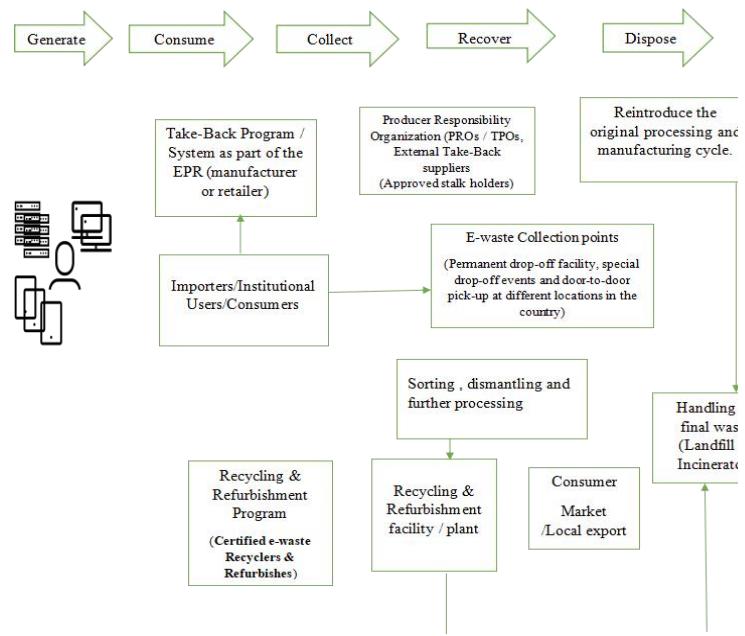 Figure 5: Proposed Framework for Improved E-waste Management
The proposed framework for improved e-waste management implores the various e-waste management approaches like; Takeback system & Collection plant which were studied by [27]; [34]; [35]; [36], as well a study on Refurbishment & Recycling and-Repurpose by [37]; [38].
## VI. DISCUSSION OF RESULTS
### a) Existing E-waste Management Policy and its Implementation
The study findings revealed a gap in the policy and regulatory framework at CEDAT. e-waste management requires that it is managed from generation (eco-friendly devices) till it is disposed of and this should be in a way that does not harm human life and the environment. The institute has a disposal policy but lacks a comprehensive e-waste management policy. The absence of a comprehensive e-waste management framework coupled with ineffective/lax implementation of the existing disposal policy is one of the major reasons of the low-end management of e-waste.
The laxity in implementation and enforcement is partially attributed to lack of a specific department to address e-waste at the institute, therefore there is need to formulate an independent department to ensure wholesome accountability in matters of e-waste.
The importance of a strong policy and regulatory framework is key in e-waste management. The legislation should be enforceable and implementable. This is line with the study findings by Nnorom & Osibanjo, (2008) who stated that legal regulation is very essential in designing WEEE management system.
## VII. CONCLUSION
The study draws the following conclusions;
The policy and procedures being used in e-waste management at CEDAT suffer limited awareness and appreciation from the policy implementers. This makes e-waste management ineffective and slows the process of enforcement and implementation of the policy. Policy sensitization and amendments are required, and various stakeholders should be trained on its purpose and the importance of constantly reviewing it for guidance on e-waste management.
The study also realized a limited awareness among the policy implementers and other stakeholders, which also weakens the implementation of the policy. The practices employed at the college were inefficient and unsustainable to solve the e-waste problems at the college.
The policy employed at the college ignores key practices of e-waste management that could help combat the problems of e-waste. The weak policy and its poor procedures worsen the problem.
According to the framework, transportation of e-waste is a priority issue in e-waste management. It is important that this waste is safely handled, and this can only be achieved through provision of necessary infrastructure to help in management of e-waste. As per the framework, collection centers play a great role in enabling proper handling of e-waste therefore setting them up at points that are easily accessible to the communities. The framework advocates for partnerships between the government and private firms through Public-Private-Partnerships (PPP) to build robust and sustainable infrastructure to facilitate an environmentally friendly e-waste management system and provide incentives for consumers to dispose their e-waste. However, the framework identifies a sound policy and a regulatory framework that tackles all components of e-waste management. Which should be implemented to reduce on the e-waste dumped and also push part of the responsibility to the producer organizations. The regulations should be applicable to all processes that involves e-waste.
### a) Recommendations
Based on the conclusions, the following recommendations are proposed:
- The Government should bring to public awareness the existing policy and legislations in place, implement e-waste policy, formulate and enforce legislation that is specific to e-waste management.
- The college should adopt practices that comprehensively manage e-waste from generation to disposal. Designing modified EPR strategies based on the local economy and capacity to implement such schemes could come in handy. In addition, adopt modified EPR schemes that include regulatory approaches on electronic equipment to procure green products using less hazardous materials (i.e., implement DfE criterion or ecodesign/cleaner production) and then, subsequent e-waste management processes will be cheap and easy.
- Consider adopting recycling as a strategy for managing e-waste, this can be through engagement in Private Public Partnerships, together they can create a solution for developing recycling infrastructure in e-waste, however they need to be designed carefully regarding Legislations and Regulations, Financial and Organizational Risks, Local Community Involvement and Financial Incentives.
- Invest in awareness and education campaigns, capacity building, training and knowledge sharing on e-waste management and carry out extensive research to establish the volumes, nature and potential environmental and human impact to bridge the knowledge gap about e-waste.
The adoption of a model where consumers in this case institutional users take e-waste to certified e- waste collectors who pay them (incentives). Then the collectors could sell to recyclers or refurbishers. This could drive e-waste collection, transportation, and its treatment, as is the case in Sweden.
### b) Limitations of the Study
The rampart lockdowns due to Covid-19 in the country greatly affected the institute and hence the data collection process.
Another limitation to this research was inadequate time and money available to the researcher to conduct the study. Secondly, the tendency of many employees to paint a rosy picture of their organization, especially when they are communicating to strangers, and the resultant reluctance to disclose unfavorable information, lest they be construed as inefficient, must also have limited the scope of the data collected.
### c) Future Perspectives
Researchers in e-waste should consider areas related to.
i. Reduction of e-waste generation ii. Recycling of e-waste: cost vs benefit iii. Applicability of EPR schemes in the least developed countries iv. Understanding e-waste disposal techniques: Determinants, policy implications, challenges, and prospects. v. The impact of policy and Regulatory framework on e-waste management.
#### ACKNOWLEDGMENT
I am grateful to God for the good health and well-being that allowed me to finish this study.
I am also thankful to my family and friends whose constant encouragement and support kept me motivated and confident. Special thanks to my co-authors for always keeping their words and making sure that all that was required is availed in time. This achievement would not have been possible without your assistance. Thank you very much.
Generating HTML Viewer...
References
38 Cites in Article
Sergio Martin,Esther Lopez-Martin,Alexis Moreno-Pulido,Russ Meier,Manuel Castro (2019). A Comparative Analysis of Worldwide Trends in the Use of Information and Communications Technology in Engineering Education.
F Wang,J Huisman,C Meskers,M Schluep,A Stevels,C Hagelüken (2012). The Best-of-2-Worlds philosophy: Developing local dismantling and global infrastructure network for sustainable ewaste treatment in emerging economies.
Karoline Owusu-Sekyere,Alexander Batteiger,Richard Afoblikame,Gerold Hafner,Martin Kranert (2022). Assessing data in the informal e-waste sector: The Agbogbloshie Scrapyard.
A Mtibe,T Mokhena,M John (2023). Sustainable valorization and conversion of e-waste plastics into value-added products.
(2017). Regional E-Waste Monitor for the Western Balkans.
Abhishek Awasthi,Federica Cucchiella,Idiano D'adamo,Jinhui Li,Paolo Rosa,Sergio Terzi,Guoyin Wei,Xianlai Zeng (2018). Modelling the correlations of e-waste quantity with economic increase.
Rajarathinam Nithya,Chandrasekaran Sivasankari,Arunachalam Thirunavukkarasu (2021). Electronic waste generation, regulation and metal recovery: a review.
Lynda Andeobu,Santoso Wibowo,Srimannarayana Grandhi (2021). An assessment of e-waste generation and environmental management of selected countries in Africa, Europe and North America: A systematic review.
T Maes,F Preston-Whyte (2022). E-waste it wisely: Lessons from Africa.
H Moheb-Alizadeh,A Sadeghi,M Jaunich,E Kemahlioglu-Ziya,R Handfield (2023). Reverse Logistics Network Design to Estimate the Economic and Environmental Impacts of Take-back Legislation: A Case Study for E-waste Management System in Washington State.
Chiara Frazzoli,Flavia Ruggieri,Beatrice Battistini,Orish Orisakwe,Juliet Igbo,Beatrice Bocca (2022). E-WASTE threatens health: The scientific solution adopts the one health strategy.
P Thakur,S Kumar (2022). Evaluation of ewaste status, management strategies, and legislations.
J Wasswa,M Schluep (2008). e-Waste assessment in Uganda: A situational analysis of ewaste management and generation with special emphasis on personal computers.
Fatin Azis,Masrur Rijal,Hazwani Suhaimi,Pg Abas (2022). Patent Landscape of Composting Technology: A Review.
Sampson Edodi (2022). Managing the environment: issues and priority actions for sustainable waste management in Uganda.
M Sabbir,T Khan,A Das,S Akter,M Hossain (2022). Unknown Title.
Arshia Fathima,Jessie Tang,Apostolos Giannis,I Ilankoon,Meng Chong (2022). Catalysing electrowinning of copper from E-waste: A critical review.
M Laskar,M Arafin,M Molla,A Reza,M Arefin (2022). Improved Virtualization to Reduce e-Waste in Green Computing.
Venkatesha Murthy,Seeram Ramakrishna (2022). A Review on Global E-Waste Management: Urban Mining towards a Sustainable Future and Circular Economy.
U Sekaran,R Bougie (2003). Research Methods For Business, A Skill Building Approach.
R Maree (2017). The need for careful data collection for pattern recognition in digital pathology.
Edgar Asiimwe,Grönlund Åke (2012). E-Waste Management in East African Community.
I Nnorom,O Osibanjo (2008). Overview of electronic waste (e-waste) management practices and legislations, and their poor applications in the developing countries.
K Nandakimar (2010). Gasification of solid waste: From flue gas to fuel gas technology.
Orish Orisakwe,Chiara Frazzoli,Cajetan Ilo,Benjamin Oritsemuelebi (2019). Public Health Burden of E-waste in Africa.
Abhishek Awasthi,Federica Cucchiella,Idiano D'adamo,Jinhui Li,Paolo Rosa,Sergio Terzi,Guoyin Wei,Xianlai Zeng (2018). Modelling the correlations of e-waste quantity with economic increase.
B Sevaldson,A Paulsen,M Stokke,K Magnus,J Stromsnes (2022). Systems Oriented Design in Maritime Design.
Daniel Mmereki,Baizhan Li,Wang Li’ao (2015). Waste electrical and electronic equipment management in Botswana: Prospects and challenges.
Abenezer Kitila,Solomon Woldemikael (2019). Waste electrical and electronic equipment management in the educational institutions and governmental sector offices of Addis Ababa, Ethiopia.
Selase Adanu,Shine Gbedemah,Mawutor Attah (2020). Challenges of adopting sustainable technologies in e-waste management at Agbogbloshie, Ghana.
Peeranart Kiddee,Ravi Naidu,Ming Wong (2013). Electronic waste management approaches: An overview.
R Nivedha,D Sutha (2020). The challenges of electronic waste (e-waste) management in India.
R Nuwematsiko,F Oporia,J Nabirye,A Halage,D Musoke,E Buregyeya (2021). Knowledge, Perceptions, and Practices of Electronic Waste Management among Consumers in Kampala, Uganda.
Jihwan Park,Insang Jung,Wonhee Choi,Sang Choi,Sung Han (2019). Greenhouse gas emission offsetting by refrigerant recovery from WEEE: A case study on a WEEE recycling plant in Korea.
N Nicole (2018). Exploring the Three Rs of E-Waste: Refurbish, Redesign, and Repurpose.
Shilpa Vishwakarma,Vimal Kumar,Shashi Arya,Mamta Tembhare,Rahul,Deblina Dutta,Sunil Kumar (2022). E-waste in Information and Communication Technology Sector: Existing scenario, management schemes and initiatives.
Edgar Asiimwe,Grönlund Åke (2012). E-Waste Management in East African Community.
No ethics committee approval was required for this article type.
Data Availability
Not applicable for this article.
How to Cite This Article
Wafula Simon Peter. 2026. \u201cDevelopment of Electronic Waste Management Framework at College of Engineering, Design, Art, And Technology\u201d. Global Journal of Research in Engineering - A : Mechanical & Mechanics GJRE-A Volume 23 (GJRE Volume 23 Issue A3): .
Explore published articles in an immersive Augmented Reality environment. Our platform converts research papers into interactive 3D books, allowing readers to view and interact with content using AR and VR compatible devices.
Your published article is automatically converted into a realistic 3D book. Flip through pages and read research papers in a more engaging and interactive format.
The worldwide use of information and communications technology (ICT) equipment and other electronic equipment is growing. There is growing amount of equipment that becomes waste after its time in use. This growth is expected to accelerate since equipment lifetime decreases with time and growing consumption. As a result, e-waste is one of the fastest-growing waste streams globally. The United Nations University (UNU) calculates in its second Global Ewaste Monitor 44.7 million metric tonnes (Mt) of e-waste were generated globally in 2016. The objective of the study was to develop a framework for improving e-waste management at the College of Engineering, Design, Art, and Technology (CEDAT). This was achieved by breaking it down into specific objectives, and these included the establishment of the policy and procedures being used in e-waste management at CEDAT, the determination of the effectiveness of the ewaste management practices at CEDAT, the establishment of the critical challenges constraining e-waste management at the College, development of a framework for e-waste management.
Our website is actively being updated, and changes may occur frequently. Please clear your browser cache if needed. For feedback or error reporting, please email [email protected]
Thank you for connecting with us. We will respond to you shortly.