I. INTRODUCTION
The whole of Africa and some third world countries in Asian continent are still lacking behind in production of poultry meat and products, this is because there is serious competition between human being and these birds for major feed ingredients used in making poultry feed like maize, soyabean, palm kernel cake and groundnut. This competition has caused high cost of these ingredients and hence in turn high selling price of poultry meat and products.
It is therefore high time we find solution to this problem, as it is capable of causing malnutrition disease and food insecurity.
Animal nutritionist should therefore swing into action to find an alternative feed ingredients that can serve as good source for both protein and carbohydrates, as it may be very difficult for human being to abandon these stated feed ingredient for poultry birds.
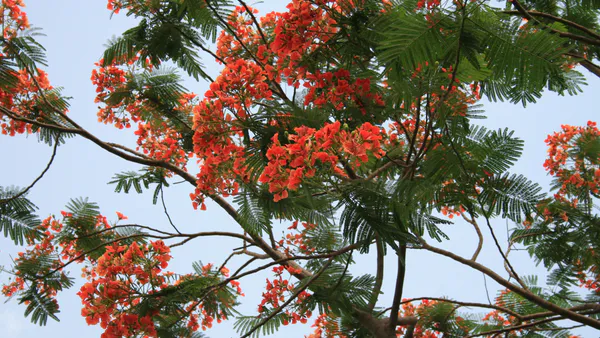
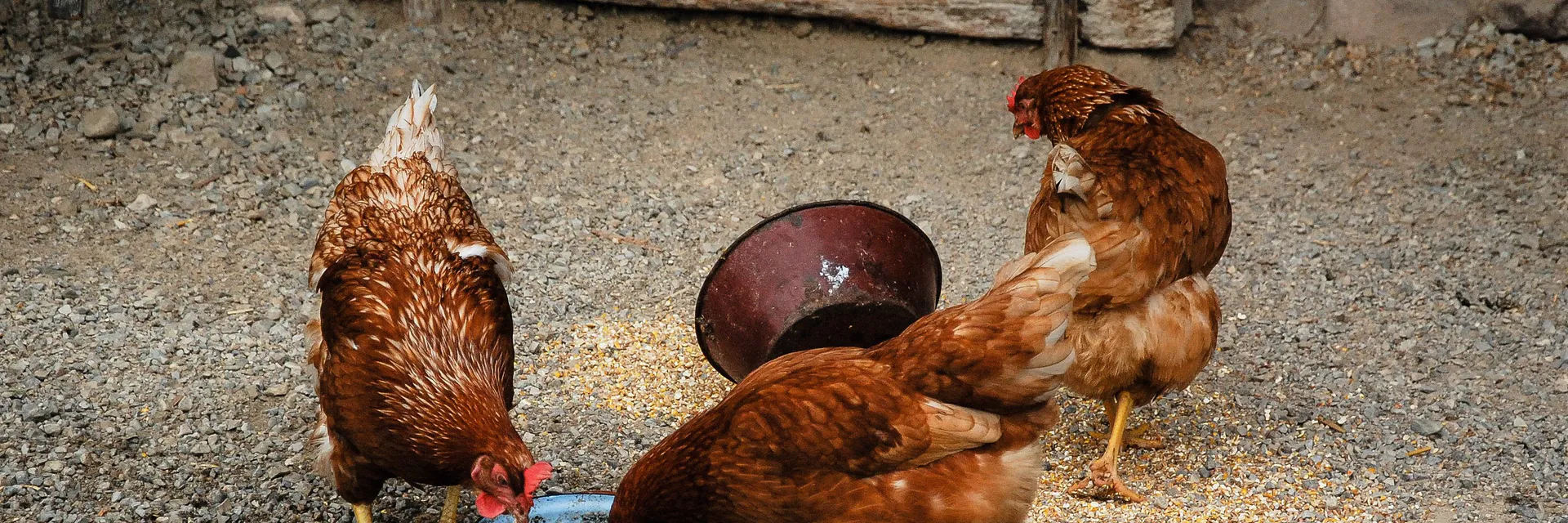
In this experiment, insects like Delonix regia will be degraded and detoxified and make meal out of it to studt the effect on broiler birds. The outcome of the experiment will afford the birds to abandon ingredients like maize, soybean, palmkernel and groundnut to human being for consumption, this will make surplus food for human being and also reduce cost of production of feed and hence reducing the selling price of poultry meat and products and so everyone will be able to afford poultry meat and products and then malnutrition will not occur and there will be food security.
a) Objectives of the experiments
i. Source Delonix regia from school environment
ii. Degrade and detoxified Delonix regia iii. Prepare Delonix regia meal and feed to broiler birds.
iv. study and take data on feed intake, weight gain and feed to weight gain
v. Take to metabolic cage for feace collection for digestibility
b) Justification
i. Availability of Delonix regia throughout the year
ii. Delonix regia is nutritious
iii. It is not consumable to animals, so no competition
II. MATERIAL AND METHODS
a) Site of the Experiment: The experiment was carried out in the Agricultural garden of Kwara State Polytechnic, Ilorin
b) Repaire of Poultry Pen: The pen were repaired by flouring, putting new poultry net to screen away predators and the pens were again divided based on the experimental design.
c) Source of Jatropha Seed: All the Delonix regia were obtained from Polytechnic campus from the beginning till the end of the experiment.
d) Source of feed Stuff: Other feed ingredients are obtained in whole sales (50kg bags and above) from feed mill shops, each of these ingredients was milled separately in their bags for easy mixing and it is manually mixed in the project site based on the feed formulations and percentage of Delonix regia intended in the feed.
e) Inoculation and Preparation of Microorganisms
The Aspergillus niger and Baccillus lichiformis used in the experiment were prepared at the microbiology laboratory of Kwara state Polytechnic, Ilorin
f) Dedredation of Delonix Regia: The seeds is degraded in an harmer mill to increase the surface area of the seed, so that the detoxification effect can be effective.
g) Detoxification of Delonix regia: The seeds were detoxified using four (4) different methods, the first was Physical method this is done by slight toasting of the seeds before grinding and then soak in water for two (2) days to ferment and after which it is then sundry for easy inclusion into the feed. The chemical method include soaking the granulated seeds in n- Butanol for two days in ratio 1:4 after the two days it was rinsed thoroughly before soaking in Acethone for another two days in ration 1:4 and it was then rinsed again before final soaking in Methanol also in ratio 1:4 for next two days before rinsing and then sundrying for easy inclusion into feed. The Biological method is done by making the granulated seed into past by distilled water and Aspergillus niger is added and sealed for seven (7) days after which the it is rinsed and sundried and then Bacellus lichiformis is added and then sealed for another seven (7) days, it is then washed and sundried for inclusion into feed. The combined method is the repetition of all this process on a particular quantity of granulated seeds.
h) Chiken Feed: The composition of the experimental diet is shown below in below, the birds were fed five (5) experimental diet for physical method of detoxification, this is repeated for biological, chemical and combined methods of detoxification. The diet had treated Delonixregia meal at 1%, 2%, 3%, 4% and 5%.
| Level of inclusion of DDDRM | ||||||
| Ingridients(%) (control) | 0% (Diet 1) | 1% (Diet 2) | 2% (Diet 3) | 3% (diet 4) | 4% (Die t 5) | 5% |
| Maize | 50.0 | 49.0 | 48.0 | 47.0 | 46.0 | 45.0 |
| Soyabean | 18.0 | 18.0 | 18.0 | 18.0 | 18.0 | 18.0 |
| Groundnut cake | 13.0 | 13.0 | 13.0 | 13.0 | 13.0 | 13.0 |
| Fishmeal | 3.0 | 3.0 | 3.0 | 3.0 | 3.0 | 3.0 |
| DDDRM | 0.0 | 1.0 | 2.0 | 3.0 | 4.0 | 5.0 |
| Palm kernel cake | 6.0 | 6.0 | 6.0 | 6.0 | 6.0 | 6.0 |
| Wheat offals | 7.0 | 7.0 | 7.0 | 7.0 | 7.0 | 7.0 |
| Oystal shell | 2.0 | 2.0 | 2.0 | 2.0 | 2.0 | 2.0 |
| Salt | 0.25 | 0.25 | 0.25 | 0.25 | 0.25 | 0.25 |
| Broiler Premix | 0.25 | 0.25 | 0.25 | 0.25 | 0.25 | 0.25 |
| Lysin | 0.25 | 0.25 | 0.25 | 0.25 | 0.25 | 0.25 |
| Methaonine | 0.25 | 0.25 | 0.25 | 0.25 | 0.25 | 0.25 |
| Total | ||||||
| 100 | 100 | 100 | ||||
| 100 | ||||||
| Calculated analysis CP(%) | 22.30 | 22.40 | 22.6 | |||
| M.E(kcal/kg) cal. | 2920 | 2918 | 2918 | |||
| Lysin (%) | 1.10 | 1.02 | 1.00 | |||
| Methionine | 77 | 75 | 75 | |||
f) Source of Birds
Ross boilers birds used in the experiment was purchased from Affcom Nigeria Limited in Kulende old Jebba Road, Ilorin, Kwara State Nigeria.
i. Management of Birds
Washing of drinkers and cleaning of feeding trough were done on daily basis. Litter material was usually turned at least once a week. Clean water and feed were served on daily basis ad-libitum and the left over feed were weighed to know feed intake. Litter was turned once a week and their health status is monitored throughout the period of experiment. Vaccine and drug administration program was carried out according to recommendation for derived savannah zone of Nigeria shown in table 2.2
III. RESULT AND DISCUSSIONS
Significant difference occurred (P<0.05) in dry matter in all the inclusion levels, with 2ml inclusion level (78) being the highest and 4ml (42) the lowest, the crude protein shows a different pattern with 0ml control (71.4) being the highest and 3ml given the lowest (43), the crude fibre shows its highest value at 0ml control (64) and the lowest at 4ml (40), ether extract has the 2ml to be highest (70.6) and the control 0ml to be (39.9), the Ash has the control to be the highest with (38) and 5ml inclusion Level to be lowest (10.24).
The significant difference experienced in dry matter, crude protein and crude fibre may be as a result of the rate of inclusion level of Delonixregia that was high in the affected diets, the crude protein noticed may be because of the quantity that has been made used by the birds while the reverse is experienced in ether extract and Ash content content may be because of difference inclusion levels of Delonixregia.
| Parameter | 0ml | 1ml | 2ml | 3ml | 4ml | 5ml | SEM |
| Dry matter% | 42.0d | 13.7 | |||||
| Crude protein% | 12.1 | ||||||
| Crude fibre% | 11.9 | ||||||
| Ether extract% | 10.2 | ||||||
| Ash% | 4.7 |
IV. CONCLUSION AND RECOMMENDATION
a) Conclusion
i. Delonixregia cannot be used without degradation and detoxification.