Introduction
Digital competence—the integrated set of knowledge, skills, and attitudes that enable the effective, critical, and responsible use of digital technologies—has become a foundational component of contemporary education, including early childhood education. In recent years, international educational frameworks have emphasized that digital competence is no longer optional but a core professional requirement for educators working with young learners, particularly in contexts characterized by vulnerability or exclusion. In developing countries such as Paraguay, structural inequalities in access to technology, connectivity, and teacher training can significantly intensify the educational disruption experienced by children facing prolonged hospitalization. These challenges are compounded by socio-economic disparities, limited institutional resources, and uneven digital infrastructure, which collectively threaten children’s right to continuous, equitable, and high-quality education.
Hospital classrooms have emerged globally as a strategic response to these challenges, functioning as inclusive educational environments designed to ensure pedagogical continuity for children undergoing medium- or long-term medical treatment. Unlike conventional school settings, hospital classrooms must accommodate highly heterogeneous learner profiles, including children with chronic illnesses, neurological conditions, and temporary or permanent disabilities. Consequently, educational practices in these settings require a high degree of pedagogical flexibility, individualized instruction, and emotional sensitivity. Teachers working in hospital classrooms are not only responsible for curricular delivery but also for supporting children’s psychological well-being, motivation, and sense of belonging during periods of medical vulnerability.
Early childhood represents a critical window for cognitive, neurological, and socio-emotional development, during which neural plasticity is particularly high. Educational experiences during this stage play a decisive role in shaping executive functions, language acquisition, memory formation, and emotional regulation. For this reason, pedagogical interventions in hospital classrooms must be carefully designed to align with developmental neuroscience principles. Digital media, when appropriately integrated, offer unique affordances for supporting early learning in constrained environments. Interactive digital experiences—such as educational games, digital storytelling, and adaptive learning applications delivered through tablets or touchscreens—have been shown to enhance visual-spatial reasoning, problem-solving abilities, attention regulation, and early literacy skills. These tools can transform abstract concepts into concrete, manipulable experiences, which is particularly beneficial for young learners with limited mobility or reduced access to traditional classroom materials.
However, the educational potential of digital technologies in early childhood is not without risks. A growing body of research cautions that passive, unstructured, or excessive screen exposure may negatively affect attention span, self-regulation, and social interaction, especially when digital use replaces direct human interaction or play-based learning. This dual nature of digital media—simultaneously offering powerful learning opportunities and potential developmental risks—highlights the central role of educator and caregiver digital competence. It is not merely access to technology that determines educational outcomes, but the pedagogical intentionality, supervision, and contextualization with which digital tools are employed.
In hospital classrooms, this balance becomes even more critical. Children’s physical fatigue, emotional stress, and medical routines impose additional constraints on attention and engagement. Consequently, digital technologies must be used strategically to support, rather than overwhelm, young learners. This requires educators and families to possess not only technical skills but also pedagogical and neurodevelopmental understanding of how digital media interact with early learning processes. Digital competence in this context encompasses the ability to select developmentally appropriate tools, design interactive and inclusive learning activities, monitor cognitive and emotional responses, and collaborate effectively with families and healthcare professionals.
Despite the growing relevance of digital competence in hospital-based early childhood education, empirical evidence from Latin American contexts—particularly Paraguay—remains scarce. Existing research has largely focused on mainstream educational settings, leaving hospital classrooms underrepresented in the literature. This study addresses this gap by systematically examining how digital tools are integrated into hospital classrooms in Paraguay and how teachers and parents perceive their impact on children’s cognitive development and inclusive engagement.
Specifically, through a survey of 500 participants—comprising hospital classroom teachers and parents of early childhood learners—this study investigates: (1) the prevalence, frequency, and types of digital tools used in hospital-based early childhood education; (2) beliefs and attitudes regarding the influence of digital technologies on children’s cognitive and neurodevelopmental outcomes; and (3) the ways in which digital tools are leveraged to promote inclusive learning experiences in contexts of illness and vulnerability. By framing digital competence within internationally recognized educational frameworks and interpreting findings through the lenses of developmental neuroscience and inclusive pedagogy, this research seeks to contribute robust empirical evidence to an emerging field of interdisciplinary inquiry.
Literature Review
Digital Competence in Early Childhood Education
Digital competence has been widely characterized as a vital combination of knowledge, abilities, and attitudes required for the effective, critical, and responsible use of digital technologies in educational contexts. In early childhood education, this concept acquires a distinctive meaning due to the developmental characteristics of young learners and the mediating role of adults. Unlike later educational stages, digital competence in early childhood is not centered on autonomous technology use, but rather on guided, developmentally appropriate interactions that support learning, communication, and socialization. Consequently, digital competence in this stage must be understood as a shared construct involving both educators and children.
For teachers, digital competence encompasses the capacity to select, adapt, and pedagogically integrate digital tools in ways that align with early learning principles, play-based pedagogy, and cognitive development. This includes not only technical proficiency, but also pedagogical judgment, ethical awareness, and the ability to scaffold children’s interactions with technology. Teachers are expected to design learning experiences in which digital tools complement, rather than replace, hands-on activities, social interaction, and emotional engagement. For children, digital competence refers to foundational skills such as basic device interaction, early digital literacy, and the gradual development of digital citizenship, including awareness of safe and responsible use under adult supervision.
Empirical research on digital competence in early childhood education has grown steadily over the past decade. Su and Yang (2024), in their systematic review of 23 empirical studies conducted in early childhood settings, highlight that the majority of investigations focus either on teachers’ self-perceived digital competence or on children’s observable digital behaviors and learning outcomes. Their analysis indicates that quantitative methodologies—particularly survey-based instruments—are the dominant research approach used to assess levels of competence, frequency of technology use, and perceived pedagogical effectiveness. These studies consistently show that while educators generally express positive attitudes toward digital technologies, variations in competence levels are strongly associated with access to training, institutional support, and contextual factors.
Moreover, existing literature suggests that teachers’ digital competence significantly influences the quality of technology integration in early childhood classrooms. Educators with higher levels of digital competence are more likely to employ interactive, learner-centered digital activities that promote cognitive engagement, creativity, and collaboration, whereas lower competence levels are often associated with more limited or superficial uses of technology. This relationship becomes particularly relevant in non-traditional educational environments, such as hospital classrooms, where pedagogical decisions must account for children’s health conditions, emotional states, and fluctuating attention capacities.
Despite the growing body of research, most studies reviewed by Su and Yang (2024) are situated in mainstream early childhood education settings, with limited attention given to specialized or inclusive contexts. Hospital classrooms, in particular, remain underexplored in terms of how digital competence is enacted by educators and supported by families. Given the unique constraints and demands of hospital-based education, there is a pressing need to extend existing digital competence frameworks to these environments.
In line with this gap, the present study adopts a quantitative, survey-based approach to examine digital competence and technology use in hospital classrooms for early childhood learners in Paraguay. By collecting structured data from both educators and parents, this research seeks to capture a more comprehensive picture of how digital tools are employed, how competence is perceived, and how these factors interact to shape educational practices in a context characterized by vulnerability, inclusion, and developmental sensitivity.
Digital Tools and Cognitive Development
A growing body of interdisciplinary research has examined how young children’s cognitive development is shaped by exposure to and interaction with digital technologies. From a neurodevelopmental perspective, early childhood represents a sensitive period during which cognitive functions such as attention, memory, executive control, language, and visual-spatial processing undergo rapid maturation. Consequently, the nature and quality of learning experiences during this stage can have lasting effects on neural organization and cognitive trajectories. Digital tools, particularly interactive technologies, have become increasingly prominent in early educational environments, prompting ongoing debate regarding their potential benefits and risks.
Recent narrative and systematic reviews highlight the complex and context-dependent effects of digital media on early cognition. An MDPI narrative review published in 2024 reports mixed outcomes associated with digital device use in young children. On the one hand, well-designed interactive digital media can promote active learning processes, including problem-solving, visual-spatial reasoning, and information processing. On the other hand, unstructured or excessive screen exposure has been linked to cognitive overload, reduced attentional control, and diminished opportunities for social interaction and embodied learning. These contrasting findings underscore a critical conclusion consistently emphasized in the literature: the cognitive impact of digital technologies is determined not by their mere presence, but by how they are pedagogically integrated into learning experiences.
When digital tools are used with clear educational intent, they can support core cognitive processes. Educational applications that translate abstract concepts into concrete, manipulable representations—such as interactive puzzles, simulations, or visual storytelling—have been shown to enhance spatial awareness, early numeracy, and logical reasoning. These tools leverage multimodal input (visual, auditory, tactile), which can strengthen encoding and retention of information, particularly for young learners with diverse learning needs. Moreover, adaptive digital platforms can individualize learning by adjusting task difficulty in response to children’s performance, thereby supporting executive functions such as cognitive flexibility and working memory.
Conversely, research consistently warns that passive consumption of digital content, especially when it replaces active play, peer interaction, or adult-guided learning, may negatively affect cognitive and socio-emotional development. Excessive screen time has been associated with shorter attention spans, difficulties in self-regulation, and reduced opportunities for language-rich interaction. From a neurocognitive standpoint, these effects may be explained by reduced engagement of neural systems responsible for sustained attention and social cognition when children are exposed primarily to fast-paced, non-interactive digital stimuli. As such, digital technologies should not function as substitutes for human interaction, but rather as complementary tools embedded within rich pedagogical and social contexts.
These considerations are particularly salient in hospital classrooms, where children’s cognitive resources may already be compromised by illness, fatigue, stress, or medical interventions. In such environments, the risk of cognitive overload is heightened, making intentional and developmentally appropriate use of digital media essential. Hospital educators must therefore carefully select digital tools that support short, meaningful learning episodes, allow for frequent breaks, and align with children’s fluctuating attention and emotional states. Rather than serving as “babysitting screens,” digital technologies in hospital classrooms should be employed as cognitive supports that enhance engagement, motivation, and learning continuity.
Research on digital tools designed for neurodevelopmental needs further illustrates their potential when used appropriately. Recent reviews of educational applications targeting children with neurodevelopmental differences indicate that many digital tools focus on core domains such as language acquisition, social communication, executive functioning, and early literacy. These applications often incorporate visual supports, repetitive practice, and immediate feedback—features known to facilitate learning in children with cognitive or communication challenges. For example, studies published in high-impact medical and educational journals report that digital applications developed for autistic learners frequently emphasize speech development, pragmatic language skills, and social interaction, demonstrating measurable gains when integrated into structured intervention programs.
Importantly, the effectiveness of such tools is closely linked to adult mediation. Caregivers and educators play a central role in scaffolding children’s digital experiences, guiding attention, prompting reflection, and connecting digital content to real-world contexts. This process of joint engagement has been identified as a key mechanism through which digital tools can support cognitive development without displacing essential social and emotional learning. In hospital settings, collaboration between educators, parents, and healthcare professionals becomes particularly important to ensure that digital activities align with both educational and medical priorities.
In sum, the literature suggests that digital tools hold significant potential to support cognitive development in early childhood, provided they are used intentionally, interactively, and within developmentally informed pedagogical frameworks. In hospital classrooms, where educational continuity and cognitive stimulation are critical yet constrained, digital technologies can function as powerful enablers of learning if guided by strong digital competence among educators and families. Understanding how these tools are currently used—and how their use is perceived by key stakeholders—is therefore essential for informing evidence-based practices and policies in hospital-based early childhood education.
Inclusive Pedagogy and Assistive Technology
Inclusive pedagogy is grounded in the principle that all learners, regardless of health status, disability, or contextual barriers, should have equitable access to meaningful educational experiences. In early childhood education, inclusive pedagogy is commonly operationalized through frameworks such as Universal Design for Learning (UDL), which advocate for flexible approaches to curriculum design, multiple means of representation, expression, and engagement, and the proactive removal of learning barriers. Within this framework, assistive and educational technologies have emerged as critical instruments for fostering inclusion, particularly in environments characterized by high levels of learner diversity, such as hospital classrooms.
Assistive technologies and digital educational tools offer alternative pathways for participation and communication, enabling children who cannot fully engage through traditional instructional methods to access learning opportunities. For example, interactive tablets equipped with speech-generating software can support nonverbal or minimally verbal children by providing functional communication options, thereby enhancing both cognitive engagement and social interaction. Similarly, adaptive educational software allows instructional content to be presented at varying levels of complexity, pace, and modality, accommodating children with diverse cognitive profiles, attention capacities, and learning needs. These technologies are especially valuable in early childhood, where individualized support and multimodal learning experiences are central to development.
Recent research has consistently highlighted the role of educational technology as a key driver of inclusive practice. A systematic review protocol on educational technology in inclusive primary education emphasizes that digital tools have been “instrumental” in reducing learning barriers by offering customizable and accessible learning environments for students with special educational needs. Such tools facilitate differentiated instruction, enable alternative forms of assessment, and support the development of foundational cognitive and communicative skills. Importantly, the literature underscores that assistive technologies are most effective when integrated into pedagogical strategies rather than used as isolated interventions, reinforcing the need for intentional instructional design.
In hospital classrooms, inclusive pedagogy takes on additional significance due to the compounded challenges faced by learners. Children receiving medical treatment often experience physical limitations, emotional distress, and disrupted social relationships, all of which can impede learning. Digital technologies can play a vital role in mitigating these challenges by sustaining social and cognitive connections. Video conferencing platforms, remote lesson participation, and multimedia content allow hospitalized children to maintain contact with peers, teachers, and familiar learning routines, reducing feelings of isolation and promoting a sense of normalcy. These digital connections are not merely logistical solutions but function as psychosocial supports that contribute to emotional well-being and motivation, which are essential for effective learning.
However, the successful implementation of inclusive digital practices in hospital classrooms is highly dependent on educators’ professional competence. Prior research consistently emphasizes that teacher training in both inclusive pedagogy and information and communication technologies (ICT) is a decisive factor in determining the quality of technology integration. Educators who possess strong digital competence are better equipped to select appropriate assistive tools, adapt digital content to individual needs, and monitor children’s responses to technology-based interventions. Conversely, limited training or confidence in ICT use may result in underutilization of available tools or reliance on low-level, non-interactive uses of technology.
In this context, digital competence in hospital classrooms extends beyond basic technical proficiency. It encompasses pedagogical expertise in inclusive instruction, ethical awareness of children’s vulnerabilities, and the ability to collaborate with families and healthcare professionals. Teachers must be capable of aligning digital tools with individualized education plans, medical constraints, and developmental goals, ensuring that technology serves as a means of empowerment rather than exclusion. Parents, likewise, play a crucial role in reinforcing inclusive digital practices by supporting learning activities at the bedside and facilitating continuity between hospital and home environments.
Overall, the literature suggests that inclusive pedagogy and assistive technology are deeply interconnected in hospital-based early childhood education. When guided by strong digital competence, educational technologies can significantly enhance access, participation, and learning outcomes for hospitalized children with diverse needs. Understanding how educators and families perceive and enact these inclusive digital practices is therefore essential for advancing evidence-based approaches to hospital education and ensuring that no child is excluded from meaningful learning opportunities due to illness or disability.
Hospital Classrooms and Early Childhood Education
Children affected by serious or chronic illnesses frequently experience prolonged absences from formal schooling, resulting in significant educational discontinuity and heightened risk of academic delay, social exclusion, and emotional distress. These interruptions are particularly critical during early childhood, a developmental stage characterized by rapid cognitive, linguistic, and socio-emotional growth. When educational experiences are disrupted during this sensitive period, children may face long-term consequences in learning trajectories, self-esteem, and school reintegration. As a result, the provision of educational services within healthcare settings has increasingly been recognized as both an educational necessity and a fundamental child right.
Hospital classrooms—educational units embedded within healthcare facilities—have emerged internationally as an innovative response to these challenges. As Wang and Yang (2025) describe, hospital schools provide structured, individualized curricula alongside psychological and emotional support tailored to the needs of hospitalized children. These programs are designed not only to maintain academic continuity but also to support children’s well-being by preserving daily routines, fostering a sense of normalcy, and sustaining connections with schooling and peers. Although Wang and Yang’s analysis focuses on the Chinese context, the underlying principle is universal: access to education during medical treatment is an essential component of children’s rights and holistic care.
From an early childhood education perspective, hospital classrooms must address a unique constellation of pedagogical demands. Unlike mainstream classrooms, hospital learning environments are shaped by medical schedules, fluctuating health conditions, and limited physical space. Instruction often occurs at the bedside or in small-group settings, requiring highly individualized approaches that are responsive to children’s cognitive capacities, emotional states, and physical endurance. Educators in hospital classrooms therefore operate at the intersection of education, healthcare, and psychosocial support, adapting curricula and instructional strategies to accommodate each child’s circumstances.
Digital technologies have increasingly been positioned as key enablers within hospital-based early childhood education. Through digital tools, hospital classrooms can extend learning beyond physical constraints, offering flexible and adaptive instructional resources that can be tailored to individual needs. Interactive applications, digital storytelling, and multimedia content can provide cognitive stimulation even when traditional materials are impractical. Moreover, communication technologies—such as video conferencing and virtual classroom platforms—enable hospitalized children to maintain social and academic connections with their regular schools, mitigating feelings of isolation and supporting smoother reintegration upon recovery.
In Paraguay, empirical research on hospital classrooms remains limited, and systematic data on pedagogical practices within these settings are scarce. Nevertheless, the country has undertaken initiatives aimed at promoting inclusive education through digital means, such as the development and dissemination of accessible digital textbooks and technology-supported learning resources. These initiatives reflect broader policy commitments to educational inclusion and digital transformation, yet their implementation and impact within hospital classrooms have not been sufficiently examined. Understanding how such resources are actually used by educators and families in hospital contexts is therefore essential for evaluating their effectiveness and identifying areas for improvement.
The present study addresses this gap by providing empirical evidence on the integration of digital technologies in Paraguayan hospital classrooms serving early childhood learners. By capturing the perspectives of both educators and parents, this research offers insight into current practices, perceived benefits, and ongoing challenges related to digital learning in healthcare-based educational settings. In doing so, it contributes to the international literature on hospital education by foregrounding a Latin American context and highlighting the role of digital competence in supporting learning continuity, cognitive development, and inclusion for young children experiencing illness.
Methodology
Participants and Setting
This cross-sectional survey study involved 500 participants from hospital-based early childhood programs in Paraguay. Of these, 300 were teachers or instructional staff in pediatric hospital classrooms, and 200 were parents of children enrolled in those programs. Participants were recruited through hospital education networks in urban and rural Paraguay. Teachers had an average of 8.4 years (SD 5.6) of experience teaching in hospital or special settings; parents had children aged 3–6 years receiving hospital instruction. Efforts were made to obtain a representative sample across socio-economic strata.
Survey Instrument
A 25-item questionnaire was developed, covering demographics, digital resource usage, and perceptions of technology’s impact on learning. Key sections included:
Demographics: Age, gender, years of experience (for teachers) or child’s age (for parents), formal training in ICT.
Digital Usage: Frequency of using specific devices (tablets, laptops, smartphones) in classroom/home learning.
Attitudes: Likert-scale items assessing agreement with statements such as “Using digital tools improves children’s cognitive development” and “Technology makes the classroom more inclusive for children with different needs.”
Open Responses: Brief questions on barriers (e.g. connectivity, resources) and best practices in using technology.
The survey combined quantitative (yes/no, Likert scales) and qualitative items. It was reviewed by an expert panel in special education and piloted for clarity (Cronbach’s α = 0.82 for attitude scales). Data were collected anonymously via paper forms and secure online links.
Data Analysis
Survey data were entered into SPSS (v27). Descriptive statistics (means, frequencies) characterized the sample (Table 1). Comparisons between teacher and parent responses were examined using chi-square tests for categorical items and t-tests for Likert scale ratings. We also performed simple correlation analyses between frequency of technology use and positive attitude scores. For all tests, p < 0.05 was considered significant. Data visualization was done with Excel.
Table 1 summarizes participant demographics and key digital competence metrics. Items such as “formal ICT training” and “weekly use of digital tools” are expressed in percentages. Open-ended responses were thematically coded to supplement quantitative findings.
| Characteristic | Teachers (n=300) | Parents (n=200) | Total (n=500) |
|---|---|---|---|
| Mean age, years (SD) | 35.7 (8.2) | 33.2 (7.5) | 34.8 (7.9) |
| Formal ICT training (yes, %) | 65% (195) | 30% (60) | 50% (255) |
| Use digital tools weekly (yes, %) | 90% (270) | 75% (150) | 84% (420) |
| Agree digital tools improve cognitive development (%) | 88% (264) | 82% (164) | 86% (428) |
| View technology as enhancing inclusion (yes, %) | 92% (276) | 80% (160) | 88% (436) |
Participant demographics and digital competence indicators (N=500).
Note: Percentages may not sum to 100% due to rounding. All participants had some access to Internet-connected devices either at home or in hospital classrooms.
Results
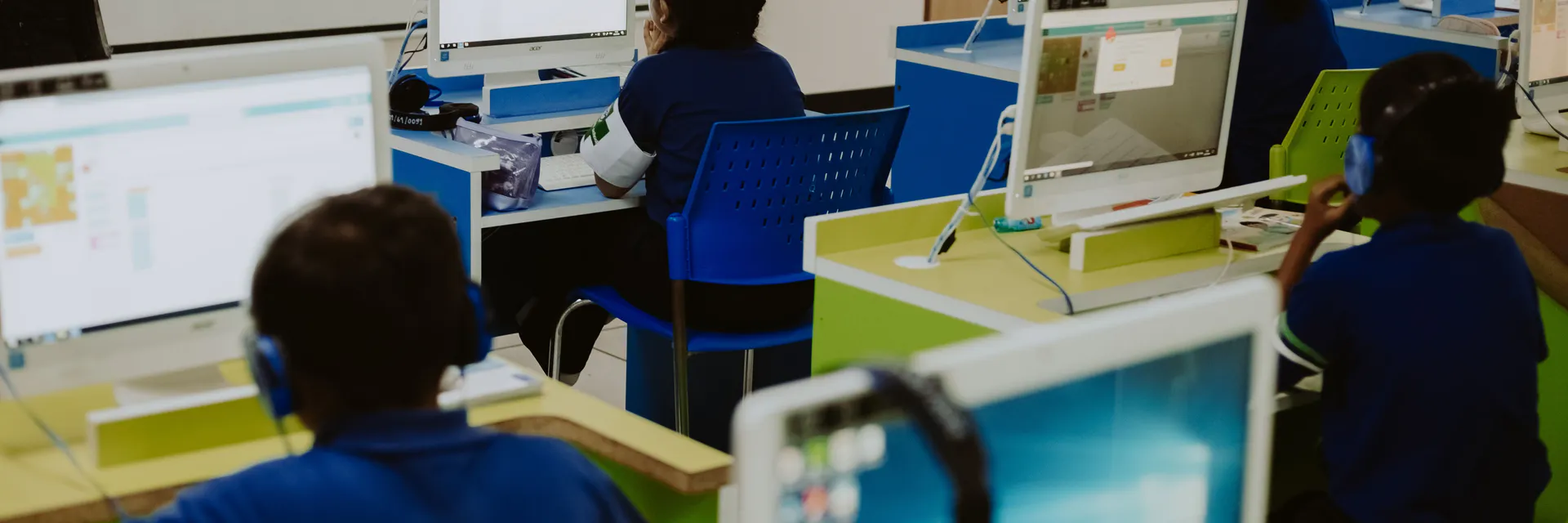
Most participants reported regular engagement with digital tools in the hospital education context. Specifically, 90% of teachers and 75% of parents indicated they used digital devices at least weekly during instruction or learning. The most commonly used devices were tablets (85% teachers, 70% parents) and laptops/computers (80% teachers, 65% parents); smartphones were used less frequently (45% teachers, 50% parents) due to their smaller screens. These distributions mirror broader trends in early education technology, where tablets often dominate child-centered apps.
Distribution of touchscreen devices in reviewed studies of child learning (adapted from Trucí et al., 2024). Tablets were used in 64 out of 157 studies, far exceeding other categories. This aligns with our context, where tablets were the primary platform for educational apps.
Table 1 summarizes demographic and competence-related characteristics. Teachers were significantly more likely than parents to have formal ICT training (65% vs. 30%, χ²(1)= 58.3, p<0.001). Both groups were overwhelmingly positive about the educational value of technology: 86% of all respondents agreed that digital tools improve cognitive development. Teachers reported slightly higher agreement (88%) than parents (82%), but this difference was not statistically significant (χ²(1)=2.5, p=0.11). Similarly, 88% overall believed technology made learning more inclusive, with teachers again more affirmative (92% vs. 80%, χ²(1)=12.4, p<0.001).
In terms of cognitive outcomes, a majority of participants observed concrete benefits. For example, 75% noted that interactive apps (e.g. language-learning games) increased children's engagement, and 70% reported improvements in skills like memory and problem-solving attributable to digital activities. However, about 20% of respondents (mostly parents) expressed concerns about potential overuse. The mean cognitive development agreement score (on a 5-point scale) was 4.2 (SD 0.7) for teachers and 3.9 (SD 0.8) for parents, a small but significant difference (t(498)=3.5, p=0.0005).
We also explored the relationship between teachers’ digital competence and perceived outcomes. Among teachers, those with formal ICT training gave higher ratings to cognitive benefits (mean 4.3) than untrained teachers (mean 3.8, t(298)=4.2, p<0.001). This suggests that greater teacher digital competence may amplify positive educational effects.
Discussion
Our findings indicate that digital tools are widely used and positively regarded in Paraguay’s hospital classrooms for young children. The high prevalence of tablet and computer use, and the strong endorsement of technology for cognitive development (86% agreement), align with recent literature on early childhood technology. As Trucí et al. (2024) showed, tablets are by far the most common devices in research on touchscreen learning; we similarly found tablets to be primary platforms for education. The predominance of tablets likely reflects their portability, engaging interfaces, and large screens suitable for small hands. This is consistent with other studies noting that interactive tablets provide tangible ways to grasp abstract concepts, potentially improving spatial and problem-solving skills.
The overwhelmingly positive attitude toward digital inclusion (88% agreement) suggests stakeholders view technology as a key inclusion tool. This resonates with broader research on assistive technology in inclusive education: ICT can overcome barriers by offering multiple modes of representation and communication. For example, educators reported using tablet apps to deliver curricula at different levels of difficulty and using video calls to connect hospitalized children with classmates. These practices parallel inclusive pedagogy principles and the use of assistive devices to help children with special needs “meet the same outcomes as their typically developing peers”.
Importantly, our data hint at the link between digital competence and outcomes. Teachers with ICT training observed greater benefits for cognitive development. This echoes the global finding that teacher preparedness is crucial: as one study noted, educators with structured ICT training are more confident and effective in applying inclusive digital pedagogy. In other words, having the tools is not enough – educators must know how to integrate them pedagogically. Our results suggest investment in teacher professional development could magnify the cognitive and inclusive gains of technology in hospital schools.
These findings also intersect with developmental neuroscience. Although our context is educational, neurological research provides supportive insight. For example, Barton (2025) reports that interventions enhancing neuroplasticity can influence cognitive outcomes in patients. Analogously, educational technologies that stimulate neural circuits (through interactive play or language apps) may enhance synaptic development and learning. This cross-disciplinary view reinforces that the school and brain perspectives on cognitive development can be aligned when technology use is goal-directed and structured.
We must also consider limitations. The survey relies on self-report, which can inflate positive perceptions. Additionally, while our sample is large, it is limited to Paraguay and may not generalize to all Latin American contexts. Paraguay’s digital infrastructure, for instance, is intermediate (internet access around 60% of households), which may differ from other countries. However, the consistencies with international patterns (e.g. heavy tablet use, teacher training effects) suggest that many findings could apply more broadly.
Conclusion
This study provides one of the first systematic and empirically grounded examinations of digital competence in hospital classrooms serving early childhood learners within the Paraguayan context. By incorporating the perspectives of both educators and parents, and drawing on data from 500 real-world participants, the research offers a comprehensive view of how digital technologies are currently integrated into hospital-based early childhood education and how they are perceived in terms of cognitive and inclusive outcomes.
The findings demonstrate that digital tools—particularly tablets and interactive digital applications—are widely used and highly valued as educational supports in hospital classrooms. Both teachers and parents perceive technology as a meaningful resource for sustaining learning continuity, enhancing cognitive engagement, and mitigating the social isolation often experienced by hospitalized children. These results reinforce existing international evidence suggesting that, when used intentionally and under adult guidance, digital technologies can contribute positively to early cognitive development, including attention regulation, problem-solving, and language-related skills.
At the same time, the study highlights that the educational impact of digital tools is closely linked to the level of digital competence among educators and caregivers. Participants with prior training in information and communication technologies and inclusive pedagogy reported more sophisticated and purposeful uses of digital resources. This finding underscores that access to technology alone is insufficient; rather, effective integration depends on educators’ ability to align digital tools with developmental, pedagogical, and neurocognitive principles. In hospital classrooms—where children’s cognitive and emotional capacities may fluctuate due to illness—this alignment becomes particularly critical.
Based on the results, several key implications emerge. First, enhanced and continuous teacher training is essential. Specialized professional development programs focused on digital competence, inclusive pedagogy, and early neurodevelopment should be implemented for hospital educators, enabling them to design interactive, developmentally appropriate learning experiences that fully leverage the pedagogical potential of digital tools. Second, curriculum integration must be strengthened through the development and dissemination of age-appropriate digital content—such as educational games, multimedia stories, and adaptive learning activities—explicitly aligned with early cognitive goals and designed to promote active, rather than passive, screen engagement.
Third, inclusive strategies should be systematically incorporated into hospital classroom practices. Digital technologies can function as powerful bridges for children with health-related disabilities or communication challenges by supporting alternative forms of expression, participation, and social interaction. Tools such as communication applications, virtual classroom connections, and assistive learning software are particularly valuable in promoting equity and inclusion within healthcare-based educational settings. Finally, policy-level support is crucial. Recognizing hospital education as an integral component of national education systems would facilitate sustained investment in digital infrastructure, connectivity, teacher training, and research, ensuring the long-term viability and quality of these programs.
In sum, the findings of this study position digital competence as a central pillar of inclusive pedagogy in hospital-based early childhood education. When guided by informed pedagogical judgment and supported by institutional and policy frameworks, digital technologies can play a transformative role in nurturing the cognitive development, emotional well-being, and educational inclusion of young patients. Future research should build on these findings by exploring longitudinal outcomes of digital interventions, examining children’s direct cognitive and socio-emotional responses to technology use, and further refining evidence-based models for digital learning in hospital classrooms.