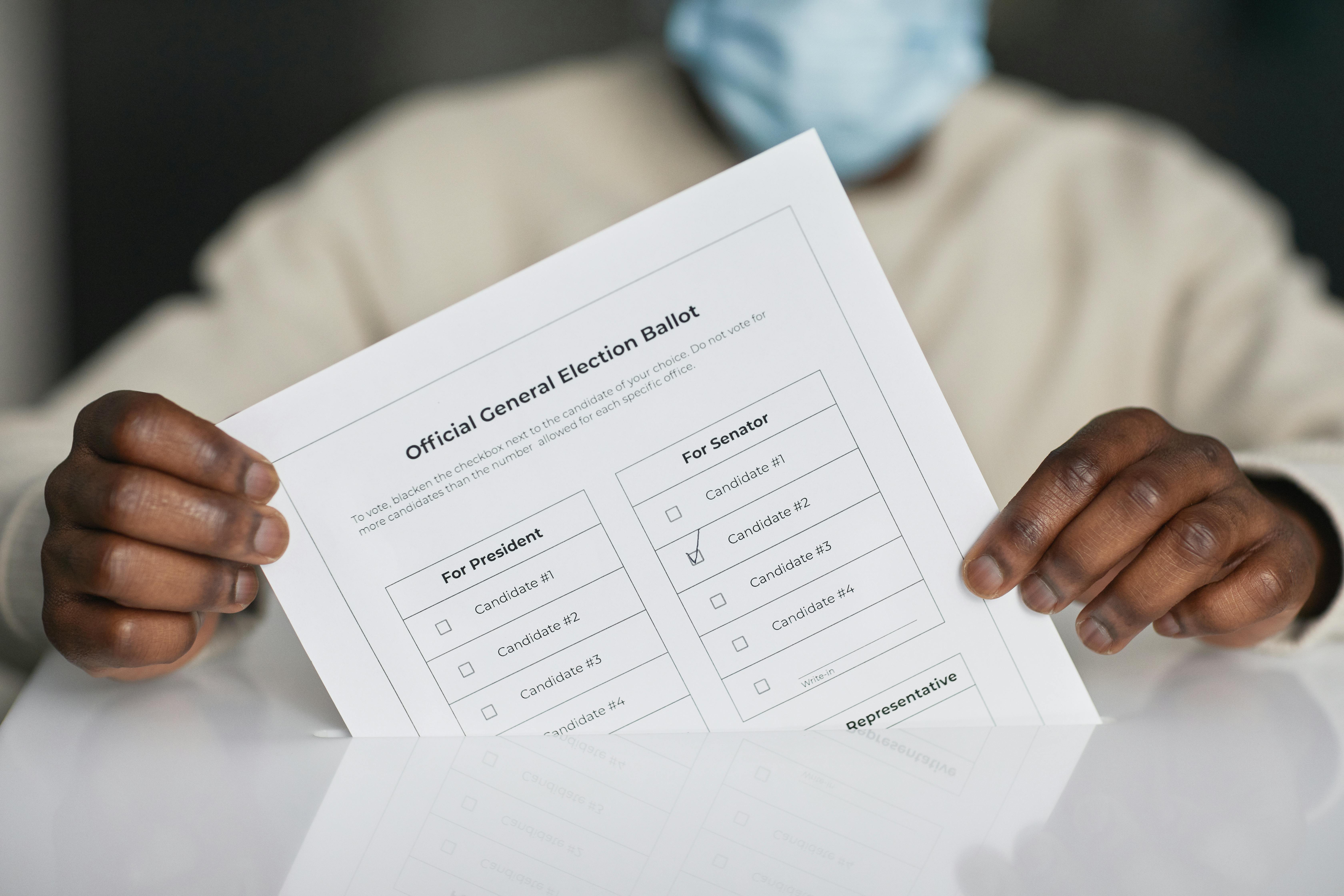
The application of digital technology across democracies has been seen as solution to the backlash of electoral process and democratic deficit. The objective was to ascertain whether digital tools like electoral technology, biometric algorithms, electronic transmission and smart card readers have a powerful effect on democratic processes, promoting credible elections, accountability, and citizen engagement which are vital components of democratic sustainability. The primary research design adopted for this study was descriptive survey. The research instrument used for data collection was structured questionnaires under the prism of quantitative method employed for the study. Using Taro Yamani sample determination technique, a total number of 100 samples were selected and administered. The regression analysis found that there was no statistically significant association between digital technology and democratic sustainability (p = 0.963), which is contrary to the perspectives held by some studies.
## I. INTRODUCTION
Since the re-introduction of civil rule in 1999, Nigerian democracy has been faced with repeated electoral setback through the crises of the electoral process, which has unprecedented consequence for democratic sustainability in the country introduction of technology to employment of technology. The challenge has been the unending debate on whether democracy can be sustained in Nigeria. The Independent National Electoral Commission (INEC) has thus introduced several reforms to address the backdrops of the electoral process. One of such reforms is the introduction of digital technology, which includes social media platforms, biometric registration device, smart cards reader and online result transmitting portal employed in the electoral process to ensure the efficiency and improve legitimacy of the electoral process. The most pertinent of these digital tools to date is the Bimodal Voter Accreditation System (BVAS) and the INEC Result Viewing Portal (IReV) to not only check the identity of the voter, but also to offer continuous reporting of results (Chatham House, 2023; GIGA, 2023). Both the international elections observers and domestic election stakeholders envisioned that such innovations is a game-changer that would significantly enhance the legitimacy and credibility of elections in Nigeria (Ifeanyi-Ajufo & Hoffmann, 2023; GIGA, 2023).
Digital technology has come to play a significant role in contemporary democratic governance, transforming how individuals communicate with elections, institutions, and the process of leadership changes in newly emerging democracy (Adeyinka & Ijaiya, 2024). In Nigeria, Africa's most populous electoral democracy, digital technology has demonstrated their potential to improve transparency, accountability and citizen inclusion in the electoral process with strong potentials for deepening the country's democracy. While the gains of digital technology have been applauded among the broad spectrum of the major stakeholders, digital innovations have exposed the structural weakness, digital inequality and technical hitches which often undermine its efficiency during electioneering process. The reality is that digital technology often did not meet expectations. The widespread malfunctioning of BVAS devices during the 2023 presidential elections indicated cases where they failed to verify citizens, caused significantly long queues of voters, and disenfranchised eligible voters (Oladeji, 2023; Chatham House, 2023). The IReV portal also faced inherent technical issues: failed to upload images, login passwords did not work, and offline backups were underused or not used at all a blow to the much-hyped transparency of these technological innovations (Oladeji, 2023; GIGA, 2023). These issues led to increased distrust and transparency issues on the credibility of elections and reliability of INEC to manage the electoral process without encumbrance (Time, 2023).
The current reality in Nigeria demonstrated that there is a significant digital divide and challenges in Nigeria. The state of internet access, for example, is still discouraging. what might seem remarkable is that although there are over 100 million internet users (Onuoha, 2023), it only approximated $12\%$ Nigerians who have access to functional internet access, and the disparity is particularly high in rural and underserved locations (Onuoha, 2023). This digital divide brings to the fore important questions related to the question of digital participation and inclusion. The uneven rollout and the persistence of digital exclusion are problematic when it comes to the possibility of inclusive democratic processes. The biggest missing piece in the empirical puzzle is how these technologies have interplayed with the systemic, institutional and infrastructural issues deeply rooted in and affecting the electoral process of the country. The inefficiency and failure of digital technology during elections, resulting from the INEC officials inadequate understanding of its use, cast additional doubt on the viability of digital technology for Nigeria's elections (Oche 2015; Nwangwu 2015). Beyond digitalization of elections, democracy is still weak and vulnerable. There are cases of low voters' turnout, result sheet manipulation, double voting, ballot box hijack. More worryingly, elections are still hotly contested despite the application of these technologies (GIGA, 2023).
Given the increasing acknowledgement on digital technology in Africa's elections, the lack of comprehensive and systematic research offers impetus for this study. Consequently, therefore, this study examines digital technology and democratic sustainability in Nigeria, arguing that despite improvement the crisis of the country's electoral process is yet to abate. To develop a conceptual framework that examines the digital technology and democratic sustainability in Nigeria, the paper began with the introduction, followed by the literature review of relevant concept such as digital technology and democratic sustainability. In the next part, it discusses the theoretical framework which provides the grounding for the study. In the next part, it presented the data and discussed the findings. Finally, we conclude and offer recommendations as appropriate.
## II. LITERATURE REVIEW
### a) Concept of Digital Technology
Accordingly, digital technology refers to electronic tools, systems, devices, and resources that generate, store, or process data using binary code. It consists of a broad range of revolutionary inventions, including computers, mobile telephones, the internet, social networking sites, cloud services and latest technologies like artificial intelligence (AI) and blockchain (Floridi, 2014). It is the technical procedure of identifying or validating a person by using their physiological or behavioural traits (Wang & Yanushkevich, 2007). Such biological and anthropological traits including fingerprints, eye retinas and irises, voices, faces, and hand (Wang & Yanushkevich 2007). They work by creating computer models of people's physical and behavioural traits to accurately identify them. Electoral technology can identify different people by using patterns of recognition algorithms (Idowu, 2021). They function through biometrics, or any human physiological or behavioural characteristics having general biometric properties (Bolle et al. 2004). Technology has reinvented nearly every corner of society in terms of education, the health sector, trade, government, and civic activities (Adeyinka & Ijaiya, 2024).
Studies on digital technology have increased sporadically, becoming the central theme of contemporary research, especially with the deepening crisis of democracy in fledgling new democratic states in Africa (Diamond 2010, Farid 2008). This discussion has gained traction due to scholars' perspectives on the impact of digital technology on democracy. According to some scholars, technological advancements in the electoral process are seen as an essential instrument for strengthening democracy (Diamond, 2010, Farid, 2008). They argued that integrating technology into the voting process is the ultimate in openness and integrity. This viewpoint has generally emphasised Larry Diamond's concept of "liberation technology," which is the process of expanding political, social, and economic freedom to the civic public (Diamond, 2010: 70). This freedom emphasises that voters have the unrestricted ability to choose without anyone stopping them or interfering with the process (Fatai and Adisa, 2017).
Digital technology is often enshrined in power relations, economic and cultural values and can be utilised to improve efficiency and transparency of elections, its implementation can also reinforce existing inequalities and establish new mechanisms of control (Fuchs, 2017). For instance, despite the accessibility to internet, digital inequalities of various forms (including those that conflate geography, class, and gender) continue to limit fair access to digital advantage (van Dijk, 2020). The lack of digital infrastructure and widespread access is a big problem in most developing nations and has continued to widen digital divide instead of enhancing democratic, inclusive digital closure in many political societies (Adeyinka & Ijaiya, 2024).
While digital technology has transformed political and social life. The emergence of the social media environment has changed the way citizens access information, the way governments communicate with citizens, and how activism is done (Tufekci, 2017). Democracy in the digital age has drawbacks. The general public's comprehension of social media is frequently problematic. In the virtual world, many instances of unethical behaviour and use are not accessible to the public. These instances may manifest as hate speech, defamation, hoaxes, and other similar forms (Masduki, 2021). When it comes to communicating and utilising freedom of expression on digital platforms, society's fundamental understanding can occasionally go well beyond bounds. This is among the issues and difficulties facing democracy in the current digital age (Zuboff, 2019). Critically, a view of digital technology must not focus on the aspect of innovation or functionality alone but perceived in terms of the socio-political structures in which it is created and utilised. Artefacts and voting machines are not neutral, they can be manipulated and could in some sense represent some kind of power and authority (Winner 1986). In this respect, an effective study of digital technology would demand questioning who is designing, who is controlling, as well as who is benefiting from it
### b) Concept of Democratic Sustainability
Democratic sustainability can be defined as the long-term resiliency of democratic institutions, values, and practices to last and evolve with time and especially given the social, political, and technological changes. It is no longer conventional to carry out habitual elections, except to widen institutional, behavioural, and participatory conditions that enhance the prospect of democracy overtime (Diamond, 1999; Levitsky & Ziblatt, 2018). Fundamentally, democratic sustainability entails the strength of institutions like the judiciary, legislature and electoral organs, protection of civil liberties and citizen power to demand accountability through transparent and participatory procedures. Lorimer and Lechner (1995) therefore conceived democratic sustainability as the perennial stability of democracy in a way that immune it from erosion. It is the degree at which democracy become acceptable to the broad spectrum of the political actors, reinforcing attitudinal consciousness and institutional value that prevent collapse or retrogress (Idowu, 2021).
Elections continue to be one of the most widely used instruments for measuring democratic advancement. It may therefore be possible to say that a democracy has achieved sustainability if its elections are free, fair, transparent, regular, and mostly inclusive overtime. A sustainable democracy is one that is achieved and maintained in the present without endangering democracy in the future. Diamond (2019) noted that sustainable democracies should be built on both vertical and horizontal accountability. On the one hand, it should be predicated on elections and popular oversight; and on the other hand, it must reinforce checks and balances of democratic institutions in a way that ensure political actors conform to democratic rules.
In the Global South and fragile democracies, the concept of democratic sustainability is deeply rooted in the way a democracy is successful in providing sociopolitical inclusion, justice, and development (Ake, 2000; Omotola, 2010; Omeje, 2020). In his theory of democratic consolidation, Schedler (1998) used five strategies of democratic consolidation to explain the sustainability of democracy. This includes preventing democratic collapse, preventing democratic erosion, completing democracy, deepening democracy, and organising democracy. The first two indicate undesirable tendencies that should be avoided and, the third and fourth of these theorisations indicate positive attributes that should be reinforced, while. The fifth represents a quality of democracy that is neutral. Therefore, he believes that "eliminating, neutralising, or converting disloyal players" is the best way to ensure democratic life endures (Schedler, 1998:96). It also involves reducing the possibility of "silent regression from democracy to semi-democratic rule" (1998:97), which can lead to democratic loss. To put it another way, democratic safeguards must be put in place to prevent political elites from undermining democratic structures and institutions. Thus, undermining democratic institutions will "amount to inviting a free scenario for all" to institutionalise democracy without following its guidelines (Adeyinka & Ijaiya, 2024).
Consequently, the Civics Academy (2024) therefore has conceived democratic sustainability as the prevalence of the following characteristics which includes regular holding of free and fair elections in accordance with the constitution, respect for the rule of law, a multi-party-political system and respect for basic human rights, especially freedom of association and franchise, citizens involvement in social and political life and democratic governance. Thus, democratic sustainability is best understood as the process of attaining deep and wide legitimacy so that all important political actors, both at the mass and elite levels, think that the democratic regime is the most suitable and right for society and is superior to any other feasible option they can imagine (Fatai, 2022).
### c) Theoretical Framework
This paper builds upon the notion of Social Construction Theory of Technology and Democratic Theory, which are robust theories to consider the relationship between digital technology and democratic sustainability.
## i. Social Construction Theory of Technology
This theory was proposed by Pinch and Bijker in 1987. According to this theory technology is not a is not a quick cure to gain electoral legitimacy and credibility but rather is mediated by human action. In their seminar paper titled "The Social Construction of Facts and Artefacts; They are argued on how the Sociology of Science and the Sociology of Technology might benefit each other to fulfil the purpose of man; they argued that technology is not an end itself but a mean to an end. The theory's fundamental presumptions include that technology does not shape humans or determine their actions but influences it in different ways.
According to Mathe (2020), relying too much on technology to address electoral issues risks taking democracy out of the reach of the majority, which is the fulcrum of democracy. More importantly, it requires a whole lot of consensuses building and political in a contest where political elite have varying interest or less interested about the sustainability of democracy. Elections cannot be free, fair, or credible if those involved in the process are unable to use ET in an open and accountable manner. Instead, ET may be abused or used to obstruct free, fair, transparent, and trustworthy elections. When it comes to ET, Dahl (1989) makes the compelling argument that "evolving technology is bound to be used somehow for positive or negative acts.
As was previously suggested, ET is merely a tool designed to make man's electoral endeavours easier and is thus reliant on his abilities, preferences, and will. Furthermore, "political institutions and democratic processes cannot experience the desired change via reliance on technology alone,"(Jacho, 2025). This is because to the fact that ET is a tool or device that man has created to accomplish his objectives, meaning that he may use it to pursue his purposes, whether they be good or bad. Therefore, it should not be assumed that ET would always save democratic consolidation and electoral integrity. This must be the reason why Joerges (1999) noted that human variables cannot be eliminated, regardless of the degree of technology used for elections. It is clear from Cheeseman et al. (2018), Idowu (2021), that technology cannot alleviate the problems caused by badly run elections. Therefore, it is not possible to rely solely on ET to ensure credible elections. Instead, human support must act as a mediator. This clarifies why the theory of social construction of technology is a better fit for serving as the framework for study in this research.
Despite its strengths, the social construction theory has been criticised for its pessimism or lack of faith in ET's capacity to increase election credibility. Notwithstanding the truth, however, it is that though ET has certain difficulties, it has helped to increase the legitimacy of elections.
Given that ET has some limitations that necessitate careful balances with human intervention to achieve desired results, yet it has undoubtedly overcome many election-related challenges in many parts of the world and improved credibility, including strengthening democracy. Despite its flaws, this idea is pertinent to our work since it emphasises the necessity of finding a balance between the use of ET and manual elections. This implies that the two can be used in tandem to strengthen democracy in the nation by making elections free, fair, and credible.
## ii. Democratic Theory of Technology
Robert K. Merton is frequently credited for his seminal work on the connection between science, technology, and democratic order. In his 1942 treatise "A Note on Science and Technology in a Democratic Order," Merton examined how scientific and technical organisations are inherently democratic. This work offered the background for the development of democratic theory of technology and at such Merton is frequently referred to as the progenitor of this theory. Notwithstanding, scholars such as Bruno Latour, have also made a substantial contribution to the discipline by highlighting how politics and technology are interpenetrating.
According to the democratic theorists, digital technology is the liberalization of the political space through information technology to realise deliberative and participative civic society. Liberal democrats imagine digital technology through their understanding of democracy and increasingly understand democracy through their encounter with technology. A democratic theory of technology thus investigates the ways in which digital technologies might support or undermine democratic values. While considering possible threats like disinformation and social division, it also looks at how technology might be utilised to enhance citizen engagement and decision-making. The approach acknowledges that citizens and decision-makers in the digital sphere must have reciprocal trust (Habermas, 1996). The reality of the situation in Nigeria, however, constrains this aspiration: digital marginalisation, fake news, and police brutality has curtailed the democratic potential of digital democracy (Fuchs, 2017). Nevertheless, the theory is subject to criticism, as human agency and institutional context are often a major issue in the application of digital technology (Adeyinka & Ijaiya, 2024).
Despite its goal of ensuring that technology supports democratic values, democratic theory of technology has several drawbacks. These include difficulties in guaranteeing responsibility, public involvement, and dealing with problems like deception and manipulation. Also, there is serious worry about how technology can worsen already-existing power disparities and inequities. Notwithstanding, both theories have a methodological strength that help us to strike a balance in the friction between optimist and pessimist of digital democracy. The point then, therefore, is that despite the promises of digital technology, there should be caution optimism. Attention should be paid to the drawbacks of digital technology to ensure credible electoral process and democratic sustainability. It is within this context Nigeria can optimized the gains of digital democracy and the implication for democratic sustainability.
## III. METHOD AND METHODOLOGY
### a) Research Methodology
This paper employed quantitative method to ensure unbiased, trustworthy, and broadly applicable findings across a range of domains. By employing numerical and statistical methods to measure and analyse data, they enable researchers to test hypotheses, find trends, and draw conclusions about populations from sample data (Creswell & Creswell, 2018). This method has capacity to lessen bias, improve study replicability, and make comparisons across other research or time periods.
The paper in terms of research design relies on descriptive survey, a common methodology in social sciences, to compile data about a specific group of people and provide a description of the current situation (Babbie, 2021). The design gives a wide scope of perception and experience of respondents regarding digital technologies like access to the internet, the use of social media, and electronic voting, and their effects on democratic sustainability in Nigeria.
The research instrument employed by the study for data collection is the structured questionnaire. It comprises of a closed-ended questions structured on a five-point Likert-type scale. This is the method that is selected because of its reliability, ease of administration, and its familiarity with statistical analysis (Saunders et al., 2019). The survey will be conducted on paper and through electronic means to achieve the best accessibility and efficiency when collecting the data.
A total of 100 respondents were sampled. As noted by Wimmer and Dominick (2014) a sample of 100 is sufficient in cases of exploratory studies where funds or access can be a factor in the research. This sample was determined through a simple random sampling method. Through this probability sampling method, the research participant was sampled from the urban population in Nigerian where citizens have high level of access to digital platforms. This makes it suitable for understanding digital technology and democratic sustainability. The process of the research was guided by ethical considerations for the research participants such as informed consent, data confidentiality, etc
### b) Research Objective
To examine the effect of digital technology on democratic sustainability in Nigeria.
### c) Research Question
How does digital technology affect democratic sustainability in Nigeria?
### d) Hypothesis
There is no significant relationship between digital technology and democratic sustainability in Nigeria.
## IV. ANALYSIS AND FINDINGS
Table 1: Demographic Profile of Respondents
<table><tr><td>Demographic Variable</td><td>Category</td><td>Frequency</td><td>Percentage (%)</td></tr><tr><td>Age Group</td><td>18–25 years</td><td>22</td><td>22.0</td></tr><tr><td></td><td>26–35 years</td><td>16</td><td>16.0</td></tr><tr><td></td><td>36–45 years</td><td>22</td><td>22.0</td></tr><tr><td></td><td>46–55 years</td><td>22</td><td>22.0</td></tr><tr><td></td><td>56 years and above</td><td>18</td><td>18.0</td></tr><tr><td>Gender</td><td>Male</td><td>30</td><td>30.0</td></tr><tr><td></td><td>Female</td><td>28</td><td>28.0</td></tr><tr><td></td><td>Prefer not to say</td><td>42</td><td>42.0</td></tr><tr><td>Marital Status</td><td>Single</td><td>365</td><td>35.2</td></tr><tr><td></td><td>Married</td><td>480</td><td>46.2</td></tr><tr><td></td><td>Divorced</td><td>90</td><td>8.7</td></tr><tr><td></td><td>Widow</td><td>103</td><td>9.9</td></tr><tr><td>Employment Status</td><td>Student</td><td>18</td><td>18.0</td></tr><tr><td></td><td>Employed (Public sector)</td><td>27</td><td>27.0</td></tr><tr><td></td><td>Employed (Private sector)</td><td>21</td><td>21.0</td></tr><tr><td></td><td>Self-employed</td><td>20</td><td>20.0</td></tr><tr><td></td><td>Unemployed</td><td>14</td><td>14.0</td></tr><tr><td>Place of Work</td><td>Government Establishments</td><td>114</td><td>32.9</td></tr><tr><td></td><td>Private Establishments</td><td>136</td><td>39.3</td></tr><tr><td></td><td>NGOs</td><td>32</td><td>9.3</td></tr><tr><td></td><td>Others (Students & Unemployed)</td><td>64</td><td>18.5</td></tr><tr><td>Educational Qualification</td><td>Secondary School Certificate (SSCE)</td><td>22</td><td>22.0</td></tr><tr><td></td><td>Diploma/OND/NCE</td><td>17</td><td>17.0</td></tr><tr><td></td><td>Bachelor's Degree</td><td>26</td><td>26.0</td></tr><tr><td></td><td>Postgraduate (Master's/PhD)</td><td>13</td><td>13.0</td></tr><tr><td></td><td>Others</td><td>22</td><td>22.0</td></tr><tr><td>General Education Profile</td><td>Tertiary Education</td><td>747</td><td>72.0</td></tr><tr><td></td><td>Secondary School Education</td><td>197</td><td>19.0</td></tr><tr><td></td><td>Primary School</td><td>94</td><td>9.0</td></tr></table>
The demographic profile reveals a relatively balanced age distribution among respondents, with the 18-25, 36-45, and 46-55 age groups each constituting $22\%$, suggesting strong participation across working-age categories. Gender representation shows a notable skew, with $42\%$ preferring not to disclose, possibly reflecting sensitivity around identity in survey contexts. The majority are married $(46.2\%)$, followed by singles $(35.2\%)$, indicating a mature and possibly economically active sample of the population. Employment status is diverse, with public sector employees $(27\%)$ and students $(18\%)$ featuring prominently. Notably, $39.3\%$
work in private establishments, while $32.9\%$ are in government institutions, and $18.5\%$ fall under others, including students and unemployed. Education-wise, a significant portion holds tertiary education qualifications $(72\%)$, reinforcing literate and civic respondents. The spread across SSCE $(22\%)$ and diploma holders $(17\%)$ further suggest moderate educational diversity. Overall, the data reflect a population with sufficient socio-political demographic construction, suitable for examining the relationship between digital technology and democratic sustainability in Nigeria.
Table 2: Hypothesis Testing
<table><tr><td colspan="7">Coefficientsa</td></tr><tr><td rowspan="2" colspan="2">Model</td><td colspan="2">Unstandardized Coefficients</td><td>Standardized Coefficients</td><td rowspan="2">T</td><td rowspan="2">Sig.</td></tr><tr><td>B</td><td>Std. Error</td><td>Beta</td></tr><tr><td rowspan="2">1</td><td>(Constant)</td><td>14.983</td><td>1.792</td><td></td><td>8.359</td><td>.000</td></tr><tr><td>Digital Technology</td><td>-.006</td><td>.119</td><td>-.005</td><td>-.047</td><td>.963</td></tr><tr><td colspan="7">a. Dependent Variable: Democratic Sustainability</td></tr></table>
The regression analysis was conducted to examine the relationship between digital technology and democratic sustainability in Nigeria. The results revealed an unstandardized coefficient (B) of -0.006 for digital technology, with a standard error of 0.119 and a standardised value of -0.005. The t-value is -0.047, and the significance (p-value) is 0.963. The high p-value indicates that the relationship between digital technology and democratic sustainability is not statistically significant at the conventional 0.05 level.
According to the decision rule, if the p-value is less than or equal to 0.05, the null hypothesis is rejected in favour of the alternative hypothesis. However, since the calculated p-value (0.963) is far greater than 0.05, we should accept the null hypothesis. Therefore, we accept the null hypothesis, which states that there is no significant relationship between digital technology and democratic sustainability in Nigeria.
This result suggests that, within the sample studied, digital technology does not have a measurable impact on the sustainability of democracy. Although digital tools and platforms are widely promoted for enhancing civic engagement and electoral transparency, the data from this research does not support a statistically significant connection between their usage and the strengthening of democratic values and institutions. This finding may be attributed to various contextual factors, such as technological inefficiencies, digital illiteracy, or institutional weaknesses that undermine the potential benefits of digital interventions in governance. It may also reflect the limitations of the measurement instrument or the scope of the sampled population. In any case, the evidence suggests that the presumed democratic gains from digital technology should not be assumed without careful contextual and empirical consideration.
### a) Discussion of Findings
The results of this study demonstrated that there is no significant correlation between digital technology and the sustainability of democracy in Nigeria because the p-value stands at 0.963. This finding is shocking and insightful with respect to the optimistic rhetoric of digital technology as the game changer in literature. According to scholars, like Adeyinka and Ijaiya (2024), the digital platforms promote civic engagement and make the government more accountable. This research argues, however, that these theoretical arguments might not bear practical reality of democratic sustainability in the settings of prevailing institutional realities in Nigeria.
One of the potential explanations is the mismatch between technological adoption and the functionality of an institution. The factors that make institutional responsiveness and accountability determinants in the aspect of democratic sustainability are noted in the observations of Schedler (2001) and Omeje (2020), when they both noted that democratic sustainability is a consequence of democratic legitimacy and durability. However, in Nigeria, the implementation of digital technology seems to be occurring in weak, politicised frameworks that stunt its ability to transform. This is often adduced to lack of legitimacy and vulnerability of democracy despite the employment of digital technology. The low impact seen in the regression analysis indicated that a technology that is not anchored in the institutionalised democratic culture and frameworks would not have reinforcing effect on democracy (Diamond, 2019).
In addition, the results contradict the determinism of theory of McLuhan (1964) and Postman (1993). Although their theory implied that the form of media transforms political life, the case in Nigeria is indicative of the shortcomings of technological determinism. On the one hand, electoral integrity and democratic inclusion are hindered despite a large amount of internet penetration and wide coverage of digital tools. This is stressed by Fuchs (2017), who states that technology can also reinforce power structures and not necessarily disrupt them.
Although digital technologies theoretically can sustain democracy, the results of this study point towards a lack of fit between the hype of digital technology and democratic realities in Nigeria. The concept of digital democracy can only be effective when the economic disparity, government weakness and digital inequality are factored in.
## V. CONCLUSION AND RECOMMENDATIONS
Based on this research, the relationship between digital technology and democratic sustainability in Nigeria was investigated, and it was found out that there was no statistically significant relationship between the two variables. Whilst theoretically it can be stated that digital tools encourage transparency, accountability, and civic engagement (Adeyinka & Ijaiya, 2024; Diamond, 2019), empirical evidence suggests that technology has remained less successful when it comes to democratic sustainability as elections are still contested and the use of technology has continue to elicit controversies especially with the outcome of the 1999 and 2023 general elections in Nigeria. Systemic issues such as technological inefficiencies, digital illiteracy, poor infrastructure, and not-so-institutionally responsiveness are some of the main hindrances that undermined democratic sustainability.
Considering these findings, there are several policy recommendations proposed by this study. To start with, government institutions should strive to spend more on digital infrastructure so that it can be accessible to people equally, especially in the underrepresented areas. Second, digital literacy campaigns are a mandatory requirement to help citizens knowledgeable about how they should connect with democratic platforms. Thirdly, there should be a legal requirement on electoral institutions (such as INEC) to enhance transparency and accountability of digital applications. INEC officials must also be trained and knowledgeable about digital technology to prevent knowledge gaps of these technologies during elections. Lastly, the major stakeholder should be convocated on the gains and relevance of digital democracy to political development and democratic sustainability in ways that structured their political behaviour and attitude to seeing democracy as the only game in town. These structural and policy-based initiatives have the propensity to accelerate digital efficiency and the implication for democratic sustainability in Nigeria.
Generating HTML Viewer...
References
37 Cites in Article
A Adefemi,R Akinfeleye,O Aluko,O Ololube (2024). A critical review of the role of social media in citizen engagement and policy-making in Nigeria and Senegal.
F Adeyinka,T Ijaiya (2024). The digitalisation of political engagement in Nigeria.
C Ake (2000). The feasibility of democracy in Africa.
E Babbie (2021). Earl Babbie Discusses Social Research.
S Bello,M Alhassan,I Inuwa-Dutse (2023). #EndSARS protest: Discourse and mobilisation on Twitter.
Chatham House (2023). Tech alone won't improve trust in Nigeria's elections.
N Cheesemann,G Lynch,J Willis (2018). Digital dilemmas: the unintended consequences of election technology.
(2024). What are the key features of democracy? Retrieved on 24 May from.
J Creswell,J Creswell (2018). Research design: Qualitative, quantitative, and mixed methods approach.
R Dahl (1989). Democracy and its critics.
L Diamond (1999). Developing democracy: Toward consolidation.
L Diamond (2010). Liberation Technology.
L Diamond (2019). Ill winds: Saving democracy from Russian rage, Chinese ambition, and American complacency.
Andina Dwifatma (2021). Media Komunitas Sebagai Bentuk Demokrasi Partisipatoris (Studi Pada “Warta Desa” di Pekalongan, Jawa Tengah).
S Farid (2008). The contribution of ICT to freedom and democracy.
Abiodun Fatai,Lekan Adisa (2022). The Use of Biometric Technology in the Success of the 2015 General Elections in Nigeria.
Abiodun Fatai,Lekan Adisa (2017). The Use of Biometric Technology in the Success of the 2015 General Elections in Nigeria.
L Floridi (2014). The fourth revolution: How the infosphere is reshaping human reality.
C Fuchs (2017). Social media: A critical introduction.
Giga (2023). Overpromising and Underdelivering? Digital Technology in Nigeria's 2023 Presidential Elections.
J Habermas (1996). Between facts and norms: Contributions to a discourse theory of law and democracy.
Harrison Idowu (2021). Biometric technologies and the prospect of sustainable democracy in Africa.
D Jacho (2025). Electoral technology and democratic consolidation in Nigeria, 1999-2024.
Bernward Joerges (1999). Do Politics Have Artefacts?.
S Levitsky,D Ziblatt (2018). How democracies die.
Masduki (2021). Media Control in the Digital Politics of Indonesia.
L Mathe (2020). The challenges & opportunities of web. 2.0 elections. The case of Zimbabwe.
F Oladeji (2023). BVAS technology, elections and democracy.
K Omeje (2020). Elections and Democratic Consolidation in Nigeria. An Appraisal of the 2019 General Elections.
J Omotola (2010). Elections and democratic transition in Nigeria under the Fourth Republic.
N Postman (1993). Technopoly: The surrender of culture to technology.
M Saunders,P Lewis,A Thornhill (2019). Research methods for business students.
A Schedler (2001). What is democratic consolidation.
A Schedler (1998). What is Democratic Consolidation?.
Time (2023). The controversy surrounding Nigeria's presidential election, explained.
Z Tufekci (2017). Twitter and tear gas: The power and fragility of networked protest.
Temple Uwalaka (2021). The Impact of Social Media in Political Participation Among Students in Nigeria.
Explore published articles in an immersive Augmented Reality environment. Our platform converts research papers into interactive 3D books, allowing readers to view and interact with content using AR and VR compatible devices.
Your published article is automatically converted into a realistic 3D book. Flip through pages and read research papers in a more engaging and interactive format.
The application of digital technology across democracies has been seen as solution to the backlash of electoral process and democratic deficit. The objective was to ascertain whether digital tools like electoral technology, biometric algorithms, electronic transmission and smart card readers have a powerful effect on democratic processes, promoting credible elections, accountability, and citizen engagement which are vital components of democratic sustainability. The primary research design adopted for this study was descriptive survey. The research instrument used for data collection was structured questionnaires under the prism of quantitative method employed for the study. Using Taro Yamani sample determination technique, a total number of 100 samples were selected and administered. The regression analysis found that there was no statistically significant association between digital technology and democratic sustainability (p = 0.963), which is contrary to the perspectives held by some studies.
Our website is actively being updated, and changes may occur frequently. Please clear your browser cache if needed. For feedback or error reporting, please email [email protected]
Thank you for connecting with us. We will respond to you shortly.