The present study was conducted with the main objectives to know the occupational stress of college teachers with respect to certain variable like type of college (General Degree college & B.Ed. college). The data were collected by selecting randomly 138 teachers in Dakshin Dinajpur district from general degree college and B.Ed college by using Teacher’s Occupational Stress Scale by M. Aftab and T. Khatoon (2013). The sample consisted of 50.72 % teachers from general degree college and 49.28% teachers from B.Ed. colleges. Descriptive statistics like mean, SD were computed and Graphical presentation like Bar diagram and NPC curve shown to represent the data of this study and to carry out this quantitative research work. Normalization of data has been done by using Histogram with normal probability curve. The hypothesis was tested at 0.05 level of significance. Results shows that significance differences of occupational stress of teachers exists between General degree college and B.Ed. college (t=2.31, p=0.022). These finding will be helpful to improve the quality of teaching learning in training colleges.
## I. INTRODUCTION
Occupation is one of the important aspects of our daily lives which cause a great deal stress. Due to the competitive nature of the job environment, most of the people in the world are spending their time on job related work purposes resulting in ignoring the work and life. Usually people are more worried about the outcome of their work that can even affect the way they treat other people and how they communicate with their peers. In general, we can say that people with a higher percentage of occupation stress may not be satisfied with their job and therefore they will not feel happy working in the organization. Occupational stress is defined by National Institute for occupational safety and Health (NIOSH, USA) as, the harmful physical and emotional responses that occur when the requirements of the job do not match the capabilities, resources, or needs of the worker. Occupational stress is also known as "Job stress", "Work related stress" or "Work stress". World Health organization defines this in a similar way as, "a pattern of reactions that occurs when workers are presented with work demands not matched to their knowledge, skills or abilities and which challenge their ability to cope". Stress is a common future in our lives, especially as the pace of development increases. Work is a common term which is applied for all sorts of occupation. It is a basic condition for most people and is an important component of the atmosphere for human survival. It is also a major element for the development of the individual as well-as the economy of the nation. Stress is a mental fact of nature in which forces from the inside or outside world affects the individual, either one's emotional or physical well-being, or both. The individual responds to stress in ways that affect the individual responds to stress in ways that affect the individual, as well as their environment. An occupational stress is any force that pushes a psychological or physical factor behind its range of stability, producing a strain within the individuals. It constitutes a threat to the individual. A threat can cause a strain because of what it signifies to the person. An occupational stress begins to take a toll on the body and mind, a variety of symptoms can result working in organizations not only provides individuals with life sustaining income but also exerts its own pressures on them. This can ultimately have negative consequences both for achieving the goals of the organization and meeting the needs of the individuals working on them.
## II. SIGNIFICANCE OF THE STUDY
Certainly higher level of teachers' occupational stress generates an attitude of apathy, non-involvement and non-cooperation which will lead to low quality of education, increase in wastage, and increase in cost, work breakage, low efficiency and strained relation of the teachers with the management and with fellow teachers. Now-a-days when India is progressing by leaps and bounds and is on the verge of becoming a developed nation, we cannot afford to neglect talents of our teachers because the teacher is one of the pillars of the society and the country. Without good teachers, no country can progress. The importance of teachers in the progress of a nation cannot be overlooked. The teacher influences the immature minds of-the youth. He treats and moulds the young mind into various forms. The economic condition of teachers is also miserable and we know that our country is economically backward and the standard of the masses is very low. In present day society only those people command respects that have power and money. The society of the past which respected teachers has vanished. The poor teacher does not enjoy much prestige in the society of today. Employee teachers at very low salaries and the teachers cannot give his best to the students. There is a great dissatisfaction and frustration among teachers. Working conditions are appalling. It is very sad that the persons in charge of education are themselves quite ignorant. They look down upon teachers as mere employees and nothing else.
## III. REVIEW OF RELATED LITERATURE
D'souza, Linus Benedicta (2020) conducted a study on "Occupational stress of teachers in relation to quality of work life and academic involvement in higher education" revealed that the Teachers who are not committed to their workplace are likely to put less effort in the classroom as compared to the Teachers with high level of commitment. This would adversely affect students learning and achievement in particular and standard of education in the country in general.
Gandhi, N (Feb, 2018) conducted a study on "comparative study on Job stress of Teachers working in Govt. Aided Colleges of Punjab and Rajasthan state". Analysis and interpretation of data revealed that there is no significant difference in the job stress of teachers working in Govt. Aided colleges of Punjab and Rajasthan state. Further most it can be concluded that teachers working in Government aided Colleges of Punjab and Rajasthan state are having almost same level of job stress.
Mohamed, Taher., (January, 2018) conducted a Study on "Sources of Occupational Stress Among Teachers: A field of study for Teachers working in Libyan Schools in Turkey". The results revealed that teacher educators experienced a moderate level of occupational stress. However, the first and the major source of the occupational stress is the nature of work, while the last source of occupational stress in the wages and incentives.
Rani, G (December, 2017) conducted "An Empirical Assessment on occupational stress among School Teachers". Results show that occupational stress level is high in case of male teacher who are married in comparison to their counterparts, however this difference is not significant, the occupational stress level of male and female secondary school teachers, who are not married. Result shows that though mean value of stress level is slightly higher in case of unmarried male teachers than unmarried female teachers.
Jahan, H & Sharma, S (2017) conducted a study on "occupational stress in upper primary school teachers" revealed that male teachers experienced more occupational stress than female teachers. Teachers with an experience of below 10 years face more occupational stress than those teachers with teaching experience of above than 10 years. There was no significant difference in the occupational stress between the rural and urban teachers.
Malik, N.A., Bjorkqvist, Kaj & O Sterman, K. (2017) conducted a study on "Factors Associated with occupational stress among University teachers in Pakistan and Finland". The findings revealed that there were some significant differences between revealed that there were some significant differences between Finnish and Pakistani University teachers. In the present study, teachers from Finland reported better working conditions, more social support and better opportunities for promotion and development at work than their Pakistani Colleagues. Work place bullying occurred considerably less often in Finland than in Pakistan. Male Pakistani teachers reported significantly higher levels of workplace bullying than any other group.
### a) Objectives of the Study
1. To compare the dimensions of occupational stress among teachers of General degree college and B.Ed. College.
### b) Hypothesis
Ho1: There is no significant mean difference in the different dimensions of occupational stress among teachers of general degree college and B.Ed. College.
### c) Operational Definition of Important Terms
Occupational Stress: Rees (1997) stated, "Occupational stress, in particular, is the inability to cope with the pressures in a job". Comish and Swindle (1994) defined occupational stress as "It is a mental and physical condition which effects on individual's productivity, effectiveness, personal health and quality of work". Caplain, Cob and French (1975) have defined occupational stress as "Any characteristics of job environment that pose a threat to individual."
In this study occupational stress is defined as the teacher experiences the emotional distress while working. These stresses in turn affect teacher's health physically and mentally.
General Degree College: A College is an educational institution or a constituent part of one. A college may be a degree awarding tertiary educational institution a part of a collegiate or federal university.
B.E.D. College: An institution that prepares quality students qualified Bachelor of education by which they can bring more pupils in the light of proper education.
### d) Variables
In this study the researcher has been taken major variable as dependent variables and categorical variables as independent variables.
- Major Variables-
- Teacher's Occupational Stress
- Categorical Variables-
- Types of College (General Degree College and B.Ed. College)
### e) Population and Sample
This study was conducted in Dakshin Dinajpur District of state West Bengal. The population of this study includes teachers of general degree colleges as well as B.ED colleges.
Sample was selected randomly from the Dakshin Dinajpur district. The sample was comprised the male teachers and female teachers of general degree colleges and B.Ed. colleges. Out of 18 B.Ed. colleges, 4 B.Ed. colleges were selected and out of 16 general degree colleges, 3 degree colleges were selected randomly for data collection. From these colleges total 154 teachers were selected. It is found that 138 teachers comprised the actual sample.
Among 138 teachers General degree college teachers=70 & B.Ed college teachers=68 were selected for data collection.
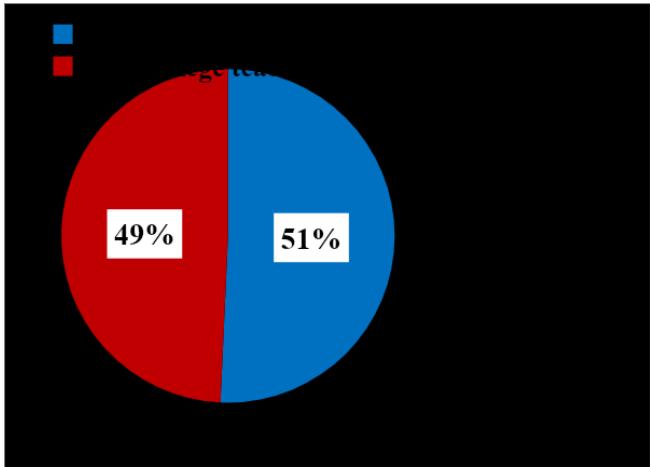 Figure 1: Graphical presentation of sample on the basis of types of college
### f) Tools used
A Standardized tools have been used in this research study for data collection is as follows-
"Teacher's Occupational Stress Scale"
This scale is developed by M. Aftab and T. Khatoon (2013).
### g) Statistical Treatment Given
In statistics there are two types of analysis of data.
Descriptive Statistics: Mean, Standard Deviation
Inferential Statistics: t-Test In order to test the above null hypotheses the significant differences in mean scores of Occupational Stress between Degree College and B.Ed College teachers were determined. For the comparison between the groups and testing of null hypotheses, Group statistics like Mean, S.D, S.E, S.E. of mean, and 't' test were applied. The results were presented in table given below.
## IV. ANALYSIS AND INTERPRETATION
### OF DATA
### a) Testing of Hypothesis
$H_{0}1$: There is no significant mean difference in the different dimensions of occupational stress among teachers of general degree college and B.Ed. College.
Table 1: Group statistics of Occupational Stress of Degree College and B.Ed. College Teachers
<table><tr><td>Major Variable</td><td colspan="2">Categorical variable</td><td>N</td><td>Mean</td><td>S.D</td><td>S.E of Mean</td></tr><tr><td rowspan="2">Occupational Stress</td><td rowspan="2">Type of college</td><td>Degree College</td><td>70</td><td>41.34</td><td>6.885</td><td>0.823</td></tr><tr><td>B.Ed. College</td><td>68</td><td>44.17</td><td>7.493</td><td>0.908</td></tr></table>
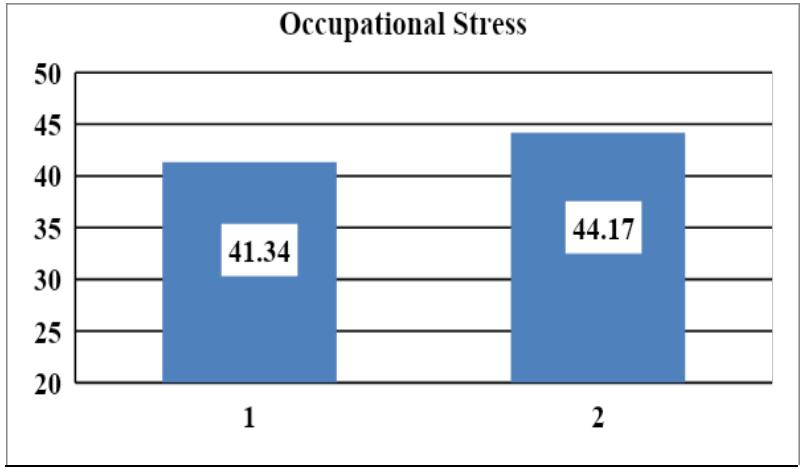 Figure 2: Showing mean values of Occupational Stress_Types of college wise
From the above table-1 it was observed that there was a difference in the means scores and standard deviation of occupational stress score among teachers of General Degree College and B.Ed. College shown in the figure-1 above. Therefore, the independent sample test was adopted.
Table 2: Independent sample t-test assuming equal variances
<table><tr><td>Occupational Stress</td><td colspan="4">t-test for equality of means</td></tr><tr><td rowspan="2">Degree College vs B.Ed. College</td><td>t-stat</td><td>df</td><td>t-critical</td><td>Sig. (2-tailed)</td></tr><tr><td>2.31*</td><td>136</td><td>1.97</td><td>0.022</td></tr></table>
As the null hypothesis $H_01$ was rejected and significant difference of Occupational Stress among teachers exists between Degree College and B.Ed. College.
Furthermore, analysis have been done to identify in which dimensions the actual differences of
Occupational Stress exists between teachers of Degree College and B.Ed. College. For the comparison between the groups w.r.t dimension-1 to dimension-5, group statistics like Mean, S.D, S.E, S.E. of mean and 't' test have been performed. The results were presented in the given table-2.
Table 3: Dimension wise group statistics of Occupational Stress score by teachers in General Degree College and B.Ed. College
<table><tr><td>Dimension of Occupational Stress</td><td>Categorical variable (Types of college)</td><td>N</td><td>Mean</td><td>t-stat value</td><td>Sig. (2-tailed)</td></tr><tr><td rowspan="2">Dimension-1: Work related stressor</td><td>Degree College</td><td>70</td><td>8.52</td><td rowspan="2">2.10*</td><td rowspan="2">0.03</td></tr><tr><td>B.Ed. College</td><td>68</td><td>9.36</td></tr><tr><td rowspan="2">Dimension-2: Teaching/Instructional Difficulties</td><td>Degree College</td><td>70</td><td>8.14</td><td rowspan="2">1.69</td><td rowspan="2">0.09</td></tr><tr><td>B.Ed. College</td><td>68</td><td>8.80</td></tr><tr><td rowspan="2">Dimension-3: Collegial Relationship</td><td>Degree College</td><td>70</td><td>8.05</td><td rowspan="2">1.46</td><td rowspan="2">0.14</td></tr><tr><td>B.Ed. College</td><td>68</td><td>8.51</td></tr><tr><td rowspan="2">Dimension-4: Professional Recognition</td><td>Degree College</td><td>70</td><td>8.74</td><td rowspan="2">0.92</td><td rowspan="2">0.35</td></tr><tr><td>B.Ed. College</td><td>68</td><td>9.08</td></tr><tr><td rowspan="2">Dimension-5: Professional Distress</td><td>Degree College</td><td>70</td><td>7.87</td><td rowspan="2">1.47</td><td rowspan="2">0.14</td></tr><tr><td>B.Ed. College</td><td>68</td><td>8.39</td></tr></table>
### b) Interpretation pertaining to Null Hypothesis-1 (Ho1)
The table-3 showed that mean scores of Occupational stress among Degree College teachers is greater than the mean score of B.Ed. College teachers and calculated t-value is 2.31 and p value is 0.022 (p less than 0.05). Hence, t was significant at 0.05 level of
significance. So, the null hypothesis $(\mathsf{H}_01)$ was rejected. And it was concluded that the Occupational Stress of Degree College teachers were significantly differ from B.Ed. College teachers.
## i. Interpretation (Dimension-1)
The table-3 showed that mean scores of occupational stress in Work related stressor dimension among teachers in Degree College was more than the mean score of B.Ed. College and calculated t-value is 2.10 and p value is 0.03 (p lesser than 0.05). Hence, t was significant at 0.05 level of significance and it was concluded that the Occupational Stress in terms of Work related stressor among teachers in Degree College was significantly different from the B.Ed. College teachers.
## ii. Interpretation (Dimension-2)
The table-3 showed that mean scores of occupational stress in Teaching/Instructional Difficulties dimension among teachers in Degree College was less than the mean score of B.Ed College and calculated t-value is 1.69 and p value is 0.09 (p greater than 0.05). Hence, t was not significant at 0.05 level of significance and it was concluded that the Occupational Stress in terms of Teaching/Instructional Difficulties among teachers in Degree College was not significantly different from the B.Ed. College teachers.
## iii. Interpretation (Dimension-3)
The table-3 showed that mean scores of occupational stress in Collegial Relationship dimension among teachers in Degree College was less than the mean score of B.Ed. College and calculated t-value is 1.46 and p value is 0.14 (p lesser than 0.05). Hence, t was not significant at 0.05 level of significance and it was concluded that the Occupational Stress in terms of Collegial Relationship among teachers in Degree College was not significantly different from the B.Ed. College teachers.
## iv. Interpretation (Dimension-4)
The table-3 showed that mean scores of occupational stress in Professional Recognition dimension among teachers in Degree College was less than the mean score of B.Ed. College and calculated t-value is 0.92 and p value is 0.35 (p greater than 0.05). Hence, t was not significant at 0.05 level of significance and it was concluded that the Occupational Stress in terms of Professional Recognition among teachers in Degree College was not significantly different from the B.Ed. College teachers.
## v. Interpretation (Dimension-5)
The table-3 showed that mean scores of occupational stress in Professional Distress dimension among teachers in Degree College was less than the mean score of B.Ed. College and calculated t-value is 1.47 and p value is 0.14 (p greater than 0.05). Hence, t was not significant at 0.05 level of significance and it was concluded that the Occupational Stress in terms of
Professional Distress among teachers in Degree College was not significantly different from the B.Ed. College teachers.
## V. MAJOR FINDINGS
### Major findings of this study are
1. There exists significant difference $(t = 2.31, p = 0.022)$ of occupational stress between teachers of General Degree College and B.Ed. college.
#### Dimension wise findings:
1. There exists significant difference $(t = 2.11, p = 0.04)$ in the Work Related Stressor dimension of occupational stress between teachers of general degree college and B.Ed. college.
2. There is no significant differences in the other dimensions like Teaching difficulties (t= 1.69, p= 0.09); Collegial relationship (t= 1.47, p= 0.14); Professional recognition (t= 0.93, p= 0.36) and Professional distress (t= 1.48, p= 0.14).
## VI. CONCLUSION
The results of this study have revealed that there exists significant difference of occupational stress among teachers of General Degree College and B.Ed. College. Teachers of B.Ed. College whether they are male or female and from rural or urban area have more occupational stress than teachers of General Degree College. And there was also significant difference $(t = 2.11, p = 0.04)$ exists in the Work Related Stressor dimension of occupational stress between teachers of general degree college and B.Ed. college. So, B.Ed. College teachers should do some YOGA like interventions to coping with occupation related stress.
## VII. EDUCATIONAL IMPLICATION
Stress is an integral part of human life. Stress can occur due to workplace environments and organizational climate. Stressful working conditions can lead to behavioural, physical and psychological strains that include cardio-vascular disease, gastrointestinal disease, hypertension, weak immune system, increased risk of occupational injury and health service utilization. From the findings of the study it is evident that the occupational stress had been found significant difference among the college teachers (general degree college and B.Ed. College). Therefore to prevent occupational stress following steps may be initiated at the general degree college and B.Ed. College. Some elements of stress are intrinsic while others are situational in the profession of teaching. The teacher has to understand how to cope with those which are intrinsic, while the situational ones can be managed with experience and common sense. Worrying unnecessarily can be a big source of stress. Most of the research study suggested some stress management techniques include a) Deep breathing exercise b) Exercise/physical activity c) Meditation d) Progressive relaxation exercise e) Stress inoculation training and f) Yoga can reduce the stress.
Generating HTML Viewer...
References
30 Cites in Article
Dr. Dr. D.R Sarvamangala (2012). A study of Socio-demographic Factors on Social-Intelligence among Secondary School Teachers.
Mohammad Mattoo,Shahida Parveen (2013). An Investigation into the Occupational Stress of Male and Female Secondary School Teachers of Srinagar City in Jammu & Kashmir.
A Anbu (2015). Professional Stress of Higher Secondary School Teachers.
T Bharathi,B Nagarathinam,S Reddy (1991). A Effect of occupational stress on Job Satisfaction.
Pijus Bhuin (2017). A Study on Work-related Stress among the Teachers and Administrators of Privately Managed Business Schools in West Bengal.
P Chand,A Sethi (1997). Organizational factors in development of work stress.
S Gahlavat (2017). Occupational stress and job satisfaction among college Teachers of government and private colleges.
L Gardner,C Stough (2003). Exploration of the relationships between work place Emotional Intelligence, Occupational Stress and employee health.
S Ghosh (1999). History of Education in WCERT.
A Hans (2015). A study on occupational stress and quality of work life (QWL) in private colleges of Oman (Muscat).
K Harish,B Prabha (2018). A study on the occupational stress and Job satisfaction of teachers of Government and Private sectors.
B Hatti (2016). Job Satisfaction among Teachers Working in Government and Private Schools at Elementary Level.
S Jeyaraj (2013). Occupational stress among the teachers of the Higher Secondary Schools of in Maduri District, Tamil Nadu.
P Karthikeyan,S Babu (2016). Occupational stress and coping strategies of Matriculation School Teachers working in Thanjavur of Tamilnadu.
Sandeep Kaur,Raja Khela (2013). Stability Analysis of Power System using FACT Controller i.
Kaur (2017). A study Teacher effectiveness in Relation to occupational stress and life satisfaction among Teacher Education.
K Keeley,M Harcourt (2001). International Human Resource Management.
E Koros (2018). The Impact of occupational stress on Job satisfaction among Kenyan Primary School Teachers.
Aiswarya Kumar,Velmurugan V.P. (2011). Work-life Stress and Life Quality of Married Women among Self Financing College Teachers in Kerala.
D Kumari,G Bai (2016). A study on occupational stress of Teachers working in DIET colleges with regard to age and region.
S Mondal,Bhaila (2011). School Teachers: Job Stress and Job Satisfaction, Kaski, Nepal.
Wang Pei,Zhang Guoli (2014). Survey of Occupational Stress of Secondary and Elementary School Teachers and the Lessons Learned.
Geeta Rani (2017). Occupational Stress among School Teachers of Kashmir with Respect to their Age.
R Rani,A Singh (2012). A study of occupational stress in Relation to Demographic variables.
Dr. K. P (2014). A Study on Stressors among College Teachers.
P Singh,S Rani (2015). International Journal of Dimension Study of Occupational Stress among College Teachers in Dakshin Dinajpur District, West Bengal Global Journal of Human-Social Science.
Singh,K Nain (2017). Study of occupational stress of Secondary School Teachers.
M Taneja (2017). Exploring the Relationship between Stress, Job Satisfaction, and Job Performance among College Teachers in India.
A Vijayalakshmi,V Meti (2002). A study of Occupational Stress Executives and Non-executives and Non-Executives of Pvt. Industrial organization.
Beauty Das (2020). APPLICATION OF REMOTE SENSING & GIS FOR CHANNEL SHIFTING: A CASE STUDY OF ATREYEE RIVER, DAKSHIN DINAJPUR DISTRICT, WEST BENGAL, INDIA.
No ethics committee approval was required for this article type.
Data Availability
Not applicable for this article.
How to Cite This Article
Dr. Mahadeb Chattopadhyay. 2026. \u201cDimension Study of Occupational Stress Among College Teachers in Dakshin Dinajpur District, West Bengal\u201d. Global Journal of Human-Social Science - A: Arts & Humanities GJHSS-A Volume 24 (GJHSS Volume 24 Issue A3): .
Explore published articles in an immersive Augmented Reality environment. Our platform converts research papers into interactive 3D books, allowing readers to view and interact with content using AR and VR compatible devices.
Your published article is automatically converted into a realistic 3D book. Flip through pages and read research papers in a more engaging and interactive format.
The present study was conducted with the main objectives to know the occupational stress of college teachers with respect to certain variable like type of college (General Degree college & B.Ed. college). The data were collected by selecting randomly 138 teachers in Dakshin Dinajpur district from general degree college and B.Ed college by using Teacher’s Occupational Stress Scale by M. Aftab and T. Khatoon (2013). The sample consisted of 50.72 % teachers from general degree college and 49.28% teachers from B.Ed. colleges. Descriptive statistics like mean, SD were computed and Graphical presentation like Bar diagram and NPC curve shown to represent the data of this study and to carry out this quantitative research work. Normalization of data has been done by using Histogram with normal probability curve. The hypothesis was tested at 0.05 level of significance. Results shows that significance differences of occupational stress of teachers exists between General degree college and B.Ed. college (t=2.31, p=0.022). These finding will be helpful to improve the quality of teaching learning in training colleges.
Our website is actively being updated, and changes may occur frequently. Please clear your browser cache if needed. For feedback or error reporting, please email [email protected]
Thank you for connecting with us. We will respond to you shortly.