The objective of this research is to understand how cultural diversity management contributes to the social performance of Cameroonian SMEs. To achieve this objective, we used a qualitative approach. The semi-directed interviews conducted with SMEs in the city of Yaoundé made it possible to collect data that were analyzed using Nvivo10 software. The results show that good cultural diversity management contributes to improving the social climate and working conditions, in particular through a number of factors such as internal regulations and procedures manuals, organizational culture, flexible informal management, training and staff awareness. To this end, we recommend that SMEs implement less rigid organizational systems for better inclusive participation of employees in the company in order to ensure transparent internal communication.
## I. INTRODUCTION
Faced with an increasingly open international environment and increased competition, managing cultural differences and interaction between cultures in order to improve social performance is becoming a key issue for both multicultural work teams and companies (Meier, 2016). Theoretically, diversity generally refers to age, race, gender, religion, generation, region, nationality, social origin, experience, skills, power status and culture. All these attributes are linked to the human being who is at the center of any organization. This research focuses mainly on cultural diversity and its management within companies.
Indeed, for Louzir & Lakhal (2019), cultural diversity can greatly complicate group dynamics because it generates relational problems, misunderstandings and interpretations between partners, thus becoming a catalyst for the emergence of tensions, even conflicts between team members and creating a divide based on the cultural origins of each. In addition, this diversity is a brake on communication effectiveness which harms team performance, the development of a climate of trust and alters the climate within companies, thus affecting employee motivation (Hassine, 2017; Laraqi & Bennani, 2022). This work shows that cultural diversity in itself is not enough to strengthen companies and that it is the human resources management method that transforms it into an asset in order to improve social performance. A consensus around the need and relevance of taking the cultural component into account in the intervention emerges from the literature. This cultural consideration implies, among other things, taking into account differences in order to promote a sensitive and full recognition of culture. (Gagnon & al., 2022).
Faced with the need to recognize and value cultural diversity in companies, the international standard ISO 26000[^1] has integrated this notion as an integral part of the social responsibility of organizations. In fact, the management of cultural diversity is based on the planning and implementation of organizational systems and human resources management policies that are capable of producing a competitive advantage with cultural diversity and reducing the problems that this diversity can pose (Laraqi and Bennani, 2022). Furthermore, managing cultural diversity helps create an environment that works well for everyone, which allows employees to develop a sense of belonging to the organization and even better quality of relationships (Frimousse & Peretti, 2020). This quality of relationship leads to a favorable social climate that determines good social performance.
Cameroon, described as Africa in miniature, is a country with a strong diversity of around 240 ethnic groups grouped into three large families or cultural areas: the area under Fulani influence, the grouping of Bantu and semi-Bantu elements, and the group of English-speaking minorities (Ghouenzen, 2023.) Epitsa & Amine (2014) group these ethnic groups into five cultural areas: Grassfield, Sawa, Fang-Béti, Sudanese, Sudano-Sahelian. Each group is described as a "culture-bearing unit", thereby justifying cultural diversity in Cameroon. However, Cameroonian companies, more precisely SMEs, which mainly constitute the economic fabric, see themselves as "cultural crossroads", and it is therefore imperative to work towards managing cultural diversity. In this regard, Nkoa & al., (2019) in their work stated that: "the problem of cultural diversity arises in Cameroonian SMEs". In the context of SMEs where one of the organizational specificities revealed by (Tijdani & Kamdem, 2010) is the informality of HRM practices in particular and management in general, we focus on the mechanisms implemented by these companies to manage this diversity in order to achieve social performance, this research will focus on answering the following question: How does the management of cultural diversity contribute to improving social performance? It is a question of understanding by which mechanisms Cameroonian SMEs manage the cultural diversity of employees in order to improve social performance.
The contribution of this article therefore lies in the implementation of practices or techniques for managing cultural diversity that can allow the establishment of good communication and collaboration between people of different cultures present within companies. This article will be structured as follows: firstly, we will present an empirical review: the theoretical framework of cultural diversity management in relation to social performance. Secondly, we highlight the methodological tools implemented. Thirdly, we will present the main results.
## II. THEORETICAL LINK AND LITERATURE REVIEW
This article draws on the theory of resource-based vision or the "resource-based view" to explain the link between the management of cultural diversity and the social performance of Cameroonian SMEs. The "resource-based view" has its origins in the work of Barney (1991) who continues the reflections of Wernerfelt (1984). It is based on the idea that the way in which the firm fully and potentially uses its resources would allow it to generate competitive advantages and subsequently optimize profits. According to this approach, differences in performance are thus mainly explained with regard to the firm's ability to identify, mobilize and develop a portfolio of key resources.
In an extremely competitive environment, promoting a cultural diversity management policy would mean for the company to expand its resources to employees with atypical profiles and different cultural groups, and in fact to increase its probability of attracting the most relevant human resources and skills (Laraqi & Bennani, 2022). Cultural diversity is thus revealed as a key resource for the company, informed management of it is likely to constitute a competitive advantage, and to generate considerable profits in social or economic terms (Gweth & al., 2020). As Gweth & al. (2020) specify, employees who are part of the resources that the company must potentially manage, are partly motivated by their cultural orientations, each having their own way of working according to their beliefs and convictions.
Indeed, the "Resource-Based-View" thus highlights the value-creating side specific to the management of the cultural diversity of teams. This lies in the company's ability to deploy strategies concerned with managing this diversity to achieve good social performance; as well as the way in which the company is organized to implement these policies and practices allowing this diversity to become the fruit of their potential advantages (Marouane, 2017).
Manoharan & al. (2019) on the different meanings given to cultural diversity, demonstrate different connotations such as ethnic differences, family composition, behaviors, housing and professional diversity. According to the authors, some of these variables, indirectly linked to cultural diversity, influence organizations and their management approaches. Still on the same vein, Dahanayake & al. (2018) want to understand how cultural diversity improves or decreases the effectiveness of work groups. These authors identify three different perspectives for managing cultural diversity in the workforce, namely: the integrative and learning perspective, the accessibility and legitimacy perspective, and the equity and discrimination perspective. To this end, it emerges that only the integrative and learning perspective, which suggests that organizations and employees can benefit from managing cultural diversity in the workplace, has an effect on work group processes and promotes the climate in the organization.
Trabelsi (2015), in turn conducting his studies with 22 international alliances, notes that the cultural audit, the generalization and acceleration of intercultural rapprochement via awareness-raising among stakeholders on intercultural issues, internal and/or external intercultural training, the establishment of a flattened organization and the promotion of parity at the level of the management team and work teams are decisive for improving the practices of integrating the cultural diversity of the actors and therefore the social performance of these alliances.
Following the work of Karambé (2023) on understanding the evolution of working relationships of increasingly diverse teams over twenty years in companies. They identify three approaches to managing differences at work that allow companies to improve working relationships between teams. First, a monocultural approach that does not take into account the differences between cultures represented in a company or a country. Then, a multicultural approach that takes into account cultural differences, the valorization of local know-how, and the daily reality of working relationships. Finally, an intercultural approach that highlights a dynamic of interactions between people from different cultures.
For Jahmane & al. (2024) there may be a positive correlation between cultural diversity management and company performance. Indeed, for him, a company can give itself a strategic and competitive advantage if it incorporates the principles of cultural diversity management. Consequently, this diversity can be profitable. Indeed, taking into account the cultural differences of individuals would promote their commitment, thus making the social climate favorable, the professional environment warm and friendly, and would allow the development of better qualities of relationships at work. (Baali & Belaidi, 2023). Good management of team diversity also seems to allow for the improvement of working conditions, through the credibility and skills of management, the transparency of internal communication, the equitable distribution of opportunities such as remuneration and training Kuptsch & Charest (2023).
In the Cameroonian context, Ohana & al. (2017) focus on the ethnic dimension to conduct their studies on the impact of ethnocultural dimensions on managerial practices in a Cameroonian SME, demonstrating that these ethnocultural dimensions impact human resources management practices (in terms of recruitment, training, remuneration and promotion), the decision-making processes of company managers, but also the attitudes of employees and their behaviors. They also specify in their studies that the management of cultural diversity has the enormous advantage of establishing trust and cleaning up the social climate generally plagued by conflicts. Still in the same context, Gweth & al., (2020) following studies on the influence of cultural diversity on the financial performance of 42 Cameroonian SMEs arrived at the results according to which only the ethnic customs of employees (beliefs, rites and taboos) have positive effects on the financial performance of Cameroonian SMEs. On the other hand, ethnic languages (measured by employees' language cognitive abilities) play no role.
Afouda, (2022) examines the process of managing cultural differences and how this management manages to create an environment with beneficial virtues by exploring some writings. They mention that according to these writings, training (which helps to inform and raise awareness), mentoring, empowerment (which gives power to a group of "different" employees to reach their full potential) eventually facilitate understanding and teamwork.
Bruna & al. (2017), in their studies on the effects and evaluation of cultural diversity management policies on overall performance and more specifically on the performance of employees, while proposing a response to the call of Olsen and Martins (2012, P. 1168) for whom: "diversity management is a field of research that has a considerable need for development and testing of theory". Thus, they suggest in their demonstrations that the "performance" of a cultural diversity approach is assessed in terms of its transformational impact (on the heritage of discourses, standards and practices of the firm) and its effects on work performance in its three dimensions, namely: task performance, contextual and adaptive. They also propose to pay attention from the outset to the level of exercise of "prescribed practices" which measure the level of adaptation of the standards and procedures developed by the company to prevent discrimination. Secondly, at the level and regularity of "supervised practices" which can be assessed by using tools such as the social audit. And finally, at the regularity of "autonomous practices" which include a large number of initiatives taken by local managers to deal with the heterogeneity resulting from the management of diverse teams.
Dessain & Depaepe (2020) for their part examine the impact that diversity management can have on organizational commitment and various consequences of this in Belgium. They were thus interested in the impact on commitment but also on employee lateness, absenteeism and turnover. To do this, they questioned different diversity managers from the private and public sectors in Belgium on their experiences and feelings. They came to the conclusion that employee commitment tends to increase when an organization has elements and tools to manage and promote diversity.
Vandevelde-Rougale, (2022), in his work underlines those voluntary approaches for diversity lead to recognizing the other and thus acting on their emotional health which refers to a positive emotion, generating more creativity and less stress.
Frimousse & Peretti (2024), show that policies emphasized by employers such as strengthening cultural values within the organization, promoting the company's reputation help retain talented employees, increase staff motivation and efficiency, and even increase the quality of service and customer satisfaction. These cultural diversity management policies appear to be a source of increased workforce quality and a positive signal to the destination of qualified candidates.
Fabiani & al. (2021), examines how cultural diversity management contributes to the creation of cooperation at Prométhée. It proceeds with a case study of Prométhée. Its results show that Prométhée has designed a work organization policy called "smart working"; this policy was created to facilitate cooperation at two levels: in terms of cultures and professions, so that they mix on a daily basis. Also, Prométhée is based on the recruitment of multilingual people, training/ coaching through the learning of languages and civilizations in order to get to know the other, to receive them and to respect the differences of the Other; the recognition of the other through the universal conception of the individual which has consequences on job satisfaction, a source of motivation which contributes to social performance.
Vangen and Winchester (2014), explore the management of cultural diversity in public and non-profit collaborations using an action research methodology in which data are collected from organizational interventions on issues that genuinely concern participants (35 individuals) and need to act on. The findings highlight three interrelated tensions in managing cultural diversity toward collaborative advantage. These tensions concern: the interactions between organizations within a collaboration; the interactions between individual actors and their orientation toward collaboration as well as their host organization; and the amount and scope of cultural diversity within a collaboration through the involvement and mobilization of additional partners.
Cheddad and Hamouche (2021) analyzes how theoretically designed cultural diversity management models are implemented in practice within Austrian companies and how the results of these practices are seen and evaluated by those involved and affected. He conducts an exploratory study of 5 Austrian companies over a period of one year comparing the experiences of employers and employees, also analyzing the experiences of majority and minority members of this workforce. It emerges that the majority of companies have sought to improve opportunities for members of ethnic minorities and several programs have been implemented to encourage talent and improve integration into the company, these include: the language program for non-native speakers in Austria, education courses and programs, multilingual company newspapers and intercultural seminars. These observed benefits have translated into a greater and more satisfying contribution to work as companies note a low staff turnover rate, the retention of qualified personnel and long-term employment as a result.
However, the studies analyzed study large companies and for some multinationals and consequently these authors define their dimensions of cultural diversity at the national level as defined by Hofstede (1980) but the cultural differences between countries can mask a strong disparity and in addition Cameroon is an Africa in miniature. No research, to the limit of our knowledge has addressed this question in Cameroonian SMEs, hence the interest in dwelling on it.
In light of these different theoretical contributions, we formulate the following research proposals:
$P_{f}$: Managing cultural diversity creates a favorable social climate in Cameroonian SMEs.
$P_{2}$: Cultural diversity management improves working conditions in Cameroonian SMEs.
## III. METHODOLOGICAL FRAMEWORK USED FOR QUALITATIVE ANALYSIS
The adoption of a methodology is necessary for the production of "scientific" knowledge. Our research understands how Cameroonian SMEs implement cultural diversity management practices to ensure good social performance. This methodological framework presents the steps followed to collect data in the field, transcribe it, code it for its introduction into the Nvivo software and finally analyze it.
In short, as part of this research, 21 semidirective interviews were conducted with some managers and employees working in 7 Cameroonian SMEs in the commercial and service sector. The data analysis was done using the content analysis method, in particular thematic analysis assisted by the Nvivo 10 software.
Table 1: Description of the Different Company Managers who Underwent Interviews
<table><tr><td>Business</td><td>Sector of Activity</td><td>Years of Existence</td><td>Position Held</td><td>Years of Experience</td><td>Level of Study</td><td>Number of Employees</td><td>Gender</td><td>Duration of the Interview</td><td>Code</td></tr><tr><td>Case 1</td><td>Bakery and food</td><td>20 years old</td><td>Chief Accountant of the Agency</td><td>2 years</td><td>5</td><td>22</td><td>M</td><td>37 min</td><td>MCAS1</td></tr><tr><td>Case 2</td><td>Drilling and sale of drilling equipment</td><td>2 years</td><td>Human Resources Manager and Head of Racing Department</td><td>2 years</td><td>3</td><td>15</td><td>M</td><td>33 min</td><td>MCAS2</td></tr><tr><td>Case 3</td><td>Printing Computer graphics Secretariat and Screen printing</td><td>2 years</td><td>Director</td><td>2 years</td><td>3</td><td>10</td><td>F</td><td>25 min</td><td>MCAS3</td></tr><tr><td>Case 4</td><td>General trade</td><td>45 years old</td><td>Human Resources Manager</td><td>5 years</td><td>3</td><td>50</td><td>M</td><td>27 min</td><td>MCAS4</td></tr><tr><td>Case 5</td><td>General trade</td><td>5 years</td><td>Logistics and after-sales service manager</td><td>2 years</td><td>5</td><td>20</td><td>M</td><td>34 min</td><td>MCAS5</td></tr><tr><td>Case 6</td><td>Supermarket</td><td>35 years old</td><td>Human Resources Manager</td><td>11 years old</td><td>5</td><td>85</td><td>M</td><td>50 min</td><td>MCAS6</td></tr><tr><td>Case 7</td><td>Hydrocarbon</td><td>12 years old</td><td>Station Manager</td><td>2 years</td><td>5</td><td>13</td><td>M</td><td>33 min</td><td>MCAS7</td></tr></table>
It is worth noting that the people who agreed to take part in our discussions have lifted the confidentiality lock. In the following tables, we will describe the different profiles of the people who underwent interviews, as well as the companies.
Table 2: Description of the Different Employees who Underwent Interviews
<table><tr><td>Company</td><td>Position</td><td>Gender</td><td>Duration</td><td>Code</td></tr><tr><td rowspan="2">Case 1</td><td>Controller and Head of Room</td><td>M</td><td>20 min</td><td>EICAS1</td></tr><tr><td>Employee of the Food Department</td><td>F</td><td>18 min</td><td>ECASI</td></tr><tr><td rowspan="2">Case 2</td><td>Technician</td><td>M</td><td>26 min</td><td>EICAS2</td></tr><tr><td>Drilling Controller</td><td>M</td><td>23 min</td><td>EICAS2</td></tr><tr><td rowspan="2">Case 3</td><td>Secretary</td><td>F</td><td>19 min</td><td>EICAS3</td></tr><tr><td>Graphic Designer</td><td>M</td><td>17 min</td><td>EICAS3</td></tr><tr><td rowspan="2">Case 4</td><td>Internal Controller</td><td>M</td><td>17 min</td><td>EICAS4</td></tr><tr><td>Manager</td><td>F</td><td>20 min</td><td>EICAS4</td></tr><tr><td rowspan="2">Case 5</td><td>Warehouseman</td><td>M</td><td>22 min</td><td>EICAS5</td></tr><tr><td>Stock Controller</td><td>M</td><td>21 min</td><td>EICAS5</td></tr><tr><td rowspan="2">Case 6</td><td>Cashier Assistant</td><td>M</td><td>24 min</td><td>EICAS6</td></tr><tr><td>Employee of the Cosmetics Department</td><td>F</td><td>17 min</td><td>EICAS6</td></tr><tr><td rowspan="2">Case 7</td><td>Gas Station Attendant</td><td>F</td><td>18 min</td><td>EICAS7</td></tr><tr><td>Gas Station Attendant</td><td>F</td><td>20 min</td><td>EICAS7</td></tr></table>
## IV. RESULTS OF THE EXPLORATORY QUALITATIVE STUDY AND DISCUSSIONS
According to the results, all managers in the different cases in our sample understand cultural diversity in their company on the basis of ethnic group and religious affiliation. They therefore have a partial vision of the dimensions of cultural diversity that is consistent with that of certain authors (Gweth & al., 2020; Morin and Descheneaux, 2022) who have focused their work more on the dimensions of cultural diversity by emphasizing the differences between members of society. Figure 1 below presents the characterization of cultural diversity by actors interviewed as identified by Nvivo.
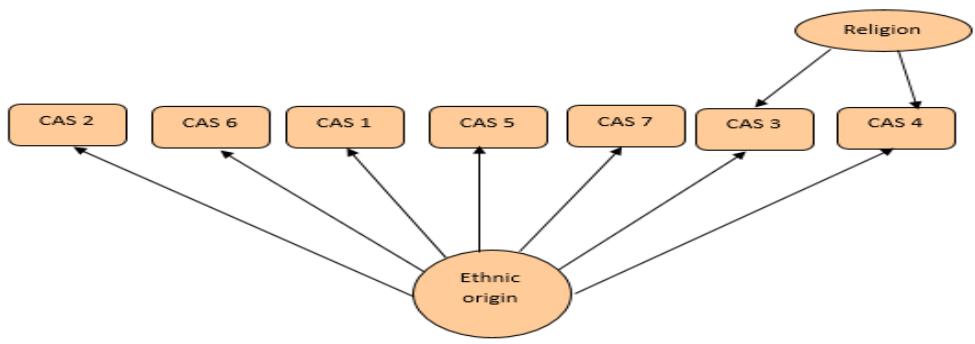 Figure 1: Semantic Network of the Characterization of Cultural Diversity by Company Managers
Source:author
Figure 1 above shows that managers have a strong perception of cultural diversity based on ethnic group than religious, as the categories of both groups together represent $83\%$ and $17\%$ respectively. This same figure also shows that only managers from CAS3 and CAS4 consider religion as a dimension of cultural diversity.
a) Contribution of Cultural Diversity Management on the Social Climate of Cameroonian SMEs.
Cultural diversity is a rare and still untapped resource by companies (Durizot, 2023). However, to capitalize on this, companies must be able to put in place an effective diversity management system based on a set of measures taken by employers to recruit, retain and develop employees from different social categories (Likong, 2023). Therefore, the results of Nvivo make it possible to formulate different cultural diversity
management practices that can improve the social climate within Cameroonian SMEs that we will detail and illustrate with verbatim. Figure 2 below provides an illustration.
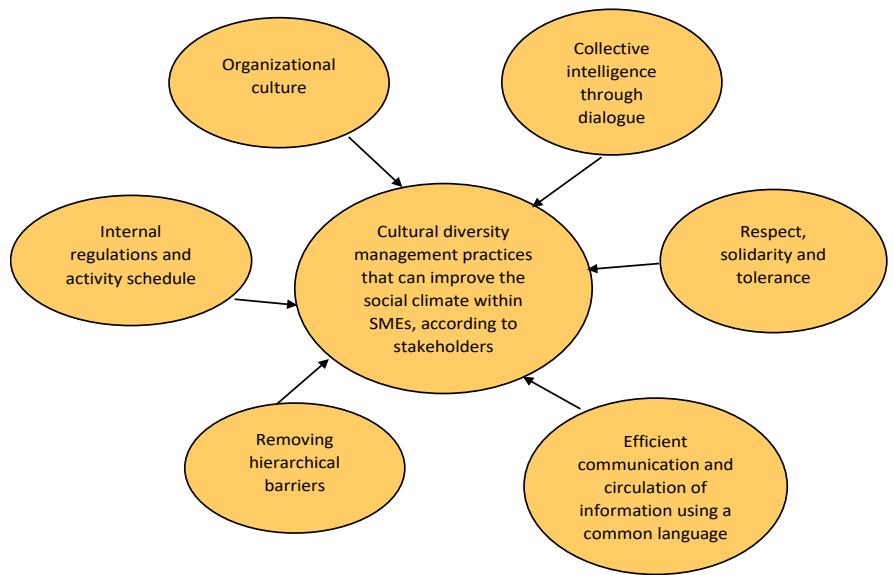 Figure 2: Contributions of Cultural Diversity Management to Improving the Social Climate within SMEs via Certain Practices
Source:author
Figure 2 above shows that several practices of cultural diversity management contribute to improving the social climate. These are respect, solidarity and tolerance; the establishment of internal regulations and a timetable for activities or a procedures manual; organizational culture; effective communication and circulation of information via a common language; a system of collective intelligence via dialogue and the removal of hierarchical barriers.
### - Respect, Solidarity and Tolerance
Values such as respect for colleagues and superiors, solidarity and tolerance are considered essential for nearly $81\%$ of the actors surveyed. They admit that an improvement in the social climate through the management of cultural diversity is based on these values. To this end, they strengthen working relationships, allow a friendly environment that works well for everyone, receptive and more concerned with development. This can be illustrated with some of the following verbatim: According to MCAS5 "everyone is respectful and disciplined, well integrated into the company and the environment is friendly". This is confirmed by E2CAS3 who thinks that "respect and avoiding favouritism are necessary, it can even be a means of performance for the company, even of good relations between us and our hierarchical superior". This allows "everyone to feel valued" (E1CAS3).
To further strengthen these assertions, E1CAS4 states that the value of solidarity is a source of potential synergy favourable to employees because he considers that "in our department we are first of all complementary when one person is absent the other does his work which is not really the case in other departments. I see that complicity still strengthens our relationships". E2CAS7 will corroborate this statement by explaining that "the acceptance of each other, the spirit of living together, can improve the relationship between us and superiors especially between colleagues". This solidarity which prevails in companies is similar to the collectivism index developed by Hofstede (1980) who demonstrated that the latter is one of the elements likely to help the development of cultural synergies in Cameroonian organizations.
The spirit of tolerance is another strong value of diversity management improving the social climate because it is a way to strengthen quality human relations, hence the following remarks from E1CAS6:" We intrigue each other a little about our tribal differences but with strict mutual respect for the person and without excesses. We try to understand each person and accept them as they are, so we put the person before their tribe or the judgments we may have about their origins."
#### Internal Regulations and Procedures Manual
The establishment of internal regulations and a procedures manual that define operating rules within the company is considered as a means of diversity management that can improve the social climate in SMEs for nearly $38\%$ of the stakeholders surveyed. These defined operating rules must be applicable to all without discrimination to ensure that "no one is disappointed in the other" (E1CAS4). E1CAS5 also specifies that the company "has set up the rules and that improves the quality of relationships and service also because there someone does not say that if I do such a thing, I cannot be blamed, I cannot be sanctioned because such is such a thing". The criteria and sanctions are therefore the same since "These are the laws, the rules, we apply them to everyone" (MCAS6).
In the same perspective, although he admits that the management of cultural diversity is a complex process, E2CAS4 maintains that "in Cameroon tribalism is a reality, but in the company, it is better to put the rules and recommendations that do not take into account the differences there at least we will be able to work easily if we apply the rules to everyone and just respect the procedures manual well". For MCAS7, these rules are based on the fact that there is no prohibition of "marginalization discourse like "Bamenda", "Muslims", no discrimination".
#### - Organizational Culture
Corporate culture in itself as a factor in managing cultural diversity that improves the social climate in SMEs is considered by $33\%$ of the stakeholders surveyed. It sets a framework of common thoughts for the company's employees. This can be illustrated via some of the following verbatim statements: according to E1CAS1 "if at the start the company recognizes, accepts and respects this, that is to say that we present certain differences, then it will rather improve the social climate". MCAS3 in the same sense mentions that in the company "there is a corporate culture that everyone must respect, that's it in one block", comments that were also put forward by MCAS5.
MCAS4 specifies that corporate culture is based on an approach unicultural by letting us know that "everyone is Cameroonian, this unicultural approach avoids demotivating some because we treat others better, it avoids all that and it makes the atmosphere at work the atmosphere at work is better (...) During recruitment itself it prevents us from missing out on potential candidates because we look at cultural traits". This result is in line with that of Fortune (2024). According to this author, the management of cultural diversity is based on long-term policies focused on corporate culture which are imperative to ensure a collaborative work environment on a daily basis for employees.
Effective Communication and Flow of Information through a Common Language
Effective communication and information flow through a common language have been recognized as a cultural diversity management practice that can improve the social climate within SMEs by nearly $29\%$ of the stakeholders surveyed. E1CAS2 justifies this by stating that in companies they make the effort to "speak the common language, respect each other to better understand each other in order to have the same information", which MCAS1 will confirm by mentioning that he prefers "that we all speak the same language, when it is already an Ewondo who speaks with an Ewondo there I do not agree" because indeed, "we must be on the same wavelength, and that is what promotes relations between employees".
MCAS5 also notes that for there to be effective information sharing and a good flow of communication, he prefers that we "speak the same language". On the other hand, Hounkou (2015) demonstrated in the Beninese context that the use of mother tongue as a working language leads to more understanding and a good flow of information in the company.
#### Collective Intelligence System via Dialogue
The collective intelligence system through dialogue within companies as a way to manage cultural diversity in order to improve the social climate was mentioned by nearly $29\%$ of the stakeholders surveyed. Thus, it is an important issue because it allows this diversity to be used in the best way to achieve a common goal and find solutions, the main key of which is dialogue. This is done through meetings organized within these companies with a view to building relationships, increasing interactions and social connections.
This can be illustrated with some of the following verbatim: E1CAS2 mentions that "there are the limits of each and every one that must be eradicated for the interest of the company" and for this, "there are meetings improving in this aspect, a way of breaking the hypocrisy". In this perspective, E1CAS6 affirms that we constantly organize work meetings where "everyone lists the problems they encounter in the department, this allows us not to feel wronged and to know that everyone is listened to and is considered anyway; it allows for exchanges and all this leads to a good atmosphere that is favorable to the advancement of the structure". Also, during these meetings "we try to take into account everyone's point of view" (E2CAS6). This resultjoins the onede Folco (2023) who identified that a collective intelligence system that empowers a group of "different" employees to reach their full potential eventually facilitates understanding and teamwork.
#### - Removal or Reduction of Hierarchical Barriers
The reduction or removal of hierarchical barriers is considered by only $51\%$ of the managers surveyed as an important factor in the management of cultural diversity likely to create a favorable social climate. This distance measures the perception that a subordinate has of the power superior to him and the consequences observed on his behaviour Badraoui, et al. (2014). In order for employees to feel considered, managers prefer to reduce this distance in order to create and maintain a social climate conducive to development. This can be illustrated by some of the following verbatim statements: MCAS1 states that "if it happens that an employee is in need in a discreet manner, I make a gesture to him (...) I do not like to frustrate people". This will be confirmed by MCAS4 who mentions that in the company "the hierarchical lines are not strict" and MCAS6 "we respect the hierarchy but we are not protocol-oriented".
### b) Contribution of Cultural Diversity Management on Working Conditions in Cameroonian SMEs
The results from the various interviews with employees and managers have revealed that working conditions can be improved based on a set of cultural diversity management practices. These results can be illustrated via the figure below.
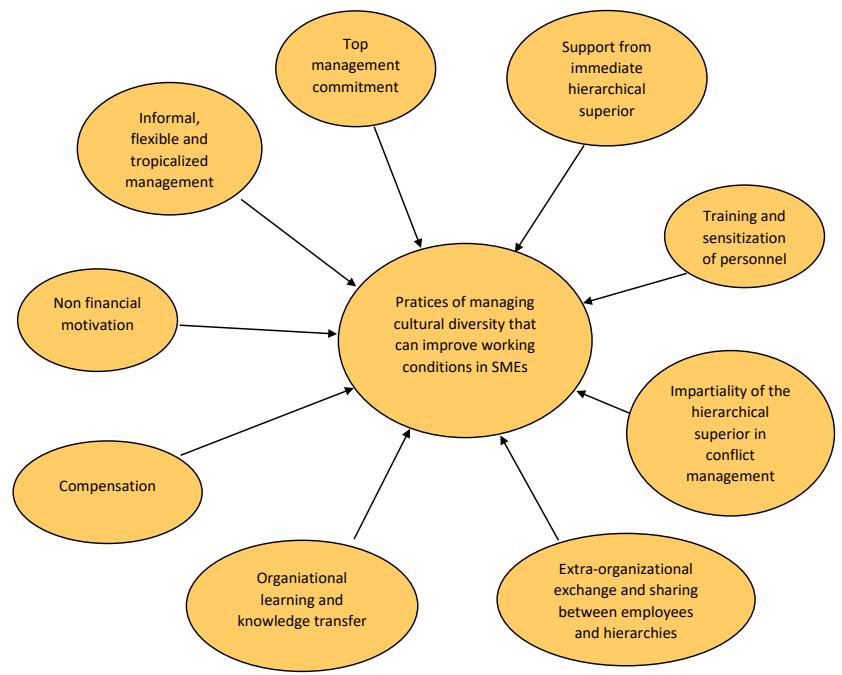 Figure 3: Contributions of Cultural Diversity Management to Improving Working Conditions within SMEs via a Certain Number of Inclusive Practices
Source:author From Figure 3 above, inclusive organizational practices such as fair remuneration, impartiality of the hierarchical superior in conflict management, training and awareness of staff, organizational learning and knowledge transfer, support (intermediation) of the immediate hierarchical superior, commitment of top management, extra-organizational exchange and sharing between employees and hierarchy, informal, flexible management and non-financial motivation can improve working conditions in SMEs.
#### Compensation and Non-Financial Motivation
Remuneration is a factor in diversity management that improves working conditions for $38\%$ of the actors surveyed. This remuneration, which is a variable system composed of salary and bonuses, therefore helps to motivate and avoid discrimination. This can be illustrated via some of the following verbatim statements: according to E2CAS2, it is the salary "that starts it off, at the beginning there were certain things and the salaries were not a bit good, but now we manage to get paid on time, the boss manages us well and that's the main thing in fact".
Indeed, MCAS3 states that overtime also plays an important role "we come at 8:30 and we close at 7:30 p.m., the person who manages to come for example before the time is paid overtime even when the person goes beyond 7 p.m., we pay him in overtime (...). We therefore do not make a difference, we make the effort to make everyone feel comfortable, we make the effort to satisfy everyone. This result is in line with that of Boughaba et al. (2018). According to them, cultural diversity management improved working conditions through the fair distribution of opportunities such as remuneration. In other words, retaining employees without discriminating allows the company to move closer to a fair business model.
Non-financial motivation is recognized as a determining factor in the management of cultural diversity only by nearly $10\%$ of the actors. We note that this is only the CAS2. For them, it reflects equal treatment in the allocation of rewards in the company. We can illustrate via the following verbatimshere according to E1CAS2 there are the "gadgets that are given to employees to boost them further". In the same sense MCAS2 says the company offers "kits (Gifts to motivate them), we do it during the start of the school year (books, pens etc.) and during Labor Day too."
- Impartiality of the Hierarchical Superior in Conflict Management
The impartiality of managers in conflict management as a factor in diversity management that improves working conditions was affirmed by nearly $86\%$ of managers. This impartiality in resolving problems that sometimes results in sanctions such as requests for explanations, layoffs and the removal of bonuses within the company prevents individuals from feeling marginalized, allows a balance in order to avoid tensions that could have an effect on their psychological comfort.
This can be illustrated by some of the following verbatim quotes: MCAS6, who sees the work environment as a family setting, mentions that when there is a conflict, "I am impartial in resolving problems. So that means that I manage to be whole and, in the end, I make everyone recognize their responsibility and then everyone continues to work normally as they should and in the best conditions and there is no more tension." MCAS3 states that "once two colleagues argued (... they spent a week at home, so that's kind of how we try to get them back on track."
- Informal and Flexible Management
Practicing an informal, situational management style that can lead to improved working conditions was affirmed by nearly $43\%$ of managers. According to MCAS2, this management style consists of considering the employee as a stakeholder in the company "we take into account everyone, everyone's limits, abilities and performance. Some employees have specific problems that relate to their cultural nature (...) Things are not transmitted in the same way, for example in the same way among a Bami as among a Beti. Some families are even specific, in some families there is authority, in others there is submission. That is why we treat each case, there are cases where we talk about authority, there are cases where we talk about submission".
This is confirmed by MCAS6, he mentions that in the company, "it is a human being who works there so inevitably there are certain things that depend on him since he has his professional and private life so the head of personnel must take into account that there are his societal and social indications. For example, if an employee is grieving especially in the West, we know how it happens, it takes time, so we know automatically that we must give him a little time. And it is always like that for the others".
Staff Training and Awareness
Staff awareness and training as a factor used by managers to manage diversity in order to ensure better working conditions was mentioned by $29\%$ of the stakeholders surveyed. Training in this sense is focused on interpersonal skills, which allows everyone to be able to produce actions and reactions adapted to the multicultural environment. For E1CAS6 at the company level, they "cultivate the spirit of unity, solidarity and mutual aid". MCAS6 corroborates by saying that: "we raise staff awareness about living together. For me, it is one of my particularities that is very well approved by the CEO and besides, it is from him that I get that, here it is living together". This result confirms that of Trabelsi (2015). For him, training and awareness of stakeholders in intercultural issues are practices for integrating the cultural diversity of stakeholders and are decisive for improving working conditions in international alliances.
- Organizational Learning and Knowledge Transfer
The establishment of a framework that promotes organizational learning and knowledge transfer is a factor in cultural diversity management that improves working conditions according to nearly $25\%$ of the stakeholders interviewed. This learning is carried out socially through various interactions between individuals from different cultures. Clearly, cultural reality therefore offers the opportunity for a confrontation of ideas and analyses, by bringing out new hypotheses based on specific knowledge from different cultural contexts. E2CAS4 illustrates this by stating that "everyone learns about the other and it is beneficial for everyone (... so that if one is not there, the other's work will be done without problem and suddenly the company will not be handicapped". For the latter, competence is the main factor that is implemented in this process.
What MCAS3 will confirm although the learning factor is based on cultural language. He affirms this by saying that "sometimes it already happens to me I call my colleague I say teach me this word, sometimes I say why your patois is ugly like that but teach me we tease each other we establish ourselves a good communication without knowing". This agrees with the integrative and learning perspective mentioned by Peeters et al. (2014) in their work which allows to benefit from cultural diversity in the workplace and creates an environment with beneficial virtues for the company.
Support (Intermediation) from the Immediate Superior
Support through the intermediation of the immediate superior is a factor in cultural diversity management that facilitates better involvement in the organization according to nearly $51\%$ of managers. It is much more social and promotes listening, openness to opinions and the availability of the superior for his employees. In this sense, MCAS1 states that "if I see that an employee is in need, I discreetly make a gesture and send his grievances to management and I assure management that we have resolved at least a quarter or two thirds of the employees' problems regardless of the culture."
MCAS6 confirms it is "open" with its employees, MCAS2, for its part, ensures that "each time those who are disappointed do not exert too much pressure on those who are lower and that those who are lower do not feel too aggrieved compared to those who are disappointed."
- Top Management Commitment
The commitment of the highest level of management is a determining factor in the management of cultural diversity which improves working conditions according to $14\%$ of the actors. In fact, the top level by setting objectives reinforces methods to deal with this diversity. As illustrated by MCAS3 "At our base the boss said I don't want this I don't want that and everyone makes the effort to respect it, no one feels different from the other because we make the effort to remain on an equal footing".
E2CAS5 states that senior management manages this cultural diversity well, "which ensures that we have understanding at work and it improves the work system (...) it is not that this person comes from there, the other person comes from here". This result is similar to the "prescribed practices" developed by Bruna et al. (2017) which encompasses a large number of initiatives taken by senior management to deal with the heterogeneity leading to the management of diverse teams.
#### - Extra-Organizational Exchange and Sharing between Employees and Hierarchy
The establishment of a framework for exchange and sharing outside the work environment between employees and management is a cultural diversity management practice that improves working conditions, was affirmed by $19\%$ of the actors. This system of exchange and sharing strengthens harmony within the company. To illustrate this, MCAS3 states that "during the Muslim holiday, we have a Bamoun colleague, the boss invited everyone after work, we ate in his honor, there is harmony, we form a family no matter where you come from". For MCAS6 "We often have evenings at SONECO, such as Labor Day where departments that had tasks in each region, where all ethnic groups were represented, everyone had something to show according to their culture".
## V. CONCLUSION: LIMITATIONS AND RESEARCH PERSPECTIVES
The objective of this article was to understand how cultural diversity management improves the social performance of Cameroonian SMEs. From a first point of view, the literature was reviewed on cultural diversity management and social performance, in particular the social climate and working conditions. Subsequently, an empirical study was carried out on a sample of 21 people working in 7 Cameroonian SMEs. The results show on the one hand that cultural diversity management effectively creates a favorable social climate within Cameroonian SMEs. This involves key factors such as: respect, solidarity and tolerance, the establishment of internal regulations and procedures manual, organizational culture, effective communication and circulation of information via a common language, a collective intelligence system via dialogue and the removal of hierarchical barriers. On the other hand, the results show that cultural diversity management improves working conditions within Cameroonian SMEs through a number of practices such as remuneration and non-financial motivation, impartiality of the hierarchical superior in conflict management, training and awareness-raising of staff, organizational learning and knowledge transfer, support (intermediation) of the immediate hierarchical superior, commitment of top management, exchange and extra-organizational sharing between employees and hierarchy, informal and flexible management.
However, this research has limitations that should be noted and that could constitute avenues for future research. The first is sectoral because we have referred exclusively to companies in the commercial and service sector. Our proposals could therefore be suggested in broader studies. Also, the second limitation is based on the representativeness of the sample knowing that the latter is made up exclusively of companies in the city of Yaoundé. The third limitation concerns the dimensions of social performance. There are three according to Baggio and Sutter (2013), but in the context of our research we have retained the hedonic dimension and more particularly indicators such as the social climate and working conditions. Future research should also improve the empirical relationships by choosing other dimensions. In addition, the avenues highlighted in this research deserve to be compared with other research in sectors of activity or not and in different contexts.
Notwithstanding these limitations, this work has a dual contribution: theoretical and managerial. On the theoretical level, this work aims to contribute to the issue of the contribution of cultural diversity management to social performance by identifying certain key practices that can subsequently guide other in-depth work. This study also contributes to the debates on the internal cultural dynamics of organizations in Africa and in Cameroon in particular. On the managerial level, this study provides a support for understanding and reflection on the management of cultural diversity and the levers of action allowing managers, particularly human resources managers, to use cultural diversity as a strategic resource.
At the end of this research, we propose to the various human resources managers of SMEs to provide more inclusive organizational systems that are less rigid and less hierarchical for better employee participation in the company, in order to involve them in their work and ensure transparent internal communication. Also, the emphasis must be placed on equality and fairness of treatment within teams, on solidarity in order to mitigate the harmful effects that this diversity can pose within companies.
[^1]: International organization for standardization which establishes guidelines relating to the social responsibility of companies and more generally of organizations. _(p.1)_
Generating HTML Viewer...
Funding
No external funding was declared for this work.
Conflict of Interest
The authors declare no conflict of interest.
Ethical Approval
No ethics committee approval was required for this article type.
Data Availability
Not applicable for this article.
Dr. Djeudja Rovier. 2026. \u201cDoes the Management of Cultural Diversity Guarantee the Social Performance of SMEs An Exploratory Qualitative Study in the Cameroonian Context\u201d. Global Journal of Management and Business Research - A: Administration & Management GJMBR A Volume 25 (GJMBR Volume 25 Issue A4): .
The objective of this research is to understand how cultural diversity management contributes to the social performance of Cameroonian SMEs. To achieve this objective, we used a qualitative approach. The semi-directed interviews conducted with SMEs in the city of Yaoundé made it possible to collect data that were analyzed using Nvivo10 software. The results show that good cultural diversity management contributes to improving the social climate and working conditions, in particular through a number of factors such as internal regulations and procedures manuals, organizational culture, flexible informal management, training and staff awareness. To this end, we recommend that SMEs implement less rigid organizational systems for better inclusive participation of employees in the company in order to ensure transparent internal communication.
Our website is actively being updated, and changes may occur frequently. Please clear your browser cache if needed. For feedback or error reporting, please email [email protected]
×
This Page is Under Development
We are currently updating this article page for a better experience.
Thank you for connecting with us. We will respond to you shortly.