
I. BACKGROUND
This article presents findings from a study which sought to established ways in which the Zambian legal environment supports informal enterprises to transition into the formal economy. Measuring informality is not an easy undertaking because of the complexities surrounding it. Some informalities are so visible, some of which include enterprises that are not registered with respective authorities and do not have bank accounts and consequently do not pay taxes. Informalities are not easy to spot as they may be found in enterprises that may be registered with authorities but do not hire their employees formally and as such do not pay for their social securities and often times even hide some of their sales in order to pay reduced taxes. In this study, informal enterprises are defined as enterprises that were operating without licenses from Zambia Revenue Authority (ZRA), Patents and Companies
Registration Agency (PACRA), and National Pensions Scheme Authority (NAPSA).
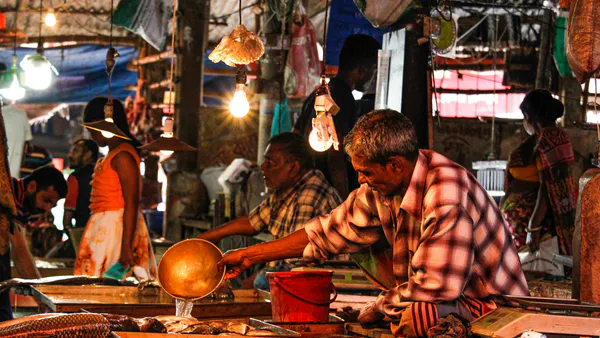
The level of informality in Zambia is reflected by employment rate which according to the Zambia Statistics Agency (2022) stood at 73.2 per cent compared to 26.8 per cent for the formal employment. The high informal employment rate entails a high number of business enterprises that are not registered with tax or licensing authority and often characterised by lack of accounting, low productivity, low investment, small number of employees, and high chances of failing (Chijikwa and Mulenga, 2023). Much as the desired outcome is to have the formal economy which is bigger than the informal economy, the importance of the informal economy in a developing country like Zambia should not be under stated. This is because the informal economy also contributes to the national revenue through taxes that are paid in form of levies usually at the municipal council level and employment for majority of people who cannot find employment in the formal economy.
According to ILO (2014), the growth in the informal economy can be traced back to the ineffective and inappropriate macroeconomic and social policies that were implemented in the absence of institutional and legal frameworks, good governance practices, and transparency in administrative and institutional procedures developed without a consultative process among different stakeholders. ILO (2014) is also of the view that macroeconomic policies such as economic restructuring and privatization policies were not focused on creating employment in the formal economy but simply led to many people losing their jobs in the formal economy and ended up on the streets in the informal economy for their survival and livelihoods.
ILO's view is supported by Kabaso and Phiri (2012) who observed that the growth of Zambia's informality was on the increase from 1973 to 2000 but was at its peak during the privatization period which was characterised by massive job losses. Kabaso and Phiri (2012) also observe that population growth is one of the factors that contribute to the growth of the informal economy because the population grows at a faster rate than the formal economy, thus making the formal economy fail to absorb labour force population. Kabaso and Phiri (2012) further observed that between
1973 to 2000, the average growth rate for both the formal and informal economies was similar which suggests linkages and synergies between the two economies.
In as much as economic structural and privatisation contributed to the growth of the informal economy, there were other factors at play which led to the growth of the informal economy. One of these factors, was the transition of the rural agriculture into more informal trade in cities and towns which was deemed more profitable (Resnick and Thurlow, 2014). This transition made many more people who did not have skills and education required for employment in the formal economy migrate to cities where they started trading on the streets and contributed to the rise of informality.
La Porta and Shleifer (2014) argue that informal enterprises are characterised by low productivity, high inefficiencies, low wages, small number of employees when they are compared to formal enterprises. It has been established that owners of informal enterprises are willing to close their enterprises and work as employees when job opportunities come by. While this assertion by La Porta and Shleifer may be true and formality is the desired outcome, it should be noted that informality in some instances acts as a breeding ground for some enterprises that start up as informal and end up as successful formal enterprises that are compliant with respective authorities.
According to Gary (2020), the disparities in the number of people in both the informal and formal economy is not attributed to wages or productivity but simply free choice which workers exercise by choosing to either work in the formal or informal enterprises. Reasons that make people choose working for either the formal or informal include different preferences for independence at work, the desire to avoid taxes that come with the payroll and other regulations. While the argument by Gary (2020) as indicated above may be the case in other countries, evidence suggests this is not the case in Zambia. The informal sector in Zambia has the highest employment rate because the formal economy does not have the capacity to absorb the available labour force (Zambia Statistics Agency, 2022). Most of the people therefore, find themselves in informal employment as the last resort for their survival and livelihoods.
The desire to have a bigger formal economy relative to the informal economy is based on the fact that informal economy is usually dominantly occupied by vulnerable low skilled women, young people and migrants who earn low incomes and most of whom do not have social and legal protection as well as bargaining power and representation for better conditions of service (Nguyen et al, 2014). In expanding what Nguyen et al is asserting, it suffices to state that the informal sector is no longer full of lowly skilled individuals anymore because now it also has a good number of fairly educated individuals who cannot be cannot be absorbed by the formal economy. Further, the informal economy, is characterised by enterprises which on top of low productivity, have no access to mainstream finance due to lack of collateral (Nguyen et al, 2014).
Having discussed the contributions that the informal economy makes such as providing employment to people who cannot get employed in the formal economy and revenue contributions, it is still desirable to have a smaller informal economy in comparison to the formal economy due to characteristics of the informal economy such as enterprises with low productivity, lowly educated people, enterprises that are not registered with authorities and without bank accounts, enterprises without capacity to access mainstream finances, employees without social security and pension contributions and proper contracts and with low incomes.
II. LITERATURE REVIEW
a) Informal Economy in Zambia
The informal economy in Zambia, as in other countries in Africa is a result of several factors including insignificant growth of the formal economy relative to the growth rate of labour force fueled with the advent of private universities which release thousands of graduates every year in the labour market. Further, high employing sectors of the economy such as the agriculture, tourism, mining, construction etc are not absorbing so much labour force. In the past three years, this situation has been exacerbated by the pandemic 19 pandemic which made the informal economy the alternative or last resort for people's livelihoods and survival.
Chileshe and Olusegun (2017) argue that some formal firms contribute to the rise in informality because while it is a known fact that there is low productivity in the informal economy, some companies prefer using informal cheap labour for production of products and services so as to avoid or lower costs which would ordinarily be expensive if they used formal labour. This explains Casualisation of workers in Zambia by a number of companies because it is cheaper for them to have part time workers whose social security for instance they do not have to pay for. This never reduces the size of the informal economy.
Chijikwa and Mulenga (2023) in their study on the investigation of factors which hinder SMEs' formalization in Chilenge Market of Lusaka District found that most of the people who owned informal enterprises did not have college education and lacked understanding of the importance of formalising their enterprises. Considering a well known fact that the informal economy in Zambia is dominantly characterised by people with low levels of education, the findings by
Chijikwa and Mulenga warrant a conclusion that this could be the case even in other parts of the country which could partly explain the high levels of informality Zambia is still grappling with.
Chijikwa and Mulenga (2023) also found that, some enterprise owners preferred running informal enterprises because they did not have confidence that taxes paid by formal enterprises are put to good use.
Palmer (2017) opines that the presence of skills mismatch contributes to the growth of the informalsector. Skills mismatch occurs when there is no match between available skills in the labour market and skills that are on demand in the labour market. According to Palmer (2017), people who cannot get employment in the formal economy due to skills mismatch join the informal economy. This article acknowledges that skills mismatch also exists in Zambia but the extent to which it contributes to informal economy is beyond its scope. Additionally, the lowly educated people who cannot find jobs in the formal economy resort to running informal enterprises with no intentions of formalising them because they do not have requisite skills that are required for running formal businesses (Palmer, 2017 and Chijikwa & Mulenga, 2023).
b) Legal Framework for Formalisation
According to ILO (2007), there is need to review policies, incentives, education by the general public which can be facilitated by the use of information dissemination through advocacy campaigns and debates in order to promote formalisation of informal enterprises. In the quest to promote enterprise development, the Zambian Government under the ruling United Party for National Development (UPND) is using the Citizens Economic Empowerment Commission Act No. 9 of 2006 to provide empowerment funds to the small Zambian businesses. However, empowerment funds are only accessed by people with registered businesses with ZRA and PACRA and this is and has been forcing informal businesses to formalise in the bid to access funds. The question that begs to be answered however, is whether such businesses will continue being compliant after accessing the funds as if their only motivation for formalisation is accessing empowerment funds.
Formal enterprises are generally more productive than informal ones and this is what gives the reason for concern with the presence of high numbers of informal enterprises by policy makers given the implications on the government policies, welfare of people therein, and limited tax base which is the main financier for public goods such as infrastructure. One of the strategies that many governments across the globe use to promote formalisation of informal enterprises is by developing policies that make registration of businesses much easier with the hope that more formal businesses will lead to improved efficiency in production due to competition and eventually result into better living standards of the people (Gajigo and Hallward-Driemeie, 2012).
Gajigo and Hallward-Driemeie (2012) argue that benefits that come with formalisation have made a number of countries initiate reforms in order to restructure their bureaucratic processes citing Rwanda whose investment climate ranking rose up due to reforms that were undertaken. Another country that Gajigo and Hallward-Driemeie (2012) cite is Mali which restructured its tax payment system and resulted in increased efficiency. The Zambian government has also made reforms with its two agencies (PACRA and ZRA) responsible for business registration. The reforms have resulted into quick online business registrations and tax remittance which have enhanced enterprise formalisation in Zambia.
In Malawi, transparency around provision of information to support business firms with registration was successful. According to the field experiment undertaken by Campos (2018) in which firms were provided with assistance for businesses registration, more than of the firms had their businesses registered out of which about also registered for tax remittance. It should however, be noted that registration of business alone does not lead to profit making and this should be taken into consideration when strategies and policies are developed to facilitate formalisation of enterprises. Enterprise owners need to be given some form of training on how to run businesses which should help them remain formal after registration so that their businesses are profitable enough to enable them to remit tax prevent them from going back to the informal economy on account that being formal is too expensive for them.
c) Benefits of Formalisation
The formal sector is preferred over the informal sector because of its benefits including contributing more to the national revenue collection, decent and stable jobs and higher incomes because formal enterprises are more productive and make more profits. Amadou (2018) in his study on the Short- and medium-term effects of formalisation in Vietnam among five informal small and medium enterprises (SMEs) surveys undertaken from 2005 – 2013 found that enterprises that switched from informal to formal had an increase of 11.0 per cent and 8.9 per cent in profit and value respectively compared to their counterparts that never switched. In addition, it was found that there were short-term formalisation benefits which continued over the longer-term of three years or more in form of widened clientele base, advertising, membership in business associations, and better equipment. However, the study did not find any evidence of better access to credit (Amadou, 2018). The absence of evidence with regard to access to credit for enterprises that formalised could be attributed to the fact that most financial institutions still demand collateral from enterprises irrespective of whether they are formalised which is a common challenge among both informal and formal enterprises.
Moyo (2022) argues that the informal sector provides the poor with social safety net and a development and training base for entrepreneurs and springboard for the formal economy. Aryeteey, (2009) supports the above view with his argument that the informal sector is meant to provide relief and act as a coping mechanism against poverty during the economic hardships and should disappear when the economy grows. The argument being advanced here is that the informal sector is supposed to offer economic stabilization when during economic downturn and shrinking during economic upswing. However, in practical terms, the transition of the informal economy between economic downturn and upswing has not been proven to be true as evidence suggests that the informal sector does not vanish or reduce significantly despite economic growth that takes place (Kabaso and Phiri, 2012; Aryeteey, 2009; & Moyo, 2022).
Aryeteey (2009) argues that formalisation is more beneficial despite the cushion that the informal sector provides to the economy. He states that formalisation enables informal enterprise escape exploitational relationships they enter into with formal firms and enjoy government services, access to credit and capital, legal protection, and intellectual proerty rights. Benefits such as access to credit discussed above do not come automatically a business switches from informal to formal but chances of accessing credit are more enhanced with formalisation.
Formalisation of the informal sector does not always bring intended benefits but also brings negative effects on the business environment. Williams (2014) is of the view that formalisation of the informal sector rids of entrepreneurs an opportunity to test-trade their business ideas before formally starting up because the informal sector provides incubatory role to new business enterprises. The second negative effect of formalisation is that the target market for informal sectoris forced to pay the market prices for them to have access to goods and services which they ordinarily access at cheaper prices from the informal sector. The third and last negative effect of formalisation is that it is not feasible to have all the enterprises shift to the formal sector as even the most of developed nations still have some levels of informality in their economies (Williams, 2014). However, it is very important to understand both the positive and negative impacts of the formalisation process so as to inform formulation of effective policies and programmes to facilitate tetransition of enterprises to formality.
III. METHODOLOGY
The study adopted a phenomenological research design and was based on 11 in-depth accounts of the importance of formalisation of the informal sector from 10 experts from government agencies and 1 expert from a United Nations (UN) agency. The 11 agencies were purposively selected because of their mandate and expertise in informal and formal sectors and the absence of sample framework for the experts. Phenomenological research design was used and data was collected through the use of structured interviews after which it was analysed by use of themes and contentsin which similar items or themes were grouped together from many voluminous words.
a) Research Questions
The following research questions were used for this article:
What are the reasons for the large informal economy in Zambia?
How does the legal framework in Zambia support transition to formal economy?
What are the benefits of transitioning informal enterprises to the formal economy?
IV. FINDINGS
a) The Role of Informal Enterprises in the Economy
All the respondents that were interviewed acknowledged the importance of role that the informal enterprises play in the economy like Zambia despite the desired outcome of having them transition to the formal economy. Below are the views presented by one expert:
"Most of them create jobs, the 2020 labour force survey indicates that over 60 per cent of the Zambian population operates in the informal economy as workers. They are also a breeding ground for innovation because if am just starting a small business, I don't know how this business is going to grow, so it's from thisbusiness that am going to upscale and it is also from this same business that others will be able to identify that what am doing is something that can become big".
Informal enterprises were described as an important sector of the economy due to their contribution to employment especially for people who are usually left out by the formal sector. However, it was experts' view that formalisation was still desired for the informal sector. Two experts comment:
"Informal by the word itself gives us an idea that we have people who are operating informally but government's policy is to encourage businesses to formalise. Informal enterprises contribute to job creation but do not contribute to the tax base. We have few people contributing to the tax base and if we had more enterprises in the formal sector, the tax base would be broadened".
"Like any enterprises in the economy, they play key role and they employ people who are left out of the formal sector. So they help to reduce poverty levels. Zambia Development Agency for instance only employs people with specific skill set while SMEs employ even people who have not been to school".
b) Why Most of the Enterprises Still Operate from the Informal Economy
The respondents' response revealed that the reasons behind a number of enterprises' operations in the informal sector include lack of information on formalisation benefits among owners of informal SMEs and high levels of illiteracy as elaborated:
"I think the largest indicators are the growth enterprises (like PACRA registrations) vs the compliance of the same with statutory bodies such as NAPSA, ZRA, Workers compensation. The other reason people are still stuck in informal sector is illiteracy and lack of sensitization on the benefits that business enterprises can get when they are formalised."
The other respondent was of the view that the absence of incentives for formalisation contribute to the current state of high levels of informality. He further opined that poor business management skills and poor infrastructure especially in rural areas are also attributed to high levels of informality as shown below:
"Most enterprises are still operating in the informal sector, mainly from our perspective is that there is lack of incentives to formalise, for example, the informal sector will see regulations to register and pay taxes as a burden. If for instance am contributing taxes or employing a number of people, what incentives are there forme to formalise or is it just a burden for me without any benefits.... The other one is poor business management skills that business owners have, at times they don't even know the difference between capital and profits.... The other one is to do with infrastructure like roads especially those SMEs located in remote rural areas that are 100 kilometers away from government offices, it becomes difficult for such enterprises to formalise."
It was revealed that the high informality levels are a result of the misinformation peddled on the process of formalising businesses and the perceived high cost of taxation paid immediately upon formalisation by people whose enterprises operate in the informal sector. Two experts comment as follows:
"The biggest cause of most enterprises' failure to formalise is the issue of misinformation, a number of them think that once they formalise, it means that immediately they will now have to start paying a lot of taxes, they will start losing money and there is also the use of third parties in formalisation which create an impression that formalisation is expensive."
"Maybe it's because they don't know the importance of formalising businesses and they only think that they will just be paying taxes without any benefit from their end. But there is more to benefit if they registered their businesses. I think ZRA and PACRA need to do more sensitization why it is important and how it benefits businesses."
c) Laws that Support Informal Enterprises to Transition to the Formal Economy
Respondents were aware of some legal frameworks that support transition from informal to the formal economy and elaborated by one respondent as follows:
"In terms of laws am thinking of the Zambia Development Agency Act that provided for the creation of ZDA and CEEC Act, and in terms of policy guidance, the SME Policy that Government is trying to work on and Government is trying to work on the new Youth Policy. I think these are some of the laws and policies that support formalisation of businesses. However, I think these pieces of laws and policies need to be updated to incorporate current trends."
The other respondent had a similar view on the available laws that support and facilitate transitioning to the formal economy and said the following:
"Some of the current laws that speak to that for example is the Zambia Development Agency Act which emphasizes the aspect of supporting Small and Medium Enterprises in their operations and doing business. Secondly, is the CEEC Act which also looks at providing incentives and also supporting SMEs through financing. As we speak the Ministry of Small and Medium Enterprises is currently working on what will be referred to as SMEs bill, this one is specifically going to look at what will be created for Small and MediumEnterprises in terms of their existence and their operations country wide."
d) Is the Government is doing enough to Support Enterprises` Transition to the Formal Economy
It was revealed that the government's efforts to facilitate and support formalisation of informal enterprises were not seen and known by most of the people due to the absence of a communication strategy that one expert pointed at below:
"The information is not out there and the government may need to develop a strategy around communication on how government through various ministries and institutions that are mandated to provide support to SMEs are reaching out. We have ZDA, CEEC, Ministry of SMEs itself, Ministry of Youth and Sports, we also have Constituency Development Funds now which has a component to support SMEs. So people need to know about these opportunities for them to benefit from them."
The other expert who was interviewed had the following to say:
"The issue is that as it stands, we have not done enough, but I must be quick to mention that we are working on a number of initiatives that are aimed at addressing this particular situation and this is being done through the creation of various institutions and am sure one such is the formation of Ministry of Small and Medium Enterprises, issues to do with setting up of preferential certification by CEEC and also when you look at certain incentives that are earmarked to be implemented where SMEs will be exempted from certain taxes."
Another expert indicated that the government was already working on programmes that are aimed at facilitating formalisation of the informal economy and said:
"So those are programmes which we are currently working on to ensure that we implement but most importantly is one of the programmes that we are beginning to work on and we have actually started and already has the approval of the Secretary to the Cabinet is the sensitization of SMEs for them to participate in the procurement of contracts through Constituency Development Fund. All these programmes will help a number of SMEs to be forced to formalise their businesses for them to have access to some of these jobs."
e) Importance of Transitioning to the Formal Economy
The significance of transitioning to the formal economy by enterprises was echoed by experts because of the benefits it brings which include being able to have access to credit and capital, trainings, and government support. One expert comments:
"The informal sector is a huge revenue leakage for the country as most of them don't either pay any taxes or do not pay the right amount of taxes. Currently most of Zambia's revenue comes from taxation of few businesses and employees, so if these guys formalised their businesses, it means they will grow and employ more people which will broaden the tax base for the government."
The other expert made the following remarks:
"It is important for enterprises to graduate into the formal sector for them to access services like credit from government or private institutions. So such institutions can only work with enterprises which are formalised and have documentations, they are traceable, they are organized and can give them business development services, trainings, financing, link them to other systems, networks and markets and be able to contribute tonational development."
Formalisation leads to protection of both employees and owners of businesses as it makes business owners register their employees with institutions such as Worker's Compensation and pension scheme authority which provide finances and lift the burden off individual employees in case of accidents at work. One expert comments as follows:
"when you are in the informal sector, it means you are not identified, you are not registered with schemes that register businesses, or you may be registered with PACRA but not registered with schemes which guarantee social protection which have to do with issues of pension and compensation. So if you are not registered with these institutions it makes you vulnerable because as you run your business, you can get injured, run a loss or you can even die. So informal enterprises fail to formalise means that people working there cannot also have decent jobs."
It was further observed that formalisation of informal enterprises leads to growth of businesses because would be investors and institutions that provide finances and business support only workwith formalised businesses as indicated below:
"If you are informal, it becomes difficult to access financial services because you cannot be traced, financial institutions would rather lend finances to businesses that are registered with PACRA. So it is important to have business enterprises formalise."
"It is important for them to formalise their businesses because when they formalise their business, they are able to access finance and other incentives provided by the government which ordinarily cannot be accessed by businesses that are not registered. Formalising businesses leads to growth of businesses, when they come to Zambia Development Agency we help to link businesses with investors and no serious investor would want to work with unregistered business."
V. DISCUSSION OF FINDINGS
With respect to the role of the informal economy, the researcher reports that it is being perceived as critical to the economy as it contributes to poverty reduction by providing employment and incomes to people who are left out by the formal economy. Further, the informal economy provides cushion when the economy is performing badly and provides breeding zone for innovation of business ideas which later flourish in the formal economy and contribute to the national development. Although, the desired outcome for policy makers is to have bigger formal economy than the informal one, the informal economy is still deemed important as it also provides entrepreneurial motivation to people in the economy like Zambia where jobs in the formal sector are hard to come by (see Aryeetey, 2009; and Williams, 2014).
In terms of the reasons behind bigger informal sector in the Zambian economy, the perception of low levels of education among people who own and operate informal enterprises as contributing to high levels of informality because they do not understand the benefits they can get when their enterprises are formalised. In addition, low levels of education among informal enterprises owners imply lack of business management skills such as accounting which are very critical to managing formalised businesses (see Chileshe and Olusegun, 2017; and Chijikwa and Mulenga, 2023).
The other issue that is reported to be attributed to high informality is poor state of infrastructure which affects people from rural areas the most who often do not have access to internet mostly because they do not know how to use it and have to walk long distances to get to administrative offices where they can be helped with formalisation processes. This is a propable explanation behind high levels of rural informality in Zambia compared to urban informality as can be seen in 2021 Zambia Labour Force Survey (Zambia Statistics Agency, 2022).
Inadequate dissemination of information around formalisation is perceived to have led to misinformation about formalisation as some members of the public think that they will be paying a lot of money in taxes immediately they formalise and this makes them perfer staying and running their businesses informally foregoing would be benefits of formalising. This view is similar to Chijikwa and Mulenga (2023) study findings which revealed that some informal enterprises owners decided to operate informally because they thought their businesses were too small to be paying taxes. This misconception of formalisation cost has made many businesses remain informal and small because they cannot access services such as business support, financial support and investors because such services are usually accessed by formalised businesses.
In respect to formalisation incentives put in place by the government of Zambia to support formalisation of informal enterprises, it was discovered that there were laws like Zambia Development Agency (ZDA) Act of Parliament and CEEC Act of Parliament which provides for preferential certification which exempts SMEs from paying certain taxes. There are also policies such as Small and Medium Enterprise Policy and Youth Policy which provided incentives, support and facilitation for formalisation of the informal sector, although they need to be reviewed and updated to current trends and disseminated to the general populace so that people are aware of available opportunities through advocacy and campaigns as advised by ILO (2007).
The importance of formalisation was echoed that it reduces revenue leakage which is characterised by the informal sector where in some instances, taxes are not even paid at all and in instances where they are paid, they are not rightly paid. The tax burden is therefore carried by few formalised businesses. Formalisation of informal businesses would therefore, lead to broaden tax base and wider scale provision of public goods and services and improved living standards of people as indicated and argued by Gajigo and Hallward-Driemeie (2012).
Formalisation leads to growth of businesses because with formalisation, comes opportunities for accessing credit, trainings, business development services, being linked to networks and markets that informal enterprises do not have access to. In addition, formalisation leads to decent jobs for workers as it demands their registration with agencies such as insurance schemes, pension scheme authorities, labour department, and workers' compensation that enable employees to go on leave and get compensated in the event of accidents at work (see Campos, 2018; Chijikwa, 2023; & Gary, 2020).
Formalisation is also believed to lead to improved productivity and profits among firms that switch from informal to formal and this view is supported by a study by Amadou (2018) which revealed that enterprises that switched from informal to formal had an increased profit of 11.0 per cent and 8.9 per cent increase of value compared to their informal counterparts.
VI. CONCLUSION AND RECOMMENDATIONS
The article concludes that informal enterprises contribute to the economy although it is desired to have a bigger chunk of them formalised so as to increase productivity and reduce challenges of accessing credit, trainings, business support and linkage to market which are characterised by informal enterprises. Further, the
The article revealed that there are a number of laws and policies that support and facilitate transitioning from informal to the formal Zambian economy.
The article recommends for the amendment of relevant regulatory laws that govern quasi-government institutions to be more flexible and friendlier to the enterprises that are not compliant. Finally, the article recommends more investment in the change management and education of the informal enterprises owners so that they see the value of transitioning to the formal economy.
Declaration of Conflicting Interests
The author declared no potential conflicts of interest with respect to the research, authorship and/or publication of this article.
Funding
The author received no financial support for the research, authorship and/or publication of this article.